
National Police Association Podcast · NationalPolice.org
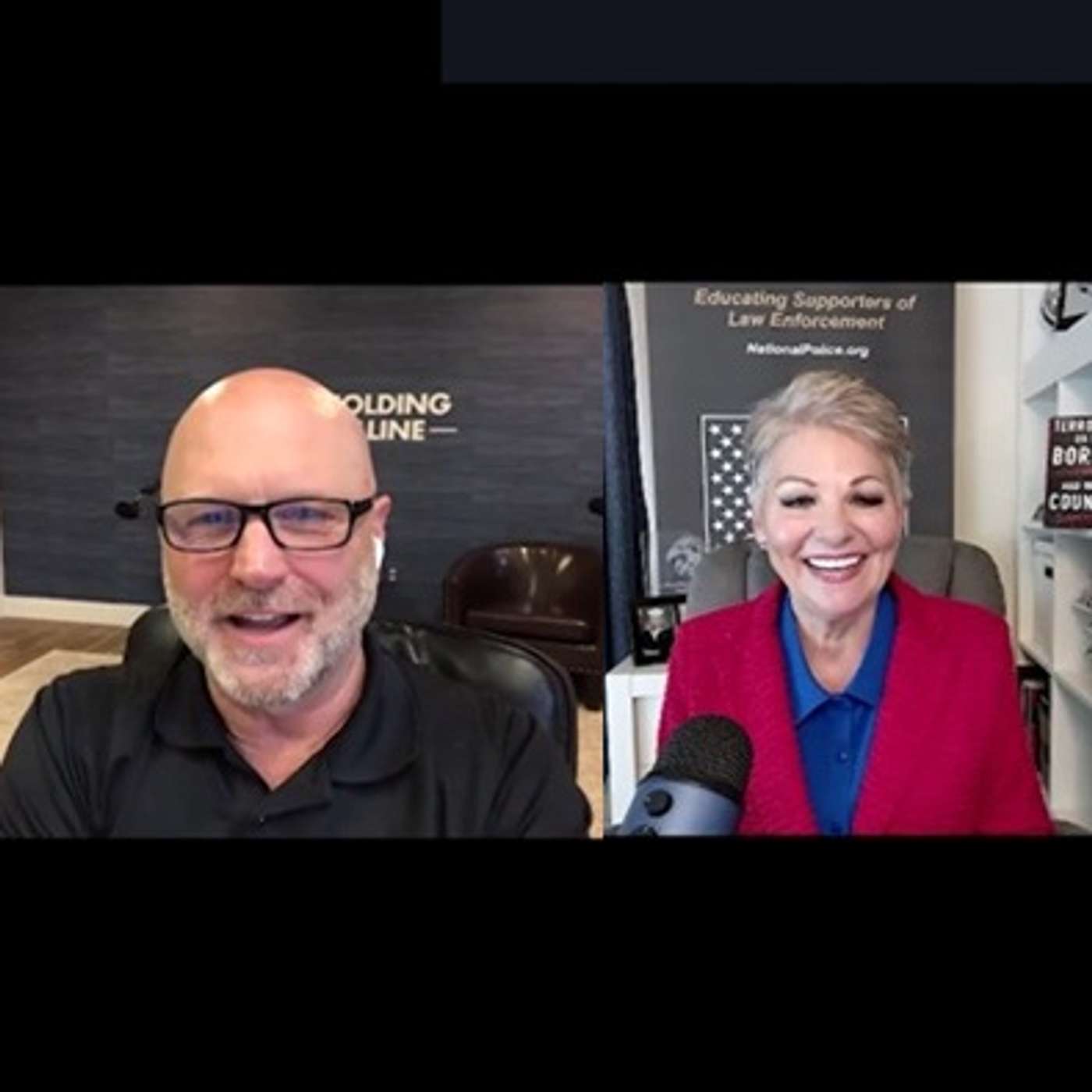
On this episode of the National Police Association Podcast, Sergeant Betsy Brantner Smith welcomes back Jason Johnson of the Law Enforcement Legal Defense Fund (LELDF) to discuss the consequences of Brady and Giglio lists and the safeguards his organization believes officers deserve. Johnson explains LELDF’s two central missions: funding legal representation for officers the organization believes have been wrongfully charged in connection with their duties and producing investigative reports on issues affecting law enforcement. He also describes how the fear of criminal prosecution and the cost of defending against charges can influence officers’ decisions to remain in the profession. The conversation examines LELDF’s involvement in the Terrence Sutton case and the related employment battle of Corey Novick, a former deputy U.S. marshal. According to Johnson, Novick lost his position after being placed on a Lewis list without notice or an explanation. Johnson discusses his concern that the placement was retaliatory, while acknowledging that he lacks sufficient evidence to establish that motive. Topics discussed: * How LELDF evaluates cases and helps cover attorneys, expert witnesses, and other litigation expenses. * Why some officers lack adequate legal defense coverage. * The professional and financial consequences of being listed without notice or an opportunity to respond. * Proposed safeguards, including written notice, an opportunity to contest placement, and judicial review. * Johnson’s discussion of Iowa’s approach and the distinction between disciplining an officer for misconduct and acting solely because the officer appears on a list. * LELDF’s research into prosecutors’ practices and its proposed framework for reform. Learn more and support LELDF: https://www.policedefense.org https://www.facebook.com/leldf https://x.com/LELDF https://www.linkedin.com/in/jason-johnson13
Betsy Smith: Hi. This is Sergeant Betsy Brantner Smith with the National Police Association, and this is the National Police Association Podcast. You guys know I don't bring back guests very often, but I hope you're gonna see a lot of this guy because you met him through us first a couple of years ago, and he is doing so much amazing work for the American law enforcement officer and ultimately for the American public when it comes to law enforcement issues. So I wanted to bring him back to talk about something so interesting that I think a lot of people don't know about. So Jason Johnson, welcome back to the show and tell us what the Law Enforcement Legal Defense Fund has been up to lately. Jason Johnson: Well, thanks, Betsy, having me. It's always good to good to be back, and I'll come back as many times as you wanna invite me. So so... Yeah. So we're doing, you know, the Law Enforcement Legal Defense Fund. For anyone who's not familiar, we have, two main missions. The first is we address law enforcement officers' legal defense costs. So when we find a story of a law enforcement officer who's been wrongfully charged with a crime, in particular with their... In connection with their work, We raise money, and we are from the pro law enforcement community, and we use those funds to support their legal defense, pay lawyer fees, expert witness fees, and other litigation support. We've done that successfully now for over thirty years. And then we have our second mission. I hate to call it our secondary mission, but it's the one that I think gets maybe a little bit less attention, is we do really detailed reports where we uncover all sorts of things. We've done lots of work on source prosecutors. Just for example, we've worked on law enforcement officer attrition, which was huge after 2020. Still a big problem. But we do that just by almost investigative journalism. We send out Freedom of Information Act requests. We call sources. And we compile data to produce really, really, really impactful reports. And we have I know we're going to talk about it today, but we have a new report coming out now. On the legal defense side, business unfortunately has never been better. We we... I think we're now supporting 50... The numbers because they're always changing, forget, but I think we're supporting 15 law enforcement officers now currently in various legal battles. Most of them are criminal defendants in cases in which they used force, reasonable force in our judgment, but yet were charged with crimes related to the force. And then we've got a couple of other oddball legal situations involving law enforcement officers, one of which I know we'll we'll talk about tonight. Betsy Smith: You know, one of the things that I don't think people really understand is that, when we talk about law enforcement officer attrition, most large police departments continue to be short staffed. And a big part of that is because and I talk to cops all the time, and so do you. A lot of police officers or people who had thought about becoming police officers, they don't wanna do it anymore because back in the day when I got on the job, of course we worried about getting hurt, worried about getting civilly sued if you did something. Now police officers worry about going to prison simply for doing their jobs. And and that's very often when you guys get involved, isn't it? Jason Johnson: It is. And, again, that's, like, sort of the mainstay for us. We we keep a pulse on, you know, I've got Google filters and other people that come to me about cases. And we're to the point now where I have attorneys that we've worked with in the past. We've supported previous clients' legal defense. Well, now they've got another law enforcement officer client, and they're coming back to us because they know where... They know how to find us. We're familiar with them. And if they feel like they have a case that's up up... That would be appealing to us, you know, we don't take every every single case. We we we can't raise that much money to support every single time a law enforcement officer is charged with a crime. But within the the scope of what we're trying to do, law enforcement officers, scope of employment, generally use of force cases. If we review the facts carefully and find that the officer was actually justified in what we do, that's a case we're probably going to take. And so people know that and they come back, and it really keeps us busy. Lot of people, there's a misconception that every law enforcement officer has some sort of a union, legal insurance, or there's like an FOP legal plan, which is great, and lots of people participate in it. But not everyone does. In fact, I think mostly smaller police departments, you find the officers are completely unprotected, which is a little surprising in this day and age. But nevertheless, it's true. And that's kind of the gap that we fill. Betsy Smith: Yeah. I mean, people and I've had people ask me this, don't you guys have some sort of insurance like a doctor does, like a malpractice kind of situation? And the vast majority of us didn't or don't. And especially when you're talking about a criminal case, which is kind of the trend now, When you get charged criminally, it's wildly expensive to put on any kind of criminal defense and that's very often when you guys get and there's a false narrative out there that an organization like the Law Enforcement Legal Defense Fund is just trying to keep bad cops on the job which just such nonsense and there's a saying in this profession that nobody hates a bad cop more than a good cop. Know we don't want you know of course are there bad cops out there there's bad cops and bad teachers and bad doctors and every profession has a few bad apples and no one wants to see those bad apples stay on the job that is not what you guys are doing. Jason Johnson: No. We're... I I do think there is a a sentiment like that out there. In fact, we get we get enough hate mail here at the Law Enforcement Legal Defense Fund between hate mail and hateful comments on our social media platforms and things. Obviously, are people that think that or the people that just don't think at all. They just... Unfortunately, there are so many people that just... Their thinking is so lax nuance. You know, if you if you see a case, and there are cases where a law enforcement officer has done something wrong, illegally even, where they should be charged with a crime. Those cases do exist, but that doesn't mean that every single time a law enforcement officer has been charged with a crime related to their duties they should have been. So we just got to be a little more nuanced, right? Just because it happens once doesn't mean it happens all the time. Yes, there are bad cops. There are bad doctors. There are bad lawyers. Fill in the blank profession. We're here to protect the good ones who really are operating in a precarious place. That's where American law enforcement is right now, is in a very precarious place. We like to feel like it's getting better. We like to have some voices that we aren't used to hearing say pro law and order things. Sometimes they're saying pro law and order things. And that's good, but we still understand where we're operating, and it's in a precarious place. So America's law enforcement officers that are going out every day, showing up to work, going out and doing the job, even knowing the risks. And as you said, you know, in our police careers, the risks were accepted. Physical danger was the primary risk. Lack of sleep, stress, those were risks. And everyone knew about them and accepted them. The risks that we didn't, I don't necessarily think appreciate, is the risk of being criminally charged for doing your job. And it does happen often, as evidenced by our caseload. And so I think that's one of the main risks facing law enforcement right now, in addition to the ones that have always been there. Betsy Smith: Oh, absolutely. So let's talk about the Sutton case and then go where we're headed in that direction to talk about the lists out there that police officers sometimes get put on erroneously that affect their career but the Sutton case very pretty infamous case. Talk about that for just a minute. Jason Johnson: Sure. Yeah. So we, the Law Enforcement Legal Defense Fund, provided legal defense support to a, a current but formerly Former Metropolitan Washington DC police officer named Terrence Sutton. Detective Sutton was involved in a in a pretty high profile incident, and I'll just really summarize it. He, was part of a, what I'll call, a street crimes unit. Most big city police departments have units like this. These are the go getters that go out there and actually find the bad guys. Don't necessarily respond to 911 calls, but they're out there really working in the communities, finding the people who are actually the trigger pullers who are committing acts of violence. And they found one who they were familiar with, a gang member, history of violence, on a local street gang that had had reputation for violence and drug dealing, etcetera, and they knew that he might be in that area that day to commit an act of retaliation. They had actual intelligence to that effect. They saw him. He was on one of these e bikes that cities around America will... You know, you can just rent them for the day or whatever. And and he wouldn't stop. And so he circled the block a few times. No high speeds or anything like that. It was maybe 30 miles an hour. And the guy on the e bike eventually pulls through a parking lot now through a blind alley and gets hit by a vehicle, civilian vehicles, completely uninvolved. But as a result... And he died as a result of that. And this was during the Biden administration, and so a target immediately went on detective Sutton's back. And he eventually was charged with murder, if you can believe that, second degree murder, even though to make clear, no police vehicles were involved in this fatal collision at all. Betsy Smith: Not remotely at The bad guy on the ebike that he had possession of pulled out in front of a vehicle. This was all... It was all on him. Law enforcement had nothing to do with it. Jason Johnson: 100% law enforcement. Other than trying to stop him and then he fled Betsy Smith: Right. Jason Johnson: Law enforcement had nothing to do with it. And it was all low speed. It wasn't... Again, it's it's on an ebike, so it's not that fast. Anyway, that's kind of a side note. He was charged and convicted of murder in the District Of Columbia. We had been working with him for about a year, and and thankfully, when President Trump took office in his second term on his second day, he pardoned detective Sutton and and also the detective's lieutenant, who had also been charged with a different offense related to the same case. But as a sort of an offshoot to that incident, there was a detective that was part of that squad who was a witness and was not driving any vehicle. It actually a backseat passenger in Detective Sutton's car named Corey Novick. And Corey, at the time, was a Metropolitan DC police officer, but... And he eventually testified in Detective Sutton's trial. Then years later, he had actually moved from the DC police, and he, for a time, was a deputy sheriff in Maryland County, and then was hired by the US Marshal Service as a deputy US marshal, went away to training in Glencoe where they go, and then was... Had returned and was assigned to DC. And shortly there, he was on probation with the Marshals, found out that he had been placed on what's called the Lewis list. And we're gonna talk more about what that means, but he had no idea. He didn't under... Nobody had notified him. He had no clue about it. But shortly after finding out he was on Lewis list, he was terminated by the US Marshals. Now he was a probationary employee, and they told him explicitly, the reason you're being terminated is we found out that you've been placed on this Lewis list. Now keep in mind, he didn't even know what a Lewis list was. He had no idea why he would be placed on it. Nobody had notified him. He didn't have any opportunity to respond, to appeal, to take any other action to protect himself, zero. But yet he was being terminated. This is a guy that has been an outstanding law enforcement officer at the agencies he's worked for. He didn't do a single thing wrong, and yet he's being terminated without any real explanation. And so we are working with Corey. We've been supporting his legal I shouldn't say legal defense, because he's not really defending himself against anything. He is working to vindicate his right to continued employment even though it was temporarily cut short by this Lewis list issue. Betsy Smith: Yeah. Most police departments are wildly short staffed. Here's a guy who wants to continue to serve. But he's on some secret list and is unable to work in his chosen profession, unable to use the training that he has. And let me just tell people if you're not familiar with the United States Marshals I mean this is the these are the cops cops of federal law enforcement they go through extraordinary amount of training they're they're they're really really good at what they do And again this is the third agency that Corey decided to serve, serving honorably in all three of his agencies. And all of a sudden he finds himself on this secret list. It sounds so Soviet, Jason. Don't I don't know how else to say it. Jason Johnson: It is. It's like a star chamber. His lawyer likes to call it a star chamber. It's it's it's a secret, and it's only not a secret if a prosecutor chooses to make it public. Now, I know we'll get into this, but some states have legislation that actually is regulating these, and that's a good thing. But the federal system is largely unregulated, and most states, I mean, you know, there are like three states that are actually have adopted legislation that does a pretty good job. I mean, know, like we could, I would argue we could go even a little bit further maybe, but most states don't really regulate these things at all. So it's just whatever the prosecutor wants to do is sort of they can do. Betsy Smith: So when we're talking about state and local law enforcement, a police officer's license if you will, we don't get a physical license, but your ability to be a police officer in a particular state, whether it's for the county, city, state, there's an organization in each state usually post or something similar that does keep a list and decides if do something really wrong they can rescind your license. Again it varies all 50 states and then the feds have their own system but it's basically a Brady list, a Giglio list or now from the federal side, a Lewis list. And this is appropriate that there is a database, if you will, of police officers who have done very wrong things and shouldn't be hired by somebody else. I just want to make that really clear. Nobody thinks that bad police officers again should continue. But like you said, these lists are extremely unregulated and and can be very punitive. Right? Jason Johnson: Yeah. Well, we... Our theory of Cory Novick's case is that it was... It's exactly that, is that he was a witness in the government's case against Terrence Sutton, and he did testify. In fact, he testified on multiple occasions during Sutton's trial. And his testimony... And I've I've read the transcript, you know, many times. His attorney, of course, has read it many times, and we've got a whole legal team to have reviewed the transcript. And all of us have tried to find anything in there during Corey's testimony that could be in any way construed as being perjurious or false or misleading or incomplete, and we can't find any. Presumably, that is... You know, would... If we if we had any explanation at all for why he's on the list, that would be it, is they would say, well, his testimony was less than forthcoming. Whatever... However they might characterize it. I am saying it is not. It was... The the testimony was truthful. Now the prosecutor made an effort to... Apparent effort to impeach his testimony, which is basically, you have a witness. You're trying to show that they're not telling the truth or not the full truth anyway. And they made attempts, and then basically the court shut it down. The court's like, nope. Nope. Nope. Nope. Nope. This is over. Stop doing this. And it was over. And that was the end of it. And so our only... Again, I said my theory is that it was punitive or retaliatory. At this time, I have insufficient evidence to prove that only because I just... It's guesswork right now because we're still... Even though we've been on this for, like, a year now, I mean, over a year, we still have zero explanation, not even a a partial explanation about why he's on the list. So I'm left with the belief that the reason he's on the list is because they didn't like... They didn't feel that as a witness, he helped their case enough or at all. So they decided to get back with... Back at him by ruining his career. And that's, that's the scary part about these lists. And I know we'll... Maybe we'll talk about how they come into existence and stuff. But the scary part is that they can be used for any purpose without any... There's no oversight. There's no need to justify why you've put someone on a list. The officer, in many cases, doesn't know that they've been put on a list. Or if they do, they don't have the opportunity to appeal or contest or receive additional evidence about why they're on the list. They certainly don't get I mean, other than just like, maybe two states don't have any access to courts to actually appeal to a neutral, like a judge, the fact they've been placed on the list. And they can just... I mean, imagine any scenario where a prosecutor is unhappy with a law enforcement officer. And that can happen for any number of reasons. It could be you wrote my nephew a ticket. It could be you were mean to one of my prosecutors. It could be you showed me up one time. It could be anything. And they just say, you know what? You're on the Brady list or the Giglio list or whatever. I don't have to give you an explanation. You can go explain to your employer why you can't testify in court anymore. So it's the one thing in justice system and Betsy, you worked a whole career in our justice system. You're very familiar with how it works. Can you think of any other example where someone can be deprived of their career, their property, their liberty, or anything else by the government without any explanation as to why. Betsy Smith: So let's talk about these lists, Brady, Giglio, Lewis lists that police officers get on, what that's for, why it's appropriate, but how it can be abused. Jason Johnson: Absolutely. So the background is these names, Brady, Giglio, Lewis, those stand for court cases. All three of them are US Supreme Court cases that stand for kinda slightly different propositions. But basically, overall, the idea is this. If you are a criminal defendant, you've been charged with a crime, you have a right to certain information from the government. So basically in a big nutshell, you have a right to know if there's any evidence or any reason to believe that you actually aren't guilty of the offense. And that could be a number of different things. It could be if there was an alibi evidence that you weren't aware of that the state is aware of, or if the state actually thought someone else did it before they thought you did it, they haven't disclosed that to you. That's called Brady material. That's in the business called Brady material. But it's been extended under Giglio. It was extended to include state's witnesses. So if there was a state's witness or government witness or anyone really involved in the case at all that has integrity problems, where there's some reason to question their ability to tell the truth, to report accurately, etcetera. So in other words, if there was a government witness, and it doesn't have to be a law enforcement officer, but it just... It so happens. It almost always is because those are the witnesses that are repeatedly testifying in court that had a history of lying, of misstating facts, of shading things a little bit one way or the other, doing other dishonest things like forgery, theft, anything wrongful like that that would give you a real reason to question their integrity. Criminal defendants have a right to know that. So if I arrest a person and I previously stole from the police department, I stole overtime. Let's say I put in for two hours of overtime and I only worked at one hour and the police department figured it out and I was administratively charged, like I got a reprimand or a suspension or something, I'm still a police officer, that actually would be something that really should result in a Brady notification because I was caught doing something dishonest. And that means that a criminal defendant that I'm going to testify against should be able to know that so their lawyer can cross examine me about my ability to be honest. Okay? So that's what it's all about. And actually, it makes sense, right? I have no quarrel at all with that. It's part of due process. It makes sense. Here's the quorum. Who gets to decide who goes on the list and who does not? That's the problem. And what oversight, if any, do they have? Do I have any opportunity to learn more about why I've been placed on the list, to challenge it or contest it in any way, including appealing it to a court? If I don't have any of those rights, that means whoever gets to decide just gets to decide. And I don't even... I wouldn't even necessarily know him on the list as Corey didn't. That is what our problem is. So it's not... We understand criminal defendants are entitled due process. That's that's fine. It's actually good. That's... We're in favor of that. What we're not in favor of is just boundless ability of a prosecutor to put a cop on a list in secret, no explanation, no opportunity to appeal. It shouldn't be able to stand. It's completely inconsistent with any notion of justice. Betsy Smith: Well, and this kind of goes with that trend of taking away qualified immunity, right, for cops. We're asking for is the same due process that the justice system gives criminal defendants. And of course, in civil cases as well, there's process. There's always a process to be able to appeal, to put your case forward, things like that. And in this particular case that you're working with Corey Novak on, it... It's... There's just this huge void where he really has no recourse except except for what you're helping him do. Jason Johnson: Yep. We're... So what we are helping him do is we... We've... You know, he's retained counsel. We've been working with his attorney, paying paying all of his legal expenses, and they're well into 6 figures. It's something that Corey... He tried to shoulder it himself for a while. He understood he had been wronged. Of course, he was no longer employed, at least not by the US Marshal Service. So he's having to, you know, I mean, just per... You can imagine the the personal financial crisis that happens when you're not employed in your actual profession anymore, and yet you're having to shell out just unbelievable amounts of money to pay legal expenses just to try to get justice. And so we got involved, and we've obviously picked it up from here and we'll continue to do so until we get justice. But the frustrating thing is just we've kind of hit a brick wall unfortunately working within the Department of Justice, trying to get more exposure, attention to this, just trying to get basically an adult to focus on it for a minute and realize that this is a case of a guy that could be undone very easily. They could fix this. We're not asking for anything to be done in secret. We're not asking for any special favors. We're not asking for anything that. We're just asking for someone who's concerned about justice to look at it and realize that this is a complete injustice what's happened. And so that's what we'll do. We'll continue to do that until we get to that point. Betsy Smith: Well, and none of this should be happening in secret. I think that's one of the things we want people to take away from this, that this whole process, whether it's on the state and local level or it's on the federal level, should be something that's out in the open. And you alluded to this that there are a few states that have legislation concerning this. But again, law enforcement is so decentralized. And then, of course, state by state law enforcement is differently regulated. What would the Law Enforcement Legal Defense Fund like to see happen if we could fix this process? Jason Johnson: Well, so thank you for that question. So we're gonna we're gonna issue a report on this issue around Labor Day, but before Labor Day, but probably pretty close to Labor Day. And it is gonna be, I think, an exhaustive examination, maybe more exhaustive than exists currently anywhere about how these lists operate in various states and across large jurisdictions. So we did that by sending out like lots and lots of open records requests. Obviously the law is the law. We don't need open records requested to learn what the law is in all 50 states. But we needed to learn how prosecutors' offices across the country, especially the larger offices, are dealing with these Brady lists. Like who decides who goes on the list? What sorts of due process did he get? Is there any right to an appeal? Is the officer even notified when they're placed on the list? Do they get to send in comments or is there any opportunity for a hearing? That's what we wanted to understand. And so we've taken all of that information and it's all gonna be in our report, very exhaustive examination of it for people who are... Some people are real nerdy about it and they really wanna get into the details. If you don't wanna get into the details, what you'll walk away from is this, is that unfortunately in the overwhelming number of states and jurisdictions there is no due process for officers. They get placed on the list at the whim of the prosecutor. They don't even have to tell them they're on the list. They don't get any kind of an appeal. They get nothing. And many times they lose their job. Our secondary thing in addition to satisfying what some of the nerds want when they really wanna dig into this. And there's a lot of law enforcement legal advisors, people who work a lot with law enforcement officers or agencies or even prosecutors that really could benefit from understanding the big picture here, is why we're doing this. But we're also going to offer here are like, here's basically the model that should be followed in every state across America on how to deal with this. And it's really obvious. It's not a partisan issue. This is purely about justice and due process. If you're a person who believes that people shouldn't be punished without at least knowing what they're been accused of doing, then you would be in favor of reforming Brady and Giglio lists. It doesn't matter if you're pro police or not pro police or anywhere in between. It's just a simple matter of justice. And so that's what we're putting forth, like the roadmap for how to do this properly. And some states actually are doing, as I mentioned to you before, some states are really doing a pretty good job. Iowa in particular has a very good, very fair Brady Gillio list statute. And basic all it does is it provides for notice. These are just basic components of due process. The officer gets notice that they've been placed on the list. They have an opportunity to submit comments or arguments basically as to why they feel they shouldn't be on the list, if they feel they shouldn't be on the list. If the outcome is still not in their favor, an opportunity to appeal. And then it would be appealed to a court so a judge can decide. And obviously, if you lose at some point, okay, you lose. You're on the Brady list. And that means you lost your job. At least you got your due process. And that's all we can ask. It also includes law enforcement agencies cannot make employment and disciplinary decisions based solely on whether an employee has been placed on a Brady list. The conduct that allegedly got them on the Brady list is fair game. So if you did something wrongful and that that's why you're on the Brady list, the agency absolutely can take whatever action they deem appropriate for the underlying conduct. But they can't do it just simply because you've been placed on a list. Betsy Smith: That's a perfect way to explain this. Again, we don't want bad cops to be in this profession, but we don't want good cops like Cory Novak to be pushed out of this profession simply because somebody didn't like the way he testified or was mad at him or or whatever. Jason, where can people where can people find the report when it comes out? Where can they find more about the Law Enforcement Legal Defense Fund? And, of course, where can they donate to help you guys with these incredible efforts? Jason Johnson: So anything with respect to Law Enforcement Legal Defense Fund can be found on our website. We're at policedefense.org. That's policedefense.org. We are very active on social media, on Facebook, X, and Instagram, and on all three platforms. Our handle is LELDF. And we are posting all the time on all three platforms. When we release our report, it will be released on those three platforms. It will also be listed... Posted on our website. Our website does have the ability to make a donation through the website. So if you support what we do, we have tons of resource material on the website. So if you've never heard of us before, we have information about the cases that we're actually working to support law enforcement officers, details about those cases, about the officers. We have all of our previous research reports and lots of other information there. And so yeah, that's where I would encourage people to go. Betsy Smith: I'd say, Jason, you continue to do God's work, you know, personally and through the Law Enforcement Legal Offense Fund, and we so appreciate it, and we really appreciate you breaking all this down for us today and spending time with us. And if you'd like more information about the National Police Association, you can visit us at nationalpolice.org. NPA: Every day, the brave men and women of law enforcement put their lives on the line to keep us safe. But they need our help to continue their mission. Activist politicians, progressive prosecutors, the ACLU, and the rest of the anti police forces receive millions in donations from extremist pro criminal elements like George Soros and woke corporations. The National Police Association is fighting them in courts around the country, including the United States Supreme Court, defending officers who are being attacked for doing their jobs. Additionally, the National Police Association works year round to pass tough on crime legislation to put and keep criminals behind bars. Consider going to nationalpolice.org and donating to keep us in the fight. Together, we can win. That is nationalpolice.org.