
Narativ with Zev Shalev (Audio) · Zev Shalev
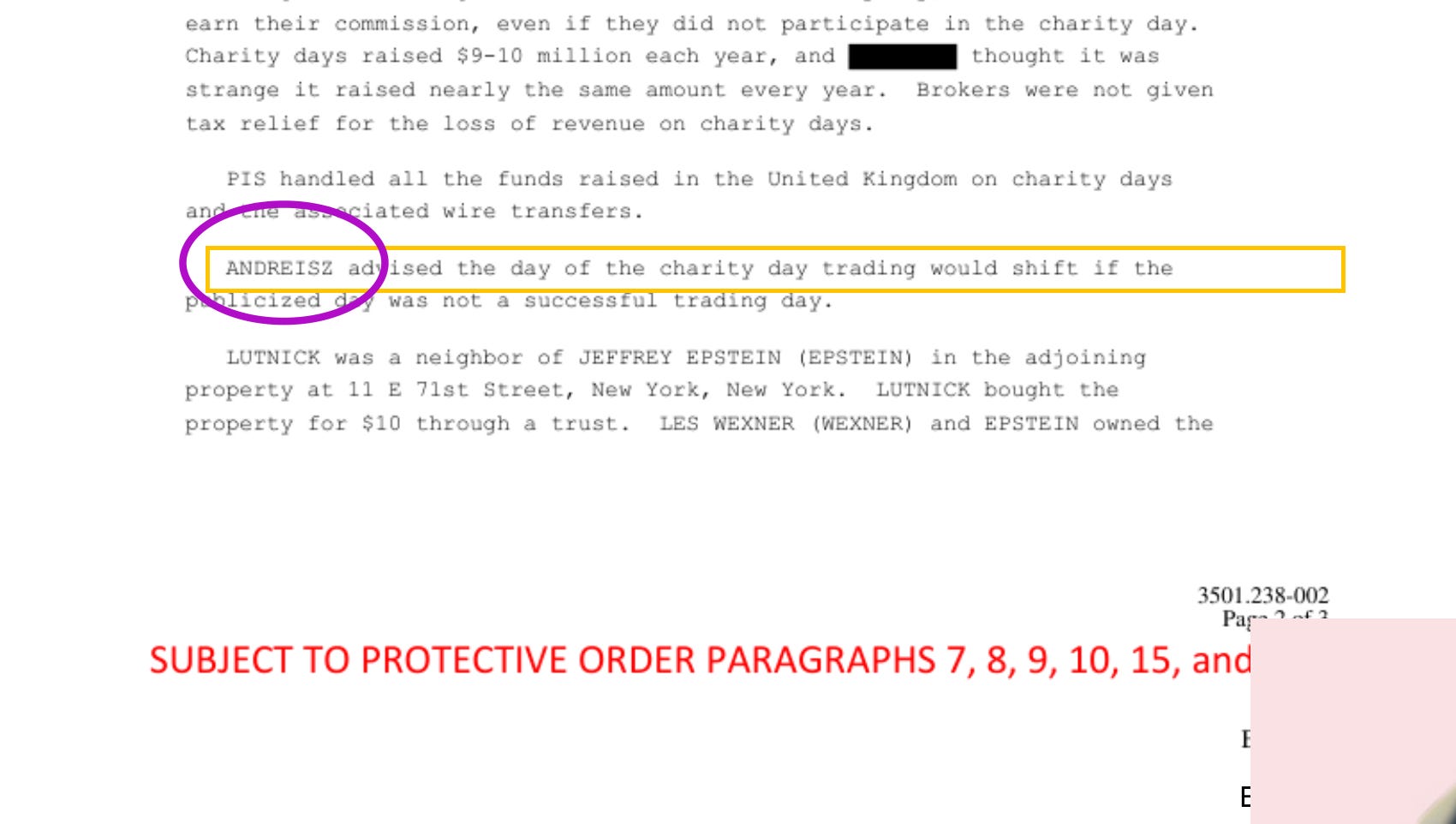
Simon Andriesz brought concerns about Howard Lutnick to the FBI. Years later, the Justice Department released an interview record with most identifying information blacked out—and a version of his surname still visible. Now Andriesz is dead. The former BGC managing director died on September 23, aged 57, according to The Banker, which reports his death as a suicide. Transparency Task Force founder Andy Agathangelou confirmed his death. On Narativ Live, Kait Justice joined me to examine the document, the evidence of Lutnick’s continued contact with Jeffrey Epstein, and what happens to people who bring information about powerful figures to investigators. The name left in the file The document we showed comes from an FBI interview conducted on February 16, 2021. Black bars conceal identifying information throughout the record. But on its second page, one sentence begins with the unredacted surname “ANDREISZ.” That surviving name is the central revelation of this episode. The released document conceals the interviewee’s identity in some places while leaving an identifying detail exposed elsewhere. The distinction between an allegation and a finding matters here. An FBI interview records what someone told investigators. Its presence in an official file does not prove every claim it contains. The redaction problem stands on its own. Who reviewed this page? Why did the surname remain? What safeguards applied to someone providing information to the FBI? Kait described sending the DOJ other files she believed exposed survivors’ private information and asking for them to be removed or correctly redacted. Her account raises a further question: how did the department respond when people flagged these problems? Lutnick’s own testimony extends the relationship Andriesz’s work helped bring attention to a 2018 email exchange about Adfin, an advertising technology company. Those communications extended the public record of Lutnick’s contact with Epstein well beyond his earlier account of breaking ties in 2005. The congressional transcript supplies direct confirmation. During his May 6 interview, Lutnick identified the email account labeled “HWL” as his. He acknowledged that a Cantor Fitzgerald venture capital subsidiary invested in Adfin. Lutnick told investigators he did not know Epstein was an investor until the files were released. He also denied that his or Cantor Fitzgerald’s assets financed Epstein’s crimes. Those answers leave a specific issue for investigators to pursue: how Lutnick’s claimed lack of knowledge fits with the correspondence and investment documents. The records give them something concrete to test. For Kait, who has been examining Lutnick and Adfin herself, news of Andriesz’s death landed personally. She described the fear that accompanies this work—the knowledge that pursuing an investigation can carry costs far beyond the reporting. A review begins after his death Britain’s Financial Conduct Authority has now announced a review of its...
0:00[music]
0:10SPEAKER_00this is...
0:32SPEAKER_00Now, he is no longer alive.
0:35SPEAKER_00He committed suicide late in September, or so we're told, at the age of 57.
0:40SPEAKER_00It's a very young age for this person to have left this world.
0:45SPEAKER_00Before that,
0:46SPEAKER_00he was a very successful banker working for Lutnik's companies in London
0:51SPEAKER_00and other parts of Europe.
0:53SPEAKER_00Now, in 2020, it was Simon Andrees who went to the FBI about Howard Lutnick.
0:58SPEAKER_00It was this guy who first told us that Howard Lutnick was involved in all sorts
1:04SPEAKER_00of Russian money laundering with the Russian mob,
1:07SPEAKER_00that he was involved with Jeffrey Epstein,
1:10SPEAKER_00that Jeffrey Epstein had sold him the house next door for a mere $10.
1:14SPEAKER_00And he alleged that a lot of the charities that Lutnick was involved in,
1:18SPEAKER_00including his 9-11 charity, were all fraudulent.