
Myths, Monsters, and Mullets · John Methencamp
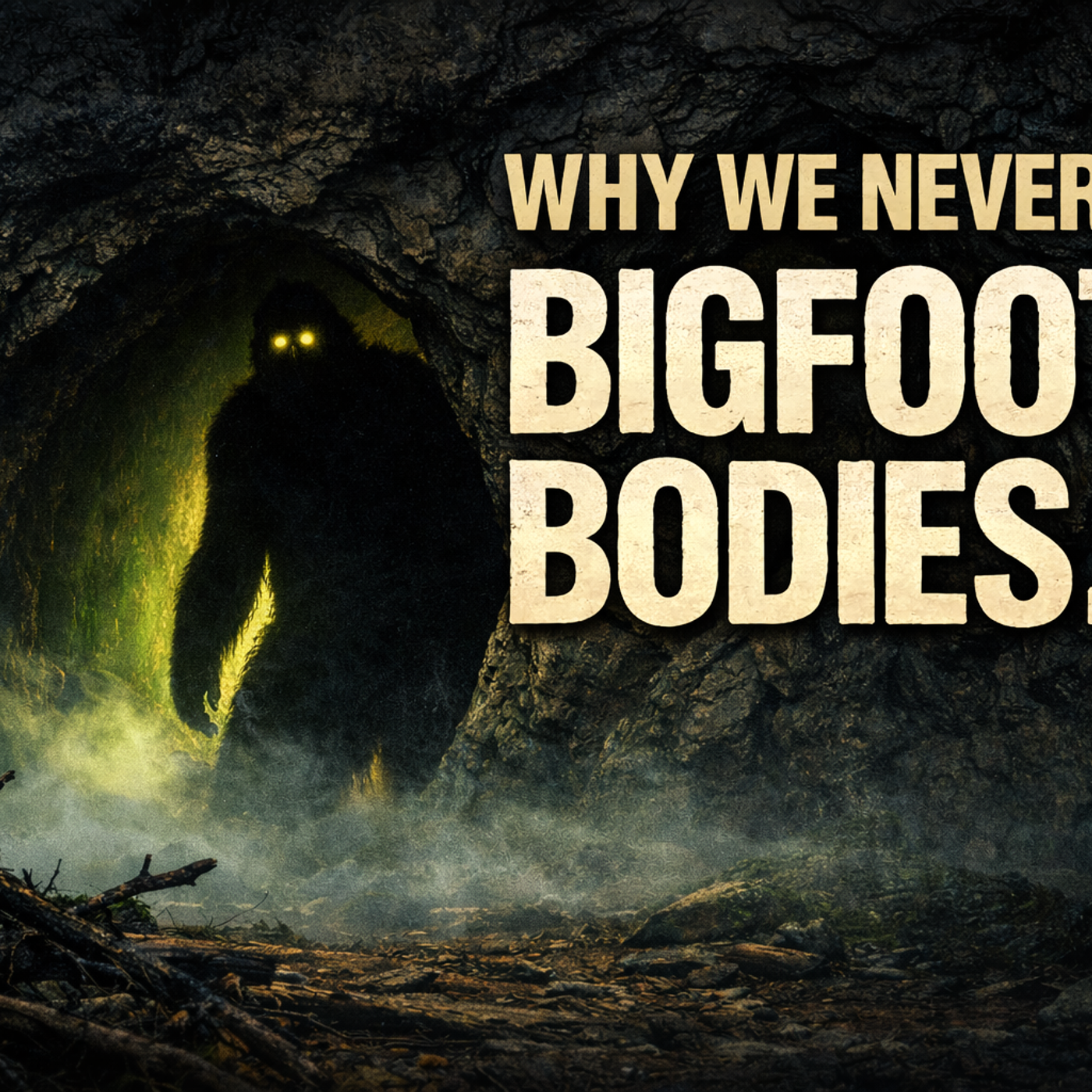
People claim they’ve seen it… Tracked it… Even shot it. But somehow— 👉 we never find the bodies. No bones. No remains. No proof of what Bigfoot really is. So where do they go? In this episode of Myths, Monsters, and Mullets, John Methencamp sits down with returning guest Jeff Davis to break down one of the most intriguing theories yet—one that connects Bigfoot encounters, cave systems, and unexplained healing. Could there be something happening deep underground that we’re only beginning to understand? Or is there another reason we’ve never recovered a body? This one gets weird… and it might change how you look at Bigfoot sightings forever. To get EARLY ACCESS to all shows before everyone else, Members Only Episodes, and Bonus Content that you won’t see anywhere else, head over to Patreon: https://patreon.com/MythsMonstersandMullets?utm_medium=unknown&utm_source=join_link&utm_campaign=creatorshare_creator&utm_content=copyLink If you’ve had an encounter, and you’d like to be guest on the show, email me at: [email protected] Check out my favorite podcasts! Nevermore Hollows Drunken Cryptids Chumming with the Spirits Ghost Gossip Lodge Tales Remember That? Paranormal War Room The Cryptid Podcast
Myths Monsters and Mullets: you Myths Monsters And Mullets: Welcome back to Miss Monsters and Mullets, the show where the strange, the unexplained and the weird take center stage and where the people behind the encounters matter just as much as the encounters themselves. We're not just here to talk about what was seen, we're here to understand who saw it, how it changed them, and why it still matters. Myths Monsters and Mullets: Shadow in the pines working in the dusky air Bigfoot stomps through the woods like he don't care Lights in the sky flash green then blue Aliens descending with a secret or two Out in the woods, shadows creep slow John Methencamp: Welcome back to Miss Monsters and Mullets. am your host John Methencamp. On tonight's show, I'm battling a cold and we have Jeff Davis back in the house. Jeff, how you doing tonight? Myths Monsters and Mullets: Footprints deep where no man should go Cold winds howl through hollers and brooks Jeff Davis: battling. All right, I'm battling a cold too. Myths Monsters and Mullets: Whispers in the breeze, cold fingers down your spine Ghosts in the graveyard, twisting through time Eyes wide John Methencamp: Are ya? Myths Monsters And Mullets: Before we get started, quick shout out to our supporters over on Patreon. If you'd like to help keep the show independent, ad free, and unapologetically weird, head on over to our Patreon. You'll find members episodes, early access to all the public episodes, and bonus material you won't see or hear anywhere else. Jeff Davis: Well, it's pollen. It's pollen. Myths Monsters and Mullets: Missed monsters and bullets in the night Under a pale moon, strange glowing light John Methencamp: ⁓ yeah, mine, mine might be COVID. I'm not sure. Jeff Davis: That's a good thing that we're not sitting in the same room then. John Methencamp: No, but maybe you'll get a textually transmitted disease. Myths Monsters and Mullets: I feel like a blade cuts Mists, monsters and mullets running muck Jeff Davis: I understand diseases travel that way these days. Myths Monsters and Mullets: Just give him one John Methencamp: Yeah, yeah. So Jeff, what we talking about tonight, buddy? Jeff Davis: Well, it's a continuation. Remember, we met months and months ago last year, calendar year, at a Bigfoot event. ⁓ so for me, it's kind of a continuation of our earlier conversation about Bigfoot and the nature of Bigfoot. And this is a working theory here. Far too often in our biz, Myths Monsters And Mullets: If you've had an encounter or something strange that you've just never been able to explain, I want to hear from you. Email me at mythsandmullets at gmail.com. That's mythsandmullets at gmail.com. Your experience could be featured on a future episode. Myths Monsters and Mullets: It takes us where the wild Monsters in my lips You're in the past Jeff Davis: people will contact you or me and say, hey, interview me. I have the answer. I have questions and I possible answers, but this is an open theory. And I approach it that way. ⁓ Please, people watching, listening, ⁓ feel free to think about this because I don't have proof. I'm not going to claim I do, but I have ⁓ historic ⁓ examples. Myths Monsters and Mullets: Big grab. blowing as the coyotes howl Myths Monsters And Mullets: And that's it for tonight. Make sure you check out the description on this episode for any links associated with the guest. And if you've had a paranormal encounter you'd like to share, can email me at missandmullets.gmail.com. Good night everyone. If you haven't yet, make sure you've hit that subscribe button. Make sure you're following me on all your favorite podcast platforms. Give this episode a like, leave a comment, leave us a review. That'll help us with the algorithm. And that's the best way to grow the show. Jeff Davis: of things and I have done some scientific research and really this goes into some very, very common questions or observations about Bigfoot. ⁓ For instance, how long did Bigfoot live? You can't see my finger, but how long did Bigfoot live? Another part of this is how come we don't find Bigfoot bodies, graves, bones? Myths Monsters And Mullets: Make sure you check the descriptions on all my episodes. Down below, you're gonna find a list of all my favorite podcasts from Nevermore Hollows, Drunken Cryptids, Chumming with the Spirits, Ghost Gossip, and so much more. While you're over there listening to their shows, leave them a comment and tell them John sent you. And with that, let's start the show. Jeff Davis: And three, there are many, many instances where people claim, ⁓ I shot Bigfoot or Bigfoot got wounded. hit Bigfoot with a club and it wandered away. yet days later, they believe that they've encountered the same Bigfoot all healed up. John Methencamp: Mm-hmm. Jeff Davis: And so just kind of speculating, but based on some modern scientific and some very old historic examples, and it's tied to, it's actually tied to natural sciences. And I didn't come up with this idea. So if it's proven to be false or modified, ⁓ I get to help blame somebody else along with me. And I asked people before I... John Methencamp: Well, that's convenient. Jeff Davis: Welcome to America. John Methencamp: Yeah Jeff Davis: But ⁓ I ask people to treat this open-mindedly, as open-mindedly as you can. Please don't dismiss anything until you look into it yourself. Cross-check me if you want to. I encourage you. This is an open theory. It's going to be modified. And because of that, I hope you'll let me be patient with me as I talk about, in general, an outline of the scientific method. All right. So, and I hope the audience is as well. John Methencamp: We'll be patient with you, Jeff. Jeff Davis: So scientific method is a, it's a process. It's a multi-step process. So somebody comes up with a question like, how come Bigfoot seems to spontaneously heal within hours or days of an injury? How come we don't find Bigfoot bodies? Where do they go when they die? And so that's, that's the question. And so then you go to existing research. and scientific papers and so on. And you look for precedents, you look for evidence, you look for studies. And then from there, you develop the theory, so working theory of why this happens. Here are my facts, factoids, and the processes. So you have a research question, you develop a theory, and then you test the theory. And when you test the theory, you look for evidence that supports your theory. But more important than that, you look for any evidence in experiments and more research that actually shows where your theory's wrong. And then, you you get for clumpeter, right? And you say, ⁓ my original theory was wrong. I must modify it. That's what good scientists do. you have this new evidence, you take your old theory, you modify it to the theory has to fit the evidence. The evidence doesn't fit the theory. And then you retest it as a cycle. And so this is preliminary. I admit upfront, I have not done experiments. to test this because among other things, I'm not trained or equipped to do this. This will come out as I expand on this. ⁓ so other people will have more technical expertise, more scientific expertise than I do, and they can test it. And this is like an open theory. Feel free, anybody, to say, I tested this theory, and here's what I got. And I ask everybody to be civil-implied. I know. in our TikTok age as a hard, but please be disciplined about this ⁓ and just keep this going because isn't that what we're all here for? It's not just to be ⁓ sitting in our armchairs or whatever we're doing, ⁓ watching on our phones or listening on headphones. Don't we all want to be part of this process? Yeah. John Methencamp: And one thing that ticks me off is when people, and there was a certain president who said this, that the science is settled. Jeff Davis: Yeah, no, it's not. John Methencamp: That's not how science works. It's never settled. You may have come to a conclusion at that point with the information that you have, but that doesn't mean it's settled. It just means this is the best that we know right now. Jeff Davis: I agree. And when people say that first, and then they say, we are going to actively discourage anyone from cross checking the science, you are just entering, you're just entering ⁓ censorship. It, about anything. I, and so, ⁓ so many examples, if people are curious again, ⁓ John Methencamp: Yes. Jeff Davis: there were two medical doctor researchers whose names were Broad and Wade. I think it was in the very early 1990s. They were, and they waded across the river too. Anyway, they were involved also in medical research, research grants, in and around cancer research. John Methencamp: That's very broad. Yeah. Jeff Davis: And they started coming across examples of fraud in medical research because millions and millions of dollars are at stake. And so they were appalled and they were told, hey, we're all scientists. Nobody could fool us because we have the scientific method, know, dun, dun, dun, which we've never tested. And so they wrote a book called Betrayers of the Truth. It's been updated once I think, and it's in print. You can use copies. online. It's a paper book for like six to twelve dollars. I encourage you to read it because you're gonna find interesting people. ⁓ For instance, when he was a congressman, Al Gore, the scientist congressman, was actually cited as somebody who's saying, aren't you guys gonna do the science? And so anyway, he kind of like appears as an example of of actually these academic scientists kind of talk down to him and said, we're scientists, we know better than you. And so, Anyway, they track fraud all the way back to astronomy in the very, I think, second century AD or third century AD, like fraud going all in the scientific community of the day. So it's an interesting read. John Methencamp: look that one up because a lot of the conspiracy theories are about scientific fraud. Jeff Davis: Yeah. So, ⁓ I guess that'll be another show, won't it? Yeah. Right. So, so the basics of this theory and, it's been, I presented it in January, my paper, my notes as a presentation in Longview, Kelso, Washington, there's an annual, ⁓ cryptozoology conference called Squatch Fest. And, ⁓ and so I have a, ⁓ John Methencamp: We can do that. Jeff Davis: friends, his name is Clyde Lewis, he's a local radio personality broadcaster, broadcaster, he was ill and so he was slated to be one of their featured speakers. He couldn't make it so he asked me if I'd fill in and so that's where I presented, again I would call them my notes not my paper because when it hasn't been peer reviewed I sent it to you and a couple of other people and ⁓ It's kind of like a rush anyway. It's been a while, so my dates are going to be little fuzzy as I talk to you about this. But because you and I have a good Q &A relationship, feel free if you have questions for clarification. So in 2025, I met a guy named Ryan Golombetzky, is a cryptozoology guy. He's been on guest or starred on numerous television shows about cryptozoology. I met him in England at a conference and we got to talk to you about some things and he said, Jeff, let me outline this theory for you. It's the same thing I'm telling you. It's an open theory. Take it where you want. Just let me know where you take it so that I'm prepared for it. And I would ask the same thing. Guys, gals, whoever take this where it goes, but you know, don't lose track of the original. And so he talked about a man who's a former Navy SEAL, his name is Detturi. And in the early 2020s, he set the world's record for the longest time, continuous time, underwater pressure. And so he was over 100 days at this. And when he finally came out of this, this was a little, I would call it a bathysphere, a little underwater environment, about a hundred square feet. And, and he had all these media links. And so he would talk to elementary schools or junior high school students, Hey, welcome from about, about 33 feet deep and underwater. And his, his atmospheric mix, I don't know. And I sent. I sent emails a couple of times asking, what was your atmospheric mix? This plays out into Bigfoot in atmosphere. I haven't gotten a response, but I'm sure I could find out if I dug harder. But when he came up after setting this world record, he found through medical, because they were doing medical experiments on him too. He actually has a PhD ⁓ in high pressure. ⁓ kind of medicine, like, ⁓ doctors who specialize in treating the bends, which is a, which is a condition when you get too much nitrogen in your bloodstream. And so that's, that's what his degree is in. So he's doing blood testing, all kinds of other stuff. And when he came up, he found among other things that, ⁓ these number of free stem cells flowing through his bloodstream had gone up significantly. He found that his blood pressure was lower. and the telomeres in his individual cells had actually lengthened. John Methencamp: But his blood pressure was probably lower because he was away from his wife for so long. Jeff Davis: I thought that too. ⁓ John Methencamp: But my wife doesn't hear this because then my blood pressure is going to go up. Jeff Davis: I don't have a wife so I can still whisper and agree with you. But ⁓ the telomeres, a lot of people have heard the word telomeres. In essence, the human cell has little rods, they call telomeres. And again, I am not a scientist trying to explain science, please forgive me folks, but telomeres, whenever your cells, all your cells, go from one cell and they divide into two. Among other things, when they're splitting the DNA to create two identical cells, the telomeres, these little rods that are the basis of it, they get smaller and smaller and smaller. So the telomeres in the human cell of a baby are significantly longer than the telomeres of that same individual when they're 70 years old. His telomeres got longer. And so there are pictures of him coming up out of the water and as a former Navy SEAL diver, he's in really good shape. And so there are all these pictures of this really healthy guy who was, think, again, forgive me if I'm fuzzy on dates, but ⁓ I think his calendar age is like 60-ish and he clocked his physical age. ⁓ when he went underwater as being in his like 50s and based on the metabolic information they got when he came up, his metabolic age was in his 40s. So he on, pardon the pun, on the surface, this experience under underwater with all the water pressure and the atmosphere in his little lab John Methencamp: Wow. Jeff Davis: was equal to the outside pressure. So there was a bubble of air that basically all he had to do was swim and there was a hole in this diving bell that he was living in so that the air pressure was equal to the water pressure. And so the other phrase is hyperbaric chamber. that's what finally came to me. That's what his PhD is in is hyperbaric medicine. as a former SEAL deepwater diver, it's kind of natural that he would want to help other service members. so this is the initial results were reported in a scientific manner and they were backed up with scientific, ⁓ scientific data. So, ⁓ unless challenge, remember scientific method, you, you have this information, you, you John Methencamp: Thank Jeff Davis: then start working to add this to the developing theory. And then you test it later. ⁓ So Ryan Golubewski's theory was that, ⁓ so this guy is under 30 or so feet of water and ⁓ the air pressure was, think, 1.7 atmospheres. So what if Bigfoot, when they are injured or sick or dying, or even if they're dead, the other Bigfoot will take them deep into these cave networks, like in the Pacific Northwest, or think about other places where there are a lot of Bigfoot sightings, a lot of them near caves, cave networks, aren't they? Lava tube networks. John Methencamp: Yeah. Yeah. If you, I've seen a map where they've taken the cavern networks and overlaid it with Bigfoot and, and UFO encounters and it lines up pretty close. Jeff Davis: Yeah, and so that's so in his belief is there are in some places not everywhere There are these very deep deep caverns where air pressure itself The the the higher the higher you the higher up you go, of course air pressure gets less and less Nice catching the cough And so, you know, his theory, and so that's, that falls into his theory is that you just have to go really, really deep down. And you know what? I saw you nodding your head like, yeah, you get it. ⁓ so. John Methencamp: That's a great, great thing about mute, man. Yeah, the one atmosphere is at sea level. That's the air pressure at sea level. As you go up, it becomes like point whatever. And as you go down, it'd be one point something, because the gravity pulling on the air causes the pressure to go up. Jeff Davis: Mm-hmm. Yeah, 0.9 atmospheres. Yeah. Yeah, well, all of the other air pushing down as well as gravity pulling it. so again, looking at it, where might this be? And so looking for examples, real world examples, and I am gonna shift over to my nose because this is something I don't wanna mess up. Yeah, Jeff, don't mess it up. Otherwise, we'll cancel culture you. All right, so. ⁓ John Methencamp: Even if you mess it up, we can go back and fix it. Nobody will ever know. Jeff Davis: I want a gajillion dollars. ⁓ right. So, okay. And this is ideal, ⁓ because individual atmospheric conditions, it's storm passing through or not inversion layers, ⁓ at sea level, ideally air pressure in pounds per square inch is 14.6, nine six pounds per square inch. That's one atmosphere. So the deepest place. John Methencamp: Ch- Jeff Davis: ⁓ natural place kind of on Earth's surface going down is the Dead Sea. And that is 1,355 feet below sea level. And oddly enough, because water does not compress, but it compresses everything around it. So 30 or so feet at the undersea lab, or actually I have between 22 and 30 feet as cited as the depth. So at 1.355 feet below sea level, atmospheric pressure is only 15.45 pounds per square inch or 1.05 atmospheres, which is counterintuitive. Yeah, which is counterintuitive. So there is a man-made deeper spot, man-made John Methencamp: not much different. Jeff Davis: And it's a place called the Kid Mine, which is in Canada, eh? The bottom of this mine shaft is 8,973 feet below sea level. John Methencamp: Holy cow. Jeff Davis: Yeah, and there the pressure is 20.37 pounds per square inch. And that's an estimate arrived at through some calculations. ⁓ I don't know that anybody is, it's still an active mine. I don't know that anybody's actually gone down there with a barometer to cross check this, but theoretically that's what the atmosphere is, which is 1.386 atmospheres. John Methencamp: And for you math nerds, that's almost 30 % more. Jeff Davis: Yeah, however, getting back to it, now that I'm looking at my notes, it's the Jules undersea, J-U-L-E-S, Jules undersea lab, the atmospheric pressure that they are sighting is about 1.75 atmospheres, and that's what it is at under 25 feet of water. 1.75 at least. as far as Dettourie is concerned, that was his depth and that's where he noticed the change. So 1.386 atmospheres, that's the bottom of the kid mine. And 1.75, you're still about three-tenths of an atmosphere too high. And so getting back to natural cave networks. I bet you somewhere in the world, there are a couple places where the natural cave network does go down that far, or you're in the Kimberley Mine in South Africa, but it seems to me to be less likely that it was just atmospheric pressure. And so I started looking at atmospheric mix and or individual ⁓ kind of individual characteristics of caves. ⁓ I'm not sure if you've ever ⁓ gone speed lunging. And here's where I don't have the skill, which is why I'm not experimenting with this, is people who practice climbing through caves for recreation or as a job. When I worked for the Forest Service on the Mount Hood, ⁓ not Mount Hood, this was at Mount St. Helens Monument, there were some lava tubes. that were several miles from the crater itself. But they were, I think we walked from one end of it, one break in the tube to another break in the tube. I think the distance was like two miles underground. And the, and what this lava tube is, is, was, is lava was flowing underground and in it, you know, melted rock. And then this, and then it cooled off forming circles. These tunnels. uh, lava tube tunnels like 20 feet high and, we're walking on, you know, probably we had to climb down like 15 or 20 feet to get there. They went up and down, but we came out. So that I want people to understand how surprisingly vast simple, simple networks can be. But, um, there are a lot of other caves. And if, if any of your, uh, any of your fans think about this, if you've ever seen anyone doing, you know, like documentary. There are dead caves where there's no environment. There are no albino fish or no-eyed critters in them. There's no water in them. They're dead. They don't have a biosphere. But a lot of other caves are living caves. They have airflow. And a lot of these popular caves, they actually have airlocks where the major entry is or exit. John Methencamp: Mm-hmm. Jeff Davis: There's an airlock and so they have to actually spin and undog ⁓ a hatch and wait for the atmosphere to equalize. So you can have higher than normal atmospheric pressure build up in these caves. And not only that, if you do have airflow in the cave, say you've got a very, very wide cave, it's part of the network. So you've got a chamber that's very, very wide. And then, and then it going from chamber to chamber, you have a very narrow tunnel to open up again. That same volume of air is flowing through a much smaller space. So what you get is you get an increase in air pressure in these enclosed spaces. So it seems to me that it's still possible for something like this to happen. But I also started looking at atmospheric mixes too. I mean, this is the thing John Methencamp: Mm-hmm. Jeff Davis: ⁓ that Detturi, I still don't know how much oxygen was in his atmosphere and what were the other component gases. ⁓ Major gases in Earth's atmosphere, ⁓ oxygen, nitrogen, argon and ⁓ again so I can be sort of factual for everybody. ⁓ That's actually very small component. John Methencamp: carbon dioxide. I know, it's common. It's part of it, that's what saying. Jeff Davis: Oh yes. Yeah, but okay. So nitrogen 75.52 % oxygen 23.14. Argon 1.29. Carbon dioxide is 0.0626 % of the atmosphere. Neon, helium, methane and krypton are all smaller component gases and of course many many other gases xenon and so on and here's the thing is some of these atmospheric gases like carbon dioxide oxygen nitrogen on the earth's surface and in the sea those those gases are absorbed and released through biological process but you have these other gases like argon which is the third third highest concentrated gas, again at 1.2, 9 % argon and helium, neon, and so on, even methane get released through underground action, either volcanism or fault line slippage and friction can release some of these gases that are trapped underground or they are actually ⁓ They're actually not just trapped underground in pockets, but they are part of the components of various minerals that get released under heat or pressure. So I started looking at historic examples of, you know, our ancestors are smarter than people give them credit for. So what kind of beneficial or let's face it, dangerous gases ⁓ can get released? through cave networks. And so I came across several different examples from history, as a matter of fact. Yeah, you know what, mostly bad, mostly death ⁓ from, as you quoted, carbon dioxide and carbon monoxide gases. But ⁓ people are, if our ancient ancestors who did not know what John Methencamp: Mm-hmm. Jeff Davis: an atom was, even though you have the Greek atomic theory, but they don't separate. Our ancestors started separating out various gases from the general air, specific gases, and started the periodic tables really about 1500s moving forward. So how did the ancient Greeks or four or five thousand years ago, how did people know what these specific gases did, even if they didn't know what the gas did, know what the gases composition was, they knew how to find it and avoid it. Think about our cave people ancestors, right? So you go camping in a cave, first and foremost, probably because unless there's something hibernating in the back of you, you go into the cave for shelter defensiveness. it for for another human or a cave bear to come from the outside in at you, you're protected from that. You also have a steady environment. So if it's if it's raining outside, it's going to be dry inside. And and you might have cold and snow outside. You build a fire on the inside. You stay a little warmer. So and we know from cave paintings that people sometimes went really deep into these cave networks. John Methencamp: Mm-hmm. Jeff Davis: There are Lescaux cave and other places where they think that there were perhaps ⁓ puberty rights, like hunting scenes and hunting magic way back in the cave. What if there were some gases present that had kind of a narcotic effect? John Methencamp: ⁓ you mean like, you know, in ancient Greek and ⁓ what was the the seers or whatever up on Mount Olympus or whatever that they basically took these women up there and they were breathing in noxious fumes and hallucinating. Jeff Davis: Yeah. Yeah. Yeah, well, that's exactly the Oracle at Delphi. John Methencamp: Oracle that's the word I was looking for Jeff Davis: Yeah. So, absolutely right. And so that's like one of these perhaps positive experiences from gases released deep underground to above ground settings or in cave settings. And so for, I guess, background, at least 800 BC when They're writing down the Iliad and the Odyssey, which are stories about the fall of Troy and the return of Ulysses, which may date back 1800 BC as a spoken tradition. Various characters in these stories go visit the oracle at Delphi. As you said, it's a woman who, ⁓ the god Apollo ⁓ is the god of prophecy. But for the most part, Apollo picked women to be vessels for prophecy. So according to this tradition, the temple of Apollo at Delphi ⁓ was a stone structure. And there was like an inner sanctum, a very small room where there were cracks in the earth. And they built a tripod, which is a three-legged stool, which is a tripod is sacred to Apollo. right over the top of that crack in the earth and they had a like a chair there and they sat her there and she would breathe in the sweet smelling fumes coming up from below and at first she would like be in what almost like what we consider a hypnotic state she could answer questions and the the people asking the prophecy would be on the other side of a door they would actually have to call their their their question through the door and there were one or two priests on the inside of the door who would write down what she said and and oftentimes it would be ⁓ Kind of like loose sentences, but somehow by the time the priests made it through the other side of the door It was lyrical verse the prophecy was in lyrical verse, right? a little magic going on there and there were some occasions where they said that she would actually go into hysterical fits and in some cases die and so ⁓ John Methencamp: You Jeff Davis: ⁓ that the Oracle Delphi was present and she usually the prophecies were usually only very late spring through very early fall warmer months of the year and Delphi still exists now in the ancient ancient times Many of this rich city-states actually put up treasury buildings there and or the leaders of these cities would ask questions of the Oracle and if it came true and they were happy, they would also dedicate artwork and give money to the temple priests. so, that continued from at least 800 BC to about 300 AD. And part of Christian movement, said, you know, we don't want to have anything to do with these kinds of prophetic movements. And so, we'll stop. And the city continued on for quite some time. And of course it wasn't famous anymore and it was sacked by other armies and occupied. The treasure was gone. Everything fell into ruins. Another problem that they had is ⁓ all the way back over a thousand BC, 150 to 350 years or so, there would be earthquakes, severe earthquakes. And so they'd have to rebuild everything anyway. Now, starting about 1900, Europeans, Western Europeans, I should say, because everybody in Greece is a European, but Western Europeans, they like make the big cultural tour in the 15, 1600s. And finally somebody said, hey, let's see where Delphi is. So they ended up going to Delphi and relocating it and starting. I want to see the early 1900s, late 1800s, early 1900s, they started doing archaeology there. And they relocated what they thought was the temple of, ⁓ temple of, of Apollo, where the Oracle was. And over a period of decades, they did excavations there. And so when they approached it, where the sanctum sanctorum, the holiest place was, they, they actually found a dirt floor. You know, it's all rock, rock, rock, stone foundation. And then there's this dirt floor. And they're like, wondering what's this. And they dug that up and there was, there were not cracks deep into the earth and there was no noxious fumes coming out. But, uh, but what they did find, well, let me back up because at that point they said, well, it's obviously a fake. Because we didn't find cracks going down a thousand feet. We didn't find noxious fumes. And so they took some photographs. and just said, it's all a fake. really starting in like the 1950s and 60s. And again, I'm fuzzy on these dates because how many dates have I already gone through with you? I'm trying to be precise, a dozen different time periods. So please people forgive me. Look this stuff up because it's fascinating. decades, for many decades, it was just billed as a fake, but starting with the new millennium, people started looking into things again. John Methencamp: Heh heh heh. Jeff Davis: And according to some and multidisciplinary teams like medical doctors, psychologists, geologists as well. so they're looking at and they say, you know what, in these photos from the early 1900s, what's really interesting is when they remove the dirt, there actually are little stone channels. It's like somebody took stone and did like little gutters and then they join them together and they're going off to these natural springs. Not too far away. ⁓ and the geology says too that the temple of Apollo is built not just on one fault line, but two fault lines where they intersect. That's where the temple of Apollo is, which is where you're going to have the most ⁓ earth movement during earthquakes. so they went back and checked out some of these springs. ⁓ What they found is, and there's not been significant earthquakes in and around Delphi in several hundred years. So to kind of condense their theory is that deep, deep underground trapped in limestone layers, limestone layers, there are also layers or the high concentrations of bitumen, which is kind of a tarry substance. no, that's... John Methencamp: What'd call me? Jeff Davis: I was going to say something about ex-wives, but that's not fair to my ex-wife, okay? Anyway, they found high levels of bitumen, which is kind of a precursor, like bituminous coal or petroleum. And so it's in the rock. And so their theory is that what was happening is deep underground, you'd have this earth slippage. That's what an earthquake is, is fault lines rub against each other, friction. John Methencamp: you Jeff Davis: creates a lot of heat. It also creates voids deep, deep underground. And so that heated up the bitumen and it released several different gases. And because it, and then those gradually percolated out and up, coming up to the surface in this spring water dissolved in the water. And so ⁓ what they, and so they were looking, modern levels of different gases and so they said you know what some of these gases especially the the the heat metamorphic process from these earthquakes probably created a couple different gases and and I have to again to make sure I get you one okay so modern gas used mostly to turn your bananas green or yellow they spray them with certain gases Why yes, Jeff, they do. Ethylene. If you've heard polyethylene glycol, that is a gas related to simple ethylene. Ethylene is a colorless hydrocarbon gas, a sweet and musky odor, originally synthesized by a chemist mixing and heating ethanol, alcohol, with sulfuric acid, and that created the gas ethylene. John Methencamp: bullying. Yeah. Jeff Davis: naturally occurring ethylene. And these days, because high concentrations can kill people, it's used in some manufacturing processes like making plastics and things like that. But in. John Methencamp: Did they used to use it as a... To knock people out though? Jeff Davis: Yes, absolutely. I was getting to that when they were, when they were, no, no, no, I'm, and I'm glad you're up on it. And I hope everybody else is saying, didn't they use it for more than turning bananas yellow or, or, or tomatoes red? Yeah. ⁓ they noticed because they synthesized ethylene a long time ago in the 1800s. And of course, gotta love those chemists experimenting in all kinds of different ways. So they're playing. John Methencamp: Yeah, they put the cocaine in our soft drinks. Jeff Davis: and bury him in our 7-Up. John Methencamp: Yeah. Jeff Davis: Anyway, ⁓ you crack me up. So, you know, they've got this stuff going on and they're experimenting with it and they found in low concentrations, a two, if you think whatever gas somebody's breathing in our normal atmosphere, oxygen, nitrogen, argon and all that, but like a 2 % solution or mix of ethylene would cause a drowsy hypnotic state in someone. where they would actually slump down and they could talk, but their vocalizations would be garbled. And when they cleared the room and got rid of the ethylene, people didn't remember what was happening. And in higher concentrations than 2%, people fell asleep and you could operate on them. It was one of the most popular, they call it non... ⁓ non-injected anesthetics in ⁓ western medicine from I want to say like the 1920s through the 1950s. The only problem is is that is highly flammable. so, well, ether, even more flammable ether ⁓ probably pretty close to is effective. And I'm sorry, the sun's yeah, let me shift. John Methencamp: That's I was laughing at. Jeff Davis: Yeah. So anyway, it got replaced by other gases for sure. But, ⁓ Ethylene is a naturally occurring anesthetic gas and ⁓ medical properties as well as if you just calming people down and and so ⁓ John Methencamp: think the whole world needs some. Just calm everybody down. Jeff Davis: Amen. Amen. So now that of course that's disputed. This has only been coming up in the last say 20 years where the theory came out and somebody else came around and said, you know, we're kind of trying to test your theory a little bit and and your own test results show that you don't have that higher percentage of ethylene coming out of the ground. It went back and forth, but it was a multidisciplinary approach. Everybody was moderately polite to each other. when they disagreed. yet there it is, is kind of a, if not experiment, at least this. So what if there are places in the Pacific Northwest and otherwise where this same process is going on? I think, I think without too much experimenting, I think people would agree, most people agree in a cave network, even if you're not all that far down. if the cave has airflow going through it, there are going to be chambers that narrow down where you're going to get high air pressure. And so what kind of gases do get created by ⁓ geothermal process, by volcanism, by earthquakes? And again, most of them are these, quote, noble gases or non-reactive gases where you can have ⁓ gases, oxygen will actually react with other substances to form minerals or you'll have ⁓ certain gases, carbon monoxide, carbon dioxide, sulfur in particular will react with solid matter and they will molecularly bond to create mineral substances, which is where we get like sulfur in the ground, yellow sulfur in the ground, it's actually bonded onto something else. And so, but the noble gases don't react with most other substances under normal circumstances. That is ⁓ argon, neon, xenon, all the on gases, guess. Anyway, ⁓ under hyperbaric conditions, some of these ⁓ noble gases can act as anesthetics. Not only that, some of these gases ⁓ I want to say xenon, xenon in particular, again, this is the beginnings of medical studies. This is only in the last like five to seven years where they have tried for like patients who've had assaults on their circulatory system, that is an accident or they've had a heart attack or they've, they've had cardiac arrest, they've stopped breathing, blood stopped flowing. And so they're reviving them. And in part of this process, under controlled conditions, they're mixing gases like xenon in with kind of the anesthetic flow. And they have found that some of these gases will actually protect the brain and cardio tissue from degradation. know, you have their star for oxygen. John Methencamp: Wow. Jeff Davis: and cells start decaying and dying. We all heard that many, many times, brain death, things like that. And yet some of these gases can actually inhibit that process. And some of these gases only do it under hyperbaric conditions. The problem with xenon is it is so rare and so expensive that they've had limited experiments with it. Whereas argon apparently will work under hyperbaric conditions, it's not that hard to isolate from the rest of the atmosphere. helium same thing. ⁓ Radon is interesting because it's a radioactive gas. radon is John Methencamp: Raid on. Didn't they use that though for, they tried using that for medical experiments, right? Jeff Davis: Yeah, and they actually, you can still go places where they have, ⁓ in the United States, in a Europe where, radon is radioactive gas and in the half life of radon is constantly produced by radioactive K from other radioactive elements that, that split off and half life and half life. Radon has a half life of, of only a couple of days. And so it's, but it's continually produced people in the United States and other places, ⁓ pay money to go down into coal mines and sit down there for a couple of hours. Guess what kind of under a little bit of pressure because you're at the bottom of a coal mine and breathe radon gas and play poker for, ⁓ you know, or cards or parcheasy for a certain amount of time for a couple of days in a row. Or, you know, you can do it for a couple of hours and you come back the next day and so on. ⁓ They they bottled I think it was Switzerland or Austria decades and decades ago. They bottled water that they knew had radium dissolved in it and ⁓ So people were drinking radon now. Here's the thing because the half-life is only a couple days ⁓ By the time it left the bottling plant to people drinking it not that much radon left, thankfully, because we have radon detectors in our houses because radon's radioactive, you breathe it in and it's known to cause lung cancer. So it goes back and forth, but there were other people experimenting with, and this is ongoing today, where you have tumors in the internal organs. And so what some doctors were doing is, is they had gold or glass beads that were hollow beads and they would fill them with radon gas and then they would cap them to seal the radon inside and then they would embed these beads ⁓ in the organ and the radiation coming from the radon but also the decay as it turned from one radioactive element to another it would actually ⁓ kill the malignant tissue. I'm glad you asked that and I'm glad I actually read up on Radon. John Methencamp: I was listening to a, I watched a video the other day and it was about some guy back in the, I think it was the twenties. And he sold this drink that had radioactive material in it and said it cured everything. And he was supposedly a doctor and ⁓ people started drinking it and then their, Jeff Davis: But. Yeah, yeah. Yeah. John Methencamp: jaw wouldn't rot away. ⁓ Jeff Davis: Yeah, homeopathy, homeopathic medicine. And I don't say that about modern homeopaths. Don't come after me. But unfortunately, because there was not a national homeopathic board, I'm thinking late 18, early 1900s, a lot of fraudsters took on that label. Here in the Pacific Northwest in the early 1900s, there was a woman named, oddly enough, Lizard Linda Hazard, and she billed herself as a homeopathic doctor, and her cure for everything from constipation to cancer was a fasting diet. Her patients would ⁓ eat only a very small portion of tomato soup and maybe some rice every day, and they had to walk. ⁓ miles down the road and miles back and then we get enemas and and hard massages and this would last for weeks and her personality was so forceful these people would walk down to the like the country store and then they would turn around and walk right back even some of them were crawling they were so so broken down but they kept on coming back and she ⁓ and she eventually two of her patients ⁓ by the way, her husband was cashiered out of the army for embezzlement. And it just so happened that many of her rich patients when they died, left her their money. And yeah, and she also was the doctor doing the autopsies. So it was a closed system. Anyway, she eventually went to prison for a couple of years, but they let her out and she went overseas, developed another clinic. John Methencamp: Yeah. Jeff Davis: And she came back to the United States and didn't reopen that same clinic, but she opened a convalescent home and she died taking her own cure. So she actually believed it herself. John Methencamp: No. Wow. Well, we went off the rails there, didn't we? Jeff Davis: Yeah, don't eat the pudding man, don't eat the pudding. John Methencamp: So we were talking about Bigfoot. Jeff Davis: Yeah, but then again, aren't we cousins? John Methencamp: Yes, yes we are. Jeff Davis: So, and that's why I was looking at people in the past were smarter than we give them credit for. Bigfoot's probably smarter than we give it credit for too. So the observation of cause and effect more than the scientific method, you have people in the past noticing the anesthetic properties of the spring water in Delphi and building a whole industry around the prophetic powers. Other places in what's now Turkey, there was a whole series of Greek city states that existed from like 300 BC into almost the modern age that they all spoke Greek all the way up until the Turkish invasions. And there was, ⁓ again, a temple to Apollo, but a temple to Pluto, both constructed on the same fault line. And ⁓ various Greek and Roman ⁓ travelers wrote stories about visiting the temple of Pluto, where they talked about there was an inner sanctum, a very small room. We actually had to descend into kind of a cave to get there, but it was roofed over. And then there was a larger enclosure roofed over. Imagine something on the order of like a football field, all roofed over. And ⁓ people that John Methencamp: ⁓ hell. Jeff Davis: that city, had hot springs, had medicinal hot springs. So people go there for healing, but you know, a part of that, and this is true about a lot of sanitariums, not sanitariums for the mentally challenged, but health sanitariums. Even now, you go to something maybe built prior to the 1950s, there's usually a church and non-denominational chapel too as part of it, because people also die there. So this city, ⁓ had large mausoleums and prominent people were buried there and as part of that journey from from I'm sick to I'm not getting better from the hot springs to I'm probably dying, people would go to the temple of Pluto to make offerings to the god of the underworld and what they did was and this is according to the to the writers They had anything from a bull, the priest did, that they would sell as offerings, anything from a bull to very small songbirds. And people would buy them, they'd tie string or rope around the leg of these animals, and they would throw them into this outer enclosure, and they'd die. know, the flutter a couple times, the wings. And then they die and then they, the priest would pull them back by the string or by the rope and say, you know, the God has heard your prayer, pay us for the dead animal. And to show their, to show their influence with the God Hades, the priests at intervals would actually go inside this sanctum and they would move from place to place. And in some cases, like on their hands and knees or standing upright, John Methencamp: Wow. Jeff Davis: and go around and they wouldn't die. Now, ⁓ John Methencamp: as they understood airflow. Jeff Davis: God, you're way ahead of me on this one. so, you know, the, archeology is an ongoing process. And so this city ⁓ has been excavated. And again, the last 10, 15 years, they started doing research on the, ⁓ on the temple of Pluto. And again, during the early Christian period, the Christianification, they actually filled in, they threw rubble and dirt and rocks. John Methencamp: Hahaha Jeff Davis: in the inner sanctum and blocked it off. And so the archeologists are working to clear it out. And one of the things they found was that ⁓ there was still active flow coming out of there. was like warm air. And so ⁓ they noticed shortly after opening this space up that some birds flew in because the air currents were warm. They flew in and they all died. But the thought is, you're correct, that the priest had kind of like mapped out where there was good air and where there wasn't and worked their way around. But it's real phenomena, isn't it? John Methencamp: They were smarter than they looked. And they were smarter than the people that they took advantage of. Jeff Davis: If I said they are smarter than the average bear, I don't know that they sacrifice those, but I'm sure they would have as somebody had the money. And again, along that same fault line, so this is an earthquake fault line, which also accounts for the hot springs. The temple of Apollo was adjacent to this. And again, you have these gases coming up and there's a lot of sulfur, a lot of calcium coming out. The area nowadays is famous because ⁓ where the hot springs are very high in calcium. So these like these white cliffs, like white waterfalls that were much smaller but still present 2000 years ago. And so if you give me a second, I will look up the name for people to reference. You can look all this stuff up. I encourage everybody. ⁓ Don't just read the first source because oftentimes in these kind of, these are disputed matters. It's really easy to find one source, read it and say, well, I believe that one, that's the first source. purposely look for other people with contradictory opinions and make your own judgment. He says after making his own judgment. John Methencamp: Thanks. Jeff Davis: So, ⁓ Hyropolis, that was pretty simple. Not too far from the modern city of Pamukkale in Turkey are the remains of the ancient city of Hyropolis, which began as a small collection of huts around a natural hot springs about 3,200 years ago. And so on and so forth. And it wasn't just the Romans and Greeks who founded these temples. The priests of the temple of Pluto that priesthood originally began as ⁓ members of the cult of the Sibylene. And so those were ⁓ from Anatolia, probably further east and from what's now Iraq, Iran, or the north of the dark sea coming into the Turkish peninsula. And the Greeks and Romans were kind of adversarial to the Sibylene because as part of the ritual to become a priest, you had to be castrated. John Methencamp: Yeah, I'm not becoming a priest there. Jeff Davis: Me either. ⁓ John Methencamp: Holy cow. Jeff Davis: But the priesthood, the area converted to Greek and Roman polytheism, and the priests still maintained their rituals, but they were the caretakers of the Temple of Pluto, which is kind of an odd contradiction, I think. John Methencamp: Okay, you're back. He kind of froze up for a second. Jeff Davis: Okay. I don't know if you could hear. Okay. I don't know if you could hear the sound behind me, but there are two Porsches racing. John Methencamp: they better bring him back washed. Jeff Davis: Nah, the pollen's out. It wouldn't work. It would just stick. It would just stick. So anyway, ⁓ there are other examples and I'm not going to go into detail. I know we're getting short on time, but ⁓ and this is again, this just untested theory that perhaps ⁓ if you've ever heard of the term hermaphrodite, John Methencamp: Ha ha ha ha ha Jeff Davis: which is a person, you know, these days, I don't mean to offend anybody, the LGBTQ community where people are born naturally with male and female organs. So that is based on an ancient Greek myth where the son of the goddess ⁓ Aphrodite, the goddess of love, was Hermaphroditus, Hermaphroditus, I can't pronounce it right, I'm sure. Anyway, a... a water nymph fell in love with him and she like hugged him. She grabbed him and hugged him and said, I love you so much. I never want to be parted from you. And the gods being the gods granted her wish. And so they were forever joined together as one being with both, ⁓ both sense of organs. And there's a theory again, not been tested that that might have been due in part. in historic periods, by this I mean the Roman and Greek period, to certain substances in the waters, in the natural springs of a city there in the Turkish peninsula where the men of the city in ancient times had a reputation for being kind of effeminate, physically effeminate, having feminine characteristics. And so there's this theory that it might be part of a natural process. It's not been tested. ⁓ I don't advocate one way or the other. It's just kind of an intriguing to think about what natural processes have we forgotten about or that we not considering. John Methencamp: Right. Right. Jeff Davis: You know, you eat enough red meat, you must be a lot more testosterone, right? John Methencamp: I know. I know. I need to have my testosterone levels checked. But I eat a lot of red meat. Jeff Davis: I'm having a ribeye soon, so yeah. John Methencamp: Yeah, I don't know. don't- Is that one of those tests that you can pee on a stick? Jeff Davis: What kind of a stick? John Methencamp: I don't know. It's modern medicine, man. They can do anything, right? Jeff Davis: What's the rating on your show? John Methencamp: Try to keep a PG-13. Jeff Davis: Cut that part out. No, the document I sent you, the notes I sent you ⁓ outlines these people's theory. Again, it hasn't been tested, but if nothing else, doesn't hurt to speculate because new process, new inventions did not come about from people doing the same old thing. It came about because somebody had an idea, they had a dream, they had a question, and they followed the facts where they led. John Methencamp: Right. So to to kind of sum it up, the theory is kind of that Bigfoot could be going into these caves where the ⁓ bariatric or yeah barometric that's the word I was looking for is higher mixed with these noble gases or whatever to Jeff Davis: Yeah. Yeah, barometric bariatric pressure. Mm-hmm. John Methencamp: ⁓ increase healing. Jeff Davis: Yes, in anesthetic and pain killing and preserve organs and you get that even now is again some people consider this hyperbaric medicine. Some people consider this fraud, but you can buy a home hyperbaric chamber yourself. ⁓ Yeah, yeah, I they are like inflatable and they're you know, they seal you like get in them and lay down and they have pressure pump systems and they have oxygen concentrators. I saw one again. John Methencamp: Really? Jeff Davis: I found a link for one on eBay, the cheapest being about $6,000. But what I was going to do is I was actually going to get some spray sealant and go over my bedroom and install gaskets and sleep eight hours a night. Yeah. John Methencamp: So you have two of them, right? Flexible. ⁓ If they can make a boat, it can make a bariatric chamber. Jeff Davis: Yeah, absolutely. Why not? Sure. Why not? And, but there are spas that go ahead, go online, hyperbaric chamber healing. And there are places that are charging. it, uh, one of the biggest rip-offs that I encountered through my wife was I'm getting a massage in a $150 an hour. Oh, that's nice dear. And it's a hot rock massage. So the last half hour, they put hot rocks on my back. they're still charging you for an hour long massage. They don't even have to rub you for a half an hour. They just have to put $150. So you can go to spas and pay $150, $250 an hour for hyperbaric healing. But it's been, but it works depending on the pressure and the atmospheric gases. This gets back to the most these hyperbaric chambers. John Methencamp: Yeah. Jeff Davis: are only rated for like 1.35, 1.4 atmospheres. The magic number still seems to be 1.7 atmospheres. So is it still possible at lower pressure? I don't know. John Methencamp: Or is it? Is it still helping, but just at a, like a lower dosage? Jeff Davis: Yeah, I don't know. Nobody's really done in-depth experiments. I, I... John Methencamp: I will say this though, there's a lot of dead bodies at the top of Mount Everest. Jeff Davis: Well, that's the anti-hyperbaric, isn't it? John Methencamp: Right. So. Jeff Davis: Um, yeah. Now somebody, somebody attended my talk and I, I got good feedback and by good feedback, I don't mean everybody agreed with me, which doesn't happen, but no, but people came back and one guy, you know, they have comments about, that's interesting. What about this? Or one guy came back and said, he's also a veteran. And he said, I saw that I saw, uh, the Tories. John Methencamp: That ain't gonna happen. Jeff Davis: you know, coming out and the information and all that. So I started looking into it. And ⁓ I agree that what you're saying is what he said, but what they found is about 60 days out, ⁓ his blood pressure, his ⁓ stem cells, they went back to normal levels. And... And the answer to that, the proposed answer to that is that the human body wants to be efficient. And so in order to produce all these, these healing components to the, to the body takes extra metabolic work. And so when the, when the, stress is off, when you leave that environment, that's forcing the change, your body looks for efficiency. And so it goes back to normal, just like astronauts, their cardiovascular health when they come back goes way way is way way down and compromised because their body, you know, for instance, calcium deficiencies and things like that, because they don't need strong bones in space. So that would be one of these things where if they don't make it into the chamber, ⁓ they don't get the healing or again, the gases are not as beneficial, which may be why John Methencamp: Right. Right. Jeff Davis: these Bigfoot sightings are very close to cave networks is they need to be close and there are not that many places that meet all of the conditions. John Methencamp: Right, right. Well, heck yeah, maybe I'll feel better. Maybe we'll get rid of my cold. Jeff Davis: So you want to go caving? Yeah, just maybe bring a tank of argon down there with you or spend $8,000 buying your own hyperbaric chamber at home. John Methencamp: Get both of those on Amazon. Jeff Davis: Well, the ones on eBay were used, I admit this. John Methencamp: Yeah, yeah, I'm sure I can find plans online to build my own. Jeff Davis: Mm-hmm. Get that, that's the handyman's friend. Just like Red Green said, ⁓ am a man, but I can change if I have to, I guess. John Methencamp: duct tape duct tape will fix anything. Right. If you can't find your handsome, least you'll find your handy. Well, Jeff, once again, very informative, always a lot of fun to have you on the show. Why don't you tell everybody where they can find you. Jeff Davis: Sure, I have a podcast on the ground zero plus network here in the Pacific Northwest is under the offices of a gentleman named Clyde Lewis my website is Yes, I am shameless. It is one word Jeff Davis ghost guy comm I do ghost walks here in the Pacific Northwest I do personal appearances and I will talk to just about anybody about anything related to the paranormal John Methencamp: And that's been very obvious with your, I think this is number four or five times you've been on the show. Jeff Davis: And I was telling that to a friend and she said, wow, ⁓ my God, somebody listened to you that long. Those are good. Yeah. Yeah. John Methencamp: We have a very good rapport though. You know, we have this back and forth and our humor is very, very similar. So makes it easy. Jeff Davis: Yeah. Yeah. Are you ever going to find yourself back out here in the Pacific Northwest anytime soon? John Methencamp: I hope so. very, very much hope so. Jeff Davis: Yeah, I may be going to Salem, Massachusetts sometime in September. I know that's not where you are, it's... Yeah, like... Hey, John. John Methencamp: You're going to fly over top of me, man. Now, this is going to come out after this, but June 6th, the Arkansas Cryptid Fest. Jeff Davis: That's right. That's right. John Methencamp: Todd and Ace will be there. Jeff Davis: Yeah, I actually forwarded and posted and pasted ⁓ poster there on that. I wish I could go. John Methencamp: Are you talking about Todd's thing or are talking about the Arkansas Crypto Fest? Jeff Davis: Well, Arkansas CryptoFest, yeah. He asked me to forward it, so I did. John Methencamp: Okay. Yeah. Okay. Yeah. Cause Todd's got a thing called J3 at the gap or something like that. Jeff Davis: Yeah, I think I posted that one too. Yeah, there are ⁓ a couple of ⁓ cryptozoology conferences here in the Northwest. Some of them are new. And it's interesting to me that some of them, really good people putting them on, really interesting, but it's like it uses up their effort. The year that they did it, John Methencamp: Yeah. Jeff Davis: and they like say maybe not next year. So it absolutely and so I'm going to be at a couple of those kind of things those kind of events this year. I and you and I both know you're traveling cross country or ⁓ anywhere where you have to stay in a hotel not going home at night it drags on your budget. John Methencamp: Yeah, it's a lot of work. Jeff Davis: See folks, this is the behind the scenes conversations that really take place. It's not just the cryptids, it's the lifestyle. And so some of these newer events, I actually do for free or almost for free because I really want to support people ⁓ in what they're doing, which is getting the word out, even if none of us agree 100%. John Methencamp: Right. Yeah. Wait a minute. You do those shows for free, but you're making me pay you to come on my show. Jeff Davis: But, but, but. John Methencamp: That's a joke, people. I don't pay anybody to come on my show. Sup, Jeff. Jeff Davis: No, we pay him to be allowed on. John Methencamp: I should start charging. Charging a mission to see the mullet. Jeff Davis: Well, you know what? If you read Betrayers of the Truth, they talk about scientific journals where some people will get together and publish a scientific journal and pay for it to be printed with a print run of 100 copies just so they can pad their resumes. John Methencamp: Wow. You're published. Jeff Davis: Yeah, see that's why they have PhDs and you and I don't because they're smarter than us. They know fraud right. John Methencamp: right. That's right. Well, Jeff, once again, thank you for coming on Miss Monsters and Mullets. Jeff Davis: John, it is always a pleasure. John Methencamp: Absolutely. And if you've had a paranormal encounter you'd like to share, or maybe you found Bigfoot living in the bottom of a cave, getting better off of argon gas, you can email me at hitmissandmullets at gmail.com. Talk to you later. Gotta go. Jeff Davis: or Xenon. All right. Bye everybody.