
Mythologizing the Bible · A Humanistic look at religious texts
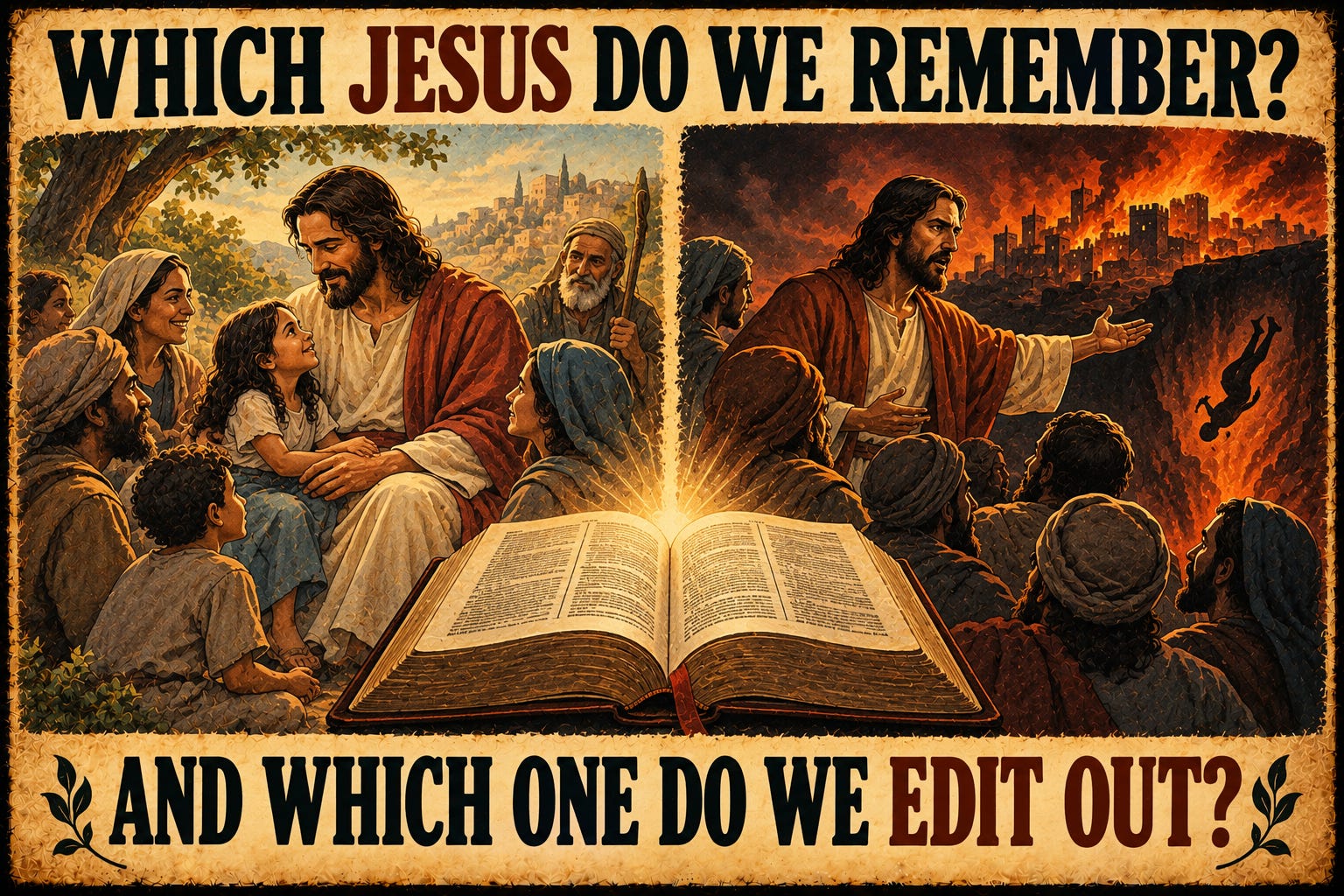
Why do we soften the troubling Jesus found in the Bible? Maybe our selective editing reveals something important about how human morality has evolved. I spent decades around Christianity, and I know a lot of thoughtful, compassionate Christians (including clergy who have studied scripture far more deeply than I have). They know the troubling passages are there. But when we talk about who Jesus really was, we tend to emphasize the Good Samaritan, the Beatitudes, forgiveness, compassion, and love of neighbor. When Jesus starts talking about swords, hating your family, burning cities, or throwing people into outer darkness, suddenly we need context, metaphor, translation, theology, and sometimes a pretty impressive amount of interpretive gymnastics. And that raises an uncomfortable question: If these words belong to the Jesus Christians want us to follow, why do we so often need to soften them before we’re comfortable hearing them? It would be easy for me, as an atheist and humanist, to stop there; to point at Christians and accuse them of editing Jesus into someone who better reflects their modern values. But that’s NOT where I’m gonna stop… because I think the far more interesting question isn’t whether we reinterpret the past. I think the far more interesting question is why we reinterpret the past. What moral framework are we using? And are we even willing to admit that we’re doing it? So, let’s dive into that… in this episode of Afterthoughts! CODA Project is a reader-supported publication. To receive new posts and support my work, consider becoming a free or paid subscriber. Get full access to CODA Project at www.thecodaproject.com/subscribe
0:00[music]
0:08SPEAKER_00Most of us know the Jesus who welcomed outsiders,
0:12SPEAKER_00healed the sick, forgave sinners, and told us to love our enemies.
0:17SPEAKER_00But the Bible also gives us a Jesus who talks about swords,
0:22SPEAKER_00divided families,
0:23SPEAKER_00burning cities,
0:25SPEAKER_00outer darkness, and terrible consequences for those who end up on the wrong side.
0:32SPEAKER_00So why does the Jesus we usually encounter today seem so much gentler than some of
0:38SPEAKER_00the stories preserved in the Bible?
0:41SPEAKER_00And what does our tendency to soften those stories reveal?
0:45SPEAKER_00Not just about Christianity,
0:47SPEAKER_00but about how all of us decide which parts
0:50SPEAKER_00of our inherited traditions still deserve our loyalty.
0:56SPEAKER_00Welcome to another bonus edition of the MTB Podcast,
0:59SPEAKER_00a segment of the weekly episode that I call Afterthoughts.