
Mostly True Alien Stories · Neal Girandola
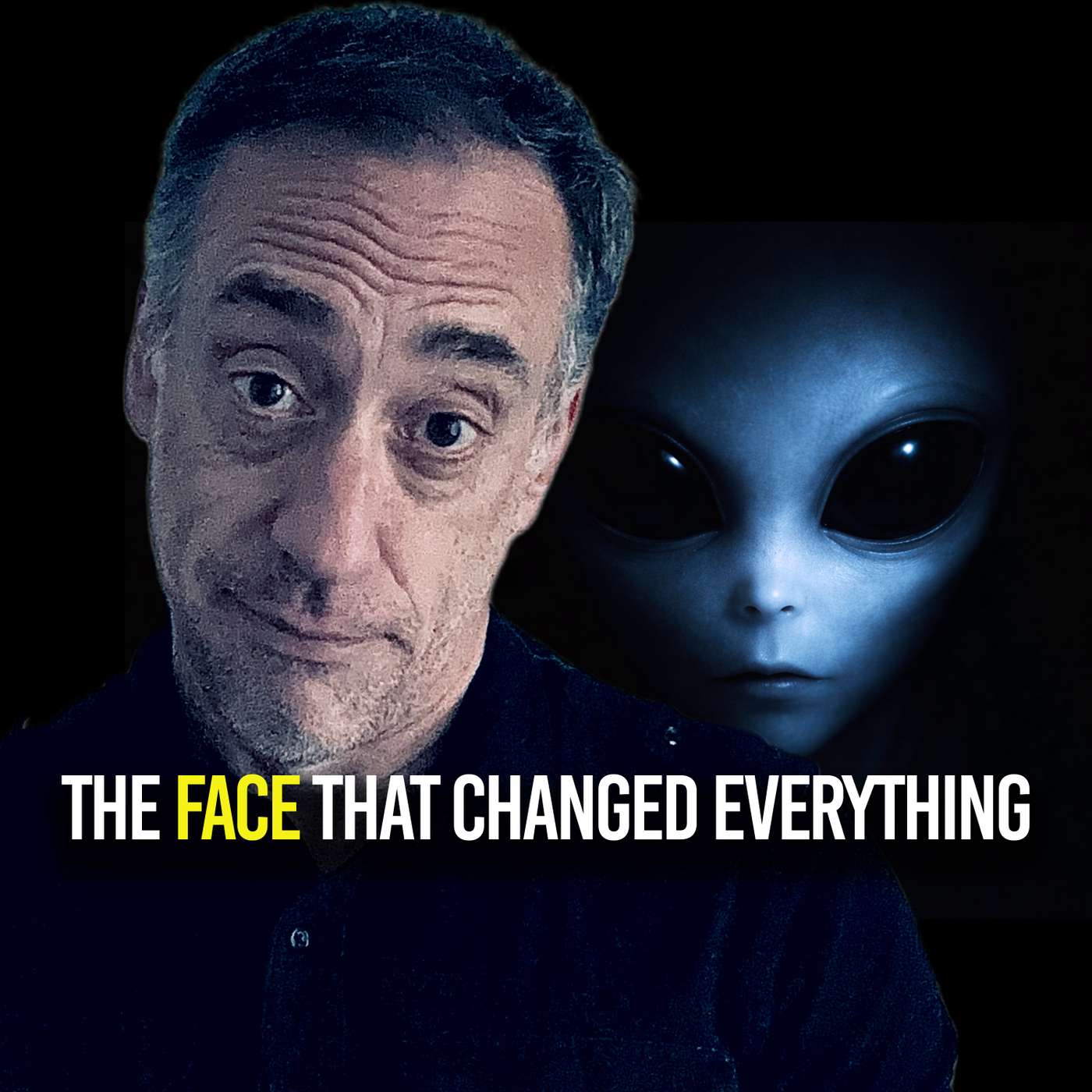
December 26th, 1985. A cabin in the Hudson Valley. A horror novelist wakes up being carried out of his bedroom. He writes it all down. The book sells two million copies. The face on the cover becomes the most recognized alien image in Western culture. Then nearly half a million readers write back to say — it happened to them too. This is Whitley Strieber. This is Communion. Neal, Andrew, and Emma dig into the case that changed everything — the hypnotic regression, the 500,000 letters archived at Rice University, the temporal lobe epilepsy diagnosis, and the horror writer who tried for a year to explain it away — and couldn't. Is this a Mostly True Alien Story? New episodes every Wednesday. Subscribe wherever you listen. 🛸
Neal Girandola (00:00) December 26th, 1985, a cabin in the Hudson Valley. A horror novelist wakes up being carried out of his bedroom. He writes it all down. The book sells two million copies. The face on the cover becomes the most recognized alien image in Then nearly half a million readers write back to say happened to them This is Whitley Strieber. This is communion. Will you Let's get into Welcome to another episode of Mostly True Alien Stories. Neal Girandola (00:45) Welcome back to Mostly True Alien Stories. I'm Neil Girandola and this is the show where we take a true report of an alien encounter from history, share what we know, then decide whether it's a Mostly True Alien story or not. of the cases we cover you've never heard of, but today is a little different. It's about Whitley Stryber and his story communion. His case is the one that changed everything for abduction research, for pop culture, and for one horror novelist who spent a year trying to convince himself it didn't happen. This is the horror writer who had a real alien encounter and could never write again. And he's so popular. Does that make this more believable or not? We're going to get into that. All right. Make sure you hit that subscribe button. whatever channel you're listening through and follow us on Instagram and TikTok at mostly true alien and joining me as always, it's the two people who make this show worth listening to even when they completely disagree about Andrew Triana and lemon G. Hi guys. Alright. Android (01:51) Hey, Bill. Emma G (01:52) Hi Neil. Android (01:56) We should just mix it up every time to like, hello Neil. Emma G (01:59) Yeah, yeah, yeah, yeah, we'll choreograph it before, but yeah. Android (02:01) have no personality. That's what I'm going to deliver from now on with no, no inflection. Just, yes. Neal Girandola (02:01) Right. ⁓ You guys should actually be like this. And when I say your names, you go. Yeah, that's it. I love that. I'm to use that cut actually. Android (02:25) extra cuts we get an extra pay, right? Neal Girandola (02:27) Yes. Yes. ⁓ huh. Emma G (02:28) Yeah, good, good, good, good. Android (02:29) Okay. Do you Neal Girandola (02:31) is on his way. Android (02:32) want to see it from the other side? Neal Girandola (02:34) Let's see what that looks like. And then maybe try saying something like, hey, like I caught you off guard. Emma G (02:41) ⁓ hey! Android (02:43) hey! Neal Girandola (02:44) That's it. All right. It's December 26th, 1985. It's the day after Christmas. A cabin in the Hudson Valley and a horror novelist who is about to have the worst and possibly most important night of his life. This is the true report. Let's get into Emma G (02:47) ⁓ Neal Girandola (03:02) By December, Whitley Stryber was not a nobody. was a successful commercially published author. with two major novels to his name, The Wolfing, a horror novel that became a The Hunger, a vampire story that David Bowie and Catherine Deneuve into a He had a wife, a son, a cabin in upstate New York in the Hudson Valley, and a career that was working. He was also, by his own account, a rational man. He a structured Western philosophical tradition that values self observation and skepticism. He did not believe in aliens and he had never had any particular interest in UFOs. Then came December 26th. Emma G (03:35) Mmm. ⁓ Neal Girandola (03:42) The night after Christmas, Stryber, his wife and their son and two friends were staying at their cabin and everybody went to bed. And at some point in the night, Stryber became aware that he was being carried. He was not dreaming. He was conscious or moving toward consciousness and something or several somethings were physically moving him out of his What he recovered in the months that followed under hypnotic regression with researcher Bud Hopkins was this. He was taken outside and into what he described as a craft of some kind. Inside he encountered beings, multiple types, small robotic figures. Others that were thin with large dark eyes and a being he described as female who seemed to be directing what was He was examined. There were procedures he found deeply disturbing and that he described in clinical, not sensationalized terms. An object was reportedly inserted near his brain. A sample was taken from his finger. He was returned. He woke up in his bed. He did not feel like he had dreamed. He felt like something had Now, Stryber spent the following year trying to understand what had occurred. He worked with Bud Hopkins, who had already documented hundreds of the production accounts through hypnotic regression. He saw a psychiatrist. He underwent multiple hypnosis sessions and he tried to find a rational explanation, but he couldn't. In 1987, he published a true story. He called it nonfiction. He submitted himself to the scrutiny that comes with that classification because he was a horror novelist. He could easily have packaged this as fiction, but he The cover, designed using his description, depicted a thin face with enormous black almond-shaped eyes staring directly at the reader. It hit number one on the New York Times nonfiction bestseller list. It sold over two million copies. And the face on that cover became the defining visual template for what Western culture imagines when it imagines an More influential than Roswell, more influential than Close Encounters, and more influential than any government Here's the detail that separates Communion from every other abduction book. After publication, Stryber received nearly 500,000 letters from readers. Not fan mail, not great book letters, Letters from people saying this happened to me, describing encounters with the same category of being, describing the same physical sensations, the same missing time, the same sense of something that felt more real than a dream and more impossible than waking These letters are archived at Rice University's Fondren Library a project called the Archives of the Impossible. They are available to researchers and they are real. Striber did not solicit these accounts. He published a book and the accounts came to him from people who had no prior connection to UFO culture and no particular reason to lie. right, this is the show that separates claim from evidence. So here's what complicates the Striber case. ⁓ He is a fiction writer whose entire career is built on making imaginary horror feel have noted that communion reads like a very good Whitley Stryber novel because it does the hypnotic regression sessions Conducted by bud Hopkins have been questioned by psychologists Hypnosis is not a reliable method of recovering accurate memory. It is in documented studies a reliable method of generating confident false Hopkins was not a trained psychologist. He was a UFO researcher The regression sessions were designed to find what Hopkins expected to finally, Stryber was a diagnosis of temporal lobe epilepsy, a neurological condition that can produce vivid, realistic, and emotionally overwhelming hallucinations, including encounters with entities. Skeptical neurologist, Steven Novella has cited this as Emma G (07:40) Mm. Neal Girandola (07:53) explanation for the Stryber experiences. so that is the report as I have it. ⁓ I'm going to now hand it over to Andrew. Andrew, I know you're going to fill in some details. I know you're going to love talking about all the hypnotic regression theories and all the science behind that. And then the three of us are going to weigh in on whether we think this is a mostly true alien story or not. Andrew, Android (08:18) is it okay if I just weigh in right now? kidding. Emma G (08:20) Wait! Neal Girandola (08:21) Well, you know, this is such a popular, this is such a well-known ⁓ movie. If you hadn't read the book, you saw the movie. ⁓ I do remember being the impression of this movie and the book when it came out. ⁓ It is horrifying. It is well written. ⁓ And it is a story that did change the way we, you know, identify an alien in a sense. So I'm excited to... Emma G (08:26) Mm. Android (08:46) Right, right. Emma G (08:47) Yeah, it's intense. Neal Girandola (08:49) To hear about it is, it is a tough one to kind of say yay and nay about, but I'm interested to hear what you did find, Andrew, or what your thoughts are on this. Android (08:57) Yeah. So I, I, ⁓ I did some research and found, ⁓ a woman by the name of Elizabeth, ⁓ Loftus. And she works mostly with, ⁓ hypnotic memory reconstruction, recovered memories. And so, ⁓ she does this whole theory of how you map memories and how you map everything. So she was talking about how, ⁓ when you look at memories, and how memories are formed. they're reinforced and then later retold. So think about it when you were a kid, right? Your mom might've said, yeah, you got that scar on your knee because you fell on the sprinkler or whatever, right? And that's reinforced to you every time you look at your knee because you're remembering what your mom told you. And then your brother's like, nah, that's not what happened. You fell climbing a tree, right? And then the memory changes and all these things happen. Neal Girandola (09:39) Mm-hmm. Emma G (09:39) I know. Android (09:54) many of these folks that have been abducted ⁓ have vague experiences, meaning that the initial memory is not there. So according to Loftus, she talked about how the memory is reconstructed and not So this becomes critical, especially in these abduction cases, that they talk them through it. They kind of lead them with questions. So they all talk about missing time and strange lights and dreamlike encounters. They have detailed abduction narratives. that emerged later, which is what we found out when he was with Bud Hopkins, my favorite guy in the whole world. So. ⁓ Neal Girandola (10:26) Mm-hmm. Yeah. So you're saying Emma G (10:32) Aw. Neal Girandola (10:34) that a guy like Bud Hopkins, who we have our things about these ufologists who are not credentialed in any way to be psychologists or to do hypnosis with them, you're saying that a guy like Bud Hopkins who comes in with an agenda, who has something, some sort of Android (10:41) Right, right. Possibly. Neal Girandola (10:55) He has an agenda possibly to maybe commercialize this, make some money off of this. And he's got a high profile author that he could possibly talk to or anybody basically that has an encounter. And then he likes the, maybe the core of that story. And he starts feeding them information that he's hoping will make their memory of this. Android (11:00) Right. Emma G (11:00) and I. Android (11:12) Well, we're not gonna call it feeding information, we're gonna call it suggestive questioning that can impact the details. Okay, so just so that everyone's aware that during hypnosis, people become highly suggestible. So it's just like if you've ever gone to a hypnosis show and they're like, okay, I'm gonna say the word sphincter. And when I say sphincter, you're gonna think you're a monkey, right, or a chicken, right? And then all of a sudden these people start doing Emma G (11:18) ⁓ Hmm... Yeah. Neal Girandola (11:18) Yeah. It's leading. Emma G (11:28) Mm. Neal Girandola (11:33) Mm-hmm. You're gonna act like a chicken. Yeah, sure. Yeah, yeah. Yeah, I don't think I could be hypnotized. Do you? you? Lemon? Emma G (11:43) I don't think I could either. No, I'm too much of a... I've tried it before and I am constantly thinking like, okay, is it happening? Is it happening? Is it happening now? Yeah. Yeah. So no, doesn't. Neal Girandola (11:53) You're right, am I there? Am I in it? Am I in it? Yeah. Yeah. Android (11:54) Right, right. Neal Girandola (11:57) I don't know. How about you, Andrew? Could you be hypnotized or no? Android (11:58) So I don't think so. I don't think I can focus that long enough on one person. Neal Girandola (12:03) You're getting sleepier. You're getting sleepier. That's it. Okay, now you're just relaxed. Yep, there you go. Now you when you wake, you're not going to be a dick anymore. You're not going to be dick anymore. When you wake up, you're going to be very nice and gayer than you already are. Okay, and Emma G (12:10) And now you're. Neal Girandola (12:25) Hi. Android (12:24) Hi! It worked! Look at me! Neal Girandola (12:33) He's okay. ⁓ Android (12:34) Okay. All right. So, exactly. Leading prompts. That's what I'm talking about. And then that later becomes experienced memories is what happens. narratives like... Neal Girandola (12:41) Yes. Okay. Yeah, it's interesting. Okay. Like you're Emma G (12:47) Interesting, yeah, that's cool. Neal Girandola (12:49) making me think about like something that has happened to me in the past. Like I do have a scar on my leg and I always thought it was from something. Now I'm questioning it. Maybe it's maybe it is alien abduction. Not, not a scar from falling. Emma G (12:55) I do. Android (12:59) It's an alien abduction. was a blonde. It was a tall blonde Dutch looking alien that appeared in your bedroom. She had braided hair on her thighs and very hairy armpits. Yeah. Yeah. It's all coming back to you, right? It's all coming back to me now. OK. So in these abduction narratives, when you think about it, there's all these familiar patterns, gray aliens. Neal Girandola (13:07) with braided air-water thighs. Emma G (13:12) Mm. Reinforcing, it's happening. Neal Girandola (13:14) Wow. That's all coming back to me. Yeah. All right, so what? Mm-hmm. Android (13:28) medical examinations, spacecraft interiors, things that they'll see, like they'll show them movies or something like that, their future. So Loftus shows that memory is influenced by post-event information. So it's kind of filling the gaps. So through repetition, through talking, more details can be added, and then that story becomes more confident. Neal Girandola (13:48) Okay. Emma G (13:49) All right, yeah. Interesting. Android (13:56) and confidence grows faster than accuracy. So now, you it's you went fishing and you caught a fish that was this big. And now that fish is like two feet long. It pulls you into the water. It's all of that. The other thing that we have to talk about with a lot of these abductions is sleep paralysis. So sleep paralysis is the inability to move, feeling present in the room, feeling pressure on your body, having intense fear. These are all part of sleep paralysis. Neal Girandola (13:59) Mm-hmm. Mm-hmm. Android (14:26) So Emma G (14:26) I have a question Neal Girandola (14:26) Yeah. Emma G (14:27) about sleep paralysis. Can you feel like you are levitating? Because I know I've heard about feeling pressured down, but you can feel like you are lifted Android (14:27) sure. I think it depends on how long the session lasts. People experience for longer periods of time. And I don't know, there's no way to know because you actually think that whatever is happening to you is truly happening to you. And maybe it is, maybe it's like a, you know, a dimensional door that's opened and you're being, you are being Emma G (14:38) Mm-hmm. Neal Girandola (14:53) when it comes to an author as a horror author, I wonder a couple of things are just popping in my head as you're explaining this, because it's all very interesting. The fear of all of that or, you know, whatever he goes through, I wonder if a horror writer like Whitley Stryber gets scared or scares himself at what he writes. No, but to the point where you become Emma G (15:13) Yeah, no, it's a really good point. Yeah. Yeah, it's a really good point. Android (15:16) Right, right. Neal Girandola (15:19) obsessed with that fear and that fear could take over your what you are experiencing and feeling when you sleep or what you go through. I just wondering if that is a thing. Emma G (15:28) Absolutely and dreaming about yeah Android (15:30) Well, right. The thing with communion too is that it did have a lot of, you know, it was relevant to every other abduction story, Betty and Barney Hill, all of those famous abduction stories, it had elements of all of that in there. So we don't know. He never came out and said whether he was researching doing a UFO book. That's not evident, but he had to research Wolfen. You know, he had to do research on that. So could it have influenced him? Yeah. Neal Girandola (15:38) Yeah. Yeah. But yeah, that's what I mean. He's he's is yeah, his mindset is to scare and horror and blood and guts and you know, horrible things. So Emma G (15:59) Anyway. Yeah. Yeah. Right. Right. Android (16:04) Yeah. Emma G (16:06) But didn't you say he didn't write horror after that? Is that what you said in the opening? Neal Girandola (16:10) well no from that point on he wrote i think think he wrote three books after that were all ⁓ not hot or on the alien leaning towards the alien stuff Android (16:18) not horrors. Yeah. Yeah, more alien because Emma G (16:21) okay, gotcha. Android (16:22) it was his biggest is actually biggest success was communion. So just gonna Emma G (16:26) Gotcha. Well, and I Neal Girandola (16:26) Yeah. Emma G (16:27) also think it's curious to think, the consistency across the board, is it good that it's consistent or is it bad? Is it they're taking inspiration from other stories or is it just truly aliens and the story is consistent? Android (16:43) Right. Well, the other thing that I'm going to bring up what Loftus research also suggests, she says all these memories have a common pathway. So there's always a trigger event. Right. So there's always either sleep paralysis or a dream or a light in the sky or some sort of stressful event. The second thing that she mentions is ambiguity. So an unclear memory or Neal Girandola (16:46) Yeah. Okay. Android (17:03) So then suggestion comes in with hypnosis or interviews or media Neal Girandola (17:07) is loft is just an expert on this or was loft is weighing in on striber. Was she weighing in on striber? Android (17:10) Yeah, that's what her main, she's, well, she, no, she was an expert in these memory reconstructions. That's what she, she's focused on her whole career. But she got involved in this because she was like, this is weird, you know? So let's, then there's the reconstruction, which is where the brain builds a coherent narrative of the situation, of the Neal Girandola (17:17) Okay. Android (17:32) And then reinforcement, Neal Girandola (17:33) To help you make sense of Android (17:34) right. And then reinforcement, repetition. Neal Girandola (17:34) Yeah. Android (17:37) Validation by others. That's the main thing. Validation by others. So let's just talk about, can I talk about my best friend, Bud Hopkins? Neal Girandola (17:42) Right. Emma G (17:42) chills. Neal Girandola (17:47) Yes, you love Bud Hopkins. Emma G (17:47) Yes. Android (17:48) I love Bud Hopkins. You know why? Because he was an artist, a painter and a sculptor. That's what's his job. He had no formal training. Yeah, it's... Yeah, he had no formal training. He had no formal training in psychology, psychiatry, or clinical hypnosis. No training. Neal Girandola (17:54) Hmm. Hmm. That makes sense that it makes sense that he's doing ufology and and ⁓ hypnosis. Yeah. ⁓ Emma G (17:56) It's lovely. Neal Girandola (18:11) Huh. Emma G (18:11) Hmm. Neal Girandola (18:13) Interesting. Emma G (18:14) What defines a ufologist? Maybe I... Okay, got it. Android (18:18) I'm a ufologist. And you know what? Neal Girandola (18:18) I'm a ufologist. Android (18:21) As of today, Emma G (18:26) Mm-hmm. Neal Girandola (18:27) ⁓ huh. Android (18:28) you are a ufologist. Congratulations. Neal Girandola (18:30) You're a ufologist and you're a ufologist and you're a ufologist. Emma G (18:33) Thank you. No, no, not everyone. Me. I made it. I made it. Thank Android (18:37) More on- Right? Neal Girandola (18:41) You're Here's the thing. I see where you're headed for this. I, and I love it. You know what? I just, you know, it makes sense that you just explained that Bud Hopkins was a very creative individual. He's very creative guy. And, and as that business sense too, he sees a, he may, and I'm not saying this is what he's doing, what he has done, but you know, when you identify an opportunity that you can, Emma G (18:52) Mm-hmm. Android (18:52) Yeah. Neal Girandola (19:09) creatively exploit, you're going to dive headfirst into all the tools that you need to be able to make this a commercial project product that you can make money on. So. Android (19:21) So I wrote a great line about Bud Hopkins. He approached at recession with a working assumption. Emma G (19:29) you Android (19:30) So he already assumed that they had been never did the hypnosis to determine whether they truly were abducted. He went into every hypnosis session as if they were Neal Girandola (19:37) Right. Android (19:42) And that gives strength to Loftus's theories. Emma G (19:42) ⁓ interesting Wow. Android (19:46) Yeah. Neal Girandola (19:47) yeah. yeah, sure. He's he's building that memory for those individuals, basically, because he's already assumed they've been abducted. But it's also maybe a technique of his that again, if I can make money. If I can make Emma G (19:50) end Wow. Android (20:01) Wait, his non-theory technique? Neal Girandola (20:05) if I can make money off of you what your story is, why would I try to why do I why should why would I try to disprove that you had an abduction? Android (20:09) yeah. Neal Girandola (20:16) Why I make more money if I prove or if I can take your story and make it a bigger story about you being abducted by aliens than than trying to say this didn't happen. I make more money saying it did happen. Emma G (20:24) And validate it. Right. Yeah. Android (20:24) Right. Right. So one thing that Bud did not do during his clinical hypnosis that he called, in real hypnosis, there has to be neutral questioning. There has to be strict avoidance of suggestion. And there has to be careful documentation. Where Hopkins is self-taught, he didn't follow any standardized forensic or therapeutic protocols. Emma G (20:31) and Neal Girandola (20:43) Mm. Yeah. Emma G (20:47) and Neal Girandola (20:58) Right. Android (20:58) and he often worked outside any clinical oversight. So he didn't even have like a real clinical doctor there to do this. So. Emma G (21:08) Was there a transcript or a recording of it? Neal Girandola (21:10) wish we had a researcher that could Google that, maybe check. ⁓ She hasn't started yet. She starts in a few weeks. Yeah. Android (21:15) We actually hired that girl starting next week, right, Neil? Yeah, okay. Okay, Emma G (21:16) you She's Android (21:21) okay. Emma G (21:22) starting right now, hold on already. Neal Girandola (21:24) We're going to take back your ufologist license in a minute. Android (21:26) Yeah, you're done. Retracted, redacted, we redacted it so no one can see it. And now we are formally. Emma G (21:28) No, Neal Girandola (21:31) Yeah, that's right. Yeah. I Emma G (21:32) And that's why we're hiring a researcher. Neal Girandola (21:35) also also lemon check to see if bud Hopkins worked under an organization was paid for by anybody. Like, I don't think he made money till he sold books. My Yeah, yeah. Yeah. Emma G (21:43) Okay, was bad. Android (21:45) So his questions. Yeah, yeah, yeah. And he had some books. He had some books. He had The Missing Time and Intruders, which was made into a movie, remember? So, yeah, but he did all right. He did all right. But his questions were questions like, what did they do to you? What did the beings look like? Leading the witness, Your Honor, that's what I'm going to say. Neal Girandola (22:00) That's right. Yeah. Mm. those are real quite those are real questions he was asking ⁓ Android (22:19) Those were real questions as he was asking. Emma G (22:22) would like to know the progression. I wish there was a transcript because I want to the progression of the questions. Like, okay, what are you seeing in this moment? And then maybe to those. Android (22:29) So... They're taking me! They're putting it in my again! Emma G (22:38) You Android (22:40) it. I like it a lot. like it so much. I like it. I like it. Okay. Neal Girandola (22:44) So he wouldn't ask questions about their past or their childhood or anything. was just, he'd go from that comment from this guy and build on it. Android (22:47) No. No. And then he would encourage them to visualize it more and to elaborate. Tell me more about it. Tell me more. Yeah, I love it. And this, guess what this does? This directly connects to misinformation Neal Girandola (22:59) Yeah. Can you see their eyes? Yeah. Emma G (23:02) Mm. Android (23:08) which means that you are affecting this person's Neal Girandola (23:09) Okay. Android (23:11) And then when they come out of it, you're like, my God, in the notes, you said that. that's right. They did do that to me. They did do that to me. It was so Neal Girandola (23:12) Right. Emma G (23:11) Mm. Android (23:20) So. Neal Girandola (23:20) Yeah. So I see what you're saying. you saying this just to give us both sides in a sense? You're not, do you, do you already agree that maybe that's what happened with striber? Because there's a lot going on when you got a guy at that level, you know, who writes like this, he's creative. He's got all these things. I'm not putting it up. I'm not putting it past striber yet. Android (23:27) Yeah, right. Not yet. They're still, still... Right. Right. Neal Girandola (23:43) that he made it all up. You know what I mean? Android (23:44) But Hopkins didn't stress things like sleep paralysis or dreams or trauma-related imagery or anything like that. Instead, it was always about the abduction. And it was always about asking him questions about what you saw, what did they do to you? Tell me more about what they did to you. Tell me. I'd like to know, did they touch you? Yes, they touched me. Did they touch you where? Did they insert something in you? Yeah, I... Neal Girandola (24:00) Mm-hmm. Yeah. Yeah. Yeah. Emma G (24:03) and Android (24:13) ⁓ I feel it. I feel it. They inserted something into me. Neal Girandola (24:16) movie. Emma G (24:16) found that they he was he was just an independent expert. He founded a foundation in the 1980s it was the intruders foundation and then there is no specific Neal Girandola (24:26) You're in my spot here. Android (24:33) here's Neal Girandola (24:32) What is Bud Hopkins net Android (24:34) What was his net worth, I guess, yeah. He did, right, he did. Okay, so Loftus, let's go back to Loftus because she suggests that Hopkins methods. Neal Girandola (24:36) Or what was it? Yeah, he's not around anymore. But what was his net worth when he died? But I just want to clarify loft is you're bringing in loft is as an egg subject matter expert in this. Hold on. Hold on. Yes. So you're bringing her in as a subject matter Android (24:48) Because she's an expert in false memory science. Yeah, sorry. Neal Girandola (24:55) She's not related to this case at all. There's no there's never she's never talked about it or anything like she's just a subject matter expert in in hypnosis and regression. Okay. Got it. Yeah. Which I love. Okay. Got Android (25:01) No, no, no. Emma G (25:04) in this topic. ⁓ Android (25:04) Right. False memory science. Emma G (25:09) Hopkins is worth one through $5 million. Android (25:12) Well, okay, that's not bad. Emma G (25:13) Yeah. Yeah. Sounds good to me. Neal Girandola (25:13) good living for making shit up. Android (25:14) Yeah. Yeah. he was considered an authority, right? So Striber would have gone to him because Hopkins said had done all this before. So he's already considered an authority and UFO Neal Girandola (25:23) Of course, yeah. Android (25:27) He is suggestive questioning. Imagination is encouraged. He encouraged imagination because I saw the videos of him and Linda Napolitano talking about, Linda, this is so terrible. I mean, we heard all those conversations. It was just. Neal Girandola (25:27) Yeah. Yeah. That was the New York case where she was floated out of a window on her top story building and into a spaceship by aliens. And that this this guy. Yeah, I mean, this is what she was being chased by people and things like that. It was just a crazy story. Android (25:43) out of a window, right? Emma G (25:47) Whoa. Android (25:56) So this has Emma G (25:57) ⁓ god. Android (25:57) five, according to Loftus's work, this has five major red flags. So there's an authority figure, which we're going to call Bud Hopkins. We have suggestive questioning because he is not a professional hypnosis person, okay? He encouraged them to use their imagination under hypnosis. Neal Girandola (26:11) Right, so his questioning is... Yeah. Mm-hmm. Android (26:19) and social reinforcement was used also. And then the cultural template of Existing alien imagery So technically, if we had a hypnotist, we could hypnotize you and tell you that you were abducted and plant these memories in your head that that scar on your leg was actually an alien that came to you years ago. Neal Girandola (26:26) Mm-hmm. Mm-hmm. Yeah. Emma G (26:28) Hmm. Android (26:44) And. Right. Neal Girandola (26:44) We can make you think all of these things. Emma G (26:44) Boy, it's Neal Girandola (26:46) Point received. Okay. Emma G (26:46) like brainwashing. world is invalidating you. know, Bud Hopkins, you know, with the world invalidating you, maybe he's just like, hey, I believe no, we don't like that. Yeah. Android (26:57) that's it. So, Bud Hopkins would say, yes, this did happen to you. Let's recover That was his mindset. Neal Girandola (27:01) Right. He's got Emma G (27:01) right. Neal Girandola (27:03) his partner in crime, so to speak. I'm going to agree with you on everything you say, because now we're going to we're going to build on it. Okay. Yeah. Because again, I think Bud Hopkins was a businessman and I think he saw opportunity and he could build upon it. One, you got a very famous author to use got this story that definitely is the, the germination of something that could be really exciting to tell. Android (27:07) Right. Yep. Yep. Emma G (27:09) Yeah. ⁓ Android (27:15) Right. Neal Girandola (27:27) But again, I don't know. I don't know if if Striber made it up himself too and brought in Bud Hopkins and maybe he was leading Bud Hopkins along the way. You know what I mean? Like using Bud Hopkins to validate what he's going to do. It could be. It's a clever ruse. You know. Emma G (27:33) No. Android (27:38) Maybe, yeah. Emma G (27:38) Yeah, right. Maybe it's using him. Yeah. Yeah, and they're both, they're both, yeah. Yeah, they're both using Neal Girandola (27:46) OK, what else you got? Android (27:46) agreed. So I did some research on ⁓ a doctor from Harvard who was a psychiatrist and a therapist and a specialized in hypnosis. His name was John, Dr. John E. Mack. So I did this comparison between just to let you know, yeah, and he talks about therapy, right? And how it works and how this hypnosis regression. Neal Girandola (28:02) Okay. heard of him. But he had nothing to do with communion. He's not involved in this circle either. Okay. Android (28:16) nothing to do with communion, but I'm just bringing in another expert showing the difference between Bud Hopkins and Johnny Neal Girandola (28:20) Okay. Yeah. Android (28:22) Okay, so. Neal Girandola (28:22) And how that I was Emma G (28:22) Sure, yeah, Neal Girandola (28:23) going to ask that next. How would he go about it if he was credentialed Emma G (28:24) right. Android (28:27) Well, let's his approach would be more of a therapist, more of an explorer, right? So if you compared Bud Hopkins to Johnny Mack, you've got Bud Hopkins, artist, no clinical training. Johnny Mack, Harvard Emma G (28:32) Mmm. Neal Girandola (28:32) Mmm. Right. Android (28:43) Bud Hopkins, investigator, believer, right? And then you have Johnny Mack. Neal Girandola (28:47) I want to hear how each would ask a certain question. Emma G (28:51) Yeah, that's what I want to hear Android (28:52) So, well, I'm gonna get to that in a second. when you... Neal Girandola (28:52) How does that work? Let's fucking go Emma G (28:58) Let him cook. Android (28:59) Just let me cook, will ya? Neal Girandola (29:01) You are telling the story quicker. Android (29:04) I am telling the story quicker. Emma G (29:08) ⁓ God. Android (29:08) Okay, all right, so Mac took a different stance on this stuff. So the experience is real to the but may not be strictly physical. So he was open to interpretations like psychological, symbolic, spiritual, possibly physical, meaning like moving them, having them show on their bodies like weird, know, show me on the dolly where the bad man touched you kind of thing. So. Emma G (29:16) Mm. Android (29:34) He conducted long in-depth interviews that focused on emotional and personal meaning. He used hypnosis, but he used it very cautiously. So he didn't challenge the narrative. Okay. He doesn't challenge their narrative. He also validated, often validated the experience, but he didn't sit there and have them explain everything or tell me more about what you Neal Girandola (30:00) wasn't leading them to build upon things. He was getting their story before he would even use the tool of hypnosis. Okay. Android (30:01) because he knew, yes, yeah, yeah, yeah, he knew that hypnosis can blur your imagination and Emma G (30:10) ⁓ Android (30:12) that. Emma G (30:12) So he would just wait for them to speak? wouldn't? Okay. Android (30:15) He would write. It's like if you've ever gone to therapy, your therapist doesn't tell you, your therapist should never tell you what you're thinking. They need to let you speak. If you don't speak, then that's just me telling you what you're thinking. So. Emma G (30:23) And then I Right. That's interesting. Neal Girandola (30:29) Yeah, I wonder I wonder how many how many encounters people that are experiencers have gone through this and have been led down the wrong path by an inexperienced hypnosis session. this. Emma G (30:41) We used to hypnotize people in high school. My friends and I, would, you sit in a dark basement. Well, okay, sorry. Doesn't have to be a basement, but you sit in a completely, yeah, yeah, we took them to the basement and then a completely dark, no windows. And then you go like this on their temples ⁓ and they, the subject that is being hypnotized counts backwards from a hundred. And at some point they start repeating the numbers. Neal Girandola (30:51) So you'd take them all to the basement? Android (30:55) Goodbye. Neal Girandola (30:56) Mm-hmm. Emma G (31:11) And that's when that's like your cue that they are now in the hypnosis state. And then you can start saying, what do you see in front of you? Neal Girandola (31:19) yeah, we would go to parties. Yeah. We're going to hypnotize you guys tonight. Android (31:19) sounds weird. Well. Emma G (31:19) would get drunk and be like, let's go to the basement and hypnotize each other. Yeah, that's how I got prom queen. Neal Girandola (31:26) Yeah, there you go. You will vote for me as prom queen. Emma G (31:32) god, I hope this isn't clipped out and put on the thumbnail now. Neal Girandola (31:35) you Android (31:35) So, Neal Girandola (31:36) Andrew hates it when you say prom queen because he was he was not he was never prom queen. Yeah. Android (31:39) I was never prom queen. I was never prom queen. No, Emma G (31:39) Because you weren't. Well now we're friends. It's okay. Android (31:43) that's okay. Cool. Okay. So I would, if I had brought up that the whole thing earlier about Hopkins, right? This happened, let's uncover it, right? To where Mac approached it as this feels real, let's understand it. See, so that's two totally different, two totally different, Neal Girandola (31:45) All right, so how would he do it? Mm-hmm. Yeah, that all makes sense. Yeah, so right. Android (32:06) two totally different. Neal Girandola (32:06) All right. We've established the experts. We understand that whole role of this. What else do you have? Do you have anything related to the actual story that he told? Android (32:18) No, the story is pretty much it. It's never changed. ⁓ Same thing I found Ian is in a cabin with his friends and then he gets abducted and he's pulled and blah, blah, ⁓ Neal Girandola (32:20) Yeah. Yeah. Yeah. Yeah. So your emphasis here is that there's two sides to doing, there's two ways of doing this. There's some that lead and use hypnosis to have that experience or build on it and maybe fabricate to a point where they believe it, that that's how it happened. Whereas Mac, the other, the, the credentialed guy who knows how to do it. He wants them to just tell their story. Android (32:44) Right. Yeah. Neal Girandola (32:55) He's going to find his moments where he thinks hypnosis should be used as a sparing tool throughout to to ⁓ to elaborate upon whatever their experience was. But he's not ever feeding them that information or Android (33:06) Right. Neal Girandola (33:09) make up whatever they think they they need. Android (33:11) No, no, no. The other thing that we can talk about that I did in my research too was I did some research on TLE, lobe Neal Girandola (33:21) what Stryber has. I said that in the beginning. Yes. So how does that affect anything? Emma G (33:24) Mm-hmm. Android (33:27) Well, because it affects your emotion, affects your memory, sensory processing, and sense of presence. So not all seizures are dramatic convulsions in TL-E. ⁓ Many are partial. That can feel like a vivid dreamlike experience, or an intense emotional fear, or deja vu, or hallucination. Emma G (33:30) Mmm. Neal Girandola (33:34) Mm. Yeah. Emma G (33:45) Whoa. Neal Girandola (33:47) right I wonder how common that is lemon how common Emma G (33:50) Yeah. Neal Girandola (33:51) is TLE how common is it Emma G (33:52) ⁓ I said, yeah, I wonder too. All right. Android (33:55) And that's that strong sense that's that Neal Girandola (33:56) Yeah, she's wondering. Android (33:58) someone that someone's there. Emma G (34:00) Didn't the guy that we just covered, didn't he like, didn't he experience seizures as well? Neal Girandola (34:01) I don't know. Emma G (34:06) And then he, yeah, and then he is, yeah, it was Corey. And then he had the, no, it was the man in China, Meng, yeah. And then he had, he experienced a bearded lady, or not the bearded lady, the braided lady. And he was also levitating, right? He experienced levitation, but everyone around him was seeing him have a seizure. Interesting. Neal Girandola (34:06) Tory? Hmong. Hmong? Android (34:14) Yeah. Yeah, he had this right. Braided braided thighs. Yes. Yep. Neal Girandola (34:25) I mean, yeah. How many diagnosed cases of TLE are there in the world Emma G (34:33) About 1 in 26 people will develop some form of epilepsy in their lifetime. Roughly, Neal Girandola (34:39) But that's not the same thing. Emma G (34:41) well, okay, hold on. A significant portion of those cases are TLE. Around 0.5 to 1 % of the general population. But then there's a percentage of that. So it's very small. Neal Girandola (34:55) Sure. Can you see if there are any ⁓ experiencers, alien encounter experiencers that have been diagnosed with TLE? Emma G (35:01) Mm-hmm. Okay, Neal Girandola (35:08) So all of this is making sense. What I'm finding, what I, it's, it's interesting because I did have, ⁓ I had a decision in mind on whether this is mostly true or not heading into this, but hearing these details from you and thinking and putting the combination of it all together with who Stryber is and what he's written and the genre he lives in. Yeah, go ahead. Go ahead. I'm, I'm, Android (35:29) So, right, so. So, Neal Girandola (35:35) I'm just thinking out loud on this. Android (35:35) Stryber, right, so Stryber described what? Overwhelming film fear, right? Profound significance and hyper real imaginary things, right? So he felt all this, right? Well, TLE episodes are known for intense emotional episodes. I mean, they're just like intensely emotional and the experience feel more real than real. Neal Girandola (35:44) Yeah, yes. Yeah, which probably makes him a good writer. Android (36:00) Yeah. Emma G (36:00) What do you think there so When we go into another dimension another realm like we talked about sleep paralysis we talked about these other realms Neal Girandola (36:08) Yeah. Emma G (36:12) I'm wondering how, like maybe we access them differently than we think. Maybe it's not our physical body and it's more our mind space and we're able to access them in a different way. So when we think about these alien encounters and maybe they are in another realm, are we then accessing them like in a dream state or when they're going through these seizures, it's a different mind space. So now our soul or our body or our mind is is entering those realms, but our body stays here. Like maybe it is there. Yeah. Yeah. Yeah. Like their soul or their mind, maybe it is real and a real place that, yeah, yeah. But their body has to stay here. Neal Girandola (36:44) So it's really happening to them. but. Android (36:55) dimensional door. Neal Girandola (36:55) Right. could be, I'm trying to figure out what you're saying in terms of relating it to, is this related to the TLE or you're just saying overall this is an experience that, in general. Emma G (37:09) in general, that's just my theory. But the TLE, says that there is strong theoretical overlap ⁓ between TLE symptoms and some encounter reports, but there isn't any solid case-by-case medical confirmation. Neal Girandola (37:24) I think that should be in the questionnaire for all experiencers or something along those lines testing testing or Android (37:24) So, yeah. Emma G (37:28) Yeah, keep put it in the list. Android (37:31) So when we look at memory reconstruction, we can look at it after the fact in Stryber's case, So his memory and his narrative became more detailed. He wrote a book about it, right? So that considered, you know, he journaled it. So he wrote a book. He reflected on it. And then, right. Neal Girandola (37:44) Mm-hmm. Yeah. Yeah, but he was already an author. You know what I mean? It's not like he, you know, it's not like he's going to try this experience. He's a fricking writer. So I can imagine as you're writing them, I write, you know, you dive deep into that imagination. And if you've got a, you know, an idea or you had an experience and you want to write about it, you're still thinking you try to be true to maybe if it's real. Android (37:56) Right. Yeah. Emma G (37:57) Mm-hmm. Neal Girandola (38:17) to that encounter itself, but as a seasoned author, you're definitely gonna build upon that. You're going to make this a commercially viable story to be able to sell it. So, I don't. Emma G (38:30) Yeah. Well, any memory has gaps. So you have to fill in those gaps like any you're gonna you know, you have to fill in the gap. So it's just Neal Girandola (38:36) Yeah. that could be where Bud Hopkins came in for him, just helped him actually develop these storylines out even more. And Bud Hopkins not even realizing that he's helping him Emma G (38:42) Mm-hmm. Neal Girandola (38:51) That's where I think this is a challenge, but okay. All right, this is all good stuff. Is there anything else you wanted to add? One last thing, because I think it's time to weigh in. Android (39:00) No, I think that's, yeah, it's time to, it's time to weigh in. ⁓ I mean, I found some other things about Stryber. He said that he witnessed the, ⁓ the shooting at, university of Texas at Austin back in the sixties. said he was there. ⁓ and then when they really dug into it and from a timeline, they realized that from where he said he was standing, he would not have seen anything, but he says he saw it. Neal Girandola (39:13) Mm-hmm. Yeah. Yeah. Android (39:24) that's why it really falls into, that's why I was really excited to do all this research on Elizabeth Loftus because that's what she's talking about, this whole memory reconstruction. Neal Girandola (39:24) Yeah, I heard that. I heard that. Android (39:34) And remember, his influence is gonna be that, yeah, he was there in Austin. Yeah, he was there, he heard the gunshots, but he didn't see anything. But in his memory, he did. Emma G (39:35) Yeah, that's it. Neal Girandola (39:35) Right. Emma G (39:44) And trauma, know, trauma can really affect the mind too. Android (39:47) Yep. Yep. Emma G (39:50) Hmm. Interesting. Neal Girandola (39:50) That's true. Okay. Android (39:51) that doesn't mean that he fabricated it. It just means that through everything that happened to him, his life experiences, it now became a real story. Neal Girandola (39:52) All right. sure. Not only life experiences, but his influences too. Like the guys like Bud Hopkins or the hip. was not only seeing Bud Hopkins too, right? He was seeing other therapists and he was seeing other people. Yeah. So he was really lit. If he was making this all up, he was really going through the paces to make it look like he was getting seeking help for this and, trying to figure out what really happened to him. So Emma G (40:00) Yeah. Android (40:08) He saw other people, yeah, yeah. Emma G (40:10) you Neal Girandola (40:23) ⁓ It was all the same. All right, there's all good information. I love it I love this side of the story and now I'm gonna hand it over to lemon lemon Do you think that this is a mostly true alien story or Emma G (40:33) Hmm, do I have to go first today? Yeah. Yeah, I'm gonna say no. I'm gonna say no, but I really like it. I like this story. I do. And I, I will say I'm contradicting myself here right now, but I don't have a problem with consistency in the stories. I actually appreciate consistency in, in throughout history and the alien encounters. So I, Neal Girandola (40:34) based on what we just discussed, right? Based on everything we just discussed. Emma G (41:03) I feel that he definitely experienced something. I would like more research in sleep paralysis. I would like more research in interdimensional worlds. But at this very moment with what we talked about today, I'm going to say no. Neal Girandola (41:19) Okay. I'm surprised by that. would say I would think that you would think that this is a mostly true alien story. All right, Andrew, it is now your turn to weigh in. Is this a mostly true alien story or not? Android (41:30) I would like to take it from the approach of Elizabeth Loftus. I believe that this is not a mostly true alien story. I believe Mr. Stryber is an amazing writer, an amazing imaginary person, but I do not believe that he was taken into a ship. Neal Girandola (41:39) Yeah. Emma G (41:50) I'm stressed about my answer. Neal Girandola (41:51) Okay, alright. Android (41:52) Well, what just happened? I just channeled like I felt the channeling. Neal Girandola (41:54) You did. You Emma G (41:56) guys, Neal Girandola (41:57) sounded like... Emma G (41:57) i'm stressed about my no, i think i wanna change it, can i change it? can i say yes? i don't know i'm s- Android (42:00) Can't. Nope. Too late. It's like moving a piece. Neal Girandola (42:02) Wait, Android (42:04) It's like moving a piece on the chessboard. Took her hand off of it. Come on. Neal Girandola (42:04) I'm interested. Well, wait, I don't want to officially say you can, but I would like to know why you want to change it now all of sudden. What changed? Emma G (42:06) I don't know, this one stumped me. Because I... Android (42:16) My accent. Emma G (42:19) exactly what I said, the consistency, the yes, he was a writer. However, when you like that's who he was and he had a style. He was able to put that out. Like I think that we are fortunate that he was a writer. We were able to, like he's able to convey his experience. He's able to put it out there into the world because he's a writer. He has a style of writing, but we all do. We all have a voice that we. you specifically and so I uh I don't know god Neal Girandola (42:54) All right. Well, it seems like you're conflicted. Maybe you should get some hypnosis or some therapy to help you with this decision. Just ⁓ go to Andrew to have him recommend who you should go to. Okay. All right. So you both, you both say this is not a mostly true alien story. Although lemon, you are a little conflicted, but your initial answer was no. So we're to go with that. And to me now it's my turn to weigh in. I think Whitley Stryber is a, Android (43:02) Perhaps we will set up a session. Emma G (43:03) This isn't the first time. Okay. Android (43:07) You can go to the doctor. Yes. Emma G (43:10) Ugh. Neal Girandola (43:23) one of the most complicated witnesses that we've talked about in this because his argument has merit, right? This whole skeptic argument thing has merit. The temporal lobe epilepsy is real. The hypnosis methodology is flawed as Andrew has pointed out. The UT tower deal you just detailed that you just shared, that's a problem. ⁓ And he's a professional, like you said, Lemon, at making horror feel But all of that doesn't explain why after he wrote the book, he had 500,000 letters sent to him saying they all had the same experience. So we got to take that into consideration too. We mentioned that early in the report. none of it explains. Emma G (43:59) I forgot about that. Android (44:03) Mm-hmm. Can I just say something before you continue, please? Nobody counted the letters. These are all from him. He said he received 500,000. There was no professional audit. There was no independent audit or public verification of the exact number. So the 500,000 is self-reported. Just to let you know that. Neal Girandola (44:11) Yes. Emma G (44:30) Aren't they available though? You can go see these letters. Didn't you say that they are? Yeah. Yeah. At least some of them. Neal Girandola (44:33) Yes, they're archived in the museum. I said that up front. So that has got to be true, Andrew. I don't think he'd sit down and have 500,000 people write letters so he can just add it to a museum somewhere where you can actually go see them. ⁓ So I hear what you're saying. Again, it's all very complicated. It is all convoluted to because he is a horror writer. I think something did happen to him. I don't know that it was extraterrestrial. And then I also, there is a side of me that feels like he used Bud Hopkins to help generate this story because he had an idea and he went with it. I also heard claims to somewhere out there that the alien that's on the cover was not influenced by him, that he actually got that from another ⁓ encounter ⁓ from, I, gosh, I wish I could remember her name ⁓ that drew the typical that drew that alien face early on and that he used that on the cover of his Lemmon, see if you could look that up real quick. ⁓ the, I don't know. I don't know how you Google it, but what, what encounter did the original alien face come from? Is, guess I could do it, but anyway. Okay. Emma G (45:38) Sure. Hmm. No, I got it. I did look up really quick how common sleep paralysis is, and then we already, we talked about the epilepsy, how common that is, which is one in 26 people. Then sleep paralysis is one in three people, and it's very common. so, and again, we've talked about this before with sleep paralysis, that people will see the same entities across the board. People will all share that they've seen shadow people or, you know, there's, Neal Girandola (46:04) Yeah. Emma G (46:17) So it's possible that if all of these people, one in 26, one in three, are also encountering something that seems alien-like, that 500,000 people could write into him that they had the same experience. Neal Girandola (46:31) Oh, wow. Yeah, that's good numbers and good math for I, I'm going to give Whitley Stryber the benefit of the doubt. I don't think that he is, uh, I don't, I don't think he, lied about this experience. So I'm going to say that this is a mostly true alien story. Um, I think it's a great story and there is a lot of interesting. disparities in it, but I'm giving him the benefit of doubt. is a mostly true alien story. Did you find anything on the alien face? Emma G (47:03) Yeah, I'm not seeing anything other than Betty and Barney Hill and communion. It's not saying any other encounter. Neal Girandola (47:10) Okay. All right. All right. I may be wrong about that, but I thought I saw somewhere along the line that someone else had drawn the original. I don't know if it was like Betty Andreessen or any of those people. I can't recall. But Emma G (47:19) And... Neal Girandola (47:24) Stryber didn't want to write communion. Apparently he tried for a year to find a different explanation. He failed. He published anyway and spent the next four decades living with what that decision cost him. If you have thoughts about this or stories you want us to investigate next, drop them in the comments and subscribe, share the show and follow us on Instagram and TikTok at mostly true alien stories. Until then. Be kind to the aliens when they get here. Lemon, Andrew, nice job. See you guys on the next one. Emma G (47:53) Thank you. Bye. Android (47:55) Bye.