
Montessoripodden · Montessoripodden
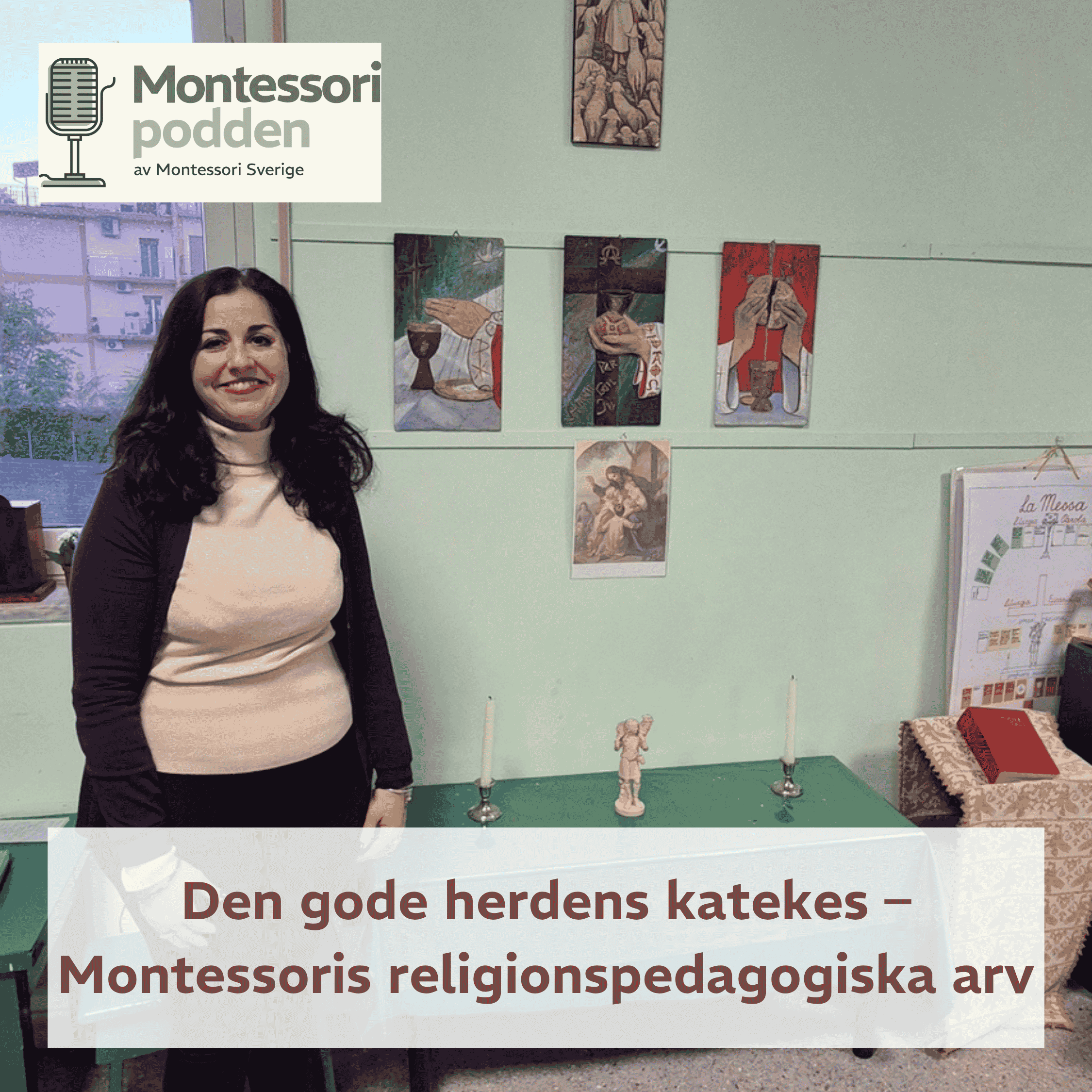
Maria Montessori intresserade sig inte bara för barns lärande och utveckling, utan också för religionspedagogik. Redan 1915 skapade hon tillsammans med Anna Maccheroni ett kapell för barn i Barcelona. I det här avsnittet av Montessoripodden följer vi med en grupp lärare från Hässleholms Montessoriskola på studiebesök i en katolsk församling i Rom. Där får vi träffa Federica Pileggi, som visar oss hur man arbetar med Catechesi del Buon Pastore, Den gode herdens katekes. Verksamheten grundades i Rom 1954 av Sofia Cavalletti och Gianna Gobbi, som hade ett nära samarbete med Maria Montessori. I ett särskilt förberett rum, ett atrium, får barnen möta Bibelns berättelser och kyrkans liturgi genom konkreta material, korta presentationer och eget arbete. Vi får bland annat vara med om en presentation av berättelsen om den gode herden och höra Federica berätta om barnens självständiga arbete, den vuxnes roll och betydelsen av observation. Men visste du att Montessoris religionspedagogik också har satt spår i Svenska kyrkan? De lekkyrkor som finns i flera svenska församlingar har sina historiska rötter i Montessoris barnkapell. Sveriges första lekkyrka byggdes 2003 på Kastlösa stiftsgård på Öland. Ett avsnitt inför allhelgona om en mindre känd del av Maria Montessoris pedagogiska arv. Läs mer: - Den heliga leken – en uppsats om lekkyrkor i Svenska kyrkan och deras koppling till Maria Montessoris religionspedagogik. I den finns också gott om referenser för den som vill läsa mer. - Den gode herdens katekes – en genomgång på svenska
Maria Jacky: Välkommen till Montessori-podden! Nu närmar sig all helgården. En helgård och många av oss besöker kyrkogårdar, tänder ljus och kanske går in i en kyrka. Därför tänkte jag att det kunde passa med ett avsnitt om en sida av Maria Montessoris arbete som vi kanske inte pratar särskilt mycket om i Sverige, nämligen hennes religionspedagogik. A few days ago, I followed a group teachers from Häsleholm's Montessori School on a study visit here in Rome. We visited a Catholic gathering where they work with something called Catechesis de Bol Pastore, or the Good Honor Catechesis in Swedish. It is form of religious teaching that was on Montessori pedagogy and developed here in Rome in 1950s. I also the opportunity to record the visit and since our world, Federica Pelleggi, told in Italian, I also to act as an interpreter in some way. this episode you will be able to follow along and hear how it went and we will also talk a little about Maria Montessori's thoughts on religious education and how that has affected the activity here in the Swedish church. My name is Maria Schakir. och du lyssnar på Montessori-podden som görs av Montessori förskolor och skolor i Sverige AB. Välkommen till Ro! speaker-0: del Buon Pastore. Questa patechese nasce nel 1954 a Roma speaker-1: So we are to into this room called Atreola di Bon Pastori Godi Heden. this started in 1954. speaker-0: a casa di una biblista. speaker-1: in Sofia Cavaletti. speaker-0: e una moltessoriana doc molto conosciuta Gianna Gobi speaker-1: and together with a food and drink teacher who was very famous. Jobby. speaker-0: dovreste conoscerla perché Gianna Gobbi ha fatto il materiale della palestrina Gobbina avete visto quella con la... speaker-1: So she has made some material and so on, it's quite well speaker-0: una stretta collaboratrice di Maria Montessori e Adele Costannocchi. speaker-1: And then another woman, Kostan Jocke, was also co-worker with Marja Montessori. So these are all who worked together with Montessori. speaker-0: Questa stanza si chiama Atrium. speaker-1: So this is atrium, know, inside, goes through. speaker-0: perché è una finestra, una entrata prima di entrare in chiesa. dico una cosa così, avete in mente, se le avete viste, se le conoscete, vedi tu come vuoi dire, le basiliche romane maggiori, San Pietro e... speaker-1: So the with Atrium is that it's like a window and a kind of preparation before you enter the church. big basilicas in Rome, example, St. Peter's but also Maria Maggiore, they have as such a, what shall we say, a pre-match, as pre-match, when you prepare yourself. Maria Jacky: a business that started in Rome in 1954. But the go back longer than that. Maria Montessori was early in the religious development and already 1915 she and Anna Maccherone a chapel for children in Barcelona. Just like in her previous teaching, was about creating an environment adapted to the children. Here children should be to meet the church's precepts and rituals by being active And this actually has a connection to Sweden. Have you seen these small playgrounds that are in some the church gatherings? In some cases it a small, independent house, but in most cases you it when you go into the church directly in the of the church room, are small trees, altars, sometimes be clothes so that child can get dressed in priest clothes and play both the wedding and the funeral and nightlife and everything. Where the child can play in church, all these roles and get with those who belong to the And what you might not have is that this idea actually roots in Maria Montessori's religious pedagogy. In 2003, Sweden's first play church was on Kastblösa Stiftsgård on Öland. The initiator was Karin Udling, and she had already by her education in Uppsala in the 60s 70s. All of this is described in a book called The Holy Play. I link it in the that belongs to this episode in the But then there is an important difference between the churches and what we Swedes get to here in Rome. In the playground church, the playground itself has a central place, but in the candy catechesis, work instead with prepared material and presentations. almost like in a Montessori preschool. And this becomes very clear when Federica starts to us around. speaker-0: Questa è una stanza molto speciale. speaker-1: This is a very special room. speaker-0: In questa stanza entreremo per conoscere Gesù che diventerà nostro amico molto prezioso. speaker-1: And here we go in to let you Jesus, who will be our very special friend. speaker-0: in questa stanza non si corre non si salta non si strilla speaker-1: Here you don't And you don't speaker-0: non si grida. speaker-1: And you don't You need to move around a little bit and talk in a special way. Do you to it? speaker-0: Vorete vederlo? Fuori la stanza si parla così. speaker-1: In you talk like this, and in the room you like this. speaker-0: fuori si parla così il tono della mia voce era lo stesso speaker-1: I'll the same tone on the rest. It should be different. speaker-0: che c'era di diverso? potete rispondere Allora, io dobbiamo entrare, ci dobbiamo preparare in un certo modo. Quando entraremo ognuno di voi prenderà un panchetto che sta sotto al tavolo. speaker-1: When you enter, you each one the benches that are under the speaker-0: vi faccio vedere come si prende il panchetto poi lo rifacciamo mi raccomando non facciamo rumore speaker-1: I will show you how to take out this little pallet and try to it without making noise. speaker-0: questo è il panchetto prendiamo speaker-1: This is how the pallet looks. speaker-0: il panchetto e poi per metterlo per terra si fa così Benissimo, ora vi devo far vedere come ci si prepara. Vi fai spazio? Maria Jacky: One thing I was by during the visit was how well known much of what Frederika told sounded. This is a Catholic gathering and not a matzoh in preschool, but you still recognize the about the prepared environment, the independent work and the role Listen to how Frederika describes the speaker-0: qui noi facciamo la presentazione con i bambini speaker-1: Hi, you're with Presentable. speaker-0: La presentazione del materiale non è mai per il bambino ma come... speaker-1: The presentation is never for children, but with children. Together. speaker-0: Non ve lo devo dire, voi lo sapete voi siete maestri in questo. Il materiale Montessori serve proprio per aiutare in questa catechese montessoriana affinché si crea una relazione tra il bambino e Dio. speaker-1: So it is the that creates the similarities, it not just a is a that creates the similarities between the and God. speaker-0: perché noi quando siamo a scuola siamo abituati che c'è la cattedra e la maestra che si spiede speaker-1: We are used to schools, but we a cafeteria with teachers who more experienced. speaker-0: nella catechia siamo testori, c'è qui non c'è una maestra io mi chiamo Federica, loro sanno che io mi chiamo Federica, non sono una maestra sanno che sono catechista però loro sanno che mi chiamo Federica però per loro speaker-1: video. speaker-0: che non c'è una carta da me siamo tutti allo stesso livello speaker-1: There is no religion that you have a teacher who on a cathedral who will explain. She is on the same level as the speaker-0: Non facciamo domande, non ci sono compiti da fare. speaker-1: There no lessons, no rules, who can this? speaker-0: non c'è la maestra o la catechista che spiega speaker-1: and not a teacher explaining. speaker-0: Siamo sempre due, quella che muove il materiale e l'altra che legge la bibbia. speaker-1: They are two belts, one that handles the and one that reads the instructions. speaker-0: La presentazione del materiale può durare massimo 10 minuti, non di più. speaker-1: The are max 10 minutes. No more. speaker-0: i bambini hanno tutto il tempo due ore per lavorare Poi vi dico un'ultima cosa, perché così non faccio troppo la presentazione. Nella categoria del Buon Pastore sono tre pilastri. speaker-1: In this Hode Helles Catechés there are three TV's. speaker-0: il bambino e la liturgia. perché la Bibbia non lo sanno che cos'è la liturgia è tutta la parte liturgica che si fa, che fa il pastore o il sacerdote speaker-1: We have included all the we do in the church's worship ceremonies. speaker-0: La Bibbia senza la liturgia sarebbe solo un racconto, una storia. speaker-1: that the without the Bible is just a book with history. speaker-0: mentre la liturgia senza la Bibbia sarebbe solo un insieme di gesti. speaker-1: In same way as the Bible, the is only a massagist. Maria Jacky: Now we will have a real presentation. Federica tells us that this presentation is the basis for the whole Catechesis It is about the story of the Goodness. She uses a concrete material to shape the story, just as we are used to working with material in the Mottosodepetrogic. It is a small plate with a hedgehog on A moat in the and a moat in so a dozen of moats in the tree. A bit like a farm material, you could say. During the visit, we adults were to enter the children's room. So now you imagine that we are gathered around the in the atrium, while Federica shows and tells. speaker-0: Ora vi presento la presentazione proprio quella da cui è nato tutto. speaker-1: Now have the original presentation, the that always starts with. speaker-0: io adesso faccio proprio come faccio con i bambini lì sotto c'è un tavolo che dico ai bambini di prendere io già l'ho preparato perché sennò li disturbavo troppo speaker-1: So now I'm going turn the speaker-0: loro quando lo prendono di sotto fanno la stessa cosa che abbiamo fatto noi lo devono prendere e poi lo portano qui piano piano però questo è il lattato sta qui, io l'ho fatto per facilitare, adesso, ma anche questo lo devono mettere speaker-1: Today we are to about something. speaker-0: una volta stava con tanti amici speaker-1: One day Jesus was with many friends. speaker-0: e gli chiesero ma tu chi sei? speaker-1: och då frågar man vem är du? speaker-0: lui ha detto io sono Federica, sono Maria, sono Andreas lui ha risposto io sono il gran pastore speaker-1: And he replied, I am a good guy. speaker-0: Voi l'avete mai visto un pastore? speaker-1: Can you set them here, didn't it go? speaker-0: Quando gli chiedono tu chi sei, lui risponde con una parabola. speaker-1: So when you ask Jesus, it? He it a likeness. speaker-0: mi dice io sono il buon pastore speaker-1: Now he says it's a good deed, but now we read what he says. speaker-0: i bambini già sanno che quando non leggiamo dalla Bibbia o le parole che dice Gesù speaker-1: So the already that when we read the Bible, we light up. speaker-0: mi faccio sempre accendere le cannelle ai pallini in questo punto speaker-1: They are out the barn for a headset. speaker-0: accendiamo la candela di servizio il guardiano delle pecore entra nella porta del... speaker-1: Thank speaker-0: Le pecore ascoltano la sua voce. speaker-1: and him listen to his voice. speaker-0: e gli chiama le sue pecore. speaker-1: and he calls upon the fowl one by one. speaker-0: Conduce fuori. Conduce fuori. Porta fuori. e quando ha fatto uscire tutte le sue secole speaker-1: Now, I'll almost fall. speaker-0: cammina davanti a loro speaker-1: So, we'll have to do them. speaker-0: e le pergolie lo seguono perché conoscono la sua voce. speaker-1: and get it for you after them. Because they recognize his voice. speaker-0: Non si verrà la voce di uno strano. speaker-1: and doesn't a forward voice. speaker-0: Io sono il Buon Pastore. speaker-1: Det är den gode helen. speaker-0: Il Buon Pastore offre la vita per le sue pecore. speaker-1: The noble honor gives life to its people. speaker-0: e ho altre pecore che non sono di questo video. e ci sarà un solo gregge e un solo pastone speaker-1: And it's just so painful. speaker-0: un solo gregge, un solo... speaker-1: We have one God and one honor. speaker-0: solo pastore con i bambini si fa la condivisione, le candelle rimangono accese con i bambini, adesso le spengo con il bambino così speaker-1: In usual case, the van, you divide the group and the light is turned on. Right now are it off, but it usually turns off. speaker-0: Noi non diciamo mai chi è il pastore e chi sono le pecore. speaker-1: and never say who is honor and who is the speaker-0: ma riflettiamo solo, che sono proprio all'inizio, riflettiamo chi saranno queste terrore, che sono queste speaker-1: Now reflect on which are the people. speaker-0: e chiama per il nome che scritto. speaker-1: Here they by speaker-0: sono adero le lume delle pere. speaker-1: foreign from coming out here. speaker-0: e non sanno che i bambini capiscono che il Pastore è Gesù e le pecore si ammazzano speaker-1: and not always understand in the children that it Jesus and us. speaker-0: Noi non diciamo mai nulla. E' questo nella catechesis, la relazione. speaker-1: We don't anything about it, it's just the relationship that matters. Maria Jacky: Det vi just hörde är alltså en presentation som barnen får vara med om. Men, precis som i en Montessori-för-skola är presentationen inte slutmålet, utan början på någonting. Barnen ska sen själva få återvärda till materialet och arbeta vidare med det. Federica berättar också om hur barnen kan bearbeta det de har varit med om på olika sätt. speaker-0: materiali che ora vi faccio vedere. e i bambini speaker-1: you Exactly, just like in preschool, she saw preschool that one day the was with the after the speaker-0: sono abituati ad aspettare, ad avere la pazienza di aspettare l'alto per lavorare. speaker-1: And they are used to waiting on their turn until they are done. speaker-0: con l'aiuto della catechista a rifare e ci sono qui dei libricini piccoli. La nuova encladura speaker-1: This is a small cup. speaker-0: Montessoriana, sono piccoli perché ci sono le parole che stanno lì molto semplici. Oppure il bambino può fare un disegno. speaker-1: The can also draw freely. speaker-0: Questo è che fatto Sofia con Gianna Dobby, la mia tesoria. speaker-1: This is what they have prepared for classes we had in the 50's. speaker-0: fare un disegno libro oppure fare un libretto con i fogli di ricalco che abbiamo speaker-1: And there are preparations that you can do. speaker-0: ...perché magari ci sono dei bambini che a casa gli dicono non si a disegnare e quindi hanno paura che non sanno... speaker-1: There are some children who afraid to draw themselves, and then you take these and say, off. speaker-0: in questo modo noi andiamo ad eliminare la difficoltà del bambino nel disegno speaker-1: So we try to minimize the they have. And then they can do the work the speaker-0: Ricalcano e poi fanno un libretto. Hanno tutto il tempo. Questo che non vi ho detto è un materiale per piccoli assini da 3 a 6 anni. Poi abbiamo speaker-1: This a 3-6 year old. speaker-0: materiali di secondo livello da 6 ai 9 che sono quei materiali... speaker-1: I'm a little bit older, 6-9 years Maria Jacky: Another thing that I find interesting is how one responds to the development In the Catholic Church, first communion is an important event. takes place around 8-9 years. But how do you know when a child is ready? Here we return to something that is very central in Montessori pedagogy and that you all know. The observation. speaker-0: Questo è un rack con questa catechesi e noi facciamo una proposta ai bambini con un materiale. bidimensionale. e quando vediamo che quella relazione che ti dice, vediamo come il bambino ci esprime quello che lo capiamo La catechista e l'osservatrice che svegliano qui a Fiumarsi devono stare lì sedute, le catechiste sedute lì e gli osservatrici li inosservano, osservano, in uno studio continuo ci scriviamo in più. speaker-1: They observe when child is asked when they confirmed. We do this 14-15 years. And that is a bit more fluent when they give suggestion to the After observation and so on. So they the suggestion to the speaker-0: facciamo una proposta che può essere, ci sono bambini che facciamo una proposta, gli fissano un materiale, Gesuglia ha invitato a ricevere il banchetto, ma c'è tutto un materiale, ma non come ve lo sto dicendo, c'è tutto un materiale specifico, c'è un banchetto di nozze con il calcio. e invidiamo solo i bambini che ci siamo accorti che questo, che vediamo, lo senti no? Lo senti quando qualcuno è in un lavoro speaker-1: And then invite children that feel like can be ready, can be here. speaker-0: Se il bambino dice di sì, allora noi farà la comunità. Se dice di no, se ci vuole pensare un altro po', anche un anno abbiamo avuto dei bambini che non riconoscono. Ma c'è un anno, ci sono bambini che non si riconoscono. Il catechismo tradizionale ha 9-10 bambini speaker-1: In traditional way, do it every 9-10 minutes. And here, when speaker-0: e noi quando siamo pronti speaker-1: you're ready. speaker-0: Come il fidanzato quando dice ti vuoi sposare tu dici sì oppure speaker-1: It's time the engagement. It be short, but still. speaker-0: quindi ci sono bambini che hanno detto sia 5 anni e mezzo, 6 anni e mezzo non sono mai piccoli perché vi posso assicurare che c'ho io speaker-1: There are children who have been ready for six years. Maria Jacky: This was a small part of a much longer study visit to Federica Pellegi and the honor of Catechesis in Rome. personally think it is interesting how Maria Montessori's pedagogical ideas have been to live on in so many different contexts. Here we them in a Catholic gathering. But as we have heard, is a connection here to the church's play churches. Regardless of your relationship to religion, there is a to learn in the educational work method. The prepared environment, concrete materials, the adult attitude and above all respect for the child's own development. A big thank you to Federica Pelleggie who took us in and to the from Hesdeholms Motusori School who helped record their study visits. In the that you heard in in your podcast player, will find links for those who want to read more about the good Herod's Catechesis and the between Montessori and the Swedish church Tack för att du har lyssnat på Montessori-podden och ha en fin all helg och en helg!