
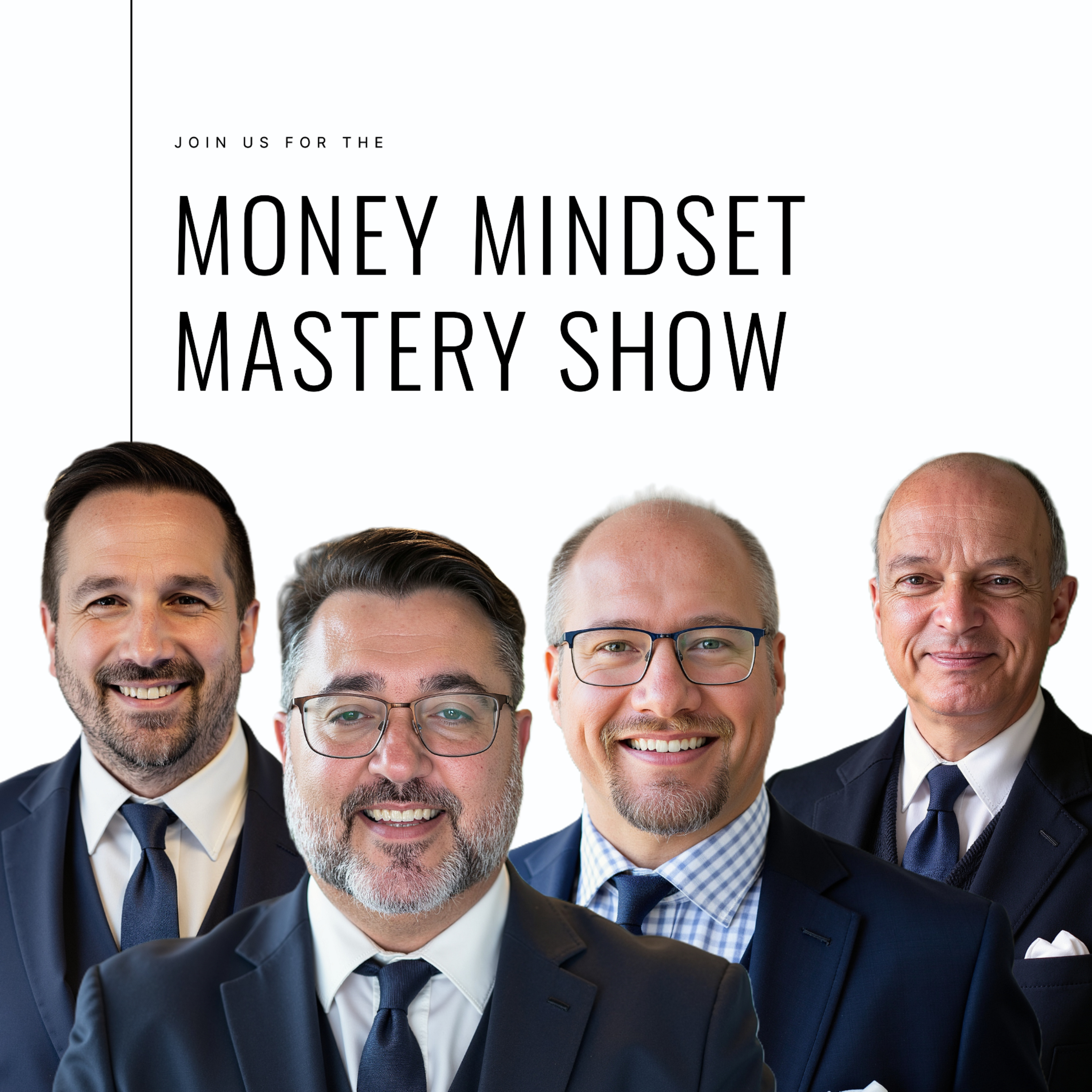
Money Mindset Mastery: Personal Finance and Wealth Building · TvH Financial, including Jim Lao, Ryan Genoe, Denis Bisson and Eric Petersen
You've saved well, paid down debt and built real assets, so why doesn't retirement feel settled? In this episode of the Money Mindset Mastery Podcast, Jim Lao, Denis Bisson, Ryan Genoe and Eric Petersen look at the gap between having enough money and feeling ready to stop working. They cover the emotional shift from earning income to spending assets, what happens if work ends earlier than planned, helping adult children without derailing your own plan, paying off the mortgage versus investing, HELOCs, sequence-of-returns risk and how to build income you can rely on. Takeaways A savings target alone rarely creates confidence: retirement needs a lifestyle plan as well as a financial one Plan for an early exit from work, including illness and the limits of disability coverage, before it happens Decide how you'll handle family requests, like a down payment, before they arrive Sequence-of-returns risk starts when withdrawals start, so build reliable income ahead of time Owning funds at several banks isn't the same as being diversified Chapters 00:00 Meet the panel and the retirement-readiness question 01:41 Why a savings target alone may not create confidence 03:33 From earning income to spending assets 05:25 A lifestyle plan, not just a financial plan 06:46 Prepare for an early exit from work 08:46 Illness, lost income and the limits of disability coverage 10:53 Why "I'll just work longer" can fail 13:51 Education costs and helping adult children 16:38 When family asks for a down payment 19:46 Pay off the mortgage or invest? 22:40 Cash flow, liquidity and sleeping well 26:30 No one-size-fits-all advice 31:00 A small HELOC as a fraud barrier 32:23 Separate HELOC buckets for investment borrowing 34:17 What a HELOC is and how registration works 35:06 Sequence-of-returns risk 37:30 Lessons from the dot-com crash and 2008 39:49 Reducing volatility and building reliable income 42:19 Private equity and diversification 45:17 Why funds at several banks may not diversify 48:21 Private investments and the limits of DIY 51:59 What banks offer and where advice broadens options 54:34 Start with goals, cash flow and timing 56:54 Drawdown and legacy strategies 57:58 Questions on downturns, debt, taxes and family support 01:01:06 Why DIY investors may still need specialist advice 01:03:02 Build a team and get a second opinion This episode is general information, not personal financial advice. To talk about your own situation, visit tvhgroup.ca or tvhfinancial.ca, or email [email protected].
Jim Lao: Well, to welcome everyone to the Money Mindset and Mastery webinar, podcast, YouTube, eventually blog, right? anyways, welcome. I'm your host Jim and joining me today live in person, not in New York, In-Person: Well I'd like to welcome everyone to the Money Mindset and Mastery webinar, podcast. Yep. YouTube, eventually blog, right? anyways, welcome. I'm your host Jim and joining me today live in person. Yeah. Not in New York. Jim Lao: but in downtown Toronto. We have our associate advisor, Ryan Janot. Ryan. He could smack me at close range at this point. Yeah, maybe a good backhand. What do you think? In-Person: Downtown Toronto. Yeah, I can we have our associate advisor, Ryan Junot. He can he can smack me at close range at this point. I can't see live so some of them will call and then I'll so I won't do that. but anyway. Yeah, yeah, yeah. So we got Ryan. virtually today, actually next door to us is Denis. We couldn't fit three people here, so he's next door. so Denise, our portfolio manager at TVA twelve, and all the way out in lovely Edmonton. Jim Lao: No, but this is live, so something will call and then I'll be in trouble. So I won't do that. but anyway. Yeah, yeah, yeah. So we got Ryan. virtually today, actually next door to us is Denis. We couldn't fit three people here, so he's next door. so Denis, our portfolio manager at TVH12. And all the way out in lovely Edmonton, Eric Petersen: Yeah, cruelty to animals or something. Denis Bisson: Next door. In-Person: In Alberta. We have our private wealth advisor Eric. Eric, how are you Doing Jim Lao: Alberta, we have our private wealth advisor, Eric. Eric, how are you today? Eric Petersen: Doing well, doing well. The sun's shining. It's still above zero, so I'm happy. In-Person: doing well. The sun is dining. It's still above zero, so I'm happy. Jim Lao: Good. In-Person: And now only one hour difference too, so we can call you even earlier. Jim Lao: And now only one hour difference too, so we can call you or even earlier. Yeah. Eric Petersen: And and now only one hour. Yeah, In-Person: guys, listen, today we're gonna talk about a topic that I think we've kind of touched on over some other episodes that we've had as well, right? but this is actually coming from clients that we meet. So some of what we're gonna talk about today is based on actual meetings that we've had with clients. Jim Lao: Well, anyways, guys, listen. today we're gonna talk about a topic that I think we've kind of touched on over some other episodes that we've had as well, right? but this is actually coming from clients that we meet. So some of what we're gonna talk about today is based on actual meetings that we've had with clients. Now we're not gonna be sharing any names or any personal information, but we just want to share with you examples of some of the work that we do with our clients and how we help them. In-Person: information but we just want share with you examples of some of the work that we do with our clients and how we help them. today we're not gonna have all the answers for you because in this situation, still going through the the planning process. but the one of the questions that has come up with this client in particular and many clients that we work with is I've done well with my money, so why don't I feel ready to retire? And there's so many reasons for that, right guys? Brian? you hear that. Jim Lao: today we're not going to have all the answers for you because in this situation, still going through the the planning process. But the, you know, one of the questions that has come up with this client in particular and many clients that we work with is I've done well with my money. So why don't I feel ready to retire? And there's so many reasons for that. Right guys? Brian, like you you hear that. In-Person: absolutely. And I think one of the biggest things is people people are so focused on collecting a number in their bank account that they haven't done the full Jim Lao: things is people people are so focused on collecting a number in their bank account that they haven't done the full process yet of planning. And I think I know that's definitely one of the things we're gonna get into today, but it's it's one of the biggest conversations I'm having with clients that are getting closer to retirement. In-Person: process yet of planning. And I think I know that's definitely one of the things we're gonna get into today, but it's it's one of the biggest conversations I'm having with clients that are getting closer to retirement is they haven't understood their number. Jim Lao: is they haven't understood their number in both ways, which is what's their retirement spending gonna look like, and then what is that end number that they actually need to kind of achieve to make sure the retirement is a comfortable one for them. So yeah, and then we kinda help them with some of the unexpected things that might come up in retirement that they need to consider and plan for. Right? Eric, you you hear this from from your clients as well. right? It's In-Person: In both ways, which is what's their retirement spending gonna look like? And then what is that end number that they actually need to kind of achieve to make sure the retirement is a comfortable one for them. So Yeah, and then we kinda help them with some of the unexpected things that might come up in retirement that they need to consider and plan for. Yeah. Right? Yeah. Eric, you you hear this from from your clients as well, right? It's Eric Petersen: Yeah. The just the mindset shift. Like you spend your entire life, you're you're earning an income, you see yourself accumulating, you do the math, everything makes sense. But then all of a sudden it's like you kind of watch it someone jumping off the diving board, and you're like, that looks easy enough. You get up on the diving board and all of a sudden you're like, okay, I'm a little higher than I thought I was gonna be. In-Person: is just the mindset shift. Like you spend your entire life, you're you're earning an income, you see yourself accumulating, you do the math, everything makes sense. But then all of a sudden it's like you kind of watch it someone jumping off the diving board and you're like, that looks easy enough. You get up on the diving board and all of a sudden you're Jim Lao: is just the mindset shift. Like you spend your entire life. You're earning an income, you see yourself accumulating, you do the math, everything makes sense. But then all of a sudden it's like you kind of watch it, someone jumping off the diving board, and you're that much easy enough. You get up on the diving board and all of a sudden you're like, okay, I'm a little higher than I thought I In-Person: okay, I'm a little higher than I thought Jim Lao: was gonna be. How's the water gonna feel when I hit like is it gonna be my all of a sudden there's all of these things that you just they're foreign, they're different, you know, like you're gonna not work anymore. You don't have that steady income. You have to convert your assets into some kind of income. But even though In-Person: I was gonna be. How's the water gonna feel when I hit it? is it gonna be hard? all of a sudden there's all of these things that you just they're foreign, they're different, you know, like you're gonna not work anymore. You don't have that steady income. You have to convert your assets into some kind of an income. But even though Eric Petersen: How's the water gonna feel when I hit it? is it gonna be hard? all of a sudden there's all of these things that you just they're foreign, they're different, you're gonna not work anymore. You don't have that steady income. You have to convert your assets into some kind of an income. And even though all of the math makes sense, I think the biggest thing I see is that people just have a hard time with being like, okay, it now it's time to actually push the button and make the change, and there's unknown there. In-Person: all the math makes sense, I think the biggest thing I see is that people just have a hard time with being like, Okay, it now is time to actually push the button and make the change, and there's unknown Jim Lao: all of the math makes sense, I think the biggest thing I see is that people just have a hard time with being like, okay, now it's time to actually push the button and make the change and there's an unknown there. And even though everything makes sense, it's just all of a sudden, you know, okay, like I actually have to do this now. I think that's one of the big things that people get hung up on to is just that fear of, okay, how does it actually work? In-Person: there. And even though Eric Petersen: And even though everything makes sense, it's just all of a sudden, you know, okay, like I actually have to do this now. You know, I think that's one of the big things that people get hung up on too, is just that fear of, okay, how does it actually work? You know. In-Person: Everything makes sense. It's just all of a sudden, you know, okay, like I actually have to do this now. I think that's one of the big things that people get hung up on too is just that fear of okay, how does it actually work? Yeah. Yeah. Jim Lao: Yeah, Denis, you've you've been in the industry as long as I have. You've you've heard this throughout the years from clients that you work with as well, right? Yeah, and aspect to it, it's not only the the money side is they don't have In-Person: Demi, you've you've been in the industry as long as I have. You've you've heard this throughout the years from clients that you work with as well, right? Yeah, and the other aspect to it, it's not only the the money side is they don't have Denis Bisson: Yeah, and the other aspect to it, it's not only the the money side is they don't have a plan In-Person: a plan on what they're gonna be doing in retirement. So sometimes Denis Bisson: of what they're gonna be doing in retirement. So sometimes it's Jim Lao: Mm. In-Person: it's hard to get that final number on the expenses because they're gonna go from some of them working long hours every day, eight, ten, twelve hours a day, to basically doing nothing when it comes to work anymore. So you have to plan Denis Bisson: hard to get that final number on the expenses because they're gonna go from some of working long hours every day, eight, twelve ten, twelve hours a day, to mace basically doing nothing, when it comes to work anymore. So you have to plan have to have a plan in retirement as well of what you're gonna be doing, how you're gonna In-Person: have to have a plan in retirement as well of what you're gonna be doing, how you're gonna Jim Lao: in retirement as well of what you're gonna be doing, how you're Denis Bisson: be doing it, cost and everything else. So it's not just there's the money aspect, but there's also how much money do you need? Because sometimes you don't even know what you're gonna be doing. And some people find it hard to fill in when they've just retired. I bumped into a few people who simply are not liking retirement because they just have nothing to do. Jim Lao: gonna be doing it, cost and everything else. So it's not just there's the money aspect, but there's also how much money do you need 'cause you know, sometimes you don't even know what you're gonna be doing. And some people find it hard to fill in when they've just retired. I bumped into a few people who simply are not liking retirement because they just have nothing to In-Person: be doing it cost and everything else. So it's not just there's the money aspect, but there's also how much money do you need? Because you know, sometimes you don't even know what you're gonna be doing. And some people find it hard to fill in when they just retire. I bumped into a few people who simply are not liking retirement because they just have nothing to do. Jim Lao: do. In-Person: Yeah, and and you know and the question that that we brought up about wanting to retire and not sure they feel ready Jim Lao: Yeah. And and and the question that that we brought up about wanting to retire and not sure that they feel ready In-Person: we're actually talking about a different stage in life. 'Cause this question for me personally has come up with from clients who were twenty-five years ago, were planning for retirement twenty-five years later and they're asking that question. We're actually talking about clients who are really close to retirement and they're asking that question. Yeah. And it's a little bit different approach, right? 'Cause when you when you ask that question twenty-five years ago, it's easy. You've got a lot of runway to kind of plan Jim Lao: we're actually talking about a different stage in life. Cause this question for me personally has come up with from clients who were twenty five years ago, were planning for retirement twenty five years later and they were asking that question. We're actually talking about clients who are really close to retirement and they're asking that question. And I think it's a little bit different approach, right? 'Cause when you when you ask that question twenty five years ago, it's easy. You've got a lot of runway to plan and prepare and do all the right things and course correct if you need to. In-Person: correct if you need to, Jim Lao: But when it's like, hey, I'm planning on retiring in three to five years and I don't know if I can, we don't really have a lot of time to potentially course correct if we need to, right? Like it's very different. So before we're gonna get into any of these details, guys, what I will say is just a little bit of housekeeping right now. Don't take any of this as advice. we're not providing any financial advice in In-Person: but when it's like, hey, I'm planning on retiring in three to five years and I don't know if I can we don't really have a lot of time to potentially course correct if we need to, right? It's very different. So before we're gonna get into any of these details guys, what I will say is just a little bit of housekeeping right now. Don't take any of this as advice. we're not providing any financial advice in Jim Lao: this session today because everyone's situation is very different. In-Person: This session today because everyone's situation is very different. but if you hear anything, you'd want to find out more, you want to see how it might apply to your particular situation, reach out to us. You can go to our website at tvhfinancial.ca. There's a contact page there. you can reach out to us there, or email us direct directly at financial at tvhgroup.ca. Jim Lao: But if you hear anything, you'd want to find out more, you want to see how it might apply to your particular situation, reach out to us. You can go to our website at tvhfinancial.ca. There's a contact page there. you can reach out to us there, or email us direct directly at financial at tvhgroup.ca. here's one of the things that when I when I do talk to people and and they talk about retirement and they're approaching retirement. Again, I'm talking three to five years out. In-Person: Here's one of the things that when I when I do talk to people and and they talk about retirement and they're approaching retirement, again, I'm talking three to five years out. Jim Lao: one of the main concerns is that their income could end tomorrow, right? It's not something that they plan for, but they could literally be five years away thinking they have five more years of savings and contributions and debt pay down or whatever that might be. The problem is that their company's plan might be a little bit different. And In-Person: one of the main concerns is that their income could end tomorrow, right? It's not something that they'd planned for, but they could literally be five years away thinking they have five more years of savings and contributions and debt pay down or whatever that might be. The problem is that their company's plan might be a little bit different. And Jim Lao: I've actually seen that happen recently with some clients where they were planning to work until 65 at 61, 62. In-Person: I've actually seen that happen recently with some clients where they were planning to work until sixty five. At sixty one, sixty two, company says, You know what? I think we're gonna buy you out, you know, early retirement package. You're you're out of here. Some are very happy to get that package. Some of them are, but some of them actually are adds a little more stress. Yeah. Right? Because they might have income for a period of time. Yeah. But then after that they're literally thinking, Well Jim Lao: company says, you know what, I think we're gonna buy you out, early retirement package, you're you're out of here. Some are very happy to get that package. Some of them are, but some of them actually are adds a little more stress, right? Because they might have income for a period of time, but then after that they're literally thinking, Well what am I gonna do for that three year gap where I was planning on contributing X amount of dollars, right? so that's really not a a good strategy is In-Person: so that's really not a a good strategy is Jim Lao: if you're relying on the company In-Person: company to help you reach that retirement stage. Yeah. Right? Yeah. Any any thoughts on that? No. Well, again, part of it is, you know, coming and talking to all all of us here at T V H and and the many people that we have that have many hats to help people navigate that. And again, we're talking the three to five year range, but we would would really encourage everybody to start that planning, Jim Lao: to help you reach that retirement stage. Right? Any any thoughts on that, Ryan? No, well, again, part of it is coming and talking to all all of us here at T V H and and the many people that we have that have many hats to help people navigate that. And again, we're talking the three five year range, but we would would really encourage everybody to start that planning. In-Person: especially ten or even fifteen years out, asking a lot of these big big questions of Jim Lao: especially ten or even fifteen years out, asking a lot of these b big questions. Like In-Person: what would happen if I lost my job three or four years before Jim Lao: what would happen if, you know, I lost my job three or four years before? In-Person: retirement? And I know we're working with our clients to ensure that they have backup plans or that they're they're prepared for that and that it's not a stressful situation that they're gonna go through. Instead it's, hey Ryan, Jim, Eric, Denise, what are my next steps? I just unfortunately lost my my job. What what can I be prepared for going forward? Jim Lao: to make sure that they have backup plans or that they're they're prepared for that and that it's not a stressful situation that they're gonna go through. Instead it's, hey Ryan, Jim, Eric, Denise, what are my next steps? I just unfortunately lost my my job. What what can I be prepared for going forward? And In-Person: And I think a a lot of ease comes out of clients with what we've talked about and with our client meetings over the last Jim Lao: I think a a lot of ease comes out of clients with what we've talked about and with our client meetings over the last In-Person: Well, seven thirty years is really the preparation has helped Jim Lao: seven, thirty years is really the preparation of has helped. ensuring that that stress doesn't coming hard for them so yeah and we're we're referring to you know the company saying you're you're done. but today we had a meeting with one of the insurance companies who talked about well what if you end up having a severe illness? In-Person: ensuring that that stress doesn't coming on hard for them. So Yeah, and I mean we're we're referring to, you know, the company saying you're you're done. Yeah. but today we had a meeting with one of the insurance companies who talked about what if you end up having a severe illness. Health health impact, yeah. So so a health issue. So right now the environment that we're dealing with from a an economic point of view is Jim Lao: Right? So so a health issue. So right now the environment that we're dealing with from a an economic point of view is loss of jobs because of the tariffs and the way the economy is going. I think Friday we're gonna get new job numbers. So I'll be curious to see what that looks like. But you know, one example, the individual today from well, I'll name the insurance company, Dejardin. Thank you, Deja Dend, for coming out today and meeting with us and sharing some of your products with us. but they talked about what if you're fifty nine years old and you have cancer? In-Person: loss of jobs because of the tariffs and you know the economy's going. I think Friday we're gonna get new job numbers. So I'll be curious to see what that looks like. But you know, one example, the individual today from well the insurance company, De Jardin. Thank De Jardin for coming out today and meeting with us and sharing some of your products with us. but they talked about what if you're fifty nine years old and you have cancer? Jim Lao: Or what if you're 59 years old and you have a massive heart attack and all of a sudden you can't work for six months to a year In-Person: or what if you're fifty nine years old and you have a massive heart attack and all of a sudden you can't work for six months to a year and you don't have any income protection, what do you think people are doing? To me, like you know what they're doing, right? They're calling you. They're saying, Hey, I'm I'm sick right now recovering. I can't work. I don't have any benefits and I need to start joining my R S P or my D FSA, right? Yeah, that's definitely gonna happen. Jim Lao: and you don't have any income protection. What do you think people are doing? Denise, like you know what they're doing, right? They're calling you. They're saying, hey, I'm I'm sick right now, recovering. I can't work, I don't have any benefits, and I need to start draining my RSP or my TFSA, right? Yeah, that's definitely gonna happen. Denis Bisson: Yeah, that's definitely gonna happen. And I've seen it a little both ways where some people In-Person: And I've seen it a little both ways with some people Jim Lao: I've seen it little both ways with some people, Denis Bisson: within a couple of years of retirement, it doesn't have to be illness, but illness will certainly be affecting the the plans for sure. I it's taken out of the plans without replacing it because you're not working. So it's a combination of both. I've seen people get cut you know, a couple of years for retirement and then okay, they find they end up adjusting a a few things and they stay in retirement. But others have to work again. So if you're sick or or be cut at that fifty nine, the work still needs to come for more Jim Lao: you know, within a couple of years of retirement, it doesn't have to be illness, but an illness will certainly be affecting the the plant for sure. It's taken out of the plant without replacing it because you're not working. So it's a combination of both. I've seen people get cut, you know, a couple of years for retirement and okay, they find they end up adjusting a few things and they stay in retirement. But others have to work again. In-Person: Within a couple of years of retirement it doesn't have to be illness, but illness will certainly be affecting the the plans for sure. It it's taking out the plans without replacing it because you're not working. So it's a combination of both. I seen people get cut you know, a couple of years for retirement and okay they find they end up adjusting a a few things and they stay in retirement. But others have to work again. So if you're sick or be cut at that fifty nine Jim Lao: So if you're sick or be cut at fifty nine, it works still needs to come for most people. Because that's could be five or six years away from actual retirement. So if you don't have a critical illness policy and you're sick, well, it's gonna be maybe working till sixty six, to finish off some of that payment. and if you get lined up and you're healthy, yeah, you may not be able to find a job at the same paint. Denis Bisson: Because that's could be five or six years away from actual retirement. So if you don't have a critical illness policy and you're sick, well it's gonna be maybe working till sixty-six to finish off some of that payment. and if you get lined up and you're healthy, you may not be able to find a job at the same pay, given that short period. You're you're going into looking for a job with a known Jim Lao: given that short period you're you're going into looking for a job with a known Denis Bisson: five year max before retirement. So companies may be Jim Lao: five year max you know, before retirement. So company in the In-Person: before retirement. So the company may Denis Bisson: a little more reluctant to hire you at that pace. But if you don't have the critical illness and if you haven't built up an emergency fund within a TFSA for instance or a a cash account, then you're gonna have to replace that work with potentially extending the your retirement target. In-Person: be a little more reluctant to hire you at that pace. But if you don't have the critical illness and if you haven't built up an emergency fund within a T F F T for instance or a a cash account Jim Lao: be more reluctant to hire you at that But if you don't have the critical illness and if you haven't built up an emergency within a TFS T for instance or a cash account, then you're have to replace that work with potentially extending the retirement target. Yeah, In-Person: that worked with potentially extending the your retirement Jim Lao: and it's tough to replace. If we use an example of someone who earns sixty thousand dollars a year, they can't work for a year because of an illness that they're they're dealing with, sure, EI might cover half of that, let's say, or or close to half In-Person: Yeah, and it's stuff to replace. If we use an example of someone who earns sixty thousand dollars a year, can't work for a year because of an illness that they're they're dealing with, sure, EI might cover half of that, let's say, or or close to half Jim Lao: of that, they still have to subsidize the other thirty thousand. It has to come from somewhere. So like you said, it's either you're moving the taking the money out of an emergency account. A lot of people nowadays don't have an emergency fund. So they're either dipping into credit, right? Or they're drawing out of their R S P. And for someone who's making sixty thousand dollars a year, even if they In-Person: of that. They still have to subsidize the other thirty thousand. It has to come from somewhere. So, like you said, it's either you're moving the taking the money out of an emergency account. A lot of people nowadays don't have an emergency fund. So they're either dipping into credit, right, or they're drawing out of their RSP. And for someone who's making sixty thousand dollars a year, even if they Jim Lao: come back the following year, it's gonna be very difficult to refund that thirty thousand dollars that they just pulled out of the R S P, right? so that becomes a a a bit of a challenge. Eric. In-Person: come back the following year, it's gonna be very difficult to refund that thirty thousand dollars that they just pulled out of the RSP. Right? so that becomes a a a bit of a challenge. Eric, do you think I plan to keep working is a good contingency plan? Jim Lao: Do you think I plan to keep working is a good contingency plan? Eric Petersen: it kind of builds on what Denise was just saying, you know, to work another year. For most people, you know, I think that there is a little bit of that flexibility, but really it comes down to what are your goals. And if your goal is to retire at sixty five, but you're saying, I'll just work longer if I have to, well, you know, a four or five years can eat up a lot of your your healthy years. So, you know, it Jim Lao: And it builds on what Janine was just saying. In-Person: it kind of builds on what Daniel was just saying, you know, to work another year. For most people, you know, I think that there is a little bit of that flexibility, but really i it comes out to what are your goals. And if your goal is to retire at sixty-five, but you're saying, I'll just work longer if I have to, well, you know, four or five years can eat up a lot of your your healthy years. So you know, Jim Lao: Well, while it can be an emergency approach, I I'm not sure that that's what someone wants to build into their plan. because again, like we talked about an illness, an illness can make its overright really quickly. You can't work that extra five years you have a on working. And people will say, Well, you know, I can rely on my short term or my long term disability. A lot of people don't realize that that coverage can end when you're sixty five. Eric Petersen: While it can be an emergency approach, I I'm not sure that that's one someone wants to build into their plan. because again, like we talked about an illness, an illness can make it so right really quickly. You can't work that extra five years you planned on on working. And people will say, Well, you know, I can rely on my short term or my long-term disability. A lot of people don't realize that that coverage can end when you're 65. In-Person: while it can be an emergency approach, I I'm not sure that that's one someone wants to build into their plan because again like we talked about an illness an illness can't make its over right really quickly you can't work that extra five years you plan on on working and people will say well you know I can rely on my short term or my long term disability a lot of people don't realize that that coverage can end when you're 65 Eric Petersen: And it also doesn't necessarily come up to the full value of what you were earning. Sometimes group benefits plans have maximums. they'll cover two-thirds of your income up to a maximum of say it's $150K. Well, if you've got a $250,000 a year lifestyle and you are planning on saving these next five years before retirement, well, where's that extra hundred K a year going to come from? And so, yeah, to say that I'll just keep on working a few years longer. In-Person: and it also doesn't necessarily come up to the full value of what you are earning sometimes group benefits plans have maximums though they'll cover two thirds of your maximum Jim Lao: And it also doesn't necessarily come up to the full value of what you were earning. Sometimes group benefits plans have maximums, you know, they'll cover two-thirds of your income up to a maximum of say it's $150K. Well, if you've got a $250,000 a year lifestyle and you were planning on saving these next five years before retirement, well, where's that extra hundred K a year gonna come from? And so, yeah, to to say that I'll just keep on working a few years longer, In-Person: Maximum of say it's $150K. Well, if you've got $250,000 a year lifestyle and you were planning on saving these next five years before retirement, well, where's that extra hundred K here gonna come from? And so, yeah, to to say that I'll just keep on working a few years longer, Eric Petersen: that that's not the the best plan In-Person: you know, that that's not the the best Jim Lao: you know, that that's not the the best. plan to have unless that's not something be risking their their plan on. No, and there's a reason why Eric Petersen: to have unless that's your only choice you've got left. So definitely not something that someone should be resting their their plan on. In-Person: plan to have unless that's your only choice you've got left. So definitely not something that someone should be resting their their plan on. No, there's a reason why. Jim Lao: like disability insurance or even EI, for example, has that fifty-five percent or that two-thirds coverage, right? It's because they want to give you just enough that you can cover your expenses In-Person: disability insurance or even VI, for example, has that 55% or the two-thirds coverage, right? It's because they want to give you just enough that you can cover your expenses, but not enough where you're deciding between, well, you know what, I'm comfortable right now, so I'm just gonna keep on faking the disability or or whatever that Jim Lao: But not enough where you're deciding between, well, you know what, I'm comfortable right now, so I'm just gonna keep on faking the disability or or whatever that is. Because people do that, right? so that's the reason why they they give you that percentage. Cause I've had people ask that question. Why aren't they giving me eighty percent or ninety percent or a hundred percent? Well, then you'd never go back to work, right? so they do want people to go back to work, and that's the reason why there's that percentage breakdown. In-Person: People do that, right? so that's the reason why they they give you that percentage 'cause I've had people ask that question, why aren't they giving me eighty percent or ninety percent or a hundred percent? Well then you'd never go back to work, right? so they do want people to go back to work and that's reason why there's that percentage breakdown. so I guess the other thing too is we can talk about unexpected expenses that kinda come up as people are planning to retire. Jim Lao: So I guess the other thing too is we can talk about unexpected expenses that kinda come up as people are planning to retire. in this instance or this example that I have from a a client meeting that I had is funding education costs, right? So In-Person: in this instance or this example that I have from a a client meeting I had is funding education costs. Right? So Jim Lao: regardless on when your children were born and how old they are, you know, I I will use my example. You know, my we plan for our kids to go four years of university. That's the the amount of money we set aside for for each of them. one of them is gonna do two years of college and probably not university. The other one, my oldest, she's doing four years of university and then after that she wants to do med school another four years. We didn't plan for that. So if she comes to me, now I'm not retiring anytime soon. In-Person: regardless on when your children were born how old they are, you know, I I will use my example, you know, my we plan for our kids to go four years of university. That's the the amount of money we set aside for for each of them. one of them is gonna do two years of college and probably not university. The other one, my oldest, she's doing four years of university and then after that she wants to do med school another four years. We didn't plan for that. So if she comes to me, now I'm not retiring any time soon. Jim Lao: But assuming that I was retiring and if she came to me and said, Hey Dad, I need two hundred thousand or three hundred thousand dollars to fund my you know, my my med school program, In-Person: But assuming that I was retiring, if she came to me and said, Hey Dad, I need two hundred thousand or three hundred thousand dollars to fund my you know, my medical school there. Jim Lao: I have to look at my situation to say, Well, can I actually do that? Right, because what's that impact on me now from a retirement point of view? In-Person: I have to look at my situation to say, well, can I actually do that? Right? Because what's that impact on me now from a retirement point of view? Jim Lao: Does that mean I have to delay my retirement if I was retiring over that same period of time? Does that mean I have to change my expected lifestyle in retirement as well? Right? so those are the things that are very unexpected that that come up. And it's difficult as a parent and all four of us here are are dads, right? It's difficult sometimes to to not want to help your child. In-Person: Does that mean I have to delay my retirement if I was retiring over that same period of time? Does that mean I have to change my expected lifestyle in retirement as well? Right? so those are things that are very unexpected that that come up. And it's difficult as a parent and all four of us here are dads, right? It's difficult sometimes to to not want to help your child. Jim Lao: It's different if they're getting themselves in trouble all the time and always asking for money, but if it's too In-Person: It's different if they're getting themselves in trouble all the time and always asking for money, but if it's to better their lives, right, it's difficult to sit there and say no, but it is a legit concern. Absolutely. This this happens Jim Lao: better their lives, right? It's difficult to sit there and say no, but it is a a legit concern. Absolutely. This this happened In-Person: more more than not in between a health concern or health scare or a sudden you know Jim Lao: health concern or health scare or a sudden, you know In-Person: education expansion into a lifetime education or a lifetime student. It's something that comes up quite often with with clients and again I Jim Lao: education expansion into a lifetime education or lifetime student. It's something that comes up quite often with with clients. And again, I will always go back to proper planning will help you kind of prepare for a large majority. Not all of it, unless we're in a position that we're able to really actually plan. Hey, I've already noticed and y I think you noticed it very early on with your motor was hey we're likely gonna take on some In-Person: I will always go back to proper planning will help you kind of prepare for a large majority. Not all of it, unless we're in a a position that we're able to really actually plan. Hey, I've already noticed and y I think you noticed it very early on with your daughter was, hey, we're likely gonna take on some some extra schooling Jim Lao: some extra school Here, right? But not everybody is in that position that they can prepare for it. So the earlier on, and and I find often it's the clients that are self managing their or working directly with strictly a bank In-Person: here, right? But not everybody is in in that position that they can prepare for it. So the earlier on and and I find often it's the clients that are self-managing their or d working directly with strictly a bank. Jim Lao: that are the ones that I find coming to us more often as to a bit of a scare. And the reason why why I say that is because they've done well, whether it's allowing an institution to manage it strictly, or that they're doing In-Person: That are the ones that I find coming to us more often as to a bit of a scare. And the reason why I say that is because they've done well, whether it's allowing an institution to manage it strictly, or that they're doing Jim Lao: doing it themselves but they haven't done proper planning for the longer and that's where we really come into play and that's where, you know, bringing in the Dedee, myself, Eric and and Jim can really, you know, find out where In-Person: it themselves, but they haven't done proper planning for the longer. And that's where we really come into play. And that's where, you know, bringing in the Dedee, myself, Eric and and Jim can really, you know, find out where. Jim Lao: where everything can end up for yourself. In-Person: where everything can end up for yourself, with what's the planning and just simply the wealth gr growing, right? So and it's not just education funding that are unexpected Jim Lao: With the with the planning and just simply the wealth growing, right? Right. Yeah. And it's not just education funding that are unexpected. I I know Eric won't really deal with this because, you know, a kid might come to you and say, Hey dad, mom, I wanna buy a house, can you give me the down payment? And Eric believes in renting and not buying. So I know what your answer would be, Eric, but Denis, maybe your daughter might come to you and and and ask, right? In-Person: No, Eric won't really deal with this because the kid might come to you and say, Hey dad, mom, I want to buy a house. Can you give me the down payment? And Eric believes in renting and not buying. So I know your answer would be Eric, but Denis, maybe your daughter might come to you and and ask, right? Eric Petersen: Ha ha ha Jim Lao: but that's another example where right In-Person: but that's another example where right now Jim Lao: now it's difficult for and and I'm just kidding, Eric. but but you know, like the that that that's another example where we're seeing with our clients where they're being approached by their children saying, We would like to buy a house, can you help us with the down payment? 'Cause that seems to be the biggest barrier right now. In-Person: for and and I'm just kidding Eric. but you know they I would say that that that that's another example where we're seeing with our clients where they're being approached by their children saying, We would like to buy a house, can you help us with the down payment? 'Cause that seems to be the biggest barrier right now. Eric Petersen: Yeah, yeah, yeah. Pound Sand Jim Lao: It's not so much the mortgage payment per se, 'cause a lot of that i can line up with what rent would cost nowadays, right? But it's it's coming up with that that down payment. In-Person: Not so much the mortgage payment per se, because a lot of that i can line up with what rent would cost nowadays, right? But it's it's coming up with that that down payment. And and that's a tricky balance as well. And what I what I what I will say is and this is why we stress it's very different for each individual because if we have a client who has Jim Lao: And and that's a tricky balance as well. And what I what I what I will say is, and this is why we stress it's very different for each individual because if we have a client who has ten million dollars in a portfolio with no mortgage and their kids asking for a couple hundred thousand dollars for a down payment or education costs, I think that's pretty easy to say, yeah, that's not gonna have any impact on your retirement. In-Person: ten million dollars in a portfolio with no mortgage and their kids asking for a couple of hundred thousand dollars for a down payment or education costs, I think that's pretty easy to say, yeah, that's not gonna have any impact on your retirement. Right? But if we're dealing with somebody who has fifty thousand dollars in an RSP Jim Lao: Right. But if we're dealing with someone who has fifty thousand dollars in an RSP five years ago, making fifty grand a year and they're being asked for fifty thousand dollar down payment, that's a different story. Right. So there's two extremes. We tend to work with the middle, and that's where we have to run the analysis to see what that impact would be. Eric, were you gonna say something? In-Person: five years ago making fifty grand a year and they're being asked for fifty thousand dollar down payment. That's a different story, right? So there's two extremes. We kinda tend to work with the middle and that's where we have to run the analysis to see what that impact would be. If we're gonna say something five Eric Petersen: Even $500,000 In-Person: hundred thousand Eric Petersen: or or a million dollar portfolio, $100,000 for a down payment or a school or even $150,000, that's 10 or 15% right there. And so yeah, I think that there are some instances that that it's like, yeah, you know what, that's that's a good decision. I think it fits. But I think most of the time, you know, a $100,000, $150,000 hit is gonna be felt by pretty much everyone. Maybe not change the outcome, but they're gonna feel it. In-Person: for a down payment or in school or even 150,000. That's ten or fifteen percent right there. And and so yeah, I think that there are some instances that that it's like, yeah, you know what, that's that's a good decision. I think it fits. But I think most of the time, you know, a hundred thousand, hundred and fifty thousand dollar hit is gonna be felt by pretty much everyone. Maybe not change the outcome, but they're gonna Jim Lao: And so yeah, I In-Person: feel it. Yeah. And that's where I think the anxiety comes up, right, with a lot of the clients we're working with, is the un they 'cause they don't know if it's a it's an odd Jim Lao: think that there are some instances that that it's like, yeah, you know what, that's that's a good decision, I think it fits. But I think most of the time, a a hundred thousand, hundred and fifty In-Person: option or the impact or whatever else going back to if they're usually Jim Lao: thousand dollar hit is gonna be felt by pretty much everyone. Maybe not change the outcome, yeah. But they're gonna feel. usually a a bank employee or or sorry, a client, or if they're a DIY investor, right? They just want to self manage their money. They don't have plan in In-Person: a a bank employee or or sorry a client or if they're a DIY investor, right? They just want to self manage their money. They don't have a plan Jim Lao: place and they can run Excel scenarios and whatever else, but they want somebody to reaffirm or provide them with that advice to say, yes, this is doable, it's not going to be a significant impact, or not doable, here's the reason why. And and they're coming to us for, you know, those answers. Yeah, second opinion. Yeah. And very In-Person: And they can run Excel scenarios and whatever else, but they want somebody to reaffirm or provide them with that advice to say, Yes, this is doable, it's not going to be a significant impact or not doable, here's the reason why. Yeah. And and they're coming to us for you know the second yeah, second opinion. and very much Jim Lao: And then I I will go back to again, wanting to be preventative and reactive to things, or prepare yourselves for it, you know, and this is where In-Person: and then I I will go back to again wanting to be preventative and reactive to things or prepare yourselves for it, you know, and this is where the education piece comes more and more Jim Lao: the education piece comes more and more In-Person: each day, especially in within the coaching business, is making sure that not only the parents are setting themselves up for success, but also they're sharing that knowledge with what I'm sharing with them with their kids. And I've had many clients that have their Jim Lao: Each day, especially in within the coaching business, is making sure that not only the parents are setting themselves up for success, but also they're sharing that knowledge with what I'm sharing with them with their kids. And I've had many clients that have their young adult kids on on the call for the coaching sessions too, to learn about how they can better prepare for a life situation like this and how their kids can better understand where their parents are coming from because they're going to be in that situation. In-Person: young adult kids on on the call for the coaching sessions too to learn about how they can better prepare for a life situation like this and how their kids can better understand where their parents are coming from because they're going to be in that situation Jim Lao: situation in twenty or thirty years time. So how how can you pass the knowledge on generationally too and making sure that they're they're taking the right steps now. Yeah. Yeah. In-Person: in twenty or thirty years time. So how how can you pass the know knowledge on generationally too and making sure that they're they're taking the right steps now. So Jim Lao: Denise you probably get this question asked a lot. I know we we all do as well. Should I pay down the mortgage or should I keep my money invested? Yeah. Yeah. I I do get that question, especially when people eat mortgage or other debt In-Person: You probably get this question asked a lot. I know w we all do as well. Should I pay down the mortgage or should I keep my money invested? Yeah. Yeah, I I do get that question, especially people e mortgage or or other debt, Denis Bisson: Yeah, yeah. I I do get that question, especially when people e mortgage or or other debt, what should I do? well the first thing we look at, okay, what are you currently paying on, you know, the interest rate, whether it's a mortgage or other debt. For the most part In-Person: what should I do? well the first thing we look at, okay, what are you currently paying on, you know, the interest rate, whether it's a mortgage or other debt. For the most part, Jim Lao: should I do? well the first thing we look at, okay, what are you currently paying on, you know, the interest rate, whether it's a mortgage or other debt. For the most part, Denis Bisson: The the interest rate on a mortgage is under five, we'll say. And then it's probably better to keep In-Person: the the interest rate on a mortgage is Jim Lao: the the interest rate on a mortgage is under five per se. And then it's probably better In-Person: They're five, we'll say. And then it's probably better to keep investments where you're making, depending on and if you invested considerably then I'd say pay off a mortgage and don't want to go. But it usually growth portfolios will get you more than five, so you are coming up in the end better off if you're keeping your investments. but it's a matter of how much that demon is, it's a matter of Denis Bisson: investments where you're making depending and if you invested conservatively, then I'd say pay off the mortgage and don't want to go. But it usually growth portfolios will get you more than five. So you are coming up in the end, better off if you're keeping your investments. but it's a matter of how much the that payment is. It's a matter of Jim Lao: keep investments where you're making depending on and if you invested conservatively and I'd say pay off the mortgage and you don't want to go. But it usually growth portfolios will get you more than five, so you are coming up in the end, better off if you're keeping your investments. but it's a matter of how much that payment is, it's a matter of Denis Bisson: as well Jim Lao: as well Denis Bisson: goals of the client. do they want to pay off? Do they feel better if it's paid off? Or or let's have let's set a target. I think the best thing on a mortgage is let's set a target when you want it paid. Most clients definitely before retirement. though that's why it's definitely better to keep investments if the you know the term is a little longer. Jim Lao: of the client. do they want to pay off? Do they feel better if it's paid off? Or or let's have let's set a target. I think the best thing on a mortgage is let's set a target when you want to pay. Cost fines definitely before retirement. so that's why it's definitely better to keep investments if the you know the term is a little longer. In-Person: It's definitely better to keep investments if the you know, the term is a little longer. Denis Bisson: But you need to have a plan on when to pay it off and where and do a little analysis as well as which how you better off, investing or paying down the mortgage. In-Person: But you need to have a plan on when to pay it off and where and do a little analysis as well as which probably you're better off, investing or paying down the mortgage. Jim Lao: But you need to have a plan on when to pay it off and where and do a little analysis as well which probably better Investing or another mortgage? I think I think this goes back to it all depends on your situation, right? In-Person: Well I th I think this goes back to it all depends on your situation, right? Jim Lao: you know that's that's what drives me nuts sometimes when I listen to the experts and the experts have an opinion of you should always have your mortgage paid off in retirement or you should never have your mortgage paid off in retirement and and borrow the funds because it's a dead asset. And and In-Person: that's that's what drives me nuts sometimes when I listen to the experts and the experts have an opinion of you should always have your mortgage paid off in retirement or you should never have your mortgage paid off in retirement and and borrow the funds 'cause it's a dead asset. And and each one could be right depending on on the individual. Absolutely. I always s I always say to my clients, it all really depends on cash flow. Like if you have a two thousand dollar a month mortgage payment Jim Lao: Each one could be right depending on on the individual, right? I always I always say to my clients, it all really depends on cash flow. Like if you have a $2,000 a month mortgage payment and your cash flow is ten thousand dollars a month in retirement income, and that could more than enough support the two thousand dollar a month mortgage payment and then some, who cares if you have if you're making the mortgage payment, right? In-Person: and your cash flow is ten thousand dollars a month in retirement income and that could more than enough support the two thousand dollar a month mortgage payment and then some, who cares if you ha if you're making a mortgage payment, right? at the end of the day, if we kind of look at Jim Lao: at the end of the day, if we kind of look at In-Person: the math, and the math will be different for each individual and each circumstance, if we look at kind of like from a strategic point of view, if you have the money invested and you also have the real estate asset, well now you have two assets that are appreciating in value. The real estate maybe at three or five percent average, the portfolio again, like you said to me, if you're in a growth portfolio, I'd say we're probably not looking at growth, I'd be looking at balanced Jim Lao: The math and the math will be different for each individual and each circumstance. If we look at kind of like from a strategic point of view, if you have the money invested and you also have the real estate asset, well, now you have two assets that are appreciating in value. The real estate maybe at three or five percent average, the portfolio. Again, like you said to me, if you're in a growth portfolio, I'd say we're probably not looking at growth, I'd be looking at balanced. In-Person: for someone who's approaching retirement. but even Jim Lao: For someone who's approaching retirement, but even in even in saying that, six, seven percent per year net of fees, right? You have multiple assets growing. That's where you're multiplying your your wealth as opposed to accumulating your wealth, right? and it's amazing how many people we work with that they're relying on the equity in their home for retirement, In-Person: when saying that, six, seven percent per year none of fees, right? You have multiple assets growing. That's where you're multiplying your your wealth as opposed to accumulating your wealth, right? and it's amazing how many people we work with that they're relying on the equity in their home for retirement Jim Lao: but they don't really have anything set aside that's liquid. And you know, when I first started in the industry, In-Person: But they don't really have anything set aside that's liquid. And you know, when I first started in the industry there's Jim Lao: There's the old saying where if you all of a sudden you need liquidity from your house, you can't sell the door to generate cash, right? So it's really trying to have a balance of the two. Eric, do you have any thoughts on that? Any comments on it? In-Person: the old saying where if you all of a sudden you need liquidity from your house, you can't sell the door to generate cash. Right? So it's really trying to have a balance of the two. Eric, you have any thoughts on that, any comments on it? Eric Petersen: Yeah, no, largely I I agree. It's it's a tough decision that is very unique to each circumstance. And and whenever I talk to a client who asks me that question, my first place or first thing that I stop at is you know, how well do you sleep at night? Some people carrying debt just it eats away at them. And so, you know, if it helps you sleep better at night, then of course the math it generally will look better to have it invested than if then take. In-Person: Yeah, no, largely, yeah, I I agree. It's it's a tough decision that is very unique to each circumstance. And and whenever I can talk to a client who asks me that question, my first place, the first thing that I stop at is you know, how well do you sleep at night? Some people very dead just it eats the way at them. And so, you know, if it helps you sleep better at night, then of course the math it generally will look better to have it invested than than take Jim Lao: Yeah, no large. It's a tough decision that is very unique to each circumstance and and whenever I talk My first place the first thing that I stop at is you know, how well do you sleep at night? Some people carrying debt just it beats away at them. And so, you know, if it helps you sleep better at night, then of course the math it'd be generally will look better to have it invested than the than In-Person: paying the mortgage down. Jim Lao: to pay the mortgage down. Eric Petersen: pay the mortgage down. But if it makes you sleep better at night, then 100% that's a good investment. but just be aware that you're losing, you know, to the difference between what you could earn to what you're paying. And it's it's a it's a challenge though. I mean, leveraging borrowing to invest becomes it it increases your risk. And so if if you're borrowing for your mortgage to invest, that's a completely different move. But the decision to say, you know what, I'm going to In-Person: But if it makes you sleep better at night, then 100% that's a good investment. You know, but just be aware that you're losing, you know, just to the difference between what you could earn and what you're paying. It's it's a it's a challenge though. I mean leveraging, borrowing to invest becomes it increases your risk. And so if if you're borrowing from your mortgage to invest, that's a completely different move. But the decision to say, you know what, I'm gonna put money into the markets and invest. Jim Lao: But if it makes you sleep better at night then one hundred percent that's a good investment. You know, but just be aware that you're losing the you know, attention the difference between what could earn while you're paying it. It's it's a r it's a challenge though. I mean leveraging, borrowing to invest becomes i it increases your risk. And so if if you're borrowing your mortgage to invest, that's a completely different move. But the decision to say, you know what, I'm gonna put money into the markets and invest Eric Petersen: put money into the markets and invest rather than In-Person: Rather than pay down my mortgage is a similar thought process. know, your your money is at risk there. You know, it it it's at risk to losing to inflation if you just pay your mortgage down, because then you're not having that additional growth. But it's a it's a tough decision. That the from the math perspective, it makes sense. If I can earn six and I'm paying three on my mortgage, well then I'm gonna keep earning six and I'm I'm doing better. But if it's keeping me up at my if not paying down my mortgage really does add a Jim Lao: rather than pay down my mortgage is a similar thought process. You know, your your money is at risk there. You know, it i i it it's at risk to losing to inflation if you just pay your mortgage down, because then you're not having that additional growth. Eric Petersen: pay down my mortgage is a similar thought process, your your money is at risk there. it it it's at risk to losing to inflation if you just pay your mortgage down, because then you're not having that additional growth. But it's a it's a tough decision that the from the math perspective, it makes sense. If I can earn six and I'm paying three on my mortgage, well then I'm going to keep earning six and I'm I'm doing better. But if it's keeping me up at night, Jim Lao: But it's a it's a tough decision that the from the math perspective it makes sense. If I can earn six and I'm paying three on my mortgage, well then I'm gonna keep earning six and I I'm doing better. But if it's keeping me up at night, if not paying down my mortgage really does add a Eric Petersen: If not paying down my mortgage really does add a layer of Jim Lao: layer of stress, then you know maybe that loss of three percent is worth getting a good night's sleep. And so it it is a tough decision and it really is unique to each person, but ultimately that's usually how Eric Petersen: stress, then maybe that loss of three percent is worth getting a good night's sleep. And so it it is a tough decision and it really is unique to each person. But ultimately that's usually how I In-Person: You're stressed, then you know, maybe that loss of three percent is worth getting a good night's sleep. And so it it is a tough decision and it really is unique to each person. But ultimately that's usually how Eric Petersen: help people decide is you know, is it gonna make you sleep better at night? And if if it's not gonna improve your sleep better at night, well, it's probably better to not pay down the mortgage. In-Person: I help people decide is what is it gonna make you sleep better at night? And if if it's not gonna improve your sleep better at night, well it's probably better to not pay down the mortgage. Jim Lao: If it's not going to improve your seat better at night well, it's probably better to not pay it under thousand mortgage. Well I think this is where I I might challenge you on this one is if the sole reason for someone to pay down their mortgage is because it's psychological and In-Person: Well, I think that's where I I might challenge you on this one is if the sole reason for someone to pay down the mortgage is because it's psychological and Jim Lao: it causes less stress because of that, you know In-Person: it causes less stress because of that, you know that stress and that anxiety of having that big debt. So they make the decision of well, I'm just gonna pay it off because I'm not sleeping at night and this will help me sleep at night. Then they pay it off and it's like, well now I'm eating craft dinner every single day 'cause I don't have money and and I can't go travel and and I can't, you know, buy gifts for the family or whatever else. And I'm I feel great that I don't have a mortgage. Jim Lao: that stress and that anxiety of having that big debt. So they make the decision of, Well, I'm just gonna pay it off because I'm not sleeping at night and this will help me sleep at night. Then they pay it off and it's like, well now I'm eating craft dinner every single day 'cause don't have money and and I can't go travel and and I can't, you know, buy gifts for the family or whatever else. So now I'm I feel great that I don't have a mortgage, Eric Petersen: Yeah. Jim Lao: but I don't feel really good because I can't go on vacation during my retirement years In-Person: But I don't feel really good because I can't go on vacation during my retirement year. Jim Lao: and I'm eating garbage food because I can't afford In-Person: and I'm eating garbage food because I can't afford anything Jim Lao: anything else than craft dinner, then you kind of defeat y you've you maybe eliminated one level of stress and a reason to not sleep at night and created another one, right? Here here's my recommendation. Okay. They come understand their money mindset with me. Right. So they understand what's causing that deeper stress, right? And the behavior that may have been ingrained in you at a younger age. But it's something your family faced, but it's In-Person: else than craft dinner, then you kind of defeat you you maybe eliminated one level of stress and a reason to not sleep at night and created another one, right? Here here's my recommendation. They come they come understand their money mindset with me. So they understand what's causing that deeper stress, right? And the behavior that may have been ingrained in you at a younger age. Maybe it was something your family faced. something that you're Jim Lao: something that you're In-Person: that we're often uncovering is what's causing the stress and what can potentially open doors if Jim Lao: that we're often uncovering is what's causing the stress and what can potentially open doors if In-Person: if it's in your strategy to maybe slow down or not rush to pay down your mortgage because again those big things like education a major health event you know when you are mortgage less there are some restrictions sometimes that can happen with with with some people but it again Jim Lao: if it's in your strategy to maybe slow down or not rush to pay on your mortgage because again those big things like education, a major health event, you know, when you are mortgage less, there's some restrictions sometimes that can happen with with with some people. But it again, there's a bunch of different strategies and that's why I love having these conversations. Instead of all of us going, This is the way it should be like most internet. Yep. In-Person: There's a bunch of different strategies, and that's why I love having these conversations. Instead of all of us going, this is the way it should be, like most internet. Jim Lao: there is no one way and it's important to have this dialogue amongst actual your actual advising team instead of asking Hi Ho Neighbor In-Person: there is no one way, and it's important to have this dialogue amongst actual your actual advising team instead of asking hi-ho neighbor. Jim Lao: you know what they did, instead let's have a discussion, let's look at the numbers, let's find out what makes you sleep at night. Not what your neighbor or your cousin or or what In-Person: what they did. Instead, let's have a discussion. Let's look at the numbers. Let's find out what makes you sleep at night. La let's dig deep into what makes best sense for you and your family and your goals, not what your neighbor or your cousin or or what happened for your parents previous. So it's really encouraging to make sure that people do that. So not just Jim Lao: Happened for your parents previous. So it's really encouraging to make sure that people do that. But it's not just In-Person: with with the neighbors and the friends and the family. I've seen advisors and and I've worked with advisors, they have their biases and they basically project that to their clients. So it's I believe you should have your mortgage paid off, so you should have your mortgage paid off, right? And and I think this is why I'm highlighting Jim Lao: with the neighbors and the friends and the family. I've seen advisors and and I've worked with advisors, they have their biases and they basically project that to their clients. So it's I believe you should have your mortgage paid off, so you should have your mortgage paid off, right? And and I think this is why I'm highlighting us as a group because we In-Person: us as a group because we bring Jim Lao: Bring again different perspectives, different you know, well yes, we all have biases, right? But we work off of each other to really help the client at the end of the day to, you know, and and try to eliminate some of those biases, right? And then what I the final thing before I think Eric, you want to say something is I think you need to start talking with a Texas accent, because you're definitely the Doctor Phil of T V H. Right. So maybe we'll do that for the next episode, Doctor Phil. In-Person: again different perspectives, different you know, yes, we all have biases, right? But we work off of each other to really help the client at the end of the day to, you know, and and try to eliminate some of those biases, right? And then what I the final thing before I think, Eric, you want to say something is I think you need to start talking with a Texas accent. Okay. because you're definitely the Dr. Phil at T VH. All right. So maybe we'll do that for the next Okay. I'll work I'll work on it. Sorry, was it Eric were you gonna take on that? Jim Lao: Yeah. Sorry, was it Eric were you gonna say something? Eric Petersen: Yeah, I was just gonna say Ryan really hit on an important point there. your your neighbor, whatever worked for them might have been perfect for them. But that's the thing is when you're you're talking to someone who's giving an advice who doesn't have a broad spectrum of experience, then it does look like like they say that the the old age old saying of, when you have a hammer, everything In-Person: Yeah, I was just gonna say Ryan really hit on an important point there. Like your your neighbor, whatever worked for them, might have been perfect for them. But that's the thing is when you're you're talking to someone who's giving an advice who doesn't have a broad spectrum of experience, then you know, it does look like like they say that the the old angel saying of it, you know, when have a hammer Eric Petersen: looks like a nail. In-Person: looks like a nail. And so if you use something for your situation, you're gonna be an evangelist about that. even though you might not completely understand why that won't work for someone else. So that's the importance of getting good, unbiased advice from a professional who's seen a wide spectrum of things because you know there there are a lot of advisors I've seen who have their favorite thing and they just do that. And they do try to fit it on everybody. And that isn't always the best way to go about it. So whether it's your Jim Lao: Yeah. And so if you you stop it for your situation Eric Petersen: And so if you've used something for your situation, you're going to be an evangelist about that. even though you might not completely understand why that won't work for someone else. So that's the importance of getting good, unbiased advice from a professional who's seen a wide spectrum of things, because there there are a lot of advisors I've seen who have their favorite thing and they just do that and they do try to fit it on everybody and Jim Lao: That's the importance of getting good, unbiased advice from a professional who's seen a wide spectrum of things because you know, there there are a lot of advisors I see who have their favorite thing and they just do that and they do try to fit. And it that isn't always the best way to go about it. So whether it's your Eric Petersen: And it that isn't always the best way to go about it. So whether it's your neighbor Jim Lao: neighbor or whether it's an advisor who only has a certain product in their office. Eric Petersen: or whether it's an advisor who only has a certain product that they're offering rather than a wide spectrum, you really gotta be thoughtful about who you're getting advice from. And and yeah, that I I that that was a really poignant point, Ryan, that it might work for them and they might be the biggest advocate for it because it works so well for them, but it their situation is not your situation. So that that right there is the the big differentiator. Jim Lao: spectrums, you really gotta be thoughtful about who you're getting advice from and and yeah, I I that that was a really big point ear point right. It might work for them. And they might be the biggest advocate for it because it works so well for them, but their situation is situation. So that that right there big differentiator. In-Person: You really gotta be thoughtful about who you're getting advice from and and yeah that I I that that was a really big point in point riot. And it might work for them and they might be the biggest advocate for it because it works so well for them, but their situation is not your situation. So that that right there is the the big differentiator. Yeah, for sure. So this next pain point was raised by the cloud, and I think this is actually gonna kind of lead into different directions right now. But the question Jim Lao: Yeah for sure. So this next pain point was raised by the client. I think this is actually going to kind of lead into different directions right now. But the question Was this individual In-Person: was and this ended Had a HELOC on their home, again planning to retire in the next five years. And the question was: should I pay off the HELOC? Should I not pay off the HELOC? Now, what I will say is this, because this individual also has used the HELOC as an investment strategy, right? So they've leveraged their their their funds. the one thing I will say is, Denise. Jim Lao: had a HELOC on their home, again, planning to retire in the next five years. And the question was, should I pay off the HELOC? Should I not pay off the HELOC? Now, what I will say is this, because this individual also has used the HELOC as an investment strategy, right? So they've leveraged their their their funds. the one thing I will say is, Denis, In-Person: but anyways, the one question about paying off a mortgage. So we do have people who can pay off a mortgage, have zero debt on on on their house. They still have the funds available to you know, live a good lifestyle in retirement. But we do encourage them to at least have some kind of HELOC, small HELOC Rector on title. Yeah. Because if we look at fraud, Jim Lao: but anyways, the one question about paying off the mortgage. So we do have people who can pay off the mortgage, have zero debt on on on their house. They still have the funds available to you know, live a good lifestyle in retirement. But we do encourage them to at least have some kind of HELOC, small HELOC register on title. Because if we look at fraud, fraud In-Person: fraud and and it comes to mortgage fraud or or household fraud. Jim Lao: and and it comes to mortgage fraud or or household fraud. In-Person: where that really happens is with the older people who have zero mortgage, they have the house fully paid off. Yeah. Nothing registered on title. Yeah. Right. So at minimum we do s s suggest or recommend at least have a small HELOC registered against your property because it requires a title search and now we have change the the hands, right? And that's just one more barrier for the potential Jim Lao: where that really happens is with the older people who have zero mortgage, they have the house fully paid off, nothing registered on title. Right? So at minimum we do s s suggest or recommend at least have a small HELOC registered against your property because it requires a title search whenever you have change the hands, right? And that's just one more barrier for the potential In-Person: fraudsters. And I and I had no idea about this until Jim Lao: fraudsters. And and I had no idea about this until In-Person: what two years ago when we had T V H legal Sonia on. Right? And she was talking about this as a great strategy just to have that extra protection. And also I guess when you have when you have a HELOC too, it does give you options. Right. So whether it's retirement or or whatever you need it for at that time. And Jim Lao: years ago when had T V H legal Sonya on right and she was talking about this as a great strategy just to have that extra protection. And also I guess when you have when you have a HELOC too, it does give you options. Yeah. Right. So whether it's retirement or or whatever you need it for at time. Yeah. Eric Petersen: it goes back to our conversation, I think, last episode where the the the banks love to hand out umbrellas while but as soon as it starts raining they want all back. In-Person: goes back to our conversation, I think last episode where Jim Lao: It goes back to our conversation I think last episode where the the the banks left the hand out umbrellas while you know but as soon as it starts raining they want them all In-Person: banks love to hand out an umbrella as well, but as soon as it starts raining they want them all Yeah. it's the same thing with debt. You know, they're happy to give you debt, but the minute you need it, it's all of a sudden really hard to get. Yeah. Yeah, and now in this situation with the individual, so they have a HELOC, Jim Lao: Yeah. it's the same thing with debt. they're but the minute you need it, it's all of a sudden really hard to get. Yeah. Yeah, and now in this situation with the individual, so they have a HELOC. Eric Petersen: it's the same thing with debt. they're happy to give you debt, but the minute you need it, it's all of a sudden really hard to get. In-Person: they've used part of it again to to invest, so that way they can claim the tax deduction. So the if you if you've heard of the Smith maneuver strategy is kind of like a h a hybrid Smith maneuver strategy, not something that I've recommended. This person had already done this on their own. Jim Lao: They've used part of it again to to invest so that way they can claim the tax deduction. So the if you if you've heard of the Smith maneuver strategy is like a h a hybrid Smith maneuver strategy, not something that I've recommended. This person had already done this on their own. In-Person: but they'd also use funds from the HELOC to cover personal expenses. And the question that I had was, do you have separate HELOCs? Jim Lao: but they'd also use funds from the HELOC to cover personal expenses. And the question that I had was, do you have separate HELOCs? So you one is designated for investment purposes and one for not. And the responsible is well, no, I don't have that. And here's the thing: CRA, when it comes to the borrow to invest strategy, they want clear breakdown of these assets or or this debt was used specifically for the leverage strategy. and these were for personal, right? So the the one recommendation that I that I've made to this individual, and sh and and this person isn't the only one. I've I've In-Person: So one is designated for investment purposes and one for not. And the responsible is well, no, I don't have that. And here's the thing, CRA, when it comes to the borrow to invest strategy, they want clear breakdown of these assets or or this debt was used specifically for the leverage strategy. and these were for personal, right? So the the one recommendation that I that I've made to this individual and and this person isn't the only one I Jim Lao: talked about this with a lot of clients, is many of the the banks will allow you to kind of In-Person: is many of the the banks will allow you to kind of Jim Lao: separate your HELOC into different buckets, let's say. So do that. So for example, if you borrowed a hundred thousand dollars to invest, that's a separate bucket on your HELOC than the other hundred thousand which you've used for home repairs or vacation or whatever else. That way if CRA ever comes knocking on the door and they're doing an audit, which is In-Person: separate your HELOC into different buckets, let's say. So do that. So for example, if you borrowed $100,000 to invest, that's a separate bucket on your HELOC than the other $100,000 which you've used for home repairs or vacation or whatever else. That way if CRA ever comes knocking on the door and they're doing an audit, which is probably more painful than a colonoscopy, I would say you can you can say to them this line of credit, this was just strictly for investment purposes. Jim Lao: probably more painful than a colonoscopy. I would say you can you can say to them this line of credit, this was just strictly for investment purposes. In-Person: the interest expenses from this is for that purpose alone and and you should be okay, right? So don't commingle basically the bottom line, you're what you're being locked at. Jim Lao: The interest expenses from this is is for that purpose alone and and you should be okay. Right? So don't commingle basically is the bottom line, your your HELOC debt. In-Person: a yeah, we had a question from Ken asking what HELOC meant, and just explain quickly. I I like the HELOC is a home equity line of credit. It's just a line of credit that they secure against your home, so you'll generally get a better interest rate because it has that higher quality security behind it. Yeah. Yeah, it's just a home equity line of Eric Petersen: yeah, we had a question from Ken asking what HELOC meant and just explain quickly HELOC is a home equity line of credit. It's just a line of credit that they secure against your home. So you'll generally get a better interest rate because it has that higher quality security behind it. But yeah, it's just a home equity line of credit. Jim Lao: Mm. Yeah. In-Person: credit. Yeah, and and because it's a home equity line of credit, like you said, Eric, it's registered on title. So if a fraudster Jim Lao: Yeah, and and because it's a home equity line of credit, like you said, Eric, it's registered on title. So if a fraudster is ever trying to put put a mortgage on it or to try to sell it underneath you, they'd have to first release that that registered debt on on title. so that's the reason why we make that recommendation. It doesn't really cost much, I don't think, right? I think it's just you need a real estate lawyer, hey, we have one here at TVH legal that you can speak with if you need help with it. In-Person: ever trying to sell their home put put a mortgage on it or to try to sell it underneath you, they'd have to first release that that registered debt on on type. so that's the reason why we made that recommendation. It doesn't really cost much, I don't think, but I think it's just you need the real estate lawyer, hey we have one here at D V H Legal that you can speak with if you need help with it. Jim Lao: And they just re they do a registration, you don't have to borrow against it, right? So if you don't use it, there's no cost to have it. Yeah. In-Person: And they just write they do a registration. You don't have to borrow against it, right? So if you don't use it there's no cost to have it. Yeah. Okay. It's like just having a credit card that you just sit and it has zero balance on it. Yeah. Exactly. Okay. here's the one that I actually brought up, to this individual and I think every single client I speak with is sequence of return risk becomes a real concern when you're approaching retirement. Jim Lao: Right? just having a credit card that you just sit and it has zero balance on it. Yeah, yeah, exactly. Okay. here's the one that I actually brought up to this individual and I think every single client I speak with is sequence of return risk becomes a real concern when you're approaching retirement. In-Person: And nobody talks about it. Well again it well f five years ago Jim Lao: You wanna maybe explain what it is? again, well five five years ago I think I was just learning learning about it 'cause mostly fr from yourself too, because I'd heard of the term but walking through what it is was really never explained and most most investment advisors are just about collecting and accumulating your wealth. In-Person: I think I was just learning learning about it 'cause mostly fr from yourself too, because I'd heard of the term, but walking through what it is was really never explained. And most most investment advisors are just about collecting and accumulating your wealth. They don't really tackle the second half of that, which is the deaccumulation of your wealth. And the question often comes, and this is how we kind of explain it, is like, you know Jim Lao: They don't really tackle the second half of that, which is the deaccumulation of the wealth. And the question often comes, and this is how we kind of explain it is like, you know, you know, you're they talk rate of return, rate of return, and your rate of return is this amount, you know, ten percent, fifteen percent, whatever it might be. Yeah. but where the fault happens is what happens in the sequence of when you retire and what happens, In-Person: you're they talk rate of return, rate of return, and your rate of return is this amount, ten percent, fifteen percent, whatever it might be. but where the fault happens is w what happens in the sequence of when you retire and what happens Jim Lao: even though that rate of return looked at you know, ten or fifteen percent, what happens In-Person: even though that rate of return looked at, you know, ten or fifteen percent, what happens Jim Lao: If the rate of return in your first and second year, especially of retirement, is a loss, right? Even though they're telling you the full rate of return over the course of 10 years, and we talked about SP 500 and things like that, like In-Person: if the rate of return in your first and second year, especially of retirement, is a loss, right? Even though they're telling you the full rate of return over the course of ten years and we talk about SP five hundred and things like that, like Jim Lao: everything becomes a very big deal when you look to use that money. And in those years that you're using that money, that sequence of returns, understanding what the sequence of returns is is even more important. Yeah. In-Person: everything becomes of a very big deal when you when you look to use that money. And in those years that you're using that money, that sequence of returns, understanding what the sequence of returns is is even more important of when do you need the money and what does the market look like when you take when you know you have a million dollars and the market goes down thirty percent as it did, you know, during COVID. Jim Lao: When you need the money and what does the market look like when you take when you know, you have a million dollars and the market goes down thirty percent as it did, you know, during COVID. In-Person: What happened to those people that suddenly have thirty percent less of a million dollars? And what does that feel like and how long will your money last you now versus a true understanding of what rate of return versus sequence of returns is? So Yeah, I mean we could probably use the example of so if someone had a million dollar portfolio and even let's say nineteen ninety nine. Jim Lao: what happened to those people that suddenly have thirty percent less of a million dollars? And what does that feel like and how long will your money last you now versus a true understanding of what rate of return versus sequence of returns is? Yeah. So Yeah, and then we can probably use the example. So if someone had a million dollar portfolio in even let's say nineteen ninety nine, right before before Y two K and they were gonna retire with that million dollars and and they, you know, had a need of about fifty thousand dollars a year. In-Person: Right before before Y two K. And they were gonna retire with that million dollars and and they, you know, had a need of about fifty thousand dollars a year Jim Lao: of income from that portfolio. And then we had Y2K, the dot com bubble that blew, right? so I think in a matter of about two years, the the S P five hundred was down, I believe, between you know, close to fifty percent, right? So you start off with a million dollars that you've spent thirty, forty years accumulating and within a matter In-Person: of income from that portfolio. And then we had Y two K, the dot com bubble that blew, right? so I think in a matter of about two years, the the S P five hundred was down, I believe, between you know, close to fifty percent, right? So you start off with a million dollars that you've spent thirty, forty years accumulating, and within a matter Jim Lao: of two years in retirement, In-Person: Two years in retirement, you're down to five hundred thousand dollars. And you're still pulling fifty thousand dollars a year from that. So now it's kind of like reverse dollar cost averaging. You're accelerating those losses. So could have anybody had anticipated those corrections in retirement? No. But they have. Jim Lao: you're down to five hundred thousand dollars and you're still pulling fifty thousand dollars a year from that. So now it's kind of like reverse dollar cost averaging. You're you're accelerating those losses. So could have anybody had anticipated those corrections in retirement? No. But they happen, right? In-Person: and then we can even use the example of two thousand and eight. I know that there have been people who you know plan on retiring or Jim Lao: and then we can even use the example of two thousand and eight. I know that there have been people who, you know, planned on retiring or were were very close to retirement prior to two thousand and eight and the indexes were down about forty five, fifty percent. Some people had a lot of money in labor sponsored funds that went down and hedge funds that were down eighty, ninety percent, right? You can't recover from that. But it ha those people who were retiring with the same portfolio value, same issue. It took about In-Person: close to retirement prior to 2008 and the indexes were down about 45 50 percent some people had a lot of money labor sponsored funds that went down and hedge funds that were down eighty ninety percent right you can't recover from that but it ha those people who were retiring with the same portfolio value same issue it took about three to five years to break even from that and it also meant that they would have run out of money a lot quicker but if you were someone with a hundred with a million dollars Jim Lao: three to five years to break even from that. And it also meant that they would have run out of money a lot quicker. But if you were someone with a hundred with a million dollars In-Person: and retired in two thousand and twelve and had all the money in the SP five hundred, they would have been fine. Right? So it's it's it's a timing of when to retire. Jim Lao: and retired in 2012 and had all the money in the SP 500, they would have been fine. Right. So it's it's it's a timing of when to retire. 2000, you know, 2020, COVID, same thing, right? Markets went down big time. We had the the Black Swan event in 2022. In-Person: two thousand, you know, twenty twenty, COVID. Same thing, right? Markets went down big time. We had the black swan. Black swan of that in twenty twenty two. so there's examples of these major losses and it's difficult because people aren't thinking about well I'm gonna retire when the markets are doing well. Jim Lao: so there's examples of these major losses and it's difficult because people aren't thinking about, well, I'm gonna retire when the markets are doing well. They're thinking I'm gonna retire when I'm sixty five or sixty-two or whatever the age is, and then they quit their jobs, they retire, they try to turn on their income sources, and all of a sudden, you know, portfolio's down thirty-five, forty percent. We we've got issues. Right, Denise, like do you wanna add anything to that? In-Person: they're thinking I'm gonna retire when I'm sixty five or sixty two or whatever the age is. No. And then they you know, quit their jobs, they retire, they try to turn on their income sources, and all of a sudden, you know, portfolio's down thirty five, forty percent. We we've got issues. Right to me, like you wanna add anything to that? Yeah, Denis Bisson: Yeah, and you mentioned the In-Person: and and you mentioned Denis Bisson: the dot com, as soon as that was starting to s straighten itself out, then you got nine eleven. So it was a bad period, for a while there. In-Person: as that was starting to s straighten itself out, then you got nine eleven. So it was like that. Yeah. yeah. for a while there. Jim Lao: as that was trying to s straighten itself out then you got nine eleven. So it was like that. Yeah. yeah yeah you're right. For a while there. Yep. and and and that's why and I know In-Person: and and and that's why and I know Denis Bisson: and that's why and I know, having worked with one of the branches, brokerages for one of the banks, that some people were not properly invested. if you were in a heavy dot com experience or boomer economics as they called it back then, funds, you got nailed and you never recovered from that because it never really did come back those those stocks. So the first thing you do when you wanna when you retire is you really wanna make sure that you don't have In-Person: That some people were not properly invested. If you were in a heavy.com experience or Boomer Economics, as they call it background funds, you got nailed, and you never recovered from that because it never really did come back those stocks. So the first thing you do when you want to when you retire is you really want to make sure that you don't have Jim Lao: Some people were not properly invested. if you were in heavy.com experience or Boomer Economics, as they call it back funds, you've got you never recovered from that because it never really did come back those stocks. So the first thing you do when you want to when you retire is you really want to make sure that you don't have Denis Bisson: high risk instruments in there. you want lower volatility, say you are growth and you're retiring. In-Person: high risk instruments in there. you want to lower volatility. Say you were growing. Jim Lao: high-risk instruments in there. you want lower volatility, say your and your retirement. Denis Bisson: Well maybe it's a it's a time to think about balance that where if the market goes down, your portfolio won't go down as much. So you won't be as affected that much by the sequence of returns. That's what you want to do. And that way the client feels more comfortable. It's not some certain surprise. There's all surprises that's happened. Not only economic side, but you know like 911 was complete surprise. In-Person: It's a it's a time to think about balance that where if the market goes down, your portfolio won't go down as much or you won't be as affected that much by the sequence of returns. That's what you want to do. And that way the client feels more Jim Lao: Is affected that by a sequence of returns. Right. That's what you want to do. And that way the client feels more comfortable. It's not some certain surprise. There's all surprises that's happened, not only the economic side, but nine eleven was complete surprise. In-Person: It's not some certain surprise. There's all surprises that's happened. Not only economic side, but you know, like nine eleven was a complete surprise. Denis Bisson: Price, there's a lot of things that could affect markets. so you want to have less volatility when you're starting to take money out. In-Person: There's a lot of things that could affect markets. so you wanna have less volatility when you're starting to take money out. Jim Lao: There's a lot of things that could affect markets. so you wanna have less volatility when you're starting to take money out. Well, there's is a lower the volatility, but you also want to have some form of guaranteed income source. right, and and that's In-Person: Well, there's is a lower the volatility, but you also want to have some form of guaranteed income source. right, and and that's Denis Bisson: Yes. Jim Lao: The I think that's really the big gap that we identify because most people we speak with their guaranteed income source is Canada Pension Plan and In-Person: the I think that's really the big gap that we identify 'cause most people we speak with, their guaranteed income source is Canada Pension Plan Jim Lao: Old Aid Security. Well, old age security you can't take until 65. So if you retire at age 60, that doesn't help you. Canada pension. Well, the government likes to change rules on Canada pension as well. So even though it is a guaranteed income source, it's not really guaranteed because you don't know what that's going to look like, right? Because the government's going to make changes. So one of the strategies that we discuss with our In-Person: old aid security. Well old age security you can't take until sixty five. So if you retire at age sixty, that doesn't help you. Canada pension, well the government likes to change rules on Canada pension as well. So even though it is a guaranteed income source, it's not really guaranteed 'cause you don't know what that's gonna look like, right? 'Cause the government's gonna make changes. So one of the strategies that we discuss with our Jim Lao: clients is you need to incorporate a guaranteed income source to protect you from that volatility. So regardless on In-Person: clients is you need to incorporate a guaranteed income source to protect you from that volatility. So regardless on Jim Lao: what happens in the marketplace, you can rely on that guaranteed source of income. We're not going to get into details on how that all works, but we do have strategies. So it is a focus of ours when we do speak with clients, specifically the ones who are looking at retirement planning. if you go to our website, T VH Financial dot ca, there is a section there that discusses sequence of In-Person: what happens in marketplace, you can rely on that guaranteed source of income. We're not going to get into details on how that all works, but we do have strategies. So it is a focus of ours when we do speak with clients, specifically the ones who are looking at retirement planning. if you go to our website T VH Financial dot CA, there is a section there that discusses sequence of Jim Lao: risk return I In-Person: return flow. Jim Lao: it's late in the day. Sequence returns. There you Sequence of return. Thank you very much. so anyways, you you can find out a little bit more information there. And if you want to find out, you know, how we incorporate the decumulation strategy for our clients, incorporating some of these guaranteed income sources. And we're definitely targeting people who don't have a pension, right? because people who do have a government pension, like a teacher's pension, they're fine. They're they do have a guaranteed income source. In-Person: It's late in the day. Yeah. Sequence of returns. Very good. Sequence of the very much. so anyways, you you can find out a little bit more information there. And if you want to find out, you know, how we incorporate the decumulation strategy for our clients, incorporating some of these guaranteed income sources. And we're definitely targeting people who don't have a pension, right? because people who do have a government pension, like a teacher's pension, they're fine. They're they do have a guaranteed income source. Eric Petersen: Sequence of return risk. Jim Lao: We don't incorporate a lot of these strategies. Well, yeah. No still. Yeah, it i it it is, but it it has been a strong one, but you're you're In-Person: We don't incorporate nothing's guaranteed. It's the government still. Yeah, it i it is, but you know, it it has been a strong but you're Jim Lao: you're right. but there are some strategies that we can help you. So if you don't have a an employer pension or a work pension, reach out to us 'cause we do have some solutions that we can definitely incorporate to provide you a a similar level of guaranteed income when you do retire. In-Person: reach out to us community lesson solutions that we can definitely incorporate can provide you a a similar level of guarantee income when you go retire. Jim Lao: Yeah, and then for do it yourself or some people that are dealing strictly with the bank, I think it's an important In-Person: Yeah, and then for do it yourselfers and people that are dealing strictly with the bank, I think it's an important dialogue just to have Jim Lao: Dialogue just to have In-Person: a second opinion to look through the numbers. Cause the accumulation stage is is one strategy, but the deaccumulation stage is a completely different strategy. Can't run the same within both. And again, the preparedness of it and just making you Jim Lao: second opinion to look through the numbers because the accumulation stage is is one strategy, but the deaccumulation stage is a completely different strategy. Can't run the same within both. And again the preparedness of it and just making you sleep at night. Knowing that you're taking the right steps and that there's different strategies for bringing in income and it can't all just be one. So go ahead, In-Person: Sleep at night, knowing that you're taking the right steps and that there's different strategies for bringing in income and it can't all just be one. So I Eric Petersen: I feel like the the the kid that got left out. You guys aren't talking about me. the the other thing to consider this, you're talking about income stream, guaranteed income stream, diversification In-Person: this, you know, when you're talking about income stream guaranteed income stream, Diversification and the diversification that private equity brings to the table, and not just private equity, but like one of the reasons we like private equity is because we strive for that the term we use is absolute return. And you know, I've had clients in Eric Petersen: and the diversification that private equity brings to the table, and not just private equity, but one of the reasons we like private equity is because we strive for the the term we use is absolute return. And I've had clients in good Jim Lao: The diversification that private equity brings to the table, and not just private equity, but like one of the reasons we like private equity is because we strive for the term we use is absolute return. And you know, I've had clients in good markets and bad see their private equity be very consistent. And so you if you have good diversification, that's another thing that brings in that that that layer. In-Person: good markets and bad see their private equity be very consistent. And so you ha if you have good diversification, that's another thing that brings in that that that layer Eric Petersen: markets in bad see their private equity be very consistent. And so you you if you have good diversification, that's another thing that brings in that that that layer of insulation In-Person: of insulation from the sequence of return if the markets you know crash for Jim Lao: Insulation from the sequence of return. If the markets crash for Eric Petersen: from the sequence of return. If the markets, crash for a year and a half and you have private equity that's performing and still producing, whatever it is that they say they're they're owing you with or that's eight percent or nine percent or somewhere, in that ballpark. In-Person: a year and a half and you have private equity that's performing and still producing you know whatever it is that they say they're they're owing you whether that's eight percent or nine percent or somewhere you know in that ballpark Jim Lao: a year and a half, and you have private equity that's performing and still producing you know whatever it is that they say they're they're owing you, whether it's 8% or 9% or somewhere you know in that ballpark, Eric Petersen: All of a sudden you can say, okay, well, we will reduce lifestyle a little bit. So we're not drawing on those distressed assets. And instead, we'll just take the cash flow we're getting from our absolute return investments and you can insulate yourself a little bit better. So on top of all those other things we talked about, I think diversity In-Person: all of a sudden you can say okay well we will reduce lifestyle a little bit so we're not drawing on those distressed assets and instead we'll just take the cash flow we're getting from our absolute return investments and you can insulate yourself a little bit better. So on top of all those other things we talked about I think diversity Jim Lao: all of a sudden you can say, Okay, well, we will reduce lifestyle a little bit, so we're not drawing on those distressed assets. And instead, we'll just take the cash flow we're getting from our absolute return on investments, and you can insulate yourself a little bit better. So, on top of all those other things we talked about, I think the Eric Petersen: is another really, really good way to make sure we filter out that sequence of return risk or reduce it significantly or partially. Jim Lao: Is another really, really good way to make sure we filter out that sequence of return risk or reduce it significantly or partially. I'm going to add to diversification because diversification diversification in accordance to what is being taught in schools and what banks are teaching is your mutual fund holds a little bit of equity, a little bit of balance, a little bit of income. And that In-Person: is another really really good way to make sure we still Filter out that sequence of risk or reduce it significantly or partially. I'm going to add to diversification because diversification diversification in accordance to what is being taught in schools and what banks are teaching is: your mutual fund holds a little bit of equity, a little bit of balance, a little bit of income. And that Jim Lao: therefore you are safe and diverse. In-Person: Therefore you are safe and diversified, Jim Lao: Diversify right and being in the business, true diversification is actually finding different sources of income that aren't all tied into the same same umbrella. So when you look at your mutual fund, whether it's a one institution or another, you'll see they're all kind of you know invested in the same thing. So they're not really, it's just a matter of 1% or 1.5% their interest. So In-Person: right? And being in the business, true diversification is actually finding different sources of income that aren't all tied into the same same umbrella. So when you look at your mutual fund, whether it's at one institution or another, you'll see they're all kind of, you know, invested in the same thing. So they're not really, it's just a matter of, is it one percent or one point five percent they're in so Jim Lao: diversification is your income sources are kind of In-Person: Diversification is your income sources are coming Jim Lao: coming In-Person: from private investments, portfolios, perhaps life insurance, perhaps it's you know deaccumulation of your mortg your mortgage, the brand I can't think of right now too. The HELOC, right? Reverse more even reverse mortgages. So you're diversifying everything along. That way if one piece of the market hits, you're not hit hard in one. Jim Lao: from private investments, portfolios, perhaps life insurance, perhaps it's deaccumulation of your mortgage your mortgage the brand I can't think of right now too. Right the HELOC HELOC, right? Or reverse mortgage. Sorry, yeah. So you're diversifying everything along that way if one piece of the market hits, you're not hit hard in one, Eric Petersen: With a reverse arrive. Jim Lao: but instead you're actually truly diversified across many different appetites. In-Person: But instead you're actually truly diversified across many different avenues. Jim Lao: news that way you're sleeping better at night or that you've had a proper plan put in place and you're making a quick phone call to one of us to say how how does this affect my my overall portfolio and how In-Person: That way you're sleeping better at night or that you've had a proper plan put in place and you're making a quick phone call to one of us to say how how does this affect my my overall portfolio and how we're Jim Lao: to diversify itself. And and what I love about what you guys just said right now is where In-Person: di diversified so and what I love about what you guys just said right now is where Jim Lao: we sometimes will have DIY investors come to us and all they want is a plan. They just want a plan and they're like, you know what, I'm managing my money, I'm comfortable with managing my own money. I don't need any help in terms of wealth management side of things. And we're like, fine, we can we can help people with that on and with that situation and provide with a plan. In-Person: We sometimes we'll have DIY investors come to us and all they want is a plan. They just want a plan and they're like, you know what, I'm managing my money, I'm comfortable with managing my own money, I don't need any help in terms of wealth management side of things. And we're like, fine, we can we can help people with that on and with that situation and provide with a plan. Jim Lao: But what they do tend to find is the fact that they don't know what they don't know. In-Person: But what they do tend to find is the fact that they don't know what they don't know. So we point out, Well, do you have any private assets? Well, no. What are those? And and why would that help me out, right? Well, do you have a a guaranteed income source? Well no. What are you referring to and how would that help me out? So these are things that we inform our clients of as well. So even when we do deal with a DIY client, Jim Lao: So we point out, well, do you have any private assets? Well, no. What are those? And and why would that help me out, right? Well, do you have a a guaranteed income source? Well no. What are you referring to? And how would that help me out? So these are things that we inform our clients of as well. So even when we do deal with a DIY client, they they just don't realize that there's so much more to them diversification like you said is In-Person: they they just don't realize that there's so much more to them diversification, like you said, is Jim Lao: well I've got some equities and I've got some bonds or diversification might be well I've got some mutual funds at RBC and I've got some mutual funds at CIBC and I've got some money at Wealth Simple and I've got some at Tangerine and I've got some at Quest Trade. Therefore I'm diversified. Right? And then when we actually go through the analysis, it's like y you just have money spread out all over different institutions. In-Person: Well, I've got some equities and I've got some bonds, or diversification might be well, I've got some mutual funds at RBC, and I've got some mutual funds at CIBC, and I've got some money at Simple, and I've got some at Tangerine, and I've got some at Quest Trade, therefore I'm diversifying. Right? And then when we actually go through the analysis, it's like you just have money spread out all over different institutions, but the actual underlying Jim Lao: But the actual underlying investments, the holdings, are all the same. And none of them include the private investments as well that offers again additional diversification, right? so that's that's what we find when we're dealing with DIY clients, right? I don't need do you find the same thing? I mean, y I don't know how how many DIY clients that you you deal with coming to you as a portfolio manager, but you know, having having even a managed portfolio is very different than someone who's index investing. In-Person: investments, the holdings are all the same and none of them include the private investments as well that offers again additional diversification. so that's that's what we find when we're dealing with DIY clients, right? and Dene, do you find the same thing? I mean, I don't know how how many DIY clients that you you deal with coming to you as a portfolio manager, but you know having having even a managed portfolio is very different than someone who's index investing, right? Jim Lao: Right. Denis Bisson: Yeah, and I do get some DYI and some people say, Well, it was working and he goes, It was working until it's not. sometimes they get overly concentrated, the markets turn, like technology's strong, they're fully technology. We've seen what's happen going on now. Jim Lao: Yeah, and I do get some DYI and some people say In-Person: Yeah, and I do get some DYI and some people say, Well it was working and he goes, It was working until it's not. sometimes they get overly concentrated, the markets turn, like technology's strong, they're fully technology, we've seen what's happening on that Jim Lao: Yeah. Denis Bisson: and it just doesn't work and they don't know where else to go. when it comes to Eric on the private side, it's becoming a little more popular because you never heard about this really 20 years ago. You're hearing a lot more. And one of the reasons is especially in Canada is that we have less public companies now. There's very few IPOs happening, especially in Canada. they're being taken out. we're getting a lot of them taken out. In-Person: and they don't know where else to go. when it comes to Eric on the private side, it's becoming a little more popular because you never heard about this really 20 years ago. You're getting a lot more. And one of the reasons is especially in Canada is that we have less public companies now. There's very few IPOs happening, especially in Canada. that we've taken out we're getting a lot of them taken out. Jim Lao: It's becoming a little more popular because you never heard about this really twenty years ago. is especially in Canada is that we have less public companies now. There's very few IPOs happening, especially in Canada. they're being taken out. we're getting a lot of them taken out. And Denis Bisson: And a lot of portfolio managers are starting to put in some private. Same thing's happening in the US, less public there, or they're staying private for longer. we're seeing, the size of the companies coming out with the recent IPOs. That means they've been private for a long time before they actually went to public. So it's a good alternative. and this is something that the do-it-yourself investors have zero access to and don't know that much about it. Jim Lao: It's same thing's happening in the US, less public there, or they're staying private for longer. we're seeing, the size of the companies coming up with the recent IPOs. That means they've been private for a long time before the action went to public. So it's a good alternative. and and this is something that the do it yourself investors have zero access to and don't know that much In-Person: It's the same thing's happening in the US, less public there, or they're staying private for longer. we're seeing, you know, the size of the companies coming up with the recent IPOs. That means they've been private for a long time before the action went to public. So it's a good alternative. and this is something that the do it yourself investors have zero access to and don't know that much about it. Eric, were you about to say something? Jim Lao: it. Eric, were you about to say something? Eric Petersen: Yeah. Yeah, it's it's it's interesting because pe a lot of people say, well, hey, why have I not heard of the private equity, portion before? And when In-Person: Yeah, it's it's it's interesting 'cause p a lot of people say, Well, why haven't I not heard of the private equity, portion before? Jim Lao: Yeah, it's it's it's interesting 'cause a lot of people say, well, why haven't I not heard of the private equity, portion book? Eric Petersen: you look at some of the the long running pension funds, you know, they've been doing it since the seventies. You know, they've had a sleeve of between ten and thirty percent depending on the market and depending on on how much risk they're willing to take inside the fund. In-Person: When you look at some of the the long running pension funds, they've been doing it since the seventies. they had a sleeve of between ten and thirty percent, depending on the market and depending on on how much risk they're willing to take inside the fund. Jim Lao: Look at some of the the long run. pension funds, you know, they've been doing it since the seventies. You know, they've had a sleeve of between ten and thirty percent depending on the market and depending on on how much risk they're willing to take inside the fund. Eric Petersen: But they've been doing this for for eons. The problem is that when you need a million dollars as a minimum to get into something, if you're going to be an individual investor in that and a DIY, then you know, you're gonna have to have $10 or $15 million because to put a million Jim Lao: But they've been doing this for for peons. The problem is that like when you need a million dollars as a minimum to get into something, you know, if if you're gonna be an individual investor in that and a DIY, then you know you're gonna have to have ten or fifteen million dollars just to put a In-Person: But they've been doing this for for eons. The problem is that like when you need a million dollars as a minimum to get into something, you know, if if you're gonna be an individual investor in that and a DIY, then you know, you're gonna have to have ten or fifteen million dollars because to put a Eric Petersen: dollars into something and and only have two million dollars, well, you got a lot of eggs in one basket all of a sudden. And so it becomes very difficult for a DIY investor to even find these, let alone have the expertise, the legal team. In-Person: million dollars into something and and only have two million dollars well you've got a lot of eggs in one basket all of a sudden and so it becomes very difficult for a DIY investor to even find these let alone have the expertise the legal Jim Lao: million dollars into something and and Right. And so it becomes very difficult for a DIY investor to even find these, let alone have the expertise, the legal In-Person: team the accounting team and then the financial expertise or the corporate finance expertise to look at these situations and say okay I'm comfortable with this let's invest. You know so you get all of those factors together and you know the vast majority of DYI investors just don't have Jim Lao: team, the accounting team, and then the financial expertise or the corporate finance expertise to look at these situations and say, Okay, I'm comfortable with this, let's invest. You know, so you get all of those factors together and you know the vast majority of DYI investors just don't have Eric Petersen: the accounting team and then the financial expertise or the corporate finance expertise to look at these situations and say, okay, I'm comfortable with this. Let's invest. so you get all of those factors together. And, the vast majority of DYI investors just don't have that, In-Person: That you know, they're missing one of those many important things to be able to be properly diversified. And that's the great thing about private equity when you access it through someone like us. You know, the minimums are ten thousand dollars, sometimes as low as five, sometimes they're high as twenty-five, but that's very approachable. And so what while someone wants to be purely DIY, if it causes them to leave something out of their entire financial planning scenario. Jim Lao: that, you know, they're missing one of those many important things to be able to be properly diverse. Eric Petersen: they're missing one of those many important things to be able to be properly diversified. And and that's the great thing about private equity when you access it through someone like us. Jim Lao: specified but and that's the great thing about private equity when you access it through someone like us. You know yet the minimums are ten thousand dollars, sometimes as low as five, sometimes or high as twenty. Eric Petersen: the minimums are $10,000, sometimes as low as five, sometimes their high as 25, but that's very approachable. And so what while someone wants to be purely DIY, if it causes them to leave something out of their entire financial planning scenario, Jim Lao: very approachable. And so while while someone wants to be purely DIY, if it causes them to leave something out of their entire financial planning scenario, In-Person: scenario, you know, they could be hurting themselves by not having as much diversity as they could with an advisor. So so yeah, it it's it's interesting to see those DIY people kind of struggle with that. You know, if I can't get it any other way, well that's still DIY. And I mean we work with people like that, but we also work with people who say, you know what, help me with all of my advice. And I think that most people are better for it. Even if they want to do some of their own investing, you know, in their own portfolios. Yeah, and and maybe just a couple of Eric Petersen: you know, they could be hurting themselves by not having as much diversity as they could with an advisor. So so yeah, it it's it's interesting to see those DIY people kind of struggle with that. Jim Lao: you know, they could be hurting themselves by not having as much diversity as they could with the advisor. So yeah, it it's it's interesting to see those DIY people kind of struggle with that. You know, if I can't get it any other way, well that might still DIY. And I we work with people like Eric Petersen: if I can't get it any other way, well, am I still DIY? And we work with people like that, but we also work with people who say, you know what, help me with all of my advice. And and I think that most people are better for it, even if they want to do some of their own investing, in their own portfolios. Jim Lao: that. But we also with people who say, you know what, help me with all of my advice. I think that most people are better for it. Even if they want to do some own investing, really their own footballers. Yeah, and and maybe just a a couple of examples of some private investments, not to give details or whatever else, but you know, music royalty. people don't know that they can invest in music royalty. So every time they listen to Mariah Carey or Taylor Swift, you know, they're In-Person: examples of some private investments, not to give details or whatever else, but you know, music world. people don't know that they can invest in music world. So every time they listen to Mariah Carey or Taylor Swift, you know, they're that's Ryan Eric Petersen: That's Ryan all day In-Person: all day Eric Petersen: on repeat. Jim Lao: Absolutely. TikTok dancing. but they're you know, they're they're they're making money, right? dental practices, Canadian dental practices, that's another one. So there are there are examples. again, if you'd like to find out more details, you could reach out to Eric on the the private investments that we have access to. Eric is registered through Rain Tree Wealth Management now, right, Eric, as your exempt market dealer. In-Person: But they're you know th they're they're making money, right? dental practices, Canadian dental practices, that's another one. So there are there are examples. again, if you'd like to find out more details, you can reach out to Eric on the the private investments that we have access to. Eric is registered through Raintree Wealth Management now, right, Eric, as your example dealer. Jim Lao: so if you have any detailed questions about the the private investments. In-Person: So if you have any detailed questions about the the private investments, you can do so through through air. I I w you have something to say? 'Cause I'm gonna start wrapping it up. Yeah. Just for most Canadians, we're used to going to the bank and that's what the whatever the bank offers is what's on the table and that's and that's it. And five GIC if we know it's important it's important to be educated, it's important to know that the banks and and you know, the kind people that work there just don't have Jim Lao: You can do so through through Eric. I I w you have something to say? 'Cause I'm gonna start wrapping it up. Yeah. For most Canadians, we're used to going to the bank and that's what the whatever the bank offers is what's on the table and that's and that's it. And five year GIC a three percent. Yeah. So you know, it's important it's important to be educated, it's important to know that the banks and and you know, the kind people that work there just don't have the means to be able to offer this to you and look In-Person: the means to be able to offer this to you and look across the b the bigger scale, right? And understanding what segregated funds are to private investments and knowing that a lot of banks won't offer it because they don't make money from it or they can't offer it. So it's important to understand a bigger scope and how, you know, the educating yourself and that's where we come in is being able to educate you. Right. I I was that that banker. Jim Lao: across the b the bigger scale, right? Understanding what segregated funds are to private investments and knowing that a lot of banks won't offer it because they don't make money from it or they can't offer it. So it's important to understand a bigger scope and how, you know, the educating yourself and that's where we come in to educate you. Right. I I was that that banker. In-Person: Yeah. I mean it's the reason why I I love banking 'cause Jim Lao: Right. it's the reason why I I left banking because when I got into banking I honestly thought that that was my career path and I I was striving to become, you know, a branch manager or even an executive at head office at some point. But what I struggled with was whenever I'd sit down and I worked with three different banks as well. So this isn't one bank that does this, this is all of them across the board. but I would sit down with clients and I'd have to make recommendations and I'd have to recommend, you know, financial products and In-Person: and, I I was striving to become, you know, a branch manager or even an executive at head office at some point. But what I struggled with was whenever I'd sit down and I worked with three different banks as well. So this isn't one bank that does this. This is all over across the board. but I would sit down with clients and I'd have to make recommendations and I'd have to recommend, you know, financial products. And Jim Lao: There are many times where I sat there and I knew that okay, out of the five products that I was recommending, maybe we had two that were really good in the market, one or two that were and one or two that were horrible. But I couldn't say to our clients, you know what, if you go across the street to the competitor, the two products that we're horrible at, they're like really good at, so go over there. I I I just couldn't do that, right? And and that's what happens In-Person: There were many times where I sat there and I knew that okay, out of the five products that I was recommending, maybe we had two that were really good in market, one or two that were and one or two that were horrible. But I couldn't say to our clients, you know what, if you go across the street to the competitor, the two products that we're horrible at, they're like really good at, so go over there. I I I just couldn't do that, right? And and that's what happens. Jim Lao: unfortunately when you're dealing with the bank. So it's I don't blame the the banker, the the employee of the bank. In-Person: unfortunately when you're dealing with the bank. So I don't blame the the banker, the the employee of the bank. It's just the way banking is, right? And it's it's retail banking. And they can only offer their their products, right? so that's just the nature of the the business. We're we're multi licensed, we don't have those restrictions, we have access to many, many different type of assets. Jim Lao: It's just the way banking is, right? It's it's retail banking and they can only offer their their products, right? so that's just the nature of the the business. We're we're multi-licensed, we don't have those restrictions, we have access to many, many different type of assets. Really what we're trying to do is solve the anxiety of the clients that are working with us. Cause normally they come to us and they're anxious because again, they don't know. Can I retire in three to five years? what do I need to do? Some of them think it's an investment recommendation, some of them think it's a product recommendation. it's it's really putting that plan in place, right? Prom starting off with the baseline. Let's gather all your information. What are your goals? In-Person: Really what we're trying to do is solve the anxiety of the clients that are working with us. 'Cause normally they come to us and they're anxious because again they don't know can I retire in three to five years? what do I need to do? Some of them think it's an investment recommendation, some of them think it's a product recommendation. it's it's really putting that plan in place, right? Starting off with the baseline. Let's gather all your information. Yeah. What are your goals? Right? So some of the questions Jim Lao: Right. So some of the questions, that that should be asked, and I have a list over here. that so these are the the questions that you want answered to help reduce or minimize that anxiety. When could my earned income realistically stop? That's important. Right. And you know, when I say to clients when they ask about retirement, how I define retirement, it isn't by an age, it isn't by an income source or a level of income that's earned. In-Person: that that should be asked, and I have a list over here. that so these are the the questions that you want answered to help reduce or minimize that anxiety. When could my earned income realistically stop? That's important, right? And you know, when I say to clients when they ask about retirement, how I define retirement, it isn't by an age, it isn't by an income source or a level of income that's earned. Jim Lao: It's the freedom to one day wake up and say, I've had enough. I'm done. Knowing with confidence that financially you could do that. Because, you know, like I I don't plan to retire when I'm 65. For me is I'm gonna go as long as I possibly can because I love what I do. And there are a lot of people that I I work with are in the same boat. They're like, you know what? I I like what I'm doing. So I wanna keep working beyond sixty five. In-Person: It's the freedom to one day wake up and say, I've had enough. I'm done. Knowing with confidence that financially you could do that. Because, you know, like I I don't plan to retire when I'm sixty-five. For me is I'm gonna go as long as I possibly can 'cause I love what I do. And there are a lot of people that I I work with are in the same boat. They're like, you know what? I like what I'm doing. So I wanna keep working beyond sixty-five. Jim Lao: I had a client recently who retired at age sixty seven. In-Person: I had a client recently who retired at age sixty seven. But he knew that anytime after sixty five that he could just turn around and say, I'm done and he had that moment. He finally woke up and was like, I don't want to do this anymore. Jim Lao: But he knew that anytime after sixty-five that he could just turn around and say, I'm done and he had that moment. He finally woke up and he's like, I don't want to do this anymore. Two years after the you know, the retirement date, and he could do it with confidence knowing that he had the assets to support the retirement. So that's really, you know, one of the the questions that you want answered is when you wake up, can you say I'm done with confidence knowing that financially you don't have to worry, right? In-Person: Two years after the you know, the retirement date and he could do it with confidence knowing that he had the assets to support the retirement. So that's really, you know, one of the the questions that you want to answer is when you wake up, can you say, I'm done with confidence knowing that financially you don't have to worry, right? what are my essential and discretionary retirement expenses? Jim Lao: What are my essential and discretionary retirement expenses? Cash flow coach. Right? Those are things that people need to understand is what are my expenses and do I have enough income to support the expenses? Right. In-Person: Capital coach. Right? Those are things that people need to understand is what are my expenses and do I have enough income to support the expenses? Yeah. Right. here's a big one, and this is where we go with the decummunalization strategy. Which income sources begin automatically and when? And again, you could go on YouTube and you can go on social media and you'll have people say start with registered first. Jim Lao: here's a big one, and this is where we go with the decummunalization strategy, which income sources begin automatically and when. And again, you could go on YouTube and you can go on social media and you'll have people say, start with registered first. In-Person: You'll have someone else say start with non-registered first, start with this, start with that. It really all depends. the the planning program that we use actually uses all those strategies, right? Do you want to create a legacy? And how much of that Jim Lao: You'll have someone else say start with non-registered first, start with this, start with that. It really all depends. the the planning program that we use actually uses all those strategies, right? Do you want to create a legacy? And how much of that legacy In-Person: legacy do you want to leave that's tax efficient. Well if that's your priority, then this is how we're gonna start the decummunalization stage, which means you might be paying more taxes while you're in retirement. Or is it do you want to maximize your retirement income? It's be it means you're gonna leave less for Jim Lao: do you want to leave that's tax efficient? Well, if that's your priority, then this is how we're gonna start the decummunalization stage, which means you might be paying more taxes while you're in retirement. Or is it you want to maximize your retirement income? It means it means you're gonna leave less for In-Person: sea planning or higher tax liability, right? So it really all depends on you as the individual and there is no right or wrong answer. Jim Lao: legacy planning or higher tax liability, right? So it really all depends on you as the individual and there is no right or wrong answer. In-Person: we have clients who will say, I wanna leave as much money as I can to my kids and grandkids. We have others that say if I leave a dollar on the day that I'm dead, I'm okay with that, right? There's no right or wrong answer. Whatever it is though, we can help kind of map that out for you. Okay. In terms of what you need to do. again, which accounts should I draw from first? Jim Lao: I mean we have clients who will say, I want to leave as much money as I can to my kids and grandkids. We have others that say if I leave a dollar on the day that I'm dead, I'm okay with that, right? There's no right or wrong answer. Whatever it is though, we can help kind of map that out for you, right? In terms of what you need to do. again, which accounts should I draw from first? In-Person: That all depends. There is no right or wrong answer or one Jim Lao: That all depends. There is no right or wrong answer, or one answer is right for everyone. how will I avoid selling growth assets during a downturn? Right, Denny, we talked about that. And that's the sequence of return risk. So, how do we avoid having to In-Person: answer is right for everyone. how will I avoid selling growth assets during a downturn? Right to me we talked about that. And that's a sequence of return risk. So how do we avoid having to Jim Lao: draw from those portfolios that have those growth assets when we're in a market correction? And I I think there's a lot of recency bias right now with clients, specifically that I work with. I'm sure you guys all deal with it as well. In-Person: draw from those portfolios that have those growth assets when we're in a market correction. And I I think there's a lot of recency bias right now with clients, specifically that I work with, I'm sure you guys all deal with it as well. Where like, hey, my portfolio's been doing fifteen percent per year. Like I'm this is great. I don't have to worry 'cause, you know, I'm getting a great rate of returns. Like, is that your last three year average? 'Cause yeah, that's I can understand that. What's the long term average? Jim Lao: Where they're like, hey, my portfolio's been doing fifteen percent per year. I'm this is great. I don't have to worry because, I'm getting a great rate of return. It's like, is that your last three year average? Cause yeah, that's I can understand that. What's the long term average? And that's a whole different number. And they don't look into the the the the long term average. They're just looking at it's been a great three years. Well, there's gonna be a correction at some point. We don't know when, we don't know how bad, we don't know for how long. In-Person: And that's a whole different number. And they don't look into the the the the long term average. They're just looking at well it's been a great three years. Well, there's gonna be a correction at some point. We don't know when, we don't know how bad, we don't know for how long, but Jim Lao: But it's gonna happen. Are you protected against that potential corruption? Right? That's a very important question to ask. what debt should be reduced before earned income ends? In-Person: it's gonna happen. Are you protected against that potential corruption? Yeah. Right? That's a very important question to ask. what debt should be reduced before earned income ends? Jim Lao: I think credit card debt. I think that's the right answer for everybody, right? Why pay twenty two percent and and give it to the bank In-Person: I credit card debt. I think that's the right answer for everybody, right? Why pay twenty two percent and and give it to the bank? Jim Lao: when you can recapture that? So think about for every thousand dollars of credit card debt that you owe the bank, you're paying two hundred and twenty dollars a year. In-Person: So think about for every $1,000 of credit card debt that you owe the bank, you're paying $220 a year on that thousand dollars. $10,000, that's over $2,000 that you're just giving away. So if you have the means to pay off a credit card debt, Jim Lao: on that thousand dollars. Ten thousand dollars, that's over two thousand dollars that you're just giving away. So if you have the means to pay off the credit card debt, keep In-Person: Keep that money in your pocket. how much can I safely commit to my children? Again, that all depends. Right? There is no right or wrong answer. Who's your favorite child? Who's your favorite child? That's a that's a big one. Very important one. and how will taxes affect each decision? It's amazing, guys, and I'm sure you deal with this. Jim Lao: that money in your pocket. Right? how much can I safely commit to my children? Again, that all depends, right? There is no right or wrong answer. Who's your favorite child? Who's your favorite child? That's a that's a big one, right? and how will taxes affect each decision? It's amazing, guys, and I'm sure you deal with this In-Person: The bankers never ask that question. Yeah. Right? They never ever do. Accountants don't ask that question. And we and we Jim Lao: The bankers never ask that question. Yeah. Right? They never ever do. Accountants don't ask that question. And we and we have our own accounting firm. But again, accountants' job is to deal with your tax bill this year. Now they're not concerned about twenty years from now or thirty years from now. Right? So that's a really important question. How much are you keeping in your pocket? How much are you not giving to CRA? Right? And we only use In-Person: But again, accountant's job is to deal with your tax bill this year. Now, they're not concerned about twenty years from now or thirty years from now. Right? So that's a really important question. How much are you keeping in your pocket? How much are you not giving to CRA? Right? And we only use Jim Lao: it w this stems from the meeting that we had today with with the insurance company where there's a strategy that they recommended and I'm like, that's a gray area right now. And they have tax opinions and whatever else to support it. but for me it's just like it's still an opinion at this point. Really what matters at the end of the day is what CRA decides, right? So anything that we recommend, it's you know what, it's been challenged by CRA and either C R A lost or they won, but we know it's a black and white. In-Person: And it w this stems from the meeting we had today with with the insurance company where there's a strategy that they recommended and I'm like, that's a gray area right now. And they have tax opinions and whatever else to support it. but for me it's just like it's still an opinion at this point. Really what matters at the end of the day is what the CRA decides. So anything that we recommend it's you know what, it's been challenged by C R A and either C R A lost or they won, but we know it's a black and white and Jim Lao: and we don't play in that gray area, we don't like that gray area because if it goes offside, it's it's a big problem. Right? anybody else have any final comments? Anything you wanna say? Eric, we'll start off with you maybe. Yeah, no, I think that In-Person: We don't play that gray area. We don't like that gray area because if it goes offside, it's it's a big problem. anybody else have any final comments? Anything you want to say? Eric, start off with you maybe. Yeah, no, I think that Eric Petersen: Yeah, no, I think that ultimately In-Person: ultimately there's just a lot of moving targets. get good advice. You know, it's that simple. Eric Petersen: there's just a lot of moving targets. get good advice. You know, it's that simple. don't Jim Lao: Yeah. Eric Petersen: ever think that you can do it all on your own. I think that's a failing strategy because even professionals, you know, like you you go find a specialist doctor. They don't try doing everything themselves. If they have a health problem, they'll go to a specialist who specializes in what they need help with that's outside of their expertise. So just make sure you keep keep yourself real. Just In-Person: Don't ever think that you can do it all on your own. I think that's a failing strategy because even professionals, you know, like you you can go find a specialist doctor. They don't try doing everything themselves. If they have a health problem, they'll go to a specialist who specializes in what they need help with that's outside of their expertise. So just make sure you keep keep yourself real. Just Jim Lao: Specialist stuff. Eric Petersen: Get advice when you need it. In-Person: get advice when you need it. And just to add to that, Eric, you just reminded me of a really good situation, and I don't ever remind with this. Jim Lao: just make sure you keep keep yourself real. Just get advice when you need it. And just to add to that, Eric, you just reminded me of a really good situation and I know er or Ryan, you've dealt with this In-Person: in Jim Lao: in the past. Sometimes you will have a DIY who's let's say it's the husband as an example, who's managing all the assets and the the exactly. In-Person: the past. Sometimes you will have a DIY who's let's say it's the husband as an example who's managing all the assets and The second person knows nothing. Exactly. Jim Lao: Or how to. Right. So they know that there's money. In-Person: Or how to. Yeah. Right. So they know that there's money. They Jim Lao: They just don't know how to manage money. And the one thing that we have basically brought up as a concern is what if mentally you're not able to manage the funds anymore? What if you pass away? Right? Now what happens? You're basically leaving all these accounts that are DIY accounts to someone who doesn't know how to manage the money. In-Person: just don't know how to manage money. And the one thing that we have basically brought up as a concern is what if mentally you're not able to manage the funds anymore? What if you pass away? Right? Now what happens? You're basically leaving all these accounts that are DIY accounts to someone who doesn't know how to manage the money. There there are more DY DIY accounts that I see that have no beneficiaries attached than probably anything Jim Lao: Right. There are more DY DIY accounts that I see that have no beneficiaries attached than probably In-Person: else too. So Or I've seen an estate as a beneficiary and I'll ask the question, did you intentionally put Jim Lao: Or I've seen an estate as a beneficiary and I'll ask the question, did you intentionally put the estate? No, I had no idea. No one really asked me. what is what what's the issue with the estate, right? In-Person: the estate? No, I had no idea. No one really asked me that because what what's the issue of the estate? Yeah. Jim Lao: so yeah, there there's a lot there. so if you are someone who's a DIY and and you know, you fit kind of like that example that I just shared, you might want to consider partnering up with an advisor because if something does happen to you and you're leaving all those assets to someone who doesn't quite know how to manage money, they're gonna be dealing with a lot of stress. In-Person: So yeah, there there's a lot there. so if you are someone who's a DIY and and you know fit kind of like that example that I just shared, you might want to consider partnering up with an advisor because if something does happen to you and you're leaving all those assets to someone who doesn't quite know how to manage money, they're gonna be dealing with a lot of stress. Jim Lao: Denis, do you have any final comments you want to make? In-Person: Denise, do you have any final comments you want to make? no, I think I agree with Eric. I think it's better Denis Bisson: no, I think I agree with Eric. I think it's better to have Jim Lao: I agree with Eric. Denis Bisson: an advisor get some opinions. markets are changing all the time. and some people don't have the information to change with the markets. Leadership is changing. Diversification is extremely important, especially these days. So give us a call. Jim Lao: I think it's better to have an advisor get some opinions. markets are changing all the time. and some people In-Person: Some people don't have the information to change what the market is changing. Diversification is extremely important, especially these days. So give us a call. Perfect. Eric or Ryan? Ryan? This guy? Dr. Phil. Yes, Dr. Phil. you're not alone. And I think that's a really important thing for people to know that you're not Jim Lao: don't have the information to change with the markets. Diversification is extremely important, especially these days. So give us a roll. Perfect. Eric or Eric Ryan, yes. Dr. Phil, yes, please. you're not alone. And I think that's a really important thing for people to know that you're not In-Person: alone and that whether you're Carna McDavid, Sidney Crosby, Warren Buffett. Jim Lao: David, Sidney Crosby, Warren Buffett, each of them has a great team around them. And it's important to surround yourself with an amazing team like T B H that can help support and take away the stress in your life and really In-Person: Each of them has a great team around them and it's important to surround yourself and an amazing team like T V H that can help support and take away the stress in your life and really get the answers that you need. So I encourage anybody to make sure that they're reaching out to us. Jim Lao: the answers you need. So encourage anybody to make sure that they're reaching out to us. Perfect. And the way to find us obviously is again our website, main website T V H Group dot CA, our website T VH Financial dot ca, email financial at T VH group dot CA six four seven seven two seven four six six eight. And then finally all of our social media platforms. We're In-Person: Again, our website, main website, TVHgroup.ca, our website, TVHfinancial.ca, email financial at th group.ca, six four seven seven two seven four six six eight. And then finally all of our social media platforms. Jim Lao: on all of them. I'm not gonna name them all. reach out to us. If you have any questions, you just want to have a quick thirty minute conversation, get a second opinion, we're here to help. So In-Person: Reach out to us if you have any questions, you just want have a quick thirty minute conversation, get a second opinion, we're here to help. So Jim Lao: So guys, thank you very much. this was kind of fun and different being in person doing this. didn't you didn't get slapped? No, no. That'll be after I turn the recording off. so there's no evidence. All right, guys. Have a wonderful afternoon. Take care. In-Person: guys, thank you very much. this was fun and different being in person doing this. Didn't get slapped. So let's again that'll be after I turn the recording off. so there's no evidence. All right then. Have a wonderful afternoon. Okay. Eric Petersen: Yeah.
More Money Mindset Mastery: Personal Finance and Wealth Building episodes →