
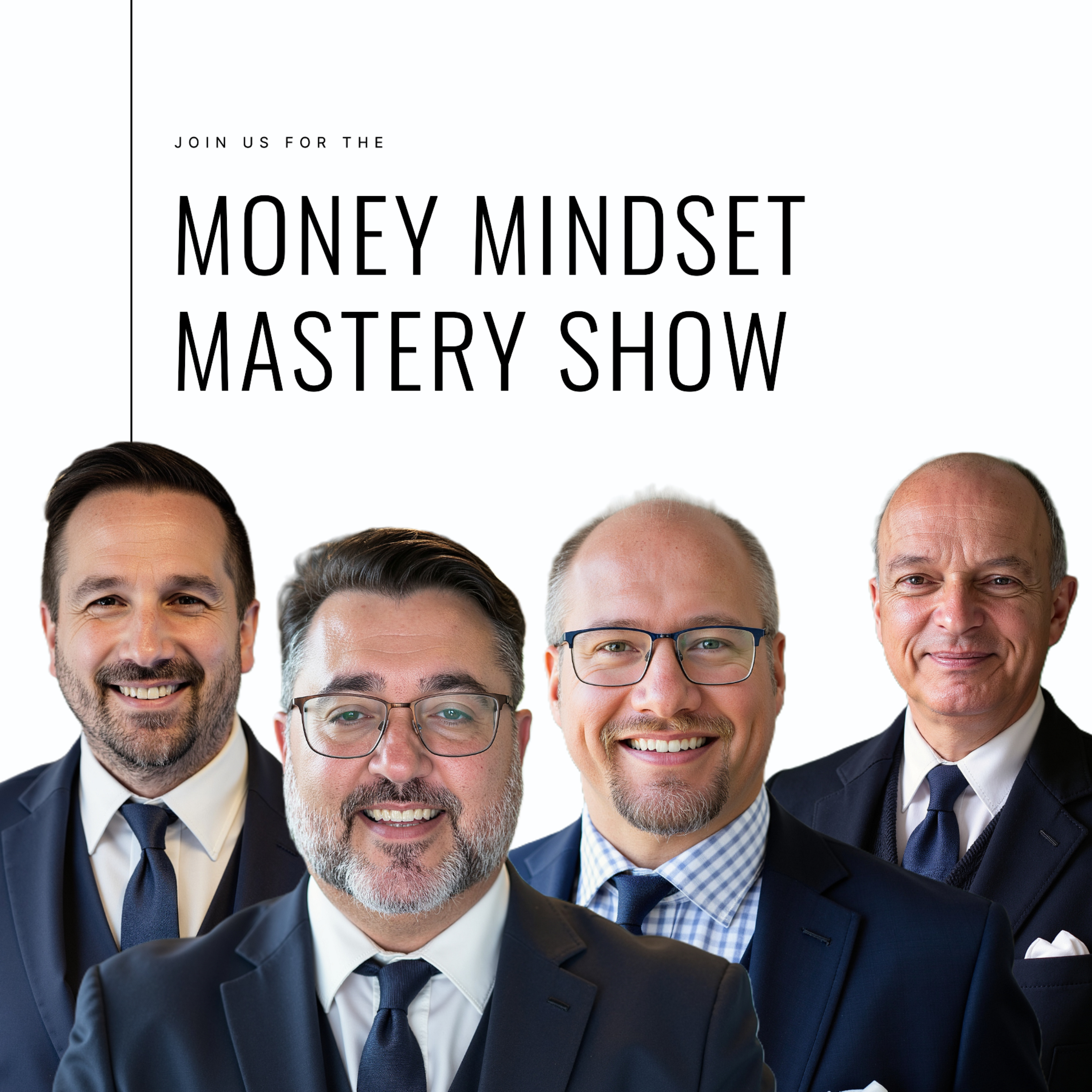
Money Mindset Mastery: Personal Finance and Wealth Building · TvH Financial, including Jim Lao, Ryan Genoe, Denis Bisson and Eric Petersen
In this episode of the Money Mindset Mastery Podcast, the hosts engage in a lively discussion about the pros and cons of renting versus buying a home, particularly in the context of the Toronto real estate market. They explore individual circumstances, financial implications, and the behavioral aspects that influence people's decisions in this area. The conversation explores the complexities of real estate ownership versus renting, highlighting personal experiences, regrets, and the emotional versus financial aspects of these decisions. The participants emphasize the importance of understanding individual circumstances and the hidden risks associated with both renting and owning property. Takeaways Renting vs. Buying Debate Individual Circumstances Matter Real estate ownership insights Renting vs. buying considerations Chapters 00:00 Introduction to the Debate 00:51 Renting vs. Buying: The Core Question 04:00 Understanding Individual Goals 07:05 The Role of Numbers in Decision Making 09:49 Personal Experiences with Renting and Buying 12:59 Behavioral Aspects of Renting vs. Buying 17:04 Cultural Influences on Home Ownership 19:56 The Importance of Flexibility 23:01 The Impact of Market Conditions 26:02 The Journey of Home Ownership 28:54 Conclusion: Finding Balance in Decisions 30:25 Living Beyond Means and Debt Issues 31:01 Regrets in Real Estate Ownership 32:14 The Pressure to Upgrade 34:05 Emotional vs. Business Decisions in Real Estate 36:41 Finding the Right Property 39:18 The Role of Property Management 40:14 Freedom in Renting vs. Owning 42:34 The Control Factor in Homeownership 43:59 The Challenges of Renting 45:52 Understanding the Economics of Renting vs. Buying 46:46 The Importance of Proper Analysis 48:35 Human Behavior in Real Estate Decisions 50:22 The Risks of Poor Financial Planning 52:42 Hidden Risks in Homeownership 56:22 The Unpredictability of Market Trends 58:34 Final Thoughts on Renting and Owning
Jim Lao: I'd like to welcome everyone to the Money Mindset Mastery Podcast. I'm your host, Jim, and joining me today is Denis, Ryan, and Eric. How's everyone doing today? Eric Petersen: Doing well. Ryan Genoe: D doing great. Yeah. This this Denis Bisson: Very good. Jim Lao: Yeah, yeah. Ryan Genoe: is this is going to be a very interesting episode, I feel, and as we were preemptively laughing through the the introduction as everybody joined, it's a laugh because there's many debates and conversations about the topic that we're gonna talk. And as we were alluding to Eric's shirt, this is really for a lot of people Denis Bisson: Yeah. Ryan Genoe: finding their where's Waldo during this episode, so Jim Lao: So Ryan, what are we talking about today? Ryan Genoe: Well, Is it better to rent or is it better to buy a home? And now we're specifically gonna talk mostly about Toronto and the GTA, but I think for the most part you can kind of expand that to a lot of different areas within Canada itself. But the greater question will be the thing that we discover as we go through today's episode. So Jim Lao: Yeah, and I think the the interesting thing about today's episode, and before I really get into it, just to remind anyone who is watching, is if you do have any questions regarding this topic, you can just go into the chat feature, depending on what social media platform you're watching us on. And you're free to ask us any questions and we'll address them as best we can. but it's a it's a passionate topic because I know I was just saying to you guys before we came on that I wasn't really overly excited about this topic. Ryan, you presented it. But then I found myself driving to the office today as I was kind of preparing for the topic itself. And I was having my own passionate debate with myself on which one is better. And Ryan Genoe: Yeah. Jim Lao: and and the reason the reason for that is, if you listen to and I'm gonna, you know, full disclosure, if you're dealing with someone who's in the real estate business, they're typically gonna say, Buying is better and owning a home and building that equity. And if you deal with an advisor who's offering an investment portfolio, they're gonna show you the numbers on why renting is better than buying and and investing the difference, why that's a benefit. so full disclosure, we are an office that we also do offer mortgages in House or TVH mortgages and John and TVH legal and Sonya on the real estate transaction side. but within the four of us, we have a different opinion as well. so I think this is gonna be a really passionate and interesting topic. Ryan, why don't you kind of start things off in terms of why this is on top of mind for a lot of people? Ryan Genoe: Well, I'm surprised you didn't start with, you know, the usual, you know, today this is educational purposes only, the advisors conversation, because everything that we talk about is not about predictions and but everybody has their own individual and individual financial goals and assessments and mortgages and you know, the mortgage rates going up and down and tax and legal. So take it as as as educational. But also that we want people to come and have this conversation. And that's why I was passionate about it, because a lot of clients come with the immediate I want to buy a home, right? And I don't think further dialogue goes past that. And I wondered, and I threw it out to you guys a couple weeks ago, I wondered if we were asking the wrong questions along the way, and that clients themselves weren't going through the process fully for themselves. And I know you keep saying, like, it's gonna be passionate, but I think we always come come to a consensus is that we wanna find balance in this conversation. Jim Lao: It is. Ryan Genoe: That sorry to spoil it's a spoil alert, so ear muffs for everybody, but you know, no decision is right or wrong. It all depends on the person, the person's goals or the couple's goals. And I think this conversation is going to spark a lot of conversation for clients on. potential clients as to is this the right time to buy? Am I buying for the right reasons? That's what comes up with me a lot with especially young couples, is is it the right time to buy? should I buy? Can I afford it? You know, young people are always coming to me saying, you know, I've been told that I will never be able to buy a home, right? Which I think is is not true. There was other words Jim Lao: Yeah. Ryan Genoe: I was going to say, but we're possible children and dogs listening and possibly cats. Jim Lao: Mm-hmm. Ryan Genoe: So that's the dialogue that I wanna make sure that we have because both are the right decision depending on your situation and what your lifestyle and goals are. Jim Lao: No, but I think a lot of professionals on both sides, they try to justify using numbers, right? And the reality of it is you can make the numbers look favorable for whatever exactly, right? Ryan Genoe: Government does that all the time. Eric Petersen: Yeah. Jim Lao: So the the numbers can look favorable if you're the one promoting the buying of the home and owning it. And the individual who's suggesting you rent and invest the difference can make those numbers look favorable. And sometimes it's because they might leave out a an important piece of information. Like for example, you know, renting is throwing your money away. a lot of times when someone who's presenting the rent and invest the difference they'll use a 12% average rate of return on the portfolio because they're using the SP 500. And we're like, okay, well that's not really long-term realistic, but they'll use 12%. And they won't even include the lost opportunity cost on the actual rent payment. But even on the flip side, the real estate professional, they won't include the lost opportunity cost on the taxes that you have to pay, the property taxes and you know the water bill and some of these other things, right? So there's usually key pieces of information that are excluded in these projections. and if we're just gonna make the decision based on just what the numbers are. I think that's a big mistake because the reality is we're projecting out 25 years and a lot can happen over that 25 year period, right? so I think to your point, Ryan, it's really what's important for you in terms of your lifestyle and what are you trying to achieve? And the question of can I afford it and sh is it is now the right time? I think those are two different questions, right? Really, because can you afford it? That's a very important question. Can you afford to own? Can you afford to rent? And if you can't afford either one, then you're you're staying with a family member, right? so I think we're gonna assume that anyone who's watching or listening and trying to make this decision, I think they already know that they can potentially afford either one. I think really the the the decision is which one is better long term. And it's always about the numbers and and we're gonna try not to really talk about the numbers today. It's more about, as we mentioned, what's important to you. Eric. Tani, do you guys have anything to add to to what we're saying so far? Eric Petersen: Yeah, well, I I was lucky. When I was sixteen years old, my dad came home on Friday afternoon and he said, Saturday, no chores. And I was like, What do you mean? and he plopped down the book Rich Dad, Poor Dad, and he says, You're reading this. And Jim Lao: Hmm. Wow. Eric Petersen: and that was actually a pivotal moment for me. And and people will debate a lot of Robert Kiyosaki's methods, his his principles, his kind of how he looked at things. But the one thing that I really picked up from that was what's the cost of this? And and one of his things is that your house that you live in will be one of your biggest liabilities. And I mean, okay, it gives you a place to live. So obviously, you know, there's some investment there if you're getting a good night's sleep. But it was it was one of the things that really just gave me that assessment of really saying, okay, I'm gonna be investing in a house. What am I gonna do with it? And and so yeah, I I have very different views from a lot of people, but you know, I'm extreme across the board. So it's probably no surprise. But I'm kind of excited yeah, I'm excited Jim Lao: The t shirt tells us that Eric Petersen: for this conversation because you know I am on the other side. I've only lived in two houses that I've owned, any other house that I've owned between now and when I was 18 and bought my first house Those were all rental properties and I saw each one as a business. And so I think that there's a lot of room for, what suits each individual person or couple and and what you do really comes down to your goals. You know, I have retired clients who probably won't ever h own a house again because they travel and they rent a house in Florida for six months and I asked him if he was gonna buy. We might want to be on a different beach next year. So why would we buy a place? And even if the renting is more expensive, there's always that trade off. So yeah, exciting topic. Denis Bisson: When I first moved to Toronto, my first five, six years I was renting. changed jobs three times, moved apartments about four times. I it's really when you're looking at buying a home or a condo, you're looking at stability in there for a while, especially in this type of market. when I was younger the only way the market was going was mostly up until with couple of exceptions on the and in the nineties and two thousands, but i it's really you gotta look at your own situation. First of all, when I moved to Toronto I couldn't afford a down a house or condo or down payment. So it's a matter of saving for that and then when I could afford a down payment, I start looking and I want to make sure I find the right neighborhood. to be there at least a few years as opposed to renting when you can move anytime you want. same with your jobs. if your job's not stable or you may potentially move area you don't want to buy. some people are now stuck on on selling when it's not a good market. So you really got to look at your own circumstances and see if you could afford both. I know that investing the extra is is an option if you're gonna rent, but you know, sometimes there's not that much left between the two, depending on how much you put down. own circumstances. Jim Lao: there's a question of behavior too, right? I I think the strategy would make sense potentially if people followed through and they were getting that twelve percent rate of return, which we'd we'd never project twelve percent because that's not realistic, but it's the behavior. if you if you look at that strategy, renting now and investing the difference, and then benefiting from that. 25 years down the road. That's what we're really talking about. that's kind of like someone saying, you know, let's go on a diet, and you're going to be very restrictive in terms of what you're doing, and you're going to benefit from the 25 pound loss 25 years from now. Right? You're waiting you're waiting a long time. So a lot of times it's I have this extra cash flow. I know I'm supposed to be putting it aside for twenty-five years from now, but hey, I wanna use it for vacation purposes. I wanna use it for a nicer car. I want to use it for whatever other reason. People always seem to find a reason to use those funds other than what they were intended to be used for. Right. And part of that is, and and Ryan, you're the cash flow coach and you've learned this through the training and cash flow, it's because it's very difficult to really appreciate the benefit twenty five years down the road, right? We we want that immediate gratification. And at least with the the home purchase, there is a bit of a forced savings scenario there. Right. Y yeah, Denis Bisson: Yeah. I was gonna say that. Jim Lao: you you can't sit there and say, well, I'm not gonna make this mortgage payment this month 'cause I'm gonna use it towards vacation. It's you have to make that mortgage payment and you're forcing to kind of build out equity. and you know, we we can't also count on the real estate asset to grow in value, At the same time, you can't also, count on the investment portfolio appreciating in value or the index that you're invested in. Back in nineteen ninety-nine to about two thousand eleven, the S P 500 was flat, so if anyone started this strategy back then, it wouldn't have worked out for them over that period of time. Right. So it it does go back down to the individual circumstances. I guess here's the one question I'm gonna ask everyone. Have we all at one point in our lives rented and not owned real estate. So Denise, you said yes, right? Eric, you currently are, right? That's one of the decisions you've Eric Petersen: That's right. Jim Lao: made. Ryan, you have and I have. Has anyone regretted that decision? Ryan Genoe: No, I didn't. I was living in Vancouver, traveling the world, so it was easy for me with the flexibility to to move. It worked for me at that time in that situation, right? So Jim Lao: That worked for you. Okay. Yeah. Yeah. And Denis, you said that you didn't really regret that because there were some changes and you couldn't afford the down payment. There so there are reasons why you chose to rent, Denis Bisson: Yeah. Jim Lao: right? Denis Bisson: Yeah, a lot of changes including job, not just moving and finding the right Jim Lao: Yeah. Denis Bisson: neighborhood at the time. Toronto was fairly new to me I wasn't didn't really know where the right place to live is. and there was a little more limited choices as well. That wasn't as condo boom back then in the late nineties, early two thousands. Jim Lao: Yeah. Right. Denis Bisson: so yeah, it's definitely was worth renting. Jim Lao: Eric, how you? Would you say that you have regretted or might regret your decision? Eric Petersen: No, in fact, the second time I lived in a home I owned, after four years I realized that it wasn't what it was all cracked up to be. the appreciation was good, the in the neighborhood was was brand new, but was good. You know, all Jim Lao: Yeah. Eric Petersen: of the factors included was good, but then I went through a divorce. And all of a sudden there was a big house that didn't necessarily make sense. It was on the outside edge of the city. And, as a single person, I wanted to be more in the center of the city where things were going on. And and so I wouldn't say I regretted it, but it quickly became something that just didn't fit and and it needed a change. And when you own it, that change it takes a lot more effort and there's costs involved in making that change. Where renting is you're you're I think the stakes in the game of making a change is a lot lower. Jim Lao: So I'm gonna sound like a minister priest admitting to a sin, but I regret renting when I did. I didn't have much of a choice, but I regret it. And the reason why, and this is where the sin is, as a wealth advisor, I knew that if I had that extra money to invest, I would have put that towards motorcycles and cars. I just would have. Eric Petersen: Yeah. Jim Lao: Right. as a wealth advisor, admitting that, saying that I didn't have self-control, where I'm kind of teaching others that they should have self-control. And this is why I understand a person's position and how difficult it might be to kind of follow some of these plans, I know that if I didn't have that mortgage payment and that money was available to me, that excess amount, it would have gone into stupid stuff that I I would have definitely would have regretted even more so. So for me, I liked working hard and having to do whatever it took to make sure that I made those mortgage payments because it did give me wealth. It did build that equity for me. it was a form of four savings. And it didn't give me that, option to sin and go buy another car that would depreciate in value. so I d I didn't regret it. Denis Bisson: Yeah. Ryan Genoe: Well, not just forced it's not forced savings, it's more forced responsibility. And again, Jim Lao: Yeah. Ryan Genoe: that that's a behavioral thing too that people will often debate, I have a lot of clients that are in their early to mid-20s that are having this conversation and dialogue with their parents about, you know, the the responsibility of an adult is to buy a home, That becomes part of why I wanted to have this dialogue is because people will be feeling the pressure from family or society that you haven't really made it as an adult until you buy a home. Right? Yeah. Yeah. Jim Lao: it's cultural too, right? I mean, I know in the Italian culture i i they believe in owning real estate, owning land, having land Ryan Genoe: Yeah. Jim Lao: because that's where the wealth was generated in, a lot of families back in the homeland, So it was all about buying land or owning land, right? Ryan Genoe: Yeah. And then again that becomes the conversation of what was the purpose of the line. And and for for some people, a lot of clients will have dialogues about wanting to own. And for for some young people, it's owning owning property gives them a sense of purpose, which keeps them on Jim Lao: Mm. Ryan Genoe: track for responsibilities of exactly the things that you just talked about, Jim. Jim Lao: Yeah. Ryan Genoe: And I know Eric, you had said something. man, this must have been six months ago. But you you were talking about how you know ultimately rent rent pays for something real. It pays for your shelter, it pays for the flexibility and ability to do things without having to sell a large potentially six or seven-figure liability or asset, depending on how we structure it, because depending Eric Petersen: Yeah. Ryan Genoe: on which book you read or which podcast you're listening to. People categorize your home in both categories. we want people to see both sides instead of being flashed with this is the only way to do things. what are your true values? What's important to you? When you're making the decisions that's best suited for you. And I love having these dialogues with clients and having them have aha moments of realizing, well, maybe I don't need the cottage, but it'd be great to have. A secondary rental property that is in that is potentially like two or three units bringing in multiple incomes. And that becomes a great dialogue too, Jim Lao: I'm definitely biased myself because I have a hard time. Like if I look at someone paying $2,000 a month in rent, and I know this is a conversation back and forth, right? $2,000 a month, most people will look at the $2,000 a month and just see it as two thousand dollars a month. And they'll compare that to the mortgage payment and the property tax and whatever else, and like, well, that's three thousand dollars a month. So this is a thousand dollars a month better, right? I I save in terms of cash flow. But when I take that $2,000 a month and I multiply that over the year, well, that's $24,000. over 10 years, well, that's $240,000. And over 20 years, that's almost half a million dollars. That's what I'm looking at. I'm not looking at that $2,000 a month, which is a little bit cheaper than potentially owning a home. that's a significant piece of my wealth. that I've just given away and I haven't even accounted for lost opportunity cost in that two thousand dollars a month, right? I mean we just simplified and and not include that. It's half a million dollars over 20 years. But what if I was able to make three, four, five percent per year on average on that two thousand dollars a month? Well that that number is now much bigger, right? So in my mind, I know that there is no right or wrong, but I have a bias because I can't personally stomach Giving that money away. to me, It feels that way. Denis Bisson: One of the reasons I decided to start looking to buy was that my rent payment when I was talking to some friends was higher than their mortgage payment. Now Jim Lao: Yeah. Denis Bisson: they didn't live in the GTA, but that still hit home and saying, hmm, maybe this is wasting money when they're they have a home and their Jim Lao: Yeah. Denis Bisson: mortgage payment is 60% of my rent payment in downtown Toronto. So I started Jim Lao: Yeah. Denis Bisson: looking. Jim Lao: Right. Ryan Genoe: no, I was gonna say, but did you look within the Toronto area or did you start expanding Denis Bisson: Yes. Ryan Genoe: your search outside of the area, Denis Bisson: I wanted to be close to work. in some cases I want to walk to work. that didn't happen right away, but at one point at some point it did. But it's it's still I wanted to start putting equity in a home, owning equity in a home as opposed to rent because That's money wasted. or I thought at the time I wouldn't see it I wouldn't say that now, but I thought at the time it was money wasted when other people I know are owning a home. Eric Petersen: similar to what Jim said, if I'm gonna admit to a sin on the other side, like I'm an idea person. And so I look at a wall and I'm like, actually, you what? It would be a lot nicer if that was open, or maybe maybe this kitchen could improve. in a few minutes of what should I improve here? You can spend fifty thousand dollars on a small renovation and and that's one of the reasons why I've always liked renting I know that I'm kind of stuck with what I have and I've just got to work with it. And 99 times out of a hundred, there's really no reason for me to want to change, other than, well, it would be nicer if the kitchen was a little bit nicer or laid out differently. so it's it's very easy in my mind then to be the opposite of Jim. Maybe it's because I like spending on a motorcycle or a car instead. But yeah, yeah. Jim Lao: I like spending on those too. Eric Petersen: But I mean I I see the problem with owning is then you also have that flexibility of saying, Okay, well, let's do this. the flip side of it as well is if the hot water heater goes where I'm living now, I make a phone call and tomorrow there's a new one put in and I don't have that added expense. Jim Lao: But how often does that happen? See, when I hear people say that, Eric Petersen: Yes. Jim Lao: it's like it's not like it's a an an annual situation. Like a hot water Eric Petersen: Yeah, yeah. Jim Lao: tank will go once every twenty years, And it's like three hundred dollars Eric Petersen: but I mean if you want Jim Lao: to get one put in. Eric Petersen: that is a true point. But a lot of people will be like, well, I want the older cute house in an older neighborhood. Cause that's one of the things is I live like maybe five minutes from downtown Edmonton. Jim Lao: Right. Yeah. Eric Petersen: and I mean real estate's not as crazy here as it is in Toronto, but at the same time, I can find a place to rent for a fraction of what it would cost in the interest expense on a mortgage. so for me to be able to live in an older neighborhood and not have to worry because you get into those older houses, well, the roof could start to leak, the basement could start to crack. There's lots of things in those older character neighborhoods that for maintenance you do have. So yeah, I mean, and and again, it's it's the push and pull. It's the maybe Jim Lao: Yeah. Eric Petersen: nothing will go wrong, maybe everything will go wrong. So it is a bit of a wild Jim Lao: Yeah. Eric Petersen: But it is a nice thing to spend that twenty grand on, you know, a a nice car or a motorbike. So I'm on the flip side of gym, I guess. Jim Lao: But but you know, using that knocking down the wall scenario, if it improves the value of the home, that's an investment, right? and and the other thing is it's stunting your creativity, your creative juices. Right? So what you're telling me right now, Eric, is preventing you from being fully creative, your creative self, right? Ryan Genoe: Yeah. Eric likes Eric Petersen: Could be I Ryan Genoe: to be Eric likes to be creative outside the box though, Jim. So Eric Petersen: I feel like my creativity Jim Lao: Yeah. Eric Petersen: has a a place to land right now, but you might be right, Jim. Jim Lao: Okay, good. a lot of people are viewing the home purchase as strictly an investment. As as we said, like we have to live somewhere. going back to Ryan what you were saying about young couples today and asking should they buy now or should they wait for the housing market, to change or correct or the interest rates to go down, like who cares if you're gonna be in it for the next 10, 15, 20 years? that's gonna kind of resolve itself. If you're looking at it strictly as a flipper, a house flipper, right? Okay, you want to time things a little bit differently, right? But if you're gonna be living in it for the next 10, 15, 20 years, who cares what the current interest rates are, who cares what the home values are, that's gonna resolve itself over that period of time, right now, we're looking at some scenarios with John where people are questioning if they should be buying now because of the interest rates, because they're so much higher than they were a few years ago, and they want to wait for the interest rates to go down. When you actually break it down to what the home values were three years ago to the depreciation that's happened, the payments right now are actually lower, even though the interest rates have doubled. Because the house prices have gone down 25-30%. Right. So sometimes we do focus on the big number. But what about the payment? if your payment is lower now, even though the interest rates might be at four or five, whatever they are, I don't know what they are right now. who cares if it's at that rate? Because you're also getting a 30% discount on the property at this point, right? so I think those are some scenarios that people don't look with the young generation, now I'm gonna sound like an old man here, but I think one of the issues too is they're looking they're not looking at starting off small. Like a lot of a lot of the younger clients that I work with, they're not looking at smaller homes like a starter home. They're looking to get right into that big home. And they're like, Well, we can't afford that, you know, compared to renting and maybe we should rent now. Well, you can afford something if you actually step up to it eventually. Denis, that's how you probably did it. That's how I did it. Right. like I'm on my third home now with Carol. Our first one was like a 900 square foot bungalow with two bedrooms, that's what we can afford. And then eventually we built a little bit of equity and we were able to get into something a little bit bigger. And now we're in our dream home, And then when the kids are out. We'll buy something on the water. And we'll be able to do that because of appreciation of the home value. And also of the equity that we've built, Ryan Genoe: something that is has been missing for a lot of people. I will blame like social media as part of it. And I think it the influence of other people, for many years it it was about getting a starter home and then and being Jim Lao: Yeah. Ryan Genoe: there for 10 years and then moving up to the next step and the next step. And that mindset switch of well, I need a mansion right away. I need the big home with the four rooms. Jim Lao: Yeah. Ryan Genoe: Meanwhile, it's just me and my you know partner and maybe a you know a a child when exactly right and Jim Lao: In three years from now. Yeah. Ryan Genoe: and most people are missing that step of of building up of the the leveling up of homes instead jumping into something well beyond their their means. And also again, a lot of social studies have shown like people who buy big homes. In areas often are living outside of their means. But the next purchase that they want to do, and this is what I'm coaching people on too, is they want to upgrade their car too. Right. They want to upgrade their whole life. And then when Jim Lao: Right. It's the status symbol. Ryan Genoe: when they have a big home, what gets people into trouble is, well, I need to fill every room with furniture, right? And Jim Lao: Yep. And they're and they're not going to Ikea for that. Ryan Genoe: exactly. That was my starter home was an awful lot of boxes made made shift as side tables and things like that. People aren't doing that as often anymore. And that's where people are getting into debt problems too, which is a whole other conversation too. So Jim Lao: Right. Right. Okay. So three of us have said you you don't regret renting and I've regretted it because of the lost opportunity cost. We've all owned properties or we currently own properties. Denise, have you ever regretted owning real estate? Denis Bisson: No, and the only thing I didn't like doing is for the down payment, I had to sell my securities, my stocks, Jim Lao: Right. Denis Bisson: mutual funds and everything else, for the down payment. And you gotta build that back up. The the lucky part was I didn't have to use my RSP. Jim Lao: Mm-hmm. Denis Bisson: so I had enough and and prices, keep in mind were much lower back then. but that's the only thing I regretted. But then when you lived there and the condo appreciated quite a bit, and you're right about the furniture. my TV was on a botch for a while till I started adding a little more furniture to the to the to Jim Lao: Yeah. Denis Bisson: the condo. But yeah it's I don't regret buying and you know I built up the account a little bit afterwards. Once you start paying you get used to it and then you start putting money aside again for you know for retirement. Jim Lao: Right. Ryan, how about you? Did you ever regret owning real estate? Ryan Genoe: no, but I do regret selling some real estate. and Jim Lao: interesting. Ryan Genoe: I felt pressure that I needed to upgrade w right away. I was living in a great comfortable condominium, two-bedroom den in Vancouver. Which was quite spacious for for Vancouver's standards, and feeling the pressure that I needed to upgrade to something more right away, even after only living it. So I regret selling that real estate. but I've had time to really think about, my values and things that are important to me and what I need to offer myself and my my son. And no, I've never regretted buying buying real estate at the same time. So Jim Lao: Eric, how about you? Eric Petersen: Not regret buying. I once regretting what I bought. you know, the house on the edge of the city, again, it was very much a a s like a very self-centered purchase. It was bought because it was what we wanted, which I don't think is a bad thing, but that's the thing where when everything changed, all of a sudden I had something that was a really expensive asset that cost a lot that no longer fit very well. And Jim Lao: Right. Yeah. Eric Petersen: I've also regretted selling but I think the the key determinant, like when you start to go into these decisions, whether it's renting or buying or looking at different things to buy, I always try to urge people to think of it from like a very business perspective. Cause the minute you get emotions involved, Jim Lao: Mm. Yeah. Eric Petersen: the color on those walls was phenomenal. Well, what are you gonna overlook? Because you're allowing yourself to be emotional about that purchase. And and that's where I think that that the the problems come in. if I had bought more in the center of the city, then when things changed, it would have still been very current to me. It would have been very usable. But I mean, it w you know, we kind of expected life to go on a certain way, and sometimes curveballs come along and all of a sudden now it went from being what looked like the perfect house to Like everything about it was wrong. You know, the travel time, the the the neighborhood, I wouldn't say I regret buying it. I regret what it was that I that I bought. Jim Lao: And I've owned personal real estate. I've owned rental. I currently do. I've owned commercial. they haven't all worked out necessarily in my favor, but I can't say that I regret owning any of those properties. I've benefited from owning the properties, I think there's three that said you didn't re regret renting, and I did just because of my spending issues, right? Eric Petersen: Yeah. Ryan Genoe: He could have been renting and Jim Lao: on own Ryan Genoe: still been driving around in a Ferrari, just so you know, Jim. So rush. Jim Lao: Right. Eric Petersen: Maybe rent the flare? Jim Lao: there you go. On the on the ownership, none of us have said we've regretted owning real estate. So what is that kind of tell us? There is no right or wrong. Because the the three people that said that they didn't regret renting also said they didn't regret owning. Right. Ryan Genoe: And both are great decisions and on both sides, especially when you're making a decision of buying a home. Like when I first bought my first place at twenty four, I wanna say I looked, man, my poor real estate agent at the time. I must have looked at a hundred homes, right? Jim Lao: Right. you're that guy, huh? Ryan Genoe: Yeah. Eric Petersen: Yeah. Denis Bisson: Yeah. Ryan Genoe: But I didn't like I the part part of the story is that I I never felt rushed in any way. But I was also trying to discover what I really truly wanted during that that time, right? So when you're making a big decision like that, as I try to encourage a lot of people that are trying to go through that process of whether renting or buying, especially buying a big purchase, which is, you know, discovering what what you truly want in the in that purchase. And Eric, you just alluded, is it in the right location? as Denis alluded is it in the right walking space are what are we sacrificing? And again, the real estate agent, we have great conversation about walking scores and stuff like that. Sometimes those mean no nothing. My house Jim Lao: Mm. Ryan Genoe: has a terrible walking score, but I can tell you, lifestyle and everything it brings has a hundred percent best score, it's just a a dialogue that I don't think people have a true in depth conversation with themselves and their partner, about what is truly important for them and their lifestyle. So Jim Lao: Yeah. Yeah. No, people just look at the numbers, right? And and again, someone will present why one looks better twenty-five years later over the other, but it it isn't about the numbers. I know when I have clients asking me about owning rental properties, and they'll say, Hey, I'm thinking of getting rid of my rental, you know, because maybe there's a better investment. And my response To them is there there is no better investment. There's different types of investments, but there isn't an investment that I can point out to you and say this one is absolutely going to be better over long term. My question is, Do you still like being a landlord? And if their response is, yeah, I hate having to deal with, the phone call at three o'clock in the morning because there's a leaky faucet or the neighbor downstairs if it's like a duplex or whatever else. They I hate dealing with that stuff. Like, well then that's the reason why you should get rid of it. Right. Don't hang on to it because you think that you're missing out on making money. We can make money somewhere else, But if you are okay with all those things and things are kind of plugging along and your expenses are covered, your positive cash flow, then I I can't sit here and say, Well, get rid of that and and and put your money elsewhere because That's gonna work for you long term, So it truly is about what you're willing to deal with. And and I've had clients who built their retirement wealth by buying rental properties as an example. And then they'll ask me the question should I keep them while I'm retired? Should I liquidate them and invest the funds? and my question to them is well, what do you plan on doing in retirement? Do you plan on traveling? Well, yeah, we want to travel and go on cruises, So do you have a, property manager that you hire to manage your properties? Well, no. We don't have enough units for that. Well, do you want to be dealing with a phone call while you're out in Al Capulco or whatever else and trying to deal with stuff? Well, no. And I'm like, well, maybe then that's an indication of you should probably get rid of those assets, But if you have a property management firm and they're dealing with that day-to-day stuff. And you can still go away and it's built your wealth and you can sustain your retirement, then keep the properties. Now there might be a tax issue that you're gonna have to deal with at some point with the estate. Eric Petersen: Peace. Jim Lao: And here's what that tax issue might look like. Are you okay with that? Or do you want to address the tax problem now and start liquidating? So there's all these variables. There is no right or wrong answer, It's what's right for you in your situation. My mom, she's owned a home for years. you know, they finally sold their home with my stepdad about 10 years ago and they rented an apartment. My mom at first was depressed for six months. She didn't want to rent, she didn't want to be in an apartment. After six months, she said, best decision I made in my life. I remember asking her, why? Well, because we can go away, we can close the door and we don't have to worry about it. Eric Petersen: No lawn to Jim Lao: And Eric Petersen: mow, no flowers to tend, no snow to shovel, yeah. Jim Lao: Absolutely. Exactly. Right. And when she's like, we can be gone for three months and we're okay. We don't have to worry about it. And if there is a problem with the unit, well, that's what the superintendent Or the property manager. They'll they'll come in and deal with it. Not our problem. Right. So there's a bit of, freedom for them in retirement. And they were able to support the rental payments because they sold their real estate and put that money aside. So in that scenario, for them, it was great. It worked out just wonderfully. I don't think I could ever rent a place because for me, I'm a bit of a control freak. I want to be able to control where I live and not all of a sudden have the owner of the property say, you know what? We're selling. We need to get out of here. And yeah, there are rules and you can follow and you can f I don't want to be fighting anybody. I don't want to be dealing with any of that. So owning my own piece of property gives me. some level of control. Yeah, I can't control what the property taxes are gonna be like and I can't control, you know, other things, but I can control if I can still live there, right? For for the most part. And and that for me is more important than saving some money on rent or whatever else and, you know, having money aside and tr I don't want to really do all the big traveling stuff, right? but that's that's Eric Petersen: And Jim Lao: different for me. Eric Petersen: and and Jim, even from my perspective, That is the big weakness in renting, you do not have control. And and Jim Lao: Right. No. Eric Petersen: there's times where I've been renting and then all of a sudden it's like, Yeah, okay, you got a month to find a new place and and and those curve balls can come at any time. Jim Lao: And they're very disruptive. Eric Petersen: yeah. Well, I mean really Jim Lao: Right? Eric Petersen: 'cause yeah, it's it's again, you have to meet someone else's schedule. You're not you're not doing it on your own. And so that is a sacrifice that you have to make with renting. Jim Lao: Yeah. And and someone will say, well, you'll just find another place to rent. But rent has its cycles as well, Like in Toronto, for example, we went through a period of time where rent was like crazy high, Now we're going through a a cycle where the rent rates keep going down and down and down because there's a lot of inventory, a lot of rental units available, But if you're stuck in that cycle where it's like there's low vacancy and you're being forced to move out. And you have to find a place, you're potentially competing with other people now in terms of the the place that you wanna potentially rent. So I want people to understand that there are cycles in both scenarios. It's not just one sided, Eric Petersen: and I've really one of the reasons why I've really enjoyed renting is because I've always had time on the front end to Jim Lao: Yeah. Eric Petersen: really find the right place, the right deal. And I mean I I'm certain that where I'm living right now is probably fifteen percent below what it should be, what I would expect it to be. But you know, if you have, the time to actually go and look, which I did, I had a house and I was able to go hunt and take time, Jim Lao: Yeah. Eric Petersen: When you can find the anomalies, when you put in a little bit of effort, you can you can find those edge cases, but they are truly edge cases. You've got to hunt for them. It takes effort. Jim Lao: Yeah. Eric Petersen: That's another side of renting that you can't just walk out and find the first thing you go look at, because you'll probably be paying market or maybe even above, Jim Lao: Yeah. But tell me the truth. The where you're living right now, how many walls would you have taken down if you owned it? Eric Petersen: at least one. I'd have built an en suite. and Denis Bisson: Ha ha ha. Jim Lao: Okay. Eric Petersen: I would have installed air conditioning. But yeah, that that and a bid yeah, yeah, yeah. No, I'm I'm lucky Jim Lao: And and and a bidet. Yeah. Eric Petersen: the place we're in was built in twenty twelve, so it's relatively new. The Jim Lao: Okay. Okay. Eric Petersen: house is about three thousand square feet, so even in the neighborhood I'm in, it's like almost double the size. And so when I moved there with my three kids as a single dad. I had all of the room that I needed, plus a basement suite that I could rent out it is an edge case, is a it's an anomaly. But I think that if if you're gonna commit to renting, you need to be able to have that time to really, you know, squeeze the most out of it. And if you can, it can be really beneficial. But there's a lot of times I know a lot of people who are renting, and and in those scenarios, I would say it would probably be cheaper to buy. But it comes down to just being thoughtful about what you're doing, when and why, how much it's going to cost you on both sides of the fence. And that's something else you can come lean us for those things. We can help them interpret some of that because that's, what people feel the most scared about they just don't necessarily understand how to look at it from a business perspective or from an economic perspective. And we sleep and breathe this stuff all day long. So It's easy for us. And I think that's why I like renting is because I enjoy doing the analysis. A lot of people either don't enjoy it or don't really know how to do it. And you can get yourself into a bad situation both in buying and in renting if if you don't understand the little nuances. Jim Lao: Yeah. And I'm glad you said that because I I think you're right where the analysis isn't necessarily done properly. Again, if you're dealing with an individual who has a bias at least one way or another, they're gonna make their bias look superior, like better than the other option, so in coming to us, I I hope anyone who's watching and listening or who's gonna watch and listen through the recording has seen that we actually have different biases here. with this topic, right? we're we're not all on the, you know, for owning real estate and we're not all on the for renting and investing the difference. We all have a different opinion, but we will provide a proper analysis. I think the difference, Denise, we're not going to use 12% projections, right? On the rent versus investing. We're probably going to be more of that five to seven percent range, right? Denis Bisson: Exactly. Jim Lao: Yeah. Yeah. So I think we'll give you a more realistic projection. that you can expect and we're also not gonna use seven percent on the real estate side, right? Because that's also realistic. We typically even when we've done our plans, even when the markets were at their height on the real estate side, I was still projecting three percent on the real estate growth, Even though we went through a period of time, probably a decade where we're really getting anywhere from seven to ten percent per year, depending on the market, but we've always used three percent to to be on the more conservative side. so come to us for the analysis and we'll give you you know, the appropriate analysis. It will be unbiased. and then at the end of the day, it's gonna we're gonna present it to you and you decide like ultimately what works for you. And if just strictly on numbers, you can make the decision based on numbers. But I think it's a lot more than numbers, Ryan Genoe: Yeah, the it's it's definitely more than numbers because what the spreadsheet doesn't tell us is the human behavior behind all all of it, On both sides, Jim Lao: Exactly. Ryan Genoe: And what micro decisions you're gonna make over the twenty five year period. And that's that's the conversations that I always welcome with people what kind of decisions you think you're going to make over the next twenty five years that's gonna help either structure you with success of renting or structure you success with with perhaps purchasing a home or a rental home. or retro property, right? over time. And that's I think that's definitely what separates us I've seen way too many mortgage people willing to sacrifice collapsing a bunch of, debt. And instead understanding your cash flow, where John and ourselves will have that dialogue is where's the behavior? What are Jim Lao: Mm-hmm. Ryan Genoe: the habits that you currently have? Will that set you up for success over the next three years, five years, 10 years, 25 years? And making sure that you have a team, a team that's gonna support you along the way. And instead of just, hey, you know, you got some debt, you got your mortgage coming up, and that's a lot of them are coming up right now, as we've talked about Jim Lao: Mm-hmm. Ryan Genoe: for two and a half years. A lot of people have been really stretched in their decision because they didn't get the right advice about their habits, their behaviors, and what their goals were along the way. Instead they were just like, easy rubber stamp is let's consolidate it all and let's let it flow. And five years later they're continuing a cycle that we help people get out of. Jim Lao: Yeah. And I know even in in talking about John on the mortgage side, I have seen him with clients who he would run a cash flow analysis for them. He would see that they're, five hundred dollars a month as an example, negative cash flow if they wanted to buy a place, and he'll say to them, You can't afford it. You need to rent a place. But a lot of mortgage agents, and I hate to say this and I know a lot of them out there, won't go through that process. They're gonna make their recommendation based on their credit rating and their income. they won't uncover the fact that you're five hundred dollars a month cash flow negative. They don't care about that. do you have a good beacon score? And do you have the income to support it? Great. We're gonna push through. And then it's the homeowner's problem later on to deal with and realize that, you know what, there's six thousand dollars a year on the hole in owning this place. And that's where you hear people saying, Well, you know, it's a money pit, it's a liability, and and all those things. Well, because someone didn't do proper planning. Ryan Genoe: and a number of clients come after they've just renewed a a mortgage and who comes around is the bank saying, Let's increase your credit card limit, right? So so Jim Lao: man. Do you know how many times over the years, I mean, John and I have been partners since officially since two thousand and eight. We started working together in two thousand and seven. And one of the things that we did a lot of, we would help people with correcting their cash flow issues. And part of it was by consolidating their debt and rolling into their mortgage. And we would free up, you know, fifteen hundred dollars a month, two thousand dollars a month in cash flow. The first thing John would do before the mortgage was set to close is you need to talk to Jim. You need to put a plan in place for this extra money. And that's what we would do. We put a plan in place. Maybe out of the fifteen hundred dollars that we freed up, we'd take a thousand for future planning and we'd say, you what, here's the extra five hundred. Have fun with it. We'd clear out their credit, you know, delete or or close all their credit card accounts. We'd keep one for emergency purposes, small little limit five thousand dollars, because they would always get themselves into trouble with their credit card debt. And then they would call us three years later, and they're back in the same problem that they were before. We say, what happened? Well, when I went into the bank to sign the mortgage, they pre-approved me for a thirty thousand dollar credit card. So we took it and we didn't think you would use it. Well, guess what? Now we've racked it up again. We're in the same problem. Now thankfully they stuck with a thousand dollar a month investment that we did. We were able to help get them out of some of that debt, right? But the problem was the bank put them back into it again because it's all about pushing a product, pushing a sale. There was no plan for these clients, so that was very, very frustrating. Ryan Genoe: Yeah. And that's why they now come to me for the coaching, creating new habits, getting out of that debt, and making sure Jim Lao: Yes. Yeah. Yeah. Ryan Genoe: that themselves and their families are are set up for success going forward. Jim, I would say Jim Lao: sorry, Ryan Genoe: normally you'd say, look at the time. It's time to start wrapping up. So Eric Petersen: Yeah. Jim Lao: I I I am gonna say that and what I was gonna say is you know me too well, Ryan. Ryan Genoe: Ha ha Jim Lao: you know, we we had an agenda, we did not follow it. So Ryan Genoe: No, not at all. Jim Lao: so is there Eric Petersen: Yeah. Jim Lao: anything there that I've missed that we need to touch on before we do wrap it up? Ryan Genoe: I I think there there's a lot. And I encourage people to just generally call us and have the conversation. But there's hidden risks on both sides. And really what sparked my interest to having this conversation is nobody talks about the hidden risks. renewing a mortgage at a different Interest rate that's higher. I know a lot of people over the last year and a half, two years, and for the next year are gonna be facing some significant changes with that. Unexpected repairs, special assessments, I'm dealing with one right now. the pipe outside of my house has to be replaced down to the sewage. That's ten to twelve thousand dollars. I did not expect. Had I been renting, I would have been like, somebody else take care of this problem, right? income interruptions come into play the wanting to buy low, sell high, and where is the market at that point, whether you're purchasing to flip, as Jim Ewan mentioned the timing of the market. We would never have a couple years ago, last year, two years ago. the black swan events and the fact that there's all these people that purchased homes purchased rental properties with the intention of having that extra income, but now they're struggling to find people to move in or find the right mortgage side. And some people are just boring too too aggressively Sometimes the conversation goes a little sideways, but there's also the renter's risk too. Jimmy, you mentioned at some point being priced out of maybe your longer term goal is to buy a home, but you're being priced out of it over a longer period. So it's all things that we want people to have the dialogue. And really think through their process before they make a big decision of whether renting or purchasing is best And sometimes don't like shoveling my driveway and I wish somebody else had the responsibility. Jim Lao: Yeah. Ryan Genoe: My son's getting to an age where it's his responsibility, so Jim Lao: Yeah. Well, go I I mean, going back to the Black Denis Bisson: Okay. Jim Lao: Swan event, a lot of people bought rentals and they bought cottages. And the signal from the Bank of Canada and the Prime Minister at the time was, hey, interest rates are gonna remain low for an extended period of time, nothing to worry about. And then within five months, we had the Black Swan event. So even listening to the so called experts, like right now I keep listening to the so called experts about where the the short term rates are gonna go. And they're kind of starting to talk about increases and and it could happen, but I don't know how many times I've heard experts predict things and it just never happened. So the bottom line is Don't listen to the noise out there. just let's do the the proper analysis. Ryan Genoe: Say one random thing only because maybe my dad's listening But I remember we did a a podcast a year ago and what the next year and a half would say about interest rates, and everybody trended down. And I said, I think it'd be flat, or if not, going up, and here we are. It's flat and going up, so nobody knows. Jim Lao: Right. Yeah. Yeah. Yeah. yeah. No one knows we don't know, right? Eric Petersen: We both Ryan Genoe: Yeah. Eric Petersen: guessed and only one of the four of us was right. Or we all guessed only one of us was right. Twenty five percent. Jim Lao: Yeah. Yeah. Ryan Genoe: Mm. Which is great batting. I watch in baseball, so Jim Lao: All righty. Well let's let's wrap this up. the conclusion is there is no right or wrong answer. Right. it it's it's really what makes sense for you. And and I think the the last point I wanna make to people watching and listening is if you've been renting and your desire has been to purchase and own property and you haven't been able to. Don't feel like a failure. It just takes time. This isn't something you can, do within a short period of time. I know social media kind of pushes that that thought process. but just give yourself time. You'll get there. And at the same time, if you're someone who's owned a home and because of the current circumstances, you've had to sell it and go back to renting, don't look at that as a step back, It's not. It's a temporary situation, you might actually prefer it. You might be like Eric and say, you know what, this actually works better for us because of all these other things, that I never really took into account. So don't feel like a failure if you're renting. It's not a failure, it's just a different option for you, but what I would say is if you are renting and you do have the positive cash flow, if that's how it works out for you, you should consider taking some of that money. And setting it aside for the future as well. So don't do what Jim would have done, and you know, buy a motorcycle and cars and Actually, do what Jim advises people to do, which is take the money and invest and set it aside. Because I've made mistakes along the way. And I'm just sharing my mistakes that I've made, And and I've heard John say that to people as well. He's made every mistake you possibly can in real estate. And now he teaches people to not repeat those mistakes, We have our own experiences, we have our own biases, but we're we're also sharing with our clients our own mistakes and helping you not repeat those same mistakes. So thanks everyone for watching and listening. Once again, this recording will be going out by way of our newsletter. So if you'd like to sign up for the Money Mindset Mastery blog post or blog. go to TVHfinancial.ca or T VHgroup.ca and you can register there. We do send our blog post once every two weeks, and that usually includes our newsletter, our YouTube recording, and our podcast. look at all of our social media accounts: YouTube, Facebook, LinkedIn, Twitter, TikTok, and you can find us there as well, and there'll be some good content. And finally, if you want to reach out to us directly, financial at TVH Group.ca or 647-727-4668. We will be back in two weeks' time with another topic. so thanks again. Have a wonderful afternoon. Take care, everybody.
More Money Mindset Mastery: Personal Finance and Wealth Building episodes →