
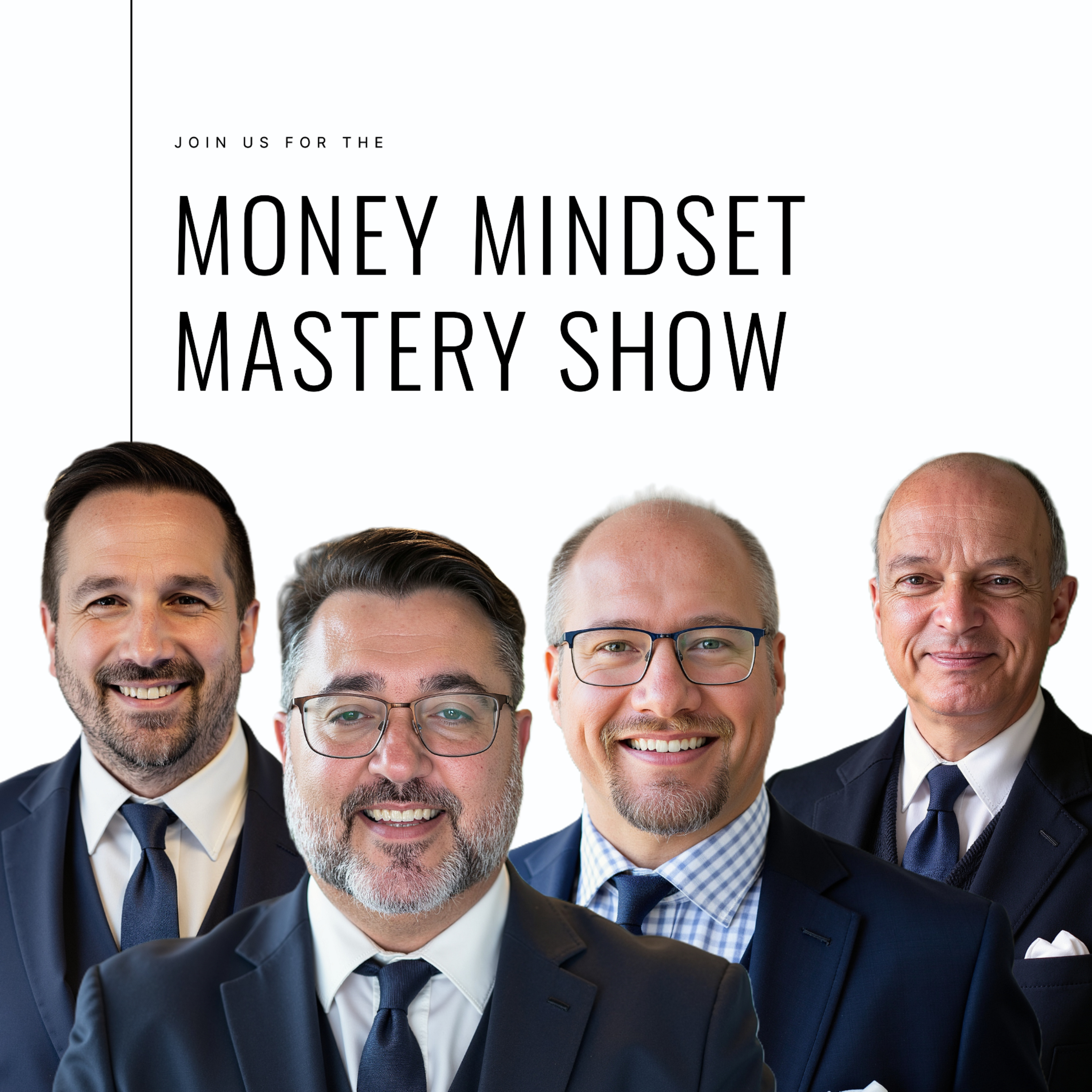
Money Mindset Mastery: Personal Finance and Wealth Building · TvH Financial, including Jim Lao, Ryan Genoe, Denis Bisson and Eric Petersen
Most Canadians with good incomes are feeling broke—and the root causes might surprise you. Despite earning over $100,000 a year, many are struggling financially because of habits, complacency, and unpredictable expenses. In this eye-opening episode of the Money Mindset Mastery Podcast, Jim, Ryan, and Denis peel back the curtain on why "living paycheck to paycheck" isn't just a low-income problem anymore—it's an epidemic across all income levels.Ryan, a seasoned cashflow coach, joins us to reveal how even high earners unknowingly sabotage their financial stability through poor habits like lifestyle creep, untracked spending, and ignoring the real cost of debt. You'll discover concrete tactics to break the cycle, including the power of consolidating high-interest debt into manageable mortgages, mastering behavioral spending triggers, and creating a simple cash flow plan that works in the real world—without deprivation. We break down surprising stats—like 85% of Canadians living paycheck to paycheck—and explore how inflation, rising interest rates, and the pressure to keep up with social media's highlight reel are fueling financial stress for even the most financially savvy. Plus, learn how habits formed during COVID, skyrocketing mortgage renewals, and lifestyle upgrades are creating a perfect storm of financial pressure. This episode is essential listening for anyone feeling overwhelmed by expenses, worried about future debt, or unsure where their money is really going. Whether you're a high earner or just want to avoid financial stress, you'll walk away with actionable steps to take control, strengthen your financial habits, and start sleeping better at night.Ryan Genoe is a certified cashflow coach and financial strategist, known for helping clients create behavioral change around money and build sustainable financial plans. His insights on debt consolidation, spending habits, and behavioral triggers can genuinely transform your financial future. If you're ready to stop feeling broke despite a good income, tune in now. This is the wake-up call you can't afford to miss—your future self will thank you.
Jim Lao: Welcome to ⁓ tech free issues. Well, welcome to the money mindset mastery podcast. Sorry for the delay. I'm your host, Jim. Joining me today as always is my cohost Ryan and our other cohost, Denis, Ryan. Thanks for joining. Denis, thanks for joining. How are both of you today? Yeah. Good. Sitting in the office. Awesome. Ryan, what are we talking about today? Denis B: Yep, sitting in the office today. Ryan Genoe: Well, today is a great day because it's a day about talking about people's cash flow but also a big thing about their habits and really understanding why people and why most Canadians are feeling broke even though a lot of clients are making good income. Jim Lao: Yeah, it seems to have been a theme probably since about 2022, right? When interest rates shot up, ⁓ this has kind of been ongoing. It's been something that we've been dealing with on a day-to-day basis. Ryan, probably you more so because of the fact that ⁓ you are a cashflow coach, so you help a lot of our clients with cashflow planning. But, Dinny, I'm sure you're coming across some of these challenges. I'll be honest with today. Um, I had a personal situation that kind of came up unexpectedly. Uh, on Thursday, my garage door broke today. I had someone that actually came and did some maintenance on my garage door. Like, you know, a few years ago came today, uh, to fix my garage door. And were talking, he was asking me how things were going. Cause he knows what business that I, I met. And I told him, you know, things are pretty good. And I asked him like, how's your business? And he said, he's never seen it so bad. in all the years that he's been in the industry. He even mentioned that one of his suppliers who's been in the industry for over 24 years hasn't seen it so bad. And I'd ask him, well, what do mean by bad? Like what's happening? goes, people are just not calling. They're not spending money on getting their garage doors fixed. Unless it's something that's serious like mine. I couldn't get my vehicle out. But other than that, if it's trying to upgrade your garage or upgrading some of the ⁓ mechanics around it. people are just not doing it. They're so afraid of spending money right now. It's just been something that I personally haven't seen since probably the early 90s. Danny, I don't know if you kind of remember the early 90s and the recession that we had. We're not saying we're in a recessionary period right now, but I think kind of similar vibes, don't you think? Denis B: Yeah, I do feel it as well and let's not forget the 90s was a bad housing market as well so housing prices were going down. This time's a little different because some of the increases in the inflation we're getting such on food is not stopping. It continues to be going up ⁓ and let's not forget this is the year where supposedly a large percentage of Canadians were going to renew their mortgage at a higher rate. ⁓ Jim Lao: Yeah. Yeah. All right. Yeah. Denis B: both variable and fixed rates are higher. So I think people are feeling it a little more this time. Jim Lao: Yeah, and Ryan, mean, this time around, it's not even about low income. We're experiencing, you know, individuals and families with, you know, over a hundred thousand dollars of singular family income, and they're struggling financially as well. You're experiencing that you're working with people in that situation, right? So a little bit new to us because normally when we're dealing with a client with cashflow issues, it's the income isn't there to support the expenses, but The income is there in many cases. It's the expenses just keep going up and up, right? Ryan Genoe: Yeah. And to add to that is, again, having John on for our conversation about how people are consolidating debt over the last little bit, it's been changing more and more. And we've talked about this for probably almost two and a half years, you and me, about how people weren't preparing themselves for the renewal of a mortgage, right? And how the spending didn't kind of follow the cash flow of what was coming in. And that's where we're getting a lot more clients coming in and asking, can I consolidate? ⁓ Is there something that I'm doing as far as behaviors? And that's where the behavior-based portion really comes into play ⁓ as to understanding the cash flow and where that stems from historically from, again, their parents or They're trying to keep up with the Joneses, things like that. And making sure that we're reeling people into really the reality that we're now facing today, which we've talked about for two and a half years, and how we can make sure that people are taking action to understand the budgeting, which is a B word that we don't often talk about. understanding their cash flow, what is coming in versus what is going out, and really reflecting and taking some ownership as to where the past traumas become and how they reflect on how right now is happening for them in their cash flow. Jim Lao: Yeah, and I think it's maybe a little unfair to say that people didn't prepare for the renewal ⁓ period that we're dealing with now because if we kind of go back pre-COVID, things were humming along nicely for everyone. Interest rates were on the lower end, but they weren't like all time low. And then COVID happened. And I think there was a lot of unexpected things that happened as a result of COVID from a financial point of view. for example, a lot of big city centers where people were living in condos and families were living in urban areas and they loved living in urban areas, thinking that COVID was a temporary situation. By temporary, I mean like a few months, even myself, when it happened in March and we were kind of planning for our business and reopening up our office, we thought, ⁓ by September, this will clear up and we'll be back to normal again, right? Well, we were wrong. And I think a lot of people had that mindset where they thought, yeah, this is probably like a two or three month thing. and we're just gonna hang tight and see what happens. And of course it dragged on a lot longer. So then what started to happen? Cabin fever. ⁓ Those condos in the urban areas were starting to be a little bit too tight and snug for a lot of the young families. So then they were looking for locations outside the city. And that kind of drove a bit of a real estate market, right? Cause all of a sudden people in my area were like, you wanna move here? here's the price and they were getting the prices that they were putting out there. And then all of a sudden the interest rates went down. So money was like really, really cheap, which meant people were qualifying for bigger mortgages. And some people were like, I've always wanted a cottage. So I'm going to add a cottage to my portfolio, my real estate portfolio as well. Not really thinking that COVID was temporary. It was just longer, I think that many expected. And then finally, without blaming individuals, the government and Tiff Macklem from the Bank of Canada, they both came out when Pierre Pauliev had said that interest rates are going to start to increase and we're going to be dealing with inflationary periods. And they basically laughed at him at the time saying, ⁓ no, interest rates are going to be low for an extended period of time. And within a matter of a few months, that changed drastically. So when people heard the Bank of Canada saying or signaling, Don't worry about interest rates. They're going to remain low for a long time. They planned based on that recommendation from the Bank of Canada and they made decisions. then literally within, I think like four or five months of that ⁓ statement, interest rates started to shoot up. Right. So it was very difficult to plan for the renewal period when you're given all these signals from the people that you trust. And I'm not saying it's their fault either. That was a difficult time. It was a difficult time for ⁓ anybody to kind of try to project out. So now we are dealing with this reality, the reality of, you know, we've had clients who were making mortgage payments using their credit cards. They just didn't have the cashflow and now they're paying 22 % of their credit card debt. They're just trying to stay above water. Right. So that's kind of the situation that we're in today. When we look at some of the examples here, there's the rising costs that we're talking about food being a big one. Interest costs is a huge one, right? ⁓ inflation, that's another situation we're dealing with. ⁓ creep, and that's probably, again, a lot of that happened with our credit card debt ⁓ been a big one. ⁓ Lack of financial clarity. This is where when we see that ⁓ majority of clients ⁓ Canadians don't have a financial plan. Well, part of that is because they don't have any financial clarity. They haven't... out path for themselves, give them themselves some form of baseline to understand where they are financially and some of the adjustments that they need to make, right? ⁓ then really the emotional toll of the constant money pressure. Like it just feels like it's nonstop, right? ⁓ you anything else you want to add to any of those points or any comments you want to make to them? Denis B: Yeah, I will just add that that period where people were working from home and maybe their work expenses were down, they got used to spending a certain amount of money. Well, that changed, returned to the office, spending a little more, ⁓ now going to work, especially the transportation, and they did not adjust. The one thing you need to, I think people need to adjust is discretionary spending. ⁓ That needs to... be adjusted as you have to pay higher on everything else, gas, food. You need to adjust. And some people may not have a budget and now feel that maybe they do need one. You mentioned the people with the higher earners that are suddenly feeling squeezed a little. Well, maybe there is a time for a budget and really starting to look at your expenses. And just like the title said, get in control of them. seeing what you're spending on, seeing what you could, I guess, spend less on, and then getting more of a control of what you have. Jim Lao: Yeah. Yeah. Well, we're looking at, if we look at some key stats right now, 67 % of Canadians plan to cut spending in 2026. Ryan, are you kind of getting the sense from clients that that would be the case? Ryan Genoe: For sure. again, it's when we're talking about people that are making good money and they're feeling like, make good money. And it's not that people don't have a money problem. It's that they have a habit problem and the clarity within that habits of understanding what's going on within it. And it's kind of like the ostrich putting their head in the sand kind of situation, right? Is. is often what the coaching reveals is that there's no awareness that's happening. And that's the biggest thing that we often tackle is let's talk about the habits that you have. Let's talk about where the behaviors that come from. But also let's understand what it is that's going on within. within your own spending. We often very much talk about committed expenses versus spendable, right? And helping people break down the two and how often they have control over the spendable because committed expenses, we don't often have a large portion of control over, but it's the spendable piece where we're finding people and revealing, hey, there's 500 or $2,000 or in some cases, $3,800 that is going out that you don't even realize. That's where the behavioral piece comes and more recently over the last few weeks is, let's create a plan for that money. Let's give it purpose. When you don't give money purpose, then it floats away. That's the conversation that's often happening right now with a lot of clients that are feeling that, Hey, I make good money, but I don't know what's going on right now. Help. So. Jim Lao: And again, we're dealing with people who are making over a hundred thousand dollars a year saying that. Right. And when you look at their overall ⁓ financial situation, many of them aren't really doing anything that's overly crazy or offside. Right. It literally is just expenses have gone up, but their incomes haven't kept up with it. That's I've seen that in some cases. Right. So if inflation and the cost of goods are going up by two, three, four, five percent. and your income is flat because you haven't received a raise for a while, or it might be going up by one, one and a half percent. So you're not keeping up with inflation. ⁓ So that's definitely something that we're definitely saying. ⁓ In some of the stats for this year, we're looking at about 85 % of Canadians surveyed say living paycheck to paycheck for them is the new norm. That's a lot of stress, right? ⁓ Denis, any thoughts on that stat? Denis B: Yeah, and comes to you also looking at anybody on a fixed income as well that are really struggling to make sure the priority expenses are paid while cutting down on discretionary. More difficult for those working because they also have to save for retirement. So cutting back on saving for retirement is more difficult. ⁓ And they just have to figure it out. ⁓ Some of it's pushed to a later time. ⁓ looking to the government for help, which we're not getting much, at least not on the underlying reasons why some of these costs are going up. ⁓ Yeah, I ⁓ think it's a struggle out there and those stats are believable. Jim Lao: Well, expand on that a little bit as a portfolio manager, because you're dealing with individuals who are in the accumulation stage. And then you're also dealing with people who are in the decumulation stage or they're retired and now they're relying on whatever they've built up in savings to live off of for 10, 15, 20, 30 years at times. Right. So let's talk about the accumulation stage. Are you finding right now that people are putting less money aside for their retirement? Denis B: In some cases, yes, not in all cases, but definitely in some cases, it's a combination of, especially the ones with kids, where are the kids now? Are they spending more on the kids? There could be, if they're in their 30s, 40s, 50s could be looked at potentially for that accumulation and starting to put money back once the kids are out of the house, school, and everything else. But... Yeah, there is some struggles. You're not seeing, usually sometimes you would see they just put their max to the TFSA. Well, that's not really happening. There's only, you know, a small percentage is doing that, is doing that as opposed to, and then when you look at, especially the ones without a defined benefit, which is anybody really non-government worker, ⁓ Jim Lao: Right. Right. Right. Denis B: they are probably putting a little less than they should, given that'll be their only retirement on top of CPP and OAS. That will be their only retirement source. yeah, ⁓ depending on what's going on in their lives and how many kids, that will be one of the things they look at to not spend on, unfortunately. Jim Lao: Yeah, and it's difficult to think about what might happen 20 years from now when you're kind of worried about paying the bills tomorrow. Right? So that's very difficult. And then on the accumulation stage or for your clients that are retired, their incomes aren't necessarily going up, but their costs are going up. What are you doing as a portfolio manager to assist some of those clients to try to keep up with some of those expenses and retirements? Denis B: Well, one of we always start clients, especially on the RIF payments, at the minimum, and then we go through their planning and see how much they need to cover all expenses. And then obviously there's going to be some for discretionary expenses. So that's one of things we're doing. We're also, we don't want to increase ⁓ the risk on any portfolio, but if somebody comes to me, they're concerned they don't want to go much more than conservative, but if you go through the planning and they need a little more than that. Jim Lao: Hmm Denis B: they need their money to grow a little faster, then we potentially can look on, you know, just upping a little, balance conservative for instance, which is a lot of my retirement where they are. So it's getting a reasonable return. The one thing good about all this is the last three years have been good returns. In most cases, double digit returns. So that's really helped a lot of people, especially the ones that may be struggling. They're not contributing, they took money out because of the RIF payments. but the value of the portfolio is the same at the end of the year after the withdrawals. That really helps for the, you know, and that's three years in a row we've had. Jim Lao: Right. Okay. All right. So I have someone who just messaged in. I have my headset on, but don't hear anything. It could be me based on experience. So, Brian, the three of us are actually all virtual right now. So we're not in the same location and we all can hear each other. So I suspect it might be your headset that's the issue. So hopefully you can get that sorted. If not, don't worry. We also will be sending a recording ⁓ out. Of this recording is a podcast as well as a YouTube video. So but keep trying and hopefully it'll work for you Alrighty, let's see here. What else we're gonna talk about. So this is a scary stat 41 % of Canadians say they're $200 or less away from financial insolvency 200 bucks that's like a you know garage door breaking down Right? ⁓ It could be a blown tire on your car. You know, it's really not that much. ⁓ So I don't know. What do you guys think about that stat? that does concern me to see that. Ryan Genoe: I would just add, going back to the emotional stresses that happen with often people, there's often a hidden cost that people don't realize. And money stress isn't just a financial thing. It's really mental and emotional. And this isn't really answering the question, but also it's tackling something that's going on with people. That is, often that We're avoiding the conversation. So I just don't want to look at that. And I kind of alluded to that when it comes to ⁓ people putting their head in the sand. Also kind of guilt and shame. And that's something that we don't want people to face going forward, is that guilt and shame. Because we want people we've, Jim, you and I have said this from the beginning, is this. Let's talk about people's money. Let's talk about it with your family members. Let's talk about with your kids. Let's talk about with a trusted advisor that can guide you through this. And often people are making short-term decision making that is affecting their longer term goals. And that can be emotional or convenient spending. ⁓ and it can lead to a lot of strained relationships. This is something that we talk a lot about within the cash flow and money coaching ⁓ process is what is people's ideas of what money means to them? And I will continue to repeat this throughout this conversation and every conversation, which is where did the behavior start from? Jim Lao: Hmm. Ryan Genoe: What are the habits that you're currently facing and how do we create new habits? It doesn't stress or solve the problem that people are $200 away. We've heard this number before, ⁓ but it speaks to that here we are four or five years into our podcast and there's a lot of Canadians. Jim Lao: Yeah. Ryan Genoe: that are avoiding this dialogue and finding the right people, a great team, TVH Financial, TVH Group as a whole, ⁓ to have this dialogue with to say, hey, I'm facing a problem. Let's talk about it. And too often I see that people go through the process. talk about it, go through the cash flow, help themselves understand. And with some simple tweaks of understanding their cash flow and working with myself as a money coach can really open up that $200 to not feel so stressed at night. And again, the success that we've seen in our three years of doing this. really speaks to the need that Canadians have out there. Denis B: Yeah, the one thing I'd add to that is anybody who's, and the 200, it doesn't matter what the number is, I really hope they really understand where all their money, the budgeted, it's all on an Excel spreadsheet or something, that they really know where all their money is going. first and foremost and then after that you can take that step back and look where you can cut on some spending as I mentioned before the discretionary spending but you really need to have a clear picture of where all your money is going every month. Jim Lao: And it's amazing when we sit down with people and we ask them that question that they really don't know. On occasion, we'll have a client say, yeah, I track everything on an Excel spreadsheet and I know exactly where my money's going. But that's rare. Usually it's, yeah, I don't know where it's going. I just know it's going everywhere else and I'm not able to save or keep up with my bills or every month my line of credit balance keeps increasing. So a good thing is just to really just get a handle of where those expenses are going. Going back to what Ryan said, and I know Denise had the bad word, ⁓ the B word, ⁓ budgeting for most people will not work. For some very disciplined people or for a short-term goal, it will, right? But for most people, it will not work because they will feel deprived after a few months. And then after that, they'll blow their brains out on a boat or a big screen TV or whatever it was. ⁓ So anyways, just keep that in mind. Now we were talking about, it isn't just about ⁓ low-income earners that are dealing with this issue. It's also high-income earners. So right now the stat says that 29 % of people earning $100,000 or more are also still living paycheck to paycheck. Different reasons for it, right? ⁓ But I think that's a surprising stat as well. You guys have any comments on that? Or maybe any clue as to why that might be happening? Denis B: Well, I think they probably overstretched themselves on the mortgage, for one thing. We see sometimes mortgages and you you have the good income. You go to the bank, they like it, you know. You're putting a reasonable down payment and to them reasonable as if you're making that 25%. But the houses were a lot more expensive and then... Anything that happens within the family income can change that quickly. say, there's two incomes not coming in anymore, just one, or one is different, lower than it used to be, it makes it difficult. And what we're going to see now with the mortgage renewals, that's going to happen again. It's going to hit people that really over-loved themselves. Jim Lao: Yeah, like I'm seeing in some cases 40, 50 % increase in payments on the renewal, right? And that's for people who had, didn't have an adjustable variable rate mortgage or even a fixed rate, right? They're coming back now at a much higher rate. For people who had a non-adjustable payment, again, they're dealing with 40, 50 % increases in payments on renewal and that's happening now. basically the bulk of what's going to happen by end of June, I believe, or July, according to John, the TVH mortgage broker. ⁓ I think some ⁓ the reasons behind these issues that we're dealing with ⁓ probably, ⁓ said housing, right, Denim? ⁓ ⁓ the debt. ⁓ hopefully adjusting itself a little bit. ⁓ then we have... the US attacking Iran and all of a sudden bond yields are spiking and fixed rates are up like around this time where a lot of these renewals are happening. So it's very, it's been very difficult to navigate. There's also things like a lifestyle creep or lifestyle upgrades. And I'm going to give my own personal story. Yeah, right. I know you like that one. ⁓ You know, in my early twenties, before I became a money person, I remember I was complaining to my uncle Dave. you know, very smart Sicilian uncle and I was complaining to him about how I just didn't have enough money to pay my bills and I was struggling and I wish I'd make more money and you know, I just kept going on it but I wish I could make more money, I wish I could make more money. And he looked at me says, well, even if you make more money, you're going to still be in the same situation. I thought, how is that even possible? If I make more money, then my problems will go away and it's not a problem. And then, know, smartly he asked me, goes, well, if you make more money, you're going to still be in the same situation. If make more money, then ⁓ my problems will go away and it's not a know, smartly he asked me, goes, well, Let me ask you this. If you were making more money, what are some of the things you would do? so all you're going to do is you're going to make more money and all you're to have is higher expenses because you're getting all this stuff and you're back. Let me ask you this. If you were making more money, what are some of the things you would do? Probably upgrade my car because my car is, you know, it's a crappy old thing and yeah, probably get a nicer car. Okay. Anything else? Yeah. You know what? Probably need some new clothes, probably spend some money on clothes. And he just kept asking me and asked me, I kept saying like, yeah, I'm to do this and this and goes, so all you're going to do is you're going to make more money and all you're to have is higher expenses because you're getting all this stuff and you're back. to where you are today, right? So it's not so much the money that's the issue, it's more the decisions that you're making with that money, right? to where you are today, right? So it's not so much the money that's the issue, it's more the decisions that you're making with that money, right? And that was a lesson that I learned at a very young age. But now if we look at things like car payments, you can't find, if you're looking at a new vehicle, it's hard to find something under 40,000. We're seeing right now an average in the 50,000s. So then the question is, well, then we look at something used. The used car market is also still fairly expensive. And for people who need a vehicle, it's a cost that just keeps increasing and increasing. Then you look at the last couple of weeks with gas prices, like holy cow, right? If you were commuting and you're driving, your gas bill went up significantly. And then Ryan, I know you talk about this with people too. Ryan Genoe: Time to buy a horse or start biking everywhere. Jim Lao: Well, no, because with the horse, then you have to find, you know, hay to feed it and that's expensive. And, you know, there's all kinds of other issues. Right. So even a horse is not going to going to help. But subscriptions, that's another one. Right. Ryan, like I know this is one that you kind of come up with. And I remember when was it? Krista Friedland, who a couple of years ago just said, you know, if you have a Disney plus subscription, just cancel the Disney plus subscription. And people mocked her for it. I did as well. ⁓ But it's not so much the the one subscription, it's the multiple subscription services, right? Because each one at 10 to $15 per month on their own really isn't significant. But sometimes we'll sit down with clients and they'll have five or six monthly subscription services. And now you're in the $7,500 to $100 a month range, right? Ryan, you see that I'm sure a lot in what you do. Ryan Genoe: Yeah, we ask people, what's your flexibility in their cash flow? And moving from a payment-based decision to a cash flow-based decision is really important. And you just start tackling some of the things that I was thinking about as you were talking, which is this automated spending that many organizations are lovely at creating for us. But it's not about our goals, right? It's the convenience, the ease of this automation, the subscriptions, the food delivery. We talked about this on our last podcast or a few podcasts ago about financing upgrades. The savings, investing, and debt reduction often requires intention from us. And that behavioral shift for us is to automate our priorities, not just our lifestyle. Again, a repeat. automate your priorities over not just automating your lifestyle. And those are the choices that can very quickly snowball of understanding committed versus expendable. And I get it. There's a social media world that we're in competition with, really, right? Competition of, somebody buys a new car within our group of five friends. there's like a 70 % chance that if somebody else in our group of friends buys a new car, we will also upgrade our car, right? And to stop and think about what is my priority? Is my priority about an upgrade, the easy of the food delivery? Or is it stopping and slowing things down and saying, hey, is my priority about saving for my future, my vacation piece, or perhaps making sure that my retirement is fully funded or my kids' education is funded, right? So these are very difficult conversations that I have on a weekly basis with a lot of clients, but it also leads to a lot of aha moments that they didn't even realize that they were doing along the way. Jim Lao: Yeah, and I'll play a little bit of devil's advocate here because I'm the car guy, right? Yeah. There's the other side of it where someone might be sitting there saying, you know what, I work really, really hard and it'd be nice to have a nice thing, right? That makes me happy and it'll make them temporarily happy. Trust me. It's not a long term happiness. But I think some people fall into that where it's just like I wake up early in the morning, I work hard. Ryan Genoe: Love it, love it. Jim Lao: You know, if you have a family, you're taking care of your family, whatever else, right? And sometimes just like, screw it. I just want to reward myself with something that I enjoy. And the car is an over the top thing, right? But then, know, like Ryan, you commented about, well, maybe, you know, don't spend the money in the car because of your travel desires. Well, some people aren't into traveling. some, you know, it's not their thing, right? So I think everyone has different priorities, obviously. ⁓ But, and I can understand as an advisor who deals with this with clients on a day to day basis, why it's difficult to say, I have to think about 20 years from now. It's a long ways away, right? And a lot of it is kind of like kicking that can down the road, right? Or kicking the ball down the road is what they're doing. So it's not easy. But I think what working with someone like yourself, Ryan, and know, Denis and myself is, at the very least, we can make people aware, right? So I don't think I've ever, ever in all the years that I've... Help clients with cash flow planning. Have I ever said don't do this? You know, don't go to the Starbucks or Don't get that car or don't go on vacation or whatever it is My approach has always been Here's what you're doing Here's the impact. Here's the real cost you decide what's important for you and Understand the consequences of those decisions right? ⁓ because telling someone don't, don't think that's a long-term strategy. Ryan Genoe: I actually just wrote a quote on my mirror, and it was very interesting because I wrote it last week. it was, nobody is here to save you, but also nobody is here to stop you. And it's very eye-opening when you think about that, when it comes to this piece. And we all need a great team and a great ⁓ group of people around us to just simply ask these questions of what is a priority? What is most important to you? And whether it's, again, the coffee or the car or whatever, what is that then putting off for yourself going down the road? Whether you're putting off retirement by a year or two. you're putting off your kids education, or travel plans, whatever is your thing. It's good to always have people to ask those questions to make sure that you stay on track. And again, all the big leaders and business people of the world, the Sidney Crosby's, always have that person asking that question, helping them. Remind themselves what their values are, what their goals are, and to make sure that they stay focused on those things. Because if they don't, it could very easily, as John said once, it can very easily put us on track to hit the iceberg. yeah. Jim Lao: Yeah. Yeah. Yeah. And I know you had mentioned about the whole keeping up with the Joneses once upon a time. I think that was so much easier to deal with because the Joneses usually met like in your neighborhood within a certain amount of blocks radius. Right. But now it's keeping up with what's being posted on social media and especially the younger generation where they're seeing all these posts, you know, people driving nice cars and living in fancy homes and traveling the world and whatever else. ⁓ And that's not reality, but they think it's reality. They're trying to keep up with that. And they're wondering, well, why don't I have that? Why am I not capable of doing that? And they try to push themselves to reach some of those goals and that unrealistic lifestyle for a lot of people, right? So I think that's another issue that we have to deal with. What else do we want to talk about? Well, you know what? I think we might want to offer up some solutions. And I think... The most basic solution that I can come up with is looking at your debt. And I know Ryan, you and I specifically deal with this with clients when we say, you you have credit card debt. You might want to do a refinance and roll that into your mortgage. And they, they just resist. like, I don't want to put that on my mortgage. And, I don't want to add to my mortgage. And all we're suggesting, first of all, is you're not, you're basically shifting the debt, right? You're shifting it from. short term to long term or revolving to non revolving. Secondly, if we just use some basic numbers and I know we talk percentages all the time and I think sometimes people don't understand percentages as well as the numbers. So if you have a $10,000 credit card balance and you're paying 22 % on that $10,000 credit card balance, assuming you're not paying that down, right? and you just do the minimums, what's your annual interest cost on that? Anybody want to give me the number? Or is it too early on Monday to calculate it? It's $2,200, right? It's $2,200 that you're giving to the credit card company or the bank to carry that $10,000 credit card, right? Now, if you make minimum payments on a 22 Ryan Genoe: Surely. Jim Lao: Percent credit card and that's all you're able to afford Do you know how long it will take you to pay off our credit card? Ryan Genoe: load of time. That's the official math, right? Jim Lao: Over 30 years. It's like 34 to 36 years is how long it'll take you to pay down that debt. Now, what if you took that credit card at 22 % and you put it into a line of credit that's charging you 10 %? Well, that's now only $1,000 in interest cost. So you've now picked up $1,200. back in your pocket, that's $100 a month that you are now saving. And there's a couple of things you can do with that $100 a month. You can accelerate the line of credit pay down to actually start reducing your debt, or you can take the $100 and cover whatever, you know, buy groceries. Like that's a significant amount of money, right? Now, what if you took that same $10,000 credit card debt at 22 % where you're paying $2,200 a year interest cost and you rolled it into your mortgage? at call it 4%. That's 800 bucks. That's $400. Sorry, $400 of interest expense. You freed up $1,800 or 150 bucks a month. That's significant. Right? So I know psychologically people struggle with that by I don't want to keep moving my money or my debt over into my mortgage. You're shifting from very expensive debt that you're going to just continue on drowning if you keep that up into something that becomes more manageable. And then you have to develop the discipline to take that freed up cash flow and accelerate your pay downs or again redirected into dealing with some of the higher cost ⁓ expenses that we have. Right. You guys want to any comments on that at all? Denis B: Yeah, one of the key things I was going to say is once you do put it on the mortgage, don't recreate another debt on your credit card. So the discipline has to come in not to spend more and re-add that debt ⁓ and use it for, you know, if you save money, then potentially use it for something better. When the client sat down to me, she was looking at debt, all debt as being bad. Well, no, I Ryan Genoe: I'll let Danigo first. Please. Denis B: Let's start with your credit card, the highest, and go down to the lowest. A mortgage debt is okay because you're buying equity. At least you're, you know, you have an asset that's hopefully appreciating in value versus a credit card that's not appreciating. And you gotta make sure that you're following the right advice when it comes to that. ⁓ Some people will think the credit card's a good way to get a loan. No, it's not. It's... Jim Lao: No. Denis B: You have to go use the right sources at the low interest rate. And that's going to be key. Because I've had some clients that we set up and we did all their investment, their credit card got rid of it. Then he goes, he got another credit card and started the same thing. And then it was a matter of, ⁓ he said, well, they sent it to me free, so I had to use it. No, no, you don't. The habit is, if you have credit card debt, is make sure you don't spend that much where you can't pay the full amount every month. Jim Lao: Right. And that's why we say budgets don't work in that situation. That's a behavioral problem. Right. So this is where we encourage our clients to work with Ryan on the behavioral side of things. Because obviously, that's what it is. It's a behavior issue. And it needs to be identified. Some people don't identify it. Right. It needs to be identified and then correct it. Denis B: That's key on that. Jim Lao: And it doesn't have to be corrected in a sense where you're now depriving people of enjoying some of their money. So let's use that example you said, Denis, where someone shifts it over to their mortgage and they just accelerate their payments, right? And not use a credit card again to get themselves back in situation. Well, what if they take half of the cash flow savings and apply that on the mortgage and take the other half and put it in a savings account? So that way, if they do want to go on a trip or there is an emergency that comes up, they've built up a bit of a savings account that they can go to first, right, to address some of those issues. Because emergencies do happen. Again, I didn't expect my garage door to break when it broke, but it did, and I had to deal with it, right? So those things do happen, and it's part of life. We have to deal with it. So that's one way that we can strategize and help our clients out in those situations. Ryan, anything else you want to add to it? Ryan Genoe: Part of me just pictures you with your garage door closed. And because I'm an 80s kid, the Kool-Aid guy just busting through the garage. Anyway, that's besides the point. No, no. That's not what I. Just speaking again, back to the idea of avoiding that dialogue, but back to what Deneedi said. And this has been a dialogue that. Jim Lao: Are you saying I need to go on a diet, Ryan? Is that what you're saying? That's what that's what I just heard. Denis B: you Ryan Genoe: that I have with you, Jim and Denis and John and the rest of the team is about helping people create new habits. It can be a great strategy for a lot of people to consolidate and make sure that they understand the difference between paying 22 % interest versus 4 % interest and that it can create a lot of relief. And then we can start building upon creating new habits and new behaviors going forward. And that is always something that I stress with anybody when it comes to this consolidation piece is, we just putting a bandaid over the problem? And I want to be very clear with a lot of people out there, it's very important to find a great team of people that will help support you on this. And there is no shame because, again, then the amount of debt Canadians face is more than any other country out there for who we are as Canadians and what we make in day to day. And that it is a great reset for a lot of people to say, hey, I'm setting myself up. my kids up and the next generation up for success. When we start talking about money, we talk about the habits that we have and how to make sure that we don't fall down this snowball effect of just simply creating more debt. And I would encourage anybody to reach out to us. for Cashflow Solutions to see what it is that we can do to help support you along this journey. Because it's not just for you as an individual, but it's you for the business, it's you for your family. It has an everlasting effect down the road. Jim Lao: Yeah, you're right. And when I was looking at some of the recent numbers, I believe the average Canadian carries about $21,000 of debt, excluding mortgage debt. So that would be credit card, line of credit card, of that nature. I was a little surprised with the credit card balance. was about a little over $4,000 was what the average Canadian currently carries. So I thought that was kind of like on the low end surprising, but really the revolving debt is the big one. Right. And the one that I keep hearing about and seeing is, is car debt or car loans. Right. And even from that point, when you get a car loan and then you're trying to get your mortgage refinance and they look at that car payment, chances are you're not going to qualify for as much refinancing as you need. And in many cases, the lender is going to say you need to pay off that car loan before we'll actually approve you for the mortgage. And that's how they keep rolling that car loan back into the mortgage. And then they think. Well, originally I took out an eight year loan or a seven year loan and it got paid out after four years because I had a role in my mortgage. So think it's paid off. And then they say, well, now I'm going to get another car and do the same thing again. You didn't know like you've shifted that debt over. Get make sure that that's been paid off right before you start thinking about getting another vehicle. And that's coming from a car guy. So these are the these are the behaviors that people again don't recognize. about themselves. I think, Ryan, I think the big one, and we've talked about this earlier today, awareness is the big one. It's key, I think. Right. When you map it all out and you show someone this is how much you're paying. Like I had clients when we mapped it out, they were paying $12,000 a year at the LCBO. This is a retired couple. Right. And they were struggling paying their rent. And it's like, well, you're You're paying a thousand dollars a month at the LCBO. Maybe we need to adjust some things here, right? To help you pay off your rent. The thing is they didn't realize that that's what they were spending on the LCBO. They knew they were spending a lot of money, but again, it was you go in, debit card, credit card, whatever else, right? But when they actually wrote it down and they saw that number in front of them, and then we started attaching the lost opportunity costs on that $12,000 per year. like they almost had a heart attack, right? But really, I think it's the awareness. I think the first step for anyone is to map it all down and don't map one month of expenses or income of expenses. You have to kind of average it out over a three or four month period. And Ryan obviously would have tools to help you with that. Some people will use Excel and spreadsheets. ⁓ know, the minority of people are really good at doing that. I'd say the majority of people could benefit from working. with someone like Ryan who can help you map out those expenses. All right, Ryan? Ryan Genoe: Absolutely, happy to help. Jim Lao: There you go. And really what you want to map out is what's coming in and what's going out. It's that simple, right? ⁓ And then again, to your point, Ryan, you would talk about this with individuals, what's fixed? Like what are your fixed costs every month? And what are some of your flexible or your expendables is what we refer to it, right? And then like you said, Ryan, what matters the most out of all of them? We've helped some clients in the past where they would say they would go out three, four, five times a night. would go to restaurants to eat, right? ⁓ there are people who are struggling with paying their mortgage. And then ⁓ kind of coach them and help them to say, maybe bring it down to two nights a week. And that three nights a week that you're not spending at a restaurant and you're doing your own ⁓ at home, like that's a significant savings. And you've helped people get in a better footing, financial footing, just by making some of those adjustments, right? Ryan Genoe: Yeah, yeah, what, you know, I ask people, you know, what financial decisions do I keep postponing because it feels uncomfortable. And yes, it's uncomfortable having this conversation. But when we run the numbers, because sometimes numbers don't lie, when we run the numbers to see people, to show them, what does five years or 10 years down the road mean as far as what their debt ratio is going to be? then when it comes to renewing a household or buying that car, all those things are unattainable. that's part of it is making sure that you can continue your life. And again, it's a lot of very difficult conversations, but I'd rather have the difficult conversation today than to wait five years or 10 years down the road and then ask yourselves. Denis B: you Ryan Genoe: How comfortable does it feel now? And making sure that those things don't happen now. And avoid social media the best you can. Jim Lao: Or or ⁓ 680 news when it comes to the markets and what's happening out in the world that scares everybody But you know the bottom line is as we're gonna close this off It's not about restrictions, right? We don't want we don't want people to feel necessarily that they're being restricted from doing things That's where again budgets really fail is because they are very much like diets kind of like the same kind of structure or pattern and after about three months of dieting and Trust me, I know, because I've dieted on and off all my life. After a while, you're just like, you know what, I really want that pizza. And you don't have a slice of pizza, you end up eating the whole pizza. Right. And that's where people kind of fall off. And the same thing with budgeting is, you know, they're strict with themselves. They put their loonies in the jar and they fill up that jar and they feel good that there's like a hundred bucks in there. But then all of a sudden it's, I haven't been on vacation and I'm going to blow $10,000 on a European trip. And they put themselves in big trouble. So we definitely want to be careful with anyone feeling restricted because that's not the goal here. It's more of just awareness and adjustments, make some adjustments. right. Dini, anything you want to add? Denis B: No, think you got it all there. Awareness is key. Know where your money's going. Jim Lao: Yeah. So Ryan, how about you? Anything else you want to add as the in-house cashflow coach? Ryan Genoe: Yes, my challenge for everybody listening is that you have one intentional spending review per year. One minimum. That you have clear separation between fixed lifestyle costs and your flexible choices. That's big. Design a money system that works in real life and not your ideal life or what social media says you should have going on. And just simply ask better questions before you upgrade your lifestyle. can really relieve a lot of the stresses that people are often facing now or that you potentially will face in your future. So again, a clear reflection of 2026 and we've said in years past is just making sure that you have a great amazing team around you that's going to help you ask the hard questions and find answers without you living a stressful life. And I do love the idea that a lot of clients often say, I'm kind of like that Staples easy button that when have a conversation with somebody and relieve a lot of that stress, things can be a lot easier and you can start sleeping at night. So good sleep leads to better health, which leads to better financial decisions, which leads to working with us more often. Jim Lao: No, you're right. ⁓ So I think really what I encourage people to do is if you want to find out more about the program that's offered through Ryan, go to the TVH financial website, look up the behavioral cashflow coaching program. You'll find some more details. So we are working on launching a separate website for that program. So stay tuned for that. ⁓ But you can find out some more information. And then if you'd like, you can email Ryan at tvhgroup.ca ⁓ and reach out to him directly and he can help you. And Ryan, maybe talk a little bit about the program itself, ⁓ what you offer through the coaching program in terms of the plan, the app, the actual coaching piece. So maybe you can share a little bit about that. Ryan Genoe: Again, just walking people through the process is understanding what your goals are and your ultimate lifestyle that you'd like to live is first and foremost. ⁓ Then going into a really deep dive about understanding your cash flow. After understanding your cash flow, it's really understanding the behaviors and habits that you currently have and how you would like to see those behaviors and habits change going forward. Then monthly, Jim Lao: So the question is, how do you do that? So how do you help people in terms of identifying and being aware of what those expenses are? What are you offering as a program? Ryan Genoe: Well, part of it is digging deep into people's cash flow and understanding line by line what's going on and how those habits have been created and where the expenses are happening. Yes. Yes, that's right. Yes, we do. Long short. So yes, we use a program called the Winson as part of that that helps people categorize everything that's going on within their lifestyle world of spending. ⁓ Jim Lao: So do you have a program or an app for that is what I'm asking. Okay. Okay. Ryan Genoe: On top of that we layer in a bit of of coaching so monthly coaching that happens because we want to make sure Jim Lao: And that keeps them on track, right? Ryan Genoe: It helps them keep on track, yeah. And again, for some people it's about keeping a little bit of accountability to that and making sure that when you come into those coaching sessions that you have questions. And then there's a learning dialogue along that. have ⁓ some generated educational pieces that doesn't take a lot of time, but I find a lot of families find it great to start from. The youngest I've had is, I guess, a puppy and age three to their teenagers that are walking through the program with them as a family member and even for business owners too. Jim Lao: And I guess what I would ask anyone who's watching or listening is right now Ryan your coaching program is $100 a month. It's 12 sessions That also includes the cash flow plan ⁓ And we're kind of debating on if there should be some form of maybe group ⁓ Offering on a monthly basis. So maybe if you're watching or listening, let us know like would you be interested in that? It would be at a reduced cost So at the $100 a month, you're dealing with it's one-on-one, you and Ryan, and walking through your individual cashflow coaching program. But if there was a group session available, you're not really sharing detailed information or personal information, just more conceptually, here's what you should do from a cashflow point of view. Would $50 a month, would that make sense? $75 a month, like would you be interested in something like that? So we'd love your feedback as we're trying to develop the program. Ryan. ⁓ then I think finally, what I'd like to share with everybody is this. You're not the only one dealing with this. Don't be embarrassed by it. Don't be ashamed by it. ⁓ you're not the only one dealing with this. ⁓ Deni and I, we're dealing with multiple clients, know, daily, weekly. This is happening to a lot of people right now, probably more so than we've experienced, Denice, since early 90s, maybe even 2008, 2009, there was a bit of a hiccup there with the financial crisis. ⁓ But this definitely does feel to me like the early 90s and going through that situation. the only way that you can get yourself out of it is by asking for help. Honestly, that's the only way you can. So don't be afraid to reach out. And if you want to do it anonymously, again, you can ⁓ email Ryan, can email the group of financial at TVHgroup.ca. We also do have a contact form on our website. So you can go to tvhgroup.ca or tvhfinancial.ca or tvhwealth.ca. There's a contact me form. You can fill in some basic information and that we can reach out that way, or you can direct message us through one of the social media platforms. So I think that's it for today. Unless anyone wants to add any final comments. Denis B: No, I'm good. Ryan Genoe: No, I'm sorry. Jim Lao: No? And don't forget, you're great. Ryan Genoe: You Jim Lao: Take care guys. ⁓ you're right. I got the wrong one. All right, next time I'll do it. I'll get it right. Talk to you later. Bye. Ryan Genoe: the tiger. ⁓ Denis B: Thank Ryan Genoe: All right.
More Money Mindset Mastery: Personal Finance and Wealth Building episodes →