
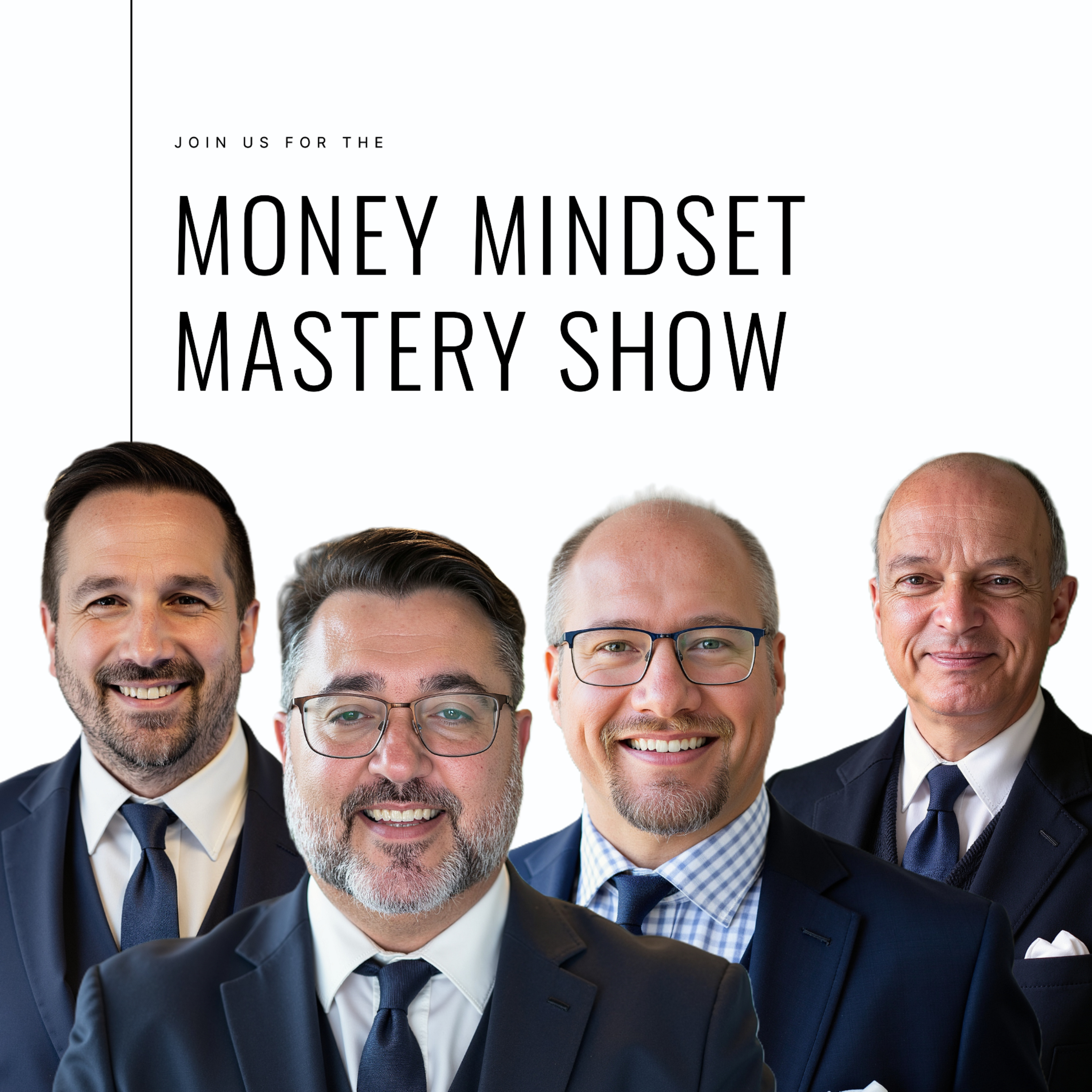
Money Mindset Mastery: Personal Finance and Wealth Building · TvH Financial, including Jim Lao, Ryan Genoe, Denis Bisson and Eric Petersen
The conversation covers a range of topics related to the financial landscape, including mortgage rates, inflation, and the impact of geopolitical events on the economy. The speakers provide insights into the current state of the market and offer perspectives on potential future developments. The conversation covers the topic of mortgage rates and the decision-making process between fixed and variable rates. It also delves into the importance of flexibility, planning, and seeking professional advice. The conversation emphasizes the need for individualized decision-making and the impact of economic factors on mortgage rates. Takeaways Mortgage rates are influenced by a variety of factors, including economic conditions, geopolitical events, and central bank policies. Inflation and interest rates play a significant role in shaping the mortgage market, impacting both fixed and variable rates. Mortgage rates: The conversation explores the considerations between fixed and variable rates, emphasizing the importance of individual circumstances. Flexibility and planning: The importance of flexibility and long-term planning in mortgage decisions is highlighted, with a focus on understanding individual goals and life events. Chapters 00:00 Introduction and Speaker Background 07:33 Renewals and Historical Comparison of Mortgage Rates 20:10 Oil Prices, Geopolitical Impact, and Historical Context 25:34 Market Response and Variable Rate Pricing 31:15 The Impact of Flexibility and Planning 38:22 Renewal and Course Correction 49:30 Proactive Mortgage Management 59:34 Closing Remarks and Future Topics
Jim Lao: Well, I'd like to welcome everyone to the Money Mindset Mastery Show. your host. I'm also partner at TVH Group, president TVH Financial Wealth Advisor. Joining us today, we have Eric. Eric, can you maybe provide a bit background? Eric Petersen: Hey there, Jim. Yeah, I'm Eric at TVH. I'm the private wealth advisor. My area of expertise is investments that focus in private equity. Jim Lao: Usually we have our portfolio manager, Denis Besson joining us, but he's a little bit under the weather. And then we do have our special guest, John Sorby, who is ⁓ a partner at TVH Group, ⁓ mortgage broker at Verico TVH Mortgages. John, maybe you provide a bit of background as well. Jon: I'm a mortgage broker at TVH Mortgages, a partner in the firm. ⁓ know, ⁓ years of financial professional or at least pretty darn close to ⁓ a chance to revisit my roots today because I started out on the trading floor on Bay Street and money market and currency ⁓ and a of that is going to factor into ⁓ the points that I make this afternoon. Jim Lao: Right. Awesome, well thanks for joining us. And Ryan, you ⁓ reconnected again, so maybe you can provide your background. Ryan Genoe: coming back from vacation. So excited to be back as ⁓ And I everybody missed me from the last version. But ⁓ ultimately, helped with cash flow understanding people from day to and making sure that ⁓ people really are when it comes to buying their next home ⁓ and making sure that having enough money for the next investments. And then helping support CVH financial as a whole is part of my job. Jim Lao: Right. today's topic, and we have a ⁓ of people that have registered for today's topic, so I think it's of mind for a lot of people. We're talking to fix or not to fix. So we're going to talk about rates and ⁓ gas prices, your and maybe the shaky economy as well. So, this was from an email, ⁓ John, that you sent out just seven days on something that happened the Friday before then. ⁓ the title of your email, which caught my attention Friday was a bad for borrowers. So I think we want to talk about why Friday was a bad day for borrowers and is it still a bad day today for borrowers or have things gotten better, things gotten worse? ⁓ A lot of it is based on the conflict in Iran. four years ago, a lot of it was due to Russia attacking the Ukraine. So now we're dealing with another war and kind of some similarities. There was an oil shock four years ago. There's a bit of an oil shock right now. Gas prices, inflation was a big concern. Bond yields spike. Well, actually, I don't know, John, was there a bond yield spike four years ago? Or was that more the of Canada rates that were kind of spiking? Jon: We saw the bond yields spike. I think we actually might want to take just a quick step back from that to where we were probably middle 2021. So, you ⁓ know, been a year, the better part of 18 months into COVID. We had been making progress on vaccines. There was still some road to hoe, but I think by and large there was some very cautious optimism. And the term at the time surrounding inflation, which ultimately became the big issue in 2022, was that it was transitory. And I think in fairness to Tiff Macklem, the governor of the Bank of Canada at the time and the current governor, if we didn't have... the hostilities break out in Ukraine, that may well have been the case. I think we were essentially teetering on a knife's edge at that point. We definitely seen inflation spike ⁓ a result of low rates, but a good chance that things might have settled because a lot of that was structural, a lot of that was pipeline orientated. I don't necessarily mean oil, but the service routes, the way that we integrated systems for moving products, around the globe, etc. I think all of us became, you know, minor economists at the time when we, you know, saw the Russian tanks roll in and all of sudden figured out that, you know, 10.1 % of all grain exports worldwide came from Ukraine and what that meant to us. So up until that point, we probably could have gotten away with things. And the problem is, I think in an attempt to engineer a soft landing, Governor MacLem avoided any sort of attempt to arrest inflation with higher rates in 2021. Unfortunately, fast forward to February, 2022, things started to go very badly wrong for inflation. started to become clear that it was much more than transitory. And then rather than pumping the brakes into the stop sign, he had to hit the brakes hard. And that's where things got bad. Now, you know, there are some similarities, but the way it works is although there is general Jim Lao: All right. Jon: a correlation between fixed and variable rates, it is not exact. So you might have fixed rates move more quickly than variable rates, variable rates might move more quickly than fixed rates. You may have a spread that can widen out. So ⁓ might have variable rates that are higher than fixed rates. That's not the norm. But sometimes you can have fixed rates as much as a couple of hundred basis points. So two full percentage points higher than variable rates. Again, not the norm. Eric Petersen: you Jon: But at any given short-term period, you might see those kind of distortions depending on what is happening. And the reason for that, and part of the reason why the spike in bonds caught my attention, because the bond market ultimately is a free market. the fact ⁓ that people trading, there is no ⁓ specific government on a given Whereas with the variable rates, that is typically based on the money market. And the trick there is, in addition to sort of whatever the market is doing, you also sort of have the governor of the Bank of Canada coming out and waving their magic wand and saying today rates are magically higher or lower depending on whatever their reasoning may be. So as a result, while we haven't seen a lot of movement on variable rates, we have seen a bit of a spike in fixed rates. And any time you have that much of a jump, it's the sort of thing that I watch for specifically. And I sent out that little missive. to make sure that people were aware. Jim Lao: Right. And of course, timing is incredible because what is it in terms of percentages of people that are renewing, the mortgages are renewing this year, is like a record amount of renewals that are happening. like this is all the timing of it all isn't really ideal, is it? Jon: So the suggestion is that approximately 60 % of all renewals would essentially hit the market over the 2025 and 2026 year. And that's a direct causal link from 2020 and 2021 where we had some real booming real estate markets as a result of very, very low interest rates where the money supply was functionally expanded. And as a result in Canada, the overwhelmingly most popular term is a five year fixed term. Eric Petersen: Thank you. Jon: see is people coming up at their renewal. And so we have as a result of that boom back in 2020 and 2021, we have a fairly large rollover in 2025 and 2026. Jim Lao: Right. And four years ago, just to remind me again, was it the fixed rates were lower than the variable because of the Bank of Canada increasing their short-term rates? Jon: So the way it worked is we had some big drops right at the beginning of COVID in March and April of 2020. They brought rates down a percent and a half, got it almost to zero on what they call the overnight rate, which is the interbank lending rate. That's the money that's loaned between the Bank of Canada and essentially the big banks in Canada. ⁓ Jim Lao: And that historically was like low. Jon: ⁓ of a percent, so 0.25%. You're almost at zero, so about as low as you can go. Jim Lao: Right. So great for borrowers, but for people who are putting money in savings accounts who are only getting like 0.15 % or barely getting 1 % on a GIC, like it was horrible for them, but great for people with debt. Yeah. Jon: Exactly. And so what we saw was as took hold, because in fairness, ⁓ was a lot of uncertainty. The government wasn't sure what was going to happen. This is something we hadn't seen in a century. ⁓ reaction was swift and frankly, ⁓ decisive. That not Tiff Macklem. That was his predecessor who made those cuts. And then, know, things took off from there. I think where Macklem ⁓ has been... careful this go around is I think he recognizes that if he had you know 2021 back he might have started some very gentle rate increases at the time and again Eric Petersen: Thank Jon: Not a huge fan of Mr. Macklem's, but I think in fairness, I will defend him on this point. I don't think anyone saw a land war in Central Europe coming the time that he decided to ⁓ raise rates. That really was ⁓ that upset the apple cart. And similarly today, we... had a theory that based on general economic weakness in Canada, rates were going to continue declining. And we had started ⁓ see that after a bit of volatility in sort of ⁓ middle 2025 that of about Q4, ⁓ there was a ⁓ declining level on bond market. There was some feeling we would see another couple of rate cuts middle of this year, very possibly around the Q4. negotiations. I think it's fair to say that the Canada-U.S.-Mexico free trade agreement negotiations, there's probably not a lot of optimism from a Canadian perspective. ⁓ I think the Bank of Canada wanted to keep ⁓ a rate cut or two in their back pocket just in case things got bad. But ⁓ when bomb started falling, I think it was February 28th, ⁓ we saw that trend start to reverse. ⁓ And I think it was Like we said a couple of Fridays ago where they started to suggest they were moving, I think, a series of troops into position. ⁓ what saw the spike. ⁓ Jim Lao: Right. Yeah, that's a lot going on. And I do want to talk a little bit about kind of where we're at with inflation now, some of the recent numbers, because a little bit different than four years ago, right? Like inflation about 1.8%. And maybe you can talk to why maybe it's artificially on the lower side. And then the Bank of Canada right now is currently at 2.25%. And there's definitely... Eric Petersen: So. Thank Jim Lao: discussions, I'm hearing them from everyone as well. Some are predicting three interest rate increases this year. I've heard others where things are going to stay as they are. And I've heard a few suggest that maybe there'll be a couple of rate cuts as well. So maybe can speak to all those three points. Jon: So the expectation was 1.9%, came in at 1.8%. A big reason for that. is probably because there is overall economic weakness and the fact of the matter is people just tend not to spend as much when they're concerned about their jobs, their livelihoods, whatever you want to say. In terms of artificially low, what I would say is there are certain core components of inflation that the Bank of watches very carefully. for example, food is something that has bucked that trend a little bit. It's probably typically come in a little bit higher. But the reality is we've had a fairly significant decrease for a number of people in the cost of housing, better or for worse. That's pretty big component. As I with ⁓ using things interest rates on the way up, because I think in many respects higher interest rates are in fact ⁓ a tool for sort of anti-inflationary with regard to the Bank of Canada, so too it probably holds with the individual household if more of your disposable income is going towards covering Eric Petersen: Thank Jon: your interest payments on a given month, whether it's card, line of credit or mortgage, you're probably not spending as much. And think there's probably something to be said here as well. In terms of whether or not that's artificially low, ⁓ I think point of view on that is the reason they a basket of goods for inflation, just so that our ⁓ listeners understand what means, you take what the of a loaf of bread is, and you take what the cost of a quart of milk is, of butter and so on and you bundle that all together along with things like housing, gasoline and you you try to get a bit of a cross section. ⁓ I will say is you know artificially low is maybe a bridge too far for me to go because I will say other things are pulling back. And so I think the inflation is probably a little bit softer overall, but I would say the Bank of Canada is well aware of the component pieces. And what they have been doing is they've just been watching those very carefully. So just because inflation came in a little bit lower than expected last month, if we can take that in a vacuum away from the Iran conflict, the is the Bank of Canada would probably still been loathed to lower rates Eric Petersen: Thanks. Jon: at that stage, ⁓ It does seem like that might cut both ways. And one of the things we'll talk about a little bit later is the Bank of Canada sort of similarly looking at sort of the current situation and saying, until we know that this gas crunch, this oil crunch is going to be a little bit more entrenched, we're also not necessarily in a rush to raise rates either because they've got a pretty tricky path in front of them. And again, we'll dig into that in a bit. But I think that was point one. What was the second question? Jim Lao: Well, before I get into point two, so the reason why I said artificially low was because there was the tax holidays on certain foods last year from December and ended at the end of February. So when you're looking at February to February numbers, it actually included that tax holiday. And that's where we're hearing that inflation is showing to be lower than it probably really is because of that tax holiday on the food during that period of time. So I think we're going to get a better. Jon: And then. Jim Lao: more realistic number end of March, end of April, right? Jon: And that's fair, but all I would say is recognize the 1.8 % that we hit was against the target number that most economists had consensus agreed on at 1.9%. And I am sure they were factoring that in when they made their consensus choices. Jim Lao: Right, okay. And before I remind you of the second question, I want to remind everybody as well that anything we talk about today should not be taken as any kind of advice But you ⁓ want some advice on what you should do with your mortgage with your debt, then ask you to reach out to a qualified advisor like John. Ryan Genoe: you Jim Lao: So John can help you with answering any of those questions and kind of reviewing your specific situation similar to Ryan Eric or myself as well So the second one was the Bank of Canada rate. Right now it's two and a quarter percent. Again, I've heard from some people suggesting that there's gonna be three increases by the end of the year. I've heard others that have said, no, things are probably gonna stay at the 2.25 and we're not moving off of that. And I've heard maybe a small minority of experts suggest that we might actually see one or two. drops in the rate. So, you know, you have a finance degree, you worked on the trading floor for one of the big banks, you have that crystal ball from Amazon as well on your desk. ⁓ So do you think we can expect from the Bank of Canada? Ryan Genoe: you Jon: So again, and there's economics and then there's sort of the psychological economics. I feel like sometimes it's like they say with poker, you don't necessarily play the game, you play the person across from you. I feel like Mr. Macklem, the Governor of Bank of Canada, is the sort of fellow who wants to look back and have people say, he had no choice. there have been some central bankers, and I think by and large in Canada, we've been a little bit spoiled. We've had some pretty fantastic central bankers, and a lot of them understood when to step in and try to lead the markets, how they might address potential issues, potential change. And what I would say is he is the kind of guy who I think wants history to look back and say, well, again, what else could he have done? So I don't hold out a lot of hope that he's going to go hard to one side or the other and make the call. I think he's in a tough spot. He sees what's happening with jobs. He sees what's happening with GDP. He sees the structural change happening with the states and the potential for a degradation of our interaction and interconnection with them. And he sees downside risk. Now, the usual play for a central banker, if there's downside risk, is to reduce rates, stimulate the economy. However, he is also very aware of the inflationary potential. is why I say to an ⁓ ⁓ the time in Iran is, I a big thing. we recognize that... It probably doesn't make a lot of sense for President Trump based on what he campaigned on and based on the feedback he's getting, not just from but also members within his own party, ⁓ he doesn't want an extended conflict. I also recognize that although he has moved Trump's people and troops into the area and has seen a military buildup, think the path, the piece is often sort of carved with ⁓ strong showing. And so I think that may be well the potential sort of game that he's playing. ⁓ wants to show a strong hand in order to try and broker a better deal. That ⁓ sound unreasonable based on what we've seen on sort the first year and change that he's been office. However, it does turn into a situation where boots are on the ground, ⁓ all bets may well be off. Now, that being said, this brought me back to something, and I recognize this saying predates my time on the trading floor, which was sort of the late ⁓ 90s, you buy the rumor and you sell the fact. I read a lot about these kind of things on a regular basis just because it is a genuine interest for me. And one of the things that I have noted in our current circumstances relative to say the oil crunch of the 70s is a lot more countries produce a lot more oil than they used to. The relative significance of the Middle East in terms of the oil trade is not what it once was, which is not to say it's still not significant. But even a detail that I picked up on the weekend as I was reading through some of the breakdowns of what was going on, the Saudis built a pipeline which funnels somewhere between five and seven million of oil barrels a day. I think the Strait of Hormuz typically flows something like 15 million barrels a day, which is roughly 20 % of global oil. The Saudis have ⁓ started cycle up, not surprisingly, ⁓ their to move their product because they are particularly stuck with regard Eric Petersen: you Ryan Genoe: Thank Jon: getting oil out. And that is a contingency that they obviously ⁓ and built many, many years ago. It's not something they started a month or two ago when this kicked off. So the States, I remember seeing a breakdown of approximate oil reserves ⁓ with and and whatnot. There is a lot more available oil, whether it's the oil sands, ⁓ the United States, et cetera. So North America actually seems to hold as much oil as the Middle East. Now, there are some issues around how we get that to market from Canada, for example. know that's ⁓ of a ⁓ discussion at the political levels. ⁓ bottom line is we're probably not as dependent as we used to be. However, that doesn't mean there isn't the opportunity for, ⁓ know, various groups out there who potentially benefit from a high oil price from going out and, you know, turning the screws a bit and seeing what they can do to try and move things along. I still remember, you know, one of my of my days trading back in late 90s where I was dealing with a number of folks out on the oil patch in Alberta. And I remember a fella saying, if we could just get to $16 a barrel, John, you'd be proud. I think we were at $8 a barrel at the time. Jim Lao: Right. All Jon: So, you know, fast forward today at a hundred bucks and you know, you don't have to run too long before all of a sudden, you know, some petrol companies do really, well on the bottom line. And again, I'm not saying that they're necessarily pushing that, but I don't think they're fighting that too hard because they certainly haven't heard a lot of the narrative of, hey, Oil is a lot more accessible than it used to be. Now, it's also not easy given Russia is the major provider. People are trying to wean themselves off of that oil. There is absolutely a level of volatility. But again, by the rumor sell the fact, I think that as things we may become more aware of some of these alternates that have been put in place over the last decade, decades to address exactly this kind of situation. Jim Lao: Yeah, I remember, I think it was June of 07 when oil was kind of approaching 150 US barrel and they were predicting back then 200. And it's a lot of so-called experts had indicated that by 2020, we'd completely run out of oil. We'd have no oil and then we'd be in big trouble, right? And clearly we still have oil and, ⁓ you know, an abundance of it. So I just questioned these so-called experts sometimes. Jon: Well, you guess the information you have, but I still remember an economist article I read back, I think it was the year 2000, they talked about oil reserves and they said in 1980, we were using 4 % of known oil reserves. So that means if you you stay at that pace, 25 years, you're out of oil. And by 2000, we were using 2 % of all known oil Eric Petersen: You Jim Lao: Alright. Yeah. Jon: reserves. And again, technological advances, the ability to get out of the ground in a more efficient manner, etc. So you've got to take those kind of predictions about the future with a bit of a grain of salt. Jim Lao: Yeah, for sure. ⁓ shared a lot of information. The thing I don't think we really talked about specifically is what happened on that Friday. Jon: So a of a perfect storm. I think that was the first word that we got that... I can't remember the name of the task force, but a Marine task force was moving into position with regard to troops. We also had a couple of banks come out with reports on what could happen. And all of a sudden we saw a spike. And to that in perspective, had in Q4 we'd at 3%, so about 300 basis points in terms of the five-year bond. We dropped over the next sort three or four months down to about and half, so 16-17 % decrease. And then in the next four weeks, we went back to 300 and then passed up to about 320. And as of about 15 minutes before the podcast, we were down to about 310. So a lot of movement. We don't seem to want to go much higher than that sort 320-325 right now. But the same token, we're not exactly moving backwards and sort of picking up ⁓ the ground. ⁓ I people are at a holding pattern and I Jim Lao: Really. Jon: That's because you hear things like, you know, we're having good conversations and we're going to come to an agreement. And then you hear other people saying that is in fact not the case, but then they'll see, you know, I think Pakistan has become involved in attempting to de-escalate. of the neighboring states like ⁓ Saudis, et cetera, are also attempting to de-escalate. ⁓ looks like there are efforts being made, ⁓ but ⁓ seems like right now there's a lack of understanding of what's really happening. And that's why I don't think we're going to move one way the other. ⁓ until we see something a little more decisive. Jim Lao: And is any of this impacting the price on the variable rate mortgages? Cause I think a lot of people are tuning in cause they want to kind of figure out what should they do with their renewal or if they're looking to upgrade or purchase a place. So I've kind of noticed the pricing. So there's been some discounts on the variable rate mortgages. But I've noticed that that has changed over the last couple of weeks as well. So maybe you can speak to that, how that pricing works. Jon: We've definitely had a more pronounced sort of change on the fixed at this stage, but we have seen some movement on the variable rates, but it's been fairly minor in comparison. a big part of that is because to an extent, variable rates will vary. So they will ultimately adjust. Now, ⁓ if were to put on my sort of medium to longer term range hat and look at variable rates, I might suggest that the discount may well improve if rates go higher because typically if you think about it, when do things go on sale? people don't necessarily want them. So, you know, you're... your overcoats and your winter galoshes go on sale in the summer because people aren't exactly beating down your door and vice versa with regard to your swim trunks winter time. So right though I think ⁓ the is still sort of largely digesting what's happening and I that sort of is going to filter in a little bit to the third question but right now the impact on rates has been fairly minor. Jim Lao: Okay. in terms of the ⁓ that you would have with taking on a variable rate comparing to the spread with ⁓ five-year fix, for example, like what are you kind of suggesting at this point? Because I think, again, people are, they're for some form of certainty, some kind of direction. And terms of the ⁓ risk you would have with taking on a variable rate comparing to the spread with ⁓ a fix, for example, like what are you kind of suggesting at this point? Because I think, again, people are, they're looking some form of certainty, some kind of direction. ⁓ just as a reminder, this an advice that's been given by John. This is just more of here's kind of what sees, but obviously, ⁓ you know, you have your own individual specific situation. Reach out to John. ⁓ if you have any questions. But John, what are you kind of seeing right now in the current environment? Jon: So are, I think there's fork in the road and a of it is based on the person's feeling on what's gonna happen in terms of short term. Because I would say there are two things to with regard to Iran. It gets wrapped up soon or it becomes prolonged. ⁓ if that happens, either know. then it gives you, I think, a reasonably clear path in terms of what you might try to do now. think the other component piece for Canada, ⁓ I think this is why that we had ⁓ of generally been suggesting variable rates over the last several months is we some issues, ⁓ economically ⁓ Oil some competitive issues. ⁓ Our GDP not where we would like it to be. We obviously have some structural issues with regard to how we are going to interconnect or perhaps not interconnect with the states moving forward. prime minister has spent a lot of time out of the country trying to shore existing relationships, improve others, new ones. So I think ⁓ as result of that, short term is the catch. ⁓ What do we do? The decides they don't really QSMA anymore when they come to the renegotiation table, but we Eric Petersen: and Jon: still haven't gotten all those other things in place. hard to ignore geography. And a big part of it. So in terms what that means, I still feel if you ⁓ a five-year variable there's a pretty good chance that over five years, you're going to do better. a reason why Jim Lao: Right. Jon: variable rates sort of 85 to 90 percent of the time outperform fixed rates. But it's also important to understand that at any given time the might be worse. The point make is this. We go through the process. Iran gets sorted whether it's in a week or a month or a year. Eric Petersen: Thank Jon: Alternates are brought online to address supply issues. Things get figured out, because I'll say this. People in supply chain management, et cetera, some of the most capable people in world, like they do amazing things to move things and what is, although there's bit of a pullback in recent years, what has largely been a very global economy. And again, they find ways. So with the assumption that they find those ways and that, you know, whether it's Canada picks up production or the states does or whoever it happens to be, and we start to move away from some of those other areas, what does that mean for us? Well, they'll figure it out, we'll move on. But in the short term, we may have some pain. That's where you have to be careful about falling into the trap. Because the potential trap is that you... jump at exactly the wrong time. And I know on the investment side, you guys have sort of similar concerns with clients where you talk about investment returns and investor returns, where people jump into the market at the wrong time and jump into the market at the wrong time. So, you know, one of the things that we try to do is we try to be aware. That's one of the reasons why I sent that missive out to my client base, just to let them know, because ultimately, you know, the person who's writing the check needs to feel comfortable with their choice. And I had ⁓ a really interesting conversation Jim Lao: Yep. Yep. Jon: with a gent today who is not in finance. He's an IT. I had expected him to say, fixed John, I want a fixed rate. ⁓ I pleasantly surprised. said, John, I've been doing some reading and I've been looking at the stats and I'm a of a numbers guy myself, even if it's in a different field. ⁓ And I that in average, I've done pretty by variable, even if I've had some hiccups. And I think that that's sort of where it's going to go. And again, I'm not advocating that that's the choice. But what I liked was he was educating himself and he was putting himself in a position where whatever choice he made he was going to be comfortable with it. that to me I think more than anything else is important. If make the call. and the call is wrong, are you going to be able to live with yourself? And that might be you call variable rates and in the short term you see a spike or call fixed rates and six months from now rates are lower ⁓ ⁓ you're not gonna be too upset with yourself. So that, ⁓ think the key is ⁓ people ultimately comfortable with the choices they make ⁓ are they in position where they can ultimately work through them if things don't go their way? Eric Petersen: you Jim Lao: And we always encourage people to make decisions that provide them flexibility. ⁓ would suggest that locking yourself into a five-year fix, just like ⁓ who invested into five-year GICs for, ⁓ there's no flexibility if things change, right? At least with a variable, you have that flexibility. Is safe to say? Jon: I think that's a fair point and I mean, as I always point out, No one has ever needed my help to understand why 3 % is better than 4%. Everyone kind of gets that. policies, ⁓ ⁓ know, what happens not so much perhaps the day I move in, ⁓ two years from now when the space doesn't work for me anymore, what's the exit strategy? And one of the positives about being in this field for 20 years is I've seen a few cycles and I've been able to sort of sit back and, ⁓ know, at times when maybe the emotion isn't sort of thick, you know, make reasonable calls based not just on what's happening currently, but also how it currently lines up with what has happened in the past. And I think that's why from my perspective, rather than pounding the table on or the other, ⁓ I say a lot of it really is still an ⁓ decision, because I think there are good options both on fixed and variable. ⁓ think what's important is not to maybe just default ⁓ what is the most common choice. And as an example, ⁓ five-year fixed is a great example. ⁓ still by and large the single most selected term in Canada. And I would say that in most situations it's probably not the best choice because of what we just talked about. Jim Lao: Yeah, and I'm going to maybe make a comment, ask one final question and then maybe Eric or Ryan have a question or two to ask. But guess the comment that I would make is why the majority of the people select or why the five-year fixed is the main choice or the most popular choice is ⁓ most tend to walk into the bank and I'm going to speak to this as a former banker so I have experience in dealing with this ⁓ and When it comes to their mortgage, they're typically not provided advice. usually, here's the best five-year fixed, or here's the best rate. It's all about the rate. And shopper is gonna sit there and say, like you said, you don't have to tell ⁓ why is better than 4%, right? So a lot of people will walk into the bank, five-year fixed, that's the rate, I'm comfortable with it, don't wanna take any risks, ⁓ and what they sign up for. They don't Eric Petersen: . Jim Lao: speak to the client and ask them the questions about, do you think you're going to be moving in the next two to three years? Are there going to be any changes, any life events that you're planning for? Like is one of the spouses going to be off from work because you're planning on having children? Like these are questions that typically are not asked, which you do ask those questions because it's very important to understand what their plans are. And I remember there was a couple of clients where you'd say to them, you know, what do you think the next five years is going to look like? a lot can change in five years. And you pointed out to the fact how you ended up having two boys, right? And you got married, had two kids, you know, all in a five year span, ⁓ need to have that flexibility. So we definitely encourage the flexibility. So ⁓ kind of like the comment and I would say to people who are watching and listening, don't just, you know, go with the best rate necessarily, because you might have these other life events that may impact that decision, which Eric Petersen: you Jim Lao: can make it very difficult for you to that decision, right? Financially speaking. So you need to speak with someone like John. And then finally, John, I guess the question is this, a lot of renewals, a lot of people are like, I have my renewals right now and ⁓ speaking you about looking at making some changes. I look at my phone app and just a couple of weeks ago, guys, we recorded the gamification of ⁓ the banks their apps and how they make. things a little too easy. Right now it's too easy for me to just say, ⁓ that's a good rate, click renew, and it's basically done, right? shouldn't they do that? Why should they at the very least speak to you before they make that decision and not just select renew and be locked in for another five years? Jon: So a couple of things on that. And one, I do want to take a step back and say, I fully appreciate how important. good pricing is. I fully appreciate how important it is to have a good rate. So I don't want people to think, oh well, John's gonna get me a lousy rate, but he's gonna get me everything else. The bottom line is, I very much appreciate what my ticket to ride is. And that's good pricing. And because I do a lot of volume, I have the ability to be a little bit more aggressive with lenders than say an individual might. And that's not because they don't like the individual, but if the individual does one and a half a million dollar mortgage every five, five years and I do $500 million in mortgages every five years, it's just the law of large averages, right? So that's item one. But, and I'll use a personal story. So my wife and I had bought our first house. We... had decided that we liked the idea of trying to build an investment portfolio through real estate. This is before I moved into the business, this is going back a ways. And I went in and I sat down with my banker and I said, hey banker, I'm buying this rental property. And my banker said, great. And I said, I really wanna do this again in another year or two. And my banker said, great. And my banker said, here's the five year fixed term, sign off. And I said, great. And I did. And came back in a bit. 18 months like I said I would I had another property I wanted to buy and paid a massive penalty because I'd taken a five-year term and I was breaking after a year or two and just like I said I would. not knowing any better, I sort took it on the chin and then the banker said, great, let's ⁓ set up new mortgage and she gave me another five-year term and I took five-year term and then in a couple more years when I came back to buy my next rental property, ⁓ I took a big penalty again because I was breaking only a year or two into a five-year term. So the point I make is this. a banker is ultimately going to do what's best for the bank. can put out there as someone who is on your side, and I appreciate that. And ⁓ maybe it comes to figuring out a check balance wouldn't and should have, or if comes to sort of getting a client matter issue, they might try and help out. But at the end of the day, they work for the bank. And in the tug of war between you and them, the bank is going to win. From my perspective, If we don't like what TD has to offer, we can go to BMO. If we don't like what BMO has to offer, we can go to Maericks. We have options. at the end of the day, ⁓ ⁓ hope that that conveys to my clients is this is much less about sales. Because as you can appreciate, if you walk into TD and you give them all your information and the fellow at TD goes, wow, this would be a great mortgage for RBC. Jim Lao: Right. Jon: Who thinks your TD person is gonna send you to RBC? It's not gonna happen, right? It's just not. But I would like to think that if you came to me and you're like, hey, I bank at BMO, what do you think about BMO? And I looked at everything, I, gosh, know what? Scotia might be a better choice. That's consulting, and it's because we have some of those options. I think that's important difference. And again, it doesn't hurt that I like what I do. I enjoy To me, it's a bit of a fun thing to try and sort of take all the component pieces and make them work. And I think I may have a few clients who are listening today who can probably attest to the fact I have done all kinds of fun spreadsheets and tables and things. that gets to the point where I have to sort of self-censor, because I'm like, if I sent them everything I did, they won't be done reading this by the time the renewal hits. that's also a piece in the passion, and I'll sort of end on this as a competitive advantage. 20 years in, I'm not in a race to ⁓ get to the head office functionally, I guess I am the head office. ⁓ There's a lot of corporate memory with regard to my clients and what I've done. Jim Lao: All Jon: Some of our favorite clients are the people who frankly have the least inclination the least interest to sort of spend time on this because the fact of the matter is those are some of the people who I think I can help the most. from where I sit, you know, it's a job, but it's more than a job. And I think that's, again, something that I bring to the table. And that's why I enjoy the conversations and I enjoy sort of the problem solving because I'm not just trying to get the next sort of promotion six months from now because we've all been there. You go into the bank, you've been away for four weeks, you go in to do something and it's like, ⁓ another new person. And you start all over again. So that, think, is something that also people tend to appreciate. Ryan Genoe: ⁓ been in the position where I've gone the they've done issuing, they've done their research, ⁓ then they've come back to a situation that doesn't fit my need. And it's important for people to understand. And this is what I appreciate about John is that from our process aspect is that we're talking to clients at a minimum yearly, every quarter quarterly, if not every like twice a year. And, and they, between our conversations, they understand and we understand what their goals are and objectives. And when we come to John, there's often a conversation that happens me and John, this is the client's goals. And that's where John really elevates above you have the advisor that's helping support your goals. You have John that understands your goals and then has a secondary conversation to make sure he's clear about what your goals are. And you've talked about rate ⁓ and you know, I at least 30 clients over last three years that I've introduced to John. And those that have decided not to work, John, sorry, John, have gone off, but also over the years have also come back to say, the bank didn't have my longer term objective in mind. They were singularly talking about, you know, the five year rate and getting me the best rate for this five years. So with John, I've, I've learned, that he understands the full scope, I'm looking at that as a starting point say, Hey, again, ⁓ what your goals? What's the long-term goal? What's the short-term goal? What is something you maybe planned at 10 and taking that back to John and saying, Hey, does that make sense ⁓ for this person's situation? versus can I chase an extra percentage point from the bank? that's where John brings his experience that I haven't seen any bank and for that matter, other mortgage advisors really take into consideration because ⁓ the group really brings into all the factors that are coming into play with people. that's piece. Jim Lao: It's more about planning, right? And that's what John does, that's what we all do in assisting our clients. And ⁓ of John's background as well, John, you do refer to other professionals within the TVH group team. If seen an opportunity, for example, ⁓ clients are trying to find a way to get into purchasing their first home and maybe their cashflow isn't quite there. There's a referral to Ryan on the cashflow side where you can... help them through that process. There might be some financial planning concerns, long-term retirement concerns. That's where ⁓ potentially refer them over to someone like myself. So, ⁓ know, our accountant, in-house accountant, you do help a lot of clients with rental and kind of building that portfolio. So we the accounting ⁓ in-house and on the legal side, we have someone who offers the legal advice when transacting on a real estate transaction. So... Eric Petersen: you . Jim Lao: very much helpful from that point. But the question, that comes from Mary, really, John, as the mortgage advisor, how far ahead of renewal should you start talking to someone about your mortgage renewal? Jon: I'd say there are two points. first ⁓ what I would call sort of the standard six month check-in. So ⁓ we can't take steps until about four, four and a half months before your renewal date. But what I've learned is it's to know ⁓ and not to proceed than decide you want to proceed and not know. And what mean by that is... You know, we check everything over and make sure that we're good to go. And sometimes it's as simple as reviewing your credit and we find, you know, there are some things on there that shouldn't be on there. Might be a mistake. doesn't get fixed quickly, right? Sometimes you've got to work with the credit bureau folks, Equifax, TransUnion work through it. And again, am I saying that's ⁓ a common scenario? No, but it happens. you know, ⁓ can't hurt to be ⁓ And again, six months, think is a good time to start the conversation because it also means ⁓ not under the gun. ⁓ I do introduce some concepts that maybe you're not familiar with, you give yourself time to educate yourself, you give yourself time to ask questions. ⁓ Ryan's point, ⁓ I do like a lot of questions up front because the reality is it's a lot easier to change things before you make a final decision than it is after you make a final decision. So that's also very useful. And then the other time when you should sort of get into it is when you have a need. So you're six months in, two years in, maybe you've got two and a half years to go, but you're having trouble. Maybe you've had an income interruption. Maybe you had an unforeseen expense. Maybe something has happened and you are, you know, pressed and you're losing sleep and things aren't working way they should. Let's look at the numbers. Can't ⁓ We look at the numbers and oftentimes there is a path forward. Sometimes there isn't, but at least you're not gonna look back in two and a half years and go, oh gosh, I've put myself through this ordeal when potentially I could have fixed it much sooner. And my point is, again, if there's a specific issue, if something has come up, ask the questions. Can't hurt to ask. You can always say, doesn't make sense to me at this point, and then just wait. But knowing sooner to me is usually better. Jim Lao: Yeah, and I think there's been some situations too, John, in the past where, because there is a bit of a with some people where they've locked in at a much higher rate a few years ago. And ask them the question, and Ryan, I know you do as well, you know, terms of when's the next renewal, they might say two years out, so they're going to wait. ⁓ But always encourage them to speak with you because sometimes based on what they're paying over the next two years to what they could potentially get now, And even with a penalty, there would be some significant interest savings as well, right? there are those situations where we do suggest to people you might want to do this sooner rather than later. Jon: Well, we run the numbers, you've got a half a million dollar mortgage, but you've got $100,000 in car loan, credit card, et cetera, that are maybe at higher rates. Just run the numbers, it can't hurt. You can see if they look better to you, then that might be an option. If it makes more sense to wait, then at least you'll know. you're good. Ryan Genoe: Thank you. Jim Lao: Yeah. ⁓ Eric Petersen: John, I've got a hypothetical. ⁓ So seen this a few times over the course of my career. say ⁓ I barely qualified for my or got a that was, you know, almost fully extending what I could afford. And then now we see a potential for a rise in interest rates that could also then cascade into, you know, more supply than demand in the house sales. So maybe my. ⁓ house price drops a little, say I'm on the edge of qualifying or now below what I would have to qualify if I was going to renew, what are my options as a mortgagee and how do you solve helping someone who's in that situation? Jon: Well, the reality is, you know, different lenders have different policies. just because something doesn't work at one lender doesn't mean it won't work at others. Now the reality is sometimes you may be in a position where your situation becomes untenable. But again, my experience is knowing things like that sooner is typically better than knowing later. The analogy I tend to use is, you know, it's like turning a big ocean liner. You see the problem several miles away, you make a small course correction, you ultimately miss the issue. If you don't see it until it's too late, then it doesn't matter what you do. you're stuck. So my usual suggestion is try to get out and ahead of these things and if you're seeing something or you're feeling something and it doesn't seem right, it can't hurt to check in. Jim Lao: So guys, we're almost at the one hour mark. Eric or Ryan, do you have any other questions or comments before we start to close off? Ryan Genoe: I'm sure lots of people have more questions, but as far as the cash flow side of things is, Jim, you and I have talked for almost two years now about course correction and cash flow, And anticipating what's going on right now with the increased mortgage I guess it's like Titanic effect. can course correct a little bit still hit the But if you're far enough back, have a better option. also at the same time, had the Titanic hit ⁓ iceberg head on, ⁓ might have survived, which means let's ⁓ about those conversations And let's make sure that we don't necessarily have to course correct fully, but also that you have all the answers and you have the iceberg in view ⁓ to make sure that you're making the right decisions, whether it's, hey, let's hit it straight on, let's survive this and have the right conversations or that you have a long enough time that course correct to make sure that you're working with a team like TVH and TVH mortgages to make sure that we're making the right decisions, whether it's you're three years out from your ⁓ renewal, you're six months out from your mortgage renewal that we're having that dialogue. What does the cashflow feel like? And also at the same time, taking into consideration all the things that John and his team needs to do to make sure that you don't, you know, sink. So. Jim Lao: Awesome. Eric, do you have any comments or questions? Eric Petersen: Yeah, the only thing I'll add is to back up Ryan's comment. Like there's a thousand scenarios, probably a million scenarios. The easiest thing to do is just to reach out and say, hey, this is my situation. there anything I have to consider? And if there is, you'll figure it out. And if there's not, that's great. It's spent you maybe 15 or 20 minutes in a conversation. But ⁓ % of the time, ⁓ problems can be figured out just by a simple phone call. Chat through it. make sure you've got everything taken care of and then you know you're in good shape. Jim Lao: Speaking of which, John, so if anyone does have any follow-up questions, they would like for you to take a look at their current mortgage situation. What's the best way to reach out to you? Jon: Email or phone, ⁓ dial me at that's 647-801-5363, or ⁓ ⁓ ⁓ ⁓ I'm if you typed in ⁓ TVH group the internet, ⁓ at some I would pop up in your feed. Jim Lao: Yeah, and just to remind everyone within TVH group, again, obviously we have the mortgage solutions that are offered through John Legal, offered through our partner, Sonia, accounting, ⁓ offered through our partner, David, financial planning side of things offered through me, coaching through Ryan, private alternative investments offered through Eric ⁓ and Dene not here, who also offers our in-house portfolio management solutions. So we are considered a family office. So if you're looking for some additional assistance, think we have another here. We received a thanks. Jason, you're welcome. ⁓ You've a long time client of ours and really appreciate working with But yeah, ⁓ also, if you want to reach out to us, as John mentioned, tvhgroup.ca, you'll find All the services listed there on our website. There is a chat feature there. You can also contact us directly through there. from our social media platform. we're on ⁓ Instagram, LinkedIn, Facebook, Twitter. as a blog post, and it will go on our podcast. and on our YouTube channel. So John, thank you very much for your time. Really appreciate it. I there's been, it's been an interesting few months now in the market and I'm sure it's going to continue on being an exciting time for all of us. Ryan, Eric, thanks again. And just finally, Ryan, we have your guest on the 13th, Dr. Travis Perry, correct? And what are we going to be talking about during that session? Ryan Genoe: ⁓ mindset especially when comes to couples and they're managing money so that's a that's a big thing on my side so love ⁓ yeah love ⁓ with children ⁓ the ⁓ married episode ⁓ Jim Lao: Alright, so that's love and marriage. So that'll be April 3rd. Eric Petersen: Ha ha ha ha. Jim Lao: All right, so that'll be April the 13th. So we will send out the webinar invitation for that as well. And then Eric, you and I are working on bringing on a couple of issuers on the private side. So I think we're probably gonna be recording four weeks straight ⁓ April the 13th, correct? Yep. Awesome. All right, guys, thanks again. Have a wonderful afternoon. Take care. Eric Petersen: Yeah, I'm excited for those ones. Yeah. Good to see y'all. Jon: Cheers.
More Money Mindset Mastery: Personal Finance and Wealth Building episodes →