
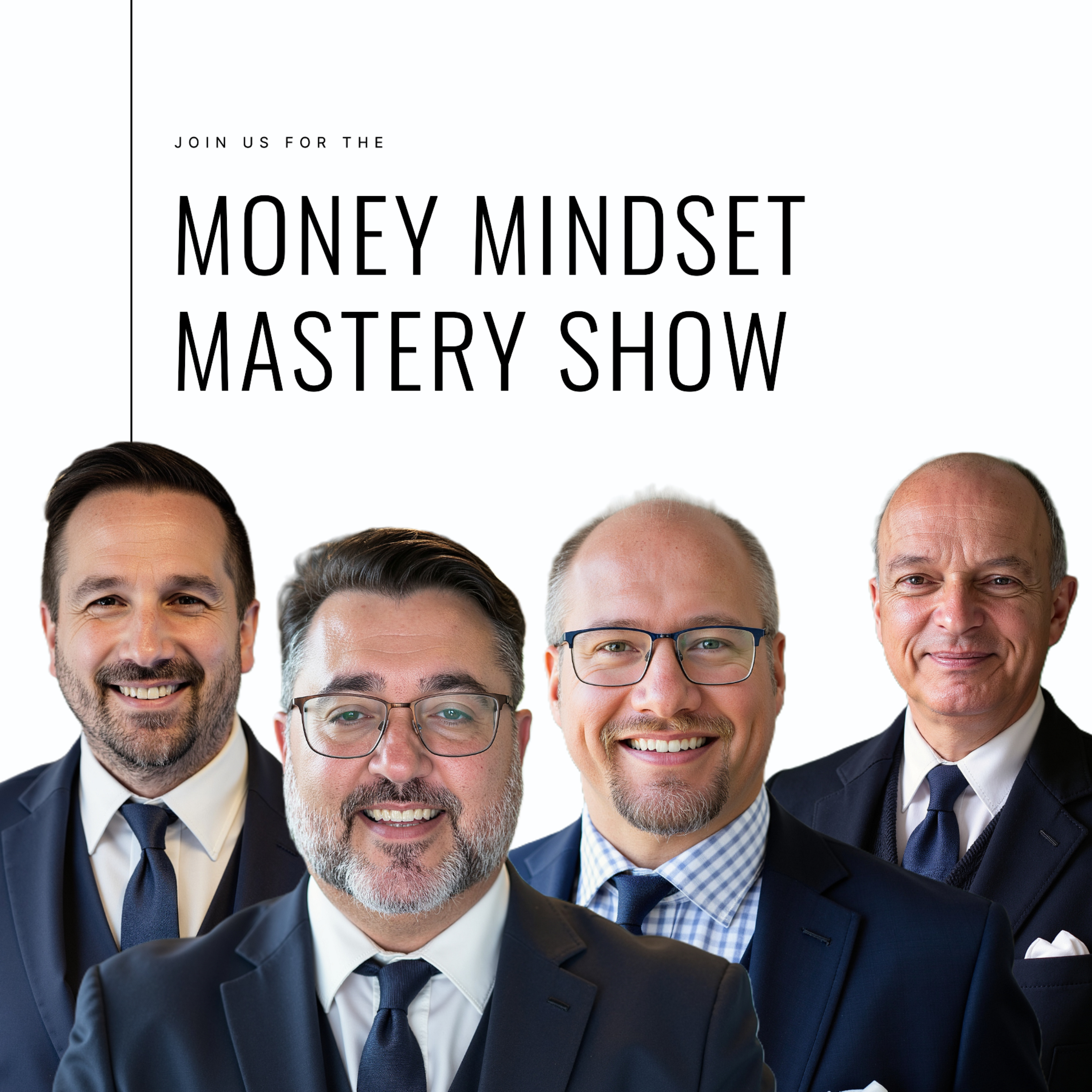
Money Mindset Mastery: Personal Finance and Wealth Building · TvH Financial, including Jim Lao, Ryan Genoe, Denis Bisson and Eric Petersen
Summary The episode discusses the impact of the war in Iran on investments, focusing on private and alternative investments as a means of stability during market volatility. It also explores the differences between public and private markets, the role of diversification, and the potential benefits of investing in private alternatives during times of volatility. The conversation covers the topics of investment strategies, market behavior, and the role of advisors in navigating financial uncertainty. It emphasizes the importance of long-term planning, diversification, and resilience in investment portfolios. DISCLAIMER: The content in this podcast/video is for informational and educational purposes only and is not financial, investment, legal, accounting, tax, or other professional advice. It does not take into account your personal objectives, financial situation, or needs, and nothing discussed should be interpreted as a recommendation, offer, or solicitation to buy or sell any security, investment product, or strategy. Any opinions expressed are those of the hosts and guests as of the date of recording and may change without notice. Past performance is not indicative of future results, and all investing involves risk, including the possible loss of principal. Before making any investment or financial decisions, you should consult with a qualified, licensed professional who can provide advice tailored to your individual circumstances and assess the suitability of any strategy for you. The firm and its representatives may have positions in, or relationships with, the investments or issuers discussed and may change such positions at any time, without notice. Takeaways * Private and alternative investments offer stability during market volatility. * Diversification across public and private markets can help manage risk and enhance portfolio stability. Dollar-cost averaging is a key strategy for consistent investing over time. * Geopolitical shocks and market volatility can create short-term buying opportunities, but long-term planning is essential. * Advisors play a crucial role in guiding clients through fear and uncertainty, helping them avoid panic trading and stay focused on long-term goals. Chapters: 00:00 - Introduction to market volatility and private investments 06:30 - Managing portfolio risk with alternative investments 12:18 - Differences between public and private market responses 19:38 - Diversification strategies to reduce downside risk 30:42 - Investment strategies during geopolitical crises 38:12 - Building portfolio resilience with private assets 50:55 - Navigating media influence and maintaining discipline 58:34 - Final reflections and trusted advisor insights
speaker-0: We're dealing with volatility. We're dealing with some war time issues. It's not going to be the first, obviously. It's not going to be the last. There's going to be these issues. So why, Eric, would it be attractive for someone to invest in Ults and privates during a situation like we're dealing with today with the war in Iran? I'd to welcome everyone to the Money Mindset Mastery Show. I'm your host, Jim. And joining me today is my co-host and private wealth advisor Eric Peterson and co-host and portfolio manager Denis Besson. Gentlemen, how are you guys doing today? speaker-1: We're doing well. We're doing well. It's sitting in the office and watching a good day for once in the markets. speaker-2: Yeah, excited, doing good. Our temperature just came up above zero again, so it's been an insanely warm winter. so, it's definitely welcome. speaker-0: It feels today kind of, for me, kind of feels like, you know, like I've been wearing a watch every single day since I was like in grade two. And you know, in those days where you forget to wear a watch and you kind of feel off, not having Ryan here kind of feels that way right now is like I'm missing my watch, but I'm sure we'll make do without him for this one episode. today's topic is actually more specific to the two of you. We're going to talk about the Iran war shock. There has been a lot of volatility that we've been dealing with. So the topic can. Private and alternative investments deliver stability when markets panic. So we want to talk a little bit about the role of private and alternative investments in a person's portfolio. And quite honestly, think a lot of people don't really understand what private and alternative investments are, that they potentially have access to it, how they work. So I'm happy to have both of you here to kind of go through all that. So the first thing we're going to talk about is again, The war in Iran, we're going to talk about the oil prices jumping, market swinging hundreds of points a day today. Like you said, Denis, we're on the upside, which is great. So if you like roller coaster rides, this has been a pretty cool ride to be on for the last couple of weeks. So if you're watching this and thinking, what does this really all mean for my investments? You're not alone. mean, Denis, you and I recently worked with some clients that we were looking to make some investments. And it's funny how some clients are hesitating and investing because of the volatility. We've had others that have said, hey, I think this is a great buying opportunity. So we're going to clear that up for them. But before we go through all that, this conversation is for informational and educational purposes only. And it's not financial, legal, or investment advice. It doesn't take into account your personal situation. And nothing we discuss should be viewed as recommendations, offer, or solicitation to buy or sell any investments. If you're considering changes to your portfolio, talk directly with a qualified advisor, and we have a couple on the show today, who can help you figure out what's actually suitable for you. So we've got the scramers out. Let's talk about what's happening in Iran right now. It's funny because just again, with people that I'm communicating with, some people forget that this isn't the only war that's ever been out there. We've had wars throughout the history of the world, but it's amazing to me how quickly people forget that Wars do happen. They have happened and they might be different wars for different reasons, but the markets tend to kind of react in the same way. want people to know none of this is political, right? We're not taking a political position on any of this. This is basically based on investments and markets and how that impacts your portfolio. But none of what we're going to be talking today is going to be a political point of view. So, Denis, take it away. What's happening? speaker-1: Well, we've had the attack on Iran by both the US and Israel here. And it's a little different than the first time that lasted 12 days. This one's going to last a little longer. But nobody is expecting it to last like an Iraq war or an Afghanistan war. So the first thing people think about is oil. So we've had the price of oil increase over 100 down today. And the markets react any time it goes higher, any time it goes lower. It's a headline market. You see that headline, you're going to react to it. Basically, with the price of oil going higher, it puts into question inflation. Is inflation going to start going up? And at the same time, interest rates. Are interest rates going to stop? There's supposed to be some cuts in the US. Is that going to postpone them? So the markets reacting a little back and forth, but it is a market does look ahead. It's not just current events. It looks ahead. So the first time they sense that this may end soon, it takes off. What we're having now is again with the old price down that maybe this is coming nearer and the market's reacting positive to that. So when people will think about, there's a couple of questions when you're looking at investors, investors that are currently invested in the markets and potential new investors. So investors current, you know, if they have cash on the side, do you want to start investing? Well, this could be a time to invest if you want to take on the risk. You may not pick the bottom and you're not likely going to pick the bottom and may go down again. but it's better than buying it when the market's up 200 points a day. So this is the chance where investors are looking both sides. Current investors, all they're looking for is less volatility and they don't want their portfolios to go down too much on this and they obviously want to see gains so they like days like today. And I think we're going to touch a little bit on it, what reduces that volatility. speaker-0: I mean, there's a similar reaction when Russia attacked Ukraine four years ago and oil prices shot up as well and very reactionary. We're dealing with it right now. Within a day or two of the attack and the oil prices going up, I was starting to see headlines, oil could hit $200, US a barrel. And what does that mean for you? And kind of creating a lot of that fear mongering for a lot of people. That just adds to the noise. So one of the reasons why we're doing this is to filter through some of that noise. Should we be afraid of $200 oil pricing? I don't know. I don't think anybody really knows. We don't have that crystal ball, but there is a lot of information and noise that's kind of being thrown at us and making all these, well, what if, well, what if this were happen? Yeah, well, what if the moon falls and all of a sudden hits us? Like all we can do is kind of plan on what we're dealing with today with the eye of potentially kind of avoiding some things in the future, but structuring things in a proper way to protect us from lot of the volatility. Is this really a buying opportunity? How should people be viewing this looking forward? Right. But I don't think we're here to cause a lot of fear and panic in a lot of people. It's just more of let's not knee-jerk react. Let's kind of process what's happening. And day by day, all you need is one tweet and the markets react in a very different way. There's a market out there that doesn't react in the same way, Eric, and this is kind of where you come in. And we're going to talk a little bit about alternatives and private investments, what they are, ⁓ how they may protect an investor from a volatility point of view. But we're not by any means saying that these are safe investments or safer investments. All we're saying is, you know, by incorporating some of these private alternative investments, it could potentially help reduce some of that volatility. And I'm often saying that. Or is that accurate? speaker-2: No, that's completely accurate. I often tell people that these are considered higher risk than average. Risk is often very relative. So it really does depend on a person's overall portfolio. It depends on their experience, their education. There's a lot of nuance that needs to go into when you assess that risk level. But I do generally feel like they are higher risk because they are a little more focused. You alluded to one of the things I like best about these types of investment is that with these, we kind of try to seek absolute return. And what that means is that it doesn't matter what the market's doing, that business is still going to return that same general return as it did before the market volatility. I mean, you look at, let's use a dentist for an example. the Iran war is not going to change how many people go to the dentist in my neighborhood. Those people generally have benefits or if they have a problem, they're going to pay to solve that problem. So dentists is a good illustration of that detachment from the greater volatility you see in a macro market. Now, micro markets can be affected by that, but generally the ones we chase after as far as range trees concerned, We really look for ones that have that good economic stability, that have a consistency to their business model and aren't as subject to a lot of those changes. And really, like, if you want to bet on swings in the market, there's lots of ways people can go about doing that. Day traders really try to make a business out of that. When I look at this private market that I work in, my goal is to be the complete opposite of that. I want really solid, consistent returns that really aren't going to follow which way the wind blows. And I've had those tough conversations with clients where one client jokingly called me up one day and said, Hey, you're making my life really difficult these days. This was back in about 2009. And he said, all of my friends at lunch, we were talking about how their portfolios have just been hammered and they're waiting for them to come back. And they asked me how I was doing in their private equity things. And He's like, I've been getting paid my seven, eight, nine percent consistently. And all of a sudden his friends are like, well, up yours, you know, like we've had all this volatility and you're having an easy life. I mean, it's not that easy. That's that's how it performs in one short little time frame. But it illustrates what we try to do with that absolute return and find a diversity. Even if we accept a little more risk, if we can balance the diversity of a portfolio up better. that a lot of those risks can be mitigated in the greater portfolio structure. for sure, yeah, these types of investments really can bring diversity. And in my mind, that means you have assets to do different things at different times. And private alternatives are a great example of that because you go into the public markets and we saw in 2008, 2009, it really didn't matter if you were in financials or tech. everything kind of went the same direction. And I think that's when people started to wake up that you don't necessarily have good diversity across the entire public market. Because when the whole public market decides to do something, well, you know, where else are you going to go? Well, that sort of that is private. So speaker-0: Why do the public markets respond in a different way than the private markets do? Because you're basically saying in the public markets, there's a lot more volatility. So that would be the ups and the downs that we kind of hear reported in the media and on social media. But you don't really hear that on the private side. So why do they respond differently or act differently? speaker-2: That's a great question because that's also one of the risks in the private market and one of the benefits I think. ⁓ The public markets, you can go right now and try to sell your units. There's essentially a secondary market like in Canada we call it the Toronto Stock Exchange. You know, think of it like ⁓ a garage sale or some sort of a marketplace where you can say I have 200 units of Rogers to sell. Well, chances are someone's going to buy that pretty quickly. you might be subject to the price they're willing to pay and that supply demand will really create that purchase price, but you can do it quite instantly. It's considered liquid. When you go to the private side, that's the one thing that's different is there's no secondary market to sell the units on. So if the person who issued you those units or the company that issued you those units isn't willing to buy them back, you're in a highly illiquid position. And again, the disadvantage is that illiquidity. But the advantage is that you don't have that price being set every few seconds or every few minutes by a new sale, which causes that significant volatility. And so the panic buying panic selling is a lot more insulated than you get when you could just turn around somewhere and put your units up for sale. speaker-0: Do you want to add anything to that or? speaker-1: Yeah, I just, uh, I agree with what Eric said on the public markets. Everything trades from nine 30 to four. And when we're holding units of a private is some of them are only priced once a month. And why are they only priced once a month? Some of these alternatives we hold is farmland. You're not going to price that on a, you on a daily basis. It's infrastructure. It's a music royalties. Some of the holdings that we have in our fund of alternatives at Range Tree. there's about 20 of them, but once some of them are absolute return funds or hedge funds. look for positive returns no matter what's going on in the market. And what Jarek alluded to before, they trade commodities, they sell short some stock, sometimes to create income. So there's a lot of activity, but it's not made to price and trade on 9.30 to four. speaker-0: Right. So what you're saying is then in the public markets, there's definitely potentially a lot more drama behind it, right? Maybe a little bit more excitement, maybe more knee-jerk reaction when it comes to investors, especially the ones that are not informed or fully understand how the public markets work. Where on the private side, maybe less drama, ⁓ probably less excitement. Eric? I don't know if people get as excited and investing in the private markets as they might do in the public side. speaker-2: Definitely. And that's kind of one thing I've always watched people who function in the public market advisors to the life I have in the private market. When the market has a big dip for whatever reason, those advisors can be inundated with calls. But that rarely happens in the private market because again, even if the market dips, what are we going to do? Say it's a residential real estate. multifamily REIT or it's a pool of businesses that operate in line. I alluded to dental. We have a fund that buys dental practices. ⁓ you know, those, those things still create headlines that cause those phone calls to happen nearly as much as it does in the public market. So, so it is the drama is a lot more even keel. ⁓ you could call me boring. if we were to go that far. speaker-0: I'm wondering on the dental side if someone all of a sudden came up with technology where you can regrow teeth again, don't have to worry about root canals and whatever else. Maybe that might have a bit of an impact on the dental market, but other than that I think we're probably good, right? speaker-1: Yeah. speaker-2: Yeah, it's like accounting. You still need an accountant to do your taxes every year. It's one of those really resilient businesses. mean, threats can come at any time, but I do think they're a lot more focused and they're a lot more rare than the ones that affect the volatility in the public markets. speaker-0: Now, I know you were kind of referencing 2009, but we had a black swan event in 2022, 2023, where the public markets were down, the bond funds were underperforming. There were losses, were acting like equities as well. How were the private investments performing over that black swan event? speaker-2: Yeah, they really just ticked along. Now, there are sectors in the private equity market that can be affected, but really largely if you're dealing with businesses that, you know, have some sort of specific business practice, whether it's a dental practice, or we have another fund that buys companies that operate in code compliant industries like fire suppression or elevator maintenance, you know, those Those are ones that are very, very separate. Now, if it was a private credit fund that was doing lending that was competing in the bond market, obviously you would have exposure there. But we generally shy away from the lending model, those kinds of privates, because they're a lot more, you're layered away from the asset that you want to secure against. And the further you get from that asset, the harder it gets to find that security. And so yeah, it's, in those cases, a lot of people just prefer to go to the public markets because at least then you also have liquidity. speaker-0: Yeah, and I think also I just want to be clear with people. I don't want anyone thinking that we're here saying that you should invest all in the private markets or all in the public markets. We're talking about diversification. So how having some exposure to the private alternatives, if it's appropriate, because it's not appropriate for everyone in every situation, but it could help stabilize our portfolios. It's one of the reasons why people like working with us as a group at the TVH because When we talk about diversification and we're going to talk a little bit more about diversifying the public markets and the private and alternative markets, when you're dealing with a bank and Eric, you can confirm this, but you can't really go into a bank branch and invest in private or alternatives, right? It's not an option. speaker-2: No, that's right. To a retail investor, is largely out of reach as far as the banks go. speaker-0: Exactly, but they can through you or they can through Dini as part of a bigger portfolio strategy So when we talk about diversification, which is one of the ways that we can manage your risk when you're working with the bank their level of diversification is basically limited to Whatever mutual funds that they hold and it's going to be public markets. It's going to be combination of stocks and bonds and The level of diversification might be small caps, mid caps, large caps to having some bond exposure, to having North American exposure, to having global exposure. But the bottom line is it's 100 % public markets. When you're working with a firm like ours, obviously we have access to and do recommend the public side like Denita's, right? So we have access to all of those markets. But then we layer in potentially the private alternatives that adds to their diversification, which you're not able to get at the bank level. But then in addition to that, we potentially would add some insurance solutions, dividend paying, permanent policies that continues to diversify your portfolio even further. We have guaranteed income solutions that again, we continue on diversifying even more. And even on the real estate side, I do know people buy real estate investments. Right? So on the private side, they might, or at the public level, they can as well. But even individually, we help clients with investing in individual real estate opportunities. Right? So when we talk about diversifying your assets within your portfolio, it's not within the small little box of investments or asset classes that are available to us. Right? We are truly diversifying or have the ability to truly diversify. a client's portfolio amongst various asset classes. speaker-2: you mentioned public and private REITs and I think that that's a really good illustrator because right now if you look at the public REITs and they may have come back a little bit but I think they were down on average about 25 % on their NAV even though the buildings that they're renting out, their occupancy rates, the rents they're charging and the income they're earning, none of that has changed. The nice thing about a private REIT is you're not subject to that. that floating value that may or may not have any relation to what's actually happening inside of that. speaker-0: And what I also want to share with everyone here when we talk about the private and alternative asset class, there's really two ways they can access it through us. So for example, if you just want to invest in private alternatives, Eric would be able to offer individual opportunities, but Denis, you're able to offer a pool of private alternatives within the portfolio solution at Reentry Wealth Management, correct? speaker-1: Correct. We have a pool that holds about 20 different alternatives. Some of them I mentioned already. That helps diversify a portfolio. So when you set up a portfolio, depending on your risk level, you will have a percentage holding of this fund as a diversifier within your portfolio. speaker-0: So to kind of maybe simplify for people out there, if we use the public space as a comparison, if you wanted to buy that Roger stock, like you said, Eric, and you just want to hold Rogers or you want to have Rogers and Bell and maybe CIBC, you would just buy those individually. That's how Eric can handle the private space. There's individual investments that you can put your money into. If you want to have a portfolio of stocks, then you would work with someone like Denis where he would hold a portfolio of stocks or a portfolio of private and alternative investments. some people like to select their individual investments. Others would like to hold a portfolio of and have a portfolio manager manager on their behalf. speaker-2: And there's about a 20 % overlap in the issuers I work with that overlap into Denis' ALTS fund, but that he also has access to much larger. mean, minimums are really where the challenge comes. And I mean, you go to some of the BlackRock funds, for example, and their minimums are quite high for an individual to get into that. It's just not possible. The stuff that I work with is more of the boutique smaller organizational stuff. Some of those are in Denis' funds, but Denis also gets into much larger, much more complex private strategies that would just be more difficult. would require much, much larger minimums than a lot of people are willing to commit to one portion of their. speaker-0: There's like a music royalty fund that on an individual basis there's a much higher minimum, but I believe that you can have access to it through your portfolio, is that correct? speaker-1: Yeah, we do have it. And from what I remember, the minimum on that one's a million dollars. speaker-0: So if they were to go to Eric and say, I want to invest my money in Taylor Swift's, you know, because there's a music royalty fund and I believe in Taylor Swift or whomever else. And they go to Eric, Eric would be like, well, you need a million dollars to be able to invest in that specific royalty fund. And the client may or may not have the million dollars or it might not be suitable for them based on some other requirements. Right. But with Denis. they would have exposure to that same royalty fund. speaker-1: Yeah, 10 to 15 % usually depending on your risk level. speaker-0: Perfect. Okay. So that's just an example that we want to share. The way Rain Tree refers to is now core and explorer, right? There's the core piece of the portfolio, which is your public portfolio investments. And then there's the, the Explorer, which is the private side. during these times right now, we're dealing with volatility. We're dealing with some war time issues. It's not going to be the first, obviously it's not going to be the last. There's going to be these issues throughout the next lifetime. Right. So. Why, Eric, would it be attractive for someone to invest in alts and privates during a situation like we're dealing with today with the war in Iran? speaker-2: There's a couple of reasons. I think one of the biggest that people don't realize is that when you add these to your portfolio, whether it's say as low as 5 % for someone who's really risk averse or as high as 30 or 40 % for someone who's young and really likes taking risk and wants to pursue that ⁓ potential for enhanced return, then adding this to your portfolio really does bring an overall balance. And it's when these markets are really going up and down. that you begin to appreciate what this does for your portfolio. And that's when you really want to be able to sit and look at your portfolio and say, well, this one kind of gives me a bit of a scare. But over here, I, I'm shooting steady. So it just gives you the ability to look at your portfolio, feel less apprehension, less fear, less motivated to feel like, okay, it's, need to make a change because something's making me uncomfortable. Well, if you can be more comfortable with where you're at, I think that's what, what this is able to bring at these volatile times. speaker-0: Right. Now, Dene, we're going to kind of switch directions here a little bit and talk a little bit more about the public security side. And it's, mean, you and I have been doing this for a long time. So has Eric, but it's, it's amazing how when the markets react the way they have reacted over the last couple of weeks, where most people tend to panic sell because they think this is a forever situation and they're going to lose all their money. And the smart people usually start to invest and see this as an opportunity. I mean, that's how Warren Buffett has made his billions, right? ⁓ Is he invested when people were fearful? So in your opinion, when we're seeing this level of volatility, should people be sitting on the sidelines, retreating, kind of waiting it out? Or should they view this as a buying opportunity and potentially look at investing? And obviously that's all dependent on the time horizon. speaker-1: Yeah. And it really depends on your risk level. Some people, I don't want people adding more to their portfolios if they're to be nervous, like what's going to happen tomorrow. It really is your comfort level. Most people, we create portfolios that people are happy with when the markets are up and the one when the markets are down. They see it go down. It's not going down as much as the market. They're happy. They continue. It'll eventually come up as it always does. Some people see this as a buying opportunity and usually it's turns out very well for them. As I mentioned that you may not get the bottom, bottom of the market. When I invest in 2008, 2009, I saw my portfolio go down after some extra money was added, but eventually it popped up and passed my average cost of what I bought during the downturn. you know, we know what happened after that, some strong returns. So it's really risk level. Time horizon is always important. You don't want to put this in for the next two months and Hopefully you have a gain after that. You want that a little longer, especially when you're buying equities. So buying opportunity, but it's not for everyone. speaker-0: No, and I think really, and I'm sure a lot of people have heard this, but the dollar cost average investing consistently over time, I think that's really what is going to help a lot of investors moving forward. I go back to the 2008, 2009 situation, just like you, Dineen. I remember it was March of 2009. At that point, I had a lot of clients who chose to leverage. Now we didn't know that that was the bottom of the market, but we do know there was a massive correction at that point. It could have still corrected even further. We didn't know, but we took it as an opportunity and there were some people who viewed it as an opportunity. They ended up leveraging to invest and they did really, really well as a result. However, we also had clients who leveraged in June of 2007 near the peak of the markets. they didn't do as well. They had to wait a bit for the recovery, right? So really the investors that performed well over that period of time were the ones that on a regular basis were putting money into their portfolios. They were buying when it was high, they were buying when it was low, but they basically averaged out their return and their volatility over a period of time. did well. So I think this is another potential short-term buying opportunity. know we Last week, you and I, we met with a client who she thought it was a buying opportunity and you made a great point. You're like, it could still go lower. We just don't know. Right. But we do know it's lower than it was last week. Right. And there is a bit of a correction. And if your time horizon is five plus years, then it would make sense to potentially look at investing today. But to your point, if your time horizon is six months, now we're basically gambling. speaker-1: was just going to say, it's funny how people love to buy when the market's up every day, even though it's getting more expensive, those ratios are higher and it's ⁓ on the verge that could correct quickly, but they're happy if it's going up. They're hesitant when you're getting, we'll call it a discount on what's out there. speaker-0: People tend to do the opposite of what they should be doing when it comes to investing. They get excited because the markets are up and it's going. mean, gold is another example. Bitcoin was another example. There's lots of these examples and they get excited and it has that casino effect. When you go into a casino and you hear the bells all dinging and whatever else lights going, you get excited and you keep thinking you're going to keep winning. And that's when they put their money in and then when the markets perform the opposite direction, they're pulling their money out. because they just don't know how deep those losses are going to be. And really, if we kind of simplify investing, it's you buy low and you sell high. So buy it when it is at a lower cost, sell it when it's at a higher price. But most people tend to do it in the opposite direction. That's behavioral finance. And this is, think, where the robo-platforms fail, because you can invest in the robo-platforms. You can invest in ETF solutions. But what they can't help people out is with their behavior. And that's been proven time and time again that people's behavior is what ultimately impacts their overall investment rate of return. Because they behave poorly and they make the wrong decisions during the wrong time. And this is why the advisor comes in to help walk people through those situations. speaker-2: Yeah, Jim, you, you alluded to earlier Warren Buffett's quote, I think is, is pure genius. And he said, be greedy when others are fearful and be fearful when others are greedy. And that is when everyone is terrified, you should be buying. Not be terrified. And when everyone is buying, you should be terrified. And it is the opposite behavior of that fight or flight or whatever it is that drives that behavior. But if you can keep yourself from panicking at the worst time, either in buying or in selling, well, you're going to be so much further ahead than your neighbor because they're not going to have that resilience, that discipline. speaker-0: So how do we build that resilient mix in a portfolio? I do know that even CPP Canada Pension Plan, they're starting to incorporate private alternatives in their portfolio as well. So how do we build that resilience from a volatility point of view? Because we can't guarantee that people are not going to lose money because there's going to be volatility, right? ⁓ But I think if we can minimize that volatility, so for example, if we can minimize that negative 20 % You know when I talked to clients in 2022 who are in our portfolios and they were complaining about a negative 4 % Net of fees, but yet the indexes were down negative 12 and 14 and 15 They're like, ⁓ you know what the negative four isn't as bad I can deal with that because I know I just need 5 % and I'll break even as an example, right? ⁓ so I think our goal really is to Try to help avoid the volatility some of that is by incorporating these are private and alternatives I do know that when the markets performed like they did last year, I think we probably struggled a little bit more because people are like, hey, well, I got 30 % in my ETF. And we're like, well, we gave you a 14, 15, 18 % return, and it's not as good as what the markets did. So I think that's where we kind of struggle a little bit with reining in the clients to say, just to remind them that this was a great year, but there's going to be another year where things are going to be pretty bad. we're going to protect you on the downside, right? So how do we do that? How do we build that resilient mix? speaker-1: Part of it is creating a portfolio that is very diversified. you're trying to do, obviously the ideal situation is minimize losses but don't take away from gains. But you set it on. If you had an ETF that had 15, 20, 30 % when we were having eight, last year we had a good year. were low double digits. And for most people, that's enough, especially when they retire. They want that steady return. They are withdrawing every month. So the movements down is really what they're trying to prevent because they want their money to last. So when you're building out, when you have a portfolio of equities, that for that growth, the first fire with some fixed income alternatives, that's going to give you growth. One of our alternative managers sent us a note today just to let us know they're positive so far in the month, despite what markets are doing. This is the type if the equities are down a little bit, well, this bounce, cushion of positive returns is going to help minimize that loss. And that's what we try to do. Steady gains, diversification, without losing too many of the upside. We're never going to get the, if you're buying one security, one ETF, you're going to get those type of returns. But what we're trying to do is to get some decent returns. And you mentioned the public pension plans. A lot of them are at 40 % alternatives now. Yeah, they've gotten up there, some of them. speaker-0: Yeah, because I've seen five or 10, but I think they're starting to add more and more to the positions, speaker-1: Yeah. Yeah. And some of it they create themselves. They're big enough to create themselves. So they actually finance it themselves. So that's a little different. And then what we're trying to do, we're paying people on the external manager. When we buy a fund, create a fund, they're all external managers and they know they have their own benchmarks to meet. So that's the important part is minimize losses, but not take away too much from the gains. speaker-0: Right. Yeah. And it's amazing again this year and last year how many meetings I had with clients where there was a reminder, because they would complain about they weren't receiving quite the rate of return that the markets were giving them in 2025. And I would have to sit back and remind them, when we initially invested in the portfolio, we were targeting 7 % per year net of fee. That's what we needed for the plan. right to succeed the financial and retirement plan to succeed. And I would remind them how in 2022 again we were only down four where the indexes were down double digits. So the portfolio is performed exactly the way we said that they would in terms of a volatility point of view and that we were within their target range of the 7 percent. Right. So when I reminded a lot of the clients this is why we're invested the way that we are then they're like Okay, that you're right. This is reason why it's actually playing out the way we had planned for. Right. But it's the excitement they get caught up in. Right. That's where they quickly forget the reasons why we invested the way that we did. Right. ⁓ so again, this is where working with an advisory team is very helpful because we don't get caught up in the noise and the excitement for us. It's very much it's numbers. It's math. It's. Here's what we've projected out. Are we achieving that range? Yes. Great. You're going to be able to meet the goals that we've set out six years ago, seven years ago. Are they not meeting those goals because of the performance? Okay. Well then we need to readjust, right? Or have your goals changed? That's really what our function is as we're coaching people along these situations, both when the markets are doing really well and when the markets are doing poorly. ⁓ On the private side, I think what I would say is this and Eric, maybe you can speak on this a little bit more for me. The benefit that Rain Tree Wealth Management has in ⁓ building their alternative and private portfolio within the Rain Tree Wealth Management portfolios is their experience in the private alternative space. So maybe you can speak to that a little bit about Rain Tree's history, RFS and how we're capitalizing on that experience to help build portfolios at Rain Tree Wealth Management. speaker-2: Yeah, that's a good distinction because I've been with three dealerships since registration was required in 2010. the first two or the first one, sorry, really lacked something that that was important to me. And that was the analysis side, being able to truly understand looking at a private company. So the second one that I went to, I chose them specifically because the two principals were they both had 20 year long careers at Ernst & Young. Their job was to vet companies for mutual funds. So they really understood that from a visibility perspective. They merged in 2012 with RainTree and that was one of the things that was my biggest concern was, you know, I wanted that deep, deep analysis that they had. And they said, let me introduce you to this new CEO of RainTree and that was Peter Kincaid. And the thing that really impressed me at that time about Peter Kincaid is he came from Myers-Norris-Penny. His background was in corporate finance. So they were, helping do the accounting and the detailed work on buying and selling of companies, being heavily involved in that. And he's also a Chartered Financial Analyst. And his focus was to bring in more Chartered Financial Analysts, which is still to this day in Canada, one of the most difficult designations to obtain. It's highly technical. highly academic and very regimented. And as a result, the quality of what I feel Raytree brings to the table, the depth in their ability to really assess these private companies is second to none from what I've seen. That being said now, when they transfer that into Raytree Wealth Management, because Raytree Financial is the private side, Raytree Wealth is the public side, they have an ability to look into private equity Like a lot of managers don't, you know, and so a lot of times they'll farm that out. They don't have that expertise internally. And, and a lot of times they don't know what they don't know. The questions to ask, they're hiring someone who really has an outside set of expertise, an outside set of goals and long-term vision. And how does that align? Well, we have that baked in with, with Spree Tree Financial Solutions. And so the alternatives that end up in our public funds with Deni. I think are going to stand above all of the others because of that depth of expertise. I've been more more impressed as time goes on at how well him and Mackenzie, you're one of the other lead CFAs, their ability to cut through the fluff and the detail that a lot of these companies try to put into their marketing and cut down to what are the core metrics? What's actually going to make a difference? How are you doing business? What does your business model look like? Who are your customers? All of those key things. They cut through all of the marketing BS, which enamors a lot of people. A lot of experts get even caught up in that. And I think as a result, the ALTS fund in reentry wealth management, I really like it a lot just because I know the depth behind the people putting it together. speaker-0: Good. And then I guess kind of to start wrapping this up a little bit. One of our roles, as I mentioned, as advisors and the advisory team is trying to help people navigate through fear and the headlines, right? Because the headlines are never going to be positive. They're always going to be negative. I mean, one of the things that I'm learning that I need to maybe change in my day-to-day process is every morning I'm reading all the news articles. Right. And I'm going into the Globe and Mail and the Toronto Star and the Toronto Sun and whatever else. And by the time I kind of get through all the headlines, I could feel the weight of it all in my head. Right. It's just like, there's nothing positive here. Everything is negative and fearful. Nothing there that screams, Hey, here's some good news that we should be learning about. Right. So I'm kind of learning that about myself as I go through that and people are being bombarded by it. Right. It's in the news articles or notifications or social media posts. It's all negativity. part of our job is to really help navigate through the headlines. And one of the things that the headlines tend to do is create panic selling. Right. know, Dunyag and you and I have had a few meetings the last couple of weeks, as I mentioned, and I've had clients who have come to me and said, Hey, do you think I should be pulling my money out now? Because. of this war and this is different and we're really afraid of what's going to happen. And it's like, it's not different. It's a war. It's a bad thing. It's not a great thing. Right. No one likes war. The markets are just reacting because they're afraid right now, but really it's our job to help navigate people from making those new jerk reactions. ⁓ we also need to help people avoid chasing the newest crisis solution product. Right. So a lot of times that happens. People will pull out of one asset class or portfolio because they're chasing another product that maybe is performing at a certain level or a certain asset class. We've seen it with gold in the past right to me. We've seen it with Bitcoin last year. I don't know how many clients I had saying I'm going to liquidate my portfolio because I'm going to put half my money in gold and half my money in Bitcoin. No, you don't really want to do that, but that's how people react. Right. So that's part of our role and Avoiding that going in or all out scenario as well. Right. So a lot of people tend to make that decision of I'm either going all in on this or I'm all out as opposed to let's sit back again. What were your goals? What's your time horizon? What are your plans? When do you need this money? You know, let's work on the projections. Let's work on how things have worked out so far and worked out so far through a lot of other scenarios that we have dealt with that are fairly similar. And people were kind of reacting in a bad way as well. So that's our job is to help people navigate through the headlines. anything else you guys want to add to that? speaker-2: I think just adding to making sure that the core of your plan is informed by your goals, your time horizon. Because when you have those really clear and then challenges come along, it's a lot easier to make sure that you're still on course. It's a lot easier to understand the long-term plan if you have a long-term plan. And I think that's the first step in mitigating a lot of the knee jerk. Like, no, ⁓ I am afraid this might affect my retirement, these panic moments. And so I think that's probably the key. And then the next is just making sure that you're emotionally anchored in reality when you make these decisions. A lot of people, I mean, if there's one thing I've learned about the news, it's wait two weeks and all the real information comes out and whatever they were saying on day one is probably 90 % wrong or has been replaced or there's information that has superseded what was going on. And so it's really easy to take those headlines because I think that the headlines are becoming more subjective than objective. And when they're subjective, you know, it's, there, they're layering their opinion on, on that. And it gives you an extra layer to have to sort through. ⁓ but like I said, there isn't anything that I've, I've read that two weeks later, you know, after the breaking headline that you haven't realized that the vast majority of what was believed at the time was totally not correct or was. was totally off base or totally a different direction or. And so, I mean, that's just it is, is sometimes time is the only thing to really bring that clarity. But yeah, that's really what it comes down to. It's just being able to emotionally anchor yourself so that you don't get blown whichever way the wind happens to be going this week. speaker-0: Eric, you know what? In 2008 during the financial crisis, I believe the economists had changed their projections 26 times over a six week period. Yeah. Right. It was changing day to day. They're like, no, no, this is what we think is going to happen. no, actually, I think it's going to be like it was like 26 different changes over six weeks. And then I go back to 2022 when we're dealing with the financial or the interest rate spikes. Right. And I know I've shared this story before in our past recordings, but there was one day in particular where I had three meetings with three different economists. There were webinars, so we were listening in and the first economist, and these are three high level, high end financial firms in Canada, very well respected. The first one, the economists announced that we were in a recession and they mapped it out why they believe we were in a recession. And again, I left that webinar going, ⁓ my gosh, we're in a recession. And then the next one I'm in and they're like, yeah, we're not in a recession, but we think we're going to get there in about six weeks time. And here's the reason why we think that's going to happen. And I'm like, okay. So the first one says we're in one. The second one says we're not in one, but probably will be in six weeks. And the last one, which was probably the, I think at the time, the largest financial firm in Canada, like we're not in a recession. We don't think we're going to actually be in a recession. We want to get close to it. Right. But this is reason why we don't believe it. So it's like really who knows, right? So a lot of people tend to react to the story of the moment. And to your point, Eric, is sometimes a look back to weeks like, you know what, things actually didn't play out the way they thought they did. Oil pricing, right, Denis? Like, what's oil at today? I think it went down to about 90. speaker-1: Yeah. The last time I looked at it. And I think if we go back just a little bit, when Russia invaded Ukraine, there was a big jump in the oil price. Commodities were very strong too. ⁓ Russia is the major supplier of this, major supplier of that. Everything skyrocketed. Well, it dropped quite a bit afterwards when they realized, well, no, that's not really going to be the case or it's not the case. And things have changed. And I think. You know, it's a, I wouldn't say it's the same now, but there is always a, tends to be an overreaction and then reality will set in and then the markets will adjust. speaker-0: Well, 2007, I don't know you remember this, in 2007, I remember there were some analysts who came out in the US predicted that oil was going to hit $200 US a barrel. And part of the reason why is because they believed that we were going to run out of oil by 2020. And people were panicking and oil prices and whatever else. And I think it peaked at about 150, 154. And then it dropped down to like 30 bucks. Right. Can you imagine if we based everything on what that one analyst had said with some so-called experts again, saying that we were going to run out of oil by 2020. If we had made our plans based on some of those announcements or projections, we'd all be in trouble. Right. So, and that's where, again, we have to sometimes talk people off the ledge because You know, even in 2008 during the financial crisis, I remember clients calling me saying, Jim, I want to pull all my money out of, you know, XYZ bank and I want to invest it into, you know, an insurance company that you have access to and kind of spread all my money out. And, and I'd ask the question like, why? Well, because we're afraid that CIBC is going to fail and TD is going to fail and Royal bank is going to fail. And this is what they feared because some people had. in the headline said that that is a possibility, right? And what I always say to people is, is it possible that Royal Bank of Canada will fail? I guess there's always that possibility, but what's the probability of that happening? That's what we have to consider. So I can never say as an advisor that it's impossible that it would happen, because it is possible, but I would think the probability is very low. in the way we are in Canada, if our banks failed, our government has failed because we're so integrated. Yeah. But again, people read the headlines, they hear the news, they freak out. I just said to some clients, stop listening to 680 news, please, because that's where they were getting a lot of their information from. And they would call me after they'd listened to something on 680 news and freaking out. I'm like, just do this all a favor. Listen to music. Stop listening to the daily headlines. All right. So Eric, anything else you want to add to that? speaker-2: The only thing I want to add is, is I started in this industry at 2007. A lot of people said, that's harsh. You know, you went right into 2008, 2009 and, and absolutely not. feel the opposite. I couldn't have had a better time to really learn and understand how the information cycle works, how it really affects people and how a good solid plan can really overcome all of the challenges that we can see. even the big ones like what we saw in 2008, 2009. And so I think that's the key is, is you need to find yourself some good partners that, that really can help you stay grounded. I've always said to my clients that my only job is education. If I've given you enough information to make a good decision yourself, then I've succeeded. If, if I have it, then I've failed at my job and really bringing that ability for them to understand where they're invested, why they're invested. how that's going to play out long term to their benefit really becomes the key to seeing past things like the Iran war or whatever it happens to be next week or whatever it was six weeks ago, because there will always be something, you know, news is good at one thing and that's finding something to make a really good and interesting headline. And that doesn't necessarily mean that you have to react to everything. Having a good plan and sticking to that plan nine times out of 10 will serve you best. speaker-0: So just to kind of recap some of the key points. The first one is the geopolitical shocks like the Iran conflict, they're unsettling, but they're not new. We've experienced with these in the past. Unfortunately, we will be continuing on experiencing with these in the future, but they're not new. Private and alternative investments can be useful tools for diversification and smoothing, but they are not guaranteed or absolute shields against losses of valuations or your portfolios. Public markets can feel brutal in the moment, yet often offer a long-term opportunity when fear is high. So I remind people, take a look at the S &P 500, what it was valued at in 1945, where it's at today, right? And think about all the wars that have happened and the situations that have happened over the years. It's a lot higher today than it was in 1945 as an example, right? The goal is a resilient mix aligned with your life. So again, it goes back to Eric, you had said about the plan, like what are those, your goals and the plans, whatever else. I actually kind of think we need to take it one step back from that, because a lot of people don't even have a plan in place. So I think really the first step is let's put a plan in place. And if you're one of those people, because I think the number that I recently heard was something like 45 % of Canadians actually have some form of financial plan. which means the majority don't. So let's start with that. If you don't have a financial plan in place, reach out to us. We can help you put something simplified. It doesn't have to be overly complicated. And if you are someone that does have a plan and you put that in place a couple of years ago, take this as an opportunity to revisit your plan if you haven't. I do know for us as a team, as a CFO team, with our clients, we like to meet with them. minimum once a year. It doesn't mean that everyone does meet with us at least once a year, but we do extend an invitation to every single client saying, you know what, now's a good opportunity for us to review your goals and your plan to see if we're on target or not. Right. So take this as an opportunity to revisit your plan if you have one and you haven't looked at it for a while. if today's headlines have you questioning your setup, don't panic trade, use a discomfort as a trigger to review your plan. Like I just said. with a qualified advisor. There's three of us here. ⁓ Ryan's on vacation, but he'll be back next week. you can also talk to Ryan. He'd be more than happy to help you with reviewing your plan and just seeing what that big picture looks like. See if you've made the right decisions, if you're invested properly, and if you need to make any adjustments. So what I would encourage people to do at this point is if you have any questions, you want to comment on any of our social media feeds, because this will be posted on All of our social media platforms, can comment there. So financial.tvhgroup.ca is the email. Our website is tvhfinancial.ca. You can also go to tvhwealth.ca if you'd like to speak with Dini on certain things or at our ⁓ main website, tvhgroup.ca. Where there you'll see the different partners that we have again as a reminder, mortgage solutions, legal solutions, accounting solutions, obviously the private solutions through Eric and as well as the portfolio solutions through Dini. ⁓ so I think that's it guys. Any final comments you want to make before we shut it down? speaker-2: I think we hit it all, yeah. speaker-0: All right. Well, once again, thanks guys until the next time we'll be recording another session in two weeks time. And then we will be sending this out in our YouTube channel, Facebook, LinkedIn, Tik Tok. It'll be recorded as a podcast or will be a blog post as well. And we've also just recently launched a website for our show itself. So we will send that out and you can register so that we will be notified of any new episodes that are coming out. So thank you very much. Have a wonderful afternoon. Good to see you all.
More Money Mindset Mastery: Personal Finance and Wealth Building episodes →