
Minor Compositions · firefly frequencies
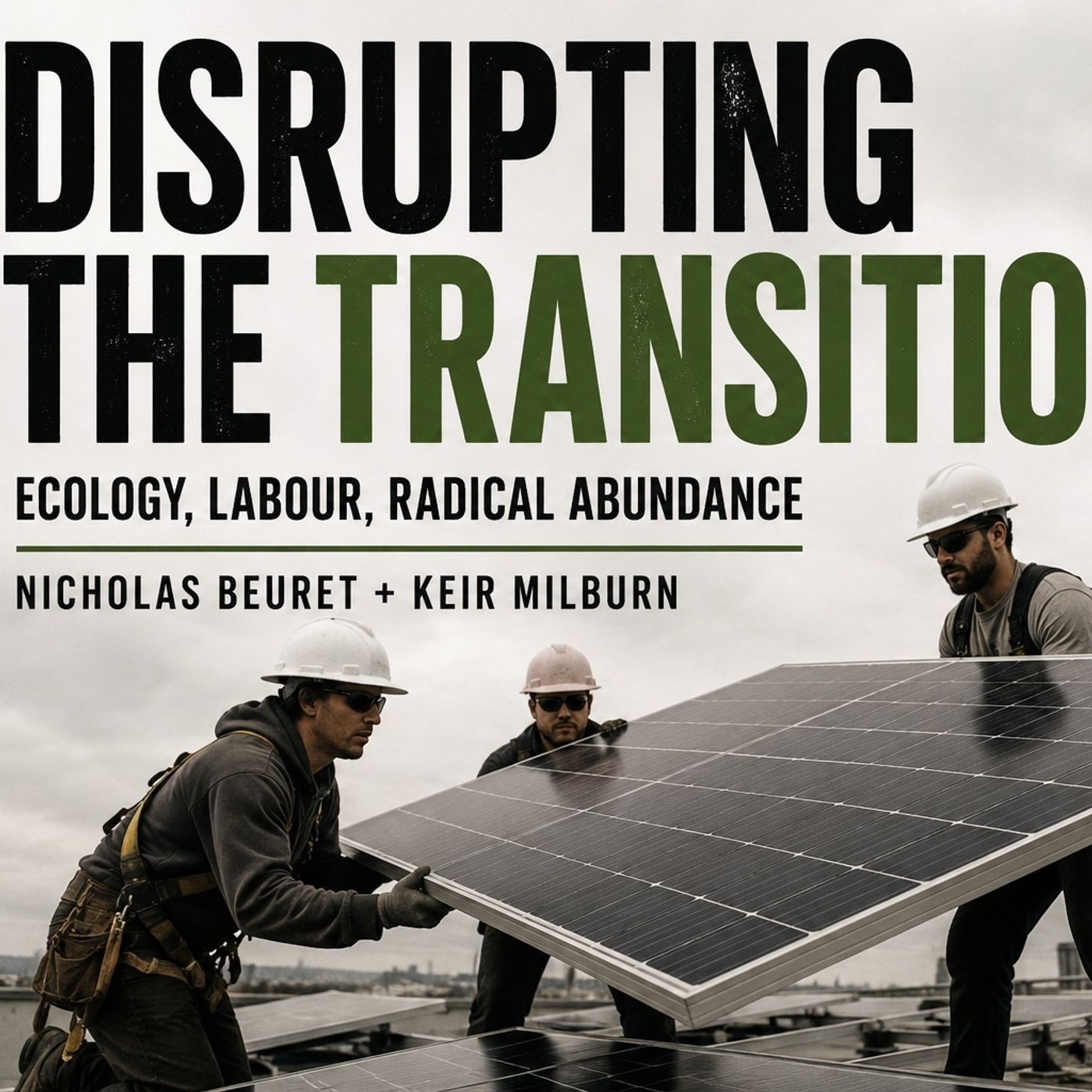
In this episode, we speak with Nicholas Beuret and Keir Milburn about ecological transition as a terrain of class struggle – not simply a technical shift in energy systems, but a contested reorganisation of investment, work, infrastructure and everyday life. They examine how the existing green transition uses ecological crisis to stimulate investment and renew capitalist growth while imposing job losses, higher costs and deteriorating services on ordinary people. From Port Talbot to local conflicts over net zero spending, broken promises have produced a sense of betrayal that the right increasingly exploits, while centrist governments retreat from climate commitments without offering workers a meaningful alternative. Against this politics of managed decline, the conversation develops the idea of radical abundance: less wasteful and extractive production, but more housing, energy, healthcare, free time and democratic control over collective life. Drawing on the Lucas Plan, pharmaceutical commons, workers’ cooperatives, public-common partnerships and community energy, Beuret and Milburn explore how disruption might be combined with the construction of durable alternatives. The question is not only how to resist the transition imposed from above, but how to build the institutions, infrastructures and collective power needed to shape another one. More on the books discussed in this episode Or Something Worse Radical Abundance Bios Nicholas Beuret is a lecturer in environmental politics and economic geography at the University of Essex. With a background in both activism and academia, he explores the intersections of climate change, capitalism, and social justice. His work has been featured in the Guardian, The Ecologist, Open Democracy, and Undercurrents. Nicholas lives in the UK, where he continues to write, teach, and engage in environmental advocacy. Keir Milburn is a writer, researcher, and activist. He has a background as an academic in political economy and organisational theory. He has written over a hundred articles and book chapters in venues ranging from academic journals, such as Urban Studies, to media commentary in outlets such as The Guardian, The Independent, and The Nation. His book Generation Left provoked debate across several countries on generational political divides driven, in part, by generational imbalances in asset ownership. He is co-director of the action-research organisation Abundance.
0:05Speaker 1Five that day.
0:35Speaker 2Hello, and welcome to Minor Compositions. For this week's conversation,
0:41Speaker 2we are joined by two comrades who I've known so
0:46Speaker 2long since that I cannot actually remember when I met
0:50Speaker 2either of you. But it's been a long time. But
0:53Speaker 2maybe fifteen twenty years ago, a while ago, right, at
0:56Speaker 2least something like that.
0:59Speaker 3I think more No, not about that, about twenty years ago,
1:02Speaker 3I kind of met you.
1:04Speaker 1Yeah, long time.
1:05Speaker 2Yeah. So we're joined here by in.
1:07Speaker 3Fact, in fact, I think it was in Lancaster at
1:10Speaker 3some sort of seminar. Yeah, some sort of like super
1:15Speaker 3academic not an academic seminar.
1:20Speaker 1Anyway, I think it was at Leicester.