
Minimum Competence · Andrew and Gina Leahey
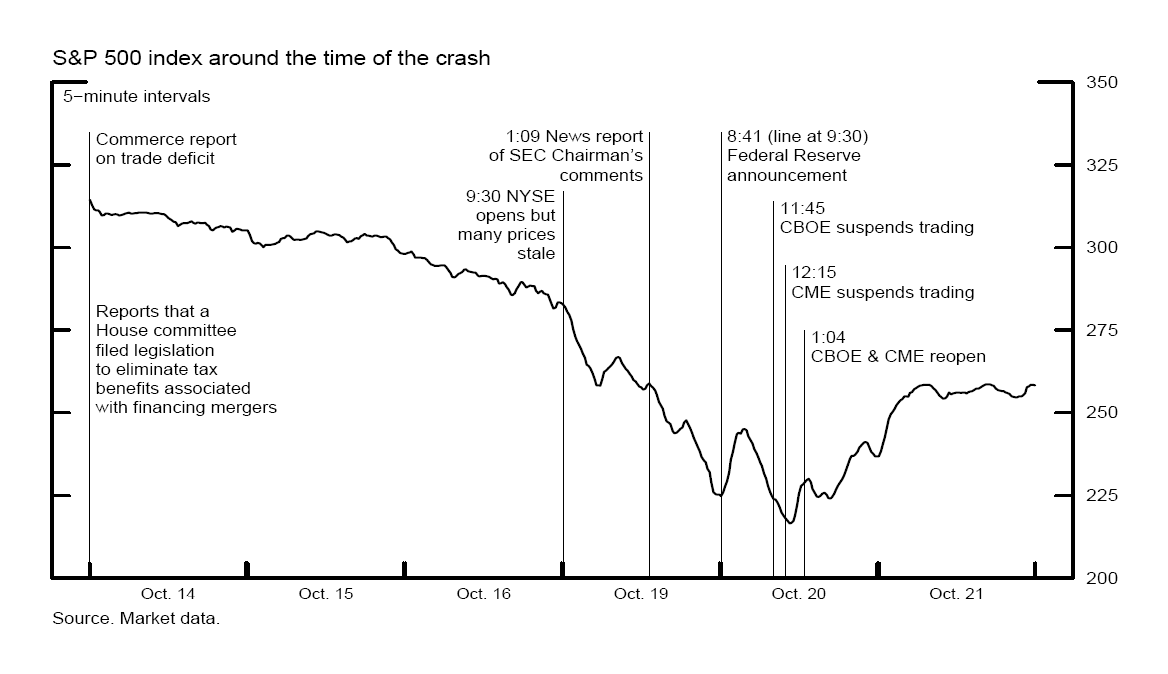
This Day in Legal History: Black Monday On October 19, 1987, the Dow Jones Industrial Average fell about 508 points, or 22.6 percent, in a single day. It is still the largest one-day percentage drop in the index’s history. Markets around the world fell with it. Trading systems were overwhelmed, order books backed up, and for hours many investors had no way to know what prices they were actually getting. The legal and regulatory response shaped the markets we have today. A presidential task force known as the Brady Commission found that the stock market and the futures market, regulated by two different agencies, the SEC and the Commodity Futures Trading Commission, had acted as one market during the crash but were overseen as two. Computer-driven trading strategies in one had fed selling in the other. Among the reforms that followed were “circuit breakers,” coordinated trading halts that pause markets when prices fall too far too fast, along with closer coordination between the SEC and the CFTC. The significance of October 19, 1987 is the idea that market regulation has to match how markets actually work, and that fragmented oversight can fail when stress hits. The CFTC, which grew in importance after the crash, is in our second story today, which is about whether a regulator can simply change its mind about a case it already settled. A cybersecurity incident has halted the system that sends out notices for every federal bankruptcy court in the country. The federal judiciary disclosed the incident Thursday. It affects the Bankruptcy Noticing Center, which produces and mails or emails the official notices in bankruptcy cases, along with its website and the National Creditor Registration Service. The system is run for the judiciary by BAE Systems Inc., a U.S. subsidiary of the British defense contractor. BAE says the incident is isolated to that system and that it has taken immediate steps to address it. The Administrative Office of the U.S. Courts is coordinating with the affected courts. There’s no announced restoration date, and the reports so far don’t say what caused the incident or whether any data was accessed. Here’s why this matters more than it might sound. Bankruptcy runs on notice. When a debtor files, creditors must be told so they can file claims, object, and attend the meeting of creditors. The automatic stay that stops collection efforts, the deadlines to object to a discharge, and the bar dates for filing claims all depend on people receiving proper notice. Due process requires notice reasonably calculated to reach the people whose rights are affected; that’s the core holding of the Supreme Court’s 1950 decision in Mullane v. Central Hanover Bank. If notices aren’t going out, deadlines may need to be extended, and orders entered without proper notice could later be challenged. There’s also a privacy dimension. Bankruptcy filings contain sensitive personal and financial information, so if data was exposed, the harm could go...
0:00SPEAKER_00Hi, a quick note before we get started.
0:02SPEAKER_00Minimum Competence now offers CLE courses.
0:04SPEAKER_00Our first course is live and it's completely free.
0:06SPEAKER_00It covers researching federal tax issues after the Supreme Court's decision
0:09SPEAKER_00in Loper Bright,
0:11SPEAKER_00including how the end of Chevron deference changes
0:13SPEAKER_00the way lawyers should approach Treasury regulations,
0:15SPEAKER_00IRS guidance and tax research more generally.
0:18SPEAKER_00I think it's interesting for a more broad audience.
0:20SPEAKER_00And if you need CLE credit or you're just interested in the topic,
0:22SPEAKER_00head over to CLE.minimumcomp.com.
0:25SPEAKER_00Again, the course is free and you can find it at CLE.minimumcomp.com.
0:30SPEAKER_00All right, on to today's episode.
0:32SPEAKER_00Hello and welcome to the Minimum Competence episode for Monday, October 19, 2026.
0:37SPEAKER_00I'm your host for today,