
Mentium · Madiama Mbaye
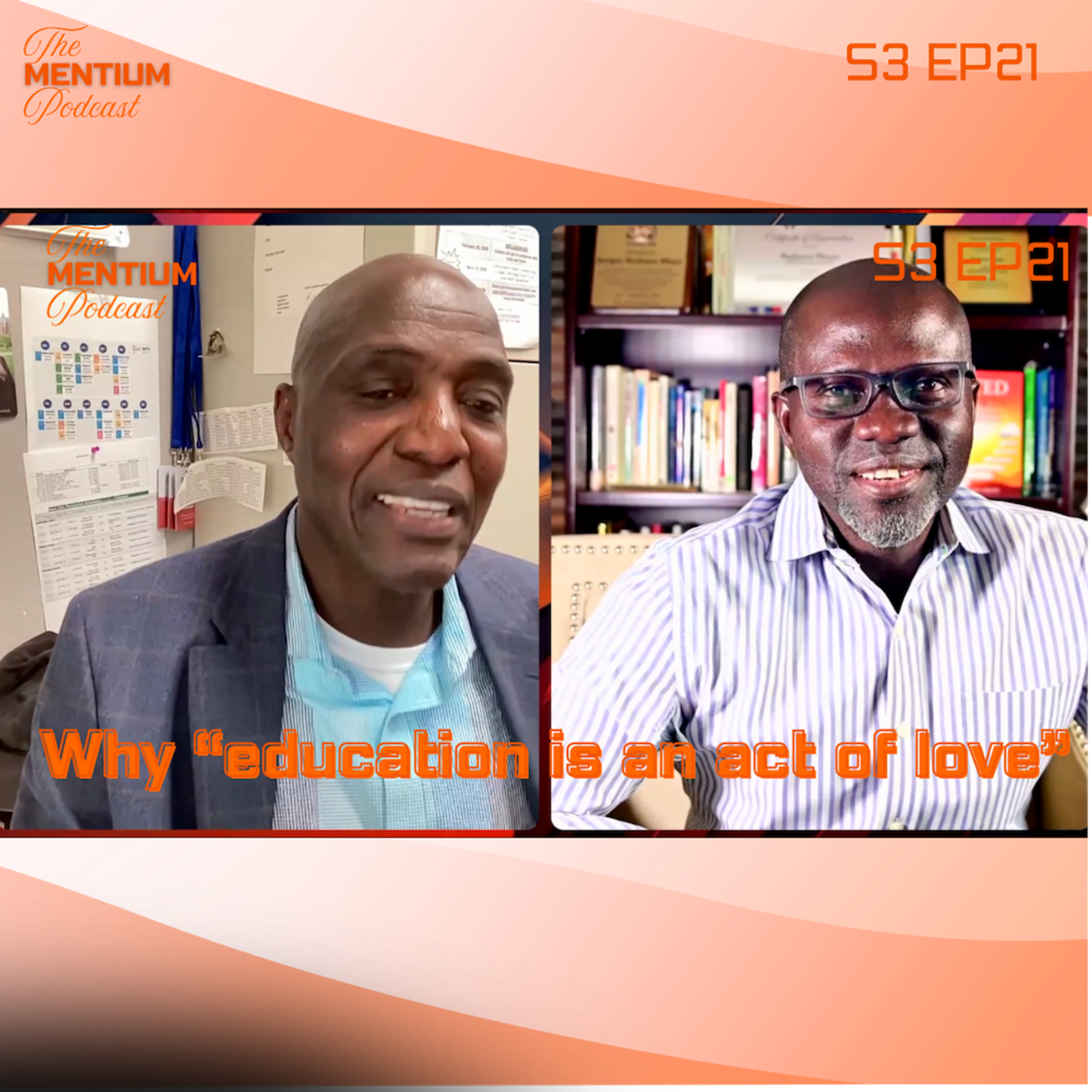
This is the second part of my interview of Dr. Massene Mboup. Some leaders inspire from a stage. Others inspire through a lifetime of service. In this deeply personal episode of the Mentium Podcast, Madiama sits down with his longtime mentor and friend, Dr. Massene Mboup, to explore what authentic leadership truly looks like. Born and raised in Senegal, Dr. Mboup shares his remarkable journey—from teaching in rural villages, leading one of Senegal’s most significant student movements, risking his life during a hunger strike for educational justice, to founding one of Oregon’s most respected international schools and serving as an elected City Council member. More importantly, he reveals the values that guided every decision: Justice over comfort. Service over status. Love over recognition. Character over titles. Throughout the conversation, Dr. Mboup explains why education is “an act of love,” why leadership demands courage, and why every person has a responsibility to become the voice for those who cannot speak for themselves. For Madiama, this conversation is especially meaningful because Dr. Mboup is the mentor who helped shape his confidence, identity, and leadership journey. This is more than an interview. It is a tribute to the lasting impact one leader can have on another life. In This Episode Dr. Mboup’s childhood in Senegal Growing up with a passion for justice The student hunger strike that nearly cost him his life Why servant leadership requires sacrifice Justice as a leadership value Lessons from Dr. Martin Luther King Jr. The role of unconditional love in leadership Becoming an educator and why education is a political act Why “education is an act of love” Founding the International Leadership Academy Building one of Oregon’s most diverse schools Running for and serving on the Lake Oswego City Council Leadership beyond race, politics, and titles The Midnight Declaration that changed four young men’s lives Mentorship, legacy, and paying leadership forward Memorable Quotes “Education is an act of love.” “Justice isn’t optional for a leader.” “If your voice carries, use it for those whose voices cannot.” “Leadership begins with decency.” “The best seat is on the ground. The only direction people can ask you to move is up.” “You cannot teach them if you don’t love them.” “Dreaming is important, but knowing how to dream is even more powerful.” About Dr. Massene Mboup Dr. Massene Mboup is the Executive Director and Co-Founder of the International Leadership Academy in Lake Oswego, Oregon. Originally from Senegal, he has spent more than forty years as an educator, leader, and advocate for children. After beginning his teaching career in Senegal, he earned degrees in English, Linguistics, and Secondary Education before relocating to the United States. He later completed his Doctor of Education (Ed.D.) in Curriculum and Instruction Leadership at Portland State University. Beyond education, Dr. Mboup serves on the Lake Oswego City Council...
speaker-0: I have pessimism of reason, but an optimism of will. That's how I see the world. speaker-1: No no no. You can just say that and let it that. You have pessimism of reason and optimism of will. What do you mean? speaker-0: because... speaker-1: To me about that, and then you came here and got your doctorate degree in education. Why education? speaker-0: Because, you know, one which I discovered later, education is an act of love. And it's also a political act. And I think the most important thing, you know, you can do whatever you want on earth if you don't have educated people. Nothing can happen. you, you know, let's trace like formal education and just say even societies like modern society and their kind. In Greece, Spartacus, what was the, like the people, what was the, like what kind of citizen did they want? A soldier. So they trained in their school for what? To defend the city, the city. So that's, and they knew they were attacked by many places and that's why they collapsed at the end. But they formed soldiers to defend their things. that's it. The schools is always, know, education is that like you educate people because what you just project in the future, what kind of society do you want? And you tell me what kind of education you are giving and you know what kind of society you have. If you neglect education, They say countries that invest in education will be always the first. If they're not today, they will be in the future. If you look at how history is showing people who invest in education, they are going, education is the key, it's the tool, it's everything. So I... I think, you know, for me, my place in the world was I always wanted to share what I know and I always want learn. I loved learning. It was what defined me, like from my elementary school, because I never went to kindergarten or I went to school at seven. I always wanted to learn. Before that, I was in nature running around and learning, and I have never stopped that. that learning was my, and I know, ⁓ if I get into this job, I will always learn. And it continues because teaching is learning. If you stop learning, you stop this. You gotta learn, and you learn from your student, from the parents, from your colleagues. It's just a world that's fascinating. And also seeing a kid like working with children. speaker-1: Got speaker-0: to see them grow. There's nothing, and it's addictive, there is nothing better than a teacher going home in January and realize, ⁓ my God, they're reading. Like that discovery is unique in the world that you just say, people who couldn't decipher anything, you work with them. You didn't teach them, you work with them because they have it. They know they're smart, they have agency. You work with them and then you just when you just see John is reading, Mustafa is reading and you know the light and even them when you look at them the first discovery that they're reading that that thing that only a teacher can feel in their heart and the bright light that comes in their face. Those are unique moments that only a teacher can see and enjoy. And also the struggle, the trials in the class, the fights, you know, everything. Parents cannot see that. drop their kids, come pick them up. And they ask the bad question most of the time. ⁓ how was school today? ⁓ fine. What did you learn? Nothing. You know, you know, but you know, if you did, did, did say, ⁓ John, what was the highest? today, what was your high point today. They're going to start talking. They're very smart. Kids are the best. They know more than anything. that's it. You know, when you get into that, it's hard to come back. Like, you know, it's great. You were teaching, you were delivering. And also in the Mayetic, like Socrates, Socrates was saying in the Mayetic Socratic, Socrates was saying that Teaching was like delivering a baby. You know, and that's so cool because my La Maitique Socratica, you are using, you know, questions. And they say in philosophy, questions are more important than responses. You are working with the kids to ask the questions. That's like the, and you know, a sort of a pedigree, psycho pedagogy of astonishment. Like, you know, you know, like, and I just end. When we go deep, you go onto the pedagogy of indignation. Teaching that to the kids. And I do it in my metacognition when I bring some time. I call it the ⁓ game that I had with a philosophy professor. Josh is now working for a company. He's no longer doing it. It was idea of fairness. I come and give them. I mean, I say, oh, Jones mom gave us this box of M &M's for the class and the kids are all happy. say, okay, everyone will have one. And I take the rest. And you just say, you will hear the thing that you wanted to hear. It's not fair. I mean, you say, oh, wow, what is fair? Because that's you wanted to know what is fairness. And that's when... in metacognition, like you know the pedagogy of indignation. There some kids, no matter what you do, they won't take the one candy. Some, they would settle and say, ⁓ no, fine, it's better I have one than not have. But some, they will never take it. They will fight because they know it's not fair and they're not. And you realize society right there. Like, you know, and... That's when you start talking to them about Emmanuel Kant, about John Stuart Mill, you know, and they know that. They are philosophers. They know. And in us also, look, Masali called Ginan, you know, know, and Rintuba wrote like the viatic, like the journey of the youth, like he had the pedagogy. And it is sometimes, you can call it the pedagogy of, of it's like stoicism, what you should let because if you want to do this, these are things that the, what is like this, the, the, the buying or a payoff like, but also what is what am I gonna get? ⁓ you have this. If you go this route, you will never be a knower on a session. speaker-1: Did person. speaker-0: know if you this if you in there in this every day you won't have this and do you know it yeah speaker-1: Serenta talked about that in in Kunkatiman actually. Like when he was giving advice to their ⁓ the students. Like these are the things that you need to avoid if you want to gain now like that like money is yes, yes, wow. But I knew inviting you that this would be a very high level interview because man, you are such an ⁓ I don't even know how to qualify you, but but but what I am really sure of is you're one of the most intelligent people that I've known in my life. And and and look, look, hold on. I'm not saying this to throw flowers at you. I took it deep from my heart and it is the truth. It is the truth. I wanted to ask you something, but it looks like that you already answered it. Is like speaker-0: Wow. and speaker-1: You have a PhD in education. You could have like taught in in universities, in colleges, everywhere that you wanted, or even around the world, because your French is way better than your English. So you could have been right now in Paris teaching or around the world, but yet you still want to work with children. And I think you answered part of it. Like the joy that it brings for you, because earlier, before we start recording, you were showing me a picture of one of your students who actually you had in kindergarten and now they are a lawyer somewhere. So that sense of joy is it what is keeping you doing what you were doing until now? Like 41 years later, you were still working with children with all the knowledge that you have. speaker-0: It's so cool, my genre. And you know, and another thing, when you were doing something good, ⁓ when I thought of creating this school, was in 2002. I never had someone to go with it until I met Patricia and I know he was crazy like me. I said, let's do this thing. So, but when we were doing this thing, it was... Crazy, you just say like, people were laughing and plus, we come to a city when people were saying it's called Lake Non Negro. speaker-1: Lincoln. speaker-0: was called Lake No Negro and I came and said, not anymore because there's one Negro here. With my crazy wife, we came and then started. People were discouraging us, we continued. But guess what? Two of our grandkids are in this school, Pablo and Mustafa. When we were creating that, we never thought, I never not. It's lately even. this year that I realized, ⁓ my God, how can I get into the school? all of the poetry, when you are, yeah, when you saw, saw some. speaker-1: My goodness. So yes, so good seeds. speaker-0: And you plant something good because you never know who's going to benefit from it. So I honestly, I love, think one of the things you are right, I went to academia, I thought, I love it. It's good. But what you can get from the children, because sometimes you just say some causes are not lost cause I am an optimistic. Like I'm I have pessimism of reason, but an optimism of will. That's how I it. speaker-1: No no no no no. You can just say that and let it that you have pessimism of reason and optimism of will. ⁓ speaker-0: because if you look at this world reasonably you should be pessimistic when you look at like look who are the leaders in the world what they're doing what is happening the injustices the wars the lies of our politicians from everywhere you just say ⁓ my god like it's it's a it's crazy you just say why Like you just say, this world is not normal, that's one thing reasonably. But you say, no, I should do something to change that. And it's the optimism of will, the will to change willpower because that no one can take it from you. No one can take that from you. This is like your optimism, your it's like things that is in there. No one can take it. You just try to change. And you are doing it every day. Look at what you're doing. You are sharing it with some leaders, some people. You are doing it to make the world a better place. And that's what we do with these kids. just say, wow, if a child can see, because that's the problem we had when I came here, people would knock at the door. I open and they say, we want to see the director of the school. Can you take us to the director? I say, yes. They come, I sit them and say, how can I help you? And they just like, and they look at my degree there. Oh, you have a doctoral degree, Portland State. They say, oh, where did you have like kind of, oh, Portland in America, like, but it's a speaker-1: Is it? speaker-0: ignorance most of the time you know my jamma that actually we have you know but it's just but no but you if you can make those people realize that a guy like this can do something and one parent said i send my child to your school because i grew up here the only people i knew were white I wanted my children to know that a school can be led by a black person. They are women. I want them to come and see you. Because of what we have, we are the most diverse school in here. teachers. Look at our website, the teachers, the parents. And so you just want, when a kid can... When I am no longer here and a kid become the secretary general of UN and say, my principal when I was a kid was from Senegal. I mean, you were changing. If they can operate in a room as a surgeon and see them and say that don't have because they unlearn because all the hate. And everything you have here, it's learned. But to unlearn it, it's difficult. So why not learning them, teaching them the good thing, to learn the good stuff. They grow up with the good stuff. They'll never see that, you know, and that's, I think, you know, I am invested in that and realize that this is the way to go. This is the place where I can change a lot of things and... You know, you can change lives. The children know it. They know it when you see how they interact with us. You know, I'm pretty sure our interview will be interrupted by a kid asking for a sticker. have my sticker. You know, they come to me. a sticker. You know, and but because you know, education is an act of love and... speaker-1: Yeah. ⁓ I think that is a beautiful saying. Education is an act of love. But also you said education is a political act or something like that. ⁓ I know I know how good your school is. Don't you think that maybe you should think about opening other chapters? speaker-0: It is a political. speaker-1: around America at duplicating what you guys are doing right there in Oregon. But maybe if if duplicating it is hard, but but having having a sort of ⁓ partnership with some other schools around the country where you can bring your curriculum to their school. speaker-0: We are like Christian Mary. Do you know that Patricia and I were supposed to go to Hawaii, Honolulu, because they want us to open a chapter of our school in Honolulu. And the family helped us. were like, come, normally we are going to go with them in November, I think. It's in November, in October, we are going with the person in charge of development. speaker-1: ⁓ Yeah. speaker-0: And he went to Senegal at Sully. He's helping. Yeah. You know, Mary and yeah, I really, I would be, it would be, I think the ending of my career, if it was to go around and opening school and helping people even doing it, ⁓ it would be a dream come true. Because I think, like you say, we have, you know, we came here. When we get, it's a church, we came, we get the church. I showed it up like the former mayor told us to come. The pastor is from Georgia. He called his dad and told him, dad, a guy from West Africa, a black man from West Africa saved your son and your daughter in law. because they were going to foreclose the church and I rented it. And he said, I said it because my dad struggled with racism. And I won. And one day he told me, people were saying the school at the church. Now they say the church at the school. to get the school. That's how we bought the property. It's a forest area. We are now trying to go outdoor school. We like we are going outdoor. Like if not 100%, 50%. Like you know there's a what you. speaker-1: It is a very, very beautiful area because I was there. I visited the school. I visited you in ⁓ Portland. ⁓ Oswego. Lake Oswego actually. Lake Oswego. speaker-0: And the nature fix, what we call the nature deficit. Children have a deficit of nature. They're not, they don't know, you know, they're in the classroom, nothing. They don't know the ecology. They will never be the steward of our forest. And you in Colorado, you know, the emerald ash borer destroy all the ash trees there. It's coming. But how can we change those like ecologically? How can we build an ecologically conscious citizen that knows that we have this nature belongs to them, that there's a, you know, the interaction between man and human being and nature, that, you know, one cannot go without the other. If you don't have nature, we cannot exist. If you don't exist nature, you know, we have to, to... have the kids and we are lucky because we come from cultures that value nature. But even though we don't do it back home, but here we are lucky people will listen. The Nature Fix is a book that I was reading and that's the deficit, the nature deficit. The only way to bridge that gap is to create schools like this where kids go outdoor. They can do anything outdoor. math, science, they go get an insect. Monday, I'm getting an entomologist at the school. We are going to try to work with the university, the graduate program, so they can come do some research in the forest, see what ants we have, what all those creatures that are in here. You go to the kindergarten, they tell you all the birds that are in our forest, the kindergarten. all the birds, all the trees, the name of the trees and the plants, the native, the invasive species, all those unique, you know, I'm ready in my Jama'a to after Honolulu, if I have any place in America we have to go. have something, we are speaker-1: Well, Is your next step? You know, I already introduced you to people here and you guys were talking and and you know I hope that that that ⁓ that will happen. But look, I know everybody who's watching this will be like today you've met your master and I think that's what's happening because usually on these interviews I have a lot to say. But today, man, I am speechless and and if you're watching this just know that this man ⁓ taught me everything. He he not only taught me but just shaped the person who I am. Because I am not ashamed to say that if I am wearing a suit today, it's because of you. Because those things were just not me. Back in college, I was in jeans, I was in whatever. But I couldn't, you know, help but seeing you all the time. Whenever you were going out. You looked so good with your suits and everything. And I admire it. And I started to follow your steps. I started to follow your steps. And of course, with the saying that I shared earlier, you made me believe in me more that I could, you know, do it myself. You believed in me. And later on in life, while I'm teaching here, there is a line that I'm always sharing that sometimes you have to believe in other people's belief in you until your own belief kicks in. And I think you and I, that's exactly what it was. You held me high up there, never treated me like a younger brother. You treated me like equal, like I was your peer. And man, you were way older. Your younger brother and I went to school and all of that. But that you couldn't even begin to understand what it did for me. How it shaped me, how it made me the person I am today. And I will be so like forever. Grateful. I know this is already a long episode, but I just wanted to touch on your political activities in Lake Oswego. How did you run and were was elected twice as the city council in a in a city that is that is almost completely white? How did you pull that off? speaker-0: I mean, you know, I came here and I became a citizen. And I remember the guy told me when we were sworn in, he said, we want people to be active, you know, political life, know, civic life. And I just say, whoa, that's good. I like that. I like politics. So one day the president of the Senate, Oregon Senate, Rob... Robert Wadena, I'm going to, like, poke him in the eye. And he didn't tell the truth. He told me, Masen, we want you to run for city council. I tell him, Rob, I have a school, a family. Are you crazy? He said, it's easy. It's two meetings a month. You can do this. I know. Little did I know that Rob just wanted me to run. I mean, he's my friend, my brother. He's the Senate president. Oregon is a good guy. He will go to Senegal with me actually. But I just ran. Like you say, one guy told me, brother, why are you, why you are crazy? You created a school in Lake Hosego, fine. But now you want, you know, no black person has ever been elected in this city. As a matter of fact, no black person. in the past never had a home. And it's written in the deed still. But we fought it. The deed say, you cannot sell your house to a nigger. It says the term, a Chinaman. ⁓ yeah, it's very clear. was. So I told them, all of those, I'm gonna get them away. I will have a home here and I will be elected here. He laughed and left. I remember we met at the park with my wife. And Patricia said, I told you, what the guy I tell him he lies wait till the result come. So we, we came. I ran and I was against an incumbent and I was, I lost by seven votes. Counted. So I did not accept the recount. let go the next time I. speaker-1: And basically. speaker-0: The second after me was around 6,000 votes behind me. The second. I have the most vote in Lake Osceola history. So that's, and I think it's, you know, the thing is I also believe that you have to respect people. have to believe in, ⁓ you know, that we are all the same. Race is a social concept, know that, know. That suggests that we are all the same. So my Jama, what I wanted to tell you is this folks. If I can be elected in Lake Oswego, the most affluent city in Oregon, know, like black folks are maybe 1 % of the population. You know, it's because of being a Taliban and it's a turn of being a Taliban is my grand power, my grand uncle. Because I've never seen my grandpas from mom and from dad's side. he was raised by Sherry Brafal, from Damfall. And he told me when I was posted in Ghassan, he told me, I am your grandpa and I am very respected there. There are good people over there. He said, in Wolof, it sounds like a rhyme. said, you are polite and nice to people, they will adopt you. If you will go to them, they will educate you. will correct you. And you don't want to be corrected. speaker-1: Mm-hmm. Yeah. speaker-0: One of the things he taught me was the best seeding is on the ground because no one can tell you to go lower. He said, you go somewhere, sit on the ground until the only good thing that can happen to you is they tell you, sit up and sit on a higher place. So I learned those things and his sister. speaker-1: Hold hold on a second, hold on a second, because that that that is so powerful. I can't tell you how many times I repeated people almost the same line, just not in in in the same words. I said if you start from the top, there is nowhere else to go but down. But if you start from down, you can grow to go up. And your grandpa told you. Like to sit down because the best thing that could happen is people ask you to sit higher but not lower. Wow. ⁓ speaker-0: And my grandma said, anything you cannot get from massaging people, hitting them won't get it to you. And in Walla, he said, it made me, I was laughing when mom told me that. those were things that are, know, my things in life. just want people here, you know, they just say, and you know, the It doesn't cost anything, my jamma, to smile. It's just like, no, it's hell of for you. Why you don't smile? It's just, and I came, when I was knocking on doors, people in the, no, one guy told me, Masen, my only problem, I agree you should run, but how are you gonna knock on doors? And I told him, ⁓ I'm gonna walk and knock. He said, no, I know, but. ⁓ I tell her, ⁓ because I'm a black man. I said, that's what you mean. And he said, no, you know, I said, okay. That night when we finished talking on my way home, that's when I start knocking on doors. I just came and knock and say, they open all madam. My name is Masenbub. I'm running for city council and I'm asking for your vote. If you have time, can tell you what I can, what I'm going to do if I am elected. And they say in Lake Oswego, that's the question they were asking. I say, ⁓ yeah, that's why I'm knocking at your door. Knock your door because it's here. Say, ⁓ no, we were just there. You know, the embarrassment because they're surprised. They've never been a black man on council. just like so, and I just, I knock more than 1000. A thousand eyes and doors I knocked them that summer. Like I would come in the morning knock, knock, knock, knock, knock when I am not at school. If I had lunch break, I would go knock around the school. That's what I did and I just showed them and people, you know, you have the, we are all the same, jamma, there is no. black and white America. There's only Americans. There's no white and black people. They are only people. The race is a social concept. You know, there are some white folks who have nothing. They have problems of identity and they settle with, I am higher or better than a black person because they have nothing. And some black People also who think that a white person is their enemy for some reason. told people in my first speech on Juneteenth, I told them, when slavery happened, none of us were alive. All these things people are saying, we will not hear when it happened. The only problem that can be a problem is if you are living on that. That's a problem, but none of us is guilty of enslaving Africans. You know, but we have to condemn it. It's not, it's a history. Anywhere in the world, there's a dark history, but history should be claimed. We should claim that history of all the bad things that happen in America, but there are also good things that happen in America. My story can only be told enough in America. I come here, I bought a school in a predominant, the richest place in the state. I bought two buildings and I'm buying a third one. There's only here that I can do it. In France, they would not allow me to do that. Or not allow, but I would not have the well-wisdom to do that. I don't see how many folks in America you can do it. I, one person, it was the laughing thing, one woman, oh, it's land grabbing that he's doing. say, wow, I love it. An African guy coming to Lake West, you go and grabbing land. It's a story. I tell them that's more of the, you know, it's a, but it's, I just tell them, no, I just bought three acres of land. I'm not grabbing land. That's it. But people support it because they know what we doing is good. If they didn't, no one would come to my school. It's a white community. If we can call, and I told them where I am from, we don't call people white and black. You know, we just, people are people. In world of knit, we say knit. We don't have even pronouns, he and she, we don't. Knit is knit. That's also that thing that I came and I also think when I was knocking on doors, I went to her home. I knocked and she didn't open and I was leaving. She ran and grabbed me and was crying. She said, I didn't want you to see me crying. That's why I tell them, why, I'm sorry, what happened? She said, You were sent here to unite us. You don't know it. But that's... He said, I saw that in my dream. speaker-1: I would find that. speaker-0: ⁓ no, I don't want to fly a guess. I just, told him, I'm just running for city council. will try to unite the people, but yeah, I can, I don't have the power or anything, but she said, and he said, you have, you were our last chance. And the governor who's my friend, she told me one time, said, you were the last chance of Lake Corsivie. I told him no. ⁓ there will be some part. It's a great community. It's just the way you come. People are saying like no Negro. That's not true. It's not racist. They elected a black person. You know. That's, you know, it's just, it's like you have to, and you remember also the saying, if a hat can stay long on our head, it's because it's light. No one would carry a five kilogram, 10 pound hat. The hat, that's why. Light, people can carry you if you are heavy. speaker-1: Yeah. If you are. speaker-0: no one wanna carry you. And we have the same dreams. And I'm not denying that racism and all other things don't exist. It exists. But we fight them. With who? With our white brothers, with our Asian brothers, with everyone. We cannot do this fight alone. have people who believe in justice. It's not racial. It transcends the race. Like believing in those you can... Rob Wagner is a white person born and raised in Lake Oswego. He's the Senate president now. He told me to run. You think if the folks, if we say, ⁓ white people and that, you think he would tell me to run? They would support me for anything. So we just have to understand that we are here on the same board, boat, same plane. Same thing if it drops. When COVID came, was, of course, the minoritized communities were more vulnerable. But how can we come to that if we are not, you know, involved? And when I came into government, American government, that's when I realized that, we have to be there. You remember in their eyes were watching God. have to be there to know there. You gotta be there to know there. And if you're not there, you don't know there. Multiple times when my presence on council made things go in a different way, because my voice matters to them. We need our voices and that's why we all have to be involved. Because no one can speaker-1: You That is so true. Mm-hmm. speaker-0: Like Wolof said, you cannot have a person in front of you who want a dress and you try their measure on a mannequin. No, you try it on them. The mannequin cannot tell you cannot read my dreams. You cannot tell my dreams. I'm the only one that can tell my dreams and that's I believe my camera that we need to be in not afraid. People will support the right people. Race cannot be something that, you know, nothing should be something that stop you. You just go. People know. What I've said it, you know, you cannot serve me. If you serve me on a garbage can, I consider you throwing your food. You're not serving. I want it on a garbage can. That's it. So that's the, you know, you just like you. I used to say that, you know, all, yeah, you you respect yourself and you ask for the right thing for what you deserve. And what you deserve is what everyone deserves or more than everyone. That's what you deserve. And you ask for it. You go get it. People, they know, they understand why they send their kids to the school. In the beginning, some would say, ⁓ how could they? One guy came, he said, ⁓ Something I know is I'm pretty sure when our kid come here, he'll know how to dress well. Honestly, his wife looked at him wanting to kill him. Because like we told them, no, this guy is a scholar. He's not here to teach people to dress. Of course he dress well because he's not stupid like people like kind of them the wife because he was very angry to hear because but how. You think a person like that can stop my dream? I would laugh. I told him, ⁓ of course, and that too. I told him, that too. Not only they're going to learn, but they'll know how to dress well. speaker-1: And I I I truly appreciate this. I know inviting you that this might even be a a two parts series because usually the podcast is about like forty-five minutes to ⁓ fifty five minutes long. ⁓ but definitely ⁓ it was it was it was wonderful. And there is a lot of things that I wanted to explore and I know time will not allow us to go deep into it. Mostly when you were talking about the reason why you could do what you were doing over there is because you are a Talub. I wanted to explore that, you know, because a Talub in a nutshell, if you ask Serentuba is the one who defines who's the Murid. And he said Murid is somebody who does not belong to anyone, but no nothing belongs to him. speaker-0: Yep. speaker-1: It is it it is so powerful and I know that's that's that's how you live. You know, you you want the good for everybody. I've seen you do it. I mean, look, there are a lot of things that I wanted to share, but maybe you know, I I can't share it on this platform, but you know my heart. There is only one thing that I would like to close with. And it is La Declaration de Minui. This happened, I believe, in nineteen ninety-three. It was on if I'm not mistaken, January eighth, that was your birthday. And we went out, we came back to the dorms, and then we were talking, that was you, Gavisek, Eliman Bang, and myself. And then It was midnight and we said let's let's make a a pact or a declaration that all of us will will will leave Senegal and will become somebody's. I don't even know what that meant at the time. speaker-0: Yeah, we do. speaker-1: As it turns out, all four of us all four of us, like the three of us are here in the US, and then the fourth one is in is in England. So just just realizing that dream. I don't know if I am somebody, but I know for sure you are. Eli Man Bang is running like schools and and and just doing wonderful things. speaker-0: happened. speaker-1: like biggest financial firm in England. Yes. So like ha realizing that now, it if something that happens like in ninety three, that's how how how old now? Like thirty-three years ago? I what do you think of that? speaker-0: It's you know my Jama they say, sering afya buso. He said, before you are good. You are good. Balanga, bah bah. That's one thing. Before you... This is deep think about it. want... You cannot be good if you are not good. Very important. And the other thing is what you... You know, like sometimes there's some things you put in your mind and you just say, and that's a planning. speaker-1: It is extremely deep. speaker-0: Because when the declaration of midnight, the midnight declaration, the four of us, we said, this is what we want to be. Already, you just set up yourself for success. And that, because the mind is very tricky. What is in our brain. That's why they always, when we were, ⁓ when we were kids, they always tell us to gag nalubach. speaker-1: Okay. speaker-0: important, always try to fake something that you believe that's good. Never try something bad like to be, I'm going to be a bad guy. I'm going to, they always wanted our parents, they were right. Maybe they didn't, couldn't explain the science behind that. But what you do in your mind and in leadership, when you talk to your student, you should tell them that. I give you one example in my college when I was teaching at Chemeketa. One of my students came from Mexican descent and said, Monsieur, thank you for everything. You know, I want to be an assistant dentist. And, whoa, very cool. And then he said, yeah, he was very excited. I saw his excitement. told him, wow, why you don't want to be the dentist? Why do you want to be the assistant of the dentist? said, I said, think about it. And I left, you know, couple years after he came and she came and that's what I'm doing. I say what? He say, I'm going to be a dentist. am in my, I'm going to graduate soon. I say, wow. Say, whoa, very good. And he said, ⁓ you told me that I say me. He said, ⁓ yeah, you said. told me not to be there. I just I said, Okay, so this is not the thing that you believe if you set yourself the crowd told me one time that life was a big ram that is sorted. If you want to the horns, they cut it for you. But if you say the nicest part of this lamb, that's what you get. and you grab it and that's what you want. And life is like that. It's easy to say because we can say, about those who are, know, economically, you know, disadvantaged? No, those are in your mind. Those, they change that are in your mind that are not physical change. If you can get rid of those chains, you will get everything you want. And that's the the idea. believed, I remember we were young, you know, it was very, you know, were young folks and we wanted, we were dreaming and the power of dream is very important. But Lenin said in the conclusion of what to do, he said, you have to know how to dream because dreaming is good, but knowing how to dream is better than dreaming. If you dream, of having a big home, can be 100 years without having a dream, without having a home. But you know how to dream. And my jammer, to go from there, I am so proud of you because you said all the things about me. The first time I came, you told me about something and I just say, I'm so worried. My jammer, maybe there's something. He was teaching, he left the job and opened this business. have. see him. I never told you that I came for that because I was worried about you. I came and arrived at the airport. You picked me up with a pickup and I said, ⁓ my jammer, why is he renting? In my mind, know, biases, how it's bad. And I know my jammer parked the car and then you said, ⁓ I'm going to show you some of my account. We went in your Mercedes. And I just say, speaker-1: I caught speaker-0: I was so happy and proud of you because I say I came and now I can breathe. Because I was worried and you are my brother. If something happened, you would not be here. just... But when I saw that, just say, wow, I just pray for this guy, you know, to you're driven. And I will never forget the places, all the places we went, where there was the recording, those recording building. your people who were working the way you talk. just say wow, I mean, I was so proud of and I wasn't surprised though because I knew and one time someone very important, I talked about you, he said my jamma is share Ahmadu Bamba's wealth. Allah knows. speaker-1: Mm. speaker-0: Yeah, I was so proud and happy and that's it's, know, but that when you say I did something, it's like, you know, when they say do not prepare, like you do not plant anything in a surface that's a barren. Prepare the land in education. It's like you prepared the land. Anything you plant can grow. speaker-1: Mm-hmm. speaker-0: He's not prepared, he won't grow. So that's it. But you are the person, you know, how many of many people I know and I try, you know, work with, not like you, you are a leader. When you say you are upon a leader, things people don't know what they are until someone, it takes someone to tell people what they are. There was a Senegalese guy who had the TV things. He was working on the TVs. He called me one time and said, did you remember me? I said, no. He said, you are my English teacher and the laugh was he said, I'm calling you because one day you said in class that we can be whatever we want to be. And he said that day it was on an English. Do you gave us a text on Thomas Sankara? He said, I never forget that he said that moment defined my life. honestly forget when I said that, but that's what you're doing. The kids you are teaching, the adult or anybody you're coaching, you just, what you do, it's like the maiotic Socratic. are delivering babies that are in them. You are delivering the ship that's in them, but it takes a leader like you to pull it off. like to just come, wow, you know, you are a leader and that's, you know, you find. speaker-1: Yeah. My sense. ⁓ wow. I I don't even know how to end this because this this was more than a podcast. And I am thinking it might be a two part series because people might not have time to listen to all of it. ⁓ we'll do some editing of course. 'Cause the longest one I recorded was like one hour and twenty something minutes with Papa Ja. speaker-0: Yeah, I'm pro- speaker-1: And and I think this one beats it. But ⁓ it just shows it just shows like who we were to each other and I and I truly, I truly appreciate you from the bottom of my heart. ⁓ I will never stop saying this. I am who I am today because of you. Because there was some time that was extremely hard back in college that If you were not there, maybe I would have not even continued my studies. That's how bad it was. But you were there, you did what you had to do or what you wanted to do because you didn't have to. speaker-0: you Look, no, you're the best speaker-1: ⁓ some days ago I was talking to a lady who told me because I was talking about like ⁓ Chef Arimata. And she said, My that's my mom. So I met her daughter. Yes. I know her daughter. I mean, look, and that's the restaurant you used to take us to, you know. ⁓ Yes. She's right here. She lives right here in America. I will introduce you to her. ⁓ speaker-0: I wanna see her, I really wanna see speaker-1: Thank you so much. Thank you so much. I think we've we've done more than enough. You know, there's a lot of things. And and of course this this will not be the last appearance ⁓ of you on the show because there's a lot of things that I wanted to explore. But I just know you as a leader enough and and if I'm talking about or if I'm doing a series on leadership without having you, it would have not been complete. Let me just say that because you were the first leader that I know like to be real because I was under your wing and I learned from you and we did a lot of things together. So when my when I think of a leader, I cannot, you know, help but think of you. Of course, Shahmubamba is there. He's his he's our leader, us and our guide. And and and that's something else. Nelson Mandela is somebody else that I admire. But all of those people I admire, but I don't closely know them. You, I grew up under your wing. I know exactly who you are and what you do. So thank you so much for spending this time with us. I truly, truly ⁓ appreciate the ⁓ your acceptance of the invitation, but also the fact that you you Yeah, Pour your heart in here. People who were listening, watching, they really know that this guy talking is not talking about fluff. You know, he knows what he's talking about. He's so generous with knowledge, with money, with with everything. With everything. So my brother, thank you. Any last word before I close? speaker-0: No, I just keep up the good work you are. People around you will be very lucky because you too, you have generosity and that's all that matters is, you know, I told you teaching is an act of love. You cannot do them if you don't love them and some who love. speaker-1: ⁓ wow. Masen, Masen, Masen, you said you cannot teach them if you don't love them. No. You know how I put this in leadership. We have a program here called Leadership Africa and I'm part of it. I usually tell people you cannot lead them if you don't love them. But that love is L-O-V-E. You cannot lead them if you don't love them. Meaning if you don't listen to them, if you don't overlook their mistakes, if you don't voice out your appreciation to them, but also if you don't make the efforts to be there when they need you. Yeah. So that's the L O V E. That's the love. And you say you cannot teach them if you don't love them. Wow. Yeah. Wow. speaker-0: that not, you know, not that the truth, man. It's true. You know, you dig you are. Yeah. No, that's gratitude, man. I, you know, always we are talented, gratitude. speaker-1: My brother, wow, wow. Well thank you so much for everybody else who's watching. speaker-0: Yes, yes. Do the school with Pap in Denver. speaker-1: ⁓ absolutely, absolutely. We'll we'll we'll carry on that conversation. We will, we will. I will rekindle it here and then certainly they will get back to you and we'll we'll take it from there. Truly appreciate you. speaker-0: Welcome on Tuesday. speaker-1: Yeah, that's what he told me, you're traveling. Okay. We'll do it when you're back inshallah. speaker-0: If we do this, we can talk anytime, Majam. Call me, I'll have my number and everything. My brother, Bilo and the kids. speaker-1: Absolutely. They will okay. I will. Thank you so much. So for everybody watching, thank you so much for tuning in today again for another episode of the Mentium podcast. As you already know, today was a pleasure, it was an honor. I was so excited to have this brother on the show. So until next time, take care of yourself and your loved ones. I am Majema and this is Mentium. Peace. speaker-0: you