
Mentium · Madiama Mbaye
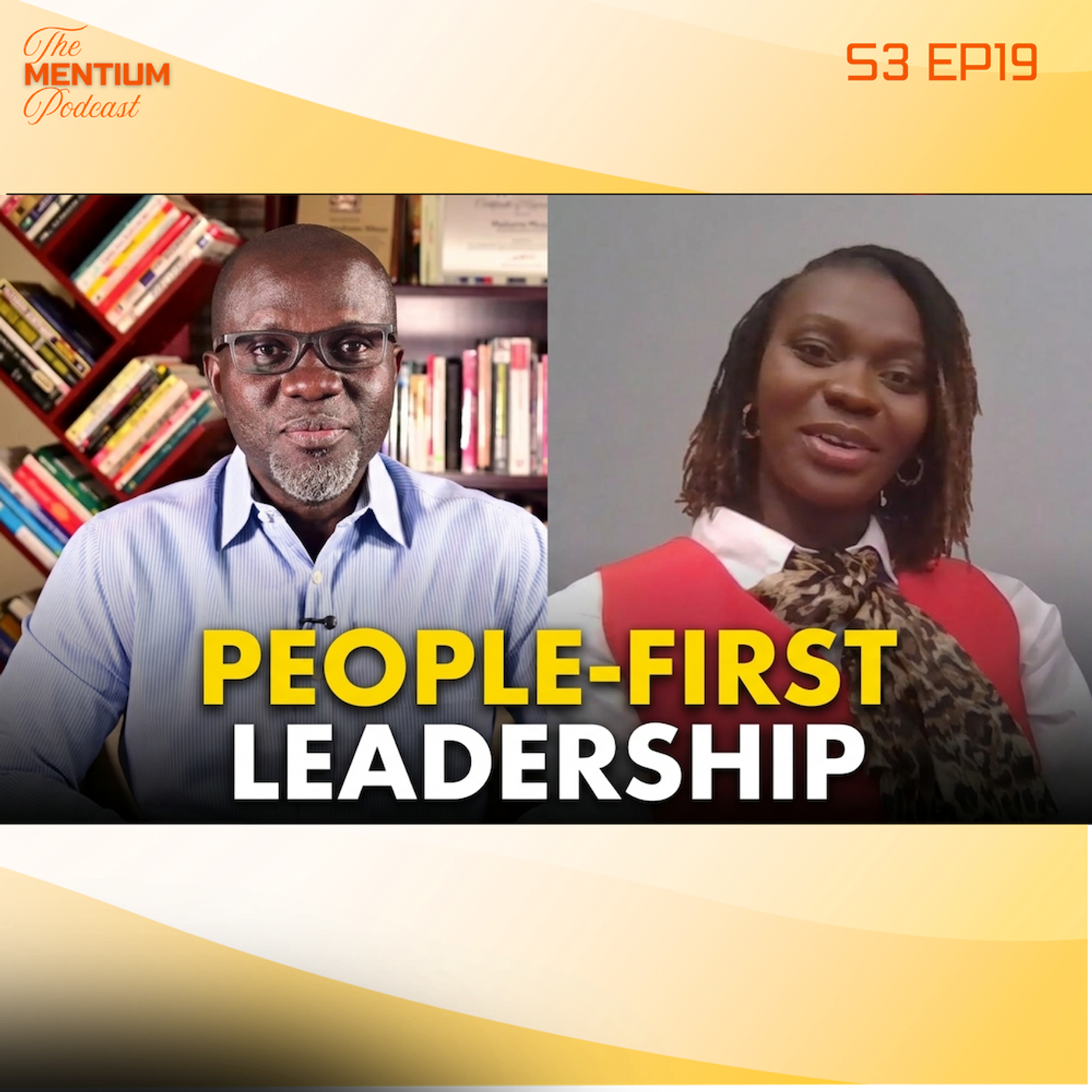
A New Generation of Leadership: Ngone Saliou Niang on Identity, Community, and Public Service In this episode of the Mentium Podcast, Madiama Mbaye sits down with Ngone Saliou Niang, a first-generation Senegalese American, Muslim woman, mother, community organizer, and candidate for Minnesota State Senate District 39. This first part of the conversation explores Ngone’s identity, family story, Senegalese heritage, faith, values, and decision to step into public service. Ngone reflects on the meaning of her name, growing up between cultures, learning Wolof as an adult, and the lessons she learned from her parents’ entrepreneurship, hard work, and community life. In This Episode • The meaning behind Ngone’s name • Growing up Senegalese American • Family, faith, and cultural identity • Humility and trustworthiness as core values • Why representation matters in public service • Her campaign priorities: housing, youth, food access, health, and economic opportunity • Building a people-powered campaign • Advice for immigrant youth and community members Key Reflection Identity is not only something you inherit. It is something you continue to build.
speaker-0: What does a new generation of leadership look like? Today's guest reminds us that leadership does not always begin with a title. Sometimes it begins with identity, family, faith, community, and the desire to help people feel heard. Hello and welcome back to the Mentium Podcast, where we explore leadership, personal growth, and alignment so that you can achieve more, not just in results, but in purpose, impact, In fulfillment. I am your host, Majama. Today I am joined by Gone Salunya, a first-generation Senegalese American Muslim woman, mother, community organizer, and candidate for Minnesota State Senate, District 39. In this first part of our conversation, Gone shares her story, the meaning behind her name, her Senegalese roots, her family's journey. and the values that shaped her leadership. We talked about identity, humility, trustworthiness, community, faith, and what it means to build a campaign rooted in people, not special interest. This is a conversation about representation, self-leadership, immigrant identity, and the courage to step forward. So sit back and enjoy part one of my conversation. Ngone Salunyo. So Ngone, can you talk to us a little bit about who you are, your background, your roots, and why you are here? speaker-1: Good afternoon and ⁓ thank you for taking the time to meet with me today. ⁓ before I introduce myself, I want to thank you for your leadership and for being a pillar within our synagogues and broader ⁓ international communities. I truly appreciate your service, and it's an honor to have this conversation with you. ⁓ I like to begin with my name because in our culture, names tell a story. ⁓ most people know me as Sainabu. My full name is Ungone, Salun Yang. Nguane was the name of my grandfather's second wife. ⁓ although she wasn't my biological grandmother, she was a beloved ⁓ second mother to my father. she helped raise him, and my family chose to honor her love, care, and influence by giving me her name. ⁓ my middle name, Salu, was given in honor of Sidding Salu Mbake, the son of Siding Tuba. My father is a devoted Mudit and has always dreamed of naming one of his children after Sidding Tuba and Siddhang Salu. So as child after child was born, daughters kept arriving. So rather than waiting indefinitely for another son, he decided he was. He wasn't going to let gender become an obstacle to honoring the people who raised and shaped his faith. So he gave me my name, Salu. And to him, being the youngest of eight children, ⁓ seven daughters and one son, ⁓ the name gave value that represented faith, humility, service, discipline, and leadership. ⁓ and it belonged just as much to a daughter as it would to a son. ⁓ I was born here in the United States in Indianapolis, Indiana. ⁓ but my family story began in Senegal. Like I mentioned, out of being one out of eight children, my one of my eldest sisters was also born here. Her name is Dechia Bamba. And mm, our older six siblings were born and raised in Senegal. Hm, as most of my relatives on my father and my mother's sides. So growing up in a divided, immediate family structure, I often felt a longing to understand my culture more deeply. I wanted to know not only that I was Senegalese, but what it truly meant. I wanted to understand my heritage beyond the stories that my parents could tell me. ⁓ I didn't visit Senegal for the first time until I was in high school. So that experience gave me a much deeper connection to my family, my culture, and I would say my identity. I graduated from high school ⁓ with an advanced technical diploma with honors, which gave me a strong academic foundation. But I did realize that there is still an important part of my education that was missing. And it was my own language. I didn't learn to speak Wolof until ⁓ 2019. And learning Wolof as an adult wasn't simply about communication. It was I wanted to reconnect with my roots. I wanted to strengthen the relationships with my family and also embrace a big part of, you know, reconnecting with my roots. That's something that I always search for, being born here. ⁓ that experience taught me that education isn't or it doesn't end with a diploma. Some of life's most meaningful lessons come from intentionally seeking to understand who you are and where you come from. My father is Wolof and my mother is Fulani. They met in Kaluk before coming to America to build their life together here. ⁓ Father came to America in 1987 and my mother followed in 1991. I would also mention that they've been entrepreneurs for as long as I can remember. They made a living selling African art, handcrafted gifts, even selling fresh produce from all across the East Coast, honestly. As children, My sibling and I traveled with them to festivals, to fairs, farmers markets. We also used to go to military PXs and the veteran affair hospitals. It wasn't just a family business, it was our way of life. ⁓ I remember selling watermelon in the hot summer heat and helping customers from every background. I think those experiences taught me the dignity of hard work and how to communicate. with people respectfully and the value of earning trust one conversation at a time. my elder sister De Che has mental disabilities. So watching my parents care for her and learning to navigate a new country gave me an early understanding of compassion, patience, and the importance or lack thereof community support. speaker-0: Gone, I got chills listening to you. You know, this will be one of those interviews again that I might be very, very emotional because hearing your story, I am hearing also my daughter's story in you. And I what happened to your dad almost happened to me. Because I always wanted a son to name after Seren Sale. Well daughter after daughter that didn't come, but me maybe the wait was not that long because the fourth one was a son and I was able to to achieve that. But this is so remarkable to hear you detail that story, but also talking about your roots, culture, identity. You know, when I ask you who is Ngone, the answer was so vast and detailed. That tells me how deeply rooted you are in your identity. You know, but if somebody who doesn't know anything about Africa, anything about you know your background, if they ask you to define Ngone in two words, what would you say? speaker-1: I would say in two words empathy and intersectionality because in order to understand who I am, the first thing is to understand what guides me. I'm an empath. The second thing is intersectionality because I can meet you at any place, ⁓ whether it's being an African American, being a Senegalese American. being a Muslim, being a plethora of minority groups in the in the US. So I feel that I have a connection to many people. So to find where you connect with me and me having empathy and you having empathy for me is how you would be able to get to know me. speaker-0: Look, when you say empathy, I thought of values. And that is that is the next segment that we will need to ⁓ embark on right now. Because like to me what I've ⁓ come to understand so far about you is that family is a central thing in your life. When you describe going like from market to Market farmers market all of these with your family. You said it was no longer about a business, but it was a way of life. Can you tell me a little bit about the values that guided you in your childhood but all also continue to guide you right now? speaker-1: When I think about the values that shape my identity, two come to mind immediately: humility and trustworthiness. Those two values are present in every thought, every action, in every relationship that I have. humility reminds me that I'm never above another person. It calls me to listen before I speak. speaker-0: Mm. speaker-1: ⁓ to continue learning and to also admit when I'm wrong. ⁓ and also to serve others without seeking recognition. That's what keeps me grounded. The second one is trustworthiness. ⁓ it's about living in a way that earns trust and also extends trust. It begins with trusting Allah subhanahu wa ta'ala and fulfilling the requirements. That he has entrusted to me. It means being honest with myself and with others, honoring my word, ⁓ and recognizing that every person, whether a man, a woman, or a child, has rights, has dignity, and deserves to be treated with fairness and also respect. I want to be someone others can depend on. ⁓ My by my character and I want that to consistently reflect my values. So those two values are the foundation of what I or how I would like to live. ⁓ they shape how I practice my faith, how I treat people, how I build relationships, and how I approach leadership. speaker-0: Gone, this is this is such a joy, you know, to to listen to you just express those two values. You know, maybe I lived them myself, I understood them myself, but you were giving them new meaning for me. And that is really powerful. Now it is my understanding that you are running for Senate in the state of Minnesota. Can you tell us a little bit about that? speaker-1: Yes, so essentially I'm running for ⁓ state senate in District Thirty nine. I think to start off with what am I doing? I wanna speak on my competency or my the skills that I have for the ⁓ role. speaker-0: We'll come back to that. We'll come back to that in a little bit. That is my third pillar for no, the fourth pillar, actually. But go ahead. speaker-1: Yes, so running for this office means more than the title. I like to look at what I'm doing as a step forward for myself, my family, my community, my greater community to see someone who not only listens to the voices that are often unheard, ⁓ but also be a part of that voice. So I'm what my strategy is is to continue doing the work that I'm doing with community engagement in our communities to get those voices, understand their particular ⁓ issues or things that they like about the community, so that we can take those things to the Capitol to make change ⁓ on their behalf. Because most of the time when it comes to politics, ⁓ if your voice or someone who looks like you isn't there, those resources are not coming to you. Those ⁓ the understanding or even being one of the other things that I notice about ⁓ politics, I would say in legislation is sometimes the resources are available, but if you don't know how to navigate to those resources and to walk through them to actually, you know, be a benefactor of them, things become difficult. So I want to be that person from Point A to point Z together, walking together so that we can build a community that works together, lives together in harmony, but also ⁓ generationally increasing where we are, you know, so that we're able to really blossom because that is a lot of the reason why many people come to the US. speaker-0: Now, Gone, I know you are a leader, but why the Senate? I know you could have you could do a lot of things to impact the community. Why do you choose to run for the state Senate? What would you do there? speaker-1: so my campaign is centered on putting people first by bridging community voices with public policy. ⁓ my priorities are affordable housing, investing in ⁓ opportunities for youth, expanding economic opportunity, also strengthening food access and community health, and ensuring that we are able to Take the steps needed in order to blossom because a lot of times people in our community, the most basic needs are not being met. And when those basic needs are not being met, it's hard to get to the next step of career development because if you're if you don't have the food and the housing, then you're not thinking about those things. In order to build generational change. is to identify and ⁓ work together cohesively to you know bridge those bridge those issues so those are my ⁓ priorities the way that I ⁓ look at it is housing is foundational without stable housing it's difficult to succeed in education, employment or in health. Also believe that we have to invest in our youth. not only through education, but by creating pathways to leadership, civic engagement, ⁓ mentorship, and meaningful career opportunities. speaker-0: Now can you tell me what what in your past puts you to this decision? Because sometimes when when people wanna advocate for something, it is either they lived the opposite. Like either if you were ⁓ if Somebody is advocating for housing. Certainly they have a background where housing was really an issue. For instance, you know, when we are fasting in Ramadan, one of the wisdom in it is to experience hunger so that you can feel compassion, you can feel empathy for the people who are hungry. So that's what I'm trying to to ⁓ ⁓ say here what is it in your past that you experience that you don't want other people to experience that you would that push you to run for this city? speaker-1: Excellent question. I would say my life experiences being ⁓ the youngest of eight children is already one thing. and being put in a situation where I was born in a new country where my elder siblings and also my parents don't have the background of how the systems work. I found myself and like I mentioned earlier. My elder sister, the two of us were born in the US. My elder sister had mental disabilities, so she wasn't able to, you know, show me the route or show me the way, but ⁓ it was still needed to be done. So I found myself in situations where I was navigating culture, I was navigating religion, I was navigating leadership, ⁓ every aspect of life with the stories and also the culture that my parents gave to me, but also being exposed constantly by the traveling and ⁓ the business work to new people in every side of ⁓ America that there is to see. So I really wanted to understand who I am and what good I could take from the cultures in America and the cultures that I was raised in. to be the best fit person here in America, so that the future will be easier for me. So the steps that I've taken, the mistakes that I've made, the the future generation necessarily won't have to go through those same things, but can still reach success and ⁓ leadership, which I'm still on the path of doing, but finding it, ⁓ finding a familiar face, finding someone who could tell you about how it is or what to do or can connect with you on a certain level. And that's not just our African youth. That is any immigrant youth. We all have cultures. ⁓ but to come here and find success and not only just success that looks different, but success that looks like you. speaker-0: Absolutely. Absolutely. Well when you are elected, will you be the youngest state senator ever elected to ⁓ to that seat in Minnesota? speaker-1: Not quite the youngest. There was the last election ⁓ four years ago, there was someone who is younger than me and she was the first Muslim ⁓ American. There also was in the same election cycle, there was a young lady who was elected. ⁓ she had her mother is Senegalese, ⁓ and her father is American. So I like to connect with the both of them and their stories, but also have my own story as as being a educated and with two parents who've come from ⁓ immigrant family. speaker-0: n I think you already did that. You already separated yourself. Like your path is unique and I can feel that. But now let's talk about beliefs. What what type of mindset do you really have or did you cultivate to come to this decision that hey, I am here, I am American, I need to do this because I have the voice that may be part of one part of my community do not have, I can be that voice for them and represent them the right way. But while doing that, representing all minorities. speaker-1: Said is to become the best version of myself. Not for recognition or achievement, but because I believe self-improvement is a lifelong responsibility. For me, that journey begins on the inside. It begins with strengthening my character, deepening my faith, and becoming a better person each day. I have a deep love for my faith. Although I wasn't ⁓ taught much about my religion ⁓ during my adolescent years, that absence created a desire within me to seek knowledge for myself. The more I learn, the more I realize there is so much still to be learned. that same mindset, you know, extends beyond my faith. ⁓ I love education. I believe learning should never stop. Whether it's formal education, learning Wolof as an adult understanding my heritage or simply learning from other people's experiences. I never want to reach a point where I think I know enough. I don't believe we're fully finished growing and my goal is to continue learning, improving and refining my character for as long as Allah subhanahu wa ta'ala allows me to live only When Allah ordains my eyes to remain shut, is that journey complete? I also over the years been working with different nonprofits and different community engagement organizations. I notice a trend that a lot of people ⁓ coming from immigrant families are facing the same issues. A lot of like say for example, the phone cap. ⁓ it's the Foundation Shah Ahmedba of America, North America. I work on their membership committee as well as their youth committee, and a lot of the parents ⁓ mention the same things. Our children, we the heritage and the culture that we grew up in is not the same as here. So the same way that their parents parented them doesn't work here. So how can we bridge that gap? And that goes for again the greater immigrant ⁓ diaspora. How can we figure out how to retain our culture, retain a good growth mindset while also understanding and navigating the truths and the realities of the United States of America? speaker-0: You are something. But let me tell you this. Many politicians, when you ask them a similar question, they would go right to wanting to serve. Yes, I believe that I can do this for people. I can, but no, you didn't do that. You started with yourself. You said self-development is important. And that right there, I think, already sets you apart because you understand. That if you are not well, you cannot do things for others. If you do not educate yourself, you cannot serve others the right way. You know, I have this saying that selfishness is self-care. You have to start with yourself first before you can do something for the others. That's the reason why I loved that answer. Because I know if you grow, You become better. You know better. And when you know better, you do better. speaker-1: Absolutely. And I also believe before you can lead someone on the right path or the path to better life, you have to be on that path. You have to put your place yourself in that position and you have to walk with your own feet in order for people to follow your footsteps. So ⁓ self improvement is definitely a very important and reflection, knowing what to change. speaker-0: Absolutely. Go ahead. speaker-1: what to refine constantly because again, we're constantly learning, we're constantly developing until the day that we pass. So that's the opportunity every single day. speaker-0: Before we start recording, you reminded me where we first met. ⁓ because prior to this, I was saying this will be the first time that I'm interviewing somebody that I don't know anything about that I've never met before. But right when you came on, you said I first met you in Baltimore. And I I remember that day clearly, like the topic that actually I was talking to you guys or the youth about. was ⁓ leadership starts with you. And that's what you were telling me right now. That like in order for you to lead, you have to be able to lead yourself first. But the way you were just articulating it is so beautiful that I'm learning so much. But look, we're just halfway now and it is the time where we need to talk about skills and competence because I know people who were watching and said like she said she's running for office. Okay, what do we know about her? What skills and competence ⁓ does she put on the table, like for us to know that she will be a good representative for our community? What would you tell them? speaker-1: I think my greatest competency or skill is understanding people before trying to solve their problems. my education gave me the theory through political science. I have a bachelor's of arts in political science, but my experience taught me how people actually live. That's starting from my adolescent years all the way up until now. Experience. taught me about people first. ⁓ I worked in human services, workforce development, community engagement, nonprofit leadership. And those put me those put me in direct contact with navigating ⁓ disability services, housing insecurity, ⁓ navigating unemployment, and also cultural barriers. we've also seen workforce challenges So I didn't just study policy. I see and saw how policy affects people's daily lives. I learned to listen first, ⁓ identify problems and patterns, ⁓ bring people together, and translate what I heard into practical recommendations and solutions. I founded a project called the Community Connections Project. Which reinforced that philosophy. ⁓ it wasn't about collecting opinions, it was about creating a structured way for communities to identify their own priorities through both qualitative and quantitative ⁓ engagement. I believe that's how good public policy should be developed with people, not simply for them. ⁓ to me, a senator's role isn't To have all the answers ⁓ is to understand the people they represent, analyze problems thoughtfully, ⁓ build consensus, and turn community voices into effective public policy. Those are the skills my experience have prepared me for a public service. speaker-0: You know, ⁓ one thing that you mentioned and I know like whoever is in politics will will encounter a situation like this and that is a lot of people when they go to communities, ⁓ especially the underrepresented one, they came assuming that they know what's wrong and what fix do they need to apply. You are not doing that. Because the first thing you told me is that I know how to listen. I will go and learn from them what their needs are in order to propose a solution. Not just like coming out and saying, Hey, this is what's wrong, that's what's wrong. I am your saviour. I am so I am so proud of you. speaker-1: Thank you. I like to say I'm bringing a new generation of leadership by age and by policy and the way that I'm organizing this campaign. speaker-0: Look, I know it looks like we don't have enough time this time around, but everybody who's watching, I want you to understand this. This is part one of our interview. Part two is coming very, very soon. So I want you guys to tune in next time and hear Goney really tell us about why it is important for her to run. She already started it, but I just wanted Want us to dig deep down to understand the reasons and also how we can support her. So, Ngone, can you tell people what can they do for you right now to make sure that you are in this Senate? speaker-1: Thank you for giving me that opportunity. I will say right now, if you are a Minnesota resident of District 39, of course, get out and vote. My name is on the ballot. I did pass a ballot access. So it won't be a write-in. You'll see my name there under the Green Party. If you ⁓ are not living in the state, then I would say Continue to encourage your family and friends to look up information. My website is available. I'll make sure to share that. ⁓ donations would be amazing. because I'm building a people-powered campaign. I don't take money from corporations, neither do I take money from PACs. And that is because I want to keep it clean. Who pays you runs you. So if it's people powered, By their money and by their voices, there's never gonna be a disconnect. I won't ever choose a corporation or choose ⁓ organizations for their benefit. I'm always gonna be founded with the people. So I need the support of the people. And anyone can donate. ⁓ if you have a special skill that you would like to you know. Let me know about. I would love volunteers for so many different things. I have volunteers in and out of the state for different jobs. So just continue to spread the word, let people know that there is someone who is people powered, people centered, and is ready to take it as far as the people let me do. So ⁓ right now I'm just looking for support and that could be sharing ⁓ posts. following my social media pages and of course donating. speaker-0: I know before we end, I know that you are like very, very involved in PhoneCap as you mentioned earlier. How can we support you as an organization? What message do we have, not only for PhoneCap youth, but also the Phone Cup leadership? What can they do concretely to make sure that you are elected? speaker-1: I would say first, don't let where you're born or what you didn't have or what or what you weren't taught to define your future. If there's something you didn't learn growing up, go learn it. If you've lost touch with your culture, reconnect with it. If your faith wasn't nurtured the way that you hope, seek knowledge. If you don't know your purpose yet, keep searching. Your identity isn't something you inherit. Is something that you continue to build throughout your life. So be curious, ask questions, read, ⁓ travel if you can, learn your language, learn your history, find a way to be a pillar in your community. And I see a path to that by assisting me as a community member. So anything that you think would be ⁓ advantageous, please reach out to me. this is community built and I want each person to know that they're important. But first you have to know what it is that you can do and how you can help. I can lay out the foundation of things that I need, but people are creative and have ⁓ imaginations beyond what I have. So I would like to open up the minds of everyone and let them know that I'm here as a community member and you're a part of my community. So you have a say and a voice and A job in order for us to complete this task. speaker-0: ⁓ Absolutely. Look, I would of course ask for all your social media handles so that I can share them, but also share the website. Because like this is very, very personal for me right now. Because seeing one of our daughters being there, like building community for the next generation, representing them the right way. Is personal and I will be talking to whoever wants to listen so that we can join forces to make sure that you are elected, inshaAllah. Thank you so much. I know this is not the full interview, as I said, it is part one. So please let's schedule past ⁓ part two and get it done. Usually I can go like longer. than this, but we are having some technical issues right now. So let's just ⁓ end it right here today, but schedule another day that you will come because I have so many questions that I want to ask you. So please, please come. speaker-1: Thank you again. I look forward to part two. I hope everyone enjoyed part one and will tune into part two as well. It was a beautiful interview and I appreciate being invited to your podcast. speaker-0: Thank you so very much. So for everybody else who's watching, thank you so much again for spending this time with us. As I always say, people are busy in this country and everywhere. So for you to allow us to come to your homes, to allow us to be wherever you are while you were watching and listening to us is a blessing. What I'm saying is until next time, take care of yourself and your loved ones. I am Majama. And this is Mentium. Peace. speaker-1: That's the