
Meeple2Meeple · Meeple2Meeple
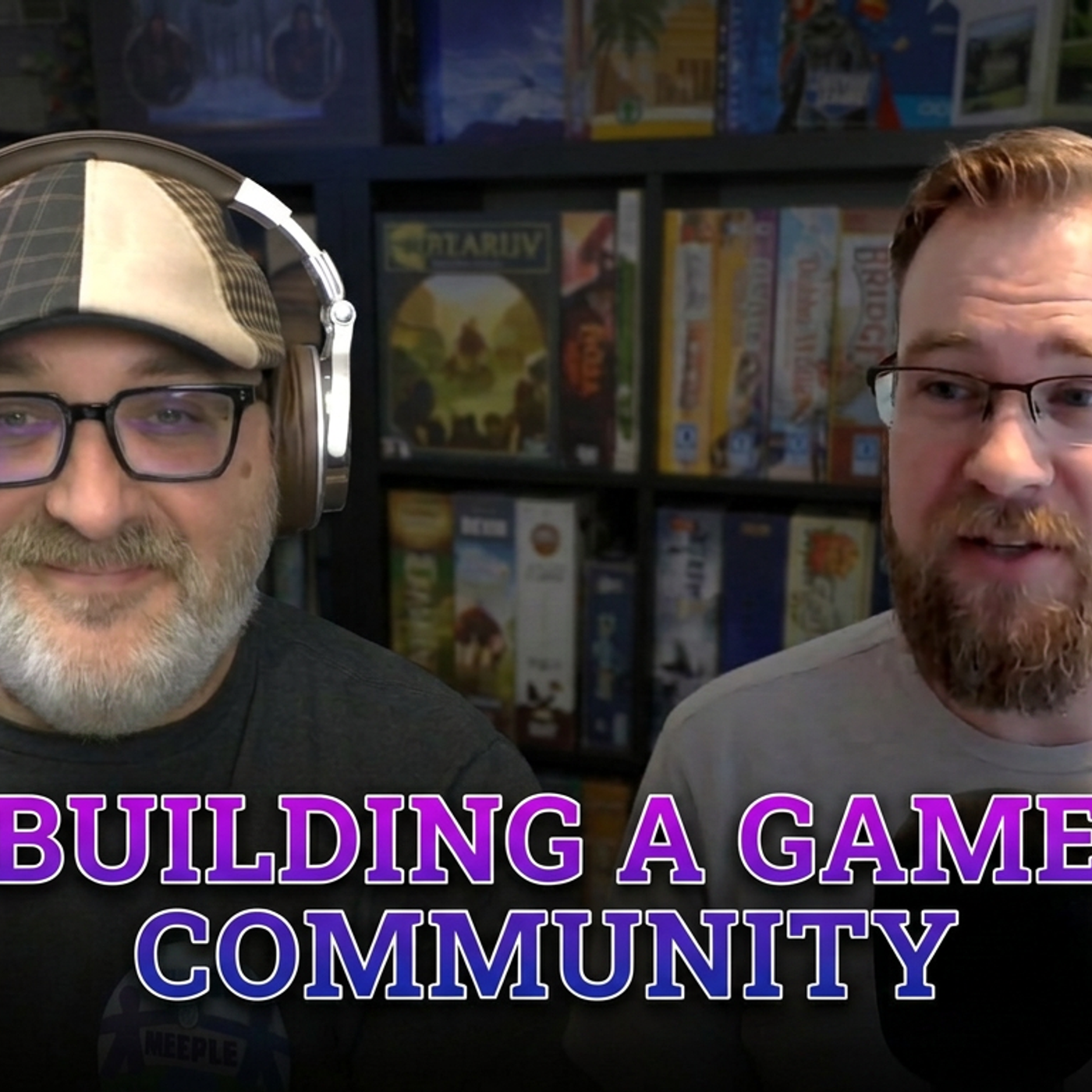
The journey of bringing a board game from concept to completion is a thrilling and surprising experience. From Kickstarter funding to convention showcases, the process is filled with unexpected challenges and delightful moments. Brian's journey with Legends of the Arena is a testament to the excitement and fulfillment of game design and publishing. How do we continue to build the game community? Takeaways Game design and publishing involves a journey filled with unexpected surprises and challenges. Conventions and Kickstarter funding play a crucial role in the success of a board game launch. Chapters 00:00 From Dream to Reality 03:02 Kickstarter Success 07:10 Post-Kickstarter Journey 24:11 Conventions and Showcases 29:02 The Sausage Link Story 31:12 Gen Con Experience
PJ Oubre: Hey guys, and welcome to episode 194 of Meeple to Meeple. You know, there's a very different feeling when you talk to a game designer about a game that's still being created versus one that's finally sitting on people's tables. The last time Brian from Toath Games joined us, Legends of the Arena was still part dream, part Project, and probably for Brian, a part giant list of things that still need to get done before we launch on Kickstarter my, right? but now the arena is open. Legends of the Arena has officially been released, which means that he's made it through the long journey from an idea to development to showing it to people to conventions, and finally. Watching players experience something that once existed only in his head. And today we're going to talk about what that journey was like for him. What surprised him? What did he learn? What would he do differently? And what happens when you take your game out of your own little corner of the hobby and put it in front of thousands of passionate gamers at places like Origins Game Fair and Gen Con. Cause we spend a lot of time talking about. How games are designed, but we don't always talk about what it feels like when you actually bring it into the world. Last time we talked about the road ahead. Today I want to hear what happened once it actually traveled through the process. Brian, welcome back to the show. Tell me, is releasing a board game anything like you imagined it was gonna be last time we spoke? Brian: Thank you, PJ. Yeah, it's been it's been a million times better. It's been fantastic. It's been, I think I couldn't have even begun to imagine beforehand. And PJ Oubre: Yeah. Brian: just a reaction, the exhilaration. You get to experience, especially in a convention, you get experience everybody experiencing the game for the first time. Like over and over and over again, right? And that's that's the best, that's the greatest feeling when when they're just so excited. They're like, you nailed it, you captured. You capture this perfectly. You know, this is why is no no one ever made this before? You know, like you get those kind of reactions. It's it's in it's incredible. PJ Oubre: Right. That's fantastic. I'm really glad to hear that. I was first I was surprised, and then later I knew. I was really surprised when I saw you at Origins Game Fair. because I didn't know you were going to be there. and then because of Origins, Brian: I didn't know you were gonna be there. PJ Oubre: I know, right? And I knew you were gonna be at Gen Con, so I saw you again at Gen Con, which was great. I I want to talk to, but before we get into the conventions, let's talk about. Let's talk about that f let's talk about okay, I got a couple of things to ask. Too many things to ask. what was it like when you saw that you were fully funded on Kickstarter? Let's start there. Brian: So that was really great. It was, you know, that was the lowest threshold at which we were gonna make the game, right? So that was a huge relief, huge weight off our shoulders, you know. First, first day, right? Because it's a long campaign, it's it's it's weeks and weeks. And so being PJ Oubre: It is. Yeah. Brian: able to be over that bump initially, see all our community show up, like really appreciate all those folks coming through. you mentioned origins briefly, but like really going back to the first time we went to Origins back in 2023, you know, like folks from there coming through on the first day and Folks have been playtesting with here since twenty seventeen showing up on the first day. And then that gets the flywheel going, right? Then then people on Kickstarter start to discover you. People find you through word of mouth. But you need that initial bump. You need to get over that threshold for people to take you seriously. And for, you know, so yeah, that was yeah. I think it was a sort of a it was an interesting day because I was here on my own most of the day, took the whole day off from work, PJ Oubre: No, Brian: right? Because I I wasn't trying to work that day. PJ Oubre: Right. Brian: and it's like, okay, but I can't just keep refreshing the page, right? That's not that's not helping anything. But there's this temptation. and then at one point, like my my brother's wife works out this way, and she was it was like the end of her day, and she like came by and like dropped off some cupcakes because we had we had like funded, and that was like the celebration. It's like me and her like eating these cupcakes, and yeah, it was it was it was so surreal because it was like probably 4 p.m. or something and just You know, the kids weren't home yet and my wife wasn't home yet. And I was just like, you know, frantically posting on whatever socials and you know, trying to answer questions people have coming in and, you know, still all the things that are still being in flight, right? Like I think we had 80% of the art at that point and we had, you know, right and and some things just get started then because it's like, okay, we're funded. Well, better get our developers working because we sign up for stretch goals. And those are coming next, right? So it's this weird mix of like you're you're super excited, the you you you you feel like you've sort of you've made it, but now also things are getting started and I PJ Oubre: Right. Brian: don't know. Yeah. PJ Oubre: So what so okay, the moment for someone who's never launched a game on Kickstarter, and and you know a lot of my listeners are designers who are in that process, just like you are now, and they've never launched. Okay. So you're sitting at your computer, you took the day off. does Kickstarter send you an alert saying hey, you know, like at the moment that you're fully funded, right? Like, what does that f actually look like? Brian: man, so it was a year ago, right? This was this was almost exactly a year ago. I cannot remember. I cannot remember PJ Oubre: Yep. Almost. Brian: at all. I think for me at least, I was still, you know, especially when we're getting close, I was checking the page. So maybe there was an email or something, but I was I was definitely on the page, you know. as soon as it went over, I was taking my phone out, like take a picture of the screen, right? I didn't even I didn't even I didn't even trust myself to take a screenshot. I was like, quick, quick, you know, because I wanted to get it like just at the right, I think it was like four dollars over, right? The funny amount. It's like there it yeah, so that that was super exciting. And you know, there's always people going in and out, right? Like it's not just straight up, right? So so it could have dipped below. So I wanted to make sure I caught it like while I was there. but yeah, I I'm not sure it was yeah. Plus you're looking at the page anyways, because like that's where people post PJ Oubre: It's Right. Brian: on the people ask questions they write. You're adding stuff to the FAQ all the time. So you're kinda you're kind of there where you want to whether you want to be or not. What how healthy it is or not, I don't know, right? Like PJ Oubre: Right, right. Brian: I know you've had a couple episodes recently where like fitness has been a topic, you it's like I Gotta take a break and like go for a run or something, right? 'Cause like you can't just yeah, can't just be watching that. PJ Oubre: it is like our friend Ian said, just what I guess a month ago now. You've got to work out so that you can play more games. So yeah. Yeah. Brian: Also make games. It's it's it's it's in there too. PJ Oubre: Yeah, no, absolutely. so okay, let's talk about the from the time you're fully funded to the end of the launch, right? 'cause you've you fully funded what in the first few hours, right? For but the first day, right? Brian: Yeah, it was it was in the first day, absolutely, yeah. PJ Oubre: Okay. And then you had what, thirty, thirty-two more days before the launch was complete? Before the right? So Brian: 'Cause we really wanted to make it across we want to make it like a whole month. We wanted to give ourselves some time because it's like we're gonna PJ Oubre: Right. Right. Brian: we're gonna need some time to figure everything out. I I I know the experts have a big checklist and they're like, Okay, you do this, this, this, this, this, and they knock it all out. But for us, we were kind of building the checklist as we went. We had a we had a little PJ Oubre: Okay. Brian: one, but we knew it wasn't big enough. And so it's like we're gonna we wanted to catch some conventions as well during the Kickstarter. That was part PJ Oubre: Sure. Brian: of it too. And so yeah, we had a little more than a month, which you know, I I think you see some Kickstarters these days from the big folks. They'll they'll run for seven days. fourteen days, they're like, you know what? That's all you need, right? We don't need the stress. We don't need the stress, right? But for PJ Oubre: Yeah. Right. Brian: us it's like when you when you're new, I think giving yourself a little bit more time is is never a bad thing. PJ Oubre: Yeah, yeah. So did you so what kind of work was going on, right? You said you you had a small checklist and the and it built over time. were what were some significant line items in that checklist that you discovered you had to add in that time frame? Brian: Yeah, you know, but for for a small plug on on on the website, toothgames.com, in the blog there I did write down some of the checklist stuff. So if you're a designer, feel free to go there, or you know, publisher, I should say, or intending to become a publisher, feel free to go there and steal it. One big one is just all the outlets. There's a bunch of outlets that cover active Kickstarters. So you've got to go to them with your press release, send it out. And some of them you can talk to in advance, but a lot of them actually don't want to really cover it until it's live. And so you're messaging them when you go live. PJ Oubre: Okay. Brian: And then there's like your just your regular stuff for your fans, right? You're in your your Discord or your Facebook group or however you've you've been building up a community, right? Hopefully you've got a lot of folks excited to you know fund you on day one. But they also are busy people with real lives. So you kind of have to remind them a couple right. You should be sending an email list out, email blast to them, but also posting your Facebook and on your Discord, possibly multiple times it in that day being like, Hey, you we're live now. This is the this is the big moment, you know. Make sure hopefully you've done your work kind of lean up to so everyone's like ready for it. But you really need to kind of do that internal work to, you know, help everyone know, like, hey, it's it's real now. PJ Oubre: Right. Brian: and and some of that even is like, you know, like texting people, right? Cause I know some of these folks, like, we only talk through text, right? So you got to meet them where they're at, right? You can't PJ Oubre: Yeah. Right. Brian: expect they're all going to come to you. and then a lot of it is just questions, especially on day one. People like, what, you know, what about, what about this pledged here? Is this included here? What size of the box? Where is the what's the shipping like for Are you gonna ship to this country? That was one thing. We we didn't have we only really covered like Europe plus English speaking countries initially. And we got all this like inquiries coming in from like, hey, you know, what about like are you shipping to Asia? Are you shipping to like, you know, South America and stuff? And it's like, I I don't I don't know. And so like we went out and got some more quotes from like shippers and like they were too high. So we got better quotes and eventually got the price low enough that we could like offer shipping. Eventually we got up to 180 countries, which I was really proud of. But that was something we kinda did live because, you know, we figured, well, it's a it's a game with a lot of text on it. You know, it's a heavy language dependent game. We weren't printing in multiple languages. So we figured it probably would only really sell to English heavy markets. But there was enough like folks who were interested that we, you know, want to figure out how to chip to them. PJ Oubre: Right. I so you just you just said a whole lot, but one one thing you said significantly that I want you to repeat again. How many countries at the end of the day did you ship to? Brian: so we we offered shipping to a hundred eighty countries. We Yeah, yes, offered, yes. We I I think we had backers PJ Oubre: Offered, offered. Okay. Brian: in I think we had twenty five countries or so. Yeah. So more way more than we expected. But yeah, definitely not no, yeah. No. No, no, no, no, no. PJ Oubre: Okay. Okay. Yeah. I heard 180 and I'm like, he just walked over a really like that's huge. Okay. Okay. You offered it and you got twenty twenty-five countries where you actually ship. So that's that's still for your first game, right? Kind of grassroots campaign. That's kind of impressive. That's totally impressive. Brian: yeah. I I expected like four countries, right? I expected US, Canada, England, UK, Australia, right? That's what I expected, right? And like PJ Oubre: Yeah. Yeah. Right. Brian: maybe Germany, you know, like big board game markets, but way more PJ Oubre: Right. Brian: than that. You know, we're shipping games out Poland, Italy, France, New Zealand, like yeah, yeah, a lot of other places and pretty it's pretty awesome. Like it's it's it's crazy to think there there there's like somewhere out there, you know, right now someone's playing Legends of the Arena, you it could be any time of the day. That's pretty fun. PJ Oubre: And it it's that is fascinating, especially interviewing people all across the world. It's like, you know, for me, typically, it's a Sunday afternoon at two PM. So the time's always the same. But where you Brian: Ha ha ha. PJ Oubre: are is so different. I particularly enjoy, just really quickly, I was interviewing a fella from Germany and I could just watch as, you know, the sun was going down behind him, right? And so his his background got darker and darker. And I'm like, yeah, I don't know, it's it's still it's crazy. Yeah, it's crazy, crazy. take me to the final day where the I don't what's the word they call it? You know, is e when you have launch day, does Brian: Mm-hmm. PJ Oubre: the project close? I don't know. What what what do we what verb do we use for the end of the Kickstarter? Right. Brian: Right, yeah, yeah, yeah. 'Cause it it's it's the beginning of the end for the game, so you don't want it to sound too final. Or sorry, the end of the beginning for the game, so you don't want it to sound too final. PJ Oubre: Right, right. Sure. Brian: Yeah, I think it we just call it the last day, final final day of the Kickstarter. Yeah. Yeah. And and you PJ Oubre: Last day, final day, yeah. So take me through that day and the feelings you were going through and then I don't know what I feel like that's where the real work begins. Brian: Yeah. And so I'd gotten some good advice to end the Kickstarter at 5 p.m. your local time on a Friday. and that was really good advice because it's just it's great not to have that hanging over. You know, it's like 5 p.m. It's done, PJ Oubre: sure. Brian: day's over, go make dinner. Right. You know, go make dinner, put the kids to bed, whatever. You're not thinking about it anymore because it's over. And Friday, because like, you know, it's it's a good way to catch folks who might still be hanging on, you know, still Still on the fence about it, you know, give them that whole week to really kind of think about it. Cause there's a there's a bit of bump at the end where people kind of they get that 48-hour warning message from Kickstarter. And you don't want that to get like buried. You want you want to make sure they get a chance to see that. And so there's a little bump of people who are like, I was waiting to see if PJ Oubre: Right. Brian: this would actually get funded. I was waiting to see if this would actually what stretch was good unlocked. And so, but yeah, definitely there was by the time we got to the end of the campaign, definitely ready to like, you know, close the books on that one, right? We had already raised. Way more than we'd hoped for. We were we already make the game. We we were already definitely making the game, right? We had already PJ Oubre: Right, right. Brian: we had already paid out artists for more art. We already paid our developer for more work at that point. Like things were already rolling. So yeah, it was definitely nice to be like, okay, you know, close the book on this one. I mean, in a sense, like, you know, it just goes right to late pledges now and people can still post on the Kickstarter. And so it doesn't the end has gotten like less well defined, you know, than it used to PJ Oubre: Yeah. Brian: be. And I think now also. This wasn't the case when I was wrapping up, but I think something that a feature that came about in the last few months is the what do they call it? The I I don't even know what they call it, but I think it's around backer cake, where it's like if somebody backs it in the last 10 minutes, then it adds another 10 minutes to the expiration date. And then as long as people keep backing, it's sort of this popcorn effect where you can keep stretching it out. And some of these really big campaigns like get stretched out for days and days and days because the backers are sort of turning it into a minigame, right? but PJ Oubre: sure. Brian: You know, for better or for worse, that wasn't around when I was finishing up. So five o'clock meant five o'clock and that was that was it. you know, the bell rings, close the close the market and so PJ Oubre: Yep. And did and did you walk away from the project, make dinner, and just kind of focus on you and your family for the evening? Yeah. Okay. Brian: Yeah, for that and I absolutely, you know, yeah, that that was that was, you know, enough legends of the arena for one day at that PJ Oubre: Ha ha Brian: point. 'cause, you know, earlier in the day, right, similar to the start, I'd taken the whole day off and it was all about, you know, all those outlets to cover Kickstarter, reaching out to them or, you know, any of those people kind of coming in off that last forty eight hour email, making sure their questions are answered and, you know, reaching out to all of our community one last time, being like, Hey, you know, this is the last chance to get in there, right? Like, let's Yeah, so PJ Oubre: Yeah. Brian: it's it's super fun, but at the same time, especially when it's all kind of it's all gone well to that point and you haven't had to, you know, like radically change things around or or relaunch PJ Oubre: Yeah. Brian: or anything, you are ready to be like, okay, let's get fully heads down on the last development, the all the stretch goals that you have unlocked. You've got the final list, make sure the box is gonna fit all this. You wanna like you want everything you're doing to be like the last time you do it, right? PJ Oubre: Right. Brian: You don't want to have to keep re-quoting and redesigning. It's like, okay, great. Kickstarter's done. Product is finalized. Let's get this people as soon as we can. Because that's a big part of it too, right? It's it's you're ready to actually play it. And there's certain things you you have to wait for. You gotta wait for the the manufacturing line, you gotta wait for the boat, you gotta wait for the fulfillment. So, you know, the sooner you get moving, yeah, the sooner you get there. And especially the new publisher, right? Like you don't wanna get a reputation for being behind or delayed, right? Like I've had Kickstarters PJ Oubre: Right, right. Brian: four or five years. That's not I'm not gonna back your stuff again. It's like just, you know. PJ Oubre: All right, yep, that is very true. What okay, so what was the one thing that surprised you the most from launch day to last day of the project you had not anticipated? Brian: Yeah, let me think. So I think I I like to think I was pretty well prepared for a lot of things because, you know, at this point Kickstarter's been around for a little bit. There's a lot of great materials, a lot of great podcasts, a lot of things to look at. And I think the the in international international shipping I mentioned before is probably the big one where I I really did not expect to have any interest from like, you know, Brazil or something, right? It is just didn't really it wasn't on my radar. So that that was definitely a surprise for me. I think I was there were a lot of like happy, like small surprises, you know, like people PJ Oubre: Sure. Brian: who I really thought I'd forgotten about this completely showing up and like commenting on the page and stuff. So that was that was really cool. And but you know, the most surprising thing. And the other thing too is like I sort of a good surprise, but a small one was like I I wasn't sure how many people would still need to be kind of walked through the Kickstarter thing because we You know, we brought in a fair number of people who are new to Kickstarter. I think every every project that's kind of, you know, from a from a first-time designer does because you've built up this community that is through conventions or your friends and family or local people. And like some of them have never back to Kickstarter. They're only doing it for your project. Right. So I I PJ Oubre: Right, right. Brian: thought there would be a lot of like, I I need to make a video. It's like, how do you actually do this? You know, what are the expectations around Kickstarter? But it felt like I I don't think I had a single question on like, Wait, what is this and how does it work? You know? because it's like, shipping is zero, but we'll charge you later. Like there's all this weird stuff, right? That is you're used to if you're in the board game space, but if you're not, it's a bit odd. It's like there'll be a pledge manager later. What's that? Honestly, that all went really smoothly, which was definitely a surprise because it's just such a weird thing compared to how every single other business works. PJ Oubre: Right. Yeah. So your your final day was was it in November? October, November something was? Brian: I think s it was like September it was late September or early October. yeah. PJ Oubre: Your project ran and completed just before the holiday season. Brian: Mm-hmm. PJ Oubre: That's for sure. so what about that holiday season? Now I realize and I tell a lot of my guests on the show and listeners, it's like, look, when the project's over, that's when the real work begins. But you're falling into this holiday season, which is really more should be a time to focus on you and your family. what did the Thanksgiving, Christmas, holiday season look like for you, given that you had just completed your launch, your project? Brian: Yeah, that's a that's a good question. So I've got two young kids. They're now four and almost six. So at the time, three and almost five. and so they are, you know, the holidays and stuff, it's more about like them and like, you know, family and stuff, and like less about, you know, hopefully work or board games or whatever. the good thing about wrapping up the Kickstarter in September. September, I think it was September. is that like we had a little bit of breathing room there to get all of the, you know, art development kicked off. And a lot of that we actually started during the Kickstarter because like once we funded, we knew, well, we're we're on the hook for this, we better get moving. PJ Oubre: Sure. Brian: So that a lot of that was able to get started. And some of that is just stuff you you wait for. There were a couple pieces of stuff that we like unlocked, stretch goals that we wanted, we then like were doing design on as well, not just like development. and that mostly tried to squeeze into October and like kind of move that out of the way. But for sure, you know, having a day job plus making a game, plus doing the family thing, you're making trade-offs there. Right. And that's one like tradeoff is like I was we were not doing a lot of conventions in that time frame, which fortunately there aren't a ton, but like I didn't go to say PAX Unplugged, right? That year. PJ Oubre: Right. Right. Brian: and I didn't go to locally we've got Cubicon Fall. I didn't go that year either because it was we were just like, Well, we need to You make me and you make the game, right? No no more PJ Oubre: Yep. Brian: no more like fun prototyping stuff. We just have to like figure out the specs on this art, or we just have to figure out the specs on the box. And it's it's not the most glamorous part. And you're I mean, you know, I'll just hold the box here. It's like I'm here with the little calipers, right? And like trying to make sure if you put sleeves on, is it still gonna fit, right? And you just you're spending a lot of time on that kind of thing. And PJ Oubre: Yeah. Sure. Brian: yeah, so definitely a lot of like you know, use those hours before the kids wake up or after they go to bed, a little bit of both. and just, you know, make sure that your your board game time for for me, you know, I get to kind of choose between playing games or prototyping games or playtesting or unfortunately the, you know, all the the business side of it, right? So the balance went towards the PJ Oubre: Absolutely. Absolutely. Brian: business side. I'm I got kind of behind. You know, like I s my brother has a whole stack of games that You know, he's like, all right, so so here's what we're gonna play. We're gonna play like Dune Imperium, we're gonna play Heat, we're gonna play like you know, or our whole Frosthaven group was on pause, right? Just just all these my my D group was on pause, just like all these like PJ Oubre: Mm-hmm. Brian: games I actually just want to go play as a player, you know? PJ Oubre: Yeah. Brian: so yeah, definitely some trade-offs there. But I I think we fit it all in and like I'm super proud that we were able to fulfill in in a year. So like All that work up front to make sure that the factory had the time to do their stuff and you know, working around the golden week in February, which is kind of the equivalent of the Christmas holidays, and making sure that like, you know, we were going on the manufacturing line as soon as as soon as that ended. yeah, it just like I'm I'm glad we put in the time there because once it got to the you know, new the New Year's January, February time frame, there wasn't actually much for us to do. We had sent the files off and then I could get back to You know, all that other stuff, all the other games that went on pause. PJ Oubre: So we get through January and February, and then we get into the convention season, right? I we we mentioned two of them, but how many conventions did you manage to get to this year? in twenty twenty six and and how did they go? Brian: Yeah, so Origins was a big goal for us. We we did have to fly the the games out. So most of our games were still on a boat, but for Origins, we flew out a couple on a plane just because we we wanted to have some we we wanted to go to Origins. Like we we had to make it there. And a couple people actually got their games even before that, but for most folks they were still coming. they were like somewhere on a truck or plane somewhere. And so we actually got to hand deliver some games at Origins to Backers, which was like super fun. Like opening day, eight AM or Not 8 a.m., 10 a.m. yeah, gonna hand the games out to some of the folks who had played with us back in 2023. So that was that was incredible. That was my favorite part of the whole con, honestly. But it's it's been it's been great. I mean, this was our first time going to Gen Con. And that was that was so cool because Gen Con is obviously on a whole nother level in terms PJ Oubre: Mm-hmm. Brian: of the amount of game in in one s place, like gaming per square footage. It just, you know, takes over the whole city. And yeah, that was That was like extremely exhilarating. We sold every copy we had except one of the base game. PJ Oubre: Wow. Brian: and then like the the final bell rings, we got this one game and an exhibitor walks by and they're like, how'd you do? Like, we sold them all but one. And he's like, I'll clean you out. So that was it. came back, had space in our suitcase for other games. yeah. And then we PJ Oubre: That's great. That's great. s yeah, go ahead. Brian: I was gonna say we also went to Pax West. So that's Penny Arcadex, but that's like a video game convention, but they've been growing so much in the board game space. Obviously, there's Pax and Plug now, which I think is the the second biggest board game convention in the US. And there is a tabletop section at their original convention, which is Pax West, and it's like grown substantially over the years, although it's you know still not on like power with like an Origins or something. But the whole convention is quite big. And so that was really cool because we tap into that video game kind of it's it's inspired by video games. So a lot for a lot of folks, it was a a pretty compelling pitch. It's like, hey, you Super Smash was board game, you know, very easy to get people in. So many tons and PJ Oubre: Absolutely. Brian: tons of demos. And then we yeah, we're headed to so yeah, my brother will be at PAX Unplugged coming up and Kubicon Fall is coming up, which is our local one, will be there for sure. And then I think that's it for this year. So PJ Oubre: Mm. Brian: pretty busy, really fun. and then yeah, some some Really small local one called Magwest, which is just really cool for us because it's like music, games, art. It's it's it's kind of s offshoot of Magfest, which is a larger one in Boston, but it's a really interesting kind of conglomeration. It feels almost like a big house party, more so than convention, is how I describe it. Because PJ Oubre: that's cool. Brian: yeah, it's like one hotel they sort of take over and it's small enough that you know you you can kind of check everything out, but there's also a lot of like spontaneous things like jam sessions or kind of really experimental games. I think like getting so off track here. But my the favorite one I played there was like a was a video game where it was cooperative. It's two people and one person is like a squire. I think the name of the game is squire and the other person is the knight. And the person who's the night is basically doing a classic RPG. They just like walk around hit enemies. But the squire's job is to do all the support roles and they do it with like tactile components. So Move themselves, they click together coconut shells. and it's it's tracking the sound of that, and much like a Monty Python sort of thing, you're galloping along, and then if if they need a potion, you have to go grab a potion and scan it over here. If they need a key in the lock, you have to stick a physical key in a lock and turn it. And you've got a whole ring, you've got like 10 different keys, and the knight is calling out. It's like, I need the I need the key, it looks like a crown. And you're like, Where's the crown key? Where's the crown key? And you're, anyways, it's it was just the goofiest experience, it's so fun, but yeah. So conventions of all sizes and types. PJ Oubre: So I love that. So I'm just I'm looking back through my list. I should have done all this beforehand, so I apologize. it was episode one thirty-seven. Guys, go back and listen to episode one thirty-seven where Brian came on at the beginning of the project. That aired on September second, twenty twenty five. So that's it's been just like you said, it's just over a year since the last time you were on the show. And not only did you Not only did you fund, you fulfilled, like you, you hand delivered, I mean, you're done. Like now it's just have fun with it. Like you've you've done a lot in a year. and so I was trying to trying to get that information. And I know you told this story, but I can't remember. should have gone back and watched. So I'm at Origins this year with my wife, and I'm walking around. I turn a corner and I see your big banner from behind you. Legends of the Arena. And I'm like, my God, Brian's here. I had no idea. And so we came up and we finally got to meet you. And you so you you had 'cause I remember you talked about it in episode 137. You had your apron and your sausage links around Brian: Mm-hmm. PJ Oubre: your shoulders, but I cannot remember what that's all about. Tell that story again, please. Brian: so that's that's this guy. That's that's Fitz here. and let's see, we've got his picture with the sausage here. And so he's one of the characters in the game, and he's he's one of the original two for that matter. And he's just a very fun, fun dude. It's sort of like a butcher as a fighting game character. So he grabs PJ Oubre: Nice. Brian: people with his throws out his sausage links, reels them in, and he's got his tomahawk steak. It's his like close range weapon, and the artist had some really Really excellent ideas. Put in crocs and not not only like very highly realistic, not not not any crocs. They're the Mario Batali limited edition orange croc. PJ Oubre: Of of course they are. Brian: I I didn't know that until I tried to find them for the cosplay and they they've been discontinued. And the difference is, Mario Bitali, the crocs are solid on the top. Regular crocs have holes. But you know, when you're cooking, you can't have the grease going through the holes onto your feet. So PJ Oubre: Right. Right. Brian: but yeah, I couldn't find them. So I just had regular orange crocs with holes. But yeah, but it's very comfortable. You're standing all day at the convention, PJ Oubre: Yes. Brian: you're in crocs, you feel good. And yeah, so it was a it was a fun, fun little thing to put together. And people are always asking, like, what what is this? And you know. It's a conversation starter when you're at a booth. PJ Oubre: Yeah. I and then speaking of a conversation starter, let's fast forward a bit to Gen Con, which I really want to talk about and get your your first impressions of that experience. But I was only there on Sunday. so my wife and I, we knew you were on our list of vendors to see and stop by. And so we did. and so we're you know, and you were demoing the game with someone else. So I just kinda filled in a chair and and and that was fun. And then our good friend Iris Crimson Board Games, who's coming over from the Netherlands. She walked up, she and I were meeting for the first time. And then I think that I think the sausage links around your neck kind of caught her eye as well. so that was a definite conversation piece starter for sure. I've had great experiences with you in real life. Like, you know, yeah. Brian: W with the sausages the f as the focal point. Like it always PJ Oubre: yeah, apparently. Talk to me about Gen Con. first year. Brian: So Gen Con was incredible. It's obviously an incredible amount of gaming per square foot. And we got there. It was sort of a long day. We started coming from the West Coast in early in the morning. We get there. We set up Thursday night. We still didn't really have a scale of how big it was going to be because it wasn't full of people yet. But there was some hints. Like the will call line was already going like a quarter mile or something. It's like, huh, okay, okay. And our our chairs and table were like over in Lucas Oil Stadium. And we were over in, you know, Hall G or something. So, you know, my brother's like has a dolly like running. He's like, you know, there's like an underground passageway, and then there's more stuff over there. I'm like, okay, yeah, that's that's big. and then, you know, our our hotel was like maybe a 10, 20 minute drive away because we were not, you know, in one of the really nice close ones. And so it was like, yeah, okay, this is this is gonna be big. And then, but like, man, the start, like the The famous like running of the nerds or whatever. Like I kind of peeked PJ Oubre: Yeah. Brian: my head out because we're we're near the back of the hall. So I just wanted to like I kinda came out to the front to see what it's gonna be like. And yeah, there was there were a lot of people charging in. And you know, I thought, we're in the back, like this will probably be a little slow. It's like, you know, people just filter in, just like fill the space, the hallways, everything. And just so many folks like, you know, lost, just come over and be like, hey. Do you know, I think the funniest one all weekend was like, they're Hey, can we get do you know where we can get like high society? I'm like, Are you looking for all play? And they're like, Yeah, yeah, all play. I'm like, they have their own room. You you can't even be in this all like you, they have their own room. You need to PJ Oubre: Yeah. Brian: leave this entire hall and get over there, you know? And just yeah. And like when people would come by, you know, they do the demo and stuff, and then especially first day right there, they're like, Okay, we're thinking about it. So we give them a business card and we just start writing the booth number on it, like, you know. This is where you can find us because you're not gonna stumble across it again. Like there's just no chance. I think on Saturday I filmed a little video, which I think is my, you know, modestly most successful Instagram reel. It was me trying to get to the booth because I went to fill up the water bottles and like I'm coming back. And it took me five minutes of just just like like a little fish, you know, trying to swim upstream and just so many people. And it was really the first convention where we brought a third person. brought you brought my brother's wife and I we should have brought four we should have brought five I mean just just our voices would just be would just be gone like we would be running three demos simultaneously for most of the day every day and yeah and that was just in you know one little 10 by 10 booth in an entire con where people were basically doing that you know hundreds of times over simultaneously and so yeah and then you would leave and you anywhere you'd go like some ballroom at some hotel adjacent to the main convention center, there's some there's some RPG being played. You know, you find it's there there's every table at every dinner spot. Like people are playing games. People played our game. People would come to our booth after the first day, be like, I saw this being played last night in the hotel lobby and I had to come check it out. Or like I played this with my friends last night. I had to come check it out. And I'm like, that is I mean one like how the the imagine like playing games all day and then like going home and then playing more games. And just doing that for like, you know, the some folks there just have a level of gaming stamina I cannot even, you know, at this at this point, like maybe when I was in college, but at this point I I don't know if I can do that for three days in row. But also just, yeah, it was just so cool kind of board of mouth happening live in a convention. PJ Oubre: So you would get through your full day working your booth, right? So it's what five o'clock, six o'clock, whatever time the bender hall Brian: Mm-hmm. PJ Oubre: closes, and then what? What did you and your team do? Brian: Yeah, so it's like a bit like a casino in there, right? Because there's no windows or anything. The passage of time, you don't really realize how long it's been, and then suddenly it's it's over. And so we had events scheduled both before and after the hall opened and closed. and because we're like we're here at Gen Con, we better make the most of it, right? So we had like learn to play events or play to win events, and so we'd always be running one of those like before and after, and sometimes we'd have two after, depending on the day. So One of us would do that. There were also there's like some industry stuff. So there'd be like a like a panda would like throw a party or things like that. but to to be honest, we were so tired out. Like we were, you know, getting to bed pretty quick most nights. And yeah, so it was tough because there were some folks there who it was really cool to see, like some people I don't get to see that much, some of the other publishers we met, some other designers we met, and so you try to hang out. But I think yeah, if we had five people, maybe we'd be able to stay out a bit later. And yeah, I I don't think I played a single game at Gen Con. It's just really sad to say. I think we on PJ Oubre: Mm. Brian: on the way out, we're you know, we're we're early for the flight. And so Michael pulls out like compile because he had picked up. He's like, Okay, you gotta play this with me now. You have no excuse. You got nothing else going on. You can't possibly and I'm like, okay, okay, we got time. We'll we'll we'll play this game, right? We'll learn this game. And there was a table right next to us. Doing the same thing. Also compile. Like 'cause you just gotta get one more game in. And so I was I was happy to have played a an actual full game, not just a demo. I should say plenty of demos, right? You know, my PJ Oubre: Right. Right. Brian: my game and other games as well. But actually sitting down playing a full game end to end. That was the first time it happened for the whole con. PJ Oubre: Wow. Yeah. Yeah, that's that's intense. 'Cause it's it's a lot of work. It's a lot So we we're now it's been a year. what was what's your favorite part of this entire process? Brian: The favor favorite part is still gonna be handing out the the game at origins, you the backers directly the backers. That's that's number one. which is part of why I mentioned it because I didn't wanna I didn't wanna like leave it out, right? That's that's PJ Oubre: Mm-hmm. Brian: gotta be number one. I think like we did a little local release party that was super, super fun as well. We had maybe like, I don't know, 30, 40 there. It wasn't big, it was just at a local brewery. And it was it was so cool because like Some of those folks there have been with us since 2017. You know, there's folks who we have there's a con called GobbleCon. It's not even around anymore, but that was the first time we went, we took the game to a convention and some of those folks were there, all the way up to people we had met at Fanime. So like that's a convention that is you know in in the May timeframe locally here. And so we had met some people in May and then they were at our launch party in July. So like that it was pretty cool having the whole like arc there. And we just had a couple tables, just playing some games, you know, handed out a bunch, right? For people who had kind of gone for the local pickup option. It was it was a chance to pick up there. And that was really it was super laid back. It was kind of right before, you know, all the Origins Gen Con, like the kind of the the the crazy super big thing. It was just like, hey, you know, place for a couple of fans to get together and just, you know, celebrate that it's a real thing. And yeah, one person actually there were actually a couple people 'cause like we didn't rent out the brewery or anything, like it was a big enough place. I I think Like two or three people just like bought a game. They're like, hey, can I just can I just buy one of these? Like like what what PJ Oubre: Nice. Brian: what is this thing? I'll just you know so that was kinda unintentional you know bonus. But yeah, it was it was just really fun. And yeah, that that was that was probably the other other big highlight. So yeah, it it when it comes down to it, it's about like interacting with people through the game, right? Like getting to play in person, real people getting to enjoy the the game in its real final state. PJ Oubre: So what is the probably the most important lesson you learn from this entire experience that you would pass on to a designer thinking about or already starting their first design? Brian: Yeah. I mean, it is nothing earth shattering. So all I can hope to do is like really underline, like bold, italicize this idea in your mind. Like you need, you need to build a community. You you must build a community around your game of around your game. Like you you gotta do that if you are gonna publish this yourself, right? I should say, you know, if you're gonna sign with a dis with a publisher, then not as big of a deal. But if you're gonna publish this yourself, you must build a community. Like twenty twenty-six. Just the reality is you're not going to Kickstarter with a napkin and like a little sketch. You know, you're you're showing up with a community that's gonna fund it on the first day. And that's not easy to do. I mean, I think in person is still the best way by far, you know, conventions, playtesting nights, whatever. But people need to be excited about your game. And there are so many incredible games coming out right now. Like I I I don't know if it's safe to say more than ever, but it certainly feels that way. And the bar is so high at this point for what makes a game. Like the everything from the graphic design, the arts, component quality, the playtime, number of players, the package size, like you, you know, the only real shortcuts, right? Like you can if you have an IP, that's your community, I suppose, right? Like a Gen Con Dungeon Crawler Carl was massive, right? The game wasn't even out. Right. It was one of the biggest games, you know, there. Right. So yeah, I guess if you have an IP or something, you don't have to worry about it. Or if you're already, I guess a you know, maybe you're a big content creator or you're a big a big name in in something, you can parlay that. But for most of us who are making a game, you gotta be thinking about the community from day one and you know, you you gotta figure out what the what what what's the niche, you know, who are you serving? Like why why is this thing important to them? And so, yeah, I just can't can't stress that enough. Because that's, you know, I talk to all kinds of other publishers, all kinds of other designers, see people succeeding, people not succeeding. It's not about the quality of the game, you know? Like I think it's it's expected that you have a good game. That's that's where we start from. And PJ Oubre: Right. Brian: but success comes comes beyond that point. And it's not just about art, like that's also expected. It's you have to have a community, people are actually excited about it. PJ Oubre: Yeah. Yeah, that's that is so true, right? I mean, that is what this entire podcast is about. It's about community. It's about building community. It's about nurturing that community. At the end of the day, the games can go away and the community will continue to thrive and endure, right? yeah, it's always about the people. Well, Brian, thank you so much for coming back on the show and kinda looking back. at this story. it's it's been a great one. it's good to have the product in hand on my table and after, you know, a year of knowing you. So so thank you once again for joining me again. Yeah. Yes. Yes. Brian: Thanks for subscribing me, PJ. Before I go though, I do have one question for you. Do you have plans for the big two hundred? PJ Oubre: I do have big plans for I cannot share them, or rather I will not share them. Brian: Can you share them or is that is that still in the road? Okay. All right. PJ Oubre: but I do have the format is gonna be it's already scheduled. it will drop in December, 'cause that's that's when will happen. But we'll be recording that one pretty soon and it's it has a lot of potential. I'm really looking forward to it and I don't want to build it up too much because I don't want to disappoint anybody, mainly myself. but yeah, it's we're just six six weeks out from two hundred episodes. Yeah. Thank you. Thank you. Brian: Congratulations. I I'm excited. PJ Oubre: Thank you. Thank you. That's I it's kind of crazy to think that, yeah, 200 episodes, four and a half years. Wow. Yeah. And only and and rather, and I know you can understand this, rather than basking in it and enjoying it, I'm thinking about what I need to do in 2027 for programming. Brian: Yes. Yes. PJ Oubre: So that's just great. But thank you for asking. I appreciate it. so if anyone is interested in talking to you more about Kickstarter the design process or they're interested in picking up a copy of Legends of the Arena, where can they find you? Brian: Yeah, thanks. Toathgames.com is is the best spot. There's a little contact form. I read all those. There's a shop there. You can pick up the game. There's also a link out to our Discord, which is probably the like chattiest place if you want to see like, you know, all the discussions, a strategy and all that stuff. But yeah, I'm I'm always, you know, inbox is always open, always happy to pass on what I've learned. And, you know, yeah. Talk shop. PJ Oubre: Yeah. Brian: Really appreciate it. PJ Oubre: Absolutely. So guys, reach out, check it out. It's worthy. please like and subscribe to the channel. always need that input. as always, be kind to each other, play more games, and remember it's about community.