
Meeple2Meeple · Meeple2Meeple
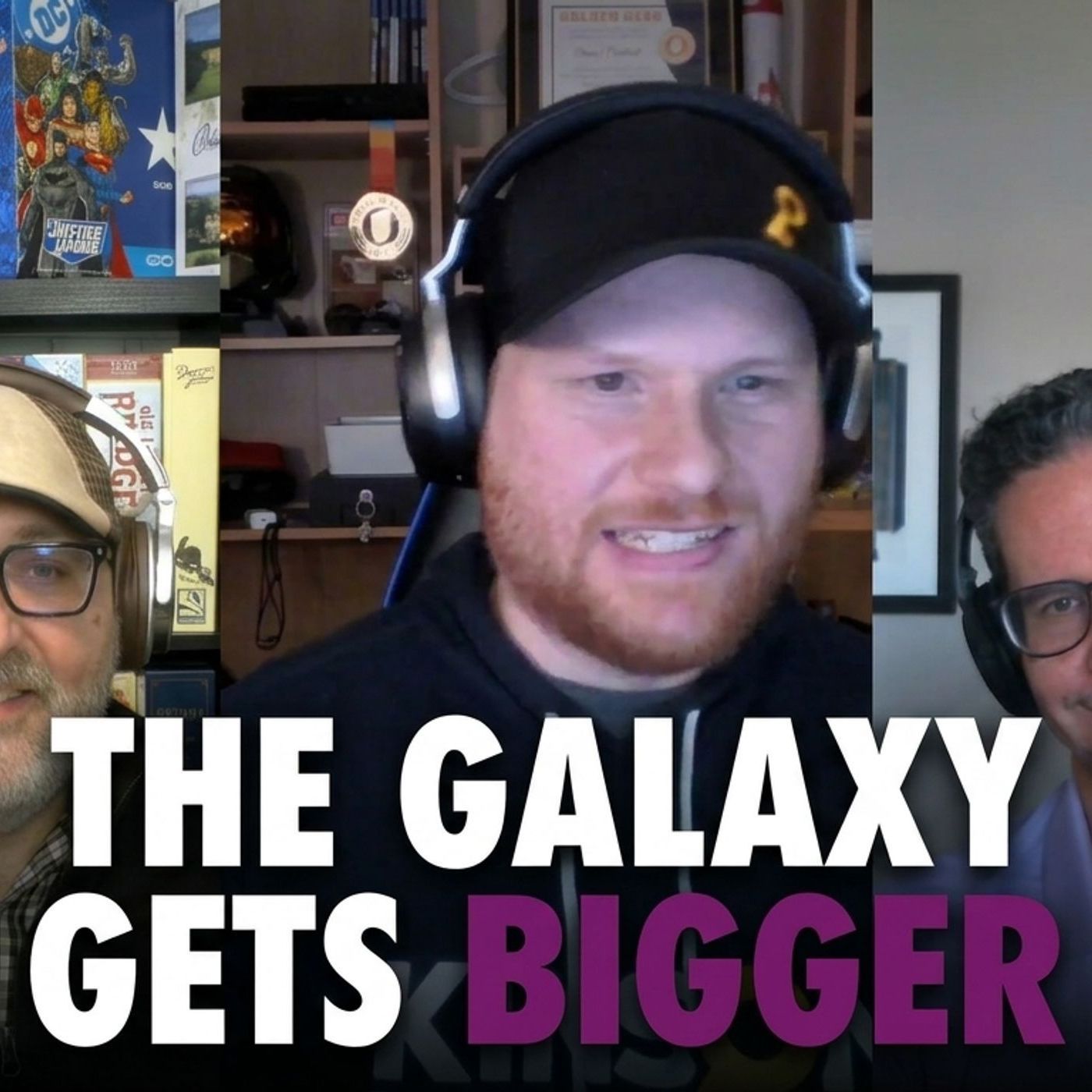
Excursions, the upcoming game from Kinson Key games, is a new chapter in the Galactic Cruise universe, offering a different kind of space adventure. The collaboration between the developers and the designer resulted in a smooth and seamless process, with a focus on positive player interaction and the importance of cutting down game complexity. The conversation covers the development and design process of the game 'Excursions' by Kinson Key Games. It explores the challenges, decisions, and creative solutions involved in creating a new board game, emphasizing the importance of player experience and game mechanics. Takeaways Positive player interaction is a key aspect of the game design Cutting down game complexity is essential for a smoother gameplay experience Designing a game involves making tough decisions about what to include and what to cut. Staying true to the brand and creating a unique player experience are key goals for game designers and publishers. Chapters 00:00 Setting the Stage for a Cosmic Adventure 03:05 Crafting a New Chapter in the Galactic Cruise Universe 13:18 Designing for Positive Player Interaction 24:35 Navigating the Challenges of Game Design 30:53 Design Decisions and Game Mechanics 35:33 Expansions and Future Projects 38:23 Diversity in Game Design and Publishing 48:21 Achieving the Game's Objectives
PJ Oubre: You know, there was a time when humanity looked up at the stars and wondered what was out there. We dreamed of distant worlds, uncharted galaxies, and the extraordinary adventures waiting just beyond the horizon. But what if the greatest adventure in the universe wasn't simply about reaching the stars? What if it were about tourism, vacations, and sharing the stars with those around us? Today We're leaving the familiar confines of our gaming tables behind, firing up the engines and setting a course for something truly cosmic. From the universe of Galactic Cruise comes Excursions, the upcoming game from Kinsen Key games that puts us in charge of crafting unforgettable itineraries for vacationers among those very stars. We're talking luxurious experiences. Competing priorities, and the challenge of making every interstellar getaway one for the history books. Welcome to episode 191 of Meeple to Meeple. Today on the launch pad are two creative minds helping to bring this new adventure to life. Dennis Northcutt, one of the developers of Kins and Key Games, and Ben Rossett, whose design credits include First in Flight, Fromage, and The Game Makers. We'll explore how this new chapter in the Galactic Cruise universe came together. What makes excursions a different kind of space adventure? And what happens when an eclectic designer sets his sights on the stars? So buckle up, secure your meeples, make sure your tray tables are in their upright and locked positions. This is Meeple to Meeple, and today we're making one giant leap for meeplekind. Welcome aboard, Dennis. And Ben, I appreciate you being on. How are you? Dennis Northcott: Kid. Ben Rosset: my gosh, well right now I'm a little stressed because that was the craziest introduction to a podcast I've ever heard and I feel a lot of pressure to perform. But wow, that was epic. This is gonna be a deep, deep episode. Dennis Northcott: Yeah, th thanks for having us. Thanks for having us. So PJ Oubre: I I hope so. No, I appreciate it. You guys have been so kind to reach out. I'm really excited about it. I do have a confession to make before we begin. I have not seen a review copy. I have only been exposed to excursions in a five-minute demo at Origins Game Fair. So there's a blank slate, and let's put more pressure on Ben today, shall we? Dennis Northcott: Yeah. PJ Oubre: So I I f the first thing I want to ask, and and maybe I d I don't know. You guys can ans answer this in any way you want to know. Any way you want. at what point did you know there was another chapter or another story to tell within the Galactic Cruise universe? Dennis Northcott: Yeah. I think we knew that pretty pretty early on. PJ Oubre: Yeah. Dennis Northcott: you know, Galactic Cruise was obviously our like it was kind of our our our baby, our big, you know, our big game to start to make a name for ourselves and everything. but it was never gonna be the last game, both like from our company, but also in the Galactic Cruise universe. and we did You know, we we did want to make something that was gonna be a little more accessible to people. we still wanted to add a lot of you know, the still the things that we like, so it's not it's not a you know Colton likes to say, it's not Galactic Who's for babies. it's it's not the, you know, my first game or whatever. Like it's still a medium weight game. Like there's still a lot of crunch and you know, strategy to it. However, it is lighter than Galactic Cruise and it is cheaper than Galactic Cruise and it's smaller than Galactic Cruise. And so we did kind of want to, you know, there there were some, if people had complaints about Galactic Cruise, it was usually one of those things. And so we did want to make something that was more accessible to more people, even though Galactic Cruise was kind of like, that's the game that we wanted to make. We, you know, it was a deluxe giant big thing, but that's that's the game that we wanted to make. So this is kind of like we wanted to. like you said, kind of continue the Galactic Cruise universe, tell a new story. and we kind of do have a little bit of a it's it's like, you know, it's not it's not really in the foreground, but there is a little bit of an overarching story between things because like in Galactic Cruise, we have you're playing to become the next CEO, because our founder, and current CEO is retiring in three years. So the game takes place over three years. The end of the game, one of you is the winner. and this one, turns out that actually Somebody else is now the CEO after you know, we don't we don't explain what happened, but there you know, something happened and the previous CEO had to step down. So, like, you know, canon wise, no one's ever won a game of well, I guess you technically won the game, you became CEO, but then you just didn't get to stay as CEO for very long. so now we're now you you take on a different role, you're not going for CEO anymore. you're on a space station, so there's you know, th there's a little bit of an overarching story, but PJ Oubre: Yeah. Dennis Northcott: you don't need to have you know, read into that or or even played Galactic Cruise to be able to enjoy excursions. So PJ Oubre: Right. Dennis Northcott: yeah. PJ Oubre: So was so I guess the question then becomes, did you reach out to Ben and say we need you to make this game or we want you to make this game? Or Ben, did you envision this and go to them and say, hey, I know y'all been looking for this. How did that work out? Ben Rosset: Well, I think it was a little bit of both. And my kind of snarkier answer to your original question, PJ, is that Kinson Key knew there was another chapter to Galactic Cruise when I told them there was gonna be another chapter to Galactic Cruise. Dennis Northcott: Ha ha ha. Ben Rosset: but I I didn't know the Kinson Key guys. We met at a small gaming convention in Tennessee in this must have been like May twenty twenty five, I think. and we were just chatting. You know, chatting about the industry, chatting about game designs. And we we said, hey, would it be cool to work together, right? Like it'd be cool to design a game for you guys. and we got on a call and talked about it. And they mentioned on that call that they were looking for kind of like a lighter version of Galactic Cruise to extend the series. And I said, That's right in my wheelhouse. I would love to make that game. and so I said, That's it, you know, I'm gonna go off and design that and bring it back to you. So that's that's kind of how it came about. and then what I brought back to them they really liked and they said, Yeah, this is this is what we're thinking, this is this is the direction we wanna go. And excursions was born. PJ Oubre: Wow, that's that's incredible. So how much of how many lessons did you learn from your previous designs that you were able to apply to this? Or did you kind of come at it fresh with a clean slate? Ben Rosset: Well, I would say both. every every design that I make, you know, helps toward the next design, right? You learn more as you go. So for sure there are learnings from previous designs. But also I came at this, you know, directly as this is going to be a game in the Galactic Cruise series, right? So this wasn't a designed game about some other theme and then Kinson Key saw it and rebranded it in the Galactic Cruise series. I specifically and intentionally took the theme and the gameplay of Galactic Cruise and said, how can we kind of constrain this a little bit? make it play at less time, make it take less space on the table, play at a higher player count, and make PJ Oubre: Mm-hmm. Ben Rosset: it less expensive all at the same time. So that was that was my goal, really, to do all four of those things. With the next game and the Galactic Cruise series. And the learnings that I took from previous designs, I would really say is first and foremost simultaneous play, because that's how you achieve all four of those things at the same time. And I've been really focused the last three or four years on games that feature simultaneous play. This kind of started with me for with Fromage, when we kind of figured out how to do worker placement simultaneously with Fromage. And since then I've really been trying to apply. what I learned from Fromage to other games and was able to do that with excursions, like we said, to get the the the time down, the footprint of the table down, the price down, and increase the player count to six players. PJ Oubre: So I'm curious about again, I'm gonna stick in this origin world here. how did you face all of the different challenges of Kinson Key has already established this world and then you have your experiences. Was it easy? Did you guys like had to figure out what the final product was gonna look like? What what what walk me through that? Ben Rosset: Well, game design's never easy PJ Oubre: Right. Ben Rosset: when you're talking about Dennis Northcott: Yeah. Ben Rosset: like midweight Euros. PJ Oubre: Yeah. Ben Rosset: So these things don't come about in like a day or two. But PJ Oubre: Sure. Ben Rosset: I would say that, you know, relative to how these things can go for designing a game of this weight, I think that it did go pretty smoothly. And again, that's because You know, I'm a theme first designer, so I always want to hook into the theme of what I'm making the game about and build the mechanics around that. And so already had a head start with Galactic Cruise. I had obviously played the big game of Galactic Cruise, had the theme, had a lot of the mechanics. So it was really a question of like, what are the key aspects of Galactic Cruise that we want to carry through, to pull out of Galactic Cruise and carry through into the next game? And what are the parts of it that might be able to fall off or be replaced by something that allows the game to move faster than Galactic Cruise does? So it's finding that core, right? What is the core of the theme? What is the core of the mechanics? What do we absolutely need to retain into excursions? and then what can we make to kind of replace the parts of it that we're gonna let fall away? and so that's that's how I kind of approach. approached the design. And it yeah, and and I think my my first my first main mechanic was actually more of a Moncala mechanic. So right now the game features a rotating space station. That's kind of the highlight of the central of the board. You've got this rotating space station which runs the whole action follow system that allows for simultaneous play and and having us go up to six Six players. So right now it's this kind of rotating space station that every turn pairs a different action with a different reward and allows each turn to be unique and different for each player around the table. my original attempt was more of a mancala system. Dennis, you might remember this. and Dennis Northcott: I do. Ben Rosset: the mancala system worked, but wa wasn't doing exactly what we wanted it to be doing. So the big change was kind of refining the Moncala system into this action follow, changing reward system with the spinning space station in the middle of the board. And I think once we had that, we really had the core of the game, I think Kinson Key and I felt like we were really on the right track. PJ Oubre: Yeah. compare and contrast real quick. Do you think it was easier is not the word I want, but it's the one that comes to mind. Do you think it was a little bit easier to design a game that had a pre-existing framework versus designing a game from scratch? Ben Rosset: Yes. It is easier. So for designers PJ Oubre: Yeah. Yeah. Dennis Northcott: Yeah. Ben Rosset: out there, yeah, yes is definitely the answer to that question. and I tell newer designers that are just getting in that are trying to design stuff and they're like, I don't know, I don't know what to design a game about, or designing a game from scratch feels overwhelming. I say take your favorite game and design an expansion for that game, right? That's a like a great way to learn how to design board games is taking something that exists. and just adding to it. Now we weren't doing that here. Excursions is not an expansion to Galactic Cruise, but it's the same kind of principle. And it is easier when you have some subject material to start with. PJ Oubre: So Dennis, what do you say to I've heard people who have either seen played the game or have seen demos, and they've they've likened excursions to a lighter version of Galactic Cruise. Listening to Ben, I don't think that that is necessarily true. What do you say to that when when people make that observation? Dennis Northcott: well, I mean it i it is and it isn't. Because it is in terms of it's set in the same universe. You're doing a lot of the same things, especially thematically. the the main focus like now is on building the actual the as of the name of the game shows, you're planning the actual itineraries. So there's like you're putting out cruise cards that will have different excursions on them or a day in space. Whereas in the Galactic Cruise, you're focusing more on like building the ships. And the cruises were just little tiles that were kind of preset. so there's you know, a lot of overlap there. So I can see why somebody would say that, you know, it's a lighter version of Galactic Cruise, because it kind of is. However, Galactic Cruise is a worker placement game, and there's no worker placement in excursions. So it's like they're not even, you know, the same genre exactly. but yeah, so I I I could see both sides of it in that there's a lot of similarities as it is a You know, it is a another interpretation of Galactic Cruise. but they're they also do play quite differently. So like if you you know, you're it's not yeah, they're not they're it's we weren't trying to make exactly the same game, but just like a little bit easier or whatever. It it is it is a different game. But if you like like if you're a big fan of Galactic Cruise, you will most likely really like this. and if you're somebody that, you know, ends up liking if if if maybe you didn't play Galactic Cruise 'cause it was maybe that's too much, you know, too heavy or too long or too whatever. And you play and you play excursions, you probably will enjoy going to Galactic Cruise later as well if if you wanna take if you wanna do the, you know, try out the bigger game as well. so like there yeah, there's a lot of overlap between them, but there's also a lot of differences as well. PJ Oubre: So there's there's no reason why I would not want to play Dennis Northcott: Yeah, I would say most people would probably like, you know, could could play both or could we've been asked that before as well. Like, you know, should I is this a replacement for Galactic Cruise? It's it's for a d a different you know, if you want to play with more people in a shorter amount of time. if you're somebody that only wants to play, you know, games that take an hour or approximately an hour, well then Galactic Cruise probably isn't for you. But a lot of people, when if you know, if if I like and I I'm one of them, and even, you know, even taking me being the designer out of it or you know just talking about a game other than galactic cruise. Like if I have the choice between the, you know, I have an hour to play something, and then there's like a bigger version that takes, you know, maybe two to three hours, I'm always gonna want to play the two to three hour one. Like that's just that's me. I I'd like the heavier stuff. But if I only have time for the one hour, I'd love to play the one hour. So like I would love to have, you know, both. so same thing with excursions Galactic Cruise in this case. but yeah that's that's me personally. and I think there's a lot of people out there like me, but then some people might only ever want to play one or the other. That's possible too. but we really, you know, design it. It's it's not meant to be one's a replacement for the other or or like you have to use this one as a stepping stone. Like they're different games, you know, like but but I do think a lot of people will enjoy both of them. PJ Oubre: so I guess this question is kind of for both of you. what one element was really important that for you that had to be in excursions was or if there was one, what was it? Ben Rosset: Well, for me as the designer, I would say mechanically, I think the one thing that I thought was really unique about Galactic Cruise was the way that the network developments work. And so if you've played Galactic Cruise, there's it's worker placement, there's actions on the board, but you can build networks between the actions so that if somebody chooses Or somebody is blocking one action, you can kind of network into taking a different action instead. and so I I thought that was a really cool aspect of Galactic Cruise and I wanted to bring that forward into excursions. And so it works a little differently in excursions, because again, it's not worker placement, it's like an action follow system instead. But We brought that into this center rotating space station in the middle of the board that has seven different actions around the edge of the space station. There's a network development that you can build between each pair of actions that does a similar kind of thing that it does in Galactic Cruise. So that's the first thing I would say that I definitely wanted to maintain and carry through from a mechanics point of view was the what was that into excursions. PJ Oubre: What about you, Dennis, from a developer's standpoint? Dennis Northcott: Yeah, I would say there wasn't necessarily anything like when we when we said, Hey, you know, Ben, can you make us this game? There wasn't anything that we're like, you have to have this in there. like maybe if he had pitched us something that like was missing something, we might have said, you know what, we actually want that. But it wasn't like we told him, like, make sure it has these things in it. It was just like, take Galactic Cruise, you know, make it your own game, but You know, it should still be Galactic Cruise in the end. and what Ben mentioned was like when we when we s played it for the first time, we were like, this is awesome. 'Cause like we love that you kept that in there, you know, that there's still you still have the developments and it still gives you the increased action selection. Ben Rosset: Mm-hmm. Dennis Northcott: so again, works differently, it's a different game, but it's like you can tell like though that's you know, those work kind of the same way. So it it's it was a fun thing. And then also the technologies you can in Galactic Cruise, you can build them on the technology, or you can build them in the network. You can do that here as well. So yeah, we really liked that Ben included that. but but yeah, I don't know that there was anything in particular that we were thinking you must have this in the game. I mean, maybe if it wasn't about going on a cruise in space, then it would be like, that's a problem. Ben Rosset: Right. Clearly it had to be a it had to be PJ Oubre: Right. Ben Rosset: about that. Yeah. Dennis Northcott: So you know, w when you first asked that question, I was thinking, you know what, probably like launching and and and then having the trips complete would be a requirement. However, I was thinking about it a as Ben was answering, and I was like, I don't know, maybe there's a cool game there where you're like kind of more behind the scenes and you could be doing things and like, you know, i in the universe the launches are happening, but you're just like the mechanic PJ Oubre: Right. Dennis Northcott: or something. PJ Oubre: Right. Dennis Northcott: Like, you know, there it's like there even could be a whole game in the Galactic Cruise universe where you're not doing that. But I guess for for what we were thinking, yeah, we would want to have, you know, launching a ship and then, you know, you're you're you're progressing throughout the turns. 'Cause that's also something that a lot of people like and I personally like about Galactic Cruise is like you have a worker that's now gone for a while. Like you have to you PJ Oubre: Yeah. Dennis Northcott: when you build a trip, it's not just like, it's done, like you have to progress through it. And then it takes a few turns and so we we loved how Ben implemented that as well. Ben Rosset: Now now PJ Oubre: You Ben Rosset: we have to now we have to make a game called Galactic Screws where you're just the mechanic you're just the mechanic fixing the ships when they come back to Dennis Northcott: Exactly. Exactly. Yeah. Ben Rosset: Earth and you're not actually launching any ships. Yeah, that's PJ Oubre: It's interesting Dennis Northcott: Yeah. Yeah. PJ Oubre: because I was thinking about when you said that, I was thinking about something like Nemesis, where you have this cooperative Dennis Northcott: Mm. PJ Oubre: game where we're all members of the crew and we play different roles and we just gotta make sure that the cruise goes off well and that the passengers are happy. It sounds kinda boring, but at the same time it sounds kinda cool. Dennis Northcott: As long as the as long as the brood mother doesn't spawn and kill me, then you know. We don't we're not making that type of game, so PJ Oubre: Right, right. Absolutely. No. No. You said something interesting, Dennis, that I'm I'm curious. you said as long as when you were when you were as long as it's galactic cruise, that was kind of your Dennis Northcott: Mm-hmm. PJ Oubre: your directive to Ben, right? It's like design a game as long as it's galactic cruise. So here's my question to the both of you. Dennis, what does that mean? And Ben, when he's done. How did you interpret that? Dennis Northcott: yeah, so Galactic Cruise, I mean, on the surface, obviously the theme is space cruises and like running the company. But I think the other thing that makes something Galactic Cruise, or maybe a little bit more accurately, like Kins and Key, like a Kins and Key game, is we really like so we like player interaction, but we want it to be positive player interaction. So some people, you know, it's like, I can't you know, in Galactic Cruise, like I can't just completely block somebody from a space. But if I go there and I think that they want to go there, I'm gonna get rewarded if they go there. I'm gonna get my worker back, I'm gonna get bumped. and so there are a number of places where you're interacting with each other, but it's never like I'm not blowing up your ship. I'm not sabotaging your plans. Like I I might take something, I might schedule a cruise that you wanted or take a you know, take a tile that you wanted or something like that. So there there are some things where I'm literally, you know, I'm taking something that you now can't get. however for the most part, It's a lot of friendly interactions. So you can use other people's developments, but you need to pay them. just like like a lot of different things like that. So we we for it to be a a game that we want to do, it would, you know, not really have any take that or the the the yeah, the player interaction is is kind of a more friendly thing. And so if Ben, you know, showed us something and it had a lot of stuff that we weren't we're like, we don't want that, like, yeah, we don't want Like, I yeah, I I put this thing on I I place a bomb on your ship and and it's like or yeah, you you're you're one explodes on the launch pad and it's like, nope, we're not you know, we're not making that type PJ Oubre: Right. Dennis Northcott: of game. we're happy to have lots of interaction, but it it should mainly be positive interaction. Ben Rosset: Yeah, that and all that lines up really well with my design sensibilities because I don't really make take that take that games. PJ Oubre: Mm-hmm. Ben Rosset: I don't make cooperative games. You know, I really like to make games that are are are thematic, again, you know, grounded in that theme, something about a kind of real world experience. Obviously, space vacations are not quite real world, but you can apply your your experience going on like cruises on the ocean to what it would be like to go on a space PJ Oubre: Yeah. Ben Rosset: cruise. and and and that kind of sixty to ninety minute midweight euro is right in my wheelhouse as a designer as well. So I think that's why this project felt like it was a great match from the start between the game that they had and my design sensibilities. And it felt like this is gonna work out really well. And hopefully when people get and play the game, they'll feel like it did. PJ Oubre: So it sounds like the collaboration was just almost seamless. My question is, what was the asteroid field that you had to navigate to make excursions of reality? what was your biggest challenge? Dennis Northcott: it's I it's funny because it's like, you know, as Ben mentioned as well and you kinda you just touched on that it seemed really smooth. Honestly it was pretty smooth. Like we love working with Ben. Ben's been great and I think I think we work really well together. our design sensibilities, we you know, we fit each other. so yeah, we we honestly didn't I can't really think of any like major like obviously we made changes over time, but there wasn't anything that was like, no, this is a big problem, you know, how are we ever gonna get around this? because yeah, like we met with Ben immediately hit it off. Like he said, we talked about, you know, if we were working together, what would it be? And and and he said something that maybe it's maybe if you're like a brand new designer it might be little bit harder to do this. Cause like, you know, we we had never met Ben, but like we knew him from his work So he had some, you know, he's g he's got some some backing to him. But one of the thing that he said was 'cause 'cause we were kinda like, yeah, like so, you know, what would you want to make? And he kinda said like, if he's if he's like, Hey, we want to work together, I'm gonna work with this publisher, it's like you tell me what you want. Don't make me guess like, I'll I'll I'll make this game or that game and then try to pitch it around. He's like, Let's you know, what which game do you want me to make and I'll make that game for you? so then, you know, we're kinda both getting what we want. So Yeah, if you're if you're a designer, that's maybe something good. If you want to work with a publisher, you could find out what kind of game that they want so that you're not just making a game and and guessing that somebody else wants it. unless it's something that like, you know, if you have a game that you really want to make, I think you should make it and then find a publisher that matches that. but but yeah, in this case it was just kind of like Ben said, What do you what do want? And we told him and and then he made it and then and then we developed it from there. but yeah, I wouldn't say that there was really any major pitfalls. we knew we were gonna use Eno Tool for the art already because of Galactic Cruise. so same universe, you know, we're gonna have cim him continue and do all that. yeah, I wouldn't say there was anything major. Like like I said, obviously there were changes that we made to the game, over time, but there wasn't I can't think of anything in particular. I don't know if if Ben can think of something that came up that was a an asteroid field, but I I feel like We didn't really have that. Ben Rosset: Mm-hmm. No, it went it went really smoothly. and I think, you know, one lesson, this wasn't really your question, but one lesson for design designers and other designers out there is, you know, make the type of game that you like and that you like to play. I've tried to make cooperative games and it doesn't really go over well because that's not the kind of game that I like to play. And it kind of shows in my designs when I attempt a cooperative game. I've tried to make a game about superheroes and it didn't really come out PJ Oubre: Yeah. Ben Rosset: very well because that's Dennis Northcott: Mm-hmm. Ben Rosset: not my thing. I don't I don't really love, you know, the Marvel universe, the DC universe. I don't really get into that like other people do. And so but but this kind of th you know, this kind of game and this kind of theme is was right up my alley. And so, you know, that's just a lesson to to other designers is make what you love and it's a it's a better chance that it's gonna come out well. PJ Oubre: You're so accommodating, Ben. Dennis Northcott: Yeah. PJ Oubre: so can you tell me about as a designer, Ben, is there anything that a designer could take away from this and be like, 'cause this is their chance to listen to you. And early in your design journey, was there something that you this you really learned a valuable lesson that sticks with you? Ben Rosset: I mean, the number one lesson for game design and new designers is cut, cut, cut. You put too much in the game. If you are a new game designer who is designing a new game from scratch tomorrow, it's too complicated. you need to cut like maybe up to half of what is in the game. sometimes like 80% of what is in the game. less is always more in board game design and in design is gener in general, right? They say like a designer's job is done when there's nothing left to take away. And that Dennis Northcott: Mm-hmm. Ben Rosset: is true in board game design as well. So that is the number one lesson that I would say to new designers Dennis Northcott: Yeah. Ben Rosset: is there's too much in your game. solve problems by removing things from your game. Don't solve problems by adding new things to the game. One hundred percent of the time that is the correct answer. PJ Oubre: so take that with excursions? how did you approach it? Did you make it as small as possible and then add or was there a lot of cutting? Ben Rosset: There was cutting because I, even though I say that's the number one rule, I I break that rule all the time and then I pay for it and you know have more work to do. So my first version of so there's like three resources. Well, depends how you define resource, but three direct resources in galactic cruise. There's food, there's fuel, and there's gas. This is the big game of galactic cruise. And you need all three of those in different amounts before you can launch your ship. And my first attempt at excursions brought all three of those through. And I said, you know what, this needs to be a quicker playing version. It's gotta, we gotta get to launching faster than we do in galactic cruise. I want you to launch more times than you do in galactic cruise. And it was just taking too long. So what did I do? I cut one of those resources. So now there's food and there's fuel, but you don't have the the gas or the oxygen anymore. That resource is just completely removed. in excursions. So that's an example of, you know, started with too much, cut, and made the game better, that there's less in the game. PJ Oubre: Okay. All right. And so do you think do you feel like Dennis that really tightened the game and made it what you it ex met your expectations? Dennis Northcott: I mean that in particular was I think that was a good change because it just like like I kind of mentioned earlier, because you're not like building the ships, the ships were already there. So even from from the version that Ben showed us initially, you know, there was you have a big ship and you have a small ship. And in Galactic Cruise, you would build your ships however you wanted, within the limits of the game. And like the bigger you built your ship, the more oxygen you needed. So in in excursions, because they're already built and there's just kind of set sizes, removing that just made a lot of sense. Like because it's like how much oxygen do you need? Is it just different depending on what you know, it just it made more sense t to remove that. So that was definitely a a a great a great change. because the focus isn't so much on the ships this time, it's on the trips. So like the actual itineraries, the excursions. and so that's you know, that's why it's called excursions, 'cause it's more It's definitely more about that. but yeah, there's definitely an I I agree a hundred percent with what Ben was saying about cutting things, but also agree a hundred percent with doesn't mean that we always do that and then have to cut things. And then sometimes it's like you add stuff to then cut stuff, but maybe the stuff that you added and the stuff that you cut were slightly different from before. So it all works out in the end, but it's like it's it's so much easier to add things. But you shouldn't. Or you know, sometimes you have to add things to try things, but it's like you don't actually want to just keep adding to your game. 'cause yeah, it doesn't it doesn't automatically make it better. Like you should you should be looking at cutting cutting things. So we've done a lot of cuts. Even even, you know, Galactic Cruise, which seems like, isn't isn't there so many things in that game? It's like, yeah, but there there was so much more cut. Like It's like we were trying to make a certain weight of game and a certain style of game. but but yeah, there's still you still gotta make the cuts. There's a lot of there's a lot of stuff. It it's it can be too easy as as a designer to just keep adding, well what if we added this? What if we added this? and yeah, it just becomes it could be it can be too much. PJ Oubre: That's how you get expansions and or other versions of the game, right? Is that material in the future. Dennis Northcott: Yeah. Yeah, for sure. Another thing that can happen, which might go hand in hand with that a little bit, is when we're playing, like as the designers or publishers, and then maybe you even have people that play test with you all the time, it's like you've all played it possibly hundreds of times. And so adding in this other thing is like, it's so easy. But then if you play with new people, there's just too many very r like it's like it was only easy for us because we're already used to all the other stuff. So so definitely there there were things like in Galactic Cruise that we loved, and ended up being an expansion. Because it was too much for the base game, both in terms of cost to make it, but also in terms of like rules and extra things. So it's like once you know the game well, go ahead and add these things in. but it's too much to like try to get everyone to start at that point. So Ben Rosset: I think I think Dennis's real goal as a designer might be to design a game that requires BGG to modify its weight rating up to six instead of just ending it at five. I think that's what Dennis wants to do, design the first BGG six point weight game. Dennis Northcott: No. No, I I would I would design the six point but then cut it down to to four, you know. Yeah. Yeah. Four point nine nine. Yeah. Ben Rosset: Let's cut it down to four point nine nine. PJ Oubre: Ha ha ha. th but there's something to that, you know, a six point I mean that yeah. Dennis Northcott: I mean a 6.0, that's just a video game. Like, that's Ben Rosset: Ha ha Dennis Northcott: the thing, is I I sometimes I feel like I like 'cause I even love, you know, like I mentioned, I love the heavy games. Sometimes I'm like, this just needs to be a video game. Like I need a computer to do these things for me, PJ Oubre: Sure. Dennis Northcott: not you know, it's this is too much for a board game, but PJ Oubre: Right. So you go into the closet and you take out the metaphorical bin and there's all the cut stuff from both Galactic Cruise and excursions. is it safe to say that there is another chapter of Galactic Cruise in the future? Dennis Northcott: I mean there will definitely be more Galactic Cruise in the future. It is not gonna be our our next game. we we initially wanted to we didn't want to do excursions back to back with Galactic Cruise initially, just because like we love Galactic we love we love excursions, we love Galactic Cruise, all that. But we just didn't want everyone to be like, they're just the company that only makes space games or that only makes Galactic Cruise or that so we actually announced a different game called Monomen, which is about Native American wild rice harvesting. so like complete opposite, right? So like that was where our initial like, hey, we should do this game next. but it just turned out that everything went so smoothly with excursions and we wanted more time to make monomen better. So we we flipped them around. so we're gonna do Kickstarter for Monomen next year, and excursions is October 6th of this year, so pretty soon now. PJ Oubre: But you did allow you did allow enough time between the two so that Excursions has enough space to grow on its own. Dennis Northcott: totally. Cause yeah, we like we did an expansion for a a a third expansion for Galactic Cruise called achievements. So that was last year. So there were there was plenty of time, like it's been enough time, that it there's you know, yeah, there's a lot of there was a lot of room for excursions to kind of separate itself. but then also Galacticruise have been out long enough. But yeah, that was our main thing is we just didn't want everyone to assume that this is the only thing we ever want to do. It's just but it also makes sense when publishers do it because it's like if you have something that is popular and you know people want more of or that that you know it really hit with the audience, like I get wanting to make more, but we just didn't wanna only be doing that. So don't worry, there's gonna be plenty of variety coming from us in the future. PJ Oubre: Ben, do you think you would want to be in that next chapter of Galactic Cruise? Are you ready to move on to a new project? Ben Rosset: Yeah, I'd love to do more Galactic Cruise content for Kinson Key. Like Dennis said, working together, the working relationship is excellent, went really well, went really smoothly. we we're both really excited about excursions and yeah, I'd I'd love to do more more Galactic Cruise content. PJ Oubre: and this one this question is definitely for both of you because you have two different perspectives and I'm interested in hearing what you have to say. Is there a is there value to metaphorically staying in your lane, right? Like kin making kins and key. This is the company that makes only space games. I see that as a strength, right? Dennis Northcott: Mm. PJ Oubre: But it sounds like that that diversity is important to your company. and again, this is also true for designers too. Like if I'm a designer, I only make cheese games, I only make space games, right? Like, is there a strength to that? Or at the end of the day, is that a detriment? Dennis Northcott: I mean, like potentially for some people, maybe there could be a strength there. But I think if you're doing that sort of thing, like for only making space games, maybe we make really hardcore fans that are that are into space games. But then it's like anyone that's not interested in a space game, we're just ignoring them completely. so part of it is that, like we actually do want to make games for other people that maybe didn't try Galactic Coose, they weren't interested in it. you know, maybe there's a different game that they prefer or a different theme. but then also for us, like we love space, but I I don't know that I would only ever want to design space games. Like I wanna design in every, you know, every theme. Like, you know, just being able to to just, you know, work your work your brain in different ways, thinking about different things differently. You know, we don't only want to do stuff in space. so I don't know that we'd necessarily get bored of it, but I just I I would just love the variety of doing all sorts of themes and also doing just we wanna make games that are maybe thematically different in some way than one something that you've played before. Like th there's always gonna be some similarities. but but you know, just do something that's not just the same old game that everyone's played a million times. So PJ Oubre: You would say the same thing, Ben, as a designer? Ben Rosset: Well, as a yeah, I mean as a designer, there's one reasons I love being a designer is you know, you get to decide what you wanna work on and it you don't Dennis Northcott: Yeah. Ben Rosset: have to work with the same publisher every time and you don't have to work in the same themes every time. So, you know, I get the opportunity as a designer to experiment with different themes and different mechanics, and I'm not as tied to kind of Building a brand in the same way that a publisher is, although I think designers do do that, right? So there are some designers like Vlada Shivatal who can make code names, but can also make Mage Knight. You know, like, well, what is his brand? my gosh, if he's making both of those games, he can just do anything. So are there some designers that are amazing like that? There are some, you know, that that you kind of know what to expect a little bit more when you play that designer's game. So You know, I I think as a designer, again, there there is some value to kind of, I know what kind of games Ben Rossett designs. I kind of know what he's about. If I liked one of his previous games, there's a good chance that I'll I'll like it in the future. And again, I'm not a publisher, but I I do feel like that should apply to publishers. I think publishers that just take the approach of we're gonna throw stuff at we're just gonna make everything. We're gonna throw everything at the wall and we're gonna make everything from like, you know. $10 social deduction take that games to like two hour heavy euro worker placement games and everything in between. As a as a consumer, as a gamer, I don't really know what to expect from that company, then, right? I'm like, there's a new game from Company X. That company just does everything. Is this game gonna be something I like? I don't really know because I love some of their games and I dislike some of their games because it's just not a fit for me. So I do as a consumer tend to gravitate toward publishers when I'm like, yeah, the kind of games they make really fit the kind of player I am. So I think there's a good chance I'm gonna like this next game. So personally I think there's some value when d when publishers do try to build some kind of brand, whether that's through theme, whether that's through mechanics, the weight of the game, whatever it is that, you know, that players can count on. when when when that publisher announces a new game. But that's me speaking more as a gamer and a player and a consumer than as a publisher. PJ Oubre: Don't those things s sort of influence you as a designer? Ben Rosset: in terms of working with like working with a new publisher or PJ Oubre: in terms of designing a game, just in general. Ben Rosset: Yeah. yeah, th I mean those things definitely do that those things definitely do influence me. I I again I would go back back to saying, excuse me, I would go back to saying, you know, for the most part as a designer, you know, stay staying in your lane is good is good mostly as a designer in terms of designing the things that you're comfortable with, right? If a company came to me tomorrow and said, Hey, can you design Well, I'll use my example from before. Can you design a cooperative superhero game with take that mechanics for us? Could I? Yes. Should I? No. I PJ Oubre: Mm. Ben Rosset: really shouldn't, because that's it's just gonna be a struggle for me. And I'm not gonna enjoy it. And honestly, that is that's not the game that a company should ask me to design. there are better designers for a cooperative superhero game with take that mechanics. So so as a designer, it's good to have some range. You don't, I think, want to be known as the guy that only makes 90-minute worker placement games, and that's all that I make as a designer. You wanna have some some range in there, but at the same time, you know, you wanna know what you're good at and what you're not good at, and and and stick to the things that th that you feel some kind of chemistry PJ Oubre: Yeah. Ben Rosset: with. PJ Oubre: So to be a successful designer, one needs a a healthy self-awareness, it sounds like. Ben Rosset: I I have learned that. that as a designer you Dennis Northcott: Mm-hmm. Ben Rosset: need a self a healthy self awareness. Yes. Yeah. I mean I have grown as a designer. I have expanded the kinds of games that I think I can design and am good at designing. And that comes with experience and it comes with you know, with trying new things and it comes from making mistakes. It comes from trying to design games that were so far outside the the realm of like what I'm good at that I learned, no, that's That's a field too far. I shouldn't be going over there and trying to do that 'cause it's it's just not gonna come out. PJ Oubre: Yeah. I imagine though, Dennis, as a developer, that would be less forgiving if you were to try to develop a game that, like Ben said, it's was one step too far. Like you would have to be a little bit tighter in terms of what you choose to develop. Dennis Northcott: Yeah, so I a as a publisher, I think I think Ben hit on something interesting 'cause like your question originally, PJ, was more about theme. Like would we only make space themed games? PJ Oubre: Yeah. Dennis Northcott: and I think that's something that I don't know how I can't really think of a publisher that literally only makes like a specific theme. however Ben hit the head and hit the head of the nail there. about making a game So like we want to make a game that like feels like a Kins and Key game. And I touched on that a little bit earlier with the positive player interaction. we also say, like even right on our website, we want to make games that are kind of the main event game. So it's the game that you get together, whether you're playing on on the weekend or a game night or whatever. It's like that's the game. You might play like, you know, there's the the filler game at the beginning or the end or whatever, but like you're there to play this main event. So we're look we're looking for like a more main event game. We're very interested in making like thematic experiences. So something that I and like that's another reason why Ben fits so well because he was saying he d does theme first. So that's how we do it as well. so we do wanna make sure that the a Kinskey game is like that feels like a Kinseki game. That you're not getting just any any old thing that like Ben was PJ Oubre: Yeah. Dennis Northcott: saying where you have no idea what you're gonna get. Like so we we are gonna create that's how we're creating our brand rather than like a specific theme or even a specific mechanism. Even though we all we all really love worker placement, so that might show up more often than other things, maybe. but but yeah, we're you know, w we just wanna make sure that we're creating a really great experience. another thing that that we've kind of been focusing on is like extensive development. I find like a lot of my games, even the games that I love, I'm like, I can see that the This game is great, but it just needed more development time. PJ Oubre: Mm. Dennis Northcott: so we try to have as as much development time as we can possibly do. We eventually have to say, okay, we need to release this. PJ Oubre: Yeah. Dennis Northcott: you know, there's like there's like quotes and stuff about how art is never finished sort of thing. Like PJ Oubre: Right. Dennis Northcott: eventually you just have to say, you know, cause you always are working on it, but yeah, we do feel like e everything deserves a every game that we get pitched or that we make, you know, deserves like enough development time so that you don't run into these problems that just just problems that bug me as a player. Like it it could it could be due to the the production of the game, or the or the rule book or the player aid or whatever the case. So that's kind of we want to focus on that kind of polish and and stuff as well. to kind of set ourselves apart from other publishers. PJ Oubre: Right. You talked about how you want all of your games in the future to feel like a Kinson Key game. So Dennis Northcott: Mm-hmm. PJ Oubre: a year or two from now, after players have played excursions, what is the one takeaway that you want players to think about or feel after playing excursions? Dennis Northcott: The one thing well the one thing I want them to feel is that they had fun, that they enjoyed their their experience. you know, there there might be other things there, you know, because I think I I think that a galactic cruise, you know, like going doing a cruise in space probably isn't that far off. we'll see how long it takes to to do so. You might think about that, you know, in real life, but but we're not really, you know, we're not trying to make a statement about anything. Like we're just PJ Oubre: sure. Dennis Northcott: we're just wanting to make a fun game. And yeah, j jump jump in, yeah. Ben Rosset: Can I can I jump in, Dennis, and and kind of add to that and say the the one thing that I would want players who back excursions and get excursions and play excursions to feel a year from now is that there's a reason why I now have excursions and galactic crews on my shelf, right? I want them to feel like this isn't just Dennis Northcott: A good answer. Ben Rosset: rehashing of galactic crews, and I didn't just buy the same game again. I really got a new experience out of it and an enjoyable experience that's that's different than the experience I have with Galactic Cruise. So I want backers and people that buy the game to feel like, yeah, there's room for this on my shelf, even if I already own Galactic Cruise. And I do feel like that is going to be the case with the vast majority of people that back the game and that play the game. But I I would say that's that's one thing that I want them to feel after a year. PJ Oubre: Yeah, yeah, I can I can definitely see that. I I definitely feel that. That that that resonates really well. final question. is there one thing, or maybe it's not just one thing, is there one thing that you're particularly proud of that came out of excursions that maybe players won't realize right away after playing? Ben Rosset: I have one that just jumped out, and this is something you're gonna remember this moment, Dennis, when we were play testing on TTS. Dennis Northcott: Yeah. Ben Rosset: once we switched from the Moncala system to the new the new space station system, Dennis Northcott: Uh-huh. Ben Rosset: is I was trying to figure out how many spots were needed around the space station. And again, it currently has seven, seven different actions. and every time it when it's my turn. And it's Ben's turn, the space station is in one particular orientation. And then after my turn, the space station rotates by one seventh, right? It does like a one-seventh rotation. And now it's Dennis's turn, but now every action is paired with a new bonus multiplier. So the the state of the game has changed. Okay, I'm saying all this to set up where I had to figure out what is the correct number of actions to be around the outside of the space station. So that you are guaranteed when it's Ben's turn again, he doesn't get the exact same orientation that he got last time, that there's like a different game state for Ben's next turn. And I figured out that we needed a prime number of action spaces that's larger than the maximum player count. Okay, so that's what you need in order to make the math work. And This is a game that plays up to six players. So we needed the next highest prime number after six to make the whole space station work the way we wanted it to work, which meant we needed seven actions to be there. So and when you ask like, what are you proud of? Like in the moment, like figuring that out and figuring out how Dennis Northcott: Yeah. Ben Rosset: the space station was going to work with the player count, I think was like my aha moment that I was like, okay, now this thing, it's really gonna work now. so that that's that's my moment. Dennis Northcott: I I do remember that. And it was when we were like, did is Ben a genius? Like, you know. It's like, it's a he's talking about prime numbers. He's a mathematician now, you know. did we get a r new Reiner Kenitzi on our hands? That's but yeah, I do remember I do remember PJ Oubre: Maybe, maybe. Dennis Northcott: that and and yeah, I I did I thought that was great, so that's a that's a perfect answer. It also is a great answer for whenever somebody in playtesting has maybe said like should you remove this action or can we have more players? And be like, Nope. The math says so. If we r you know, if we change out an action we gotta replace it with with another action. which we ended up doing in in development actually, but yeah it Ben Rosset: Yeah, if you go to a seventh player, then you would need eleven actions because it's gotta be the next highest prime number. You can't make it work. No. No. Dennis Northcott: Yeah, so it's like we we can't can't go up in player count. Yeah, you can't PJ Oubre: Right. Right. Dennis Northcott: go up in player count. You can't reduce the number of actions. So yeah, that was really good and I I I think most people probably wouldn't realize that. They'd probably just say, that's you know, they picked a number or something. But PJ Oubre: Yep. Dennis Northcott: yeah, that's a great answer. PJ Oubre: That's that's fantastic. I'm thinking about how well that that translates into cooking, right? So all of my recipes that I cook, it feeds ten and twelve people, right? I make a big pot of gumbo since we're entering, you know, into the fall and winter season, make a big gumbo, I can reduce it, but I can't make it bigger, right? It it requires more. Right, trying to get the rude just right and everything. And I was like, yeah, but you could reduce the player count and it would be easier, it would require you to take away some actions, but that could work. Not that you wanna do that, but not that you wanna do that. Dennis Northcott: No. PJ Oubre: But that's what I was thinking. Ben Rosset: No, I think that's a definitely a feature of excursions is that you can play up to six players in less than ninety minutes and it doesn't really take much more time than a two-player game. it's very similar because of the simultaneous play involved. PJ Oubre: Yeah. I have to admit, Dennis Northcott: Takes us PJ Oubre: I've only ever played Galactic Cruise at two. My wife and Dennis Northcott: Okay. PJ Oubre: I play it probably it probably hits the table three to four times a year. And it's always just the two of us. That's a big game for just two players, so excursion seems to be the sweet spot. What about you, Dennis? Is there something aside from that number of actions? Was there something that stands out for you that you're particularly proud of that we may not notice? Dennis Northcott: I mean I'm proud of pretty much e everything in the game. Is there one particular thing? Yeah, I don't I don't know if It's like there's a number of changes that it it's always it's always fun to me when I come up with a solution to something, whether it's like you know, as a designer or developer, where it's like the first thing that comes to mind, you do it and you're like, let's see if this works. And then it doesn't change at all. Like PJ Oubre: Ha. Dennis Northcott: like that to me is always like, that thing that I was just like, hey, let's let's do I think this will work. Well let's try it and a lot of times, you know, you have to tweak it. Even if you keep the same general like idea, you have to tweak it. But there was a couple things in excursions that I was like, they're gonna do this, and then it just has never changed. So so that's a fun thing. I don't know I don't know that that like that, you know, that particular it's like set whether it's you know setting a price on something, setting a or j just using like like just as an example, putting the icons on the sides of the cards. And just how how the system with the you can unlock these upgrades that let you get bonuses. so that was something that I expected would change but but didn't. so like that that was something fun. But I I don't know that I'm like necessarily like, I'm super proud of that particular thing. It was PJ Oubre: Right. Dennis Northcott: just more I just always find it fun when there's something that you put in a game and then you're just like, it's it's you just don't even need to change it. It's like it's just good. I I just don't need PJ Oubre: There it is. Dennis Northcott: st don't need to touch it. so so probably yeah, probably that. But but yeah there's it's hard for me to to see like a particular thing. I I I'm always I'm looking at the big picture maybe. So I'm I'm s very proud of how everything turned out. So PJ Oubre: Right. Right. But it's it's so it sounds like that that's a perfect metaphor for this entire project. Dennis Northcott: Yeah. PJ Oubre: I feel like for me, listening to you guys for the past hour, the the one takeaway was how smooth, how seamless, and how collaborative this project was, and that it didn't provide that many challenges and we're going to get A fantastic game on our table here in the future. Ben Rosset: Yeah, we I mean, we don't want to sound like too self-congratulatory or you know, this is easy, but sometimes, but sometimes designs just come together Dennis Northcott: Yeah. Ben Rosset: in a way that other designs don't. And and why, what is the special ingredient there that is making that happen? It could be a number of different things. But I do feel like this game. It just kind of worked and kind of came together to be what it wanted to be. And I think about games like that a lot. When I'm playing a game as a as a player, as a gamer, playing somebody else's game, a published game, I think, is this game achieving what this game is wanting to achieve? And to me, PJ Oubre: Mm. Ben Rosset: that's the mark of a great game. You can have a twenty minute game that is a fantastic game, that's a filler game, because it's achieving exactly what it was trying to achieve in twenty minutes, right? and I I I do feel and I hope that players will feel once they play excursions that it is achieving what it set out to achieve. And I feel like the design kind of unfolded in a way that that made that came made that come together sm in a in a in a smooth way. So we're we're very happy about it. PJ Oubre: Yeah. well, Dennis and Ben, thank you so much, guys. I so appreciate it. give us the details, right? It's gonna be launching on Kickstarter October 6th. Is that right, Dennis? Yep. Dennis Northcott: October sixth. That's right. PJ Oubre: and so where can everyone find find the game, reach out to either of you for questions, for advice, anything like that? Dennis Northcott: I mean the best thing to do is Kinsekeygames.com. we're also on you know your other you're on Facebook. There's a Facebook group and everything, but KinsekeeGames.com will link you to to everything. there's a pre-launch page on on Kickstarter, so you can follow us there. We're also we of course have a BGG page up, so you can check out more stuff about the game on on BoardGameGeek. but yeah, k KinseKeyGames.com is the main place, and then I'll let Ben tell us where we can find him. Ben Rosset: Yeah, for me, my website, benrosett.games, that's my my personal website with my designs that I make for the hobby. So my contact information is there. If anybody wants to reach out to me, that would be the best way. and then I also do some branded game design. So design for organizations and institutions outside of hobby gaming, and I do that through Bamboo Design Studio. So bamboodesign studio dot com would be a good place to reach out to me. Or to reach out to us for that. PJ Oubre: Great. Well, thank you again, guys. I appreciate it. and guys, you you hear me say it every week. Be kind to each other and play more games. I've also said it before, diversity is our strength. And I think the lesson to be taken away here is that diversity is key in game design as well as in publishing. So as always, be kind to each other, play more games, and look out for excursions on October sixth on Kickstarter. Thanks again. Ben Rosset: Thank you. Dennis Northcott: Thank you.