
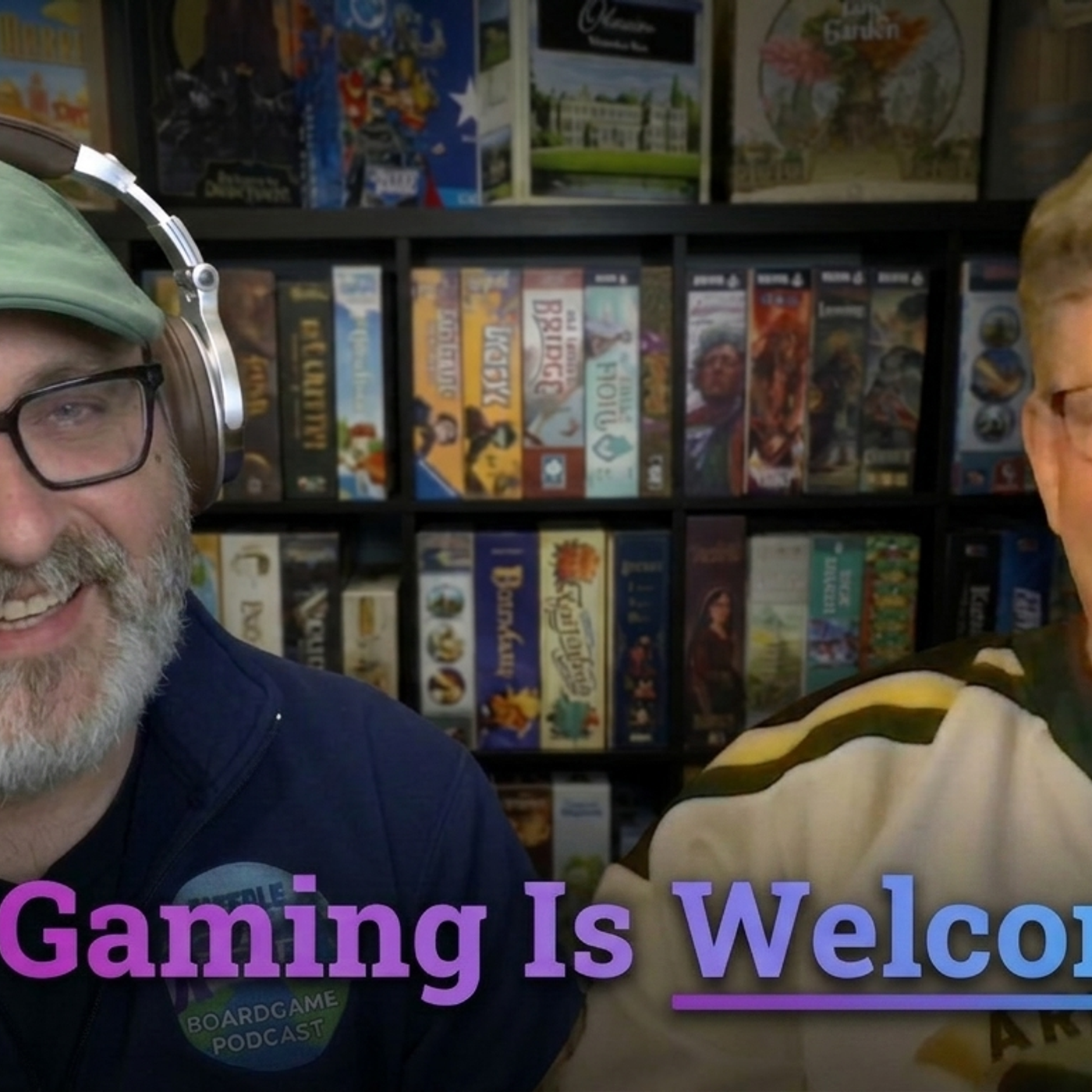
Meeple2Meeple · Meeple2Meeple
The conversation explores the evolution of board gaming, the role of historical and modern wargaming in the gaming community, and the changes in gaming over time. It also delves into the comparison between modern war gaming and games like Warhammer, as well as the impact of CCGs on the gaming environment. The conversation delves into the debate about what constitutes a war game, exploring the themes of war game classification, community engagement, and the role of war gaming in the gaming industry. It also covers the history of war gaming and the evolution of war game conventions. The evolution of war gaming at Origins Game Fair, the changing landscape of the convention, and the misconceptions about war gamers. Takeaways War gaming has played a significant role in the gaming community for decades. The gaming environment has evolved over time, with changes in the availability and prominence of war games. War game classification is a contentious topic with varying perspectives. Community engagement in war gaming is diverse and global. War gaming has a rich history and has evolved to encompass a wide range of themes and genres. Origins Game Fair has seen a shift in the prominence of war gaming over the years. The war gaming community aims to dispel misconceptions and create a welcoming environment for all enthusiasts. Chapters 00:00 The Role of Wargaming in the Gaming Community 02:31 The Evolution of Board Gaming 15:36 Comparison: Modern War Gaming vs. Warhammer 21:06 Impact of CCGs on the Gaming Environment 23:48 The War Game Classification Debate 25:01 Community Engagement in War Gaming 26:27 The Evolution of War Gaming 35:34 War Game Conventions and Events 45:42 Origins Game Fair and War Gaming 46:32 The Changing Landscape of War Gaming 57:49 Dispelling Misconceptions about War Gamers
PJ Oubre: For many gamers, board gaming begins with colorful cards, family games, heavy Euros, or epic fantasy adventures. But there's another corner of the hobby that has quietly shaped this community for decades. And in many ways, it's at the heart of tabletop gaming. That's war gaming. It's a genre built on history, strategy, Tough decisions, and the fascinating question of what if? What happens when history, strategy, competition, and community all come together around the gaming table? And that's a question today's guest will happily answer. Welcome to episode 187 of Meeple to Meeple. Today my guest is Brant Gillary of the Armchair Dragoons. He's a lifelong gamer, designer, writer. And passionate advocate for strategy gaming. He spent years helping introduce players to the depth and excitement of historical and modern war games. Through the armchair dragoons, podcasts, convention events, and educational initiatives, he's worked to make war gaming more welcoming, more accessible, and more connected than ever before. If you've attended Origins Game Fair, You've probably seen the Armchair Dragoons in action. Their war game HQ has become a hub where curious gamers can sit down, roll some dice, and discover what war games aren't just about recreating history, they're about storytelling, decision making, and bringing people around the table. Origins has also continued to expand its support for historical gaming through programs like War College. And dedicated strategy gaming spaces, making it one of the premier conventions for fans of the genre. Today we're going to talk about the evolution of board gaming, why it's enjoying a renewed interest alongside modern tabletop board games, what makes Origins an important gathering place for strategy gamers, and how the armchair dragoons are helping build the next generation of players. No pressure, Brand. Brent, welcome to Meeple to Meeple. Thanks for joining me. Brant G 🤠: Thank you. half that intro, I'm like looking behind me. Wait, talking about us? So PJ Oubre: I am indeed, yes. I I Brant G 🤠: Yeah. So PJ Oubre: really appreciate you being on because I think for most of the community of tabletop board gamers, like I said just before recording, they're not aware of the role that historical and modern wargaming has played Brant G 🤠: Yeah. PJ Oubre: in the community and the hobby and the industry as a whole. It was here before the Eurogames came to the US. Brant G 🤠: Yeah, absolutely. it PJ Oubre: Yeah. How did you get how did you get started in war gaming? Brant G 🤠: My dad. PJ Oubre: Yeah. Brant G 🤠: Yeah. my dad was a my dad was a career army officer. he wasn't a war gamer because he was an army officer. He'd he had a degree in history. Like that that that was his passion anyway. And somewhere along the way, one of his friends introduced him to some war games and hey, this is cool. And they'd get together once or twice a month and and sit down and play some. so somewhere, I don't know, probably around third grade, maybe. I kind of realized what dad was doing. I was like, yeah, it looks kind of cool. And so, you know, I'd sit in his lap and sort of so it was probably earlier in third grade, because by third grade, you're not sitting in dad's lap anymore. PJ Oubre: Right. Brant G 🤠: You know, push a couple of counters around, and I felt like I was playing war games. This was cool. I'm hanging out with dad. I'm doing fun stuff. PJ Oubre: Yeah. Brant G 🤠: but somewhere around fifth, sixth grade, I honestly, it was right around the same time that I was first introduced to tabletop RPGs, is where my interest in war gaming started to eclipse his interest in it. And and so it was more about the games I wanted to buy and play, not, hey, what does dad have that I can play with him? And PJ Oubre: Sure. Yeah. Brant G 🤠: and so that's where it kind of diverged. And it's for a lot of time growing up it was a little cyclical between war gaming and RPGs. And and again, this is late 70s, early through the mid eighties, PJ Oubre: Right. Brant G 🤠: into the later eighties. So I you I graduated high school in nineteen ninety, so I'm I'm a child of the eighties. I'm as Generation X as you get. there wasn't the the big distinctions that exist today didn't they weren't as stark back then. I mean, you you still call things role playing games or war games or whatever, but it was all adventure gaming. I mean, we the the guys that do the origins awards are the Academy Advi of Adventure Gaming Arts and Design. Like that was all one thing. And and it was adventure gaming because it wasn't Scrabble and Monopoly and you know, PJ Oubre: Right. Brant G 🤠: sorry and whatever else you were picking up on the i it wasn't even Target and Walmart. It was like T G and Y, you know, whatever back then. I yeah, I know. I know. PJ Oubre: Now you're dating yourself. I don't know that I haven't I have Brant G 🤠: but it it was it was cyclical for me growing up based on who else was in town, because again, growing up in the military, you move around a bunch. PJ Oubre: Right, sure. Brant G 🤠: And and a lot of folks sort of dipped into, you know, any and all of the above, but it was kind of who was into what this week and that's what you'd join and play. so so we sort of bounced between them. Now what didn't exist back then, as you you noted, like the the heavier Euros, the heavier strategy games, the the less shooty bangy stuff. some of it it more of it existed than I think people realize and give them credit for. PJ Oubre: Right. Brant G 🤠: But because it was the war game publishers by and large that were also publishing them, they sort of get left behind a little bit. I remember playing a game about politics and and sort of dirty tricks and stuff called Light Cheat and Steal from Avalon Hill long, long ago. Yeah, yeah, it was it was all PJ Oubre: Hmm. Yeah. Well I I remember that game. Yeah. Brant G 🤠: right. And and so I played it, you know, when I was a tween and early teen growing up. PJ Oubre: Right. Brant G 🤠: My parents had a copy of it. I didn't get most of the humor back then. I get it now. PJ Oubre: ne neither did I. Neither did I Brant G 🤠: It's it's way better now. but PJ Oubre: Ha ha. Brant G 🤠: but there were games like that. There was pay dirt, right? It was a college football game. So I mean there were the if you go back and look at the early Avalon Hill catalog, there was, you know, a railroad switching game. There's there's all kinds of stuff that it it would look a little rudimentary today given just the advancements and sixty years of of game design. But these would all be perfectly reasonable games to pitch. to a mass pu you know mass market hobby publisher today and say, Hey, I think this is a really cool game idea and then somebody would pick it up and refine from there. It wouldn't get published in the same form it was back then. I think there was there was more non kinetic gaming out there than people want to give credit for at the time. So you know. PJ Oubre: So you're only just a few years ahead of me, right? Like I graduated in ninety three. So some of my memory of those early eighties are, you know, are blurry. Do you think Brant G 🤠: Yeah. PJ Oubre: what I remember coming out of the eighties was there was this massive social and political backlash on D D, right? I'm I remember like I remember growing up D D was like equated with Satanism and all kind of crazy shenanigans. Brant G 🤠: Yep. Satanic anic. PJ Oubre: Right, exactly. Brant G 🤠: Yeah. PJ Oubre: do you think that contributed to the success of historical war gaming because it was rooted in fact and history and that allowed it to progress into the nineties, do you think? Brant G 🤠: So I it probably not for this reason. It's it's tough to make the case that it really persisted into the nineties when the home computer revolution kind of PJ Oubre: Mm. Brant G 🤠: shot tabletop wargaming in the head for a while. PJ Oubre: Yeah. Brant G 🤠: it I think it gave folks an acceptable outlet to to dodge having to even engage in satanic panic questions at all. PJ Oubre: Right. Brant G 🤠: I think Many of us again were playing all of the above back then. So there, you know, it's not like we were avoiding role-playing games. We just, you know, we'd play those at home. And if we were in the school library, we'd get out, you know, Third Reich or War and Peace or something else. And and spend most of the lunch hour actually setting it up before we ever got to a turn. But PJ Oubre: Ha ha ha. Brant G 🤠: But yeah, it's I I don't think That really had a whole lot of impact on the war gamers, other than the folks that were exclusively war gaming probably just sort of looked at and thank god that's not us, you know, and and PJ Oubre: Right. Right. Brant G 🤠: you know, sigh of relief, but I I don't know that it really pushed anybody from role playing into war gaming. So I have zero empirical evidence to back that up, mind you. That's just this is purely anecdotal gut reaction. PJ Oubre: Yeah. How did you how did you manage sure. No. I totally get that. No, absolutely. Absolutely. how did you balance cause when you're a teenager or a tween, right? It's not like you have a lot of space. It's not like you own your own home, right? How did you manage the space? 'Cause like a lot of the, you know, a lot of war gaming, there's a lot of miniatures, they take up a lot of table space. How did you like you said you would set up all of lunch hour before you started the first Brant G 🤠: Yeah. PJ Oubre: round. How would you balance that? Was it be mostly on would it be in the evenings? Would it be on Saturday all day? I remember Saturday gaming sessions that lasted Brant G 🤠: Yeah. Yeah. PJ Oubre: all day as a kid. Brant G 🤠: There were there were some of those. So first of all, at that age, right, when you're ten, eleven, twelve, thirteen, most of the folks that are gaming or have been doing it for a while probably have other family members who are also, whether it's older siblings or parents or whoever. So so there are there's a Not necessarily a friendliness, but a lack of hostility at home to taking over the dining room table for Saturday, right? And PJ Oubre: Right. Brant G 🤠: and and being able to use that. Or again, growing up on military bases, you've got the you've got the public live the the libraries that are on base that you could go to the conference PJ Oubre: sure. Brant G 🤠: room and set up for, you know, eight hours on a Saturday or whatever. every now and then there's there's a rec center, a youth center on on base somewhere that you could you could get a room or a table and use there. more often than not, it was trying to find some smaller things to play. Again, you know, I'm sort of joking about Third Reich and War and Peace, 'cause those take up like the entire continent of Europe. but PJ Oubre: Right. Brant G 🤠: there's plenty of smaller stuff, right? That Squad Leader was out by then. It was before it had turned into ASL as it is today. But the original Squad Leader, when you could set up a two board game with, you know, a company of of troops on each side and you'd you'd be up and running inside of twenty minutes. So PJ Oubre: it's not bad at all. That's totally manageable. Brant G 🤠: Yeah. And one of the other things that has definitely become an issue over the last thirty-five, forty years, maybe more, 'cause like thirty-five years only gets you back to the nineties anymore. Yeah. The proliferation of war games has made it a lot harder to to just grab somebody and go, hey, let's grab squad leader and let's start playing, because everybody's played squad leader, everybody's played Panzer Blitz. You don't have that common ground as much anymore unless you're talking to people my age and older. PJ Oubre: Mm. Brant G 🤠: And there's just so many different new games out that unless it's a well known series, expect to be teaching some rules as you get started. PJ Oubre: Right. So so how much is so with that in mind, how much how much has gaming changed? Like you said, there's a lot more proliferation, there's a lot more titles. have these games gotten streamlined? Have they become more complic complicated? what have you noticed? Brant G 🤠: Yes. PJ Oubre: Ha ha ha. Brant G 🤠: I think that there have been improvements in literally every direction you can go. The the graphics all look way better. The the the visual impact on the table is incredible, and yet you also have some games that are intentionally very stark in their graphic presentation. Doing intentionally today what they did out of necessity in the 70s, because that that's the the aesthetic choice that the designer makes. You have some games that are fairly streamlined and you can pick up and play pretty quickly, that that are designed to be picked up and played very quickly. We have a couple of games that we regularly use at conventions that I can take a a a non war gamer, not just a novice, like a non war gamer and have them up and playing in fifteen minutes and they'll complete a scenario in under an hour. for for some of the quicker playing ones. Yeah. Yeah. We PJ Oubre: That's that's pretty reasonable. That I mean, there are some board games that take longer than that. Brant G 🤠: yeah. Yeah. We we've got a couple of and and we intentionally bring them to conventions specifically for that purpose. we did it at Mace out in Charlotte a couple of years ago when when Mike Colello, one of the other dragoons, he and I made made a foray out to Mace one year and they set us up with a table and kinda put us in a corner somewhere where we could we could be the war gaming presence there. we were in the room with all the battle tech guys, which was fine. Like I I enjoy playing Battle PJ Oubre: Yeah. Brant G 🤠: Tech too. And And I had a family of four sit down and we split the tank on tank map in half and we we had them up and running and you know they they got done in under an hour and it was a two hour session, so they just traded opponents and ran it back. and after about the first fifteen minutes, like I could have left. They were they were fine, they were running it okay without me. PJ Oubre: That's a sign of a good teacher though, and you know. Brant G 🤠: it's it's a sign of a not terribly complex game, which helps. PJ Oubre: yeah. Brant G 🤠: the But the flip side of it is there are some very intense large monster games that that take you the better part of four hours to set up. which is why I get a kick out of some of those what board game is for you? Flow charts, and you know, most complicated game ever, Twilight Imperium. No, man. There are games out there that that's the setup time, you know. And PJ Oubre: Right. Right. Brant G 🤠: but But we've developed enough in the ability to produce these things and produce them at scale. We've gotten better at rules writing, presentation, editing that makes those things accessible. There's a lot of Chrome bolted onto those games with some fairly basic underlying systems. but again, once you get the the underlying system rules down, whether you're playing on the West Front or the East Front or you know, out in Burma, it's still the same underlying rules set that you can use PJ Oubre: Right. Brant G 🤠: for all of it. PJ Oubre: Right. How does Brant G 🤠: So that's PJ Oubre: how does modern war gaming compare to say Warhammer, which some of my audience might be more familiar with? Brant G 🤠: Yeah. the the rules complexity, quite frankly, you can find stuff that's comparable. if if you can handle Warhammer, if you can handle Battletech, you can handle 80% ish of the war games that are out there. The the the regular Hex Encounter, you know, tabletop kind of board war games. the the biggest difference and and I've got friends that are, you know, die hard minis war gamers. There's a big community of them here. So I'm I'm based in Raleigh, North Carolina. There's there's a big minis war gaming community here that that that's fairly well organized, that that does a lot PJ Oubre: Okay. Brant G 🤠: of of pretty regular meetups and they do a pair of conventions each year. the the complexity is all comparable. The biggest difference is in the arts and crafts. And PJ Oubre: Sure. Brant G 🤠: and I've told plenty of people out there, like I have nothing against minis war gaming at all. I am more than happy to sit down and play a minis war game with your army. it's just I don't have time PJ Oubre: Ha ha ha. Brant G 🤠: in my life for the arts and crafts involved, right? I'm just I'm I'm I got other things in my life to do than sit there and, you know, paint 500 Napoleonic minis. I I I appreciate the skill and dedication those guys bring to it, but I'm not doing it. So PJ Oubre: Yep. Yeah. Yeah, it's funny that you mentioned that. We were my wife and I were at Gen Con just a few weeks ago and t towards the end of the day in the vendor hall, we walk past the Army Painter booth. Not not a booth we go to often, but we have in the past. They've got these new they're almost like paint markers. so there's there's Brant G 🤠: Yeah. Yeah. PJ Oubre: been that that contrast fast paint speed painting. Now they have them in markers and so she picked one up to try because we have a board game with a lot of alien minis and they just they need to be briefly washed and it turned out really well so there's hope for you if you want to get involved in the painting. Brant G 🤠: Well the the Army Painter guys themselves came out of like if you're doing it and I have painted minis before. Like I've I've got stuff up on the top of the shelf behind me here that PJ Oubre: Right. Brant G 🤠: when you're doing like fantasy role-playing minis or something, like that is your character. There is there is a unit of one on the map and PJ Oubre: Right. Brant G 🤠: and you've got the time and and dedication to take for making your character look as cool as you can, or your four or five characters as cool as you can. When you're painting PJ Oubre: Right. Brant G 🤠: entire regiments of, you know, French dragoons or, you know, English grenadiers or whatever it is, you you the time it takes to paint all of those guys individually starts to get prohibitive. And the army painter guys, the the that was the problem they set out to solve is hey, let's paint them red, let's give them a quick wash, kind of shake the wash off, and then you go back and just do the hats black separately as a block on the table, they look fine. PJ Oubre: Right. Brant G 🤠: Right? Nobody's looking for square buttons at 15 millimeter. So so you're good. PJ Oubre: Right. Right. Yeah. Brant G 🤠: And that's where the army painter guys came from was to try and and get you from unpainted minis to playing the game as quick as possible. I just prefer to let other people paint the minis. And I'm PJ Oubre: That's fair. Brant G 🤠: I'm happy to play with your army man. I I'm more than happy to sit down and do that. PJ Oubre: That that is perfectly fair and acceptable. I totally understand that. we were really slow to painting. And of course the minis that we use are like they're still board games. It's still tabletop board gaming with like the the plastic resin miniatures. Brant G 🤠: Yeah, it's the map and minis guys. PJ Oubre: exactly. And we had Star Wars Imperial Assault and this was our first miniatures game, and my wife's like, Well, I'll give it a try. And she's the primary painter, so I have someone to do it for me. Brant G 🤠: Yes. PJ Oubre: You know, I prime them and I lacquer them. She does everything else. So it's like, okay, yes, ma'am, whatever, whatever you need. So yeah. Brant G 🤠: Yeah. Yes. PJ Oubre: So take me through, so once you be enter early adulthood, right? now you're presumably you're on your own. So you're not at the army base, you don't have the same resources available to you in terms of space and whatnot. Was there a time where you were away from gaming war gaming and you came back? Or did it stick with you well into adulthood? What did that look like? Brant G 🤠: so the the time away was more in college because there PJ Oubre: Okay. Brant G 🤠: weren't as many wargamers around me in college. I was actually in early adulthood right back on those bases because I was I did college on an ROTC scholarship. So I went right PJ Oubre: Okay. Brant G 🤠: back in the I I will say there is something very comforting about spending your senior year of college with zero anxiety about job hunting afterwards. you graduate. PJ Oubre: that's fair. Brant G 🤠: but somewhere in the so so in the the early nineties, you got the Berlin Wall coming down, the Soviet Union falling apart, you've got all of these things that happened German reunification that basically the Cold War kind of evaporated. Now we we now know with the benefit of 30 plus years of hindsight, that's not really the case, but at the time that felt like the case. And PJ Oubre: Right. Right. It did. It did. Brant G 🤠: yeah, it really did. And and the other thing that really happened while I was in college. between going into college and coming out of college, the army that I came into coming out of college, the war gamers disappeared. You could not find them anywhere. which was kind of disheartening because I grew up around them in the military that you could find them everywhere. And it again, it's it's not so much like it was some sort of professional obligation, because the kind of war gaming the military does is very different than what the hobby guys do. It's just An interest in history, an interest in the the the the subject matter as a whole. Hey, here's a chance to kind of put your own spin on it. Hey, what if such and such had happened? though those guys completely disappeared. Now, the other thing that happened right around then was Magic the Gathering hit the hit the market in '93. And so PJ Oubre: Yep. Brant G 🤠: you had the first wave of the the mass supernova of CCGs taking over. every game store in the country in ninety-four, ninety five, ninety-six, those those years that I was on active duty. because I did I paid back my scholarship and got out and did other stuff. but it was it was a very different gaming environment that I came out to coming out of college also. I didn't see a ton PJ Oubre: That's interesting. Brant G 🤠: of I saw some of the changes while I was in college, but I was doing a lot of role playing stuff when I was in college because that's that PJ Oubre: Okay. Brant G 🤠: the friends that I had in college, that's what we were doing. PJ Oubre: Right. Brant G 🤠: Role playing stuff. So there wasn't a lot of war gaming in college. and and so when I came out, there wasn't a lot of war gaming anywhere. You you the computer war gaming revolution had kind of murdered tabletop war gaming. PJ Oubre: Mm-hmm. Brant G 🤠: Avalon Hill was on its last legs and about to be bought out by Mattel or Hasbro. you you had GDW had was was winding up their business SPI had been bought by TSR years ago, which had only recently been purchased by Watsi about this time. So, so a lot of the war game publishers had disappeared. decision had taken over Strategy Tactics magazine, but wasn't doing a ton with their their own board games that they were releasing. And GMT was just getting off the ground, like nobody even knew PJ Oubre: Right. Brant G 🤠: who they were yet. So, so even if you wanted to be playing more tabletop war games. Nobody was making You were you were having to buy PJ Oubre: Right. Brant G 🤠: used. they they just weren't as prominent. So PJ Oubre: Yeah. You know, it's interesting you bring up GMT, right? Because they released Twilight Struggle and it was the number one game on BoardGameGeek for what? Almost five, ten years? It was Brant G 🤠: Probably more than that. PJ Oubre: it a long time. So you have this two player Cold War, I mean a war game essentially. And again, it's It's a beautiful map, but still your components are the those little wood cardboard squares and chits, right? Brant G 🤠: Yeah. Yep. PJ Oubre: It wasn't like today. And yeah, it's just it's really interesting that wargaming somehow there was a space for it, right? Brant G 🤠: I will tell you, if you want to start a fight in a room full of war gamers, just just just go in there and ask. So is Twilight Struggle a war game or not? And you'll get fisticuffs. It's yeah, PJ Oubre: okay. Brant G 🤠: that is that is a regular guaranteed fight conversation topic right there, right? Is is Twilight Struggle a war game? it it's not worth solving, right? You know, it's there's PJ Oubre: So right. Brant G 🤠: there's no right answer to it. PJ Oubre: Right. Brant G 🤠: But but man, if you want to get some some old school wargamers worked up in a big way, that's that's the question to ask. PJ Oubre: So what are j for someone who doesn't know, 'cause I don't, what are the two opposing arguments? What are the two opposing views about Twilight Struggle? Brant G 🤠: The the the the view of it is not a war game is ain't a lot of kinetic action in there, right? Who who are you shooting PJ Oubre: Right, that's true. Brant G 🤠: or stabbing or bombing or blowing up? It is it is a PJ Oubre: That's true. Brant G 🤠: game of political manipulation PJ Oubre: Yeah. Brant G 🤠: and some brinksmanship, and and it is certainly informed by history, but it is not the the there's not a lot of actual war in the game. PJ Oubre: Right. Okay. Brant G 🤠: So it for some folks the the the lack of actual kinetic action is it is the big knock against it. PJ Oubre: Okay. Brant G 🤠: part of it depends on the perspective that you're coming to it from as well, right? If your background is is Monopoly and Scrabble, then yeah, Twilight Struggle sure does look like a war game. if your background is Twilight Imperium or Rune Wars or you know one of the other big box fantasy flight games, Twilight Struggle may not look quite as war gamey. because there's there's a lot less, you know, stabbing killing folks than there is in some of those other games. PJ Oubre: Hmm. Interesting. Brant G 🤠: if you're coming to it from a role-playing perspective, yeah, it kind of looks war gamey. So so part of where you place it depends on where you're standing when you're looking at it. PJ Oubre: Right. Right. Absolutely. But that's fascinating, right? Brant G 🤠: Yeah. Yeah. It's and I think that's true of a lot of this is something so I I used to teach when when I was teaching college, I used to teach classes on on media and mass com and stuff. That's my background PJ Oubre: Okay. Brant G 🤠: is in journalism. that one of the classes we would talk about, you know, okay, so let's define what media is. What is the media? Right? It's newspapers, it's T V, it's radio. greeting cards. Are greeting cards part of the media? Well, maybe greeting cards are mass produced, but you can make a greeting card for your grandma on your home printer, and it's a you know, it's a card of one. Are you now part of the media? And so like the center mass of the target is is relatively easy to define, but the further away from the center mass you get, the fuzzier it gets. And the same PJ Oubre: Sure. Yeah. Brant G 🤠: is largely true of wargaming, right? Center mass of PJ Oubre: Mm, okay. Brant G 🤠: the target, we can figure that out, right? It's hexes, it's counters, it's Combat results tables, it's you know, blowing stuff up, it's checking range, it's checking line of sight, it's you know, it's chucking a bunch of dice, occasionally flipping a card here and there. Center mass of the target's pretty easy. But as you PJ Oubre: Right. Brant G 🤠: start to get further and further away from the center mass of the target, it gets a little tougher to figure out, you know, is this, is this not? and and ultimately, what are we doing here? Like, why do we care? an academic is gonna care because they need to draw clear boundaries of this is what I am studying, this is not what I am studying, this is in scope, this is out of scope. Hobby gamer, who gives a crap? PJ Oubre: It's true. Is but but I would I would ask this question. Is there is there a line? Is there a line where a game is not a war game versus so I'm thinking about new people who are new to our hobby, right? Brant G 🤠: Yeah, yeah. PJ Oubre: And like I feel like there is a line. At some point they're playing games, they're being exposed, and then they find themselves in the pool of war gaming. So there there was there was a line that was crossed. And I'm just wondering, at least to your mind, is there a line that separates war gaming from board gaming? Brant G 🤠: For a lot of folks, it's the it's the shooty banggy stabby stuff, right? It's PJ Oubre: That's Brant G 🤠: the point at which you're putting putting holes in the other person tends PJ Oubre: Right. Brant G 🤠: to be that that line. And and I know somebody watches this go, what about tabletop role playing games? You're hacking and slashing. Did you ever read the cover of the original Dungeons and Dragons? Rules PJ Oubre: Mm-hmm. Brant G 🤠: for tabletop fantasy war games played with pen and pencil or pen and you know, pencil and dice, whatever it was, the word war game was on the tie was on the cover of the original Dungeons and Dragons. PJ Oubre: Yeah. So so it's really it's an interesting question, right? Brant G 🤠: where it comes from. So yeah. Yeah. It's there are certain things that sort of set tabletop role-playing games apart from other types of games. One of the key ones being the idea of character progression, right? You change over time and you evolve as you play. that that more open-ended nature allows for that. That's not something you have in Catan and Carcassonne and Ticket to Ride. Like you you don't get to be a better tile layer because you've played a previous session that you're carrying over in in Carcassonne. That's something you can get at the end. But but PJ Oubre: That is so true. I love tile playing and I'm not any better at it than today. Brant G 🤠: your persona in the game doesn't get I mean, first of all, there isn't PJ Oubre: That's true. Brant G 🤠: really one that you're representing in Carcassonne. PJ Oubre: Yeah, that's true. Brant G 🤠: so so tabletop role-playing games kind of have that that sort of thing that you can check a block and say this is sort of a defining feature that kind of helps set them apart. For most folks, for the wargaming piece, it's it's you know, it it's the kinetic action, right? It's it's the killing that sort of s sets it apart a little bit. that said, GMT for the past fifteen years now has published a whole lot of the games in that counterinsurgency series that Volko started with Andy and Abyss, the coin series games. And and they've inspired a lot of other Similar games that that shoot off from that. Quite frankly, there's a lot of folks that'll tell you root is a coin war game. It is a counterinsurgency war game. PJ Oubre: Interesting. Brant G 🤠: it's set a petting zoo, but it's it is essentially a counterinsurgency. And even Cole will tell you, you know, yeah, there's there's a lot of war game elements underneath it. but there's a lot of war gamers that are gonna look at that and go, man, I I'm not really shooting anybody. Like, I'm playing a card that allows me to like add or subtract forces. From a space that I'm trying to check control every so often during the game, that doesn't feel real war gamey to me. But if you're playing a game about coalition action in Afghanistan and the other three seats at the table are the Afghan government, the Taliban, and the warlords, that feels kind of war gamey to a lot of people. PJ Oubre: Right. So it's kind of a theme versus mechanics question. Brant G 🤠: Th there's definitely a theme component to it. PJ Oubre: Sure. Brant G 🤠: and then you get into the whole historical versus not, you know, the PJ Oubre: Right. Right. Brant G 🤠: it Starfleet battles, right? Absolutely not historical. Absolutely a war game. it's a math exercise masquerading is a war game, but you know, close enough. PJ Oubre: that's true. So is there is there a gateway war game, like someone wanting to get into it? Is there like do you have a de facto we like to start people with this game? Brant G 🤠: Yeah, there's th there's a bunch of different stuff. At this point in the war gaming world, there are so many games on so many different topics that really when when folks are saying I'm interested in war gaming, where should I start? The first question that that folks ought to ask before they just rush in with an answer, what are you interested PJ Oubre: Okay. Okay. Brant G 🤠: in? Are you interested in World War Two? Are you interested in the American Revolution? Are you interested in swords and sandals? Are interested in space? Right? What is it that you're interested in? And then let's adjust from there. Because, PJ Oubre: Okay. Brant G 🤠: first of all, there's a commands and colors game for damn near everything. it's seriously, PJ Oubre: Okay, fair point. Brant G 🤠: Memoir 44, Battle Lore, Battle Cry, the you know commands and colors, Napoleonics, Commands and Colors, Tricorn, Commands and Colors, Ancients. The new Hoth game that just came out for for Star Wars. There was Commands and PJ Oubre: Is memoir forty four? Brant G 🤠: Was space fleet actions. There is literally a commands and colors game for every genre out there. And they're not super complicated. you know, the the one I was talking about earlier that that we had a family of four up and running very quick, PJ Oubre: Yeah. Brant G 🤠: a game called Tank on Tank from Lock and Load Publishing. it again, small count of of pieces on the map. Each each player's got fewer than 10. And and and very simple. mechanics for for you know resolving combat and everything it goes quick it you pick it up really fast so for world war two that's an easy one to grab the for the Napoleonics series again you know you you've got commands and colors Napoleonics is is largely a starting point but if you're into musket stuff Worthington games has their hold the line series for American Revolution stuff that is is pretty well regarded and easy to pick up. victory point games back when they were still around had a whole line of games that were all dash twenty, right? Austerlitz twenty, Boradino twenty. The whole shtick behind PJ Oubre: Okay. Brant G 🤠: them was you never had more than twenty counters on the map between both players. PJ Oubre: that's what the twenty was talking about. Okay. Okay. Brant G 🤠: Exactly. There was a very low counter there was a very low counter density on the map. So you could pick it up and get moving quickly. sadly, victory point games kind of, you know, vamoosed about 12, 13 years ago at this point. so so that is unfortunate that we have lost them out there. but there's, you know, again, lots of different options depending on your area of interest. And that's that's really the first starting point. What do you care about? What are you interested in? PJ Oubre: Okay. Brant G 🤠: and that's that's where I'd start a lot of folks. you know, you look at Undaunted and you think it's a bit of a deck builder, you're sort of building the map as you go a little bit. This ain't but but there's a lot of war game concepts underneath Undaunted in terms of the tactics you need to use, but checking your line of sight, you know, you're maintaining your forces and th there's a lot to it that a lot of Hex Encounter, old school Hex Encounter guys probably wouldn't immediately appreciate, but for getting PJ Oubre: okay. Brant G 🤠: a newbie in on the concepts, PJ Oubre: Right. Brant G 🤠: you know, it's not bad. PJ Oubre: So let's talk about the community and in particular the armchair dragoons. How did you how did you get started there? Brant G 🤠: It's I'll try and go the short version so that we can keep this below an hour. when I first came back to war gaming, one of the things that happened fairly quickly, I right after my first origins, actually, I ended up as a staff writer for wargamer.com back when they still covered war games. now this was about five or six owners ago. because cause that website has passed through multiple hands to where it got to where it is now. And and it's The stuff they do is cool. It's just not war games. yeah, war gamer dot com published a thing about one hundred and fifty questions to spice up your date night. Man, just change the name of the website. Like you're nice people, change the name of the website. Come on. The there was a community that had coalesced around the old WarGamer forums that after some shenanigans with new ownership there, a bunch of us said, forget it, we're out of here. And we actually ended up starting a a whole separate site of our own. when we left wargamer.com and that was the old Grogheads site. Grogheads is still there. It has shifted almost completely to digital get war gaming. and and I was there for about seven years. I was one of the original co owners there. And it finally got to the point where some of the things I wanted to be able to do were difficult within the ownership structure that we had there. And PJ Oubre: Okay. Right. Brant G 🤠: and it was it was best to part ways before we all really hated each other. That's kind of what it came PJ Oubre: sure. Sure. Brant G 🤠: to. and and this is not a new concept. Matt Forbeck ran into the same thing when they the the original company they formed to publish deadlands. You know, at some point, Matt's like, You know, we're all still friends. I need to walk away before we're not any. PJ Oubre: Right. Brant G 🤠: And that's kind of what happened. And and that's when we set up armchair dragoons as as a new thing. And there were a couple of things that I was pretty passionate about with the way I wanted stuff to work with the dragoons that were different from from many of the other places that I had worked. So it it wasn't Just a reaction of things that had happened at Grogheads. Some of it was from Wargamer.com. Some of it was from changes to the way I things were when I used to write for RPG.net back in the 90s. that first of all, if if it was a war game, we were happy to talk about it. We didn't care if it was tabletop or digital, we didn't care if it was for the hobbyists or for the professionals over in like the national security department of defense side of things. We wanted to To to make it a point to engage with those guys as well. PJ Oubre: Sure. Brant G 🤠: it didn't matter to us how it crossed those lines. If it was a war game, we were interested in at least talking about it. The other thing that was a big deal to me was I wanted to make sure we met the audience wherever the audience was. There were some places that, you know, well, make sure they register for the forums and get engaged there and make sure they talk to us there. And you know, we're gonna put things out on Twitter somewhere, but we're never gonna actually talk back to anybody on Twitter. And and and to me that seemed like kind of sh shoving the audience somewhere they didn't necessarily want to go. And PJ Oubre: Sure. Brant G 🤠: so for us, if you're on Facebook, fine. If you're on Discord, fine. If you're on Blue Sky, fine. We're gonna try and meet the audience where they are rather than PJ Oubre: Okay. Brant G 🤠: force them to have to come to us. Because for a lot of the audience they're sort of set in their day-to-day patterns. And if we don't find a way to engage within those patterns, we're just not gonna engage. They're they're not you've gotta be really special for them to break those patterns to come find you. And and as cool as I think we are, I'm not sure we've crossed that threshold. So so to me, a bunch of the changes were in about the way in which we engaged with the rest of of the general public. More than anything else. and then one of the last things, just we are war game focused, we are not war game exclusive. We do cover role-playing stuff. We've covered some some PJ Oubre: Very important. Yep. Brant G 🤠: more adventure board game type things. We had a review of the re-release of Big Trouble in Little China on the website. You know, I mean we've we've covered a variety of different things. I've got, you know, several different articles. and AARs about the Civilization series games and Civ builders and stuff. so we've actually, if you go hit our site, you'll see the branding is that we are the regiment of strategy gaming. that PJ Oubre: Yes. Brant G 🤠: gets us out of a couple of things. One, it it allows us to broaden our wings a little bit to cover some of those things, but it it also keeps us away from that whole what is a war gamer. PJ Oubre: yeah. Yeah. Right. Nope. Brant G 🤠: It's just not an argument I care about having anymore. PJ Oubre: I get that. I totally understand that. Because you're focused on building a community. You're not focused on dividing one. Yeah. Talk No, it Brant G 🤠: Yeah, yeah. So I I hope that came to what you were looking for. PJ Oubre: did. Talk to me about like the levels of levels of engagement that armchair dragoons provides. I don't want to call them servant. What tell me about your services? Like that's not really. It's not what I mean, but it's what I'm asking you. Brant G 🤠: No, it's that's a fair question. And it's interesting because we'll show up at like a convention or something and and folks will will be asking us, so you know, so you guys are gaming club, where are you all based? And we have people literally around the world. PJ Oubre: Right. Brant G 🤠: and that's without having anybody deployed, which has also happened to us multiple times throughout the years. the admin team that runs the community. I'm in I'm in Raleigh, North Carolina, said that earlier. Mike is up in in the woods in Virginia. Like he his nearest neighbor's like two miles away, and that's too close for him. we've got one dude up in northwestern Ohio, but then like Bob, who's one of the main guys that keeps an eye on the forums for us, he's in Newcastle, England. we've got guys in in Germany, in Poland, in Italy. I think we've still Duno's in Portugal. I'm not sure. I think we've still got some dudes in Spain. I'd have to check. a bunch of Canadians, as you would expect. We've got people all over the US. some folks in Hawaii. I don't know that we've got any super active participants out in out in Asia anywhere, but I I wouldn't rule it out. but it's not like we're checking IDs at the door or anything. Like you PJ Oubre: Right. Right. Brant G 🤠: want to come hang out with us, come engage with us. And if you walk away, okay. You know, if we're We're not meeting what you need at that point in time, that's cool. you know, let us know or if you've got something you'd rather go walk off and do, cool. Like you do you. but yeah. PJ Oubre: Besides besides the forums, and I mentioned in my introduction, you've got a podcast. what what other types of levels of engagement or services do you provide to people who maybe don't know about you and are thinking about, you know, engaging? Brant G 🤠: Yeah, absolutely. So the the website of the podcast kind of go hand in hand. So we we do have PJ Oubre: Okay. Brant G 🤠: a forum on our website. It's a little less active these days because again, going back to where folks prefer to engage, our our Discord PJ Oubre: Sure. Brant G 🤠: server is a little more active because a lot of folks are on Discord throughout the day. it helps having a dedicated Discord app that you can bounce between a lot of different communities. PJ Oubre: Yeah. Brant G 🤠: you can find us on most of the social media platforms out there. The We have four big events that we do each year that PJ Oubre: Okay. Brant G 🤠: kind of spread throughout the calendar. Excuse me. two of them are all virtual and two of them are in person. The one where most PJ Oubre: okay. Brant G 🤠: people see us, where you saw us, is we run the war gaming program at Origins. And so the the war game HQ is at Origins is us. It was something that we'd actually started back when I was still at Drogheads. And when I left GH to To found the Dragoons, the program kind of came with me because I was the one doing it. And so we the first one under the Dragoons banner was in 2019. And PJ Oubre: Okay. Brant G 🤠: we've been there every year since as the Dragoons, even that funky weird October one in t 2021 when they were just coming back from COVID. PJ Oubre: Right. Brant G 🤠: they gave us way too much floor space for the number of events we had. We had like nine events, but damn it, we were there. we weren't PJ Oubre: Ha ha ha ha. Brant G 🤠: We we're still gonna show up. PJ Oubre: Absolutely. Brant G 🤠: and and so that's the place where most people see us. The PJ Oubre: Okay. Brant G 🤠: other in person event that we do is in October each year, we run a smaller convention here in just outside of Raleigh. The the suburb is Kerry, people that know the area go, yeah, Kerry, if you aren't from the area and you were driving from Raleigh to Kerry, unless you saw the sign that says Kerry Town Limit, you'd never know you changed towns. yeah, PJ Oubre: You never know. Brant G 🤠: you wouldn't. And so we've we've got a small place over there that we we rent some space from the local VFW and we set up for a small wargaming weekend. It this is no frills. you know, we'll bring in some sandwiches on Saturday for folks. but this is very much we put a bunch of tables out, we schedule a bunch of games, folks show up and play games all weekend, and that's really what it's about. PJ Oubre: Nice nice. Brant G 🤠: yeah, it will it grow into something beyond that? We'll see. It's kind of what does the audience ask for? But but we're only in our fourth year of that this year. PJ Oubre: Okay. Brant G 🤠: so it's it's coming up in October. this will be the fourth one. So you know, it's it's growing. As long as it continues to grow, I'm happy. The two virtual ones huh? Yeah. PJ Oubre: Right, right. So you mentioned you mentioned you mentioned Origins Game Fair and I Brant G 🤠: Yes. PJ Oubre: I want to talk about that. I told you Brant G 🤠: Yeah. PJ Oubre: that was another topic I wanted to talk about. Brant G 🤠: Yeah, yeah. PJ Oubre: again, and I love my tabletop community. I sometimes we think that these conventions are ours, and maybe for Origins it kinda is now, but at the very core of Origins, it started as war gaming. at the University of Maryland, right? Wasn't it the University of Maryland and Johns Hopkins, that's it. Johns Hopkins. and Yeah. Right. Brant G 🤠: It was the Avalon Hill House Convention that first year. That was that was the Avalon Hill House Convention. PJ Oubre: So talk to me about your relationship with Origins and how things have how the relationship between war gaming and Origins Game Fair has just changed over the years. Brant G 🤠: Yeah. It's it's funny if you go back and you look at some of the coverage of Origins from Origins seven, eight, nine, ten, 'cause the first one was in seventy five. that in the early eighties as role playing started to expand, you would start to see magazine coverage of Origins back then in the in the early eighties, you know. Despite the encroachment of the role-playing games, war games are still going strong at Origins. PJ Oubre: Ha ha ha. Brant G 🤠: And and back then, war gaming was 60, 70, 80 percent of the convention. The convention was also 4400 people, right? Was a big year for Origins back then. PJ Oubre: Right, right. Brant G 🤠: what's happened since then is a lot less that. Wargaming has retreated, although there has certainly been some of that that largely followed the trends of the hobby market as a whole, right? As war gaming retreated PJ Oubre: Okay. Brant G 🤠: from the hobby market as a whole in the early 90s, it became less of a presence at Origins, which is what you'd expect, right? The publishers are disappearing, they're not going to be at Origins. The you look at it now and you think, man, there's 18,000 people there. What the heck? And yeah, there's a lot of meeples, there's a lot of collectible cards, there's A lot role-playing stuff. but it's while war gaming has shrunk some, absolutely, it's more that everything else got bigger than that war gaming shrunk. Now, war gaming did shrink. And you again you go back to those, you know, the the mid 80s, right? The the glory years of war gaming, and you look at Origins was pulling in 5,000, 7,000 people, whatever it was. There's a couple hundred war game events in the program. If you look at Origins today, we had about two hundred war game events in the program and we put six to seven hundred player butts in seats. That's not individual people. If somebody plays three games with us, I'm counting them three times because PJ Oubre: Yeah. Brant G 🤠: I have no way to tell that PJ PJ Oubre: Yeah. Brant G 🤠: only sat down for one game or sat down for three. Like I'm just counting player counts in the games that I gotta turn in for Origins. And that doesn't sound like a lot when you look back at, you know, 4,000, 5,000 people in the building and 60, 70% of the the gaming was war gaming. one, there was a lot more open gaming pickup gaming back then. The the big conventions like Origins and Gen Con are lot more structured now. Origins is a little better with the board game room in the the back of the gaming hall. You've seen it the with the game library for that kind of stuff. it's it's better than a lot of the other conventions for that, but it's that's still a bit of an anomaly across most conventions. the A lot of the folks are really looking for I want my hundred and twenty-eight player tournament of the Russian campaign back. And that's it's not just that that's not happening at Origins, that's not happening at any game convention. At any war PJ Oubre: Okay. Yeah. Brant G 🤠: game specific convention. Consum World Expo is is probably the flagship war game only convention that happens PJ Oubre: Okay. Brant G 🤠: in every summer out in Arizona and yeah, summer in Arizona. But it's, you know, that'll bring in three or four hundred people. And and it it's also like nine days. It it runs for because they they get PJ Oubre: Wow. Wow. Brant G 🤠: the play. They start one week and they finish the following weekend. And it's one of the places where you can go and you can set up one of those giant monster games like we were talking about earlier, and you can you can expect to play it all the way to completion. but you're bringing in three, four hundred people and and you've got nine days to do it, you're gonna get a bunch of pickup games, some officially scheduled games. But other than Consum Expo, you find me another war game specific convention that's got 200 events on the schedule. Like they don't exist. PJ Oubre: Yeah, you no. Brant G 🤠: And so folks want to look at Origins and go, man, there's only 200 war games on the schedule. Well, first of all, that's just what we put in. That doesn't PJ Oubre: Right. Brant G 🤠: include all the other war game stuff other people do. And so even after you strike through the 40Ks and battle techs and kings of wars of the world and and rule those out. There's still a ton of other war gaming going on. Some of it's with the minis guys. The HMPS PJ Oubre: Yep. Yep. Brant G 🤠: guys will set up Warlord this year had a really big space that was doing all of their minis games. you'll you'll have a variety of those kinds of games, but you'll have other people that are, you know, they they're just signing up for themselves. It's it's not like we're trying to monopolize war gaming at Origins. Somebody'll just submit a game of Tank Duel and have a game of Tank Duel running in the The scheduled gaming area, not in like the the organized play areas like us and NCG and you know all all the other PJ Oubre: Yeah. Brant G 🤠: clubs and organizations, you know, rogue judges, those kinds of folks. Not everything has to be sponsored by us. PJ Oubre: Right. Brant G 🤠: so there's more war gaming, there are more war gaming events happening at Origins than there are happening at the war game specific conventions. Around the country. And that's something that a lot of war gamers I don't think really understand or appreciate. PJ Oubre: Mm. Brant G 🤠: now if your argument is, man, 18,000 other people at a convention is too much for me. I ain't doing it. It's not worth the hundred bucks for me to cool, like that is a perfectly valid argument. I'm happy to have that discussion. But if you're saying I don't want to show up at Origins because there's no war gaming there, go pound sand, man. You just don't know what you're talking about. my first origins was five. I was there as a vendor because I had delusions of grandeur being a publisher back then. I I now know that I am not cut out for that life and it it took me three years to figure it out, but that is not me anymore. when I was there that first year, there were easily a dozen other war game publishers there. Matrix Games, the computer war game publisher, had a big booth up against one wall. that's PJ Oubre: Okay. Brant G 🤠: when they were still selling a lot of physical media. The by twenty eleven ish, the majority of those folks had kind of evaporated from the the the vendor hall and and with them a lot of the the gameplay that you would find elsewhere as well had largely evaporated. There was never a ton of formal scheduled events for war gaming. A lot of it would just take place in the boardroom, but there was there was reliably a consistent amount of war gaming you could find. 20 after Origins in 2013, one of my trips to I so my my parents now live in Ohio. I didn't grow up in Ohio, obviously, but my parents live in Ohio, so it's very easy for me to get involved in Origins. It's very easy to do a convention where you PJ Oubre: yeah. Brant G 🤠: have a hotel bill. it's yeah, PJ Oubre: It's true. Brant G 🤠: I mean that's that's your biggest expense every time PJ Oubre: It is. Brant G 🤠: you go to a convention, is the thousand bucks you're dropping on a hotel. PJ Oubre: It so is so true. Brant G 🤠: yeah, so I I went and you know, I went down to Gamma's offices and knocked on John Ward's door and I said, Hey John, I got an idea. I I want to bring some more gaming back. Here's a handful of ideas. And I I I've told the story before that some people have heard it, but but for those that that haven't, John's answer to pretty much all of them was no. that's and that's PJ Oubre: Ha ha. Brant G 🤠: not John. What I didn't know and didn't understand at the time is like there was a very real reason for saying no for all of Several of them were just flat out against either gamma bylaws or origins rules, contractual rules, those kinda I PJ Oubre: Right. Right. Brant G 🤠: didn't know that at the time. But to John's credit, he took the time to explain every one of those the the no's. He explained them all to me, which was great. The the second part of that was he immediately followed up with, but here are some things you can do. How about we try and do it this PJ Oubre: Mm-hmm. Brant G 🤠: way? And let's see if we can't do these couple of things. And it was all right, cool, let's try it. So 2014, I think we had 19 events over the course of four and a half days. That was all we had scheduled, because that that was all we thought we could staff. And and it it turned out really well. And and it had slowly built from there. So 2014 was the first year of what's now the War Game HQ. and it's slowly grown. It it's really taken off post-COVID. Again, 2021, we didn't We were there, but we didn't have a ton of space. There weren't a whole lot of people there. It's only like three days and change. but but we were there. From twenty twenty two to now, we've gone from a twenty by forty space to a forty by sixty. We've gone from seven or eight tables to twenty-three, and we've gone from twenty something events to almost two hundred. And that doesn't include the stuff we're doing in the war college. Like we we have PJ Oubre: That's huge. That's that's huge. Brant G 🤠: Yeah, we have other things we do up at the War College to help keep them viable and and vibrant and going. we we run a bunch of designer panels up there. So we've we've got a lot of the designers are there as our GMs. And so we'll put together a couple of panels for folks who just do a QA with game, you know, with war game designers. PJ Oubre: Right. Brant G 🤠: couple of different things like that, some historical talks tied in with some of the games, those kinds of things. PJ Oubre: Yeah. Brant G 🤠: so it's it it's a bunch, but it's trying to make sure that war gaming has has a viable home for the long haul at Origins. PJ Oubre: Right. Right. Brant G 🤠: I think we're to that point now. Like when people show up at Origins looking for war games, we are one of the first places they go to look. And that's not that's not because we're the dragoons, that's because we're the war game HQ. That's where you find the war games. So yes. PJ Oubre: Right i it's it's where I found you. Brant G 🤠: Yeah. Yeah. And and we cover a lot of ground out there too, because like Space Empires four X is on the table with us. PJ Oubre: Right. Brant G 🤠: We had the Dominant Species Marine game on the table, which folks are going, war game, but but we had Kai Jensen, who's, you know, co designed it with her late husband. Like Kai is there as a GM. She's also GMing other things that she had designed, but she was there as a GM. So we're gonna put Dominant Species Marine on the table, you know. PJ Oubre: Yeah, of course. Of course. I what I loved is when you walk through the HQ at Origins, there's there's so much. There's something for everyone, right? And and and it makes it difficult because there's a preconceived notion in your head of what is a war game. And then you see these tables and there's like there's there's like naval fleets over here and there's, you know Guys on horseback over here, and then you got space and you've got, you know, dominant species marine. You're like, okay, what's what's going on? And I'm and I'm here for it. Right? Like like it's great. Brant G 🤠: Yeah. Yeah. PJ Oubre: I have I have one last question for you. Brant G 🤠: Alrighty. PJ Oubre: If you could erase one misconception about war gaming from the minds of modern board gamers, what would it be? Brant G 🤠: at the risk of being vulgar that we're all assholes. PJ Oubre: No Brant G 🤠: It's you you're laughing, but it's it is not an undeserved reputation, which is the problem, right? That PJ Oubre: okay. Brant G 🤠: that is that is something that is a significant concern. I actually I I wrote an extended column about it I don't know, about eight months ago, six months ago, somewhere around there, that that we published at the Dragoons that I've had this conversation a couple of times because I I also go to Gamma Expo most years. I I couldn't go this year at overlapped my wife's birthday. but I've been at the expo a bunch, and I'm one of the few war game folks at Gamma Expo. I shouldn't be the voice of war gaming in the gamma room, but I often am, which is a little scary for me. But in having conversations with folks about war gaming, a lot of the a lot of the feedback I get and a lot of the impressions I get from folks is. You know, it's kinda interesting, but you guys are just so unfriendly. PJ Oubre: Mm. Brant G 🤠: That reputation didn't come out of nowhere. PJ Oubre: Sure. Brant G 🤠: there's a it was a quote that I I go back, I can't remember who said it. It was on ESPN radio one time. It was nobody is a victim of their own reputation. war gamers have developed that reputation over a long, long time. And we still see it today with somebody saying, Hey, I played this war game, it was a ton of fun. Where can I find something next? And they're talking about Twilight Struggle, right? And you'll get PJ Oubre: Right. Brant G 🤠: the That'll show up and go, You didn't play a war game, you played Twilight Struggle. Screw you, man. The kid's interested. How about we help get along? And PJ Oubre: sure. Yeah. Brant G 🤠: and and I think there are a lot of war gamers today that are more than happy to help bring new war gamers along, that are happy to answer questions and engage with folks who are war game curious. But the reputation exists for a reason, and it only takes one encounter with one of those jerks to really PJ Oubre: Mm-hmm. Brant G 🤠: sour you on that corner of the hobby as a whole. we are very PJ Oubre: Sure. Yeah. Yep. Brant G 🤠: particular about screening for our GMs that if you're a jerk, I just don't want you. I I I'm sorry, I I will find I I will make recommendations for other places you can go be a war gamer, but you're not gonna be one of our GMs because you're not gonna be one of the forward facing keepholds. That I put out there at a PJ Oubre: Right. Right. Brant G 🤠: mass market event like this. I'm just not gonna do it. And PJ Oubre: Yeah. Yeah. Brant G 🤠: so if you're looking for a misconception that that I would love to erase, it would be that the war gamers are a bunch of curmudgeonly unfriendly jerks. The problem is there are a bunch of war gamers who are curmudgeonly unfriendly jerks. And and you can't change them, you just gotta PJ Oubre: No. Brant G 🤠: kind of like hide them in a corner like the crazy uncle at Thanksgiving. And hope they don't piss too many people off. PJ Oubre: Ha. Brant G 🤠: I I And there's gonna be some PJ Oubre: Yeah. Brant G 🤠: people listening to this and go, I know exactly and and they're visualizing the exact person I'm talking about. PJ Oubre: Sure. Brant G 🤠: There's others that are going, man, I hope I don't ever meet that person. I hope you don't either. PJ Oubre: man. Brant G 🤠: and I know that I am not for everybody, like I get that. I can be a pretty intense person sometimes and I can I talk too much a lot, as your audience is finding out now. I mean they've sat through an hour of this, so they've figured it out by now. i if you don't like me, you don't like me and that's fine. Like it I it's only s in my fifties there's only so much of me I can change to try and get somebody PJ Oubre: Right. Brant G 🤠: to but but again, I am not all war gamers. Like there's There are some curmudgeons out there. I try not to be one. but I we try to be as friendly as we can with the people that we put out there. And I hope that people that are are war game curious don't encounter one of those curmudgeons up front. PJ Oubre: Right. Yeah. Yep. Well, you know, we talked about briefly in email exchange, we talked about a previous episode of mine where we talked about making tabletop role playing more accessible, right? Brant G 🤠: Yeah, yeah. PJ Oubre: and I think in that episode she was talking not just accessible to people, but people with disabilities, mental, physical, and whatnot. But I I understand the misconception you're talking about. And I appreciate you answering that. and tackling that that question. Brent, thank you so much for your time. Thanks for joining me. And Brant G 🤠: Sure. PJ Oubre: yeah, guys, look, if you're interested in war gaming, I know that that that misconception's real, but I think if anything, Brant has shown you that they are welcoming and they are an open community. And they're also the core. Those tabletop games, those board games that are behind me on my shelf that we all love and enjoy. They would not exist if it weren't for D and Wargaming that got it that you know perpetuated the hobby and kept it alive. And now we have this vibrant community and there's room for everyone, right? So Brant G 🤠: Yeah. And I I think to to that point, just I think one of the things that definitely happened through the history of hobby gaming is the generation I grew up with that and probably you a little bit on the tailing end, there PJ Oubre: Mm-hmm. Brant G 🤠: was a lot of war gaming that got played by people that probably weren't huge fans of war gaming, but if you wanted a heavy strategy anything, that was it. PJ Oubre: Yeah. Brant G 🤠: It was later when you got The the Catans and Carcassonne and and you know Castles of Burgundy and eventually becomes Gloomhaven and Terraforming Mars and whatever else, like those heavier strategy games, those exist now that have peeled off a lot of people that were probably playing war games back in the 70s and 80s out of a lack of options. Whereas now they have heavier strategy games that aren't war games that would appeal to them. PJ Oubre: Mm-hmm. Absolutely. Absolutely. No. Well said. so Brandt, where can where can people who are interested in wargaming, where can they find you? Where can they find the armchair dragoons and re ask you more questions? Brant G 🤠: Yeah, so it's it's armchairdragoons.com. It's it's like dragon but with two O's. We get the armchair dragons a lot. I I I thought about PJ Oubre: boy. Brant G 🤠: registering that URL and redirecting it to us. PJ Oubre: There's something to that, yeah. Brant G 🤠: Yeah, we we're on most of the major social media out there, whether it's, you know, Facebook, Blue Sky, we have a Mastodon one. A lot of them, quite frankly, are just retransmission of the links to our articles and our content on our site, our podcast, that kind of stuff. We do have a Discord server. You can find the links on our site. We we have a Twitter account that has been dormant for two and a half ish years. it is there, so nobody takes the name, but we're not active on Twitter at this point. the in in terms of being in place and in person, Origins obviously, we also support Muckeye Game Fest. We are good friends with the folks that run BGF. the fact that it's in Origins and there's some built in infrastructure for us helps that. we do have our own convention down here, like I said, Columbus Day weekend. We are down here in in the Raleigh area. If folks want to come, you know, especially if you're in driving distance of a sort. We are looking to branch out a little bit and find some other conventions that we can get involved in. I'm usually at Circle DC as me, as a media guy, not as a game player, not not as an official Dragoons presence running game. PJ Oubre: Okay. Brant G 🤠: I'm I'm there being a fan. but but you can find us at some of those conventions, especially on the East Coast, where they're a little easier for most of us to get to. PJ Oubre: Right. Right. Brant G 🤠: But the the biggest place is through the website and the things that branch off from there. The podcast, just so folks know, it's it's mentioned in dispatches. There's two podcasts out there with that name. We are the mentioned in dispatches with the armchair dragoons, sort of gives it away. PJ Oubre: Ha ha. Brant G 🤠: the the way we do the podcast is we do about 12 episodes in a sprint of like every week for 12 weeks, and then we'll take a break. And then we'll come back and we'll do another 12 or so PJ Oubre: Sure. Brant G 🤠: is how we do that. We have a YouTube channel that we primarily use for live events for like our our connections online, online professional conference. So if you hit our YouTube channel, you're gonna see a bunch of shorts. The podcast is there. but you're mainly gonna see like live coverage at a convention and then a lot of nothing, and then the next convention runs around and there's some live coverage. that may be changing later this year. We might start doing a few more live things, but but at for now, that's It looks a little weird. It's like, hey, you guys have a site. There's a whole bunch of stuff. Why haven't you done anything for six weeks? Well, because we haven't been at a convention in six weeks. PJ Oubre: Right. Yeah. Well, again, Brant, thank you so much for your time. I I really do appreciate Brant G 🤠: No PJ Oubre: it. guys, don't forget to hit the like and subscribe button. Make sure you leave a comment below. Brant and I will we'll see that. and as always, be kind to each other. And let's play war games. Brant G 🤠: You don't have to kind in the game. The point is to put holds PJ Oubre: Right. Brant G 🤠: to the other guy, right? But be kind to the opponent or in the game. PJ Oubre: Be kind to each right. You got it. Thanks for watching.