
Meeple2Meeple · Meeple2Meeple
The conversation explores the evolution of game design, from the transition between Legacies and Clandestine to the inspirational themes and partnerships that shaped the game's development. It delves into the design philosophy, mechanisms, and the game design journey, offering insights into early game experiences and favorite games. The conversation covers the inspirational games that influenced the design of Legacies and Clandestine, as well as the challenges faced in game publishing, including the impact of shipping costs and global economic crises. The conversation covers the art of game design, the process of knowing when a game is finished, the role of graphic design in game development, and the expansion of the game universe. It also highlights the unique blend of exploration, questing, and battles in the game Clandestine. Takeaways Innovative game design Evolution of game themes Inspirational Games Challenges of Game Publishing Game design is never truly finished, but rather sent to the manufacturer. Getting a game prototype out of your head and onto the table is the crucial first step in game design. Clandestine is a game that offers a unique blend of exploration, questing, and battles, making it a standout in the gaming world. Chapters 00:00 Evolution of Game Design 04:06 From Legacies to Clandestine 07:04 Design Philosophy and Mechanisms 08:08 Inspirational Themes and Partnerships 11:19 Game Design Journey and Life Lessons 20:32 Early Game Experiences and Favorites 24:41 Inspirational Games 28:06 Challenges of Game Publishing 46:36 The Art of Game Design 47:23 Knowing When a Game is Finished 50:24 The Role of Graphic Design in Game Development 01:00:17 Expanding the Game Universe
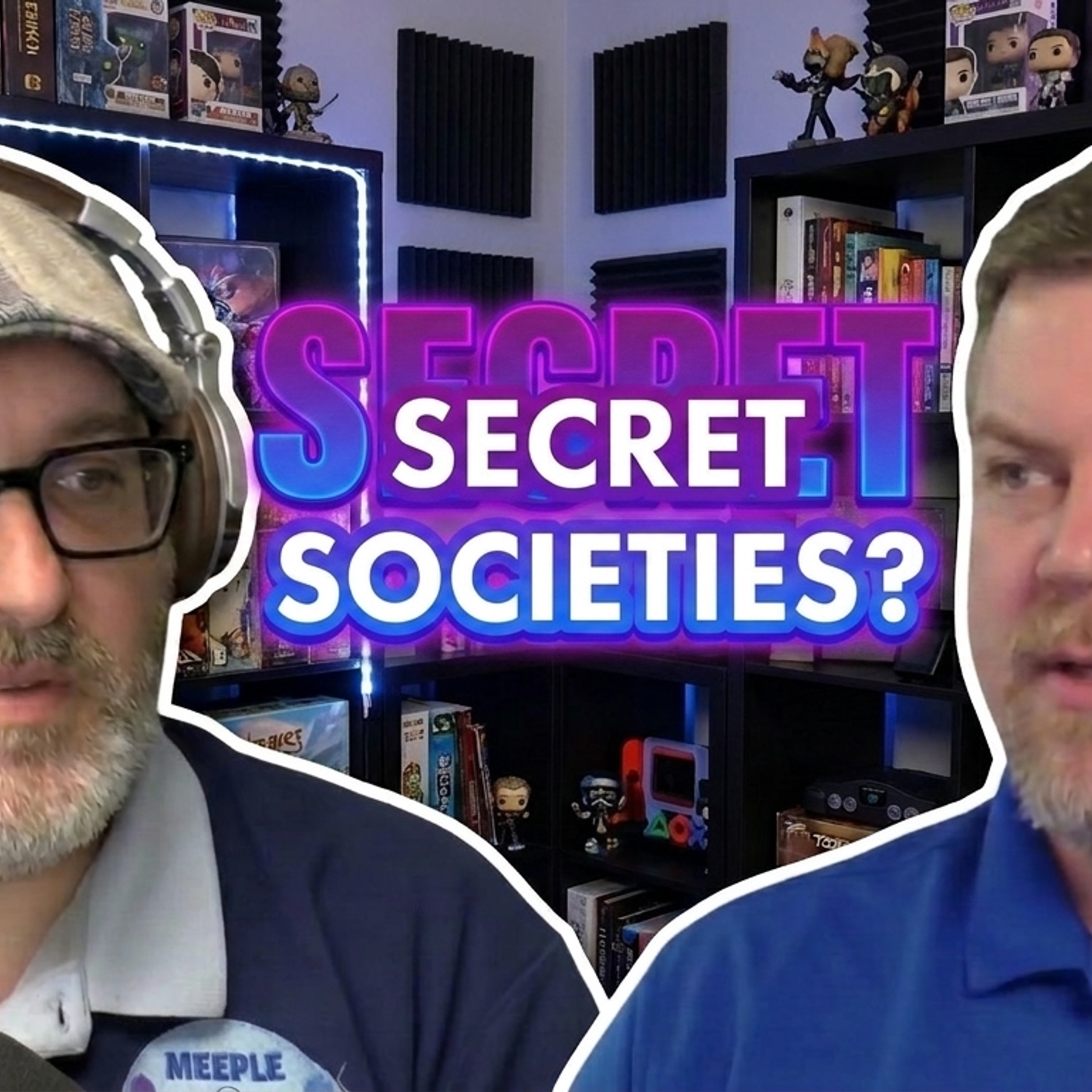
PJ Oubre: Throughout history, people have been fascinated by secret societies, from whispered meetings behind closed doors to hidden symbols, coded messages, and mysterious organizations rumored to shape the course of human history. There's just something irresistible about wondering what happens just beyond the public eye. Now, imagine bringing that intrigue. To your tabletop. You're not just moving pieces around a board, you're leading your own secret society, carefully balancing long term strategy with calculated risks. Every decision ripples through a shared world where your opponents are pursuing their own hidden agendas. Will your society uncover ancient relics, master forgotten secrets, or outmaneuver the competition? Welcome to episode 182 of Meeple to Meeple. Today I am excited to welcome Jason Brooks, founder of Brooks Spun Games and the designer of Legacies, and the upcoming strategy game Clandestine. In Clandestine, you'll lead your own secret society, carefully balancing long term strategy with tactical decisions as you compete for influence. The game combines innovative, and I can tell you this is true, innovative Moncala style resource movement with interconnecting rondelles, allowing the players to take actions in a shared space while planning strategies within their own secret societies. It marries theme and mechanism that promises meaningful decisions, very quick turns. And there's plenty of memorable moments around the table. And you're going to hear about some of them today. Today we're going to explore how Jason evolved from designing legacies to creating Clandestine, what inspired the game's secret society theme, the design philosophy behind its unique mechanisms, and what he has learned along the journey. Jason, welcome to Meeple to Meeple and thanks for joining me. How are you? Jason Brooks: You bet. Thank you, PJ. I'm doing great because I'm here with you. So thank you for having me. PJ Oubre: Well, that is very kind of you to say. I'm really happy to have you here. this is this has been a long time coming. Jason Brooks: It has, yes. Yeah. PJ Oubre: I wanna I wanna open really quickly by before before we get there, those of you who are watching on YouTube, all right, you might notice that the background is a mess. I'm sorry, but the Meeple to Meeple Studios is finally getting upgraded. We're rearranging the basement. The shelves are mostly bare. but I do have a copy of Legacies right above my head. If you're listening on Spotify or Apple or all the other streaming services, well, you're just gonna have to go to YouTube and check out. What's going on? I've been posting some videos and things about the upgrade and moving of shelving and stuff, but hopefully by next week, by Gen Con should be up and running and ready to go. So thanks, thanks for putting up with all of my shenanigans while I do this. And Jason, thanks for being my guest while I'm under construction. So yeah. Jason Brooks: Hey, my pleasure. I see some great games behind you, so I just know looks like a great space to be in. PJ Oubre: Absolutely. So you've gone from designing legacies, which was a game about building like a family's story across multiple generations, right? to Clandestine, where players are rival secret societies, you know, working in the shadows. And those are two really different worlds. I wanted to start off. What what caused or what inspired that? Creative shift and theme for you. Jason Brooks: Yeah. well I think probably the biggest thing that caused that shift was well I have many designs that I've been working on since I started designing games about a decade ago now. back in twenty sixteen is when I started. Legacies came as a theme first. so the short version on that one was I was at the I was trying to design a time travel game. I was at the movie The Greatest Showman with my family. And it was about the story of PT Barnum. And I remembered loving circuses when I was a kid. I actually have a scar under my eye from when I was told we were going to the circus and ran into a table. I was so excited. but you know, Barnum's name had lived across multiple centuries and so I pivoted that time travel game I was going into into a what if you had a game where you're trying to make your your fame, your legacy last. hundreds and hundreds of years into the future. So that's that was that was the theme. That was where I started with that game. And I built all the mechanisms around that. Clandestine was the exact opposite. Clandestine started mechanics or mechanisms first. I had played several times the game crusaders they will be done. I'm not sure if you played that one or not. It's a quick PJ Oubre: Yeah. okay. Jason Brooks: 45 minute game. I'd say it's a little bit of area control. You're moving pieces on a map and building buildings, but you've got your own board and your actions are driven by a tiny little mancala in Rondell that's on your own player board where you're moving pieces around. and I enjoyed that game. but anyone that knows me knows that 45 minutes is little too short for a game. And I was like, I feel like there's so much more that can be done here. PJ Oubre: Mm-hmm. Jason Brooks: with this. Like what if the the Mancala was brought into a shared space? So I still had my own, but it somehow was affected by others. And so mechanics is where that one started back in twenty nineteen. I took a few pieces of paper, drew some circles, pulled out a ton of cubes different colors, and made my friends sit down with me and say, Tell me if this works. There's no game, but we're just gonna try to push around pieces mancala style. And and see how this goes. PJ Oubre: Well, I will say that that kind of makes sense hearing that now, right? Legacy really feels theme heavy, even though mechanically it's just as good. but having gotten a chance to play Clandestine with you at your booth at Gen Con last year, it's definitely really tight mechanics. but you found a theme that just really works. Jason Brooks: Yeah. I PJ Oubre: How did you come, how did you discover that theme and ha make it work with the mechanics? Jason Brooks: Mm-hmm. so I was I was thrilled with where things were going from a mechanic standpoint, but I knew it needed a a theme. And then and and again, having played Legacies, you know, pasting on a theme is not a direction I ever want to go. if any any game I'm gonna design theme is gonna be core to to what it is, even if it's not how the game started. and just even moving all the pieces around and and what I wanted the game to be. I wanted there to be some sort of part that felt like it was truly you. PJ Oubre: Right. Jason Brooks: almost something like you were doing behind closed doors that your opponents didn't know. and then I wanted some shared, much more accessible middle space. and so as I was going through just a a bunch of different ideas of what could work that way, the concept of secret societies came to me. So I stopped by I forget it was Borders or Barnes and Noble, whatever's closest to me, and bought a book to read all about secret societies. started doing my research there. and I thought, okay, this is the direction I want to go. but yeah, I wasn't strong enough to be able to to to dive into the theme myself and truly flesh that out. So I had a great partnership with Jovial Graphics who actually really helped to bring the theme to life. and once I added them on board, that's where the true depth of the theme in clandestine surfaced. And pun intended. The depth surfaced. PJ Oubre: It it's not a theme that yes, it's not a theme I would have one that I would have considered in any way, but after playing it with you, was just incredible. I want to say my favorite thing, and for my listeners, you should know this. If you haven't, if you haven't bought or backed or demoed or anything clandestine, you really should, and if for no other reason than this. When we talk about how, this game or that game. scales really well to the player count. yours does it in a literal and a physical way. I enjoy, guys, this is so cool. So your Secret Society, but it's like you're at a you like have a storefront, and I know that's not really what it is, but there's a public street and that's the public space. And it changes based on player count. So you and I played a two player, so it was just kind of like an oval, right? Jason Brooks: Yes. Mm-hmm. Mm-hmm. Yep. PJ Oubre: but then it's like gets into a triangle and then like a square and then a pentagon for five players, which is awesome. Like you could just tell just by looking at the board. First of all, I can tell how many players are playing if I'm walking by at a convention. and secondly, just the way that that the pieces fit together to scale so that you can play. I'm guessing that the solo version. Jason Brooks: Pentagon. Mm-hmm. Yeah. Mm-hmm. PJ Oubre: is the same as the two player in terms of setup, but you automate your opponent somehow. Okay. So that's super cool. I absolutely love that. Jason Brooks: Correct. Yes. Yeah, the solos see. Mm-hmm. Exactly. Yes. Yeah. mm-hmm. Yeah. And there are actually there are actually even two different available solo components or opponents. I you know, l when I play games, I love playing with people and I play the majority of my games with people, but I actually do play about a third of all my own plays of games or solo modes. PJ Oubre: really? Jason Brooks: And so I have experienced dozens and dozens of solo modes in other games. So it's it's an important part of games to me because I know while I love playing with friends, can't always get over and I still want to play. So yeah. PJ Oubre: Yep, that's true. And there's so many, there's so many strictly solo play, not strictly, but yeah, strictly, but there's a lot of solo gamers in our community. And it's important that they are included and have games that are accessible to them. So I d I do enjoy that. I do want to back up. I'm curious about what first drew you into game design, right? Jason Brooks: yeah. Yeah, absolutely. Yeah. Yeah. PJ Oubre: I mean, 'cause I've been I've been gaming since I was five years old, but I never thought about designing a game. Well, that's not true. I've thought about it, but I've never tried to, you know. So what drew you what drew you to game design? Jason Brooks: Yeah. So I my degree in school was in electrical engineering. So building systems. but it's not what I do for a day job. So I've been in business consulting my whole life. so which gives me great ways to solve problems for clients and you know, help them deliver their projects, integrate things, et cetera. But that whole systems education that I I'll say that I had doesn't it doesn't get put to use in the same way. PJ Oubre: Okay. Jason Brooks: fast forward to twenty sixteen and I had attend I'm a member of Mensa and so for the first time I attended Mensa Mind Games and it happened to be in Chicago that year. you've probably seen the sticker before on some games saying Minsa Mind Games winner. but the way that that works is a bunch of publishers send their games. mine would never go there because it has to be ninety minutes or less. for a full player count, which mine generally do not add a full player count. but nine minutes and less. and over the course of a weekend there are about 300 of us there. And we each have to learn and play and then rate 40 different games over a three-day weekend. it is crazy. So I spent this whole weekend learning, playing, and evaluating games. Some of them were fantastic. PJ Oubre: Yeah. Wow, that's a lot. Jason Brooks: some of were stinkers. or let me rephrase it, not for me. sorry, there's always an audience. There's always an audience. but yeah, as I was just going through know, an overload of learning and playing games. it was it was during that weekend when somebody clicked and it was like, I like I now have some ideas in my head of things I want to try. PJ Oubre: Ha. Y that's fine. Jason Brooks: I think I could do this. I was also at a point in my life where I have four kids and at the time they were early high school, middle school, and my youngest is yeah a few years behind her brothers. but games are already a part of our family. I thought, ooh, this may be something I can do and somewhat involved the kids in. And so once I started on game design for a few months, I actually set a goal for myself. I said I want my kids, because they're very interested in what I'm doing here, I want them to see that if there's something you're passionate about, lean into it and you can probably make it happen. And that was that was my whole goal, of I was loving what I was doing because I was putting my system mind to work. I was just trying to create things. but my kids were alongside learning, helping to play test some of the early games and PJ Oubre: Sure. Right. Jason Brooks: The proudest moment was when my oldest looked at legacies on the table after it had been published and like he's like, Dad, like you did that. And I said, You could do this too. Like not necessarily this, but like this is like this is your lesson, right? You've been by my side this whole time. You know I'm no one special. like you're special. But PJ Oubre: Ha ha ha ha. Jason Brooks: but yeah, so that was that was important to me, to to almost treat it like that. So I fell in love with the the hobby of game design, but was also using it as a as a life lesson tool, I guess if you think for I guess and if I was wrong, I would have been in big trouble. So I don't know what would have happened then. But PJ Oubre: yeah. So your first your first design concepts. were there elements that came out in Legacies or was like Legacies the core of Legacies it or Jason Brooks: in my first couple of designs, no. the the my first one was a you know, I I loved it so much. I spent so much time on it, got a 3D printer and everything. And and when I finally got it working, took it to a playtest group and they're like, Yeah, this could be better. Roll and move is kind of a thing of the past. Like it was cool. actually it has some overlap with clandestine, because it was overlapping clock years. and so PJ Oubre: Ha ha ha. Yeah. Jason Brooks: that's that was the the board for that one. And then someone said, have you seen Zolkin? I'm like, No, never heard of that. they're like, Are you serious? Cause this really looks like a baby version of Zolkin. And when then I played Zolkin, I'm this looks exactly like that, but a very different and not good game that I started with. But I was already thrown into it. No, Legacies was a time travel is a game. I still will design design a time travel game. Like there is that that one does not leave my mind. so that that theme is gonna happen, but it was knowing that time travel is a is a type of game I want to do where Legacies was a close enough pivot of it. I'm like, I think this can work. And then when I took it to a game design group, like I saw the reaction to even the first version of Legacies was light years ahead of any reaction playtesters had had to my earliest designs. I said, this is one I got lean into. This one's this one's got legs. PJ Oubre: Yeah. And it also was a good life lesson for your kids. So nice. Nice. that's that's so cool. That's a fantastic story. so what else about your early designs? Like, how much how about clandestine? How much how much of your early ideas? I know you mentioned a little bit the overlapping rondelles and whatnot, Jason Brooks: Exactly. Yes. Mm-hmm. PJ Oubre: What how much more elements wise is in clandestine per se? Jason Brooks: how much more from my early ideas or I I don't know, let's see. I don't think there are any other core things for my early ideas. My my ideas are broad. and so when I when I come up with a new game, it tends to be a hundred percent new from mechanisms and all other aspects like that. Yeah. Yeah. So PJ Oubre: Of like your Yeah, yeah. Right. Right. Okay. So it it sounds like time travel, the concept of time travel sticks with you. And it's like, so when you approach a design of a game, do you start with I'm gonna make a time travel game and then you're flexible enough that it doesn't work? Like is that how you always approach it as a core game design belief? Jason Brooks: Mm-hmm. Not necessarily, but what I have found is that time, especially now that I've Legacies did what it did, I now find that time is a fun theme and mechanic. So even if it's not time travel. last year I went to Stonemeyer Design Day, and I took a very, very early prototype of a game I'm working on. only because I wanted to try it. Someone's like, There needs to be more two player games. So I forced myself to come up with a two player game that f specifically for design day. and they called it existence. And it's effectively kind of like Back to the Future the game, but it's all DNA related where you're going back in time trying to save your great grandparents and your grandparents and your parents. one, you're trying to save from dying because, you know, back then that was things were bad in the world. but you're also trying to get them to meet and then in the current like your parents, you're you're spending more time trying to get them to meet and like each other rather than PJ Oubre: Yeah. Jason Brooks: trying to save them from a snake bite or something like that. so you're some ethereal character controlling the the DNA of your of your history in that game. But I like to me time was just fun to to lean into into that from a theme. So so that one may still come somewhere, we'll see. but it's a much shorter game and and very different than the the couple of big ones I produced. Although my wife does want me to make some short games 'cause it takes me so long to get a a big game out to market. PJ Oubre: Right. Right. sure. Well, I know I've been waiting for clandestine for like a year. So I'm I'm I'm ready. I know it's coming. I know it's coming, but yes. yeah, it was just it was a really great I as I told you before we were recording, I was trying to think back to that day, right? Which was really interesting. And If you know mine, I like to share the story. My wife and I walked up to your booth. Jason Brooks: Yeah. Well yeah, yeah. Yes, yeah. Mm-hmm. Yeah. PJ Oubre: I think it was the Thursday of Gen Con. You weren't at your booth. And I believe it was your is it your brother? Your brother that you okay. Your friends. And but whoever was there, and they're like, Do you want to learn how to play it? We can schedule you a time with the designer. And I'm like, Absolutely. and so we did that. And then I showed up at your booth, met you for the first time, and sat down and played it. And I'm like, my gosh. That's when I knew. I was like, this game is just so great. And to be fair, you're great. Jason Brooks: no, I've got three friends that always go there with me. So yeah. Mm-hmm. Mm-hmm. PJ Oubre: I enjoyed talking to you as much as I enjoyed playing your game. I was like, I gotta get you on the show because this is just this is too cool. I must share you with the world, as it were. Yes. So let's talk about you as a gamer real quick. how did you get into gaming? what was the first game you ever played as a kid? Jason Brooks: thank you, PJ. gamers are fun. So yes. Yes. Mm-hmm. Yeah. so just out of arm's reach is probably the the the start of my gaming career. when I was ten, my grandmother taught me how to play Scrabble. and so we played that all the time. and then when I first moved to Chicago, I actually stumbled upon a Scrabble Gaming Club. and so for About 15 years, my early twenties and and most of my thirties, I played played Scrabble competitively and actually ran tournaments in the Chicago area for about a decade. and it was the primary game I played. So I was not even exposed to the hobby games at this point. but then life happened, and my kids were hitting a certain age. I'm like, I I need to do something different. and so that's when I started to PJ Oubre: Wow. Ha ha ha. Jason Brooks: discover and play games with them. that's why I started to discover hobby games and and pivoted and I still play Scrabble online with friends but but that was definitely the first the where I got started. PJ Oubre: Okay. So when you when you started getting into hobby games with your family, what was the first game that you played with your wife and kids? Jason Brooks: Hmm. probably one of the first games that we played is one of my least favorite games. But it was Small World. Small World was one of the first hobby games. We had Catan as well. but yeah, yeah, Small World is the the one I is the one where I felt like I was like truly breaking into it, right? 'Cause everyone plays Catan. So I I'm like, go one step further and then you're yeah, pro prove to me that you really are. PJ Oubre: huh. Yeah. Yeah. Right. Sure. Yeah. Is it is it not one of your favorites just because you played it so much with the family, or Jason Brooks: No, I think once I discovered other that w like once I started to peel back the onion, I'm like, okay. and I probably have not played Small World now in I don't know, I guess fifteen or seventeen years. I mean, I don't know how long it's been out, but it feels like it's been well, I'm divorced and remarried, so like it was my ex that I had played it with. So that's how far back it was. I have not played since. PJ Oubre: Yeah. It's It's right. Okay. Okay. Okay. Fair enough. I haven't played it in a long time either, so so that's fair. You're off the hook. I think it's been I think it's been years. Yeah. I can't remember the last time playing Small World, but that's crazy. do you have is there a favorite game all time? Jason Brooks: Yeah. Mm-hmm. PJ Oubre: For you? Jason Brooks: It it it it it evolves. I always have several favorites. I I I usually say the ones I invest the most in are probably my favorites. meaning I try to get all the stuff and all the pieces. Scythe is one of my early favorites. actually the first Gen Con I went to, I bought it. and I realized and in hindsight I learned that I actually had bought it from Isaac Childress. because I think the story was that PJ Oubre: Sure. Uh-huh. Yeah. Okay. Jason Brooks: Gloomhaven wasn't ready yet and so he had a booth but nothing to to sell and Jamie didn't go or have a a channel at that time and so he had agreed to sell like the games in. So we had ended up with that and Cry Havoc at that Gen Con our very first one and that was I actually I think it was the fiftieth yeah so it might have been about ten ten years ago so PJ Oubre: Uhhuh. Okay. Yeah. Yeah. Jason Brooks: Yeah. but my favorites today, like the ones I'm loving to the table. I love Arc Nova. I love I'm gonna look behind me. Sorry, Through the Ages, The Story of New Civilization. I will always play that. forgive me, I put them all in a certain corner. Terraforming Mars, Darwin's Journey I just discovered. I love that one. Yeah. Yeah. PJ Oubre: Yeah. Ha ha Darwin's Journey is amazing. That's an amazing game. Gareth and I did a whole episode on Darwin's journey, like so many years ago. yeah. What? Jason Brooks: Yeah, yeah. Mm. I'm glad I found it when I did, 'cause I wouldn't have loved it without the fire fireside expansion. So yeah. Yeah. PJ Oubre: sure. No, that yeah. were there any games that you played, like some of the ones we just listed, that were inspirational in either your design of legacies or clandestine? Or I know you said clandestine was mechanics first, but did they somehow inspire you in that direction or? Jason Brooks: Mm-hmm. I would say, well, I mentioned Crusaders that will be done earlier. Like that was kind of what got me thinking about the shared Montcala and Rondell situation. as for pulling other pieces in, I mean there are a couple of similarities. one of the things in Clandestine one of my actually my favorite component in Clandestine are these conjunction cards. And I can see the little back of them here for those watching online. but the conjunction cards, the game PJ Oubre: Mm-hmm. Right. yeah. Jason Brooks: game clandestine starts you everyone starts off at level one and it ends when one of you gets to level five. That person doesn't win, but that triggers the end of the game. As soon as you get to level two, you get to pick a conjunction card. And it's like the factory cards in Scythe where the first one there gets a first choice of several and then as each other person gets to level two, they have a smaller and smaller choice available to them. So so that's a design piece I think that had inspired some of that. PJ Oubre: You've got that cool mechanic where in clandestine, where it's like you s you have you pick up your leader, like you pick up the you pick up the people from space to space. Well, I forgot what that there's a name for that, right? Jason Brooks: that would be the the Mankala style. So you're you're when when you when you take an action, there are pieces distributed all over the board. there are leaders and there are followers. and you're always making a choice of a leader on a space. And the the total number of pieces on that space dictates the strength of the action. So the more pieces on there, the stronger the action. and then there are public leaders and society leaders. You can choose either. The public leaders are your own society leaders. PJ Oubre: Yeah. That's right. That's right. Jason Brooks: Your society leaders are forced to march around your own society. So they're constantly taking followers from the public and pulling them behind closed doors. So they make your actions more powerful. but then when they end back up on the sidewalk, someone else can steal them along and move them forward with the public leader, moving them forward towards their society. So yeah, the that's where the shared Bancala and Rondell's connecting in the middle really becomes interesting. PJ Oubre: Uh-huh. Yeah. Yes. Very interesting. I think you went easy on me a little bit because you 'cause I think I could have made I could have made optimal, better optimal decisions than I did. And you were you were gen you were generous. Jason Brooks: Ha ha ha. Mm-hmm. That's all right. There's no there's never a bad decision. So just maybe not the best decision. That's all. PJ Oubre: Yeah. Yep. What what has been the biggest challenge for you as a designer to get your games published? Jason Brooks: well, so I self publish, and that means I've been going the Kickstarter route, because you know game design is cheap when you're working on paper and hand cut cards and things. But as soon as you start to go to more professional looking prototypes, that's where the cost and art and graphic design is where the cart cost picks up. So Kickstarter is great for PJ Oubre: You know? Yep. Jason Brooks: You know, getting that audience, finding out how many people truly are interested and getting the funding you need to manufacture. The most challenging part for me, and I hope this is unique to me and not many others, is both times I've gone to fulfill games, I have hit some of the worst timing from a freight shipping standpoint. so it was the peak of COVID freight shipping costs for legacies. and now between you know, terrorists and Iran war they're going on right now, sorry to date the podcast. but but I you know, I saw the chart the other day 'cause I saw my bill and I'm like, whoa, whoa, whoa, this isn't what we talked about. And I you know, I found a way to look up a chart online to see where things are trending and it's yet another peak. It's not as bad as that first one, but it's so much different than it was just even two months ago. So yeah. PJ Oubre: No, it's okay. Mm-hmm. Right. Right. It it's just so how do you deal how do you deal with that? Right? Because I'm think back to a year ago, right? I come to your booth, you show me the game, I then tell my wife about this experience. I take her back, like, look how cool this is, blah, blah, blah. And we decide to, you know, order it with all the cool stretch goals, everything, because it was just such a great experience. And there's no way that neither you or I could have foreseen Jason Brooks: Mm-hmm. Mm-hmm. PJ Oubre: the level that the trade war would take or that there would be a war in the Middle East that would impact the fuel cost to the degree it has. and that's, you know, how do you I mean how do you how do you adjust? How do you pivot? Jason Brooks: Mm-mm. Right. Yeah, I'm I I I'm lucky in that I have a day job. I'm lucky in that I do not rely on you know publishing design and publishing tabletop games to to put food on the table. So what that what things like that, what they do for me is they either force me to stall or to like to slow down a little bit, which what I actually intentionally did when the terrace first hit and started. PJ Oubre: Mm-hmm. Yeah. Jason Brooks: I'm like, I need to see how this plays out. not gonna stop, but I need to see how this plays out and use that time to save, you know, more because I'm not I'm not the type to ask my backers for more in those cases. Like I'd I'd I'd I'd like to, you know, if I give you a price back then, that's the price that it's gonna be. So but you know, tactics like that, like stalling and and and waiting and seeing and and building up a little bit more savings before before fulfilling. So PJ Oubre: Yeah. Right. Jason Brooks: my you know, I I'm playing the long game. I'm not playing a short game, so I don't you know, I'm not looking to make a ton of money off of either of designs. What I want is to make designs that people love and you know, as I make each game I want people that have played to say, yeah, this is Jason Brooks design. Brooks Bonus publishing this game. Like that I that's something I definitely want to check out. because I've I know that he makes quality stuff. and PJ Oubre: Right. Mm-hmm. Jason Brooks: the games that really make me think and are crunchy and and draw that theme in. So so that's my approach. I'm not gonna bankrupt myself but but yeah. Go back to that time comment from earlier. Sometimes a little bit of time is just what it needs to PJ Oubre: Yeah. Right. Yeah. I know that some designers, some publishing companies have come back after the tariffs situation, and is like, hey, we're gonna have to charge you more for shipping and something like that, but you have not had to do that yet, it sounds like. Jason Brooks: Mm-hmm. I d I'm choosing not to do that. correct. Yes. So I'm choosing to to eat that. So it's it it's not it's none of my bikers' faults, so is the way that I look at it. it may, you know what it may do is it may impact the the next MSRP. It may impact how long it takes for that next game to come out. but I don't want PJ Oubre: You're choosing that too. Okay. Right. Jason Brooks: players and backers to have the stress and the worries of the financial aspects of the game. Like I want that to be my problem or my success, right? If the tables turn and I have the next wingspan or something like that. you know, you know, I I want I want people to recognize that, you know, I'm in this to bring joy to to to tabletops. I'm not in this to make every last time. I'm not in it to grow broke, but PJ Oubre: Right. Right. Right, obviously. No, I get that. So looking back, again, I I did not do this on purpose. I was not aware of your affinity for time travel, but let's look backwards. Looking back, what one piece of advice would you give your younger self before beginning this leg of your journey as a designer? So you haven't published Clandestine, you haven't published Legacies, you go back to that moment. Jason Brooks: Yeah. Mm-hmm. Yeah. PJ Oubre: where you decide to become a designer and be a self publisher, what one piece of advice would you give yourself? Jason Brooks: I would say trust like trust yourself. like are there things that I would have done differently? Yes. But would I tell myself to do any of those things differently? I'm I'm not so sure that I would. you know, like I you know, aside from maybe ship six months earlier or six months later. Right. That's don't be the don't be the canary in the coal mine for global economic crises. PJ Oubre: Right. Sure. Right. Jason Brooks: but I I I I I my my motto in life, and and I truly live by this is everything always works out. and I don't mean that to be just like passive and sit back and and expect someone else to fix a problem. but I really try not to to let those things eat away at me. I I try not to let let them stress me out because there's enough in our life to do that and PJ Oubre: Right. Jason Brooks: I can only control so much. So as long as I'm doing what I can do with what I control can control, that's I need to be happy with that. So PJ Oubre: Yeah. That's a really good philosophy. Yeah. Jason Brooks: It helps to I think keep my blood pressure lows, which is good and keeps me calm when everyone else around me is flailing their arms in in in despair. So yeah. PJ Oubre: Right. Yeah. What what surprised you the most about bringing your games to life, both Legacies and Clandestine? Jason Brooks: Mm. the thing that surprised me the most is how my friends have phrased it to me when someone actually asks for an ed autograph or a photo at a Gen Con or another convention. they they they would love to rib me and say, like, how does it feel to be like low key, very minor celebrity famous? I'm like, I don't even think I'm there yet, but PJ Oubre: Mm-hmm. Ha ha ha Jason Brooks: No, the the the fact that the fact that something I've done has brought a a ton of joy to someone to the to the point that they want to tell me, whether it's in in person at a convention, whether it's I like I'm always shocked and thrilled when I see the videos coming online. I'm like, this is one of my favorite games. I played this, you know, three times and this is what we were doing, and I can't wait to get to the table again. Like those are the the things I never thought. and never never banked on and never never expected and and never thought about. But every time any of that or even even someone says like, you know, hey, I I like I like your game and play a few times. I like I told my friend about it. He bought it too. She bought it too. Like those are the moments where I'm like, Okay, keep I'm keeping at this. This is this is I'm I'm I'm having the outcome that I want, which is I'm bringing joy to people. So PJ Oubre: Right. Yeah. Yeah. I think it was our friend Brandy on Instagram at boarding school with Brandy who posted about how great Legacies is as a two player game that really sold me on Legacies. I remember I don't know, it was Gen Con twenty twenty two. Jason Brooks: Yes. Mm-hmm. PJ Oubre: Maybe it was twenty-three. So because I've got a podcast, I'm really in the social media. I'm watching the videos, I'm hearing what people have to say about games. And so your game was on my radar for a really long time. But my wife's less invested in all the social media and all the buzz, right? So I have to be cautious when I'm like, babe, we really need to get this game. And then I try to explain it to her. I'm explaining it to her based off of what other people are saying. Jason Brooks: Mm-hmm. PJ Oubre: without having played it myself. so then when we finally got a copy of Legacies, it just blew us away. year booth has because we played Legacies, your booth is always a mandatory stop as part of our Gen Con experience. And then and then you went ahead and doubled down and gave me probably the best experience I had of Gen Con last year was being able to get to play the game with you one on one and learn clandestine and be like, my gosh. Like, yeah. So so thank you for that. but that's how I came to that's how I came to you and both of your games was through Brandy's posts on Legacy. Legacies. Jason Brooks: I appreciate it. Yeah, I am so thankful for boarding school with Brandy. my I have a f good friend, Brendan Riley that runs a toggle gaming group here in Chicago. And he he he is much more on social media than me. So he tends to be the first one to tell me, my gosh, you need to go check out Board Game Geek. You need to go check out this this one's post, check this out. and you know, I so he he probably points fifty percent of any of those things in my direction. But no, I I I was thrilled with that and I've noticed that she still has legacies, or at least you know, very most recently I was out there. I'm not on social media very often. Anyone that follows me probably recognizes like he could post more. but but I know, I know. but yeah, I still I still had seen legacies on her top front and center on her shelf recently. Yeah. PJ Oubre: You you could. You could. She's she's doing a series this year where she's she's taking like I think every month she takes like a selection handful of games. She's gonna play them and then decide whether to keep it or cull it. And Legacies has survived so far, as far as I know. So, you know. Jason Brooks: Mm-hmm. Yeah. Mm-hmm. Nice. Yeah. And and there's a couple of times when she takes everything off and dusts, I always think, Okay, it's g she's gonna move it now this time. It's gonna go to the back. Nope. It comes right back out there in the center. Yeah. Yeah. Mm-hmm. PJ Oubre: Nah. Nope. No, because it's so good. It is so good. but I think clandestine's better. I think so. Jason Brooks: I I I I hope you're right. I I you know I I'm a lifetime learner. I'm a lifetime learner, so I know I made mistakes. You were talking about how great clandestine scales. I love legacies. I will play Legacies anytime. but I will tell you that it plays better at five and six, I think, than it does at two or three, 'cause I didn't I feel if I could go back and change something there, I would I would scale it slightly differently. for for two to three. PJ Oubre: Ha ha Yeah. Okay. Jason Brooks: Yeah, and I had that feedback in playtests and I did not listen to it. so so I knew that was my that was one of my meia culpas on on that one. PJ Oubre: Mm. Well, to be fair though, so Brandy said it plays well at two, and my wife and I have played Legacies several times at two players, and it doesn't disappoint. it it is better, it is better at four, but it's not it's so a lot of games play really well at two, and then we play it at three and four, and we're like, This is so much better, I don't want to go back to two players, right? Jason Brooks: Yeah, thank you. Mm. Yeah. Yeah. PJ Oubre: But Legacies is not that way. I would still play it at two players with my wife, because it's that good. Yeah. Yeah. It's that good. And it's so much replayability. So much replayability. Yeah. Mm-hmm. Jason Brooks: Yeah. no, I still happily played it too. That's super important to me. I I I know, you know, with the cult of the new that sometimes games may only get played one or two times. like I again, what I'm designing, I want you I want you to never be bored with it. I want you to like these conjunction cards, right? There are twenty four of them. I said my favorite part of Clandestine. Twenty four are different ones. So you've got to play twenty four times if you wanna have each of these come. 'Cause once you get them, they're almost like their own little minigame or superpower for the rest of the game for you and you know. PJ Oubre: Mm-hmm. Yeah. Jason Brooks: Definitely changes your strategy. Yeah. PJ Oubre: Yep. So here comes my favorite part of this show. this is my absolute favorite question and subject to talk about, and that's playtesting. And more importantly, this question. How easy was it for you to allow yourself to be vulnerable and open up your ideas, legacies, and clandestine to playtesting and people's feedback? Jason Brooks: Yeah. I am I lucky in that my my day job of consulting. you know I'm always trying to help my clients do things better, but I also know that at the end of the day they're my clients. they are right. it's their company that I'm trying to help. And so I have I've learned and and to be successful in my career I've have to be a a gracious gracious in anything I hear and and be careful about pride of ownership or authorship. And so that has translated really well to me in playtesting in that I can hear all types of feedback, take it grace graciously. and what I what I always do is hear it. So PJ Oubre: Mm-hmm. Jason Brooks: If someone hates a thing, if someone's like this is you need to like if this game's broken unless you change this thing. I will listen to all of those things. but usually from a philosophy standpoint, unless I totally see it as the same way myself the first time, which I often do, or you know, unless I see that, what I do is I wait for that to be repeated feedback. So I need to hear that a second or third time. PJ Oubre: Sure, sure. sure. Okay. Yeah, I could see that. Jason Brooks: Because you never know if it's just that one person's experience, that one person's thing. One of the one of the questions I ask when I do the feedback forms is what are your favorite games? and that tells me so much. because if their favorite games are the crew and code names and this, I know okay, they you know, they love those short, quick, fun, super fun games. and this is a you know. PJ Oubre: Mm-hmm. Jason Brooks: the crunchier game, right? Legacies is mid heavy, leaning heavy. Clandestine's mead heavy leaning, you know, probably right in the corner, maybe a tiny bit more towards mid. I did try to make it more approachable than Legacies. it and it is well, I think both of them are very approachable. But yeah, I I definitely think I succeeded there. but so I'm I I can take all that in and I can and I can hear that and reflect. But that's PJ Oubre: It's true. Yep. Yeah. Jason Brooks: Yeah, I I think I have to thank my day job for somewhat establ setting me up to to be that way. PJ Oubre: Yeah. All right. Here's here's to having real jobs in the day daytime. Yeah, to give us the skill set to make us better in what we're passionate about in our hobby. Yeah. Yeah. Was there, was there? What's what's one piece of playtester advice that you received from all the playtesting of Clandestine? Jason Brooks: Yes Indeed. See some good comes out of it. That's right. Yeah. PJ Oubre: That just changed the game. Jason Brooks: Hmm. Yeah. there it's funny because there was a core answer for legacies, and I'm not gonna go into that one, but there was like a pivotal piece that I heard that made a huge difference. and clandestine, there was a similar comment that in in my estimation probably when when used it it easily saves ten to fifteen percent of the playtime. PJ Oubre: Wow. Jason Brooks: and so with Clandestine on your turn, there's a core thing that you do. You you pick a s you pick a space with a leader, you count up all the pieces, you take that action, you or you move the pieces and then you take that action. you may play a card from your hand. But there's also something called alchemy. so on the side of a player board, I'll hold one up for those that are watching, but on the side of a player board, you've actually got three spots where you can Perform trades is what it boils down to. So you can convert some of your things into others. You can anoint new leaders to get new leaders on the board, et cetera. so you know, someone's like, Can't I be doing this on someone else's turn? And I'm like, Yes, yes, you for many of these, yes, you can. And so now several of those are considered any time actions that you can do on anyone's turn because they don't change the game state for them. and that PJ Oubre: Yeah. Mm-hmm. Okay. Right. Jason Brooks: really like it took it's people are looking at their relics, trying to figure out which one they want to put down, doesn't affect anyone else. so that was probably one of the biggest pieces that helped me trim some some playtime off of there while keeping people engaged as their opponents are playing. PJ Oubre: Yeah. Wow, that that's a great story. and I had forgotten all about the alchemy from when we played it a year ago. When you held up the mat, I was like, I do remember that now. and that was really cool and did keep me engaged. So kudos to whoever said that, because there we go. Yeah. Yeah. nice. So, how do you as a designer, how do you know? Jason Brooks: yeah. Uh-huh. I can picture her. Yeah. Yeah. No what event it was at. It was at Chicago Proto Spiel a few years ago. But yes. Yeah. Mm-hmm. PJ Oubre: when your game prototype like you're finished, you're like, Yep. Cause I mean, okay, as a creative, you always, I can always write, I can change edit my book. I could always do this. I could touch this up, whatever. Like how do you know when it's finished and you're ready to go to ready to launch? Jason Brooks: Yeah. I when I started in game design, I started listening to Ludology was one of the first podcasts I had found. I don't know if you're familiar with it or not. They've had hundreds of episodes. but it was originally hosted one of the or the main one of the main guys that started it was Jeff Engelstein, and he has a comment that says a game design is never finished. It's only s sent to the manufacturer. so PJ Oubre: Mm-hmm. Jason Brooks: In your mind, you're never truly done. And you just you just push a button and say, Fine, these are going out. But like I still will look at cards and say, I wonder if I should change this. I wonder if I should so you just have to make up your mind on on when to do that. So I I do when when I am getting no more new feedback in playtests and I feel like everything I'm trying to do is balance, or Really for me the solo mode is the last thing that I do. It's not an afterthought. Like I'm very intentional with it. but it's the last thing I do. Like once I'm in working on the solo mode, I know that I've basically locked in the balance and everything else and I'm and and I feel like that. So then it's just me feeling good enough with the solo mode to to call that done. Which did take me several months with with clandestine. So especially trying to design two solo modes. So PJ Oubre: So when Yeah. How do you how do you get to that point though? How do you how do you know when you're done? Like, you know, like w there had to be that moment where you're like, okay. Jason Brooks: I mean, there's a need to be done. So once you have a Kickstarter, your people have the the expectations and they want the best game that you can make, but at the same time, you lose grace the longer the longer that takes. and so with me, like I feel like the Kickstarter is when I start my own clock. and I say, Okay, I'm committing to get this to this point. So PJ Oubre: Sure. Yeah. Right. Mm-hmm. Yeah. Yeah. Mm-hmm. Jason Brooks: Both times with Legacies and Kickstarter or with and Clandestine, I would say that my design, like the design choices, both of those were probably ninety to ninety-five percent locked into what it ended up being. art and graphic design was much farther with clandestine. I learned that between the two to get that much more done. but by leaving myself that just that last two to ten percent in that window and saying a clock of okay, people are waiting now. that PJ Oubre: Okay. Mm. Jason Brooks: That forces you to make those decisions. So yeah. PJ Oubre: Yeah. Yeah. we had Spencer from Play Monkey Games on just a few weeks ago, based out of London, and he talked a great deal about the importance of graphic design and finding the right artist. is there a is there a community of artists that you know of that you were able to pull from or how did you get connected with your graphic designer? Jason Brooks: Mm-hmm. Yeah. So for my first game Legacies, I worked with Yoma, who's fantastic. He is now part of Fantasia Games, so he stopped doing art for the most part and now science. But he had we found each other at exactly the right time. He was looking for a huge strategy game that he could be the one to do all the art and graphic design for, or the vast majority of it. so it was him and James Churchill did a small amount for it as well. and then PJ Oubre: Okay. Yeah, yep. Jason Brooks: For Clandestine, the same group I mentioned earlier, Jovial Graphics, I also use them for art direction. and so they were the ones that had the network and reached out. I could try, but I this is one of my big failings. like when I make PowerPoint slides at work, everyone will laugh at the color choices I make. Like that is not th those are not decisions you want me influencing. So I do need people with better eyes to even help. PJ Oubre: Okay. Yeah. Jason Brooks: start to pull all of that together. but we ended up having there were three artists that contributed the final version of Clandestine. I will call out I think Diego Sanchez down from South America. He actually did my original cover art. I'd originally set it in the medieval era. so when I was first play testing I took that around. and then realized very quickly all the the things I was trying to do, the actions made no sense in that world because fundraising wasn't a thing back then. And and so the artists who helped me with this one, Meredith Dillman, who is fantastic, I think she's most known for Woodland Fairies might be the name of her company. but she normally does that type of style. But she did the the cover art and the characters. And again for those online that are or watching on the video. like here's the box cover that that she did. That's just incredible. I and this draws so many people's eyes too. I get so many people swinging. They me, is this Bridgerton the game? because you know, the the the box cover is showing five people at a fancy dinner party, all dancing and the music. but if you actually flip the cover hundred and eighty degrees, you can see they're all in the same poses, but they're all wearing their cowls and their their robes and their masks and holding a knife for PJ Oubre: Yeah. Incredible. Yes. Absolutely. Ha ha ha. Yeah. Mm-hmm. Jason Brooks: you know a relic. So fantastic cover. James Churchill reconnected with him again. He actually did the relics. He's fantastic. It's some of those he's fantastic a lot of art, but he was very reliable and was able to help with the relics. and then I'm like Joan Belda did the society pads of the board. you know I would hold up the board but the board itself is all in pieces 'cause it's puzzle pieces that you put together. That's how it PJ Oubre: Yeah. yeah. Yep. Jason Brooks: scale so well. but he made all these beautiful scenes that you see that really bring to life that theme of what's happening behind the doors in each of your secret societies. so it was the the team that Jovial graphics and especially Morgan Lair was able to help bring to the table to to to bring all the art together for. Art and graphic design. Morgan did the graphic design, the lion's share of that. Yeah. PJ Oubre: Right. Yeah. So is it safe to say that after publishing your first game, Legacies, it made finding the right artist easier? Jason Brooks: yes. It made it it made it easier. I knew what to look for, I knew the types of questions to ask. I knew what to look for in a partner. Yes. So and that's why I chose, you know, Jovial Graphics to help with our direction. recognizing that that I would need something like that. Yep. PJ Oubre: Yeah. Right. So if you've got a and I'm sh maybe this has already happened to you. if if there's a game designer, a new game designer who's thinking about designing their first game, is there like one key piece of advice that you have for them before they tackle their design? Jason Brooks: one yes, one piece of advice. yeah. No, my one piece of advice would be get it out of your head. I have met is it I find it comical, the number of people who will walk up to me and say, like, yeah, I've got a game I want to design. I'm like, cool. Like, have you like I'll I'll try it, I will play it. Do you have a like prototype? no, no, it's all still in my head. PJ Oubre: And if it's not one, that's okay, but Uh-huh. Jason Brooks: It's that first step. I think so many of us have these great ideas. but until you take that that first step and that action to to bring it to life, no one else is gonna have the chance to to try it. and so get it to the table. It does not have to be pretty. like like I said, clandestine was four pieces of paper taped together with some rings drawn on them and some spaces in the rings, and then a bunch of the one centimeter cubes or PJ Oubre: Yeah. Yeah. Jason Brooks: that they use for play schoolers, play school children. Like that's that's how the game started and that was what I needed to be able to figure out this can definitely work. PJ Oubre: Yeah. I I've said this before and I maintain this is that I'm not a designer. I'm an ideas guy, I'm a people person, I'm all about connecting people together. So while I have I have an idea in my head and it will remain there until I can find the right designer to execute that vision. And it's not even a bit but it it's a big I you know, it's just this big thing that I would really would love to see as a game, but I know I'm not the one to do it. Jason Brooks: No, okay. PJ Oubre: not out of fear. I just have a I know what my limitations are, you know? and and I'm okay with that. but I but I I I love it. Mm-hmm. Someone who knows how to design games, 'cause I don't even you would think I would know after all the designers I've talked to over the past four years. But yeah, I don't know yeah, I'm not really sure I know where to begin. Jason Brooks: maybe maybe maybe you partner up with someone, yeah. I mean you loved your playtesting question earlier and and I would say the hardest part of design is the this is a playtesting, right? Hearing this is broken, you in in a thousand different ways across two hundred different playtests, but you need to because if you're not hearing that, then you're not making it any better. So yeah. Mm-hmm. Yeah. PJ Oubre: Yeah. Right. Mm-hmm. Mm-hmm. Yep. Yes you do. That's true. So then you have no idea. I know. I I get it. I totally get it. is there a game out there currently that you think is not getting enough love? Game that you really enjoy and you just wish people would talk about it more. Jason Brooks: yeah, let me I yes. I am going to call out Iridia. so I'm not sure if you've have you heard of it? PJ Oubre: So I don't think so. That doesn't sound familiar. Jason Brooks: Okay. No that's all right. So it is the same size box as Frosthaven or Gloomhaven. and it is I love I love both those games. I love both Frosthaven and Gloomhaven. I play with friends, I play solo, play with family, right? but I found Iridia and I'd I had done BG three, I just started like for the first time, you know, well into my adult life, I started playing Dungeons and Dragons at a friend's house. PJ Oubre: Okay. Yeah. Yeah. Jason Brooks: but I've always I've always loved some of those styles of games. and the one challenge I had with Gloomhaven, even Frosthaven, was they feel like super battle-centric. but whereas BG3 and some of those other games, there's a lot more intrigue, there's lot more interesting stuff happening in the world. Iridia solves that. I would call it like sixty to sixty-five percent exploration questing, going around, finding things. PJ Oubre: Hey, good for you. Jason Brooks: in thirty five to forty percent battles. And it's extremely well done. it is a sustainable game in that you can fully reset it when you're done and give it to someone else or replay it again from the start. it's just there's so much thought and creativity with that they put into how to how to build it. I'm not at the end yet. I think I'm only about two thirds of the way through my characters at level seven. but it PJ Oubre: Okay. Jason Brooks: I'm it's it's a big game, it's not a it's not a cheap game. but I will tell you, if you are you know someone that likes Gloomy Haven and Frost Haven and thought, I wish there were more of the other aspects of role-playing games in here, like the the questing and and the exploration and stuff, check out Aridia, A-R-Y-D-I-A. PJ Oubre: Yeah. Yes. A R Y D I A. Wow. Jason Brooks: Yeah. I think it's I think the colon is these paths we tread or those paths we the paths we tread, something like that. PJ Oubre: Interesting. I have never heard of this, but this is like in my wheelhouse. Come on. Yeah. We love Gloomhaven and Frosthaven, but again, like you said, very combat heavy. Would like to get into more of the, you know, story and side quest. Yeah. Jason Brooks: okay. Yeah. Yeah. So Okay. Yeah. Mhm. Yeah. I've been delighted I've been delighted several times in that game with just the with just the stuff the stuff that popped up. So I will we'll not spoil a thing, but I'll be like, what just happened here? PJ Oubre: Yeah. I love that. That's great. So what's next for Brooks Fun Games? Jason Brooks: Yeah, so next for Brooks Bun Games is getting clandestine out into the world. So it is starting fulfillment in some regions. It'll should be fully fulfilled by the end of summer, which is fantastic. and trying to get it into more players' hands is a big part of it, getting the word out for it. there are other designs right around the corner. I will PJ Oubre: Mm-hmm. Jason Brooks: I will drop that I am in negotiations for a for acquiring and publishing something in the universe of clandestine, which I never thought I would do. I thought I would only do my own designs. but I'm I'm super intrigued, which is a pun because intrigues are the points in clandestine. but that that will be around the corner. once I get something signed, I can talk more about that. PJ Oubre: Ooh Woo. Yes. Okay. Okay. Jason Brooks: and there will definitely be an expansion for Clandestine. it has five different societies. it's the the version available is a deluxe version. and and I purposely made the box size so it can fit the expansion that is planned. and so I want to have that ready right around the corner. because I think as people are loving clandest, you know, experiencing clandestine, hopefully falling in love with it. PJ Oubre: sweet. Nice. Mm-hmm. Jason Brooks: I think they'll be eager to have a little more content and I, you know, have a sixth society in the works and a thing I think is super cool that really like amps up that Moncala piece even further. So yeah. So PJ Oubre: Yeah. Okay. All right. So for everyone who maybe is listening on their way to Gen Con, because you'll be there in a few days, right? You're going to be at booth 1850 1850, correct? And yeah. So guys, check out Brooks Bun Games booth 1850. You're going to have copies of Clandestine for demo only, right? Jason Brooks: Mm. Indeed, yes. That is correct. Eighteen fifty, kind of at the middle at the hall, towards the back. Yep. Mm-hmm. yeah, we will have clandestine there to demo and you can order it there as well. so come see us and we will have some specials for that too. PJ Oubre: Do it. It's worthy, guys. It's worthy. It's so good. It's so good. What about anyone who hasn't, maybe they didn't get a copy of Legacies? Do you have any that you'll have on sale for the booth or okay. Jason Brooks: Yes, yes, yes, yes, yes. I so wish I did. I I so wish I did. I wasn't not able to do a print run of Legacies along with Clandestine here, but that doesn't not mean that I won't in the future. I definitely get the the interest is out there. so I just need to to make all that work from a timing and and funding standpoint. I do have believe it or not, I actually have an expansion for Legacies in the works. so PJ Oubre: Ha ha. Jason Brooks: if when that one gets more attention. I know, yes. PJ Oubre: You're going to have to do another print run. And so I'm one of the folks because I was late to legacies. Like I think we pieced it together over time. Like we got the game, but it wasn't the deluxe. And then we bought the upgraded coins and the other upgraded bits. So now I think we have the full fancy deluxe version. But we my wife and I are notorious for not backing a game and then waiting for it to come out and then playing it and loving it and then just buying the little bits later on and putting it together. Jason Brooks: nice. Okay. Well PJ Oubre: We're terrible for that, but yeah. Jason Brooks: Well, if anyone listening it was in the same boat, I actually will have Legacy's accessories for sale at Gen Con because I do still have a few of the neoprene mats and the coins for those. but PJ Oubre: Huh. The Neoprit Matt's really cool because it's like an alternate board, but it's neat. it's so cool. Guys, it's booth 1850, guys. You gotta go check them out if you're gonna be a Gen Con this week. and if you are, take a look around the vendor hall on Sunday only. I will be there wandering the vendor hall. So s flag me down and say hi, and I'll be wearing my merch. So you will know it's me. Jason Brooks: Yes. Yeah. Yeah, nighttime view of the the city. Indeed. PJ Oubre: Got the Boston Scalley cap and the meeple to meeple t-shirt. You can you can count on it. So I know you're not active on social media. I know we need you to be a little bit more active on social media. So let let this be a gentle encouragement. Why don't you tell my listeners where they can find you so that they can order clandestine or talk to you or ask you any questions about your games? Jason Brooks: Easy to spot. Agreed, yes. Yeah, absolutely. So I do have a website. It's www.brookspun games.com. that's Brooks and then Pun B U N or sorry, my Lord, P-U-N. see I needed that water right there. Brooks spun because I love puns. and the things I create are created by Brooks or spun by Brooks. So it's a little play on words there. so Brookspun Games.com. PJ Oubre: Ha ha. look at that. Jason Brooks: I have an Instagram page, Brooks Bun at Brooks Bun Games, Board Game Geek. you can find me there under Brooks Bun Games. I do have a Facebook page for Brooks Bun Games and I do have a private pages for Legacies and Clandestine. So if you're interested in that, all you have to do is request, I can get you into there. and I do have a Discord channel as well. So yes, lots of ways Brooks Bun Games. Yes, I have all the things. PJ Oubre: Yeah. So you have all the things you just don't actively use all the things. Jason Brooks: I d I here's what happens. If I'm on social media, I'm not designing. Like that's the that's one of those things that I keep telling myself is I could scroll, I could post, I could do all this stuff, but if I am, I'm not moving that this design forward or I'm not moving the next one forward. So that's my what I need is yeah, yeah. I know, I know. Yeah. I gotta learn from d Dave Beck that way, you know, who does it so well for Paverson. Yeah. I definitely asked him for advice on that. Yeah. PJ Oubre: Okay. You gotta feed the algorithm, man. You gotta feed the algorithm. It's a yes. Yes. Yeah. Abs. Absolutely. Absolutely. Jason, thank you so much for taking time. I appreciate it so much. It's great to see you again. And yeah. And you know, I I'll see you Sunday at Gen Con for sure. If I'm gonna stop by and check out Clandestine. Jason Brooks: Thank you, PJ. This is great. I really appreciate being on here. So yeah. Yes. All right. PJ Oubre: guys, remember to feed the algorithm. Like and subscribe. And here's the question for you: What is your favorite secret society? Tell us in the comments below, and we'll see what you guys come up with. As always, be kind to each other and play more games and go to Gen Con. Jason Brooks: Indeed. Thanks again, PJ. PJ Oubre: Yep.