
Med Matrix Method · Med Matrix
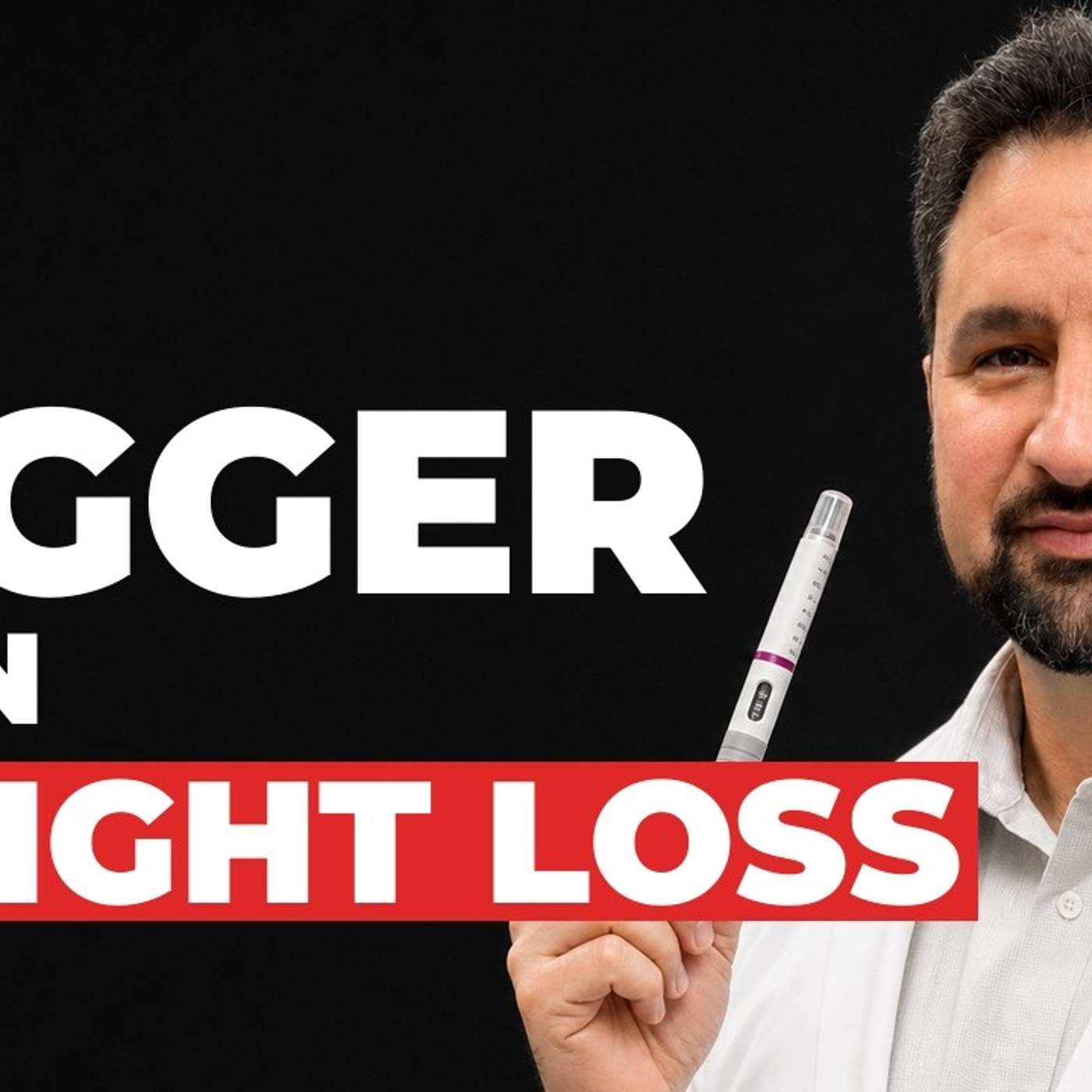
Social media has flattened GLP-1s into either a shortcut or a scandal. Gabriel Rocha, PA-C spends this hour on the part that gets lost, which is that these are metabolic medications and weight is neither the only thing they touch nor the most important thing to watch. He walks through what GLP-1s actually do: insulin and the pancreas, appetite signalling, the liver and kidneys, inflammatory signalling, triglycerides, and the four conditions of metabolic syndrome. He explains food noise, why it is not a formal diagnosis, and why the therapy turns the volume down rather than switching food off. On microdosing he is careful. There is no universally accepted medical definition of it. A plausible mechanism is a reason to study something, not proof that it works. Responding well to a lower therapeutic dose is not automatically microdosing. What matters is individualising the dose to the person, watching body composition rather than the scale, and knowing who is a good candidate and who is not. For educational purposes only. Not personal medical advice. GLP-1 medications are prescription therapies and require evaluation and monitoring by a qualified provider.
Welcome to the MedMatrix Method Podcast, where we talk about everything functional medicine. Today's episode is called Microdosing GLP-1s, Food, Noise, Weight Loss, and Your Health. And we are very much looking forward to this conversation because it is one of the biggest conversations in healthcare right now, GLP-1s. So what we really want is for patients to understand what's real, the hype, and what is actually safe. I am super excited to be joined by one of our lead functional medicine providers here at MedMatrix, provider Gabe Rocha, who is going to break down what patients should understand about GLP-1 medications, microdosing, food noise, metabolic health, and why functional medicine looks at the whole body instead of treating weight loss like one prescription or the number on the scales. So today, how the episode is going to work, like it usually does, is we start with our discussion. We have a discussion planned that we've gone through. As you come across any questions that you might have, feel free to leave them in the comments, and we will return back to them at the very end for our live Q&A. So don't, you know, cling on to them in your mind. You're welcome to leave a comment, and then we will return to it if you have that question. And just a friendly reminder that today's episode is for educational purposes only. It is not meant to be personal medical advice and should not replace care from your own medical provider. GLP-1 medications should only be used with appropriate medical guidance, dosing, monitoring, and safety considerations. If you are interested in receiving personalized guidance from one of our providers, you can go to our website, book a discovery call, and start the process to becoming a patient there. All right, Gabe, why don't you give us an introduction? Yeah, thank you so much, Leah. I really appreciate that great introduction and kind of setting the stage of everything. So my name is Gabe Rocha. I'm a PA. I've been practicing medicine for about 15 years now. Before that, I was an Army medic. Got to jump out of airplanes, do some cool stuff in the military, and a little bit about myself. I'm actually down in Charlotte, North Carolina. I have a beautiful wife, two kiddos, ages 10 and 12 now, just getting ready to start school today. It was the first day back to school for our kiddos, actually, and so lots of fun there. I've done everything from integrative to functional medicine, certifications in functional medicine and lifestyle medicine. But I actually got my start in conventional medicine, doing internal sports medicine, inpatient hospital medicine. So over my career, I've gotten a chance to see from everything a lot of different perspectives, to include things like skilled nursing facilities, dementia centers, which is really what's developed my passion in medicine, seeing kind of what the end road looks like a lot of times, not to be too morbid, right? But seeing those clinical pictures of folks in nursing facilities is, in a lot of ways, what prompted me to think, like, how do we avoid those things? Like, how do we not get there? How do we avoid the muscle wasting and the cognitive decline? And so that's a really big passion of mine. I'm excited today because we're talking about GLP-1s. And anytime that I'm looking for a therapy to implement, I'm really looking for how do we address the root cause of what's driving disease? And I think GLP-1s have a special place in that, you know, as we're going to talk about, there's lots of research going on and so much more than just weight loss. You know, I know that's the big thing going on is, you know, how GLP-1s are a weight loss shot. But these medicines influence appetite, satiety, blood sugar regulation, reward signaling. And so it's a much broader metabolic pathway. Metabolic is how our bodies use sugar and fuel for energy. But the dose and the clinical goal really need to be individualized, which is what micro dosing comes down to, right? A big part of it, at least. And so are we treating a number on the scale or are we trying to improve metabolic health? You know, muscle mass, you know, all these questions. I'm excited to get into it. Awesome. All right. So let's get started. What is this? Before we even talk about micro dosing, can you explain what the GLP-1s medications actually do? Yeah, great question. And so, you know, GLP-1 medications, it's a medication that, as I mentioned before, it affects appetite, satiety. It does it through slowing down of that gastric emptying. But it also helps with blood sugar regulation and insulin response. And so it's impacting all these different pathways. It's part of the normal communication system between the gut, our belly, the pancreas, which is what produces insulin, and the brain. And so there's this, you know, connection in these circuits that revolve around. But GLP-1s help to regulate, you know, when you feel like you've had enough to eat, the emptying of the stomach, blood sugar-dependent insulin release, and the pancreas is what releases that insulin. It also is important to know the gut-brain signaling. Again, like the food reward and motivation pathways that are also impacted. And so, you know, think of appetite as a radio. For some people, that station is playing loud all day. GLP-1 therapies can turn it down. They can turn the volume down enough that the food decisions require less constant effort. And so terzapatide, for example, is technically a dual GIP and GLP-1 receptor agonist. It impacts that receptor, right, that GLP-1 receptor. And although it is commonly included in the broader GLP-1 medication conversation. So these medicines, they're not simply medications that make someone eat less. They change several components of metabolic and appetite regulation. I'll dangle a carrot here for a moment because we're going to get into some of this fun stuff, which, you know, we originally thought of GLP-1s mainly through glucose, insulin, and digestion and appetite, as I just explained. But their biology extends more into the brain and the cardiovascular system, into the liver, into the kidneys, and inflammatory signaling. And so some of the benefits are really well-established clinically, while others, like I just mentioned, you know, the brain and inflammatory signals, like neurodegeneration and addiction, are still being actively investigated. And so that's why, again, you know, I'm excited about these GLP-1s and all the different, you know, uses of them that we're finding out more and more about each day. All right. So let's dive deeper into food noise. What is food noise, and why are people so emotional when it finally gets quiet? Great question, because I love the term food noise. Like it describes it so well to our patients and to our general audience that are out there listening. And, you know, and so even though food noise isn't a formal medical diagnosis, people, you know, once we quiet down that food noise, they can become emotional when it finally gets quieted because it describes frequent or intrusive thoughts about what to eat, when to eat, cravings, snacking or grazing, you know, anticipating that next meal. If you ever had your kiddos come up to you and be like, hey, mom, hey, dad, what are we eating for dinner? You know, and it's like, it's like 12.01 p.m. and they just ate lunch. You know, they just finished eating lunch and they're like, hey, what's for dinner? If you've ever had that thought, you know, that that's some of the food noise that's constantly, you know, ruminating and bouncing around in our head. And so, you know, a patient can sometimes describe it as, you know, I know I'm not physically starving, but my brain keeps telling me to eat. And so that that question can help to distinguish, you know, between physical hunger and food reward. You know, someone can be physiologically full, like, like feel full while food is still highly compelling. And that's that that food noise. And so let me let me make an analogy here. You know, GLP-1 therapy doesn't necessarily turn the food off, but it may turn it down so that the volume turns down, that eating becomes more of a conscious decision rather than a constant negotiation. Right. It's it's not a constant back and forth. It's really just like when I'm hungry, that's when I'll eat. And so the goal isn't to stop eating. The goal is to restore enough control that eating becomes a decision again. Interesting. All right. And this is kind of off of our notes, but the idea of like the satiation hormone. Right. Like, doesn't it play, don't GLP-1s kind of play into that, how feeling satiated is actually a hormone? Yeah, yeah, absolutely. And so so there's a few different hormones at play. And leptin and ghrelin are those hormones. And so any time that we are, you know, fighting with hunger hormones, we can often refer to those two hormones and say, how can we impact these hormones so that it makes eating or not eating for that matter easier? Because ghrelin and leptin are kind of like the brake pedal and the gas pedal. And so one increases hunger while the other one increases satiety. And so, yeah, so those are really two of the hormones that are probably most at play there. Great question. They sound like leptin and ghrelin. They sound like they should be like two evil little characters in a fairy tale. You know what? As soon as you said that, I was like, they look like they would be like little trolls running around. Yeah. Ghrelin and leptin. They kind of are. They are. They are running around in our bodies. So what does the evidence actually show about micro dosing right now? Right. We're talking about it all of a sudden. Yeah. So. So great question. You know, so. So a couple of things about micro dosing and what what is micro dosing? And, you know, micro dosing is like you alluded to earlier. You know, it's the use of non FDA approved dose that hasn't been well studied or hasn't been recommended. However, you know, between you and your physician or prescriber, you know, I think that micro dosing can be really, really helpful because it helps us really individualize the dose for the individual, their goals, their past medical history, you know, possible side effects that they may or may not have experienced in the past, you know, their sensitivity to other medications. And so for all those reasons, our ability to micro dose or to make micro adjustments in between doses becomes really a powerful tool that we can harness and make the most of. That's why I love to use these compounded tris epitides when or some of the tides that that that allows us to be more flexible and personalized. And so what does the evidence actually show about micro dosing right now? And and so let's talk about, you know, what's established and then, you know, what is emerging. And so established is that one based therapies have substantial evidence and studied therapeutic doses for things like diabetes, obesity. Cardiovascular and metabolic disease, metabolic disease, again, is how our body uses food for energy, how effective it is at using food for energy. And so and then and so that's what's well established. Like we know that there's great evidence for that. And then so let's talk about a reasonable individualized practice. And, you know, that's kind of what I was talking about just a moment ago and how how how this really helps patients that may remain at a lower titration dose when they're achieving appropriate goals and tolerating treatment. Well, so that's that's that's important to understand. So let's talk about emerging pathways of what what's ahead on the horizon and what we're still exploring with, you know, these these the micro dosing. And that's, you know, reward pathways, alcohol and substance use disorders and other neurological or metabolic applications. And so, you know, what's finally maybe what's experimental is longevity micro dosing. And so using it to extend life. Right. How do we use that sort of micro dosing for longevity? That research is being done and TBD to be determined. Then we also have autoimmune applications. So something really cool, for example, in the treatment of MCAS, mass cell activation syndrome, the autoimmune applications from a micro dosing standpoint, again, experimental. People are investigating it. There are some good results out there. But what we're seeing is that the micro dosing of GOP ones at like 10 percent of the lowest dose is showing that mass cells are being able to be stabilized. To prevent these overactive immune flare ups of mass cell activation syndrome. And so these are ultra low doses that specifically reduce inflammation independent of weight loss. And so there are two totally different ideas. And again, so this is all about, again, how the different evidence is showing up for micro dosing. And so the main takeaway here is that a plausible mechanism gives us a reason to study something. It doesn't prove that the treatment works. But the cool thing is, is that we're seeing some real early promising results. All right. That's really interesting about MCAS. I did not know that. And I know Dr. Rose and Colin just did that podcast on the connection between MCAS parts and other standards. So that's really interesting, too. I have to bring that up to them. Yeah. Yeah. It's a lot of fun. Yeah. Let me know if you want to dig more into it. We definitely can. So let's talk about why this matters. What is the difference between a low dose and a true micro dose of a GLP one? Yeah. So the difference that this matters and, you know, the difference between a low dose and a true micro dose is that, you know, when a patient responds very well to a lower therapeutic dose, it's not necessarily micro dosing. Right. So a low dose within normal titration or therapeutic use can have significant benefits. And so, you know, for example, I'll just use an example of trisepatide. The lowest starting dose is 2.5 milligrams. And so just so people can kind of conceptualize. I like to use trisepatide because it's a great example. But the standard doses range from 2.5 milligrams up to 15 milligrams. A micro dose usually refers to deliberately using a dose below conventionally studied or labeled therapeutic dosing. And so there's no universally accepted medical definition of GLP one micro dosing. But, for example, again, somewhere between, I would say, 10 percent to like 50 percent of the initial standard dose would be the micro dosing. And so in this case for trisepatide, we start at 2.5 milligrams. That's the lowest standard dose. We're talking about 0.25 milligrams. That would be 10 percent of the 2.5 milligrams. And so, you know, I want to be super clear about this. This is not medical advice. This is just all about, you know, education and kind of conceptualizing these different concepts. And so, you know, I think that one of the takeaways here is let me actually start by using an analogy is that you don't turn on air conditioner down to 50 degrees simply because it can't go that low. You adjust it until you create the environment you actually want. And so so similarly with with micro dosing, you know, a personalized dosing and micro dosing aren't necessarily the same thing. Really, you're you're really wanting to individualize it for what the patient needs. And I know I mentioned this earlier, but it's it's, you know, the patient presentation, their goals, their past medical history, you know, the previous perhaps side effects to. Or in general, other medications, because a lot of times we can get an assessment of, you know, how careful we want to be with the patients based on previous experiences with other medications. And so that can sometimes drive the idea or the indication to consider micro dosing depending on their experiences with other medications. All right. So what does social media get wrong about GOP ones? Yeah. Yeah. Great question. So so social media often gets wrong about GOP ones is that it often turns GOP ones into either a miracle drug or a dangerous shortcut. The real conversation is more nuanced because they can be really powerful tools, but they still require medical oversight, nutrition strategy, strength training and a long term plan. You know, social media often forces the conversation into two extremes. You know, miracle medication, dangerous shortcut, and neither is really a useful framework. GOP ones can be those those powerful medical tools, but it does not replace probably the most important. And I always I always say that, you know, at MedMatrix, we have lots of fancy tools. It's a blessing to be able to work at MedMatrix because not only are our staff amazing, but then the tools that that are our practice has available to help our patients are amazing. And so as fancy as those tools are, you know, stem cells and peptides and, you know, hormone replacement therapy, the list goes on. IV therapies, all the cool bells and whistles. It does not replace what I like to refer to as the six pillars of health. And so those six pillars of health are nutrition, physical activity, stress management, sleep optimization, healthy relationships and avoidance of risky substances. Everything that we do is based on that foundation of health. When we address all six of those, we we can make really cool things happen when one or two of those are off. It can significantly impact one of our great patients health. And so that's why we always want to be super thoughtful about that foundation. And so now let me take it back to the GOP ones, because as powerful as those GOP ones are, they don't replace protein, resistance training, sleep, adequate nutrition. You know, all the things that are going to help you optimize the benefits of GOP ones while reducing the potential side effects of GOP ones, because we want to we really do want to be thoughtful about those potential side effects. We're really I'm a little biased here, but we're really great at maximizing the benefits while reducing the potential side effects, because we are super thoughtful about personalizing it to each individual. And so the last thing I'll mention in the key takeaway is that more medication isn't automatically more medicine or better health. We want to be thoughtful about it. All right. Awesome. So let's go into. The question that I guess kind of falls outside of the social media, but why is weight loss not the only goal of a GOP one therapy? Yeah, such a great question. And and that really gets down to like what I think is maybe some of the coolest pieces of GOP one therapies. And so weight loss isn't the only goal of GOP one therapies because. The broader framework. Is that the scale is only one outcome potential goals and things that GOP ones can help with are blood sugar and A1C. And so if you're a diabetic or a pre-diabetic, you know, it can be helpful for that. It can help with insulin resistance. Insulin resistance is a really interesting term and something I'll spend a minute or two on is that is that there are four conditions of metabolic syndrome, high cholesterol, obesity, high blood pressure, high and things like diabetes. And so so those four conditions all have a root cause of insulin resistance. And so insulin, folks may know, is the the hormone that regulates blood sugar. And so. One of the cool things about GOP ones is that it directly improves insulin resistance. That's why I'm, as you can tell, so passionate about, you know, these these tools that we have. And so so, again, just to broaden it out again, you know, it's so much more than just weight loss. It's visceral adiposity. So so visceral adiposity, visceral fat is what's around our organs. It's the, you know, grandpa's belly. When when you push on grandpa's belly and it's like a rock, that's visceral adiposity. You push on it and it's not soft. It's really hard. It's really packed in there. And so that's the fat that's very dangerous. Unfortunately, it's it's strokes. It's heart attacks. It's inflammatory pathways. And so. So what else is it good for? It helps to lower triglycerides, which are part of your cholesterol. It helps to improve blood pressure. It helps to decrease cardiovascular risk. It helps with fatty liver. And we can go in depth about that. Trazepatide is also FDA approved for the treatment of sleep apnea. It helps with mobility. I know it's a long list and I promise I'm not a I'm not a rep for trazepatide. But as you can as you can tell, there's a lot of great indications for all these things. And so. So, yeah. So. So just to kind of put a bow on that, you know, it's not just weight loss. It's there's so many benefits to it. Awesome. And let's go into how GLP ones affect appetite and blood sugar differently than just eating less. I know we kind of touched on the hormones. I got excited and started talking about them. But I would love to learn more. Absolutely. And so GLP ones can affect appetite and blood sugar differently, much more than just eating less. And so, you know, as as we kind of talked about just a moment ago in terms like all the different things that it affects, you know, sometimes, you know, weight loss isn't the the visible outcome. It's not the only visible outcome. And it's not the most important. Often the more important changes are really happening underneath, underneath the hood, metabolically, underneath the surface. And so, you know, the the fact that GLP ones affect appetite and blood sugar differently can help to explain satiety hormones. Again, delayed gastric emptying, insulin response, glucagon regulation, gut brain signaling. These medications are not just willpower in our syringe. It's it's literally changing the way the body works. And what about muscle loss? What should patients know about muscle loss on GLP ones? Great question, because this this is a concern that I hear a lot. And understandably so. You know, I think many, many folks have come across friends and family members who have been on these GLP ones. Am I going to throw anybody under the bus? But and say, you know what the pattern typically is. But it's usually the folks that have the five to seven minute appointment get prescribed a GLP one and don't really get much guidance. Right. When that happens, unfortunately, I am not a proponent for that type of medicine. As you as you know, you know, we we operate very differently. But when when you hand somebody a GLP one without guidance that sets them up for failure and can lead to things like muscle loss on GLP ones. And it's not to say that any muscle loss is absolutely out of the question or that it's like even even one pound of muscle loss makes this a bad drug. It needs to be a ratio, though, in many clinical studies. We what they found was that patients on average, you know, they might have lost something like 20 to 25 percent ish or or even more. In some cases of their total weight loss was muscle mass loss. And so the key here is, is that that's that's not our patients. Our patients do not lose, you know, what? Epitide and some glutide found during their clinical studies. Our patients are usually somewhere in, I would say, just to give a general ballpark, you know, maybe five ish percent of total body weight loss is muscle mass. And so that's a huge improvement compared to the typical outcome. And so why is muscle mass preservation so important is because muscle is what drives metabolism and calorie burning. And so. Your muscle is what's going to drive your basal metabolic rate. And so, you know. And so let me take a step back and kind of describe, you know, that when significant weight loss happens, some some lean tissue loss is expected. But the goal is not necessarily to prevent every pound of lean mass reduction. It's really to preserve as much functional skeletal muscle mass as reasonably possible. And how do we do that? We do that through two forms, protein and resistance training. And so we'll talk a little bit about that in a moment. But. And so ways that we help to monitor that is through some of our in-body scans and body composition scans. And so so having a proper tool to monitor, you know, are you having healthy weight loss versus unhealthy weight loss? And again, it's all about preventative counseling and making sure that patients know exactly what to do and how to optimize, you know, all the benefits while reducing the potential side effects that come along with that. And so just to emphasize these last couple of parts is that. The priorities are adequate protein, progressive resistance training. So continuing to increase the resistance load, making sure that you're getting appropriate calories, making sure that you're getting good recovery, sleep, optimization, stress reduction and or stress management may be a better term and that you're not losing too much weight too quick. And so my general rule of thumb is, are you losing about one to two pounds a week? If that's the case, that's a win. And, you know, continue that, you know, nice, steady weight loss. And and then again, body composition monitoring. So important. And so. The final point, muscle loss isn't an argument against weight loss. It's an argument for deliberately protecting muscle during weight loss. Interesting. OK, so what happens when somebody loses weight but doesn't build a healthier metabolism underneath? Such a good question, because that's what we want to avoid at all costs. Right. It's like we're doing all the work. You're putting in an effort. But the key is, is. You know, losing weight and build a healthier metabolism underneath because because to answer your question, what happens when someone loses weight but does not build a healthier metabolism underneath? This pushes the conversation along and says that they may lose muscle. They may under eat protein. They may become nutrient depleted. They may struggle with constipation or fatigue, regain that weight after stopping the medication or never addressing the insulin resistance in the first place. And so these are all things that that would lead to not building that healthier metabolism underneath. And so when when when I see that pattern, that's when things like skinny fat happens. Right. Or that loss of muscle mass or your face gets shrunken. And, you know, that would go be face that some folks may have heard of or would go be but or what are some of the other terms that I've heard out there? I don't see it that often, be honest with you. Why? Because our patients, it doesn't they don't experience that. We are super thoughtful and deliberate about making sure that our patients get the best outcomes possible. All right. So who might be a good candidate for GLP one support and who would not be? Yeah. And so. So when I when I think about this question, who's a good candidate for GLP one support and who might not be? I really want to think about both potential benefit and the ability to safely tolerate treatment. And let me break that down. So potential reasons for consideration could include people with obesity or that are overweight with related overweight diseases. So things like diabetes or prediabetes, significant insulin resistance, visceral adiposity that we talked about before. How about that is and, you know, cardiometabolic risk. So if folks are at high risk for cardiac disease, heart attack, stroke patients. With liver disease, you know, a metabolically associated fatty liver. So those those folks are all great candidates. But at the same time, we always also want to review potential contraindications or folks that may not be great candidates for these therapies. So. So pregnancy is an obvious one. Personal family history relevant to what's called a medullary thyroid carcinoma or multiple endocrine neoplasia. You know, so those would be two contraindications. Anybody with significant disease, you know, and I always want to be thoughtful for those folks. Again, you know, I think we're really good at navigating the folks that do have some disease, you know, whether it be like mild to moderate constipation or, you know, heartburn or reflex or, you know. Yeah, I think those are some of the patterns that we come across and we can help folks navigate those challenges through through lifestyle and proper supplementation to avoid those issues that can get worse. And so other things that we would, you know, take into consideration would be gallbladder history, pancreatic or pancreatitis history, eating disorders. Something also very important to take into consideration their nutritional status. You know, so are some some folks are what I like to describe in this. Unfortunately, in our American society are overfed but undernourished. And so so that's a pattern that we want to be thoughtful about. You know, are you consuming a bunch of calories, but you're really not getting the micronutrients your body needs? So be thoughtful about that. Are they on other glucose lowering medications? You know, a couple of other thoughts about, you know, who would not be good candidates for these medications would be somebody who has an inability to maintain hydration or protein intake or caloric intake and and then the ability to appropriately monitor treatment. So are you know, will they stick with the program? Will they do what we ask them, you know, recommend for them? And so take away point for this availability does not automatically equal appropriateness of therapy. And what are some of those side effects and warning signs that patients should understand before starting? Yeah. So the major side effects and warning signs that patients should understand before starting a GOP one therapy include things like nausea, constipation, reflux. And and I guess I should maybe start by, you know, painting a picture of GI side effects versus maybe some of the, you know, muscle loss side effects that are associated with poorly tailored, comprehensive GOP one plans. And so I would put those in those two major buckets and then and then we'll get in a couple of details. And so the GI side effects are nausea, constipation, reflux, vomiting and abdominal pain, you know, gallbladder symptoms. So like your gallbladder is like right underneath your liver, which is in that right upper quadrant of your belly. Pancreatitis warnings. And that's, you know, left upper quadrant pain. So that's where your pancreas lives. And then things like excessive appetite suppression. So, again, we want to make sure that you're getting a baseline of calories, not too little protein. And and then. Yeah, so those are probably some of the major things that folks should be aware of and looking out for. All right. And past that, what are some of the biggest safety issues with compounded, compounded or poorly monitored GOP one use? Yeah. Yeah. Great question, because, you know, that kind of gets to the crux of what we've been discussing, you know, in terms of some of the potential side effects and, you know, who's not a good candidate for these GOP ones. And so some of the biggest safety issues with compounded or poorly monitored GOP one use, you know. Is is, for example, dosing confusion. And so when we think about the compounded versions of these, we want to make sure and I'm always super clear and deliberate in describing, you know, what we're doing, why we're doing it, how we're doing it, how we're going to dose these things. And so, you know, compound medications come in different concentrations and vital sizes and syringes and volume instructions. And then, you know, we have unit conversions from units to milliliters. So there's a lot of things to take into account. That's why when I'm prescribing one of these GOP ones, we're probably spending about 10 minutes on this one topic of how do compounded medications, you know, apply here. And so the other really important thing is, is we have our nursing staff to make sure that they go over these ideas a second time with our patients. And they'll like literally like walk them through. All right. This is a syringe. This is the needle. It goes on the syringe. This is the vial. This is how you draw it up. You know, this is how you inject it. This is what your provider prescribed for you. This is how much that looks like in the syringe. And so, as you can see, there's lots of great details to be explored and discussed. So those are some of the things that we want to be thoughtful about. And so, you know, the important questions that I would recommend individuals ask is, you know, what what's the drug in the vial? Like what what is that drug? What's actually in there? What's the concentration? Right. We're thinking of when we think about concentration, it's how many molecules of terzapatide are in a liquid of suspension. And so, you know, that's the concentration. How many milliliters or units does that equal? You know, so again, MLs and units are kind of what we think about when we're drawing up that dose. And then, you know, making sure that you understand exactly how to measure it. And is someone monitoring the response and adverse effects? Right. So these are all questions about what we want to think about. So it's it's not an argument that every compound of medication is unsafe. It's an argument for clarity, quality sourcing, accurate dosing and of course, medical oversight. All right. So let's really drill this in. Why should micro dosing GLP ones not be treated like a DIY wellness hack? Great question, because I suspect that there is that idea out there about, well, hey, we're just using a little bit. We're micro dosing it. It's not really a full dose. So it's OK. Right. If we experiment and play with this thing. And I would say absolutely not. That's a terrible idea because these are really powerful medications. And so micro dosing should not be treated like a DIY wellness hack, because even at lower doses, GLP ones are prescription medications that can affect your appetite, your digestion, how your body regulates blood sugar. It can impact hydration. It can impact nutrient intake and side effects and many other side effects. Right. And so those changes should always be medically supervised and monitored. Right. With labs and physical exam findings and vital signs, history. So it's a complex topic. It really is one that I love to be involved in and get to do with our patients every day. But, you know, I've been doing this for medicine in general for 20 plus years. And so I want to make sure that other folks have that similar support. All right. And what does functional medicine add to the GLP one conversations? So functional medicine. Again, I'm biased, but appropriately so, because I know how the great outcomes that we get for our patients. And so so functional medicine, I think, is in a unique place to be really successful with GLP one therapy, because we ask the question, you know. Is the patient struggling metabolically in the first place? It looks at things like insulin resistance, blood sugar, inflammation, gut health, hormones. It's really looking at everything. It's not just the dose. It's really the big picture. And so. And what we're finding is that GLP one demonstrates that the metabolism isn't just one organ. And that's what functional medicine does really well. We don't focus on one organ. We focus on the whole body. And so what do I mean by that? That the metabolism isn't one organ. The metabolism is the gut, the brain, the pancreas. It's the adipose tissue, like the fat tissue that we have in our bodies. It's the liver. It's your cardiovascular system, your heart, your blood vessels, your muscle. And so because it's it's the GLP one, as we've talked about throughout our session today, is that it's all those things. And GLP ones are having an impact on all those different organs and all those different systems. And so we ask the question, you know, why is the patient struggling metabolically? We ask, what does their body composition look like? How much visceral fat versus muscle do they have? What's happening with their sleep? You know, what's happening with nutrition? What's happening with stress, liver health, hormone and thyroid context? You know, what happens to eating behavior once the food noise is improved? And so all those questions are really important and part of the big question. And so, you know, the the. The key takeaway here is that, you know, weight loss should be the beginning of a healthier metabolism, not the entire definition of one. Agreed. So when somebody comes to MedMatrix and they're asking about GLP ones or microdosing GLP ones, what does that process actually look like? Yeah, great question, because this this is where it gets really fun, because when somebody comes to MedMatrix asking about microdosing GLP ones and what that process actually looks like, it starts with a discovery call. It starts with a conversation, getting to know each other before a patient is asked for any kind of commitment or any kind of, you know, upfront fees. It starts with a free discovery call that starts with an easy conversation where we start to better understand your symptoms and your goals. So that way, before you ever, you know, commit to anything, we you already know the big question, which is, can you help me? And once we get to know you really well, we can identify that pretty quickly. And so it starts with defining the problem, right? What's the goal? Is it food noise? Is it weight loss? Is it insulin resistance? Is it diabetes? And then we will start with the dose. And, you know, we want to individualize that dose. And so is GLP ones appropriate for you? Of course, that's that's a major question. And then what does that personalized approach look like? So it's it's not automatically like, hey, how fast can we get you the maximum dose? It's actually like, how do we get you to a regular dose that can then help you achieve your weight loss goals while avoiding those side effects that we've talked about? And so we want to start and build around a foundation. We want to protect your metabolism. Again, protein, resistance training, micronutrients, movement, sleep, you know, all that important stuff. And then we're tracking the outcome and track what matters. So we're going to follow your weight, the waist, your waistline, your visceral fat, your muscle. And body composition, we look at things like your glucose and A1C, your cholesterol levels, blood pressure, GI tolerance, energy levels, you know, your overall function. And so so so just to break that down, we're looking for defining the problem. What's the proper therapy? How do we establish that important foundation and protect your metabolism? And then we're tracking things, you know, the outcome. Right. So all that good stuff. Awesome. So let's talk about our takeaway. If somebody listened to this whole podcast or half of it or a few minutes of it or a second, what do you want them to take away? If they're curious about micro dosing, GLP ones. Here's the takeaway. And to kind of wrap this thing up with a nice little bow, GLP ones can be powerful tools for appetite regulation, for food noise, for weight management and metabolic health. And. And micro dosing as as nice as a buzzword as it is, it's not an easy DIY at home kind of a thing. And so, you know, it is very, very powerful tool that helps us at MedMatrix use it as a as a as a workaround to make sure that we are personalizing the dosing as much as possible. The real goal isn't just taking the smallest dose possible. It's finding the safest, most effective, most personalized plan while protecting muscle nutrition, digestion, hormones and long term metabolic health. And so GLP one medications are much more than just weight loss medications. But that doesn't mean every interesting GLP one mechanism is the right option for you. And so so going through that process and better understanding, you know, what the dosing is so that we can meet your personal goals, that. That's the goal. And so the right patient, the right goal, the right dose and measuring the outcomes that actually matter. The right dose is the one that helps you accomplish your goals while preserving all those important things that we track nutrition, muscle function and long term metabolic health. Awesome. Well, that is all of my questions. Those are all my questions. So and it doesn't look like we have any questions on the stream. I guess you asked you answered any question there could be. So, Gabe, thank you so much for your time. Thank you so much for all of the information that you shared with us today. I definitely learned a lot. So I'm excited for your next month of podcasts. Yeah. Yeah. Today was exciting. We got to cover a lot of ground, I think. Good. They are big. GLP ones are a big deal right now. I have a feeling they're all I was going to say. I have a feeling they're only going to get bigger, to be honest with you. You're not wrong there. All right. Yes, ma'am. Thank you so much, Gabe. Thank you for your time. And can't wait until next time. Thanks, Leah. Have a great day.