
Med Matrix Method · Med Matrix
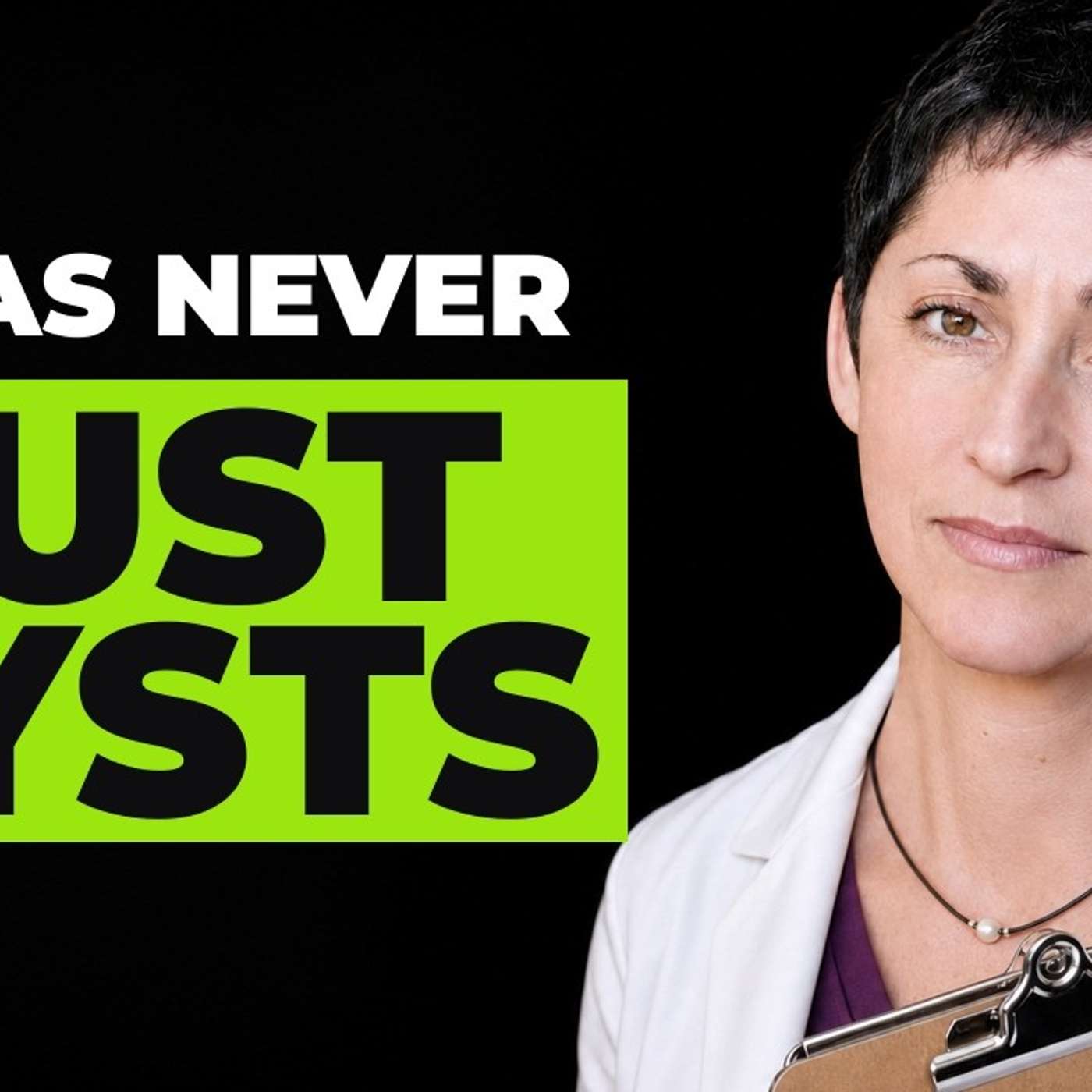
PCOS has a new name, and the old one was doing real damage. It stood for polycystic ovarian syndrome, and that "polycystic ovarian" piece is what stuck. If an ultrasound did not find cysts, people were often told they were fine. Dr. Sasha Rose is direct about it: we now know that is not true. The new name, polyendocrine metabolic ovarian syndrome, positions the ovaries as one piece of a much larger hormonal and metabolic picture rather than the entire condition. Dr. Rose walks through what that means in plain English, why the experts kept "ovarian" in the name and why she is glad they did, and how androgens, insulin, inflammation, sleep, stress and cortisol all feed into it. She also covers what actually needs to be tested, why you do not have to check every box to have the condition, how the conventional approach has evolved, where GLP-1 medications fit, and what follow-up care looks like when the whole system is treated instead of separate symptoms. For educational purposes only. Not personal medical advice.
Welcome to the MedMatrix Method podcast, where we talk about everything functional medicine. Today in our episode of From PCOS to PMOS, Rethinking a Whole Body Condition, we are going to be talking about this recent name change. I am excited to be joined by Dr. Rose. I'm always excited to be even close to Dr. Rose, so I'm always excited. Dr. Rose and I have been talking about this for quite a while since it happened. A little bit of structural information is that the episode is going to consist of two parts. The first is our discussion where we have put together a discussion to just talk everything about PMOS and this recent change. After that, while we're having this discussion, if you have any questions, please leave them in the comments. Then at the end, for our second part, we will return to those questions for a live Q&A. Don't feel like you have to keep them in mind for the live Q&A. You can just drop them in the comments. Also, always as a reminder, this episode is for educational purposes only. It is not meant to be personal medical advice and should not replace care from your own medical provider. If you are interested in receiving personalized medical guidance from one of our providers, we would be happy to help. You can go to our website, book a discovery call, and start that process of becoming a patient there. All right, Dr. Rose, let's hear an introduction. Yeah, my name is Dr. Sasha Rose. I am a naturopathic doctor. I'm a licensed acupuncturist. I'm one of the lead providers here at MedMatrix. I've been practicing functional medicine for almost 21 years and I sit on the Forbes Health Advisory Board. I am a published author and I do a lot of women's health, a lot of hormone replacement therapy, and I work with women of all ages. Because of that, I have seen a lot of women who we either suspect have PMOS or they come to me already with that diagnosis. As we'll talk about with the name change, a lot of them were given that PCOS label at some point. Just online, social media, there's a lot out there. I think there's some misinformation out there. As you said at the top, I think it's a really important topic. All right, so let's get started. What is this? Before we go into PMOS, what were patients traditionally told that PCOS was? Yeah, so traditionally, people, patients were told that PCOS was really a reproductive, a fertility issue and that in order to be kind of even considered as somebody that might have PCOS, the woman needed to have irregular periods. They needed to find ovarian cysts on ultrasound, acne, unwanted facial hair, and then depending on the time of her life and what her goals were, coming up against infertility. Uh-oh, we good? Yep, you're back. So all of that matters because that PCOS, that polycystic piece of the name, polycystic ovarian syndrome, really was like kind of what stood out. You basically, if they didn't find cysts, then they were like, well, forget it, like you're fine, you don't have that. And we now know that that's not true. All right, so I mean, we kind of covered my next questions, which was, what does it mean? PMOS, what, why was that wrong, PCOS for so many patients? Why did experts keep the word ovarian and PMOS if this is now a whole body condition? So I'm happy that they did. I'm happy that the experts, those in like the endocrine society, did keep the word ovarian in PMOS because yes, it's a whole body condition and ovarian function still matters. So ovulation, menstrual cycles, fertility, the androgen-related ovarian activity, it's still part of the condition. It's just not the whole condition. It's not the whole picture. So the difference is that the ovaries are now positioned kind of as one piece of this larger endocrine, meaning hormonal and metabolic picture. So polyendocrine metabolic ovarian syndrome, that too is a mouthful, but it's just a much better description, in my opinion. So can you break down polyendocrine metabolic ovarian syndrome? Oh my God, it is a mouthful. Just in plain English. Yeah. So polyendocrine metabolic ovarian syndrome basically means that there are multiple hormone systems involved. The metabolic piece of that term means blood sugar, insulin resistance, possibly cravings, energy, inflammation, body composition, and long-term metabolic health. That's kind of having that metabolic word in there just makes it pretty clear that all of that is important. Ovarian, as I mentioned earlier, means cycles, ovulation, and fertility. Okay. So let's get into why this matters. Yeah. Why does this name change matter in medicine? So I think the name really matters for a couple of reasons, but one, it's what patients hear. It's what they notice. It's what a provider who's kind of looking for a diagnosis will look for. It will shape what actually gets tested, and therefore, what gets treated. So if the name is really centered around ovaries, then oftentimes, those metabolic, those endocrine drivers, those tests are going to be missed and omitted. So I think it can sometimes be the name can help in both kind of overt and covert ways that even a provider might not even realize that that name change is influencing what we call in medicine is like a differential diagnosis. So we're like trying to figure out what's going on with a woman's health, and the fact that this now has polyendocrine metabolic in the name will help possibly fine-tune and shape that differential diagnosis. So making the eventual diagnosis more accurate. This isn't in our questions, but kind of to ask based off of your answer, past just PCOS becoming PMOS and getting better tests, better diagnoses, I guess, can we talk in like a broader sense of why the name of a condition matters so much in medicine? It's a big question why the name, like a medical term or the name of a condition matters. My opinion on that is that it, well, I think it just acknowledges, like what I like specifically about this name change, and the more that this kind of thing happens, I think the better, is that it acknowledges that this condition affects multiple parts of a female body and potentially that it's going to affect different women differently. And so because we are complex beings and we are not, you know, this is one condition. Again, it's not just your fertility. It's not just your reproductive system. It's other metabolic and hormonal aspects of the body, and they're all interrelated. And so rather than having these kind of diagnoses that kind of keep everything within one little system and don't even acknowledge that everything impacts each other, I think is a disservice to women and to patients. And so broadening the term, the name, I think acknowledges the complexity of our bodies. And so to me, kind of, I guess, philosophically, that's why it's important. Great answer. Okay, so to pivot a little bit, what is an androgen and why does it matter? So androgens include hormones like testosterone and DHEA sulfate. Androgens, things like testosterone, do not just apply to men. Women need androgens. We produce androgens. And when androgen activity is too high in a female body, it can be part of the picture when we're, in terms of what's contributing, partially causing things like acne, unwanted facial hair, hair thinning on the scalp, irregular ovulation, and even cycle, menstrual cycle changes. Interesting. So how does the PMOS name help patients understand those symptoms that used to feel unrelated? So again, we have polyendocrine metabolic and ovarian. That's all in the new name. And so it really does help connect cravings, fatigue, irregular cycles, acne, hair changes, weight, even like body composition, difficulty losing weight, mood changes, inflammation, and blood sugar issues that that's part of the bigger pattern and condition. So that's the metabolism is kind of that piece, again, that will encompass things like the weight resistance, the inflammation, the blood sugar issues, and then the polyendocrine is like, you know, endocrine meaning hormonal. So it's multiple hormones, including the androgens. And that's where you get, again, the hair changes, the acne, potentially the irregular cycles as well. So it's just a way to kind of, again, see this as maybe a little bit more of a far reaching and complex condition than just cysts on the ovary. Yeah. So I'm kind of going to ask the same question, but add a little bit to it. Why is PMOS not just a period or a cyst or a fertility issue? But why did we think it was just that for a while? So those are two kind of two questions. So PMOS is not just about your menstrual cycle. It's not just about having a cyst. It's not just about fertility, because it can involve, as we've said, blood sugar, insulin resistance, inflammation, maybe excessive androgen activity, gut health, even stress, resilience, sleep, mood, all of that, like body composition. And so it's and fertility and potentially cysts on the ovaries and irregular cycles. Your second question was, why did, what was your second question? Why did we only associate, you know, PMOS to the point where it was PCOS? Why did we only associate it with really like the reproductive system? I think when it was first kind of discovered, however many, many, many years ago, it was, that was kind of the hallmark was that a woman would have cysts on her ovaries and she would oftentimes have difficulty conceiving. And so it was really focused on that. And it was often taught that you, in order to really get that absolute diagnosis, you had to have that ovarian issue. And so it just kind of began, again, it was in the name, right? And so that's kind of what sticks is that polycystic ovarian piece of the name. And we now know that PMOS, there's a lot of different kind of variations of the same condition. And you don't need to check all of those boxes in order to have the diagnosis. Okay. So let's get into, I guess, symptoms and root causes, right? Our root cause is PMOS. But what symptoms should make somebody wonder whether they are dealing with PMOS? So some of the most common symptoms and symptoms that a woman might look out for if she is wondering if she has POMS would include irregular menstrual cycles or skipped periods altogether, acne, facial hair, hair thinning, intense sugar cravings, difficulty losing weight, kind of despite optimal lifestyle choices, fatigue, energy crashes, brain fog, mood swings, poor sleep, difficulty conceiving, so fertility challenges, bloating, that's kind of like abdominal bloating, and inflammation. Now, the caveat with all that, and for our viewers and listeners who have, you know, sat in on any of our other episodes, we all know that a lot of those symptoms that I just listed can kind of be a lot of different things. So especially the things like body composition, fatigue, brain fog, mood swings, like it doesn't, if you have three of those, that does not necessarily mean you have PMOS. It can mean a lot of different things, but again, if you have like enough of those that it makes, that it's a possibility, that's when I would kind of tell a patient that it might be, that might be accurate for her. Okay, let's talk about specifically insulin resistance. Why does insulin resistance change a whole conversation around PMOS? So if a woman has insulin resistance, and we can test that easily on blood work, if insulin resistance is part of the picture for an individual, it changes the conversation because that insulin resistance can influence and be a part of the cravings, the fat storage, the blood sugar swings, even the fatigue, inflammation. Also, interestingly enough, androgen production, ovulation, cycle regularity, and that long-term metabolic risk. So it needs to be tested for, in my opinion, and if it is, if you know somebody is kind of not technically insulin resistance, but she's moving in that direction, that needs to be part of one, what we're kind of digging for in terms of root cause medicine, but then also it's going to affect, you know, what we're treating and how we're treating it. Okay, and we spoke a little bit about this. How, why can two women with PMOS have completely different symptoms? Very common. Two women with PMOS can present with very different symptoms. One might, her main concerns might be acne and irregular cycles. Another woman around the same age might have difficulty losing weight and her test results might indicate insulin resistance. A third might be dealing with fertility, digestive symptoms, inflammation, and kind of a real, I'm going to say a low stress resilience, low stress tolerance. So, yes, as we, as I said earlier, it's like it can affect and does affect women differently. You don't have to check every single box. It's going to present differently. And that doesn't mean that one kind of presentation is more, you know, valid compared to another in terms of an accurate diagnosis. Okay. So, how can gut health, inflammation, sleep, and stress all feed into the symptoms? I know we talked about how they could be symptoms of PMOS, but how can they feed into more symptoms? Well, they often do. So, gut health, inflammation, sleep, stress can and often do feed into PMOS symptoms. We know that gut health strongly influences systemic inflammation, nutrient absorption, hormone metabolism, and immune signaling. Kind of inadequate or suboptimal sleep and stress management will affect cortisol, cravings, insulin sensitivity, even ovulation, mood, and just general recovery. So, definitely commonly overlooked, but I would say pretty, you know, they all are really important factors. All right. So, let's go into more of a conventional approach, which doesn't, I mean, we're talking about that kind of complete, like, change in approach this episode. So, I guess we can kind of go into that, like the approach to, where did the approach to PMOS when it was PCOS fall short? So, things happen slowly in medicine. Change is slow. So, I would argue that conventional care is often, not always, but often probably still treating PMOS as if it's PCOS. So, you know, with, you know, the exception of people that really specialize in this and hopefully are, you know, a little bit more current. So, the kind of conventional approach to, we'll call it the old PCOS, is a focus on cycle control, a focus on acne, fertility, weight without, again, digging deeper, evaluating insulin resistance, looking at inflammation, checking thyroid function, nutrient status, overall gut health, the kind of the lifestyle pieces, the stress, the sleep, and then, you know, some of these other things that in functional medicine we use to assess metabolic risk. So, it's still very, I think most of the time, unfortunately, it's still very much focused on, again, your menstrual cycle, your fertility, your acne, and your weight. Okay. And what does birth control help with, and what does it not fix? Birth control can help with a lot of things, but it does not fix everything. So, it may help, in a lot of women, manage things like irregular bleeding. It can help with acne, depending on the type of birth control and the type of, kind of, again, androgenic activity that's going on with a woman. It doesn't usually, doesn't necessarily address insulin resistance, inflammation, certainly not gut health, nutrient deficiencies, sleep, stress, or those underlying metabolic dysfunctions. Again, focused on, kind of, the menstrual piece of it, the ovulation, the, kind of, very much that fertility and female sex hormone part of things. Okay. And why do so many patients leave a diagnosis without understanding what is driving the condition? So, a lot of patients will leave a doctor's office, you know, partially satisfied, I'll say. They have a diagnosis, but they don't really have an understanding of what is driving that. Again, what is the root cause of that diagnosis? So, maybe they're given a label and an accompanying prescription. They might be given weight loss advice, but they're not given, kind of, a comprehensive explanation of how it's all tied together. So, how their hormones, how their metabolism, how all of the symptoms that they are having are all connected. And again, you know, we like to make a point that this is in no way, kind of, blaming individual providers. It's, you know, oftentimes there's just not the time in those visits. And the patients don't really know, and they shouldn't be expected to know what to ask. And so, but they are often leaving feeling like, okay, I have this diagnosis. I have this prescription. But, and depending on the individual, they may or may not be looking for more, but oftentimes they feel like there has to be more to this picture. I just don't know how to ask for that. Well, okay. So, now let's go into more of a nuanced or functional medicine approach. I don't know if that's, if those are the same, but my first question, which I threw in there with little information, was where do GLP-1s and newer metabolic therapies fit into the PMOS conversation? And why are they only one piece of the plan? Because I've been hearing a lot of buzz that people who are taking a GLP-1, they're actually getting, it's helping them with their PMOS. Yeah, not a surprise. Yeah. So, I do think that GLP-1s and other newer metabolic therapies can fit quite well into the PMS conversation. They're not the magic ticket. They're part of the overall plan, ideally. So, as we said, again, at the beginning of the conversation, that PMOS is really endocrine and metabolic, right? It's basically kind of this, oftentimes this blend, this mix of an imbalance, both hormonally and metabolically, and it's not just about the ovaries. And so, GLP-1s, one of my favorite things about GLP-1 medications is the benefit to metabolism. Yes, we know that it can often help with kind of optimizing weight. And separate from the weight piece, we see a lot of improvement in things like insulin resistance, even non-alcoholic fatty liver disease. We see blood sugar and cravings go down. A lot of people who kind of have looked at GLP-1s know about food noise, right? That's the craving. So, food noise often goes away or greatly decreases. And so, all of that is, and even visceral fat, right? So, even some of the fat that's in the internal and the visceral organs, that improves. And people don't need to be on high doses on the GLP-1s to often get improvement in the metabolic markers. So, I feel like it has to be part of the conversation. They're not right for every person. They're not right in every case. But because we now have metabolic or metabolism in the name and it's recognized that metabolism is a big part of the picture, then it just makes sense to use, I think, one of the best tools that we now have to optimize metabolism. I'm hearing everything about GLP-1s, right? GLP-1s are... It's a hot topic. It really is. And especially, you know, when it comes to, at first, that we were introducing them to weight loss, like socially. Yeah. People who don't know much about peptides or weight loss methods, they're like, I just thought it was a weight loss medicine, and marketing. So, I think it's incredibly interesting that more information is coming out about it and how a metabolic therapy is, you know, as a bystander, not as a provider, how a metabolic therapy can help you in so many different ways. That is so cool. And one thing I think I didn't stress enough with the GLP-1 class of peptides and medications and PMOS is that it's also, they're really very good at lowering inflammation. And as we've mentioned, inflammation is often a big part of PMOS picture. All right. So, yeah, I mean, they're crazy. So, how does functional medicine organize PMOS instead of treating each symptom separately? So, I do think that one thing that we in functional medicine are really good at is, again, looking holistically at an individual and looking at kind of symptoms as patterns rather than separate symptoms that kind of require what I call Band-Aid medicine. Well, there's this medication for that and another medication for that without kind of, you know, I think we're really good at kind of standing back and again looking for patterns and connections. So, with PMOS, we're looking again for those dominant drivers. So, insulin resistance, androgen excess, inflammation, gut dysfunction, stress load, stress resilience, thyroid dysfunction, nutrient deficiencies, metabolic dysfunction, sleep disruption, lifestyle, like that all is going to play a role for that individual woman. And they're not all going to play a role. They're not going to all have kind of equal influence, but it's part of our job as functional medicine providers to especially initially kind of consider all of that, all of those. Okay. So, let's go specifically into functional medicine at MedMatrix. What would make you say that a PMOS plan is actually working? So, to say that a PMOS plan is actually working, so this basically means this is a, you know, follow-up visits. We've already kind of established care. We've kind of decided that this probably is PMOS, and we've started, something is already kind of in place, some kind of plan, and then we're, you know, reassessing. So, symptom-wise, like what I'm kind of looking for when I'm asking for updates from a female patient who has PMOS is are you still, you know, are you still having these energy crashes as frequently? Are they as significant? Are they as kind of impactful? Any change with cravings? Again, that food noise piece, just generally like you're kind of, whether it's sugar or other cravings, any change in that? What's your menstrual cycle like? Can you kind of predict when you're going to get it? Is there any kind of schedule at all? Skin, like some women, acne is not part of the picture, but if it was a part of the original concern, has there been any improvement with that? Any change with hair growth, right? Like are you still, again, not for every woman, but if hair shedding was a concern, has that changed? What's your sleep like? What's your mood like? What's your gut health like? Are you still bloated? And then we have, you know, body composition, and so that's what the woman tells us, but we also have our in-body scale, which gives us actual data points and metrics to look at body composition. Insulin markers, and that's, again, a blood test that will repeat to look at her insulin levels. Same with inflammatory markers, right? So if things were elevated initially, we retest, we see if they're going in the right direction. And then, obviously, hormonally as well. We're going to be looking at the androgens, we're looking at estrogen, we're looking at progesterone, even cortisol. All right. And if somebody were to come to MedMatrix with suspecting that they have PMOS or they have PMOS symptoms, what would that process look like? So somebody comes to MedMatrix, they present with a lot of the PMOS symptoms that we've discussed, or, you know, previously they were given a PCOS diagnosis. The process for that individual is going to basically be, we do a full health history, ask about menstrual cycles. Obviously, like, are you on birth control? Are you on an IUD? All of that. What are your symptoms now? How long have you had them? Are there symptoms that you used to have, and for one reason or another, you no longer have those? Nutrient review, right? Like, how do you eat? Trying to assess basically putting gut health together with how that person eats, like what kind of nutrients are they're actually consuming and absorbing and able to utilize? Medication review, supplement review, relatively in-depth sleep and stress assessment, metabolic evaluation, when relevant, fertility goals, the comprehensive labs that we've mentioned before, that's, you know, that's kind of takes up a big part of that initial meeting and then coming up with a very personalized plan. All right. So that is all my questions, really, for this discussion. I do want to end with, what would you say the biggest takeaway for a woman hearing the term PMOS for the first time is? So I think a lot of women probably are hearing the term PMOS for the first time. You know, when the name change first happened, I think there was some press about it. I don't think there was enough press about it, but I think for, you know, unless you're kind of in certain social media circles, you might have missed it. So if a woman is hearing the term PMOS for the first time, I would like her to take this away, which is that it's not just a rebrand. It's a more accurate, more descriptive name for a condition that has always been about more than the overties. So the shift from PCOS to PMOS hopefully helps patients really see the full picture and providers, I would like to say, see the full picture. So multiple hormone systems, metabolism, insulin resistance, inflammation, yes, ovarian function, gut health, stress, and kind of long-term metabolic health and long-term wellness. So in functional medicine, we really do help connect all of those dots, build a personalized plan that can support a woman both kind of in the short term and just as important, you know, with her long-term health. All right. And that is all my questions. Is there anything else that you want to add? It doesn't look like we have any questions for our live Q&A. I don't have a game because I'm not calling, but is there anything that you want to leave people with? Is there anything we didn't touch on? I just, I feel like this is a really good, this condition and the name change and kind of this conversation, I think it's a really good example of where functional medicine can shine again, because it's one of those conditions that touches on so many different parts of a female body. And unfortunately, conventional medicine is still very much of like specialists staying in their lane. And as a whole, I think conventional medicine has maybe, if it ever had that strength, it's moved away from it of like, really kind of looking at a woman individually and seeing that it can kind of these, a condition like this can manifest differently in different women, different people, and that it can affect all these different systems. And I think functional medicine, that's where we are really good. I think we are really good at kind of stepping back, looking at multiple systems at once and how they interact with each other. And as always, just, you know, it's very much about creating personalized medicine. Awesome. Well, thank you so much, Dr. Rose. Thank you, Leah. For me, and I hope everybody else enjoyed it, we do have a microdosing GLP-1 webinar coming up, which would be really interesting because that helps a lot with like metabolism and, you know, PMOS and satiation, things like that. So that would be very interesting. If you guys want to look out for that, tune in. Again, this podcast is only for educational purposes, but if you are looking to become a patient, feel free to visit our website and book a discovery call and start your journey ASAP. We would love to have you. And again, Dr. Rose, thank you for your time. Always a pleasure. And I learn so much from you every single day. So thanks, Leah. All right. Bye, guys.