
Mastering Therapy · Natalie Stott
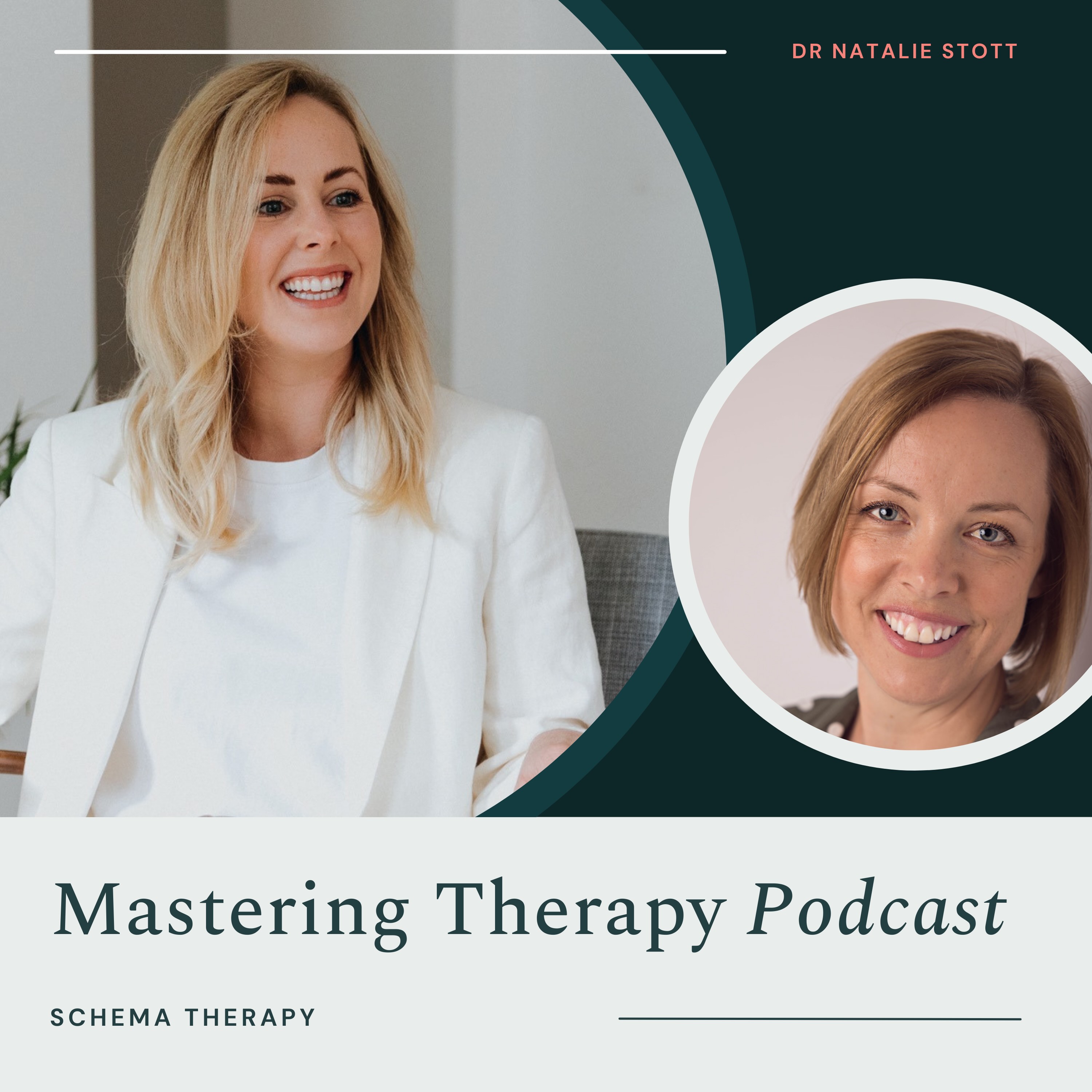
S4E6: The Power of Empathic Confrontation and Mode Mapping: Schema Therapy | Dr Jo White Ever had a client say, “I know it’s not logical, but I just feel… defective”? This episode of Mastering Therapy unpacks schema therapy with ISST-certified schema therapist and supervisor Dr Jo White. Hosts Dr Natalie Stott and Jo tackle the origins of schema therapy, why Jeff Young developed it when CBT wasn’t cutting the mustard, and what exactly a “schema” is. Expect practical metaphors, mode maps, and hear how limited reparenting can shift entrenched patterns. From how schemas form in childhood, to the therapist’s role with healthy adult mode, this episode is full of clinical pearls for anyone curious about alternative models or thinking beyond core beliefs. There’s even a nod to chairwork, imagery rescripting, and handling those confrontational moments in therapy. TIMESTAMPS • 00:00 What is schema therapy and why did it emerge? • 04:22 How to explain a schema to clients (metaphors that actually work) • 09:48 Introducing “modes”—and why behaviours matter • 17:58 Limited reparenting: what it is and how boundaries play a role • 21:59 Empathic confrontation: cold tap, hot tap, and getting the balance right • 28:29 Schema therapy in brief: is short-term work possible? • 31:15 Mapping out modes and schemas with clients • 33:53 Experiential techniques: chairwork, imagery, and mode mapping • 40:11 Therapist schemas and supervision: you’re in it too • 45:39 Training routes and schema therapy resources KEY TAKEAWAYS • Use “schema glasses” as a client-friendly metaphor—schemas filter every situation. • Limited reparenting is in-session modelling of healthy adult responses; boundaries are key. • Modes describe how schemas play out: learn to identify vulnerable child, coping, critic and healthy modes. • Empathic confrontation helps clients change entrenched patterns—adjust the “hot and cold” for effectiveness. • Always map modes and schemas collaboratively—help clients spot their emotional triggers and bodily responses. • Imagery rescripting can reduce schema sensitivity; the therapist actively steps in to rewrite old memories. • Long-term schema therapy is ideal, but elements can be adapted for briefer interventions (with caution). Guest Information: Dr Jo White ISST-certified schema therapist, trainer, and supervisor. Experienced in integrating schema therapy into clinical practice and supervision. Clear, practical approach to teaching therapists. Website: https://www.schematherapyworks.co.uk/dr-jo-white Resources mentioned: BESQ - Brief Early Schema Questionnaire Schema youtube Schema blog ** Check out Mastering Therapy’s Youtube Channel for all podcast episodes ** For notification on up coming episodes and for occasional summaries of tools discussed on the podcast sign up here: www.masteringtherapy.com To recommend a topic you’d like to hear about, or if you’d like to appear on the podcast please get in touch at www.masteringtherapy.com/guest For private...
0:02Welcome to the Mastering Therapy podcast.
0:06This is a show for psychologists, psychotherapists, and counsellors who are
0:10looking to build on their therapy skills, increase confidence in working with
0:14clients and be inspired by alternative models, tools, and ways of working.
0:19I'm your host, Dr.
0:20Natalie Stott.
0:21I'm a clinical psychologist and founder of Supervisor Platform,
0:25A directory that supports.
0:26Clinicians to showcase their supervision and training to other therapists.
0:30It also helps you to find a supervisor that fits with your work and your style.
0:35Join my guests and me as we learn from one another and aim to take
0:38insights and put them into action.
0:40This is season four.
0:42Let's go.
0:44Natalie (Host): Welcome everyone to this week of mastering therapy.