
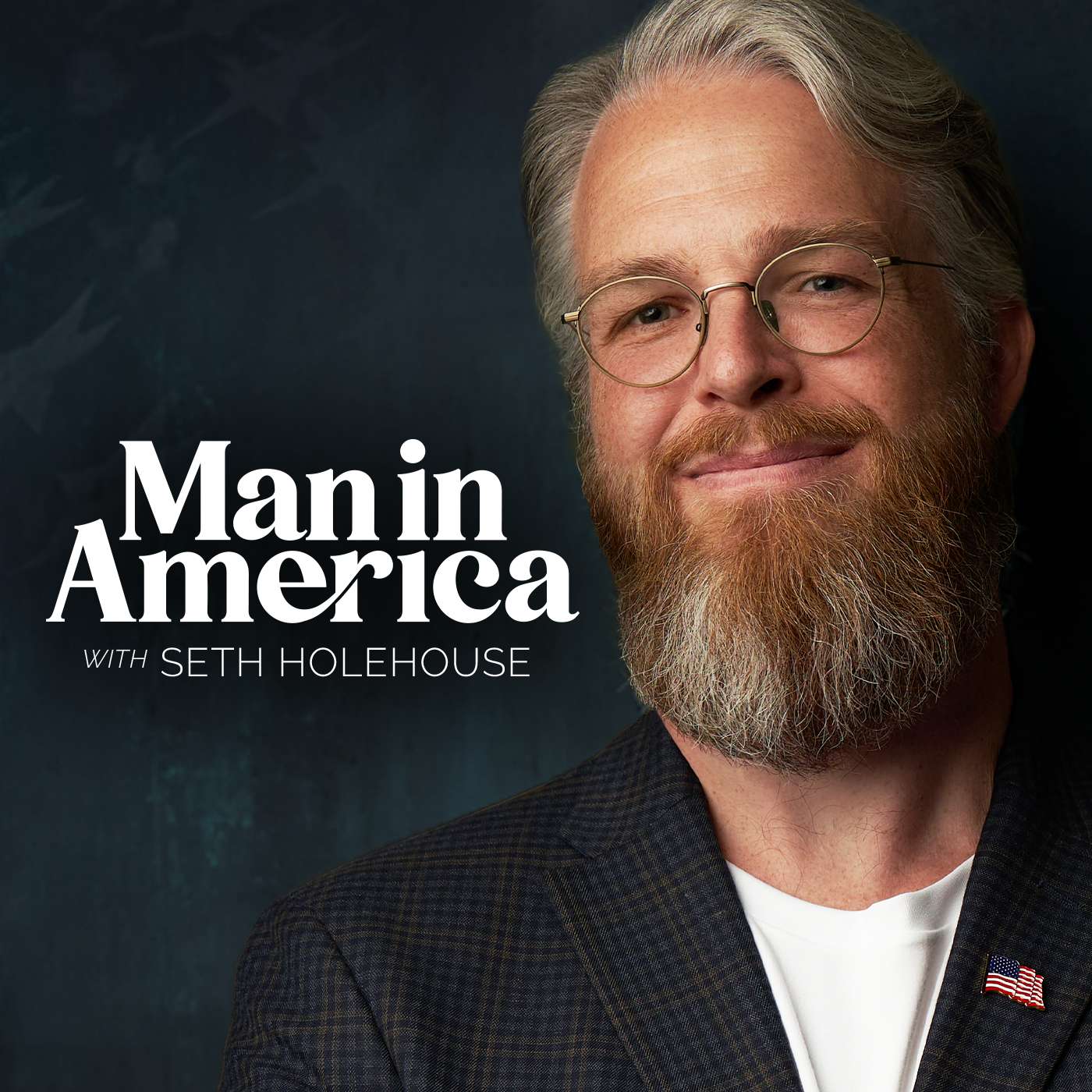
Man in America Podcast · Man in America
Fentanyl on the streets. Strong cannabis on every corner. Ketamine and psychedelics in Silicon Valley. A generation on pharmaceuticals… John Potash, author and researcher, says this isn't random. In this interview, we look at how intelligence agencies have used drugs for decades to sedate and distract the public, and what MKUltra and manufactured culture have cost us. Learn more about John Potash and his work at: https://www.johnpotash.com/ Buy Dr. Ardis’s Hydrate Complete at https://thedrardisshow.com/nature-wins-hydrate-complete-strawberry-lemonade-30-servings/ to fight chronic dehydration. Use code SETH for 10% off. Learn more about investing in gold & silver, visit http://goldwithseth.com, or call 626-654-1906 Are you looking for solutions? Join me in the Ark Community here: https://buildtheark.com/ WEEKLY MAN IN AMERICA PODCAST SCHEDULE: Wednesday, Saturday & Sunday 6:00PM PT / 8:00PM CENTRAL / 9:00PM ET #podcast #prepare #sethholehouse #maninamerica #independent DISCLAIMERS: Some of the links in this description are affiliate links and pay me a small commission if you use them. I hope you do! Thank you so much for the support, it really helps to keep this show truly independent. Guest views are their own and are not financial, medical, or professional advice; consult a qualified professional before acting on anything discussed. PROTECT YOUR FINANCES: -- Learn more about investing in gold & silver, visit http://goldwithseth.com, or call 626-654-1906 -- Download Rumble Wallet now and enjoy the benefits of financial and personal freedom! https://rumblewallet.onelink.me/bJsX/maninamerica STAY HEALTHY: – Improve your sleep and support bee health with the PureWave Cell! Visit https://4RBees.com and use code SETH to save 20%, with a portion of every purchase helping provide free PureWave Cells to beekeepers in need. -- Age well by restoring your cellular health with NMN-3 from Brightcore 25% Off with code: MIA at https://brightcore.com/mia Or call (888) 575-6488 for up to 50% OFF and Free Shipping. ONLY when you call! -- Sound can heal you, here’s how: https://wavwatch.com/seth use promo code SETH to save $$$ -- Detox your body from everyday nano-toxins, including heavy metals, forever chemicals like BPA, and pesticide residues: https://zeolite123.com. Use code SETH to save. – Buy Dr. Ardis’s Hydrate Complete at https://thedrardisshow.com/nature-wins-hydrate-complete-strawberry-lemonade-30-servings/ to fight chronic dehydration. Use code SETH for 10% off. -- I recommend Red Light Therapy for total body health & wellness: Go to http://myredlight.com and use promo code SETH to save. -- Got pets? You probably got parasites too. Get rid of them now!! https://sethcleanse.com BE PREPARED NOW: -- Are you ready for what’s coming? Take the FREE Ready Score test here: https://readyscore.com/ FOLLOW SETH ON: FACEBOOK: https://www.facebook.com/ManInAmerica INSTAGRAM: https://www.instagram.com/maninamericaus X (TWITTER):...
Speaker 1: When you walk through just about any major American city today, you don't just see drug addiction, you see an entire population chemically pacified. Whether it's addicts frozen on the street from fentanyl, high potency cannabis on every corner, Silicon Valley elites microdosing ketamine or psychedelics, or just a generation hooked on pharmaceuticals. But according to my guest today, this isn't just a tragic public health failure. It's a continuation of a decades long top down strategy of social engineering designed to sedate and distract the masses. And today, we're pulling back the curtain on global drug trafficking rings run by the government intelligence agencies, Their ties to MKUltra and the true cost of manufactured culture. So welcome to Man in America. I'm your host, Seth Holehouse. Let's get into my conversation with author and researcher, John Potash. John, it's great to have you on the show. I really appreciate the time you're gonna give us today, and I'm really looking forward to digging into some very interesting topics today. So thanks for being here. Speaker 2: Thanks for having me on again, Seth. Speaker 1: So you've got a really interesting background. Obviously, you know, you've done a lot of research into the intelligence agencies, MKUltra, the drugs as tools for social engineering for kind of controlling political movements and everything. But you've also got a background in addiction counseling and a lot more kind of more practical things where you're dealing with these issues really in the flesh. And so, I guess, why don't you give a little bit of your story in terms of how you kinda started to uncover this web and, you know, came to some of the conclusions you present that the intelligence agencies are not necessarily stopping drug activity, but actually fueling funding, driving, and using these as tools. So I'll let you start on your own story. Speaker 2: Sure. So right out of college, to pay the rent, I got a job as an addictions counselor after being a psych major in college. And right before that, actually, I'd gotten a job for six months as a parole and probation officer where I saw corruption in Baltimore City around drugs and then... But being... Becoming an addictions counselor, I saw a whole lot more corruption around drugs with people I counseled saying, that we don't we don't bring the drugs into Baltimore. You know, they got ships and planes for that, and we can't afford that. So, you know, it's the government that's that's the one bringing the drugs in. So I explored that more hearing a lot of stories like that and hearing a lot of, the corruption around the drugs in Baltimore City. And then, did that for about eight years. And last three years was while I was in grad school in New York. And so I, and in grad school, I was in grad school for psychotherapy, but also took sociology classes and studied a little bit of community organizing actually in sociology. And so I I basically explored. I I had... At that time, this is between 1989 and 1998, you know, approximately. Things And happened in in those years, such as Kurt Cobain's death and Tupac Shakur's death. And I was into left wing activism at that time too, so I was going to conferences. And I talked to former US attorney general Ramsey Clark, and I say, what do you think the the government's, you know, doing with drugs, you know, in our communities? Do you think they're using them, as part of social control? I said, yes. The the... He said he thinks the government's using drugs to sedate and divide the masses. I also went to a conference where I talked to John Stockwell, and he said he was a former CIA agent, whistleblower. And he said that, yes, the, CIA was bringing in drugs from Vietnam during the Vietnam War to basically sedate, you know, to drug the population and sedate them and stop, you know, the mass protests. So I heard inside stories from coworkers who were counselors who also were heroin dealers before earlier in their life and they got into recovery. How the, you know, they would bring heroin to famous jazz musicians in, you know, in Baltimore. Baltimore is a big scene for jazz at the time, such as the, the woman that, sang Strange Fruit and, just forgot her name off the top of my head, but a lot of jazz greats were all over Baltimore City and performing in Baltimore City at that time. And so I, ended up... I wrote short stories about it at the time before turning the short stories into what would be drugs as weapons against us. And, and then when I became a psychotherapist after grad school, I got more into, trauma therapy. And that had me, counsel people that were the, were, went through, not only regular, you know, like kind of sexual and physical abuse and and emotional traumas, but also that that got... That were victims of ritual sexual abuse. And, so, people probably have heard, of course, the church sex abuse scandals in different states that's come out with attorney general reports on those those scandals. And, people don't realize... May not realize, though, that there is actually the reason that nobody's gotten convicted. Virtually no priests have gotten convicted in about four states now where there's been found to be massive, confirmation of sexual abuse of, you know, girls, but also young boys by priests that, it appears the best evidence, and I show this in my film CIA Drugs Are Us, the best evidence is is that it's, sanctioned by, the US intelligence, specifically under the programs, the CIA's MKUltra program. So I'll get more into that. But so I found that out, it let you know, through partly seeing witness to things with my my counseling, but then reading loads of literature on the subject and presenting some of this literature to a particular star, like, investigator in the film, Netflix, Emmy document... Emmy nominated documentary, The Keepers. It's a documentary series. And a great great activist named Gemma Hoskins investigated the the murder of her beloved teacher at the... At Archbishop Keogh High School and found that there... That this father Maskell likely likely was involved in their beloved teacher's murder because she was gonna blow the whistle on his and other priests' abuse of 50 to a 100 at least, different girls at this Marchers Keeto High School and other high schools. And so when I presented her the evidence that this could be connected to MKUltra, she ran with that and re interviewed a lot of these victims, and they said they think they were programmed because this priest used hypnosis and drugs on them. And so, but before coming out with that, my film CI Drugs Are Us, I really explored the way US intelligence, really, their goal according to the church committee, US Congressional Committee's, report on MKUltra was that they they looked at all the CI documents they could find on MKUltra, which were attempted, you know, the head of the CI attempted to shred all the documents, but they found about 10,000 documents in another, set the accounting section that weren't shredded. But the documents they found, they said that their goal is to have people act in ways they desire, that people believe that to be their own choices. But they're really, the way they're being led by the CIA to act the way they are. And I also found that, you know, I talked to, US attorney general, former US attorney general Ramsey Clark at a, at a conference. And he said that the, I said, what do you think the, you know, the government's using drugs for in, in different communities of color and other communities? They said, well, I think they're used to sedate and divide the masses. And I talked to a former CIA agent whistleblower named John Stockwell, and he told me that that, his fellow CIA officers during the Vietnam War were transporting loads of heroin from Vietnam Vietnam to The United States. And, I came to find that basically that the US intelligence used drugs to sedate divide and I call it, say repress the masses because, when you use psychedelics, which was one of the top MKUltra drugs, LSD in particular was the top MKUltra drug, that hurts people's minds, you know, like William S. Burrows, the famous, you know, author who was a former heroin addict said he thinks LSD makes people less competent. And they... And turns out the CIA was the largest LSD trafficker in the world. So I'll get into more of that and what... How they use these drugs in that way. And they used musicians. They attacked musicians because musicians had the best chance of of of reaching people's hearts and minds, and that's just what the CIA wanted to do. They wanted... You know, they can't control us all physically because there's too many of us, but they can control our hearts and minds that make us obviously think we are acting in our own best interests when we're acting... Really acting in their best interests. Speaker 1: One of my favorite guests and a good friend of mine is Doctor. Brian Artis. He's a really, really smart guy. And so he created this drink called Hydrate Complete, and I'm being completely honest with you when I tell you that my family drinks this stuff every day. So here's why. When you sweat, it's not just water leaving your body. There's over 40 nutrients in that sweat, And these are the nutrients your body needs to stay healthy, have energy, and think clearly. So this drink has all 40 of them that tastes really good. It's not like drinking a glass of water or a sports drink. It wakes something up inside of you. And for me, my brain fog or tiredness fades away. And I promise it's not a placebo because everyone I give it to has the same experience. So give it a try. Click the link in the description and use promo code SETH, s e t h, to save 10%. You're not gonna regret it. And so, it sounds like it's not that you, at the outset, started studying MKUltra and came to all these conclusions. It seems like you felt... Followed a pretty organic path of first looking at addiction counseling and finding all those people that are struggling with addictions. That then painted the picture that the drugs weren't just these street drugs being passed around, but actually it was more organized coming through government channels, right, through planes coming in, etcetera. But then as you got into trauma victims, you started finding, you know, SRA victims, various trauma victims, and then you... I'm I'm assuming you kinda connect some of dots of the use of drugs in those victims. And then when you first... Like, was there a period where you started kind of figuring out that there was this correlation between drug use, ritual, know, ritual abuse, trauma victims, and then connecting that all back into MKUltra? Speaker 2: Yeah. I I first didn't get so deeply into the ritual sexual abuse, you know, because that... I started seeing that. I mean, I I suspected, I read things about that, but I didn't see it as much and and under... Know it as much in in what... In my counseling as, until, I guess around two thousand and eight or nine, I started seeing it more and, really connecting the dots more. But, I did get a lot of evidence around I was really studying, you know, trying to I actually came out with an article about Tupac Shakur's murder, for example, because I took a tangent from Drugs and Weapons Against this book. Was, you know, again, I pretty much started researching in 1991 before it came out within 2016. But, I took a tangent from that to write a book about, the rapper, know, Tupac Shakur. And I did that because his I found that his whole family were leading Black Panthers in New York. And so I I tried to publish an article about it in 1995, and I did, but, Covert Action Quarterly, I kinda got this way... I got steered away from, giving my article to the publisher when was living in Washington DC. They they were based in Washington DC at the time. And, you know, steered away by an undercover agent, believe it or not, but I came to find much later. But they, so I end up just publishing in a small magazine at the time that, that is there another co intel pro going on, the FBI counterintelligence program, trying to kill Tupac Shakur. Like, they they, you know, try and mercilessly target his Black Panther family. And, finally, when when the publishers of Covert Action Quarterly got a much expanded version of that article in 1998, they published it. And, they were really happy to see it, they said, because they had no idea I was trying to publish within '95 anyway. And from there, I was... So I was focusing on, Tupac Shakur, but I also had originally tried to publish that about Kurt Cobain, Jimi Hendrix, and John Lennon. And they rejected everything but the Kurt... The Tupac Shakur aspect of it. Co Red Action Coordinator was started by, CI whistleblower, Phil Agee, and his son is a professor in New York, who still runs it now. And they they, you know, publish with them, you know, regularly for a while now, for a number of years now. But, so I really was focusing on musicians and the activists more. And I thought if I could show the evidence of the targeting of the musicians, people would learn more about the targeting of all these great great grassroots activists, the great, you know, the little known history of the Students for Democratic Society, the largest, you know, student anti war movement in the country at at... In its time and maybe ever. It was a 100,000 strong before it was kinda divided and and, you know, really subverted by US intelligence. And the FBI boasted about that in their own documents. But that, so I, I'd later came upon, yeah, the the better evidence, the stronger evidence about the... How how widespread sexual abuse was and how much that created so many victims of MKUltra to, create dissociative identity disorder that can lead people to be controlled, you know, by handlers, we call them, you know, and, that that was, much later in the game, you know, terms of my last film, you know, covers that for about third of last third of the film. But the, other aspect of it was, just really getting a lot of information about the Students for Democratic Society and and how great they were as anti war activists, getting more information on the Black Panthers and their incredible activism as community organizers. And then then, of course, trying to, get people to to read more about that by uncovering the targeting... US intelligence targeting of Jimi Hendrix, how the... How this British collaborating intelligence put in MI six, which is the British CIA, MI six agent as his manager named Mike Jeffrey. He admitted he had worked for MI six and pretended like he he wasn't working for them anymore, but it's obviously was. And then finding out all the evidence about John Lennon and his assassination by US intelligence or... And or, you know, British intelligence, but... And finding this barrister, you know, British lawyer named Fenton Bressler, who also was a, you know, weekly columnist for London Daily newspaper who came out this book, Who Killed John Lennon, the way the CIA programmed John... You know, Mark David Chapman, I mean, Mark Chapman, and also had a backup... What he didn't... Ressler didn't talk about the backup shooter that was a former c I... Is a CIA hitman who was the, kind of doorman at the Dakota apartment building of John Lennon and Yokonos that night. But, you know, covered that. And then, with Tupac Shakur, I did massive, just over a 100 interviews of people associated with Tupac, and and just found this, you know, huge program about the way. He he was actually a former head of the New African Peoples or... I'm sorry, New African Panthers, which were trying to replicate the Black Panthers when he was 17 years old. And and he only pretended to be this thug in order to appeal the gangs and politicize them as an extension of his Black Panther extended family's work at getting the Bloods and Crips gangs to call peace juices and turn on to activism, started in certain neighborhoods in LA and then spread throughout the country. And so I interviewed some of the gang leaders, like the largest gang leader in New York City, the gang leader of Latin kings who who helped convert his his gang to activists. And I interviewed the young lord activists who were the kind of Latino version of the Black Panthers who mentored King Tone, who was the leader and... Of the young lord... Of the, you know, Latin kings and and just covered that and that that, you know, that activism. Now that was, you know, I I got loads of court documents, loads of government documents on that on that case. And to show, including the the police officer, detective Russell Pool, who's assigned to the Biggie Smalls murder. And he comes out after being assigned to that and said that he came to find that his fellow police officers were at all levels of death or dozens and dozens of all levels of death or records. He says this in the in the film Kurt and Courtney, were killed Biggie in order to distract from their divert from the attention from their murder of Tupac Shakur. And he didn't know why, but that's what he came to find in his investigation. So, of course, the police devoted him, and he was forced to resign he forced to resign in order to get his information out. And, when he went to his superiors and said, what are my fellow police officers doing at all levels of death row records? He said, they told him, you can call them troubleshooters or covert agents. And so, yeah, that was pretty clear what was going on there. And sadly, I showed in my most recent version of my book, the FBI warned Tupac Shakur State Repression of Black Leaders that he... Russell Pool was likely murdered when he was giving new evidence on the actual shooter of Tupac to the Los Angeles County Sheriff's Department, which is a little different than the LA County Police... I mean, the LA City Police Department. But he was giving evidence there, and he had a heart attack just so coincidentally. And a witness told a co writer of Russell Pools that they actually put defibrillators on his heart to cause that heart attack. They held him down to do that, which is very sad because he was a great whistleblower. But nonetheless, then, of course, I investigated Kurt Cobain's murder, what I call a murder because the best evidence, you know, shows that with a likely MKUltra victim, which is Courtney Love. Now, you know, and so I show all the evidence of why she was likely an MKUltra victim in that regard, but Kurt Cobain... The the same kind of theme pops up around all these... Before I get into details of them all, but the same theme pops up around all these musicians, Kurt Cobain, Tupac Shakur, Jimi Hendrix, John Lennon, as well as, like, Mick Jagger and Brian Jones, The Rolling Stones, and Jaz Joplin, is that they all... US intelligence had an involvement in introducing them all to drugs, And then when they started sobering up and getting more into left wing activism, anti war activism, and and, you know, and civil rights activism, they were done away with. And that's just the theme of all of them. But... So, yeah. Speaker 1: And so, before we jump into more of those specifics or how these drugs were used for controlling these movements, just looking at the bigger picture of the government being involved with or behind a lot of the drug trade itself. And this is something that, you know, for a lot of people is... I guess, maybe nowadays, most people are like, oh, yeah. That makes sense. You know, but there's a time if you said that, yeah, the government was behind a lot of the drug trade or the crack epidemics. It was like, oh, that's kind of conspiratorial. But what are some of the the the findings that you came to that you discovered that really implicated and kind of painted the picture that a lot of the drug epidemic, especially within our country, specifically, obviously, UK, etcetera. Yeah. But that the... Actually, the intelligence agencies had their hand directly on the distribution, the production, the control of the drugs on the streets. Speaker 2: Sure. So it's an old story, and I'll try not to get into... Bug ourselves in detail of of the beginnings. But, yeah, there was opium wars in China in the eighteen hundreds, and that... Those opium wars were to were fighting China to force them to allow opium into their country, to sedate and divide them, I mean, was obvious, and to take over, take them over. And the leader of China at the time, found that there was so much, you know, the opium addiction was so rampant that he couldn't, you know, people were really... He didn't have a good army to defend himself at that point, but they forced China to, you know, with these opium war... Through these opium wars, to keep allowing opium in China, and they basically took over the country for many years and for really a century from the time of the opium wars to about, you know, the communist revolution in China. But... And they they really divided up between European countries, you know, US and England, and etcetera. England really waged the war, but there was some major opium traffickers in The United States. And I found that those opium traffickers in The United States started the leading, you know, Ivy League colleges. And and some of this, yeah, some of this comes from the author of Flags of Our Fathers, which was made to a Clint Eastwood movie. It was a... And... But in his book, Imperial Cruise, he made documents a cruise that Roosevelt... President Roosevelt... Teddy Roosevelt took to just see where they can expand the opium trade. And so James Bradley was the author, and Bradley gives a speech saying that, you know, every Ivy League college, Cabot... The Cabot family started... You know, helped start Harvard University, and they were opium traffickers, you know, opium dealers, you know, bring... Getting it from different parts of India and China and all that with the British East India Company. Because British East India Company were the biggest opium dealers, but there's... You know, the Cabot's family was involved. The Russell family were the founders of Yale University, and they were working with the peer ponds who were also at at Harvard and helping fund Harvard. And then you had Princeton, the green fat... Green family where opium dealers helped start Princeton. And Columbia University where I went to grad school was a low library. Everyone knows the low library. The lows were opium dealers and all that stuff. So a lot of the wealthiest families do had started their... Got their incredible wealth through opium shipping and with the British East India Company. And so... And they, you know, got the prestige of control over these different Ivy League schools. And then so coming into the early nineteen hundreds, there's lots of evidence that they never stopped this opium dealing because, you know, opium was used to to sedate and divide the masses in Britain, but also in The US, especially with the industrial revolution where workers are rising up and trying to get better, you know, better hours of work and more fair trade and better health care and all that. Now there was a situation sociologist have said that there's a big difference in The United States and Europe because in Europe, when... With industrial revolution where you had the nouveau riche, they called it rise up, the new industrialist rise up, They were vying for power against the royalty, which was was the most powerful at the time, the kings and queens and all. And to get to get more power against the other, they would try to get the workers on their side, And so they they would promise them things like free health care and a freer media and things like that. And that's why all the European countries have national health care, but The US didn't have any royalty. So when new industrialists rose up, like Rockefeller's, Carnegie's, JP Morgan's, you know, Harriman's and all that, there was no one, you know, against them, no royalty against them. So they just... When workers tried to rise up and get free health care, national health care, and freer media, they were just squashed. And so, that's why The US is so behind, you know, in those kinds of, you know, areas, the the European countries. But, so in The US, you had all these, you know, the Rockefellers, Harriman's, and so J. P. Morgan's, Julius Pierpont, is John Pierpont Morgan's his name. So he's part of the Pierpont family, the opium, you know, trafficking family of the Pierponts, and made great wealth that way. And so... And now J. P. Morgan Chase Chase is owned by the Rockefellers, is the largest bank in the world or has been last few years, largest bank in the world. So these... There's a direct ties. The opium traffickers now with the largest banks in the world, and they were also found to continue the trafficking. They were caught trafficking again and again throughout the 1900s. I mean, sixty Minutes did show they had an episode of JPMorgan ships, like a ship with a ton of cocaine coming at the Philadelphia Harbor was a chain was owned by the Morgan family, JPMorgan family, but JPMorgan, you know, whatever their family and their... The bank. And they also... You also find that massive amounts of drug money is laundered through banks like JPMorgan Chase and HSBC. HSBC is the Hong Kong Shanghai banking corporation that's, you know, from opium money, started by opium money. And so, yeah, this is some of the way it came to be. And so it's like an old story of using drugs this way, so they divide the masses, but, and repress the masses. But, when you come into, you know, there's times when you come into the, forties and fifties, you also see the fact that they tried to make them illegal in order to make them more seductive, like marijuana is made illegal, and to make it more seductive to young people. And, then the drugs being illegal also seemed to make them more, kind of appealing in the illicitness, but so make them illegal, but then make tons of money off the, of the dealing of them and the trafficking of them and the laundering of the drug money. So you got, there's a Wisconsin professor, Al McCoy, who wrote the the... Probably the best book when when the Vietnam trafficking from... Of heroin, from Vietnam. And he went to Vietnam, and he he found all the the routes and interviewed all the soldiers and interviewed and found all the ways, that heroin was coming from the Vietnam area to The United States. So it's not just John Stockwell, the former CIA agent that, I use as references who says, yeah, his fellow agents were, you know, trafficking, know, heroin from Vietnam to United States, but, yeah, politics of heroin. Thank you. CIA complicity in the global drug trade. So he he documented that very thoroughly, and, you know, a guy just leaves me now. Sudden, there's another professor, Peter Dale Scott, who documented the same kind of trafficking with cocaine. Peter Dale Scott shows all the trafficking that came from the Latin American countries with cocaine, and that was aided by the World War two taking the... You know, giving loads of Nazis. I mean, the government admitted at least 9,000 Nazis, but a German journalist who went down to investigate it says he believes there was 50,000 Nazis given, refuge in Latin America. And they, show the other, articles that document how they aided the drug trade. They they they caused cocaine coups in Bolivia and other countries, and then aid... And then help help the CIA traffic the cocaine from Latin American countries into The United States. And, and also likely, of course, to Europe to do for the same purpose. And so this is some of the ways that I've, you know, found. And, you know, but it's through those means and through my counseling that I've I've heard tips on things too. Now, so that's with cocaine and heroin, but with MKUltra. Now MKUltra involved these kinds of drugs for social control, but they also really focused in a big way on psychedelics because they they found they really marketed ecstasy, MD... Know, originally, they they tested as MDA, then MDMA is ecstasy, the name for ecstasy, now called and other things, as well as acid LSD, as well as STP and, DMT and all these different anxieties, psychedelics, BZ. And so they started, you know, MKUltra just showed their testing, the MKUltra documents that I found, I just showed them my films, my book and film, they show all the massive amount of drugs they they use for social control in this regard, and they really push them. Now the thing is that they made them and they have them as, they got the supply of them, but the question is how do they create the demand for them? And that's that's where the musicians come in. That's where the creating a new culture, a hippie culture comes in. And I show the... I was majorly investigating the evidence of loads of undercover CIA agents throughout, San Francisco area and in New York City, to do that. And so Timothy Leary, I show in in two different books, cite an interview of him where he says, you know, he admits being a c I... You know, being a winning c I agent since 1963. Now before that, he was just getting money from a group called the Human Ecology Fund, which was, funded covertly by MKUltra. And I show an anthropology, you know, today article on that, how, you know, the Human Ecology Fund, there's loads of professors in about 40 to 50 colleges, 40 to 50 hospitals, prisons, etcetera, that they were being... They thought they were getting money from this, group, the Human Ecology Fund, but the Human Ecology Fund was really being funded by MKUltra. So that, is the way it said. Timothy Leary was one of those college professors at Harvard doing that, and he was testing psychedelics when students, poor students, and paying them lots of money, over a $100 for... To be tested on with these psychedelics. Speaker 1: The electric acid Kool Aid test, right, these kinds of experiments. Speaker 2: Acid acid test. Right. Right. And that that was the Stanford experiment, electric coiled acid test. That was, so here you had on the East Coast, you had Timothy Leary doing it at Harvard. They were doing it at Stanford where, Ken Kesey, took his, took a 100, you know, over a $100 to be experiment... You know, experimental kind of subject for trying LSD. And, and so he was a, an alternate to the Olympics for wrestling. He was a great wrestler in college. And so he said he had never even... You know, he barely drank alcohol, much less doing other drugs before doing this and trying this experiment. After that experiment, he gets a job at the same hospital. They experimented him on. And and they give him an unlimited access to all the LSD supply. So he just steals it again and again because they let him steal it. Obviously, he thought he could... He was just sneaking it out, but they were letting him steal it, I argue. Because then when he holds all these parties with all this acid that eventually would become, like, you know, electric acid test theme, he was just popularizing, you know, acid in the San Francisco area. On the East Coast, Timothy Leary gets kicked out of Harvard eventually by some, you know, honest administrators who just didn't like how out of hand it was getting with how many incredible people they were, you know, giving acid to, including, you know, the Unabomber, Ted Kaczynski, who they really tortured with LSD. It was really sad what he became because of that. But... So they kick Leary, his cohorts, Richard Alpert, and third professor involved out of Harvard. But here comes the group Mellon... The Mellon Hitchcocks, Billy Mellon Hitchcock and Peggy Mellon Hitchcock. Their family were... Speaker 1: So the Mellons were the banking family. Right? Speaker 2: Right. The melons are the banking family. They also own golf oil. So they were incredibly wealthy and, you know, mill... Carnegie Mellon University is named after them and all that. But... So here's the... They're they're like... People thought they were renegades, but, no, their family were high up in US intelligence around the world. You know? So, so they offered Leary... They started a new new group called the International Foundation for Internal Freedom. It's got offices in various parts of The US and Mexico. Okay? And all of a sudden... And they put Leary up with tons of money, and and Billy Miller and Hitchcock gives Leary his, 40 room estate, you know, a mansion at his, like, thousand acre estate just above New York, an hour above New York City. And so loads of MKUltra agents just hang out there with Leary as he, lures him and, undercover agents throughout New York City just lure people up, great jazz musicians, you know, comedians, all kinds of influence... Influencers up to this estate and, dose them and just experiment on them with all kinds of drugs. And so, you know, it's this is, and the key is they were focusing on that area because that was the hot, New York City was the hotbed for civil rights, young civil rights activists that were going down to Freedom Summer in 1964 when this was going on. They were flooding down to the South to help Martin Luther King with the Freedom Summer movement. And, you know, it's where, Cheney, Schwerner, and Goodman, you know, Cheney and Schwerner, were from New York City New York City students. And it... So so, you know, this is... And it just so happens, like... So they were... As I said, they were targeting civil rights activists and anti war activists. So in '64, it was more just civil rights activists. So you got in Berkeley where they also, you know, had the m c ultra experiments going. When you had the, free speech movement happening, and you had the, you know, Mario Salvo was kind of the head of that group that, you know, was a brilliant mind. That group had a free in summer bus, a lead for the civil rights movement to help Martha King and the, you know, free in summer movement. At the exact same day, Ken Ken Kesey has several people just out of the military in charge of his bus. They call it the, the Merry Prankster bus. That was a psychedelic bus that left the same day and took the same route instead of getting... Said they were going to New York City for, Keasy winning an award for, you know, his new... His book, One Flew Over the Cat... The Cuckoo's Nest. Okay? But he he didn't go straight to New York City. He went down to the civil rights movement areas and and promoted psychedelics throughout the South, where all these Freedom Summer, you know, white Freedom Summer activists were joining black activists down there. And so they had, you know, I I I show... I have a quote from a guy named Brand, I forget his first name, who said he was part... He was a former, you know, high up military... High up in the military at an early age of 20 or 21 or 22, in charge of a huge 50 member platoon and, you know, including experienced sergeants. And he went from that to, exploring psychedelics in New York City before he's all of a sudden out in San Francisco was one of the merry pranksters on this bus. And the, number two guy to, Ken Kesey, who he was often driving the bus, you know, you know, was just helping organize everything, was also a pilot, was a air... You know, in the marines in Vietnam when I was just, you know, just shooting at getting started in Vietnam. And so he said there was an... And this... And Stuart Brand, his name was, said there was a number of military in the Merry Pranksters, so it was easy to to organize things. So poor Kankisi is just being manipulated like hell after... Because the acid makes you more suggestible, they found. And so that's, you know, part of it all. So they they promote acid all through the the Civil Rights South. Then they come to New York, and they ride around Harlem where there was the biggest, you know, anti, you know, racism protests like riots in Harlem over, you know, racism and all in Harlem just just, before they rode around Harlem promoting LSD and other psychedelics. Then, that bus goes up to Canada, actually. Right? First, it goes to the Millbrook, you know, estate where Leary is, and then it goes to Canada and comes back to San Francisco, and then they start the electric they start the electric cool aid cool aid part that Tom Wolf wrote about and wrote, you know, made popular electric cool aid acid test. So, basically, they had bigger and bigger parties where they had tons of Kool Aid, huge, like, garbage cans of Kool Aid filled with LSD. So, you know, anyone, you know, hearing... They... You hear the Grateful Dead before they were called the Grateful Dead play music. And then when they went to get something to drink after they're done dancing, they were being dosed with LSD. Some knew it, some didn't. Okay? This party started with maybe a few dozen people, became a few 100 people, and then became, you know, a thousand people at the TRIPS Festival. And so by the, first, I believe it was between the second and third party, electric kool aid, you know, acid test party, Ken Kesey said he's he's done with this. He wants to stop it. And, because he's he's, you know, he kinda realized something's going on here. He didn't know what, I believe, but he wanted to stop it and and stop the the parties. And so he's immediately arrested. Only then is he immediately arrested, not when he's traveling with tons of drugs throughout, you know, the South promoting psychedelics and promoting acid and all that kinds of other drugs. Anyway, so he's arrested. He flees down to Mexico, and these... All these military guys keep running it, you know, keep running the... And he he actually holds a a graduate... He... A graduation party from ACID. He he holds a, you know, a graduation, you know, ceremony, but no one was gonna graduate from acid. They were gonna keep doing acid because the military guys kept towing bigger and bigger acid tests. And one of the acid tests was right after the Watts riot in Watts, Los Angeles, when they rioted against police brutality. And and so the... Here was tons of vats. I mean, trash cans full of Kool Aid filled with LSD, you know, hurting people's minds throughout all these protesters' minds and and all. And so this spread throughout the con... Country. This became, the TRIPS Festival had several thousand people where they just dosed tons of people with acid everywhere. And then they, became the, human beings, which had ten ten thousand or more people at each human being. It's bizarre name, but they had music... Musicians playing, and they they promoted acid like crazy. And, they also had some political speakers to to, you know, get people, anti Vietnam war protesters at these human beings to get them tripping. But the put... You know, the political speakers kinda became less and less as they felt like they can get more and more people of all ages and all types coming, and that became the huge concerts like Woodstock and all, sadly enough. I mean, I love music, and I love Woodstock, but the the amount of drugs there was incredible. They were just testing all their M culture drugs, like STP and DMT and all their new new drugs on people throughout the concerts. And I I even have the undercover agents like George Demerle that help boosts of, you know, promoting all these different psychedelic drugs. And and so at the same time that they were doing that, they were doing that to quell the civil rights movement and then the anti war movement. And the anti war movement, they basically infiltrated SDS. They infiltrated... You know, they even said every single... FBI bragged about it. We have an undercover... And this came out in New York Times when New York Times was was saying more. We have an undercover agent that... In every SDS chapter in the country. And there was many SDS chapters, you know, since for democratic society, who were a 100,000 strong before they were they were done in in 1969. And I argue they were done in by infiltrators, and they they sadly got burned in door and tripping too much, and she kinda led... She was one of the leaders of SDS, a brilliant lawyer, who was was SDS when she was in law school and leading, you know, SDS with, Mike Klonsky. And Mike Klonsky tried to get her not to, to lead half the, SDS members out of the, last convention, but she did, and, you know, that did in SDS. But this is some of the ways they they accomplished what they accomplished, but through the musicians is some of the ways that they promoted the drugs, but they pretended like Jimi Hendrix, you know, before he died, for example, was really into acid and he... And really into these other drugs. But he said it hurt his guitar playing, and he became very political after Martin Luther King was assassinated and tried to hold a bent... You know, a memorial for King and and his CIA... His British MI six manager dosed his drink before he went out there, and he said it hurt. He didn't like the way it affected his playing, and he stopped it short. But... That's some of the things that came up. Speaker 1: If you could go back in time and buy oil before the world relied on it, would you? Of course you would. Anyone would. So why aren't you buying silver right now? You see, the people who recognized oil early didn't just make money, they got ahead of one of the biggest economic shifts in history. And today, a similar opportunity is unfolding with silver. Because silver is a lot more than just a precious metal. It's a critical resource used in solar panels, electric vehicles, defense systems, AI infrastructure, and even these massive data centers that are powering our digital world and the surveillance grid. So while demand keeps growing, it's actually still affordable enough that the average American can start accumulating it right now. And that's why investors are turning to silver to protect against inflation and own one of the world's most important strategic resources. Don't be the person who looks back in ten years and says, I saw it coming, but I just didn't act. I'm sorry. So visit goldwithseth.com and learn just how easy it is to own physical silver. Again, that's goldwithseth.com. And here's something a little extra. If you just mention my name when you reach out to Noble Gold, they're gonna send you a one tenth ounce of gold coin just as a thank you when you open a new qualified account. So again, that's goldwithseth.com. Okay. So, there's a lot that you went through, when I'm looking at the theme that ties it together, you know, we go back in history, that it's a story of these elite powerful families that, on top of other activities, but through drugs gained huge amounts of wealth, right, getting back in, especially East Indian, you know, East India Trading Company, a lot of the kind of, you know, military industrial complex one point o that was existing then. And so so they were able to not only build mass amounts of wealth through the drug trade, but arguably more importantly, were able to control populations through that. And they could see that they could use this, you know, through... As soma, right, as ways of sedating, controlling the masses. And so then you kinda take that forward more into the future, you have America, which say, you know, turn this into early nineteen hundreds, very stable, very strong family values, very productive country. And so... But they had to then figure out how to get this into America, how to basically take America and do what they did to China, right, with the opium wars. And so with the advent of the radio and television and more of a kind of pop culture, then you could see, as you mentioned, that these musicians were leading the hearts and minds of people. And so then it sounds like what you're kind of painting here, the picture, is that they then figured out how to infiltrate and get into these musicians' circles, you know, through, you know, drugs and sex and women to then take these, you know, these icons. Right? You know, the the the Jimi Hendrixes, the John Lennons, you know, the Jim Morrison, all these people that were icons, which a lot of them in in a whole separate narrative, they've got very strange backgrounds of the ones that end up making it to be these all star people. They've got military fathers and all kinds of strange things there. Speaker 2: But then... Especially for some of the others. Yeah. And that... And Dave McGowan, researched that about the Lowell Canyon scene in Nevada. Speaker 1: Yeah. Read that recently. Right? He detailed into that. Yeah. Speaker 2: And so Speaker 1: so basically, then they use these pop culture icons as ways to really get the masses hooked on these psychedelics, which they knew through a lot of their experimentation, you know, especially post World War two, the formation of the intelligence agencies, much more organized scientific testing, you know, Nazi information coming in, you know, CIA, Mossad, other intelligence, MI six, etcetera, that they understood for a very scientific level how effective, especially psychedelics were at, you know, creating very suggestible people for population control. Then they they infiltrate these movements, or they even start these movements potentially, to then get these these drugs to the masses, which we saw the American culture took a a massive shift. You look at 1950 America versus 1970 America. It was just the the the culture fell off a cliff. Speaker 2: Yeah. I mean, of course, in some ways, I mean, it was great to get, you know, civil rights and equal rights from the fifties to the seventies. And... But in the hippie movement was, I do believe, was manufactured. And, like, you bring up... While I was researching San Francisco and New York City and the way it was all happening with MKUltra in those two areas, Dave McGowan did great research, and I have him in my book and film, Drugs is Weapons Against Us and CIA War on, you know, CIA Drugs Are Us film. He wrote Weird Scenes Inside the Canyon, among some other great books. But that book, in particular, cover... Overlapped what I was doing with MKUltra. And so I I, you know, I emailed back and forth with him before he died, sadly. And... But he, and I'm friends with his brother now, but he documented very well how, as you said, so many musicians that became instant stars in the Laurel Canyon neighborhood of Los Angeles were, came from military families and, the wealthiest, you know, families of America. For example, David Van Crosby, you know, his family, the Van Cortlands, owned several thousand acre area of the Bronx. And he also had Rensselaer in his family, which is, yeah, you know, funded Rensselaer Engineering University. So, these people, you know, came in stars, and I believe they were enlisted to, promote the MKUltra agenda. And so they... So, for example, when it comes to John Lennon, John Lennon and George Harrison, they were... They tried LSD for the first time when George Harrison's dentist invited them over for a little dinner party. And they came over with their wives, and George Harrison's dentist dosed them, put it in their coffee without them knowing, you know, for the first hits, you know, first experience with LSD, and John Lennon was furious about it, and George Harrison said, what's LSD? And he never even heard of it before, because it wasn't as popular in Britain in 1965 as it was in The United States. But he said, it's it's a drug. And so right before that happened, the MKUltra assistant director, Robert Lashbrook, according... This is according to writer, AE Hotchner, who was Ernest Hemingway's assistant editor. Hotchner wrote the book Blown Away about the history of the Rolling Stones in the sixties. And he quoted, you know, he quoted people about the fact and wrote that assistant, you know, MKUltra director Robert Lashbrook brought brought over tons of LSD money and agents into London to, get, you know, LSD in as many musicians' hands as possible. And, and so, obviously, you know, there's a good chance that he was behind this dose... Dentist dosing these very wealthy and very popular musicians who could have sued him. So it's incredible they did that to them and got away with it. But, so they were mad. But then the second time when when, John Lennon, George Harrison, the Beatles came to The United States for a big tour of The United States, After that, David Crosby and Peter Fonda, you know, Peter Fonda was a big actor at the time, Henry Fonda's son, Jane Fonda's brother, the Crosby. Crosby still is a national and and Birds at the time. They were holding... Held a big party in the old Canyon scene, you know, had John Lennon and Ringo and George Harrison there. And they basically all convinced all these, you know, famous entertainers, musicians, and, you you know, and actors from The United States convinced John Lennon and George Harrison to trip again and for Ringo Dow to try it for the first time to take acid. And so that's how they they, you know, convinced them to do... Get into this drug because, you know, saying, oh, it's big here. Everyone's tripping. You know? And so... And they had loads of other musicians with these connections that held these parties in Laurel Canyon that were basically sex and drug parties. They would Speaker 1: have Zappa was central to that, right? Speaker 2: Yeah, and Zappa, his father worked at Edgewood Arsenal here in Maryland, above Baltimore, you know, the Baltimore area where I live, and, Edgewood Arsenal is a key chemical warfare location, and chemical warfare means making all these different psychedelic drugs. It's not what people think of, like toxins in warfare in wartime, you know, it's about using these psychedelic drugs and other drugs when, you know, people that are dissenting against the government. And so here's Zappa's father. He's a engineer at this place. He's, you know, working for US intelligence at MKUltra, and Frank Zappa becomes an instant star. And not... And Frank, I think, turned on his his family a bit at one point, you know, but to, you know, go against censorship and stuff. And he did blow the whistle. He said, you know, he told Alan Handelman that, you know, that the CIA was giving acid to to hippies. And he knew that because he was an insider. And so he held loads of sex and drug parties that basically, lured, you know, lured musicians, especially British visiting musicians into the parties, you know, for the sex, got them using different drugs, all different kinds of drugs, heroin, cocaine, psychedelics, and hurt their... You know, develop... Had them develop addictions and also hurt their mind with the psychedelics and made them more suggestible. And this was... There was several people. The other one, the third biggest party... You know, sex and drug party host was Papa John Phillips of the Mamas and the Papas. And Papa John Phillips was famous for his his daughter, Mackenzie Phillips, was an actress on One Day at a Time. And she says that just before her... You know, she says first that her father, when she was about 11 years old, injected her with cocaine, which is utterly bizarre. He was originally... Mackenzie Phillips' mother was, part of the mister Craig John... President John Adams, you know, family. And, here he is injecting his daughter with cocaine at 11 years old. And then when she was 18 or 19 and about to get married the day before her her marriage, she tells Oprah this. She tells, CNN, you know, this, that he, drugged her to the point is that she was unconscious and then started having sex with her. And she woke up with her father having sex with her the night before her marriage. And so, it's just totally bizarre. This guy's, you know, obviously thinks he can do anything is very bizarre. But anyway, and that... These were the ways that they spread drugs like crazy. And meanwhile, one of the Rockefeller's wives' first cousin, Barbara Sears Rockefeller's first cousin, Vito Pollakus, had a dance troupe, and he would have his dancers, you know, basically go to all the... These musicians, you know, shows in Los Angeles and develop an instant following, pretending like they're, you know... There's, like, a worshiping group of dancers that love these bands. And, you know, that's why they became instant top 10, you know, class. Speaker 1: What was his troop's name? Because I know he he was a big thing in the in the Laurel Canyon novel. Speaker 2: Oh, yeah. I I can't... He... I didn't think his troop had a name, or maybe if it did, I don't remember it. Speaker 1: Because he he would, like, go to these... He'd go to a concert and bring all these sexily dressed, you know, kind of half naked women to come dance in some bar, which would then attract... Like, they they... They'd have a certain bar they'd go, you know, be at dancing. Everyone would obviously then follow and go because it's full of all these women. They're drugged up and naked running around. And this guy was the organ. So this guy's got Rockefeller ties. Right? Speaker 2: Yeah. He's the first cousin of Barbara Sears Rockefeller. And and so he's... And so but... And he is... His dancers would also go to all these, you know, sex and drug parties and get naked and, you know, have orgies and and, you know, attract people to the... You know, all people all around Los Angeles, all these up and coming actors and all these musicians to these orgies, and then get them using drugs at these parties to introduce them to, you know, all kinds of drugs, get them addicted or get hurt their minds with psychedelics. And the third component of the whole scene is is the Manson Family and their girls, all those girls who were, you know, complete hypnosis and drug victims, MKUltra victims, and that came out with John O'Neill's book, mean, Tom O'Neill's book, where he found that they... An MKUltra doctor, named Doctor. Louis Jollian West, was... Had letters. He got letters back and forth between Doctor. Jollian West and the head of MKUltra, Doctor. Sidney Gottlieb, at the time. There was letters going back and forth about his his great work, he says, in using hypnosis and drugs to create, you know, dissociative identity disorder in in all these subjects. And and then just end dissociative identity, you know, dissociative disorder and dissociative identity disorder. And dissociative identity disorder is is like split personalities, multiple personality disorder used to be called. And so he was doing that at the Haight Ashbury Clinic first, you know, and he was doing that, and so he... Tom O'Neill documented how the Manson Family was bringing... Was going, visiting the Haight Ashbury Clinic every week and sometimes every day for about six months. And, and the best evidence is is that, yeah, Doctor. West, Jolley West, they call him Jolley West, use hypnosis and drugs. And even a CI agent, on the Joe Rogan show said this was that's where the Man's Impoundment was getting their LSD, was getting their acid. And and within, like, about a week or two of Tom Tom O'Neill's book coming out, the Ashbury Clinic closed. After fifty years of being open, they closed all of a sudden. So anyway, this is how they created the Manson Family. The Manson Family were going to the sex and drug parties in Los Angeles because Manson moved them all to the Spa And Ranch in Los Angeles and had them go to the sex and drug parties and and working... Basically working as prostitutes to, you know, to add to the the orgies at these parties. And he he drove them over in a school bus over there. It's, you know, weird and wild, but crazy stuff. Just terrible stuff. So, know, Dave McGowan did a great work on that before he died in 2015, soon after his book came out, sadly enough. His book came out maybe a year before, before he died, he suddenly found himself with stage four cancer. And someone warned him, if you keep talking about this kind of stuff, you might find yourself with stage four cancer. So it was really sad and terrible, I, yeah, but nonetheless, I, so his work documented a lot about that Los Angeles scene and my work documented the San Francisco and New York scene and some other scenes. And, I include him a lot in my, book and film, but it's just... Yeah. That's the way they created so much of this and for Lennon to be fooled. And Lennon got away from LSD for about two year... A year and a half to two years according to an interview he did with Jan Winter of Rolling Stone magazine, and which I have in in my, CI Drugs R Us film. And, but he, Yoko Ono and his publicist who I show evidence were intelligence agents, believe it or not, in my CIA Drugs or Us film. Lord got him to to give up his his, you know, his staying away from LSD for a year and a half or two years. Because he say he thought he was losing his mind on acid, but they got him to trip again. And and when he started tripping again, he told Jan Winter he got... His emotional control was so bad that he he was throwing up for hours before a live concert. So he he, you know, he just couldn't go on stage anymore. He barely went on stage after that, and even though, you know, he'd been performing before that, you know, for all the acid for for years from, you know, the early sixties to mid sixties. So, that's some of the way this all played out. Speaker 1: And so it seems like it was also, by using drugs as one of these tools, that if they had anybody that became a dissenter, it was very easy then to arrest them. You know, all of a sudden they get caught with drugs or put away, or just, you know, have them die, right? It'd be very easy to kill them with... Through a drug cocktail and just give the... Just the excuse that they overdosed. It became a really easy way to, basically, to cut off anyone who steps outside of whatever narrative they need to be pushed. Speaker 2: Right. And so, yeah, that happened with Janis Joplin, for example. The FBI had a document, you know, had a file on Janis Joplin. They had a file on Jimi Hendrix and John Lennon. There was a CIA foul, of course, and when, you know, John Lennon too, we know, but it's really hard to get a hold of that foul. But they surely had CIA fouls on these people too, but it's really hard to get a hold of CIA fouls on these people. But... So, you know, with Janice Joplin, the first person to enter her life and and get engaged, she got engaged to this guy, told other people around him that he was an FBI agent, an undercover FBI agent. And she she only didn't marry him at the last minute because she found he had a whole other family and, you know, wife and kids somewhere else. And so... And he got her addicted to speed first. He got Janice Chaplin addicted to speed. And then I argue other undercover agents got addicted to heroin. She refused to take acid. She hated... She tried it once and hated it and wouldn't take it again. And, and just before someone gave her a hotshot and overly lethal dose of of heroin when she was trying to quit and she relapsed. She had planned the first, like, biggest anti war benefit, which was going be held in Shea Stadium in New York and then, Philadelphia Baseball Stadium. And it was like the biggest anti war concert of its time. There had been nothing like it at that point when she died in 1970, and and, you know, they killed her right before she could perform in those concerts. She was the biggest, you know, star in those concerts and so... Performing these concerts. And so... And meanwhile, Jimi Hendrix had become very political after Martha King dies. He dedicated his last album to the Black Panthers. He would tell people to support the Black Panthers in his interviews. He planned to get to... Know, we we talked to Bob Dylan to format to, you know, work activist groups amongst musicians. He'd also... John... Brian Jones actually talked to both Hendrix and John Lennon, and Brian Jones was the founder of the Rolling Stones. Brian Jones has gotten them to form a super group according to a, a book by a member of the Guinness family who was friends with Brian Jones. And just before Brian Jones could form that super group, he was drowned in his own swimming pool. And then this this person who wrote the book said he saw people holding him under and drowning him, you know, several people doing that. And so it's really sad and really terrible, but Jimi Hendrix finally gets away from his controlling MI six manager, Mike Jeffrey. And within about forty eight hours of firing Mike Jeffrey, he's dead. And, you know, it's very bizarre. This... It was inconclusive. The the coroner said it inconclusive of what actually killed him, but, you know, Mike Jeffrey end up admitting to two different people that when he was drunk that, you know, he had Hendrix killed. Who can who can just get a hit squad to kill someone forty eight hours with someone like to, you know, intelligence? So, yeah, it's it's in the sad way that it all played out. Speaker 1: And so, when you look at... In the Laurel Canyon book, you know, he goes over this, that when you look at a lot of these musicians and these kind of... The leaders of these movements that were very popular in the sixties and seventies, a lot of them came to very suspicious early deaths. And if you look at the overall timeline, and you look at when MKUltra really started kinda gaining steam and and a lot of their experiments were really kinda taking hold, and that was a lot of times in, you know, kinda fifties and sixties that kinda really started picking up. Yet, that was already kinda too late to get these people when they were young. Right? So you had you had artists that were already kind of growing and forming this, and so they couldn't necessarily take a young child, MKUltra them from birth, and create a superstar. They had to kinda come in, use drugs, MKUltra methods to then take control, but they had a lot less control. And so, as you've highlighted, a lot of the people that ended up dying, these young deaths were people that then, wanted to give up drugs, wanted to get more into activisms, wanted, you know, to oppose the war, etcetera. So, if you fast forward to pop culture, a lot of what's happening now, you know, through my own research, it seems like a lot of the megastars that we have now, they weren't people that got really popular and started growing in, say, by their teens and twenties, and then they had these controllers coming in, they're oftentimes people that have these backgrounds from a very, very young age, which makes me think that maybe that's why we're seeing not as many of these, say, young deaths as we had happening, say, in the seventies and eighties, but more so because they can control them almost from birth. If if from from the very get go, they can use these mCUltra programs, you know, Monarch, Blue Bird, etcetera, to create these puppets, you know, these Manchurian candidates or, you know, whatever, and use them for social engineering. I mean, look what's happening to Britney Spears now as she's breaking down. I mean, there's all these indicators that these people, you know, especially getting into, you know, the Disney stuff, all these young Disney club, you know, people, you know, whatever, Mickey Mouse Club. Speaker 2: Yeah. I counsel some Disney, like, Disney dancers. Really? They were, know, as young young dancers who toured, you know, Nationwide. They were They were sexually abused and they appeared to have dissociative disorder, if not dissociative identity disorder. And it's really they're really tough people to counsel. And I counseled one before I learned EMDR, eye movement desensitization reprocessing, which is, I think, is the gold standard for treating trauma. But, you know, it's just really tough to see what they went through with some of these Disney dancers, but Britney Spears was one of them. Yeah. People like Justin Timberlake was one of them. There's many of them. Right? These Disney dancers that become stars. And I don't know if they're all controlled or not, but but many of them, I I would argue probably, you know, Britney Spears being the key ones, experienced a lot of sexual abuse and probably drugs that, you know, end up controlling her. And she probably developed dissociative identity disorder from that, which caused the breakdown mentally, as you say. And it's interesting that her PR team also was working with Courtney Love, who was gotten to at a really early age and admitted to their, you know, her biological dad that that, you know, she had therapists according to her own mother's memoir about her. She she and and different other biographies according to love, she had therapists from the age of three or four years old, which is a bizarre age to start therapy. But... And she she admitted, like, about 13 years old when she was in a juvenile delinquent detention kind of place that all of her therapists had sex with her and gave her all kinds of psychoabniotic drugs and she named him at 13 years old in a letter to her father. When I talked to her father Hank Harrison, he told me that it's in a first version of his book about his daughter, that he gave out for free as a PDF version of his book. But then when he came out the hardback, I mean, that kind of paperback version of his book, it kind of left out some of the sensitive stuff because I think he was scared for his life. But in the original version he names his drugs that are all in the MKUltra documents, two in all, you know, different other kinds of drugs that the psychiatrist gave her that can help with hypnosis, you know. And so best evidence is that she's got dissociative identity disorder and was handled by first by a guy who wrote Hank Harrison a letter. So when Courtney was 16, turned... She just turned 17, she visited her dad in Ireland when he was doing research. He was he was actually originally a manager for the Grateful Dead and wrote a book about the Grateful Dead. So then... But he kind of dropped out of that when he... They they shunned him when he revealed that that they were basically distributing, they were selling heroin and they were also selling acid. Now everyone knows them as being around acid, but people don't know that they were also distributing heroin. But Jerry, you know, Jerry Garcia was a heroin addict who, you know, obviously promoted acid like crazy, and and it's just the way it was. But anyway, so he ends up in Ireland researching a a new book, and and she comes out... His daughter comes out to visit her. Like, after she springs him... She springs her from the hospital, she comes to visit, and she's... It turns out, you know, he had lost custody of her when she was about four or five years old because Courtney Love's mother, who who Hank Harrison wasn't married to, was a a adopted daughter of the Reese Reese family who owned uranium mines and had a huge stake in Boston Lawn Company and and stuff like that. And she said her her father, the, Courtney Love's mother said that her father, abused her with the alcohol... With the drinking problem and abused her from a really early age. So, this this woman's name is Linda Carroll now. They all take on different names. Don't ask me why. So Linda Carroll's, you know, has this Courtney Love... Gives birth to Courtney Love, Harrison's daughter. They're not married. And then then her parents... Wealthy parents, you know, Harrison says just buys off her... His attorney later later finds out when they're fighting over custody of Courtney Love. And he he he used to go into depression because he couldn't see her thereafter until she was 13 and rode him from a juvenile delinquent facility and begged him to help her get out of there, which he did. But when he got her out, he found she had turned into like a monster. She was using all kinds of drugs. She was prostituting herself as a teenage girl. Was She leaving heroin, needles around in the basement and this new wife, Hank Harrison's wife, I can't take this. We can't keep her here anymore with these heroin needles all over the place. And so he had to kick her out. But then, when she was, you know, just turned 17, she was in Ireland, in Dublin, and, someone, befriended him there, a guy named Stephen, O'Leary. And Stephen O'Leary later wrote to Harrison when he was on his deathbed dying of cancer, that he was actually working for US intelligence at that time in spying when people, you know, and he had to report to The US. He said, I wasn't a spy per se, but I had to report to the American Embassy once a week, give them my report, and, you know, and basically... So he had be... So when Courtney visited him there, Steve Muller befriended Courtney, had sex with Courtney, and then took her to England and the London and then to Liverpool. And Courtney, meanwhile, had on her a thousand hits of very strong acid according to biographers, And, and she spread it around like candy. She also had all kinds of other drugs that she spread around like candy throughout the Liverpool music scene and London scene, etcetera. And that duplicated what Robert Lashbrook did in the... You remember in the nineteen sixties, assistant and culture director Robert Lashbrook did. So here she was duplicating that activity. And he also said... Harrison also said that his brother, Kevin O'Leary, also, like, followed, you know, came with, Steven O'Leary to guide Courtney through all these music scenes. And, Kevin O'Leary, it just happens to be someone who's been seen, driving Courtney Love around. He's from Shark Tank. You you know, Kevin O'Leary is in Shark Tank. I found confirmation of what Harrison was saying in the obituary of Stephen O'Leary. Stephen O'Leary died in there, he said, around 2005 or so in, the Midwest, Minnesota, wherever it was. And I show that in my film, but Kevin O'Leary is listed as his brother. They both are listed as hanging out a lot in Ireland. And so it's awfully coincidental that here, Kevin O'Leary is still in her life. Yeah. And, you know, as I I would argue, could be her handler. I don't know for sure, but it's certainly a possibility. And Hank Harrison said, yes. This looks like the age Kevin O'Leary would be Kevin O'Leary would be now. Like, I'm saying that on the on a show, Ed Opera man radio show. And so... Because Ed Opera man allowed me to call in and just talk because I had been in the dinner with me a number of times, and now I interviewed Hank Harrison for, like, a second time, I believe, and had me call in and ask Hank Harrison some more questions than I could ask him when, you know, about his book coming out. So, anyway... And that's, yeah, that's an obvious which just matches exactly what you say with a MKUltra star. And I sure show the evidence that she helped to facilitate the murder of Kurt Cobain. So... And new investigations have come out to show the autopsy investigations have come out with a friend of mine, Michelle Wilkins and her group who killed Kurt, that organized the forensic investigation by the top pathologist to show this to show the evidence that he was actually murdered. And the fact that, you know, the Seattle police wouldn't investigate it as a murder, and the FBI should investigate it as murders when someone like Alden Alduche Hoke gets on the film, Kurt Kurt and Courtney, you know, Nick Broomfield, the the British documentary filmmaker, had interviewed Ellen Hoke. And Ellen Hoke said, yeah. Courtney Love came from Seattle to LA to offer me $50 to kill Kurt Cobain. And, and I went... I was gonna take it because I need the money, and he was also an alcoholic, Eldon Hook. But, he said, but, but I missed the opportunity, but my friend... And he names this other guy. He and then he stops himself, and he said, well, let the FBI catch him. And so... And three days after, he says this on for Kurt... For for this, you know, for Nick Broomfield for Kurt... The movie Kurt and Courtney, he dies, and he dies. And the last person seen with him is the guy who was saying who really did... Who really took the money from Courtney Love. And the FBI says that they can't investigate because it's out of their jurisdiction, but, you know, it's said in in US, you know, attorney general documents that if someone travels from one city to another to, to come... You know, to try to get a murder to happen, they can be... Oh, that's the FBI's jurisdiction. As long as you cross state lines, it becomes the FBI's jurisdiction. So loads of people wrote the FBI to investigate Kurt Cobain's death as as a murder, and FBI refused all... You know, his FBI documents have come out now about that. So you can see that in my film, CIA Drugs Are Us. Speaker 1: It's just everywhere. And one thing that, you know, I'm thinking as we're going through this discussion is that if you look at the proliferation of psychedelic drugs through the sixties and seventies, I would say that that's obviously come down since then, right? It's not nearly as prevalent in society. And, but at the same time, I don't think it needs to be because if you look at, I would argue that the, there are more Americans on psychoactive substances now than maybe there ever have been in history. Because now it's something where you feel frustrated, you feel depressed, you're low energy, you go to your doctor, and they write a script for you. And if you look at a lot of these mass shooters, look at Lindsey Clancy, look at, you know, a lot of these people that end up, you know, committing these horrible acts of violence, one of the very common themes is that they're loaded with SSRIs. And so when you're looking at the just current society here in America, do you think that these programs have just continued to proliferate, but that now they've moved into the realm of pharmaceuticals and the medical schools and the doctors instead of just these counterculture musicians? Speaker 2: No doubt. And because a lot of this m. Culture work was I mentioned earlier in our interview about this doctor, psychiatrist named Doctor. Colin Ross, who was a Canadian psychiatrist who came to move to The United States. And he's an expert in dissociative identity disorder and books and articles for top magazines on this subject. And he came up with a book called CIA doctors and he shows that these different psychiatric, you know, programs in different, you know, top schools, it be Harvard, Hopkins, Yale, etcetera. He said they MKUltra was funding them, in a big way. And, sadly enough, Hopkins is is what was one of the biggest. And and so, they are promoting, you know, all these different psychoactive medications and the Rockefeller family and the JP Morgan family were considered the to have the biggest investments in pharmaceuticals back in the early 1900s. And they are behind the scenes, the biggest, you know, owners, I think, and shapers of the, you know, the whole medicine in general, sadly not, but particularly psychiatric medicines, I I would argue, because, I mean, I think there's some legitimate psychiatric disorders and that, you know, psychiatric drugs may help people short term, but in the long term, I just can't say. I think the EMDR is a breakthrough, therapy for helping all kinds of emotional disorders. Because traumas aren't just sexual and physical, they're also emotional. And there's a good evidence that, that, the emotional traumas is what causes a lot of our, you know, sexual, physical and emotional traumas cause a lot of what they label as genetic, these different psychiatric illnesses and that these psychiatric drugs are just more placators and they have so many side effects and they're so hard to get off of. And there's, you know, evidence that sadly enough that a load of them just dull our brains in ways that, yeah, you know, that they could cause actions that we wouldn't normally do when we're on tons of psychiatric drugs as my argument about it all. And the... Yeah. There's just different... Yeah. Besides MKUltra going to all these different, psychiatric programs in the country, they stopped it when MKUltra was found out by the church committee in the early 1970s. They surely, you know, different people, whistleblowers said they kept it going with different names. You know, when Kennedy... Kennedy tried to close it down in in sixty one or two, they changed the name to MK Search, MKUltra to MK Search, and then they kept it going throughout the sixties and surely... And then it was discovered again. All the documents were... They attempted to shred all the documents. They only shred 90% of them. Surely, the name changed again, and they kept it going more so. And so now loads of these different, site psychiatric departments are having psychedelic studies, promoting psychedelic studies, and they're doing they're promoting psychedelics as therapeutic all over the place. And so they've given up on their antidepressants. Their antidepressants they show, well, it doesn't work. So let's try psychedelic mushrooms for depression or LSD for depression or ecstasy for trauma, you know, which has loads of top science journals say ecstasy causes brain damage. It hurts short term and long term memory. Just just really one to 10 hits even can hurt your memory. Speaker 1: So One one quick thing just kinda came to me is that if you look at who are the cultural leaders now versus, say, the sixties and seventies, a lot of the cultural leaders now are big tech. Right? It's the Elon Musk. It's the, you know, people, the Tim Ferriss, the biohackers, these people. But if you look at what they're promoting, it's microdosing, it's ketamine, you know. So it's almost like it's the two point o. It's like, we'll get Hendrix to push LSD. Now we're gonna have all the Silicon Valley leaders talking about how helpful it is to be microdosing ketamine or psilocybin or something like that. It's just interesting. I mean, I don't don't have any proof of this, but it seems like the same pattern that's happening. Speaker 2: Oh, it's clearly the same pattern. And, yeah, it's... I I show a more of the evidence of around those kinds of things you you just said, in in some of my work in CIA Drugged R Us, but it's it's just like a... Yeah, and CIA Drugs R Us, of course, is a sequel to Drugs and Weapons Against Us, that film. But it's... Yeah. I think it's sadly pretty clear that that's happening, and it's hard, you know, psychiatrists won't be happy about me saying this, but yeah, you know, I think that's happening. I mean, the psychedelic studies stuff is just a... It's it's just sad. It's a it's a human ecology fund revisited, you know, because they they had... They're getting funds. These psychedelic departments are all looking for money, you know, every head of a sick... And and so, you know, and my brother's actually head of Johns Hopkins psychiatry, so I do know how this works and how they're looking for this kind of stuff. They're always looking for money and he, you know, his Psychedelic Institute got funded by the Heffter Institute, is highly associated with Mike... With the MAPS, the Multidisciplinary Association for Psychedelic Studies, which is also highly connected to the British version, the Beckley Foundation, which does the same thing. They hold conferences together, and they promote psychedelics like crazy. And, there it's happening at Columbia, it's happening all over the place. And, where they're pushing ecstasy, they're pushing, you know, all the, you know, you know, psychedelic mushrooms, LSD, etcetera. I'm really glad that my my brother at least LSD from being promoted in his psychedelic institute. But, you know, it's just a huge source of money, and the Rockefellers are the leading, contributors, donators to, and other billionaires to to MAPS and Hefter Institute. The Rockefeller Foundation is the leading, you know, makes them... Gives them the most money for sure. That's why they do studies all over the world and then pretend like, yeah, look, it's all therapeutic. All these drugs are therapeutic. So they have all kinds of, new ways to promote it now as therapeutic. So it's another way to push all these drugs on the masses. Speaker 1: You also just have the legalization of marijuana, which has happened, you know, really aggressively in the past decade or so. And, you and I both lived in New York City for different parts of our adult lives. If I go back and visit New York City now, which I do occasionally, you can't walk more than a block without walking through some cloud. I'm not just like the kind of pot. I mean, talking, you know, 40% THC kind of highly, highly potent marijuana. It's it's the skunk times 10 that you walk. It's it's everywhere you go now. Speaker 2: Right. And, yeah, it's same in Baltimore. Same... You could just say the same in most cities. Well, in Baltimore, you know, Maryland, it's weeds weasel, you know, legal now. So there's loads of dispensers all over the place, and it's incredibly stronger than it was in when I, you know, I I had, I was a drug abuser in the, in high school and weaned off in college, thankfully, but it's just, yeah, you know, when I was using, I tried everything I could get my hands on, but just usually, you know, luckily didn't get addicted to heroin or cocaine, just tried once, maybe each distorting things, you know, but I just saw how acid hurt my competency, my abilities in school, you know, incredibly. And so I just stopped it after a few times tripping, but it was just, you know, that's how I kind of came to think, okay, what's going on here? I glorified it at first. I thought it was, you know, like I loved the sixties and the I, you know, coupled the activism with the drugs, though, not knowing any better. And then, of course, just trying, you know, that a few times, thinking, god. This... Something's wrong here. But still had a hard time getting out of my denial about that, about, you know, how, oh, yeah. Drugs and activism is good, is positive. But, you know, of course, I like the activism without the drugs. So, you know, I'd say sex and rock and roll just without the drugs. But, it's, yeah, it's everywhere. Weeds everywhere. It's so much stronger than ever ever was. And, you know, it's it's highly addictive, psychologically, of course, but now they're saying, some of the experts are saying it's even like physiologically addictive when you stop, it's really hard at first. And so, yeah, that's that's happening all over the place. You're right. And it's just, you know, it's sedating dividing and, you know, repressing the masses for sure. Speaker 1: Well, so as we're concluding here, there's kind of two things that I think are... That come out of this for me. One is that the story is a... As old as time is that the elites are using drugs to control the masses. Like, that's it. And two, drugs are bad. Don't do drugs. Speaker 2: Yeah. I mean, you know, if people... I mean, I... The the legalizing of cannabis, it'd be fine if people didn't smoke weed all the time, but that tends to be the case is people Or Speaker 1: gummies or all the mints or drinks. It's just so convenient for kids to be eating these things in school. Speaker 2: Yeah. Too many people are getting abusing or or getting fully addicted to these... To weed. And, you know, it used to be called pod, now weed. And and that's part of the problem as it's hurting their their ability to to become, know, do well in school, learn a lot, change society for the better on the side. And so it's like a mechanism just for mass, you know, sedating, dividing, sedating people at least. And just as sad that that young people are... They'll have less time to get into activism these days. Like, it's a lot of the activism started in college, now, you know, there's... On the weekends or a lot of times they're smoking weed and just becoming like house cats instead of turning one to activism. Speaker 1: Yeah. I mean, it's, it's, you can just see it just, it's, the dummy of the masses. And, and what, I mean, that, go back and read books, you know, 1984, say Brave New World in particular, and you can see there's a formula there, that you get everyone hooked on their daily dose of Soma, and they become very compliant, very easy to control. And, you know, while there's a lot of activism, I think, that has been completely captured and used for, you know, very kind of, I think, kind of sinister motives. But there's also a lot of activism, is opposing data centers, opposing the surveillance state, you know, a lot of the... You know, opposing the pollution, whether it's the spraying in the skies or the poisoning of our food, you know, let alone anti war stuff. Right? Which I think... Yeah. Of course, these things have been co opted in the past and used for different agendas. But... Yeah. I mean, you can see it's it's like here we are again back in another Middle Eastern war, and, you know, it's like it just has these kind of ramifications of what comes off of this are just so monumental. But, yeah, you're right, though, that now, you know, people are just... What what was the old saying? Is it, turn on, tune in, and something? What was the old? Drop Speaker 2: out. Yeah. Timothy was famous for saying turn on, tune in, drop out, and he's professed, winning agent of the CIA since '19, you know, '63. So... Yeah. Speaker 1: Exactly. Exactly. Well, Jono, before we close, I wanna bring up your website. Just johnpotash.com. On your website, obviously, there's a a bunch of information if people wanna contact you, you know, about you, read more about you. But what's really great here is you've got access to... If people wanna purchase your your DVDs, watch your shows, buy access to the shows, if they wanna purchase your books. All of your links are on here. And it's also a great way of just supporting the work that you're doing because the work that you're doing is very important. And I think that this is... If you look at all the problems that we're seeing in our world and in our society, I do think that a massive amount of it comes down to the fact that that there is... They're drugging the masses. And I think that if people don't understand what's really behind this, it's really easy to think, oh, it's it's actually pretty harmless and, you know, drop a little bit of ecstasy on the weekends and go have some fun and help balance out from all the stress and everything. But there's a much, much more sinister motive that I think is the the undercurrent of this entire movement. And you've done a great job of highlighting that. So I hope that people can watch your stuff, support you, and, educate themselves on this. Speaker 2: Thanks so much, Speaker 1: Yeah. Well, I I really enjoyed I really enjoyed this conversation. This is, this is right up my alley of of what I find to be the most interesting. And I I appreciate your work, and I thank you for, you know, giving an hour and a half of your time today. It's been great speaking with you. Speaker 2: My pleasure. Thanks so much, Seth. Speaker 1: Thank you. I just wanna say thank you for staying with me to the end of this episode. And thank you for being on this journey with me through hundreds of interviews, hidden history, survivor stories, deep dives, and so much more. Because of your support, I've been able to stay truly independent. Means there's no backer, there's no funder behind me, no one telling me what I can say or what I can't say. It's just me and my family bringing this information to you. So here's how you can help, and it doesn't cost you a thing. First, just hit the like button on whatever platform you're watching or listening on. It's simple, but it helps tell the algorithm that people want this kind of content. Second, share this with someone that you know. Shares really help a lot more than even likes do. And third, subscribe. That way you're not gonna miss anything if the algorithm is trying to block important content like they have so many times before. And if you wanna connect with others and join me in the Arc community, just visit buildthearc.com. You're gonna find like minded people connecting with each other both online and in person. Thanks again for being on this journey with me, and I'll see you again real soon.