
Making A Runner · Nic Acampora
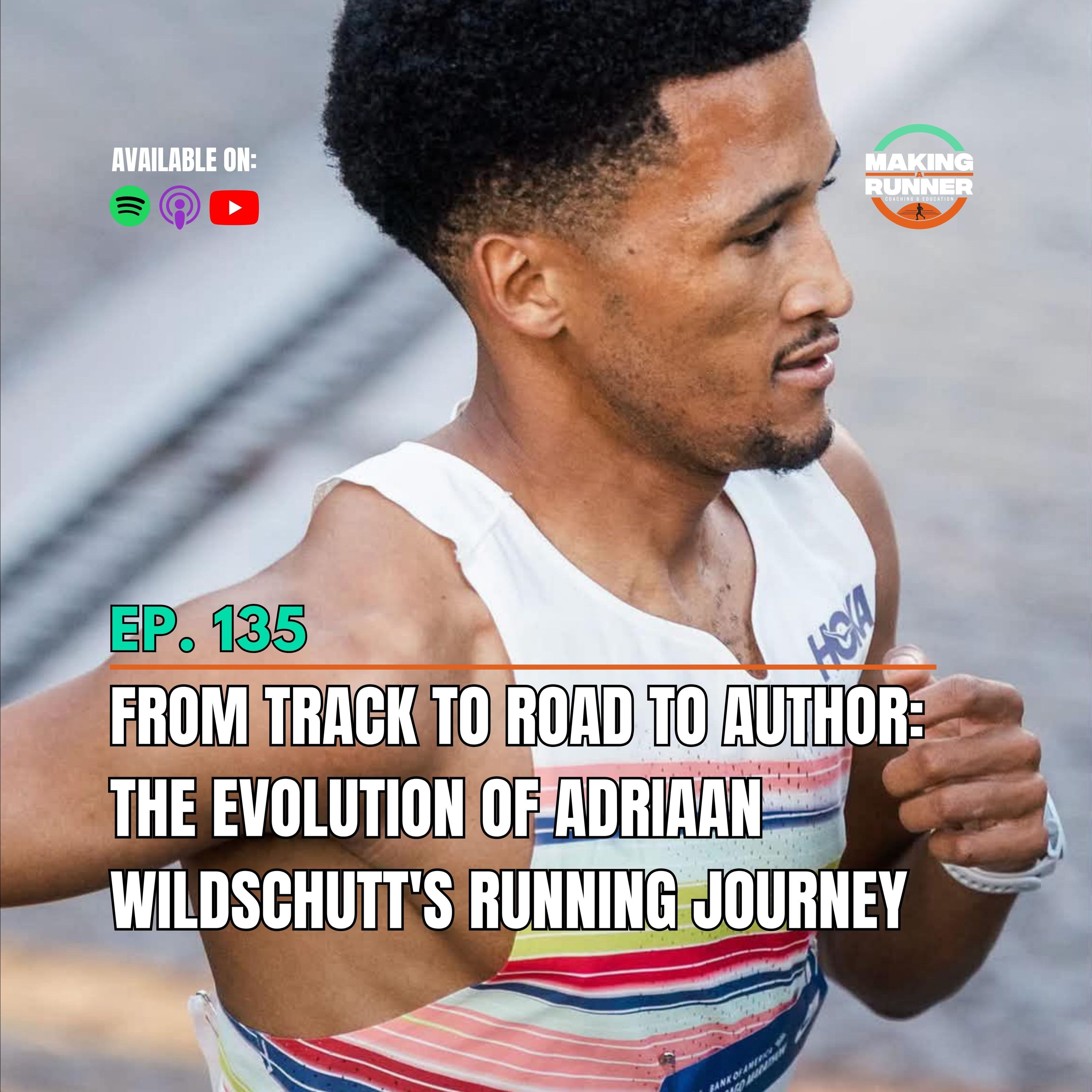
In this episode of Making A Runner, Nic sits down with South African distance runner Adriaan Wildschutt for a catch-up on everything that’s happened since their last conversation. From competing at the Paris Olympics and breaking the South African half-marathon record, to winning the New York City Half Marathon and taking on his first marathon, Adriaan’s running journey has entered a whole new chapter. From his transition off the track and onto the roads to the realities of preparing for 42.2km, Adriaan takes us inside what it really looks like to train and compete at an elite level. He shares the lessons from his marathon experiences in Cape Town and Chicago, what he’s learnt along the way and what it takes to keep progressing as a distance runner. He also opens up about his first book, A Change of Pace, reflecting on the decision to put his story on paper, the three-year writing process and what he hopes readers will take away from it. In this episode, Adriaan covers: • His journey since the Paris 2024 Olympics and what has changed as an athlete • Transitioning from 10,000m track racing to half marathons and the marathon • Breaking the South African half-marathon record in Valencia and winning the New York City Half Marathon • His experiences in Cape Town and Chicago, and the lessons learnt from stepping up to 42.2km • What an elite training week actually looks like, from mileage and key sessions to strength work and recovery • Fuelling, hydration and adapting to the demands of marathon training • The story behind his first book, A Change of Pace, and what’s next for his running career From chasing records on the track to tackling the marathon and now sharing his story through his first book, this episode is a look at the many different chapters that make up an athlete’s journey. Whether you’re curious about the world of elite distance running, preparing for your own marathon or simply love hearing the stories behind the miles, this is a conversation you won’t want to miss. 🔗 @adrianwildschutt 🔗 @makingarunner
Nic Acampora: Adrian, welcome back to the podcast, man. How are you doing? Adriaan Wildschutt: I'm doing well. Thanks for having me. It's been a it's been a while. Nic Acampora: It has been a while, but it's also been a couple of days. Adrian and I have been trying to do this podcast for a a little bit of time now and we've not been lucky with our signal and we've had a couple of connection issues. So hopefully today is the day and we can bring you a really good conversation. Adriaan Wildschutt: Yes, I I hope for that as well. Nic Acampora: Yeah, it's sounding good. So I think we are good to go, buddy. But listen, I want to just start off by saying it's been a long time since we've had you on the podcast. And you know, the last time was in the middle of August 2023. So, you know, we are well over three years and your running has come on leaps and bounds since then. There's been many highs, there's been a couple of lows, but I think I want to just quickly touch on what has come along the way over the last three years. you went to the Olympics, you stepped up to the half marathon, you even stepped up to the marathon. So I feel like we've got a lot to catch up. If there was one element that stood out in the last three years, what would you say that would be? Adriaan Wildschutt: Yeah, I would probably say the Olympic Games, just the way that transpired, I guess. yeah, it's just such an an amazing event to be a part of and I was so fortunate to be able to be so well prepared at the day that it mattered most and so was able to place ninth now officially because somebody got banned, but also was able to run a national record in the ten thousand meters. So that was that was very good. just having my god, just eighty thousand people in the stadium, it's just so berserk. probably one of my fondest memories. And yeah, I would say definitely after that it's probably been running the half marathons. first one in Valencia and then second one in New York, those both went really well and then eventually trying to make my debut in the in the marathon after placing Cape Town. So I'm sure we'll get into that. Nic Acampora: Yeah, yeah. We'll we'll get into all of it. But before we get to the longer distance stuff, I think you hit the nail on the head with the Olympics. It must have been one hell of an experience. you came ninth, you ran a national record, I think it was twenty-six fifty something. you know, really fantastic time, a fantastic race. Did you feel good in that tunnel going into that stadium? Did you feel like this could be the day where I can throw down and and run a magical time? Adriaan Wildschutt: Yeah, I I suppose I was I was very further. I remember me feeling very good. but sometimes with these big races, you always feel bad before the races and then feel better later on. But as preparation is concerned, that went really well. and I felt good, but yeah, no, walking down the tunnel was just so quiet, you know, everybody was so tense and nervous, and I remember just looking around and have Grand Fusser and all the world record all the social sector guy and everybody else just so quiet and feels like it's a bit of tension around the area because I I understand that, this is this is one of those things that people dream about. And so you work so many years to get on that starting line. so yeah, I understood the tension in the room. And as soon as we left the tunnel it was completely the opposite. It was just come so so loud, eighty thousand people and I remember because it was in Paris, Gracia he was he was obviously from he is from France and so like as soon as he went out you just heard thunder Nic Acampora: We're going wild. Adriaan Wildschutt: of noises and people going so so loud and he just let the race do the first few laps and so yeah it's just I guess that's that was just such a such a great event to be a part of. Nic Acampora: Mm. So talk me through a race like that, but you obviously you go into it knowing what kind of form you're in, what kind of time you're trying to run. But there's also a race that is unfolding. So you can't often be in control of that race plan. You know, some we see it sometimes with these ten thousand meters. You know, the race can be very slow and in the end it ends up being someone who's a a fast thousand five hundred fast miler who can actually take the race because they haven't been challenged enough. And sometimes it gets stretched right from the beginning. So how did the race unfold for you? Did you have a plan? Until what which point did you feel Adriaan Wildschutt: Yeah. Nic Acampora: like your race started getting away from you perhaps and the position started slipping? talk me a little bit through the race because it's also hard to, hold that excitement back with all those people cheering you on. Adriaan Wildschutt: Yeah, no, honestly it was it was very unique. I I I guess I just we or what we tried in training was just to be as best prepared as possible so that you can handle any type of environment, I guess. I knew I could run 2650, 2640 if it really if it's a per it's a good pace race, but then it turns out to be a very fat leg style race. So you run 66, but then you go to 63, then you go to 65, then you go to 63. So it's like something like that. And that is way more taxing than if you were to go on a consistent pace. And Nic Acampora: Hm. Steady. Adriaan Wildschutt: but yeah, I yeah, I wasn't really worried about the pace. I wasn't we really worried about the times at all. I didn't care about the time at all. It was the Olympic Games and it's all about placing. How best can you place here? So and it turns out that the Ethiopians wanted to make it a fast race and they crossed the fire first five game thirteen twenty three. I was a little beh I was right with them, but maybe it was stretched out, but so I was a little maybe in Nic Acampora: Mm. Adriaan Wildschutt: fourth, fifth, maybe sixth place even. But I ran 1325, so I knew we were running quite fast, but it's way harder to run a 1325 when you go like fartlek, but yeah, I I feel like probably I positioned myself really well after 6k or so. I moved around, came all the way to I think third or fourth place and just stick stuck there for a while. And then we moved around. I was always in the top five, top six from sixk onwards. And maybe I would say probably 500 to go. I just felt a huge burst of speed. But it's also accept the guy and I. So I was trying to latch on to that. But I just quite I just couldn't, they the first hundred he made the buzz, it was a thirteen second, one hundred meters, and then it just kept on for another four fifty-three, four fifty-three second last level. And so I feel like I probably lost lost contact. So I was sticking with him until three hundred to go or so, four hundred, three hundred to go. And then I just didn't have it. Nic Acampora: Yeah. These races unfortunately can unfold and they can go the way that you want them or they can just be stretched out. And like you're saying, I think the fact that you had to alter your rhythm, you couldn't quite find your pace. And I'm sure that that's something that then you could bring across as you then started training for the longer distances, especially moving from the ten thousand to the half marathon. I mean, was it always the plan for you to then go towards the half marathon and then eventually the marathon? Did you feel like you have maxed out your speed and now you're trying to just take that speed onto the longer distances. And is there things that you learned from that particular race that then allowed you to adapt the way that you would train and your mental and your mindset going into the longer distances. Adriaan Wildschutt: Yeah, I think because I stayed I stayed after the Olympic Games, I stayed another year on the track and I ran Tokyo Tokyo World Championships and I was tenth there again, but this time I went instead of dropping four hundred, three hundred to go, I went all the way to the one fifty. And so I just didn't have that anymore. But it's also at that point I was twenty-seven, I'm turning twenty-eight. That's yeah, I turned twenty-eight. I wanted to try something different because I've tried a lot on the track. I'm just not getting that full burst of speed. And maybe I could have, who knows? But I I always thought that I wanted to do the marathon eventually. And at some point Nic Acampora: Mm. Adriaan Wildschutt: I have to s I have to start. If I want to do the marathon in at the Los Angeles Olympic Games, then I have to start sooner rather than later. So I can get a few marathons. 'Cause you rarely get a good marathon on your first one, second one, even third one. You Nic Acampora: Yeah. Adriaan Wildschutt: need to get at least four or five so you can know that you can you are f comfortable with the distance and you can just see how fast you ran. You can you run. Nic Acampora: Yeah. Adriaan Wildschutt: So we decided to do after Tokyo. We scheduled by first half marathon. It was four weeks, about four weeks or five weeks after the yeah, about five weeks after the Tokyo World Sims and And then we were like, yeah, well, like you have nothing to lose. My focus was the track, we finished that. And now I could just train for I only like five weeks, real maybe more like five weeks to actually train because the last week or so you don't really do that much. and so yeah, it turned out really well. We wanted to run sub fifty nine. I was well on pace until sixteen, seventeen K, and then I just really struggled the last five K or so. Not like completely struggled, but I ran quite slower than I should have based on the previous pace I was running. and then I ended up running fifty nine, thirteen, which is still quite Which is still pretty good I guess. And then of course that was yeah, Nic Acampora: And it was a national record, correct? Adriaan Wildschutt: that was the the Southern that's the South African South African record now. Nic Acampora: So so so quite good, quite good is a fair and fair assessment. Adriaan Wildschutt: Yeah, yeah. No, definitely. I I was we trained for fifty nine flat and so it was nice that I if I that I didn't get that, but at least I got the South African record, it was nice, And then because Nic Acampora: Mm. Adriaan Wildschutt: that one was flat, we decided to do something a little more hilly, which is New York City in March, and you don't really care too much about times, you just focus on placing and try and like hopefully try and win. but my I think up that point we were just we didn't even think about winning. We were just thinking about trying to compete. then I decided to do the Cape Town marathon. They at that point we already know our knew since the first half marathon, after the first half marathon, we knew I was gonna do Chicago. We decided we I'm gonna do Chicago and so everything in between was in preparation for that and that's why I did the pacing at Cape Town. Nic Acampora: Okay. No, that that fills the picture in nicely for me. So I just wanna take it a step back before we move into the marathon season that you'd now have recently just come off of. Valencia Marathon. That was a towards the back end of twenty twenty five after world champs in Tokyo. So you're coming from a good base of speed. And you said you had about a four or five week turnaround Adriaan Wildschutt: Yeah. Nic Acampora: to then get to that marathon that half marathon at Valencia, which you inevitably ended up running fifty nine thirteen. You were You thought you were in 59 shape, and now you run the SA men's national record in your first ever half marathon. So, yes, you struggled towards the end, but you were still able to really run a fantastic half marathon in your first half marathon. How did you make that shift? I mean, how did you go from being 10,000 meters strong coming 10th at World Champs to running a national record within a short space of time. Would you think that you were a lot of that twenty-one K training was similar to the type of style of training that you were end doing towards the end of that ten thousand season? Or did you have to completely s change your training in those four or five weeks? Adriaan Wildschutt: Yeah, no, most things basically stayed similar. we Nic Acampora: Okay. Adriaan Wildschutt: just did a maybe a our specific workout in Our specific workout and tempo run was slightly longer. Nic Acampora: Okay. Adriaan Wildschutt: so we did yeah, so that that's the only things that change and we didn't have a lot of time. So I only I remember I only got one long run in that week because we had to do we did double thresholds and all these things so that we can we can know like twelve, thirteen, fourteen days out, we do like a very hard workout and then a tempo run after that and then you kinda absorb the work from that point onwards. You don't have that much time. So I didn't really change too much, and that's probably part of the reason why I struggled towards the end. Nic Acampora: Yeah, yeah. Look, I think did you feel that then when you went up to New York, obviously you won that race, in that type of hilly race it isn't so much about the time. You still run a a fantastic fifty nine thirty, but you you win. How did that 21k unfold compared to your Valencia marathon. You didn't feel that fatigue set in at 17Ks and you were able to finish off and close off really strong how you would have wanted to. Adriaan Wildschutt: Yeah, obviously because of the hills the races are slightly slower, so you start you start a little slower, I guess. But not really because we still ran sub twenty-eight to ten K, which is very almost exactly like how I ran in Valencia. But then I think after ten K we slow down, whereas in Valencia the five K after The 10K we ran really fast. I think we ran 1345 or something. Whereas in New York, because of it about the hilly after 10K too, which slowed slow down a little bit. But no, I felt so much better because I was actually preparing for that race since the cross-country world champs in January. And so I was like I was very well prepared for a half-marathon. My mileage was going up. I was doing longer, long runs and progressing long runs, I was able to get more specific. half marathon training in and that's why I think I felt so much stronger towards the end of of of that half marathon. Nic Acampora: So, Adrian, what would that look like in compared to the previous training block for Valencia where it was more of a 10,000 block with a bit more volume to get you to half marathon strong versus a dedicated half marathon training program? What were some of the key differences? Maybe you can give me in terms of the amount of training and with volume, even key differences in your key workouts, what does that look like? Adriaan Wildschutt: So because Oates and I decided that usually that's how New York plays out the person with the that with the fastest five last five K, the you tend to win the race. The person with the f fastest last five K. I remember we did a very specific five K workout as well. I did like a very very fast. It's like quite almost very similar to how I ran when I was doing the ten K and the Five K. And it the paces was very similar to that. I was I was quite surprised by how fast I was able to run. while I was preparing for a half marathon. But then for the most part, I think I just did more double thresholds I was able to do more consistent long runs. instead of the one I had before Valencia, I would like multiple ones. my tempos was more consistent instead of I built I built something there. I wasn't like going straight to eight mile or ten mile tempo. I actually built I started let's say from seven then I got eight and then nine and eventually I got to ten, And so I Nic Acampora: Mm-hmm. Adriaan Wildschutt: was able to build and obviously I was preparing for the cross country. So that training kind of just like moved over. It wasn't I was losing anything. 'Cause I did the cross country, was in good shape, and then straight into the half. So just a down week, but like the training was still there. I remember in Flight when I was in Flex stuff before the cross country we did in December I remember we did a lot of tempo runs in double threshold at Buffalo Park, which is a dirt road and it's well above two thousand one hundred meters above above sea level. So Nic Acampora: Mm, mm, mm, mm. Adriaan Wildschutt: and then I got back and I think one of the things that really helped me that's different from the one in Valencia is that I did a a training camp in Ports because it was winter in s in in the US and so really cold where I'm at and snowy and ports was super hot and Nic Acampora: Yeah, yeah, yeah. Adriaan Wildschutt: humid and so I was able to get in very good shape there. So I think the training there and even though it's well it's much lower in the elevation, but I was but also the heat was so so helpful in terms of getting myself prepared. Nic Acampora: Mm, the heat definitely made made a bit big difference. And then getting that heat adaptation with a little bit of altitude. for you, coming down to pot from Flagstaff must feel like your your lungs are full of air, man. but for Adriaan Wildschutt: Yeah. Nic Acampora: those of you that haven't listened to our first conversation with Adrian, we obviously chatted a lot about where he trains, the team that he trains with, his coach and all those things. So I do recommend going back for reference to find out more or chat a little bit more about the the book that you released, which I'm sure you You you speak a lot about your training and your story, where you've come from, where you're going to, which is fantastic. First of all, I just want to congratulate you on that. But I don't want to get sidetracked. I still wanna Adriaan Wildschutt: Yeah. Nic Acampora: ask you about your your training for that half because so perfect. I understand that you now managed to get more specific training for the half marathon and coming from the cross-country season, you still had that fast turnover. you managed to have more time to focus specifically on the half. You did a bit of specific training blocks coming to South Africa with the humidity and the heat, which definitely piques your your strength and your VO2 when you're then going back to race in New York. but bud you were also you knew that you were going to Chicago down the line, and you knew that you were gonna have to pace at Cape Town Marathon a couple of months after this. So with that, did you prepare a little bit for sort of the Cape Town marathon whilst in that buildup to New York? Or was it purely focus everything 100% on New York and then deal with preparing yourself for the pacing duties at Cape Town after New York? Adriaan Wildschutt: Yeah, so I think the cross country was the only thing that I actually my focus was always New York City, the half marathon. So everything I did in December and even late in November was all the cross country was there, but the New York City was the big focus. I didn't pick too much, even I didn't pick that much before the cross country so that I can be so I I so I can so I'm able to transfer the training for the half Nic Acampora: Yeah, yeah. Adriaan Wildschutt: marathon. But when it comes to Cape Town I wanted to pace but I could just I could have stopped at twenty one c if I wanted to. So I actually took a da I took a break after New York half. So maybe a few four or five days off and then started running easy for three days and then I started workout. So after a week I started doing workouts and then at that point I only had five, six weeks before the pacing. So I basically prepared like how I would for half marathon. so I think the New York fitness, even though I took a br a little bit of a break, that fitness still carried on. on Cape Town and so once I got to Cape Town I felt I felt pretty good. So I was able to go much longer than I than I anticipated. Nic Acampora: Well, first of all, just congratulation on fantastic run at New York. winning the New York Marath half marathon must have felt like an incredible achievement and an incredible stepping stone in your running journey. But I I I believe that I can speak for a lot of South Africans. I think watching you pace at Cape Town Marathon. For me, was one of the most thrilling things that I've seen for a long time watching marathons. to s to see a pacer take control of the race like you did and, you know, run as strong and as beautifully as you did. it gave us kind of hope that you would carry on the whole way. so I wanna ask you before going into Cape Town, obviously, because you took a bit of a break from New York half. Took a break, you then got yourself quickly turned around, get to Cape Town, not too much expectations. As a pacer, you got to take them to halfway at a certain time that is going to be comfortable for you. And anything extra is going to be bonus on your day to get an idea of what that marathon really feels like. So, what were your thoughts on the day? What was going through your head? Obviously, you and Adam were pacing at a certain time, and then all of a sudden you just started taking off like a rocket and you were feeling strong. So, what did you learn from that? Cape Town Marathon and could you did you feel like you could have carried on and carried on to run a good time or perhaps win the race? give me a little bit of insight into that. Adriaan Wildschutt: Yeah, well I was contracted to pace until twenty one K. That was the thing. And I could stop after that. I and what I did was 'cause I knew I wanted co coach and I talked that I can go up to thirty K, you know, just so I can get a bit of a but of a feel for how the marathon is and it gives me more practice with the with the carb drinks and stuff and how to grab these bottles and just getting so com more comfortable with the drinks and and so I asked him the organizers the day before when we had a technical meeting if it's okay if I if once I reach my contract limit, which is twenty one K or minimum limit, I guess, am I am I able to continue and and even if are you able to win a race like that too if you go on as a pacer. So I didn't I didn't know I was gonna go much longer than thirty K or I'm gonna I'm gonna drop the field or anything. I just wanted to know the rules. You know I just wanted to know the rules so that in case Nic Acampora: Hmm. Okay, yeah. Adriaan Wildschutt: that I know what's happening. so by twenty five K I feel like okay I felt Pretty I halfway I was like good. I was like, okay, my job is done. And I told the guys behind me, that's where Adam stopped. And I I told the guys, okay, I'm gonna take you guys another 4k to 25k, and then it's you you're good to go, And so I did that for another 4k, got to 25k, and so I I just got out of the way, moved to the back. And so they just basically stopped running. Like they went so slow after I moved to the back. And I was bruh, that kind of defeats the purpose. They got me here to try and pace you guys for two or four. Which is we Nic Acampora: Yeah. Adriaan Wildschutt: I guess we weren't scheduled for that. And they just slowed out. So I ran for maybe four hundred meters like that. And I was like, Well, you know what? I'm just gonna go run. I'm just gonna keep the pace. I'm gonna try and run four forty five and just run. And then not long after, I was just like, everybody just let me go. And I was like, Okay. So I just like kept on running for as long as I can. And then yeah, I I for a moment I around around 30k I thought, Wait, I can win this race. And I'm but I'm also thinking like my coach said I should stop at 30k. So Nic Acampora: Yeah. Adriaan Wildschutt: But I so I just kept I just kept going, I just kept going. And when I went up gardens, that's the first time I felt like, Okay, I I'm cooked. Yeah, I'm cooked. So Nic Acampora: The marathon. Adriaan Wildschutt: I went up that hill. But as soon as I got the downhill after it, because that's another long downhill after you gotta go up there. Nic Acampora: Yes, Long Street. Adriaan Wildschutt: Yeah, so yeah, exactly long street. So I recovered a little bit and then yeah, then I started feeling it thirty four K right around. I f I could also feel them closing the gap as well, and I'm like, Yeah, Nic Acampora: Mm. Adriaan Wildschutt: I'm And then by the time they got me right around thirty five K and I went on with them for thirty six my legs was just so fatigued. So I was like, I can't go on, even though I wanna do. I would have I if I could wan if I was in a position to win that race, like felt good enough, I would have carried on. But I just I was just got so fatigued. And I knew Nic Acampora: Yeah. Adriaan Wildschutt: with Chicago in mind and I also had Boston ten K in June. So I I can't Nic Acampora: Okay. Adriaan Wildschutt: dig myself too much of a hole, you know? Which I was already Nic Acampora: Yeah. Adriaan Wildschutt: doing. But and so I that's the and I actually struggled for three weeks after that to get ready for the ten K in Boston. Legs was completely Nic Acampora: Sure. Adriaan Wildschutt: fatigued. And so because that's like a marathon effort, although I didn't go the distance, but the because I didn't train for it, it was that kind of effect on my body. Nic Acampora: Yeah, look, I think I can speak for many athletes out there. You're not the first one that has gone, Ooh, coach said I shouldn't be doing this. But then you just push a little bit further and see see what the marathon guards had for you. And unfortunately, Adriaan Wildschutt: Yeah. Nic Acampora: marathon just hits differently, right? And that's the only Adriaan Wildschutt: Yeah. Nic Acampora: way to experience that is to put yourself in that situation and actually see how the body handles. So Adriaan Wildschutt: I I I do wonder though what I do wonder what it what would have happened if I didn't go. If I was just not pushing the pace, I would just went straight to the back and even if they go slower I just ran ran with them. And I think Nic Acampora: Mm. Adriaan Wildschutt: I would have been I probably would have been able to finish that race if I because Nic Acampora: Mm. Adriaan Wildschutt: then I could just follow whatever they do, but because Nic Acampora: Yeah. Adriaan Wildschutt: I was pushing the pace from the front basically the entire marathon. For until I Nic Acampora: Yeah. Adriaan Wildschutt: until they called me I was pacing from the front the entire way. So but it was a very good experience. Nic Acampora: Yeah, look, you you led that race and then when they slowed down, you could have easily sat on the back of them, let them play their games. that you've got your speed, that you can burn them all on the last kilometer if it got to that. but at the end of the day, you still made the decision that was best for you. You wanted to test your body and see how far you could go and see when the marathon would bite and how it would bite. So the question for me then is what did you learn from that Cape Town marathon? and then taking your training towards Chicago, what was the thing that stood out for you most in running that first thirty six Ks and realizing, I I need to work on that. Adriaan Wildschutt: Yeah, I was fine with it because I knew I didn't train I literally trained for six weeks for that. But also I think because of Cape Town, I got not just me, but just everybody, I guess. Everybody got carried away about my potential in the marathon, I am gonna run so fast in Chicago, it's way flatter, it's I will be way better prepared and all these other things. So I think myself included in everybody else that we all got carried away a little bit. But what I learned was that I need to improve my long runs. I need to I need to train instead of six weeks, I'm gonna take a twelve week block. So that's like usually what people do in the marathon. You take about like three months to prepare for that. And Nic Acampora: Mm, mm. Adriaan Wildschutt: so that's all the things I've done, you know, like and I I knew I w the other thing that I learned, because I failed how I failed at thirty five K. I knew I cannot make moves like that in the marathon. And if I were to make moves like that, it has to be It has to be well after thirty five K, thirty seven, thirty eight, then you can make moves like that. If you feel strong enough at that point. But any twenty five K no, you don't even say you show your face. You just run it a back, relax, take your fluids, Nic Acampora: Yeah. Yeah. Adriaan Wildschutt: be disciplined and just do that. Nic Acampora: Yeah. Let let the pacers and the others do the work and run a tactical smart race. so then Adrian, what made the change in terms of we've spoken a little bit about the change from 10,000 meter track work all the way up until the half marathon. What was the biggest change that you found in training for Chicago versus your half marathon training? Was it purely just volume, purely progressive towards the end to practice that kick on tired legs? Give me a little bit of insight there. Adriaan Wildschutt: So we broke it up in six weeks, six weeks. So the first six weeks we did a lot of double thresholds, but still get up to twenty two mile, twenty twenty two, twenty one, like thirty, thirty-five K long runs for the first six weeks. and then I had a down week, the seventh week, I guess, and then I went another five, six weeks. And that's the time when we started increasing the volume. the first six weeks I was running right around 180, maybe 175, 180, and then averaging around it for five weeks, and then I went then I went 190, 200 for the next five weeks or so. And so so that's that's kinda how we broke broke it up and I it weigh more time to prepare. my long runs improved quite a lot. And the nice thing about now, like, I know where I can still improve, which is the nice thing about. about where I'm at right now. and I'm Nic Acampora: Mm. Adriaan Wildschutt: sure we'll get there, but I feel like my preparation went really well. That we thought that I will be able to be fine. And though, although Chicago ended up being not what I wanted because the conditions, but also because my first marathon and I'm running two or four pace. any the cond and it was quite hot for marathon. So Nic Acampora: Yeah, yeah. Look, I think we'll get to the Chicago race day, but you've mentioned double thresholds quite a bit already and perhaps just give our listeners a bit of an idea of what a double threshold day looks like for you. Adriaan Wildschutt: Yeah, it sometimes it varies and it depends on what progression you have. Let's say if you have a six week progression, the double thresholds get get improved over the course of that six weeks. So your paces get slightly faster, you're going slightly longer. But as a as a starting point, let's say if you if I were to do in the morning, but threshold dou double threshold just means you get a lot of volume but in a more controlled manner instead of doing a VO2 max or going all Nic Acampora: Mm. Mm. Adriaan Wildschutt: out and doing one session. So we just take up the double threshold so we in the In the morning we would go, let's say, I don't know, sometimes six times a mile, what on on one minute, one fifteen rest. And then, or you would go two mile, one mile, two mile, one mile, which is the same total, but it's it's harder because you run for two miles straight, but you rest the same amount. And then Nic Acampora: Mm. Adriaan Wildschutt: in the afternoon, you could you could progress from sixteen four hundreds in 45 seconds off. and you can progress to 25 or 24, 400s. Nic Acampora: Sure. Adriaan Wildschutt: You can also improve that 400s to 1k repeats. Nic Acampora: Mm-hmm. Adriaan Wildschutt: and then once you up once you progress well with your pro double thresholds, you can also do this is what we did. That's when I got really strong. I would do hill session, like let's say two times ten times two hundred. So it's basically twenty times two hundred of heel sprints. And then I come back in the afternoon and I do like six times a K. Now that is way harder because the that the the hills are so hot and it makes you so fatigue, but then Nic Acampora: Genau. Ziel überlegt, Adriaan Wildschutt: In the af Nic Acampora: ja. Adriaan Wildschutt: yeah, but in the afternoon you don't even care about pace. You and you go on the treadmill not on the track. You will go on the treadmill so you can feel a little less less pounding on your legs and a little bit of but you can still run like three or five pace or whatever. But one thing I would put down there is that you definitely don't wanna do heel sprints in in case in the afternoon unless you are very well progressed for six, seven, eight weeks. You know, because if start with that you're gonna P that's gonna make it could can also cause injuries as well. So you have to be very careful how how you structure double thresholds. Nic Acampora: Yeah, look, I think as a disclaimer, we're talking about an elite level runner here that does two hundred kilometers of training a week. So for the regular runner, double threshold is not really something that you should be looking to replicate. But of course, if you're a high level runner looking to try and make the most of your training. It sounds extremely intense, but what I've experienced in my journey with the double thresholds is you feel surprisingly strong in your second session of the day. You would think that it's the other way around, and I'm sure that Adriaan will will share the same sentiment. It's actually it's quite a comfortable situation to believe that you can actually do the second session and feel as good as you do. Adriaan, when you're talking about a rest, when you're talking about 75 off or one minute off. Is that a full rest or is that still a a gentle float that you're doing in between? Adriaan Wildschutt: No, I I would I would walk around for I stand still Nic Acampora: Okay. Adriaan Wildschutt: or walk around for some minute forty-five seconds or seventy-five seconds. Nic Acampora: Okay. So you're letting your body recover fully. Adriaan Wildschutt: Yeah, yeah. And I mean like sometimes obviously the double double thresholds works differently for everybody. So for example, some people might feel like you said feel better in the afternoon, some people some people feel worse in the afternoon. Nic Acampora: Yeah. Adriaan Wildschutt: some people feel better in the morning. but some people feel worse in the morning because maybe the morning is a little hard because we the way we do it, the morning is a little longer and more like it's more taxing because if you do two mile, one mile, two mile, one mile, in the afternoon you do four hundreds. That's like that's a the and although it's faster than the pace of the morning, it's shorter. Much sorter. Nic Acampora: So that's a double threshold. The long runs. What was the longest run that you did in the build-up to Chicago? And how much quality work do you do in your long runs versus slow long runs? Adriaan Wildschutt: Yeah, I think most of our long runs, because it's Marathon now, my longest long run first of all was about first forty K. And all our long runs is but because we don't do it back to back to back all the time. But all our long runs are now quality long runs. We don't do easy top long runs. Which Nic Acampora: Okay. Adriaan Wildschutt: like on the track on the track I did that much. So I I would do one week would be a easy long run because the Friday would be so intense. A track workout and the Saturday you will do easy long run. But then on a week where I had then I would a different schedule where Saturday would be a hard long run because I my last hard session was on Thursday and and Monday, let's say. but yeah, so all our long runs, long as forty K, most all of them are quality. especially now with the marathon and half marathon because you're trying to get used to that and just getting the the intensity up there. Nic Acampora: Okay, brilliant. So let let's get to the nitty-gritty. Let's get to Chicago Marathon. Obviously, like you said, it was the race that I think a lot of people had pinpointed for you to be like, Wow, this is gonna be his breakthrough marathon. He's gonna do a fantastic run. He's gonna smash the South African record. All the hopes and dreams of a nation were on that race, especially looking at your comfortable performance at Cape Town Marathon and obviously your speed coming from the track and your half marathon speed. the numbers were all there. You were going into it confident. You were saying that, you know, you were as strong as you could possibly be for this race. So talk to me about the buildup of that event, especially the days leading up to the start, the hype around it, how you managed to sort of keep yourself in check, because you also self-admittedly that perhaps everybody got a little bit too excited as well. Before we get into the actual race day itself, those days leading up that were you. Hundred percent in, you hundred percent thought that you could go and run that time Adriaan Wildschutt: Yeah, leading up to the race, I really thought that I was really well prepared. for all the workouts I've done. Because we have a we have a guy on our team. His name is Alex Masai, he was third at Chicago I didn't train with him because he got injured this year. But I had a bit of a a a point a point of reference almost. Because Nic Acampora: Reference, yeah. Adriaan Wildschutt: yeah so what we did is like a lot of the things that I did I was trying to run like what he did but and also faster so that I can I can really adapt to that. But then again, these things are not even if I even if I increase the load, I increase the volume, I run way more, even if I run faster, that's not how the marathon works. It's about getting used to that. And so what one thing I would say though, this is the one of the biggest challenges that I have that I had was so after about two weeks to go, like three weeks to go, you do your we did our biggest session, which is a twenty five K in Mar Marathon effort, and obviously it's it to it's two thousand one hundred meters above sea level. So that's that's really intense. and that's also your biggest mileage week. because now you have three weeks to the marathon. And then the week after that, you still do some quality work. They do I remember we did 25 times 400 and of sword race. And then the Friday you do two times 10k again. But it may like you can go off field, you don't have to push for paces too much. But then after that. You kinda go into this mode of just doing so much less mileage than what you've done the entire eight, nine weeks. And I had a really hard time with it because it was feeling like mentally I was feeling like I'm doing so much so little in my body but my Nic Acampora: Mm-hmm. Adriaan Wildschutt: body still feels tired. But I'm like, I don't know if I'm and then by the time the race camera came around, it's two weeks later. I'm like I feel like boy. I didn't I don't even know how I'm feeling right now. I I'm confident in my training, but I've never Nic Acampora: Mm-hmm. Adriaan Wildschutt: I've never experienced this long of a of a peak, Nic Acampora: Hm. Adriaan Wildschutt: of like of tapering. I've never experienced so long of Nic Acampora: Die Leute, ja. Adriaan Wildschutt: tapering. Yeah. And that really was like catching me so off guard. And I I was talking to my friends on the team that that did marathons before. is this is this normal to feel this way? Like I feel like so I feel Nic Acampora: Yeah. Adriaan Wildschutt: like I c I I'm not ready for marathon. That's almost how you feel. I feel like I have not prepared for marathon. I don't feel like I don't know if I can run for two hours and more. And so that was the biggest things but I my training if you go on numbers and stuff like that. My training suggested that I could run two or four. All my training suggested it. My long runs was very good. I ran if it's a if I give you an example, my one of the forty K long runs I did, I averaged a two to three twelve. and again, I run it progressively. I started let's say three thirty, three twenty five, and then I end up running two forty five towards the end of it. towards the end. in again it's like high el it's high elevation. So I d we thought numbers wise everything was going really well and I was able to run two or four. That is why I decided, you know what, I'm gonna go for the South African record. I'm gonna run with the Americans because they go in it on the American record pace. Halfway we were right on two or five flat pace. I I was good. And then by twenty five K, around twenty five K, I supp I just didn't feel good. I I felt like I can go on for a little bit longer. But I just didn't feel I expected to feel a little better around there. And by the time I get to I got to so yeah, so by the time I got to thirty K or so I was like, Yeah, I I don't feel great. And I realised it's really hot and I didn't I didn't think about the heat. 'Cause I I can't be thinking about the heat, you know. Like I just need to focus on my job at hand. If it's hot, it's hot. I just have to run either way. And at that point it's too late to turn around now. You gotta keep going, you know. And by so I felt good and I just followed them. I I I met every move that American lead Americans made because I was running with them. And yeah, around 34k I started to struggle. I got really fatigued, ran one one more two forty-eight K. And then I went to like three or five, three or seven, right at thirty six K or so, and then the next the next four Nic Acampora: Sure. Adriaan Wildschutt: the next six K, five K or so I really struggled. So I stopped multiple times. I walked and I I actually wanted to not finish the race but I ended up free I stopped start stopped start and my stomach got made give gave me some issues but I don't think my stomach issues was the cause of me not doing so well towards the latest stage. I just thought I it was really hard and running two or four for your first marathon is really Nic Acampora: Yeah. Adriaan Wildschutt: fast. And and and if you in with the weather's also against you and everything else, then yeah, it's just gonna make for a very difficult day. But I learned so much and the nice thing is now I I know where to improve too in my training. And maybe it's not even about improving, maybe it's just about being consistent and doing this thing over and over and over. So your legs re you can kill us kill us your muscles in your legs for this distance. And so yeah, I I think I learned a lot from it. Next time I'll have a little bit of a different approach to the race so that I can just kinda remove the pressure and just compete and just run well. And sometimes that's Nic Acampora: Yeah. Adriaan Wildschutt: that's what you need to do. Prepare as best as you possibly can and in this race. Forget about the times, those things will come. But yeah, like I said, I like to talk myself and maybe that was I was like I said, we all got a little bit carried away with how Cape Town went. Nic Acampora: Yeah, look, but I think the whole statement that you started with is super inspiring to hear coming from you because, you know, someone looks at you and thinks, well, this guy's an absolute machine, you know, he's gonna go and and destroy this race. But at the end of the day, you're a human. And the reality is everyone is susceptible to the same issues when it comes to the marathon. Whether you're trying to run two four, whether you're trying to just squeeze on the five hours to qualify for a comrades or a two oceans. The buildup, the deload is hell of a stressful. It's it's an extra stress on the body. So many people think I'm losing all this fitness, I'm feeling super tired, I'm not sleeping well all of a sudden. that has a huge mental toll on you. Never mind that the mental toll of the deload Now you have the mental toll of a nation that is looking up to you, hopefully wanting to you to run this time. And Look, it's all coming from a good place. it's not like that pressure is ill mana meaning, but it still adds pressure at the end of the day. So you go out, you start this race, and now if you're one runner running your time and you start to see that time slipping away, it's hard enough. It's it must be so hard with the weight of a nation behind you to feel like, I'm not quite living up to my expectation here. But I'm super happy to hear that you were able to get yourself around mentally and still finish. to run two eleven on your debut with multiple walking breaks there. I think you learned more doing that than you would have running two or four and running the best race of your life. I think you're going to appreciate so much more that's coming your way in the future. And you're gonna apply yourself even that much harder. And only good things can come from that. And I just want people listening to this to learn from your same experience. I know it's the numbers don't match up, you know, three twelve and now you still running 258 and now you do a 305 and that's you blowing people are like I can't even sprint at two at 305, But the lesson is the lesson and there's so much there, I think, of a golden nugget that people can learn from your marathon journey so far, your marathon experience and also your attitude towards the marathon. I just wanna commend you on that, Adriaan because it's not easy to look at the positives like that and still come out the other side. better, a better runner, more motivated, and someone that really is hungry for more in the future. Adriaan Wildschutt: Yeah and it that's that's the benefit too that I did. It was like we you what, I'm gonna make my marathon early. I'm twenty eight now, I could have been on the track still for the next Olympic games but I'm getting so much more opportunities to do the marathon. And that I that was always the thing, is that if it doesn't go well, then I still have more opportunities to try and do to do better. But yeah, the marathon is different. That all the numbers can add up. All the numbers can add up. And then it just doesn't add up on the day. So yeah, it's just Nic Acampora: That's different. Yeah. Adriaan Wildschutt: a different it's a different environment, different different game. And it's yeah, I again I wanna emphasize the point is I am putting that pressure on myself as well, I went out there. Nobody forced me to say I'm going for the SA record. Nobody forced me to do that. I decided that by myself, And so the pressure that comes with it, that's fine. But the nice thing about all that is when I finished that race and I was basically walking up, not no walking, but I was really jogging up the final heal and getting into the finish Nic Acampora: I don't know. Adriaan Wildschutt: line. And I was thinking for myself, I could have like I literally I am so spent. I was so spent. I was completely, I was so exhausted and fatigued. And so Even though I felt so quite short of my goal, I still had some satisfaction in myself that I'm like, Well, you can fault your effort. I ran a marathon two four pace for twenty two miles, which is thirty five K. I like about six K to go. That's still a long way, especially in the marathon. But I can fault my effort. I went there all the way and I just pushed as hard as I could all the way and until I couldn't anymore. And maybe that's the lesson. Nic Acampora: Mm. Adriaan Wildschutt: It's like, you know, sometimes No, regardless of how well prepared you are, even when you do give it a go, it's not gonna come off. But then, like you said earlier, one the day when it does come off, it's gonna be so much more value in it. it is gonna be s feeling so much better because you rose from your disappointment and now you are able to really and that's my hope. my hope is to keep going. I'm not gonna look around, I'm focused on my goals and s sometimes there's easy distractions, but I'm focused, Nic Acampora: I love it, man. I I absolutely love it. I think you are so inspiring and to have this type of attitude as an elite runner and you know, to still be so young but so level headed and have the view, the long term view ahead of you, I think is is only it can only bring good things your way, but so maybe talk to me about what is next. Talk to me about what twenty twenty-seven holds and are you gonna go back to another marathon? what's the immediate Yeah. Adriaan Wildschutt: So just so you guys so a lot of these marathons what they do is they have they contract athletes, right? And so a lot of a lot of these things are not disclosed publicly yet because they sign you for some of money or whatever it is, and so you should abide by the the rules. So I just say I do have marathon plans in twenty twenty seven, but it is not disclosed publicly yet, so I can't really say Nic Acampora: Okay. Adriaan Wildschutt: yet. But what I can say is that I'm doing the half marathon, my first thing is the half marathon in New York City that I will be doing. Nic Acampora: Okay. Half marathon, New York City, you're going there to Adriaan Wildschutt: Yeah. Nic Acampora: fight for your title again. Adriaan Wildschutt: Yeah, I honestly I I don't wanna that's like my coach and I talk talk talked about it as well, is that I should have a different attitude because that's the but that's what he said. Is that that this is the mistake that a lot of people sometimes make is that when you win a race then you go with the attitude of defending a title. But I we decided that this is this is this is just another opportunity to run a really good half marathon. Whatever happens in that scenario It will happen because then it kinda delow like it takes the pressure off my shoulders of I'm the defending champion and I'm gonna go defend might say. No, it's just just as last year, I didn't have really no expectations. I have no expectations of New York. I don't expect to win, I don't expect to be third, I don't expect to be anything. What I do expect to is compete really well. And what I in in that regard, I would prepare really well as best as I can, probably very similar to last year, and make maybe a few two tweaks there here and there, in in hoping that I stay healthy. Then I'll just compete again and I think that would set me up for the rest of the year. Nic Acampora: Brilliant, bud. And then I know you've been vocal about the Olympics in twenty twenty eight in LA wanting to compete at the marathon there. is that still on? Adriaan Wildschutt: Yeah. Yeah, that's that's still the goal. of at this point I am just it's I'm a little bit of a I'm a little bit of in no means lent a little bit here because my first marathon didn't go well. I don't have that many opportunities left because you only have so many fast marathons in your st and you have to run the time and so you also have the perfect condition, some marathons. So my point is there's just so many opp opportunities you have now Nic Acampora: Mm. Adriaan Wildschutt: and so I'm a little bit I am unsure of where which one is gonna turn out for me. Which one is gonna turn out well? Hopefully before well before LA. But no, my f I'm not turning back. if I don't do well if I don't do it, then I don't do it. And that's okay. But right now I'm focusing Nic Acampora: Yeah, I Adriaan Wildschutt: on the marathon. I'm putting in the work. I know where to improve. and just the more marathon blocks I get under me, maybe the better I will do eventually. I'm sure it's gonna come together. I train really hard. I'm a professional about this stuff and and so Nic Acampora: Yeah. Adriaan Wildschutt: it's I'm not taking any shortcuts or anything like that. So it At some point I've like I've been a professional runner for four four years now, almost five. And it always seemed that your hard work will eventually pay off. It might not be the first race. And so I think the biggest challenge for me right now is get over that mental mental block right at thirty five, thirty six K. And it will happen, it's I think it will happen. Nic Acampora: Look, it will happen the moment that you can actually get to that point in a race and kick on kick on, like you said, you wanted to do. that's going to build that confidence up again. So yeah, obviously marathon comes down to a lot of experience as well. And you have to earn that experience. The only way to go out there and earn that experience is by racing these marathons and doing the hard things. And I think that's something that any regular runner can relate to. You know, we all have our dreams and goals of running a certain time. And so many times I'll get a runner come to me and say, Nick, I want to run a marathon at five minutes a kilometer. And you know, it's it's wrong to Adriaan Wildschutt: Okay. Nic Acampora: put a time goal on your first marathon or your pace that you should be trying to run. It's something that you just you have no idea what a marathon's gonna feel like Adriaan Wildschutt: Yeah. Nic Acampora: until you finally do. And only at that point are you then able to make a calculated decision as to how you build there. So I think obviously you're at that point now. You've Run your first marathon. You've done a hell of a lot of training and the buildup for it. Yes, it didn't go according to plan, but you'd learnt a hell of a lot from it. And I think you're only going to come back stronger and you are going to show yourself that you can do this thing. And you might be in a little bit of a dead zone in terms of your timing, but I think personally it's perfect. If your main goal is LA in 2028, it means that you've got a whole year and a bit to try and fail some more and learn even more. which to me is just really exciting where your journey is going, Adrian. And again, you're a you're a true professional in it and inspiring a nation along the way. So I want to commend you for that. And before we end the conversation, I just want to quickly touch base on your book. So as of the end of October, you're a published author. Tell tell us a little bit about that. Adriaan Wildschutt: Yeah, I I guess I started to write around two years ago and then I really enjoyed it, but at that point I it wasn't like a book or anything like that, or I had an idea that I will release this anytime soon. and then I got so much content, I guess, from all the writing that I did so much work that I decided to get an editor and a approach a publisher. And so that's how that worked out. But yeah, the book the book was published called Eight Saints of Pace. it was published on Wednesday last week on the twenty-eight. and it should be available at exclusive books, but also loots.com and should be on Amazon one of these hours, one of these days in the next day or so. but yeah, it's it's it's been just a such such a privilege to be able to share your story with the world or especially South Africa, you know. I think Nic Acampora: Mm-hmm, I'm sure. Adriaan Wildschutt: I think that's probably more where my my goal when I started to write it was to just write Because I think people everybody can learn from it. everybody deals with challenges and I talk about this in the book as well. maybe mine was financial struggle when I was growing up. Maybe some people have family issues when they were growing up, maybe they have illnesses. But we all experience that pain to different degrees, but very we feel that pain, regardless of what your problem is. And so, I just wanted to communicate that to to the people from similar backgrounds to mine, but also all of South Africans and people that that followed my career so far and just giving a d a bit of a different direction from just running. I touch a l I talk a bit about running, of course, because I want people to also get a a glimpse of how I was thinking about these races and how these races unfolded. But I think what is also more important is all the lessons I I I I was taught through these miles, you know. And so that's there's there's Nic Acampora: That's lovely. Adriaan Wildschutt: definitely a lot of a lot of things to communicate there. Nic Acampora: Yeah, that's fantastic, man. Writing is such a great way to introspect. And I wanna ask you, did you find a new level of respect for your own journey through writing about it? What what were some points that you perhaps took for granted that then through writing you realize wow what I actually did is quite incredible. Adriaan Wildschutt: Yeah, see that's that's the thing, I I think I think about it the opposite way. The more I wrote, the more I grateful I became. So I I think the more I wrote I became more grateful for the opportunities that I got and and all the things that I was able to do. But I wasn't I wasn't putting myself I I kinda moved further away from putting myself on a pedestal. I I was never I've never been that type of person, but through writing it moved me further away from that because I became so grateful because then I realized, if I go down in my street where I grew up, There were so many talented people in my street. Some of them just made one wrong decision and they and that changed the course of their entire lives. I could have been one of those. I could have been one Nic Acampora: Mm. Adriaan Wildschutt: of those people. And so like it, I just became so much more grateful through writing for all the things that I have achieved, meaning I can really and also all the people that helped me to get where I am today. So I can't even claim all my successes by myself because. Nic Acampora: sure. Adriaan Wildschutt: You could literally just move one puzzle. You can move one puzzle of the whole thing and everything falls apart. Because what one people's input in my life, there's so many people. If I to remove my first coach, let's say, or let's say Zola, but that there's just a gap and it wouldn't work out, And so I can't even fully I've done a lot of hard work and that's that's the best any peop any person can do is do the work because nothing is guaranteed but what what hard works does is that it gives you the best possible chance. at achieving something. That's by sitting back and doing nothing, you that's that's giving yourself no no percentage of success, you know. But if you work hard, although it's not guaranteed, that's the best possible scenario you can put yourself in. And so that's all I did. But but and then people love yelping people that work hard. There's always somebody out there that's trying to help you. And although maybe they don't even know it or you don't even know it, but it's is you wouldn't have known otherwise if you didn't start working and said that's kind of my mentality is that Yeah, there's just so many people I have to thank for the success of my career that it's difficult for me to just take it all in my own. I'm just not yeah, I d I don't know. Nic Acampora: Well, buddy, as you say, you're a you're a hell of a humble guy. it's fantastic to hear how your career has gone. I I can totally relate to you, like one little decision or one different person or something different happening, you wouldn't be where you are today. but as you said, there's no replacement for hard work. And it takes a hard working person, but also a humble person to be able to see that and and be totally appreciative of everything that has come their way. So yeah man, it makes me so happy to hear your story. You know, having heard it before, now I can't wait to go and grab the book at exclusive book myself. and and read it up. And yeah, man, I just want to commend you again. You truly are so inspirational to South Africa, the world. And it's amazing what you've been able to do with your running journey so far. And you're still only 28 years old, man. Like you really have the world at your feet right now. And we're we're just fortunate to be able to have you as one of our own. So I'm grateful for you taking the time today to come and chat to us. And I'm sure that there's a lot of golden nuggets in this episode that we've been able to share with my audience. And yeah, thank you so much. And we're all rooting for you. And as much as it must have been hella disappointing, the future is so bright, man. I can't wait to see you do the things that you're setting out to do. Adriaan Wildschutt: Thank you, I appreciate it. Thanks for that kind words, man. I appreciate it. Yeah, we we will see how we will see how the future unfolds. I'm I'm very excited. I I I'm right now I it's just about staying healthy, but other than that I'm so excited because there's some there will be coming news as soon as a lot of these things get public and I will announce them as soon as they are but some very exciting things coming up. So yeah. Nic Acampora: But we we're all waiting to hear the news, but you keep us updated. we wish you all the best with the downtime and getting back into your training again. And we look forward to seeing you rock that marathon one day. Adriaan Wildschutt: Sounds good. Thank you, man. Thanks for having me. Appreciate it. Nic Acampora: Thanks, Adrian.