
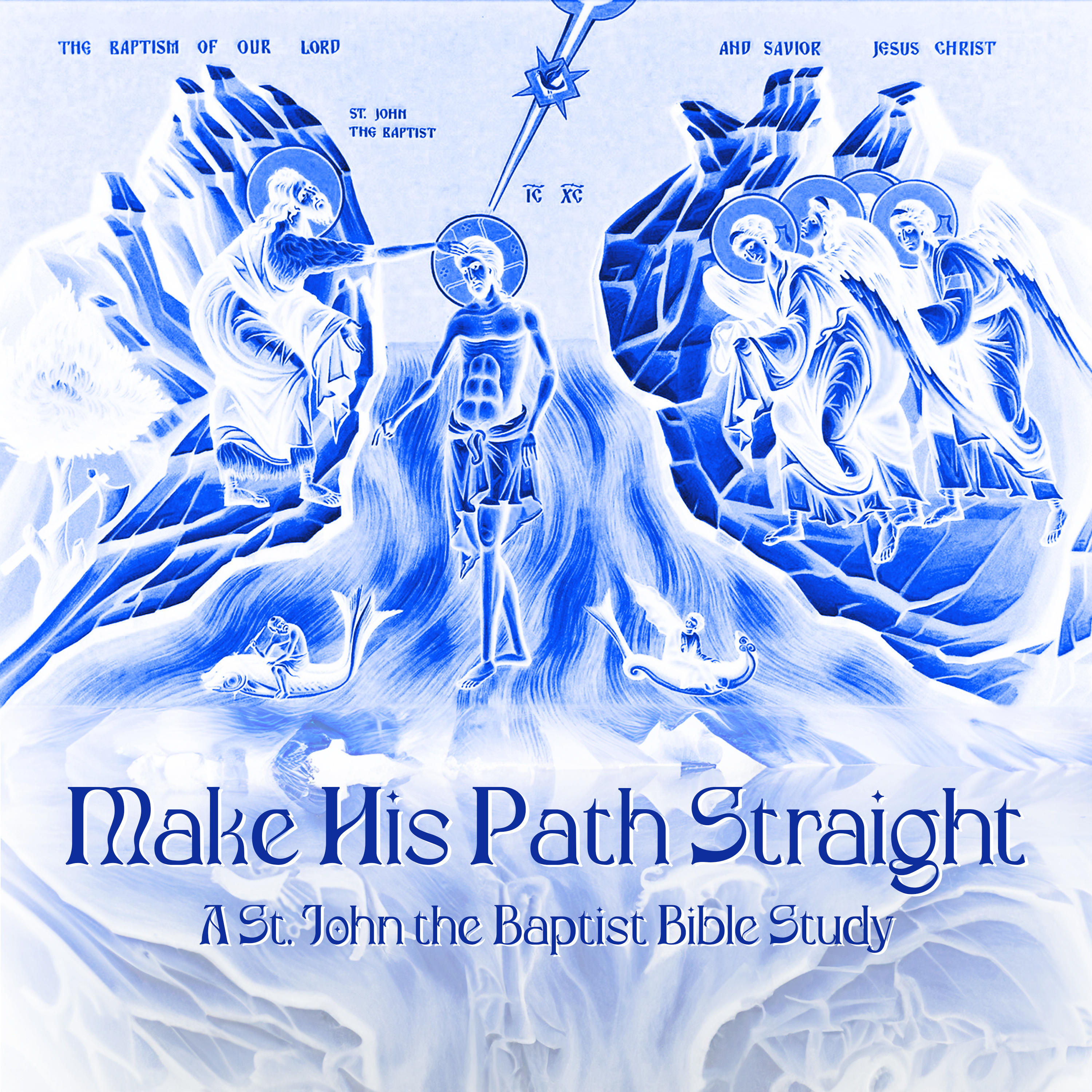
Make His Path Straight: A St. John The Baptist Bible Study · St. John The Baptist, Boston
The Gospel According to St. Matthew | Chapter 5 In this session of Make His Path Straight, we begin Matthew Chapter 5 and the Sermon on the Mount, starting with the Beatitudes and Christ’s call to be the salt of the earth and light of the world. Throughout these teachings, we reflect on our complete dependence upon God and what it means to live as Christ calls us to live: with humility, mercy, purity of heart, and peace. Finally, we explore Christ’s words that He came not to abolish the Law and the Prophets, but to fulfill them, revealing their fullness through His loving and saving presence. Join us as we begin our journey through the Sermon on the Mount and consider how these teachings can shape our own life in Christ.
Nick Botsolis: Hello everyone, and welcome back to another session of our St. John the Baptist Bible study, Make His Path Straight. My name is Nick Botsolis, and once again I'm happy to have you all here with us. So this week, as we're doing our Bible study, we're in the full court press period of getting ready for our church's festival. So if you hear something in the background talking and movement and whatnot, it's all the lovely people who have been devoting their time, effort, and talents into Preparing for one of our church's biggest fundraisers of the year that allows for us to be able to not only support our ministries, such as this Bible study, but also to help support the Philippos and the other outreach ministries that we're all part of here in our community. So if you hear noise going on in the background, that's the noise. And this week, we are gonna be shifting gears a little bit, as I mentioned at the end of last week. For the past four chapters of the past two weeks. We've been able kind of rapid fire speed through as we just kind of break down the narratives, talk about what the narratives mean, and go from one section to another. With chapter five, the structure of Matthew changes a little bit. We end up in our first major discourse. And this major discourse is referred to as the Sermon on the Mount. So the Sermon on the Mount becomes kind of this framing device for us of the primary teachings of Christ. And we saw at the very end of last week that we shifted from Christ having his early life to the baptism of Christ, to his early temptations in the wilderness after his baptism, to now his earthly ministry, which has begun. And Matthew again is using the Sermon on the Mount, which will go on for a nice lengthy section here. To frame what that ministry of Christ is and how that ministry of Christ is presenting itself. So, kind of the executive summary from where we've been and where we're going, we've seen the narrative of who is Jesus the Christ. This motif of fulfillment, that is, how Christ, through his birth and now his ministry, has been filling the law to overflowing, has been taking place. And On that topic of fulfillment, we're going to see the Sermon on the Mount is really working with how or relaying to us how what we would refer to as the Old Testament is being fully unveiled or fully fulfilled or fully revealed to us through the presence of Christ, God, truly living among us and ministering to us. So There's a lot that we're gonna unpack as we actually go through them. I have no idea if within the time that we have, we're actually gonna make it through chapter five of the Sermon on the Mount. But the plan is to begin here with the Beatitudes and then do our typical walkthrough. So with all my rambling out of the way, trying to preface where we're going, let's actually look at chapter five of the Gospel of Matthew and then try to break down these sections and ask the question of well, what Is it that standing out to us, and what is it that we're being called to look at here? So beginning with chapter five, verse one. Seeing the crowd he went up on the mountain, and when he sat down, his disciples came to him, and he opened his mouth and taught them, saying, Blessed are the poor in spirit, for theirs is the kingdom of heaven. Blessed are those who mourn, for they shall be comforted. Blessed are the meek, for they shall inherit the earth. Blessed are those who hunger and thirst for righteousness. For they shall be satisfied. Blessed are the merciful, for they shall obtain mercy. Blessed are the pure in heart, for they shall see God. Blessed are the peacemakers, for they shall be called sons of God. Blessed are those who are persecuted for righteousness' sake, for theirs is the kingdom of heaven. Blessed are you when men revile and persecute you and utter all kinds of evil against you falsely on my account. Rejoice and be glad, for your reward is great in heaven. For so men persecuted the prophets who were before you. So we're going to pause there at the end of verse 12. In the the section of blessed bees, or the Beatitudes, we see the foundation of Christ's entire teaching here within the Sermon on the Mount. So when we hear blessed are repeatedly, articulated to us, the way that we can kind of understand it is that. What each of the Beatitudes is speaking to is our relationship with God and what we are receiving as we follow God. So in every one of the Beatitudes, we're kind of looking upward through this relational characteristic. God becomes the foundation, God becomes the person that we're relating to, but we need to also remember that through the incarnation and through the ministry of Christ, Christ is embodying. All of these beatitudes. So it's not only saying that this is what we receive as we relate to God, but it's saying that this is what God is actively embodying as he ministers to us. So we'll use that preface here to begin to frame things, but kind of looking first at verse one, we hear, seeing the crowd, he went up on the mountain, and when he sat down with his disciple, ⁓ his disciples came to him. So here's a unique characteristic of the Sermon on the Mount. Compared to St. Luke's Sermon on the Plain, as it's referred to. The Sermon on the Mount isn't being given to everybody. Rather, the Sermon on the Mount is being given to Christ's closest followers, his disciples. So he begins as he ascends this mountain, and we'll remember for those of you who have read some of the articles I've done over the past month, that when we see that motif of ascent taking place, that is climbing a high place or a mountain. That's a framing device that's setting us up to pay close attention because some type of revelation of God is coming our way. So when Mary arises and goes into the hill country and greets Elizabeth, there's an ascent motif that's coming out there. And what the revelation is that we see is the babe in her womb leaping for joy, proclaiming that this is the Christ. It's a recognition of God. And When we see after Christ feeds the five thousand, he ascends up a mountain to be alone. Well, the revelation that takes place after that is Christ walking on the waters and then with his word stealing the storm. The revelation that we see there is Christ saying, I am God. And time and time again, all throughout the Old Testament and the New Testament, we see this taking place. Moses ascends the mountain and he receives the law. So whenever we hear kind of elevations being spoken to us, that's a nice little key for us to pay a little more attention and say, well, there's gotta be something else that's happening here. There has to be some deeper meaning that's taking place because again, those who wrote these texts, they're very particular, very precise in the way that they were writing their text. So the gospels and the scriptures in general don't really have much fluff in them. And when we see these through lines, such as descent, ⁓ ascent rather, it's kind of calling our attention to a broader reality or a meta-reality that is taking place. So I'm not saying that's that way we can just look for every single elevation and start saying, Well, there's got to be some massive revolution that's taking place. But I'm saying that to draw our attention to these situations where it's like, well, if God Himself in the person of Jesus Christ is ascending a mountain, There's probably something I need to pay attention to here. When Moses is ascending the mountain and we see that he's receiving the law from God, pretty clear example to us that there's something we need to pay attention to here. And the same thing with the example I gave before. When we see Christ ascending the mountain to this lonely place as his disciples go across the sea, well, there is a revelation that we see that takes place after that. There's a deeper meaning. And As Christ is beginning the Beatitudes, we see that he's revealing this deeper meaning to his followers. And he opens his mouth and teaches them, saying, Blessed are the poor in spirit, for theirs is the kingdom of heaven. So poor in spirit, this poverty in spirit is a recognition that we are not the source of our own life. We've mentioned before that a spirit is an animating force. So If we are poor in spirit, it's a recognition that we need something broader or string stronger to give us life. We go all the way back to Genesis. Who is it that breathes life into us? Who breathes that air or spirit into us in the very beginning? It's God Himself. And if we see that God is the one who breathes life into us, well, we see that ultimately speaking, God is our source of life. But we flee from God. We run from God. And what's the result? Well, the result is the fallen world that we live in. So recognizing that we're poor in spirit is rather recognizing that I am entirely reliant on God for everything that I need. I didn't choose when I was born. I don't choose when I depart this life. I don't get to choose how I come into the world. I choose what I do as I move through the world. And yet at the same time, when we look closely at our lives, God is continuing to provide for us in so many different ways. It's like I think about all the times in my life when I'm going through the motions. It's like, all right, you know, I'm doing good here, but I'm focused on my job. I'm focused on what I'm gonna have to eat later. I'm focused on like who I'm gonna talk to later, what plans I'm gonna make. And all of these things are good when they're centered in something deeper. Yet if I'm focused on job. Who I'm gonna talk to, what I'm gonna eat and wha how much money I make and all of these aspects of our life, and miss the bigger picture, and miss who's offering me all of these things, well then I find time and time again I'm treating these aspects of my life as idols. I'm making these aspects of my life my only goal. then things get kind of hard because it's like, Well, why am I so frustrated? It's like, well, it's because I'm focusing on the things that don't really matter. Now that's not me saying that our jobs don't matter, what we're doing doesn't matter, you know, our finances don't matter, throw it all away. But what I'm saying rather is we need to strive to frame everything in our life within the context of well, how is God calling me to use these gifts that He's providing me? So if I'm looking at my career as something that God has entrusted to my care. To glorify him and to serve his people, well then that changes the way that I relate to my job every day. If I'm looking at the wealth that's been provided to me by God as a gift that he's offering me so I can give glory to him, well then that reframes the way that I look at my savings and I look at the cash that I have, or I look at the cash that I just randomly throw around on arbitrary things. Basically, what I'm saying here is that when we put God at the center, which is something I'll frankly say I'm very poor at doing, but when we put God at the center, I've seen like at those times in my life when I actually force myself to make that priority. When I actually give myself the stillness and the peace to make sure that that is priority. Well, I see that things just kind of come together. And the really cool thing about How God works in our life is even when I'm not making God a priority and like months go by in my life, it's like lava, you you're just skipping around, doing your thing and kind of jumping on landmines left, right, and center. When you look back, it's like you start to see, ⁓ wow, like look at these moments where God was continuing to provide as I was becoming my own worst enemy. And those are very humbling moments I find in my life because it reminds me, well, okay. I was doing everything in my power, whether conscious or not, to sabotage myself. And yet, at the same time, what happens? Well, I see that God is continuing to provide for my every need. So again, that's a framing device. Like if we're poor in spirit, that is, we're not the source of our life, well, then we're entirely reliant on God for everything. So as being entirely reliant on God. Frames the entire way that we look at our life and also frames the entirety of the Beatitudes. So as we move on, we hear, Blessed are those who mourn, for they shall be comforted. So we talked about fallenness. We talked about how the world, through us fleeing from God, from us sinning, kind of falls into disorder. Because God is the source of order himself. The further we go from God, and since we're stewards of the creation, further we pull the creation along with us, the more disorder comes into the creation. And so when we see our reliance on God, when we turn back to God, there is this blessed mourning that takes place. St. John Chrysostom and Blessed Theophilic highlight this blessed mourning as being the perpetual state of the saints. They see how good life is when they're in God's presence. They see the glory of God. And then you're still in this world or recognizing you're not of this world. And the state of saints, I'm not saying this is my state, although I have had these moments where it's like you have this overwhelming sadness when you see the goodness of God, and then you just see the fallenness of the world. The state of saints is that they're constantly seeing that fallenness. And rather than shaking their fist at it and being like, I need to defeat sin. Sin is horrible. They recognize that, yes, sin is horrible. Yet they mourn over the reality of sin. They mourn over the helplessness of others. And most importantly, they continue to pray for others. So when we talk about saints interceding on our behalf, what we're talking about is those who are living and those who have departed Are continuing to pray for us, who are continuing to intercede, to go to God on our behalf, to remember us. So when we're saying may their memory be eternal for those who have departed, we also believe that those who have departed are constantly doing that for us. So what that tells us is that, well, okay, there's a different mindset that we need to have when we're talking about sin. And when we're talking about recognizing the fallenness that we find ourselves in the middle of. Like it's easy for me to have that gut instinct of I'm angry towards sin. It's like, okay, anger can be righteous. But at the same time, like if you're wrathful or fixated on that anger, well then what are we doing after that? Like you're just having this very positive the very powerful rather emotion that you're directing it in some direction. But am I actually trying to pray? Am I actually remembering my reliance, my poverty in spirit that I have? Because if I'm remembering that I'm totally reliant on God, and then I recognize the reality that I find myself in, that everyone around me finds themselves in with sin and its consequences, well, if I'm not calling out to God then and asking for him to continue to do what he's actively doing, well then I'm just looking at sin. And simultaneously committing a sin of saying, Well, okay, I am God. It's like if I'm just gonna be angry at the state of sin and not call on God to continue to do what He's actively doing, that what we believe he's done through the resurrection, well then again, I'm cutting God out of the equation in some way because I'm saying, All right, you know, sin and Everything that's doing to my life, it's doing to everyone else's lives, like that's on me. I say all the time because I gotta remind myself all the time that we're not our own personal saviors. God is our savior, and thank God for that. So when we mourn over the fallenness of our world, when we experience that profound sadness, when we see loss or we see sin. Which all of these aspects of our life, we need to remember that the comfort that we're receiving isn't from worldly means. The comfort we receive is from calling out to God to continue to comfort us. And when we call out to God, it's not like we're now convincing God to offer us that comfort. Rather, when we call out to Him, we're recognizing the comfort He's continually offering us. So when we say blessed are those who mourn for they shall be comforted, again we're striving to have that divine mourning which the saints said. And so carrying on we hear, Blessed are the meek, for they shall inherit the earth. Now, meekness we typically think of as weakness within our culture. But if we frame our understanding of meekness in the person of Jesus Christ, well, would we call Christ weak? No, we would call Christ rather the source of all authority, the source of all might. He's the Logos, the Word who in the beginning brought all into creation. So he has extreme power. He has extreme authority. And yet what does he continue to do when he is being assaulted, buffeted, and persecuted? We see him actively turning the other cheek, as we're gonna hear later. So what this helps us to kind of frame is that meekness isn't false piety, meekness isn't me refusing to have any strength. Rather, meekness is a recognition of what I could be capable of, the sin that I could commit in retaliation, but also choosing not to retaliate, choosing God. and the good, even when protecting myself would be something that's even more beneficial in my mind. Because that's a lie that I mean I find in my life time and time again. It's like, okay, I can sit here and be like, ⁓ well, this person did something against me. Or this person said something that, you know, pricked at me a little bit. And my temptation constantly is, ⁓ now I need to retaliate. ⁓ I have to say something, I have to convince them of something. And yet in those moments of clarity that I've had, it's where it's like, instead of retaliating, you choose not to. Well, in those moments of choosing to stay your hand and to take that step back and take that breath and just slow down, it's like, well, all of a sudden I've seen in those moments, it's like something else is taking place. It's like, okay, yeah, I could say to myself, I have the logical prowess and verbal acuity to be able to retaliate here and own that person that's in front of me. But it's like when we ask ourselves objectively, well, what's the actual gain from being able to get one up on somebody else or prove ourselves right? If we truly believe that we're standing on the proper foundation, it's like, well, there's no actual gain that we receive from that. We may feel good for a moment, but I found time and time again, like that moment fleets. And when that moment passes, well then all of a sudden I'm left with this kind of sick feeling in my stomach of like, well, what was I actually trying to do here? It's like that person already didn't feel great to begin with. Now I don't feel great because I just kind of jumped into the mire of what was happening there. And it's like instead of Choosing to stay my hand instead of choosing to take that step back. Now there's just kind of this big old mess that God is actively mopping up. But it's like, well, okay, I have some work to do here to not contribute to that. So it's like that's something I've really had to learn being in this weird space of like talking about the Bible and like having discourse with people in person and online. It's like, okay, I know. We spend all this time looking over these things and Trying to take our theology and take the scriptures to the heart, that the temptation I've seen in my life constantly is, well, I need to prove that I'm right to this other person. That's like, well, what's the point of what we're studying here if I'm trying to just weaponize it? Again, I single myself out because it's something that I've done time and time again. Like I've gone to seminary and plot twist for people who go to the seminaries, it's like, You go to seminary unless you're a very holy person and you're typically going there and you're trying to figure out like little things that you can learn so that way you can prove other people wrong. And there's always like this beautiful seed that's planted I've seen universally in people that's like there is that desire to serve. And the process of going through seminary and then the process of everything that comes afterwards is kind of like beating out the rough edges of You trying to own the other person and prove yourself right and all that fun stuff. At least that was my experience. So God wins out usually with that seed of that desire to serve. Where we need to be like purified and kind of hammered out along the way is that we need to let go of everything that our pride is telling us to do. So meekness isn't weakness. Meekness is choosing to stay your hand or just listen or take that time to let peace be present, even when we feel stirred up, because ultimately meekness is in the image of Christ. And if we believe in the God who willingly offers his life for the life of the world, he offers us his life so we can be fully united with him. Well then again, he becomes our framing device for how we're being called. to interact with the world, how we're being called to relate to one. So we hear in verse six, Blessed are those who hunger and thirst for righteousness, for they shall be satisfied. So righteousness being made right. We need to ask ourselves again, in whose eyes are we being declared right or righteous? It's not within the princes of the sage, it's not within our governments, it's not within the eyes of one another. Ultimately, we're being made right within God's eyes. So if we're striving to be righteous in the way that God is calling us to be righteous, if we're striving to live as we see God living through the person of Jesus Christ and ultimately through his saints, who he's alive and well in, well then we understand what it is we're hungering for. God entering into his creation has now given us a framework. For how we're relating to him and how we're receiving life eternal in his loving and saving presence. So the saints are people that hunger for the life that is offered to us in the presence of Christ, who constantly strive to be made right in God's presence. We might ask ourselves, well, how is it that we become righteous? How is it that we become right within God's presence? Is it through faith? Is it through works? Is it through a combo of both? Ultimately we may we are made right not by anything that we do besides turning to God, calling out for him always, and allowing for him to be at the center of our life. So when we forget God, that's when we kind of flee from being righteous. And the examples I gave before, like as I found in my life, where it's like I focus on my job for the sake of being a job, I focus on relationships for the sake of relationships, or you focus on your wealth, or you name it, any aspect of your life. If you focus on an aspect of your life without recognizing your poverty in spirit and who it is who has offered you all of these gifts, well then all of a sudden the way that you're framing your life is skewed. And instead of being made right. In the eyes of God. It's like I'm kind of trying to run away from the eyes of God. I can't fully run from him, but at least I'm telling myself, like, ⁓ God can't see me. I can run in the opposite direction. So being made righteous isn't something that we achieve through, you know, getting enough righteous points and then all of a sudden it's like, I've achieved Godhood, we're good to go. Rather, being made righteous is something that's done just from pursuing God in the way that we live our lives, yes. While recognizing that he is the one who is making us right. He is the one who's providing us this gift. So again, here's the motif we continue to see in the Beatitudes. We are entirely reliant on God for everything. God is continuing to offer us everything that we need. And the easy slash hard part for us is learning how to turn to God and everything, learning how to humble ourselves so that way we can put our ego aside. Something again I'm very poor at doing most of the time. I just have to call a spade a spade here. But when we put our ego aside, what happens? Well we start to see that we allow for God to illuminate the path of our life, to make straight the path towards him in our life. So that's the goal that we're striving towards. And yeah, we're gonna fail from time to time. The point is, if we're striving for holiness, well then God's continuing to make us holy. If we're recognizing that we have been set apart, that's what that term holy even means, well then we recognize that God has set us apart to be his people. God has set us apart to receive the gifts that he's offering us. So when we live a life that's commensurate with that reality, well then We see that reality unfolding in the way that we live. So striving in faith is really our goal in everything. We have this lofty reality, it's like we need to be made righteous in God's presence. But there's a recognition that we have that I can't really become righteous on my own. Otherwise we wouldn't have needed Christ. God is the one who makes us right in his eyes. In the way that we achieve, quote unquote, if I want to use that term, righteousness, is by pursuing him, calling out to him, and again framing it all in this motif of we recognize our poverty in spirit. And so we move on and we hear in verse seven: Blessed are the merciful, for they shall obtain mercy. So this is very similar to what we were talking about with meekness. If we believe in the God who Continues to stay his hand, well then what are we being called to do? And when we actually think about the mercy of God, we can recognize that the entirety of the Old Testament is meditating on God's mercy. We talk about like this motif of God's wrath, especially in the Psalms, like this constant push and pull about asking God to be wrathful. Praying that God's not wrathful towards us, asking God to be merciful for us, and then seeing ultimately that God continues to offer mercy. And that motif is being played with all throughout the prophets, it's being played with all throughout the Psalms, it's being played with all throughout the scriptures. But what do we see as the full revelation of God's mercy? It's the incarnation, the crucifixion, and ultimately the resurrection. So God so loves us that he offers us the whole of himself. Within our tradition, we see that when we receive communion, we're literally receiving God. So it's not only that we hear, ⁓ in the scriptures, God comes and he offers his life for the life of the world. And through the resurrection, we look to a future resurrection that's coming for all of us. It's not a historical event that we're looking at exclusively. It's a reality that we're active participants in. That is God dwelling among us. We believe that God offers us his spirit. So God is constantly animating us and leading us towards himself. He's choosing to dwell in us in the core of our being. So he offers us his spirit to animate us and lead us towards him. And allow for him to do his goodness through us, but he also offers himself wholly to us. He gives us his body and his spirit, the whole of his being. And as he offers the wholeness of himself to us, the end result that we see is he raises us to his loving and saving presence. That's what we look to in the resurrection. So when we think about God within that framework, And then look at everything that we've done throughout human history. It's like, yeah, we can think God should be wrathful towards us. God should be smiting me. Like, look at everything that I've done and look at all the goodness of God. And yet, what does God continue to do? God continues to stay his hand, and God continues to offer us his mercy. So if that's the God that we believe in, like Practically speaking, how are we being called to relate to each other? It's like, as an administrator, it's pretty easy for me to be like, all right, you know what? Like someone didn't live up to the deadline that I put in place. Time for me to just make them suffer consequences. And I've had that thought before where it's just like, All right, you know, how many emails can you send out? How many reminders to people can you send out? You know what? I'm not gonna go a little bit further. I'm not gonna help these people anymore. And I'm not saying there's like a moral right and wrong for those situations. But I know like in my life and in my heart when I've been confronted with those situations, it's like I think about them in this way. It's like if I believe in a God who's endlessly merciful to me, and then all of a sudden I look at an arbitrary deadline that I've put in place and that can turn around and be like, ⁓ you what? I'm not gonna go the extra mile and reach out again to this person. Or if they finally got around to sending me this like a couple of weeks late, then I have to, you know, hit them with some type of arbitrary discipline. It's like what I've noticed now is that instead of me doing that because like that was my gut reaction, it's like it's better for me to learn how to be overly merciful. And thank God that yeah, I'm Mr. Economy and I also work with somebody who's like very strict rules and we even each other out. 'Cause I think being overly liberal with economy is also not a net positive. That's why I said there's a lot of nuance in these things. But being intentional in what we're doing and striving to be merciful as our God is merciful to us, it's always a good framing device for us to use in the way that we live. So that's what we need to strive towards, like actually being merciful in the way that our God is merciful to us. And when we see that, yeah, everything we've done in our lives and we've seen everyone that come before us do, it's like, yeah, no, we might think objectively speaking, we're not deserving of mercy. And yet that shows us how much our God loves us, that He continues to show us mercy even when we feel we're not deserving of it. And so we're being called to show the same to all those around us. So then we carry on, and we hear in verse 8: Blessed are the pure in heart, for they shall see God. So heart, from a biblical perspective, isn't speaking about this organ pumping in my chest here. Heart typically is in reference to the core of one's being. So when we hear of this purity of heart, well, who is it? That is purifying us? Who is it that we're allowing to dwell at the center of our being? It's God. And so when we allow for God to purify the core of our being, to sit at the core of our being, and we already start doing this when we recognize our poverty in spirit, well, then we see God. So God continues to relate to us, God continues to offer Himself to us. And As we receive that offering, well then we see God at work in our life. Like we're not talking about like visual and auditory hallucinations here for the most part. We're talking about God revealing himself in the nuanced ways that God reveals himself to us. Like some of us receive visions of God, some of us hear the voice of God, but most of us will see God in kind of this nuanced way. And when I'm talking about a nuanced way of seeing God, it's kind of hard for me to wrap my head around explaining it. But we'll start to notice signs. We'll start to notice things that are kind of going on in our life that are outside of our control. As I've mentioned before, like when I look in the rare view mirror of my life, when I'm in the middle of situations that should have blown up and I just continue to be my own worst enemy in the middle of them, well, after the Met Fact, you start to see, wow, look at all of these ways where God provided that were totally out of my control that I didn't even notice in the moment because I was too focused on being my own worst enemy. I was too focused on actively seeking my own destruction. Now that might sound a little hyperbolic because it is a little bit hyperbolic, but I use it to prove a point. It's like all of us in moments of our lives when we look back and see that we went through some difficult period can start to see the through line of I wasn't helping myself and yet look at all of the ways that I was being provided for. And when you start to look in retrospect and see that provision, well, then that starts to frame the present that we find ourselves in. Because it's like, okay, if I can look back and start to see God providing, well then what does that tell me about where I'm standing here now? Well, it tells me that God is actively providing. in the here and now as well. And so when I allow for him to dwell in me and I receive that purity of heart, well then I start to see where he is providing for me, not only in the rear view mirror, but also in the present. So for us to be able to see how God is continuing to provide for us, we need to receive what he is providing. We need to again prioritize him We need to pray to him. And prayer again, it doesn't have to be this elaborate structure that we have every single day where it's like, ⁓ here are the prayers that I'm reading, and here are the times specifically that I'm doing these prayers. And all of a sudden I know for myself, time and time again I've become a tyrant to myself with prayer rules. Because it's pretty easy for me to just do them for the sake of doing them and forget why you're actually doing them. The discipline Is good, but sometimes the discipline can override the genuine calling out. So prayer doesn't have to just be something that we do in the morning and we do at night and we do at these fixed times in the day. Prayer is something that we can do continually. We have the Jesus prayer in our tradition that we continue to pray silently and verbally. But something I've started doing recently that I've mentioned in a few of these reflections before is that well when it feels like things are overwhelming and you're confused, you're just trying to get through life, like just saying the words, God help. God help me. God help me see what you're trying to form in me. Like saying those words, it might sound arbitrary, but it's like if we believe in a real God, if we believe in a God who's living and providing for us. Me taking a step back and getting out of my own head and just saying, God help, that goes a long way in actually making him a priority. So it's like there are so many ways that we can search for God. There's so many ways that we can have poverty in spirit and that we can ultimately have purity in the heart. So we see God. Each and every one of us in our journey towards him, in our journey of building a relationship with him. Finds different ways that we relate to him in the same way that there are different ways that we relate to him. But the simplicity of us trying to make God a priority and striving to find those ways that work for us to make him a priority, well, in that simplicity of allowing for God to enter my life, that way I've received that purity of heart, that's basically the foundation or the framework of everything we're striving towards. Because if I'm not allowing for him to dwell in me and calling out to him or searching for him in my life, well then I'm not gonna see him. Because why would I see him in my life? I don't care about the gifts he's continuing to offer me. Again, that's something I've done in my life time and time again. And the beautiful reality that I've continued to see is that even in my moments of not searching for God, or those moments of arrogance and or even seasons of arrogance, it's like time and time again, God breaks through. Time and time again, God has sent me people who just help me see, I don't really like what I'm doing here. And time and time again, God is the one who continues to reveal to us like who he is and how he's providing for us. So, yes, we're called to have God at the core of our life, but for us to be able to have God at the core of our life, we need to actually seek him and call out and receive the gifts that he's offering us. So again, we always talk about in these reflections, like we need to build a relationship with God. What I'm trying to get to here is that practically speaking, we were build a relationship with God by asking for his help, by calling out to him, by looking for him in my life, by attending his church, by being a member of his body as we live in communion with one another. And through all of these nuanced practices. What we see is that we allow for God to truly dwell in us. And then we start to see God in our life because we're actually making him a priority. So we move on again, and we hear in verse nine, Blessed are the peacemakers, for they shall be called sons of God. So in striving for peace, since our God is our prince of peace, we see that we're ultimately declared children of God. So again, we see the framework of the whole of the Beatitudes is us striving to be God like. And then receiving all of the gifts that he continues to offer us. So to be like the Son of God, we too need to be peacemakers. We need to be, rather than striving for conflict, striving for peace in all aspects of our life. And striving for peace doesn't mean, again, being docile or not standing in truth. Rather, when We have moments of standing for truth. We need to make sure that we're actually standing on a foundation of peacefulness, a foundation of Christ. And like a good litmus test that I've started to see is like take a breath in situations when you feel like you need to defend truth. And actually feel whatever you're feeling in that moment. And if your response, as I've found in my life, tends to be reactionary. Nine out of ten times I've seen in my life, it's like, all right, if my desire is to be reactionary here, because I just don't feel good, well then I'm not actually standing in the peace of God. And whatever I say and whatever I do here isn't going to make that peace manifest. Rather, it's just gonna add more chaos to the equation. So if we can take that step back and like start to genuinely feel whatever we're feeling in those moments and ask that question of like, okay, is is peace in the equation here with what I want to say, or is further disorder just kind of sitting in the and asking to be presented to this other person? If we can ask that question genuinely and like feel that reality in us genuinely, I think, and again, I'm still trying to wrap my head around this fully as we're talking here. But I think that is what we're getting at when we're talking about acting from a place of peace. Because when we feel peace, like holistically, internally, however you want to describe it, when we feel peace, we know that we're standing in the presence of God. And if we look at the greatest orators of our church's tradition, yeah, some of them are a little snarky, but they're not trying to. Show themselves as being these great intellects that own the other person. Rather, they're defending truth from that peaceful foundation. And we know that's peaceful because we have these texts passed down to us from generation to generation, and they continue to lead the readers to the presence of Christ. And so the end result that we can kind of see is like, okay, where did what was said end up leaving people? Did it lead into further conflict or did it lead people to the peaceful presence of Christ? Like that's the big picture that we can kind of look at. That's like how I can judge whether or not a piece of content that I'm taking in was actually beneficial. But what I'm saying here is I think in the moment we can have a little bit of a better discernment process by seeing how do I feel right now? What is it that's motivating me in the moment? For anything that receive, I need to ask myself, is this stirring me up? And then any way that I try to react, I need to ask, Am I coming from a peaceful pre ⁓ perspective or am I coming from a place of further disorder? Because ultimately speaking, if I'm striving to be like God, I need to recognize that God is the one who's restoring order. God is the one who's bringing forth peace. Because his very presence Is peace itself. We talked about this when we were going through St. Paul's letters when he prays for the peace of our Lord Jesus Christ to be with all of those that he is speaking to. Peace is what comes with God's presence. So if we're striving to constantly be in God's presence, well then we too need to be peacemakers. We too need to seek first that peace in ourselves. And in the way that we relate to all of those around us, and the way that we relate to the world, we need to prioritize sharing that gift of peace. So without the peace that God offers us, we're nothing. Without the peace that God offers us, we're kind of fighting a losing battle. So we need to f seek first that gift of peace. Allow for that peace to dwell in us through that purity of heart that we were talking about a little bit earlier. Again, all of the beatitudes really connect to each other. And As we receive that gift that God is offering us, what we see is that living in this peaceful manner allows for us to be declared children of God. So being peaceful aligns us with the Son of God. Being peaceful, and again, centering ourselves in that peace of God, not just our concept of what peacefulness might look like, well, that allows for us to be true inheritors of the gifts He's continuing to. offer us because we're living just as He lives and serving in the way that He continues to serve us. All right, we're gonna keep going because we're almost done at the Beatitudes and we're almost at a full hour. I knew this was gonna happen. Anyways, we hear in verse 10 Blessed are those who are persecuted for righteousness' sake, for theirs is the kingdom of heaven. Notice where the persecution lies here for righteousness' sake. How are we being made right? Well, we're being made right in the presence of God. So what Christ is telling us here is not blessed are those who perceive themselves as being persecuted. Rather, he says, blessed are those who are actually being persecuted for righteousness' sake, for theirs is also ultimately the kingdom of heaven. So Christ is persecuted. Christ is persecuted because he is God and He's leading other people to God. We've already gone through how does Christ relate to each and every one of us. Even when we're persecuting him, he is merciful, he is meek. So when we are persecuted for righteousness' sake, that's there's a recognition that comes out here that we're aligned with God. And if they persecuted him, then they're gonna persecute us as well. But how do we relate to that persecution? Are we being called to cry out that we're being victimized the entire time and everyone's harming us? Are we called to retaliate and try to inflict our own vengeance on other people? No, because if we're truly standing in the righteousness of God that is being made right in God's presence, well then we have nothing to fear because God is the one who's actively providing for us. Again, and we we look at Christ as our model. It's like He has every opportunity to come down from the cross. He has every opportunity to flee from the passion from the very beginning. And yet he chooses to offer his life for the life of the world. Because through the cross, as we're celebrating the cross now in this period in between the feast of the cross and now the afterfeast on Sunday, well, through the cross, we see that death is trampled down by itself, that God enters into the grave and as the architect of life, restores life. So we believe that life is restored in the presence of God. Well then we have nothing to fear even when we're being persecuted. We have no reason to try to retaliate because it's from a misunderstanding that we're being persecuted in the first place. And if we're treating others with the love that God is treating us with universally, well then that desire to seek vengeance on our own, well, it starts to be dissipated. And then we end up being like the saints who mourn. When they see sin and its consequences, who recognize actively that God is the one who's comforting them in their mourning, in their sorrow, in their persecution. So again, wanting to retaliate or wanting to play the victim, that's a temptation for us to miss God in our persecution. But if we're truly being persecuted for righteousness' sake, Well then we need to remember that God is continuing to provide for us. Even if the body is killed, we look to the resurrection of the dead and the life at the age to come, as we talked about when we went through chapter two of Matthew and we heard about the martyrdom of the holy innocence. It's like, yeah, we see that Herod kills all of those children, and yet they too have the hope of the resurrection. God continues to provide for us all. So we need to remember blessed are those who are persecuted for righteousness' sake. For ultimately, ours is the kingdom of heaven. Ours is God's kingdom. Moving on now to verse eleven, with the final beatitude, with almost a full hour in, we hear, Blessed are you when then revile you and persecute you and utter all kinds of evil against you, falsely on my account. Rejoice and be glad, for your reward is great in heaven, for so men persecute the prophets who were before you. So this is again building on that motif of being made right in God's eyes. Blessed are we when others revile us and persecute us and utter all kinds of evil against us falsely on Christ's account. Because again, how was Christ treated? We see he was treated shamefully. And yet what does he do through that shameful treatment? Does he say, okay, now here's the group of people that treated me poorly, see you later, and here are the people that treated me well. You guys are all saved automatically. No, he continues to be merciful to us all. Yeah, there's a separation that will take place when we live the entirety of our life diametrically opposed to Christ. And yet we need to remember that as long as we have life in us, as long as we have breath in us, there's always an opportunity for us to repent. At the same time, we need to remember the words of Christ on the cross. Father, forgive them, for they know not what they do. These are some of the worst, the the last words, not worse words, last words that Christ utters. And as he proclaims them, we see the endless mercy of Christ. Now, for us to receive mercy, we need to actually receive that gift. We need to live a life aligned with everything that we've just talked about. But at the same time, we need to remember that God continues to offer each and every one of us his mercy. So when we see that we're being persecuted, when we see that people are speaking evils against us and slandering us and doing all these things, well, there's really not a cost. Even though we might feel a cost, because God continues to provide for our every need. So we're being called to recognize God in the midst of everything. Because if they persecuted him, they'll do the same for us. But at the same time, if he could turn the other cheek and still offer salvation to each and every one of us, despite us mistakingly or pridefully persecuting him, well then we see that. We're all participants in that same mercy. We're all participants in that same gift. And not only are we to see that we're participating in the same gift as God's mercy, but we're called to rejoice and be glad, and for our reward is great in heaven, for so men persecute the prophets who were before us. So identifying the prophets shows us the holy ones of God who have come before, those who have received God's Spirit to be able to lead others towards the presence of God. We see universally. The prophets aren't people who are held in high regard usually during their lifetime. They're people who are persecuted and chastised throughout their lifetime. And yet we see the glory of God in them after the fact. Because God always wins out. God's will is always done. And he's continuing to reveal himself fully to us. So we're not called to lose heart. When we see just the reality of our fallen world. Rather, we're called to be renewed by the presence of our Lord in the midst of the fallenness of this reality we find ourselves in. We're called to truly be poor in spirit, as we recognize that we rely on God holy for everything. We're called to mourn when we see the fallenness of the world around us. Because again, there's this further recognition of Where we go when we flee from God. We're called to be meek and lower ourselves so that way we can allow for God to be our chief guiding principle in life. We're called ultimately to hunger and thirst for being made right, righteous in his eyes, because if we're not striving to be made right in the eyes of God, well then we're missing the entire point of what we're striving towards. And we're never going to actually be satiated or satisfied. Because true satisfaction comes from us truly hungering for God and centering our life in Him. We're called to be merciful because we see God endlessly offers us mercy. We're called to be pure in heart because the only way that we can actually see God in our life is receiving his gifts and allowing for him to dwell in us, to give us the sight we need to see him. We're called to be peacemakers because God continues to make peace in his fragmented and distorted world. We are the ones who fragment the world, we are the ones who distort the world, and God so loves us that he continues to offer his peaceful presence. It's our call to center our lives in it. And blessed are we when we're being persecuted for righteousness' sake. Because we see the same thing happening to our Lord. We see that our Lord is reviled. He's persecuted and they utter all kinds of evil against him falsely. Yet his saints rejoice and are glad because they recognize that the reward that we receive is great in heaven. The reward that we're receiving is greater than anything that we could receive in this life by getting one up on somebody or proving ourselves right or defending ourselves when we know that God is our true defense. So the point I'm getting at here in kind of that rambling summary of the Beatitudes is that we are totally dependent on God for everything. And it's our call to look to him to provide for our every need. Because God so loves us that he continues to provide everything that we need for life in him. God so loves us that he offers his life for us, even though he doesn't really have to. God so loves us that he freely chooses us And simultaneously, freely gives us the choice to choose him. Because he's not forcing us to love him, he's not forcing us to receive his gifts. God so loves us that he gives us that freedom. And all the while, he provides everything that we need to freely choose whether or not we choose him. So if we understand that as being the framework for our entire life in Christ, well, then it becomes clear where we're being called and how we're being called to live. complicated because each and every one of us builds a relationship with God in these nuanced ways differently, yet simple in the sense that when we call out for him in prayer, when we make him a priority as being members of his church, and when we relate to one another, members of his body, as distinct individuals created in his image and striving towards his likeness, well then we see that Christ is in our midst and he is and ever shall be. We see that when we call out to God, He's actively answering us. Even though sometimes the answers that we receive aren't answers that we want in that moment. When we pursue God, we see that all along He continues to pursue us. So the Beatitudes, summarizing them entirely, can be seen as our way of relating to God and the way that God continues to relate to us. So this interrelation that's taking place here. Christ lives the Beatitudes in his whole ministry, and we're being called to live the Beatitudes as we're seeking to relate to God. So we have a little time left, and we haven't even gotten through half of chapter five. So I think we're gonna try to do another section and see where we're going from there because next week I'll save this as we're wrapping up. I'm gonna actually be in Greece, so we're not gonna have a recorded session, but we will pick up chapter five when we return. So before we wrap up tonight, let's actually move on to verse thirteen of chapter five. We hear You are the salt of the earth, but if salt has lost its taste, how shall its saltiness be restored? It is no longer good for anything except to be thrown out and trodden underfoot by men. You are the light of the world, a city set on a hill cannot be hid, nor do men light a lamp and put it under a bushel, but on a stand, and it gives light to all in the house. Let your light so shine before men, that they may see your good works and give glory to your Father who is in the heavens. So we'll pause there. We hear of salt and of light. And when I Drop the handout that we have in the chat. We're going to see the motif of salt is something that is present in the Old Testament. ⁓ Israel, the children of God, the people of God, are being asked to salt the offerings that they make, the whole burnt offerings that are being presented to God. And in the savoriness of salt, there's a recognition that effort is being put into play. There's A recognition that we're going a little bit above and beyond. Because if we think about the whole burnt offerings that are taking place, it's like, okay, yep, there's the process of slaughtering the animal, which actually isn't part of the offering itself. There's actually no mention of that whole process. So besides a few of the purity laws that are taking place. So again, I'm not trying to go above and beyond in this point here and get out of ⁓ the realm of possibility or reality. Point I'm trying to make here is that when salt is being added, we see that there's this added, let's say, flavor. And if we recognize that the sacrifices that we see all throughout the Old Testament are offerings of hospitality rather than offerings of exchange, well, then we start to see what's taking place here. When the children of God make these whole burnt offerings to him. There's a meal that is taking place. And if you want your food to be good and you want to really be hospitable to the person that you're asking to come dine with you, well, you want to add some spices to that meal. So insulting the meat that is being offered, we see that that hospitality is being offered in full. The people of God are going above and beyond. And In this motif that we hear in verse 13, you are the salt of the earth, what we hear is that we are the flavor. We are that little something extra that God is continuing to offer each and every one of us. And yet, if we're being valued in this hospitable way by God, that He's deeming us to be the salt, the spice, what have you. We need to recognize that we need to retain that gift. Because if salt loses its taste, how does it become salty again? How is its saltiness restored? It can't be. Rather, it's no longer good for anything except to be thrown out and trodden underfoot by men. So there's a warning that's given in a sense. It's like God has shown his hospitality to us repeatedly. God shows his value in us repeatedly. We are the salt of the earth. And yet, if we live a life that's opposed to that gift, well then what's the end result? Well, it's I threw away the gift that I was given. I've made myself invalid of receiving this ultimate gift. Now, well remember, how far does God go in his mercy? He goes all the way through our lives. And we don't really know what the mercy of God looks like. Even after we depart this life. What we do know is that we need to be living to repent. But at the same time, we pray for those who are departed. So we don't know mechanistically what our prayers for those who have departed do. We don't know if we're sitting here and saving them by praying. Chances are we're actually not saving them because God's the one who saves. But rather We know that we are part of the same body even after we depart. So in recognizing the value in even those who have departed, we're recognizing that saltiness, that flavor, that extra spice that lives within each and every one of us. So in the same way that God shows us his hospitality by giving us that divine mark of his image. We're called to recognize that flavor, that image, that saltiness in each and every one of us around. And using that term saltiness, it makes me think of like, are you salty? Like how we kind of throw that around. Like the point I'm getting at here is kind of the opposite of that. So focusing on the flavor, focusing on the enhancement element is what he's trying to get across, at least from what I've read. It seems that Christ is trying to get across to us. And when we hear in verse 14, you are the light of the world, a city set on a hill cannot be hid, nor do men light a lamp and put it on their bushel, but on a stand, and it gives light to all in the house. We see he's using another motif. He refers to us first as being this savory spice. And now we're being referred to as light, light to a darkened world. world becomes darkened through sin. Because the further that we go from God, if sin is a missing of the mark and God is our mark, the dimmer things start to get as we flee from Him. And yet we are creating God's image. God dwells within us. We are called to be pure in heart. And it's through that pureness of heart that we see God. So if we're allowing God to dwell in us, and God is life. God is the source of light because if we think about what light is, like light is something that's necessary when we're in darkness. When we don't have light, we're stumbling around, we don't really know where we're going. Well, if we recognize that allowing for that light to dwell in us helps us to see the way forward. Well then seeing the immense love of God and how far God goes and everything, we start to see, well, if God so loves us that He offers us that gift. What does receiving that gift do for us in relation to the world around us? Well, if that gift is so great that he's offering it to each and every one of us, then we see that gift is overflowing through us as well. We become light to a darkened world. And in the same way, a city on a hill can't be hid. Like you're not gonna go put a tarp on top of a city on a hill. It's pretty hard to do, practically speaking. In the same way. We're not covering up the light that lives within us. Nor do men light a lamp and put it under a bushel, but on a stand that it may give light to all in the house. Notice with lighting a lamp. If you put a lamp under a bushel, what's gonna happen to that bushel? It's gonna catch fire. It's gonna burn away. So what Christ is telling us here is that the light he's offering us, the light that he's saying dwells within each and every one of us. Is so potent that we can't hide it. We can't put it away. And so it's our call to let our life so shine before men that they may see your good works and give glory to your Father who is in heaven. Now we need to pay attention to your good works here. We see the your and we may hyperfixate on okay, no, these are the good things that I'm doing. And now this is going to contradict Christ later when he's saying not to let my right hand know what my left hand is doing when I'm giving up. That's not the case at all. Because there's a recognition that everything is rooted in God. And we see that here in even saying to give glory to God who is in heaven. There's this act of recognition that even if they're my works, they don't really belong to me. Because I'm glorifying God through those works. And in that glorification. There's a recognition that God is the source of everything. So we need to recognize that when we receive the gift of God's light, yep, we become light to a darkened world. And simultaneously, that gift doesn't belong to me alone. And everything that I do with that gift doesn't belong to me alone. Because ultimately, it's a gift. It's offered to me freely. So we still have old time. Let's go through one more section here. Because again, we're gonna be slowly but surely going through the entire Sermon of the Mount, kind of in this way for the next couple of weeks. And I think we need to make the most of the time that we have. So moving on to verse four seventeen, we hear, think not that I have come to abolish the law and the prophets. I have come not to abolish them, but to fulfill them. For truly I say to you, till heaven and earth pass away. Not Nioda, not a dot, will pass away from the law until all is accomplished. Whoever then relaxes one of the least of these commandments and teaches men so shall be called least in the kingdom of heaven, but he who does them and teaches them shall be called great in the kingdom of heaven. For I tell you, unless your righteousness exceeds that of the scribes and the Pharisees, you will never enter the kingdom of heaven. So, this is actually a very appropriate place for us to wrap up this week because when we get into verse 17, we see kind of the thesis statement of Matthew's entire gospel, as we've been mentioning before. He says, Think not that I have come to abolish the law and the prophets. I have come not to abolish them, but to fulfill them, to fill them to overflowing. So Christ is saying plainly here. Everything that he's been saying through the Beatitudes isn't standing opposed to what has come before. In the same way that God, through his word, again, see a connection here. Christ is the logos or word of God. So Christ is the one who gives the law in the very beginning. God is outside of time. We start to kind of think about these things, it breaks our brain, but that's how this is playing out. The same God who in the beginning brought all in the creation, the same God who early on in the Old Testament gave us the Torah and the law, the same God is continuing to make sense of everything that's been presented to us before through the incarnation and through his now Sermon on the Mount. So there's no contradiction that's taking place here. Rather, we see that the law is And the prophets and everything that came before in this distinction between law and prophets is showing the distinction of the Torah, the five books of Moses, and everything that comes after, which will roughly be seen as the prophets. Everything that is received as scripture is being filled to overflowing. The full manifestation of it is being seen in the person of Jesus Christ. So he came not to abolish the law and the prophets, but to Fulfill the law and the prophets. And as I've mentioned before, this is what Matthew is focusing on throughout the entirety of his gospel. He's showing with all those hyperlinks that we've been talking about, with all the references that we've been seeing, just how everything that is now being fulfilled connects to everything that we thought came before. It's like really amazing when we start to think about it. It's like, wow, like nothing was arbitrary. Everything that's presented in the scriptures connects and it doesn't connect just for the sake of connecting, but connects to show us this is where your salvation lies. This is what you're being called to do with your life because God continues to offer all these gifts to you. Because I think that's a temptation that we fall into when it comes to like biblical analysis. It's like, ⁓ I can just study the Bible for the sake of studying the Bible and like here are all these cool connections and hyperlinks that come together and I just leave it there. But I'm not called to just leave it there. I'm called to look at it, relate to it, and ultimately receive it. And the way that I receive it is by living it. So it's like everything that we're reading is leading us towards the presence of God. Everything that we've read in the scriptures is being fulfilled in the presence of God. Like God so loves us that He continues to offer Himself to us fully. It's like I don't know, I'm really getting into this right now, because like it's like what gives me life when I'm reading the scriptures. It's not just this arbitrary thing or the sanitary text that we're sitting with. It's not something that's just studied, it's something that we're striving to live. And again, I'll admit, like I missed the mark constantly in trying to live my life in Christ in this way. And yet, at the same time, God continues to offer Himself to us and continues to offer us all of these gifts through His scriptures. So I say that so that way we can take pause. I say that way we can like truly reflect on what we're being presented. Because God so loves us that He's offering us the wholeness of Himself. And even when things are starting to get confusing to us through how we're reading the scriptures and interpreting them, well then we see in the person of Jesus Christ that path is being made straight. Through the relationship that we build with God through Christ, that path is being made straight. God is continuing to provide everything we need to us. He's continuing to fulfill not only the law and the prophets, but he's fulfilling our life. That's the God that we believe in. Super cool. And so we carry on and we hear in verse 18: For truly I say to you till heaven and earth pass away, not nayota, not a dot will pass away from the law until all is accomplished. So he's going even further here. He's saying. Not iota, not the Greek letter iota, not a little jot or an accent mark. Nothing is going to pass away until all is accomplished. And this until again isn't speaking to like, ⁓ here's the definitive date when everything ends. That until is showing kind of the eternal quality of all of this. Because when we look at the end of time, we don't think about the end of time as this point when everything stops. We think about the end of time as being this point when everything is fulfilled. And that's why you can say something as harsh after saying that that whoever then relaxes one of the least of these commandments and teaches men so shall be called least in the kingdom of heaven. But he who does them and teaches them shall be called great in the kingdom of heaven. So note here. Yeah, there's gonna be times where we relax living for the word of God. And yet the consequence isn't really coming in here with when we have those moments of laxity or we have those moments of missing the mark. The consequence comes in when we double down and we don't only relax the way that we're living, but we start to teach others to relax their desire for God in the same way. So when we live a life that's opposed to God, and then we start to drag other people down with us. That's when we start entering into some dangerous territory. So I'm making that point here as we're looking at this, because if we're hypercritical with ourselves and we constantly think, ⁓ I'm missing the mark, I'm doing X, Y, and Z poorly as I've done, it's like, okay, well, I am not fully on the hook in the moment there. If I continue to do that though, and then you end up in a position that I'm strangely in here, where it's like, ⁓ we're trying to like meditate on the scriptures and read people towards Christ. And say I start going in the direction of being like, all right, guys, this is all useless. Don't even try, give up. There's no point here. If I just kind of go a black pill on all of you, it's like, oof. There's a massive consequence that's coming in there. Because I'm not only advocating this gift and throwing away the gift that God is offering me, but now I'm trying to manipulate other people to do the same. So I say that because, like, yeah, we have a responsibility to live our life in Christ. And at the same time, we're gonna miss the mark from time to time. And at the same time, we have a responsibility to share that life with others. And sometimes we're gonna miss the mark. But our intentionality is really what's important there. Because if we're intentionally leading people astray, or our actions over time are continuing to lead people astray. Well, that's when we need to take a really hard look at our life. But if we're just missing the mark, as we do from time to time, and continuing to repent and continuing to recognize the wrong that we commit and recognize that we're not perfect and that God is the only one who's saving us and making us perfect, well then we're not running the risk of falling into the condemnation that's being spoken of here. So there's a balancing act. Like whenever we hear of condemnation and consequences in the scriptures, I mean, if we're people who are self-judgmental, it's pretty easy to jump to ⁓ I've already missed the mark and now I'm gonna hammer on myself for missing the mark in this way. And in fact, now the scriptures have validated me hammering on myself. The scriptures aren't trying to tear us down further. The scriptures are trying to shake each and every one of us awake. So if we need the harsher tone, the harsher tone is there to shake us awake. If we're someone who needs more compassion and to be shaken awake in kind of a loving manner, because we're harder on ourselves than anyone could ever be on us, well the scriptures also offer us that endless love and compassion. We see God's wrath and we see God's mercy evenly presented to us all because we need both. continue to turn to him and ultimately receive the gift of salvation that he's offering us. For I tell you, we hear, unless your righteousness exceeds that of the scribes and the Pharisees, you will never enter the kingdom of heaven. So here's a little tongue-in-cheek comment that Christ is making here. Remember, the scribes and the Pharisees have already been called broods of vipers. They're supposed to be the leaders and yet from Chapter three, we've already seen they're not living up to their calling. And so when Christ is saying this, he's actually setting the bar pretty low. Speaking to the point that we were talking about earlier. It's like, yeah, no, your role is to be able to lead people towards Christ in the way that you live and the way that you teach. But now he's using this example of people who have already been shown to us at missing that mark. So he's saying, unless we exceed being made right in God's eyes. We exceed those who are here clearly missing the mark. And I think it's important again that he's not identifying individuals. He's identifying groups, which is telling us, hey, the person is still worthy of salvation, but what's the person doing when they just align themselves with a group? They're depersonalizing themselves. They were giving themselves over to a spirit, if you will. ⁓ we see that with the Gospel of Mark in particular, like from the very beginning, the leaders of the people are referred to as having their hearts hardened by the devil. And they're exclusively referred to as groups. And we hear that it's the scribes, the Pharisees, the Jews that are screaming, crucify him, crucify him. It's not saying, Ishmael, the Pharisee, is screaming, crucify him. The group. Is being highlighted. So what that speaks to is kind of a way the mob mentality will do. But if we go all the way back to the beginning of Mark, when we hear first the devil is hardening their heart, what is the spirit that's animating the groups, if you will? Well, it's a spirit of evil. And that's why Christ will say, Father, forgive them for they know not what they do. Because they're allowing for their hearts to be hardened. And we have a warning here. To avoid doing the same. We have the same responsibility that the scribes and the Pharisees hold. We're being called to live the law and the prophets, the scriptures, everything that Christ is offering us. And through the way that we live, we're being called to lead others to God's loving and saving presence. So that's the priority that we need to make. And the executive summary, and now as we're wrapping up, that I think I'd make is that we're not responsible for being perfect. We may think that we can become perfect on our own. We may think that we're the best that we can be. I know at times I've continued to fall into that belief, and yet that's pride. We're never perfect. We can never be perfect on our own. And that's where calling out to God for help is so important in our life. Because when we have the humility to like actually recognize that we're wrong and actually call out to God to help us, well, we see that yeah, I can't save myself. We see that not only I can't save myself, but I'm also not responsible for saving myself. Now we just ended a section talking about responsibility. Yeah, we're responsible for our actions. And we're responsible for how our actions teach other people. But at the same time, we don't. Hold ultimate responsibility. We're given this example as a warning so that way we can be intentional. But we're not given this example as a way to bludgeon one another or bludgeon ourselves. God shows us the responsibilities that we hold and simultaneously shows us that He's offering us everything that we need to be able to withstand that weight. Because the weight that's on each and every one of our shoulders, like something that I have to constantly remind myself when I hyperfixate on responsibility or o extreme ownership or all of these self-help principles that I had hammered in my head and hammered in my own head, it's like, well. When I think about these things and hyperfixate on these things, and then see my fall in this, it's like there's a temptation that also comes there. And that temptation becomes become despondent. Give up. You didn't live up to the goal that you thought you had set before you, or maybe even you just set for yourself. And yet that's the devil continuing to tempt you further. At least I'm saying that's the devil continuing to tempt me because it's like, okay, no, you don't give up. You don't just stop. You don't just go black pill. Rather, when you see your brokenness, when you see your fallenness, when you see that you continue to miss the mark, it's like, well, okay, well, that's a place where your life is humbled to the ground and you live like those long dead, as the psalms say. And yet, where do we meet Christ? We meet Christ in the grave. And what does Christ do to us in the grave? He raises us to his loving and saving presence. So we need to kind of recognize that we're in the grave for us to be able to receive the gifts that God is offering us. It's easier to think, I'm going to find God in this lofty state of my life. It's like when everything's going great, that's when I am finding God. Yet the reality of the situation is that. I don't find God typically when I'm exalted or my life is going great. The reality of the situation is God meets me wherever I am. And most of the times when we see God, it's like when we're extremely humbled and lowered in life. So we need to recognize that God is continuing to offer us everything that we need for salvation. Because we're not. The source of our own salvation. We're not our own saviors. God is our savior, and thank God for that. So we hold responsibility, yet God is giving us everything that we need to be responsible in this way. We strive to God because God continues to offer us what we need to be able to pursue Him. God offers us salvation, God offers us His presence. God offers us all of the gifts that come with his presence because he is our very source of life. And it becomes our call to receive those gifts, to look for him, even when it feels like we're not being given those gifts or we feel like he's very far away, because we know he's offered us his spirit. We know that he offers us his life. We know that he offers us everything we need for life in him. So if we know that, and the proof of that is The resurrection, well then that becomes our governing draw. That becomes the core of our being. We become pure in heart when we allow God to dwell in us, and we recognize in that pureness of heart his presence in our life. When we recognize that we're poor in spirit, meaning that we can't give ourselves life, but we see that God is our very source of life. And as we go through all the Beatitudes and we've gone through all the teachings that we've read in these twenty verses so far, well, what's continuing to be revealed to us is that God is the one who's offering us everything we need for true life. So rather than each and every one of us thinking we need to be our own saviors or we're looking for somebody else to come save us, it's like the way that we receive salvation is by cooperating with the will of God. Because God's just freely offering us that gift. The responsibility is off of my shoulders to try to bear sin. And in the same way, it's like I can't put beyonds on any of you or anyone to be my savior or to constantly image God to me. Because we're all human, we're all missing the mark. At the same time, God is continuing to mercifully offer us everything that we need to hit that mark. to live up to the call that he's offering us. So there's kind of like this nuanced gray area that we're constantly dealing with. It's like the push and pull between God offers me everything that I need, I image God to everyone. And at the same time there are these moments when we miss the mark and we fall short of imaging God. And yet God's mercy continues to extend. God continues to call us towards repentance. And when we have that moment of recognizing that we're crushed to the ground and that We need to rely on him totally. It's only in recognizing that weakness and calling out to him that we start to receive the gifts he's offering us. So it's my prayer now as we wrap up that we continue to meditate on how can we call out for God in our life to feel what's lacking in us, as we said last week. How is it that we can all strive as we walk out here to like actually cry out to God Identify what it is that we're struggling with right now, because each and every one of us has a struggle and offer it to him in prayer. And in that earnestness of calling out to God, how is it in his peace that we can recognize the gifts he's continuing to offer us? Because if we have that stillness and we have that peace, well, that's when we see God at work in us. When we call out to him and actually prioritize him, well, that's how we cooperate. Will. So it's my prayer that each and every one of us now as we leave continues to call out to God, continues to strive for him. And even when it feels like we're continually missing the mark, it's like, well, that's an opportunity for us to continue to rely on him fully. So we're gonna wrap up for now. For those of you at home, next week, again, I'm gonna be traveling the Greece. So we won't have a recorded Bible study, but we'll be back the following week. And for those of you listening to this on a Friday, this coming Saturday, the 19th of September, and Sunday, the 20th of September, we will be having our annual Greek festival. This is again, as I mentioned at the beginning, our biggest fundraiser of the year. So If you're in the Boston area and would like to stop by either after liturgy on Sunday or during the day, anytime after 12 on Saturday, we would be here and are more than happy to receive you and offer you hospitality. So thank you all for listening to the session of our St. John the Baptist Bible study. And until next time, two weeks from now, we'll talk to you all later.
More Make His Path Straight: A St. John The Baptist Bible Study episodes →