
M/T Field Podcast · Mathew Hansen
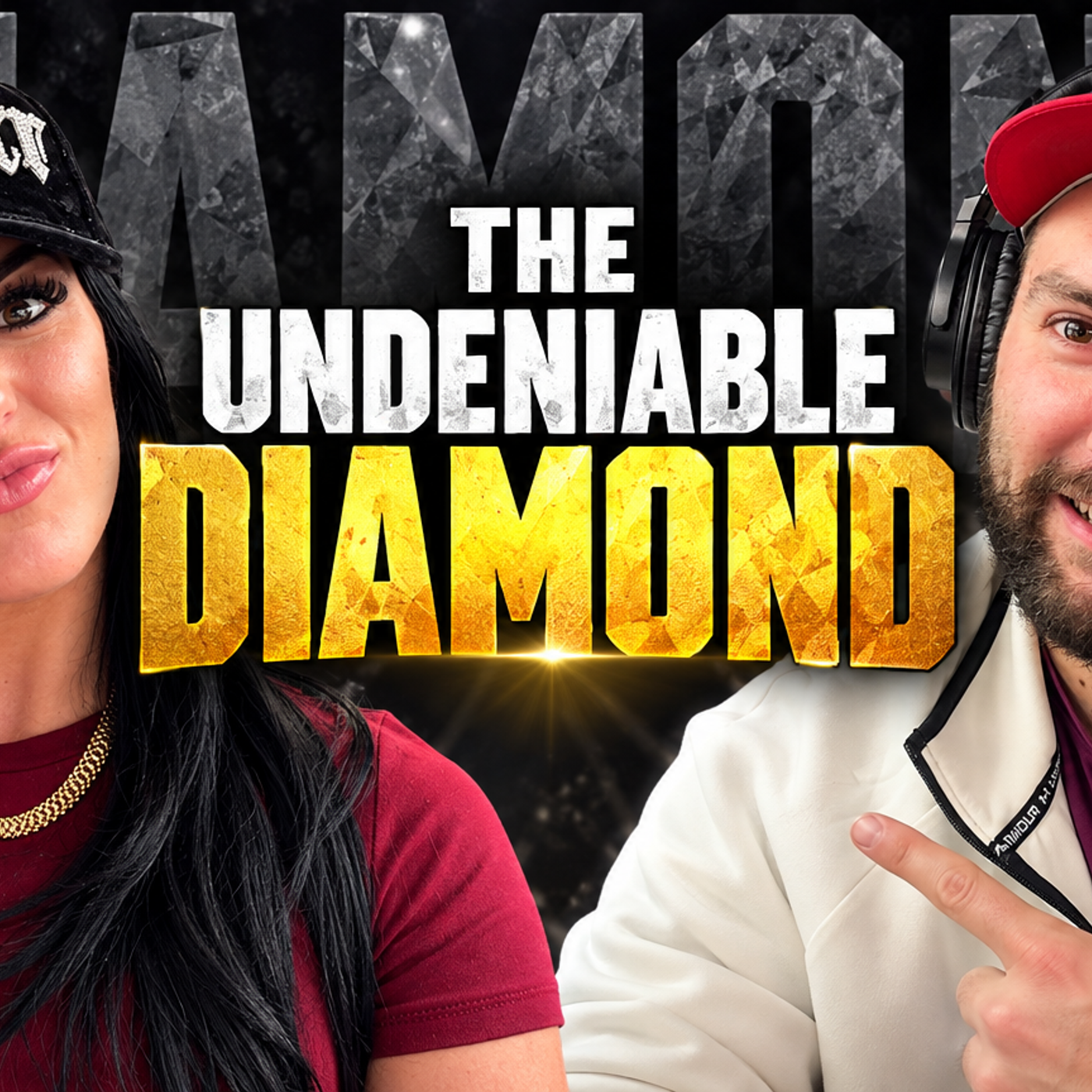
Tessa Blanchard shares her journey from musical theater to professional wrestling, her experiences across the globe, and her insights into the sport's evolution. Discover how her diverse background and relentless drive have shaped her career and inspired her to push boundaries in the wrestling world. Tessa Blanchard on Social Media Tessa Blanchard on Instagram and X Check out the show on the following platforms: Spotify and Apple Podcast: M/T Field Podcast Youtube: onetmediaproduction Instagram: MattyHan25 Facebook: Mathew Hansen X: MattyHan25 Patreon: One T Media Production _________________________________________________ If you want to be a sponsor, reach out to the show at [email protected] __________________________________________________ Thank you to our sponsors! Martinez Drywall __________________________________________________ Afuera Coffee: https://www.afueracoffee.com/discount/MTF Get 15% off your order _________________________________________________ Hydrofy: https://www.drinkhydrofy.com Promo Code: MTF 10% off your order. ________________________________________________ The Energy Drink: https://theenergydrink.com/ Promo Code: MTF 10% off your order
Mathew Hansen: Welcome to another episode of the empty field podcast. My name is Matthew Hansen and today I have a third generation professional wrestler, the undeniable diamond of professional wrestling, Tesla Blancer. Tesla, how are you? Tessa Blanchard: Doing good, Matthew. thanks for the invitation. Mathew Hansen: Absolutely. First off, tell us about yourself. Tessa Blanchard: Well, I think I I think you did a better job than I could. Mathew Hansen: the Tessa Blanchard: But yeah, third generation professional wrestler living out in Mexico City. lived a lot of life and looking to live more. Mathew Hansen: Perfect. So before professional wrestling, you were actually in a musical theater. What got you into that? Tessa Blanchard: you know what? My whole family is super theatrical. And my mom played Annie on Broadway years and years and years ago. And so I think that the musical theater gene kind of got passed down from her. And then my older sister, she was always in in all the school plays, all the musicals, and I kind of followed in those footsteps, always in whatever school musicals that I could try out for. I did The community house Coraliers, which was my middle school community house in in North Carolina. And then when I went to Argerie Kell High School, tried out for a choir there and the all the theater classes, Mr. Opella, my theater teacher, shout out to him, because it was awesome. But I was always an athlete at the same time. You know, I dipped my toes in cheerleading. I did track and field for years. I played soccer when I was younger. so then pro wrestling was like The perfect world for me. Mathew Hansen: Yeah, so what did you learn from theater that you incorporated into professional wrestling? Tessa Blanchard: Well, I feel like theater's helped me a lot with like any kind of backstage pre-tapes or really learning character development because Tessa Blanchard, the character, Tessa Blanchard, the person, we're two different people. And so for certain storylines or certain scenarios you're gonna need to adapt to different feelings and and I guess without giving away too much, theater kinda helps you Hone in on who is your character at this point in time, what is their purpose? and that kind of transfers over to wrestling for whatever storyline you're in. Or I had certain storylines where I had to be a good guy, where I've had to be a bad guy. And maybe I'm frustrated, maybe I'm upset, maybe I'm happy, maybe I'm confused, maybe I'm and how to relay those emotions to to the people through our body language. Mathew Hansen: Awesome. Now you grew up around the most recognized family in professional wrestling. Was there a moment that you're like, you know what? I can do this professionally. Tessa Blanchard: Well, I never grew up wanting to be a wrestler. It's not that I didn't want to be one, it just wasn't really like at the forefront of my mind. musical theater was a huge focus for me. and I guess it never really felt like a reality of how to make that a career, because I guess you would need a lot of luck also to be successful Mathew Hansen: Yeah. Tessa Blanchard: at something so competitive. but when I turned 18 and I left home and I was you know, figuring out how to be an adult and and be on my own for the first time, was when I looked up a wrestling school and I so from the minute I was in the ring trying it and I wasn't even good at this point in my opinion. I just I fell in love with it. I was like, Yeah, this could be for me. Mathew Hansen: What was that first date like? Was it like, ooh, this is not gonna go good? Tessa Blanchard: well, I showed up to training and there was like Cedric Alexander was in the ring, Caleb Conley, George South, and then a bunch of local talents in Charlotte. And yeah, I just it was like this hurts. Like I would hit the ropes and I remember Mathew Hansen: the Tessa Blanchard: my back being my back being like purple for a week or two. And I would have like these intense migraines that were like behind my eyeballs just from hitting the mat and eventually I think you just kind of get like a is the word accustomed, like accustomed to the pain. Mathew Hansen: Mm-hmm. Yeah. Tessa Blanchard: I'm thinking in Spanish now, that's the problem with me. I'm like acostumbrada. but I think not that you get used to it, but like your body gets stronger and you get used to certain movements or certain things that are uncomfortable. and I've never been a stranger to hard work. I've never it's never kind of like scared me. I love a challenge and You know, I w at the beginning I wasn't good. I honestly don't even feel like I was probably happy with one of my matches until maybe three years in my first Japan tour. Mathew Hansen: been all over the world, Mexico, US, Japan. Now, you said you're from North Carolina. What was the change from North Carolina to now Mexico City? Tessa Blanchard: Oof, well, in between there was a lot of different places. I from North Carolina, I moved to Florida with my boyfriend at the time who had just gotten signed to to WWE to well I'm gonna be in Florida and I'm closer to the dream. And I lived in California for a little bit. I lived in Tijuana, Mexico, which kind of I think living in Tijuana helped the transition to Mexico a little bit more for me because and what I mean by that is Tijuana's the border. So it's San Diego, Tijuana. I lived in Playas de Tijuana, which is about 15 minutes from the border. give or take, that border traffic can be crazy. but I I could do my shopping in Tijuana, but there were certain groceries that I missed from my country. I could just cross and then go back like in one day to where in Mexico City I'm a lot more inland in Mexico. I can't just cross the border without a flight. You know, I'm not driving to the border. That could be a little dangerous. so there's definitely like a culture shock factor. I remember in Tijuana it was more prevalent. Like, yeah, I definitely felt I'm not in the United States anymore. I think the biggest shock factor here for me, I I don't know if that's even the right term, is like in a in the United States, I could, I'm gonna run to the grocery store real quick. Or, I'm gonna just run to the market and I can get in my car and I can drive there and I'll be there in five minutes, go grab up a gallon of milk, and I'll be right back home. To where here in Mexico City, to get my car out of parking, then I've got to drive there with all the traffic. I've got to find a place that like a a paid parking lot and that like it's a whole production to leave my house. Mathew Hansen: Ha ha. Tessa Blanchard: like sometimes I even just prefer to Uber than to drive here. Also the living in Mexico City, like it's very city life. Like I almost compare it to like the New York City of the United States, because it's a very fast-paced lifestyle. If you close your eyes, you're gonna miss something. And the life of a luchador here is very different from any country because here you're being a luchador is a career seven days a week, not like on the independent circuit or just traveling for tapings on a Wednesday or a Monday or a it's and not at taking Mathew Hansen: . Tessa Blanchard: anything away from them because people in the United States like they have their own crazy schedules just like we do. But here we run six shows a week. So Monday's Arena Puebla, Tuesday's Arena Guadalajara or Arena Mexico. There's two shows in one night. Wednesdays are CMLL Informa, our press day. Thursdays are Arena Coliseo. Fridays are Arena Mexico. Saturdays you're back at the Coliseum again. And then Sundays are Arena Mexico. So every single day there's something. And then in between that, you also have to Mathew Hansen: Jeez. Tessa Blanchard: get at least two to three trainings with one of the professors a week. and then whatever else, like crazy press schedule they have scheduled for you. But they keep us busy. Go, go, go, go, go. So those minutes that that you get at home to rest, like you take advantage of them. But on top of that, you're finding your time to diet and your time to get your own gym session in at the same time. So it's a lot, but like like it's a blessing to be busy at the same time. Mathew Hansen: yeah, absolutely. Now, where did the diamond nickname come from? Tessa Blanchard: So I started using the diamond, diamonds are forever because the four horsemen would always say that diamonds are forever, and so are the four horsemen. So I thought, what a cool thing to kind of adopt for my character. you know, the the undeniable diamond. And undeniable comes from I remember my in my first six months of training at high spots in Charlotte, North Carolina. when my it was the first training that my stepdad, Magnum TA, came to came to see. And I was in the ring with Cedric when he got there. So like we were in the middle of training. and my stepdad came in with my little brother and I saw it and I was like, said, like, let's do our thing. Cedric and I like we could have wrestled each other with our eyes closed. Like that was the person, like for all intents and purposes, I was married to in the ring. Like Cedric, I trusted him more than I even trusted myself. Like I knew that if I was in the ring with Cedric, I was taken care of and that anything was possible. Like I'll watch videos back, and there's certain moves that we pulled off that I'm just like, that was because of you, Cedric. Like, set, like I swear he doesn't get the credit that he deserves for how amazing of an athlete that he is. But I remember him and I were in the ring and I was like, said, let's do our thing. and then afterwards, my stepdad came up to the corner. Mathew Hansen: Thank Tessa Blanchard: And he said, like, well, Tess, you're not good, but you have it. You have that it factor. Now you've got to go out there and you have to become undeniable. And that stuck with me. That stuck with me forever to to not just be good, but to be great, to not be passable, but to be the best in the world, male or female, and to have that mindset always, like I'm always Mathew Hansen: you. Tessa Blanchard: a student. It doesn't matter what level I'm at. You know, this December I'm gonna hit thirteen years in wrestling. And I remember like s even now sometimes I'll think back to, I remember when I was in that shimmer locker room and I only had a year under my belt, like, what day will people look at me like a veteran? Or what day will people look at me like finally like I've done something in wrestling? And even that that veteran term, like it kinda gives me the ick because I am. I'm still a student. I'm still learning. When I came to Mexico, I started from ground zero and had to Like 'cause my style's different. I just had to to adapt and relearn. Mathew Hansen: Yeah, now, All In Chicago 2018. Talk us through it. The phone call you got to be part of that fatal four-way, the three that you're in the ring with, talk us through it. Tessa Blanchard: From what I remember of all of it, it was a huge blessing to be asked to be a part of it. I remember Cody Rhodes called me, and he was the one that that asked me to be a part of it. And I flew out to Chicago for the press conference first. and I was out there for like I think like two days because we did some stuff with pro wrestling teas at the same time. And then the match had actually changed because there was one girl that was involved who ended up getting signed, and then they put someone new in the match. But then I remember that it was just gonna be, because it was never maybe it was, but in my opinion, not my opinion, but from what I knew, it was just this event that was gonna happen. It wasn't gonna burst into like this whole amazing company that it's become now. but at the time, it was just this groundbreaking event. And to be a part of it, like everyone, everyone who was anyone wanted to be a part of this, this new thing that was happening. So Cody had invited me to be a part of it and From what I understood it w it was. It was just the event. And that event I remember it gave me like such this this fire under my ass too. Like I I believe I was the knockouts champion at the time. I I think I came out Mathew Hansen: Mm-hmm. Tessa Blanchard: with the knockouts title, which made impact at the time, TNA. impact so happy. I gotta be a part with these at the time that I thought were three of like the best women's wrestlers too, like with Brit, with Chelsea, with with Madison. I loved working with Madison too, because in TNA we got to have a few one-on-one matches that I'll look back on. And working with her, I felt like I got to experience being even more of a powerful wrestler because of certain moves that I could pull off with just her. but I don't know, that that that moment I remember it just feeling important. It it felt like everyone wanted to go out there and give their all. Everyone wanted to go out there and and be the best version of themselves in the ring for that crowd because they deserved it. It was something that had never been done. It was an alternative which wasn't offered anywhere else at the time. And then to see what it's grown into, into AEW. yeah, I just look back at all it it it felt like history because it was to be technically the first ever woman to win in in all in women's match. you know, that's something that no one can ever take away from me. And seeing what it's grown into, yeah, it's just a blessing to be a part of a small part of what it was in the beginning. Mathew Hansen: yeah, and I was part of I was there in Chicago to watch that because I was like I need to be here for this event You bring up the first ever now you were the first ever First women's world champion beating Sammy Callahan Talk us through your rivalry with Sammy and then that night on January 12 when you beat him at hard to kill Tessa Blanchard: Without rivalry, it's something that I'll hold close to my heart forever, forever. it lasted probably eight or nine months, which doesn't like that's not typically common. it was a longer storyline, and it was something that I feel like we were both emotionally invested in. I remember it was WrestleCon in I wanna say it was California. I could be wrong, but I wanna say it was California WrestleCon where Don Callis pulled me aside. And it was the night I was wrestling Ricky Shane Page. So because I was a nervous wreck, I was so excited to wrestle him. Don Callis pulled me aside at that event. And he was like, Hey, what would you think about wrestling the guys? And I'm like, What are you talking about? He's like, Well, like, like we're just like spitballing some ideas around and stuff, you know? Like Tesla's Tessa's wrestled everyone. She's won the titles that she can win win. Like, what are we gonna do with Tessa? And He was like, Yeah, we're thinking of like having you wrestle like in the guys' locker room. I'm like, well, I'd love that. Like I trained with the guys. Like I feel like my intensity, my ingress, my aggression, a lot of it comes from like training with the guys. the timing, the transitions, the in-betweens, the things that you can't quite teach people. I feel like working in the guys' locker room helped me hone in on a lot of that. so that's kind of where the idea started, or at least like when it was first presented to me. And then it kind of came to fruition little by little. And getting to wrestle with people like Rich Swan, who I think is just phenomenal, Brian Cage, who's one of my best friends in this business, like truly like a brother. you know, from The Rascals, Trey McGill getting to tag with him, getting to tag with, you know, ECW legends like RBD, Tommy Dreamer, Rhino. it's just I've I've gotten to live some pretty cool moments. but then wrestling with Sammy, he's someone that, in my opinion, in a world where people think that they can see behind the curtain and understand the true aspect of what we do, he's someone that can get into the ring or get behind a camera and he can make people truly believe everything that he's doing. And that's something that I've always wanted in my work is that I want people to believe in what I'm doing. one of my favorite matches that I ever had with him was it was actually just a TNA house show. I want to say it was unbreakable in I think we were in Southern California for it. I remember it was a smaller building and I had like this white gear on, is is what I remember from it. but that's one of my favorite matches, and it wasn't even like an R. of our pay-per-view matches. but that was one of my favorite ones because I felt like so emotionally invested. And I remember getting out of the ring and like my emotions were still high. And Kevin Martin and Jimmy Jacobs put a camera on me really quick. And they were like, just talk. And I just like cut this promo that I was just like I was just feeling everything from from that feud. And it's like like time and time again, I couldn't get the best of him. I couldn't get the best of him. slammiversary, first ever j intergender main event on a pay-per-view. And you know, I still I couldn't get the best of him until Hard to Kill Dallas, right back where where we had that that intergender main event. emotions were super high. my entire world had just fallen apart, which I think made it even more real to me. And I was out there with someone the the I trusted and I knew it was gonna take care of me. And Sammy and I, we we truly barely even saw each other that day before we went out there. Barely saw each other. I spent a lot of the day to myself. in some ways, like it did feel like, hey, this was a history making moment and it's something that no one will ever be able to take away from me. It's something that was really important for for women's wrestling, it felt like for me. but in other ways, it also felt like like a moment that was supposed to be very special that kind of got robbed. so I don't know, there's there's a lot of ways to look at it. it was it was really cool that I gotta do it. I'm forever thankful for everyone that was in the office that vouched for me to be able to like have those storylines to get to be able to play a baby face that I'd never gotten to do before and I was worried about. and I remember my dad telling me, you know, if you can make them hate you, then you can make them love you. But if you can make them love you, then you can make them hate you even more. And that that really made a lot of sense to me. So I think just getting to explore different dynamics of the Tessa Blanchard character and getting to make getting Mathew Hansen: Okay. Tessa Blanchard: Cause truly, truly, truly, a lot of people they meet me and they're like, I saw you on TV and I just like, I can't believe like you're so nice, or I can't believe you're so this. And I'm like, don't tell anybody. Mathew Hansen: Hehehe Tessa Blanchard: no, but like, that's a testament to to my work, in my opinion. Like i getting people to believe in me being this super villain, getting people to believe I'm this mega bully, and getting people to believe that Like I'm just this horrid, horrid person. but yeah, I think like TNA, without TNA, I don't think I'd be the wrestler that I am. Without the feud with Sammy, I don't think I'd be the wrestler that I am. I learned a lot from a lot of those guys, especially Jimmy Jacobs. he's not with TNA now, but God, he's such a monster behind the scenes. Like he's just he's so knowledgeable. I've learned so much from him as well. Mathew Hansen: Awesome. Now, what's left for you? You've gone across the world. Now, it could be five years, 10 years, 15 years from now where you may retire. Do know when that would be? And is there a match that you haven't had yet that you want to do? Tessa Blanchard: You know, I don't think that I think I'll know when it's time to retire. I've kind of always like had this ballpark number of like, hey, maybe after forty I'd want like I think I'll always want to do something in wrestling, but maybe after forty I won't wanna be as active like inside the ring. and that's just kind of like that that may happen, may not happen. Maybe I hit forty and I'm like, Hell I got I still have things that I wanna do. Who knows? Right? There's there's a lot of goals that I have here in Mexico. CMLL has been honestly one of the best companies to work for. My boss is Senor Luteroth. He's he's just one of the best people to work for. Like working here is is so fun. It's just so fun. They keep us busy and they'll wear you out from time to time. But I'm getting to just explore this whole new dynamic of me. lucha libre is not like. Like the style of any other country. training here underneath people that are are legends of Mexico. I'm getting to learn so much more. but also the Amazonas, the the women's wrestlers here in CML, they take it so seriously. Like they've got the best bodies in Lucha Libre. They're in the gym, they're always training, they're always trying to step up their game and push the envelope. And so to be a part of this locker room, it feels like a huge blessing. I want to win the Consejo Mundiale Lucha Libre Women's Championship, Women's World Championship. Right now, Persephone holds it. and she's phenomenal. she's doing doing a lot with the cross-promotion stuff. but her and I have a very strong chemistry in the ring, and I want to be be one of the first women to hold the two. premiere titles in Mexico. and CML's home right now. I'm building a life here. I my partner's here. I'm truly, truly setting up roots and I love it. but sure I I still have goals in my country as well, in the United States. Mathew Hansen: You Tessa Blanchard: I say my country, but yeah, you know I in the United States. you know, I've got I've got dreams there that have never quite gone away. And if they happen, great, but if they don't Great too. Like I've come to terms with not that I've come to terms with, I have my identity in the ring, in the business, and I know who I am outside of it. going back to school, getting my degree, doing a bunch of things outside of wrestling really gave me a sense of worth and knowing that if one day I'm not wrestling, I'm still gonna be all right because Tessa's a pretty cool chick. Mathew Hansen: you Tessa Blanchard: but Right now I feel like my purpose see like yeah, it is in wrestling right now. Mathew Hansen: Now, giving you the pencil. Tessa versus who. For what promotion, what arena, and who is it against? Tessa Blanchard: Oof. So I kind of have two answers for that. if we're talking like Mexico, I would love to have a match against Dark Angel Sarah Stock. And it's because she's one of the first foreigners to come to Mexico and have the this like super estrella success that she had, like this superstar success. she's had matches with with legends here in Mexico, like Princesa Suhe and Marcela. that are just like phenomenal bouts, like seriously. so I think if I could ever wrestle her in Arena Mexico, that would be pretty cool. And then I think a match that ever since I started in wrestling, people have talked about, I th you probably know what I'm gonna say, but one that people have talked about for 13 years and going. We've never been in the same same promotion full time to to have it done, but I think that Tessa Blanchard versus Charlotte Flair would be one for the history books. Mathew Hansen: to happen. Where? Tessa Blanchard: Ooh. If it happened in Charlotte, North Carolina, just imagine that. Both Charlotte natives. Mathew Hansen: That would be amazing. All right, here comes rapid fire. So first thing that comes to your mind when I ask the question, would you rather be a baby face or a heel? Tessa Blanchard: Yeah. Mathew Hansen: Singles match or a tag match? Tessa Blanchard: Singles. Mathew Hansen: Favorite spot that you have performed. Tessa Blanchard: Arena Mexico. Mathew Hansen: What's one arena that you have not performed at that you'd love to? Tessa Blanchard: Keel, but I think it doesn't exist anymore. Keel Auditorium. Mathew Hansen: Dream opponent in the past Tessa Blanchard: Like, what do you mean? Mathew Hansen: They may have retired or passed away. Tessa Blanchard: Okay. Oof, could it be intergender? Wahoo McDaniels. Mathew Hansen: Ooh, I thought you were gonna go Eddie Guerrero there. Tessa Blanchard: that'd be cool. Mathew Hansen: That would be a good one. One word to describe you as an in-ring performer. Tessa Blanchard: Resilient. Mathew Hansen: one word to describe you as a person. Tessa Blanchard: Resilient. Mathew Hansen: Perfect. Any special shout outs you'd like to give? Tessa Blanchard: Hey mom, hey dad. Mathew Hansen: Perfect. And then where can everybody follow you on social media? Tessa Blanchard: I'm Tessa Blanchard across the board. I don't have TikTok. I'm on Instagram and X and I don't really check Facebook, but Tessa Blanchard across the board. Mathew Hansen: Awesome. Well Tessa, I appreciate you coming on and talking to us about your career in wrestling. So thank you. Tessa Blanchard: I'm sorry that I sound like this and that I've been coughing a little bit. I'm a little under the weather with the climate change right now, but thanks for having me.