
M/T Field Podcast · Mathew Hansen
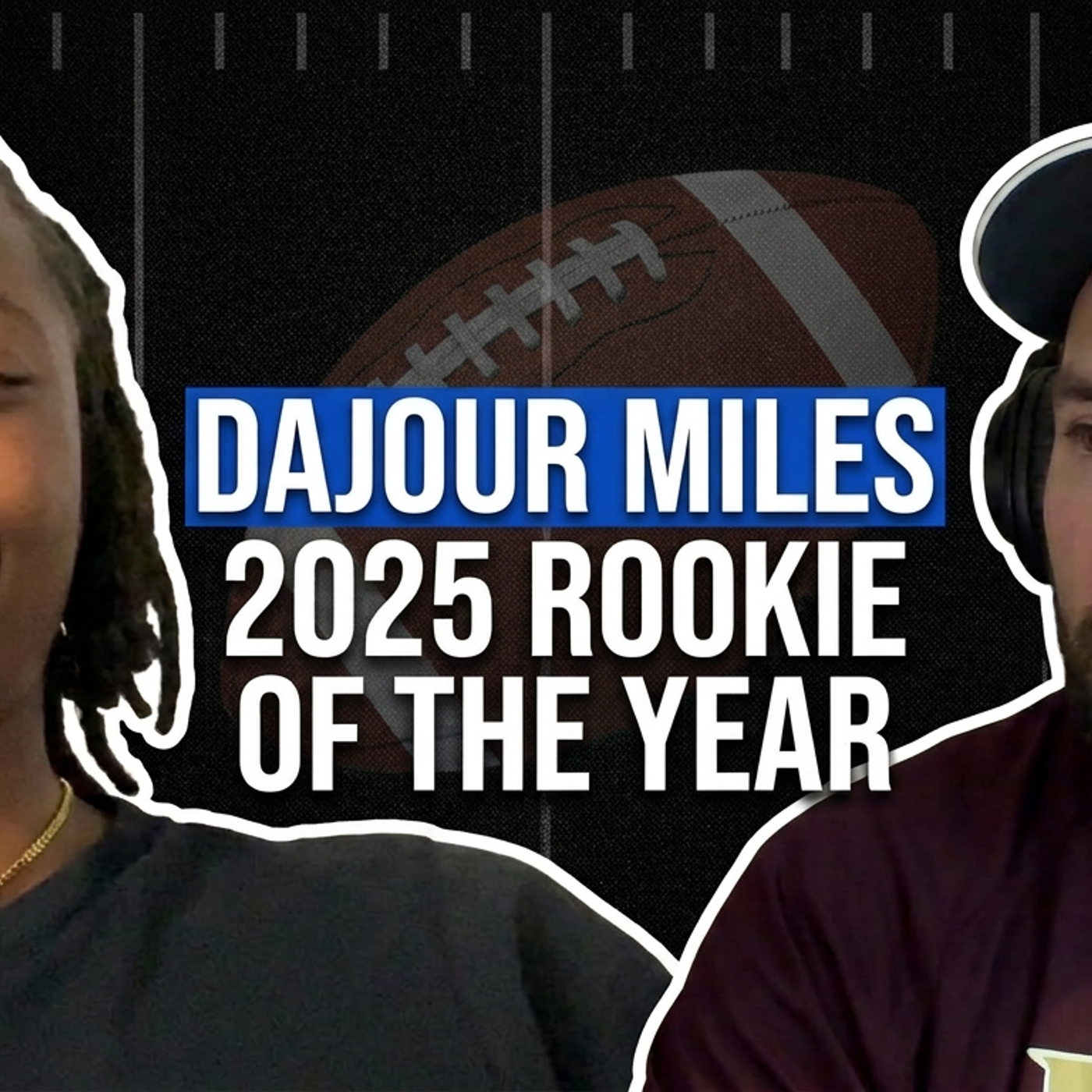
Dajour Miles has made quite the impression in the world of women's tackle football, and in this episode of the M/T Field Podcast, she shares her remarkable journey from a track star to the rookie of the year in the WNFC. Dajour Miles on Social Media dajour.j.miles on Instagram Check out the show on the following platforms: Spotify and Apple Podcast: M/T Field Podcast Youtube: onetmediaproduction Instagram: MattyHan25 Facebook: Mathew Hansen X: MattyHan25 Patreon: One T Media Production _________________________________________________ If you want to be a sponsor, reach out to the show at [email protected] __________________________________________________ Thank you to our sponsors! Martinez Drywall __________________________________________________ Afuera Coffee: https://www.afueracoffee.com/discount/MTF Get 15% off your order _________________________________________________ Hydrofy: https://www.drinkhydrofy.com Promo Code: MTF 10% off your order. ________________________________________________ The Energy Drink: https://theenergydrink.com/ Promo Code: MTF 10% off your order
Mathew Hansen: Welcome to another episode of the Empty Field Podcast. My name is Matthew Anson and today I have the twenty twenty five rookie of the year for the WNFC, former Kentucky and Tennessee track star. She's returning from a meniscus injury at number twelve, DeJor Myers. How are you? Dajour Miles: I'm good. How are you? Doing great. Mathew Hansen: Doing well, doing well. First off, tell us about yourself. Dajour Miles: Well, my name is DeJor Miles. I ran track at University of Kentucky and University of Tennessee. just started playing football in twenty twenty five, won rookie of the year. unfortunately wasn't able to play my sophomore season due to injury, but it's all right. I'm looking forward to this next season, just rebuilding, getting better, getting stronger, getting back my mind right, mentally, physically, everything, spiritually. So yeah, that's pretty much it right now. But I am a free agent, but unfortunately I will not say where I'm going 'cause I'm still trying to figure things out. Mathew Hansen: Awesome. Okay, the surprise is the best. So Dajour Miles: Mm-hmm. Mathew Hansen: track. What got you into track? Dajour Miles: well I've been running tracks since I was eight. But I actually started because I was just running. I was super fast. I was always running. Even when I started walking, my mom, my dad always told me, even my grandparents was telling me like I never walked anywhere, I always ran somewhere. so I was at church and one of my aunts saw me, I was beating the boys, and then she introduced me to my AU track coach. His name is Thomas Beltwright, so I everything that I've learned is from him, so I'm very grateful that he was in in my life. And that he's still in my life. but then I tried out for the track team and the rest is history really. Mathew Hansen: So you started off in Kentucky, then went to Tennessee, both big SEC schools. What made the change? Dajour Miles: me, I just wanted to change. I've been at Kentucky for four years, so I kinda just want to go somewhere else. just explore. I only have one year left of eligibility, so I just wanted to like change change some things up. Mathew Hansen: Fair. What were the bigger the biggest differences between Kentucky and Tennessee? Dajour Miles: I guess like just getting used to practices. things like that. Like at Kentucky we were in practices on s Saturdays, but at Tennessee we practiced on Saturdays, during the fall. And just like the overall workload. I think Kentucky was a lot more workload, like practice. But Tennessee it did the same work but it was just less. So just adjusting to different Coaches and how they train schedules and things like that. But other than that, both atmospheres were great. Vol Nation and Big Blue Nation are the fans, they're amazing. it's hard to when people ask me, 'cause they're kinda like rivals, which one's better, it just depends on the aspect. It just depends, like, 'cause one area Tennessee's better at and then another area Kentucky's better at. So I love both because they're both my home. Mathew Hansen: Awesome. what part about being a track star translated immediately onto the football field? Dajour Miles: my speed. Definitely my speed and my athleticism. I did play basketball in high school and played a little bit AAU basketball, so like my soft touches and my fast twitch movements also helped translate into football. But I would definitely say my speed and power and being able at first it was kinda hard changing directions was kinda difficult for me because you know in track once you start you go and it's just straight. Or obviously if you're going around the oval, but you're still kinda going straight. So being able to back off my speed when making those breaks and cuts and things like that. So but the best part I'd probably say is my speed really and athleticism that translated over. The best. Mathew Hansen: Yeah. What what got you into women's tackle football? Going from straight from track over to football? Dajour Miles: So, funny story, so I actually didn't want to play taco at first. so I was at my little brother's football practice and I knew around that time, this was 2020 fall of like summer, summer of 2024, I just finished track. and I was at my little brother's football practice and I knew flag football was becoming a big thing. And I seen him practice, I'm like, wow, this is pretty fun. Like I remember doing powder puff when I was in high school because we didn't have flag yet, we had powder puff. for homecoming week. And I was like, wow that looks really fun. Like I love sports, like I'm done with track. I need to find something else to do. Cause I definitely don't want to give up sports yet. But I know I just don't want to do track anymore. so then I started I I was at his practice and I started looking up football flag football in Chicago area. Just things like that and I came across the Chicago ones page. And I seen it and at first they were pitching it as a flag team and a f with a little bit of f tackle. And I was like, okay, like I think I'm enjoying that. And I seen there's tryouts coming out in October, so I'm like, I'm gonna sign up. I told my mom about it. She said it was a great idea. I signed up for it. Fast forward we get we do the the combine or like the tryout. Try out went great. And then I was on the flag team 'cause we had flag at first. I was on the flag team. They split us up. So I was on the flag team and then they had the tackle players over there. And then I seen the tackle players, I'm like, Well, that kinda looks fun. Then I asked the coach, I was like, Hey, like I was wondering, can I try tackle too? And he's like, No, don't worry, you're you're playing tackle anyways. I had you in tackle. You're gonna do both. I was like, So that's pretty much how I started really. Mathew Hansen: Okay. Okay. What was it like putting those pads on for the first time? Dajour Miles: an adjustment. An adjustment for sure. Mathew Hansen: Ha ha ha. Dajour Miles: Especially the helmet was heavy and stiff in my head. The cushioning was really tight. the helm the helmet getting adjusted to turn my head. The shoulder pads are kinda like heavy, so around in my back. Yeah, it's definitely different from track when you're just wearing a uniform and you know, very light and then actually putting on things you gotta run with all that gear on. So definitely an adjustment, but I the more I put it on and got used to it, then I was able to adjust. Mathew Hansen: What's a better feeling in your mind? Blowing by somebody on the track or making a huge play on the field? Dajour Miles: I would say blowing by somebody on the track. Yeah. Mathew Hansen: Why is that? Dajour Miles: Because I feel like track is more individual. So in that aspect if you blow somebody out, it's on you. It's like but if you make a big play in football, it's more so a team aspect. So I would say it's easier to do something as a team because you guys have each other. You guys can pick each other up when you're down, you can pick each other up, you know, make a mistake or if you do something great, but track is like it's literally just like on you. So that's kind of what I think. Mathew Hansen: Okay. Twenty twenty five rookie of the year. What did that mean to you? Dajour Miles: It means that I can do anything that I put my mind to. at first I was just having fun with this until I really seen that I'm like, I'm actually pretty good at this. Like I knew like when before we had our first game, like I could be good, but I didn't know where I would land. And so, it honestly means a lot. And I'm very grateful for that. so it just let me know that I could do anything, really. Mathew Hansen: Yeah, was there a point during the season you're like, you know what, I'm gonna be pushing for this award? Dajour Miles: I think I think during the Florida game, I think I scored like four touchdowns and like two two two point conversions or something like that. Something like that. And I was like, Yeah, actually I'm gonna start pushing for this and then I seen like records and stuff 'cause that like I said, that records take me back to track 'cause you're you're trying to break records and you're trying to go for the gold. So like that kinda like pushed me even harder. To try to get the Ricky of the Year award. Cause it was like something else I wanted to accomplish. Mathew Hansen: Yeah. At the beginning you did mention you were not able to play your sophomore year for Dajour Miles: Mm-hmm. Mathew Hansen: the win due to an injury. Can you talk us about that injury? Dajour Miles: yeah, so it happened like two weeks before the first game. I had PREX on Sunday. it was a non-contact injury, which is crazy. basically I went up to catch a ball, came down wrong and hyperextended my knee. So that's pretty much how it happened. after I went down, I had like a burning pinching sensation in my knee. I never felt it before, but it kinda felt like you know when you jump from high a high place and your ankles get like that sting. That's what it felt like in my knee. So I was like, okay maybe. You know how like that eventually goes away. So I'm like, okay, maybe this will go away. But it didn't go away. So I was like, hmm, hopefully it's like not nothing bad. Then trainers well jen she checked to see if my ACL was doing the knee test everything was pretty good had a lot of strength in my ligaments so the she was like it's probably not your ACL but it's probably your LCL so that's kind of what I was going with the whole that whole time. So I got hurt in February and for like two months I'm thinking it's L CL. When it wasn't getting better I was like I think I need a second opinion because now season is here and everybody's asking me when I'm coming back and I just genuinely don't know because I don't feel any progress. I went to a second person. they did the knee test. They told me that it could be my ACL because my ACL isn't catching. And I didn't know what that meant because I never had a knee injury before. So I was like, wow, like now I'm kind of conf confused 'cause I'm like, what is it? Then I got another opinion. and I was like my primary c doctor, I was like, hey like I need a I need to get a MRI because Now we're through we're about two and a half months in, three months into season and like season's about to be over. I need to figure out what's going on. I get my MRI like sometime in like May. And season ended in June. So I get my MRI around May something, maybe April. And then I get my results and it comes back partial tear in my meniscus and then we had to proceed with figuring out like surgery dates and things like that. So that's when I knew season was really over. So the last game, our last home game I think we played Prodigy. Whatever day that was, I found out that I season was over pretty much. so it was it was very difficult because I felt like I wasted so much time And I feel like if I was able to find out sooner, I'm not saying I would have been able to get back on the field, but I probably would have made a lot more progress instead of having my surgery in June and recovering the summer. I could have been had it like earlier on and then, you know, so it kinda messed up the process, the healing process. But other than that, I'm finally grateful that I got it done and I'm figured it we finally figured out what it was. but it would definitely was tough sitting out the season. And just sitting on the sidelines. I was very, I love sitting on the sidelines when I was cheering for my team, but actually being like by myself in a mental state, I definitely was very sad. It was hard for me. Mathew Hansen: what's been the hardest part of this recovery, that mental battle wanting to get back out there or just the rehab? Dajour Miles: I would say the hardest part is just like questioning like will I be the same? Like will my athleticism still be the same or like where would I be? Like how would I look? That kinda scares me the most. 'cause like I said, I've never had a knee injury before, so I just never I didn't know where they was gonna take me. so I would say that's my biggest concern. I'm still kinda, you know, dealing with that but like I'm getting there. Like I'm getting better. I'm getting stronger. There's still some you know some things that I have trouble with or I'm feeling some pain but I just gotta trust the process. take my time and listen to my body. I think also like I have so much FOMO that I just like want to get back on the field and like I don't wanna re injure myself because I'm trying to get there because I want to and I instead of like listening to my body and just really understand like hey this is a season to recover and get better. And then so next season, you know, it could be ten times greater. So I guess just dealing with that and just trusting the process, really trusting the process and just getting better and healing. So that's what I was saying. rehab is going I was going to the wrong people. I didn't know that I wasn't going to like athletic trainers. I was just going to like regular. So it kind of also messed up my recovery time. But like now I'm with actual athletic trainers and we're actually getting back 'cause we're s yeah. I'm getting I'm getting there though. I finally did some things Mathew Hansen: Perfect. Dajour Miles: this past weekend. running routes and doing stuff. So it it's looking pretty good. I'm not a hundred percent, but it's it's getting there. Mathew Hansen: Yeah. how many when did you have surgery? Dajour Miles: June twelfth. Mathew Hansen: June twelfth. So at the time of the recording is about three months ago, and you just said you're slowly Dajour Miles: Yeah. Mathew Hansen: getting back into routes. Dajour Miles: Mm-hmm, yeah. Mathew Hansen: Okay. Now, when you finally get back on the field, what should the WNFC expect? Dajour Miles: Hmm. Something to prove, I guess. A lot of people tell me that I've already proved myself. I don't need to prove myself, but since I've been out. I just feel like I have to just prove myself again. Like I'm still this great athlete. Like I can still do great things. Even though I had an injury, like I'm still de jour, I'm still the person, you know, that I was my rookie year. So I feel like even though a lot of people say I don't, but I feel like it's for me too. Like go back out there and prove yourself that you can hang and you can still do this and that this injury didn't affect you and you're good. Mathew Hansen: Yeah. All right, here's your chance to talk to other teams since you said you are a free agent. What should all the other teams looking Dajour Miles: Yeah. Mathew Hansen: and interested in you know? Dajour Miles: I'm a hard worker. I'm very quiet. I'm j kinda shy. But once you get to know me, I'm very outgoing. funny. But I I love to work. I wanna go somewhere that everybody wants to work in Like a team atmosphere. I don't really do the drama. I don't like I don't do all that. I just want to go to practice. Feel like a team. Feel like we're here. We get we got each other's backs. And that we ride or die. Like this is what we do 'cause especially 'cause we're not getting paid for this. So I want us to all feel like we're in this together. so I will say that. just like Wherever I'm just ready to work. I'm ready to get better. I'm ready to get back on the field. I'm just excited for this new chapter that I'm going into. so just expect a lot of I say. Yeah, just expect somebody that's that's hungry, that's ready to grind and work for it. Mathew Hansen: Awesome. All right. Here comes rapid fire. So again, first thing that comes to your mind when I ask the question Kentucky or Tennessee? Dajour Miles: Tennessee. Mathew Hansen: Okay. Track meet or a football game? Dajour Miles: Football game. Mathew Hansen: Touchdown or personal record? Dajour Miles: Personal record. Mathew Hansen: Rookie of the year or a college track accomplishment? Dajour Miles: College track accomplishment. Mathew Hansen: Okay. Comeback season or breakout season? Dajour Miles: Breakout season. Mathew Hansen: If you could challenge one person to a race, who you challenge in? Dajour Miles: In the league or just in general? Mathew Hansen: In general. Dajour Miles: There's like a lot of track athletes that's going in my head right now. I'll say I'll say Sharika Jackson 'cause she's one of my favor favorite track and foot athletes of all time. Mathew Hansen: Okay. One word that describes your football career. Dajour Miles: I'll say beginning. Mathew Hansen: Okay. If you could talk Dajour Miles: I'm just getting started. Mathew Hansen: Perfect. If you could talk to ten year old Jew, what would you tell her? Dajour Miles: I would say that you're gonna be you're gonna do great things. You're you're gonna you're great. Keep that in mind. That you're gonna go through a lot of hardships, but just stay the course because there's there's ahead of you, a road ahead of you that is very special. Just stay focused. Mathew Hansen: Cool, cool. Any special shout outs you'd like to give? Dajour Miles: shout out to my mom. She means the world to me. And me and her are very special. So shout out to Joy Johnson. Shout out to Thomas Bowright, my first track coach. he had me since well, I've been with him since I was eight, like I said, and he's kind of like one of father figures that I had growing up. Taught me a lot, always encouraged me. So I would say shout out Thomas Bowwright, shout out to my mom Joy Johnson. Yeah. Mathew Hansen: Okay. Where can everybody follow you on social media? Dajour Miles: you can follow me on Instagram at Dejor D-A-J-L-U-R dot J dot miles I O E S. TikTok is D J X Mo E one. Mathew Hansen: Awesome. Well I appreciate you coming by and talking to us one about your recovery for your from your injury and what it's like being a track star for contacting in Tennessee, so thank you. Dajour Miles: Yeah, thank you for having me. This was awesome.