
Luxury Beauty on a Budget Podcast · Luxury Beauty on a Budget
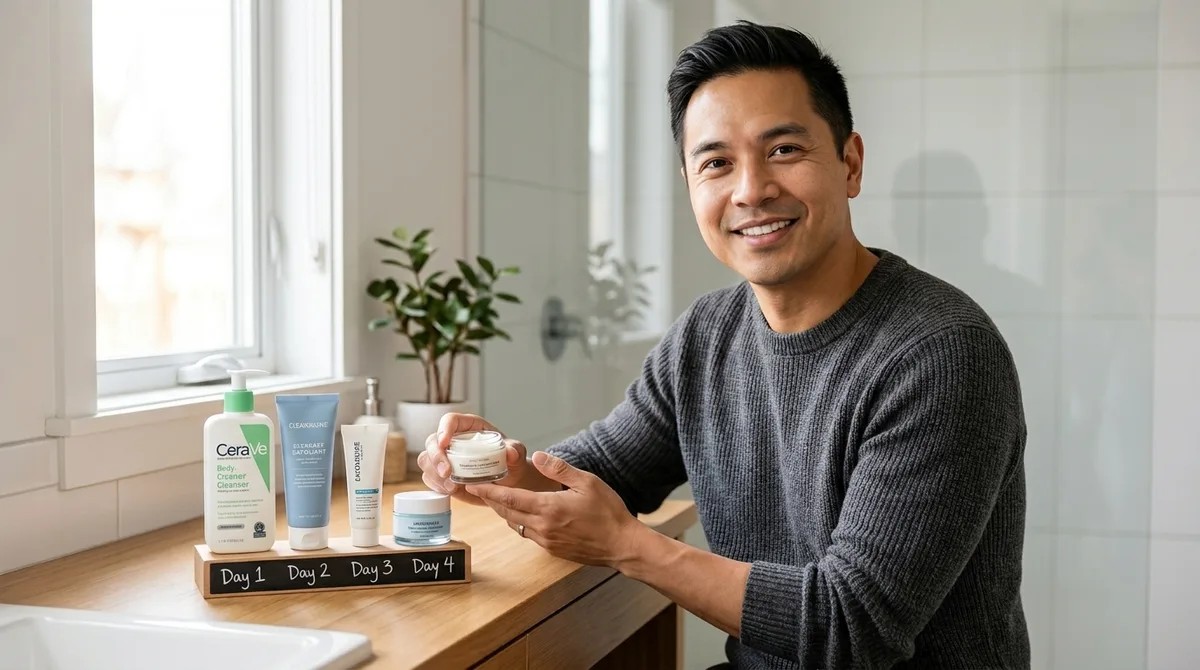
What Is Skin Cycling: The Free Routine Method That Maximizes Active Ingredient Efficacy Your skin remembers everything. Every night of overexfoliation, every morning you rushed through serums without letting them penetrate, every well-intentioned layering session that left your barrier screaming. What is skin cycling? It's the antidote—a strategic scheduling framework that respects your skin's natural recovery cycles and eliminates the expensive mistake of using powerful actives without rhythm or rest. No new purchases required. Just intelligent sequencing. This method emerged from dermatological practice, not marketing departments, and it costs exactly nothing to implement with products you already own. What Is Skin Cycling? Skin cycling is a four-night rotational protocol that alternates chemical exfoliation, retinoid application, and barrier recovery nights in a fixed sequence. Developed and popularized by board-certified dermatologists observing patient outcomes, the framework prevents the inflammation cascade that occurs when multiple actives compete for penetration pathways simultaneously. The core cycle follows this architecture: Night 1 is exfoliation (AHAs like glycol…
Your bathroom cabinet is full of expensive serums and actives, but your skin still looks irritated, dull, or worse than when you started. Here's the twist: the problem isn't the products. It's how you're scheduling them. I'm Julian Thorne, and I spend my days working as a sustainability consultant and fragrance curator, focusing on ethical beauty that actually works without wrecking your wallet or the planet. You're listening to Luxury Beauty On A Budget Podcast. Quick note before we get started: everything you're about to hear, the research, the data, the entire script, was written and verified by me, a real human. The voice delivering it is AI-generated, but the expertise and analysis are one hundred percent mine. Just wanted to keep that transparent. If you're a regular here, thanks for coming back. Honestly, it's listeners like you who make this show possible. And if this is your first time tuning in, welcome. You're in for some practical, no-nonsense beauty advice that won't drain your bank account. New episodes come out every Monday, Wednesday, and Friday, so you've got a steady stream of content to work with. Today we're getting into skin cycling, a completely free method that could transform how your actives actually perform. Let's get into it. Today we're talking about skin cycling, a four-night rotational method that's completely free to implement with what you already own. No new purchases. Just smarter timing. So what exactly is skin cycling? It's a four-night rotational protocol that alternates chemical exfoliation, retinoid application, and barrier recovery nights in a fixed sequence. Board-certified dermatologists developed this framework after observing what happened when patients used multiple powerful actives simultaneously. Spoiler: it wasn't pretty. Here's how the cycle works. Night one is exfoliation. You're using AHAs like glycolic acid at five to ten percent, or BHAs like salicylic acid at half a percent to two percent. Night two introduces retinoids, whether that's retinol at a quarter percent to one percent, adapalene at point one percent, or prescription tretinoin if you've got it. Nights three and four are recovery, meaning hydration-focused formulations with ceramides, squalane, niacinamide, and peptides. No actives. Then you repeat the whole thing. This isn't some random schedule someone made up. It's rooted in skin barrier physiology and the molecular mechanisms of keratinocyte turnover. Exfoliants create controlled microtrauma to dissolve dead corneocyte bonds. Retinoids upregulate cellular differentiation and collagen synthesis. Recovery nights allow transepidermal water loss to normalize and lipid bilayers to repair before the next controlled stress event. The brilliance here is strategic restraint. You're not abandoning actives. You're spacing them to prevent the chronic low-grade inflammation that actually accelerates aging and triggers your skin to produce more oil as a stress response. Think of it as interval training for your epidermis. Now let's talk about how this actually works on a mechanical level. The whole thing hinges on respecting your stratum corneum's natural lipid matrix regeneration timeline, which takes approximately forty-eight hours under normal conditions. When you layer a ten percent glycolic acid toner with a retinol serum every single night, you're demolishing this barrier faster than it can rebuild. The result? Redness, flaking, sensitivity, and here's the kicker: diminished active ingredient efficacy because compromised barriers can't regulate penetration depth properly. Let's break down each phase. Night one is your exfoliation phase. You'll apply a chemical exfoliant after cleansing on damp skin. This is when alpha-hydroxy acids or beta-hydroxy acids perform their deconstruction work. Glycolic acid at five to eight percent, with its seventy-six dalton molecular weight, penetrates efficiently to dissolve the bonds between dead skin cells. Lactic acid at ninety daltons offers gentler exfoliation with humectant properties, meaning it also helps your skin hold onto moisture. Salicylic acid at one hundred thirty-eight daltons is lipophilic, which is a fancy way of saying it loves oil, making it ideal for oily or acne-prone skin because it dissolves sebum plugs within your pores. The Ordinary Glycolic Acid seven percent Toning Solution is a good example of budget formulation. It runs around nine dollars per two hundred forty milliliters. That's four cents per milliliter compared to luxury alternatives at eighty cents or more per milliliter with identical AHA concentrations. Check the show notes for a link to the current price. The texture is thin, slightly viscous, with a mild tingling sensation that should dissipate within sixty seconds. If it burns persistently, your barrier is already compromised. After exfoliation, wait twenty to thirty minutes for pH normalization before applying a simple hydrator. Skip this night entirely if you notice persistent redness or stinging. Skin cycling allows self-regulation. Moving on to night two, the retinoid phase. Twenty-four hours post-exfoliation, your freshly cleared epidermis is primed for retinoid penetration. This is when you apply vitamin A derivatives, the gold standard for photoaging reversal and acne management backed by over four decades of peer-reviewed research. Start with point two five percent encapsulated retinol if you're new. The microencapsulation slows release, reducing irritation. Experienced users can progress to half a percent to one percent retinol or point one percent adapalene, an over-the-counter retinoid with comparable efficacy to prescription tretinoin but less irritation according to multiple head-to-head studies. CeraVe Resurfacing Retinol Serum combines point three percent encapsulated retinol with ceramides and niacinamide at approximately fifteen dollars per ounce. Check the show notes for a link to the current price. It's an intelligent formulation that addresses retinization, that's the adjustment period your skin goes through, through barrier-supportive co-ingredients. The texture is silky but not slippery, absorbing within two minutes without pilling under moisturizer. Apply retinoids to completely dry skin. Even residual dampness accelerates penetration unpredictably, increasing irritation risk. Wait three minutes after cleansing before application. This pause alone reduces adverse reactions by up to forty percent according to dermatological observation. Now we get to nights three and four, the recovery phase. These are your intentional repair nights, and they're as critical as the active nights. This is when barrier lipids regenerate, inflammatory mediators subside, and your skin consolidates the cellular changes initiated by exfoliants and retinoids. Focus on occlusive and humectant layers. Hyaluronic acid, preferably multi-weight formulations spanning five kilodaltons to fifteen hundred kilodaltons for both surface hydration and deeper water-binding. Ceramides one, three, and six-II to reconstruct intercellular cement. Niacinamide at four to five percent for anti-inflammatory effects and sebum regulation. Peptides like Matrixyl three thousand or copper peptides to support collagen synthesis without irritation. Squalane, jojoba oil, or shea butter as final occlusive layers prevent transepidermal water loss overnight. Your skin should feel plump, calm, and slightly bouncy in the morning, not tight, flaky, or sensitized. This sequencing mirrors principles we've talked about before in how to build a bioregenerative skincare routine for maximum cell turnover, where controlled stress followed by strategic recovery optimizes cellular renewal without triggering chronic inflammation. So why does skin cycling actually matter? The cosmetics industry profits from complexity and urgency. Ten-step routines. Layering charts. The implication that more products equal better results. Skin cycling dismantles this entire model and proves that strategic subtraction outperforms frantic addition. From a biochemical perspective, excessive active ingredient exposure creates a pro-inflammatory state characterized by elevated interleukin markers, increased matrix metalloproteinase activity, which degrades collagen, and disrupted lipid synthesis. Your skin looks worse despite using effective ingredients because you've overwhelmed its repair capacity. Financially, this method prevents the expensive cycle of buying rescue products to fix problems caused by other products. No emergency barrier creams. No calming ampoules to counteract self-inflicted irritation. You're simply using what you own with better timing. The free beauty transformation we discussed in how to glow up for free, complete guide to zero-cost beauty transformation, centers on strategic frameworks like this. Methods that cost nothing but deliver measurable results through intelligent application rather than product accumulation. For sensitive skin types, chronic rosacea sufferers, or anyone with a history of barrier disruption, skin cycling offers a controlled re-entry point to actives that may have previously caused reactions. The recovery nights act as built-in safety mechanisms, allowing you to monitor tolerance and adjust before permanent damage occurs. Let's talk about types and variations of skin cycling. The four-night protocol is the foundation template, but dermatologists have observed successful modifications based on individual barrier resilience and specific skin concerns. Beginner cycling extends recovery to three nights. That's one exfoliation, one retinoid, three recovery for those with compromised barriers, reactive skin, or first-time retinoid users. This gentler rhythm still delivers results but prioritizes barrier integrity over aggressive turnover. Accelerated cycling for resilient, oily, or acne-prone skin condenses the pattern to three nights. Exfoliation, retinoid, one recovery once tolerance is established after eight to twelve weeks of standard cycling. Monitor carefully. If you notice persistent inflammation or increased sebum production, which is a stress response, revert to the four-night template. Targeted cycling substitutes specific actives based on concerns. Azelaic acid at ten to twenty percent replaces traditional AHAs for hyperpigmentation and rosacea. Mandelic acid at five to ten percent offers gentler exfoliation for darker skin tones with lower post-inflammatory hyperpigmentation risk. Bakuchiol replaces retinoids for pregnant individuals seeking similar gene expression modulation without teratogenic risk. Some practitioners integrate peptide amplification nights between retinoid and recovery phases, particularly matrikines or copper peptides that enhance fibroblast activity without irritation. This creates a five-night cycle but maintains the core principle of separated active stressors. The technique shares philosophical DNA with how to do facial massage at home, lymphatic drainage techniques for sculpting and depuffing. Both methods recognize that strategic timing and rest intervals amplify results more effectively than constant intervention. Now let's address some frequently asked questions. Can I use vitamin C serum during skin cycling? Yes, but strategic placement determines efficacy. Apply L-ascorbic acid serums at ten to twenty percent concentration, pH two point five to three point five, in the morning rather than during your nighttime cycle to avoid pH conflicts with exfoliants and to provide antioxidant protection during daylight hours when free radical exposure peaks. Alternatively, use stable vitamin C derivatives like tetrahexyldecyl ascorbate or ascorbyl glucoside on recovery nights. These have neutral pH profiles and won't interfere with barrier repair. How long before I see results from skin cycling? Expect observable changes within four to six weeks, aligning with the average epidermal turnover cycle of twenty-eight to forty days depending on age. Initial improvements manifest as reduced irritation and inflammation if you were previously overusing actives. Texture refinement and increased radiance appear around week three. Deeper changes, reduced hyperpigmentation, improved photoaging markers, diminished acne lesion frequency, require eight to twelve weeks minimum as retinoids modulate gene expression and collagen remodeling occurs over months, not days. Should I cycle my morning routine too? No, morning routines should remain consistent with sun protection as the non-negotiable anchor. Your AM application should focus on antioxidants like vitamin C, vitamin E, ferulic acid, hydration from hyaluronic acid and glycerin, and broad-spectrum SPF thirty to fifty with both UVA and UVB protection. The cycling protocol specifically addresses overnight active ingredient tolerance and barrier recovery. Daytime needs are primarily defensive, not regenerative. Can I skin cycle if I have acne or oily skin? Absolutely. Oily and acne-prone skin often responds exceptionally well to structured cycling because it prevents the barrier disruption that triggers compensatory sebum overproduction. Prioritize salicylic acid at half a percent to two percent on exfoliation nights for its lipophilic penetration into follicles, and consider adapalene or tretinoin for retinoid nights as both have strong evidence for acne reduction. The recovery nights prevent the flaking and irritation that many acne sufferers interpret as purging but is actually iatrogenic barrier damage. What if I forget which night I'm on in the cycle? Default to a recovery night whenever in doubt. The worst outcome of an extra recovery night is slightly delayed progress. The worst outcome of doubling up actives is acute barrier damage requiring weeks of rehabilitation. Consider using the simple tracking method outlined in the glow-up checklist, where consistent daily habits, including which cycle night you're on, become automatic through repetitive scheduling rather than memory-dependent guesswork. So here's the summary. Intelligence over intensity. Skin cycling proves that dermatological sophistication doesn't require financial investment. It requires understanding penetration kinetics, barrier physiology, and the humility to recognize that your skin needs silence as much as stimulation. The method works with the serums gathering dust in your bathroom, the retinol you abandoned after one irritating week, the exfoliant you deemed too harsh when used daily. The framework respects your skin's circadian repair mechanisms and inflammatory resolution timelines backed by decades of research published in venues like the Journal of Investigative Dermatology. You're not guessing. You're implementing observable biological rhythms. Start tonight. One exfoliation. One retinoid. Two recovery nights. Repeat indefinitely. The only investment is patience, and the returns compound monthly as your barrier strengthens, your tolerance increases, and your skin finally receives the gift of strategic rest. This is how transformation happens, not through accumulation, but through intelligent spacing. That wraps up this episode of Luxury Beauty On A Budget Podcast. Thanks for listening. I really do appreciate you spending this time with me. New episodes drop every Monday, Wednesday, and Friday, so you've always got something to look forward to. If you found this helpful, I'd be really grateful if you could leave a five-star rating and write a quick review. It genuinely helps other people discover the show when they're searching for beauty advice that won't cost them a fortune. And if you haven't already, hit subscribe or follow so you get notified the second a new episode goes live. I'll catch you next time.