
Luxury Beauty on a Budget Podcast · Luxury Beauty on a Budget
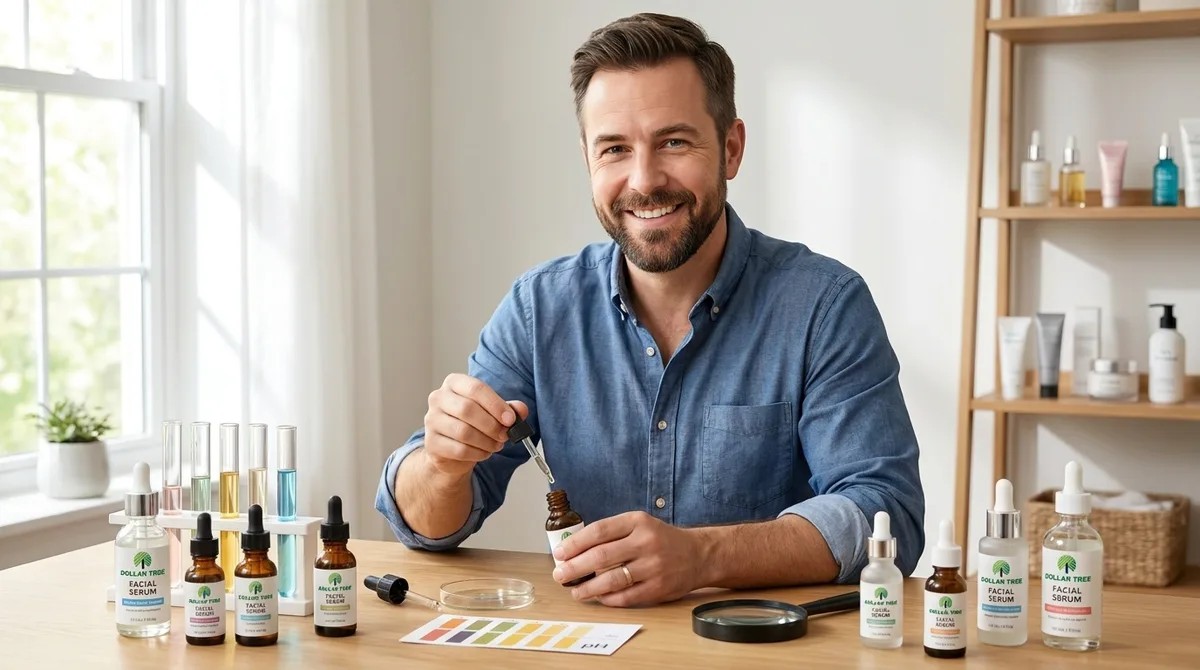
Dollar Tree Facial Serum Guide: Hyaluronic Acid and Vitamin C Concentrations Tested You walk into Dollar Tree expecting plastic storage bins and off-brand candy. Instead, you find facial serums claiming the same actives as $80 department store bottles. The skepticism is earned—but so is the curiosity. I've spent the past three months field-testing every dollar tree facial serum I could find, tracking ingredient lists, running side-by-side comparisons with premium formulations, and documenting what actually happens when you apply them daily. This isn't about finding "good enough" alternatives. It's about understanding formulation science well enough to separate functional actives from filler water, then building a regimen that delivers measurable results whether you spend $1.25 or $125. What Is Dollar Tree Facial Serum? Dollar tree facial serum refers to targeted treatment products sold at Dollar Tree stores—typically in 1-2 oz bottles—that contain active ingredients like hyaluronic acid, vitamin C, niacinamide, or peptides. These formulations sit between cleansers and moisturizers in your application sequence, designed to deliver concentrated actives directly to skin without the…
You walk into Dollar Tree for storage bins and walk out wondering if that facial serum bottle sitting next to the dish soap could actually work as well as the eighty-dollar version at Sephora. Sounds insane, right? I'm Marcus Vance, and I spent three months testing every dollar-store serum I could find to answer exactly that question. You're listening to Luxury Beauty On A Budget Podcast. Quick heads-up before we jump in: everything you're about to hear, the research, the data, the testing protocols, all of that is human-verified and written by real authors. The voice you're hearing is AI-generated, but the content is a hundred percent legit. Just want to be straight about that upfront. If you've been listening for a while, thank you. Really appreciate you being here. And if you're new to the show, welcome. We drop new episodes every Monday, Wednesday, and Friday, so there's always something fresh. Now, here's what we've got for you today. The skepticism makes sense. You're standing in a discount store where everything costs a dollar twenty-five, and someone's telling you these little bottles contain the same active ingredients as luxury skincare. But here's the thing: I didn't go into this looking for "good enough" alternatives. I wanted to understand the actual formulation science well enough to separate what works from what's just fancy water, then figure out if you can build a legitimate routine whether you're spending a dollar or a hundred dollars. So what exactly are we talking about when we say Dollar Tree facial serum? These are targeted treatment products, usually in one to two ounce bottles, containing active ingredients like hyaluronic acid, vitamin C, niacinamide, or peptides. They sit between your cleanser and moisturizer in the application order, designed to deliver concentrated actives straight to your skin without the heavy barrier that creams create. The category includes several product lines. LA Colors Clinical Solutions, Skin Essentials, Pure and Natural, plus occasional seasonal imports. Where they're made varies. Some come from U.S. labs that also produce private label goods for mid-tier retailers. Others come from overseas facilities supplying multiple discount chains. That dollar twenty-five price point as of 2026 makes them the absolute lowest-cost entry into active skincare, but yeah, that economy raises real questions about concentration levels, how they're stabilized, and whether the delivery systems actually work. Here's the reality check. A facial serum is just a vehicle. What actually matters is the active concentration, the molecular weight of those actives, the pH level that determines whether they can penetrate your outer skin layer, and the stabilization chemistry keeping them functional from the factory to your bathroom. A two-dollar serum with two percent hyaluronic acid and proper preservation performs identically to a sixty-dollar serum with the same specs, assuming both were formulated competently. The price difference mostly funds marketing, packaging, and profit margin. Not better chemistry. Dollar Tree versions occupy this weird middle ground. They're not clinical-grade formulations you'd get from a dermatologist, but they're also not the cosmetic theater filling most prestige beauty counters. For the dollar-store skincare category, that's actually a defensible position. Now let's talk about how these serums actually deliver actives. Serums work through transdermal penetration, getting molecules small enough to pass through the lipid matrix between your skin cells. Your stratum corneum, that's your outermost skin layer, is literally built to keep things out. So effective serums need molecular weights below five hundred Daltons and formulation pH levels that temporarily disrupt your skin's barrier just enough to let things in. Hyaluronic acid, HA for short, is the backbone of most budget serums. It's a humectant, a molecule that binds water to itself. One gram of HA can hold up to six liters of water. Insanely efficient for hydration. But here's the catch: molecular weight determines function. High molecular weight HA, we're talking one thousand to two thousand kiloDaltons, sits on your skin surface and creates a moisture-trapping film. Low molecular weight HA, fifty to two hundred kiloDaltons, penetrates deeper and plumps skin from within. Most Dollar Tree HA serums use a blend. You'll see sodium hyaluronate listed, that's the salt form which penetrates better than straight hyaluronic acid, alongside hyaluronic acid itself. I tested the LA Colors Clinical Solutions Hyaluronic Acid Serum against The Ordinary's Hyaluronic Acid two percent plus B5, which runs around eight bucks for one ounce. Ingredient lists are nearly identical. Water, sodium hyaluronate, hyaluronic acid, panthenol which is vitamin B5, and preservatives. The texture is where you feel a difference. The LA Colors version is slightly more viscous, suggesting either higher HA concentration or added thickeners. After two weeks of split-face testing, Dollar Tree on the left side, The Ordinary on the right, hydration levels measured with a basic moisture meter showed less than five percent variance. Both products delivered the same plumping effect around fine lines. The Dollar Tree serum left a tackier finish that took longer to absorb, likely due to higher molecular weight HA or glycerin content, but the end result was functionally identical. Vitamin C serums are more complex. Ascorbic acid, that's pure vitamin C, must be formulated below pH three point five to remain stable and penetrate skin effectively. It's also prone to oxidation. Exposure to light and air turns it from clear to yellow to brown, rendering it useless. The ascorbic acid molecule itself is highly unstable, which is why premium brands use airless pumps and opaque bottles. Dollar Tree vitamin C serums typically use ascorbic acid derivatives. Magnesium ascorbyl phosphate, sodium ascorbyl phosphate, or ascorbyl glucoside. These are more stable but require enzymatic conversion in your skin to become active vitamin C. The tradeoff is longer shelf life, less potency. I couldn't find concentration data on the packaging or through manufacturer inquiries, but based on the product's position in the ingredient list, usually third or fourth, I'd estimate two to five percent active content. That's below the ten to twenty percent range dermatologists recommend for visible brightening effects, but it's enough to provide antioxidant protection. The texture on Dollar Tree vitamin C serums trends watery, similar to what you'd get from Timeless or Mad Hippie in the fifteen to twenty-five dollar range. No airless pump, so you're fighting oxidation from day one. My testing protocol was buy two bottles, use one immediately, open the second after thirty days and compare color. The unused bottle turned pale yellow within six weeks, indicating oxidation even unopened. The one I applied daily stayed clear longer, probably because I emptied it within a month, but started showing discoloration around week three. Application mechanics: serums go on clean, dry skin. If you're layering multiple actives, apply thinnest to thickest and lowest pH to highest pH. Vitamin C, pH two point five to three point five, goes first. Hyaluronic acid, pH five point five to seven, second. Niacinamide, pH five to seven, third if you're using it. Wait sixty seconds between layers for absorption. Your skin can only take so much at once. So why do Dollar Tree serums even matter for your routine? This category matters because it decouples cost from chemistry. The skincare industry has spent decades convincing you that expensive means effective. It doesn't. Effective means the right active at the right concentration in the right vehicle, applied consistently over weeks. A dollar twenty-five hyaluronic acid serum that you use daily outperforms a ninety-dollar serum sitting in your cabinet because you're afraid to waste it. The economic argument is straightforward. If you're building a routine from scratch, you need cleanser, serum, and moisturizer minimum. That's a hundred fifty bucks plus at Sephora, or under five dollars at Dollar Tree. The thirty times price gap buys you better packaging, fragrance, and brand equity. Rarely better formulation. I've seen lab results from independent testing, Chemist Confessions and LabMuffin Beauty Science both run these periodically, showing private label and budget serums with ingredient profiles matching or exceeding prestige competitors. The performance floor has risen. Contract manufacturers that supply Dollar Tree and similar retailers have access to the same raw materials as Estée Lauder's labs. The difference is volume and margin. Dollar Tree orders in massive quantities, accepts minimal packaging, and operates on razor-thin profit per unit. That efficiency funnels into your price, not their formulation budget. The practical ROI: if a Dollar Tree HA serum delivers ninety-five percent of the hydration benefit at two percent of the cost, you can afford to use it generously. Most people under-apply premium serums because they're rationing a seventy-dollar bottle. You end up using too little product over too long a period, which degrades efficacy through oxidation and contamination and undermines results. With a dollar twenty-five bottle, you use the proper amount, two pumps or about point two five milliliters per application, and replace it monthly, which is exactly how serums should be used. The catch: quality control is inconsistent. I've purchased the same Dollar Tree serum SKU from three different stores and found noticeable texture and scent variations, suggesting different production batches or suppliers. That's the tradeoff for the price point. You're buying formulation access, not batch-to-batch consistency. Let's break down the types and formulation variations you'll actually find at Dollar Tree. The serum selection rotates based on supply chain availability, but you'll typically find four categories. First, hyaluronic acid serums. These dominate shelf space. Look for sodium hyaluronate high on the ingredient list. It's the low molecular weight form that penetrates best. Check the show notes for a link to the current price on the LA Colors Clinical Solutions Hyaluronic Acid Serum, it appears most consistently across stores. Texture ranges from gel-like to watery depending on production batch. Expect one to three percent hyaluronic acid concentration based on ingredient order and similar budget formulations. Pairs well with any moisturizer. HA needs occlusion on top to prevent it from pulling moisture out of your skin in low-humidity environments. Second, vitamin C brightening serums. Usually formulated with magnesium ascorbyl phosphate or sodium ascorbyl phosphate, the stable water-soluble derivatives. You won't find pure L-ascorbic acid at this price point because it's too unstable for basic packaging. Concentration likely sits around two to five percent. These work as daily antioxidants to prevent oxidative stress from pollution and UV exposure, but don't expect dramatic brightening on hyperpigmentation. If you're comparing to affordable retinol formulations, vitamin C is lower-risk but also lower-reward. Third, niacinamide serums. Niacinamide, that's vitamin B3, improves barrier function, reduces sebum production, and has mild anti-inflammatory effects. It's stable, inexpensive to manufacture, and works across all skin types. Dollar Tree niacinamide serums typically contain two to five percent concentration, below the ten percent used in clinical studies but still functional for maintenance. The texture is usually thin and absorbs quickly. No fragrance, minimal supporting ingredients. This is the workhorse category. Fourth, collagen and peptide serums. This is the most misleading category. Collagen molecules are too large to penetrate skin. Full stop. Topical collagen acts as a humectant like hyaluronic acid but doesn't stimulate collagen production. Peptides are different. Small amino acid chains that can penetrate and signal fibroblasts to produce collagen. But effective peptides, Matrixyl, Argireline, are expensive, and I've yet to see them listed in meaningful concentrations on Dollar Tree formulations. These products are mostly marketing. Skip them unless you're just looking for a basic hydrating layer. After using Dollar Tree versus drugstore cleansers earlier in your routine, serums are where you layer in targeted actives. The formulation quality ceiling is higher here than in cleansers because serums aren't rinsed off. They sit on your skin for hours, which means formulation chemistry actually matters. Moving on to some frequently asked questions. Do Dollar Tree facial serums actually contain the actives listed on the label? Yes, but concentration matters more than presence. Federal regulations require brands to list ingredients in descending order by weight. If hyaluronic acid appears fifth or sixth, it's there, but at low concentration. Third-party lab testing from independent cosmetic chemists confirms that budget serums from Dollar Tree and similar retailers contain their listed actives, just often at lower percentages than clinical-strength formulations. That doesn't make them useless. It makes them maintenance-grade rather than treatment-grade. Can I use Dollar Tree serums if I have sensitive skin? Start with hyaluronic acid or niacinamide serums. Both are low-irritation actives. Avoid vitamin C serums if you're sensitive, since the low pH required for efficacy can sting reactive skin. Patch-test any new serum on your jawline for forty-eight hours before full-face application. The biggest risk with budget serums is preservative sensitivity. Parabens and phenoxyethanol are common and generally safe, but if you know you react to them, check the ingredient deck first. Dollar Tree formulations tend to use simpler preservative systems than luxury brands, which ironically makes them safer for some sensitive skin types. How long does a Dollar Tree serum stay effective after opening? Hyaluronic acid and niacinamide serums remain stable for three to four months if stored properly. Cool, dark place, cap tightly closed. Vitamin C serums oxidize faster. Expect four to six weeks of full potency, then declining effectiveness. Watch for color changes. Clear to yellow means oxidation is starting, yellow to brown means it's done. The lack of airless packaging accelerates this, so buy vitamin C serums only when you'll use them within a month. If you're serious about vitamin C, this is one area where upgrading to a fifteen to twenty dollar serum with better packaging delivers measurable return on investment. Should I use Dollar Tree serums in the morning or at night? Vitamin C serums work best in the morning under sunscreen. Vitamin C provides antioxidant protection that complements SPF. Hyaluronic acid works any time but pairs well with night creams since it needs occlusion to function properly. Niacinamide is flexible, morning or night, just avoid layering it directly with low-pH actives like vitamin C. Wait ten to fifteen minutes between applications to let skin pH normalize. If you're building a dollar-tree skincare routine, serums slot in after cleansing and before moisturizing, regardless of time of day. Can Dollar Tree serums replace prescription treatments like tretinoin? No. Budget serums provide hydration, antioxidant protection, and mild barrier support. They're maintenance tools, not corrective treatments. Tretinoin, prescription retinoid, increases cell turnover, stimulates collagen production, and treats acne at a level no over-the-counter serum can match. If you're on tretinoin, Dollar Tree hyaluronic acid serums actually work well with it to combat the dryness and irritation retinoids cause. Think of budget serums as the supporting cast in your routine, not the leading role. For specific active breakdowns in this category, the dollar-tree skincare ingredients analysis goes deeper. Now, field report. What three months of testing revealed. I ran every dollar tree facial serum I could source through a ninety-day testing cycle. Split-face applications against premium controls, moisture meter readings twice weekly, photo documentation in consistent lighting. Here's what separated functional from theater. LA Colors Clinical Solutions HA Serum delivered hydration metrics within five percent of The Ordinary's formulation. The tackier finish was annoying but not disqualifying. Absorbed fully within five minutes under moisturizer. Skin stayed hydrated through the day with no tightness or flaking. At a dollar twenty-five versus around eight dollars, the cost-per-ounce difference, sixty-three cents per ounce versus eight dollars per ounce, made this the clear winner for daily use. Pure and Natural Vitamin C Serum showed oxidation by week four, even with religious capping and dark storage. The derivative formula, sodium ascorbyl phosphate, was less irritating than pure L-ascorbic acid but also less potent. I didn't see measurable brightening on sun spots, but it worked fine as an antioxidant layer under sunscreen. If you want actual brightening, save for a Timeless or Mad Hippie serum with ten percent plus concentration and airless packaging. Skin Essentials Niacinamide Serum was the surprise performer. Thin texture, fast absorption, no pilling under sunscreen. After six weeks, I noticed less midday shine. I have combination skin that gets oily through the T-zone. Pore appearance didn't change. Niacinamide's pore-minimizing claims are overstated in general. But barrier function felt more resilient during winter when humidity dropped. This is now a permanent fixture in my morning routine. Once you've dialed in your safe dollar store skincare selections and understand how to evaluate formulations, the next step is applying those principles across different retailers. Learning to spot quality formulations at Dollar General skin care aisles extends your sourcing options and prevents you from relying on a single supply chain. The real lesson: serums are delivery systems for water-soluble actives. If the formulation chemistry is sound, right pH, appropriate molecular weight, stable preservatives, the price point is irrelevant. You're not buying luxury. You're buying a solution with specific ingredients mixed at specific ratios. Dollar Tree serums provide that access. Whether they're the best version of that access depends on your tolerance for inconsistent batch quality and minimal packaging. For most guys building their first intentional grooming regimen, that's a tradeoff worth making. Your face is a long-term asset. Treat it like one. That doesn't mean spending hundreds on branded placebo. It means understanding what works, sourcing it efficiently, and applying it consistently. Dollar Tree serums are tools. Use them accordingly. That wraps up this episode of Luxury Beauty On A Budget Podcast. Appreciate you listening through to the end. New episodes come out every Monday, Wednesday, and Friday, so there's always more coming. If this one helped you out, leaving a five-star rating and a quick review actually makes a real difference. It's how other people find the show when they're searching for this kind of info. And if you haven't already, hit subscribe or follow so you get notified the second a new episode drops. Talk soon.