
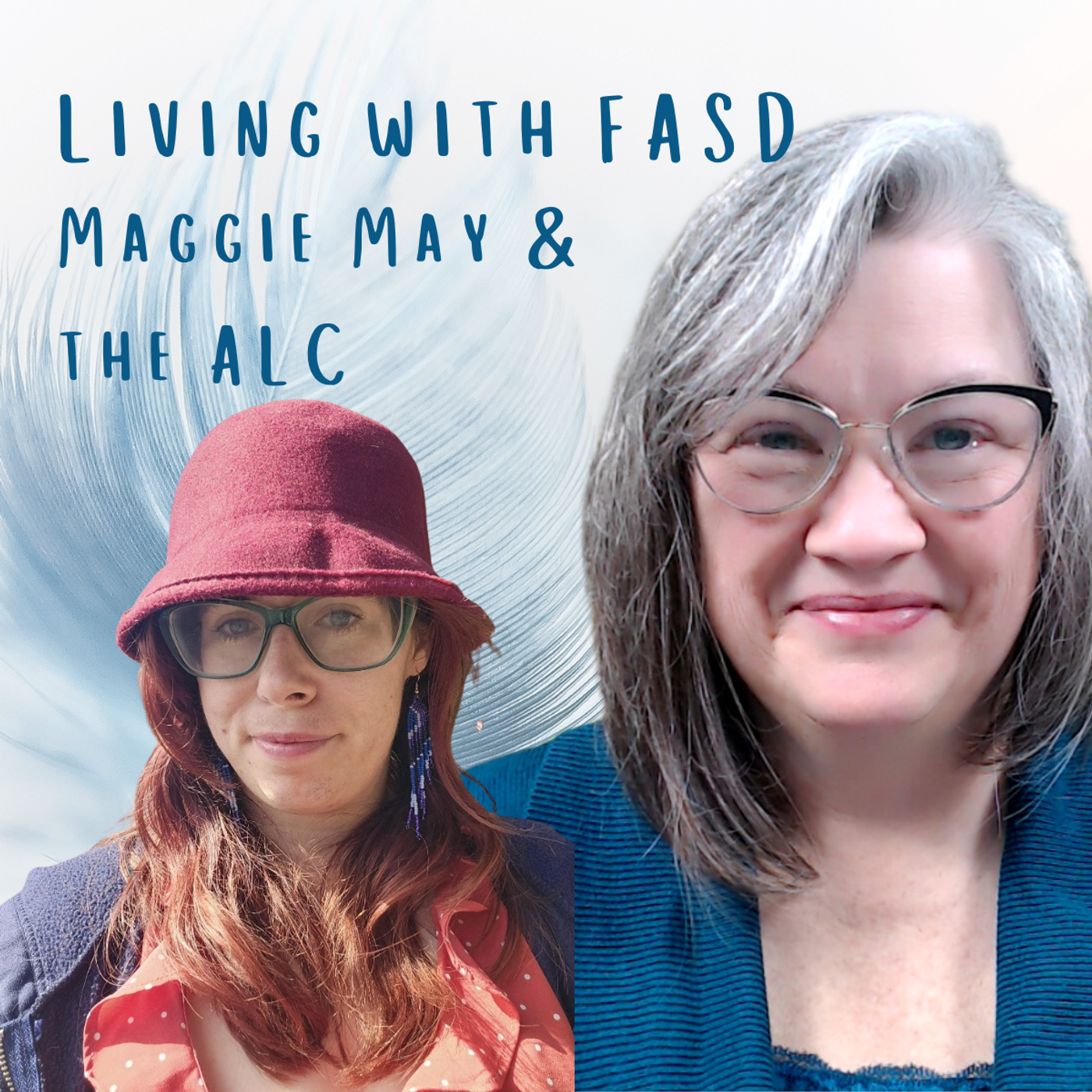
Living with FASD · Patricia Kasper
In this episode of Living with FASD, host Patti Kasper is reunited with UK advocate, horticulturist, and mentor Maggie May for a lively, candid, and deeply practical conversation. Catching up on their journeys since Season 1, Patti and Maggie dive into the Adult Leadership Collaboration’s (ALC) newest groundbreaking project: the 3rd Lay of the Land Survey, focusing on funded services versus the reality of unfunded supports for adults living with FASD. Together, they pull back the curtain on why millions of dollars in allocated funding often never trickle down to the individuals who need it most. From bureaucratic hurdles—like lack of printers, transportation barriers, and confusing paperwork—to the sheer burnout of navigating unaccommodating systems, Maggie shares why lived-experience research is essential to redirecting resources where they actually matter. They also explore the life-changing power of peer mentorship, travel hacks for sensory regulation, and why "normal" belongs on a map, not on a human being! Meet Maggie May Maggie May is an adult FASD advocate, mentor, and horticulturist based in the UK and Ireland. A member of the Adult Leadership Collaboration (ALC) and an admin for the Flying with Broken Wings peer support community, Maggie works directly with neurodivergent teens and adults to foster self-advocacy, communication skills, and connection. Her passion centers on creating safe spaces where individuals with FASD can unmask, connect, and thrive without judgment. Key Takeaways & Discussion Points The 3rd Lay of the Land Survey The Paperwork & Access Barrier Finding Your Tribe & Unmasking Deconstructing the "Normal" Myth Travel Survival & Sensory Dosing: Peer Mentorship Participate in the 3rd Lay of the Land Survey! If you are an adult (18+) living with an FASD, your voice and experience are critically needed. Take the survey at your own pace, take breaks whenever you need, and help reshape the future of adult funding and community support! 👉 https://www.linkedin.com/safety/go?url=https%3A%2F%2Fbrock.ca1.qualtrics.com%2Fjfe%2Fform%2FSV_3VQc769cKFvMDxs&trk=flagship-messaging-web&messageThreadUrn=urn%3Ali%3AmessagingThread%3A2-ZGU3NGVkY2UtMGVlMC00OGViLTlmNmQtMjExN2EzZWM4ZmYzXzEwMA%3D%3D&lipi=urn%3Ali%3Apage%3Ad_flagship3_messaging_conversation_detail%3BUV0qSlXATnOohb0nVxb6OQ%3D%3D Featured Books & Resources Read the New Book: 4D Living with FASD: Shared Voices, Clearer Understanding by Patricia Kasper, MA is officially out now! Grab your copy and check out companion resources at books.by/yourfasdcoach. Peer Community: Connect with Maggie May and peers in the Flying with Broken Wings adult FASD support community. Help Spread the Word! Please take a moment to Like, Subscribe, and Share this episode on your favorite podcast platform and YouTube! Every share helps the algorithms place these vital conversations in front of families, adults, and professionals—expanding understanding, funding equity, and dignity for the entire FASD...
Maggie May: it's people with FASD looking to get information from other people with FASD so that we can then bring it forward. It's not some researchers who's then going to, you know, get the information and travel to conferences and stuff. It's we just want to make better changes and get people talking and having, you know, more resources available for people like yourself, Patti Kasper: Yeah. Yeah. Maggie May: for myself, and to really get people thinking when it comes to Patti Kasper: Mm-hmm. Maggie May: Is the money going to where it needs to go? Patti Kasper: Welcome back to another episode of Living with FASD. I'm Patti Kasper, your host, and joining me today is Miss Maggie May from the UK. First time she's been on the show in it seems like forever, I think since season one. It seems like forever ago. How have you been, Maggie? Maggie May: Wow, wow. Yeah. I have been really, really good. It's can't believe it's been that long. I've missed you, Patti. Patti Kasper: Yeah, I've missed you too. It's hard to keep up with you and the other members of the AL ALC. It seems like you guys are all jet setting about hither, tither and yon So Maggie May: We are. Let's see. Since we last talked, we we did the conference in Seattle. And that Patti Kasper: Mm-hmm. Twice since the last time we talked. Maggie May: gosh, it's been twice. my gosh. See, I don't even know where I am half the time. Memory Patti Kasper: Right. Maggie May: issues. Have you heard of them? Patti Kasper: No, we don't have those. I don't know what you're talking about. Maggie May: No, not at all. Yeah. So, okay, so with the ALC, we took a break. We were pretty tired from the first conference, and a lot of our members had amazing opportunities, and Patti Kasper: Hmm. Maggie May: so we disbanded for a little while to recover and focus on what each of us wanted to do. And Since then we have regrouped. Some of our members decided not to join us again, which is fine. They the joyous thing about being part of the ALC is we walk different paths and that's okay. And we also went are going in a different direction, which is really, really exciting. we're a lot more focused on doing things online, which Patti Kasper: Okay. Maggie May: in my case has been very, very useful because it can be very hard to get to conferences when you're in Ireland and it's very expensive to fly me to places and I Patti Kasper: Yeah. Yeah. Maggie May: don't have the funds. So we have spent a lot of time writing webinars and presentations and then delivering them through different organizations, which has been really really fun to do and Patti Kasper: Okay. Yeah, I n I I saw that you guys had done one down at the Florida Center a few months ago. Maggie May: Yes Yes we had done I think ooh eight part series which Patti Kasper: wow. Maggie May: yeah it was about a least eight months every month we do a different webinar which was really fun and it was I must say I really did enjoy them and we are planning to collaborate with them again because they are an amazing organization to work with. Patti Kasper: Okay. Yeah. Yeah. Maggie May: And we are also put together our third lay of the land survey which is very exciting. Patti Kasper: Okay, well, so yeah, the after the last time we had met on camera for the podcast, the first lay of the land survey was out, and you guys were getting ready to implement the second survey. Maggie May: Yes. Patti Kasper: And that has since come out. Maggie May: Yep. Patti Kasper: And so, and that the second one was about the adult experience in terms of ongoing mental health issues, ongoing. PTSD, CPTSD, that kind of stuff, the trauma stuff, how we Maggie May: Mm. Patti Kasper: we continue to experience trauma. What's the third one? Maggie May: So the third one is on the use of funded supports and unfunded no, funded services, pardon, and unfunded supports when it comes to living with FASD. And no one has ever thought of asking those kind of questions, which when we were coming together, we're like, why not? Which is usually how Patti Kasper: Yeah. Maggie May: our surveys come to be. And Patti Kasper: Rate? Maggie May: yeah. And I what we really want to be able to get across is the fact that to be able to bring it to policymakers and organizations to say, you're putting the money towards FASD, but it's not going where it needs to go. And maybe you need to rethink that actually more people with FASD are having to use unfunded supports. So why don't you switch to them being funded if that's where the majority of people are needing supports from? And so Patti Kasper: Work smarter, not harder. Maggie May: exactly. So that is Patti Kasper: Yeah. Maggie May: currently open to anyone in the world who's over 18. And we're really looking forward to the results. We've been getting some results in, and it's been really, really eye-opening of just where the gray areas. Patti Kasper: Okay. Can can you give me some examples of some of the questions? Or would that Maggie May: yeah, so a few of them Patti Kasper: or would that kind of spoil things or poison the the I mean, would that affect okay. Maggie May: It shouldn't. You know, some of I can be very vague and not vague at the same time. Some of them were very much towards, you know, do you need help filling out forms? Where do you get that help from? And do you understand what the questions are? And how often have you forgotten to bring back a form? And so It was really astonishing the responses we've gotten so far in regards to, you know, some of them are like, Well, I don't even have a printer, so I don't bother filling out forms because I don't have a printer. Or, well, I don't have access to getting them back to the services, so I don't even apply for them. And so the question, like, well, Patti Kasper: that's heartbreaking. Maggie May: what would have what would help you to be able to do that? Is it having someone to Patti Kasper: Yeah. Yeah. Maggie May: come? Is it Doing it through a phone call instead where someone else fills it out for you. It's it's it's really practical changes that can make such a difference, but it's and I think sometimes that's where it gets overlooked of people think it's the person's choice. They're choosing not to avail of services, they're choosing not to, you know, take the help. if they are eligible for it, but actually Patti Kasper: Yeah. Yeah. Maggie May: no one thinks about the practical steps of well, you need to fill in forms. And what if we don't have all the information? Do they know who to go to to get that information? Do they have transport to get to the people to get that information? So it's it's really those. Yeah. Yeah. that was a huge one. So Patti Kasper: Right. Right. Or or to get to their appointment, period. Yeah. Maggie, how can how can my audience help in this regard? So I plan on airing this episode very soon. In fact, my Maggie May: Mm-hmm. Patti Kasper: target date, I'm looking at my calendar in my head, would be September fourteenth. So right around the corner. Yeah. Maggie May: even better. Wow. Patti Kasper: So When is your survey closing? Maggie May: We do not have a closing date because we've really Patti Kasper: Okay. Maggie May: it is a long survey, but you can take breaks, you don't have to do it all in one go. But we didn't want Patti Kasper: That's good to know, yeah. Maggie May: to put a closing date on it yet, because everyone takes different times to fill it out, so we didn't want anyone to feel pressure. Patti Kasper: Yeah. Yeah. Are are you looking to collect a certain number before you close the survey? Maggie May: No. We with Patti Kasper: Okay. Maggie May: all we've had a really as any researchers know, it's very hard to get data sometimes. So we have really been inspired by the the amount of people that've responded so far. But as everyone knows, the more data we can get, the better. And so we're leaving it open for now. And probably by the end of twenty twenty seven we'll probably close it unless we get, you Patti Kasper: wow. Maggie May: know just because anyone like myself doesn't like pressure and doesn't want to feel like I have to have it done by this time. So we're leaving Patti Kasper: Yeah. Right. Yeah. Maggie May: it open but it's exciting what we've gotten so Patti Kasper: Yeah. Maggie May: far. Patti Kasper: Well, there there are others of us who need that pressure in order to get things done, right? We we Maggie May: Yeah. yeah. Patti Kasper: need to feel like there's a gun to the head in order to actually start doing something. And and I've kind of been in between at different Maggie May: Mm. Patti Kasper: phases of my life. Sometimes I'm like, let me do it now. And other times it's like, do I have to? You Maggie May: Yeah. Patti Kasper: know, until, you know, what do you mean that's due next week? But you know, so we're we're all different in that. But tell you what I want to do, Maggie, for for you and the ALC in this regard is I'm gonna have the link in the show notes for people to sign up for your to participate in your survey. And I am gonna pledge to you now that I will periodically in my social media put a tickler out there for anyone who has not already done it. to get it done. Because it's very Maggie May: Thank you. That would be amazing. Patti Kasper: it's v it is very important. Maggie May: It it really is and what makes it really important is it's it's people with FASD doing it who have put it together. So it's FASD language friendly. I will say we spent an awful lot Patti Kasper: Yes. Yes. Maggie May: of time on the wording and ensuring that you know there aren't big words and if there are big words they're explained what it means and given Patti Kasper: Yeah. Yeah. Maggie May: examples. But it's people with FASD looking to get information from other people with FASD so that we can then bring it forward. It's not some researchers who's then going to, you know, get the information and travel to conferences and stuff. It's we just want to make better changes and get people talking and having, you know, more resources available for people like yourself, Patti Kasper: Yeah. Yeah. Maggie May: for myself, and to really get people thinking when it comes to Patti Kasper: Mm-hmm. Maggie May: Is the money going to where it needs to go? Because a lot of times I've heard, well, you know, FESD gets 2.8 million dollars, but it doesn't trickle down to where it needs to go. It it's nothing, but it doesn't trickle Patti Kasper: Which is nothing. Yeah. Yeah. Maggie May: down to where it needs to go. It gets used on things that maybe the money could be better spent where people with FESD actually feel it and actually get to Patti Kasper: Mm-hmm. Maggie May: reap the rewards of it. Patti Kasper: Right, right. So what Maggie May: Yeah. Patti Kasper: what were the overall outcomes of the second survey, by the way? Your your overall global findings for the the adult mental health Maggie May: They were really, really it was really, really eye-opening. we launched it in Seattle officially and it was really tough to hear some of the results because it was sad to see where people were being let down and it was really eye-opening to see what comes about when you know FEC. isn't recognized and isn't supported. And those those stories really came across in that survey of Worst case scenarios to best case scenarios, but it was really eye-opening to researchers and doctors and policymakers when they're like, okay, no, this needs more investigating. And since then, other researchers have come and done their own research and have validated what we found and which was always nice to hear. It's always great to know. Very, very, very valid. Yeah. Patti Kasper: Very validating. But at the same time, of course that's what they found. Maggie May: Yes, I know. It's so funny when that happens. Like, well yeah Patti Kasper: That people with FASD should know the right questions to ask about a particular topic. Maggie May: You would think so, yeah. I I would like to think so. So yeah, no, that one was really I disappointed I wasn't I wasn't part of the team that did it 'cause I wasn't part of the ALC at that point. But it was really, really the results were have really made changes into how people think when it comes to FACD and have really opened the eyes, which is what we wanted. And so I'm so proud. Patti Kasper: Yeah, yeah, Maggie May: of the ALC for doing that one because it really is Patti Kasper: yeah, yeah. Maggie May: making a difference. Patti Kasper: So do you guys have ideas for what the fourth survey, if there's going to be a fourth survey, might explore? Because Maggie May: there'll be a forced survey. Patti Kasper: I I I'm not surprised at that, because one person who thinks outside the box can have a gazillion great ideas. And you guys are a whole organization of outside of the box thinkers. Maggie May: I think currently on tables there's about 500 different survey ideas we're coming up with and we're just trying to figure out which is Patti Kasper: I'm not surprised. Maggie May: yeah, which is the best one to go for next. So you know you might just Patti Kasper: Yeah. What are the contenders? Maggie May: have to have me back once we figure out what the fourth lay of the land survey will be. Yeah. Patti Kasper: Yeah. Yeah. Okay. So I know that you had been traveling everywhere. I mean you spent what six months over here in in North America a couple years ago. Maggie May: Wait I did and I did and I just came Patti Kasper: What? Maggie May: back three months ago from spending another six months there. Patti Kasper: See, the first time I saw you all over the place online and I didn't Maggie May: Yes. Patti Kasper: this time. I don't know if if maybe you weren't posting as much or maybe the algorithm just changed, or maybe Maggie May: No Patti Kasper: my head's been so into my book I just haven't seen much. Maggie May: No, the first time I traveled to North America, I did a lot of traveling around doing FAC work, whereas this time I needed a break. So it was very much a self-care trip. Still FAC involved. I was still doing some work, but it was more just a time for recuperating and not focusing so much on FASD for once, which was very strange for me, and I really did struggle. With that, it was Patti Kasper: Okay. Maggie May: very strange because I was just like I'm like no, you know what? I I I I deserve a break and this is gonna be my I guess semi-vacation. So and the first few months were very much planning the conference for Seattle. So there was a lot of a lot of work put into that. So really for my last three months it was just Maggie just did downtime and Patti Kasper: Yeah. Maggie May: Maggie Wasn't wanting to travel so much this time. Patti Kasper: Yeah. So out of all the places that you have traveled to in Canada and the United States, what have been your favorite places? Have you done any just like sightseeing? Maggie May: Did. So I did. I did. My favorite place, Patti Kasper: What's your favorite stuff so far? Maggie May: and I'm biased because I have the amazing CJ and her family who I stay with. Patti Kasper: Yeah. Maggie May: so Vancouver is definitely my favorite. Patti Kasper: Mm-hmm. Maggie May: But also it was very much like home. The weather, lots of rain, so much rain. So Patti Kasper: Yeah. Maggie May: it was a home away from home. But Patti Kasper: Yeah. Maggie May: I Did get to do some sightseeing. I got to go whale watching, which was so fun. so fun. And I got to see Patti Kasper: Fun. Maggie May: orcas, which I was like, I lost my mind. And I I love orcas. So that was a highlight. And I got to go to like historical gardens, which as a horticulturist I was in love with, and I did not want to leave. And I really just took my time this time. So I I did a lot of, you know, going to cafes and just having coffee and bringing a book or bringing headphones and listening to podcasts and stuff and just Patti Kasper: Like mine? Maggie May: Yeah, I did listen to yours, of course. Patti Kasper: Shameless plug. Maggie May: I love it. Definitely. But just I I took downtime this time, which was really, really, really nice. And I discovered Maggie really likes karaoke. did. I found a place that does karaoke nights. So I was doing that every week and that was Patti Kasper: Okay. Maggie May: very, very fun. So yeah, it was Patti Kasper: Yeah, that would be fun. Maggie May: definitely I did a bit more socializing this time rather than working, which was a Patti Kasper: Yeah. Yeah. Maggie May: really nice change. Patti Kasper: That's awesome. And I I just learned something about you that you see yours you identify as a horticulturist. So Maggie May: I do. Patti Kasper: here's one of the ir ironies of my new book that's coming out. Because my mom had a green thumb. Mine's black. I managed to kill spider plants and cacti. How does that happen? I just Maggie May: We've all been there. Patti Kasper: Things either things either drown or they dehydrate, you know? Maggie May: Y you just give them too much love. Patti Kasper: I I know I'm I'm afraid I'm neglectful when it comes to plants. Maggie May: Mm-hmm. Okay, I'm like that every Patti Kasper: But Maggie May: time I go travelling. Patti Kasper: When I in in writing 4D Living with FASD, I had a lot of different types of metaphors. Maggie May: Mm. Patti Kasper: And you know, there's one metaphor that has shown up in my social media posts over the last couple months about wildflower intelligence. Have you seen any of those? Maggie May: I have and I've been loving them. Patti Kasper: So the the the way that came about was And it and it's evolved through the writing process. The the depths of this metaphor have really evolved. But you know, alcohol in many cultures is called fire water. And Maggie May: Mm. Patti Kasper: just, you know, it as fire decimates the landscape, wildflowers are the first thing that come back. They're very resilient, they're very unexpected, they're very beautiful, they're surprising and They're, you know, as beautiful as they are, they're tough as nails. And so I thought, you know, that's that's a really a a really good analogy or metaphor for Maggie May: Yeah. Patti Kasper: us and our lives. And then the wildfire flower intelligence bit of that helps explain like those sparks that you see show up as strengths in the testing when we are assessed for whether or not we have FASD, you know, our The results are always scattered, right? And Maggie May: Yeah. Patti Kasper: so it's kind of like those those flowers that pop up in unexpected places, you know, that it's the outside of the box thinking, that that kind of thing. And so that's where it started. And one of the previewers for the book wrote me and said, you know, these metaphors are great, but there's so many different metaphors in here. I found it confusing. Can you just pick one or two and run with those? And it actually I got I had three people tell me that same thing. So three, it's meaningful, act on it. Maggie May: Yeah. Patti Kasper: I went back through the book and retooled all my all my metaphorical language. And the Maggie May: Hmm. Patti Kasper: challenge was how can I use the wildflowers to teach Maggie May: Yeah. Patti Kasper: X, Y, or Z? And so now there is in the appendix. A field guide of wildflower metaphors. Maggie May: I love that. So good. Patti Kasper: So I can't wait to hear your response to those. Maggie May: I cannot wait to read the book. Patti Kasper: So thank you. yeah, it Jody and I, she's my publisher. We've been busting our highs to get this done in time for Wednesday, the International FASD Awareness Day. Maggie May: Yes. Patti Kasper: So, and silly me, it's not that as if a book launch isn't enough of a target for one day. I'm also doing an awareness drive the same day. Maggie May: Wow, busy busy bee. Patti Kasper: And that goes back to, you know, it's not just your average 5K because I gotta be outside of the box. I'm doing a Wade for Awareness in our Rec Center's Lazy River. Maggie May: wow, you're already going all out. Why not? Yeah. Patti Kasper: No, but they will. The people that show up they'll be putting Maggie May: yeah. Patti Kasper: it all out in the lazy river. So Maggie May: I love it. Patti Kasper: yeah, well when I had my back surgery last fall, I had the the lowest five discs in my back fused. Maggie May: Hmm. Yeah. Patti Kasper: And so that's basically I mean I went from using a walker to even stand up to Maggie May: Hmm. Yeah. Patti Kasper: to walking without any help at all within within a month. Maggie May: Amazing. Patti Kasper: and it was because of the lazy river. So that's why I'm doing my Wade for awareness. Maggie May: I love it. Mm-hmm. Patti Kasper: So we'll see. Anyway, Maggie May: Yeah. Patti Kasper: an idea for someone to have, you know, an outside the box alternative in their communities. Maggie May: It is, definitely. Patti Kasper: So yeah. So what when how long are you going to be in the UK? When are we going to see you over here again? Maggie May: hoping in the fall of twenty twenty-seven. I'm Patti Kasper: Okay. Maggie May: replenishing funds and I just Patti Kasper: Mm-hmm. Maggie May: got a new puppy, so Patti Kasper: what kind? Maggie May: I got a cavalier King Charles. Patti Kasper: They're so snuggly. Maggie May: There's he's the snuggliest little bug ever. So Patti Kasper: Yeah. Maggie May: yeah, I don't wanna miss watching him grow up. He's my baby. So I've Patti Kasper: Yeah. Maggie May: I'm pushing it out a little bit. 'Cause yeah, I I Patti Kasper: Yeah. Yeah. Yeah, those early years are so cute with puppies. So Maggie May: Yes, they are. So Patti Kasper: And they do very unexpected things. Did you happen to catch the blooper reel for this show? You saw that you saw Mr. Duke? Maggie May: yeah. I love it. Patti Kasper: I'm doing my first my very first best of episode. It'll be the week after this one airs. And of course it's gonna close out with that blooper reel. Maggie May: that'd be so fun. Patti Kasper: But anyway, so what let me ask you this, out of all the things that you've had the honor of being a part of, and truly it is for all of us who are in this space, not just, you know, the the grind of daily life, but really trying to make a difference for other people, it is an honor. And Maggie May: yeah. Patti Kasper: all the things that you've been part of so far. What do you still want to see on our horizon in terms of changes that need to be made or, you know, what what what are your hopes for for those of us living with FASD? Maggie May: Well, the standard one is just to be recognized as human beings would be very decent. I think in my case, because I still live in Ireland, in a country where FASD is not recognized as a disability and there's no supports or resources. I'd love for that to change, but I'd also Patti Kasper: Yeah. Maggie May: love for there to be more funded activity days for people with FASD where we can meet up in person and just be able to talk and just you know that's what's been so special about the Seattle conferences and the adult stream is for some people it's their first time meeting other people with FASD and just that light bulb moment they have of I'm not the only one. there's other people like me and I run online friendship groups and which is they're so much fun and I get so much of a giggle Patti Kasper: Mm-hmm. Maggie May: out of what happens every month in them. And they get the same experience, but it's not the same as when you get to meet in person. It being Patti Kasper: In person. Yeah. Maggie May: in the same room and being able to feel that energy in the room. And it's really that Patti Kasper: Yeah. Yeah. Maggie May: energy that, you know, we can sometimes have people who come in with their hoods up. on their phones, you know, they just don't want to engage. And Patti Kasper: Yeah. Hiding. Maggie May: yeah. But you can also hear see their ears perk up and you can start, you know, to sort of see them taking the hood off and not being on their phone and listening. I mean the it's Patti Kasper: Yeah. Blossoming like a wildflower. Maggie May: exactly and it's Patti Kasper: Yeah. Maggie May: it really is an honor to be in that position to be able to witness that or be a part of that or Patti Kasper: To watch that, yes. Yeah. Yeah. Maggie May: just see that little weight come off individuals' shoulders when they realize I'm not the only one. This is normal. Okay, well me stemming is normal or me not being able to do maths is normal and okay. I'm not a freak. I'm not a weirdo. I'm not I'm just me. And it's I t never take it for granted. I it's such a privilege to be able to be a part of that or to even just watch it happen from afar. And I think I'd love for there to be more opportunities for that to occur where It would be Patti Kasper: Yeah, yeah. Maggie May: funded so they wouldn't have to pay the cost. Patti Kasper: Yeah. I have a couple thoughts, Maggie, as I listen to you talk about that. Maggie May: Mm-hmm. Yeah. Patti Kasper: One is I think back to my childhood going to summer camp for those with type one diabetes. Maggie May: Mm. Patti Kasper: You know, it was more important to me as a kid than Christmas. And you know how important Christmas is to kids. You know. So that's really, really saying something. It was the only place where I was normal. And so that was hugely significant. My other thought as I listen to you is wouldn't it be nice if all of us who live with the effects of prenatal alcohol exposure had that recognition for ourselves that we're Maggie May: Yeah. Patti Kasper: because that's a huge community. We wouldn't Maggie May: Yeah. Patti Kasper: have to travel. To camp experiences or to conferences, we would all have huge communities in the very towns in which we lived. Maggie May: Yeah, that would it would be nice to be able to just step outside the door and ha see and just Yeah. And yeah, Patti Kasper: Yeah. And find our tribe. Yeah. Maggie May: it would that would be you know, maybe maybe Patti Kasper: Yeah. Maggie May: it'll happen one day. I hope so, because I think everyone Patti Kasper: Yeah. Maggie May: deserves that feeling they belong and feeling just normal and FAC not being a big deal of just you know, you don't Patti Kasper: Yeah. Yeah. Maggie May: you can say you have FAST and people don't look at you strangely or say, you don't look like you have it or you don't act like you have it. It's just Patti Kasper: Yeah. Or rush to judge your mother. Right? Mm-hmm. Yeah. Maggie May: Yeah. Yeah. That's an ongoing battle. but yeah, I think that would just and it's something that it's for the individuals. I see so many groups that are for parents of individuals and stuff, and it's really, really hard to find groups. Flying with broken wings, I'm one of the admins for lifesaver for me. But Patti Kasper: Mm-hmm. Mm-hmm. Maggie May: it's really hard to find groups that's just For people with FASD where they can just be themselves. So yeah, that would be amazing where communities could come together. Patti Kasper: Yeah. Maggie May: And it doesn't have to be a big thing like a conference. It could be, hey, let's meet up for coffee, let's have a pizza night, let's have a Patti Kasper: Yeah. Maggie May: movie night, just just something where people can look forward to having a day to feel normal and not feeling judged. Patti Kasper: Yep. You know, I had a a guest on gosh. Episodes one t one ten and one twenty. It's one of those speakers that we went, you know, we just had such a good time and obviously had so many things to talk about that it had to be broken into two. well that and the dog puked on me, so we had to sit down and re-record the second half. Maggie May: They'll do that. Patti Kasper: Dirk. Maggie May: Yeah. Patti Kasper: But one of the things that she brought to the table in that conversation was if you think back to math class and studying the bell curve, remember that? About, you know, Maggie May: Well Patti Kasper: that middle 80% is quote unquote normal. And just these are the little outliers over here, 10% on either side. And, you know, that whole normal, abnormal dichotomy, which is a load of crap. Maggie May: Yeah. Patti Kasper: She said, and she doesn't work specifically with FASD, she works with the broader neurodivergent Maggie May: Right. Patti Kasper: community as a whole. And she said, really, if you look at that bell curve, if normal is the center of all things, it's really just that one or two percent in the in the exact center. Maggie May: Yeah. Yeah. Patti Kasper: Everything outside of that is a divergence, which is the essence of neurodiversity. And Maggie May: Yeah, definitely. Yeah. Patti Kasper: doesn't it stink? For the people that are from the outside looking in within that 80%, so they're labeled normal, and yet their challenges can be debilitating, and they're left without services because they're deemed normal or Maggie May: Yeah, yeah. Patti Kasper: not impacted enough. And no, people just don't know what they're looking at, they don't know what to look for, and The r her point of view is it it's spot on. Forget the mathematical laws of the bell curve. Normal is the fantasy. It's a myth. Maggie May: Yeah. Patti Kasper: It's not reality. Being an outlier is standard. You know, diversity Maggie May: Yeah, definitely. Patti Kasper: it exists within all of creation. And so why would Maggie May: Yeah. I I Patti Kasper: it not apply to us too? Maggie May: Exactly. And I think I don't think I've ever met somebody who's normal. And I don't think I'd want to. Boring. Patti Kasper: Right? Well, it it sparked a saying on my part, you know, normal, the only normal really is a town in Illinois. Maggie May: Yep. Patti Kasper: As a concept, as a label, normal belongs on a map, not on a person. You know. Maggie May: Yeah, definitely true. Patti Kasper: So yeah. In fact, I think I'll make that a t-shirt design. I Maggie May: Here you go. Patti Kasper: I'm retooling my website. so Maggie May: How fun. Patti Kasper: this is another tease for the audience. keep your eyes peeled. I was trying desperately to have it retooled in time for the book launch. It's not going to happen. It's because it's not in my skill set. And Maggie May: Mm. Patti Kasper: it's been incredibly challenging, but I'm gonna have a a merch page with custom apparel. Custom apparel. Maggie May: exciting. Very cool. Patti Kasper: So I'm I'm I have a printer that that I'm working with. His his store will do all the production and shipping. Maggie May: brilliant. Patti Kasper: His store will take the payments, right? And then I'll I'll get five dollars a shirt or Maggie May: Yeah. Patti Kasper: a hat, whatever it is, and and that's it. So, but it's going to pair you people will choose between, you know, a handful of phrases, Maggie May: Mm-hmm. Patti Kasper: and then they can choose. Do you want it on a scoop neck shirt for us girls or a crew neck shirt? I would never choose that because I hate things on my neck. the pullover hoodie. the zip up hoodie. I'm also gonna have hats on there, but they can choose the style, they can choose the color, they can choose the phrase, Maggie May: So good one. love that. Patti Kasper: and we will get a whole lot of conversation started about FASD. Maggie May: Definitely. And now you have a place for your wildflower metaphors. Patti Kasper: Yep. Yeah, the first I I'm waiting. The first shirts are in production. Maggie May: Exciting. Patti Kasper: I gotta I gotta I have to wear it before I can say, yes, I wanna I wanna put my name to this and sell it. But yeah. Maggie May: Yeah. yeah. Very important. Product testing. Patti Kasper: Yep. So I'm anxious. Carl, Carl's getting one on bright green. And he's gonna wear it he's gonna he's gonna wear it to the the Galenite. Maggie May: exciting. Patti Kasper: So yeah. Anyway. so what else do you have going on, Maggie? Anything else? Maggie May: I'm now mentoring, which has been really fun. Yes. Patti Kasper: Yes, Maggie May: Yes. I I I I've done mentoring in the past, but I'm now really kicking it into gear. Patti Kasper: Okay. Maggie May: and that's another thing the ALC is now doing. We're now doing mentoring, which has been really, really fun. Not gonna lie, it's so fun. Patti Kasper: Yeah. So what what age range are your clients? Maggie May: adults mostly. over eighteens, but I have a few teens as well, which is always Patti Kasper: Mm-hmm. Maggie May: fun to do. And it's just it's really just not telling them, it's just h being almost an older sibling or just being, yeah, yeah, okay, I g I know why you did that. Okay, let's figure out how we can communicate it better. And the stories you get to hear and the insights you get and the just all of my little ones are so full of humor and character. It's it's the highlight of my week. It's just like, I Patti Kasper: Yeah, yeah. Maggie May: I cannot wait. And so I'm doing that. I'm working with parents, which is also very fun, to Patti Kasper: Mm-hmm. Maggie May: be that bridge between sometimes them and their kiddos who sometimes Patti Kasper: Yeah. Yeah. Maggie May: cannot communicate or parents can't communicate. So Patti Kasper: Yeah, yeah. Maggie May: I get to be the sounding board for that, which is so much fun. Patti Kasper: That's awesome. Maggie May: Yes. But yeah, really I've I haven't been as involved in a few I haven't been posting as much just because I've I got burnt out. I I really got burnt out. I definitely I under Estimated the tiredness from traveling so much, and being somebody who sometimes really struggles to say the word no, at some points I was took on a little bit too much and didn't want to accept that I was burnt out until I finally did crash and was like, Okay, nope, nope, Maggie needs to just step away for a while. So I'm dipping my Patti Kasper: Yeah. It's good to find the breaks before we hit the wall. Maggie May: Yes. Yes. I I need to I think I need to oil my brakes a little bit so they work a little bit better before I crash into the wall. So Patti Kasper: Yeah. Yeah. Maggie May: I'm also Patti Kasper: Well, and traveling, I mean, traveling will take it out of anybody. You know, the neurotypical air quotes, you know, get equally worn out by travel. Maggie May: I I yeah, no, I I love travelling but Patti Kasper: Yeah. Maggie May: I love travelling but when you have FASD it's it's extra stressful because Patti Kasper: More comp Yes. Maggie May: you know airports are can be overwhelming, they're very noisy, Patti Kasper: Yeah, yeah. Maggie May: they're smelly, they're just and the whole time my anxiety goes insane of if I miss the flight what do I do? As in, I don't have the funds to pay for another flight, so will I be stranded? How do I what do I do? Patti Kasper: Yeah. Maggie May: thankfully I've found some strategies. So I'm a great, great, great fan of airport lounges, which are much quieter, and Patti Kasper: yeah. Maggie May: there's food, and it's just they have very comfortable chairs and sofas, I will say that. And it's somewhere I can just decompress. So Patti Kasper: Yeah. Maggie May: That's one strategy. Patti Kasper: So how d how does one access an airport lounge without having a first class Maggie May: So very often you have to pay a small fee. Patti Kasper: ticket? Maggie May: So I used to think you could only access them by being, you know, first class or having being a club member. All Patti Kasper: Yeah. Maggie May: the ones I've traveled to, you just have to pay a small fee to get in. which in my case I would have spent it all in duty free anyway. So actually it's saving me money. so yeah, very often you just pay a fee and you can stay In some places it's four hours, some places it's two hours. and I think without that I would not be traveling internationally at all because it's very stressful. I've also put in place that I don't do back to back flights. There always has to be like a two or three hour or sometimes longer in between if I'm having to get two flights and very often people are like, but Meggy, then you're in an airport longer. I'm like, yes, but it allows me to not be rushing, not Patti Kasper: Decompress in the lounge. Mm-hmm. Maggie May: be stressed, find a lounge, or be able to find my gate, and I will just sit there for the three hours. I'll bring a book and I know where I'm meant to be. I'm not gonna miss my flight. So that's definitely took me a while to figure that one out. Because there was a few times Patti Kasper: The first the first time I took my husband home to to Pittsburgh, I grew up in Pennsylvania to meet my family. we had to fly, where was it? It was changing planes from California. I think it was Dallas, which is a huge airport, one of the biggest. And there was a storm that had come up. So the plane flew over it flew north of the city and then curved around and came into Dallas from the east instead Maggie May: Mm. Patti Kasper: of the straight shot through the west. Cause I guess the storm was still on the southwest side of things. Maggie May: Yeah. Patti Kasper: And I knew we only had like 45 minutes between flights to begin with. That's not much of a layover, especially for the size of the airport is DFW. And so I remember play praying on the plane, Lord, let this connection happen. Delay that next plane. I don't care what it is, even if it's a mechanical mechanical issue, delay the plane. Maggie May: Mm. Patti Kasper: And so we landed in Dallas. We have our arms full of things. We're both literally running through down the hallway. Maggie May: Yeah. Patti Kasper: And we make it to the gate. And there's just a couple people left to get on. We were the very last people. And it was significantly later. So I asked the the lady, I said, if you don't mind, why why are you guys boarding so late? Why are you still here? And she said, mechanical issues. Maggie May: There you go. Patti Kasper: My husband started freaking out. And I'm like, no, it's what I asked for. He's Maggie May: Yeah. Patti Kasper: like, why would you ask for that? Maggie May: Well it worked. Patti Kasper: Could that could mean anything like a burnt out light bulb, okay? Maggie May: that's so funny. Yeah, no, I've I've had to experience that running through airports and I have no sense of direction half the time. So that doesn't help. And so at one point I was running Patti Kasper: Yeah. No. Yeah. Maggie May: towards my next flight and managed to get myself out of security. So then I had to go through security again, which meant having to and Patti Kasper: no. Maggie May: I was just so stressed because they were not very understandable. I'm like, I made a mistake, can I just and they're like, no, you line up, you have to go through it. I went down the wrong hallway and Patti Kasper: you went down the wrong hallway Maggie May: I had bought beverages with me, which were over the hundred mil, so they all had to go and I at this point I was just so stressed and I did make the flight, but it was mine's I the lovely air hostess was like, You okay? I'm like, no, give me chocolate. I need it. Yeah, no. So yes, I've definitely had a few close calls Patti Kasper: Yeah. Maggie May: and I've definitely learnt tricks along the way. Because yes, travelling when you Patti Kasper: Yeah. Yeah. Maggie May: have FAC is definitely extra stressful. Patti Kasper: So here's my trick. Always have a spare outfit in your carry-on bag. Maggie May: yeah. Yep. Patti Kasper: I was flying to Pittsburgh again on the day that my parents got remarried. Right. So my parents divorced when I was eight. And then they three years later, they both married different people. And and then their divorces were a little more staggered, but they ended up getting married again. And which is kind of cool. How many girls can sing in their parents' wedding and still claim to legitimacy? Maggie May: Yeah. That's true. Patti Kasper: But I mean, I flew the day of their wedding, which was, you know, what was I thinking? I had a three-hour layover in St. Louis. Yeah, St. Louis, Missouri. And I woke, I was laying down on the chairs and I was sleeping, and I woke up with nausea. Sudden nausea. And so I'm gathering everything together and I'm running into the restroom. I didn't make it. And I had just woo and it was like I I fell in it. It was like one of those bad movies where I was like feet up in the air, straight down, Maggie May: Yeah. Patti Kasper: hip in the mess. All my clothes are in the checked baggage. That was not good. I found a lovely Maggie May: No, no, Patti Kasper: sweatshirt, but there was no help for my pants. So so I had to ask the Maggie May: p yeah. No, I've Patti Kasper: the I had to ask the cabin stewardess if she had perfume. And she's like, We don't share that with I said, Do you smell me? Maggie May: Mm-hmm. yeah. Patti Kasper: I felt even worse for the people sitting next to me on the plane. Yeah, no fun. Traveling. Maggie May: I love travel stories. Patti Kasper: Yeah. I so anyway. I hope to be traveling myself, doing some training on the 4D FASD framework, but Maggie May: How amazing. Patti Kasper: hopefully. After after after mama passes, which part of me hopes will be soon so I can get out there and teach. Maggie May: Yeah. Patti Kasper: And part of me's like, yeah, I don't want it to be soon. But Maggie May: Yeah. Patti Kasper: it'll it'll be when it happens. But Maggie May: Yeah. Patti Kasper: yeah, that'll be that'll be that would be a lot of fun if I could do that. Meanwhile, I like you really like these internet, these Zoom opportunities. Yeah. Yeah. So Maggie May: yeah, they're just What did we do when internet wasn't around? Patti Kasper: That was such a blessing that came out of COVID, huh? Maggie May: Yeah. yeah. Patti Kasper: Everyone started like this isn't so bad. Great. Yeah. Maggie May: Yeah, this is actually this is way more convenient. Patti Kasper: Yeah. Well, we're definitely gonna have to not wait another three years for the next time you come back on the show. So Maggie May: Yeah. Yeah, I I I'd prefer it to be sooner. Patti Kasper: yeah. so s you said September of next year is the next time you might come back over here. is that what about Seattle, the Seattle conference? Aren't you guys gonna be planning that? Maggie May: So so far I haven't heard Patti Kasper: For this coming year. Maggie May: so so far I haven't heard anything regarding it, just because of how things are in the States at the moment. and the ALC tends to not have much we still have some impact usually, but not as much as when it's the year of the adult stream, because that's really the adult stream is our thing. Whereas usually the next one coming up in twenty twenty seven will Patti Kasper: Would be researchers. Maggie May: be researchers predominantly. So I haven't sadly I I wish I could have some like sneak peek news for everyone of your audience, but I actually don't. And it is one of the questions Patti Kasper: Right. Okay. Maggie May: I get a lot of when's next conference happening, and I'm like, I honestly don't know. And I'm not just saying that, I honestly don't know. Patti Kasper: Yeah. I my one of my biggest hopes for that conference is that they go to a a dual format where you can Maggie May: So Patti Kasper: be in person or on the net. Maggie May: Yeah. It has been voiced Patti Kasper: Mm-hmm. Maggie May: plenty of times and a lot of it just comes down to budget. It is a lot Patti Kasper: Yeah. Yeah. Maggie May: more expensive to do it that way. So unfortunately. Patti Kasper: It is on the other hand though if you have more people paying for Maggie May: That's true. Patti Kasper: paying for it. Maggie May: Yeah. So it may happen one day. Patti Kasper: Just because it's virtual doesn't mean it's free. Maggie May: That's true. So that idea is toying around, so it may get picked Patti Kasper: Yeah. Yeah. Yeah. Maggie May: up, it may not, but it definitely we voiced it and a few people have voiced potentially doing it that way as well. So you never know. Patti Kasper: Well, I I just know from a cr from a coaching perspective, Maggie May: no. Patti Kasper: most people in our population cannot afford to Maggie May: Yeah. Patti Kasper: pay for professional coaching. And you know, I I lose money coaching with with compared to what my time and the resources I have to pay to keep the business going. versus Maggie May: Yeah. Patti Kasper: how much people can afford to pay me. but if it's virtual, so many it's so much so many more people can afford to go. Cause if people can't afford coaching, they can't afford Seattle. Maggie May: I know. Patti Kasper: Or Vancouver or New York City, right? It's Maggie May: yeah. Patti Kasper: travel is expensive. Maggie May: travels and hotels and everything, it's it's very not affordable, which is why sadly I don't get Patti Kasper: Yeah. Maggie May: to go to conferences other than the Seattle one has been my Patti Kasper: Yeah. Maggie May: only FAC conference I've ever been to. Patti Kasper: Yeah. On the other hand, being in person is so much more fun. Is yeah. Yeah. The energy just Yes, me too. Yeah. Maggie May: It is. It's it's that energy. Once again, it's just that energy and I'm a hugger. So I'm a hugger, so being able to hug people is like the best thing ever. And Patti Kasper: Yeah. Maggie May: sometimes it's really nice to be able to meet people that you've maybe talked to online for many, many years Patti Kasper: Mm. Maggie May: and find be like, you're not just a flat screen or you're not just, you know, messages through emails. my gosh, you're a real person. You get a hug. So Patti Kasper: That gives good hugs. Maggie May: Yes, yes, I'm an excellent hugger. I love hugs. Patti Kasper: Yeah, I do too. And I interact with people who are not, you know, they're very they have they they they need their space, right? Takes all kinds, Maggie May: yeah. Yeah, and that's okay. Patti Kasper: but and there are those who don't know when to quit hugging. I am a massive hugger. And Maggie May: Yeah. I love that. Patti Kasper: there is a dear friend of mine, we did a lot of things co-leading and in church. She's known and and we share the same name. Her name's Patti also. major Patti Hug. I it just she kind of leaves you like, I can't breathe. Maggie May: they're the best time. Patti Kasper: So but yeah, you can't get that on the screen on the virtual screen. So Maggie May: No, no you can't. Patti Kasper: Yeah. Maggie, this has been so much fun. So Maggie May: Always a pleasure being able to talk to you. Patti Kasper: Yeah. We'll have to do a massive hug when we do finally meet face to face. Yep. Maggie May: We will. We will. It will happen. Patti Kasper: Yep. All right. Well, enough for for this time and we will talk again soon. Maggie May: Awesome, thank you for having me. Patti Kasper: Alright. Alright everyone. We will see you next week. And my book is out now. So you'll find the link in the show notes. Thanks a bunch.