
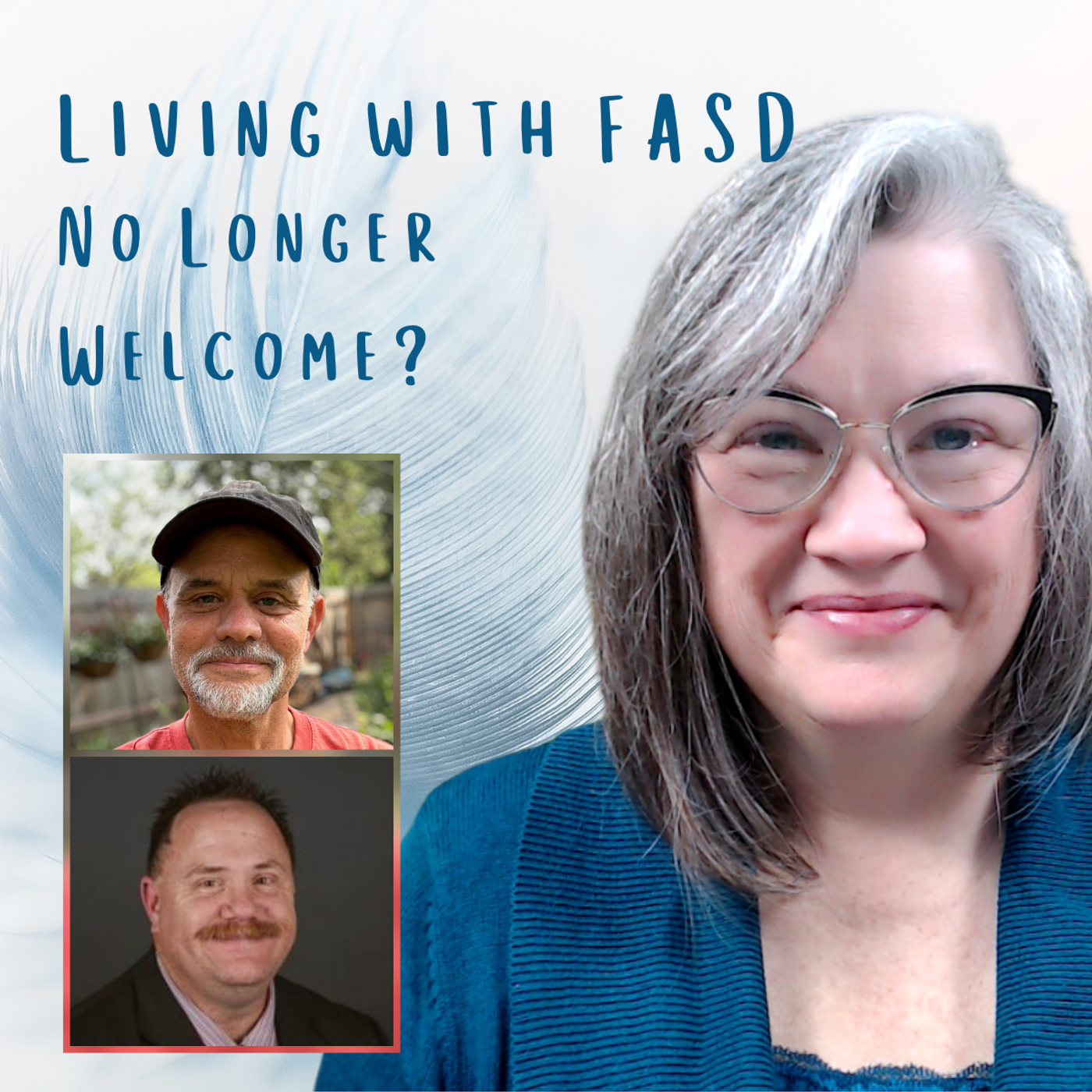
Living with FASD · Patricia Kasper
What happens when families navigating neurodevelopmental disabilities step into faith communities hoping for soul care, only to be met with misunderstanding, behavioral judgment, or even exclusion? In this powerful, candid conversation, host Patti Kasper sits down with returning guests and authors Carl Young and Joel Sheagren to discuss their groundbreaking new book, Embrace Neurodiversity. Sharing vulnerable personal stories—from being served legal letters banning them from church property to being asked if they had considered an exorcism for their child—Joel and Carl reveal the deep heartbreak of church hurt. Yet, this conversation is not about grievance or blame; it is saturated with grace, theological depth, and practical solutions. Together, they explore how ministry teams can move from managing behavior to understanding underlying symptoms, why concrete language must replace abstract religious phrases, and the profound biblical truth that in Christ, every wire has a purpose. Key Discussion Takeaways Transforming Church Hurt into Hope: Turning painful exclusions—like legal dismissal letters and isolation—into positive advocacy and a gentler, more inclusive ministry model. Seeing Symptoms, Not Behaviors: Why physical discomfort, sensory saturation, or dysregulation in a pew or Sunday school classroom is a physiological stress response, not moral defiance. Concrete vs. Abstract Church Language: How abstract theological statements (like "Christ died for your sins") can baffle concrete thinkers, and how to translate biblical love into literal, practical actions (like specific hospitality tasks). "In Him, Every Wire Has a Purpose": Moving beyond deficit checklists to recognize that atypical neurological wiring reflects intentional design and brings vital spiritual gifts to the whole body of faith. Addressing PAE and Stigma in Congregations: Confronting the reality that over 15% of children may be prenatally exposed to alcohol, and why churches must replace parental blame with generational support. Reaching the Margins: Returning to the biblical mandate of Isaiah and the gospels to minister to the disenfranchised rather than protecting institutional comfort. Featured Resources & Links Get the Book: Pick up Embrace Neurodiversity by Carl Young and Joel Sheagren. Available on Amazon, or for 15% off if you scan the QR code on Monday’s New Episode Announcement post)! Read Patti's New Book: 4D Living with FASD: Shared Voices, Clearer Understanding by Patricia Kasper, MA is available now at books.by/yourfasdcoach! Remember to like/share/subscribe wherever you watch/listen to the podcast – dong so will help more people find it and learn about FASD.
In-Person: Right? One of the exact I was just about to say that same thing. That's one of the things I keep going back to in this advocacy work is none of us knew what we didn't know until we finally learned it. Patti: Right? One of the exact I was just about to say that same thing. That's one of the things I keep going back to in this advocacy work is none of us knew what we didn't know until we finally learned Carl Young: We don't know what we don't know. In-Person: Mm-hmm. Patti: Mm-hmm. Joel Sheagren: and a number of other aspects. So In-Person: That's fantastic. Patti: That's fantastic. Joel Sheagren: Yeah, they're just doing a great job of addressing those on the margin. In-Person: Yeah. Patti: Yeah. In-Person: Welcome to another episode of Living with FASD. I am Patti Kasper, your host. Joining me today is Joel Sheagren and Carl Young, two good buddies of mine, and two prolific FASD authors. So they've had a couple books out, one of which we've talked about last year called Embracing Hope. And now we have Embrace Neurodiversity. Patti: Welcome to another episode of Living with FASD. I am Patti Kasper, your host. Joining me today is Joel Sheagren and Carl Young, two good buddies of mine, and two prolific FASD authors. So they've had a couple books out, one of which we've talked about last year called Embracing Hope. And now we have Embrace Neurodiversity. In-Person: and which continues to follow four different type neurotypes, but it's for the church. And it's such an important focus because so often we're misunderstood in the church. Patti: And which continues to follow four different ty neurotypes, but it's for the church. And it's such an important focus because so often we're misunderstood in the church. And if we thought we were held to specific e behavioral expectations in school or the workplace. In-Person: And if we thought we were held to specific behavioral expectations in school or the workplace, we are in church as well. And a lot of times that just leads to a lot of misunderstanding and pain. Gentlemen, thank you for so crashed my mic. We're off to a good start. Thank you so much for bringing this important topic. Patti: We are in church as well, and a lot of times that just leads to a lot of misunderstanding and pain. Gentlemen, thank you. So I crashed my mic. We're off to a good start. Thank you so much for bringing this important topic, Carl Young: Yeah. He's Patti: you know, to the community at large and and also especially to living with FASD today. In-Person: you know, to the community at large and and also especially to living with FASD today. Joel Sheagren: Well, you're welcome. Carl Young: Thank you for having us again. In-Person: Yeah. So Patti: Yeah. So In-Person: why why this topic? Why did why did you guys decide to write about the church and ministry and how things could be better? Patti: why why this topic? Why did why did you guys decide to write about the church and ministry and how things could be better? Carl Young: Okay. Joel Sheagren: You want me and go call? Carl Young: Please. Joel Sheagren: Yeah, so Take a big breath, right? Why? I know both of us have been hurt by the church. we chose to let it go. to move on and to use in fact in our particular case we were given a legal letter never to come back. so much for being the the hospital that was spoken of, right? And not the courtroom. Yeah, In-Person: For soul care. Yeah. Yeah. Patti: For soul care. Yeah. Yeah. Joel Sheagren: so there was there was no conversation and no investigation. so in the context of things that might have been going on, it would have been nice to have had a conversation and it might be best for us to move on, but getting a legal letter. you know, and that's on them. In-Person: Mm. Joel Sheagren: but they may have discover there might have been confabulation involved. so but anyway, out of that it just made sense. To give it a shot, if you will, in terms of what what are the FASD gets missed all the time. I've I've been into workshops where I've heard autism and ADHD and and I've had conversations with some of the researchers that are doing work in this space related to the church. And they don't cover FASD. So it just made some sense to address this, in the context of the four profiles, not just FASD, because most people it goes right over their head, what's the acronym Patti: Yeah. Yeah. Joel Sheagren: anyway? and the symptoms are pretty much the same. So it was a way to take that hurt, if you will, and do something positive with it. In-Person: Mm-hmm. Joel Sheagren: And I have outlined a theological book that'll come at some point based on it was really f really interesting. I was at a conference, Disability in the Church, and I've been a speaker there three years in a row now. And the keynotes speak and I had four chapters written for the book called Im embracing the margins or embrace the margins. Patti: Mm-hmm. Joel Sheagren: I'm not sure what we'll land on. And it's really a theological theological tree I can talk, Carl Young: Yeah. Joel Sheagren: approach at a theological approach at what's what's going on with the disenfranchised and h how important is that and how does God view us as people? And then I was at this conference and the keynote speaker who happened to have autism and has since passed away. He was had cancer, he had been battling for six years. And he gave us talk on John the Baptist and the two factor verification. and I thought it was really brilliant in what he had presented, and it was that Christ started the his ministry based on Isaiah, which is to the disenfranchised. And when John the Baptist was in prison, he had reached back out to Christ through the his disciples and said, Are you still doing what you said you're gonna do? In a lot of Patti: Mm-hmm. Joel Sheagren: sermons I've heard in the past, he was discouraged, etc. I don't think he Patti: Yeah. Joel Sheagren: was discouraged. He was Carl Young: Mm. Joel Sheagren: Are you still doing what you set out to do? Are you still Patti: Yeah. Joel Sheagren: reaching the disenfranchise, which includes our kiddos, right? And Patti: Yeah. Yeah. Joel Sheagren: his response was, look at what's going on. Patti: Yeah. Joel Sheagren: and so it was just and I had reached back I was gonna reach out to him and see if I could snag that as a intro to the book and discovered that he was had passed away because I had written another an intro to it. so I will just give him credit when the time comes. When the time comes. In-Person: Mm-hmm. Patti: Mm-hmm. Mm-hmm. Joel Sheagren: but it's really important when you dive back into Leviticus. We're So I'm not sure where I want to go with the theology at this point, but we are to be light and salt to the world. And Patti: Mm-hmm. Mm-hmm. Joel Sheagren: that includes some instructions on how to reach those who are the disenfranchised, those on the margin, if you will. And that is our mandate. That's part of what Patti: Mm-hmm. Joel Sheagren: makes us stand out. And here we are kicking people out and giving people what legal letters and telling them not to come back and it's just an ongoing issue because Israel didn't Patti: Yeah. And big In-Person: And big Joel Sheagren: do all that well and the church is not doing all that Patti: Right, right. betrayal always hurts, but i it never hurts more than when it comes from the church or someone who professes faith. In-Person: betrayal always hurts, but it never hurts more than when it comes from the church or someone who professes faith. Carl Young: Yeah, in our case Yeah, in our case we were asked if we'd ever considered an exorcism for our son and then invited to leave him home alone and come to church without it. And we just never went back. So yeah. Patti: smart In-Person: Smart choice. Patti: choice. Yeah. What would you what would you tell I guess this question is for each of each of you, what would you tell the pastors who stood behind those directives at at this point? In-Person: What would you what would you tell I guess this question is for each of each of you, what would you tell the pastors who stood behind those directives at at this point? Joel Sheagren: You're saying if the opportunity presented itself? In-Person: Mm-hmm. Mm-hmm. Patti: Mm-hmm. Joel Sheagren: Boy, that's a good question. You want to go first, Carl? I'll give some thought to that. Carl Young: the my first thought would be to say something unkind, but that's not reflective of what our approach is here. and mainly because In-Person: Yeah, 'cause I Patti: Yeah, 'cause I In-Person: I I've read I've read the book and there's not one unkind expression, sentiment. I mean, it's just not there. There's the the book is so full of grace. Patti: I I've read I've read the book and there's not one unkind expression sentiment. I mean, it's just not there. There's the the book is so full of grace. Carl Young: Right. You know and that's been you know, I tell parents that all the time when I do my community support stuff, is you have to give yourself grace. Even Christ wasn't perfect. And Once we recognize that, then we can accept our our own faults. and I think the at some point the the pastor of our church before he retired began to recognize faults within himself that he hadn't previously seen. and with that I think comes a blessing because we're opening ourselves up to change and acceptance then. And that's all I would want for him. That and for him to enjoy his retirement. He's earned it. He's I wouldn't I while I disagree with what happened in our case, he's still a good man. In-Person: is s someone who was ignorant to the positions that they held. Right? One of the exact I was just about to say that same thing. That's one of the things I keep going back to in this advocacy work is none of us knew what we didn't know until we finally learned it. Yeah. Patti: Is s someone who was ignorant to the positions that they held. Right? One of the exact I was just about to say that same thing. That's one of the things I keep going back to in this advocacy work is none of us knew what we didn't know until we finally learned it. Yeah. Carl Young: Yeah. We don't know what we don't know. In-Person: And that makes it easier to reach that place of forgiveness, does it not, when we can remind ourselves they just don't know everything yet. Patti: And that makes it easier to reach that place of forgiveness, does it not, when we can remind ourselves they just don't know everything yet. Carl Young: Well you know, before we can Joel Sheagren: I I think Carl Young: f give other people forgiveness, we need to be willing to forgive ourselves. 'cause nobody's without faults. Joel, I'm sorry I interrupted you. Joel Sheagren: No, that's okay. I would I would hope that I would be in a place to ask questions. why'd you make those decisions? I would wanna know because from looking on looking backwards, it looks like there's an intent to build an empire and not be you know, which is so common within mega churches. Patti: Mm-hmm. Joel Sheagren: they're not they don't have the fruit for what the kingdom is, and the kingdom is goodness, righteousness and truth. And their the truth was not sought out. and it looked as though I had run it by a close friend who still attends there at one point, who's somebody I could trust and he made the comment, I suppose if you're in business, it would make sense that we're in the church and I'm surprised grace wasn't given. For at least the conversation. So Patti: Mm-hmm. Mm-hmm. Joel Sheagren: Yeah, so there was some sort of Patti: Yeah. Joel Sheagren: intent to protect themselves in some way that doesn't make sense. and Patti: Yeah. There is a business In-Person: There is a business element though, is there not? You know, when when you are in church leadership, then you're not just part of a church family, but you have the day-to-day responsibilities for the the functioning of the thing. Patti: element though, is there not? You know, when when you are in church leadership, then you're not just part of a church family, but you have the day-to-day responsibilities for the the functioning of the thing. Joel Sheagren: Yeah. Well, yeah, and in this particular case there's several campuses and they've built in multi campus thousands of people and so I'm I suppose it was a threat from a legal standpoint if we weren't removed. but anyway, I I think I would ask questions. Ask questions. Patti: Okay. Yeah. Yeah. In-Person: Okay. Yeah. Joel Sheagren: And I I doubt doubt that will ever happen, but If it would, I think maybe that would be the approach. In-Person: Yeah, yeah. So what what would be the way you you guys would suggest bringing information to one's congregation? You know, if if a listener or viewer today would Patti: Yeah, yeah. So what what would be the way you you guys would suggest bringing information to one's congregation? You know, if if a listener or viewer today would you know after after enjoying this conversation wanted to take it to their congregation, what In-Person: you know, after after enjoying this conversation wanted to take it to their congregation, what would be the first thing that that they should suggest to their their pastor or bible study leader o about you know, 'cause there's a lot to learn, learning about neurodivergence. Patti: would be the first thing that that they should suggest to their their pastor or bible study leader about you know because there's a lot to learn learning about neurodivergence. Joel Sheagren: I think the first place is that behaviors are actually symptoms and we should probably learn what symptoms what the message that our kiddos are sending to those symptoms. Like for instance, a child may be antsy or want to get up and leave or rather than think they're being you know, acting out or something like that. What what's causing that? So asking the questions, what's going on there and then asking the questions, how do we meet those needs? maybe a good place to start from a business standpoint, impact standpoint, if you reach the disenfranchised, you're gonna have the favor of God. And Patti: Mm-hmm. In-Person: Mm-hmm. Joel Sheagren: so your church will grow like crazy. Patti: Yeah. Yeah. Joel Sheagren: And I don't say that from a from a business standpoint, I say it from an impact standpoint. Patti: Right, right. In-Person: Right, right. Joel Sheagren: look look at who came out, th they came from all over the regions to see Christ because he was ministering to the disenfranchised. And Patti: Mm-hmm. In-Person: Mm-hmm. Joel Sheagren: you know, we we try to do seeker friendly messages and try to control the environment and It's just the opposite of what it's counterintuitive. What's actually Patti: Yeah. In-Person: Yeah. Joel Sheagren: effective from influence and impact and growth is follow the biblical pattern. And that Patti: Mm. In-Person: Mm-hmm. Joel Sheagren: is to understand and to know how to minister to those that are on the edges. And our kids In-Person: Yeah. Patti: Yeah. Joel Sheagren: are misunderstood. They they definitely fall into the category of the edges. Patti: Mm-hmm. In-Person: Yeah. Carl Young: much so but we didn't have a formal diagnosis of FASD when this happened but we did have the autism and the ADHD diagnoses and we were two years from reactive attachment disorder trauma diagnosis but you know we also had another child with autism and that child was given much more grace than our youngest son was and you know I I don't I don't understand excluding one and not the other, but that's what happened. In-Person: Well, and there's so much overlap in symptoms between ASD and FASD. Patti: Well, and there's so much overlap in symptoms between ASD and FASD. In-Person: Was there was there something that was being done that was beyond the the autism symptoms? Patti: Was there was there something that was being done that was beyond the the autism symptoms? Carl Young: and I can't point to anything in particular because they do overlap so much. mostly I think it was outbursts and and when he when our son was uncomfortable or or something was just off about his day. He couldn't communicate that to us directly with words. It would come In-Person: Mm-hmm. Carl Young: out in what everybody around us saw as behaviors. And knowing what I know now about neurodivergence, in seeing them as symptoms and not behaviors it changes the perspective. So we need to get In-Person: Mm-hmm. Carl Young: we need to figure out how to get ministry teams to see symptoms in what is happening with the their congregation more than they In-Person: Yeah. Carl Young: see behavior. In-Person: You know, i i for some I don't know what brought this to mind, but as I'm thinking of that, thinking just being very physically uncomfortable will shorten people's views. Patti: You know, i i for some I don't know what brought this to mind, but as I'm thinking of that, thinking just being very physically uncomfortable will shorten people's views. In-Person: You know, so I'm trying to think where I stumbled across this. I think I learned I think I learned this Patti: You know, so and I'm trying to think where I stumbled across this. I think I learned I think I learned this little exercise before my training at facets. I think. but putting on a pair of shoes that are too small. In-Person: Little exercise before my training at facets, I think. but putting on a pair of shoes that are too small and having to wear them for a time would make just about anybody uncomfortable and short tempered. that might be an exercise in Patti: and having to wear them for a time would make just about anybody uncomfortable and short tempered. that might be an exercise in Carl Young: Yeah. In-Person: in that kind of empathy. Patti: in that kind of empathy. Joel Sheagren: Well and our kiddos oftentimes don't have a physical trait Patti: Mm-hmm. In-Person: Mm-hmm. Joel Sheagren: to signal the disability. And so there's an expectation of understanding and our kiddos Patti: Yeah. Yeah. Joel Sheagren: may not understand abstract reasoning, In-Person: Mm-hmm. Joel Sheagren: abstract concepts such as Christ died for your sin. How do you make that concrete, right? love your neighbor. That's really concrete. But hey, Johnny, when somebody comes in the door, go greet and tell they're welcome and that you're really glad to see That's concrete, right? And so oftentimes Patti: Mm. In-Person: Mm-hmm. Joel Sheagren: we use these abstracts that are church language rather than the linear. And I think all Patti: Mm-hmm. Joel Sheagren: of us would, even though I think way outside of abstracts, And I can't get to the concrete oftentimes. But it would be helpful even I'm very aware of it now, to be able to try to use those concrete conversations In-Person: Mm-hmm. Joel Sheagren: with my son. And I think just learning some of those, getting some basic training around how to, you know, kids with autism need concrete. Patti: Mm-hmm. Joel Sheagren: and a lot of my daughter needs concrete. processing, right, and instructions. I think a lot of people Patti: Mm-hmm. Joel Sheagren: do. My wife much prefers concrete. oftentimes she looks at me if I'm using something that's not concrete and it's like, come again. but there's an expectation that I think needs to be removed and we just need to start using language that's more less churchy and more more concrete. Patti: Yeah. In-Person: Mm-hmm. Patti: Mm-hmm. Joel Sheagren: And so Carl Young: Yeah. Joel Sheagren: It might help our kids In-Person: Okay. Joel Sheagren: and then just, you know, give the grace a kid may not have the energy to stay focused or In-Person: Right. Patti: Right. Joel Sheagren: etcetera, etcetera. Carl Young: Yeah, I don't do shades of grey very well. I I much prefer black and white, you know, concrete Patti: Mm. In-Person: Mm-hmm. Carl Young: thinking than than anything else. It's just easier for my brain. So In-Person: So one of those highfalutin color wheels that has a gazillion different shades on it, that that's not your thing, huh? Yeah, stick stick with the primary Patti: So one of those high flutin color wheels that has a gazillion different shades on it, that that's not your thing, huh? Yeah, stick stick with the primary. Carl Young: Yeah. Yeah, the color palette tool? No. Picking yeah, painting, you know, we're gonna paint the house next year and we're looking at colors. Yeah, that looks good. Yeah, that looks good. In-Person: Ha ha Patti: Ha ha Carl Young: Yeah, that looks good. Yeah. Pick Patti: Yeah. Carl Young: one. Yeah. I don't care what color it is. Yeah. Patti: Eeny meeny miny mo this one. In-Person: Eeneny meeny miny moe, this one Carl Young: Yeah. So Patti: Hi. In-Person: Okay. Patti: So what's tell me how you explained everything so beautifully in in the book, but how would you encourage people to talk with their fellow congregants or their pastor about brain not blame? In-Person: So what's tell me how you explained everything so beautifully in in the book, but how would you encourage people to talk with their fellow congregants or their pastor about brain not blame? Joel Sheagren: Well In-Person: I wanna see if you toss out the one phrase that touched me. No pressure No pressure Patti: I want to see if you toss out the one phrase that touched me. No pressure No pressure. Joel Sheagren: Mm. No pressure. out out of out of the thousands of words several months ago. Okay then. In-Person: Right. Patti: Right? Joel Sheagren: yeah. So we're all made in the image of God and we're all wired differently. And it goes to all of these conversations, threads of conversations. And it's just being able to get to the bottom. of what's going on so that we're not In-Person: Mm-hmm. Joel Sheagren: blaming and causing shame. we know for a fact that when shame is introduced or fear, that is not of God. In-Person: Right. Joel Sheagren: And so if we operate out of fear and out of that fear comes shame and a need to blame, then In-Person: Mm-hmm. Joel Sheagren: you just know right away you're not in the will of God. That's just Doesn't happen in the scriptures. So Patti: No, it you know what In-Person: Well it you know what Patti: just hit me? I wonder if in part the dynamic seems so harsh because when you are in that position of authority and you find yourself challenged by not understanding something and and and getting frustrated people have expectations of In-Person: just hit me. I wonder if in part the dynamic seems so harsh because when you are in that position of authority and you find yourself challenged by not understanding something and and and getting frustrated, people have expectations of church leaders, synagogue leaders, you know, temple leaders, you know, whatever, whatever the faith denomination or belief system, the leaders have a a higher level of expectation, right? And I wonder if it's the fear of having their humanity showing Patti: church leaders, synagogue leaders, you know, temple leaders, you know, whatever, whatever the faith denomination or belief system, the leaders have a a higher level of expectation, right? And I wonder if it's the fear of having their humanity showing. Joel Sheagren: Mm-hmm. In-Person: that makes them say, let's get some distance here. Patti: that makes them say, let's get some distance here. In-Person: No, so that Patti: Yeah. So that Joel Sheagren: Yeah, that's I think that's probably some good insight. I think that oftentimes we take the r the things do not in the scripture as though they're rules that need to be followed. And what I have discovered it's not about rules, it's about identity. When you look at Ephesians, there's a whole host of you're seated in the heavenly, you're in Christ. You're that's your identity, right? And out of that flows a different lifestyle that should reflect that. It's not that you do the lifestyle Patti: Yeah. Joel Sheagren: in order to meet the expectations. It's the other way around. And so In-Person: Yeah. Right. Patti: Yeah. Right. Joel Sheagren: I th I think there's a fear, you know, it's not uncommon for us as Carl Young: My bride here. I'm on a podcast. In-Person: Hi Millette. Patti: Hi Millette. Carl Young: No, I don't. Yeah. That's Patti. I'm like, who knows my name? Sorry about that. Yeah, Patti: Ha ha Joel Sheagren: Yeah, that's Carl Young: yeah. She's looking for office supplies. She just opened a home office and she works from home now. So yeah. So we're trying to get her fit in and she's struggling. But she In-Person: Yeah. Patti: Yeah. Carl Young: has to live with me too, so anyway. Joel Sheagren: Ha ha ha. Carl Young: Yeah, I tried to get her to not, but yeah. So In-Person: It's all good. Patti: It's all good. Carl Young: yeah. It's part of life, you know, when you when you living with neurodiversity, the unexpected happens frequently. In-Person: Mm-hmm. Patti: Mm-hmm. In-Person: Yep. So my what what really struck me and what really touched me, I thought you were gonna go there when you said we're all wired differently. You came so close, Joel, but then you went and I went th Patti: Yep. So my what what really struck me and what really touched me, I thought you were gonna go there when you said we're all wired differently. You came so close, Joel, but then you went and I went Carl Young: I think he would have if we hadn't yeah, if we hadn't had the interruption, he might have gotten there. In-Person: So and Patti: So and Joel Sheagren: Yeah. In-Person: and you came close to it again when you said we are all in in Christ, right? We are we are all part of one body, right? Patti: and you came close to it again when you said we are all in in Christ, right? We are we are all part of one body, right? In-Person: Therefore our our little piece of him being wired differently means that our funky wiring Patti: Therefore our our little piece of him being wired differently means that our funky wiring is part of him. In-Person: is part of him. And Patti: And your follow-up sentence that that really touched me was, In him, every wire has a purpose. In-Person: your follow-up sentence that that really touched me was, in him every wire has a purpose. Joel Sheagren: Yeah. We might have got there another half hour of conversation, but yes. But that that is Carl Young: But it's Patti: Ha ha In-Person: Ha ha ha. Patti: We are all beautifully wired, In-Person: We are all beautifully wired, Patti: beautifully and differently wired, and in him every wire has a purpose. And that kind of touches on something that I will convey to others when we get on to spiritual subjects about In-Person: beautifully and differently wired, and in him every wire has a purpose. And that kind of touches on something that I will convey to others when we get onto spiritual subjects about Patti: you know, everything happens for a reason. Even the bad things are allowed to happen to us if that is. In-Person: You know, everything happens for a reason. Even the bad things are allowed to happen to us if that is the only way to bring about his his purpose for our lives. You know, God does God want alcohol exposure to damage us? No. Patti: The only way to bring about his his purpose for our lives. You know, God does God want alcohol exposure to damage us? No. But he will allow it not to damage us, but to wire us just so that every wire in him has a purpose. In-Person: But he will allow it not to damage us, but to wire us just so that every wire in him has a purpose. Joel Sheagren: Well, he uses all things, right? And so it's Patti: Mm. In-Person: Mm-hmm. Joel Sheagren: not so much And I I'm gonna go with we've been given a choice, right? And so allowing would be in the context of he's gracious enough to give us choices. In in those choices, we make choices that are not healthy or in alignment with what would bring life or peace. And so the the choices fall on us. that's my belief system. so going back to you know, just a a methodology, if you will, for salvation, I believe when I read Ephesians, and I'll tie this into the differences as well. I believe Christ is the elect. When you start to read Ephesians and Israel was the chosen. And the methodology for us as Gentiles to come into the fold, if you will, is belief. It's that simple. and in the context of us all coming together that Ephesians talks about is we need each other and we're not very whole if we exclude others, including those that are wired different. Patti: Mm-hmm. In-Person: Mm-hmm. Joel Sheagren: it's it's over the top clear. I've I've been memorizing Ephesians for seven years. and I'm still not all the way there. I've got the first four chapters down pretty good and I can get most of five and six, but I'm only doing 10, 15 minutes at a time each day. And I'm going back through it and I meditate on it. And it's just really over the top obvious to me. Christ is the elect. The Patti: Mm. In-Person: Mm-hmm. Joel Sheagren: nation of Israel is the chosen one. That's who's Paul talking to. And we get included through belief system. That's the predestination, Patti: Mm-hmm. Joel Sheagren: if you will, is he's predestined the methodology. And the reason that he wants everyone together, because we're better with Jews, Gentiles, disenfranchised, the husband, the wife, the kid, the slave, ev the all of the differences Patti: Mm-hmm. Joel Sheagren: are it's a level playing field and we need each other. Patti: Yeah. Yeah. Joel Sheagren: And that's what makes it so much different. and we as individuals now who follow Christ, it's our responsibility to be that light and to carry out that mandate, if you will, of our identity and that's to treat others with respect. And to include everyone. So Patti: Mm-hmm. In-Person: Mm-hmm. Joel Sheagren: anyway. There there's a bit of the book and so but Carl Young: Yeah. In-Person: You wanna add anything Patti: You wanna add anything In-Person: other than the hand wave, Carl? Patti: other than the hand wave, Carl? Joel Sheagren: Mm-hmm. Carl Young: Well, y I have an aunt who is been a member of a convent since she was about fourteen and she's coming up on ninety. And she said everybody from the youngest to the oldest has their own form of ministry in them, even if they don't know it. And she said, What is to say that your son's life experience isn't a form of ministry that impacts the people around. And then sh then she expands that and says, you know, you may not realize it, but what you're doing and you're supporting in this community is a form of ministry even if you don't regularly bring him up in conversation. Patti: Mm-hmm. Carl Young: Because you're caring for the least of us. Patti: Yeah. Yeah, oftentimes people assume that mission field, you know, the mission you have to cross a a border to go into the mission field. All you really have to do is walk out your front door. Yeah. In-Person: Yeah. Yeah, oftentimes people assume that mission field, you know, the mission you have to cross a a border to go into the mission field. All you really have to do is walk out your front door. Carl Young: Right. And purposely put yourself in a position to help others. In-Person: Mm-hmm. Patti: Mm-hmm. Carl Young: Yeah. Patti: Yeah. What it has it been difficult? have have you found it difficult to talk with the church about prenatal alcohol exposure? So, you know, trying to encourage people not to be judgmental, you know, blaming mom. In-Person: What it has it been difficult, ha have you found it difficult to talk with the church about prenatal alcohol exposure? So, you know, trying to encourage people not to be judgmental, you know, blaming mom, you know, and as we're learning now, blaming dad. Patti: You know, and as we're learning now, blaming dad, right, In-Person: Right with all the epigenetic effects. Patti: with all the epigenetic effects. H how do you address that? In-Person: How do you address that? Joel Sheagren: You mean you mean the response of we don't have that issue here? Patti: Yeah, I've heard that a lot, but you know that church leaders don't necessarily know everything that goes on in a home. In-Person: Yeah. I've heard that a lot. But you know that church leaders don't necessarily know everything that goes on in a home. Patti: Right? Carl Young: Mm-hmm. Yeah. Joel Sheagren: Yeah, and we're there's lots of ministries to within churches for prison or alcohol or recovery and all of those kinds of things. and y it doesn't take much to start to understand if fifteen percent of our US population has been impacted because of a woman According to the C D C In-Person: Mm-hmm. Joel Sheagren: fifteen percent of the US are children. fift one a little over one in seven women self-report drinking during pregnancy, Patti: Yeah. Joel Sheagren: drinking alcohol during pregnancy. and that equates according to the C D C as a little over fifteen percent of our kiddos are Patti: Mm-hmm. Joel Sheagren: impacted by that. And going to some of your conversations that you've had with Jody Crow. we need a scale, not just the prevalence. And that Patti: Mm-hmm. In-Person: Mm-hmm. Joel Sheagren: scale is deeply, deeply embedded into all aspects, the classroom, the church pews, and it may be a physical issue, it may be a cognitive issue, it may be any number of things. As we know there's over four hundred Patti: Mm-hmm. In-Person: Mm-hmm. Joel Sheagren: ways in which alcohol can impact a person. Over 400. Patti: Mm-hmm. In-Person: Mm-hmm. Joel Sheagren: I think it's we've got a PDF on it. And I think it we started with four 428 because of some meta Patti: Right. In-Person: Right. Joel Sheagren: analysis that's come and Carl and I have dug in a little deeper and I think there's another 15 or 20 of them that we've got in a PDF. So over 400 ways in which alcohol can impact a child. And Patti: Mm. Joel Sheagren: You may be at a birthday party or a wedding or a holiday and you don't even know you're pregnant. And has that alcohol impacted you? And then you've got the craziness of Patti: Right. Right. Joel Sheagren: the medical society saying in the third trimester it's okay to drink alcohol. I'll want a glass a day is you still hear that. I heard that Patti: Yeah. Yeah. Joel Sheagren: a year ago when I gave a talk at a rotary club down in Florida from a doctor. He was trying to frame that well we've been taught that it's like is the child still in utero? Carl Young: Yeah. Right. Joel Sheagren: is the child Patti: Yeah. Joel Sheagren: still getting drunk Patti: Yeah. Joel Sheagren: for three, four hours after the mom's had a glass of wine while they're in the womb at Patti: Yeah. Joel Sheagren: at the last trimester. So and of course we know the answer is yes. And so the development of the child even breastfeeding till a You know, you're done breastfeeding, you can still impact the child's development. So it's In-Person: I you know, my my mom Patti: I you know, my my mom In-Person: used to always complain that when I was an infant I used to always drift off to sleep during feedings. And so well, yeah I was getting drunk. Patti: used to always complain that when I was an infant I used to always drift off to sleep during feedings. And so, well, yeah, I was getting drunk. Joel Sheagren: Mm-hmm. Well, yeah. Yeah, and so i it's deeply, deeply impactful within the Patti: Yeah. In-Person: Yeah. Joel Sheagren: congregations that you know, and it may be that there's autism or there there's ADHD who knows all of those reasons but to address it is super, super important, right? and to start to recognize how do we help rather than we don't Put your head in the sand and we don't have that issue. So anyway. In-Person: Yeah, I c I recall going from a Seventh day Adventist congregation of of which I was one of the leaders Patti: Yeah, I c I recall going from a Seventh day Adventist congregation of of which I was one of the leaders to a Mesianic synagogue, right? Which is that's the the bridge between Judaism and Christianity. And the rabbi was addressing some of these issues because if you've ever studied Passover at the Seder meal. In-Person: to a Mesianic synagogue, right? Which is that's the the bridge between Judaism and Christianity. And the rabbi was addressing some of these issues because if you've ever studied Passover at the Seder meal, there's a lot of alcohol. There's four cups of wine, you know, and if if you're like some congregations it's like a thimble sized little tiny cup. Patti: There's a lot of alcohol. There's four cups of wine, you know. And if if you're like some congregations, it's like a thimble sized little tiny cup. In-Person: But other ones, it's a big cup. And so the topic came up because within Adventism, it's like, no, alcohol, evil, evil. and and he said, yeah, but think about it, during biblical times Patti: But other ones, it's a big cup. And so the topic came up because within Adventism, it's like, no, alcohol, evil, evil. and and he said, Yeah, but think about it, during biblical times. In-Person: all juice was alcoholic because there was no pasteurization. Patti: All juice was alcoholic because there was no pasteurization. So that's and he really drove home that bit about old wine and new wine, right? because the older it is, the more fermented it is, the more it swells, the stretching those wineskins out. But you know, the adv what was scriptural was you don't go. In-Person: So that's and he really drove home that bit about old wine and new wine, right? because the older it is, the more fermented it is, the more it swells, stretching those wineskins out. But, you know, the adv what was scriptural was you don't go to the temple inebriated. You just you don't do it. Patti: To the temple, inebriated. You just, you don't do it. It's not that alcohol itself was evil, and that's an important point to bring out for discussion now. You know, we've got people within our community who are, In-Person: It's not that alcohol itself was evil and that's an important point to bring out for discussion now. You know, we've got people within our community who are Patti: how could you even think about it when it did so much damage? And we've got people that are like, In-Person: How could you even think about it when it did so much damage? We've got people that are like, I'm not in a position to get pregnant. I can, you know, make my own decisions. We have people with viewpoints all over the place. And it's not our position necessarily to pass judgment, but always we need to Patti: I'm not in a position to get pregnant. I can, you know, make my own decisions. We have people with viewpoints all over the place. And it's not our position necessarily to pass judgment, but always we need to help people not blame parents. In-Person: help people not blame parents if they have made choices around alcohol, especially before knowing that there was a pregnancy. But s a lot of churches just don't even want to entertain the discussion. Patti: if they have made choices around alcohol, especially before knowing that there was a pregnancy. but s a lot of churches just don't even want to entertain the discussion. Joel Sheagren: Yeah, and it's unfortunate because it's just part of society, right? And we do address it from how do we help those with addictions, but we're not In-Person: Mm-hmm. Joel Sheagren: taking it the step further. How does it impact your family? and how do we support your family and what needs do you have? And so it's not that much of a stretch to understand that probably forty percent of your congregation's been As some sort of neurodiversity in this day In-Person: Mm-hmm. Joel Sheagren: and age, and and just taking those steps. And it's encouraging to be part of key ministry and their tribe, if you will, and their In-Person: Mm. Joel Sheagren: conferences called Disability in the Church. they have another conference in Houston in March, middle of March. Patti: Mm-hmm. Joel Sheagren: And There were eight hundred people that attended last time and you know that represents you know how many congregations, I don't know, but it's it's a growing In-Person: Yeah. Patti: Yeah. Joel Sheagren: and and they're doing a great job of addressing Patti: Yeah. Joel Sheagren: and it's not just neurodiversity, it's wheelchairs and blind and deaf and and In-Person: Mm-hmm. Patti: Mm-hmm. Joel Sheagren: a number of other aspects. So In-Person: That's fantastic. Patti: That's fantastic. Joel Sheagren: Yeah, they're just doing a great job of addressing those on the margin. In-Person: Yeah. No, one of the things that you both brought out in the book is reframing those differences that many of us have as not as deficits, but it more as like abundance within the body. It what what all led you to to be able to frame things in that manner? Patti: Yeah. No, one of the things that you both brought out in the book is reframing those differences that many of us have as not as deficits, but more as like abundance within the body. It what what all led you to to be able to frame things in that manner? Joel Sheagren: I can go, Carl, In-Person: Mm. Patti: Yeah. Joel Sheagren: if you want to fill in again. so all of our kids have strength. And so it's it's written in a way that we have these four fictional characters that are based on true stories, including our own families. And if your child is ADHD and you're in the youth group. Put to use with energy in this way, right? And so it's practical ways in which to include their strengths that In-Person: Mm-hmm. Joel Sheagren: and rather than just sit still, get working, right, in certain In-Person: Yeah. Joel Sheagren: ways. And each of our kids have different strengths and different challenges, but and they can bring a lot to the table. In-Person: Mm-hmm. Patti: Mm-hmm. Joel Sheagren: and so the book is really framed around how to You know, our kids with autism might just go really deep in the scripture and have some thoughts that you would never have come up with because they see patterns and they see Patti: Mm. Joel Sheagren: structures differently than we do, right? And so just making sure that you're paying attention. In-Person: And And there's definitely a lot of patterns in scripture. Patti: And and there's definitely a lot of patterns in scripture. Yeah. In-Person: Yeah. Joel Sheagren: Yeah. Patti: Yeah. Joel Sheagren: my goodness. If you un that's Patti: Yeah. Joel Sheagren: that's a whole nother topic, but yeah, numbers and patterns and chiasms In-Person: Right? Yeah. Patti: Right? Yeah. Joel Sheagren: and it's really brilliant, really brilliant. And in that context The the context of scripture in Hebrew from what I understand, it's very rhythmic. In-Person: Mm-hmm. Joel Sheagren: And the way that it's got this rhythm, it's easy to memorize. because of the way it goes up and down and rhymes and connects from one thing to the other, and so when we didn't have all the social media I've I've heard a number of folks who grew up In-Person: Poor. Joel Sheagren: in the Jewish culture who were like, it's easy to memorize because we danced and we sung the scriptures and it was the and the rhythm of it. Patti: Mm-hmm. Yeah. You you don't read Torah, In-Person: Mhm. Yeah. You you don't read Torah, y you can't it, right? Yeah. Patti: you you can't it, right? Yeah. Joel Sheagren: Yeah. Yeah. And so Patti: Yeah. Joel Sheagren: maybe our kiddos can help us relearn some of those things because their strengths are Patti: Yeah. Yeah, it's like how many of us In-Person: Yeah. Yeah, it's like how many of us Patti: can still do the nursery rhymes from when we were little? In-Person: can still do the nursery rhymes from when we were little? Joel Sheagren: Yeah, we can sing the alphabet, right? Mm-hmm. In-Person: Right? It's mhm. Yeah. Patti: Right? It's mm hmm. Yeah. Joel Sheagren: Somewhere somewhere along the line we lost that. But I think our kiddos, they can bring some creativity because they do think outside the box and they come at it with various approaches that are just it makes sense. Patti: Yeah. Yeah. Joel Sheagren: to turn them loose with their strengths. And we that goes back to the Ephesians. Learn from one another. Yeah. Patti: Mm-hmm. Joel Sheagren: So we all have something to offer. Carl Young: Well, if I go back to what I tell the school systems is for every deficit or negative, tell me a positive. There's there's gotta be at least one for everything you say. and our kids have so many positives and so many strengths and it's just a matter of tapping into those and and using them not so much as a distraction as for a purpose. Patti: Mm-hmm. In-Person: Mm-hmm. Patti: Yeah. And I think that goes back to once again Lily. Come on girl, please lay down. Get your butt out of the camera. In-Person: And I think that goes back to, once again, Lily. Come on girl, please lay down. Get your butt out of the camera. Carl Young: You catch. I don't feel so bad about having my wife come in. Yeah. Didn't In-Person: At least she didn't face me and show you guys her butt. Patti: At least she didn't face me and show you guys her butt. Carl Young: see that. Sorry back, but yeah. In-Person: I well, you know, I d I I just returned home from being several days in in Minneapolis and Carl it was or Joel it was great to be with you in person and hug your neck and but boy this one is so happy that I'm back. She never has anything to do with me unless I'm here at the computer. Can you please lie down? No Patti: I well, you know, I I I just returned home from being several days in in Minneapolis and Carl, it was or Joel, it was great to be with you in person and hug your neck and but boy, this one is so happy that I'm back. She never has anything to do with me unless I'm here at the computer. Can you please lie down? No. Joel Sheagren: This. Patti: Come on, go away. Go on. Mew Yeah. Yeah, I totally forgot what I was in the midst of saying. Completely it's gone. In-Person: Gone. Yeah. Yeah, I totally forgot what I was in the midst of saying. Completely it's gone. Carl Young: Beautifully wired. Yep. Imagine if we brought cats with us to the ministry. In-Person: Hm? Patti: Hmm? Carl Young: Imagine if you brought your cat with you to ministry, everybody in the church would bring a cat with them. The chaos that would erupt, you know. Yeah. Patti: I'd I'd bring a different one. I'd bring a different one than her. In-Person: I'd I'd bring a different one. I'd bring a different one than her. Joel Sheagren: At two. At two. Mm-hmm. In-Person: I you know, I could bring extras. I could bring extras. Joel Sheagren: We would all go at two. There you go. There you go. Patti: I you know, I could bring extras. I could bring extras. Carl Young: Right. Joel Sheagren: My eyes swell Carl Young: Sorry. Joel Sheagren: for three days when I'm near a cat. Carl Young: yeah. Joel Sheagren: Yeah, yeah. Patti: Yeah. Well that's one way of getting you to leave a congregation, Joel. In-Person: Well that's one way of getting you to leave a congregation, Joel. Joel Sheagren: there you go. Just have cats. Just have cats. And then Carl Young: Yeah. Joel Sheagren: you could say we're it's like herding cats. there you go. In-Person: Yeah. Yeah. Patti: Yeah. Yeah. Joel Sheagren: So anyway, no, we were talking about strengths of our kiddos and our kiddos Patti: Yeah. Joel Sheagren: have so much to offer. Patti: Yeah. Joel Sheagren: so In-Person: I I think this is a beautiful book. Embrace Neurodiversity and it it's such an important message. You know, our it again it's just yet another profession that has never been taught about the meeting underlying needs, recognizing underlying needs, let alone meeting them, not even recognizing them. Patti: I I think this is a beautiful book. Embrace Neurodiversity and it it's such an important message. You know, our it again, it's just yet another profession that has never been taught about the meeting underlying needs, recognizing underlying needs, let alone meeting them, not even recognizing them. In-Person: you know, and and it's just such a tremendous area of need. And it's beautifully written in a way that's very very non-judgmental. You know, it's the recognition that the the lack of education is is recognized and the people who do not know are not blamed and shamed for their lack of knowledge. Patti: You know, and and it's just such a tremendous area of need. And it's beautifully written in a way that's very very nonjudgmental. You know, it's the recognition that the the lack of education is is recognized and the people who do not know are not blamed and shamed for their lack of knowledge. In-Person: You know, instead of holding up a mirror, you guys are holding up Yeshua, you're holding up Jesus. And and it's just such a gentle loving way of encouraging people to to step up and do better. Patti: You know, instead of holding up a mirror, you guys are holding up Yeshua, you're holding up Jesus. And and it's just such a gentle loving way of encouraging people to to step up and do better. Carl Young: He is in each of us. In-Person: Mm-hmm. Patti: Mm-hmm. Yeah. So I appreciate, I appreciate the message. I appreciate your carving time out of your busy days to come on air with me. And I also wanted to show off for people the new T shirt. So yeah. So In-Person: So I appreciate I appreciate the message. I appreciate your carving time out of your busy days to come on air with me. And I also wanted to show off for people the new t-shirt. So yeah. So Carl Young: Yes, I have one too, but mine's green. Yeah. Joel Sheagren: Ta-da. In-Person: hopefully soon they will be available on my website for people to order. Patti: Hopefully soon they will be available on my website for people to order. Mixing and matching one of two different types of flowers, this kind that's like the landscape or a bouquet of wildflowers that I talk about a lot in the book in my book. and then several different phrases, but that'll be available soon. In-Person: mixing and matching one of two different types of flowers, this kind that's like the landscape or a bouquet of wildflowers that I talk about a lot in the in my book. And then several different phrases, but that'll be available soon. I will have Patti: I will have In-Person: the link for Embrace Neurodiversity in the show notes where you guys said you will give me the QR code to get a discount if you order from that link instead of just going to Amazon, which is always an option, but yeah, so that's that's great news. So and I appreciate it, and I appreciate each of you. Patti: The link for Embrace Neurodiversity in the show notes where you guys said you will give me the QR code to get a discount if you order from that link instead of just going to Amazon, which is always an option. But yeah, so that's that's great news. So and I appreciate it, and I appreciate each of you. Carl Young: Yes. Yes. Yes. Well, thank you for having Joel Sheagren: On tip. Patti: So Carl Young: us on. Patti: Yeah. In-Person: Yeah. Joel Sheagren: Very much so. Very, very much so. Patti, thank you. Patti: Right. And I In-Person: And it Carl Young: Yes, Patti. Thank you. In-Person: okay. Until we meet again, my friends. Yeah. Patti: Okay. Until we meet again, my friends. Yeah. Carl Young: Sooner rather than later. Joel Sheagren: All right. And then Carl, I think