
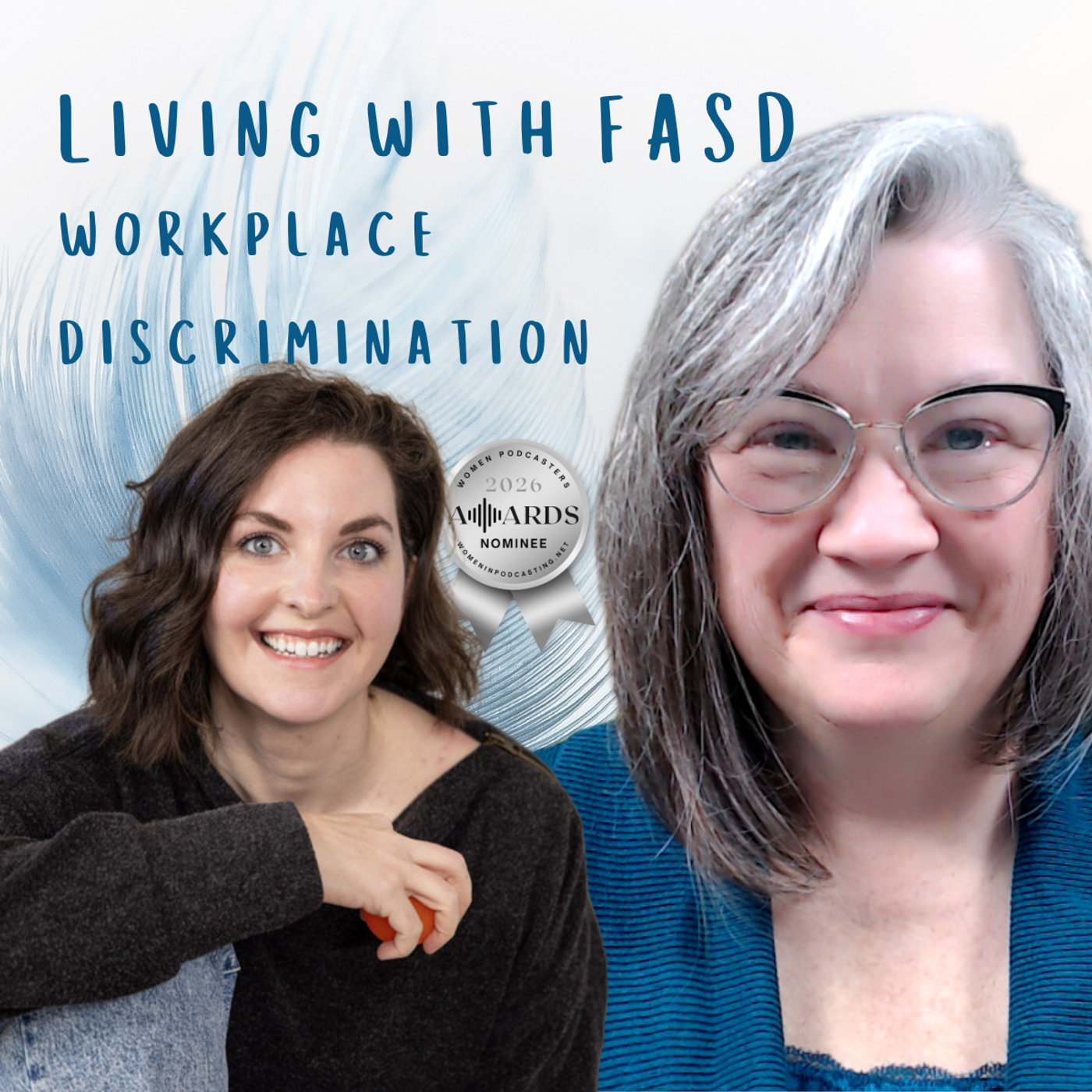
Living with FASD · Patricia Kasper
Workplace discrimination against neurodivergent individuals and those with invisible disabilities is a widespread reality, often occurring behind closed doors where HR policies meet individual needs. In this episode, I am joined by Julie Harris, who shares her powerful, lived experience of navigating seizures, workplace discrimination, and the EEOC mediation process. We dive deep into the legal realities of the Americans with Disabilities Act (ADA), specifically the often-misunderstood concept of "undue hardship" and the importance of the interactive process. Whether you are currently facing challenges at work or simply want to better understand your rights, this conversation provides the practical knowledge and encouragement you need to advocate for yourself confidently. Key Takeaways The Right to the Interactive Process: Employers are legally required to engage in an "interactive process" when you request an accommodation, working together to identify an effective solution. Demystifying "Undue Hardship": The burden of proof for "undue hardship" lies with the employer, not the employee. It has a specific legal definition involving significant difficulty or expense, and for large companies, costs under $500 rarely meet this threshold. The "TurboTax of Employment": Julie introduces her new, web-based tool designed to guide employees through the accommodation request process, generate templates, and flag potential retaliation, making advocacy more accessible. Dismantling Internal Ableism: Julie opens up about the importance of addressing the ableism we often direct at ourselves—judging our need for rest or our changing capacity—and reframing accommodation requests as essential tools for success rather than signs of a deficit. To get a copy of Julie’s book, Boldly Belong: The Power of Being YOU in a Disabling Society, go to https://a.co/d/0j8gvk6v To reach Julie, email her at [email protected] As always, if you enjoyed today’s episode, Invisible Disabilities & Workplace Discrimination: Challenging the System with Julie Harris, then please remember to like, subscribe and share this podcast episode, because the more it is shared, the more people can find Living with FASD and learn more about the many and varied effects of Prenatal Alcohol Effects. If you want to reach Patti to discuss either FASD training or life coaching: https://calendly.com/kaspertrainingandcoaching/consultation . Email Patti at [email protected] To get Patti’s book, Sip by Sip: Candid Conversations with Adults Living with FASD - www.books.by/yourfasdcoach Resources EEOC (Equal Employment Opportunity Commission) - https://www.eeoc.gov/ Ernest Employee - Advocacy Tool (Upcoming) - https://ernestemployee.com LinkedIn Profile of Julie Harris - https://www.linkedin.com/in/julie-harris/ Disability Rights and Law Resources - https://www.ada.gov/
Julie Harris: I got a merit-based raise, was consistently told that I was doing incredibly well, that I was learning really fast. high visibility projects. I was a program manager at the time and I had started to be given many of the highest visibility projects, was asked by somebody three levels above me to work on a project with him specifically. And then at that time I started to have more frequent seizures and Patti Kasper, Your FASD Coach: come up. yeah, yeah. Right? Detours can be at least entertaining sometimes. All right, so, yeah, so what did you do with all that? You know, you were, Julie Harris: while I'm starting with reasonable accommodations, it's going to go to all legal rights. Patti Kasper, Your FASD Coach: Well, good for you. Julie Harris: Well, it's all related. It's not off track. It's just a little curve in the road. Patti Kasper, Your FASD Coach: Okay. That's awesome. That's awesome. I am so excited for your journey. I think with that note though, I just, wanna thank you for coming on, living with FASD. And I think I'm gonna air this probably on the weeks that I do FASD within the broader neurodiverse community because... Julie Harris: Thank you, thank you. Yep. Me too. Patti Kasper, Your FASD Coach: Mm-hmm. Julie Harris: Well... I usually can manage them quite well. And even if I have them, don't let it interfere too much with my work, happen to be mostly at the nighttime and I can manage them fairly well throughout my life. Well, it started to have more frequent ones and in ways people who have seizures know that sometimes it's not predictable where and when they happen. Sometimes there are things you can control. Sometimes there aren't. Patti Kasper, Your FASD Coach: wanting Julie Harris: have a dog who recognizes when I have a seizure, lets me know when I'm gonna have a seizure so I am safer with my dog around. So I went to HR and I let them know that, you know, asked them, could I get an accommodation to bring my dog into work? And the immediate response without any hesitation was, what? You've been fine up to this point, why do you need it now? Patti Kasper, Your FASD Coach: to start having, what's your dog's Crack. Good name, good name. So you were wanting Crash to come to work with you and they were making you jump through hoops. Yeah, what happened after that? Julie Harris: Crash. Patti Kasper, Your FASD Coach: Yeah. Yeah. Julie Harris: Yes. Patti Kasper, Your FASD Coach: Definitely folks with ADHD and autism and head injuries and cerebral palsy, all different manner of challenges. We can all benefit from what you have to offer. And I'm so grateful that you came to spend the time with me. Julie Harris: Well, it's interesting, Patti Kasper, Your FASD Coach: No. Julie Harris: they weren't even making me junk through hoops. They just started treating me like I was lying. So the accommodation request basically didn't even get processed at all because it was just assumed that I was lying. So I immediately got put on a performance improvement Yes. Patti Kasper, Your FASD Coach: Whoa! Julie Harris: immediately, I mean within days. and in the performance improvement plan, a lot of it was about, I mean just very vague things. And so it was like basically an impossible to meet. Patti Kasper, Your FASD Coach: Wow. Julie Harris: Agreed, thank you. I was very, happy to be here and look forward to being connected and communicating even more. Patti Kasper, Your FASD Coach: soon. Mm-hmm. Julie Harris: plan, performance improvement plan, and the goal, of course, as many people know on both sides of the table that the goal is to manage the person and so they're not supposed to be Patti Kasper, Your FASD Coach: Yeah. Mm-hmm. Yes. Thank you so much. Okay. Julie Harris: You are so welcome. Thank you. Bye. Patti Kasper, Your FASD Coach: Welcome back to Living with FASD. Today I am joined by Julie Harris, who has a remarkable story for us and also some fantastic resources on just a lot of knowledge about how to advocate for ourselves and what we need in the workplace. Julie, I'm so glad I stumbled into you on LinkedIn and I just as I was sharing with you a few minutes ago, I couldn't find you again when I was looking for you and I find that so odd. But at least I saw you when I needed to see you. So for that, I'm very grateful and I'm so glad you could join us on the podcast today. Welcome to you. Julie Harris: Thank you, thank you. I am happy to be here. And it's funny, we stumble upon what we need when we need it. Oftentimes that's how it works. Patti Kasper, Your FASD Coach: Yeah, yeah, that is how it works. So I had reached out to you because I saw your story on LinkedIn about some workplace discrimination. And I know that's something that people in the FASD community struggle with. And really any neurodiverse space, we face this issue a lot when our disabilities are invisible, right? Or at least hidden. you know, unless people know what to look for, they often don't see much of anything. So, yeah, can you start maybe by sharing with the audience, like, what's your story? What was that all about? Julie Harris: Yes. Well, the story of the discrimination and accommodation experience in the workplace. So I had started a job and learned quickly. Two and a half months in, I got a merit-based raise, was consistently told that I was doing incredibly well, that I was learning really fast. They're surprised at how well I'm doing. I had already started to be given Patti Kasper, Your FASD Coach: Mm-hmm. Julie Harris: many of the most high visibility projects. I was a program manager at the time and I had started to be given many of the highest visibility projects, was asked by somebody three levels above me to work on a project with him specifically. And then at that time I started to have more frequent seizures and Patti Kasper, Your FASD Coach: Okay. Julie Harris: I usually can manage them quite well. And even if I have them, don't let it interfere too much with my work, life. Mine happen to be mostly at the nighttime and I can manage them fairly well throughout my life. Well, it started to have more frequent ones and in ways people who have seizures know that sometimes it's not predictable where and when they happen. Sometimes there are things you can control. Sometimes there aren't. Patti Kasper, Your FASD Coach: Mm-hmm. Julie Harris: have a dog who recognizes when I have a seizure, lets me know when I'm gonna have a seizure so I am safer with my dog around. So I went to HR and I let them know that, you know, asked them, could I get an accommodation to bring my dog into work? And the immediate response without any hesitation was, what? You've been fine up to this point, why do you need it now? And that question asked by somebody in good faith could have not been a bad question, it could have been like, huh. Patti Kasper, Your FASD Coach: Yeah. Yeah. No. Yeah. Julie Harris: curious what makes you need it now? And it could have been a friendly, albeit not the best worded question, but it could have been nice. But this person, it was very obvious that it was, I believe that you're lying. This doesn't seem real. And then the follow-up questions did show that. Well, you look fine, you do your job well, how can somebody, and this is something that I know so many people experience, who are competent, who do their job well, well, you do your job well. Patti Kasper, Your FASD Coach: Yeah. Yeah. Yeah. Yeah. Mm-hmm. Yeah. Julie Harris: how could you really need an accommodation? And so it seems like I just wanna bring in my pet dog to work. Patti Kasper, Your FASD Coach: Yeah, I that is so I I'm resonating with this so much because I had to jump through so many hoops to bring my service dog to work. You know, when she was placed with me in 2012 and then at one point there was a shift in upper managers and all of a sudden it was you need to supply an air freshener just in case. We don't want our office smelling like dogs. No, I think HR has to. It just went on and on and on. was like. What do I do with that? Julie Harris: Right? Isn't it? It's so ridiculous how difficult HR can make even HR who in some ways can be very supportive and friendly at companies who typically HR is known to be friendly. It's so interesting how you bring up disability and accommodations and especially ones that, I mean, it's true for visible for the more apparent disabilities as well. It's just, you get that right up front, you know? You have to deal with a lot of that right up front and then... Patti Kasper, Your FASD Coach: Right? Yeah. Mm-hmm. Mm-hmm. Yeah. Julie Harris: the ones that aren't as apparent, all of a sudden, they're not supportive anymore. They start to treat you like, I mean, it's wild, well, which we all know it's wild only because it shouldn't be that way, but it's incredibly common. Patti Kasper, Your FASD Coach: Yeah. Yeah. Yeah. Yeah, now I had to talk with the clients that they assigned me. I had to talk with them ahead of time before the assignment was permanent and make sure it would be OK for me to bring my dog into their home because they have to say so. That's not a public space. And I had one family tell me, oh, yeah, no problem. And I was on my way to their house to do the first adoption assessment, pre-adoption assessment. they were like, they called and said, no, can't bring a dog to our home. I said, then I will have you switch to a different social worker. And I got so much grief over that. And because all of a sudden it was so inconvenient. And I'm like, I don't know what to tell you. You know, and the client said, well, just leave her at home. No, that's not an option. Well, people do fine all the time. You just check your sugar more often. No. No. Yeah. Yeah. Yeah. Yeah. She was amazing though. If I had to go out in the, you know, cause social workers, spend so much time out in the field and Julie Harris: Right. as if you don't actually need the dog. Just leave your dog at home. Like that's not how it works. Patti Kasper, Your FASD Coach: She was so far ahead of the technology at the time. She alerted 45 minutes before the technology would about impending lows. Their noses are just amazing. And if she knew my sugar was going to crash, she would refuse to get in my car. Julie Harris: Yes. Patti Kasper, Your FASD Coach: It's like, you can take yourself out, mom. You're not taking me with you. Julie Harris: This isn't safe for me. I'm not getting in there with you. Patti Kasper, Your FASD Coach: Right? So, all right, I really took your story way off track. So, that tends to happen when service dogs come up. yeah, yeah. Right? Detours can be at least entertaining sometimes. All right, so, yeah, so what did you do with all that? You know, you were, Julie Harris: Yeah. Well, it's all related. It's not off track. It's just a little curve in the road. Yep. Well... Patti Kasper, Your FASD Coach: wanting to start having, what's your dog's Crack. Good name, good name. So you were wanting Crash to come to work with you and they were making you jump through hoops. Yeah, what happened after that? Julie Harris: Crash. Yes. Well, it's interesting, they weren't even making me junk through hoops. They just started treating me like I was lying. So the accommodation request basically didn't even get processed at all because it was just assumed that I was lying. So I immediately got put on a performance improvement plan. Patti Kasper, Your FASD Coach: Whoa! Julie Harris: immediately, I mean within days. yeah, and in the performance improvement plan, a lot of it was about, I mean just very vague things. And so it was like basically an impossible to meet. Patti Kasper, Your FASD Coach: Wow. Mm-hmm. Julie Harris: plan, performance improvement plan, and the goal, of course, as many people know on both sides of the table that the goal is to manage the person out and so they're not supposed to be achievable. Well, during our meetings, I asked, can you please give me specific things? They gave me some specific goals that were even for as good as I was at my job, very, very high to reach, setting me up to fail. Well, I met them. I met those goals. Patti Kasper, Your FASD Coach: Mm-hmm. Mm-hmm. Mm-hmm. Julie Harris: then what happened? I got put on a performance improvement plan immediately again. Immediately again, a second one. Immediately. And so the accommodation process isn't even occurring. I'm getting put on a PIP, got put on another PIP a month later because I passed the first one. a month later, which was how long the first PIP was. And then, Patti Kasper, Your FASD Coach: You're right on. Wow. Yeah. Julie Harris: That one, it was interesting because the first one was about communication. The second one was about meeting deadlines, which at that point I had not missed a deadline at all. Not one single deadline had I missed. Well, I made a post about this on LinkedIn just, I think, last week, but when I kept meeting deadlines, what are they going to do? There's this claim that I don't meet deadlines. I'm going to pass another PIP. So, seizures were getting worse. I... Patti Kasper, Your FASD Coach: you Julie Harris: My doctor was like, you can't, this isn't sustainable, you have more stress now, I recommend you take some time off work. So I took a two week medical leave. And during that time, I had a really big project that was due that had 13 different people working on the project team from all different departments. And it was set to complete during the time that I should be off on my two week leave. Well, that's no big deal. Patti Kasper, Your FASD Coach: Mm-hmm. Julie Harris: as any program manager knows, if things are set up right and it's near the end, it should go smoothly and you have things in place, everyone knows their job. I had a program manager who could overlook it and make sure that things were going smoothly, but the project team, incredibly competent, capable, quality, it was going to end perfectly fine. Well, a few days into my leave, I get a text message from a coworker that was a screenshot. Patti Kasper, Your FASD Coach: Mm-hmm. Julie Harris: of an email from my boss to this person who's on a completely different team and said, you need to stop this work immediately. Julie needs to complete this project on her own when she returns. Okay, weird, but fine. And everyone knew that she was starting to treat me differently. It was very obvious. I was being treated very differently from her at this point. Well then, what did she do? Patti Kasper, Your FASD Coach: Wow. Nothing. Mm-hmm. Julie Harris: She used that missed deadline because she told the whole project team to stop working on it. She used that missed deadline as evidence that I missed deadlines. Isn't that funny? But like she put it in doc, she put it in email. So there's evidence of it. Patti Kasper, Your FASD Coach: Against. Yeah. where a lawyer could just eat her for lunch. Julie Harris: yeah. I mean, I didn't need a lawyer. I went to the EEOC by myself, but yeah, absolutely. Patti Kasper, Your FASD Coach: Okay. How did that turn out? Julie Harris: the EEOC, that's how I learned everything that I learned. At this point, I was like, all this feels kind of wrong. So I started Googling things, looking up what are my rights. It's the first I really learned how in depth the disability law, disability employment law actually is. And then I learned you can file with the EEOC, so I did. I... Patti Kasper, Your FASD Coach: Mm-hmm. Mm-hmm. Julie Harris: The first step in the EEOC is always mediation. They offer mediation to both sides and both of us agreed to it. So my mediator was incredible, called and let me know what to expect moving forward and said, the day of mediation or on this whatever next time we're gonna talk, I'm going to give you 15 minutes to talk about the past, 15 minutes. Patti Kasper, Your FASD Coach: Mm-hmm. Julie Harris: to talk about what you want and then we're in the present, so what, the future, and then we're in the present and that's when mediation starts. And he said, don't go over 15 minutes, it's only 15 minutes, the past is not the most important thing, I know that it feels most important to you but that's not the most important thing, the future, how we can get this resolved, so you have 15 minutes. So I wrote everything, I made sure that I had everything, I rehearsed it, I timed myself, I timed myself to. Patti Kasper, Your FASD Coach: Mm-hmm. Julie Harris: speaking quickly, I time myself speaking slowly. I was like, he made it so clear that it's only 15 minutes. I have to make sure that I get this all out in 15 minutes. Well, when you hear something like, they said that I missed deadlines and I hadn't missed any yet. So then my manager, while I was away, told the project team to stop working on it and then use that as evidence. And he said, wait, she did what? No, I mean, and it was actually unbelievable because, Patti Kasper, Your FASD Coach: Yeah. Mm-hmm. Julie Harris: And then he would ask, did you put, do you have evidence of that? Yeah, I do, yes. I have an email, I can send it to you right now. And I didn't know much of the process at this time, so I'm just thinking this is just a normal human to human conversation. And it was in some ways, but a lot of what he asked was to validate my, or to test my credibility. Do you have evidence? yeah, I can send it to you right now. So not only was I saying I have it, but I was preemptively offering it up, you know? And it... Patti Kasper, Your FASD Coach: Mm-hmm. Julie Harris: It was very clear that I was organized, that I really had this evidence. So anyway, the 15 minutes that he made very clear would not be longer in any circumstances turned into an hour and a half because of him, because of his questions. He was asking so many things. Patti Kasper, Your FASD Coach: Yeah. Julie Harris: Yeah, and then at the beginning when I said the number that I wanted and that was after I had talked to a lawyer and she said, I can't take this case, but I would recommend you don't go in lower than this number. So I said that number, which was a few hundred thousand dollars and he just kind of laughed at first and was like, no, no, no, you need to lower your expectations. The average is 10,000. The average settlement amount is I said, yeah, I know, but I have a good case. And he was like, everyone thinks they have a good case. Well, then when he heard it, pushing back on my number. When he actually heard it and realized, shoot, like this, and who knows, didn't, anyway, so then we get into mediation. On the other side of the team was a legal team at the company that I worked for at the time that, I mean, I was still employed while I was going through this. So I was lucky enough to still have a job, to still have pay, to still have insurance, to still have all of this at the time because Patti Kasper, Your FASD Coach: Mm-hmm. Yeah. Julie Harris: They knew at that point if they fired me, it would be very clear retaliation. Well, so in mediation, they came in offering one month of pay, which for me at the time was, I don't know, seven or 8,000 or something, I don't know, something like, or three weeks of pay. I don't remember exactly what it was, but it was such an insignificant number for what... Patti Kasper, Your FASD Coach: Yeah. Mm-hmm. Julie Harris: it had been. So we went back and forth with the media. Patti Kasper, Your FASD Coach: Yeah, because they caused detriments to your health. Julie Harris: yeah, yeah, seizures at this point got so much worse. And it got to the point, and said to the mediator, said, and I have missed deadlines now. And he's like, yeah, I believe, I'm surprised it didn't happen sooner. And so the mediator, they're well versed in this, they're trained. And I was like, at this point, I am missing deadlines because my health is bad, I'm stressed, I'm fighting the discrimination and retaliation while also trying to do my job and being more scrutinized. Patti Kasper, Your FASD Coach: That Mm-hmm. Julie Harris: than anybody else on my team. anyway, it ended with 60, like with, with about 64,000 in cash and then some other things that ended about, you know, 130 or 140. Patti Kasper, Your FASD Coach: tips. Julie Harris: something like that total with all of it added together, all of the different benefits that I got. That's what I ended up getting. And now that I'm actually saying this out loud, you sign a non-disclosure and my mediator said, well, as long as you don't specifically like give specific names, talk about the specific thing, like you can talk about your experience and generalities. Is the amount specific and is that, that's a question. I don't know. I'm gonna have to look it up, ask a lawyer. Patti Kasper, Your FASD Coach: and MDA. Yeah. Julie Harris: Anyway, so that's how it ended, but it ended with like, hours back and forth, and then they never got to a number that I was comfortable with. And then like, I don't know, four days later, the mediator called me on New Year's Eve one day. And I mean, not New Year's Eve, Thanksgiving Eve, the day before Thanksgiving, and said they came back with an offer, this isn't reopening mediation, this is just basically a take it or leave it, do you want it or not. Patti Kasper, Your FASD Coach: Okay. Julie Harris: And so I thought mediation was over and we were gonna have to go to the next stage. And that's when the settlement actually came in, which still was lower than I would have liked, but to have it over and to not have the stress anymore, I accepted it. Patti Kasper, Your FASD Coach: Mm-hmm. Yeah, yeah. And I think most people would really have to balance that. I've had several thoughts strike me as you relate all this. And the first is like, it really sounds as if mediators are supposed to be the neutral arbiters. Doesn't sound like he was. It sounds like he was more on the company side. Julie Harris: Yes. So. Patti Kasper, Your FASD Coach: than the EEOC side, right? Julie Harris: Maybe, but he's gonna, I really liked him and he did seem neutral in the sense that you're going to both sides and telling both sides the flaws in their case. You're going to both sides and telling both sides, so he did it to the other side as well. Now, I don't know how much you know about the mediation process, but I wasn't ever face to face or this was over Zoom and phone calls, but I was never in the same, even Zoom meeting or on the same phone call as. Patti Kasper, Your FASD Coach: Okay. Okay. Gotcha. Okay. Julie Harris: the legal team for the company. It was always me talking to the mediator. The mediator would relay anything relevant to the other party. He would say where I stood at that point and then come back to me and would just go back and forth. Well, there were times when he would come back and say, I told them, I asked them if they had ever even met you or talked to you. And when they said no, I said, it's very obvious because the person that you are describing is not at all the person who I'm talking to. Patti Kasper, Your FASD Coach: Mm-hmm. Mm-hmm. Okay. Mm-hmm. Yeah, yeah. you Julie Harris: And this is where I got to know some of the inner workings and ever since then I've met EEOC mediators and investigators and people who actually do this and learn parts of their trainings. And he, during our first call, he interrupted me a lot and he told me that I was wrong. he didn't seem, I didn't think that he was rude at all. It just seemed like he was a more direct, get to the point kind of person, which I don't mind at all. But. Patti Kasper, Your FASD Coach: Thank Mm-hmm. Julie Harris: I find out later that he was doing all of that to try to get a rise out of me because he had been told from the employer that I was angry, that I was aggressive, that I was reactive, that... Which I'm an intense person, so it's not to say that I've never raised my voice, but what they're describing is this off the wall, cannot control herself at all person. Exactly. And so he... Patti Kasper, Your FASD Coach: Okay. Wow. Psycho employee. Yeah. Julie Harris: during the mediation, he came back to me and relayed to me that he asked them if they had ever met me and told them, the person you're describing and the person that you think you're up against is not the person you're up against. I have tried to get her to react. I've been incredibly rude to her. I've been dismissive to her. I've interrupted her. And she has yet to react. She maintains her composure. She's respectful. She's well-spoken. And he said, quite frankly, judges and juries will love her. I don't think that you understand. And so he wasn't on, neutrality isn't gonna seem neutral if you don't understand how it works and if you don't know that they're doing it to both sides. So he's telling them where their case is weak. He's telling me where my case is weak. He's telling me where I need to give in a little bit. He's telling them where they need to give in a little bit. That's the point of a mediator. They're trying to get both parties to come to the middle. And so at first, Patti Kasper, Your FASD Coach: Yeah, yeah. Yes. Yeah. Okay. Mm-hmm. Yeah. Julie Harris: He's not wrong to say, you need to bring your expectation down because the average is 10,000. That is the truth for most people. And I did get less than I went in, but not even close to what he originally said. But once he heard my story and once he saw that I had the evidence and once he saw that they were the ones that couldn't back up their side and I could back up my side, then he, and at one point he told me, he said, Patti Kasper, Your FASD Coach: Mm-hmm. Head proof. Julie Harris: you have to think about if this goes to trial and she will be a great witness. She is the ideal witness. She is the witness that lawyers love to have, you know, and that was basically the last thing. And then they ended up coming back. They still didn't come back with something that was reasonable to me, but that was basically the last thing. And they must have taken that seriously because, you know, four days later they come back with another offer. Patti Kasper, Your FASD Coach: Mm-hmm. Yeah, yeah, yeah. So during this time you kept working there, did they at least change your supervisor? So really? Julie Harris: No, well, well, here's something that's funny. So they didn't. And then a few weeks before mediation, I started reporting directly to my supervisor supervisor. And I was like, I told everyone in my life, my family, my coworkers, I was like, this is so good. This supervisor, he's more direct. He doesn't really add meaning to things. We communicate well. Some people think that he's mean and, you know, an ass, but. I actually really like how he communicates. And so this is gonna be so good. He's just gonna take what I say, literally it's gonna be so great. When I started working with him, he would take what I said to my boss. So he was basically now just an intermediary and he was trusting what she was saying. And when she was saying that I was doing all of these horrible things, missing all these deadlines that I didn't miss, know, he's believing her and he's taking what I say to her. Patti Kasper, Your FASD Coach: Mm-hmm. Julie Harris: And then she's saying, no, that's never happened. So it wasn't as if I was actually reporting to him. It was that I was going to him and he, because to him, he thought that he just, it was just personality clashes. Somebody just needed to be the intermediary to have better communication. He didn't realize, and he's she's still employed there to this day. She's had a lot of other issues with a lot of other people. People have called me and said, hey, I filed with the EEOC because she's problematic to me too, but. Patti Kasper, Your FASD Coach: Yeah. Yeah. Yeah. Yeah, yeah. Yeah. Mm-hmm. Wow. Julie Harris: Anyway, so they never changed it. They just thought that they gave me someone else to communicate with because we communicated differently. Patti Kasper, Your FASD Coach: Yeah. Well, at some point, hopefully they'll take another look at her because she's costing them a lot of money. If there are several EEOC cases with one supervisor in common. So tell me, you know, if we probably should back up to the beginning, what, so you wanted to bring crash to work with you because, Julie Harris: Hopefully, but I... Yeah. Yep. Yes. Yes. Patti Kasper, Your FASD Coach: Don't eat my chair. He's still a puppy. eats everything. I don't have a single piece of furniture that has not been chewed upon. Julie Harris: Hilarious. Wow. Patti Kasper, Your FASD Coach: Anyway, at least he's on the floor. If he hurls his cookies, it won't be on my lap or the keyboard. Julie Harris: Yes. Yes. Patti Kasper, Your FASD Coach: so what, what, what led to, you know, your, your seizure disorder, you know, for, for the, the audience, like, is this, have you had medical issues that, or disability issues that you've always struggled with or, you know, how does that play into things? Julie Harris: Growing up, as far as I know, there were some things, but they were just some oddities that were like, that's just Julie. Like I passed out a lot and it was, okay, well she passes out. And then it was just like, passing out is not a super abnormal thing. So they didn't look into it a whole lot. And then by they, mean doctors. And you just try to avoid passing out. And later. Patti Kasper, Your FASD Coach: Mm-hmm. As if anyone enjoys that. Julie Harris: Right, right, right. So one day I was visiting my brother who just got in a motorcycle wreck. I was visiting him in the hospital and waiting for my parents to come. Me and my sister lived the closest so we were in the hospital the soonest and nobody knew how he was going to do. I don't know if it was like to the level of do we know that he's gonna make it or not but we didn't know how bad it was. And so my parents were on the way but they're about an hour away going in to visit. Patti Kasper, Your FASD Coach: You got there first. Yeah. Mm-hmm. Julie Harris: And the doctors are wheeling him in and motorcycling. I mean, he had a helmet, but the helmet was like cracked. He was wearing a biking jacket and it went up. And so he just, his whole back, like there was no skin on his back and he had a lot of broken ribs and stuff. And so they wheel him in and I don't remember any of this. This is all told to me, but they wheeled him in and I just passed out. And so I passed out, hit my head on the floor and hit my head. Patti Kasper, Your FASD Coach: Ooh. Was it because you saw something? mean, because, you know, we always joke about men, you know, they see blood, they pass out. Julie Harris: That's the guess. Yes, yep, yep. So that's probably what happened for me. Patti Kasper, Your FASD Coach: Okay, saw your brother in a state that no one should see their brother. Yeah. Julie Harris: Yeah, yep. So I hit my head in such a way that later on, any doctors who saw it, who saw my scans in the years after, just to be brought up to date to where I was, they would always ask me, well, what did you fall off of? And I'm like, what do you mean? Well, what did you, what were you standing on? My feet? No, and I wasn't trying to be an ass. That was me and my brain injured state at this point, you know? And so they were like, no, but what were you standing on? What were your feet on? Patti Kasper, Your FASD Coach: Yeah. Yeah. Yeah. Julie Harris: Okay yeah but what level? And I was like I don't know and I'm not thinking that they're asking you must have fallen out of a window or you must have fallen off of something high. I just passed out and then finally it gets to the point where they're like well no how far from the ground were you? I mean just my height. I just fell to the ground and then every single time they were surprised because the damage to my head shouldn't have been that bad you know. Patti Kasper, Your FASD Coach: Yeah. Yeah. That severe. Yeah. Yeah. Julie Harris: So I passed out instead of crumpling to the ground, I just fell straight back and all that power went to my head, had subdural hematoma, epidural hematomas, and had a midline shift that was supposed to require surgery, but my heart kept stopping. So they didn't take me, it wasn't stable enough for them to take me to surgery, which was fine. I didn't end up having brain surgery, which is great. And it did go down on its own, but then was in a coma for Patti Kasper, Your FASD Coach: Mm-hmm. Lord. Julie Harris: a little bit and then in the hospital for the next three months. And so as a result of that, seizures, forgetfulness, amnesia, you know, so that's what led to it all. Patti Kasper, Your FASD Coach: Truly. Yeah. So you've had a seizure disorder ever since, but that's not related to your history of passing out. they ever determine what that was about? Julie Harris: Correct. Correct. Well, possibly. They did later. We did a lot of tests trying to figure things out. They found that there's a in my heart and that could potentially be it. So they repaired that a few years after my brain injury and I still pass out. It's not as bad, but I still pass out. it's just, it could be an overactive vagus nerve. It could be a myriad of things, but. Patti Kasper, Your FASD Coach: like pots or something. Yeah. Yeah. I'm married. Julie Harris: I just eat a lot of salt. Patti Kasper, Your FASD Coach: So how, yeah, you ate a lot of salt. How does that help? I'm just curious. Julie Harris: it, it makes good question. It, just makes it so that I'm less likely to pass out. It's good question. should look into the mechanics of it. Yes. Yes. Very low blood pressure. Oftentimes, but it's not, but they know that that's not the reason, but it's, it exacerbates it. It is a factor. Patti Kasper, Your FASD Coach: Okay. So do you run through life with low blood pressure? Okay. So the salt would help with that. Yeah. And that, that exp... Okay. Yeah. And then stress, of course, takes its toll. And it exacerbates the seizures. Yeah, okay. So this whole thing is what, before we get into the meat of disability law and all that jazz, I'm just so curious, and I'm sure the audience is too. Julie Harris: Yes. Correct, yep. Patti Kasper, Your FASD Coach: After your settlement, how long did you work there? Julie Harris: Yes. no, usually almost always. I'm guessing that it's always, but I am saying almost because I don't know. Certainly if you come to an agreement with the company and you're still employed there, part of the agreement is that you separate. Yes. So I no longer as of the signing of that, I no longer worked there after the mediation. I was there a couple more days, which was surprising to some people who knew I had the mediation. Patti Kasper, Your FASD Coach: Mm-hmm. is to part ways. Yeah, okay. Gotcha. Julie Harris: But then all of sudden one day I'm just not coming back because we signed paperwork. Patti Kasper, Your FASD Coach: Mm-hmm. Yeah. Yeah. Yeah. Okay. All right. So, you know, and here's the crux of the episode, I think, is diving into what all we need to be aware of in terms of disability law. You know, that's quite the investigative journey. Yeah. So what did you learn? What should the rest of us know about Julie Harris: yes. Patti Kasper, Your FASD Coach: our rights for accommodations. Julie Harris: Yes, so I will start with the most relevant thing for many people and the most relevant thing in that situation was that you have a legal right to an interactive process. What's called the interactive process when you request an accommodation and the interactive process is where you and the company work together to identify what is actually needed and Patti Kasper, Your FASD Coach: Mm-hmm. Julie Harris: an effective solution, so the effective accommodation that works for both parties. That is not an option. absolutely, 100 % is necessary in every single situation. An example that I give is if you go in and you work at a zoo and you ask if you can bring in your service elephant. Well, a service elephant is pretty obviously not reasonable and it will cause undue hardship, which I'll get into Patti Kasper, Your FASD Coach: Mm-hmm. Okay. Yeah. Julie Harris: later what exactly that means. Patti Kasper, Your FASD Coach: Yeah. Julie Harris: But even then, it is the responsibility of the employer to engage and say, okay, well, we can't allow that. We can't have an elephant walking around even though it's a zoo. That's not safe for animals. It's not safe for our patrons. That's not safe for employees. However, what are the limitations that you experience and what else can we do that could help you do the essential functions of your job? Patti Kasper, Your FASD Coach: Yeah. Yeah. Julie Harris: And so there should be that discussion to identify other effective, and the key word is effective, accommodations. So that's not an option. If anybody, if any employer ever just flat out denies, which was the effective denial on my situation, they never said no, but they never engaged, that is already something that is a violation of the ADA. Now, I'm not a lawyer. This is just from my experience. This is from, you know, I'm not a lawyer, but. Patti Kasper, Your FASD Coach: Mm-hmm. Yeah. Mm-hmm. Yeah. Good disclosure. Julie Harris: Yes. Patti Kasper, Your FASD Coach: Good disclosure. Julie Harris: So number one, you have a right to an interactive process. Patti Kasper, Your FASD Coach: Yeah. Julie Harris: Number two, you have a right to an effective accommodation, so long as it doesn't cause a new hardship. Now I'm gonna start with the effective accommodation. A lot of people, employers especially, think that, well, we don't have to give you what you want, which is true, they don't have to give you what you want. But because they know that they don't have to give you what they want, they think that they can give you whatever they want, even if it's not equally effective. So something that I see really commonly Patti Kasper, Your FASD Coach: Hmm Julie Harris: is somebody who says, I'm really overstimulated in the workplace, I need to work from home. And they say, no, what overstimulates you? Is it sound? Well, just wear noise canceling headphones. Well, sure, that takes away one aspect of simulation in a little bit, and it doesn't even take it away, it minimizes it up touch. But it doesn't remove everything else. It's not equally effective as working from home in most scenarios. Some scenarios it might be, but... Patti Kasper, Your FASD Coach: Yeah. Mm-hmm. Mm-hmm. Right, right. Yeah. Yeah. Julie Harris: that's not equally effective. So you have a right to an equally effective or just an effective accommodation. And you have a right to keep pushing back and communicating to them, hey, this isn't effective for X, Y, and Z reason. And can we rethink this? we continue? And phrasing that I always find works really, really well here is to say why it's not equally effective for you, why it's not going to result Patti Kasper, Your FASD Coach: Mm-hmm. Go. Mm-hmm. Julie Harris: at you and then end by saying, look forward to continuing the discussion and identifying effective accommodations that work for all parties. Cause that shows your collaborativeness, but it also is you pushing back until you get what's effective. And then to undo hardship. This is something that's misunderstood a lot and by all parties, by HR, by management, by employees. Patti Kasper, Your FASD Coach: Yeah. Yes. Yeah. Yeah. Mm-hmm. Julie Harris: I hear a lot of times, well, they're just going to claim undue hardship and they get to claim that whenever they want. So there's no point in even asking. Well, no, it's up to the employer to, they have to prove undue hardship. Now that's of course only if it goes to court, but it's their responsibility. They're the ones who have the burden of proving undue hardship. And undue hardship has a very specific definition in the law, which again, I'm not a lawyer, but it's, Patti Kasper, Your FASD Coach: Hmm. Mm-hmm. Julie Harris: a significant difficulty or expense. And the expense is not just, we don't have budget for it. We don't have budget for this small team, especially if it's a billion dollar company or even a multi hundred million dollar company. It's going to be very, very, very unlikely that anything when it comes to cost, especially cost under $500 is going to ever rise to the level of undue hardship. But then what about the significant difficulty part? Patti Kasper, Your FASD Coach: Mm-hmm. Yeah. Yeah. Julie Harris: significant difficulty really comes down to does it fundamentally change the work of the company? Does it fundamentally change how things are done? Does it require significant changes like having an elephant, service elephant come into the zoo? Well, you'd have to rebuild everything. That's significant difficulty, but it's also health risks, right? Health risks would be an undue hardship. Patti Kasper, Your FASD Coach: Mm-hmm. Mm-hmm. Yeah. Yeah. Yeah. Yeah. Julie Harris: Most accommodations are free. The ones that aren't, most of them are under $250. They're not going to the rise to the level of undue hardship. undue hardship is not, list a few things that it's not from EEOC guidance, from various legal cases, but it is not, well, we haven't done that before. It's not, it's against Patti Kasper, Your FASD Coach: Mm-hmm. Mm hmm. Yeah, because this is the way we've always done it. Yeah, I remember when when I first got into the service dog world, I remember reading a lot of cases about people using miniature horses as service animals and and a lot of the pushback against that. And, you know, I can understand that. Julie Harris: Yeah, all of the same. Exactly. Not on the dark shift. Yes. Patti Kasper, Your FASD Coach: I don't think I would be very happy seeing a horse in a restaurant. I think I would naturally be very surprised to see a horse fitting in an airplane. So balance issues, I'm assuming that's why someone would choose a service animal that large would be bad. Julie Harris: Yes. Patti Kasper, Your FASD Coach: I struggled to grasp that, but that's just me and my limited experience. Dog was more than enough for me. But I, my gosh, you know, so I got a lot of pushback at work, you know, from my immediate team, nothing but supportive. They were fantastic. I remember at one point going to the finalization of an adoption. Julie Harris: Agreed. Agreed. Patti Kasper, Your FASD Coach: and this sweet little girl, just, I adored her, she adored me, adored the dog, but any time she had been pulled out of preschool, it was because she was being moved from home to home to home, right? And that happens a lot of times for neurodevelopmental kids, Noradivergent kids, know, foster parents just aren't trained. Julie Harris: Yeah. Patti Kasper, Your FASD Coach: And it just ends up in repeated disruptions. So the day before her adoption, her preschool class had a party for her and said, we'll see you later. She thought she was gonna be moved again. And she shut down. And I mean, she had picked out her. Julie Harris: Awesome. Yeah. Patti Kasper, Your FASD Coach: She had been looking forward to the adoption. She picked out her outfit. And even when her mom was putting this very special dress on her, she just was so sure she was being moved. And court had never been a good thing for her. And she was just so shut down at the courthouse. You know, I found her mom and I'm like, where's your daughter? And she was down on the floor underneath the seats. Julie Harris: Yes. Yeah. Patti Kasper, Your FASD Coach: And I just said, Sally, take care of her. And my, my dog got next to her and then there she was sitting on the floor with her armor on my dog. And it just brought her back to a place where she could enjoy the rest of the day. But you know, they serve such a multitude of benefits for, you know, aside from becoming an office mascot. Julie Harris: Yes, yes. Patti Kasper, Your FASD Coach: Unofficially, but you know, it's amazing the pushback I get in the community. You know, when a disability is invisible, there's pushback against accommodations. You know, I don't know how many people would say, are you training this dog for some little kid? No, she works for me. And it just, it's amazing to me. know, kids are so much better than grownups. when it comes to how to interact with service animals, but how to respect people that have needs. That's one thing I think the schools these days are getting right. But I think I got a lot more pushback from the grownups. So what are some of the other rights that we have in terms of Julie Harris: Yes. Patti Kasper, Your FASD Coach: our disability rights. So effective accommodations, interactive. I'm so sorry. Julie Harris: You got me distracted with the foster story because I fostered and I had two girls and it's my only regret in life that I didn't end up adopting that I was planning to, but I had this whole, but I'm single and I'll probably never be married because it's just not a goal or I don't care. they won't have Patti Kasper, Your FASD Coach: Mm-hmm. Julie Harris: another parent and in my mind at the time that was so significant and important and the judge said, hold on, we're gonna go off the record for a second. And when I told her this, know, to, they were about to be moved to a permanent family who was going to adopt them. And she said, I don't usually see changes this significant with kids. This is great. You have done amazing with them. You don't, you can do it alone. You proven it because you've done it, you know. what you're saying, I understand it and I respect it and also basically you're wrong, you know? And she was so right and I just didn't see it at the time when I was fairly young, I was only 27 which for that to me, it was, and it was my brain injury too, like it had only happened seven years prior so it wasn't even like I was at 27, 27. Anyway, so I was just thinking about that where it's my only regret in life that I didn't adopt them. Patti Kasper, Your FASD Coach: Yeah. That it. Yeah. Julie Harris: But court, yeah, and then, so they got moved. And then you're talking about how sad it was that she thought that she was getting moved and, you know, because of, it's okay. It's okay, nobody can ever know, but it's something I've basically come to terms with, you know, and it's way worse or harder for the kids than for me, but. Patti Kasper, Your FASD Coach: I'm sorry. I didn't mean to trigger you. Yeah. Yeah. Yeah. Julie Harris: You never want to put that on somebody and that you are the reason for somebody's trauma that you didn't stay in their life, that you didn't, you know, anyway. Patti Kasper, Your FASD Coach: Yeah. Julie Harris: Rights. So a right to... Patti Kasper, Your FASD Coach: Yeah, some, you know, people use, because I don't have biological children either. you know, people are like, oh, but you're, you have so many kids in your life, right? As a social worker. Yeah, that's just not the same. It's just not the same. It's good that people smile when I come, but yeah, it's not the same. Julie Harris: Yep, it's not. Yeah. Yep. Patti Kasper, Your FASD Coach: Yeah. So what else did you learn in your journey because of all this? Julie Harris: Well. I know the question partially is about the rights and stuff, but really I've learned that this isn't rare and that many companies do this intentionally. Some companies genuinely don't know the law, they don't know the ADA very well, they don't know employment law very well, but many do and they only treat you the way that they do because they know that you likely do not know your rights. And so the biggest, most significant change that I see Patti Kasper, Your FASD Coach: Yeah. Yeah. Mm-hmm. Yeah. Julie Harris: give more positive results is using language that is in the ADA, which is the Americans with Disabilities Act, using language that is in that showing that you know your rights and you can do that in a very professional, collaborative, not aggressive because I was always accused of being aggressive in my communication. You can do it in ways that aren't going to be perceived that way yet still garner the respect. Patti Kasper, Your FASD Coach: Mm-hmm. Yeah. Mm-hmm. Yeah. Julie Harris: from HR, from the legal team, because once you show them that you know your rights, they treat you completely differently. only can get away, companies get away with treating employees so poorly because they do not know their rights. And that's the biggest thing that I'm working on changing is not only... Patti Kasper, Your FASD Coach: Mm-hmm. Mm-hmm. Yeah. Yeah. So how are you doing that? Julie Harris: Well, for five years I've been doing it manually, helping people one by one, which is not the most, it's effective for the individual, but it's not effective for the grand scheme of things. So I recently built a tool and it will be an app right now. It's just a web-based thing. takes a lot of effort to get it into like the Apple Store and the Google Store. And so I'm working on that, but I built a tool. Patti Kasper, Your FASD Coach: You Right. Julie Harris: that it's basically like the turbo tax of employment, right? Starting with reasonable accommodations. So you go in, you give information about your scenario, you answer, the tool asks the relevant questions. So you don't have to know, you don't have to study your rights. You don't have to know those things. It asks you the right questions and then pops out a template to communicate to your employer, whatever your stage is. And it also, Patti Kasper, Your FASD Coach: Mm-hmm. All this. Yeah. Yeah. Julie Harris: has little question marks like want to learn more? Why do we ask this question? If it flags something that could potentially be retaliation, it will say something like, remember that retaliation is this. If your company could do this, that's potential retaliation. It'll tell you it's not a legal tool. It's just something that really helps you know the rights that are relevant to you at the right time. And then if you do need a lawyer, yes. Patti Kasper, Your FASD Coach: Mm-hmm. Mm-hmm. Yeah. And communicated effectively. Yeah. Julie Harris: Yes, Patti Kasper, Your FASD Coach: Yeah. Julie Harris: and you get really good results. People who use this tool or who use me, which is the same, I basically put myself into a tool. If you start with it, I have a 92 % accommodation request approval rate where, yeah, I'm like, this is effective, it's good. Thank you, thank you. I'm really, Patti Kasper, Your FASD Coach: Yeah. Wow! That's fantastic, Julie. That is fantastic. Julie Harris: Yeah, when... Patti Kasper, Your FASD Coach: So how can people reach you? Julie Harris: they can on LinkedIn, which we finally connected there, on LinkedIn at, Ernest employee.com E R N E S T employee.com, which is where I'm launching this July 1st. have done the first cohort of users and improved it. And I'm watching to the whole group July 1st, I mean, June 1st, and you can sign up for a wait list there and then. Patti Kasper, Your FASD Coach: Okay. Yes Okay. Julie Harris: email which I'll give to you and you can put in the notes as well but those people yep Patti Kasper, Your FASD Coach: Mm-hmm. It'll be in the show notes. Yeah, yeah. I'll definitely put those links into show notes. Have you written a book or anything like that? Julie Harris: Oh, I have. wrote a book called... I forget these things. There's so many things. Patti Kasper, Your FASD Coach: You Honestly, peeps, I did not know, but being an author myself, it's a question I ask. Julie Harris: Hahahaha That's funny. That's a story too, how that even came about because of LinkedIn, because of me talking about things on LinkedIn. A editor reached out to me and asked if I want to write a book, but the book is called Boldly Belong, The Power of Being You in a Disabling Society. Patti Kasper, Your FASD Coach: Okay. Okay. my gosh, I love that. Yeah. Julie Harris: Yeah, it's, I'm, it came completely unexpected Patti Kasper, Your FASD Coach: Yeah. so your book is available. Julie Harris: Anywhere which is where I typically prefer people because it supports small bookstores. Yep, exactly. But anywhere books are sold, you can find it. Maybe not in book stores, but online, you'll be able to find it fairly anywhere. Patti Kasper, Your FASD Coach: Indie authors. Yeah. Yep. Okay. Yeah. Okay. So, and the book helps people by educating them on disability rights, on how to identify accommodations, how to... Julie Harris: Nope, not. I could have done that and looking back, part of me was like, that would have been the more successful book, because that's what I talked about. But it's more about all of the effects of not getting the accommodations that you need and all of the judgment and stigma and shame that you live through as a disabled person and where you're not accepted and especially when it's something that's not apparent, though it's just as relevant for those that are apparent. But it goes through Patti Kasper, Your FASD Coach: Yes. Yes. Mm-hmm. Julie Harris: unlearning all of the things that we thought that we had to be in the world. So shame, stigma, people pleasing, perfectionism, a fear of being seen, hyper-independence, all of those things. And then like how to be, yes, yes. Patti Kasper, Your FASD Coach: Yeah. All the shoulds in life. Yeah. Yeah. So let's talk about ableism for a few minutes. seems like, you know, that's a word that gets tossed around a lot. Do you you how do you address that in your is it in the book? Is it in the work that you do with around, you know, advocating for rights at work or all right? Hey. Julie Harris: Okay. Yes. Yes. Patti Kasper, Your FASD Coach: Quit pulling on my headphone cords. You gotta go, bye bye. That was George. Okay, so yeah, ableism. How often do you interact with people around that? Julie Harris: Hi, George. That's built into everything I do. I do have, I also speak, I do speaker engagement, so if your company or ERG or anything wants a speaker, I do that. But, hint, hint, big not hint, blatant request. I do, it's rooted in everything that I do and including in my own thoughts because... Patti Kasper, Your FASD Coach: Hint, hint, hint. you Julie Harris: I don't know that ableism in this society is something that anybody can ever get free of completely, even in our own. I do it, I'm ableist to myself very frequently, judging myself for needing rest, judging myself for not being able to function the way that I think that I should be or how I couldn't function the way that I could five days ago or two years ago. And that's all ableist and catching those thoughts, just building awareness around it and a lack of judgment so that I could just let those thoughts Patti Kasper, Your FASD Coach: Thank Yeah. Yeah. Yeah. Yeah. Julie Harris: flow. But as far as how much I talk about it, interact with it with others, it's embedded in everything that I do. So when I'm working with individual employees who are looking to request an accommodation, we talk about how to frame the accommodation request without a deficit focused language. And that is addressing ableism. We talk about it and how to Patti Kasper, Your FASD Coach: Mm-hmm. Okay. Mm-hmm. Julie Harris: view their request as not a deficit, not a sign that they are lesser, not a sign that they aren't good enough. And it's just a request for something that they should have had anyway. And it just happens to me that they don't have it yet. And Patti Kasper, Your FASD Coach: Yeah. Yeah. Go. You know, I'm sorry, go ahead. Well, I was just thinking, you know, we tap dance around a fine line, right? We have to play up the struggles enough to get the accommodations and yet keep that focus on strengths so that we don't fall down, you know, get flushed down the depressive toilet, right? Just. Julie Harris: no, go ahead. Yeah. Yep. Yep. Patti Kasper, Your FASD Coach: spiraling down. And that it's not easy to walk that fine line and to get other people to walk it with you. Do you have any tricks on that? Tips and tricks for folks. Julie Harris: Yes. Well, that's an interesting one because I found that it's a very different fine line depending on where you sit in life. So for example, what you talked about, you have to highlight the deficits enough to get kind of taken seriously, but you also need to show your competence enough that they value you and they actually care about helping you. So somewhere where I see this, I mean, I see it everywhere, but I'm gonna give an example really fast that makes the point I wanna make. Patti Kasper, Your FASD Coach: Mm-hmm. Mm-hmm. Yeah. Julie Harris: which is in the workplace. was talking to a friend once about, I mean, in the medical office. I was talking to a friend once how when I go to a doctor, I dress down, my hair isn't done, I might be in sweats, I try to look as bad as possible so that they believe that I'm not feeling well or that I'm not as, so they don't just automatically dismiss me because I look too complex. Patti Kasper, Your FASD Coach: Mm-hmm. Thank Julie Harris: I look too capable, I look too high functioning, right? And so I go in actually looking, presenting myself worse in appearance. Well, this friend is black and queer. And they said, you do what? And then they said, well, I have to do the exact opposite. I dress up, I do my hair, I highlight my position at work. Patti Kasper, Your FASD Coach: Mm-hmm. Mm-hmm. you Thank Mm-hmm. Julie Harris: I have to say I'm a director. And so because then they respect me, they believe me more. And so it's interesting because if I dress up and if I tell them that I'm an author, that I'm successful and well-recognized in a certain field, they dismiss my medical needs. But different people with different identity pieces can't do that and actually would hurt them. So it's interesting that you ask, what are some tips? Patti Kasper, Your FASD Coach: Mm-hmm. Mm-hmm. Thank you. Mm-hmm. Yeah. Yeah. Julie Harris: And the tips are going to be different for different people because ableism looks different to different racial groups. It looks different to different genders. As a woman, have to do different things than a man does in the workplace and not just in general, but around ableism specifically. So, I mean, I don't know, ask people who have similar Patti Kasper, Your FASD Coach: Mm-hmm. Mm-hmm. Yeah. Yeah. Julie Harris: identity characteristics as you who have similar disabilities as you, how they navigate that specifically, or go to somebody like me who has worked with so many different groups and identities that I might know, either I might know the right tips or I'll know who to refer you to, but I'm afraid to give specific piece of advice around that specific thing because it depends on who you're listening to. Yeah. Patti Kasper, Your FASD Coach: Mm-hmm. Mm-hmm. Mm-hmm. Yeah. Yeah. Sure, that makes sense. Yeah. And especially how, know, that we learn through stories more than we learn reading spreadsheet, right? And that's one reason why I wanted you to share your story so much, you know, because it really, it puts skin on the theory, right? Julie Harris: Yes. Patti Kasper, Your FASD Coach: And, but by contrast, by looking at contrasts, we can learn so much. And you painted that, right? You dress down, your friend dresses up in order to get similar results, to be heard, to be understood, to be taken seriously. You know, you both have those same core needs, but you have to go about it in very, very different ways. Julie Harris: Yes. Yes. Yes. Yes. Yes. Patti Kasper, Your FASD Coach: And so I think, you know, the long and short of all of this is that we have to understand what our challenges are and what is helpful around that. And then how can we carry on with the functions of the job that we are employed to do? Do we need workarounds for that? then your app. my God, I'm so excited about that. Julie Harris: Yes. Thank you, me too. Patti Kasper, Your FASD Coach: So that's gonna be so cool. Yeah, and it launches in a couple of weeks. Julie Harris: It does, just a week and a half now. Patti Kasper, Your FASD Coach: You must be so excited. So. Julie Harris: I'm so excited. I'm surprised it doesn't already exist because there's so much help for the employer side of things. HR has tools that help them navigate employment law and not legal tools, but just little things where it's like, interrupt in this information and we'll handle the right taxes. We'll handle the right bonuses that we give them. We'll handle all of these right things that are governed by. Patti Kasper, Your FASD Coach: Mm-hmm. Yeah. Mm-hmm. Yeah. Yeah. Julie Harris: legal things and there's nothing for the employer, the employee, when the employee is the one who actually has the rights, you know, so it's weird that nothing exists for the employee yet. So I'm, while I'm starting with reasonable accommodations, it's going to go to all legal rights. Patti Kasper, Your FASD Coach: Mm-hmm. Right. Yeah, yeah. Well, good for you. That's awesome. That's awesome. I am so excited for your journey. I think with that note though, I just, wanna thank you for coming on, living with FASD. And I think I'm gonna air this probably on the weeks that I do FASD within the broader neurodiverse community because... Julie Harris: Thank you, thank you. Me too. Patti Kasper, Your FASD Coach: Definitely folks with ADHD and autism and head injuries and cerebral palsy, all different manner of challenges. We can all benefit from what you have to offer. And I'm so grateful that you came to spend the time with me. Julie Harris: Yes. Agreed, thank you. I was very, happy to be here and look forward to being connected and communicating even more. Patti Kasper, Your FASD Coach: soon. Yeah. Yes. Thank you so much. Okay. Julie Harris: You are so welcome. Thank you. Bye.