
Live Free Ride Free with Rupert Isaacson · Rupert Isaacson
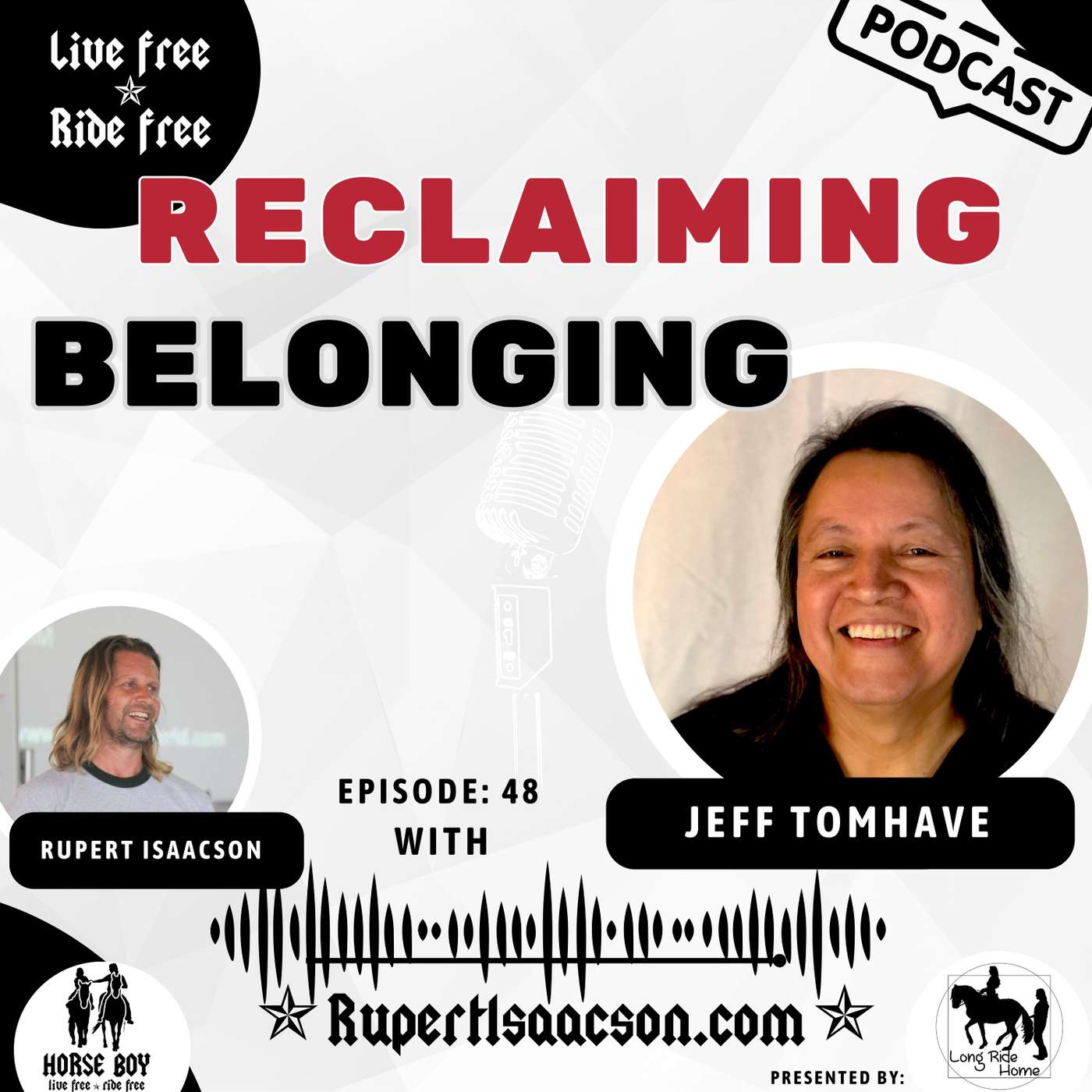
✨ “Once people release the trauma, we can start dreaming about possibility.” – Jeff Tomhave ✨ “It’s not rocket science. It’s telling a compelling story to a receptive audience.” – Jeff Tomhave Jeff Tomhave is a Native American attorney and tribal advocate who has spent more than two decades working at the intersection of federal policy, infrastructure development, healthcare access, and tribal sovereignty. In this episode of Live Free Ride Free, Rupert Isaacson sits down with Jeff for a far‑reaching conversation about what it means to live in “America within America.” From federal land trust systems and underfunded reservations to cancer treatment access and tribal disenrollment, Jeff offers a rare inside look at how Native nations navigate – and challenge – the structures imposed upon them. Jeff shares how his own path to law was less about becoming a courtroom attorney and more about gaining the tools to advocate for tribal communities at the highest levels of government. Together, he and Rupert explore invisibility, historic trauma, cultural survival, gaming revenues, sovereignty, and Jeff’s long‑term dream of training the next generation of tribal advocates. This is not just a conversation about law. It is about survival, adaptation, sovereignty, healing, and what the future of Native America could look like. What You’ll Learn in This Episode:What You’ll Learn in This Episode: Jeff’s tribal background (Hidatsa, Mandan, Arikara, Potawatomi, Ho-Chunk) and how boarding school history shaped modern Native identity [00:06:00] Why he chose to earn a law degree without intending to practice traditional law [00:10:00] How the federal trust system prevents many tribes from owning their own land [00:12:49] Why property taxation limitations impact essential services on reservations [00:16:27] How infrastructure advocacy actually works in Washington, DC [00:25:00] The Navajo Mountain road project and how paving 14 miles changed an entire school system [00:25:46] How HIV/AIDS treatment became accessible in Indian Country after years of advocacy [00:30:23] The 10-year effort to secure reimbursement for the first cancer treatment center on Navajo Nation [00:32:32] Why Native America often feels “invisible” inside the United States [00:45:04] The impact of checkerboard land systems and railroad-era policies on modern reservations [00:47:25] The reality behind gaming revenue and why most tribes remain economically fragile [01:04:33] The controversial practice of tribal disenrollment and blood quantum laws [01:24:33] Jeff’s vision for training a new generation of tribal advocates from within Native communities [01:44:00] What a unified Native future could look like 50 years from now [01:46:39] Memorable Moments from the Episode: The powwow rodeo lariat dance as a symbol of cultural evolution [00:58:50] The “divide and conquer” legacy and why tribal unity remains complex [01:10:53] The idea that genocide can continue through policy and paperwork...
0:00Rupert Isaacson: Thanks for joining us.
0:01Welcome to Live Free, Ride Free.
0:03I'm your host, Rupert Isaacson, New York Times bestselling author of
0:06The Horseboy and The Long Ride Home.
0:08Before I jump in with today's guest, I want to say a huge thank you to you, our
0:13audience, for helping to make this happen.
0:15I have a request.
0:16If you like what we do here, please give it a thumbs up,
0:19like, subscribe, tell a friend.
0:22It really, really helps us to make the pro.
0:24To find out about our certification courses, online video libraries,
0:29books, and other courses, please go to rupertisaacson.com.
0:34So now let's jump in.
0:36Welcome back to Live Free, ride Free today.
0:39I've got Jeff, Tom Hay.