
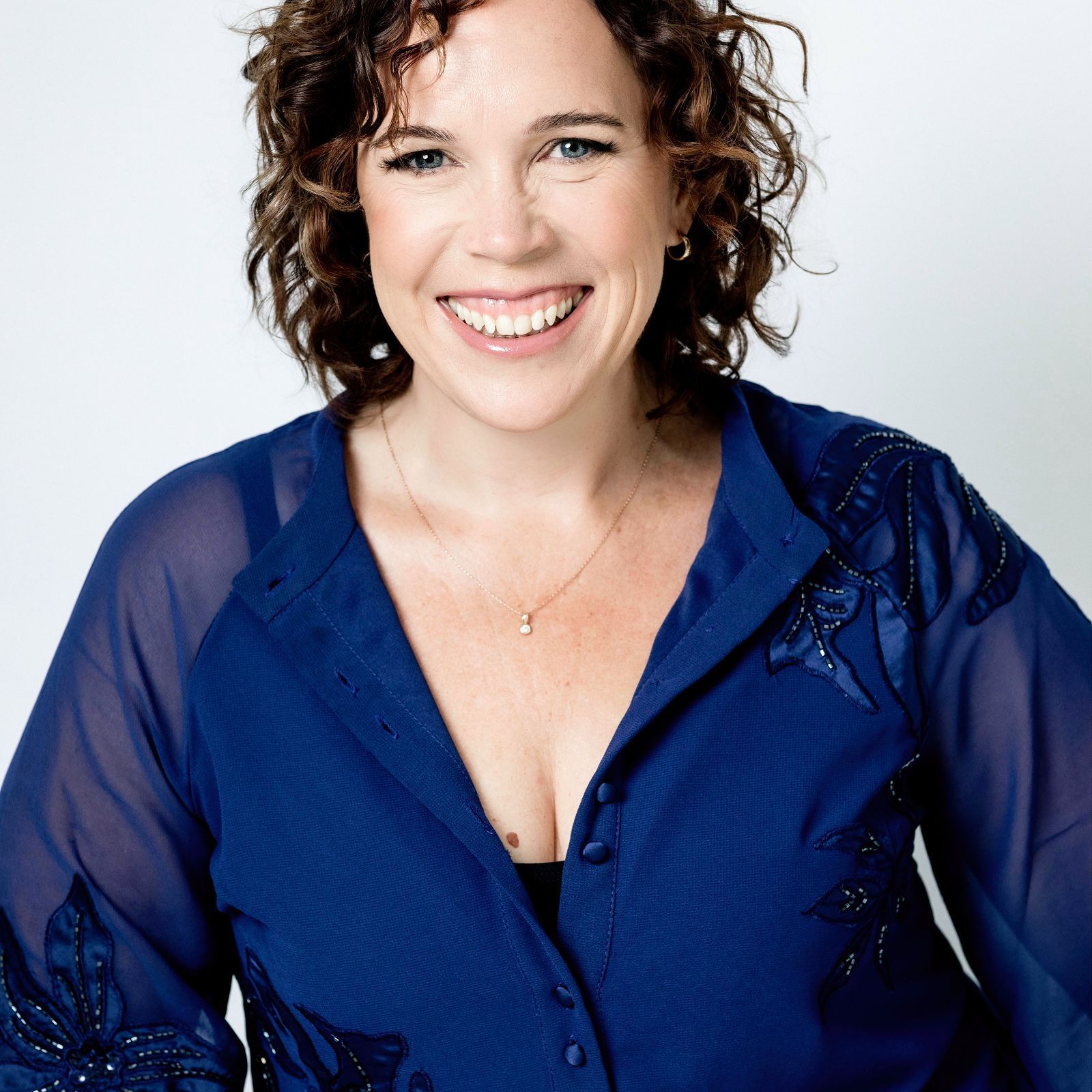
Lifelong Learners Collective · Ella Catherine
Helen von Dadelszen is a communication and vocal coach, speaker and author who helps smart, thoughtful professionals express their ideas with clarity, confidence and impact. Through Present Potential, she provides practical coaching and training in public speaking, vocal presence and confident communication. Her clients include professionals and teams working across technical, scientific, academic and humanitarian fields. Helen is also the author of Courageous Action, a practical guide to building communication confidence by taking small, achievable steps. LinkedIn https://www.linkedin.com/in/helen-von-dadelszen Instagram https://www.instagram.com/present_potential?igsh=a3p0NXNxMnlwYzM5 YouTube https://www.youtube.com/channel/UCB_2NMosqJQBBiv5ux3mYHg Book: https://courageousaction.ch/ Business: https://academy.presentpotential.ch/
Ella Catherine: Hello, lifelong learners. Welcome back to the show. I'm so excited to have with me today Helen von Daddelsen. She is a communication and vocal coach. She's the author of Courageous Action, and she is here to light a fire under our butts so we can get started and continue to build our dreams. So welcome to the show, Helen. Helen von Dadelszen: Thank you so much for having me here, Ella Catherine. Ella Catherine: Yes, great to have you. Now you're based in Switzerland. Yes. What's the weather like in Switzerland right now? Helen von Dadelszen: Right now we are nearing the end of September and it is still a very balmy around 20 to 25 degrees Celsius. Don't ask me what that is in Fahrenheit, because I never learned. Ella Catherine: Okay. Helen von Dadelszen: But it's like you don't need a jumper or a cardigan, still. Evenings can get pretty cold though, down to 10 or 11. So you definitely need a something to wrap Ella Catherine: Yes. W Helen von Dadelszen: up. So yeah, we're heading into a beautiful autumn in Switzerland. Ella Catherine: my gosh, I can't imagine. I'm so excited. I'm gonna go there one day. Hike the Alps. Helen von Dadelszen: Cop. Ella Catherine: Yeah, it is a Nashville, it's like went from a hundred degrees this weekend to a nice 79. We're so happy. Helen von Dadelszen: Yeah, it was too hot. Yeah, hundred is getting too hot. Yeah. That I know. Ella Catherine: It's yes. Well tell us about your journey to becoming a communication and vocal coach and why that's important to you and why it's important to help other people feel confident before they get started. Helen von Dadelszen: Sure, so I started my career in human resources and recruitment in New Zealand for those searching for my accent. And then after a couple of years working, I decided to come to Europe to see the world. Many Kiwis and Aussies, so from Australia and New Zealand, come to the continent, to Europe, to explore something beyond our countries when we're young. And most people stay for two or three years. But I'm now on to my twenty-fourth year, I think, and have never returned to New Zealand to live. And that kind of started the journey that I'm on in terms of exploring communication and helping others to do so. But it wasn't a direct route at all. I worked a little bit in Scotland, just small jobs, then I taught English in Italy for a a year and a half. And that's where I met my now ex-husband, and he was moving to Switzerland for work. So I eventually followed him and worked in the non not-for-profit sector. So helping support big international health conferences all around the world. And that was such an amazing experience. But it was actually there where I realized that so many people become excellent at their job. but they're not able to communicate beyond their industry. And so this was a bit uncomfortable for me, honestly, because I come from a family who were always on the stage performing. And I guess without knowing it, I had learnt how to be audience centric and communicate with the body, with the voice, as well as what you're saying. And so when I was made redundant in 2017, I started to explore what I could do in this area. And with the help of a business coach, I eventually launched Present Potential, and I have helped professionals, smart professionals with brilliant projects and ideas, to get them out into the world with clarity and confidence. And so now I basically specialize in. Helping people who suffer from stage fright or getting really nervous and don't think that they're a confident speaker, as well as vocal production, so how we create the sounds that then turn into words for our audiences. Ella Catherine: So side note, being made redundant, what does that mean? Helen von Dadelszen: It means your job no longer exists. So Ella Catherine: Okay. Helen von Dadelszen: we don't say fired. in Europe at least, we say you your job is made redundant, so there is no place for it anymore. And in fact, I had almost replaced myself. I was in a a small NGO startup, and so at some stage there was very little for me to do because I'd put all the structures and the extra personnel in place, and it was time and the board had decided. that that position no longer existed and so I found myself unemployed. Ella Catherine: Yes, okay. That's what I thought it meant. It sounds a little more PC because in the States it's like, okay, we're just eliminating your position. Eliminating. It's a little more harsh. Helen von Dadelszen: Eliminating. Yes, that's what you call it. And I find that really violent. Ella Catherine: So yeah, I love what you do, the Arab like the the p position or the field of communication, because people don't realize how important that is, especially when you have different departments communicating with each other. So working in tech, you know, you've got the engineers that are writing code and developing the software, and then you've got the salesperson that's going out selling the software while How do we, the engineers, relate to the salespeople? And then the salespeople they get the knowledge of all this tech, how do they relate that to the clients? There's so many different moving parts there. Helen von Dadelszen: Yeah, and it's often something that is left for the communications and maybe marketing department to deal with. But in fact, the way we communicate is how we connect with the world, how we express ourselves to other humans. and so it's really important to learn some skills of how to communicate our ideas in an engaging and interesting way for our audience. Ella Catherine: Absolutely. And what kind of projects have you been working on lately? Helen von Dadelszen: Lately, I have been working on a few workshops for some corporates. So usually they come to me because they come to the realization, which I've come to, that the people that they've hired are great at their jobs, but there's a breakdown in communication or there's a lack of skills that help those individuals. communicate both within their team but also externally to other stakeholders, maybe to the board and partners, etc., and sometimes to the industry, these big industry conferences. So one of the things I've been working on more and more recently is with companies. I'm brought into different teams and we look at what makes a good speaker. We break that down because everyone wants to be a good speaker or communicate well. But if you don't actually identify the pieces of that, you simply can't work on it. So we start there. And then through through a process, we develop our own unique communication style, because I believe that's really important as well. We shouldn't all speak like a a carbon copy of of each other, that we can find our own way of describing what we do and connecting with others. So we look at how to open a presentation or a meeting or a conversation, how to close, using metaphors, especially for technical employees, is really helpful when they're talking beyond their speciality using metaphors. And and then things like body language, managing your nervous system, how to use your voice so that you don't sound bored or angry when you're not bored and angry. Ella Catherine: Absolutely. So when you talk about managing the nervous system, what are some techniques that people can do? Or do you think too, as far as the nervous system goes, do you think it could be impacting people without them realizing it? Helen von Dadelszen: Yeah, it absolutely does. So when I talk about the nervous system, I'm talking about your body going into fight or flight, we often hear. And that can show up differently in different people. And that's the first thing is actually to get to know your body and how it reacts to a stressful situation. So it might be your heart racing, your hand shaking, your mind going blank, you might blush, you might feel the butterflies in your stomach. So all of these reactions are in in I can't find my words now in reaction to these reactions are in reaction to the feeling of not being safe. And so when we're in this state, it means that we cannot communicate and even think very clearly. So we need to shift from that to something productive. But some people interpret this as, I don't feel good, I don't feel safe. They don't realize it's actually the nervous system that is dysregulated. So the best, the simplest trick is to find a breathing technique that works for you, which sends signals to your brain that you are safe. It's not a life or death situation. And so I teach these breathing techniques. Different ones work for different people. It's good to find one that works for you. so that you can calm down your body into a more productive state. Ella Catherine: Absolutely. I think breathing techniques work for a lot of things, especially like stress management. So if I get fire drills thrown at me with my corporate job, I will do the box breathing, four in, four out, four paws, regulating the nervous Helen von Dadelszen: Mm-hmm. That's a great one. Ella Catherine: system. So that's just something that's great to have people that people can have in their pockets. And why do you Helen von Dadelszen: Absolutely. Ella Catherine: why do you think public speaking or just speaking in general? makes people feel so nervous. Helen von Dadelszen: I think there are a whole lot of reasons. One thing is that we are being very vulnerable. It's a very yeah, vulnerable way of expressing yourself or sharing your ideas with the world. And if you think about our ancestors, we really thrived and needed our community to survive. And so if we said something or did something that was against the norm or that someone didn't like, there was a chance that you could be thrown out of the tribe and need to fend fend for yourself. And that was a very dangerous situation. So we've taken that from our ancestors and still have this relationship with sharing our opinions, voicing our ideas to the public. And so I think that is the biggest reason. And then on top of that, we many of us are not taught how to communicate well. Right? As I said, you have lots of experts that are excellent at their specialty. But then you get them to explain it and it's as though they speak literally another language. Ella Catherine: Yes. They go over your head. Or even on a conference call or just in regular conversation, I notice a lot of people who are maybe higher up will use a ton of filler words. thinking it through and I wonder is like, do they know that they're doing this? And so Helen von Dadelszen: So that's such an important point. If you don't know, if you're not aware of what you are doing that may be harmful to your communication, then you can't work on it. Ella Catherine: No. Helen von Dadelszen: And if they're not told, especially higher up, they're often they sometimes ask for feedback from their staff, their peers, and people say, yeah, no, great, you sound great. Because the content is there, usually, but the packaging. the the way they use their body, the way they use their voice is often overlooked. And so it's kind of difficult because they're not getting necessarily the feedback that they need. And you know, there is actually a quite a simple way to get rid of or minimize filler words. So filler words are so, like, you know, really sometimes. All of these words that creep into our language and are non-words and actually lower the perception of our competency. And so the only way to stop them is tune your ear into them when you think you're going to say them, and instead just stop and breathe and pause. Because communication is a habit. And so If we are speaking in a certain way and we're not looking at whether that is effective or not, we can pick up bad habits and through consistent use, it becomes our way of speaking. And that is why you will have some people who always throw in one or two filler words at the beginning or the end of their sentence. Starting a sentence with so. or not being able to stay silent and in the break go, and then carry on the sentence. And it's not a problem per se, but for the listener, it's distracting, especially when Ella Catherine: It's distracting. They usually people will lose me when they start the sentence with the word 'cause I'm like, okay, why are they not comfortable saying what the next thing that they're gonna say? Helen von Dadelszen: Mmm. Yeah, for sure. We're very sensitive to these things. Sometimes it's difficult to put our finger on why we like or don't like, engage, don't engage with someone. But when you break it down, you can then see what these habits are that are really turning you off from listening to that person in a engaged way. Ella Catherine: Absolutely. Well tell us about courageous action and the inspiration behind it. Helen von Dadelszen: Sure, so Courageous Action is my book. It came out last year, almost a year. I'll have to have a birthday party for it actually. This came about because I have personally collected lots of techniques and tools over the years, both for myself to manage my own nervous system and to learn how to speak more confidently, as well as from my clients. And I wanted to put it in a book form. so that people beyond my clients would have access. And what I think is different about this book is it's not theoretical. Right? You can talk about confident speaking and techniques, but you actually have to do the action. So speaking, communicating is a performing art. So just watching the videos and reading the books is not actually going to Help you develop your own style. You have to act, you have to try, you have to fail, you have to try something new. And that is why I have called it courageous action, as well as the premise behind the book is that we should not wait to feel confident. It's actually through the action where we build our feelings of confidence. And so the book is very practical. There is lots of space for reflections, for noticing what worked well for you. I encourage you throughout to take note, take that one little step to build up your competence and eventually confidence. Ella Catherine: I love that. So it's an interactive book. It's not just something where people are reading and you're talking at us. You're giving us the opportunity to work through the book. And then yes. Helen von Dadelszen: Yeah, that's really important element for sure. And there's also a toolkit, an online toolkit with additional resources that people are invited to interact with as well. Ella Catherine: And I'm untalk it. Helen von Dadelszen: A toolkit. Ella Catherine: A toolkit Helen von Dadelszen: Online Toolkit, and this is where communication breaks down between accents. Ella Catherine: Yeah. Exactly. Well I Helen von Dadelszen: We speak too quickly. Ella Catherine: Yeah, I'm from Appalachia part of the United States, so my accent is totally different than everybody else in the South. People are like, Why don't you have a southern accent? And it's like 'cause you know, Appalachia's just a different part of the South. But I understand. Helen von Dadelszen: And my ac my accent is very unusual and I do get caught out sometimes, even though I've lived in an international environment for, you know, tw more than twenty years, some of the words that I use can slip out very New Zealand and it can really create some some funny situations. I'll just give you a quick one is when you go on an airplane, you need to check in at the airport. or online. But when I say check in in more of a Kiwi accent and I don't break up check in, it sounds like chicken. I'm Ella Catherine: Ha ha. Helen von Dadelszen: here to check in. And people think I'm saying the bird, chicken. So I've learnt a lot, continuously Ella Catherine: Yeah. Helen von Dadelszen: learning, to make sure, you know, accents are wonderful things. They show us where we've been, they they bring a lot of colour to everyone. It's only a problem when the communication is actually broken through an accent. Ella Catherine: Yes. And I love hearing different accents from all over the place. But when you said toolkit, I heard talk it. And my mind went to an AI tool where people Helen von Dadelszen: Yeah. Ella Catherine: actually got on this platform, made a speech, and then AI came back and said, okay, this is how we can make it more clear. Helen von Dadelszen: There are apps like that. I have seen a few. Yeah, Ella Catherine: Imagine so. Helen von Dadelszen: yeah, there are. And they can be a great tool as a first step to see. Are you speaking too quickly? Most of us speak too quickly. Do you have Ella Catherine: Yes. Especially when you're excited. Helen von Dadelszen: ex exactly like I was when I was telling you about my online toolkit? Ella Catherine: Ha ha. Helen von Dadelszen: But yeah, these are great tools to become aware of what's working and what's not, because that's The first step in understanding what we can then start working on. Ella Catherine: Amazing. Well speaking of what we're working on, what are you working on now? Helen von Dadelszen: I am working on lots of different things. My favorite thing at the moment is actually a collaboration that I do with a very smart woman who is an artist as well. And if you're watching this, that's her painting behind me, Steph Fontaine. And she runs an incredible team building creative workshop. And so I'm sort of off the couple of weeks of some of those sessions that I've been co facilitating and that gives me a real buzz and a will to work even more with her on that because I think it is A moment for people to get out of their everyday, to connect with something that is creative, that is productive, and they learn so much about themselves and their team through the process. So that's what I'm really excited about at the moment and hoping to do many more in the coming months. Ella Catherine: Yes, when it's interactive like that and when people can work together, it's just amazing what you learn. Helen von Dadelszen: Yeah, stepping out of the office and really finding different ways, pushing the boundaries of your comfort zone. that's where the magic happens really. Ella Catherine: Absolutely. I'm doing a cohort right now where we're learning how to use our intuition, which Helen von Dadelszen: Mm. Ella Catherine: I could read books about. Helen von Dadelszen: Mm-hmm. Ella Catherine: I've been doing my whole life, but when I am doing this practice with other intuitives, it just reveals so many different things. Helen von Dadelszen: Yeah. Yeah. Again, another thing you actually have to do and experience to then do better. Yeah. Ella Catherine: Amazing. Well tell everyone how they can connect with you, learn more from you, and possibly work with you. Helen von Dadelszen: Sure. So I am mostly active on LinkedIn. So you can find my name there and I'd be happy to collect, connect. And I share plenty of tips on there. and the other way you could look at what I'm doing is go to my courageous action website. So courageousaction.ch, which is the end of the Swiss URLs, and you'll find out more about Ella Catherine: Good to go. Helen von Dadelszen: my my book and who I am and who it's for and it's available on Amazon as well. Ella Catherine: Beautiful. Well I'll definitely be checking it out. Helen von Dadelszen: Great. Well tell me what you learn. Ella Catherine: Absolutely.