
Life Tabernacle Church · Life Tabernacle Church
Pastor Dallas preaches on Matthew 9:35-38, where Jesus sees the crowds, feels compassion, and calls his followers to pray for workers for the harvest. Using a trip to the pumpkin patch as a picture of the harvest, he explores how compassion differs from benevolence, why Jesus's compassion is a gut-level response that moves to action, and why every person, not just the ones who look like us, deserves to be reached. Includes the story of a tornado-hit Dallas street that turned a group of worried friends into the answer to a prayer for help, and a challenge to see people as God sees them. Recorded live at Life Tabernacle Church in Vinton, Virginia, on October 18th, 2026, by Pastor Daniel Dallas Herndon. Want to connect more with Life Tabernacle? Visit us online: lifetabernaclepcg.com Feeling led to support the ministry? Give securely here: Tithely Giving Link
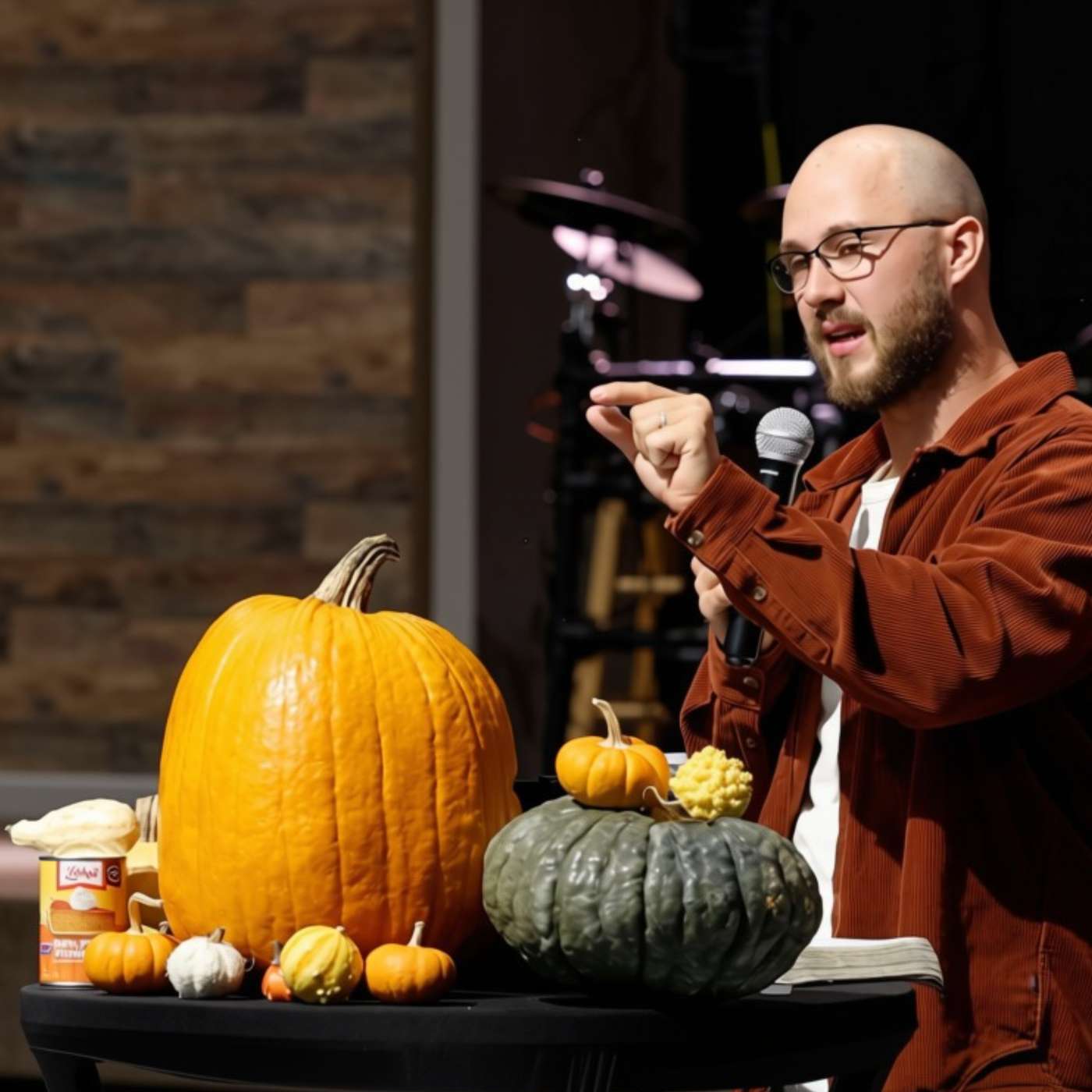
Speaker 1: He felt something deep in his gut that compelled him to do the things he did. If you note, if you go through the scriptures, almost every single time that Jesus heals somebody, It's a response to his compassion for somebody. Speaker 2: Hello, friends. Welcome to the Life Tabernacle Church podcast. It's an honor to be with you today. This podcast serves as our church's weekly sermon archive. Tune in each week to hear what God is speaking in our community. Be sure to follow and share with a friend. We hope you enjoy today's message. Speaker 1: If you have your Bibles this morning, go to the gospel of Matthew chapter nine. Gospel in Matthew chapter nine, and we'll be starting in verse 37. When you're there, tell your neighbor that you're there. If you're still working there, say hold up, slow down, brother. Matthew nine, we'll start in verse 35. This is the word of the Lord. Jesus continued going around to all the towns and villages, teaching in their synagogues, preaching the good news of the kingdom and healing every disease and every sickness. When he saw the crowds, he felt compassion for them because they were distressed and dejected like sheep without a shepherd. Then he said to his disciples, the harvest is abundant, but the workers are few. Therefore, pray to the Lord of the harvest to send out workers into his harvest. My friends, this is the word of the Lord. And all of God's people said, amen. I don't know about y'all, but the fall is my absolute favorite time of the year. Is anybody up? Like, I don't like spring because spring allergies really destroy me and I like winter. And so I don't like spring. I think summer's way too hot. And so if I had to choose, is my favorite. Fall is my favorite season by far. And when it comes to the fall, there's a lot of great things. Everybody here like football, big football people in here. I know pastor Tina likes football a little bit. Okay. Well, I know we got some football fans here. We like football. We like being able to get... You like football? That's awesome. That's awesome. You like the Cowboys? You should have picked a better team. God bless you, sister. All right. We like football. We like being able to gather. But how... However, one of my absolute favorite things to do as manly as I am is to go to the pumpkin patch. Anybody with me? Anybody like going to the pumpkin patch? I mean, I am a absolute like, I just... Oh, head over heels to go to the pumpkin patch. I just wanna go. And so yesterday, we took all of our kids and some of the Sullivan's went with us and we went to the pumpkin patch. And so last year we went to Singleton Farms, which is up in Christiansburg. But this year we went down to Montvale and we went to Lehman Family Farms. And let me tell you, we had a blast. There was people everywhere. And I didn't think there would be that many people there, but there was, I don't know, thousands. There was maybe two or 3,000 people there on a Saturday getting pumpkins. And it was just like, what's happening? And so we enjoyed ourselves, but obviously you don't go to a pumpkin patch to spend a bunch of money to do a bunch of stuff. You go to the pumpkin patch for what? Right, okay. There we go. And so I just wanna show you a few different things this morning. This is Semi's pumpkin. No, don't come get it. I know you're proud of it. This is Semi's pumpkin that she picked out. Obviously, she did not carry this. Right? But this is a nice pumpkin, don't you say? But, you know, when you go to the pumpkin patch, hopefully, the pumpkins don't look the same. Right? So we also got some of these. Here we go. Y'all like these little ones? Little decorative ones, You got those? Okay. This is Marcella's. What a beautiful one. I love that. Perfect. It's very cold because it was outside in the car all night. Then you got these. I love these. These are my favorite, the gourds. Anybody like gourds? No? Anybody, they freak anybody out? There was one I really liked yesterday, but I wasn't able to get it. There's another cute little one that looks perfect and whatnot. Then there's... What else we got? We got a few more little ones. Okay. Some more little ones, another gourd. Thank God for gourds. And then we got that one right there. What else do we got? These are kind of my favorite too. Y'all like these? Y'all think these are ugly? I think these are beautiful. Okay. Where's this one gonna go? Can we stack it here? If this table falls, y'all better pray for me, okay? Stack those on top real cute. Look at that. Look how cute my porch looks, awesome. Then we got these. These are some of the other pumpkins that you get. These are fake pumpkins. They might get fake pumpkins in their house. This was in our house. Emily has them in a little basket. It's great. Then we got this. Now, just hold up for a minute. This is a pumpkin my dad grew actually. Look how perfect it looks. Do you see what happened to it? Semi grew impatient. Semi grew impatient and she decided to start drawing on her pumpkin. And this is like a textbook pumpkin. Like it doesn't get better than that. It's awesome. Good job, dad. We're coming to your house to the pumpkin patch next year because $20 per person is steep. All right. And then lastly, this is maybe my best form of pumpkin. Am I right? Pumpkin pie puree or... For muffins. Alright. We'll put that there. And so is the microphone bothering y'all? You know, hear that? Is it bother... How about if I just go handheld? Can I go handheld? It's bothering me. So if it's bothering you, it's bothering me. Alright. Y'all work on this one. We'll do this one. Okay? Sounds good. So these are all the different types of pumpkins that we had at the pumpkin patch. And as I enjoyed myself and ate funnel cake and ate a fried Oreo and had kettle corn, kettle corn anybody, as we enjoyed ourselves, I just couldn't help to think about the harvest. Look at your neighbor and say the harvest. The harvest. What is the harvest? The harvest is the time of year where we gather our crops that we have sowed all the year for, And the fall is when we get to harvest them. Right? So if you're a pumpkin farmer, the goal is you're gonna start in the fall and the winter. You're gonna need some fall rains to prepare the soil, and then you're gonna germinate the seeds. Then you're gonna go through spring and water and sun, summer. Then hopefully, you do it all right, if you get it all right, then you will produce something like this. And obviously, most of us are going to get all of our groceries from Kroger, Walmart, and Sam's. That's fine. But for the majority of human history, people have had to grow their own things. And so the harvest in that language meant something very, very different from people for all of human history. But as I was standing at the pumpkin patch in the sea of thousands of people, I couldn't help to think about the Lord's harvest. What is the Lord's harvest? Very simple. I think we could all describe that the Lord's harvest is the world or people in the world coming to him. That's what Jesus is talking about here in Matthew chapter nine verse 37. He says, then he said to his disciples, the harvest is abundant, but the workers are few. Therefore, pray to the Lord of the harvest to send out workers into his harvest. Jesus is talking about the harvest. Look at your neighbor one more time and say the harvest. The harvest is one of the main reasons why we are alive. This is one of the main reasons why the church exists. Jesus has called us to be his disciples. He's called us to be his followers. And over the last eighteen weeks, we learn what disciples of Jesus are supposed to do through the book of James. The book of James was wonderful. And each week, it taught us the things that we are supposed to do if we are followers of the Lord Jesus Christ. Amen? But sometimes we can get so fixated on just what do we need to do as Christians, how do I need to be obedient as a Christian, and we forget as we kind of alluded to in the message last week that we also have a mission that works outwardly. Last week in Matthew... I meant James five nineteen through 20, we talked about turning wandering believers back to Christ. That was one of my favorite messages I preached because it meant so much to me. It's talking about Christians who have walked away far from Christ and compelling them to come back into the house of God. Amen? But but this week, I just couldn't help to think that it's not just about turning believers who once knew Christ back to Christ, it's about turning people who have never known Christ back to Jesus. Amen? And so that's what Jesus is speaking about in this passage. He's speaking about the harvest. Jesus says, the harvest is abundant, meaning there's lots of different pumpkins in the world. There's all different types of people in the world. There's so many different... Thousands of different people groups in the world. Revelation tells us that that there's going to be a sea of people that are gonna be innumerable, that are from every tribe, nation, language, and tongue. My friend, there's a bunch of different little pumpkins in the world. Some of us are white. Some of us are black. Some of us are brown. Some of us speak English. Some of us speak Croatian. Some of us speak Chinese. There's different types of people all across the world, and the Lord is interested in every single one of them. The Lord is interested in not just one people group or one specific church, he is passionate about the harvest of the whole world. And that's why he says the harvest is abundant. There's a lot. There's plenty of pumpkins out there to go get. The problem is this, what does he say? But the workers are few. The workers are few. Y'all know this. Wherever you worked at at in your life, you were probably one of the hardest workers there. And how many times did you find yourself frustrated some of your coworkers or teammates didn't help you enough. Right? Y'all understand what I'm talking about. You do... You know, 20% of the people do 80% of the work. It's laborious. The problem's never been the harvest. There's plenty of things to harvest. The problem is the workers. And so that's what Jesus is alluding to. He says, the workers are few, therefore pray to the Lord of the harvest to send out workers into his harvest. My friends, very simply, who are the workers in his harvest? Raise your hand. Say me. Say I'm I'm a harvester. Say it like you mean it. Come on. Say I'm a harvester. Okay. Good. Come on, somebody. You're a harvester. All of us are a part of God's mission to harvest souls from every single part of the earth. We're supposed to go into every single nation. Matthew twenty eight nineteen twenty says, go therefore into what? America? No. Go therefore into Tanzania? No. Go therefore into Iraq. No. No. No. Go therefore in all the world and make disciples of the Lord Jesus Christ. I think we know this. You're like, Dallas, we got this concept. This is very basic Christianity. I get it. But there's something that really stuck out to me as I was at the Pumpkins Patch praying through this passage is this. I want you to look back to verse 36. He said, when he saw the crowds, he felt compassion for them. Look at your neighbor and say compassion. I think there's certain words in our culture that I say have been hijacked by the culture. Let me get what you mean. The word kindness. K? When you hear the word kindness, what do you think of? Being kind to somebody. Right? Right? You're like, just genuinely being kind. It's actually one of the attributes of the fruit of the spirit that we're supposed to be growing in. Okay? It's a basic characteristic or trait that we're supposed to have. But in our culture, kindness has taken on a whole different meaning. In our culture, kindness means in some ways just to nod your head and just be nice to people no matter what they do. You know, no matter what they do and no matter who they want to be, no matter what path they wanna go down, no matter if they're good or bad or ugly or mean, you should just be kind to them. And so the word kindness, I think, has been really confused by our culture. And so when we see it in the scripture, sometimes we can have a hard time understanding what kindness really means. Because as CS Lewis famously said, I'll botch the line. He basically said, the angels don't carry flowers. They're kind, but they carry swords. And so kind is sometimes speaking the truth. Being kind and loving to somebody sometimes telling them what they don't wanna hear, but that's still kind. Do we understand that? Another word though I think that's been misconstrued or hijacked in our culture is the word compassion. Look at your neighbor and say compassion again. Compassion. Because when we see this word, it it it puts a thrust a bunch of different images into your mind. Can compassion can look like just helping a homeless person. There's a there's a African American gentleman who's on the corner of Elm Avenue right before you go on 581, and he is the most animated houseless person I've ever met in my life. Sometimes wearing a Pittsburgh Steelers hat or jersey, and he is so nice and you just wanna give him all your money. Right? And but but that's a form of compassion that we think about about giving money to the homeless. Another form of compassion is is what some of you all gave to. There's a there's a place in Roanoke that helps women who have had kids and that don't have resources. So we give to stuff like that. We are compassionate towards those needs or we're compassionate towards refugees who have been victims of war in their country. There's a bunch of different ways we can show compassion. I think probably one of the issues in our culture is compassion has been made to be a more intellectual thing than anything. Our culture has taught us that if this group is marginalized, if this group is of a certain ethnicity, a certain color, a certain thing in history that where they had been put behind that we automatically have to be compassionate towards them. That we have to show compassion certain groups of people just because of certain things they went through. And so compassion though lives in the head and it doesn't live in the heart. In our culture, it lives in the head because we've been taught these are the people groups you need to be compassionate about. The problem is it never goes from here to here. So is it really compassion Or is it just benevolence, caring for people, a humanitarian aid? And my friends, I'm all for helping people. Right? But why are we helping people? What is the motive? And one of the most compelling things about Jesus of Nazareth is right here. It says, when he saw the crowds, he felt compassion for them. You know what that word compassion means? It means to feel it in the gut. You know what I'm talking about? Think about a time in your life. This is a story that comes to mind for me. I was living in Dallas Fort Worth, and there was a tornado that just blew through Downtown Dallas. Obviously, Fort Worth, like 8,000,000 people. This is a horrible place to have a tornado. And there so happened to be a guy that I met six months previous named Ambrose. And Ambrose was from Ukraine and I helped him. He was buying something from our college or where we were at and I helped him load it in his truck. I had his number, that was it. But on the night of that tornado, he gave me a call and said, hey, Dallas, I have a problem. My business is downtown and it was right in the path of the tornado. And the problem is, Dallas, if I don't get all my stuff out of my business, people are gonna come steal it. Because this is very popular. It's a tornado, people are ransacking buildings, stealing what they can. And so me and a couple of other people felt something in our stomachs. We had a bunch of tests the next day, had one of our major examinations, but we had this feeling in our gut, deep down in us, couldn't even explain it other than we need to go down there to Ground 0 where all the destruction was, all the power lines were down and we need to try to help this guy. So we get in my dad's truck, thanks for the truck pop, we get in my dad's truck and we drive through all these streets of Downtown Dallas and there's power lines down everywhere. There's trees down everywhere. There's houses destroyed, debris everywhere. All the roads are blocked off. And we finally get around because I'm talking to Ambrose. I'm like, where are you? He's like, I'm over here. So we're trying to navigate through all these broken streets. We finally get to about where he is, he meets us and he's like, thank you so much for coming. You'll park your truck over there and then you... We can just walk in there and we can get this stuff and we can get out and take it to a different warehouse. We said, great. The problem was it was getting close to sunset and the police were like, at 7PM, we're locking this down. We wanna try to not have as many people ransack this area and be stealing stuff so we're locking it down. But the problem is the people are still gonna steal stuff from him and he was freaking out, he was flipping out and I was trying to persuade the officers, hey, please let us go in there. Please just let us go help this guy and he's like, no, I can't help you, I'm sorry, you're too late. So we, my friends and I, we stepped off to the side and we just cried. And we just said boo hoo and we went home. You think we did that? No, what we started to do because we felt something deep in our gut, we began to call on God. We began to pray in the spirit. I'm talking we were pray praying. I'm talking in tongue praying. We were going a little crazy here on the street, people around and we were just praying and we're praying and we're praying and all of a sudden the police officer walks over to me. I'm like, well, I guess he needs prayer too. Well, come on. We'll lay hands on you. He walks over. He says, you know what? You can go in. Do what you need to do and come on out. No problem. And walked away. And so we were able to now take the next hour, load up the back of completely full. And my dad's truck and we're able to get all this guy's resources out. We're able to drive to a new warehouse. We're able to unload it for him and get it in there, and he was just so thankful. But the only reason why we did that and the only reason I think that we had something supernatural happen is because we had compassion for somebody. There's so many times in life, my friends, where we look at people and we only have compassion for the pretty ones. We only had compassion for people who have their lives together like this pumpkin or like this pumpkin. People who are like us. People who had the same money as us. People have same skin color as us. And we have compassion for people like us. But when it comes to people who have been through something, say I'm a gourd. I've been a gourd. Right? When it comes to people who have been through something, we don't have much compassion for them some. You know what? They did that to themselves. I mean, they got addicted to drugs themselves. Like, you know, it's not my fault. If I give them money or try to help them, probably just gonna waste it on drugs. Right? And then there's sometimes people who have have painted themselves literally. Sometimes people with just a bunch of tattoos that freak y'all out. And sometimes we don't minister to the people that we should really be having compassion for because we just wanna stay safe. And this is why a lot of our churches in America just look like this. A bunch of little white pumpkins in one church. Right? And then you have another church, I don't have a darker pumpkin, but we have a... We have what known as a black church. And then we have the Hispanic church, and we have this church, and that church, and all these different churches. And yes, language is a barrier, so sometimes we have to have different services to serve that need. But the problem is we don't really grow in compassion for all of God's people. He said, what did he say? He said when he saw the crowds, did all the crowds look the same? Did all the crowds have the same needs? Absolutely not. As he looked at the crowds, they were like sheep without a shepherd, and he felt compassion for them. Compassion. He felt something deep in his gut that compelled him to do the things he did. If you note, if you go through the scriptures, almost every single time that Jesus heals somebody, it's a response to his compassion for somebody. He feels deep compassion for somebody because he understands the heart of God. He understands the mercy of God because he is God himself and understands the word of God. He feels such compassion for people that something supernatural happens as the response. And I'm not suggesting to you today, if you just have compassion for somebody, then when you lay hands, they're gonna get healed. It's not gonna happen every time. I think we've made that clear through the book of James when we talked about healing. But there's something and there's a connection between our ministry to people and the compassion we have for them. And sometimes we can look at the harvest and we can look at this as a task to be fulfilled. Some of us just feel like we wanna dominate the world and we just wanna be aggressive, and we wanna be on the winning team, and we'll look at the whole harvest, like, let's do the whole thing. Let... Let's convert the whole earth, and we can do all this in the name of Christ and not feel compassion for each person. And so I just simply say to you today, as you're looking at all these different pumpkins, I just want to invite you and challenge you and just ask you the question, do you have compassion for people? Do you feel deeply for somebody to the point where you're moved to action? That's the difference. Compassion is not looking at somebody and feeling bad for them. Compassion is looking at for somebody, feeling like you need to do something and then doing what? Doing it, meeting the need. That is what real compassion is in action. And as we sit in this season of the harvest, as I drive around this city and I witness thousands of different types of people. Do you understand how diverse Roanoke is? It is very, very diverse. And as I drive around, I have conversations with people. I just can't help to think, wow. The Lord wants them to be a part of the harvest. He wants to harvest them and then send them back into the field. But I just wonder, my friends, what would happen instead of just focusing on the harvest as we just focus on each person and had compassion for them. One of the stories that reminds me of this the most is in John chapter four. You remember this story, the woman at the well. The Bible says that Jesus must needs go through Samaria. Jesus finds himself at a well with a woman he shouldn't be around. And yet Jesus is able to look at this woman, and she can see what God wants for her. And he ministers to her in that moment, meets her at her hour of need, in all of her embarrassment, in all of her shame. And you know what that woman does? She not only gets to be the first one to hear the public words that I am the Messiah, she's not only the one that comes to know and receive that living water. Do you know what she does? She leaves her water jars in that story and runs back to the city and says, I have met a man who've told me everything I've ever did. And she begins converting people into that region. She immediately goes from being someone who needs to be harvested to a worker in the field. Can I get an amen? Amen. But the difference in that story is Jesus looked at her and he looked at her as how God looks at everybody in this world. He looks at people as people who've been made in his image, who've been bitten by the snake. Can you say bitten by the snake? What I mean by that is is all of us are human beings made in God's image. But the sneaky snake as Semi calls... Semi, can you say sneaky snake? Good. The reason why that was little muted, she lost both of her front teeth this week. So it was a sneaky snake. Alright. Good job. The sneaky snake. The sneaky snake has has slithered his way into all of our lives and has bitten us and we've all been affected by the curse. And sometimes again, like I said, we look at people who look different than us, who've been through different things and we're like, you should just get your life together. Yet God looks at them and sees what's on the inside. He sees the pent up, he said, no, that's someone I've created in my image who's been affected by sin. And so if we can learn to disassociate the person who's been made in the Imago Dei from whatever manifestation of the curse has been placed upon them, my friend, we would grow in compassion and we would be more effective in the harvest. We want to be able to see people as how God sees people. And some people get on our nerves, sister Gail. You got some people get on your nerves? I ain't gonna lie. Can I be honest with y'all this this morning? This this week, I went to do an estimate for pressure washing for somebody, and there was a gentleman I met who got on my nerves. I would... I met his his... The wife and the husband, and this husband was so rude to his wife in front of me. I was there for fifteen minutes, and he had made 15, 20 jokes about how bad she was. And I left that place fuming. I'm like, I'm not doing this job. I ain't gonna... I ain't pressure washing your house. And then I thought to myself as I left, I'm like, you know what? That man has been affected by the curse. And that is unacceptable behavior that let's just put it out there, husbands, you should... Don't mistreat your wives. Okay? You have to answer to God for that. That's not a fun thing. But obviously that's unacceptable behavior, but I had to just look at him and say, you know what? I don't know what this man's been through. I don't know why he's being so passive aggressive and rude to his wife. I just have to believe that God wants better for him in his life. And so when I go back to do that pressure washing job here in a few weeks, I'm not gonna come at him angry, but I wanna come at him with a heart full of compassion. I don't wanna go in there and just say how terrible you are, you're so mean to your wife, even though it would all be true. I wanna be led by the spirit as Jesus was. Meet him with a compassionate heart so that me... He may have a transformed soul. That's the goal. So whether people get on our nerves in our life, we're frustrated with certain people in our lives, and sometimes the people that we're most frustrated with are probably the ones we need to minister to the most. They're getting on our nerves probably because something within us. And so we just have to ask the Lord of the harvest to help me. Help me, ye, compassionate for these sheep without a shepherd as you are, Jesus. Because everybody, every single pumpkin deserves to be picked no matter what they look like. And so the different... The only question we have to ask is, Lord, Lord, how can I be compassionate like you? Worship team, would you come up as we close this morning? A simple word, something that's just been on my heart Because we can forget about the harvest. We can go through the just every days of our lives dealing with our own issues, and we can forget about the bigger picture that we're all a part of. We get busy with our jobs, our work, our finances, our families, and we forget that we have been commissioned and we're on a mission to partner with the Lord in the harvest. Would you bow your heads with me this morning? You can stand if you want. Stay seated. It doesn't matter to me. Holy Spirit, the revealer of our hearts. Lord, help show us in our hearts why we don't have the same compassion as you do, why we don't have that same deep down gut feeling to care for others as you do. The problem's not the harvest. The problem's the workers. And Lord, I confess to you today, this worker right here, this six two and bald worker right here doesn't have the same compassion in its heart as you do, but I want to have that, Lord. I want to look at whoever you place in front of me, no matter what they've been through, no matter what they look like, no matter what spots they have, no matter how different they are than me, and I want to feel compassion for them. Lord, I confess to you today that sometimes I'm just too busy to be compassionate. I got too much to do. I don't have time to stop and share my heart with somebody. Lord, sometimes I'm too greedy. I feel the need to give something to somebody, and I say, yeah, I know I need it for myself. I confess that to you. Lord, in the season of the harvest, I pray, Lord, we would be useful workers and partners with you in it, that we would go out into the highways and the byways, compelling all people to come to you. And, holy spirit, I ask as we grow in our compassion for others, as we serve others, as we show mercy to others, Lord, we would see great manifestations of the spirit. Lord, as we pray for those who are inflicted by some illness or by some demonic entities or whatever it is that they compassion would lead to healing, the ultimate healing of their souls. What's the Holy Spirit speaking to you today, my friends? You harvesters. What is the still small voice of God speaking to you right now?