
Liberating Motherhood · Liberating Motherhood
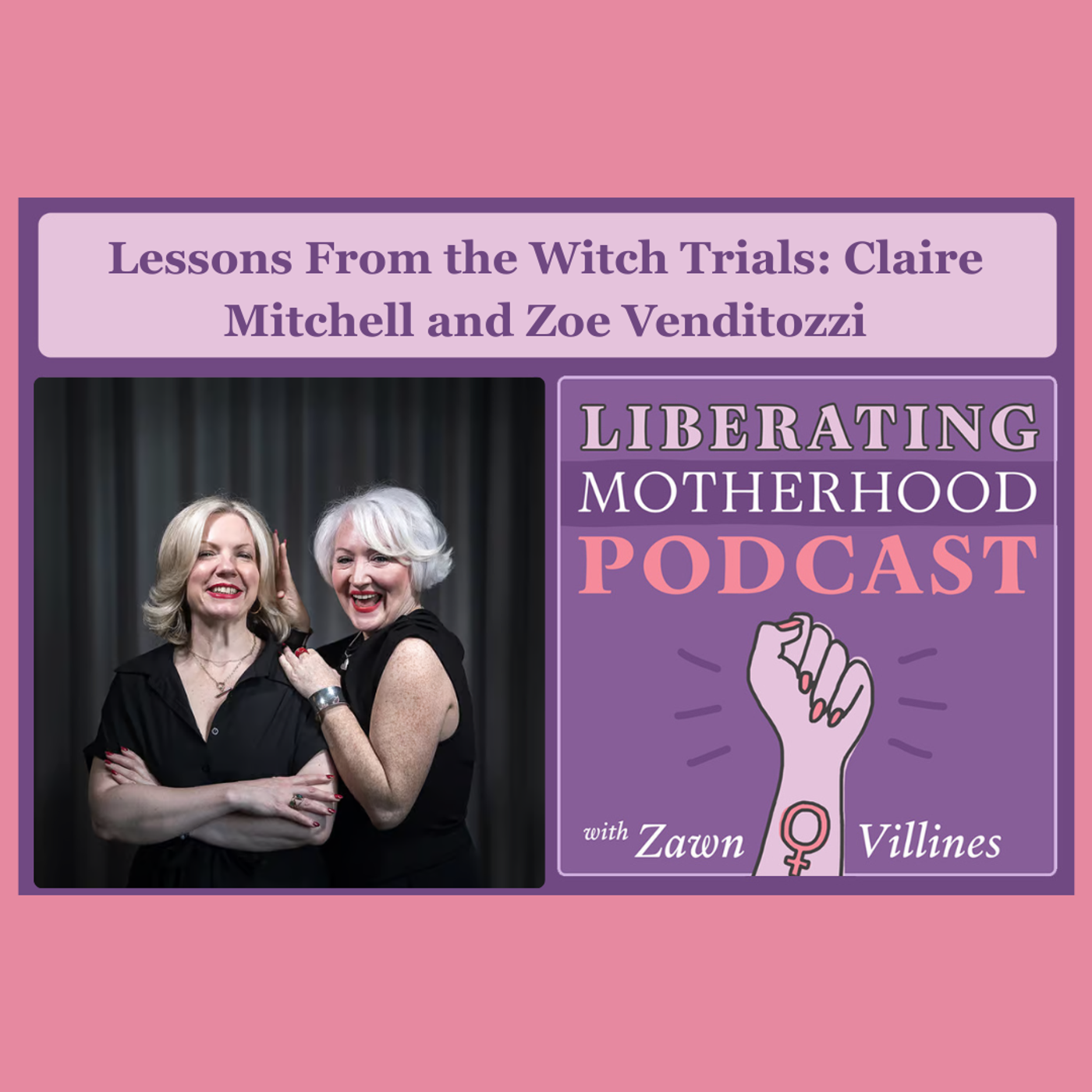
The witch trials did not target women—at least not explicitly. Yet somehow it was almost all women being executed and abused. This includes little girls. The witch trials are a case study in how the law can be gender-neutral, while still being highly gendered. In this podcast episode, I speak with Zoe Venditozzi and Claire Mitchell, creators of the Witches of Scotland podcast, about their new book, How to Kill a Witch. The book draws parallels between the witch trials and today, offering lessons that have resonated for hundreds of years. More than being a lesson in history, though, this book shows us that the people executed were actual human beings whose lives and suffering mattered. In this episode we discuss a range of topics, including: How authorities justified the witch trials, and what they reveal about collective thinking, gender bias, and what we are willing to do to people we dehumanize. The parallels between the witch trials and how we treat women today. Whether something similar to the witch trials could happen again. The endless horror of interacting with men in public. Parallels between the witch trials and the public depiction of Lindsay Clancy. How being “crazy” is the new witch allegation against women. The dynamics of victim blaming. False confessions, and why they continue to happen today. It’s crucial for us to acknowledge that this kind of frenzy isn’t just for bad or crazy people. It’s something we can all get swept up in—and on a smaller scale, most of us have been swept up in harmful groupthink, dehumanization, and vilification. It’s easy for us to view abusers as certain kinds of people, or abusive behavior stemming only from certain ideologies. But the truth is that abuse only ever comes from the idea that certain behaviors can justify abusive treatment. And perhaps the crucial lesson of the witch trials is this: as soon as you are willing to justify abuse of even one person, it’s much easier to convince you to abuse just about anyone. About Claire Mitchell and Zoe Venditozzi Zoe Venditozzi grew up in North East Fife in Scotland and attended the University of Glasgow to study English. Following stints as letters editor at The People's Friend and selling answer phones at BT, Zoe qualified as an English teacher in New Zealand in 1999. Shortly after she moved back to Scotland where she started a family, worked in various schools and gained a Masters in Writing from the University of Dundee. After publishing her debut novel, "Anywhere's Better Than Here", Zoe kept teaching (in lots of settings including schools, universities, museums, libraries, children's homes and on the HMS Unicorn) and also became a writer in residence at Roxburgh House in Aberdeen and Reader in Residence for Dundee Libraries. Zoe joined Claire Mitchell KC on the Witches of Scotland campaign in 2020 and has co hosted 70+ podcasts episodes of the same name. Since then, Claire and Zoe have worked hard to redress the historical wrong of...
(00:00:00.718): I had an abortion. (00:00:02.219): The reason was not dramatic or traumatic. (00:00:04.801): I was pregnant and I didn't want to be. (00:00:07.122): I was in an abusive relationship and knew I couldn't care for a child and (00:00:10.504): that I did not want to spend the next 18 years sharing custody with (00:00:13.646): an abusive monster. (00:00:15.327): So I ran the gauntlet of trying to get an abortion. (00:00:18.809): I traveled out of state, waited weeks, and walked through an army of abusive protesters. (00:00:24.152): If their concern is about life, (00:00:26.194): then why do they care so little for the lives of (00:00:28.395): the women carrying these pregnancies? (00:00:30.790): Why aren't they protesting outside of family courts where women must share custody (00:00:34.491): with abusive men? (00:00:36.032): Why aren't they demanding better access to healthcare, food stamps, support, anything? (00:00:41.753): Because they don't actually care about life, just about controlling it. (00:00:46.014): I sat for nine hours in a crowded clinic with other women. (00:00:50.076): Everyone had a story. (00:00:51.696): Everyone ultimately was there because of some sort of trauma. (00:00:55.258): Whether the capital T trauma of a rape or the everyday degradation of living (00:00:59.461): in poverty or being forced to live with an abusive man. (00:01:02.884): The clinic cared for us as well as it could. (00:01:05.346): And the nurses were extremely compassionate, (00:01:07.147): but it still felt a bit like a cattle processing facility. (00:01:10.490): They were so busy and security was so important. (00:01:13.752): Two problems created by an anti-choice culture. (00:01:17.075): I wish that we felt entitled to good abortions. (00:01:20.091): I wish we lived in a world where we actually cared about women who seek abortions. (00:01:24.214): That's the only world that could actually reduce abortion rates. (00:01:28.797): Hi, I'm Zawn Villines, and this is the Liberating Motherhood podcast. (00:01:32.979): Today, we are going to be talking about abortion, (00:01:35.281): reproductive justice, (00:01:36.442): and how the attack on both is an attack on women's ability to control their lives, (00:01:40.624): their bodies, and their worlds. (00:01:43.206): Before we get started, I have to do a few quick administrative reminders. (00:01:47.152): First, you can find all of the books I mentioned on the show, (00:01:50.013): as well as a ton of reading lists and recommendations on (00:01:52.913): the Liberating Motherhood bookshop page (00:01:55.314): at bookshop.org slash shop slash Liberating Motherhood. (00:01:59.575): The Liberating Motherhood website additionally has a cornucopia of information (00:02:03.276): about my work and this podcast, (00:02:05.797): including details on how to appear on the podcast, (00:02:08.657): how to submit a story for the podcast, (00:02:10.458): how to submit an advice question, and how to contact me. (00:02:13.999): Check it out at liberatingmotherhood.org. (00:02:16.933): And finally, just a reminder that this podcast is free, but the work to make it is not. (00:02:22.294): My work exists solely because of the commitment and generosity of paid subscribers. (00:02:26.655): People who pay to support this work get a bonus podcast every month, (00:02:30.496): at least eight extra essays each month, (00:02:32.597): and access to the private Liberating Motherhood support group. (00:02:35.978): Subscribe at zawn.substack.com. (00:02:39.058): If you'd like to help support the podcast in other ways, (00:02:41.899): then liking, (00:02:42.559): commenting, (00:02:43.179): sharing, or leaving a positive review is more helpful than you might realize. (00:02:47.332): Social media algorithms punish feminist writing, (00:02:50.534): but engaging with feminist writing you love can help counter this trend, (00:02:54.215): ensuring that there's always a market and an outlet (00:02:56.657): for quality feminist scholarship. (00:02:59.038): Sharing my podcast with others helps me continue (00:03:01.459): to get great guests like today's wonderful guest. (00:03:04.600): I am so excited to be here today with my incredible guest, Ushma Upadieh. (00:03:10.583): She is a public health scientist trained in epidemiology and demography. (00:03:14.632): She is in the Department of Obstetrics, (00:03:16.313): Gynecology, (00:03:17.133): and Reproductive Sciences and is also core faculty of Advancing New Standards (00:03:22.055): in Reproductive Health. (00:03:23.955): She was born and raised near Boston, Massachusetts. (00:03:26.776): As a person of South Asian descent, (00:03:28.937): primarily raised by her mother who immigrated to the U.S. (00:03:31.438): from Tanzania, (00:03:32.758): she is drawn to reproductive health from a social justice perspective. (00:03:36.879): She has expertise in abortion safety, (00:03:39.280): abortion access in the U.S., (00:03:41.041): medication abortion, and state-level abortion restrictions. (00:03:45.213): She is Principal Investigator of the California Home Abortion by Telehealth Study, (00:03:49.857): which examines the safety, (00:03:51.259): effectiveness, and acceptability of telehealth for abortion. (00:03:54.742): She is also leading a study on interest in a late period pill. (00:03:59.005): She is Associate Director of Research at the UCGHI Center for Gender and Health Justice. (00:04:04.651): She has developed and validated the Reproductive Autonomy Scale and the Sexual (00:04:08.894): and Reproductive Empowerment Scale for adolescents and young adults. (00:04:12.355): Both of which researchers can use to quantitatively measure people's power (00:04:15.998): in matters related to contraceptive use, pregnancy, and abortion. (00:04:20.602): She earned a BA in Public Communication and International Studies (00:04:23.645): from American University, (00:04:25.166): her MPH from Columbia University, (00:04:27.088): and her PhD from John Hopkins School of Public Health. (00:04:30.491): Thank you so much for being here today. (00:04:33.013): Thanks for having me. (00:04:34.875): It's wonderful to have you. (00:04:36.827): You know, (00:04:37.087): when I was getting ready for this episode, (00:04:40.010): I went through your CV and I started clicking on studies and I kept clicking (00:04:45.035): because there's so much research. (00:04:48.279): You've done so much. (00:04:49.080): So it's really a privilege to have you here. (00:04:51.082): Oh, thank you. (00:04:53.184): So before I started my Substack in this podcast, (00:04:56.988): I was a science journalist and I started out as pro-choice. (00:05:00.867): But I learned so much covering the research and it really kind (00:05:05.170): of shifted my perspective on abortion and made me even more rabidly pro-choice (00:05:10.133): because of everything I learned. (00:05:11.835): I learned, for example, that banning abortion doesn't decrease it and may actually increase it. (00:05:16.478): That being denied an abortion permanently affects a woman's well-being (00:05:20.360): and negatively impacts the lives of any children she may already have. (00:05:23.763): I learned that abortion regret is basically unheard of and that (00:05:27.085): the most common emotion people feel after abortion is relief. (00:05:30.928): And I also learned that a significant number (00:05:32.610): of women seeking abortions have been reproductively coerced. (00:05:35.753): And the reason I mention this is facts matter, (00:05:40.518): obviously, and we need to base our opinions and ideas on facts. (00:05:44.862): So I wonder if you might start framing this episode by talking (00:05:50.829): about what you wish people knew about abortion. (00:05:53.592): Hmm. (00:05:55.411): Well, because this is a podcast about motherhood, (00:06:00.632): one of the greatest misconceptions that people have are about who has abortions. (00:06:07.494): And what we know from the data is that the majority (00:06:11.355): of people seeking abortions Are already mothers. (00:06:17.189): And one of the primary reasons they choose to have an abortion is to be (00:06:21.591): a better mother or to be a better parent to the children they already have. (00:06:27.315): So that is something that often motivates me as a mother myself of two children. (00:06:33.638): And as we were discussing before, I think that people, I think that (00:06:42.336): Pregnancy and becoming a mother often makes people more solidified in their belief (00:06:49.738): that all people should have the right to abortion. (00:06:55.339): Yeah, yeah, absolutely. (00:06:57.280): So one of your big areas of research is in telehealth abortion and medication abortion. (00:07:03.141): Yeah. (00:07:03.661): I want to talk a bit about this. (00:07:05.382): The far right has consistently framed its attack on telehealth abortion as being (00:07:09.743): about protecting life or about safety. (00:07:12.098): But as you know, (00:07:13.039): all of the data show us that denying women access to abortion costs them their lives (00:07:17.041): and endangers their health. (00:07:19.163): I think this is doubly true with telehealth abortion because it's (00:07:21.865): a convenient option that marginalized women are more likely to use. (00:07:26.228): You recently published a study showing (00:07:28.789): that individuals experiencing food insecurity are significantly more likely (00:07:33.012): to choose telehealth abortion because it reduces costs (00:07:35.754): and eliminates barriers like childcare, travel, time off work, all of this. (00:07:41.183): Obstacles that can make in-person care out of reach. (00:07:43.804): Can you talk to me a little bit about this study and then more generally about how (00:07:47.365): the attacks on telehealth abortion are so harmful? (00:07:51.427): Sure. (00:07:51.847): I'm wondering if we could just take a step back to the misconceptions, (00:07:56.108): because I think one of the other misconceptions is (00:07:58.309): that people Most abortions are procedural. (00:08:01.503): And actually today, over two-thirds of abortions are done with medications. (00:08:07.945): And so they're not done actually in a clinic. (00:08:11.706): People can pick up these pills, (00:08:15.507): abortion pills, at a clinic, or they can get them via telehealth. (00:08:19.548): A lot of people don't even know that telehealth is now an option. (00:08:23.469): And a pretty... (00:08:25.510): Significant pillar in the abortion care landscape today. (00:08:28.912): It kind of started during the COVID pandemic and has grown over time. (00:08:34.355): And today telehealth accounts for 29% of all abortions in the United States, (00:08:40.298): which is a lot in just six years. (00:08:46.211): And so (00:08:48.913): began studying telehealth abortion early on once my early work looked (00:08:55.637): at abortion safety, (00:08:57.678): and I found that medication abortion is extremely safe with very, (00:09:03.541): very few serious adverse events. (00:09:06.843): I was also doing research on the distance people had to travel (00:09:11.205): to reach abortion care, and it was just... (00:09:15.322): It just blew my mind that so many people live in areas and communities without (00:09:21.204): an abortion provider. (00:09:22.384): And so over time, (00:09:23.785): I became more interested in what seemed to me like a very obvious solution (00:09:29.287): to this huge problem of access, which was telehealth abortion. (00:09:33.985): So we launched a study in 2020 as soon as it began to be available. (00:09:42.710): In 2020, it was just starting, available through only three virtual clinics. (00:09:48.554): And then in 2021 is when it really started. (00:09:54.084): So we got in there, we did some research on that. (00:09:57.567): We started with looking at the safety and effectiveness, (00:10:00.809): and we found equivalent rates of safety and effectiveness compared (00:10:06.033): to in-person care. (00:10:08.194): And then we also looked at people's decision-making around them. (00:10:12.097): And so that led us to the analysis that you mentioned on people (00:10:18.041): who face food insecurity and This analysis was led by my colleague who's based (00:10:24.067): at UT Austin, (00:10:26.069): Courtney Williams, who is a scholar that focuses on reproductive equity. (00:10:32.574): And in this paper, (00:10:34.595): we found that people who are facing food insecurity are more likely (00:10:40.460): to choose telehealth due to costs and also costs. (00:10:46.628): Because it is more accessible. (00:10:49.129): They faced more transportation barriers. (00:10:51.810): So there are a variety of structural factors that really telehealth seems (00:10:58.253): to help people overcome. (00:11:02.334): I love that. (00:11:02.975): And another thing I found in looking at your research is we often focus on (00:11:08.397): the physical safety of abortion, which is, of course, important. (00:11:12.759): But abortion is an extremely safe medical procedure. (00:11:15.680): And so It sort of opens the door to us also talking about things like emotional (00:11:20.621): and psychological safety with abortion. (00:11:23.504): Our anti-choice culture, I would argue, creates and manufactures trauma. (00:11:29.970): Our opening vignette talked about walking through screaming protesters, (00:11:34.395): not being able to get the sort of attentive personal care because (00:11:38.019): of safety concerns. (00:11:39.919): And, you know, the trauma of abortion stigma. (00:11:43.081): So you actually co-authored a study on how telehealth abortion can help with (00:11:48.465): the effects of abortion stigma, (00:11:50.486): which is really critical for the well-being of abortion seekers (00:11:56.250): and also how they feel about their abortions after the fact. (00:11:59.432): Could you talk a little bit about abortion stigma and how telehealth abortions help? (00:12:04.486): Sure. (00:12:05.507): So we did an analysis. (00:12:07.428): So that paper was led by another colleague, Andrea Becker, who is at CUNY in New York City. (00:12:17.856): And that was a qualitative study where she interviewed participants (00:12:23.801): in our larger quantitative study. (00:12:27.083): And she really explored how telehealth was different from in-person abortion care. (00:12:35.366): And in her paper, she discusses how... (00:12:43.084): The primary reasons people chose telehealth was for privacy and so (00:12:50.590): that they could control the timing and so that they could avoid protesters, (00:12:55.333): so that they could avoid the very long distances people have to travel for (00:13:02.518): an abortion. (00:13:03.739): And so a lot of people... (00:13:08.034): Did not want to actually be at a clinic and face those protesters. (00:13:14.165): And so I think that there's a lot of stigma that people have to overcome, (00:13:19.194): whereas In a telehealth abortion, (00:13:22.122): there are a lot fewer people that they have to interact with in the process (00:13:26.343): and justify their decision. (00:13:29.104): I mean, even people, (00:13:32.224): because it eliminates that time off of work component or finding childcare (00:13:37.405): and removes a lot of the logistical factors, (00:13:41.926): people find that they have to tell fewer people in the process. (00:13:47.427): And so You know, there was one participant who had their abortion. (00:13:53.050): She was a driver for Amazon and she pulled over to the side (00:13:57.333): and had her telehealth appointment in that way. (00:14:00.095): And so it's much easier to incorporate this health care, (00:14:03.358): this abortion care into their regular lives. (00:14:07.280): And so it allows people a little more autonomy and privacy to have (00:14:14.926): to make this reproductive choice. (00:14:18.156): You know, it reminds me also, you know, I'm on this Facebook discussion group. (00:14:24.239): It's called the Mama Hood. (00:14:25.740): It's in the Bay Area, San Francisco Bay Area. (00:14:29.121): And, you know, whenever someone talks about an unintended pregnancy, it's a pretty large forum. (00:14:36.184): You immediately see, you know, congratulations. (00:14:39.626): You know, you got this. (00:14:40.706): You can do it. (00:14:41.567): And I do agree that, (00:14:43.067): you know, (00:14:45.163): Motherhood does take a village and it can be scary and it does need support. (00:14:51.464): But at the same time, (00:14:52.885): I think often there's very little consideration that (00:14:57.506): an abortion might be someone's preference. (00:15:01.907): And it just feels like it is... (00:15:07.917): Not socially acceptable in those kinds of spaces to say, and I'm considering an abortion. (00:15:14.902): And so I think that speaks to a lot of the stigma around abortion as a valid option, (00:15:21.406): whereas it's such a common choice. (00:15:26.830): So I think we need more spaces to allow people to make the choice to have (00:15:33.234): an abortion and that would be okay. (00:15:36.778): I mean, I think that's one of the things that's so interesting to me about (00:15:39.641): the discourse around abortion is that we always talk about abortion (00:15:45.227): as something like other people do. (00:15:47.729): And whatever kind of person you are, it's a different kind of person from you. (00:15:52.554): And I saw this when I was writing about abortion, (00:15:57.079): that people would always comment that With ideas about what people (00:16:02.089): who seek abortions should do. (00:16:03.650): And they always had this idea that it was only women living in poverty. (00:16:07.651): It was only single women. (00:16:08.851): It was only young women. (00:16:10.832): And that abortion was always kind of a sign that the woman had done something wrong (00:16:15.313): and lacked life skills, basically. (00:16:18.294): Whereas to me, knowing that you should not be pregnant shows incredible insight. (00:16:23.995): Yeah. (00:16:25.300): Absolutely. (00:16:26.963): There's a researcher named Renee Bracey Sherman, (00:16:31.930): and what she says is that everyone loves someone who's had an abortion. (00:16:37.158): You just might not know it, but it is. (00:16:40.162): It's such a common experience. (00:16:42.223): One in four women will have an abortion in their lifetime. (00:16:45.725): And so it's just something that people don't talk about because of the stigma. (00:16:51.008): And so people don't have a frame of reference like, oh, (00:16:55.170): I know that this is a normal experience or, (00:16:58.832): oh, this is a safe experience because I know five people who've had them. (00:17:02.334): It's because people don't talk about it. (00:17:04.375): And so it doesn't become a normal experience. (00:17:08.111): Option, you know, next to the choice to care, you know, have become pregnant and raise a child. (00:17:16.457): And so that lack of discussion among friends and family feeds into (00:17:24.704): the misconceptions around abortion, specifically about abortion safety. (00:17:30.149): And so because you don't have a frame of reference, (00:17:32.611): like, oh, I know all these people who've had abortion safely. (00:17:36.164): That allows misinformation about abortion safety to fester and grow. (00:17:42.627): It becomes a lot easier for those misconceptions or that misinformation to spread. (00:17:51.030): The abortion safety piece is really interesting to me (00:17:54.231): because I feel like what has happened is that in a world (00:17:58.673): where abortion was not legal, abortion was less safe. (00:18:03.195): And somehow... (00:18:04.856): The right wing has taken this world where abortion was less safe and transposed it (00:18:11.399): into this world where there is access to safe medical abortions. (00:18:16.380): And it's such a head spinning thing that they do where like they acknowledge (00:18:21.322): that abortion used to be less safe specifically because of the illegality. (00:18:26.304): And now they've applied it to legal medical abortions. (00:18:29.986): It's just wild. (00:18:31.681): Yeah, and that is the hook that they're hanging their hat on. (00:18:37.167): I think because telehealth, (00:18:40.931): as we said, removes structural barriers and makes abortion so much more accessible. (00:18:46.617): And I think that is why they are... (00:18:51.548): Throwing everything at telehealth specifically, medication, abortion, and telehealth. (00:18:56.711): And that is really where they're putting in all of their efforts. (00:19:00.474): And to me, (00:19:01.755): telehealth allows people to get their abortions earlier in pregnancy, (00:19:07.079): and it reduces costs. (00:19:09.861): And I would think that if they really cared about the woman first, They would want all of that. (00:19:16.181): They would want the woman to be able to access this health care in a very safe, (00:19:22.825): private way that she prefers. (00:19:27.548): All of the options. (00:19:28.829): Some people do prefer an in-person abortion. (00:19:33.712): But whether they get the pills in the clinic or they receive them through the mail (00:19:38.194): at home, they're going to go through the abortion process at home. (00:19:44.693): Yeah, (00:19:44.993): so one thing I want to talk a little bit about with this abortion safety rhetoric (00:19:49.655): that we're all seeing so much is that what people leave out of this discussion is (00:19:54.996): that the alternative to having an abortion is giving birth. (00:19:58.677): And giving birth is really not very safe. (00:20:02.658): You know, in the U.S., we're experiencing a maternal mortality crisis. (00:20:06.760): Unlike just about every other nation, (00:20:08.920): our maternal mortality rates are rising and have risen even more (00:20:12.722): as abortion becomes less accessible. (00:20:15.694): We now know that a woman giving birth today is more likely to die (00:20:19.016): than her mother was a generation ago. (00:20:21.638): And that's to say nothing of the women who are injured by birth. (00:20:24.781): Roughly 50,000 American women nearly die or are disabled by birth in the U.S. annually. (00:20:30.985): And more than a million women each year say they experience birth trauma. (00:20:35.669): Birth is just one of patriarchy's favorite ways to abuse women. (00:20:39.792): And our lawmakers, who claim to be so worried about telehealth abortion... (00:20:44.254): Continue to do nothing about the maternal mortality crisis. (00:20:47.575): Instead, (00:20:48.075): they continue to pretend that they're concerned about abortion safety and especially (00:20:52.296): about the safety of abortion drugs, as you mentioned. (00:20:55.017): So I'm hoping you might speak to abortion as compared to birth, (00:21:00.458): because we can't compare abortion to doing nothing. (00:21:03.179): Obviously, every medical procedure carries risks. (00:21:06.520): But what we really have to think about is that if you don't have an abortion, (00:21:09.401): you have to give birth. (00:21:11.542): That's right. (00:21:15.075): Yes, medication abortion and abortion generally is much safer than pregnancy and childbirth. (00:21:23.482): Anyone who has been through childbirth knows the complications that could occur (00:21:32.310): if they haven't experienced them firsthand. (00:21:34.492): They've heard of friends and family who have been through it. (00:21:39.035): After I went through it, I was like, I cannot believe that. (00:21:42.857): I just can't believe I survived that. (00:21:45.178): And I think that's why we all get a little bit of amnesia afterwards, (00:21:49.060): because the childbirth can be so traumatic, even if you have a normal experience. (00:21:57.664): We studied the safety in this study called the California Home Abortion by Telehealth Study. (00:22:04.647): It's named California, but we included people from 24 states across the country. (00:22:12.460): And we followed 6,000 people who had a telehealth abortion. (00:22:18.064): And we found that less than one third of 1%, so far fewer than 1% had a serious adverse event. (00:22:26.108): It is higher than that for a serious complication in after pregnancy. (00:22:32.532): Right. (00:22:33.061): Mm-hmm. (00:22:33.261): Mm-hmm. (00:22:44.725): So, you know, it's really scary. (00:22:47.266): I want to talk a little bit about the Turnaway Study, (00:22:49.127): if that's okay. (00:22:50.208): Sure. (00:22:50.808): So, for listeners who aren't familiar, (00:22:52.329): the Turnaway Study is a collection of studies that explore what happens (00:22:55.830): to people denied abortions because they exceed gestational limits. (00:22:59.712): So, you know, they're 18 weeks along and they're cut off at 14 weeks. (00:23:04.188): It provides deep insight into how being denied access to abortion, (00:23:07.769): which is an increasingly common experience, (00:23:10.430): affects women and their families and their communities and potentially (00:23:13.931): an entire culture. (00:23:16.071): Can you talk a bit about this research and about the effects of being denied an abortion? (00:23:19.972): Because I think this is the best way for us to see what abortion offers to women (00:23:26.554): and their families and to anyone who seeks an abortion. (00:23:29.737): Sure. (00:23:30.998): This turn away study was a landmark study led by one of my colleagues, Diana Green Foster. (00:23:37.603): And at the time I was on her study team and completed some of the analyses. (00:23:42.747): But what it did is it compared people who, (00:23:45.770): two groups of people, (00:23:47.171): a group who were able to get their abortion because they came in just under (00:23:51.754): the clinic's gestational limit. (00:23:55.123): And then a comparison group of people who were denied an abortion because they came (00:24:01.350): in just over the clinic's gestational limit. (00:24:06.456): So there were some clinics that only went up to about 13 or 14 weeks and just (00:24:13.075): The study included at that clinic people who were just over and just under. (00:24:18.679): So it was a really nice study design because it created these two very, very equivalent groups. (00:24:27.164): It wasn't just people very late in pregnancy. (00:24:30.446): It also included people earlier in pregnancy. (00:24:33.728): And what the study found is that people who were granted the abortion, (00:24:38.851): able to get an abortion, (00:24:41.415): We're much more likely to have better health outcomes, better social outcomes. (00:24:54.062): Those who were denied were more likely to fall into poverty. (00:24:59.185): They were more likely to have... (00:25:03.047): They had worse outcomes for the children. (00:25:06.389): And so there were a number of outcomes that were compared. (00:25:12.531): One of them was, just as we were talking about, was about health. (00:25:18.934): And those who went through Yeah, it's really sad. (00:25:22.656): And so I just want to add for international listeners (00:25:25.378): and maybe some American listeners who aren't really familiar with (00:25:28.620): the legal landscape, early abortions in the United States used to be (00:25:52.373): Mostly a right under Roe v. Wade. (00:25:54.873): But with the overturning of Roe v. Wade, the laws went back to the states. (00:25:59.534): So now what we have is we have some states where abortion is totally or almost totally banned. (00:26:05.115): And we have some states where you can still pretty easily get an abortion. (00:26:09.016): So that's kind of what we're dealing with currently. (00:26:13.237): So you've been doing this research for years, including well before the end of Roe v. Wade. (00:26:19.678): And I would imagine that You see trends emerging and you see things happening sort (00:26:26.383): of before the rest of us do, because again, you're in the trenches. (00:26:30.785): Can you talk a little bit about what you're seeing changing now (00:26:34.906): that abortion is becoming progressively less accessible? (00:26:39.228): Sure. (00:26:40.208): So I'm part of the We Count study. (00:26:42.829): I am co-chair of this study that is managed and run by the Society of Family Planning. (00:26:52.505): And in this study, we're basically just, it is like a census. (00:26:56.789): We're monitoring the number of abortions in the United States each month. (00:27:02.514): And we're able to report out the number of abortions by state, (00:27:07.318): as well as the number of abortions that are provided (00:27:10.140): in person versus telehealth abortions. (00:27:14.033): And so what we found in 2022, (00:27:17.376): initially after the Dobbs decision, (00:27:19.498): we found a decline in the monthly number of abortions for several months. (00:27:25.484): And this continued until the proliferation of SHIELD laws. (00:27:31.910): So this continued until the growth of SHIELD laws on abortion. (00:27:39.589): On telehealth abortion. (00:27:40.850): So these are laws that have been passed by eight states in the U.S. (00:27:46.334): that protect providers who offer the same abortion care in the state. (00:27:53.448): To people living in states with abortion bans. (00:27:57.212): And so these laws really enabled people who are living in states with abortion bans (00:28:04.679): to access telehealth abortion. (00:28:07.983): So this telehealth abortion is where, as I, (00:28:11.606): you know, (00:28:11.846): we talked about this earlier, (00:28:13.108): but I didn't really explain the process where someone will Go to the website, (00:28:20.311): complete a medical eligibility form. (00:28:23.093): They will go back and forth with a licensed clinician (00:28:26.456): and assess their medical eligibility for an abortion. (00:28:30.179): And if the patient is eligible, (00:28:32.922): meets the medical criteria for an abortion and has no contraindications, (00:28:38.867): the clinician in the state with the shield law will mail the patient. (00:28:47.736): And so along with instructions on how to take them and contact information if (00:28:52.662): the patient has any concerns. (00:28:55.266): And so that is, it's a very safe and effective way of accessing medications. (00:29:00.532): Abortion care, even for people living in states with abortion bans. (00:29:06.114): And what we've seen over time is that the monthly number of abortions has increased (00:29:13.157): since these laws became, came into being. (00:29:17.879): So the (00:29:20.223): Really, we were quite surprised to see that after Dobbs, (00:29:24.767): we actually saw a rise in abortions in the U.S. (00:29:28.731): And I think that speaks to some of the issues we were talking about earlier (00:29:32.775): about telehealth removing drugs. (00:29:36.227): Stigma, (00:29:36.928): removing many of the structural barriers to abortion care that already existed (00:29:41.650): before Dobbs under Roe. (00:29:43.351): I think there was a lot of unmet need, (00:29:46.272): particularly in these states with abortion bans where access was already very low. (00:29:52.995): Yeah, it's interesting. (00:29:54.436): So there's a subreddit that's devoted to abortion. (00:29:57.777): And a lot of what happens on that subreddit is discussions of helping people get abortions. (00:30:04.813): And I've been posting there for years and years and years. (00:30:07.694): I just think it's like good volunteer work. (00:30:10.935): And what I think about a lot is that people were really struggling to get abortions (00:30:17.978): before Dobbs. (00:30:19.839): And so, yeah, it does make sense to me that the number has not decreased. (00:30:25.081): What do you make of the increase, though? (00:30:27.021): Do you think that this is... (00:30:29.008): About people's material circumstances just generally getting worse? (00:30:33.574): Help me understand this. (00:30:37.138): You know, I do think that the background rate of pregnancies... (00:30:46.272): I think there's generally, (00:30:49.993): it's becoming harder for people to parent due to socioeconomic reasons. (00:30:55.535): But with the We Count data, we can't really explain the why. (00:30:59.516): We can't explain the reasons. (00:31:03.837): But it is pretty clear that telehealth has removed many of the barriers that existed. (00:31:11.039): It really addresses a lot of the unmet need for abortion. (00:31:15.440): Before, that already existed. (00:31:19.323): So I think it's, you know, we can, telehealth is helping people. (00:31:23.286): I can't speak to why, you know, beyond that, why abortion rates might be increasing. (00:31:34.895): Well, fair enough. (00:31:36.216): So for our last question that you and I talked about a little bit (00:31:39.959): before we started recording, (00:31:41.968): You know, (00:31:42.228): my experience with people who oppose abortion is that the overwhelming majority (00:31:47.852): of vocal abortion opponents are, (00:31:50.474): if you listen closely enough, (00:31:51.734): very clear that they see pregnancy as a punishment for sex and very honest (00:31:56.978): that they believe that women should have neither bodily autonomy nor equal rights. (00:32:02.742): But there is a small group of people, (00:32:04.503): including some who identify as feminists, (00:32:06.424): who have good faith moral concerns about abortion. (00:32:09.919): You know, (00:32:10.139): my own philosophy is that we must allow women to chart their own course (00:32:14.542): and determine what is best in their own circumstances. (00:32:17.585): That's what being pro-choice is. (00:32:19.066): You don't have to even like abortion to be pro-choice because it's (00:32:22.628): about letting women, (00:32:23.569): not men in government, (00:32:24.410): make decisions about what happens to their bodies and their lives. (00:32:27.912): But you've been doing this work for decades and you've seen so much and you've done (00:32:32.756): so much research. (00:32:33.776): And I wonder if you would be willing to speak to the small number of listeners (00:32:37.878): Who may oppose abortion or at least be uncomfortable with it (00:32:41.980): and what you would want them to know. (00:32:49.202): I think that I would assume that those individuals care about women and care (00:32:55.004): about women's well-being as well as (00:32:57.925): children's well-being. (00:32:59.586): What we know from the research from the turn away study that we talked (00:33:04.028): about earlier Is that outcomes for children are better when someone is (00:33:14.550): given (00:33:14.950): the abortion they seek. (00:33:16.210): One of the papers that I didn't mention was that people who, (00:33:21.592): in analysis that I led, (00:33:25.417): Found that when someone is provided that abortion that they're seeking, (00:33:32.186): they are significantly more likely to have a wanted pregnancy within five years. (00:33:38.415): And so... (00:33:44.278): They're more likely to achieve their reproductive goals if they are not denied this abortion. (00:33:52.806): Does that make sense? (00:33:54.207): So they're much more likely to have (00:33:58.431): a wanted pregnancy sooner. (00:34:02.628): And so I think that, (00:34:07.739): you know, (00:34:08.887): I think providing people with access to abortion allows people to, (00:34:16.471): you know, gives people access to healthcare. (00:34:22.133): A telehealth abortion enables people to get abortion care sooner, earlier in pregnancy. (00:34:29.937): I know a lot of people are uncomfortable with later abortions. (00:34:33.438): And the research has shown that after the Dobbs decision, (00:34:37.382): People were more likely to show up at clinics later because they needed (00:34:43.604): a lot more time to arrange for travel, gather up the money for a long trip. (00:34:48.385): And so I think that allowing people to have an abortion as soon (00:34:54.927): as they want it will also prevent abortions later in pregnancy. (00:35:01.248): Yeah, I think that's really important. (00:35:03.169): I covered a study several years ago before the Dobbs decision... (00:35:07.455): That found that the more restrictive abortion bans you pass, (00:35:12.136): the more second trimester abortions you produce. (00:35:16.237): So, you know, (00:35:17.477): when abortions are going to seek them, (00:35:19.718): and the only question is, you know, how late and how much and at what personal cost? (00:35:26.020): Yeah, (00:35:27.040): that's right. (00:35:28.743): Ushma, thank you so much for coming on the podcast. (00:35:31.185): The work you are doing is so important, (00:35:33.187): and I'm so grateful to have researchers fighting for us all. (00:35:36.530): It's been really great having you here. (00:35:38.491): Well, thanks so much for shining a light on this topic. (00:35:41.954): Of course. (00:35:42.995): Listeners, thanks as always for being here. (00:35:45.297): I will put all of Ushma's information in the show notes. (00:35:47.739): Thanks so much for listening.