
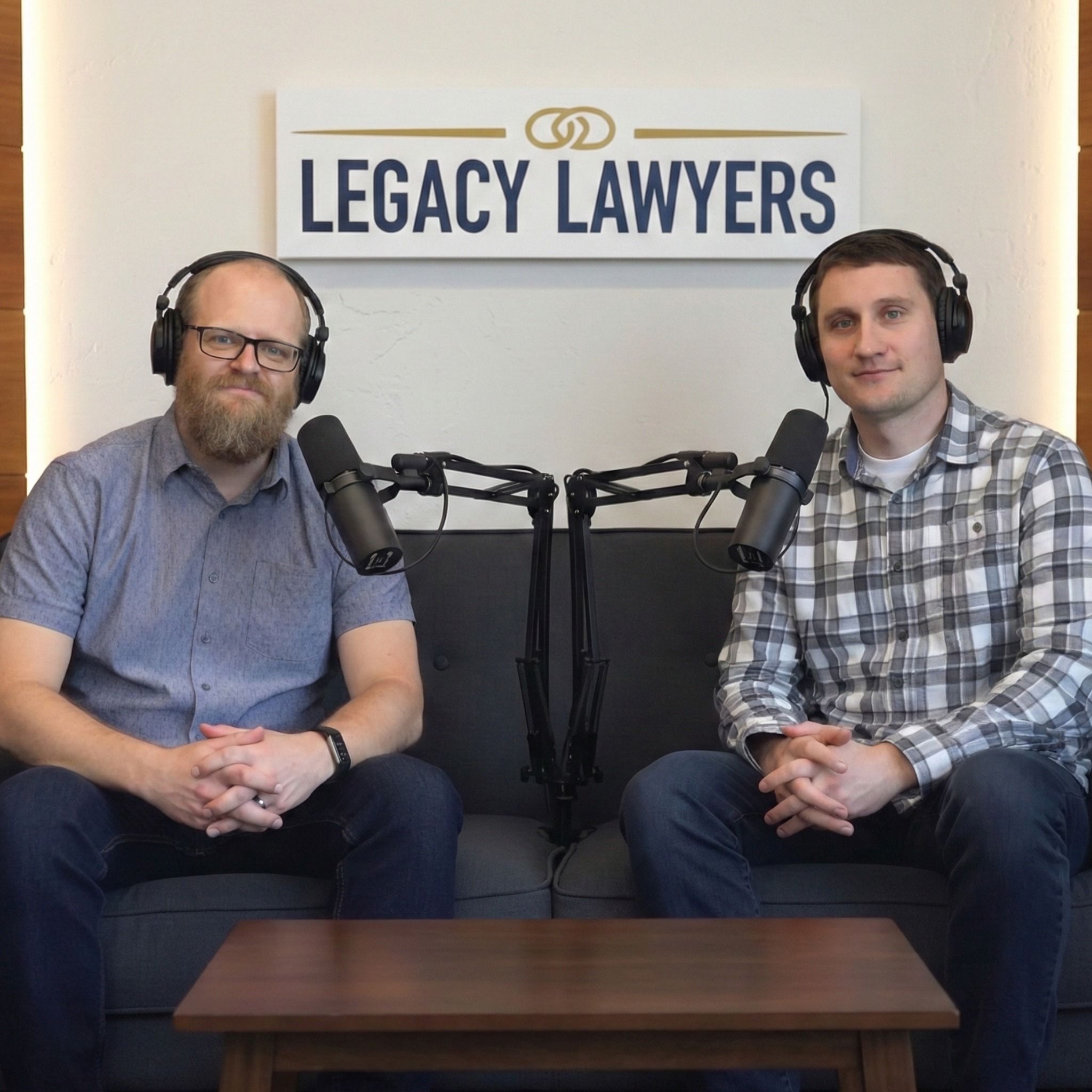
Legacy Lawyers · Voyant Legal, Mike Haslam, Nathan Croxford
Federal enforcement around suppressors and short-barreled firearms has shifted in 2026. The questions about who can possess them, what happens if you’re incapacitated, and what happens when you die have not. In this episode, Nathan Croxford and Taylor Stone break down what has changed with NFA items, why “ATF is not enforcing” is not the same as “repealed,” and why NFA gun trusts still matter for possession and succession. This is Part 1 of an ongoing series, recorded as of October 30, 2026. Key Takeaways: The $0 tax and ATF’s October 9 announcement changed enforcement, not the underlying statutes. The Gun Control Act, prohibited-person rules, and state law are unchanged. A policy of not enforcing can change quickly, and the law gives families no easy way to fix things after the fact. An item held in one person’s name is that person’s item. A trust can address shared possession, incapacity, and what happens at death. Not every gun trust is built the same, so have any trust reviewed by an attorney who regularly handles NFA planning. Nathan Croxford and Taylor Stone are attorneys with Voyant Legal. This episode is general information and education only, recorded as of October 30, 2026. It is not legal advice, and federal firearms policy and related court cases are changing. Speak with a licensed attorney before making any decision about firearms or NFA items. Learn more at voyantlegal.com or call 801.951.0500.
Taylor Stone: Hi there, everybody. Welcome out to the Legacy Lawyer. I'm with you, Taylor Stone, attorney with Voyant Legal. Here with you as always is Nathan Croxford to. Nathan Croxford: What's up, Taylor? Good morning. Good afternoon. Eight minutes Taylor Stone: Yeah. Ooh. Nathan Croxford: after noon, so I have to say good afternoon, not good morning. Taylor Stone: Yeah, and for everybody listening to this, happy Halloween. I know we're just getting right into the season and so just want to jump on here with a podcast about something not Halloween related for you guys. So I hope you guys can enjoy it for sure. so what are we gonna talk about today there, Nathan? Nathan Croxford: I think we're gonna start out talking about something that I don't think we've ever covered in this podcast, and that is NFA gun trusts. And then I think the reason that we're talking about it today is because there have been some recent changes with regard to how certain items that are governed by the NFA and enforced by the ATF, there have been some changes. and Taylor Stone: Yeah. Nathan Croxford: I think we're here to help people put on the brakes and maybe exercise a greater measure of caution before they go hog wild on these new perm more permissive rules. So Taylor Stone: Right. I think that's pretty spot on there, Nathan. and and so to just to begin with with everything, as always, and as we've said in the past, quick disclaimer, Nathan and I, we Yeah. Nathan Croxford: boy, the disclaimer needs to come out here for sure. Taylor Stone: Yeah, we are both practicing attorneys in a state law. however, although we are practicing attorneys licensed here in Utah and other states, we are not presently your attorneys, potentially. Right. And so everything that we are going to be v providing you with today will just be for education, for entertainment value, or edutainment. That's the good Nathan Croc. Nathan Croxford: as I as I have as I have said on many occasions. Taylor Stone: So this Nathan Croxford: this is absolutely not legal advice. So do not take it as such. It is not given as such. You should one hundred percent if if ever you've not heeded our disclaimer before, you should do so now. If you're going Taylor Stone: Yes. Nathan Croxford: to deal with the kinds of Firearms and objects that we're going to talk about today, you're going to want to be advised by an attorney you have retained, who has only your interests in mind, who is very knowledgeable in federal gun law and federal firearms law and and the kind of the state planning that that goes along with that, so that you do not end up in prison for ten years, facing a two hundred and fifty thousand dollar fine when you get out, which is the standard punishment for violating some of the laws and regulations that we'll talk about today. So Taylor Stone: Right. This is really trickier places in the law, you could say, where things are written in such a way that there are real extreme penalties for having violated these particular rules and regulations. So by all means, I'll re-emphasize what Nathan just said. Talk to another attorney. Get a second opinion on any of the things that would be discussed today. And again, this is not legal advice for you for sure. Okay, but just for your educational purposes. So on that note, though, let's talk. Nathan Croxford: Don't just talk to your neighbor who's a who's a commercial litigator and also a big proponent of gun rights. Hire Taylor Stone: Right. Nathan Croxford: an attorney who actually is working on a regular basis with federal firearms law and gun trusts and the like, because that's the kind of person you're gonna need, not a guy that just has some opinions. Taylor Stone: For sure. and so let's talk a little bit about firearms just in general. The firearms that we're talking about in particular, this isn't your regular hunting rifle that you're going out into the field with or anything like that, or your sweet pistol that you have at home for home protection or anything like that. We're talking about very specific firearms that require very different treatment and have for a little while. Nathan Croxford: And not only just firearms, sometimes just accessories. So probably Taylor Stone: There you go. Mm-hmm. Nathan Croxford: the thing most people are familiar with and deal with the most, I would imagine the most registered item right now would be suppressors. So Taylor Stone: Mm-hmm. Nathan Croxford: anything that you attach to your firearm that is meant to somehow muffle or mute or reduce the report when a round goes off is a suppressor. Doesn't even need to be a suppressor that was made by a professional. you I've seen people s put a s Taylor Stone: Right. But silence or co. Nathan Croxford: put an oil filter on the t tip the top of their gun and cut a hole in the end of it. That is a suppressor. So Taylor Stone: That's because you also spend a lot of time with some interesting people there, Nathan. I think that's more Nathan Croxford: That's right. No. Yeah, we won't talk about how I know that that's an option, but Taylor Stone: Exactly. Mm-hmm. Nathan Croxford: But suppressors, short barrel rifles, so rifles, you're gonna have the specs on this. Rifles with barrels shorter than putting you on the spot. I just asked you to not do that to me and I just did it to you. Taylor Stone: Mm-hmm. Wow. yeah, geez. no, I'm exactly. We're going to leave it at this because again, we know that you're not relying on this for any legal advice. Short barrel shotguns, short barrel rifles. These have been reduced in their normal length, and there are certain specifications for that. We're going to leave that at leave that for that, and you're going to do your own research on your own time. but it's not only just those things like like you already. Nathan Croxford: But I can find it. While you're while you're talking, I'm gonna find it. Taylor Stone: Just like you've already touched on, Nathan, suppressors are commonly called silencers, right? also other types of firearms we have, or as as they actually say under the regulation, it's I believe it is any other weapons. Any other weapons, Nathan Croxford: Any other fun yeah, any other weapon. AOWs. Taylor Stone: AOWs. So this would be your your concealed guns, your gun in a cane, your, any of those other kinds of clever things, right? but also there's been regulations for last several years, many years, a couple decades, that they've actually had to include machine guns, right? Anything that can go full auto, along with any other explosive or incendiary devices, grenades, claimer mines, those those kinds of things, right? All of them have specific regulations, right? So we're talking about these particular firearms and firearms accessories. And other explosive devices and other weapons that have a specific registration that has been, has been required under federal law. Now, for these, you can imagine if I get my firearm, if I get my suppressor, let's say that I have my suppressor and I get it registered, which we which required for a time $200, and you had to fill out what was called a form four, and you'd have to send it into the ATF, and they approve it. Right. Approved that I, Taylor Stone, would be able to receive and use that. Well, now if I if I pass away and say, Hey, well, you know what? I I know Nathan, he he would probably like to have the suppressor. I'm gonna give it to him. Could he just receive that outright? I'm the one who got registered. The answer is not necessarily, right? Because again, has Nathan filled out that form or is has he been registered? He hasn't. That's what a lot of people were kind of running into was well, hold on a second. I did the due diligence. I wanted to make sure that I was registered and was okay by the federal government. And now I wanted to pass this on. What is that supposed to look like? That's why there was the creation of these firearms trusts that would allow you, therefore, to be able to. That was one of the solutions that they had, was, and that's one of the solutions that was provided for by those trusts, was to allow for proper dissent to a beneficiary on your passing or in your incapacity Nathan Croxford: Yeah, so Taylor Stone: in that case. Nathan Croxford: so really trusts gun NFA gun trusts are for two purposes then, right? One is to be able to legally possess them in a way that would allow you to allow other people who are not the owners to utilize them while you're alive. and there's very very specific things that have to be done in order for you to do that. That's something you should talk to your NFA gun trust attorney about. but also solve the problem of success success or planning, right? Who receives those firearms and how? just to clear it up, a barrel with a length, a rifle with a barrel of a length of 16 inches or less. Taylor Stone: Right. And then I believe it's eighteen for and it's eighteen for shotguns. Nathan Croxford: La no, sorry, less than less than so it's the barrel for a rifle short barrel rifle, it's the barrel is less than sixteen inches in length, or the overall weapon is less than twenty-six inches in length. For a short barrel shotgun, it's eighteen Taylor Stone: And for a shotgun, I believe it's eight, yeah. Nathan Croxford: inches in barrel length, or again, the overall length of the entire weapon is twenty-six inches. Less than six less than twenty-six inches. Taylor Stone: Again, if you have attorneys looking it up more than you know, definitely something that you'd want to make sure that you're you're looking up yourselves, you're you're looking in those regulations and talking to an attorney who's has some experience in this. Right. Now, the Nathan Croxford: Yeah. Taylor Stone: reason why we're bringing it up today, though, right? We have these trusts, we put them in place. There's a lot of other institutions that put together these types of trusts or attempt to put together trusts like this to ensure that again, when I, Taylor Stone, pass away, I would be able to pass this on to somebody else as legally as possible, right? Under the regulations, Nathan Croxford: Yeah. Taylor Stone: this is what's supposed to happen. And so be able to pass through that trust. So then please name. Nathan Croxford: I just want to say one thing before you launch into the why we're bringing it up today. Taylor Stone: Yes, sir. Nathan Croxford: You, of all people, would know better than anybody in our law firm that not not all gun trusts are created equally. When you say there are lots of institutions that put these together, you go to buy a suppressor, they will offer you a what, a $250 trust that's $100. Taylor Stone: Or a hundred dollar, yeah, sure. Nathan Croxford: So let's just let's just say this. No trust of any kind that costs between $100 and $250 is worth the paper it's printed on. So Taylor Stone: Ha ha Nathan Croxford: if you're considering owning these types of items, whether before the rule changes that we're going to talk about today or after, you should seek out a qualified Planning attorney who knows the difference between the $100,000 to $250 NFA gun trust and the one that's going to actually keep you out of trouble. That will Taylor Stone: Mm-hmm. Right. Nathan Croxford: cost substantially more than that, but will be worth every penny because it could very well prevent you from spending 10 years in prison and paying a $250,000 fine. So as long as you're not paying $250,000. For the gun trust, you're getting a deal. Taylor Stone: Sure, right? They don't. Nathan Croxford: They don't cost that much, but they cost maybe a tenth of that. Or a little more. No, a tenth or a hundredth. Okay, a hundredth. Taylor Stone: I think it's a hundredth of that. and really I think that that's Nathan, you bring up a great point that I and I think that we've talked about it in other couple of other podcasts too, is you usually go off of the price of a trust that you'd be putting together, you have to think that an attorney is if they're going to bill their time, it's going to be based around what the price of whatever that thing is. So if I'm giving you a $200 trust and I as an attorney then am even if I'm go if my my billable rate is $200 an hour. Then I've spent one hour looking at that to ensure that I'm giving you protection against 10 years in prison and $250,000 worth of a fee or a fine. I'm gonna go ahead and say I want to just have somebody who's looked at it maybe more than an hour, right? And make sure that there's enough of that, we like to call it belts and s belt and suspenders type of protection. That it has all these pieces in place that just ensure not only is it protecting you, but also those who are going to be using this after you. And who potentially won't have the same love of a firearm that you do, right? And that's usually what we talk to clients about. So gun trusts. Nathan Croxford: Yeah. and just by the way, it is a hundredth, not a tenth, because otherwise we leave people thinking that we're charging twenty-five grand for one of these trusts. We're not. It's more like twenty five hundred to thirty five hundred for a really, really well put together gun trust. That's in Utah in the year the end of the year twenty twenty six. Give it a couple of years, Taylor Stone: Twenty twenty six. Yeah. Nathan Croxford: give it a couple of years and it might be it might be twenty five K, but not right now. on that yeah, Taylor Stone: With today's dollars. Nathan Croxford: in today's dollar, on that point, I am currently working with a family. there are no NFA guns involved, but they very well could have been. who they want nothing to do. They they they are the trustees of a family member who passed away with a large collection of firearms. They won't even go into the room and pick them up. They want nothing to do with them. They are the most, they're they're unfamiliar with firearms, they're scared of firearms, they probably are politically opposed to firearms, and they're in a quandary as to like we're trying to walk through, okay, how to do this properly. And that's with NF, that's with non-NFA guns. These are hunting rifles, they're normal length shotguns, their handguns, all things that you do not have to register with the NFA to own. So multiply that fear, trepidation, concern, worry by a thousand or ten thousand or a hundred thousand when it comes to the types of guns that we have here, if it was the same group of people. So we don't the whole point of estate planning is we don't want at least one of the points of estate planning is we don't want to leave our family members with messes after we pass away. I keep having a fly land on my head. And I cannot move enough to kill it. but we don't want to leave our family members with Taylor Stone: And this is and that's when we realized Nathan had died. Nathan Croxford: with messes. we certainly don't want to leave them with messes that could inadvertently cause them to become felons and face 10 years in prison or $250,000 in fines. So this is another area where we're going to say for the 9,000th time on our podcast. You want to have a trusted advisor who can help you properly plan for the contingencies that will arrive after you pass away. Okay, Taylor Stone: No we'll submit them. Nathan Croxford: now let's launch into why we're talking about it. Taylor Stone: All of this is a preamble to let's let's talk about what's happened. Nathan Croxford: Yeah, that was our that was a sixteen minute warning. I hope everyone feels appropriately warned and advised. You have been warned. Taylor Stone: Warned. So we we talked about there was this, there's a registration, right? There's forms that have to be filled out for these firearms, for these firearms accessories. Now, Nathan Croxford: ATF forms. Taylor Stone: ATF forms, particularly form four, right? Now, thanks to the one big beautiful bill and its implementation in January 1 of this year, the $200 fine, or excuse me, the $200 fine. Did I slip? Tax. There it is. The tax. Excuse me. That that is appropriate. It's Nathan Croxford: Tax. It's a tax. It's not a penalty. Taylor Stone: not a fine. It's not the Nathan Croxford: It's a tax. Taylor Stone: tax. the two hundred dollar tax that was that was included or required had gone away. In the one big beautiful bill, it was removed. For very specific firearms and firearms accessories, specifically for suppressors, SBRs, SBS, and AOWs. So any other weapons. So that's so short bearer, shotgun, short barrel rifles as well. Nathan Croxford: Maybe we should just give a tiny bit of background on that. Like why is it a tax? Real quick. When the decision came about Taylor Stone: Sure. Nathan Croxford: that we feel like we need to regulate these firearms, the question arose as to, well, how do we do that without violating the Second Amendment? And the way they got to that was to say, okay, well, we're going to use the congressional powers to tax certain activities, right? so we're putting a tax requirement, which in order to pay the tax, you have to fill out the form and make the registration valid with the ATF. so that that was the so it's really a tax regulation. It's a tax that that led to that. So when Taylor Stone: And that that was comprised under two specific acts. We have the National Firearms Act and then we have the Gun Control Act, which both of those together and several other Supreme Court cases that really tightened these pieces up to give us what we have up until last year, right? And is Nathan Croxford: Yep. Yeah. Passed like NFA was in the forties and Gun Control Act was in sixty eight. Taylor Stone: Believe, yeah. look at you just jumping into those. Yeah. Who's the expert on this? I think it's you, my man. Nathan Croxford: It's been a while since I've checked, but yeah. Taylor Stone: So now, now, fast forward to this last year, and we had the passing of the one big beautiful bill, and then its implementation here in January, they removed that tax. So, as Nathan so well said, this was a tax. And therefore, because it was a tax, it was a transfer tax. I'm transferring the the federal firearms licensee, they were going to they were going to sell it to me, my suppressor, and because of that, I had to pay a tax for them $200 and we had the forms that had to be filled out, right? Now because of that, now that that tax was removed, They still had this opportunity to register, but like Nathan said, well, that was the enforcement mechanism. The enforcement was this tax, and then if you didn't pay the tax, you you couldn't do it. You couldn't have the transfer. Now, with that going away, the question came, well, do we still need to have registered this? And a lot of firearms enthusiasts will say, as I had talked to, as soon as we saw that, there was writing on the wall that said, Well, then this the registration is probably gonna go away, at least for these items. Doesn't include Automatic fire, it doesn't include automatic weapons and those other explosive devices like we had talked about. But for suppressor, short-barreled shotgun, short-barreled rifles, and other and any other of those weapons, that tax went away, and then the registration has gone away. As of October 9th of this year, the registration went away. Now, what that means, and that was of course following some cases, not at the Not at the Supreme Court level. Again, these are at a lower level, but the NF the the and the ATF actually was they had issued some guidance about that saying they would no longer Enforce the requirement for registration of these particular firearms. They didn't get rid of registration, right? They just said they will no longer enforce this particular portion of the registration, meaning that you didn't have to fill out the form four to be able to do it. There are still forms. There's a form 4473 that you still have to fill out, right? You still have to be passed off through the NYX check, which is the the the online it's the national ins national instantaneous I'm I'm bad on my acronyms today. National instant criminal criminal background check. There it is. It's that that specific system that you're having to that you're having to submit your your name and your information to right see if you're not a felon. All those things. So you still have those that you'd have to fill out. But the rest of the registration through the ATF not required. Right, or excuse me, it was their enforcement. Nathan Croxford: So so it's I was gonna say, so you just slipped, right? Like it's easy Taylor Stone: I did. Nathan Croxford: to do, and then people who are very excited about these changes are eager to say it in that in that way. Hey, you no longer have to register these. And that is the wrong way to say it. The registration Taylor Stone: Right. Exactly. Nathan Croxford: regime is still in place. It's just that the current ATF director, the current, I guess. Taylor Stone: Yeah. Nathan Croxford: administration, which as everyone knows can change every four years, is saying we're not going to enforce the registration requirements. That's very different than Taylor Stone: And I Nathan Croxford: saying that the law has completely gone away. Congress didn't change the statute as no. Taylor Stone: Well and a member of our right, mm they didn't repeal the National Gun Control Act, right? They didn't do any of that. It's none of that's happened. It's just they're merely going to stop enforcing it. So I think that this analogy is actually pretty well done that was offered by one of our staff members was imagine that all of a sudden on the freeway here in Utah they say, We're no longer going to enforce speeding. We're not going to enforce it anymore. So people are just driving however they want to. That's basically what it is. Okay. They just say they're not going to enforce it. Did they change the law? No. Just highway patrol is no longer going to do it. Okay. But that also I think brings up kind of a very important point here that could it be changed back? Nathan Croxford: Well yeah, because I mean I'll give you an example. Like I think we all drive five to ten over and assume that even if we go zipping past a highway patrolman, as long as we're not going more than five to seven. Like everybody's everybody's got Taylor Stone: And with the flow of traffic and Nathan Croxford: their like interpretation of that and their comfort level of that. But Taylor Stone: Ha ha ha. Nathan Croxford: and that's an officer choosing not to enforce the law, meaning It's five over, it's seven over. Flow of traffic argument. Do I really want to do all that paperwork for somebody who is, for all intents and purposes, honoring the spirit of the law? They're not driving 75 miles an hour over this the limit. They're five to seven to maybe ten. I'm not gonna bother pulling them over. That's a choice not to enforce. Could they pull you over? Yes. If you are going one mile an hour. Faster than the speed limit, you may receive a ticket. They can they can enforce the law. Taylor Stone: Yeah, yeah, absolutely they can. And I think here we have to understand this kind of in the appropriate way, too, that what was put out, what what was instituted there on October 9th, was them saying they're just not going to enforce it with these particular firearms right now. Right? And because of that. a lot of people are saying, well, that means then I can just go and buy my suppressor and all of that. Sure, sure. There's no there's no question that, hey, the lack of enforcement means you wouldn't have to fill out that form according to their according to their enforcement of the requirement. They're no longer going to enforce you to do so. However, unlike the highway patrolman who's no longer following the speeder or anything like that. Or is not going to pull you over presently, when or if and when, I I think when in this, if they do turn this back on, if they require a tax, if we have a change in administration, if we if we have any of these other ways or any of these other reasons that if this injunction, it was an injunction, right? If the injunction gets overturned at a higher court level, if the DOJ, just Department of Justice, just decides to rescind the policy. Right. Or if they add that tax, even a dollar's worth of a tax, there's there actually isn't a mechanism presently for those unregistered, now unregistered suppressors, SVRs, short barreled rifles as well, or other weapons to then be transferred back in. There's nothing in place then that allows you to be able to bring that back over to ensure that now I'm going to be compliant with the regulation, which is Nathan Croxford: So you're driving around with a trunk full of S of short barrel shotguns, short barrel rifles, and suppressors that have never been registered, and you you you have them in that you have them be you're holding them that way because you believed that registration was no longer required. The second the law changes, you could be on the freeway driving. And you could be pulled over for speeding, and somebody could open there's could be some reason to open your trunk. And then the police officer calls an ATF agent, and the ATF agent shows up, and you are no longer in compliance with the law, and you face, and that's per incident. So if I had four or five or six of these, we're talking 10 years for each of them, possibly. And $250,000 for each of them as a penalty, Taylor Stone: A peace. Nathan Croxford: right? So I guess the that's the question is how do we proceed when we have something that could turn on a dime? Has there ever been like I was trying to come up before we jumped on, I was trying to come up with a an example of a federal policy that went from Permissive to more restrictive in a short period of time. Here's what Taylor Stone: And we struggled to find one. We struggled to find one. Right up until Nathan Croxford: Well, until we we jumped into an AI and asked Claude to give us an example. Here's what the first one, and I didn't even have to press. There may be better ones, but this is a good example. September eleventh of two thousand one, we all know what happened. prior to that date, passengers and I don't it's it's been that way for so long, I don't even remember this. Taylor Stone: I I do remember this. I remember somebody coming home from a or something, right? Yeah. Nathan Croxford: Well, I remember parts of this. Passengers could carry small knives, blades under four inches long. Is this sounding at all like what we're talking about here? Barrels of certain length, box Taylor Stone: Barrels of a certain length. Nathan Croxford: cutters onto planes. Screening was run by private contractors hired by the airlines. And friends and family, I remember this. Friends and family could walk right to the gate without a ticket and see you off, give you a A hug and a kiss right before you walk down the tunnel to get on your on your jet, right? Taylor Stone: Yeah. Nathan Croxford: Within days, the FAA banned all knives and box cutters. So 2000, September 11th happens. We have all that we know happened there. All knives and box cutters banned from carry-ons. By November 19th, we're talking 37 days. Congress had passed a new law, the Aviation and Transportation Security Act, which created the TSA. So out of thin air, they created a federal agency, Taylor Stone: Agency, yeah. Nathan Croxford: and they federalized airport screening, completely revamped, like airports were reconfigured so that it wasn't private contractors doing it. It was now It it felt more like you're walking into a prison than into an airport. all screening was done by federal federal employees working for the TSA. And where were you able to say goodbye to your relatives before at an airport, before anybody went through security? No more you you would not get past security without a ticket to get on an airplane and without being Taylor Stone: Let's not go to the lounge together, that's not do any of those things together anymore, right? Nathan Croxford: Yep. You had to be screened and you had to have a ticket to make it pass security. and we're talking about rules that had been in place for years, decades, as long as commercial airlines existed and in Taylor Stone: I was going to say since the institution of flying on a on a plane. Nathan Croxford: Yeah, since Orville and Wilbur went out and right. maybe not quite that long, but that's where it all started. And in 37 days, no, is that thir yeah, 37 days? No, I don't think I'm doing the math right. Sixty-seven, right? About two Taylor Stone: No, I don't I don't think the math's right on that, but sixty seven days. Yeah, that's yeah. Nathan Croxford: months, two months and a week, sixty-seven days, a new federal agency was created. Federal airline security was Federalized. all the rules changed like that. So can it happen? Yes. And I think you said that in preparation for this podcast, Taylor, that well, why don't you just say what the the director said, the ATF director said. Taylor Stone: Yeah, I I listened to some podcasts. there was a there was actually an open letter that was signed by director Robert Cicata, who is the director of the ATF, right? He's that he's that top brass right there. He's the one who's trying to field questions. He's he's an appointee, Nathan Croxford: He's a he's a political appointee. Taylor Stone: right? So his comment was and the the individual who was talking to him said, Well, what would be one of these triggering events that trigger, no pun intended, right? What would be one of these events that would that would actually maybe put change this back, right? What would stop this injunction? What would what would allow you then to enforce this again? As the director, what do you think? And he said, if there was a tax or any of these things, but then he also said something really silly in I thought. He said, if there was one big profile attack, if there was a Nathan Croxford: High profile. Taylor Stone: If there was something that showed up on the news and somebody showed up with an SBR or a one of these unlicensed suppressors or anything like that, unregistered, so that would be a great reason for all of this to turn back over. And Nathan Croxford: Something that puts the entire country in an uproar, and people are demanding that you know, we've we've gone too far with allowing these permissive policies, it needs to be changed. You get enough people upset, which 2000 September 11th of 01 is a good good good example of a way to get enough people enraged. And you get enough momentum behind it and you could have a change at the federal level in a matter of days. So this could all all these things that you're gonna hear your if you're in in this world at all, you're gonna hear people talking about it and they're celebrating and they're excited. And yeah. Taylor Stone: Mm-hmm. And we're gonna buy so many and we're going to and and this is, and nobody can find me out and I and no registration Nathan Croxford: Yeah. Taylor Stone: is required or anything. That of course is not including any of the fourteen states where registration is required at the state level. Utah's not one of them, but all those other states you know who you are, right? Nathan Croxford: Yeah. So just exercise caution. Don't be one of those people. It's not likely. because I think I mean, I'm not gonna give any kind of percentage, but it's not like ATF agents are hanging out on every corner. Like it's a Taylor Stone: Okay. Nathan Croxford: pretty big deal if an ATF sh agent shows up. But but you know, if if you go far enough, it only takes once. And so these people that are seeing this as a carte blanche to do whatever they want and are they've thrown the entire you know thought process that we've been going through pre previous to these changes, they've thrown that out, they've thrown the baby out with the bathwater. Those could be the people that are you're visiting in a federal prison a few years from now if if the wrong things went down. So all we're saying Taylor Stone: And Nathan Croxford: is Taylor Stone: well, and just on that point, real quick, Nathan, and heaven forbid, that person who all of a sudden thought this was such a boon, they then pass away, and now you have a family that, shoot, they're in that scenario Nathan talked about that, well, great, dad passed away. Now what do we do with all these unregistered firearms? What what do we how how do we deal with that? Yeah. Right. Right. Nathan Croxford: It's this guy's wife or his adult child that is a felon and who's in prison, who would would had no intent to do anything wrong, who was maybe fair fearful of those weapons and didn't Taylor Stone: Yeah. Mm-hmm. Nathan Croxford: know exactly how to go about dealing with them because Yeah, because you didn't Taylor Stone: And they decide we're gonna go sell at the gun show or something like that. Nathan Croxford: because dad who just died didn't take any precautions or Overreacted to these changes. Now you've got family members in serious hot water. So all we're saying Taylor Stone: Mm-hmm. So I think Nathan Croxford: is be cautious. Understand what has actually happened. There's been a decision to not enforce. There has not been a decision to take this away. Taylor Stone: Right. Yep. And I think as that final note, be cautious. This has not been a repeal of the Gun Control Act or the National Firearms Act. This is we are not going to enforce in this very limited circumstance. And that could also change. Right? We would always say, as we always tell our clients, we want to make sure that you are as prepared as possible for as many of these scenarios as possible. We Nathan Croxford: Yeah. Taylor Stone: I I believe that if we were talking to any of our clients, and we have talked to at least a few, Nathan Croxford: Okay. Taylor Stone: that a lot of times they're saying, I still think that a gun trust isn't a bad idea. And I think that that's wise. I still think Nathan Croxford: Yeah. Taylor Stone: having these kinds of documents in place that allows for good transfer, it gives direction to your family. I know that's one of the things that I love, is it gives actually step by step what is supposed to happen if anything were to happen to individual who already had that stamp. Trust now owns this firearm. This is what's supposed to happen if you no longer want it. Or that Person passes away, and you think, What should we do with it now? Gives you guidance Nathan Croxford: Mm-hmm. Taylor Stone: on that. And when in doubt, you can always reach out, right? You can reach out to us and chat with us about it. Nathan Croxford: Yeah, and I guess it's what's your risk tolerance level? Because I know there are people out there that feel that you know this whole regime, this whole National Firearms Act, the the Gun Control Act, that the whole point of that was dressing a tax up t a taxing policy up to look like well they're they're in A lot of people feel that the whole basis for this being in existence in the first place is so that they can create a list of people who own these weapons so that if there was ever a desire to want to go and confiscate them, they would know where to go and and what they were looking for, right? and there are people that view the entire legal scheme in that light. Those are going to be people the people that are going to have the hardest time swallowing us saying, maybe exercise some caution and still utilize the tools that are at your disposal so that you don't one day wake up and the law has changed and now you're out of compliance and there's no way to reverse it. No clear guidance or path to reverse it, or that you pass away and you leave your family members in a bad situation. The middle ground is, yeah, maybe they are making a list. They're they're definitely, they've got records of of this. And some people are gonna view that as a as a negative. They're gonna say, well, that's a violation of my Second Amendment rights. Well, these laws that are still in the books have passed many, many constitutional challenges, and whichever court was sitting at that point in time determined they were not unconstitutional. So regardless of what anybody thinks, that's the current state of the law. so, you know, I guess if you're okay with potentially being out of compliance, one morning you wake up and there's a news release that this was reversed and they are now re they're back to enforcement, or you're okay passing away and leaving family members in a bad spot, then go with the with the the full Disregard the whole registration regime. But I think the better course of action is to be careful to continue to use the planning mechanisms that are in place to keep people yourself and others safe from law enforcement actions that you may disagree with but are still legal. or could be turned back on and be legal in a in a moment's notice. eventually maybe this ends up because what? This injunction came out of a federal court in Texas. So Taylor Stone: Correct. Right. Nathan Croxford: that's not the Supreme Court. That's not the the the the highest court in the land. That doesn't mean it's applicable in every state. in fact the director said even with these federal changes, there's still what, 18 Taylor Stone: I think it's fourteen states, but state by state making decisions, right? by all means, right? Nathan Croxford: Sure. Fourteen states that require Yeah, so that that could change. Maybe at some point the Spr it this reaches the Supreme Court and we have a more definitive, you know, there is an actual change in the law. Something is declared unconstitutional, or Congress changes the law and does away with registration altogether, not just a federal agency saying we're not gonna enforce, that would be a time to reconsider do we still continue with with this practice of using gun trusts? and this isn't us like I mean gun trusts are a very, very, very like tiny, tiny percentage of our law firm's revenue. so we're not here on we're not on here saying, well this is a bad change because it takes away one of the things that we It maybe decreases interest in the in in one of the services that we provide or one of the types of trusts that we use. Has nothing to do with that. this is us trying to to make sure that people remain safe. Taylor Stone: And and I think that that's that's a great place to end for us for today, Nathan, is the idea that hey we as As always, for any of you who know Nathan and I personally or even professionally here in our business is that we want to make sure that you're as informed as possible. And that's what we're trying to do here. We know that as of here, the 30th of t of October 2026 at 1249, this is what the law states, how things are being interpreted, kind of some the cautions that we would allow for you as the law stands right now. Could this change and will there be a follow-on episode? Likely. And hopefully we'll probably both. Nathan Croxford: Well that's why that's why we're making a very concerted effort to date stamp and timestamp this episode because it will not be evergreen. we will revisit this at some point and give you an update on where this has gone. so yeah. In the meantime, please exercise caution. Please Seek out a trusted advisor that can give you good advice. Have an open mind. don't be so attached to your you know, your feelings on this matter that you let emotion override rational thinking. and just be careful. Taylor Stone: Yeah. Well said, Nathan. On this Halloween season, be careful out there, everybody. Nathan Croxford: Yeah, be careful tomorrow night too. Taylor Stone: Yeah, yeah, exactly. And we'd we'd love to hear you from you guys. There you go. This is this is all over a good old TSA. Nathan Croxford: Know where the candy's coming from. pick your neighborhoods. Yeah. We're just full of we're just full of Taylor Stone: Unsolicited wisdom. Make sure you Nathan Croxford: parental parental concern right now. Like we just Taylor Stone: know who's giving you that candy. Did mom and dad unwrap it first? Nathan Croxford: both Taylor and I know how how how how to have a good time. We're not stuffed shirts all the time like this, like but we are we are seriously encouraging you to exercise caution and be careful. So Taylor Stone: Yep. Well with that, thank you so much everybody for for anybody who's lasted this long in this episode. I know it was a lot. If you have questions or comments, yeah. If you Nathan Croxford: Y you must really care about the topic. Hey, thanks Taylor Stone: All right. Nathan Croxford: for joining us. Look for our podcast on all major podcasting platforms. If you got anything from this, please give us a like, give us a share, give us a review, pass this on to somebody that May need to hear some caution. and we will catch you on the next one. Taylor Stone: Yep. See you guys. Nathan Croxford: Thanks everybody.