
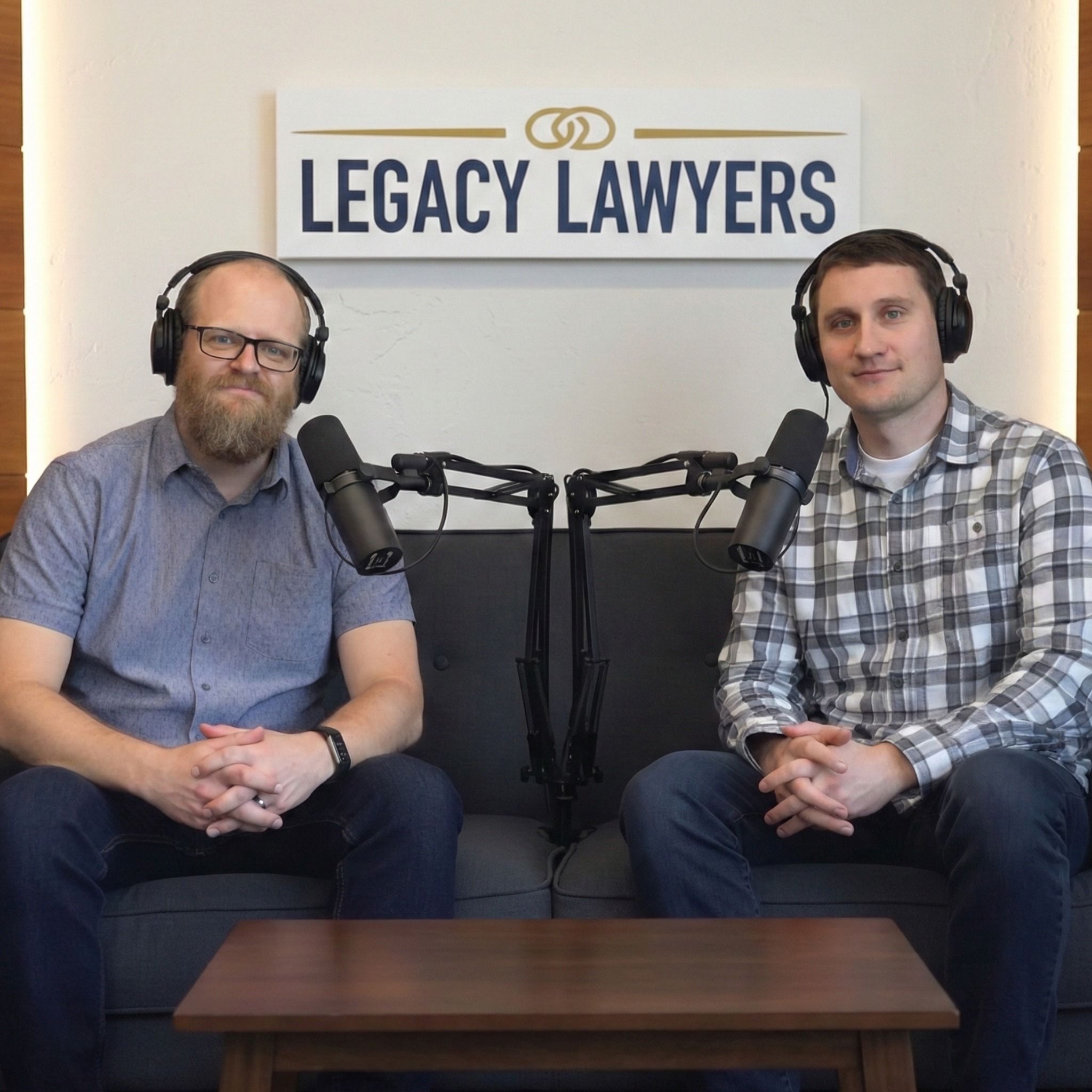
Legacy Lawyers · Voyant Legal, Mike Haslam, Nathan Croxford
Not all estate plans are created equal, and most people have no way to tell the difference until it's too late. In this roundtable episode, Michael Haslam, Taylor Stone, Brian Edwards, and Cody Millward get candid about what separates real expertise from checkbox planning. They walk through what they actually see when a client brings in a plan built somewhere else (trusts that were never funded, revocable living trusts drafted with no Medicaid protection despite claiming otherwise, documents with blank fields nobody caught), the exact questions that reveal whether an attorney knows their craft, and what genuine experience looks like from the inside. Key Takeaways: The Funding Gap: A trust is only as good as what's actually inside it. One attorney describes a family who paid for a complete trust, but the house deed was never transferred, meaning the asset protection clock never started. What Expertise Actually Costs: A real estate plan takes real time. A quote far below what other firms charge is a sign of shortcuts happening behind the scenes, and the family pays for it later. The Questions That Reveal an Expert: How will you help me fund my trust? What happens if my trustee and beneficiaries disagree? What did you consider and rule out for my plan, and why? The Special Needs Blind Spot: Most trusts the attorneys review never address what happens if a child later qualifies for state benefits, a gap that can force a family to spend down assets before that child can requalify. Michael Haslam, Taylor Stone, Brian Edwards, and Cody Millward are practicing attorneys at Voyant Legal in Utah. This episode is for educational purposes only and does not constitute legal advice. Visit voyantlegal.com or call 801.951.0500.
Michael Haslam: Hey everyone, welcome to another episode of the Legacy Lawyer Podcast. We are excited to have you join us today. This is a first for us. We are have four attorneys on a podcast together, which is pretty epic for us. we've done Taylor Stone: I think the term you're looking for is this is enough. This is this is just the right like. Cody Millward: Ha ha ha. Michael Haslam: When is too many attorneys on a podcast too many? Well we're about to find out if four is the number. Taylor Stone: Four feels right. Michael Haslam: Four feels like a perfect number. we've done one. We've done two. We'll see four. We we almost Brian Edwards: Jump to Michael Haslam: had five, but Nathan Nathan had other commitments. I think he's jumping off a cliff somewhere with a rope tied to him. So we wish him luck. Taylor Stone: Eeez, man, good setup. Michael Haslam: If he's back on a future episode, you know it went well. Taylor Stone: You just jump it off a cliff somewhere. Have a good one, Nathan. Michael Haslam: If it if he's Brian Edwards: should be a cheap training sometime. That'd be fun. Michael Haslam: If he's not back for a while, you know it went bad, so we'll just leave it there. Cody Millward: He at least has planning in place. Taylor Stone: There you go. Like he's Michael Haslam: He does have a good estate plan. Cody Millward: Yeah. Taylor Stone: got a good planning in place. It's true. Michael Haslam: So, well, this episode is gonna be awesome. We are gonna talk about what you need to know when you're betting a law firm and what you need to know when you're considering who to work with and what you need to look out for to help you determine kind of, you know, if you got a good estate plan or not. because unfortunately not all attorneys are created equal. We just like everything. So with that, we're gonna go ahead and start with just kind of a qu a little bit of why we why we say that, why we say not all tourings are created equal. We all had different backgrounds before we converged here at Voint Legal. So we've seen planning in different contexts. So we're just gonna share like a couple insights that we've had and help kind of pull back the curtain a little bit so everyone listening can understand really a little more how a sausage is made, maybe, or not made. No sausage. How the How the magic happens or how they're how it cannot happen if if it's done wrong. Taylor Stone: Sure. Michael Haslam: So Taylor Stone: Maybe real quick, Mike, before we jump into it all, should we maybe put down our disclaimer? Michael Haslam: Yeah, let's do it. Taylor Stone: So we are live practicing attorneys with bar licenses and everything. But we are not your attorney at present. Unless you're one of our clients for sure. So anything that we are providing here, as Nathan says, may he rest in peace, is anything that anything that we say here we refer to as, you know, it's educational or entertainment purposes or edutainment, as Nathan likes to say. and so truly if you would like to be able to apply any of the information that you're hearing here, please come in and see a real life attorney. You can come and talk to us, find other counsel. This again is for educational purposes. Michael Haslam: Beautiful, Taylor. Now that we Taylor Stone: So first time those two things have been paired together. Beautiful and Taylor. I'll take Cody Millward: Yeah. Taylor Stone: it. This is a win. Are you sure it's not my birthday today? Michael Haslam: We'll check that box. No. So the other way to look at this is maybe a little more like how do you know if your estate plan was built for you and really a customized estate plan versus just kind of a boilerplate template plan? That might be another way to say it. Yeah. So who wants to share some of some of the things you've you saw kind of earlier in your career that is a starting point with estate plan but can also leave some gaps or maybe just isn't quite the standard that you would you would want if it was your own estate plan. Brian Edwards: I'll go first. Hello, this is Brian Edwards. I'm one of the Michael Haslam: Cool. Brian Edwards: semi every now and then co-hosts now that they've labeled me. So I s so when I started law, I was actually in the immigration field for four years. So estate planning is like my second area of law. And I've been in estate planning now for four years too. I've I've I've reached my my time. It's been great. So Michael Haslam: Doubled. Brian Edwards: yeah, an immigration One thing that a lot of people don't realize, I think well, maybe they do, maybe they don't. It's a lot of paperwork, just filling things out. but everything has to be exact, everything has to be in its right spot, and you have to have all the documents on the backup to to or all the documents to back you up is really kind of what comes down to. So that's kind of where I when I jumped into estate planning, that's kind of what what I came over with is like everything has to be in its spot and we gotta make sure every all the boxes are filled and check everything right. And so when I started estate planning, that's that's the perspective I came from was like, hey, let's make sure that we have everything that we need, everything that's is backed up and everything in. I've seen estate plans come through that other other firms have done. they came through and like within the estate plan there's a box that says, Please fill in this answer within their estate plan that they've signed. I'm like, wait, d did that just not get filled in? Like did we miss something? And I don't know. I think that that's something that is a big red flag. Like just making sure that all the boxes are filled out so that when you see your estate plan and it's pointed out, there's no missing sections and there's nothing like and the two biggest things that I say is like, okay, we need to know who's in charge and who's gonna get what, right? there's obviously a lot more than that, but if those two things aren't there, then the estate plan is it it's or if it's wrong, it's not what you want it to be. That's a big red flag, like, hey, we should probably look at this and and or somebody should look at it and try to fix that. That's what I see. Michael Haslam: So Brian, why do you think why do you think some of those boxes were missed or not filled out? You think it was on the client, Brian Edwards: Just Michael Haslam: on the attorney, on both? Brian Edwards: It could be both. I think the one that I saw in particular was on the attorney, only because like it it I don't know if I'm revealing some huge secret from estate planning, but there are a lot of programs out there that we can use to draft these documents. Michael Haslam: Mm-hmm. Brian Edwards: and it's a lot of like, hey, make sure like it asks us questions like hey sh who should it be and everything like that. And I think just some of those boxes were missed when they were filling out the program, to be honest. Michael Haslam: Okay. Brian Edwards: so that's that's what I think. obviously when we fill them out. Or like anyway, I'll leave it at that. Taylor Stone: Well, if if I could jump in on that as well, Brian, I think that there's a lot of times that I'm sure a a lot of people you you might know not know that the law, a lot of people think that, hey, you can just kind of practice any area of law and you'll just be great at it and everything will be fine. what we've found is that's not often the case. And a lot of times, especially I know that when I came out of law school, there was this perception that I'll just sort of gather somebody's trust. Like I'll just I'm an attorney, like I can figure it out, like that kind of a thing. Brian Edwards: Yeah. Yeah. Taylor Stone: And especially with AI and new other systems that are kind of coming out, there's a lot of people that think, well, it looks right and it should just be fine. But I think what they're what generally those other attorneys are missing, other people do miss, and it's kind of addressing what you're bringing up here, Brian, is a lot of times is it's just a thorough read-through, you know? And it's like that might that's that's a big step that like if you're looking for an attorney, if you're doing your own estate plan or if you have somebody else who's done your estate plan is Just making sure that, hey, you've at least sat with that person, just read through it all, right? Brian Edwards: Yeah. Taylor Stone: That you've and maybe that there was a mechanism in place that you could be like, hey, I've read through it all, you've read through it with me. I'm gonna take a chance and I'm gonna read through it. And can I bring back other questions? If I'm not sure about it, can I bring it back up to you? I think that is something that I've seen, at least with some of the plans, that maybe I thought maybe we're missing the mark, at least when I talked to the clients about it later, is they said, I I thought it said this and it doesn't. Right. And and I think and I said, well, in the plain wording, it just says this. And they said, I I didn't know that. I didn't know that that's what it was supposed to be. And so I guess it's kind of in that same way that like maybe just a if it had been read through with the attorney, you know, if it would have been read through with whoever had prepared it, would be able to say, Yeah, this this looks right, especially with somebody who's spent a lot of time in this area. You know, like Brian Edwards, four years by all means. Brian Edwards: There you go. Yep. Cody Millward: Yeah. Brian Edwards: Yeah, I feel. Michael Haslam: So Cody's our n our newest member of Voyant Legal in have you been on any of our podcasts before, Cody? Cody Millward: No, newest member and first time guest on the on the podcast. Yeah. Michael Haslam: This is awesome. Brian Edwards: Welcome Khali. Taylor Stone: Longtime listener, first time guest on the podcast. Cody Millward: yeah. Michael Haslam: So I I would love a little bit of your perspective, Cody, like you came from a different area of law. you've been at firms that do estate planning and you you've been here for a minute and got to work on a lot of state plans now. What what kind of jumps out to you maybe that you've noticed like the one of the key things that either w we do you think that's really important or you do the like a lot of people are mi that we do that you think are a lot of people are missing. I mean what what's your big takeaway between what makes a plan done right versus being half done? Cody Millward: Sure. No, yeah. I think one of the big things that stands out to me, I think it from my perspective, it it boils down to experience. like like Taylor mentioned, it it's easy in theory to be like, yeah, I can just draft up a will. I'm an attorney, I'm allowed to do that. and you know, certainly you could, but you know, without having gone through iterations of drafting and seeing different possibilities crop up with clients, You don't know what some of the wise provisions are to maybe include in in, you know, the documents you're drafting and the things that you can put in ahead of time to really save a lot of headache and potentially heartbreak too. as as we were talking, I I was reminded of a time kind of early on in my legal career. I was early practitioning. I was still up in Washington where I had done my education and I signed up for an estate seminar. And it was it was a drafting seminar and a local practitioner was walking through some of the templates she uses and how she does it. and interestingly enough to me, there there was and there's a total absence of any discussion on trusts. It was just wills and power of attorneys. And I remember kind of going up to her and and asking, like, hey, like, do you ever draft trusts? Is that something you do for a client? She goes, no, no, that there's just a lot of complication there. I don't think I would touch that. And I was I was floored, honestly, because in my experience, more often than not, a a trust is is the best vehicle for someone to have as a baseline plan. And when they're a lot of times people don't really know that. And so having the experience and seeing that that that's the tool that really can help the most, I I think means means a lot. I I like to tell clients, I kind of blame Hollywood, but I don't know if people have seen like the movie Knives Out. I always go for knives out because I think it's a fun one. But in in any movie or story like that, there's always that scene where there's the reading of the will, right? And this kind of old crusty attorney comes into the home and pulls out this dusty folder and opens it up and starts saying, To my grandson I leave this and you know, to my daughter I exclude you from everything. And it's like the big surprise moment. But that's not a thing. Thank goodness we don't have to do that and go into people's homes and and tell them those things Michael Haslam: Ha ha. Cody Millward: to their face. But but really people think that that's a will. That's what a trust does. And so having that that experience, I think, really is what makes the difference. Michael Haslam: It and it it takes time to get that experience. And that's where I think when you're dealing with a firm that kind of does it all versus a firm that focuses a hundred percent on trusts and estate planning, makes a big difference, right? like if that's all you're doing all day every day, in a very short time you've done more trust than all the general practitioners out there, you know. J because they're doing maybe ten a year where we sometimes will help ten clients in a month with their trusts. So it's a big Brian Edwards: Easily. Michael Haslam: difference. Yeah. Taylor Stone: sure. Well and especially too when it comes to things like If there is changes to the tax law, if there's new ways to kind of view certain statutes to be able to be more advantageous for individuals, if there's geez, the difference between assets being held in Idaho and community property states as opposed to here in Utah. I mean, all of those extra little things that you just think, well it's just all property, it's just the same, you know, I pass away and it goes to my kids. Like the with that kind of real blanket approach to it, you miss some of those other pieces that I I don't think it just costs heartache and stress there, Cody. I think also dollars. Right. Like Cody Millward: yeah. Taylor Stone: in the end for a lot of people that if if my approach is just, we'll just put together a will, then that has to go through probate, meaning I I need to pay somebody else again to then do that part. and then there's then there's exposure to creditors and more creditors. And how how is that part how's that part supposed to be managed? We like to make sure that it's just as buttoned up as possible. That's one of the things that I enjoy about seeing our process and seeing just what the alternative is. You know and any other of the other practitioners who do the same way that we do, to say, like, let's let's make sure that it's done right at the outset, instead of just saying, Well, we'll do kind of a portion of it, and then you'll at least know an attorney to talk to when, you know, when you pass away, and then we'll do the probate for you, that kind of a thing. That's not too cynical, Brian Edwards: Yeah. Taylor Stone: right? Brian Edwards: No, and if I could just add on to Taylor's, like I totally agree. And just like there's ever since I started estate planning and specifically our voyant legal, just this idea of like there's so much that can be attached and like can go into estate planning that's not just hey I want to leave something to my kids. like what about hey, I don't want Medicaid taking my money, or I want to try to get asset protection, or I have a a a prenuptial agreement and how does that affect my estate planning and just like I didn't realize just how broad it actually can be and just how many I like the idea of like having a a a a firm that's focused on estate planning because it's possible to just really try to tackle all of those extra little things and maybe with different types of trusts and really focus on the differences and say like hey this one might be best for you this one might be best for you. The revocable living trust that's available is it's a good trust. Like I'm not I'm not bashing it, but like it doesn't fit everybody's needs. And I've seen firms Michael Haslam: Mm-hmm. Brian Edwards: that that's what they do and good on them, you know, like if that if that's what works, that's great. But sometimes like it just doesn't fit everyone's needs. And so you need something that's a little bit more or does it some asset protection or anything like that. And I think when I came here to Voyant Legal specifically, that kind of blew my mind. I was like, we have more than just the revocable living trust. And there's a lot more and there's a lot that goes into them. And it's been my three years I've been here, it's been a fun journey just trying to learn it all and try to just incorporate it and be like, hey, let's see what works for you. Let's see what works for you. And it's probably different for both clients, you know, and and just go from there. It's it's kind of it's it's really been eye opening just to just see. There's a lot more to state playing, like this is why I want to leave my kids. It's it's there's a whole lot more to it. Cody Millward: Brian, I I just met with some clients earlier this week actually and they sat down with me and they were interested in talking about what was possible as far as asset protection and you know if different programs had to come into their lives down the line like Medicaid. and as as we know, there's there's a look back period when you're qualifying for Medicaid and what assets they they look at. And they had pulled out their old planning. They had done a revocable living trust almost five years to the date from when we met. And I had to tell them that, I'm sorry, you know, this doesn't start the clock for any protection. If you need that protection, we've got to start it now. And it was kinda it was it was tough to see the kind of breath leave their bodies as they just were sitting there thinking, We we could have had this done if someone had told us. Taylor Stone: Well and in fact it said there, Cody, that I had an experience with a client who it was one of my earlier clients as well. They had come in and it was the kids who had come in and said, you know, hey, we had put together this trust or our parents had, you know, about a decade ago, trying to get kind of to protect them, prepare them for long-term care if that was required. Well, one of the parents had gone on to long-term care and they said, Okay, well, what's the next step? Right. Kind of that assumed knowledge that, well, it's already done. And then I looked at it and thought, well, actually the the trust looks good. Like it's Cody Millward: Mm-hmm. Taylor Stone: it's compliant. It looks like yeah, it's maybe not one that we did, but hey, I mean, you know, one artist to another about how you put this all together. But I said, no, it looks like it meets all the requirements, at least to be able to give you that asset protection. And I said, show me the deed to make sure that the house got into it and all that. And they were like, wait, what? And I said, shoot. Well, you have a real fancy document, and I know you spent a lot of money on it. was the deed. change so then the house actually went into the trust what we call funding funding making sure that a trust has been filled with those assets that you have it's like well that needs to happen when cody was talking about that clock that needed to start it was when those assets transferred into that good trust that met all the requirements I said when was that done they said we never did that I said well again heartbreak for them to be able to say well now mom can't do anything about it Let's see what we can do from here because now things need to change. Now these are countable assets. Now we have this extra problem that we're trying to deal with. And so I mean, it's just that's that's something again that when I think about kind of differences in the things that at least something that we try and do. And I'm sure there are a few other practitioners who would try and do it. Brian Edwards: For sure. Taylor Stone: It really comes down to that funding piece. I think that's one of the things that I like to at least when I talk to clients about it. It's just say, hey, this is one of the things that I know sets us apart, is that we try and help with that funding. Michael Haslam: Yeah, that's probably the number one mistake I see when I review an estate plan is the funding. and we were talking a little before we hopped on about some of the different experiences we've had at other firms, what we've seen at other firms. And I think it was you, Cody, made a comment like you hadn't seen a lot of firms do a extra follow-up meeting. We call it our delivery meeting, but it's where we find out what the clients got moved over. We move what we can for them. Like we we always take care of the deed because that's crucial. And that way we know all we got done. Right. So we Taylor Stone: Yeah. Michael Haslam: we record that Brian Edwards: Yep. Michael Haslam: ourselves for our clients and we take ownership of that. But you know, there's things our clients need to do with their bank or their life insurance company. And fortunately if I walk into the bank, the bank doesn't let me change people's accounts, even if I'm their attorney. Taylor Stone: Fortunately, yeah, well said. Cody Millward: Mm-hmm. Michael Haslam: so so they come back and they kind of report to us, right? This is what I got done, this is what I didn't get done, and like a lot of there a lot of places don't do that step and just that little thing makes or breaks a plan. Brian Edwards: And these other places, it's not that they don't try to fund. I mean, I I've I've seen it like they have the conversation, they they will talk about funding, though I they'll print off a a beautiful letter that says, Hey, here's the steps you need to take for funding. It's but it's that follow-up for that that you just mentioned that like if i if I'm gonna be looking for now, this is something that I wouldn't think about probably, but if I'm looking for an attorney for a state plan, that might be something that I want to make sure I'm thinking about. Like, are you gonna follow up with me? Like Are we gonna make sure that Cody Millward: Sure. Brian Edwards: this is completed and that stuff is in my trust? That would be really nice. from a client's perspective, I think it's like Michael Haslam: So let's talk about that. What are some of the questions or some of the things that you would ask a law firm about to determine if they are gonna do a good job for you? Or or an alternative, what's a red flag answer if if you ask a question? Taylor Stone: Yeah, if if I could weigh in on it, I think some big ones. First, I think we've already addressed it is how will you, the law firm, help me to fund my trust? Like I think that's a real big one. If there's not just a here's the process, like here's the plan and here's what we do, like you said, I think that was so great, Mike, when you said this is the piece that we take ownership of, right? we can manage this piece on our side as a law firm, right? And okay, and great. And what does that cost or any of those things? And is that associated with it all, right? Make sure that that's addressed up front. Another one for me is always if if I have something that comes up down the road specifically involving my child or one of my beneficiaries, if they start receiving benefits from the state. How will my trust address that issue? It's one that we often don't, as parents, we don't like to think about, right? We usually just think, like Brian had said, hey, I pass away, my kids get my stuff, right? Like there it is. It's pretty cut and dry. But rarely do we think about, well, and then what if Johnny or Susie all of a sudden now receive benefits from the state from an illness or an accident? Does my trust cover that too and set them up in the most advantageous way possible? You know, I mean that's that's some planning that I always will cue in on if I don't see it in somebody else's trust. I review a lot of other people's trusts, right? We have a lot of organizations that we get to work with that they just have us look at their trust, you know, trust of other individuals. And you know, we're thankful for those organizations. I mean it's great to work with them, they're great partners. And As as I've looked through it, that's always one that I'm I'm rarely will see. I go ahead and say one percent of them I've seen is Brian Edwards: Same. Same. Taylor Stone: are you addressing special needs? Are you addressing supplemental needs or any of those kinds of things? Because that causes real dollars and cents problems when you pass away thinking, well, my trust is taking care of Johnny or Susie. They'll be taken care of. And then you realize, well, maybe not. Maybe. They have to spend through their assets first, then they can get back onto that program we spent so long trying to get them onto. Right? Yeah, so that's a big one for me is not only the funding, but also how would this trust that's being provided actually protect my children if something like that were to happen and they had to receive benefits from the state. Michael Haslam: Like those. What Brian Edwards: I totally Michael Haslam: else? Brian Edwards: I was gonna say I totally agree with Taylor on that. That's probably the one thing that I see when people bring trust to us and say, Hey, how is it? That's that's the that's the key one that I see that's usually not in those trusts. But another one for me, a red flag, maybe. this is maybe for like, hey, I'm looking for asset protection in my trust, or hey, I'm concerned about long term care. those are the the big two I can think of, but like If if all of a sudden like the only plan that's being presented as a like a revocable living trust, again it will help, but it may not address those concerns. And that might be a red flag to be like, maybe I need to go find another attorney or that that can address that those issues with me and see how Michael Haslam: So Brian Edwards: we can do that. Michael Haslam: so Brian, how would you like frame like I'm a you know, if you're not non attorney, right, you're not gonna really be nailing down all this technical jargon. So like how would you phrase that question, you think? Like 'cause what you're getting at is are they only comfortable doing the basic planning or are they gonna flag some of the more nuanced and more advanced planning options for me? Are they gonna are they gonna issue spot things that would be not your run of the mill and be able to tell me, hey, you guys have this extra situation here. Do you want your plan to address that, right? That's what we're trying to determine if the attorney has that ability. So put you on the spot. What you think? Brian Edwards: I think that's good idea. just this idea of like, okay, I sat with this attorney, they've told me what they can do for me, and then maybe I ask anything else? What else? Did what does this cover like is there anything else that you see in my life that should be addressed? and I mean if the attorney says nope, we're gonna take it I mean you can make the d the judgment call at that point, right? I I think from an attorney's perspective, the two big things I want to know is like, hey, who's your family? Who are your kids? What are their issues if there are any? Kind of going back to Taylor's point. What are your assets is the other big one? Like, what do you actually have that we're trying to protect? or what we're trying to work with. That from an attorney's perspective, those are the two things that help me decide do I need to ask more questions or do I need to talk about other issues besides just the normal trust, right? so if you have told your attorney who your family is and and what the issues are, and you've told your famil the your attorney your assets, and you say, anything else? Anything you see? you can take a judgment call from there and say, if they go above and beyond and say, Hey, here's some things that I've seen and some issue spying, I think that's a good attorney in that perspective says, I've seen things that you didn't present to me when you first came in. Michael Haslam: So one thing that came to mind as you were kind of phrasing your question is you can almost do the reverse. You know, can you share with me a couple things you ruled out and why? Because if because if they didn't rule anything out, then it's kind of like they didn't really right. Cause we have a list of options when someone w steps into our office. Like, here's all the things we can do for them. I tell people there's like 30 different kinds of trusts out there, maybe even more. Like it depends Taylor Stone: Right. Yeah. Michael Haslam: on how when when do you call a trust different? Like there's some lines. So like I'm starting with there's thirty potential trusts these guys could use and as I get more facts I'm I'm narrowing it down, narrowing it down and then here's the recommendation. So yeah, maybe it's you know, what what things did you consider that you ruled out? could be a good question. Taylor Stone: I I know that through our process too, I know that One of the things I love is to be able to walk clients through why I got where I got to. To be able to say, here's kind of where you're at. If you do nothing, here's kind of the exposure that you're you're kind of suffering through. let's talk about with the will. What does that look like? Okay, let's kind of dispel that. Let's talk about a trust. Let's talk about different types of trust. Now, here's your assets, here's the turt certain type of trust, that kind of a thing. And I think that something we're even seeing, I know that you guys all have kind of expressed your your thoughts about it too. And I and I know that I've been experiencing. Myself, is we have a lot more people who come in with a lot more of a knowledge base. And I think that that's great. I think that, you know, again, an educated populace is always a good thing. I think it's a great thing. And especially too, on our side, even kind of to phrase maybe a question that Brian had said, if you're concerned about things like asset protection, then ask the attorney, like, okay, can you walk me through like what a explain to me what a domestic asset protection trust is? Right? Like that's That's kind of a little bit more general when it comes to you know those types of things, or like a SLAT, a spousal lifetime access trust. Like just just if it's something that you've done your own research on, to be able to bring that to the attorney, and that can help you understand pretty well if they're like, you know, that's not an area that we get into or something like that. And to be able to just try and, you know, kind of vet in that same direction. I I know as an attorney, I I love when people come to me with. Good questions. Having done some other research, I'm more than willing to say too that sometimes AI gets it wrong. You know? In fact, I'm gonna go ahead and say does quite a few times. But there's also times that it starts you in the right direction, right? It can bring up things that at least kind of sparks the imagination and curate creativity for you. And if you bring that to me, man, I'd love to have that discussion with you. And we can really start to dive into why this would be effective or not effective for you, or kind of some of those holes in, you know, maybe the question that you would ask off to to grok or chat GPT. Yeah, so I think maybe even that more direct approach, you know, asking just asking the attorneys after you've done a little research, ask them specifically about is this something that will work for me and why or why not? And see if that kind of helps them out. There's been a couple of podcasts on estate planning that I've listened to. Not just legacy leaders for sure, but Michael Haslam: Mm-hmm. Cody Millward: Mm-hmm. Taylor Stone: or legacy lawyer, but I've I've listened to others and they actually suggest the same is ask attorneys about the gift tax exemption. Ask attorneys about, you know, the the estate tax changes and ask them about the Secure Act, you know, and let's let's see how those kind of things have changed the estate planning and should that affect me and why. Should I be concerned? Right? Those kinds of things. So I don't think that we should I I don't think you should be afraid to be able to ask those kind of even more direct questions to people. Brian Edwards: Those are fun conversations to have by the way with clients that bring in those questions and Taylor Stone: Ha ha ha. Brian Edwards: they've done their research. It's like, Okay, we can we can get there. It's like fun conversations. Taylor Stone: Yeah, yeah. Michael Haslam: So other good questions to ask an attorney to kind of determine if they are gonna be a good fit, if they're really dialed in. Taylor Stone: Do you have one Cody? If not, I have I think Cody Millward: I think Taylor Stone: one more. Cody Millward: and one thing that just comes to mind, I guess it's less so a question to ask, but I mean I I'll I'll plug Voyant Legal in a little bit, being the newer attorney here and and kind of being able to compare and contrast freshly. I really appreciate that we we kind of have a brain trust here in the firm, you know, if if there are unique situations, we know that someone else in the firm has seen something like it and we can bring that collective knowledge together. And so not to diss on solo practitioners. I mean sir surely solo practitioners can be successful and know what they're doing, but you know, I I think there's there's something to look for if you know there there's a firm and kind of a collaborative environment where you just know that you're you're gonna be getting a multitude of eyes and perspective on your matter. I think that that can go a long way. Taylor Stone: No, that's great. Like I even maybe to that, Cody, is like if you go to one of those kind of more general practitioners to say, who is your estate planning guy? Or gal, right? Who's the one who's just doing that? Because maybe I'd like to talk to them. Whereas in our firm, like that's all of us, right? There's there's definitely like tax stuff I'll ask Mike about Michael Haslam: No. Taylor Stone: and you know, and and business stuff that I'll ask Brian about. But it's like yeah, all of us, all of us are spending all of our time just focused right in on this specific area of law. the one of the other questions I think that I would always bring up too is kind of back to the how does my trust address blank, right? That you would be asking an attorney. is how would my trust address a problem between my trustee and my beneficiaries if they got a trust? Right? Does is there a mechanism in place to be able to address that kind of a problem? Because oftentimes we think I pass and then they deal with it, right? Michael Haslam: Yeah. And if if sor sorry to interrupt there, like if they just say like, that's why you have a trust 'cause then there won't be any problems, that's a red flag. Taylor Stone: Yeah. Cody Millward: Yeah. Taylor Stone: Good idea. Like, mm, that feels like a potential problem. Michael Haslam: So Taylor Stone: What the way I like to think about it with clients too is I think go ahead and add the passing of parents. I say, hey, even if you think that everything's fine with your children and they get along so well and everything, they have yet to lose both parents. And then they have yet to all a sudden have this influx of funds from those parents that they think might just be coming to them, right? And that doesn't even account for, and what if there's an in-law that all of a sudden is starting to say certain things? Or what if, heaven forbid, you lost one of those kids and now it's the nieces and nephews dealing with aunt and uncle who are maybe the trustees and all the extra suspicion, all the extra everything that's now associated with that. Is there a mechanism in place to be able to protect against that? Or To solve those problems, right? And I know that there are things that you can do. There's things that you can put together. So I think that's a great one. Is is there a is there a mechanism in place in my trust? Can I a trust address if there's a problem between my trustees and beneficiaries? Hopefully, without saying they have to go to court. Yeah, exactly. You can go to court again. Mm-hmm. That should always be Michael Haslam: Yeah. There is a default court, but what what yeah, what keeps them out of court, right? What things keep my family? Taylor Stone: like your Need to be like cr Brian Edwards: Ha ha. Taylor Stone: like needle pointed on a pillow is will this keep me out of court? Brian, you had one. Brian Edwards: That's right. I thought of two things. I mean maybe they're not like super critical, and it might be just personal preference. If if the attorney seems like they're interested in my life, that might just be a more exciting attorney to work with. But I don't know. I I feel like a lot of attorneys are are pretty sociable, and so I don't want to say that that's like make or break, but at least for me personally, I like it when people ask who I am and what's my life and things like that. And I I somebody told me one day everyone's favorite subject is talking about themselves. How true that is or not, I don't know. But I mean I like talking about myself. So so I don't know if that's make or break. Taylor Stone: You're a cool guy, Brian. I don't see what the problem is. Brian Edwards: I think I think one other thing w with like more s with like more sophisticated questions that we have talked about, like if you have them, I if the attorney says something like, I don't know, but I will get back to you. Like I don't think that's something to be scared of. the sophisticated stuff just doesn't come through the door every day. And so it's just something that the attorney just may not look at all the time. And that's okay. Like there's nothing wrong with the answer. I don't know. I will get back to you. and and just being able to work with them a little bit with that because it's i it it happens every now and in my practice. Like I I have to say that answer. I don't I d I'll get back to you. And I think if they follow through and they get back to you, that's a pretty good attorney that's willing to take your sir your question seriously and and make sure that it's addressed. Michael Haslam: Well, and even if something comes up like once every five years, you still have to go back and re research that issue because new cases come down the pipe, statutes get tweaked. And so like there's a few scenarios that we might see every couple years, but we still do our due diligence on those. And that's the other thing. Like, I just spend all my time reading about estate planning and learning about estate planning and like, you know what I mean? Like This is what I focus on all day, every day. And I feel like with all that, I'm just keeping up, right? Like it feels like that. And so someone who's kind of a jack of all trade, you know, Taylor Stone: All said, Mike. Michael Haslam: I it unless they were one of the crazy people that has a photographic memory and can really remember every little thing, it I don't it's just there's it's such a it's such a bigger category than you think. Estate planning is so much more than Brian Edwards: I agree. Michael Haslam: just a will or a trust. It really is. Taylor Stone: Absolutely. Michael Haslam: So let's hit a few red flags before we wrap up. We're we're going we're getting towards the end, but I have a red flag that for me that I always is I think is an easy red flag. But I don't w I w I'll let you guys start with maybe some of yours. You guys have any red flags? Like if this is the case, it either me whether that's like in a consult with a law firm or you've already done your planning and you're wondering like, did I really have the best legal counsel? Is my plan really done? at a high standard or not, you know, these red flags will help you know. Anyone want to start with one or should I start with one? Taylor Stone: Ma may maybe you need to go first, Mike. I I don't know. Brian Edwards: Yeah, I wanna hear it. Cody Millward: Yeah. Taylor Stone: Maybe get kind of the Michael Haslam: Okay. Taylor Stone: the juice is flowing there. Michael Haslam: Okay. So for me it's it's totally price. So if you think about it, like attorneys mostly are try trading time for money. That's that's just how law firms service that's how all services work, right? Like if you hire someone to build you a fence, if you hire whatever, it's it's mostly that you're exchanging service for time. So if an attorney quotes you five hundred dollars for your estate plan. How much time can he is how much I mean, assuming he's actually gonna feed his family, stay in business, all that stuff. like how much time can he spend on that estate plan? Not an hour max, right? maybe, maybe two if you got the estate plan, you know, before COVID, but when things cost half as much. But like he he can spend maybe an hour on that estate plan, like We can't do a good estate plan in an hour. It's impossible. Like like Taylor Stone: I wouldn't I wouldn't want to try. Michael Haslam: We couldn't do it. Yeah. Brian Edwards: Yeah, I agree. Michael Haslam: So so I know everyone doesn't want to overpay for something. And there's peop there, you know, you can definitely meet with the law firm that's overcharging, right? But like if if you're meeting with an attorney or law firm who's just quoting a lot less than the other people you've talked to, red flag. Like they they're not gonna spend the time on your estate plan to do it right. They can't. They're doing some shortcut behind the scenes to make that viable. And that shortcut is gonna cost your family way more money than what you're saving. So for me, that's a red flag. When people tell me they spent, you know, whatever, I'm not gonna quote all what I think is high or low, but or maybe I should. Like if it's if it's if it's a fifteen hundred dollar estate plan, you probably have some serious issue problems with your estate plan. If it's anything under that for sure, and there starts to get a s you know, even like today, even like a two to thousand dollar estate plan could It's probably not done very thoroughly. Like they probably didn't do some funding things. They there's probably some shortcuts. It's just really, really hard for a law firm to do a good job if they're not spending time on it. Taylor Stone: and Mike, I think that you're I think that you hit it rel really in the right way. That's why I really like kind of your perspective on a lot of this stuff is being able to say Well, if that's the price, then what is how many does that person have to do to make this a viable business? Right? Michael Haslam: Mm. Taylor Stone: And how much time are they actually going to dedicate to that? I think my big red flag, kind of in the way that you had said it as well, and I think it touches on the same thing, is if you're doing everything, if the quoted amount or the contract that's set up around this was hourly. And here's why, here's why I think that that would be a red flag. Oftentimes in estate planning, there's a lot of things that happen. Great, you got it all done now, but then you forgot about kind of how everything ran or something. And I need to ask that attorney again. I need to just see if I'm still okay. I we bought a new house. What are we supposed to do? I don't want a client to think I'm not going to reach out to that law firm because I'm gonna get charged again. I I think that that's just it it's like the model for me. I and I'm willing to hear a different model, everybody, like by all Michael Haslam: Yeah. Taylor Stone: means, right? Brian Edwards: First. Taylor Stone: but I think that model would be a more of a red flag to me because it sounds like they try and do like the $500 up front and then just kind of start tacking other things on and it becomes just like too unwieldy, and then you're adding that extra burden then off to your children. Right. And I just don't think that that I as a practitioner, I just don't think that that would be a good model to be able to have as far as you know trying to put something together. I'm willing to hear any arguments to the contrary. That is, I guess, as Brian said, this is my personal opinion, it might be a big deal with some other people. That would be a red flag to me. If I was telling family, hey, if you're not gonna come to me, and sometimes that'll be the case, if they said, well, my business has an estate planner, great, cool, or they've contracted with somebody to do estate plans. That's usually when I would ask. How much time are they spending on? And what does the fee schedule actually look like? Is it $500 that the business is covering, but they're not covering everything? Right? I mean, that's that's just kind of the start. So that's kind of my thought. Brian Edwards: I have another red flag. and it's it's a red flag. Doesn't in my opinion, it's not like the the worst case scenario, but red flag at least. If it's a firm that says we will draft your documents and then we're gonna give them to you, make sure you go sign it. and make sure you get everything done after that. To me, that's a red flag. especially like I will we'll we'll send you your documents, go to Notre Ingame sign. Like that's just like I'd rather have a firm that says, Cody Millward: Yeah. Brian Edwards: Hey, come in, we will make sure that they are signed and notarized before you actually get the documents. That that just to me is i to me it just shows that the firm and there's business models that do this, and that's fine. And but to me it feels like they're just placing like how many we can we get through the system, you know, versus like we actually care and make sure that these are done correctly and that they're signed and they're they're finished. And I I another thing that like maybe a red flag or or not is like are you going to be keeping a copy of my documents or like can I if I lose these, can I come back to you and get them later? You know, or if like if my house goes up in flames and I'm at the you know, like will you have a copy on hand? And I I think if the firm says no we don't do that or hey we just kinda draft and send them your way, to me that's a red flag. Two red flags. Michael Haslam: Mm-hmm. I agree. Taylor Stone: Well, and this is real quick caveat, at least on the draft and send your way. This is nothing against our Idaho clients that by all means we draft them and we send them their way and have them go and get them notaried. however, I at least at Brian Edwards: It does happen. It does happen. Somewhere else. I get it. Yes. St. George. Michael Haslam: Yeah. Taylor Stone: at least on that yeah, in St. George, some of these others. I I like the kind of the distinction between those two is being able to say, Well, we also will do our other funding pieces, right? You get those taken care of, you send them off to us. We work through each of your assets and make sure that they get transferred over with you, right? We have diligence that we help. No. Yeah. They send it all back to us. We get the originals. We look it over. We do Yeah. Yeah. Michael Haslam: Well and we s we still get the sorry, Tennant. We still get we wanna see the scan and we still confirm it all got signed right, right? Yeah. We get it all back. Yeah. When we do have to do a remote signing as we call it, we we make Brian Edwards: Yeah, exactly. Yes, Michael Haslam: sure everything comes Brian Edwards: yes. Michael Haslam: back. But I d I don't think other operations do. They I think there's some do, some don't. some check it, some just give it to you and say execute it and I hope you did it right and we're done, right? We Brian Edwards: We tab the binder, here's everywhere you need a sign, but which is nice, but Taylor Stone: Kind of the the legal zoom model, you know, like you did it, Michael Haslam: Mm-hmm. Taylor Stone: good luck, right? Like, hey, our hands are off, you know, we're not we're not trying to vouch for you know, the rest of this work or how it's done or anything. Anyway. Michael Haslam: Well, we're about out of time. Any parting words of wisdom for our audience on making sure you're working with a great lawyer? Cody Millward: I think one red flag in this day and age that kind of pops up is if your trust starts with, Great, I can do that. As an AI chat bot, I cannot give you legal advice, but make sure to consult this plan with an attorney. You may wanna may wanna double check your trust or your will, but you I don't Michael Haslam: Ha ha Cody Millward: th I haven't seen that personally, but I'm I'm just waiting for the day when that comes through the door. Michael Haslam: Or at the bottom, like Cody Millward: Mm-hmm. Michael Haslam: you may want to have this reviewed by an attorney. Taylor Stone: I am not an attorney. I Yeah, exactly. Cody Millward: Yep. Mm-hmm. Okay, let's get started. Yeah. Michael Haslam: Okay. Well thanks guys. This was awesome. Four is a fun number. We I think we'll have to do it another time. Brian Edwards: Can I give some parting words Michael Haslam: Yes. Brian Edwards: today? I just want to say like this area of law, I enjoy it. It is fun and it is diverse and it is just so much, which I did not expect when I first joined estate planning. I enjoy it a lot and I think where I've landed here at Voyant Legal has just been perfect for me. It's just like I love just how we do it and just like going forward. And if that's a plug for us, and I'm not supposed to, I'm sorry, but like Michael Haslam: That's okay. You can do it. Taylor Stone: Ha ha ha. Brian Edwards: It's it's great. Like I I think it's just awesome. I and just like another thing just about the firm. I I love to be able to ask stupid questions. That's what I call Things I don't know and just not feel like I like I don't feel like people turn me away because I asked a stupid question. You know what I mean? Like I'm allowed to do it. And I try to give that to my clients. Like you are for you're free to ask me whatever you want. And like I I don't believe in anything that's stupid. Like just ask me, please. And I I I try to value that and and give it to my clients and I think that that's what we do here and I think it's awesome. Michael Haslam: it. We have we have an amazing team. Like we have like our attorneys are amazing and our team is amazing. And I mean, you just look at us Taylor Stone: Obviously. Brian Edwards: Yeah. Michael Haslam: and I wish we could do everyone's estate plan, but for those who we can't do, 'cause we can't do everyone's, hopefully Brian Edwards: That's right. Michael Haslam: this episode will help you find someone that is amazing because I think that's what everyone needs. So Taylor Stone: Yeah. Well and and to that end, Mike, I think if anybody goes out and you're meeting with other people, if you want to come back and just talk to us about it too and say, This is what I heard from so and so, what are your thoughts? Let's chat about it. Right. I mean, I'm we're we're here for it. We're here to be able to try and make sure that you get the things that you're looking for. Brian Edwards: Exactly. Exactly. Michael Haslam: Thanks again for joining us, everyone. Have a great rest of your day. Taylor Stone: Cool. See you guys. Cody Millward: Been a pleasure. Brian Edwards: Goodbye.