
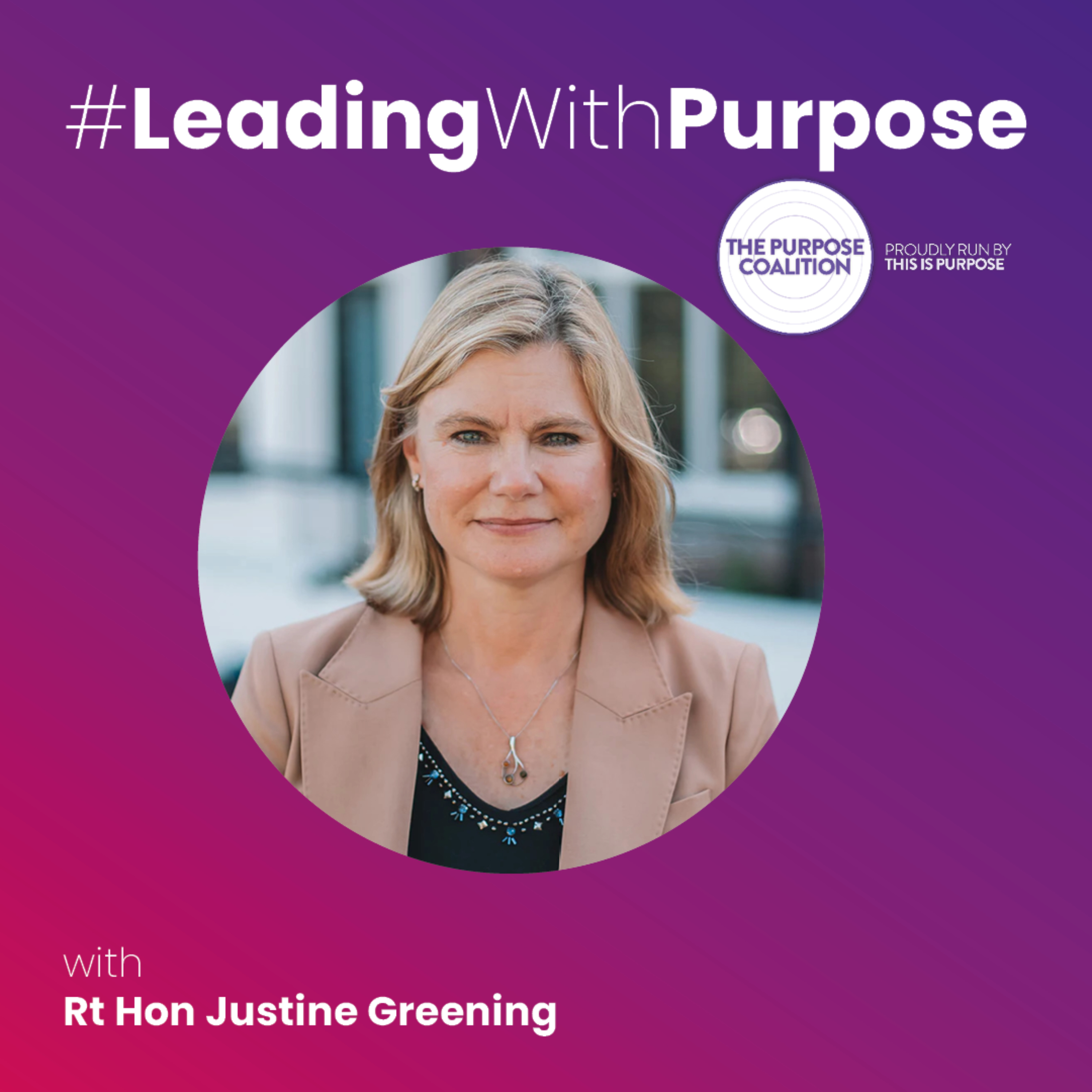
Leading With Purpose · The Purpose Coalition
In this episode, Mark Horsley, CEO of Northern Gas Networks, shares insights into the energy sector, career development, community engagement, and the future of energy transition. Discover how a long-standing career in energy can be fulfilling and impactful.
Rt Hon Justine Greening: Welcome to this week's episode of Leading with Purpose, the podcast that talks to leaders who are really focused on driving social mobility. And I'm absolutely delighted that this week we have Mark Horsley, who is the CEO of Northern Gas Networks. I'm going to ask Mark to set out what NGN does shortly. But I think it's fair to say, Mark, that you've been CEO for a while. I think it's since 2011 and obviously spent a long time. in the industry. maybe let's start off, first of all, thanks for doing the podcast, but let's start off really by getting a sense of what NGN does. But also then, yeah, giving your reflections around your own career and obviously you've been CEO for some time now. Mark Horsely: Thanks, Justine. Real pleasure to be on the podcast today. Yes, it seems an age. I've led the company since January 2011 and thoroughly enjoyed the journey we've been on. It's been quite a transformation for various things that we've done in the business, but really been a very customer focused business. What my career started way back in... 1975 as a craft apprentice cable jointer with Rt Hon Justine Greening: Mm-hmm. Mark Horsely: what was then the North Eastern Electricity Board. I stayed with that business until 2006 where I rose to the rank of CEO of that business. Rt Hon Justine Greening: Mm-hmm. Mark Horsely: I then joined Scottish Power for two years, spent a year after that in Built Asset Consultancy and then joined Northern Gas. So really seen a lot of the energy system from both the electricity side, transmission distribution, and now into the gas side. So yeah, it's been a great, journey. NGN itself has 2.7 million customers. We cover the areas of Rt Hon Justine Greening: huge. Mark Horsely: Yorkshire right the way up to Northumberland, to Berwick-on-Tweed, in actual fact, just on the south border of Scotland. And then across into Cumbria where we have a depot in Carlisle and Workington. There's around about 2000 people employed in the business. There is enough pipe work to go between the UK and Sydney in Australia and back against. So that's the sort of thing. Rt Hon Justine Greening: That's a great stat Mark I have to say. Brilliant stat. Mark Horsely: It's a long way, it's a long way. Rt Hon Justine Greening: It really is. Mark Horsely: So, yeah, so lots of things we've done over this last 11 years. We've mordernised our workforce. We've revisited all of our supply chain, because one of the biggest tasks we have is from 2002 when there was a very sad incident of being Larkhall in Scotland, where there was a number of fatalities because of a gas pipe explosion. all the industry in the UK has been replacing its pipes that are within 30 metres of any building since 2002. We're coming to the end of that programme, it's a 30 year programme, but it's a huge amount of work, but actually it's modernised our asset. And it's funny, a lot of the debate around energy, water is ageing assets, but because of that very, very sad event has resulted in us having a very modern network, almost 80 % of our network will be moved from steel or iron to plastic or Rt Hon Justine Greening: Mm-hmm. Mark Horsely: UPVC type of arrangement by 2032. So it's a very modern asset. Rt Hon Justine Greening: It's interesting, isn't it? Because I mean, it's obvious that this is a sector that's literally given you a career, you know, when you started Mark Horsely: Absolutely. Rt Hon Justine Greening: those decades ago, thinking about what you were going to do. You know, it's been a fantastic journey, as you said, but you're literally an example of what a great sector it can be. And then I think it's interesting, isn't it? Because I guess people think about some of those energy companies that they might buy gas from, but actually, Northern Gas Networks is that business that literally gets the gas to their doorstep, whether you're a consumer or a business customer. So there's a huge amount of investment has gone in and you sort of alluded to it in a way at the end of what you just said, Mark, actually in terms of the industry itself, it's significantly changing over time. So your path, that energy transition as much as anyone else. And how do you see that affecting opportunities and careers for the future within the sector? mean, obviously most people probably don't necessarily have a sense of what those sorts of careers might look like for them. Mark Horsely: Yeah, it's very good point, Justine. think I take my own career when I joined, I didn't know what a cable jointer was, for example. Rt Hon Justine Greening: Mm-hmm. Mark Horsely: So it's something like looking in now, looking for an apprenticeship or a degree entry job into these businesses. You don't really know until you enter. I think when you're at school, lot of us didn't really know what we wanted to do. But I personally found it one of the most fulfilling. jobs out there and I can wax on lyrically about the energy sector. I think if I look at the, if I went over to the electricity side, there was a huge amount of investment in the late 50s going into the 60s where we're really rewiring the UK at that stage. Rt Hon Justine Greening: Mm-hmm. Mm-hmm. Mark Horsely: Now it's happening again. From the electricity side, seeing, you know, wind farms, we're seeing electrification of vehicles, we're seeing electrification for heating homes. And the gas industry as well has followed along with that. And I think sometimes that this debate about it all being an electric future, gas still plays a very significant role. Probably 80 % of the energy goes through the gas networks as it stands at the moment. But for generation, industry, commercial, as well as heating to people's homes. So it's a really exciting place to be. And interestingly, when people say about the fossil fuel industry sort of dying off or the 2050 makes it it disappear, it actually doesn't because there's so many opportunities for us to put green gas through our network in either hydrogen or bio methane, biogas. So there's a great opportunity there. And when things are changing, I think that makes it more exciting for people joining and having a career in an industry that is changing rather than one that's stagnant or very stable because that in itself creates opportunities. It has done for myself through, as I mentioned earlier, going from a nationalised industry to a privatised industry and then the restructuring Rt Hon Justine Greening: Mm-hmm. Mark Horsely: of that and what that meant. And that was actually probably one of the most enjoyable phases of my career in those Rt Hon Justine Greening: Mm. Mark Horsely: 90s to the early noughties because of that change that we were. So anybody joining Rt Hon Justine Greening: Mm-hmm. Mark Horsely: now is a wonderful opportunity and a wonderful, well, a wonderful opportunity to see a long-term career, but a varied career, which is the important thing I think. Rt Hon Justine Greening: Yeah. Yeah. And I think what's interesting also is, you know, I met some of your apprentices when we launched your Breaking Down Barriers impact report. And I think what really struck me was just how broad their careers could develop over time. So you had some of them that were doing technical operational roles on the ground. There were some that were based much more at some of your core plants, if you like, making sure there was quality control on the gases that came into the network. But then there were other people, course, in HR. I'm a finance person. Every single organisation needs finance people. So think what really came across to me is, you it's like you said, when you started in your apprenticeship, didn't really know exactly where your career path was going to take you. But I think what it shows is that everybody starts somewhere. I'm a finance person. I started in auditing. I didn't want to do that for the whole of my career. But actually what it opened up was a whole range of related career paths that I could head into. And in a sense, it's about making a start in some of these careers. And I know that's why you've been so passionate about NGN and some of those career paths for people. Because as you said, it's genuinely part of a sector that is reinventing itself, as you said, with different sort of gas and the whole network having to pivot over the coming. Well, guess, the coming five, 10, 15 years. And if you're young, that might sound like a long time, but when you get a bit older, you realise Mark Horsely: Excuse me. Rt Hon Justine Greening: that's actually quite a short time period and it'll be a great journey to be part of, it, I guess. Mark Horsely: I liken it to, be honest, just to say to people, it's like gaining qualifications. And we've had this conversation that I think there's Rt Hon Justine Greening: Mm-hmm. Mm-hmm. Mark Horsely: gaps that has prevented people entering into jobs Rt Hon Justine Greening: Mm. Mark Horsely: or apprentices or starting because of the fixed idea we have on qualifications. As I said to you before, I left school with zero qualifications and sadly I wouldn't have been able to qualify for an apprentice. Obviously I did it all later. But I always say to people, Gaining a qualification or any academic qualification is like almost having a ticket to the fairground. You then get into the fairground and you choose what rides you want to go on and you might like that one and you Rt Hon Justine Greening: Yeah, exactly. Mark Horsely: might like something else. And it's an interesting story I had just yesterday when one of my legal people, who's a super, super guy, came to me for some advice because we've got a senior project at manager's role. available at the moment. So he just wanted my advice from experience and he wanted to change to go and do something different. And I Rt Hon Justine Greening: Mm-hmm. Mark Horsely: said, that's fantastic. So you move from all the stuff you've been doing on commercial, in the commercial law piece in the business, you're going to take that experience you've got and go and do it somewhere else in the business. That's phenomenal. I think if you have a business that gives people those opportunities to change and develop as they do because You and I know when you're 20, you've got a different outlook on a life when you're 40, when you're 50. And I think we should shape ourselves to that as a business to recognise those skills and allow people to grow. It's really important that. Rt Hon Justine Greening: Yeah, and there's actually time to do some quite different roles and build up some quite different experience and bring it all together. And I think it's interesting because so much of what NGN does is fundamentally rooted in local communities. You're obviously supporting a whole region, including the one where I grew up in Yorkshire. So tell us a little bit more about what that means for you being part of those communities, some of the... some of the work that you're doing with them and there's some really interesting energy transition stuff that you're doing, I think. Mark Horsely: Yeah, we are. I used many times, I use the example of our business being a microcosm of the society we serve because effectively Rt Hon Justine Greening: Mm-hmm. Mark Horsely: we've got a group of people that are in our area, they work where they live, whether that's in the North East, in Newcastle, Sunderland or in the Yorkshire area. So quite a microcosm. So how people think within the business is generally how people think in the communities they serve. I think Rt Hon Justine Greening: Mm-hmm, that's a really good point, yeah. Mark Horsely: it's a... And that should be our litmus really and testing what really works and what doesn't work. And that was why I was really keen when we had the review of how we deliver our work. We used to have big tier one contractors that more often than not traveled into our area and worked from the area. But now Rt Hon Justine Greening: Mm-hmm. Mark Horsely: we have our tier two and tier three contractors, which are in from our communities. And I've always been really keen on we probably touch customers more than an actual supplier does. know, the E.ONs and the rest of the supply groups who do a fantastic job. But actually, we're probably in their homes, in our customers' homes more Rt Hon Justine Greening: Mm-hmm. Mark Horsely: than they are because it's a bill they tend to give, where we visit for a new connection, for an emergency repair, or when we're replacing pipes. So our customer interaction is probably more intimate than the suppliers are. And I don't think people quite recognise that. So we've always looked at When somebody goes to somebody's house, particularly our emergency response, which can be up to 100,000 in a year, what else are we able to do when we're in those houses, those customers' houses? Rt Hon Justine Greening: Mm-hmm. Mm-hmm. Mark Horsely: Can we identify where people have a social need or there's a problem with deprivation or whatever? And how can we then signpost those people to the services that we can provide? I'm also keen that we can do some quick rectification work if necessary on their appliances in a short period of time, but leave them with a better feeling than when we entered the door. So I think it's really, really important that we address and understand our customers, understand the communities we serve. And we tried to do a number of things. One of the big things we did was the, I keep calling it the warm hub. think it's called Centres for Rt Hon Justine Greening: Mm-hmm. Mark Horsely: Warmth now. And that was bringing people together and being able to provide them with the links to the necessary organisations, help organisations, charities or whatever. But that really brings it back into not just us providing gas and warmth, it's about health, it's about lots of other things that we can use, be used as a conduit for other people because we're getting that access. I'm very proud of the team and what some of the things that they've done and some of the initiatives they've brought together. yeah, it is much, much more than just being a network business. is being very much Rt Hon Justine Greening: Mm. Mark Horsely: at the heart and heart of the community. Rt Hon Justine Greening: It's definitely a people business. and, you know, I'm always interested in how, you know, a CEO like you sees doing all of that work, because presumably that's better for the network, isn't it? You know, you're more likely to do stronger prevention work on the network and to have better access and, you know, have people confident and able to call you if they think there's a problem sooner rather than it actually crystallizing Mark Horsely: Yeah. Rt Hon Justine Greening: into being some kind of crisis. Mark Horsely: I think it's better for our people as well, Justine. I think Rt Hon Justine Greening: Mm-hmm. Mark Horsely: it makes them proud to be able to help Rt Hon Justine Greening: Mm-hmm. Mark Horsely: people. It makes them feel better. When they're much happier, then the service we logically provide is much better as well. So I think it's a real pride. I've always said, just do the right thing. don't necessarily have to, we don't have to ask. If you think it's the right thing to do, do it. And I think that... That's been a real transformation for us over the years from being a fairly stiff, regulated business, to Rt Hon Justine Greening: Mm-hmm. Mark Horsely: being one that's really focused to help its customers. And as you said, that builds a reputation, but it takes a long time and it can quickly be removed, that reputation, if you don't maintain those high standards. So you try to do it as if it's your own family. And there is a massive family ethos and that comes right away from our shareholding Rt Hon Justine Greening: Mm-hmm. Mark Horsely: being part of the CKI family. So yes, I think that ethos has really, really helped us and it does help us as a business undoubtedly. Rt Hon Justine Greening: I was going ask you, because it's a really important point. And also it's quite intangible in a way, how to put that ethos in. You've obviously been the CEO that's very much led on all of that. This is how you want NGN to run. Where do you feel like the key decisions you've made, the key things you've done over the last, what, 15 years that have really made people think, yeah, this is how it can run. I can take the initiative. This is what this business is all about. When you look back on it, where would you say the sort of big moments where you just got things on track and how did you do it? Mark Horsely: tell you one thing that we did. was called the bounce. And the reason Rt Hon Justine Greening: Mm-hmm. Mark Horsely: it was called the bounce was we were at the Baltic Centre. And Rt Hon Justine Greening: Mm-hmm. Mark Horsely: we'd made a lot of changes. And I knew some of our colleagues were relatively uncomfortable, but wanting to embrace the changes we were making. Rt Hon Justine Greening: Mm-hmm, yeah. Mark Horsely: But I really wanted to hear it from them. So we set up the room as if we're on a beach. Hence why the bounce because we had these big balls, know, bouncing balls on the beach, we had an ice cream in there. Really what we wanted Rt Hon Justine Greening: Yeah. Mark Horsely: to do is to create a really relaxed atmosphere and Rt Hon Justine Greening: Yay! Mark Horsely: I was very, you know, honest about myself. You know, my career's ups the downs, you know, so it wasn't, I wasn't trying to preach from some high moral Rt Hon Justine Greening: Mmm. Mark Horsely: ground. It was, you know, I've had some knocks in my career. But the biggest things that's ever happened in my career has been people that helped me through that process. And it was an amazing event because at the end of it, we had a few things that we wanted to address and we basically said, right, let's get some groups together. And one of them was really quite unusual. It was a pay and conditions thing and it was amount of hours that people were working. And I said, we will support you in these things, on these initiatives. And then if you'd like, and I would like you to come back to me in six weeks with your Rt Hon Justine Greening: Mm-hmm. Mark Horsely: proposal. And interestingly, one of the ones that was really quite difficult and nobody thought they could crack presented this proposal to me, which was going to cost us quite a significant amount of money, but I believed it was the right thing. And you know, just saying it was the best, best ever presentation I'd ever had. It was thorough. This thought came through and Rt Hon Justine Greening: Mm-hmm. Mm-hmm. Mark Horsely: we gave them guidelines to work in and they were amazed. said, can I just have five minutes now? Really just pretended to go out there. Rt Hon Justine Greening: Yeah. Mark Horsely: and then come back in again and said, yes, I agree with that totally. And do you know what? That was a big moment for us because Rt Hon Justine Greening: Mm-hmm. Mark Horsely: we then really began to trust what we were doing and what we said we were going to do, we did. And it's just this conversation with you now that's reminding me of that. And there was a number of those things, but that's one of the ones that really stuck Rt Hon Justine Greening: Mm. Mark Horsely: in my head where you were giving people the authority to do things, permission effectively to do it. But providing you Rt Hon Justine Greening: Mm-hmm. Mark Horsely: stayed in within some reasonable Rt Hon Justine Greening: Yeah. Mark Horsely: parameters, you get listened to and it will be changed. So yeah, there's some big moments we've had and they are in the distance now. And what I really, really love about the organisation, it's got its own energy now. I don't need to keep stepping into that. I know people say shadow the leader, but all I need to do now is just keep saying, believe in yourselves and we are going to be still successful. We're a... One of the smaller businesses, because a lot of the businesses have grouped Rt Hon Justine Greening: Mm-hmm. Mark Horsely: together now in the networks, and we still perform exceedingly well within our peer group, is fantastic. It's testament to the people that's in the business now. Rt Hon Justine Greening: And it comes back to the point you made earlier about, where would you want to work? Somewhere that feels like it really matters to communities where you can make a massive difference, you know, or not. And somewhere where you're really trusted to think big, to have ambitions, to think outside the box on fixing problems and you'll get back, you know? And if you're not, you know, it's a development opportunity to find out, you know, what better does look like, but either way. I think most people love working at places like that because they're just more interesting, more enthusing, just on every level. I think one of the things, one of the things when we did the work on the Breaking Now Barriers Impact Report, that was what came out to us was just the sense of possibility. It's really interesting because it's a big organisation. There's a lot of people, they work. all over the place. So if this isn't like it's a head office or everyone comes in, you kind of see one another all the time. So actually getting that sense of culture isn't that easy, but it's definitely there. And it's probably worth just digging into some of the opportunity stuff that you're doing to pull through the talent. You know, I got to meet some of the apprentices, but actually there's a whole program isn't there to really help people develop and do what you've done, which is build a career. So it's worth just touching on that too. Mark Horsely: And I think it's really important that everybody has a social conscience as well, you know, we're owned by private investors, you know, I have got a challenge to make a return on the investment for the investors. And Rt Hon Justine Greening: Mm-hmm. Mark Horsely: that's really important because I want them to continue to invest Rt Hon Justine Greening: Mm-hmm. Mark Horsely: in the business. But equally, it's having a balance between that and doing the right thing for our customers and doing the right thing for our colleagues in the business. And that really makes a big difference and as you say then the desire for people to join us we always have. Rt Hon Justine Greening: Mm-hmm. Mark Horsely: Ironically when you think about a gas industry in 2050 and has it got a future we're inundated in the last apprentice intake this year with applications which is a fantastic place for us to be. What has also been great this year we've had a significant number of female entries wanting to come in which I'm Rt Hon Justine Greening: Mm-hmm, yep. Mark Horsely: to get a broader spectrum of our apprentices and the whole makeup of the business. yeah, it is about getting the culture right without a shadow of a doubt. And anybody who asks me about those questions from other businesses because they've seen what we've done, it is all about culture. It's about behavior. It's not about necessarily the technical aspects of what we do. That makes the difference. Rt Hon Justine Greening: And it's just fascinating because if you get the most out of people, you know, I can think of roles I've had that I've been more motivated in roles I've had that have Mark Horsely: in great. Rt Hon Justine Greening: been less motivated in for various reasons. Maybe they weren't quite a fit for me. And I'm a different person in them in a way, you know, when I'm motivated, I can really go places and motor and. You know, it is like this sort of just tread water strategy. But I wanted to get your take on some of the work you do with some of the newer start people, just how you get that voice of younger employees through the company, because I think there's some really interesting stuff there for MGM. Mark Horsely: Yeah, I mean one of the things, I'll answer that question, one of the interesting, other interesting things we've done is the Young Innovators Council that we have and Rt Hon Justine Greening: Exactly. Mark Horsely: that's, you know, people, in the age, I think it's 15 to 18 and they change every year and I usually do the opening when the new ones join every year and it's always fantastic experience for me to meet that generation because really what we're trying to do is create a business for them in the future. You we have Rt Hon Justine Greening: Mm-hmm. Mark Horsely: we have people now of the generations that, you know, have been with us for many years, but these are the ones that will really shape the future and and really testing our ideas on that council as well, because they're ones going to be adopting it. They're the ones are going to be living with it. yeah, yeah, It's fantastic. Rt Hon Justine Greening: Are they quite challenging at times? It sounds like a really helpful group of people. Mark Horsely: Fantastic. And the journey we've been on, lots of hiccups with government policy on hydrogen and the use of gas into the future Rt Hon Justine Greening: Mm-hmm. Mm-hmm. Yep. Mark Horsely: is causing us a bit of a headache at the moment. taking that to one side, they've been really super helpful in their thinking. And I also brought in a school teacher, I knew him personally, but a super, super guy. And he and his small team do a lot of work around the school because it's really important from that junior primary up to senior school that we're helping the young people understand the role of energy, what it does, Rt Hon Justine Greening: Mm-hmm. Mark Horsely: why the community stuff it does, what it will mean for the country, cetera, security, but keeping it lighthearted. And I think all those things that we're trying to focus on is about that younger generation as well as the established generation that we supply gas to at the moment because... I do want to make it an attractive industry to come into. Rt Hon Justine Greening: Hmm. Mark Horsely: And I'm not frightened of people coming in and going somewhere else, although our churn rate is sub 2%. So we have a very, Rt Hon Justine Greening: Wow. Mark Horsely: very, very low churn rate. But Rt Hon Justine Greening: Amazing. Mark Horsely: sometimes it's good to get that churn as well, because people experience Rt Hon Justine Greening: Yeah, yeah, yeah. Mark Horsely: elsewhere. Some people actually leave us and come back again, you know, after they've been to experience something different. getting that young people and then when we bring people in, we spend a lot of time with them then at training school, on-site training, know, so they Rt Hon Justine Greening: Mm-hmm. Mark Horsely: get best training available to them. We will help them if they're short on academic qualifications to support Rt Hon Justine Greening: Mm-hmm. Mark Horsely: on that route. And the latest initiative we've been pushing through is people without formal qualifications entering our business at an operative level. And then hopefully if they show the right initiative then they will progress through to an apprenticeship as well. So it's trying to get the whole range of people into the organisation. Rt Hon Justine Greening: I think what you've done really effectively is two things. One, build the pipeline. And as you said, actually, it's sort of ahead of the current government's curve. Recently talking about the prime minister talking about young people aged 14 starting to get a clearer sense of how to pursue a career, frankly, and being able to know what a more vocational footprint or pathway might look like at school. But it's really hard to do that if you're never coming across employers Mark Horsely: Exactly. Rt Hon Justine Greening: that can talk to you about careers in their sector. In fact, it's almost impossible. So we'll need more NGNs out there, frankly, working with and through schools and doing stuff like the Young Innovators Council to really help that next generation dip their toes into what can be an amazing sector to step into. And so I think you've built the pipeline. But also then, you as you said, really making sure it's for everyone. So even people that maybe have had a more difficult start for whatever reason, they just haven't got the qualifications that you'd ordinarily expect. It doesn't mean they can't then catch up and have a really successful career at NGN. you know, I can kind of go back to the beginning of this, where you were saying, actually, you didn't really have the qualifications that today would mean. you could go in and do an apprenticeship. it's crazy to think that we might be missing out on that talent, you know, more Mark Horsleys sort of to be able to get into the sector and into careers. You that equals good. So I think being able to bring all of that experience back to what you're doing now and these issues around culture and really helping people understand they can be the best version of themselves. Just absolutely, absolutely essential. And I think, conscious of the time on this podcast for you, Mark, you're a very busy man. One final question, if I may. So if you're talking to that next generation, you know, those, maybe those marks of the future, thinking about where do I go? I'm not sure what I might be good at. What, what one piece of advice would you give them with all of your experience that you think would help them start to find a way forward in their lives? Mark Horsely: It's a really interesting question. I paused there because my stepson is 15. So I'm sort of going through that process at the moment in, you know, trying Rt Hon Justine Greening: Mm-hmm. Mark Horsely: to encourage him to think about what he really wants to do into the future. And you're absolutely right. I went to grammar school and my mum and dad worked really hard to get my brother and myself to grammar school, but academic work wasn't for me. I would just say to people, any youngster, just keep a really open mind about what is out there and often try to choose because your first step is so important and that's really our responsibilities as business leaders as well. But that first step for them is important and how you frame that work environment for those individuals coming in. And one of the things that we've just done this year as an experiment is to do a full week of work experience for people. And I Rt Hon Justine Greening: Mm-hmm. Mm-hmm. Mark Horsely: think, that's in that age band I've just talked about there, it's almost what we're talking about with Andy Burnham and this 14 year Rt Hon Justine Greening: Mmm. Mark Horsely: old type of thing. And I think if you can get an opportunity to do something like that, do it, try and experience it, talk to people about the different jobs and what's out there. And if you get into the right business, I can't believe still I have to admit myself that I was digging holes for first 10 years of my life. Rt Hon Justine Greening: Hahaha Mark Horsely: And I'm doing what I'm doing now. So it Rt Hon Justine Greening: Yeah. Mark Horsely: is all possible, but it does take work, but it's all possible. Rt Hon Justine Greening: Yeah, and you can do it in a fantastic sector like energy, like gas, and actually Mark Horsely: Yes, of course you can. Rt Hon Justine Greening: absolutely build a brilliant career. Look, Mark, Mark Horsely: Absolutely. Rt Hon Justine Greening: I've loved having you on the podcast. Thanks so much. I think it's just brilliant for people to see someone who's literally gone on a journey that we want to see so many other people have the chance to get. But you you make it feel what it is, which is it is possible. But sometimes Mark Horsely: of space. Rt Hon Justine Greening: it's just It's just getting on track, isn't it? And giving things a chance and Mark Horsely: See you Rt Hon Justine Greening: not writing off opportunities before you've really sort of found out more about them. And I think for me, if there's one lesson in your journey, it's just get started. Because actually, Mark Horsely: Absolutely right. Rt Hon Justine Greening: if you can find something that gets you started, then you really don't know as you've found where it might lead. So Mark, thanks so much for doing the podcast. Mark Horsely: in other work on a real paper. Rt Hon Justine Greening: Well, we've loved having you on. We love having NGN part of the Purpose Coalition and thanks for all the leadership from yourself and your team and the business because it genuinely makes a big difference. Thank you. Mark Horsely: That's all we'll be to you. Thank you very much, Justine.