
Leadership Sovereignty Podcast: Career Growth and Promotion · Ralph E. Owens II and Terry Baylor | Promotion & Career Growth
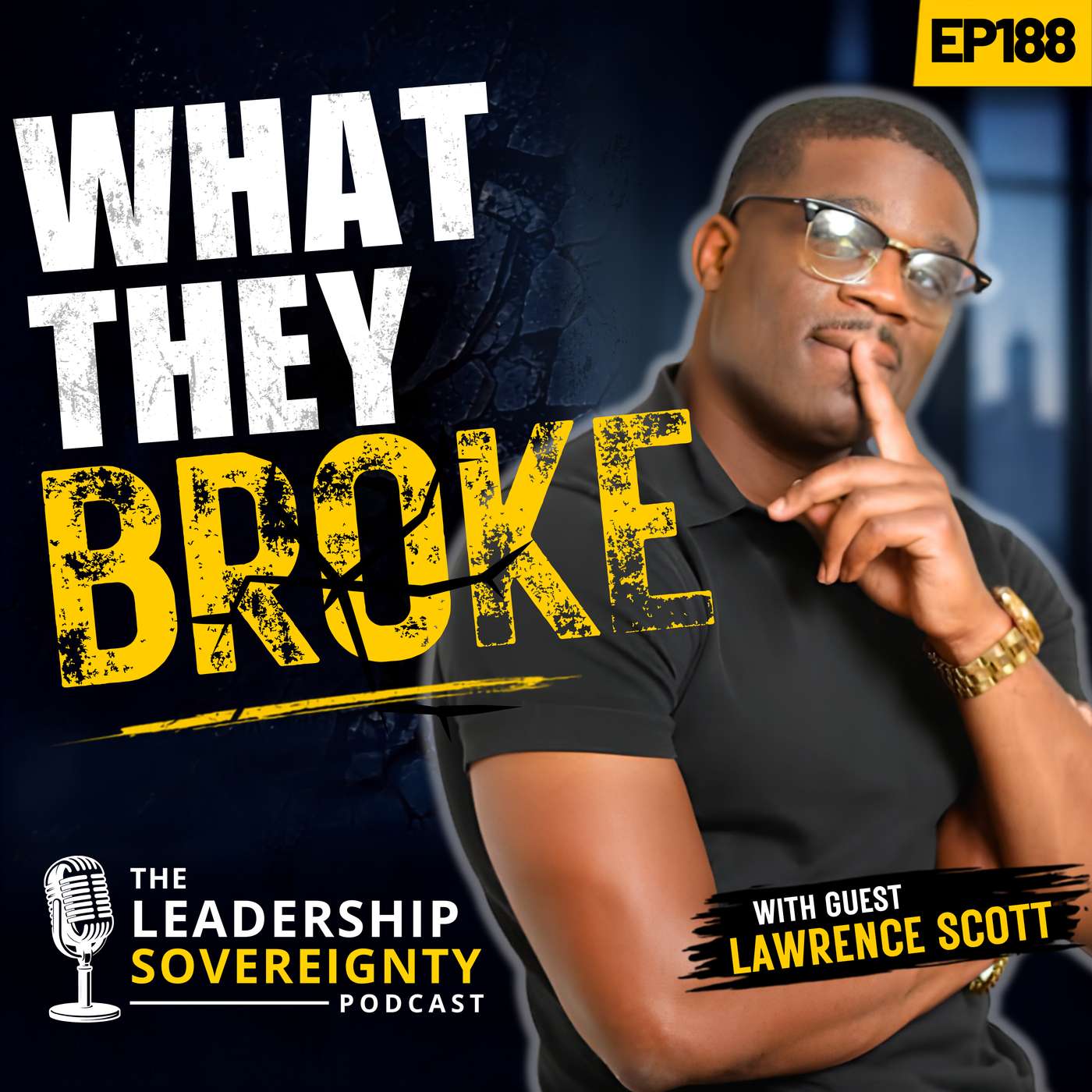
What do you do when you inherit a mess you did not make? Most professionals do not build the team they lead. They inherit it. And somewhere in the first ninety days of a new role, a quiet question starts running underneath the work: how much of this is now mine to fix? Not your fault. Still your responsibility. That is the discipline this episode teaches, and it is more demanding than it first sounds. In this episode, host Ralph E. Owens II and co-host Terry Baylor close out a three-part conversation with Lawrence Scott, a graduate of the United States Military Academy at West Point, a former Army officer, and a John Maxwell Team certified coach who has spent over a decade developing athletes, executives, and leadership teams. Lawrence is also a fifth-generation inheritor of public leadership, which gives him a rare vantage point on what actually transfers between one leader and the next. He grew up surrounded by it. His great-grandfather built two church buildings on opposite corners in St. Louis and connected them with a skywalk, a structure people traveled to see. His grandfather appeared on television. His father carried it forward. And Lawrence can still name, precisely, what each generation observed but was never taught. That gap is the whole problem. Some capability is caught by exposure. Some has to be said out loud, with the reasoning attached, or it dies with the person who had it. What he found standing on those shoulders was that giants build on ground that does not always hold. Parts of what he inherited were solid. Parts were not. And the discipline he had to develop was checking which was which without tearing down the person who built it. You are not responsible for repairing what someone else broke. You are responsible for not repeating it, and for going further than it. WHO THIS EPISODE IS FOR Newly promoted leaders who inherited a team, a system, or a culture they did not design Managers who took over from a predecessor still working somewhere in the building Anyone planning their own succession and wondering what will actually transfer Professionals who were mentored by someone imperfect and are unsure how to honor that Leaders who suspect their shadowing and development programs are not transferring what they assume Anyone who has watched a good team keep routing decisions through a leader who no longer holds the role WHAT YOU'LL LEARN IN THIS EPISODE Why inheriting a broken situation does not make you responsible for repairing it How the "I have to fix what they ruined" posture unintentionally dishonors the person before you The distinction between a turnaround and a succession, and why it changes everything about how you walk in Why successful succession is decided before the handoff, not during it The one question that predicts whether a leadership transition will work Why the military reassigns departing leaders out of the unit entirely, and what corporate leaves unsolved The difference between leadership that is...
Lawrence Scott: I think the first thing is to realize that you're not responsible for fixing what they broke. If you're gonna stand on the shoulders of giants, you better make sure that whatever part of that shoulder you stepped on is solid. If you're not doing better than your parent or your grandparent, then you're not honoring their legacy. Terry Baylor: So Lawrence, me ask you a question on that, right? Because what I see the connection there is in that adaptive change, Yes. Right, because you're right in the throes of with Gosh, are you considered millennial? You considered a I'm millennial. Yeah. Okay, so that's perfect, right? So let's talk about the adaptive change as it relates to this new workforce idea, right? And believe only a millennial could speak to what you're speaking to with such a complete narrative around it, right? Because I don't think someone in my generation could speak to it in its authenticity the way you are because you you're have how many you have thousands of peers, right? Which has helped drive you to these conclusions. So what's happening out there? What's happening? Lawrence Scott: Alright. So you remember one of the biggest topics before was this idea around silent quitting. Right? We remember that, like, people were talking about people are there, but they're not there. Terry Baylor: Mhmm. Lawrence Scott: Right? What they were getting at is this. This the same thing, but we just had different words for it. Right? So you whereas you might have said in one generation, you might have said, you know, I gotta get motivated workforce. Right? People who actually wanna be here. It's like, well, you you have to lead the soul for them to want to be there. Right. Right. When you would talk about silent quitting, it's like, hey, I'm here. I'm just collecting the paycheck because we have a disconnected workforce. Right? It's like, okay. Well, you have to lead the soul for people to, like, stay there, not just physically, but mentally and emotionally. And I'm tied to the work that I'm doing. Right. Now, because you have my generation, which, you know, the millennial generation was the generation that had applications and technology that it was a little more intimately connected with that gained them access to certain things like therapy and counseling. And they became very, very aware Very Terry Baylor: aware. Yes. Lawrence Scott: Of their emotions and themselves. And there's also simultaneously a messaging that's happening in the culture that they're part of via social media and and entertainment channels that make them very, very self focused. So it's like, whereas one generation, you could have sold them the dream of being connected to something bigger than themselves by joining your company. You can't do that to millennials. Because the most important thing to to them is not your brand. It's it's them. It's them. That's right. Terry Baylor: It's themselves. That's great. Lawrence Scott: Now, I would argue, I would posit because of not only my faith and my belief, but also the study that we've done on the soul of individuals that this has always been the case. But where they where they were willing to search for that fulfillment of their soul was because they said, hey, I can be significant if I've got your name attached to me. Right? And we saw this happening especially in the nineties where if you said, hey, I work for Apple, it's like, now I get it. Right? It's like, you're important, you know? So we were all searching for that sense of significance and fulfillment with the things that are inside of us. So I think that's always been the case, but we didn't always have language for it. Well, millennials have language for it. So what has to happen now is leaders have to be intimately connected with what motivates individuals and helping them to pursue that while maintaining corporate alignment. And this gets you closer to your your avatar. What kind of person thrives in your organization? What kind of person thrives in these sorts of positions? And you need to understand that the person that thrives goes well beyond characteristics and competencies, but it goes into their own sense of significance and purpose. So what does the person who thrives in your organization in that particular role want for themselves? Yeah. I remember when I was looking to hire my first personal assistant, I said, I need to do two things. I need to recognize what types of skills that they have. They need to be highly administrative. They need to be highly executive. They need to be able to represent me in conversations that I can't represent myself in. But at the same time, I have to recognize what this person wants. I don't want somebody who just wants this position. I want somebody who eventually wants to be a COO. Now, and the reason I want that is because I wanna provide a space wherein they can be fulfilled because they're chasing what they want. But also, I am provided for, and I'm still aligned because that is the kind of person who will thrive in those sorts of positions the progression of their career. So we have to be able to think think these way. It's a it's a paradigmatic ship in the mind of leaders that says, I have to think about this differently. I have to go beyond just thinking about what I need. I need to think about what does the person I need need, and then look for those kinds of people. Right? Oh, this this message is great for like people who are in HR. This message is great for people who are looking to build teams and high capacity. Like, and I tell people all the time, the I I I do this teaching on how to build teams, it's like these Cs. So people have to be competent. You need people who know what they're doing. Right? Terry Baylor: Right. Lawrence Scott: People but people have to be capacious. Right? Meaning, you need to have capacity. Yes. But capacity goes beyond how much you can carry. It goes into how much you're willing to carry for meat. Because sometimes we'll look at people and they're, like, highly capacious individuals. They can do a whole lot, but it's like, hey. Yeah. But they're not really they're not really willing to share all of that capacity with you. Right. And then they have to be compelled. And this is where I think sometimes we miss it. Compulsion is not convincing. And for us as leaders, sometimes we believe so strongly in what we do. We believe so strongly in our organizations that we convince people to be part of our teams. That's a mistake. And the reason it's a mistake is because you'll only have their attention for as long as they remain convinced. But people who are compelled, you're not going and like trying to convince them to be part of the team, but they were compelled toward the team. Right? Objectively, regardless of what your belief system is, the best leader of all time that ever lived on this earth is Jesus when you are dead for over two thousand years and people still follow you. You're an amazing leader. That's right. That's right. Terry Baylor: That's true. Now watch this That's true. Lawrence Scott: Watch this. When we read like the the testimonies of how Jesus led through like the writings of Matthew, Mark, and Luke, Jesus never convinced anybody. He literally said, I'm a let you see what I'm doing. Right? So he would have his he would have his activity that he was doing in this in the public square. And then he would make his speech and then say, follow me. Terry Baylor: I'm fainting. I'm rare. Lawrence Scott: And and they would say, okay. So much and it was so strong, Terry. It was so strong that it said immediately they dropped what they were doing and they followed him. Where like James and John, the sons of Zebedee, like the sons of Thunder, they they left their father's fishing boat to go to go and and follow this man who literally just showed up on the scene. So because he had proof. Right? He had proof of concept. He was able to prove that he's effective at what he does. And he was able to show them that they could do it too. They they would have this sense of significance that they would be important. Terry Baylor: Mhmm. Right? Mhmm. Lawrence Scott: Mhmm. This is this is the point I'm making. Right? You have to be able to appeal to the soul of the individual if you hope to, one, lead them well and not use them. Right. Because if I'm a leader, I'm an influencer. Right? Leadership is influence. But if I'm influencing you, it's in a particular direction. Influence is not non dynamic. It's not stagnant. If it's a true influence, I can't I can't push put my hand on this glass and push and if I'm not pushing it, I'm not influencing it. It's staying exactly where it is. Right. Right. So influence is dynamic. So if influence is dynamic, the question then becomes, if I'm an influencer, I'm a leader, what am I influencing you toward? And if I'm not influencing you toward your best self and toward the thing that you've been put on earth to do, the thing that provides you with significance and fulfillment, then I'm actually not leading you. I'm using you. Good. I'm using your skills. I'm using you using your talent in order to contribute to corporate purpose. But individual purpose is the thing that you can put on us. Alright. So you'll stay with me for ten years, Terry. And then when it's time time for you to go or when I decide it's time for you to go because I'm done or or the particular technology that you've spent ten years being an expert on is obsolete and I no longer need you and I get rid of you, you'll sit there wondering and asking yourself, what did I just spend the last ten years of my life doing? Terry Baylor: So you know what? That's that's awesome. Because you know, one of the things that I wrote down this morning as I was thinking about this show and I think this is a great segue into that and you you can answer it how you choose. With the legacy of leadership that you've seen, right? This kinda goes back into your previous point about just because you've been around it doesn't mean you can do it. How has that framed your perception of influence? Because ultimately, like you said, Jesus did whatever he did to influence those guys in a moment to say yes. You probably have just in your family over a hundred years of leadership. Lawrence Scott: Yeah. Yeah. Yeah. Absolutely. And even to this day, Terry, it's it's so amazing. You can tell you can tell when people got introduced to my family based off of who they reference. If I if if I'm I mean, honestly, there's a there's a guy out here in in in LA. And he said, when we first met, he was like, Lawrence from he said, from St. Louis? I know Scott's in St. Louis. You wouldn't have and this was like a meeting of a bunch of pastors. He's like, you wouldn't be, like, related to P. L. Scott, would you? I said, yeah. That's that's my great grandfather. It's like, ain't no way. That's your great grandfather? Like, man, we used to like you know what mean? So he's like, he telling the stories. Right? Terry Baylor: Right. Yep. Lawrence Scott: Which I believe this is also a great marker of influence and leadership as well. Not just being able to say the things that you've done, but when people can tell stories about experiences from the things that you've done, that's big. I don't I don't just say like, man. So for instance, right, one of the things that happened in Saint Louis was my great grandfather had two church buildings right on the in opposite corners of each other and he built a crosswalk, a skywalk in Terry Baylor: between. That was huge. Lawrence Scott: It was huge. Right? Had people traveling to Saint Louis to see the chapel in the sky. Right? Like, was it was this thing. Right? And it wasn't just people being able to say like, I I hardly ever hear those stories, Terry. So I don't hear stories about what he built. I hear stories about who he was. There was one guy who came up to me. He didn't tell me the story about and he was a guy who helped get the chapel built in the sky. Right? He he didn't tell me those stories. He said, man, I used to pick your grandfather up from his house and we would drive him around Saint Louis. He would leave the house with $5,000 in his pocket. And by the time we got home, he was off. Wow. And he used to he said and I told him, I said, why? Bishop, you don't need that much money. Why would you carry that much money around the city? That's dangerous. And his response to me was, the needs are great. He went out he went out into the city to serve people. Right? Like, that's a marker of great leadership in service. Right? But but here's here's to to go back to your question, right? These are the stories of influence and leadership that people are telling about him, and I can always tell what part of my family you've encountered with. Right? It's like, I never met my great grandfather. He died five years before I was born. But I would go to school in like middle school and high school. This is this is when my grandfather was on TV. And people would be like, man, I saw your grandpa on TV. That was them like, okay. That's cool. You know what I mean? Like, so it it was I was always surrounded by this. Now watch this though. There were certain things that my great grandfather did that my grandfather saw but was not There were certain things that my grandfather did that my father saw but was not taught. There were certain things that my father does that I see but I'm not taught. So some things are taught, other things are taught. But there's certain things about leadership and influence that must be taught. This is how you do this. This is why you do it. Now, understanding this, when you deal with legacies, you have to understand that these are my great grandfather was a giant, but he wasn't. He made mistakes. Good, bro. And certain things that he built were built on shaky foundations. Right? Because he was limited in his capacity and his exposure. So I tell people this all the time. If you're gonna stand on the shoulders of giants, you better make sure that whatever part of that shoulder you stepped on is solid. Wow. Because this is the giant and they they not they not Terry Baylor: So I I love what you're saying, man. I'm gleaning from what you're saying bro for on a on a serious note. My my follow-up question to that was in succession planning, because that's that's what we all have to do as leaders. Now there's also corporate aspects, right? Corporate leaders, although we're talking in spiritual concepts and things of that nature, it's still the same, right? Because Lawrence has already laid the groundwork that corporations have a soul too. So all the concepts apply. And so in this succession planning, my follow-up question was, as you become exposed, We're in these opportunities, West Point, you start to learn different aspects of leadership. You went to theological seminary, learning a deeper depth on the understanding of the word of God. When you find the gaps, how does that frame your leadership and how do we still move forward and can still honoring the legacy of what we were built on and the shoulders that we're standing on and our mentors or our sponsors in corporate America and maybe they've done something at some point that wasn't the best decision or the best way to handle people, but they helped you, they helped you grow. So how to end that succession, Now you're the guy in charge, You're the guy with the influence now. Lawrence Scott: Yeah. I think the first thing is to realize that you're not responsible for fixing what they broke. Whenever you take on that disposition, you come in often far too harsh and far too critical and you don't intend to do this. But in that disposition, you you actually dishonor them. So I think that's important to recognize. You're not responsible. Unless you are. Right? Like, if you were if you were like the CEO that just got hired because the last one just broke it, you know what I mean? So was like, distance yourself as much as possible. But I don't think that's what you're asking. I think you're asking about, like, actual succession. Right? So it's Correct. Like this this is important. So the first thing is successful succession happens before it happens. Does the current leader know where they're going or are they just stopping? And this is important. In the exception of death, leaders have to have a next thing to do. If they don't, then you won't have the level of freedom that you think you'll need in order to really accomplish what you need So to Terry Baylor: let me make sure I'm hearing what I'm hearing. That leader has to be going somewhere. If they've planted their stake and they're saying this is it, I'm dying in this post, you're done basically. You're done. Yeah. It it won't work. Lawrence Scott: And the reason it won't work is because and this is something that did not happen between my great grandfather and my grandfather because my great grandfather died, and then my grandfather took over. Right? Now they had in the succession planning, you know, they had the documents that said, in the event of death, this is now the next leader. It was different though from my father and his father. My grandfather gave it to him and said, you got it. Right? And my father took it, but my grandfather didn't have like the next thing. He was still very much involved. And my father wasn't as free well, I won't say that. He was as free as he needed to be. He didn't feel as free as he needed to feel in order to really do some of the things that he wanted to do then. And I've seen this happen even in in organizations. Whenever you in the military, there there's actually a rule. If you are leaving a particular post, they they move you out of the entire unit. Like, you go get assigned someplace else. Because what they don't want to happen is for people's affections to remain to you. Whereas like, instead of going to the person they need to go to, instead of following the systems that you've implemented, people are still following because they feel like and this is this is normal. Right? We all have our ways in which we connect to folks. Yeah. It's normal for us to say, man, isn't it so wrong that like, you know, they have to watch things go differently. Right? So we we feel a way about that leader. So we want to honor them, but in so doing what we're actually doing is holding back the built upon legacy of that leader. I tell people all the time, if you especially people who are like me, right, so I'm a fifth generation PK. I tell PKs all the time. I say, hey, listen. If you're not doing better than your parent or your grandparent, then you're not honoring their legacy. That, like, you should be doing better. Not as a value statement to say that they're not as good as you, but because of all that they've been able to sow into you Correct. You should be able to go go a little bit higher. Ralph Owens: That's a wrap on this episode of the Leadership Sovereignty Podcast. If today's conversation added value, I want you to do three things right now. Number one, subscribe so you never miss an episode. Number two, leave a rating and a review on Apple Podcast or Spotify. It only takes sixty seconds, but it really helps more leaders find the show. And number three, share this episode with someone who's on the rise in their career. Don't forget to connect with us on LinkedIn and visit leadershipsovereignty.com for show notes and the full episode back catalog. Until the next time, continue to lead boldly, lead with purpose, and walk in sovereignty. Take care.
More Leadership Sovereignty Podcast: Career Growth and Promotion episodes →