
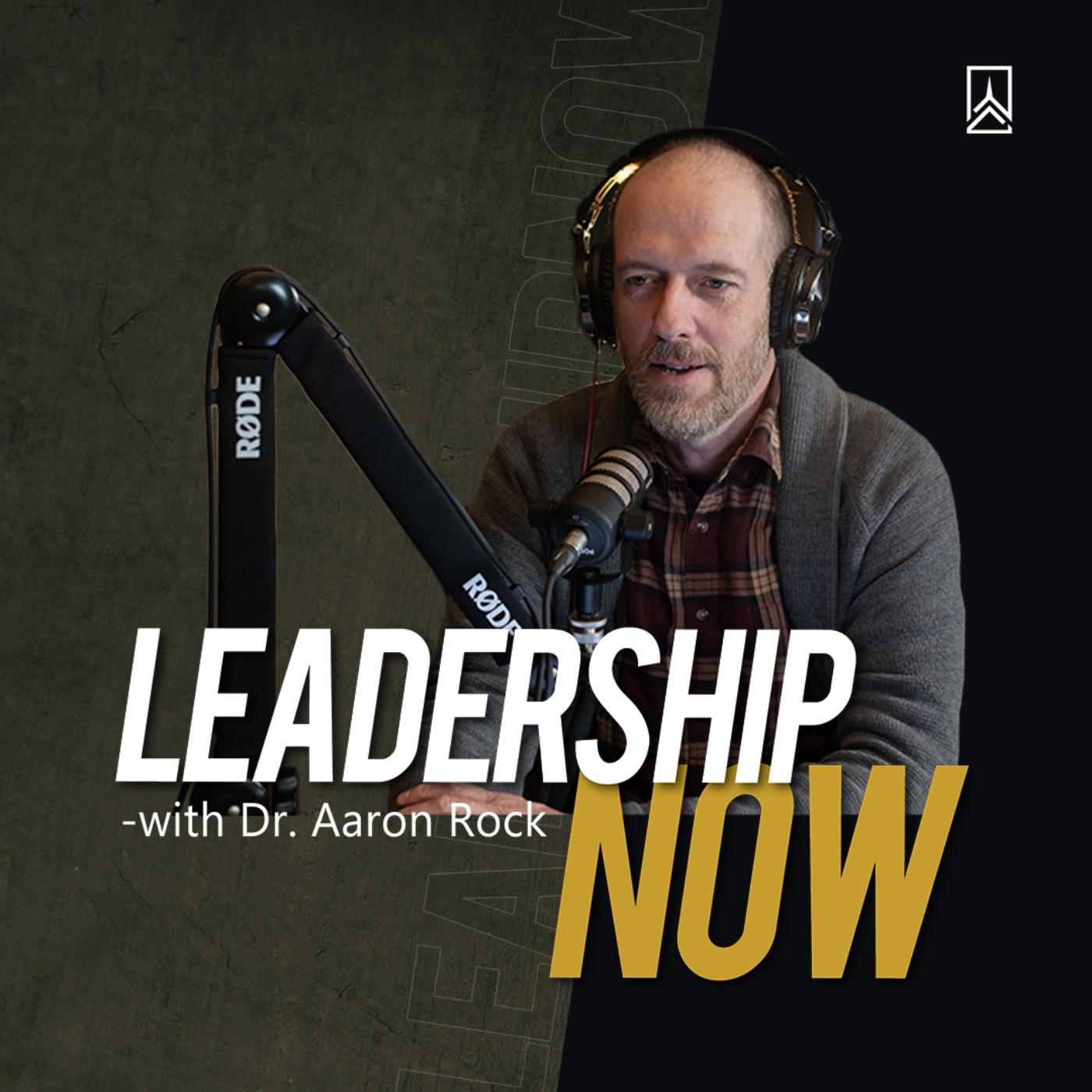
Leadership Now Podcast · Dr. Aaron Rock
Check out this episode of Leadership Now with Dr. Aaron Rock as he continues the "10 Things" series. In this episode, Aaron provides some insight into the relationships between married and single adults in the Christian Church. More Resources: More resources at beachheadmedia.ca Beachhead Media YouTube
Welcome to Leadership Now with Dr. Aaron Rock hosted on Beachhead Media and other podcasting platforms. Aaron has served as a pastor, chaplain, denominational leader, professor, and writer, and he is a desire to help others think Christianly about all of life. On this show we discuss the nuts and bolts of theology, church life, ethics, apologetics, culture, politics, and other issues to help you lead better. Now. Thank you so much for tuning into another episode of the Leadership Now podcast with Dr. Aaron Rock. As always, I am your host, Jesse LaFrambois. We are going to be jumping right back into a series we've been doing for a little while now that we've called 10 things. And what we've been doing in the series is we've been looking at 10 things that specific groups of people wish that their counterparts knew. But we're switching things up just a little bit for this episode because what we've done a couple different times is we've looked at one group of people and then we've looked at their counterparts and then we've done the inverse of that. But for this episode, we're actually going to be doing both at the same time. We're going to be talking about marries and singles. Now, obviously there are a lot of married people in the life of the church, but there's also a lot of single adults in the life of a church. And the dynamic between those two is probably something that doesn't get talked about enough in Christian circles. And so what we're going to do on this show is we're going to address some of that. We're going to talk about five things that single adults wish that married adults knew. And then we're going to do the inverse. We're going to talk about five things that married adults wish that single adults knew. And so Aaron, why don't you get us started by starting with the five things that single adults wish that married adults knew. Right on. I think this is pretty important material. And if there's single people listening, thinking, well, who are you to tell us what we're thinking? Well, I just want to remind you I was single for 22 years as well. Okay. So I've been on both sides of the fence. And I've also been pastoring for a little while. And I think I don't think I mean, I get a lot of pushback. I think this is going to be very productive. And not we're not going to lean into some sort of a defensive posture. We're going to speak proactively as to how married people and single people can, can better understand one another and serve the purposes of Christ. That's where all about serving the purposes of Christ. So this is a distinctly Christian show where obviously going to be addressing this issue from a distinctly Christian perspective. So we're not talking about singles that like to go to raves and what they'd wish married people would know. We're talking about life in the church. So five things that single adults wish married adults knew. The first that comes to mind is that single people and married people believe it or not, you ready for this folks can actually be very good friends. We don't have to segregate into groups. Married couples can invite single adults over for dinner and vice versa. It's okay if you're a married man to have some good buddies who are married and some good buddies that are single. Our married, marital status doesn't define our friendships. It's totally fine for couples to invite couples over for dinner. It's totally fine for a couple, couple friends to hang out, go on vacation together or whatnot. As a married man, I can have friends that are married men and I can have very good friends that are single men as well. So we don't have to steer clear of one another. Obviously this sociologically, I'm speaking to the sociological reality that sometimes that happens is like you move from single adult life to married adult life. You think, well, I guess we're just hanging out with couples now. From single to married hanging out with couples now. We can maintain good, solid friendships with married people and single people alike. The second thing that single adults wish married adults new is they single adults in general who wish to eventually marry. They're thankful when married people that love them, ask them about their desire to marry and they even have an appreciation for those that serve in a positive way as their wingman, maybe recommending people or pointing them in certain directions saying, hey, I think that's a really quality guy or quality girl. We should consider them or speaking well of them to a potential suitor. They appreciate that. But what single adults don't want is they don't want every conversation to be about finding a spouse. So if you're married and you have friends that are single and you know they want to marry and you would like them to marry, that's fine. That's cool. You can help them along. You can give them advice if you want. Nothing wrong with that. We don't have to live our lives walking on eggshells. One of the things that hinders these kinds of conversations is hypersensitivity. Everybody's sensitive. We allow to talk about that. We can talk about it. But not every conversation needs to be about finding a spouse. There's other things we can talk about. So it's not like hey, did you find someone yet? Did you find someone yet? Did you find someone yet? How did the date go? When you get married, it's exhausting. It also fails to acknowledge that life is not all about marriage. There's other things. And a person might be single for a long time before they're married. So it can be quite exhausting if every single conversation is about that. That is very true. And as someone who has more recently been single, I can remember this very distinctly, especially in a church culture that very often values marriage very highly. We do. Yeah. Which we do. And one of the little things that comes out of that is sometimes it's constant to people always asking about it, especially even when you're in the very early stages of dating. Yeah. When you get married, when you get engaged, when you're doing this, when you're doing this, when you're doing this, I'm just trying to figure out if this is what I should be marrying or if we're going to move forward with this or not. And you're absolutely right. It gets very exhausting. I suspect that one of the reasons why you were asked that many times, because people are very concerned about what would pages get yourself into it. Very much so definitely. Yeah, but it can be exhausting. So I mean, it's true of every aspect of life. It's not like when you're around a person, you don't always have to be talking about the same thing. Funny story. My little grandson has been going to JK. And every time I see him, I say, hey, what are you learning in school? It's become the same response. It's not even true, but he says, how to be a policeman. So really, I'm sure there, I'm sure the harvest classical Academy, that's their talking all the time. Hey, buddy, which learned at school today? How to be a policeman? So it has to be yesterday. He's like, how to be a policeman? I've told you that a million times. There was a whole area. So yeah, maybe I should stop asking for a bit. How do you please, man? I've told you that a million times. So okay, the third thing that single adults wish married adults knew is, and I'll preface this by saying, so in the life of the church, we love to celebrate. And we celebrate obviously Christian holidays, Christmas, Easter, notably. We celebrate church anniversaries, church birthdays. We might celebrate ordinations or various things. We like to celebrate. And then we also celebrate life vets. So we celebrate engagements. We have engagement parties. We have bridal parties. We have, unfortunately, some men have these diaper parties, which we're going to knock that one off. But we have the kind of guys get away, the stag party. We have the girls, they got to have their get away too. Even though girls, you have the showers. Okay, stop stealing all our events. But anyway, another thing that discussed, maybe on another show, we have weddings. We have anniversaries, but if you think about it, a lot of these things revolve around celebrating marital milestones. And I think that's a mistake because I think single people need to be celebrated as well. And need to feel that they're progressing and taking dominion and living for the Lord Jesus Christ and accomplishing things. So they like to have their significant life events celebrated too, whether it be, hey, I just bought a house. Let's have a housewarming party. Or I just finished a college degree. So it doesn't mean that the church formally needs to endorse these things. But as Christians, as married adults, interacting with single adults, the singles want us to know, hey, you can celebrate. This is not attention seeking behavior, but you can celebrate some of our significant milestones as well. And so just if you're married, keep that in mind. Find ways to celebrate some of the significant accomplishments that single people are experiencing in their lives as well. Fourthly, single adults in a church, godly people that know the Lord, love the Lord. They want married couples to know this. But they're not jealous. They're not upset. They recognize that the church of Jesus Christ should support and encourage marriage and should support and encourage married couples. But we should also acknowledge in the way that we speak and in the way that we interact that marriage is not the default, actually, singleness is the default. That's how we're born. The celibate life is a life that some people are actually called to. So they don't intend ever. They don't feel God is calling them to be married. And then I would say the majority of singles do hope at some point to be married. So celibacy would be less common. Perpetual celibacy would be less common than singles that are celibate that want to marry. When we speak about the church, and I've always been fairly careful of this if I'm airing in this area still. Hey, single people come talk to me. But for example, we might say, hey, the families of the church, let's pray for the church families because we understand that family is creational and family is foundational to culture. But not everyone's part of a family. Not everyone is part of it. They would have an extended family. So we have to be careful with our language. For example, when I often pray for our church, I might pray for marriages and then I pray for singles. Or I am more likely, if you listen to my vernacular in public prayers or public comments to speak of church households rather than church families because a household can be one single person living on their own. It could be a couple that's recently married. It could be a couple with one kid or a couple of ten kids. A household is a bit more of a broad term and integrating that kind of language into our prayers or public comments, our announcements is a good way of acknowledging the fact that not every household is necessarily a family. I also think beyond that, while there is a genuine place for demographic specific ministries and some people disagree, I'm still pro Sunday school. I think there's a place, there's a benefit having Sunday school on a Sunday while the pastor is preaching deep and meaty sermons. I think there's a place for children to be catacquized and taught and trained separate from the adults of the church. Again, I know it's trendy to say this, this isn't the way to do it. I disagree and I'll argue my case that I think there's a pedagogical benefit to kids being catacquized and in small groups and trained on a Sunday morning, separate from the gathered congregation, at least certainly below the age of ten. Aside from that, I think there's a good place for youth groups and there's a good place for young adult groups and there's a good place in the life of the church if you have a sufficient number of people for couple groups or singles groups or different events, seniors groups, what not. But it can't be all that. It's a mistake when everything we do in the life of the church is divided into demographics. It's good to have integrated small groups, integrated men's ministries, integrated women's ministries where married people and single people can both come and they can serve and they can benefit, mutually edify each other and build each other up in the faith. And I also think there needs to be plenty of venues for children to have exposure to the adults of the church and the pastors and shepherds of the church. I think that's important. So there's times to sort of divvy the congregation up into groups that meet specific needs relevant to specific demographics. But what you don't want is you don't want the single adults of the church and the married adults to be like two ships passing in the night. We should make an effort as singles to get to know married couples and the couples should make an effort to get to know the singles in the life of the church. And then obviously providing equal opportunities to serve. I know there's some churches. No, you can't be an elder unless you're married. Well, the higher office of apostle was occupied by at least one single man, Paul. So I don't think that being an elder requires one to be married. In fact, while currently our elders are all married, we have had to my recollection for sure one, maybe two, I'd have to go back. It's been 25 years. We've had at least one single elder in the past. It is no longer with us. He moved away. But we did have a single man who served as an elder many, many years ago, probably 20 years ago or so. And that worked out very well. He was very competent at his role. Yeah. Absolutely. And I mean, it's very valuable to first single people to be able to serve, right? And even in all the different ministries, right? That's one of those really good organic ways where different single people can interact with those different demographics of also married people is just serving alongside them in all the different ministries and in the life of the church. There's a ton of value there for sure. So a final one would be that singles want married couples to know that they have the capacity to, keeping with their gifts and maturity, to counsel married couples, to invest in married couples, to be a sounding board, to a married person that may be experiencing some challenges in their marriage and to be a blessing to their family as well. Now we often, the fact that we're born single and we enter our adult year single and then we may remain single or marry. That's true. You're not born married. You're born single. But the fact that that is true causes us at times to wrongly assume that, oh, if you're married, which is the second phase or second step beyond singleness, that that means you're more mature. You are more knowledgeable. You are a more mature Christian. That's not necessarily true. I mean, it's often true, but it's not necessarily true. You may have come to faith as a married couple and there's a single person in the church who's been a Christian far longer than you. That's way wise of the you are and you can actually benefit from allowing them to minister to you. Frankly, it's very likely that they know far more about the nature of biblical marriage than you might. So we can't just have this notion, oh, it's the married people ministering downward to the single people. There are many single adults that are mature, godly people who can minister to married couples. I was talking to a person lately who's married for many, many years, but doesn't have children of his own. He was saying, you know, in his capacity as a church leader, sometimes when he's called upon to give advice to parents about their children, they're like, well, you don't have kids who are you to give us advice? And he reminds them that the Apostle Paul didn't have kids either. And he has a few things to say about how to raise kids. I mean, read Ephesians 5, for example. So you don't have to have been in a specific lifestyle or been married or even been a parent to offer sound biblical counsel to people who happen to be in those phases or stages of life. So those are five things that I think single adults wish married adults knew there's a place for friendship, meaningful deep friendship between couples and singles. Ask me about my marital desires, but don't bring it up every time we have a conversation. Celebrate our life milestones and accomplishments as well. Marriage, the validity and blessing of family life and marriage, but also don't forget to pray for and acknowledge us. And we want to proactively counsel and invest in married couples too. So that that final one is very important because the rest can almost sound a bit defensive and I don't want this whole list to be about defending one side or the other. I want people to go away thinking, oh, yeah, that's true. We can create a church context and culture within which there is mutual ministry taking place. Yeah, for sure. There's a ton of value in that. And I think this thing is, are these things that we've outlined are very helpful for married adults to know. And now I think it'll also be valuable to look at the reverse of that to talk a little bit about five things that married adults wish that single adults knew. Yeah. The first one, which is the sixth in our list of 10, is not unlike the previous ones. I'll put it to you this way. And that is that married adults want singles to know. It's not our job to solely minister to and recognize you in the life of the church that actually amplifies this weird lie that somehow you have something wrong with you that, you know, we got to cuddle you or use some sort of a disability because you're not married. We got to kind of make you feel good in the life of the church. We minister to each other. So there are times when I've heard single people say, you know, the church doesn't do a good enough job recognizing singles. Well, do you recognize couples? I mean, why is it like, so I'm a married pastor? Why is it like my job to recognize you? Do you recognize me? Do you recognize the married? Like, what are you doing to minister to? So we get to to marry couples. So we got to put aside this idea that we're somehow at variance with one another or we're in competition or it's the married people. They've got to that next stage of life. So it's their job to make us feel good. No, we minister to one another. The singles to the married, the married to the singles. We minister to one another. We're in and we're in ministry together. So by the way, we're not just ministering to each other. We're ministering on behalf of Christ. So the life of the church is not just about making sure, oh, I'm getting what I need. It's about pointing people outward to do great commission ministry to disciple their children in the ways of the Lord, to mentor their timothies and their tituses in the Christian faith to reproduce themselves. Not everyone's going to have kids. But every Christian should be a reproductive Christian. They should be investing in the next generation. If you have kids, you should be investing in the next generation. Frankly, I think sometimes people with outkits do a better job of investing in the next generation than some of the people that do have kids. So in my life was impacted by many, several men and women in the churches I grew up in. They weren't my parents, but they love me. They care for me. They taught me the Christian faith. We need to conceive of the church or perceive of the church as a place where married adults in single adults are in ministry together. And in fact, our marital status is not fundamentally what defines us. We are on mission for the Lord Jesus Christ to bring him as much honor and glory as we can and to point people toward him so they might find faith and hope and healing in Christ. The second thing that married adults wish singles new is that marriage is hard too. Singleness can be very difficult, but don't make the mistake of idealizing it, especially if you've been waiting for a while to marry and you desire to marry, forgot his call to the mirror, but maybe for 10 years you've been waiting and you haven't found someone you're in your 30s or whatnot, please don't make the mistake of idealizing marriage. You can almost, the longer you wait, it might become more and more of an idol. And then when you enter into it, it becomes far more difficult than you thought because you created this almost heaven-like, idealistic image of marriage. Please don't make that mistake. In fact, marriage can be difficult. And for every couple at some point, it's difficult. It's part of God's plan to sanctify us after all. So to the singles in the church, pray for the married couples. And don't assume if you're experiencing loneliness that marriages some automatic cure to loneliness, because in a sin-sick world, we can no human being can ever fully satisfy that sense of isolation and aloneness that is part and parcel of living in a broken world. So it certainly, you know, when Adam was in the garden and felt alone and God provided Eve for him, keep in mind, this was before the fall. It's not like the solution that God provided before the fall was the ultimate and final solution afterwards. Their marital union was stretched and stressed because of sin as is every marriage. And there's a lot of people that are married that are still in the process of being sanctified. And they have days where they feel very lonely as well. So just kind of, we just want to make sure that singles that are preparing to are moving toward marriage or wanting to be married, don't see it as the fix. This is the fix to my isolation. I think you're going to be quite surprised that there are still challenges that await even those that have been called into the married life. I think that actually might be a far more common attitude than a lot of people realize. I know even thinking from my perspective, I had a little bit of this going on even in my own life. I mean, every single when you're single, you know, you have your own problems and you know, you're going through your own struggles, whatever they are. And then a lot of people, and I would have put myself in this camp, you look at marriage, you're like, okay, I just, when I get married, this is all going to go away. It's all everything's going to be fixed. We just have this like idea of marriage that it's going to fix everything. Right. But then you actually end up bringing those, there's like, oh, my, all my problems are still here. I didn't magically all of a sudden now that I'm married. It's like the, it's like the penultimate goal of a person's life is to get married and like, okay, well, I'm still the same person. I still have the same struggles, the same problems. I didn't just go away. And so I think it's very valuable to, for single people to hear that for sure. In fact, for a period of time, or maybe a long time, it can get worse because now you're exposed. Exactly. Yeah. You know, you're, you're like naked in every possible way before your spouse. And I'm not just talking about physical nakedness, but your emotional and spiritual life is now fully known by your spouse. And that can cause unique stresses and tensions in and of itself. The next thing I want to discuss is, I want to acknowledge that there does seem to be, I think, I think in most churches, this is maybe going the way of the Dodo bird, but there does seem to be some almost sensitivities or walking on egg shells. And the church when it comes to single adults, it's like, I don't know, can we even talk about marriage? Are we allowed to bring it up? Like, are they going to be offended by it? Look, we need to get rid of that. We need to talk openly. But due to some of those common sensitivities about marriage, I can say this to singles, married people aren't always sure what your desires are. Like, do you want to get married or don't you want to get married? Like, we want to pray for you. We want to point people in the direction of quote unquote, worthy candidates. We want to speak well of you to other singles that maybe looking for a spouse. But we may not be sure what your desires are. So please let them be known. So if you're a single person in the church, you know, and obviously in an appropriate settings when you're talking to married people in the church and they ask, you know, are they kind of curious? Don't be afraid to say, yeah, I do want to get married. It would be good for them to hear that. Like, I'll loud. And they're like, oh, okay. So that's good for me to know. Like, I appreciate it. I was talking to a single woman in our church a while ago. And she said, yeah, I want to get married. I'm like, okay, that's good for me to know. Okay. I now know that. So when I am interacting with other single, let's say guys in the church, I can keep her in mind. So, oh, I think she would be a good candidate or a good choice. Or you should consider her. So let your desires be known. And, you know, ask. Don't be afraid to ask for help. It takes a village oftentimes. And people want to be, people want to celebrate with you and help you to find that spouse. So don't make your desires. I guess my point is the elephant in the room. If you want to get married, can't, it doesn't have to be, you don't have to go have a t-shirt printed up. I want to get married. But don't make it the biggest mystery in the life of the church. And you might be surprised, you know, that sometimes married people just, they don't know. Like, do you? I don't know if he or she wants to get married. I don't really have a real sense. 9th, if at times, speaking to singles, if at times married couples seem to lack interest in you or fail to take time for you. And you might feel a little left out in the cold. I can say this with almost absolute certainty. In the life of the church, people love you. And it's probably not intentional. Married life, especially if there's kids in tow, add complexities that single people don't always experientially understand. They understand it mentally. Obviously, it doesn't take a rocket scientist. If you've got five kids running around to know it's probably taken a lot of your time. But experientially, there's a lot of fatigue, associated with adjusting to marriage. This is why almost every young married couple that I know will say, man, I don't know what it is about marriage, but I just tend to have a harder time waking up. I sleep more deeply. I feel more exhausted. I think it's because there's an undercurrent, there's an underlying emotional and mental stress that you may not even be aware of, of adjusting to the married life. And it can be like physically and mentally and emotionally exhausting, not in a bad way. But it's like, if you go from work in a 20-hour week job to a 40-hour week job, you're going to kind of feel it for a period of time. And when you're adjusting to those early months of marriage, it can be physically, mentally, emotionally, tire some. And you almost feel like you need more rest to recover. And you add kids to the mix. And to the single ad, I'll just know this, married couples with kids are probably absolutely maxed out. And if they don't appear to have time for you, it's not personal. It's because they just have a lot of fatigue, tending to their spouse, their marriage, and all the responsibilities. I mean, Paul talked about this, that one of the benefits of the single life of celibacy is there's not as many worries and cares. So there are more worries and cares added to your life when you're married and have children. So please don't be shy to remind gently and kindly at times, you know, married couples, if you feel you're being left out in the cold, but know that godly Christian couples love you deeply. They're not disinterested in you. They probably think about you and your circumstances and your life and value more than you think, but they may just literally not have the bandwidth to invest to the degree that maybe your single friends tend to invest in you. So the point being is all things considered, your single friends are probably going to literally have more time to hang out with you than your married friends are. That doesn't mean it can be like 100 to zero. But there needs to be some realistic expectations. You need to manage your expectations for one another. Okay, here's my, my tenth one. So this is in our list of five for married people, communicating to single people, but this is the tenth on the total list. Married couples want singles to know we do not think we're better. Okay, we do not. I've never heard any married person say that. We don't think we're better. We do not think we have arrived. We are, we are, we're not disinterested in your input. We're not disinterested in you. In fact, most married couples, I know love the single adults in the church and wish them only the absolute best. We love you. I wish you only the absolute best. And when you serve and when you reach out, I mean, it is a huge blessing. I'll just, I'll just throw a couple names out. I remember when Susie and I were much younger and all the kids were young, having two bachelors in our church at different times, invite our whole family over for dinner. Won't mention their whole full names, but if you know them, one was Chris and one was Justin. And this is going back probably, you know, 15 years or more ago. And I, I mean, I've been to a lot of people's homes for dinner, but there is something massively impressive about a single man inviting a whole family over for dinner and feeding us. I'll never forget that. I was just talking to my wife about this today. I mean, that, that is super impressive. I mean, if I think that's a beautiful act of hospitality and grace and it communicated to me, like these guys get it. They, they understand that single people can minister to couples and their children and that there's great opportunities to do that. And in the same way that Susie and I have had literally hundreds of single people over to our home over the years to minister to them or for dinners or whatnot, and groups, typeship groups, one on one, whatever. What a huge blessing for the singles of the church to say, Hey, we actually are going to minister to couples and family members. I mean, that that shows, now those that show a certain like comfort in your own skin, like you're comfortable with your place and life and you're not like waiting to get married to actually start to serve, which is kind of a weird mindset that some people might have, but you're actively investing in other people. So, um, I'm, there's probably very few times when Susie and I have felt more loved than when a single adult ministers to us. I just think that's a wonderful thing. And so, I want singles to know that married people are very grateful when you step in their direction. And it's not just, I mean, it could be literally babysitting your kids while they're going on in a date or something, but having the order for dinners, just taking, asking them, you know, how's your life going? How's your marriage? Can I pray for you? How can I minister to you? Is a wonderful thing. And it shows a depth of maturity and a depth of wisdom and understanding a ministry that I think it's just, just leads to a win-win. Um, so those are, those are five things that, um, I think married adults wish singles new, uh, for a total of 10 things that, uh, married and singles wish the other new. Yeah, that's great, Aaron. Thank you very much. I think there's a lot, there's a lot of value in this. We talked about it at the beginning of the show how there's a lot, there's obviously lots of married adults in the life of the church, but there's lots of single adults as well. And this is maybe a relational dynamic that's a little bit overlooked. And so there's, there's a lot of wisdom in taking some time to think about how these relationships can and should work and how they can bless one another. And so hopefully regardless of which camp you fall into listening to today's episode has got you thinking about some of those things. And as always, we hope and pray that you've been blessed by listening to this episode. And we will see you next time for another episode of Leadership Now with Dr. Aaron Rock.