
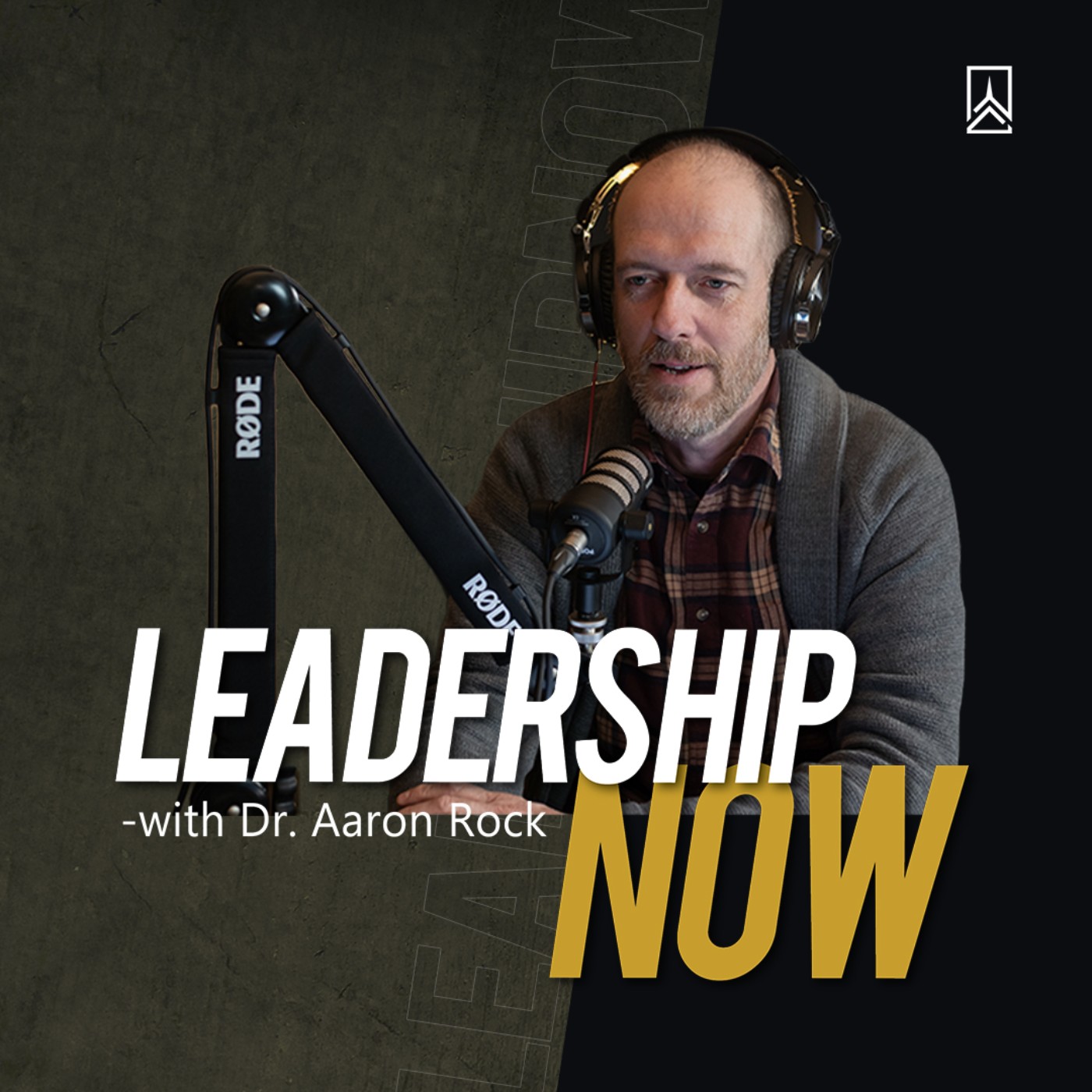
Leadership Now Podcast · Dr. Aaron Rock
Tune into this episode of Leadership Now with Dr. Aaron Rock as he reflects on the terrorist attacks that occurred on September 11th, 2001. He discuses his perspective on the events, and some lessons that should be learned from it. More Resources: More resources at beachheadmedia.ca Beachhead Media YouTube
Welcome to Leadership Now with Dr. Aaron Rock, hosted on Beachhead Media and other podcasting platforms. Aaron has served as a pastor, chaplain, denominational leader, professor, and writer, and he has a desire to help others think Christianly about all of life. On this show we discuss the nuts and bolts of theology, church life, ethics, apologetics, culture, politics, and other issues to help you lead better. Now. Welcome back. Thank you so much for tuning in. You're listening to the Leadership Now podcast with Dr. Aaron Rock. As always, I am your host, Jesse LaFrambois. Our topic for discussion today is a very, very pivotal point in history, a very notable history. One of the most significant events in recent history. We're going to be talking about the terrorist attacks that occurred on 9-11. Tomorrow actually is going to mark the 25th year since the attacks actually happened. As I mentioned, this is a very significant event. Long in the future, there's going to be many things that have happened that are forgotten, but this is not going to be one of these. This is going to be an event that is going to be talked about for many, many decades and perhaps even centuries in the future. The question really we want to talk about here is, what are the lessons that we've learned from it? Will the lessons that it actually taught, will they actually be remembered? As we commemorate the 25th anniversary of that very fateful day, is the West still actually vulnerable to attack? Now, Aaron, you and I have very different perspectives on this event, obviously. I was actually not even born when the event happened, but I'm sure you can very well recall this day and some of the specific things that happened. What we're going to do today is we're going to take a little bit of time, Aaron's going to walk through what the day actually looked like, what actually happened on this special episode where we want to not just commemorate the significance of the event and the 25-year mark, but also contemplate some of the aftermath and some of the lessons that we've learned from it. Aaron, I'm curious, where were you when it happened and how did you hear about it? What was your reaction kind of in the moment then? Yeah, it is, first of all, it was fascinating. You were born the following year. Our producer who's in the room was in kindergarten. You guys are too young to maybe, well, definitely, you're too younger to remember it. Riley's maybe has some images in his mind of it, but I was living in Windsor. We had a house on Campbell Avenue and I distinctly remember I was downstairs. I built this small rec room for the kids and we would have had two, actually, no, we would have had three born at the time and we were just on the cusp of launching our church. So we had, our church started the month, officially started the month after that, but we were kind of holding services with our small team. So I was downstairs. I'm not a big TV watch, but for some reason in the corner of the room, the TV was on. And I remember looking over and seeing reports of the first plane that had hit one of the World Trade Center towers. And of course, you're trying to orient yourself to this. I'm not sure I'd even heard of the World Trade Center towers if I had. It certainly weren't registered in the front of my mind, but I'm like, oh, what in the world happened there? A plane strike. They were trying to figure out what had happened. And then a short time later, the second plane hit and then you knew something was up. And then the news, almost and you're fixated on the news and they're starting to report like the attack and the Pentagon, the down plane in Pennsylvania. And then as the day wore on, Canada, of course, a lot of all air traffic was grounded and diverted to different airports. And Canada, think of Newfoundland, we took in all kinds of American planes. And in the days and weeks coming, there's more and more stories trying to figure out who did this and why and very shortly after that, you know, they discovered it was al Qaeda. And that led to two decades long war in Afghanistan and a surrounding region. George Bush's war on terror and really, really changed the world in many ways. So I remember, for example, prior to 9.11, it's almost hard for me to to say this because we've been living differently now for 25 years. But prior to 9.11, if you went to an airport, it was treated just like you're getting onto a bus or a train. So you would just, they would have some metal detectors, but you would just walk in. You could, you could have a pocket knife that wasn't a problem. You just walk in. There was no security measures where you'd take your backpacks and your suitcases and your shoes off. You just walk in and your family could walk right up to the boarding gate with you. And that was not a problem at all. Just like if you get dropped off at the VIA rail station or you go jump on a bus, I mean, there was no security beyond that. When you got on the airplane, you could see into the cockpit. Kids were often invited into the cockpit to look around. It was just a thin little door. There was no security mechanisms there. Because we love it a border city, you could cross into Detroit, Michigan just with your driver's license. And sometimes you just get waved through. There was no passports required for any of that. And after that, the world changed. And initially, there were some politicians like John McCain saying that some of these terrorists came into Canada. That didn't happen. That was all 19 terrorists were legally admitted into the US through the US immigration systems, interestingly. But it really changed the world. It tightened borders. It costs a lot of money. You know, the efforts, the technology that had to be developed to secure airplane, the cockpit differently to train stewards and stewardesses differently to have all sorts of onerous security measures that remain in place a quarter of a century later. And so those are some of my initial memories of the event. And you know, through the years it would follow, you know, you would follow different reports of a pop-up about when they found I get the last piece of rubble removed from the World Trade Center and the recovery of body parts and of course, all sorts of conspiracy theories that started swirling around. And then finally, the rebuilding of the World Trade Center. So those are some memories that I have of the event. And it's like you said, there's a lot of things that happen in the world and they fade from memory. But I don't think this one's really ever going to fade from memory. So it will always be in future history books that are written for sure, even just because of how shocking and out of the blue it is, that's just and the significance of it, the impact, all those things you mentioned. Now, as we said, I was not alive for this. I'm sure many of our listeners maybe weren't even alive for it, but even for those who were, I think it would be helpful to take some time just to maybe refresh or even maybe inform some people about what actually happened on the day and some more of the specific details, like timelines, how many people were killed and things like that. So maybe you could take some time to go over that. Right. I can kind of relate to you a little bit because I remember when I was a kid having my parents tell me about when we put the first man in the moon and they were called the where they were, what was going on there in class, they paused the class and they all played it. So it all probably from your perspective, it almost seems like that. It's something from, you know, before your lifetime, it really isn't that long ago. So in terms of what happened just to refresh memories and maybe add some details. So Al Qaeda, which was led by Osama bin Laden, obviously took issue with the West and specifically the United States and their, their politics, their religious perspectives, their global involvement in foreign affairs. And they started to grow as an organization and they came up with a plan to recruit young men. So all the hijackers by the way were young men, which between the age of 20 and 33, the youngest was 20, the oldest was 33. And that tends to be the typical age of, you know, military age men, strong lots of testosterone. Some of them are thinking men, some of them are very bright, but you know, that's a dangerous age if you don't kind of hem in your, your mind, your desires, your, your lust for war. So he was, he recruited men, generally guys with decent educations. So a lot of the terrorists had university education, college education. I think a couple had masters degrees. One was raised in a nominal Sunni Muslim home who actually went to a Christian school like a Catholic school, but was never, never a Catholic. So most of them had religious education of some sort in Islam. One I believe at least one was an imam. And they picked guys that had higher levels of education for their culture and that spoke English reasonably well because the plan was train them in our al-Qaeda camps. So in military skills, give them, you know, good endurance and indoctrinate them in radical Islam, which did happen and it was successful. And then these 19 men went to the US and legally, not illegally, but legally into the country again through the US immigration system. Four of them went on to do flight training. And I believe three of them, around three, maybe two or three got their commercial pilots license. I think some of them might have done some lower level private flying lessons and work and flight simulators and whatnot. So they came in on student visas, tourist visas, they're in the country. And they basically learn enough about aviation to turn an airplane into a weapon, which by the way, with the exception of the kamikazis from Japan or World War II, nobody was even thinking about that. There'd been plenty of terrorist attacks on planes. So terrorists would get on planes even back in the 70s. Half of the flight they jump up. I got a bomb on. I'm in a bomb, everybody. And they would negotiate with officials and eventually get what they want and lend and some obscure airport and get away with it or get caught or whatnot. But the idea of like commandeering an airplane and using it as the weapon to blow up a building, I don't think anybody was even contemplating that except for al-Qaeda. So they get in the country and they get all their training and then they buy tickets for flights on September 11th, 2001. And all of the tickets they bought were in the front of the plane. So they would buy a business class or first class seat so they could store them a cockpit. So in terms of what they used, they didn't have bombs. There were some that threatened bombs. Basically, had four guys that were going to come and do their planes and fly them and then you had the guys that were like the muscle, right? The other, I guess that would be 15 guys that were like the muscle of the group. At the time, you could take a pocket knife with up to a four inch blade on it. So they had pocket knives and box cutters which they used to attack and threaten the air crews. So the exact timeline I looked this up, I'll just run through it because it's relevant. It happens in a reasonably short period of time. So just before 8am, 759, American Airlines flight 11 leaves Boston for LA. 18 minutes later, United Airlines flight 175 leaves Boston for LA. At 820, American Airlines flight 77 leaves Washington, D.C. for LA. And at 842, AM United Airlines flight 93 leaves Newark for San Francisco. So they're all kind of clustered in the same region of the country, the East Coast, and they're all flying toward the West Coast. So they're all basically off the ground in 43 minutes. So pretty, pretty well coordinated. They're all in the air. After the last plane is in the air at 846, flight 11 crashes into the North Tower of the World Trade Center. The terrorists successfully overpowered the crew, commented the plane and just flew it into the building. At 903, the South Tower is hit by flight 175. And that's what I was referring to where you're seeing the pictures, images of the one tower and all of a sudden what in the world like the next tower has been hit as well. Sometimes up. They always said to hear reports of other airplane attacks. So at 9.37 AM, flight 77 crashes into the western side of the Pentagon at 9.59 AM, the World Trade Center, the South Tower collapses. It comes down in 10 seconds, the other tower, because I hit a different spot, it came down in 11 seconds. One stood for I think around 45 minutes and one like an hour and 20 minutes or something like that. After that, flight 93 crashes in Shanksville, Pennsylvania. And best as they can tell, it's because some passengers on board realize what was going on and actually attacked the terrorists on board and they lost control and flew into the ground. So it didn't strike a building, but people are obviously killed in that crash. And then by 1028 AM, the North Tower collapses. So if you look at that, basically within a two and a half hour period of time, you have them, the flights taking off and they successfully weaponized three planes and the fourth plane crashes, but all in all, a lot of people are killed. So the death toll, excluding the 19 terrorists, who obviously all died, was initially 2,977 people, including the people in the towers and several hundred firefighters and police that were on scene before the towers came down because they rushed there and realized the buildings were going to collapse, some of them were in the towers and whatnot. The next several years, there were three times that many victims, just shy of 10,000 people have died as a result of it. And they figure that there's probably thousands and thousands more that will die long term from exposure to asbestos or various chemicals or pollutants on the scene. So a pretty shocking thing, Pearl Harbor was a pretty big deal in World War II. I remember them calling it this was like the Pearl Harbor of the 2000s. And pretty, I hate to say this, but it was successful from the advantage point of the terrorists. Like they were successful in their plan to kill a lot of Americans. Suzy and I have a watch in a series called Mayday. And you might not want to watch it if it's just before you get on a flight. But it's basically reenactments of different aircraft that have crashed around the world of the last 30 or 40 years and they do investigate, I should back 50, 60 years, they do investigations as to what the causes were and whatnot. They're not terrorists related. But it kind of reminds you of how vulnerable people are on aircrafts and 9-11 as well as shows like Mayday kind of freaked people out. And I think even airlines lost a lot of money after just because so there's an economic impact. They lost a lot of money because people didn't want to fly. People were terrified to fly and whatnot. So there's the casualties, there's economic costs, there's the billions of dollars that went into fighting wars and fighting Osama bin Laden and whatnot. So this wasn't something. It happened in two and a half hours, but really it continues to affect the world 25 years later. It really is remarkable when you look at all the different far-reaching impacts that this event has had. Now thankfully we know there hasn't been another attack at least of that scale. Right. Since then. And a big part of the reason why we can assume is because there's been a lot of changes that have been made. You've mentioned them, things like airport security, border security and things like that. And those changes have been made to drastically reduce the likelihood of anything like that happening again. And because of that, the US and many other Western nations might have a sense of security, almost as belief. Well, okay, yeah, this happened once. We were a little bit lax in our security, but it's never going to happen again. You know, where we've got everything on lockdown. Do you think that that sense of security is warranted or do you believe that something like this could potentially happen again? It can and will. And the reason for that is the US's response and many other Western nations response to this attack was a military response and a homeland security response and a titan of the border response and a policing response and a surveillance response and an FBI response and a CA response. It was a military response. But the reality is this wasn't a military attack. And what I mean by that is the the attack wasn't the same as the attack on Pearl Harbor in terms of ideology. Ideologically Pearl Harbor was a military attack. It happened during the time of war. I know the US was not war with Japan, but it was preemptive. It happened fundamentally because of military, but 9-11 was a religious attack. It was specifically an Islamic terrorist attack. It was based upon a religious belief system that conflicts with and conflicted with historic western, the historic western belief system, which is Christianity. I'm not suggesting there's not political elements in it, but if you have an enemy that rushes at you and tries to kill you and you pull it a shield and a sword and you fight them back, but you don't and you successfully push them back, but you don't deal with the underlying religious phenomenon that caused it. Yes, you might have put up military and border securities and safeguards, but you haven't actually addressed the underlying issue, which is radical Islam. And even in the 25 years since, I think that many western politicians have doubled down further in that they actually call people out who say, this was actually an attack by Islam. This wasn't a military attack in and of itself, it was an Islamic attack. It's like, oh, you're guilty of Islamophobia. But if you're an objective person, even the terrorists would admit they did this, not because I always want to expand their territory and take over the economic apparatus of the US. No, they wanted to overflow overthrow the US and the West religiously. This was a holy war for them and continues to be a holy war for many Islamic terrorists. So I'll make this comment as well about conspiracies. So with lockdowns, there's lots of conspiracies. Oh, the vaccines were concocted by some people and they did this or that or chemtrail conspiracies of the people that hate us, want to kill us or 9-11 conspiracies. Oh, the bush did it. Conspiracies, the CA or orchestrated it all. Okay, well, notwithstanding, I find those to be insane, but notwithstanding the evidence, so to speak, that the conspiracy theorists promote. If you step back and think about it, the problem with a lot of conspiracy theories is they ultimately assign the blame to politicians, to global leaders. And the mistake they're making in that is they're not seeing it primarily as a religious problem. So if, let's say for the sake of conversation that a conspiracy theorist turns out to be correct and George Bush did it, okay, then it's just a political, it's just a political, it was a political attack and therefore you can just respond with political, the political apparatus. But if it's a religious attack, then the political apparatus is not sufficient to address it. If the government is flying overhead and spraying chemicals on us, then you can just respond to it with a political apparatus. Get better people, call them out and carcerate them, produce the evidence, have cases adjudicated in the court of law, elect better people. If it's a political challenge or threat, then you can respond to it politically. But if on the other hand, you look at the world through religious lens and you say actually all these crazy ecological things that are happening in the world are because people have taken God and replaced him with the earth, the planet, the climate, then it makes sense of why there's such an emphasis on saving the planet and climate change and these sorts of things. If the lockdowns are just all about pharmaceutical companies and politicians doing things for their own financial benefit, then all you need to do is respond with political willpower, bring about political change. But if you step back and say, no, this actually is about people trying to play the role of God, they've kicked them out of culture. They're trying to use the role of God. They're trying to play the role of God over people's bodies, lives, churches, places of worship. Then you need to respond to it religiously. What I would say even to my Christian friends who buy into these conspiracies is I would challenge you to think about this question. Is it true, yes or no, that we live in a world that is ripe with spiritual warfare? Is the devil waging war against us? Yes or no? And if he is, then chances are when catastrophes of this magnitude happen or pandemics happen or whatever, chances are the cause is actually spiritual, not strictly political. The devil might use the political apparatus to attack the citizenry, but it's a spiritual attack. So if you just respond with, well, let's elect a different party. Let's get our man in office. You know, let's get the conservatives in to save Canada or Trump to save the US. Let's get a strong man in that can just save us politically. You might temporarily assuage fears and you might even push back some of the terrorists, but the root cause remains and the root cause remains in the US. They continue to allow people into their country that are fundamentally opposed to historic Christian Western values. And so you actually have let millions more in. So you may have reduced the likelihood that someone can kick the door in on a cockpit and come into your plane, but the enemies are not have not been thrown into your cities. The enemies are not even at your gates. And they're not, they haven't just breached the walls. They're sitting on your thrones. The guy who's the mayor of New York and is an Islamist, the very city that was attacked in 9-11, the main city that was attacked, I know there was an attack at the Pentagon. 25 years later now has a pro-Islamic mayor running the city. Think about how crazy that is. So because countries in the West refuse on political grounds, refuse to admit that fundamentally 9-11 and other events since the pandemic are actually religious in nature, fundamentally religious in nature. You have no more security than you had the day that the planes hit the World Trade Centers are flew into the Pentagon. That's my opinion and I'm sticking with it. I think that this is, the 9-11 attack was fundamentally a religious war. It was a holy war. And therefore you have to respond to it with the truth of the true religion. But again, if you just respond to it by having better doors on cockpits and making people take their shoes off and airports, yeah, you may have protected yourself physically, but you haven't, you haven't addressed the root cause. You just put a bandaid on it. I did always find that rather interesting how it, you're right. It wasn't any sort of active war. It's not like Afghanistan or Iraq or any country. It was declaring war on the US. And this is a first act of war like this was these were radical religious fanatics. And now even in the rhetoric that surrounds the event even today, that's not something that's really discussed really at all. And it really changes a lot of people's perspective on it too. Oh, it was just an attack. No, it wasn't just an attack. It was a religious attack. There was religious motivations with that. So same with ISIS. What ISIS did and what al-Qaeda did was fundamentally motivated by religion people. What about Saddam Hussein? He was Saddam Hussein. He was Muslim. Well, he was very, very nominal. I know people who, several people actually who lived in Iraq under Saddam Hussein. And yes, he was a womanizer and he was a tyrant. But he wasn't really a religious leader per se. He allowed Christians to worship. He would kill you if you were opposed to him. And you were a Christian. Kill you if you're opposed to him. If he was, if you were Muslim, there was a lot more freedom of religion according to the people I know, under Saddam. Then when more radical religious leaders came in after the fact. And so yeah, I'm not saying Saddam is a good guy. He's a complete terrible person. But I would not say that he was just your typical run-of-the-mill tyrant who wanted power, wanted control, but wasn't, was not a committed Muslim in the same way that Osama bin Laden was. And he wasn't just like a lot of the people that ran the pandemic. They are, and I think this is a religious nature, they are absolutely committed to satism. They are committed to globalism. The last two prime ministers of Canada have been full on statists. They do not want God in government. They see the government as the highest authority in the land. There's no question about it. And even in the province of Quebec, I posted something on social media. This is a bit of a sidebar, but it's interesting. So Quebec has this new secularism law. And secularism has always falsely framed up as a religious neutral. But it's not. And the proof of it is in fact now that C-Jep, which are like their post-secondary, just kind of like in Ontario, the top end of high school, just before university, you go to C-Jep. So the C-Jep's, the universities, the colleges have put out statements to the effect that they no longer permit individual or group prayers on their campus, except for indigenous First Nations spiritual practices. And I posted about this, like literally it's like Christians, Muslims can't Jews can't put indigenous people can't. It's called discrimination, right? But they don't want to call it that. They have, I can't remember the word, they have some other word that starts with the D. It should be the word dumb, but it's not. They've come up with some other word that isn't as offensive as discrimination to try to excuse it away. But you basically what you're saying is you can pray to the great spirit, but you can't pray to Yahweh. You can't pray to the name of Jesus on campus. And all of that is religious in nature, promulgated by so-called neutral government officials. So they're like the nebuchadnezzars of the day. Daniel, you can't pray in public. Daniel goes out and prays anyway, multiple times a day, gets in trouble for God ultimately wins. Christians, by the way, should just completely disobey those kind of laws. In fact, I think you have a divine responsibility too. But anyway, we need to learn to see the world not through the lenses of conspiracies, of groups of people, hiding in buildings, conspiring to depopulate the world. We need to see things through religious lenses. Everything is religious in nature. 9-11 without question was very, very religious in nature. And that's very true. And I think that then begs the question of what are some of the lessons that we need to learn? We've talked about it a little bit already, but what do we need to learn? What do we need to understand? What do we need to take away from these religious attacks? So if there was one lesson, one, I think there are several, but if there was one over arching lesson that I would want our listeners, I want the world to hear. It is very simply that false religion kills. False religion kills. I'll say it again. False religion kills. Just in case people didn't hear it for a second and third time, I'll say it again. False religion kills. And that is true of all false religion. It kills. Now, you might say, well, it doesn't Christianity kill? Well God will kill you. He will meet out death for the wages of your sin. And certainly throughout the time of the patriarchs, there were religious wars fought against nations that were hostile to God, that were butchering babies that were offering their children up as sacrifice as to foreign gods who were attacked by the Jews. God's covenant people and put to death for it. Certainly into the new covenant, God gives civil authorities the responsibility and authority to put to death criminals and evil doers. But the massive difference between a Christian view of death and justice is that in the Christian world view, the guilty are put to death. In Islam, it's indiscriminate. You blow up planes with babies on it, women on it, children on it, whoever is on it, people that don't even know who you are. You just blow people up to make your point, to dominate, to control. You go in, you slaughter, you indiscriminately kill. This is why it is morally abhorrent for Westerners not to roundly condemn what Hamas did. So they go into the musik festival in Israel. And they're not even attacking military outposts. Just indiscriminately killing and raping people just to dominate. And then the IDF goes in and tries to find Hamas. And interestingly, none of the gazzons are saying, well, they're around the corner down that Ali, I'll help you find them. They're protecting these crazed fools. But IDF's the bad guy because Jews rose a problem, of course, according to many today. And the gazzons are innocent. But the problem with Islam and it's not just me bashing Islam. It's a fact that they have no problem with indiscriminate killing. The historical record shows that, 9-11 shows that. And what I find to be especially frustrating is the, with few notable exceptions, the inability and the unwillingness of Muslim leaders to publicly condemn such things. Muslims are much harder on one another than Muslims are on each other. Muslims tend to circle the wagon. Whereas Christians, I mean, we trash talk each other even for different baptismal views. We have no problem calling people out. We blog about our fault failed church leaders. Maybe we do too much of that. But we have a whole industry of outing Christians that have sinned. But Islam circles the wagon. And instead of condemning the despicable acts of Muslims, it's always like, well, your guilty of Islamophobia. They just, they just name call. And we need to learn a lesson. And I don't think we've learned it in the last 25 years. If anything, I think it's even worse now than it was in 2011 or 2001. That false religion kills, but we won't say it. Western leaders won't say it. Mark Carney says, Muslim values are Canadian values. Wait, so you're a so-called secular leader, but you're saying Muslim values are the state's values? Is that what you're saying? Because then you're making your nonsensical religious claim. And we know you don't even believe that. Now, I don't see your wife wearing the hijab. I don't see you attending the mosque. Like you don't even believe that. You're just saying things to win favor with people, but you don't even believe it to be true. So false religion kills. And unfortunately, what we've done instead of learning that lesson is we create all these fake terms. Well, if you criticize Islam, your guilty of Islamophobia. Or if you say, if there's a terrorist attack, a bus bombing, something that happens and you say to Muslim leaders, hey, we're kind of waiting for you guys to condemn it and call it out. Why do the Christians have to do it? Or the Buddhists of the Hindus? Like, why don't you call it out? They're most of them are mum on it. So now we have people in our own country in Canada that are calling for the death of the Jews in rallies in Montreal. Or we have a woman running from municipal office whose son was involved in terrorism and people are like, well, freedom, you know, freedom of religion, just everything and everything goes. It's like we've gotten stupider since 2001. And we've not learned the lessons we need to learn. So I think that's the first one. It over it over rides everything else. False religion kills. And so we need to make a decision as a nation who is going to be our God. And if it's the state, they're going to screw it up. If it's a law, they're going to screw it up. The only God that has been evident and good and blesses the nations is the Christian God. You may take issue with that because you're a member of another religion. You may not like the sound of it. It may make you feel awkward because few will say it, but it's a fact. And in T.P. T.P. Wake up to that. We are vulnerable. It may not be planes driven into buildings, but it's other forms of undermining our national sovereignty and our history. Secondly, a lesson that is needed is our enemies will always look for ways to inflict damage. That's what enemies do. They're always going to look for ways to inflict damage if they were successful at 9-11, but then all sorts of security measures are put in place to make that verge impossible. They're not like, oh, I guess we lost. We're going to go and just hang out in Afghanistan. Oh, they're going to come up with other ways. They'll flood countries with immigrants through, again, legal immigration systems, which is exactly what happened in the US prior to 9-11. They'll exploit opportunities in business to start shell corporations to receive money from Saudi Arabia. They'll pay women to wear the heat job to public advertise Islam, which I've heard on good report is actually true. They will run for office. They'll take over school boards. They'll buy up every public building that comes up for sale. They'll actively seek to buy up churches. They'll start businesses. They'll support one another, right? They will do this and they are doing it. Would anyone disagree with me on this? Like, you may not agree with my tone. You may hope they win. I don't know. But what I'm saying is factual. We're witnessing it before our eyes. So what we need to be is we need to put in safe guards. We need to be on our guard. We obviously need to pray and we need to evangelize. We can't live in fear, fear, fear cripples. Hope a bear is running at you and you just stop because you're terrified. You're going to get eaten. You have to use your fear to proactively get yourself to a safer place. And there is a difference between crippling fear and the kind of fear that is helpful to realize there is a threat. Let's proactively respond to the threat. Like, obviously, we want the borders to be as secure as possible. We want governments to change immigration processes, vetting processes. We have to be more than what do you speak English or French? Okay. Come on in. We have to do more than that. We have to decide what is our identity as a nation? What is our ultimate moral authority? And then we need to vet people. Do you agree with that? Will you support that? If they won't, then you deport or you penalize. You consider that sedition or treason to this is why there should be blasphemy laws in Canada. It should be illegal. It should be a criminal offense to blasphemy, true and living God, which sounds almost medieval. But the reason why there should be blasphemy laws is because he is the ultimate authority. It's like calling for the death of the king or the prime minister. He, if God is the ultimate authority, then to try to exclude the true and living God from a civilization is seditious and treasonous because it makes it impossible for a nation to function properly. And older generations understood this, but this kind of rhetoric is so foreign to the modern ear. It almost sounds like, dude, were you born in like 1638? Like how old are you? But it's not historically unprecedented. It's just we've moved away from this. Thirdly, and in tied very close to this is we need to learn this lesson. Who you let into your country matters. It matters not on ethnic grounds, not on your history of your genetic heritage. We're not talking about excluding people because they have a certain shade of brown skin. No, or their mother tongue sounds very differently than the Latin-based language. We're not talking about that. This is not about race. This is not about ethnicity. This is about worldview. And culture in many respects is worldview and religion materially represented. Not all of it. I mean, I'm not saying that every item of clothing and every dish that you serve, your guess, has a religious dynamic to it. But culture is a nation's expression of its religious beliefs, of its values. I mean, even in the West, the reason why you can buy food from almost any culture nation on Earth is because we're promoting multiculturalism. So you can go to this community, this community, this community, there's all these communities, the speak of communities. People speak all different kinds of languages. We have people that are in elected government speaking to their political rallies in languages other than English or French, which are the only two official languages of our country. We have, as the indigenous movement increases, we have gibberish written on signs that even indigenous people can't read. We're basically saying we're a multi-religious country, but because no God has supreme the state takes over. So who you let into your country matters? And I'll say this. Border security matters, but it has to go beyond border security. Because most people that are going to do our country's harm are not going to be sneaking through borders at night. They're going to come in through legal immigration systems. There's going to be probably a million of them for every guy that sneaks through some sneaks onto your shores and some roboat at night or swims a river from Mexico into the U.S. Think of all the people that are legally being invited into our countries that don't subscribe to our values, our historic values. We have people running for office that are expressly anti-western, that are anti-Christian. We think, well, you know, everybody has a right to do what they want. No, they don't. I reject that. In a Christianized country, it's true that you can worship foreign gods in private without fear of penalty. But what you can't do is you can't overturn the God of a land, blaspheme him, and try to overturn his laws, which were part of the reason why the country was attractive for you to immigrate to in the first place. You can't exploit a nation in other words. And the fourth thing that I'll mention is this is more of a repetition, but it's worth repeating. Military alone cannot fix worldview issues. They can't. You can throw people in prison, you can lock down borders, you can hunt down the Osama bin Laden's of the world and do these dramatic nighttime raids and celebrate it and hoot and holler and everything else. But the day Osama bin Laden was killed, which was a just act, I'm glad it happened. It was a just act. It changed nothing in terms of worldview, nothing. And therefore the threat remains. And in fact, certainly in Canada, and to a large degree in the US too, maybe not so much under the Trump administration, but the problem is even the military is largely infected by the woke virus. So how do people who don't even have a moral foundation protect us from anything, protect us from evil doers, when that we can't even agree on what evil is? So when you have people in positions of military power who are promoting the trans movement or who are advertising for soldiers to join the military that aren't even from our culture, heritage or our citizens of our country like how? How does that? It may inflate your numbers so you can get your annual pay raise, but it doesn't increase the likelihood that your country is going to be secure because there's not agreement on what is right and wrong. The reason why Canadian soldiers got on boats and went to Europe and World War I and World War II to fight is because whether they were born again or not, whether they were practicing Christians or not, they could distinguish between good and evil. They understand, they understood that tyranny, communism, Nazism, these sorts of things were evil and they were compelled to stop them. And our Canadian military today, I can guarantee you, there's lots of Christians, but there's lots of people that wouldn't even be able to say communism is evil or Nazism is evil. Or the ideologies underlying the Islamic attacks in 911 were evil. They wouldn't say that. They would disagree with it. So, in that respect, we have some work to do. We should have a good solid military, but we need to have a military that is under the authority of a government that upholds belief in the true living God. So those are some lessons I think we need to give careful consideration to, flowing out of 911, we obviously want to issue our deepest and sincerest condolences to the family members of the victims of 911. And we hope that something like that never happens again. I suspect that there will continue to be ongoing assaults on Western nations because our political leaders and many of our citizens are still not prepared to admit that 911 was fundamentally a religious attack by a hostile religious system that didn't continue to call for the downfall of Western civilization. Yeah, I mean, that's exactly right. That's exactly why it's worth even looking back in an event like this. Obviously, it's sobering. It's sad to look back at the thousands of people that lost their lives, but just like we talked about, the lessons haven't really been learned and it's unfortunate. But this is one of the many reasons why we want to commemorate and discuss this event is because there are things that we need to take away from this that are very, very important. So again, it's a terrible thing to look back at, but there are positive lessons that should and need to be learned from that. So by discussing this event on this episode, we hope that that's exactly what has happened. It's got some of our listeners thinking about what some of those takeaways should be. And then as always, we just hope and pray that you've been blessed by listening to this episode. And we will see you next time for another episode of Leadership Now with Dr. Aaron Rock.