
Last Visit First · Tom Maxwell
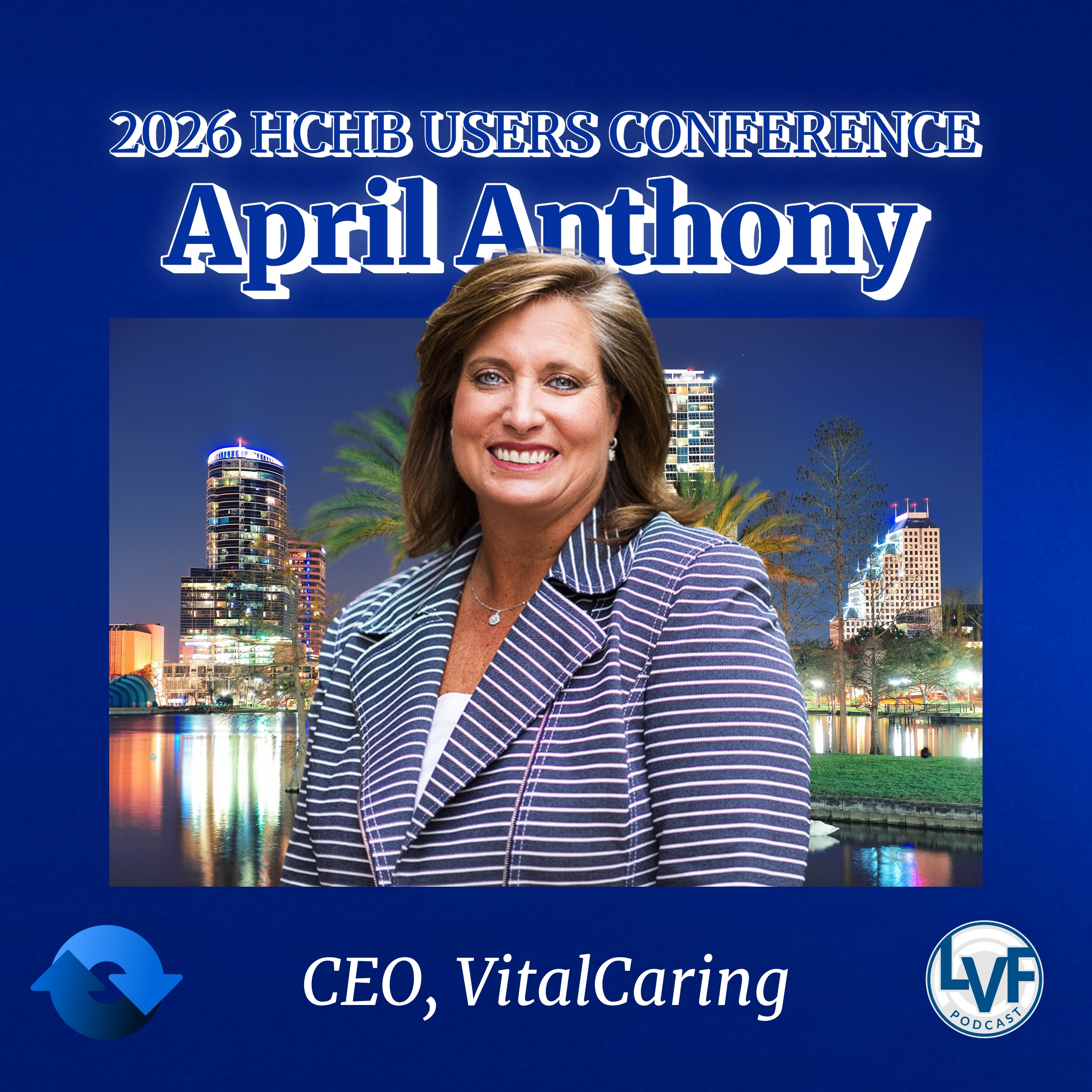
April Anthony, Chairman and CEO of VitalCaring and founder of Homecare Homebase, returns to Last Visit First live from the 2026 HCHB Users Conference, her first in six years. April shares why this is such a transformative moment for home health, and how VitalCaring is rolling out Curate: Scribe carefully, working closely with HCHB and pre-training clinicians to narrate their visits before the tool even arrives. April explains why she sees Curate: Scribe as perhaps the most exciting thing Homecare Homebase has done: bringing guidance on OASIS answers and coding to the point of care, and why VitalCaring chooses not to store visit transcripts. She also talks about VitalCaring's return to acquisitions, including Traditions Health and Carter Healthcare, looks back on 26 years of Homecare Homebase, and shares why the coming baby boomer wave makes the next 30 years the biggest opportunity home care has ever had. Chapters: 0:00 Welcome: April Anthony, Chairman and CEO of VitalCaring 2:00 Rolling Out Curate: Scribe at VitalCaring 3:38 Guidance on OASIS and Coding at the Point of Care 5:50 Why VitalCaring Doesn't Store Transcripts 7:02 Back in Acquisition Mode 8:43 26 Years of Homecare Homebase Connect with April: https://www.linkedin.com/in/april-anthony-95bab1213 Connect with VitalCaring: https://vitalcaring.com/ Sponsors: Brought to you as a Premier Sponsor collaboration with Homecare Homebase (HCHB). Homecare Homebase helps home-based care organizations prepare for what’s next. Home-based care is changing. Is your technology keeping up? Growing operational demands, workforce pressures, regulatory change, and emerging technology are reshaping what organizations need from their technology partners. The question isn’t only what your technology can do today. It’s whether it can help you prepare for what’s next. Explore why now may be the right time to take a fresh look at your technology strategy with HCHB at https://lastvisitfirst.com/go/hchb.
Tom: York. Okay. All right, welcome to the next version of the Last Visit First Podcast. My guest today is April Anthony, Chairman and CEO of Vital Caring Group. Yeah, thank April: Good to be here. Tom: you for coming. We're live at the Home Care Home Base User Conference in Orlando and been twenty years of this. I remember the first one April: Yeah. Tom: we did back in Orlando or in Fort Lauderdale, so we're back in Florida twenty years later. it's been wild. April: No. It's been wild. It feels like it was forty years ago and forty months ago in some respects. The way you think about it. Yeah. What what have you learned since you've been here? What have you seen that you focused on? Tom: It does, it does. Yeah. What what have you learned since you've been here? What have you seen that you are focused on? April: You know I I think for me it's been I think it's been six years since I was last at a home care home base user conference. I took a little bit of a gap after I stopped being CEO and didn't come for a while. And it's great to you know just reconnect with people and I remember back in the early days sort of dreading these events as gosh we're gonna get lambasted with you know unhappy customers and it's just been good to interact with so many people who really seeing the solution work for them and make an impact on their organization and and just a Really exciting time, I think, in the home care industry. I've been in it 34 years, and you would think at some point I would just kind of, you know, become desensitized to it. But the reality is, you know, it feels like right now there's just so many, you know, just transformative things happening, whether it's the ambient listening tools to make the clinician experience better, the way that that can impact making the patient experience better, the ways we can really guide clinical decision making at the point of care to drive. you know better clinical outcomes for patients and families and the way we can c communicate with families so much easier. There's just a lot of things that I think are gonna make you know the next ten years of home health care more effective, more efficient, more impactful. and it's it's good to feel that energy and to see that kind of happening broadly across, you know, agencies and and providers across the nation. So it's it's been energizing. Yeah, I think so too. It's in it's really Tom: So you guys Yeah, I think so too. It's in this room we're in the exhibit hall, so if you hear background noise that's why. But this room's kinda running pretty in buzzin'. It's it really is buzzing and it's nice. so you guys are adopting the curate product. How's that going? April: We are. We're super excited about the sta the stage we're in right now is still fairly early. we've been, I would say, you know, pretty cautious with our deployment because, you know, you read so many things, if you look at the the proposed rule, there's you know lots of language in there about concerns about compliance issues and other things with with some of the AI based tools. So we've been pretty cautious and really reviewing it tightly, working closely with Home Care Home Base to make sure that you know, really what we think the tool should do and what it should guide and what it should not guide and and all those components. So we've been moving you know, pretty slowly through the process, but we're really starting to pick up pace over the last few months, seeing a lot of good progress and you know, you have to train your nurses differently on how to use the tool, not not really on the logistics of how to use it or the navigation of how to use it. That's all pretty intuitive and and easy. It's really more about how to deliver the visit you know Teaching them to narrate the visit is a new behavior. And so what we're really doing, even for our clinicians that aren't yet using the scribe product, is that we're we're teaching them that practice, even though they're still, you know, using the old method for documentation. But if we can really change that behavior before the scribe tool comes in, it just makes it so much easier and so much faster to realize the benefits and to really adopt the tool. So even for those that aren't using it, we're we're already pre-training. To change some of those behaviors. So I I'm super excited about the holistic nature of what that can do, not only for scribing and just the efficiency of the documentation time, but I think probably equally, if not more important, what it can do to help guide more accurate and more appropriate OASIS answers, what it can do to help provide automated coding, but coding assistance and really provide some incremental value so that the coding reviewers have better. Quality information, better feedback, and the clinician at the point of care has been guided to it. And I think I think it's that at the point of care that's the biggest change because there have been great tools on the market for years, the the Medalogix's Mosai tool and other things. They just weren't ever really at the right point at the right time. And I think what Scribe is doing for us is it's bringing all of that information to bear when it needs to be brought to bear, when it needs before Tom: For sure. April: It's an argument with the nurse about why they should have said this instead of that or why they should have coded this instead of that or why they should have done this instead of that. It's bringing all of that to the moment of care and instead of a battle, it's truly a guiding tool that they're like, yeah, that makes a lot of sense in the moment Tom: Sure. April: in front of the patient. And I think that is going to result in not only more satisfaction from the clinician, but I think it's gonna also result in more adoption of the of the desired outcomes, which is gonna lead to greater accuracy, more compliance, and I think ultimately better clinical results. So I I think it's truly transformative, not just for the clinician experience, but for the whole care experience. So it Tom: Yeah. April: of all the things, I it's really perhaps the most exciting thing I think home care home base will do in the twenty five years since we've been since we've been working at this project. Tom: Right. It it's interesting too 'cause we've been talking about the last ten years, defensible documentation, you know, making sure our nurses are documenting everything they have to, homebound status, all the different puzzle pieces, and this is gonna really guide and you'll hear it from the patient. You can always go back and look at that transcript from the patient and you can say this is exactly what April: Right. Right. Tom: the patient told me. This is why we did it this way. You know, we we had a homebound discussion with the patient. We did this, we did that. So I it's cool, I like it. super excited about it. April: Yeah, and you know, we're not we're not storing the transcripts for an extended period of time. We store them for a literally a couple of days. It's a double-edged sword. And so, you know, I don't I don't and and Tom: It is. It absolutely could be a double edged sword. April: it it makes the clinicians, frankly, a little bit anxious. and so it's for us, the purpose is not to go back, you know, later and say you did or you didn't or defend. It's really, it's really there to make sure that the the AI is properly interpreting and then kind of once we've checked off on that, you know, then the transcription is gone. Tom: Perfect. Perfect. April: and you know, I think different agencies may choose to do that different w ways, but for us, we don't feel like storing it is necessary. necessarily a value if you were to get brought into some sort of, you know, legal situation. Tom: Sure. April: Like I you just don't, you know, not that that happens very often in home health care, or at least it hasn't in my thirty-four years of of home care, but just feels like too much. Tom: Yeah, yeah. You don't you don't wanna be b big brother, you don't wanna be brot big big brother, you just wanna get the documentation faster. Sure. Sure. It's good. April: You that you really Yeah, you know, you you wanna make sure the documentation is reflective of what actually happened and then you wanna toss that transcript out the you know, and and destroy it so that it doesn't live, you know, that's not the record. The record is the summation. and you don't want you don't want all the all the detail back and forth living for long term. Tom: Good, it's real good. what's going on in Vitaly nowadays? April: Well, yeah, it's been an exciting few months. we've we've finally gotten a little bit back into the acquisition mode. We completed an acquisition in December of a portion of the traditions home health and hospice business, purchased all of their home health business and a chunk of their hospice business down in the kind of southern part of the U.S. so excited about that one. Now, you know, almost nine months into that, we're you know, we're kind of getting through the integration and implementation phases with them and now getting into really the qualitative improvements. So So it's been exciting to kind of get that in the rearview mirror. And then just earlier this month, on the first of September, we purchased kind of the remaining assets of Carter Healthcare. Carter's gone through a lot of transition over the last number of years, but there was still a core of business in the state of Oklahoma primarily, a little bit in Texas, a little bit in West Virginia and Ohio. So excited to have added those pieces and have a couple more deals that we're hoping to be able to announce before the end of the year. So it's good to be back in the acquisition game. good to be growing inorganically in addition to organic growth. So that that creates energy in the organization. I think it's it's Tom: You're the best at it. I mean you've done it s for so long. Yeah. Well that's good. Congrats. Yeah. April: Done a done a few acquisitions over the years for sure. And I always say, I think there's only one. I go back in thirty four years, only one I wish I hadn't done. And I won't tell you what its name was. I won't I won't report who it was, but there like there's only one that I'm like, man, why'd I buy that thing? It's been a pretty good batting average, in the end. Tom: Yeah. It's true. On my private equity side there's been a couple that we thought about why did we do that? Like yeah. And by the way, I think you told us not to buy too. We still bought so there you go. how cool is it to see your April: cool is it to see your Tom: the the history board outside when we walked in. I mean you're a humble person and I know but your your face is all over the place and we saw the opening ceremony with all those pictures of all the old guys and Guy and Celeste and Amy and it's pretty cool. It was humbling for me. April: Yeah, it was fun, yeah. So you know the opening ceremony with all those pictures, it's pretty cool. It i it is. It's you know, I I remember distinctly when the idea of home care home base sort of came to be initially back in the late nineties. you know, would have never imagined then that it would be the industry leader, that it would have, you know, forty five percent of the industry's revenue running through our systems. and to look back and sort of think about gosh what the last twenty six years have meant Not only to Home Care Home Base, but really what they've meant to the industry. I mean, I think we've set the standard for what quality care looks like, for what quality documentation looks like, for what efficient process looks like. And that's, you know, that's exciting to sort of see that you've your fingerprints, not individual fingerprints, but the fingerprints of our organization at Home Care Home Base, what that's done for the industry. And I, you know, it'll it'll never be the same because of the impact that Home Care Home Base has made on the industry. industry and I think it's it's Tom: Sure. April: you know definitely something that collectively the team through all the twenty-six years can be really proud of the impact. It's Tom: Sure. It's been wild. I I for me to sit here and April: been wild ideas for me to sit here and Tom: think about it, it just g gives me chills really bad. Like that you know, we were part of that April: Yeah. Tom: and and we were really part of it for a long time and now we're still part of it and from the outsides or inside. So it's really April: Yeah. Tom: amazing. And I people used to compare us to Epic all the time and I think we suppressed the the we we've surpassed what Epic's done just in a smaller industry. It's pretty wild. It's it's amazing. And I they got a great team over there, they're hiring and April: Yep. It it is. Tom: putting lots of pe puzzle pieces together to continue to try to push the organizations and and you know change. with times of change, so it's good. April: Yeah, exactly. No, it's exciting. You know, I left the CEO role in twenty nineteen, but have has stayed involved, but there were a few years there after twenty nineteen where my involvement was very minimal and since Luke's been here now roughly like I guess a little over a year now, back involved in a much more routine way and it's fun. It's fun to be reconnected to Home Care Home Base, it's fun to be generating thoughts and ideas and you know Really speaking from the provider perspective, which I you know, I I go back to Home Care Home Base and I think why was this as successful? And I I think the reason that it was is because it was always such a provider driven solution. It wasn't somebody who heard about a problem or was told about a problem. It was it was generated by people who were living a problem and trying to create a solution. And I think that's what Home Care Home Base after perhaps a short departure from that is getting back to, is getting back To really being provider-centric and saying, not what do what what do we think we need, you need, but what do you think you need, and really Tom: Sure. April: being keen listeners to what the industry is saying and and what's really needed. So it's it's I'm I'm super excited about this next iteration for Home Care Home Base. I think it's going to be a really productive, successful time, not only for Home Care Home Base, but for all of our customers as well. Tom: Sure, I'm excited for too. Well thank you for coming and joining us. And how do people reach you if they want to get a hold of you, if they April: Yeah, absolutely. How do people reach you if they want to get a hold of you? Tom: want to come work for you? I know they do, so how do they how do they get a hold of you? April: Well we we're yeah, April dot Anthony at Vitalcaring dot com. welcome to reach out and it's exciting to to be, you know, participating in the industry and to watch all the good things going. I think Luke mentioned this morning the youngest baby boomer turns sixty five and twenty thirty, which I happen to be married to the youngest baby boomer, so that kinda gave me a little bit of a stir when he said that, like, jeez. But Tom: Yeah. April: you know, you think about what's ahead. as as that baby boom generation has just hit 80, read st a statistic that home health the average patient age was 77 for a really long time and then all of a sudden the last few years since COVID it's popped up to 80. And you know the the oldest baby boomer turned 80 this year or in la last year in 2025. And Tom: Yeah. April: you know it's it's crazy to think about still what's ahead and the the population dynamics and the way they're gonna go come the way of home care. So we've got big work to do as an industry and you know, the opportunity is gonna be, you know, bigger than it's ever been for us in the next really thirty years. It's exciting to think about what's gonna happen. Tom: Yeah, that's wild. That you start thinking about that. I can't believe Mark's gonna be a the youngest baby boober. He needs to listen to this. He still looks great. We're not far behind him though. All right. All right. Thank you, April. bye bye. April: I know. I can't believe I'm married to the youngest man in the everyone. I'm not far behind, but I'm not gonna be there yet. Thank you.