
Language Matters by Elias Winter · Elias Winter
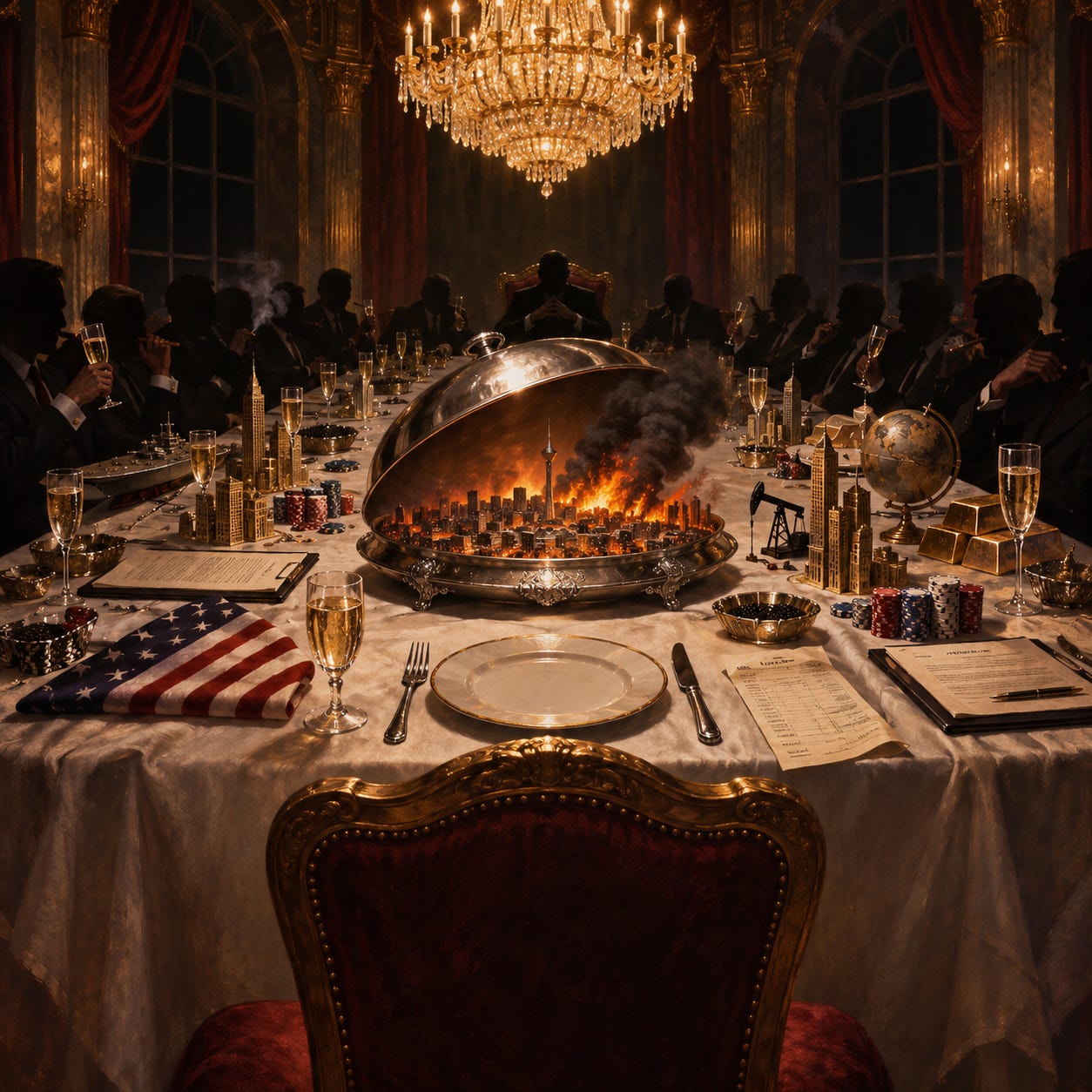
Author’s Note — November 9, 2026 This essay examines the conduct of identifiable political figures, donors, and institutions—not Jewish people collectively. Political influence deserves scrutiny, but ancestry and religion are not evidence of wrongdoing. Antisemitism, including conspiracy theories about collective Jewish power or hidden loyalties, is a betrayal of the very moral principles this essay seeks to defend. For a fuller examination of Jewish historical trauma, antisemitism, political power, and the dangers of collective blame, see my subsequent essay, The People Who Remembered Babylon. On February 28, 2026, the United States and Israel launched a joint military assault on Iran, a civilization that had survived Alexander the Great, the Arab conquest, the Mongols, the British Empire, and several thousand years of foreigners explaining what was best for Persia. This time the foreigner was Donald Trump, a former casino proprietor from Queens who had promised Americans an escape from endless wars and had apparently concluded that the most efficient way to accomplish this was to begin another one. The operation was called Epic Fury, a title suggesting that the Pentagon’s naming committee had recently discovered professional wrestling. Missiles struck Tehran. Iran’s supreme leader was killed. Regional capitals braced for retaliation. American officials explained that the purpose was national security, nuclear deterrence, regional stability, the liberation of the Iranian people, or some combination of these objectives, depending on who was speaking and which catastrophe required explaining. The president had arrived at the decision after months of consultations with Israeli leaders, American officials, and advisers whose views of Iran ranged from strategic concern to enthusiastic anticipation of its military destruction. Saudi Arabia, determined not to let Israel monopolize the improvement of regional stability, had reportedly encouraged confrontation as well. But outside the formal machinery of government stood another collection of interested parties: donors, publishers, financiers, political advocates, and people who had spent decades cultivating the remarkable American privilege of having their telephone calls returned by presidents. The names were familiar. Rupert Murdoch. Miriam Adelson. Jared Kushner. Benjamin Netanyahu. And behind several of the earlier relationships, like a ghost still collecting professional fees, stood Roy Cohn. There was no shortage of explanations for the war. The interesting question was how so many of the same people had acquired a place in the story long before the first missile was launched. To understand that, we must return to New York in 1843, when twelve German Jewish immigrants gathered in a café to establish an organization devoted to the unreasonable proposition that people should help one another. They called it B’nai B’rith, the Children of the Covenant. Their ambitions were modest. They wished to...
0:00SPEAKER_00The Children of the Covenant and Trump's War
0:02SPEAKER_00on Iran How Pro-Israel Political Networks Roy Cohn,
0:09SPEAKER_00Rupert Murdoch, the Adelsons,
0:11SPEAKER_00and Donald Trump Became Entangled in America's War on Iran
0:16SPEAKER_00By Elias Winter November 4,
0:19SPEAKER_002026 Read by an Automated Voice On February 28,
0:25SPEAKER_002026,
0:27SPEAKER_00the United States and Israel launched a joint military assault on Iran,
0:32SPEAKER_00a civilization that had survived Alexander the Great, the Arab Conquest,
0:37SPEAKER_00the Mongols, the British Empire,
0:40SPEAKER_00and several thousand years of foreigners explaining what was best for Persia.
0:46SPEAKER_00This time, the foreigner was Donald Trump,
0:49SPEAKER_00A former casino proprietor from Queens who had promised Americans an escape
0:54SPEAKER_00from endless wars and had apparently concluded that the most efficient way
0:58SPEAKER_00to accomplish this was to begin another one.