
KLASSIKOM=Innovations in classical music · Rudolph Tang
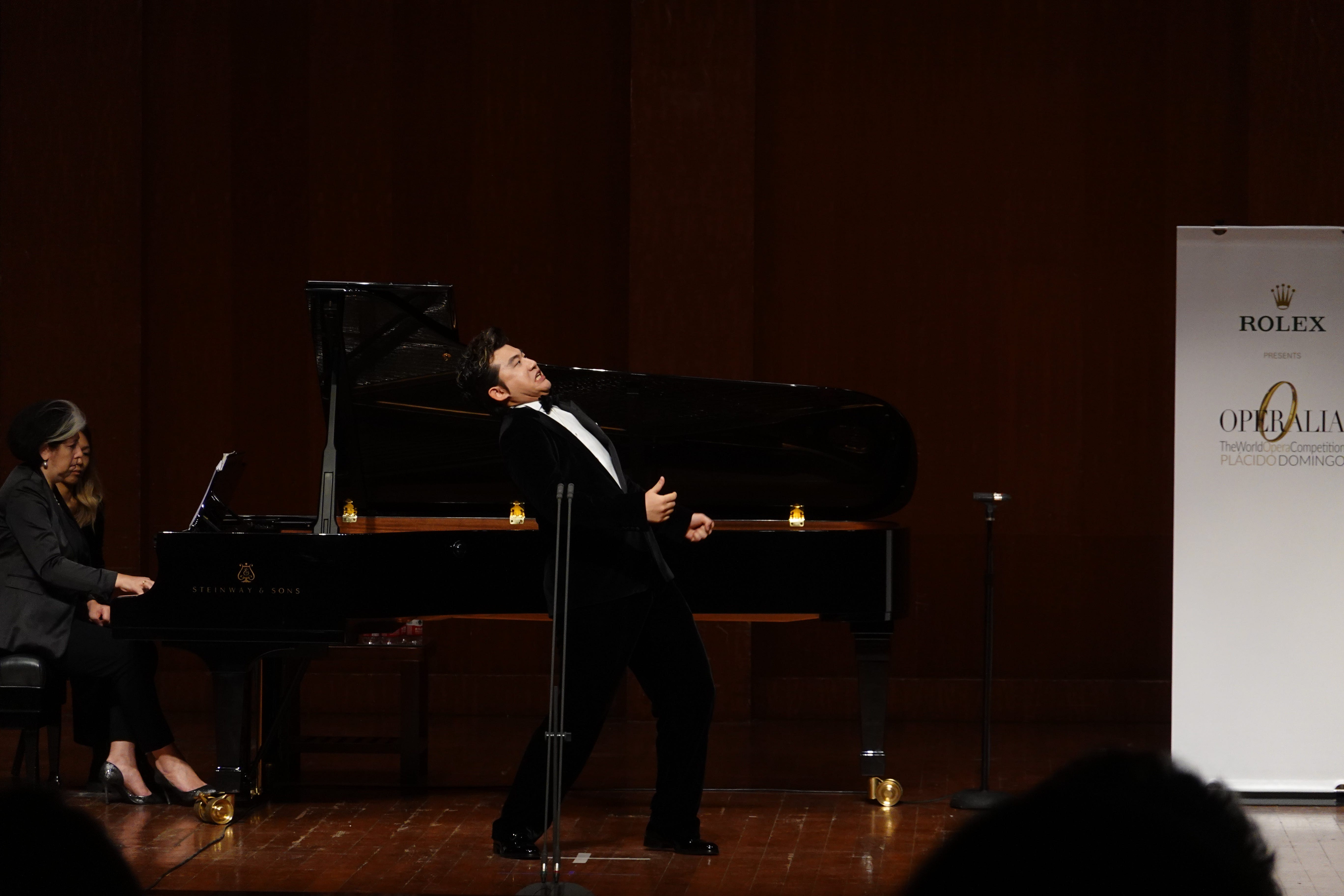
This is a Chinese language programme with bilingual subtitles. Baritone Li Zihao is in the second year of a master’s in opera at the Central Academy of Drama in Beijing, where he studies with Sun Jian, best known for the opera The Savage Land by Jin Xiang, hailed at the best Chinese opera ever written. In this interview he traces his path from the piano at seven or eight, through children’s singing lessons, to the moment his changing voice led his teacher to say he would probably become a baritone. On Operalia, he describes the competition as very famous in China and explains that Plácido Domingo founded it to give young singers a place to grow and begin their careers. He mentions the final’s prize for zarzuela, which Domingo set up in memory of his parents. Li has studied Spanish pronunciation with Spanish teachers, and he finds that Spanish arias sit close to Spanish dance music in style. Singing them lets the body sway and drive the voice, which keeps a singer from going stiff on stage and, in his view, brings only benefits. After the interview, Li advanced to the semifinals and then to the final, which takes place on 1 November. He is one of three Chinese baritones among the 12 finalists, alongside Wang Jiazhou and ZhangGonghao. This is a public episode. If you would like to discuss this with other subscribers or get access to bonus episodes, visit klassikom.substack.com
0:00[music]
1:29SPEAKER_00大家好,我是李梓豪,
1:31SPEAKER_00我现在在中央戏剧学院歌剧系研究生二年级在读,
1:35SPEAKER_00我的老师是著名的中国南中音歌唱家孙健老师,
1:39SPEAKER_00那么孙健老师为大家他熟知的也是他非常有力的代表作
1:44SPEAKER_00歌剧《原野》
1:45SPEAKER_00那么现在我正在中央剧学院跟随孙建老师进行学
1:50[music]
2:23SPEAKER_00JAU
2:25[music]
3:41kita.
3:44SPEAKER_00在我大概七岁八岁左右,
3:46SPEAKER_00我最开始接触的是钢琴,
3:48SPEAKER_00然后接触完钢琴之后,
3:50SPEAKER_00因为我喜欢唱歌,