
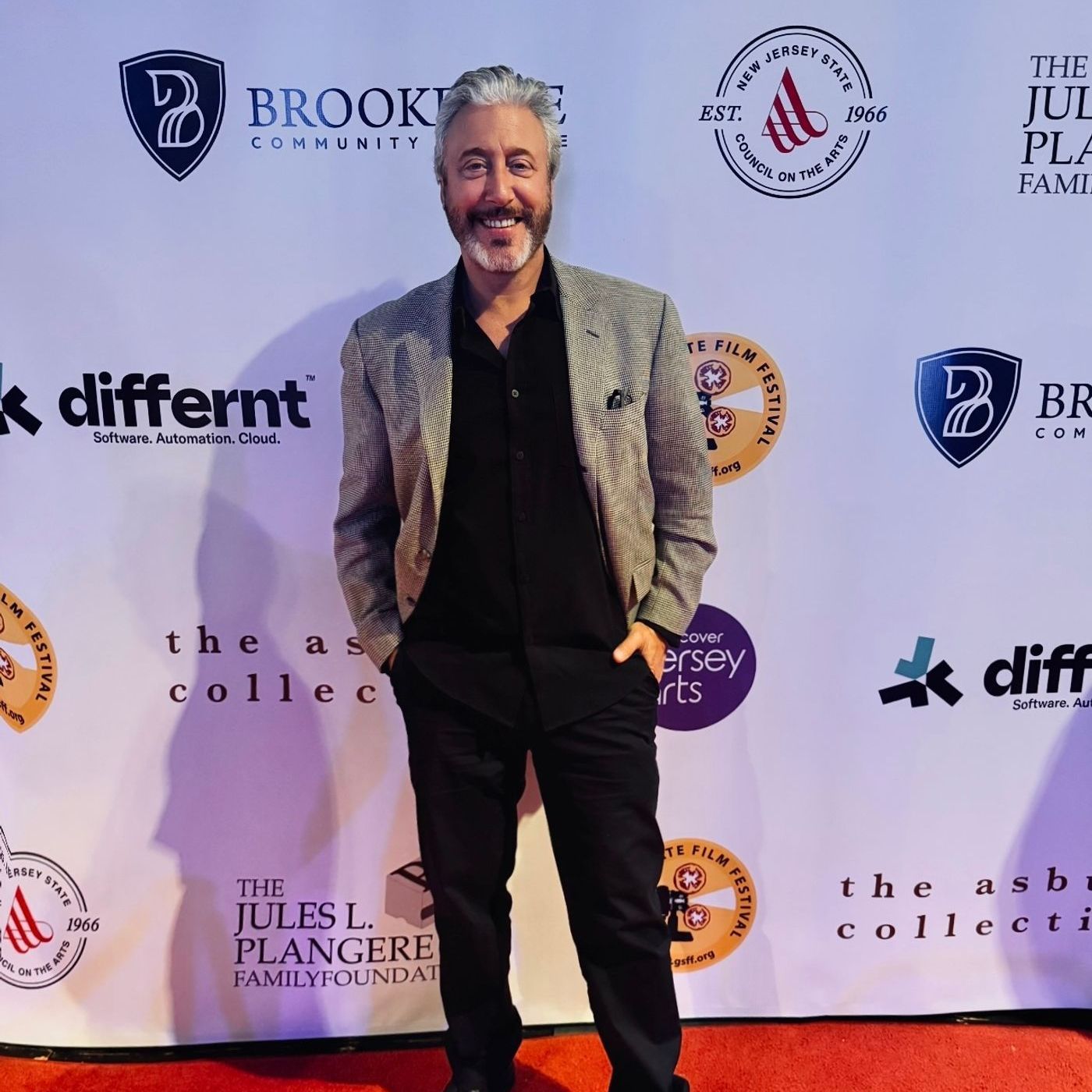
Italian Roots and Genealogy · Bob Sorrentino
The conversation explores the Italian-American experience through the lens of actor and director Anthony Robert Grasso, who shares his family roots, upbringing in Brooklyn, and the significance of Italian traditions and cuisine. The discussion also touches on genealogy, cultural connections, and the importance of community among Italians. The conversation explores Anthony Robert Grasso's experiences in film and acting, touching on his recent projects, the importance of training for aspiring actors, and the cultural significance of food in his upbringing. Grasso shares personal anecdotes about his journey in the film industry, his upcoming projects, and insights into the acting profession. Takeaways Italian roots shape identity Genealogy connects generations Importance of acting training Cultural significance of food Chapters 00:00 Exploring Italian Roots 02:01 Growing Up Italian in Brooklyn 07:10 Cultural Connections and Community 18:16 The Importance of Family Traditions 20:10 The Culinary Heritage of Italy 24:28 Culinary Connections in Film 28:21 Current Projects and Film Festivals 32:36 Teaching and Master Classes 41:14 The Journey to Acting 47:22 Advice for Aspiring Actors 52:10 Upcoming Initiatives and Final Thoughts
Bob Sorrentino: Welcome to Italian Roots and Genealogy, where history lives in our blood. We explore the journeys, records, and family stories that connect Italy to the world. Because when you discover your roots, you don't just find names, you find yourself. Be sure to subscribe to our YouTube channel, our blog, and our Facebook group, Italian Roots and Genealogy, and check out our great sponsors, my Bella Vita and Phil Italy. And my guest today is award winning actor and director. Anthony Robert Grasso. So welcome Anthony. Thanks for being here. Anthony Robert Grasso: my pleasure. Thank you for having me. Bob Sorrentino: no, it's exciting. I I don't get to have actors on too often. So it's it's all it's a different thing for me, It's but it'll be fun. Anthony Robert Grasso: Well well well thank God for Christine McBurney, who I just collaborated with in the film that I directed that she wrote. she had I think she was the one that connected us. She had worked with you and she's, you know, found out a lot about her family by using genealogy. So I was really interested and I thought, Yeah, let's do this. This is great. Bob Sorrentino: And her interesting story was she didn't know she was Italian. Anthony Robert Grasso: No. But she was told. Even when I met her, I said, God, your name is Irish, but you look Italian. She goes, Well, it turns out I am half. So Bob Sorrentino: That's Anthony Robert Grasso: so we laughed about that, you know. but she was told all her life that she looked Italian and then of course she finds out she is. So DNA is really interesting. And I haven't I you Bob Sorrentino: Yeah, for sure. Anthony Robert Grasso: know, I I I'm thinking about doing it, but I but I but I haven't done it yet. Bob Sorrentino: so you haven't you haven't done any tests yet? Anthony Robert Grasso: No, no, no. Never people have talked about, you should check it out. Maybe you have a relative somewhere that you don't know and we might. We'll see. when I get time I can do it. Bob Sorrentino: yeah, so so so you grew up Italian in Brooklyn. so what was so what are what are your family roots? Where's the family from and and what was it like growing up Italian in Brooklyn? Anthony Robert Grasso: Well origin Well, you know, I didn't know any different. but my father's side came from Sicily, my father's parents. I never met them, sadly. they were gone by the time I was born. And then my mother's side was also from Sicily, her father was anyway. I did meet my granddad on my mom's side. I was named after him. my mom was gonna name me Robert, and then I was born on his birthday, so she had to sh change at the last minute to Anthony. Anthony Roberts. So that's where I got the the two name or the other thing was you know, I grew up in Bensonhurst. I don't know if anyone is familiar, you know, other than from the honeymooners. the Bensonhurst is it was a great, great time growing up there. It was really a very close knitted, Italian American and and v also Jewish. I had a lot of Jewish friends and I was raised in a house where it was a two family house and the people who lived underneath they had bought the home at my parents, they were good friends and they became like my my aunt and uncle. So I don't even think of them other than my aunt and uncle and they were Jewish. So I had the the you know the the the privilege I should say to experience both cultures. So we celebrated Italian, Catholic holidays and we would also celebrate the Jewish holidays. But it was it was stick ball and you know homes connected, nearby parks. it had a little bit of you know, violence in here and there, but for the most part it was a really fun inner city way of growing up. I always kid around and say, you know, fun time for me was I would go roofing. We we would call it roofing over Yeah. So you would climb Bob Sorrentino: Yes, I know what it Anthony Robert Grasso: on top of buildings that were connected, which was kind of dangerous now that I think about it. Bob Sorrentino: A little bit. Anthony Robert Grasso: But it was fun. I mean it wasn't like a big drop. You just They were connected. So you would just love the idea that you can go from one side of the street, all the way down the block to another and that was our fun time, People who aren't from there wouldn't wouldn't even know what that was. So I always laugh how that was a fun time for us. Bob Sorrentino: So so, that's interesting that you mentioned know, having Jewish friends and all of that. Did you ever did you ever hear the story about the I think that I think the last name was the I think it was Uberal. Anthony Robert Grasso: Mm-hmm. Bob Sorrentino: it was a Jewish family or Jewish husband and wife that helped a priest in nineteen thirteen save his storefront church because he could have paid he didn't have five hundred dollars. And he lent them the $500. And 20 some odd years later, the he had passed away. And she got a call from her relatives in Nazi Germany, or his relatives from Nazi Germany, that they had to get out. And they couldn't get out. And make a long story short, sh they told her to to go to Cuba because the papal nuncio in Cuba would help. And she gets off the plane in Cuba. And it's the priest. He's now working for Pope Paul Pope Pius the Twelfth. He's Anthony Robert Grasso: Wow. Bob Sorrentino: now the archbishop in Cuba. And he said, How many people are there? And she told him, and he brought all of these people to Cuba and took Anthony Robert Grasso: Wow. Bob Sorrentino: care of them for till the end of the war. Because they they want to let them in the States. They wouldn't let them come here. So it's an amazing story. And I I said, Boy, I Anthony Robert Grasso: Yeah, Right. Wow. That is a very strange. Bob Sorrentino: I can't believe nobody's made a movie out of this because it's such a great Anthony Robert Grasso: You never knew. Bob Sorrentino: story. Anthony Robert Grasso: You might have just put it out there. Somebody's watching. Bob Sorrentino: yeah, I yeah, I hope so. I hope so. Anthony Robert Grasso: Is how, you know, just a small act of kindness can really alter your fate. And yeah, that that that, you know, in my years on this planet, you know, I I've experienced a lot of that over the years. Just, you know, you do something and then it comes back to you. or or or even vice versa, you know, people who been kind to me, I would do the same. As a matter of fact, you know, as a teacher, you know, I teach acting and I've been doing it twenty seven years now, I can't believe it. And I'm forty one years as an actor. I started when I was pretty young. And what I loved that when I was training, there were times where I couldn't afford things and my teachers would have me help them clean up or whatever to give me free tuition. So or a discount. So I've always maintained that in all the years I've been teaching. I always have a few students that, you know, are going through a hardship and I work with them. one in particular is of someone who doesn't even live in New York. She's on my Zoom class. And it's been my my honor and my privilege to do that because I I really believe in the pay forward. So yeah. it it it does, it works. Bob Sorrentino: Yeah, and I understand that. I've always tried to do that. Anthony Robert Grasso: Well do. Bob Sorrentino: I I've always tried to help people, young people as much as I can. I was a I was a manager, middle manager at Chase for you know many years. And Yes, it is Anthony Robert Grasso: And a real job. And when I mean real job, as an actor we don't we don't do ninety five. We never had a ninety five job, ever. Bob Sorrentino: but I think it's important, but you know what's what's frustrating for me? since I've been doing this and I guess I've been doing this now. I've interviewed over three hundred and fifty people. I guess I've been doing this I don't know, three or four years. This Anthony Robert Grasso: All right. Bob Sorrentino: this format. is that we Italians don't help each other enough. I know, do you find that Anthony Robert Grasso: I think we would if if you run into somebody and then you go, my god, we have a similar, you know, background and what part of Italy are you from? You know, my agent right now is Italian and you know that was the first time I ever had an Italian agent. And it was interesting because we started to really connect on the fact that we had family from Sicily. So I do think, you know, common interests and common backgrounds I think always connect people. And we felt very I felt very connected to him. And but as far as helping, I don't know. It's you know, like I have friends who are from Jordan, I have friends who are from Israel, and they literally go out of their way financially sometimes. Like they'll set people up. I have not seen that in in in our culture, but I again I I I just maybe I didn't need it or I didn't look for it. Bob Sorrentino: But but we used to do that. 100 years ago we used to do that. you grew up in Brooklyn, I grew up in Queens. Anthony Robert Grasso: Right. Well, it was one week. Yeah. Bob Sorrentino: You know, maybe society has changed. Anthony Robert Grasso: No. I mean, if you go to a local gas station from where I grew up and if you always went to them to fix your car, they they would help you, you know? I th I I I don't know, since I'd left n Brooklyn, New York, and then I lived in Manhattan, it's different in Manhattan. You're sort of this little speck in this enormous city. So Bob Sorrentino: Right. Anthony Robert Grasso: you don't really have that. You know, I I mean I made a community there, of course, with actors and and people that I worked with, but and then when I moved out and I went to Jersey, you know, it's different. I'm definitely what they would call a transplant. and Bob Sorrentino: Mm-hmm. Me too. Yeah. Anthony Robert Grasso: I have moved into a town that a lot of people never left. It doesn't have a lot of, you know, people from the city moving in. I mean now it's getting a little bit more, but I would run into people and they had fa family still living there and they went to the local high school and I'm like, Really? Wow. and you and you're still there. That's great. So I never felt like I had roots and I'm here twenty one years. it's a place that I lay my head and raise my kid and and have a lovely place to s to live, but I don't look at it like it's it's a home in that sense. or th or or like you're saying, this this community of, you know, fellow Italians and whatever. Although there is a lot of Italians here. Bob Sorrentino: Yeah, well I I just recently, a couple of years ago, I I wish I did it sooner, but because we were in Florida for a while and we came back like ten years ago, I joined the the Italian club over here in Anthony Robert Grasso: Easy. Bob Sorrentino: in Ocean Township. and I did it because my brother joined the club in Florida. He's a little older than me. And it's been great. I mean, but to your point, these guys, you know, their great grandparents came to Long Branch and I had no idea that Long Branch was this you know, Italian bastion going back a hundred years, you know. and and and and you know, and same thing, you know, they'll talk about we'll be talking they'll be talking about this bakery and that butcher and this place and that place. I have no idea what they're talking about. Where these places are, you know. Anthony Robert Grasso: Yeah. When I first moved in to my area in Jersey, it's I don't I don't know if you know Nutley, New Jersey. It's I never heard of it. I was looking in Montclair and at the time everything was ridiculous even back then. And so we were kinda looking at a certain budget and you weren't getting much for that kind of money. So someone said, you know, should go to Nutley, it's it's two towns over. And we did and we found this lovely home and He was German, the previous owners. So I never thought, I'm surrounded by a lot of Italians. So we move in and I didn't really do the demographics, I should have, but The first day we moved in we were we were setting up the house and we were pulling up carpeting and what have you and and it was Halloween. It was twenty one years ago and the doorbell would ring and I'd open it and these little kids and I go, What's your name? Sal, Vinny, Joey. I said, Honey, I think we're in an Italian neighborhood. I just left because Bob Sorrentino: that's funny. That's Anthony Robert Grasso: my brother's Vin, my father's Joseph, you know. so Yeah, it was just I felt like, I moved into where I grew up, And and we do have an amazing Italian deli, a couple of them in this in the area. One of them is called A and S and it's the best. real Italian imported goods. So that makes me happy. Yeah. Yeah. That makes me out. Bob Sorrentino: nice. Yeah. Yeah. We we we have a we have a Italian bakery, walking distance, which is which is fantastic. So now have you been have you gone to Sicily? Have you been back to Sicily? Anthony Robert Grasso: Well, I've been to Italy three times, but never to Sicily. I've been to northern Italy. I was in Rome, Florence, Tuscany, that whole area. And then last two years ago, no, not even about a year and a half, we went to the Amalfi coast. And I've never been to that part, which was magnificent. Sorrento and Capri and all that. It was it was beautiful. Next time I go to Italy, I'm making a point of going to Sicily because my father's side is from a small little village called Contanazete. And I always wanted to go visit that. I it's not as small anymore, but and funny enough, somebody reached out on Facebook a couple of years ago, maybe more now, like 10 years. And he saw my wife's name was Lo Grasso, because my real name is Lo Grasso. And Bob Sorrentino: Mm-hmm. Yeah. Anthony Robert Grasso: my stage my stage name I shortened it because it was too many vowels. So I I just went with Grasso. Anyway, he he reaches out, he goes, Are you related by any chance? And so she passes it on to me and I went, Hey. I said, where are you from? He goes, Continent Sicily. I was like, huh. And he looked like me, and he was a photographer, I'm a photographer, actor, he's a photographer, actor. So we had all these things aligned. And I'm like, he's gotta be a relative, we look alike. Turns out we're not connected, you know, by the lineage, but we became so friendly that we call each other cousins. So he's been to New York, he looks me up, we have lunch, and I just find that really amazing. so I'm hoping to go there and see if I find any l you know, living relatives. I don't know. You know, my father's side has been gone over sixty five years. Yeah. Bob Sorrentino: Yeah, yeah. Anthony Robert Grasso: So and my dad's gone about thirty, thirty something years. Bob Sorrentino: Well yeah, and when you when you go there, I tell people all the time I people tell me that I'm going to Italy and I say, Well, do you know where the hometown is? Yeah, but I don't know anybody there, everybody's here. I said I said, Yeah, but it doesn't matter. I said, When you walk those streets that you you know, your your grandfather, your great grandfather, whatever, walk down, you it's it's a whole different experience that that you just feel connected in a a certain way. I mean, I'm a not Anthony Robert Grasso: Yeah, I was I Bob Sorrentino: like that, so yeah. Anthony Robert Grasso: Yeah, I was thinking w when when we do go, I am gonna do a lot of deep diving and somebody who just recently reached out about getting Italian citizenship. And apparently we could if I have a a you know, a grandparent from there. I have I have all my grandparents from there. but it takes a lot of red tape and and it it doesn't guarantee and it's expensive. It's like almost ten grand to do it. Bob Sorrentino: Yeah, no, I stu I started it. I have all the papers. I was gonna go through my father at first, but then they said it was a sticky situation with my father because my grandfather naturalized and my father was sixteen, but they said, because you were born after nineteen forty-eight, you could go through your grandmother. I have all Anthony Robert Grasso: Right. Bob Sorrentino: the papers. I was doing it mostly for my kids. and then they you know, they changed this whole rules and stuff again, and they made the great grandchildren ineligible. So it's like, well, Anthony Robert Grasso: That's not yeah. Bob Sorrentino: and it may change again, it's in court, it's out of court. You but y the Italian red tape is well, our red tape is bad. Theirs is like crazy. Anthony Robert Grasso: Well and and they and they move at a snail space, pace Bob Sorrentino: Mm-hmm. Anthony Robert Grasso: rather. yeah, when you leave New York everyone moves very slowly. it's pr pretty amazing, you know. And it's not because they're slow, it's because I think we're so used to it being I remember the first time I went to LA to live there, I was in there in the in the nineties and I went into one of the coffee shops and it took like twenty five minutes. And I just thought, there's only two people ahead of me. What is the what's the hold up here? You know, but we're so used to people, you know, moving at a pace in New York that I I it took me a like a about a month to slow down. And when I came back, I started walking in the streets of New York and I was getting bumped into because my pa Bob Sorrentino: Yes. Anthony Robert Grasso: my because my pace slowed down. And I thought, wow, we really walk like you know, we just all have things to go to and places to Busy. It's crazy. Bob Sorrentino: I I experienced that 'cause we lived in England for two years in the the mid nineties. And I experienced that when I came back to to to New York. I was like, why is everybody running? You know, what's going on? Anthony Robert Grasso: Yeah. Well it's well, you know, I just wanna pivot if I can about the film that I just directed, which is dealing with genealogy and discovery that you're that you're half Italian. the reason I think Christine, you know, she's been a student of mine and also a colleague, asked me to direct it was was because this was my life, you know, knowing what it's like to have a Sunday every Sunday. sauce on the on my mom would my mom was a working parent. She was not your typical Italian woman. She did not cook and bake and all that. She did it on Sunday. She made her sauce, meatballs, and it was very important that the whole family would be there. My grandparents would be there. It was this ritual and it was amazing. I talk about this with my daughter, who's now twenty-two, and I taught her how to make a sauce with my wife. And and what I loved about re re kind of creating that. in the movie was that sense of tradition and and that that smell and that food that instantly puts you in an Italian home. And so she so she smiled. She goes, I I picked the right guy, you know, because I I Bob Sorrentino: Yeah. Yeah. Anthony Robert Grasso: I know that table. I know what it looks and and and so yeah, it was a it was a blast to to recreate that experience because you know I tell people whenever my mom would make s a sauce, we would call it sauce, not gravy, gravy's brown. she would start like I don't know, around ten AM and I'd still be sleeping sometimes on Sunday because we would go out as young guys and and I would just wake up to that. And Bob Sorrentino: Mm, yeah. Anthony Robert Grasso: whenever I cook that in my house, it instantly brings me right back. It brings me right back to that that that beautiful, I don't know. fall the smells of garlic and sauce. It's it's it's the best. It's the best. And I have to say I've traveled a lot, Robert. And aside from Paris probably, even that I still think nothing beats Italian food in my opinion. There's it's just I I Bob Sorrentino: it's not and especially when you're there, Anthony Robert Grasso: couldn't get a bad meal when I was there. No matter where we went, it was just blowing your mind. You know Fresh and delicious and and comforting and just it's the best. Love especially when you had, Sundays, just a typical Sunday at my house, we would have probably fourteen of us and they would have to sometimes add a table. Did you do that? the folding table. Bob Sorrentino: Yeah yeah yeah. Anthony Robert Grasso: And it was I I you know, it was just fun. It was just I see it in films and I smile. you know, I you know, I ironically my daughter developed a gluten intolerance, so she She doesn't have a lot of pasta these days and un unless I get gluten free pasta. We were in Paris over the summer and we found this Italian restaurant that was gluten free. I've never seen my daughter just have sheer joy that she can indulge in in pizza and bread and pasta and everything she ate was gluten free and she just enjoyed everything and she went, Wow, I missed that. 'Cause we used to do it a lot when she was younger and we didn't know she had this issue. Bob Sorrentino: Yeah. When when we were there just when we were there just, you know, last month, they they were really great. We were on a tour and the tour guide set up the restaurants and everything. But they were really, really great where the people were gluten free. They are gluten free pastas. Yeah. Anthony Robert Grasso: yeah, that's big in Europe. Yeah. Really big in Europe now. they really know that there's a lot of gluten intolerance. And the the wheat here is different than the wheat there. I have a friend who's celiac when we were I think back in Italy, she was able to eat the bread and she was able to have the pasta. It didn't affect her. So it's just not processes anyway. It's good stuff. That's that's why my wife and I now we try to get imported pasta. It's a little bit more money, but man, is it different. You can really it's not as heavy and it's great. Yeah. Bob Sorrentino: Yeah, one of the one of the guys on the trip was he he brought back, I don't know, seven, eight pounds of pasta. I said, You're gonna need to get a new suitcase to bring up Anthony Robert Grasso: Yeah. Yeah. When we were shooting Tuto, the film, they were laughing at me because I was also in the movie as well as directing it, and I play the cousin who kind of connects her with the family. And you know, in film you're not supposed to really eat the food, you know, because it's gonna be a lot it takes. Well I just kept eating. They were like, Anthony, like It's good. it, Bob Sorrentino: Really Anthony Robert Grasso: So it became like a running joke, give it to it, he'll eat anything. Like that old thing, Mikey. Mikey eats everything. Yeah. Good stuff. Bob Sorrentino: yeah, I always I o I always wondered about that. Did they actually eat all the food when they're doing these things? Anthony Robert Grasso: Well, normally you don't. I I mean I I didn't eat everything, but I did eat so it looked like I was really eating and and I was trying to eat with my mouthful and talk, you know how people do that. So it was more like you know, drunking and eating. yeah. it I just laugh at when I think about a lot of films that I've been in that where you're eating and you got a s there's a spit bucket that you usually spit it out. But I didn't spit it out during this one. It was too damn good. We had chicken cutlets, it was great. Bob Sorrentino: My wife my wife always says to me, 'cause she likes her food has to be like steaming hot. And she says, How do you eat f cold food? I said, You have to understand. I said, When I was at my grandmother's house and there were twenty or thirty people, I said, My grandmother ate first, then my aunt and uncles, then my older cousins. By the time it got around to me, it was what it was. Anthony Robert Grasso: Right. Well I g I got a dear friend that we would go out to eat and if he got his plate first, by the time it came to the last person he was done. We would even like we would joke and be like, give it to him last 'cause he'll beat us anyway. Yeah. But I'll tell you a s Bob Sorrentino: that that's Anthony Robert Grasso: a funny little thing. You know, growing up with an Italian Jewish family, my nickname is like a pizza bagel because I eat a lot of the foods that normally most, you know, Italians wouldn't eat just because it's like I don't know, kafilter fish and things like that. but I grew up with that, you know. I had an uncle Dave that would get bagels and locks and sturgeon and all these different things that I didn't even know was, you know, indicative to being a Jewish person, you know. It was like or something that they ate more as a delicacy. I loved it. I'm like, bring me some confilter fish at a matzah bin. But, you know, Even on the holidays, now that I'm you know, away from the home, I'll I'll buy that for Passover just to keep it in the house 'cause it kinda brings me back. But, you know, again, nothing beats my my Italian food because you know, and the funny thing is if you look at our food and I don't mean this to sound like we're, you know, better, but it's colorful. Bob Sorrentino: Mm, yeah. Anthony Robert Grasso: A lot of color, you know, and it's visually it's very beautiful and and and it of course the taste is great. some some of the memories of, my family Passovers that we would share with my with my relatives downstairs, it was very beige. It was very beige. They just say, Why is your food so beige? And you know, they were like, Well in Israel we didn't have, you know, vegetables and I go, I well that makes sense. But, you know, just the food, an and and very loud. You know, I don't know if your family was very loud, but Between Italians Bob Sorrentino: wow. Anthony Robert Grasso: and Jews being together, we were very loud. People come over. I would bring, you know, girlfriends over in in in the past and they would be like this. Why is everybody yelling? I go, No, I'm not yelling. That's just us talking, you know. Well we're we're Bob Sorrentino: Yeah, we're allowed. We're allowed. Anthony Robert Grasso: live. Yeah. Bob Sorrentino: So so what are you working on now? You have anything new coming down the road? Anthony Robert Grasso: Absolutely Yeah. well right now Tuto is just finished and we got into our first film festival, which is very exciting. it's gonna screen on Halloween. And then Christine has a whole lineup of other submissions that she put in for local and out of town festivals. So what happens when you do an indie? You you now try to get it seen in different festivals and you get an audience to watch it and you know, it gives an idea of like what works. it's a great way to kinda, you know, work hard and see how it it's affecting people. the other thing that's going on is a a a comedy that I was cast in, this this actor director that I met, Wendell LaRon, he he and I became friendly because of film festivals. And I liked his work and he had liked my work and I think I commented, I said, Hey man, I really liked your film. sorry I missed you at the festival. So he wrote back and said, I saw yours, and we became mutual admiration to one another's work. And then we finally met at a local film festival and we hugged each other, hey, because we're I'm I'm a I'm a hugger. And he and I looked at each other and I went, We should play brothers, because he's about my height. He has silver hair. And sure enough, he went home that night and wrote it. And Bob Sorrentino: Wow. Anthony Robert Grasso: and then came back. And said, Hey, I think I got something. Do you wanna read it? And I said, Sure. So he read so I read it. And then we did some, little improv work, in rehearsals and and it was fantastic. And then we shot it a year a year yeah, a year last August. And it just won eight awards in the last few months that it's been circulating. And we were just at the Chelsea Film Festival, which is a big one in New York, and we won Best Audience Choice, which is really a like A big deal because it's coming from the audience. And Bob Sorrentino: Yeah, I bet. Anthony Robert Grasso: yeah. And then the the next place it's gonna screen is AMT Film Festival in in also in New York this coming Friday. And then it's going into Long Island, which I'll be there. We got nominated for ten nominations. So it's been fun with that. And then the other thing I'm working on with my wife, she's also an actress, Diane Harrington, she's an actress, writer. And she and I came up with an idea for a film and she's writing it and we're tweaking it. And we brought in a director named Brian Russell, who has a slew of films everywhere. And he is now kind of working with us on tightening the script. Once the script is locked, then we're gonna look at shoot dates and that'll happen hopefully in twenty twenty-seven, I'm thinking. so that's something that is in the works, and then we're also working on a documentary. that my wife feels very strongly about about transgender and and how they're treated. and you know to to take away the myth. A lot of people think, you know, it's it's strange, it's weird. And I think because it's unknown to many and to kind of bring it to the forefront and say, Hey, they're people and they are just like us. so I'm excited. I'm excited that we'll get that off the ground as well. That'll hopefully be also in 2020, 27. Yeah. So that's what's happening there. And then I'm going to Chicago to do a master class in March, which I'm very excited about. this will be my sixth time going to this particular university in Rockford University in Illinois. And they brought me back in twenty fifteen the first time and I went back every few years to teach to their entire performing arts. And then we and then I go visit the local high schools and talk about acting and give them a couple of, you know, sampling of how it works. And so it's fun. It's it's it's it's a great time to do that. And then I'm going to Ireland in June to do a master class. I sh this will be my eighth abroad. So in with with ARG studio, that's my acting studio, I have a weekly ongoing classes, right? And then this particular master class is once a year. We s we pick a place abroad, either Italy, we've been to Edinburgh, Prague, Barcelona, Florence, London, Oxford, Amsterdam, and now this will be the eighth, Ireland. And it's ex you know, and it's not just people from there, it's it's more of my students that are here. that haven't really done a deep dive in a in a full week of a thirty hour training, you know, intensive. And it covers movement. And I've been working with this movement teacher, Janice Orlandy, who does Chekhov and Lloyd Williamson work. And and then they do that in the morning and then we have my classes in the later part of the day. So it's a it's a vigorous five days. But you leave very very open and your sensories are open because you're in a in a foreign town. A lot of people go, Why do you gotta do it in Europe, not here? I go, Well, y people don't tend to unplug when when they have to commute back home. But when you go away, Bob Sorrentino: Mm. Yeah. Anthony Robert Grasso: you're you you don't know where you're going, right? So you have to pay attention and you have to keep your eyes kind of peeled and and listen and and observe and Acting is all of those things. You you have to be a an observer of of life. You have to be using your imagination. In order to have an imagination you have to have a life so that you could draw from, or at least imagine it. I mean, for me, every time I travel I have a different now sensory about smells that I go that was Prague. that's a smell that I smelt a lot in Italy. or just the textures, you know. so if I'm imagining things in my in my in in a scene, you you have this reference point. So I I I keep telling the actors you have to always fill the well. I call it the well. Well I don't call it I mean I was caught that, but you fill the well of information and experiences so that you could apply it when needed. And acting is not just reciting lines, you know, it's you you really have to bring a a strong sense of who you are as a as a as a person in this vessel. And then once you can understand that, then you can apply it to any text that is given to you. So for example, if you and I were to go in for the same role, I wouldn't expect you to say, I'm gonna do it like Anthony Robert Grasso, and I'm not gonna I'm gonna do it like Robert Sorrento. You know, I'm sis I'm sorry, Sorrentino, right? Okay. Bob Sorrentino: Yeah. Anthony Robert Grasso: I I think I said Sorrento. and So that would be a mistake because the way you were raised and and and your experiences are going to be different from mine. So how we make it our own is by using the look, the sound, and the experiences. So a lot of people don't see it that way. they they just, especially people who are not actors, they'll be like, I want to learn how to act. I can learn lines. And I go, it's not just learning lines. you have to learn a lot about yourself in order to apply it to something else. So Bob Sorrentino: Well you you you had asked me if I ever if I was an actor and I said no. But I did play Groucho Marks one time in a corporate in a corporate short. Yes. Anthony Robert Grasso: did you? Did you? I love that. That's fun. Brown shows. Bob Sorrentino: I I I w I I was in IT in Chase in Bro in Brooklyn and the big boss she wanted Anthony Robert Grasso: We Bob Sorrentino: each each one of her areas to do a three to five minute short on what they do. so a guy worked for me, he volunteered to be the producer slash director of it and he and he said, I wanna do the state room scene. from the Marx brothers. Only we're gonna do it as they wanted we were gonna order a a computer system, a new computer system. so I played Groucho, friend of mine did a great job as as Chico. we had a girl actually played Harpo. Anthony Robert Grasso: Harpo would be amazing. I would love to do harpo. that guy. Bob Sorrentino: And what was great about it was Bob presented it to the the guys who were gonna film it and they went like and then he's then they said the light bulb went off and they said, yes, we can do that. We filmed it in black and white. It was fantastic. It was so fun. and I mean I love Anthony Robert Grasso: Mm-hmm. Right. I love that. Yeah, you should. Bob Sorrentino: Groucho. I mean I've since I'm a little kid, I've I I I think he's Anthony Robert Grasso: Well, sadly you y you'd be surprised how many of the young kids today don't probably know who that is. And I see it more and more 'cause I teach over sixty students a a week. And a lot of them are I would say age ranging from twenty two to like thirty five. And then I have another group that would be more our age, for forty to sixty, seventy. I even have a student recently at eighty. which I love. I love that this this this student of mine, he's been with me for years and years and just to watch him be a kid, someone said to me last night, you know, you don't seem like like your age. And I said, Well, it's because I'm a kid at heart and I always keep that present because you know, to be any any creative, you know, you have to investigate your child because that's where it was unbridled and uncensored Bob Sorrentino: Yeah. Anthony Robert Grasso: and you just always react rather than think. As a grown ups what happens is we around s fifteen we start to really shut down because we want to be appropriate. And drama, especially any any written dramatic writing, th it's not appropriate. It's when things are inappropriate. of w why it's engaging and why and why people want to watch it because it's things that are being said maybe that if they had the the gall to say it themselves. So we watch it to live vicariously. So I always tell people that, what we do is not natural, you know, the writing aspect. It it has to look easy, sort of like a a gymnast, you know, when when you see them doing flips onto a beam that's four inches wide. I always say they have to make that look like they do that like this without thinking. Meanwhile Bob Sorrentino: Mm-hmm. Mm-hmm. Anthony Robert Grasso: they practice, no one sees the practice that went into that. Years and months and hours of practice. So the same thing. You you we have to make it look easy. And that's when it's feels natural or feels natural to the viewer, but there's nothing natural about it at all. At all. It's technique. You know. So Bob Sorrentino: Yeah. Yeah. Anthony Robert Grasso: the thing about connecting acting with being an Italian and I I tell you what's interesting, 'cause all my life I I think w we were saying this pr prior to coming on the air, I would fight. I would fight the fact that I was Italian American who was only gonna go in for those kind of roles. And I have to say, I've been very lucky that I've gotten away from many of them. But I do play them. You know, my first guest star was Gotham and I played a a a sidekick gangster And then I recently did something called Midnight Hustle that I played a a f a fun character named Johnny Handsome or Handsome Johnny. It was Bob Sorrentino: Yeah. Anthony Robert Grasso: like, whatever. I was like I was like at my age, I'll take it. but you know, a and he was a gangster as well. He was like the head of something. And but for the most part, I I you know, I play all kinds of parts and and and I think it's depending on what your story and and your sensibility. I've been a painter a n a fine art major all my life. I started out as a a fine art a painter and I went to school with visual arts and I was gonna be a fine artist and then an art director. So I had this other creative thing that I was, you know, working with, but I always liked acting. Always liked it. And when I got bit, I was about well, I was really young. I started directing The Wizard of Oz at five. I would direct all my friends on the block and Bob Sorrentino: Ha ha Anthony Robert Grasso: they didn't know how to do it. And then I did Rumpel Steelskin and they didn't know what that was and I played all the roles and I was this crazy kid. And then around seven or eight, I went to see The Poseided Adventure. Do you remember that movie? Ackerman and Great Cats, Stella Steel. Yeah, the third one. Bob Sorrentino: Mm, sure. Yeah. Yeah. The good one. The the the first the good one. Anthony Robert Grasso: The second one. The second one was terrible. Sorry, but it was. well it wasn't terrible. It was just it didn't have the heart, the same animal Bob Sorrentino: Yes, right. Exactly. Exactly. Anthony Robert Grasso: First one just really took you in. You love these people, you and you rooted for them. Shelley Winters. I'm sorry, you can't touch it. well, I watched that movie and I said to my friends, I think, because then you could go into the movie theater when you were younger, like nine, and we had a bunch of kids. I said, I'm gonna stay for the next one, and I would hide under the seat. And I stayed all day, and I watched three or four showings, and then I learn the line so I was in the movie with them. it was such a magical time growing up in Brooklyn with these big movie theaters. They're not there anymore. the Marlborough Theater, the Lowy's Oriental, all these all these Bob Sorrentino: yeah, now they're all gone. Anthony Robert Grasso: theaters, they were ginormous with balconies. And I always tell Bob Sorrentino: Yeah, yeah. Anthony Robert Grasso: the student like I always tell my students this story. I go, When we would go to the movies, you remember there was curtains and the curtains would go and it would just be like, All right, getting ready, you know? And then bang, you get into the coming attractions and and you're in. Well Bob Sorrentino: It was it was it was a because we had the architeats and flushing. it it was Anthony Robert Grasso: Right. Bob Sorrentino: an am it was an adventure. Anthony Robert Grasso: It was adventure. And, that's what made me want to be an actor. So I I fell into that movie so deeply that I went home and I would start to do it. And then of course I watched The Godfather with my family. And I would and I always related to Michael Corleone. I don't know why. I guess because he was the youngest. I'm the youngest of four. I I had Alfredo as a brother, wild and crazy. And then I got another brother who was very tough and he was my sonny. I had a sister who was like Tyler Shire, And then there's me, the little quiet one in the back, and I'm like the Michael character. So I would go off and act in my bathroom. And I was like, I could do this, And then of course I didn't pursue it. About fifteen, I was in trouble. my dad was really disappointed with how I was handling school. I was getting stuck in kind of bad things and And he brought me to the principal and he was like if he doesn't shape up, I'm t I'm gonna take him out. And I was like, I don't wanna I don't I don't I don't wanna sign out of school. What are you talking about? I was only fifteen, sixteen. I I think at sixteen you're allowed to take him out. And that Bob Sorrentino: Mm-hmm. Yeah. Anthony Robert Grasso: was I think it was like my father's way of saying you better sh shape up or get out. While all that's happening, this this wonderful teacher, she was a drama teacher. I didn't know her. She overheard everything and she walked over, she said, Hi, I don't mean to interrupt, she says, but if you Come to my class, I'll pass you. Just come. And I went, what kind of class is it? I was Jogolter at like Greece, you know. I was like making faces. I was wearing I had the hair pushed back. And she was like, just come. So I went and I loved it. I absolutely loved it. And I learned my first monologue in that class. And I remember when I did it, I got up for the first time ever in front of anyone and I did this. And something happened, like there was this out-of-body, excuse me, it was an out-of-body experience. And I looked at the teacher like, What did I just do? And she looked at me and she was wearing glasses and she took off and she went, Did you ever think of doing this professionally? And I gotta tell you, Robert, that was like the biggest epiphany in my life. 'Cause all of a sudden someone saw something and I didn't have that, you know. I mean my parents were amazing. They always boosted our egos and they were our best cheerleaders and our fans, but it was different because I didn't have anyone like that in my house. Not one of them. My dad was a singer. he liked to sing, but I didn't have that. I didn't have that kind of reference point. So I I just felt very, I guess, very seen for the first time. And anyway, so because of that experience, it stayed in me dormant until I turned twenty. And that's when I that's when I I was in Italy of all places. My first time going to Italy and I was painting with a with a class and I ran into a a a an actress that was I with my instructor at the time. And she was a big soap actor and we were chatting and she said, Well, how come you don't want to be an actor? you look like you can be an actor. I was like, I know. And I was really like, What? What really? But I was trying to play it cool, and I Well, what do I wouldn't even know what to do, you know? And she goes, Well, I'll help you. And she gave me five things to take care of. And one of them was to work on my accent. That was hard. I got teased a lot. And I did. I came back and I was like, Let me try this. And I was still in college, and that's how it started. Boom. I got I went to a place. I got accepted. this one lady who ran this it was called the Cornerloft Studio. No, yeah, it's not there anymore, sadly. And she would watch from her office and come out and watch the class that I was in. And she used to come over to me and say, you should do this. And I was like, I don't know. I'm still in college, da da da. She goes, Listen to me, you got something, kid. And I was like, Well, thank you. that made me feel good. And then of course, a year later I looked out, I said, Yeah, I think I wanna do this. And I had to tell my parents. That was hard. my parents were like, Wait a minute, you got your degree to become an art director. And I was like, Well, I kinda shadowed people at gray advertising and didn't really turn me on. I didn't feel good about it. I thought, I wanna do this. And my parents said, All right, my dad said, All right, finish school and then you can do what you want. So I got my degree and rest is history. I started acting. Bob Sorrentino: So so that so that's a perfect segue into you know, what advice would you give somebody aspiring, you know, eighteen, nineteen, twenty, to to get their foot in the door? Because I'm I know it's a very, very tough you know, occupation. Anthony Robert Grasso: Well, I get that asked a lot of me. Thanks for bringing it up. you know what I tell people? I say, listen, like any trade, you need a skill. And so if you want to do this, you gotta train. Training's important. I heard Meryl Streep say something recently on Instagram some years back, and she was right. She said, You look, if you just wanna be a personality, you don't really need heavy training. And what I mean by heavy training is a conservatory or a four year program where you're gonna cover classics to modern text to Shakespeare to Molière and what have you and movement and clown and mask work, all those things that are just to to get the instrument to to activate. If that's not what you're interested in, she said, then you don't need a heavy training. You just need to at least get a skill set and how to come across on a camera. So what I tell people, this is takes me to your question is I say you need to train. Okay, you need to get into a class. Now my class is ongoing for a reason. it's a gym. And I say, listen, if I'm not acting, I'm gonna be taking a class. Because just like a dancer needs to take a dance class when they're not working. A singer needs to t v vocalize all the time their voice, right? It's the same thing. Same thing as acting. So I tell them that, get into a class, do some, you know, research, do a little dive. a lot of people find me on Google. That's how I get lot of my clients. and they come and audit. I have a free audit so that we see if we're a fit. And then I give them a month shot. If they're new. If they're brand new to acting, I go, listen, I don't discriminate. You gotta start somewhere. Let's give it a shot. Let's see if this is something that you and I can do together. If I feel like they really need to be in a scene study or a technique class, I I I'll just redirect them. But for the most part, I get a lot of people transitioning. From theater to film. And there's a difference. Even though it's the same principles that you would apply as the actor, there's a technical side that is very different because the camera is picking up everything in a very up close and personal way. So you don't have to do anything to it, it'll it'll come to you. So that's the difference because when you're a theater actor, everything is being pushed forward and you gotta make sure everybody hears you in the back, so it's a little broader. And so that's the difference there. So I always tell people. Start a training, understand the business, study the greats, watch movies, live a life, and make sure that you're not just focused on this. You have to have a balance. Find love in your life, have heartbreak in your life. No politics, no art, no music. You know, these are the things that are gonna I think I heard Alan Rickman say this, and I quote him all the time, the wonderful late Alan Rickman. do you know who that is, Alan Rickman? He played Bob Sorrentino: No, no, I don't, I don't. Anthony Robert Grasso: if you watch Harry Potter, he played Snapes and he had the voice and he was the dark haired, long haired guy who's amazing. I've been a fan of his for many years. Anyway, he said, you know, of course you need training. He said, but you have to live a life because if you have to have an opinion about something in order to put it into a character. And he made a very interesting point. For example, if you wanted to jump in acting, you know, I I'm gonna say, Well, what's your feelings about these things? And how do you feel about this music? And if you can have an opinion about it, now you can apply that to a role. So whenever I'm teaching anything, we always start off with where's your point of view? How do you feel about what you're saying to someone? Not just saying it, but how you feel about them. So that's that's the big question that I tell actors. So basically, go get training, pay attention to around you. I you know, I assign two films a month to my students because they're young and they're not. familiar with things from the 50s, 60s, 70s. Those are the best films. You know, those ones that like grounded actors like myself who are not movie star material, you know, in terms of like Clark Gable, beautiful, you know, but more characters and people who who have a face that is someone that you might meet on the street, that kind of thing. You know, I get a lot of models too. I have many models that have trained with me that are just I call them therapeuts, they're beautiful people, but they have to know how to talk and walk and they have to have a a a different awareness aside from aesthetics. So yeah, it's all it's all the the same, no matter where you're starting from or where you're coming from. Gotta train. So that's that's what I would say to people. Yeah. Bob Sorrentino: So yeah, so with that, where could people find you, your website and and everything? Anthony Robert Grasso: Hmm. My website is Anthony Robert Grasso, my name, Anthony Robert Grasso dot com. And if you go to slash forward audit on that, Anthony Robert Grasso dot com slash forward audit, you can sign up for a free audit or you can just subscribe and just type in slash forward subscribe and you can get our newsletters and I drop tips and all that. We're about to embark on something very exciting. I get a lot of people from all over the world. I had people from Uganda, Kenya, Malaysia. all over Ireland, that were popping into my Zoom classes, but because of the timeline, it's really hard for them to take it because it's like four in the morning and you know, what have you. So I'm developing an on demand twenty minute lessons that people could access no matter where they are. So this way they can watch me in action, working with actors, giving the you know, all these principles that you would get. And I'm hoping that's that's gonna happen in two months. So that's exciting. Yeah, thank you. Thank Bob Sorrentino: That's fantastic. That's great. Anthony Robert Grasso: before we leave, I wanted to just do a shameless plug to Tuto and and Christine McBurney, who is a dear, great actor, but th this story is so universal about kind of finding your place and and and if anything, your parent, 'cause she never knew her dad. So there's a lot of heart to this movie. When she discovers who the dad is and and where he comes from and who he what he was like, all those things. So if you are around, this is the plug, on Halloween it's a odd night, but it's screening Halloween evening, October thirty first, eight o'clock block, I believe, at cinema village on West Twelfth and off university. Oddly enough, my first acting class was on West Twelfth Street. and university and you can see it from the theater. And it just really is so funny. I've had about five or six films go through this festival and I always smile and say it all started forty years ago right there. Crazy. It's like full circle. So anyhow, yeah. I just wanted to throw that out there. Bob Sorrentino: No, that's that's great. Well, thanks again. I really appreciate it. It's been been fun. The hour went by, we won for an hour. Who knew? Anthony Robert Grasso: I know I didn't want to, but there we are. Thank you, sir. It was a pleasure, Rob. Is it Rob or Robert? Bob Sorrentino: I I I usually go by Bob but I answer to anything so it doesn't matter. Anthony Robert Grasso: Okay. I see Bob now. Okay.