
Israel from the Inside with Daniel Gordis · Daniel Gordis
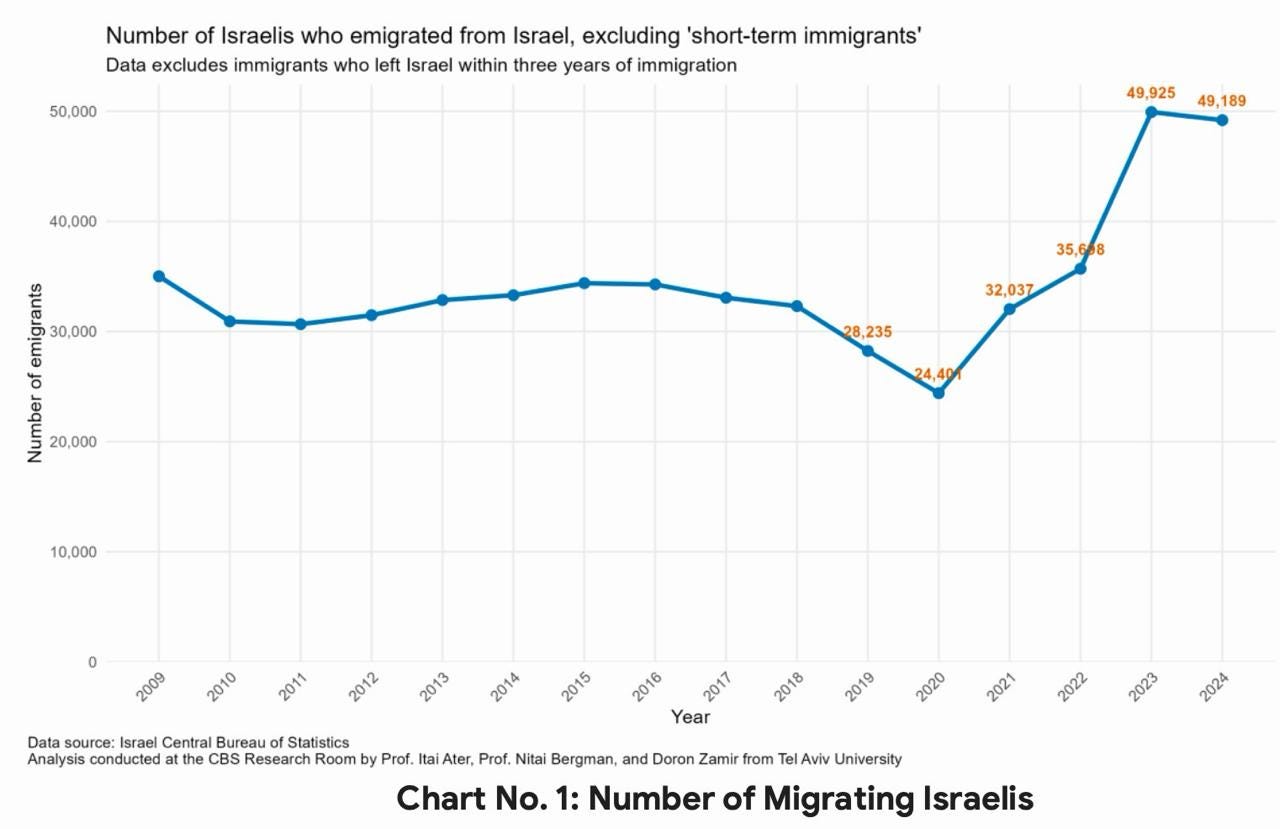
This is a free preview of a paid episode. To hear more, visit danielgordis.substack.com * Tomorrow, Friday, October 30: I plan to share my reactions to the election results—what they mean for Israel, and what they mean for those of us who love this country with every fiber of our being. Are people really leaving? On the one hand, it might seem surprising that the flight of talented, financially well-off Israelis over the past few years never became a central campaign issue. On the other hand, two clear reasons explain why: * First, highlighting the issue plays into the Right’s hands. The exodus consists mostly—though certainly not exclusively—of people from the Center and what remains of the Left. To Netanyahu’s base, that’s all the more reason to vote for a “truly patriotic” leader like Bibi. * Second, there were no policy issues in this election. This campaign was purely a referendum: “A fresh start without Bibi” versus “Stay the course with the PM.” That was pretty much it. There was no real debate on foreign policy, the economy, or education—just a brief flare-up over the Haredi draft. Still, the fact that people are leaving is beyond question. Exactly how many is difficult to measure, and their precise motivations are nearly impossible to quantify. Despite these limitations, journalist David Rosenberg has written compellingly about the trend. We asked him to join us and share his assessment of what the data (and the charts below) actually tell us. In an election week, it’s a stark reminder of the urgent challenge facing whatever government emerges: convincing Israelis that the country is still on the right track. It’s worth taking a quick look at these simple charts to get a sense of what David Rosenberg speaks about in our conversation. If you would like to share our conversation about what Israelis are feeling and expressing at this unprecedented moment in our history, we invite you to subscribe today. David Rosenberg has reported from Israel on business, economics and politics for more than two decades. He was Israel bureau chief for Bloomberg News and business editor of The Jerusalem Post, and earlier worked as a correspondent for Reuters and Dow Jones. His opinion pieces have appeared in The New York Times, The Wall Street Journal and The Jerusalem Report among others. David is the author of the book Cloning Silicon Valley: Next Generation High Tech Hotspots (Pearson/Prentice Hall, 2001), Israel: The Knowledge Economy and Its Costs (Palgrave Macmillan, 2012) and Israel’s Technology Economy Origins and Impact (Palgrave Macmillan, 2018). The link at the top of this posting will take free subscribers to an excerpted portion of today’s conversation. For paid subscribers, the link at the top will take you to the full conversation; below, paid subscribers will also find a transcript for those who prefer to read, as always.
0:00SPEAKER_00So that becomes a very complicated question
0:02SPEAKER_00because people won't necessarily tell you why they're leaving.
0:05SPEAKER_00What you can do is say, well,
0:07SPEAKER_00what happened in 2023 and 2024 and 2025,
0:10SPEAKER_00for that matter, that would cause people to do it?
0:13SPEAKER_00So the obvious answer is of all these things,
0:16SPEAKER_00and again,
0:17SPEAKER_00we're excluding Ukrainians and Russians who came and left,
0:21SPEAKER_00is it's been a very difficult time.
0:23SPEAKER_00We had October 7th.
0:24SPEAKER_00We've had endless wars.
0:25SPEAKER_00People are being called up for reserve duty.
0:28SPEAKER_00We've had sustained missile attacks and so forth.
0:33SPEAKER_00Life has not been easy,
0:35SPEAKER_00and that would be an obvious reason for people to leave,