
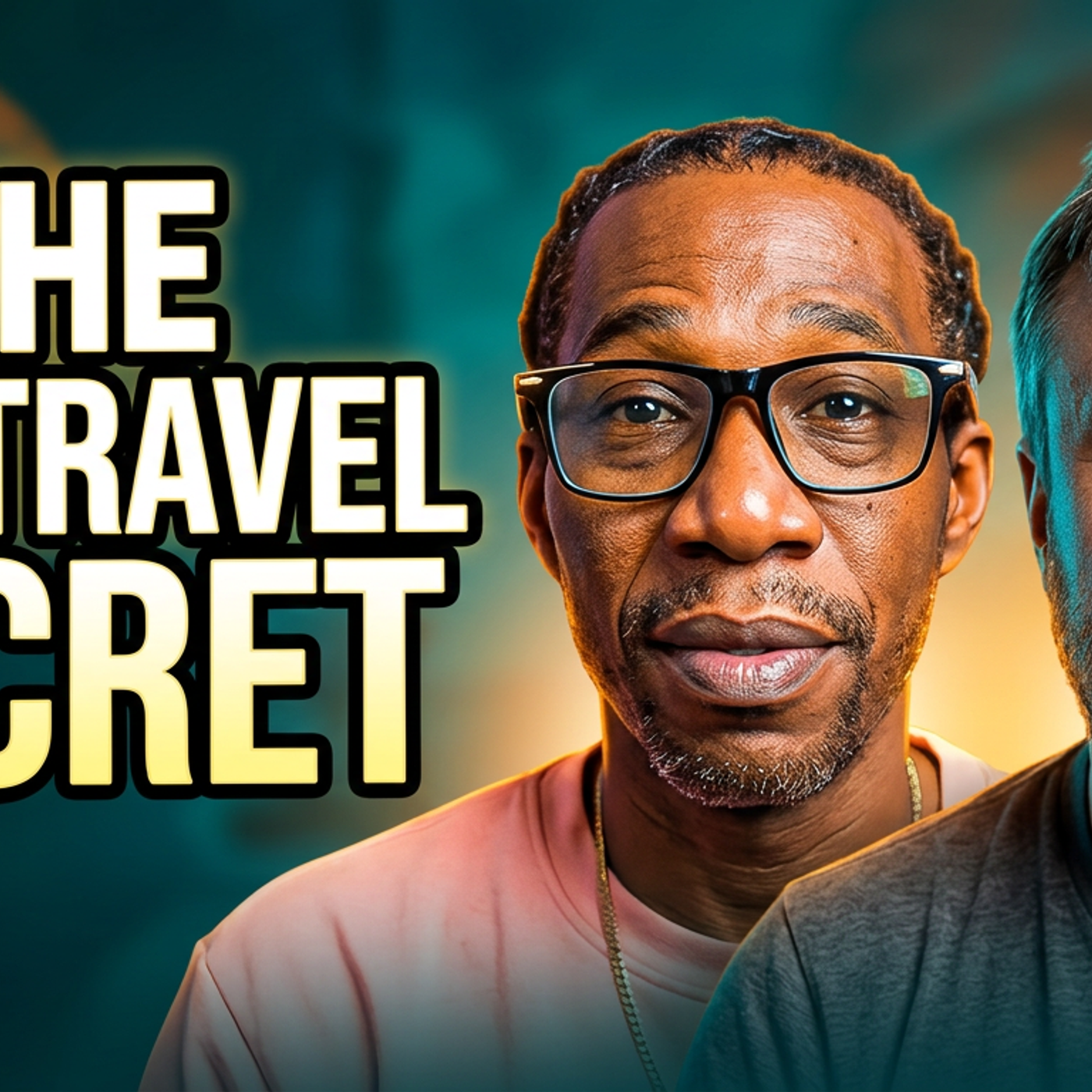
Island Vacation Travel Podcast · Al Philogene
James Hammond shares his unforgettable travel experiences in Bhutan, Japan, and Bolivia, highlighting the importance of practical budgeting and lifestyle centered around exploration. He emphasizes the significance of people, culture, and food in each destination, and provides valuable insights on planning a six-month backpack trip to South America, including budgeting, route planning, and avoiding common travel mistakes. The conversation covers topics related to visa rules and immigration, the difference between hidden gems and tourist-heavy spots, the choice between travel and a traditional career path, financial trade-offs and the balance between freedom and stability, and the impact of COVID-19 on travel. The conversation covers the impact of COVID on travel, the rise in travel costs, the experience of over-tourism, and the financial considerations of long-term travel. It also delves into the importance of cultural familiarity when starting to travel and the need to adapt to changing travel costs and conditions. Takeaways Unforgettable travel experiences in Bhutan, Japan, and Bolivia Practical budgeting and lifestyle centered around exploration Visa rules and immigration are important considerations for travelers, and it's essential to research and understand the rules of each country. Choosing hidden gems over tourist-heavy spots can lead to a more unique and less crowded travel experience. The decision to prioritize travel over a traditional career path involves a trade-off between stability and freedom, and the pursuit of experiences over material possessions. The impact of COVID-19 on travel has led to increased costs and a surge in travel to popular destinations, highlighting the importance of exploring hidden gems and off-peak travel periods. COVID has impacted travel costs and led to a rise in expenses. Cultural familiarity is important when starting to travel, and it's advisable to start small and gradually explore different cultures. Adapting to changing travel costs and conditions is crucial for long-term travel. Chapters 00:00 Practical Budgeting and Lifestyle Centered Around Exploration 29:44 Financial Trade-Offs and Freedom vs. Stability 37:45 Impact of COVID-19 on Travel 43:11 The Experience of Over-Tourism and Cultural Familiarity 52:39 Financial Considerations of Long-Term Travel and Adaptation to Changing Costs
AL Philogene: All right guys, hello, hello, hello guys. Today's didn't just take a vacation guys, he built a actual lifestyle, right? James is a passionate person who actually travels the world, who has explored multiple continents, embracing long-term travel and immersed culture. Jameson, you said Britain, Japan, and surprisingly, Bolivia. I mean, that's an amazing list, amazing list, different list as well. That's why it's amazing. What made each of them unforgettable? And I know you made some brief things about it while ago. James Hammond: Okay. Yeah, let's start with Bhutan because I remember that the AL Philogene: experiences which is very important. We love that. Known for his practical approach to budgeting, planning and he's built a lifestyle centered around exploration rather than convention. James, let's get right into it today. First of all, let me welcome you to the podcast Island Vacation Podcast. First of all, let me ask you the first question. How are you doing today? First of all, James Hammond: most ⁓ and it's more recent. ⁓ I think when I sitting on top of hill outside the temple that this monk is the main guy, right, of this temple. ⁓ He's actually called a lama as well. ⁓ He invited me to breakfast and it's before the tourists arrived. So ⁓ he got set up for the breakfast outside. It's day, 15, 16 degrees Celsius. It's not too cold. It was 7 a.m. It's pretty early and he brought all his food out with a cup of tea and some coffee. And we sat together just talking. You can't speak English that well, but the fact we're conversing and talking about Bhutan, Tibetan culture, Buddhism, and he is willing to answer my questions on my podcast through a translator. I thought the view is like Misty. The view was like pretty cool. Hey dude, it's great to be here. Thanks for having me on. And I'm doing very well today because in Vancouver, it's sunny. So I think you would appreciate good weather. AL Philogene: We always appreciate a good day. A good day goes a long way. James Hammond: it makes such a difference. really does. It really does. ⁓ AL Philogene: Yes, yes, yes. And I mentioned it's a pleasure to have you on the podcast today. I'm just going to start off a very simple question, which is not that simple, because you've been quite a few places. What are three of your top countries that you've traveled to? And also, what made them stand out? James Hammond: on top of a hill by a temple. That was just an unreal experience. I think for me, that has to be up there for Bhutan. I think that's so clear in my mind, that experience. AL Philogene: Wow. Wow, that's amazing, that's amazing. And what about Japan? James Hammond: Yeah. Yeah, Japan. I want to go and experience the bullet train. The Shinkansen as it's called in Japan. So China and Japan have these super fast trains, right? They go like, is it four or 500 kilometres an hour? It's crazy. And they're silent when you step on the train and you're are hurtling through the countryside between Tokyo and Osaka, whatever. It's just an unreal experience. And it's all orderly. Okay. I'll start with my recent trip to Bhutan. So Bhutan is a country between India and China is in the Himalayas. And I was been on my list for years, I think. And I finally got there and managed to work with the, the tourism industry there for my podcast and also a tour group. And I had 11 days there, which is actually quite long because it's quite expensive to go. And honestly, if you think of the Himalayan culture, AL Philogene: Okay. James Hammond: fairly expensive, but as well worth the price because you save time, right? Because instead of taking three hours, takes an hour. So we really enjoy three weeks on the trains to see in the country in a major cities and they all got their own charm. went to the South to Nagasaki to Hiroshima to do the atomic bomb stuff, but also just to check out the cities. And then it's just a crazy, crazy country. I think you just have to go and experience it. It's hard to explain, but the culture and the people are great. And that's definitely or the Buddhism culture, you might think someone like Thailand, Japan, which is great. And they are awesome as well, but a very modernized very I'd say as well. But now, if you want to go to the opposite of that and go traditional, Bhutan is your place. It is people dressed in traditional dress. They still welcome visitors with open arms. They take you to all the best holy sites, which are clean you AL Philogene: All right. ⁓ James Hammond: You see like monks just living around you. got to interview a couple of monks as well. So that was quite interesting to ask some questions. just a great country, great culture. So that's definitely my first one. something that I loved alongside the trains. And then for Bolivia, I remember seeing Death Road on Top Gear many, many years ago. This must've been 20 years ago, I think, something like this, right? And yeah, yeah. And they drove down Death Road and you can now get a bike out and bike down it, Yes, I think they got quite close to the edge. ⁓ So that experience of biking down is... AL Philogene: That is amazing. And what would be your second country? Because Bhutan, I mean, how do you top that? ⁓ wow. Yeah, yeah, Top Gear is man. been watching Top Gear for a while. Remember that episode. Yes. Yes James Hammond: If you're scared of biking or falling off cliffs, it's probably not your experience, I'm okay. I'm not a brilliant biker, but I'm not too bad. So I think that whole experience of biking down Death Road, you start really high up, it's all downhill to the bottom. Yeah, just incredible scenes, right? Just incredible experience and scenery. Yeah. AL Philogene: That's amazing man. That's amazing. That's amazing. Funny you mentioned Top Gear. I love me some Top Gear. Watch this over and over. I watch all episodes like it's brand new. So you say culture, food, the people. What would you say hits the hardest out of it all? Between the culture, the food or the people? James Hammond: Yeah. Yeah. great question. ⁓ I think it's the people I think I have to go with the people because you learn so much from them. So in Bhutan, I stayed at home stay. So when you book Bhutan, they ask you what you want to do for five, seven, 10 days, you get to kind of almost dictate your own itinerary. And one of the things I want to do was a home stay. And a home stay is you're going to stay with a local family, normally on a farm or somewhere in the countryside, and you get to live with them for a day and a half. And it's like AL Philogene: Okay. family right right right James Hammond: such a cool experience. You get to see how to make food, to milk the cow. I milked a cow for the first time, had a hot stone bath. I got to make food for dinner and prep food and, and speak to the local people. So that for me makes local people probably the best. AL Philogene: right? You get to immerse into all into the culture so it's all about the people and if someone is on the fence right right now about like traveling and stuff in just a few sentences why should they travel? James Hammond: Because what's the worst that can happen? Okay, you pick your trip, right? And you're going somewhere that's slightly uncomfortable, maybe out of your comfort zone. Okay. You get on the flight, you're probably nervous, you're worried and you arrive into the destination. Two things are going to happen. Number one, you're going to love it and think why on earth did I not do this sooner? And it's going to make you travel to more places and learn about different cultures and learn about people and countries. Or two, if you don't like it, you're going to learn a lot about yourself, aren't you? Yeah, number two, I actually mentioned it in number one is Japan because it is a magical place. It's the mix of traditional and modern society and it's a bit crazy. It's intense. It is hard to work out how it all works. The Japanese people are super nice and the culture is up there with some of the best in the world and super safe as well if you want to travel. Solo as a backpacker or just a solo traveler and number three is Bolivia. It's a bit of a secret favorite of mine in South America It's a bit more rustic and it's got the mix of the Amazon rainforest in the east the salt flats in the west and in the middle You've got silver mines. You've got the highest cities The paths a death road. It's got everything as a wholesome trip. So those three are probably my favorites I reckon there's some lessons for your own self there to go back to your home country to and I think both of those are pretty decent options for a reason to travel so give it a go and and just get out there and go outside of the comfort zone and see what happens I think it's pretty cool. AL Philogene: Yes. That's right. That's right. ⁓ totally agree. That's real. That is real right there. And I think a lot of people underestimate what travel actually does ⁓ your mindset and even opportunities. James Hammond: Yeah, 100%. AL Philogene: That is some amazing choices you just gave there. I not expecting Bolivia. And those are the kind of places I kind of think about lately. Bolivia, Guyana, ⁓ Yes, Belize my secret from going on the cruise ship. found it, I was like, ⁓ my God, I'm not telling anyone about there. The gold, the music, everything. But to hear you say Bolivia, wow. That's amazing, very good. James Hammond: Very, very different, aren't they? Yes, because you meet so many people, right? Because connections, like I travel and I try and meet podcasters or travel creators that I sort of roughly know online and just go for a drink or coffee with them and you get to meet them person and meet them in real life, right? And that's a connection throughout the world. So if you travel a lot, there's always someone to help you out in different countries. So I think it's pretty cool. AL Philogene: Yes, connections. James Hammond: ⁓ yeah, love it. Yeah. Yeah. AL Philogene: with you. We cannot forget Britain. said Britain and also Japan. So that's also some amazing one in a lifetime places to visit, I would say. Yes, one in a lifetime places to visit. would you say made them That's absolutely awesome. That's one of the main things I encourage. That's one of the things we did. Made sure practice while traveling on a cruise ship. We have friends in every country. Very valuable. Yeah. Very, very, very valuable. Invaluable in my opinion. So that's awesome. So guys, let's just take just a quick break here to just say thank you to our sponsors, Island Vacation Travel Wear. Of course, your go to travel inspired apparel, but for comfort, James Hammond: Yes. Yep. AL Philogene: style on the move now if you're traveling you need gear that that you could move with or that will make you feel comfortable check out island vacay's island vacation travel agency the store that's ivtawearstore.com and let them know we sent you use our code and get 15 % off that's IVTA 10 also powered by Island Vacation Travel Agency helping you plan smarter stress-free trips with a personal touch of insight. Like we said, you got to have connections guys. It goes a long, long, long, long way. All right. Now let's get right back into it guys. Now let's get a little bit more tactical. How would you go about planning a six month, like a backpack trip to South America? Let's say we go into Bolivia. How would you go about packing for six months? James Hammond: Mm. packing for a trip. Wow. AL Philogene: Yeah, because you know, people get back for two weeks, fathers for six. James Hammond: Yeah, yeah. And I'll give you my recent experience when I went to Bhutan. It wasn't just Bhutan. It was Australia and Thailand, right? So that you might think, ⁓ what's wrong about that? there's nothing wrong with it. It's just that they're both different weathers. So South America is going to be the same. If you're going sort of like their summertime, it's going to be rainy for a start. So their summertime is our wintertime, right? So if you go to November to January, something like that, it's going to be AL Philogene: ⁓ wow. That's right. Mm-hmm. Mm-hmm. James Hammond: warmer weather, but it's gonna be rainy. So instantly you've got to think, well, how can I protect myself from the rain, but not be too warm? And also if you go south, it's gonna be a bit colder, right? When you get right down to a Schwier, right down to the south towards those places where you go to the Antarctic. So I think what I do is I write out a list and you have to be ruthless with this list because you have a limit in terms of how much you can take in terms of weight. So I take one backpack. AL Philogene: Yes, that's right. Mm-hmm. James Hammond: And unfortunately for me, I mean, think you might be the same. I like to travel with content stuff. So this is laptop lights, microphones, headphones, it adds an extra layer. So I'm quite ruthless with my clothing. ⁓ first of all, and two or three things of each. And you've got to accept that you put it away stuff twice or three times before you wash it. That's fine. And then. Medications is quite a big one. ⁓ as you get older, you might have more stuff going on. So I take a whole. AL Philogene: Yes. Right. James Hammond: First aid kit, covers everything from hiking to like cuts or antiseptic wipes to malaria stuff or any vaccination type stuff or whatever it could be, right? Whatever you need. I have a modium is quite a big one for me as well. Just to cover those unusual circumstances. Cause more than likely in six months, you are going to get ill one or two times, aren't you? So cover those bases. And for tech, make sure you get your travel insurance. That's a big one. So it covers all your tech because you never know. AL Philogene: Yeah, of course. Yeah, that's right. Very important. Yes. Very important. Yes. Very important. Very, very important. James Hammond: Yeah, I've been okay. I've not had anything bad go wrong in terms of equipment, but I had some cancel flights and stuff which have been reimbursed. But yeah. AL Philogene: I lost about three cameras in one trip in Mexico, in Xcaret, having too much fun. And I didn't have insurance because we just took off the insurance, just for like a split something. I don't know, I just kind of like lost track and that happened. So guys, that is very, very invaluable information. The one time you might think, and I've always had business insurance, we just took it off and it was just. James Hammond: Ha AL Philogene: Free cameras went just like that. GoPros. Yes. Yes. Yes. James Hammond: Yeah, that is devastating in it. I tell you, I tell you the top three things I think you should have for a six month backpacking trip. It's all personal, but these are three things I would never leave behind. Number one is noise cancelling headphones. Buses are noisy. Planes are noisy. Hostels, you're saying hostels are noisy. If you need that bit of like space to get away, that's crucial. Yeah. Earplugs. I mean, I'm a light sleeper, so I AL Philogene: Mm-hmm. privacy, yeah. James Hammond: I stay in hostels, but I need earplugs to even to get sleep. That's a must. And number three is underrated as a good quality pair of walking shoes. And they're broken in because I don't know if a lot of your listeners walk a lot. I walk a lot. And if you don't have comfortable shoes, your, your feet are going to be in bits. Yeah. AL Philogene: Yeah, ⁓ Yeah. It'll kill your feet. That's very valuable. You definitely overlook shoes, comfortable shoes. Comfortable shoes, yeah. That's very, very important. James Hammond: Yeah. Yeah. Did you do what happened last time in South America? I arrived in July, right? So this is the opposite. This is a winter. I had no coat. So I went, I was in Peru. Sorry. I was in Chile, Northern Chile in the desert. I went to the shop and said, Oh yeah, it's a bit cold. He goes, have you got a coat? I was like, wow, I've got, I've got like a jacket, a jumper. goes, no, no, no, no, no, You need big, big coat. So I had to spend $70 on a big ski coat. He's like, you're going to freeze to death. And he was absolutely right. So make sure you research the weather and have the right clothing. AL Philogene: world. like a whole group. residual. Right. Right. Right. Wow. And let me ask you, what about like a budget range or your route planning or just even mistakes to avoid, but let's start with like your budget range. James Hammond: Yeah. Yeah, that's a tough one. It's a really hard one to answer, but I remember going to Central America two years ago. So quite close to South America. And I was doing the budget every day with accommodation, food, transport, everything. I think I worked out to be spending 60 US dollars a day all in. And I think that's pretty budget, um, because I'm staying in hostels. I'm staying in really cheap places, but also traveling as cheap as possible. that's like shared buses. Um, AL Philogene: local. James Hammond: border crossings, not flying, you know, going over land and stuff like that. I think budget budget, think prices are more expensive these days, but 50 to 60 US dollars a day per person, you might want to make that 100 if you're a couple, maybe. But I'm a bit more mid range now, I probably would double it. Because we are travel creators, right? We, we can make money through the travel creation part. So I think I probably would increase that a little bit more. AL Philogene: Yes. Right. You are more right. Right. Yes. Right. But that's that's some valuable information right there, because people would not know how to go about starting it guys backward planning backward planning. You heard what he said? Planning from there, so we're not going and then try to figure out a spanish budget from there. And this is the range you're trying to within. Keep some space in between, like I said, because it's just right now in a different time with different era, different things happen with the economy. You have different James Hammond: Yeah. Mm. AL Philogene: one different needs. So you have to put all this into play. And what about ⁓ James Hammond: The two things that I say, the two things that cost the most, the two things that cost the most are going to be your flights and your accommodation. So if you don't want to worry about how much you spend on food because you love your food or you want to do some tours, try and really concentrate on those two. And what I mean by that is you've got to fly somewhere. I get that, but maybe do some overland travel to reduce the cost of a flight or do some home stays or couch surfing. If you want to stay some free nights, you know, just to try and even that cost out. AL Philogene: Yes. ready to go. Right. Right. Call one of those friends, those connections that you have. Yeah. Use your resources, use the resources to get where you need to get. That's part of it. That's it. And what about like route planning? When you're planning your routes, like how you're going to be navigating. Like for instance, the last trip that you just say, that's some serious navigation right there. And that's where travel agents and stuff come into play. But of course guys, don't always need a travel agent. You could do it yourself, but you just need to know. James Hammond: When those friends, yeah, yeah, yeah, yeah. Yeah, absolutely. AL Philogene: Need to have a plan. Let's say it from a professional. James Hammond: use South America as an example, because I traveled solo there for three months ⁓ 10 years ago now. ⁓ the way I planned it was, well, where do buses go? ⁓ buses don't go everywhere. So I had a map, ⁓ paper map, probably work out a few routes. And I was in Rio de Janeiro. I was like, well, we want to get into Argentina. So where's the first place we can get to? And it's at Guaido Falls, which is on the border between Argentina and Brazil, amazing waterfalls. It's like, well, okay, from there. AL Philogene: Okay. James Hammond: There's two options really. You can go south towards one of those areas, the capital or go north to Salta. So it's like, okay, well, which one do we want to do? We want to work away north a little bit. Well, I did one and I want to go a bit more north. So I thought, okay, I'll book a bus to Salta. So it's kind of getting your map out, but also seeing what the available options are for buses or trains. If you're somewhere like Japan, whatever, I'm just seeing how long it takes to get there. Is there anything of interest you want to see? ⁓ and also pay attention to time. South America is huge. takes hours and hours on a bus to get anywhere. So just bear in mind that I think a guazzo full of Salter is going to take like 14 hours or something ridiculous, right? So just bear that in mind and give yourself enough time in between. So you're not traveling every day. You don't want to get into the routine of getting buses every day. You don't see anything. So you need to bear that in mind and try and work out the distances. AL Philogene: ⁓ wow. That's right. Right. That's some very, very, very sound advice. Very sound advice. Yeah. Where the bus routes or the train routes, you know, that's definitely a hub of something. There's something there. That's why they're stopping there. And it doesn't matter worldwide, no matter where you go, that's how it's going to be. That's very wise. James Hammond: Yes. Yes, exactly. Yeah. Love that. Great quote. I had no idea what was in Salta in Argentina. No idea what was there. We went there and there's a mountain and some great steak. So yeah, it turned out to be good. AL Philogene: Wow, that's amazing. That's amazing. And what kind of mistakes would you tell people like to avoid? Just try to avoid while you're moving around. James Hammond: Yeah, I have made a few mistakes in my time. I got held up at border in Laos in Southeast Asia because I didn't have a stamp into the country and I had a visa, but I somehow missed the window to get the stamp. So I didn't notice until I got to the other end of the border to get out of Laos. And these guys were showing up me. They took me to an office. One guy had a gun. It's all crazy. Had to pay them some money to get them to put a stamp to my passport. So the lesson is AL Philogene: ⁓ wow. for the month of August. James Hammond: pay attention at border crossings, especially countries that don't speak English that well, and just look for signage or follow people that are basically tourists and to see where they go. It's a genuine mistake. I didn't know where to go. I probably wasn't paying attention. It's probably like pissing about with my mates maybe. I don't know what I was doing, but it paid at the other end. I had to pay like 70 US dollars to get them to make a stamp in my passport and put me on my way. ⁓ Also, from that story, just... AL Philogene: Yes. Yes. James Hammond: respect the border guards because I got to that border and I got really annoyed at them because I don't know what they're trying to say to me. And also I didn't know what I did wrong. And I just went, ⁓ don't worry about it. And I took my passport went to Thailand. I thought I can get into Thailand. So when I got to Thailand, the border crossing, he's like, no, no, no, you can't come in. There's no stamp in your passport in or out of Laos. You have to go back. I was like, ⁓ okay. So don't, don't assume you just get through it because I don't know whatever reason, right? So had to go back and be a bit more humble and AL Philogene: ⁓ wow. James Hammond: say sorry and go through that process. AL Philogene: Wow. Yeah, that's, that's, no, no, that's. Yeah, everywhere. Respect Border Patrol, respect TSC, respect the police, respect the soldiers. James Hammond: Everything. I'll tell you another one as well. Another one I saw very quickly. Yeah, sorry. Another one I saw very quickly recently in Thailand, they've changed the rules. So you have to get a e visa thing, right? Like most countries now you have to get like a online. Yeah. But before no need, you just turn up with your passport, right? But some people don't pay attention to this. So when I knew this when I arrived to Thailand in December, but some girls in front of me from UK had no idea. And they got turned away and said, well, they said, well, you need to go online and AL Philogene: Just no matter what happens, just be humble at that point. Yeah. Yeah, yeah, everything's changing, yeah. James Hammond: and pay for and do the visa, right? You can't come through. So like just pay attention, do some research on visa rules, even for tourists in certain countries with your passport. AL Philogene: I see for all countries, I think it's very important to check for all countries, whether it's an island, a continent, no matter where you're going, just always pay attention to the visa rules and the immigration. Like just double check it. So we see very, very, very safe. Wow. But that's crazy that you explained that story concerning Laos where they sent you back. Wow. Yeah. Yeah. Yeah. Yeah. Yeah. I have some stories. I try not to tell anybody about those stories from cruise ships. It's amazing. James Hammond: Yeah. Yeah. Yeah, rough times. AL Philogene: Amazing. have all different types of visas. That's all I can tell you. Yeah. Yes, yes, yes. But these are very insightful and very useful information that people could use, especially as a backpacker, somebody moving around in the world, somebody taking chances. It's very, you could avoid all this stuff. And if you could avoid it, avoid it. Try to avoid it as much as possible. Now, ⁓ James Hammond: I can imagine. can imagine. Absolutely. AL Philogene: Let's see, what about like... the difference between hidden gems versus like tourist heavy spots. ⁓ I have a clue what you like, what I wanna hear from you just from the locations you choose. It says it all. James Hammond: Ha Yeah, I think, I think the basic rule is if you're going to go to a country that's popular, let's say Thailand or Italy, of course people are going to go to Venice, aren't they? And you've got to accept that it's a unique place and there's going to be tourists there. And it's not hidden gem because everyone goes at it all parts of the year. But what can you take from that to make it a bit better experience? Or maybe don't go in the height of summer, maybe go in shoulder season where it's a bit quieter. AL Philogene: That's right. That's That's right. James Hammond: and stay there instead of doing a day trip. Right. I think that's one way you can do very popular places and make it a little bit better for yourself. And hidden gems is an interesting term, isn't it? I don't love the term, but I guess this comes down to research. So you might think, ⁓ I really want to go to like the Adriatic coast, which most people think are Croatia and Dubrovnik and those islands are very popular and touristy. Well, hang on, hang about, just go further south to Albania. Just as good. AL Philogene: Yeah. ⁓ yeah. Yep. ⁓ yeah. Yep. James Hammond: On the same coast, it's a little bit cheaper, not as crowded and stuff. like a bit more research, I guess that's the hidden gem part where you can just look out for places that are basically geographically, geographically the same, but not got the limelight of certain places. Right. So Greece is another example, right? Everyone goes to Santorini and Mykonos. I imagine they're great. There's 600 islands or something. I chose one at random on a map. And I was like, I'm to go there. Went to Carpathos Island, never heard of it. Don't know what's about. Went. AL Philogene: Yeah. Where was it again? James Hammond: Carpathos Island. AL Philogene: to give it around that time. James Hammond: It's between Rhodes and Crete. So Rhodes and Crete are very popular and there's an island in the middle between those two. Go there. Just as good. AL Philogene: Yes. Yes. ⁓ and you're gonna learn way more because you're right next to Crete where the history of Greece started. ⁓ yes. Yes, away from all everybody in Greece that's coming from around the world. Yes, yes. So, so yeah, like, like I thought it's the hidden gems you're looking for. James Hammond: Indeed. So you do do that bit, but you want a bit more quiet times? Go just go get a ferry across the Carpathos. Brilliant. Yeah, yeah, yeah. Yeah, big time. AL Philogene: Yes, that's the whole point of traveling anyways. Yeah, that's the point of traveling. Some people travel because they want to go and see just to be around and see what they've seen on TV. And they're real travelers. I want to go and find certain things. Go and find the secret spots. Go and see the stuff before everybody else sees it. So that is you. Now we're just going to a quick pause again. If you're planning guys a trip and need reliable transportation, check out James Hammond: Yeah, yeah, yeah. Yeah. Hahaha. AL Philogene: Island vacation transportation Whether it's airport transfers group travel or business transportation They've got you covered and for premium comfort and home or the on the road We also have our other companies are one of our sponsors cozy earth comm they have some amazing stuff made out of bamboo Advise you to go check them out and let them know We sent you, all of my beds are covered in those bamboo sheets. They're just simply amazing. I can actually recommend them. So let them know we sent you, use our code island vacation. It's one word and receive 15 % off, off of luxury bedding, loungewear and perfect for travelers who value quality rest like James. Airplugs, airplugs. James Hammond: Absolutely. Crucial. ⁓ AL Philogene: That's right. Very crucial. Let's get back to you. Now you've chosen travel over a traditional career path. Twice. James Hammond: Hmm. Why? Yeah, that is a great question. I, it's a huge question. Let me summarize, let me summarize my feelings. think for me, I've never been interested in a career in terms of like a skill, maybe until we do this podcast, right? Until maybe content creation or travel. And that's a new thing. It's like last three years. ⁓ so I'm trying to give this a go now, but before then I didn't want to be trapped in a physical location. AL Philogene: last three years, James Hammond: found jobs boring. I know you have to do them for money. get it. And I did try to go different countries around the world to work, but ultimately work is the same, right? But I lived in Australia, New Zealand, and it's the same office thing, right? I had some cool experiences in the vineyards and mines in Australia, but overall just never really been into it. But what I got fed up with was because every time I did this, I have a job, I quit, I travel. AL Philogene: Mm-hmm. Yeah. James Hammond: that cycle gets a little bit tiring after a while because the reality of life is you're going to have to work at some point for the rest of your life. So what are going to do? So after our year trip in 2023, I came back as I write, I'm going back to a job I don't particularly love, but got to do it. But in this time now, what am going to do in the future that I will like? So I'm on this journey now trying to find out creatively and with the travel stuff, like how can I make that an income going forward? AL Philogene: Yeah. Yeah. Okay, okay, okay. That's a very understandable question in my world, because I feel the exact same way about it. Until I met my wife, my wife told me this is a lifestyle, this is not a job. James Hammond: Yeah, great, great term lifestyle. Yeah. AL Philogene: And I was like, what? But she's a medical person that knows what she's talking about. Her idea of medicine for you is a vacation. James Hammond: Hahaha. AL Philogene: Human beings weren't meant to work, dude, you're not crazy. James Hammond: Yeah, yeah, think so. AL Philogene: who was supposed to explore guns around the world and go discover like a child, just go in and see all this new stuff, which seems like it just never ends. A lifetime to shop to see it. So ⁓ that's why you feel this way. The problem is we have to work to be able to make this money to be able to go do it, which is not the fair way to do it. But you have to do. They gave me a sentence. You have to do what you don't like to get to do what you want to like. I was like, ⁓ my God, it's sickening, man. It'll be dead by the time we figure this out. James Hammond: Yeah. Yeah. Yeah. Yeah. I know, that's the worry, isn't it? Yeah. AL Philogene: But now I think you're doing it the right way. You just have to keep doing it and find ways to take a break and go do just go live your life and do whatever your soul tell you and whatever you think. I think that's the right way to do it. Because yeah, the timing. Yeah, put the timing. It's very important because you have to follow what your soul and what your life's calling is or else you'll be on the bed waiting and realizing that you didn't do what you need to do. I found that out from coming and travel around the world and then coming to go to school in America. And one of the things I did was I was working in a hospital and I always take time to go see sick people. And then I figured out I could use this accent to just make people laugh. So I just went and cheered them up and they started asking me questions. And I realized they were like, you've already been around the world and all this. I was like, why you come to school? What you doing? James Hammond: Hahaha Hahaha AL Philogene: just want more want to try and figure I figured I was having too much fun over there I was beginning to feel guilty it's like you but you realize that that's what everybody would love to do that's what everybody's trying to do that's what celebrities are trying to do when I get into production I realized that's what the rich and famous are doing they want to be socialites that's why we create content so that they could James Hammond: Yeah. Guilty. Yeah, yeah, yeah, yeah. AL Philogene: And you could just do you, make the money last as much as possible. So I totally get it, man. I totally, totally get it. That one hits home. That one truly hits home. It truly hits home for all. It's the work towards freedom, right? Cause that's freedom right there. That's freedom. Cause even on the cruise ship, it, it still work. I made the best out of it. I'll tell you, I made the best out of it. I was like on a nonstop vacation, but I had like free jobs and I wasn't even aware. James Hammond: It's the work, it's the work towards freedom. That's what I think is the freedom. Yeah. Yeah, I think so. Yeah. AL Philogene: I didn't even know what was going on. So I totally get it. Thank you for that, man. Thank you for that. And I hope that hits someone that's trying to figure out what they want to do as well, guys. Everyone's trying to figure it out. Trust me. Everyone is trying to get free. Everyone is trying to get set their soul free. Everybody wants to go to their passions. What I'd advise you to do is do what you got to do. If you could do what you want to do for them. James Hammond: Yes. AL Philogene: You can take two hours out of your day life to do something for yourself. Go do your hobby. Go draw, go jump, go run, go DJ, go record something, go do something, go crochet. I advise that. So yeah, that one just hit home. That one just hit home. Let's go back to it. Yeah, man. So let me ask you also. And I mean, that leads right into this, the financial trade-offs and the freedom versus stability. Because when you live in that kind of life, you kind of live in like, I guess that's what they'll call a hippie. ⁓ that's how, that's me. That's how I kind of got, came online. Somebody told me I was a nomad. James Hammond: Yeah. AL Philogene: And I actually listened to them. was like, yeah, right. James Hammond: Hahaha AL Philogene: So your opinion, financial trade-offs, the freedom versus the stability, what's your opinion on that? James Hammond: Yeah, I, I don't have anything. So let's be honest and be real here. I have spent probably since 20 2010, I'd say, with the mindset of earning as much as I can for a short period of time, and then quit and then use that money to travel. So let's talk about 16 years later, where I've been to a lot of countries, but I don't own anything that's like assets or anything, right? AL Philogene: Yeah. James Hammond: But the trade off is I've had an amazing experience the last 15 years traveling all these countries. So you've to have a chat with yourself and think, well, do I, do I really want to have this experience or do you really want the stability or guess of having a location that you call home or owning stuff or even having a business and making money for me, those things don't interest me greatly apart from making money in this new phase, but I prioritized experiences and travel. that's why. AL Philogene: Mm-hmm. Yeah. James Hammond: I think I call it freedom because when you get to your thirties and forties, I think you start to realize that time is the ultimate currency. So what can you do to give yourself the most time to do the things that you mentioned earlier, like painting, running DJ and the things you love. If you're constantly working, doing a job you don't like, then are you really free? Are you really happy? Are you really like satiated and that sort of stuff? So I'm not sure that's the right path for me to go. So I'm trying to work all this out, but yeah, I think that's where. AL Philogene: to make them. Yeah. I never get to do that. James Hammond: I'm happy with what I've chosen. AL Philogene: So I think you're dead correct on it. And I don't think you did the wrong thing. I know I didn't do the wrong thing. I know you're gonna get your blessing. You just haven't figured out how to flip it. And you're gonna find out, figure it out, cause I'm gonna tell you how. From going behind the curtains, that's what made me start this. The guys in the production actually told me that production is gonna steal my life away from me. And I told them, no, I survived cruise ship. I dodged the military. I know how to escape this. And I started thinking my podcasts more serious. James Hammond: Yeah. AL Philogene: because I understood that if we're getting paid that kind of money to put that production for these people, why don't I do it for myself? So I came to my house and started buying equipment and start setting up. Lo and behold, Spotify sent me a message, you're monetized. Now, I'm not a competitive person because I'm not on this planet for money, but I got a family and I got people we got to do stuff and we got to buy more memories. Because I found out the most valuable thing is the story. A handful of people have those stories because they're that brief. The most expensive thing are words. James Hammond: Yes, brave. Yep, agreed. AL Philogene: Sell it! Every country you've been to is a story. All them conventions they have, they're all about finding stories and listening to inspirational stuff. Public speaking, script writing, book selling, that's how you're going to get paid. Hurry up, go and become a millionaire. Sell your story. James Hammond: Yeah, yeah, yeah. That's why I a podcast. Hmm. I'm on it. That's the genuine. Yeah. Working towards it. AL Philogene: The guys that you see, the guys that told me that they didn't know they told the wrong guy this. I told them, I'm going to make them get out of the job as well. One of them told me he's been a millionaire three times and he went back to a job because he just blew the money away from making an advertisement. One advertisement he made and he made a couple of millions of, no, the guys that I work with, they have Grammys and Emmys. I'm just blessed that I happened to run into them on my journey and that journey lead me to there. And I know, all right, I don't work for anybody. James Hammond: Yeah. AL Philogene: I go back to my dream. So now that I meet anybody that's trying to figure it out, I'm telling them exactly what it is. Go sell the story. Yeah. You already have the asset. The people at work, they have no story. They only know one thing. Home to work, work to home, home to work. They love watching people like our stories. That's why we have to create. We're creators. James Hammond: Yeah. Yeah. I appreciate you. True, have a story, yeah. Yeah. Yeah, that's it. AL Philogene: would never fit into a building man a building you can fit into a building for heaven's sake you won't like a building James Hammond: It's not for me. AL Philogene: I have this thing, a building was created by man, a roof was created by man. They got caves, man. It's not like God keeping us outside. They got caves. So that question is a very interesting question, the financial trade-offs, but don't ever think for no split second that you do have the asset. You have the most valuable asset, which is James Hammond: No. Yeah. AL Philogene: the raw material. That's what people buy. That's what people pay for. You just have to be brave to put the story out there. And that's it. That's all there is to it. That's the difference between the guy that go and study eight years in school and the kid that just decide, I'm just gonna take a mic and just sing. James Hammond: Yeah, agreed. Yep. AL Philogene: and they get rewarded if they stick to it long enough you get rewarded watch me it's weathering it's just how things work if you keep on something long enough it has to work James Hammond: That's it. Yes. But so many people don't put time and consistency and they sort of give up, which I half understand, but you've got to really work at it and just get there. I think you can if you keep going. AL Philogene: Yeah, well, putting time is not necessarily growing or working. Perfect practice makes perfect. Practice doesn't make perfect. You'll be practicing the wrong thing and you'll never get there. So it's perfect practice, then it compounds compound interest and then it blows up. So yeah, that's what I think about it. But that's my opinion. I shouldn't over to you because somebody told me that. That's how I figured it out. James Hammond: Yes. Yeah, yeah, yeah, absolutely. Hahaha AL Philogene: My cousins in England, they have like big degrees and they're very educated and got certain things. And they were like, ⁓ we working hard to reach retirement so that we could go travel the world. I said, what? Who does that? What? The minute we had that conversation, watch me, the minute we had that conversation, they changed their life. One of them now travels around the world and goes to carnivals. James Hammond: Mm. How many times you hear that? How to know you'll be alive? ⁓ nice. That's cool. AL Philogene: Watch me carnivals. We've never even seen around the world from Japan carnival. Like these kinds of things came on our radar. And I'm like, now I have to watch her life like, I knew we're for retirement. I'm like, when you're going to retirement, how are you going to go to go do paddling and kayaking and you can do anything. Yeah. Big. Yeah. Yes. Yeah. No, no, no. Because that's what you're that's that's that's the dream you've James Hammond: Mmm. You can't. No, it's a ridiculous statement. Yeah. But so many people say it. Yeah. AL Philogene: soul and that's what you've told yourself that's the only way to get out of the freedom so you look at it as that's the end gate if i could get there i'm outside no no you're not no no yeah no you're not but yeah very interesting so you stable you have assets trust me you do all this is intellectual property when we're long-born James Hammond: Yeah. Yeah. Crazy. Okay. Yeah, absolutely. AL Philogene: million years from now somebody might just find this and realize ⁓ this guy's got it James Hammond: Yeah, hopefully that's the aim. AL Philogene: They were fighting against the whole world, but they got it. Yeah. So let me ask you, James, where are you going to head to next? James Hammond: Yeah. I've got Finland and Estonia coming up in August. And then I'm going to French Polynesia in September. So Tahiti. AL Philogene: Man, I might have to tag along with you, man. I might have to tag along with you. It's time for me to go to French Polynesia. I have a couple of friends out from out Indonesia. Yeah, need to tend to go down to French Polynesia. I have friends all in Kiribati Islands and all kind of stuff. And there were some amazing people to meet on the cruise ship because they eat the same food we eat. They live the same way we live and we like. But we're from the Caribbean. Where are you all from? Somewhere just like you. What? How long it take you all to get here? About two weeks. James Hammond: Ha ⁓ Looks a dream. ⁓ wow. Yeah. AL Philogene: What? Where do you come from? We come from a ⁓ tribe and they start explaining those amazing worlds down there. So I could tell, I could imagine, yeah, you can stay one place. You can stay one place. So French Polynesia next. How long would you be staying out there for? Or how long have you planned to stay out there for? Beautiful, beautiful, beautiful. James Hammond: Incredible. Hahaha. 10 days. Yeah. Yeah. Just long enough, I think. AL Philogene: Huh. And let me ask you this. Just an interesting question, because you were traveling before COVID. And so it's like, BC, ⁓ was it ABBC, before Christ after Christ? So before COVID, after COVID. ⁓ sorry about that. I'm hitting the camera. Before, in your opinion, would you say that you found that after COVID, everything kind of James Hammond: hahaha AL Philogene: reset or do find that everything remained the same or what was your observations of travel after covid has it gotten easier has it gotten James Hammond: Hmm. I think it's got more expensive because the travel companies lost money in COVID, rightly so, no one traveled. So they're really trying to make the money back, but I don't feel like they're reducing the cost back to pre-COVID. So I feel like it's a bit more expensive and I feel like it's gonna live at nuts. I think we had a problem before COVID where over tourism, et cetera, was a problem. We had this reset in COVID. AL Philogene: Mm-hmm. Yes. Yes. Mm-mm. James Hammond: But now I think people are scared a little bit that it might happen again. So like, okay, we've got to go to all these places, right? So people are trying to get to all the places that we know like Barcelona, Venice, all the popular places, but they're doing it on mass. And I think that's now causing problems. So you talk about hidden gems earlier. I think that's the, possibly the way to go in certain parts of the year. Don't go hype season, but yeah, I think it's gone a little bit crazy since COVID we traveled in 2023 and we found it more expensive. Maybe not as AL Philogene: Okay, okay. Yeah. James Hammond: busy in certain countries, but other countries are popular, that's really, really busy. So I think people are just kind of scared now that the COVID thing will happen again. So they're trying to get out there. But also it's expensive. It's a weird position because people might not be able to afford it. And there's a potential crisis coming in terms of the economy and all that sort of stuff, right. So I think interesting times, a real mix. AL Philogene: Yeah. No, that's, that's, makes a lot of sense. That makes a lot of sense. And I think you're absolutely right about that. One, for sure. Everything did get more expensive. I could, I've seen it for the trips. Yeah. Just going St. Lucia alone, the prices, different countries, the very same countries have gotten more expensive. Yeah. So that doesn't make sense. And when you say like, and I never, I didn't think about that, but that does make a lot of logical sense that people might be anxious or James Hammond: Yeah. Yeah, yeah, yeah. AL Philogene: they're still in fear that the world can shut down. Like they never saw that happen and they were kind of like terrified and people were waiting. Some people were really waiting for, yes, I'm gonna save all my money and I'm gonna go travel the world. And now they saw that happen. They were like, ⁓ the gates open now we're going everywhere. And it's bombarded everything. And it would make everything expensive too to make things crowded as well. it kind of reversed the reset. James Hammond: Mmm. Yeah. Hahaha Yeah, yeah, exactly that. Yeah, exactly. Yeah. AL Philogene: Hmm. That's a very, very interesting perspective. I never thought about it like that, but that does make absolute sense that. James Hammond: Imagine the people in Venice as an example, right? They were always, they always had tourists come every part of the year, right? Before COVID, they probably got fed up with it, but they kind of need it for the economy. okay, COVID comes along and finally they get to see their city pure again, right? There's no tourists there. It's their own city. And it's like, oh my God, like this is what it looks like in normal times before travel was even a thing. And now... AL Philogene: Bombarded. This is crazy. Yeah. Yeah. James Hammond: after COVID it's come back again. I can't imagine they're too happy about it because yeah, they've seen they've seen freedom from the travel over tourism stuff in COVID because they're like, we can walk our city again and not be inundated with travel and tourism and people and tourists, right. But now it's back to where it was. yeah, just an interesting example. AL Philogene: We found about it. Yeah. Yeah. We're done. That's interesting example. The France, France is the same as well. They could see I could have tower. We, yeah, Barcelona. Yeah. All those places. You're absolutely right. You're absolutely right. That's, that's a very good, very good and very interesting perspective on it because we take it for granted, but when it's your, when it's your country and you seen, you have to do traffic every, I mean, we do it, we're doing it in Florida. I mean, to go to Orlando, to go to conventions and stuff. James Hammond: Yeah, Barcelona as well. AL Philogene: It literally beat me down to make me want to go back to go back to your dream, dude. Go back on. Because if you could take tolerate this. And we saw what it was like in COVID. That's the problem. We saw what everything really supposed to be like. Yeah. What? 30 minutes to get to Orlando on a regular basis. An hour and a half, two hours, three hours. I mean, it makes you really start going insane. James Hammond: Yeah, you had a taste. Yeah, insane, yeah. AL Philogene: Yeah, so that's very very interesting. All right, so guys We have one more break right here. We want to all say thanks again to also our nostalgic company all glory very good company, they actually have bowl expressive apparel for Travelers who like to stand out. So if you don't like to look like everybody else like me You just wear different stuff or plain stuff Or just market other people companies or market your own company Or you could also wear your favorite artist your favorite cartoons those kind of things it shows character. It's also a good Communication tool I use soccer juices so you could use That kind of stuff it makes some people meet you around the world and they have conversations with you So go on let go and let know let all glory know we sent you you could also use our code island vacation again James Hammond: you AL Philogene: That's Island Vacation One Word and receive 15 % off on anything on the store. Let them know I sent you. I'll send you. Okay. And don't forget also to check out sconee.com. That's another one. We love them. We just want to them love for all the support they've given us throughout the years. Wink at your eyes. Thank you. Right now. James, let's get on this. What are some of your least favorite countries or places that you've been to? And I know we're putting them on the spot. We're not going to elaborate on them too much, but it does also help them get better. James Hammond: Yep. Okay. I'll be honest. I didn't like Bali in Indonesia. That was a not a very good experience for me and my friends who were there. Not like horrendous as it wasn't what I thought it would be completely different to what I had in my mind. That goes back to like over tourism. I thought it would be like this idyllic paradise for actress, pretty much the opposite. So that wasn't a place I loved. I actually don't think there's many others. AL Philogene: Okay. James Hammond: I don't particularly dislike many places, but that's the top one for me. I actually can't think of anyone else. Is that bad? ⁓ Yeah, I'd say that's that one, I think. AL Philogene: Pretty good. That's pretty good. That's pretty good. And pretty much it's just the same thing. You're a guy that looks for a certain type of tourism. You want a certain type of place. You like to get hidden gems. So yeah, when you get to Bali and everybody's down in Bali, you're like, ⁓ my God, that's like Dubai and those places. Like, where did everybody come from? Yeah. So I get it. I get it. I totally get it. So Bali, it's not a shot at you guys. Tourism is good. I guess it works for you guys, but not every James Hammond: Mm. Mm. Yeah. AL Philogene: traveling or every tourist likes to go in places that's populated. I'm the very same way. I like private islands. I like places like Palm Island, not Palm Island in Dubai, no. A little Palm Island in somewhere in the Grenadines. It's so small. You got to take a small boat to a small plane to a small island just to get there. But when you get there, the people are like no other. Like no other. You don't have to do traffic. James Hammond: Mm. No, no. AL Philogene: And that just makes a good vacation. can get some rest and you could get some peace, which is the biggest luxury of them all. Yeah. That's the biggest luxury piece. That's what brought me to Central Florida. Just want to see cows, trees and that kind of stuff. Other than that, I would go to Alaska. Alaska would be my favorite. Yeah. Just quiet and just some nature. Goes a long way. James Hammond: Not half, yeah. Yeah. Yeah. AL Philogene: ⁓ what was, what would you say like for even like with Bali was it like ⁓ realistic expectation at all or you'd say not at all. James Hammond: I think I had this probably feeling from when I was a kid that it would be like, Bali would be like palm trees and no one there and pristine beaches culture. But actually what is there is it's a real hard part in culture. It's segregated between tourists and locals, quite dirty in some places. And it just was not what I was expecting. It's like the opposite if you go to Cook Islands or even French Polynesia, I'd imagine coming up. It's the opposite of that if you're thinking of like an island paradise. So just didn't hit the paradise definition for me. AL Philogene: Right. So hold on, one more question. Would you give it a second chance? James Hammond: I actually would, yeah, but I know what I'm expecting this time, so it'd be a different trip. Yeah. AL Philogene: You know what you're expecting this time. Right. Right. Yes. Yeah. Cause yeah, people like surprises, but an unpleasant surprise is not necessarily something anybody likes. Yeah. Especially when something you dream about and you go that far and you have such a grandiose expectation. And it's just like, man, I'm seeing all the flaws and behind the curtains and yeah, it's like, nah, I totally get it. Totally get it. But that's good. At least you, ⁓ a true traveler. James Hammond: True. Yeah. Hahaha AL Philogene: You're like, you know what, I still give a second chance. ⁓ That's good. That's good. And the other countries that you just told me about, what other places do you have like on your hot list? James Hammond: Second chances. Yeah, French Polynesia was number one. I've got on my hot list, Columbia. That's definitely somewhere I want to go to. I want to go to Namibia in the Southwest of Africa. That'd be pretty cool. Yeah, that looks pretty decent. And Ladakh in India would be pretty, pretty intense and pretty good, but Buddhism culture. I quite like Himalayan Buddhism culture and China is a big one. I've not been there. So I want to do like a mainland China trip. Yeah. AL Philogene: Me too. ⁓ Okay. We haven't been talking about it. Okay, okay. That's a pretty dope list. James Hammond: Yeah, they're just like five of 50, but they're the ones I'm thinking of today. AL Philogene: That's a pretty dope list. You got one more country you gotta put. James Hammond: ⁓ Saint Lucia. AL Philogene: I'll give you one reason. James Hammond: Okay. AL Philogene: We have the only driving volcano in the world. James Hammond: Okay, ⁓ wow, okay. AL Philogene: When you get out ahead, just go and Google St. Lucia. You'll see what going on down there. You'll be like, what is he even doing in Florida? What's wrong with him? Yeah. Nice place to go and see, like culture. You see that kind of tourism you like? Granted, St. Lucia is a little more pricey because, of course. James Hammond: Yeah? Yeah? Yeah. Mm. Yeah, but the Caribbean is normally, I've been to like Antigua, Barbados, Secits, Grenada. Yeah. AL Philogene: And OK, so we are along that level. Yeah, no, we are along that level there like Babel's Antigua. That's a certain price point right there. Yeah, yeah, yeah, that's good. But then we just have like mountains and certain things more. But that's good. That's good. Yeah, that's it right there. But that's nice, man. That's a very good list you just gave there from China to French Polynesia to that's cool. Yeah, that's a pretty good. What about have you ever been to Australia? James Hammond: Okay, got it. Yeah. Yeah, ecliptic. Yep, used to live there for a year. So yeah. A little bit tiny bit. AL Philogene: You picked up the accent. Yeah, it's just a little bit in the Canadian accent because it's very similar. It's a very clean, no, Canadian's accent more polished, clean than Australian's to me. Yeah, because Australians can start speaking and you're like... James Hammond: Very different in my eyes, yeah. Yeah. ⁓ AL Philogene: Just like English, when the English starts speaking, sometimes you're like, what are you? I don't understand what you're saying. But Canadian, you were born in England. Okay, what part? James Hammond: Ha ha. Well, I was born in England, so I do have that as a base, but I've kind of traveled a bit. was born in Norwich, so that's where I'm from. In the East, yeah. AL Philogene: Norwich, okay, okay, okay, okay, nice. ⁓ you just, all over, Very nice. Very nice, very nice. Now that's, like I said, that was a dope hot list. That was a very, very dope hot list. ⁓ Let's answer the biggest question everyone wants to know. How much money do you actually need to travel, in your opinion? And I mean, different countries, different, but just an average. James Hammond: Okay, I'll tell you what we did have and what give you a clue for the 2023 year trip for both of us. And it wasn't enough, but we had 60,000 Canadian dollars. So what's that in us? Probably 40, 45, something like that. AL Philogene: some light out of something there. James Hammond: And that's supposed to last a year, in reality it lasted 10 months. So. AL Philogene: Hold on, where were we off? What were you guys on our time? James Hammond: Um, we were, we basically ran out of money. So we only done 10 months at the 12th. We're kind of hanging on for two months, but we did. AL Philogene: but where were you traveling to like at that point in time? James Hammond: Yeah, so Europe to Middle East to Asia, South Asia to East Asia, back to North America, back to Europe. AL Philogene: But that's expensive. Hmm. James Hammond: So quite a few flights in there, unfortunately. AL Philogene: I'll you. I was just about, and in your opinion, do you think, would you say that you'd hope that that should be able to last way longer? James Hammond: No, I tell you what actually happened. I underestimated the cost after COVID. I think my mind was still pre-COVID costs and I think that was a big mistake. So I think that was the biggest lesson I learned. Yeah. AL Philogene: Okay. Okay. Okay. Okay. Okay. So that would be something to consider that now we kind of have to change the way we think because we're kind of thinking of things how it used to be versus how it really is right now. And one of the things is that everything has really, really, really changed. Okay. Okay. Okay. I think I understand what you're saying. I think I understand what you're saying because 65,000 US should be a lot of money to able to move around, but James Hammond: Yeah. Yeah. AL Philogene: The flights, yeah, COVID costs and fluctuations and stuff could have a really big impact. James Hammond: Yeah, in US dollars, it's slightly cheaper. It's 45,000 US dollars. It's 60,000 Canadian. So the Canadian dollar isn't that strong compared to US or the euro or the pound. So I think we just kind of underestimated that. And also the prices of stuff. Like for example, hostels in Europe are well expensive now. It's almost cheaper to stay in hotels. It's crazy. AL Philogene: for the five-year-old. that okay stop Yes. No, because people in Europe just travel in hostels more than hotels. It's very weird. I found that out and I had to be like, what? I wasn't... Yeah, and then, you know already, cost and demand, that's how it goes. So if an empty piece of paper, more people running towards an empty piece of paper, it's gonna cost more than money. That's just how it goes. It's crazy. Yeah, it's crazy. Yeah, it's crazy, very, crazy. So the hostel ended up that, wow, wow, wow, wow. James Hammond: Yeah, and that drives up the cost, right? Yeah. Yep. Yep. Yeah. Yeah. Yeah. Yeah. Crazy. AL Philogene: That is amazing. I mean, of course, guys, that's an average. That's just a guide to make sure that you could have an average as to, you sometimes you think you could budget and things supposed to be a certain way. Things change and change is the most common thing and the most the thing you should actually accept the most because things are going to change. You just have to try to adapt to it and come up with a backup plan and just some way, somehow create an online store that's making automated money. James Hammond: Yes. Crucial. AL Philogene: so that you could do what you gotta do. One dollar a day is better than no dollars a day. Yes, yes, yes. Yeah, we really, really appreciate that information on there, because a lot of people ask that question to me, even as a travel agent and traveling and moving from country to country. And I really do not have an answer for that. I do not have an answer for that. I've traveled with no money. I've traveled with some money. James Hammond: Absolutely could not agree more AL Philogene: And boy, it just really doesn't matter. You just have to try to survive and try and get some way to make money as quick as possible. Because it's like everything else. You could be a multimillionaire. And if you don't continue making money, your money is going to finish. Life keeps on going. So you got to figure out a way. So I mean, guys, whether you're a budget traveler or James Hammond: Yeah. Yeah. ⁓ AL Philogene: a mid-range traveler or a luxury traveler, it just all depends on what type of travel you're going on. That's how you actually set your budget. You know what kind of a lifestyle you want. In our opinion, traveling is about being grounded and learning and learning how to survive and navigating and all that stuff. So some people just love to keep it at budget because we learn. We learn. We learn survival skills. Come back home like you wouldn't believe the story. James Hammond: ⁓ Ha AL Philogene: I mean, James, we're very, very grateful for your information, As a final reminder, guys, I just want to let you all know that this episode was brought to you by Island Vacation Travel Agency. If you're serious about traveling smarter, whether it's solo travel or group travel or business, ⁓ we handle the planning so that you could focus on the experience, right? James, last question. If someone's listening, right? And they're thinking about taking their first trip. to anyway, I guess. What would you tell him? James Hammond: I would say start small in terms of the culture difference. And if you're American, for example, and you want to travel abroad, but you're really nervous, how about just booking a flight to Ireland? This is my example, because the island culture in terms of the island, you know, next to UK, it's going to be fairly similar, but it is different. It's going to be Europe. It's going to be different way of doing things. There's no one there. And also you'll get to, guess, learn a bit of history about maybe where you're from. So I think. go somewhere that's culturally similar, but also outside of the content you're in. Start there, work your way outwards in terms of the culture difference, right? So just gradually get more braver as you go. I think that's the more sensible way. Personally, I would just jump straight into somewhere completely random, but I know a lot of people will be really nervous about that. So my advice is start small and work your way out, I think. AL Philogene: That's what it's all about. That's what it's all about. Take action guys. Start small, start somewhere familiar. Because of course familiarity makes, could to builds confidence. And then from your confidence, you turn into a Titan. Time to go fly, time to go everywhere. Now you get brave, right? So that's how it goes. You start familiar. Just familiarize yourself with something and then you could actually, and of course there are other people I like to just jump into the deep end. James Hammond: Hahaha AL Philogene: I also encourage that as well because sometimes that creates a whole different human being and that's just what they need for them to be able to grow. Right. And I'll give you all some words of wisdom. us Caribbean people, do this all the time every day. That's why they keep on wanting to send us back to our islands. First world country people, you have no excuse. You have access to everything. Right? A little island person come from a little community and just decide like, as you were just speaking, I just realized that like they've never even been on a plane before. They're first time on a plane and they're moving to a whole brand new country for a brand new life with no money and trying to figure it out from scratch. James Hammond: True. Yeah. Yeah. AL Philogene: Watch me that thought of that alone. I just thought about it. I was just like, that's kind of crazy, ain't it? Like who does that? Just leave your country, not familiar with anything. All I know, you speak English, I speak English and I'm coming over. Wow, that's amazing. That's amazing. But as we say, if we could do that, everybody could do it, right? James Hammond: Good luck. Yeah. Yeah, big time. Yeah. Yeah. Absolutely. Yeah, should be. Yeah. AL Philogene: You could navigate a big country. You could navigate all this technology and everything. That means going into the natural worlds. It's just a matter of figuring it out and being polite to people and communicating. And that's pretty much it. That's pretty much it. James, it was an absolute pleasure. I want to thank you so much for your patience. Thank you so much for your kindness, And thank you for shedding that light on us. I know a lot of people are to enjoy your conversation and your wisdom as well. James Hammond: Absolutely. Thanks dude, I really appreciate coming on. Thanks for the chance and I hope the listeners find something good. AL Philogene: Yeah, I'm going to make sure I stay in contact with you as well because I might have to join you on some trips around, and I'll meet you somewhere. Yeah. Open invite. So you could always come here and come and meet us in Florida. Come and check us out. Come and see us. Come and see what we got going on there. We got some pretty big gators and stuff out here. That's what we got out here. Gators and stuff. James Hammond: Absolutely. Open invite. Yeah. got bears so I can ride with that. AL Philogene: yeah, you'll do have bears. You'll do have bears. I did see some bears up in Canada. Yeah, I did see some bears. All right, guys, now, if you found this episode valuable, and I'm pretty sure you did, right? Share with someone you know who needs it. And I'm pretty sure that's a lot of people, because there are a lot of young people, older people, professionals, solo, they're all trying to look for their freedom and escape, and they're trying to find out how to go about it. James Hammond: Yeah, that probably. AL Philogene: If you've heard your friend talk about, hey, I wanna get out of here, send them the episode, share it with them. Don't forget to check out James's podcast. James, this is your chance. Let them know what you got going on, what you have, anything you're selling. Let the people know. James Hammond: Okay. I host the winging it travel podcast that's on YouTube, Spotify, Apple podcasts, all the apps. I also have a travel vlog called roaming with Hamo. That's a slightly different type of content, video content basically. And, ⁓ I'm part of a network called the boy escape, ⁓ network, which is a collection of travel podcasts. So you can head to voice scape.com for more travel content there as well. And yeah, if you to get in contact in terms of a podcast production or anything of the like, you can head to winging it productions. I've got some services and pricing on there. So that's my stuff. AL Philogene: Awesome. That's what we're talking about guys. So as you heard, James is working out there and he's trying to fund the dream. We got to support our people as trying to get for their dreams guys, cause it gives you an example of how to do it. Wink, wink, right? So we'll check up the podcast. We'll check out his blog. And of course I don't believe there's anything as too much of anything. too much. Well, except for when comes to people in one location and it turns into a city. But when it comes to information, I think we should have as much as possible. So as you know, I'm an audio visual technician. He's a podcast technician as well guys. If you need services in Canada, anywhere around the world, he travels as well quite a bit. He travels quite a bit. So guys, reach out to him. Winging it podcasts, tune in. James Hammond: Yeah. AL Philogene: We're gonna tune in as well. We're gonna subscribe and I would love for you to send all that information to me because I will plug it to the bottom of the podcast in the description as well. And I will support you brother. I appreciate your time. Mr. Harmon, thank you so, so much for your time and your patience today, You are awesome. Keep rocking. Thank you, man. And I'll stay in contact with you and you have a very, very good one. Awesome. James Hammond: I appreciate you. I appreciate you. Thanks so much. Same here, you too. AL Philogene: All right, we're gonna head and stop it. That was beautiful, man.