
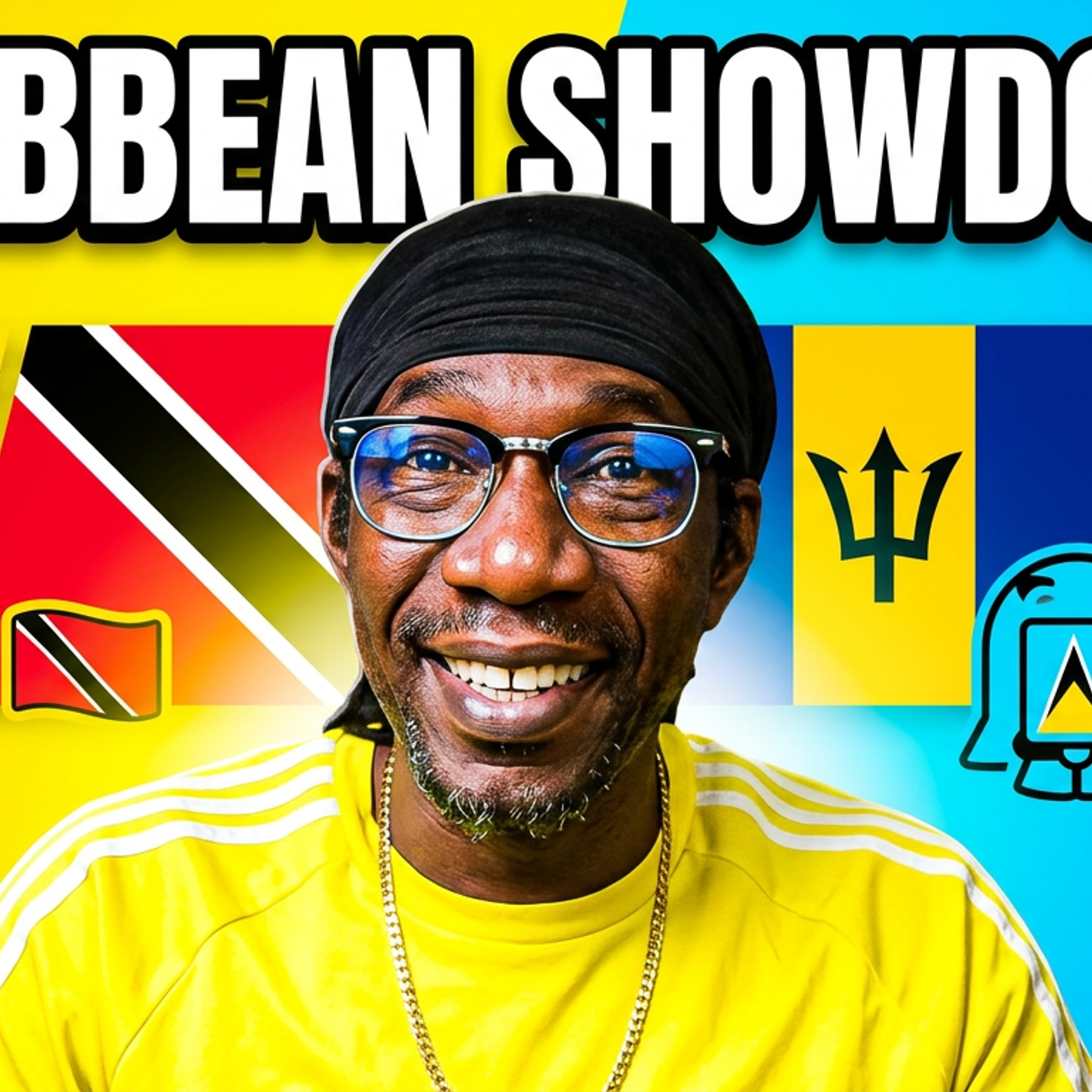
Island Vacation Travel Podcast · Al Philogene
The conversation explores the cultural contributions of Caribbean islands, focusing on Jamaica, Trinidad and Tobago, and Barbados. It delves into music, food, festivals, spirituality, sports, and intellectual culture, highlighting the global impact and heritage of each island. The host emphasizes the importance of understanding and appreciating the diverse cultural richness of the Caribbean islands. The conversation explores the cultural significance of the Caribbean islands, focusing on Barbados and Saint Lucia. It delves into the historical context of festivals, the global impact of influential figures, the unique food and identity of each island, and the rich cultural heritage and achievements of the region. Takeaways Caribbean culture is multifaceted and encompasses music, food, festivals, spirituality, sports, and intellectual culture. The global impact and heritage of Caribbean islands contribute to their unique cultural richness. Cultural richness of the Caribbean islands Historical significance of festivals Global impact of influential figures Unique food and identity of each island Rich cultural heritage and achievements of the region Chapters 00:00 Barbados' Cultural Depth 51:15 Cricket Culture in Barbados 59:08 Introduction to Saint Lucia 01:07:47 Saint Lucia Jazz and Arts Festival 01:14:23 Natural Beauty as a Culture in Saint Lucia 01:20:29 Verdict and Rankings
AL PHILOGENE: Yeah. Today we have an interesting topic. Yes, that's right. Very interesting topic at that. And we are going to get all into it today. Right? We are going to be settling one cent for all. Which Caribbean island has the best culture? Right. Yep, we're gonna discuss it today. Now, I know what you're thinking. You're thinking me that I'm probably gonna be going and be biased and pick my home island, right? And call it a day. I have a surprise for you guys. No. That's not what we're gonna do today. That is not what we are gonna do today, right? But check me, I'm not doing Any of that. I'm going to be honest. I'm gonna also be fair, and I'm going to give you a full picture. A full picture of what those islands have contributed to the Caribbean, and not to mention the world at large, because they have contributed some massive things to the world. Because culture is not just music. Culture is not just food. Culture is not just one festival one weekend a year, right? Culture is everything. It's who people are, it's where they come from, and it's what they've built. Right? It's what they give to the world. As a gift, and today we are measuring all of that, guys. I'm excited about it, by the way. Jamaica, Trinidad, and Tobago, Barbados, and Saint Lucia. The rest of you islands do not feel left out. We're gonna get to you soon, and we are going to find out, right? Who actually wins. it's not a competition, but it's a great way to discuss the contributions of the Caribbean. Very, very interesting stuff. Now, stay with me. We're gonna go into it today. Today's episode is actually sponsored by ⁓ Vacation Travel Agency LLC ⁓ Blessings ⁓ out of St. Lucia. I want you guys to To check them out when you get a chance and let them know Island Vacation sent you to check them out. Right? So we're gonna get right into it. All right. Now. Before we get into the islands. Want to establish a framework, guys. All right. I want to make sure that. We understand what's going on. Because if we don't agree on how we're measuring culture, this whole discussion on education doesn't mean anything, right? And I see these mistakes made all the time. People say, well, Jamaica has the best music, so Jamaica wins. Right? Or They just say Trinidad has the best carnival, so Trinidad wins, right? But that is actually not fair comparison. That's just picking the category where the island is actually strongest. Does that make any sense to you guys? I hope so. Let us know in the comments. So today we are going to judge each island. Across six categories. Okay, we're gonna make it simple music, food, festivals, and celebrations, language and oral tradition, global cultural impact, and heritage and history, right? Six categories. And I'm going to score each island honestly across all six. That's what we're doing today. And at the end, guys, we'll add it all up and we crown the winner. Okay? Now, I am the most qualified person in the world to do this. I know you won't believe me, but yes, I am. Right. I am a St. Lucian Rastafarian who has traveled across the world. The region, yeah, but actually the world. And me personally, I love this culture deeply. I think the Caribbean is the dopest place on the planet Earth. We've been through the most, so that means we come up with the most diverse cultures. Not to mention that. We come from the motherland. We were the ones extracted from the motherland and dropped off in the Caribbean because, you know, history. Right? So, I have a deep love for this culture. Now, we are going to give you the most honest thick I personally can give you. Right? That's Island Vacations Promise. That is my promise. Let's get into it right now. ⁓ one more thing, right? You're going to notice that I love all four of these islands. No biasness, right? And that's important to say so y'all understand where I'm coming from. Because this is not a shade session of any kind. Because I know the Caribbean islands love to go against one another. I actually want to bring us all together so that we could see the commonalities within us. We are all the same. This is not any disrespect at all. Now, every island I mentioned today, I have love and respect for you guys. This is a friendly competition between family and also an opportunity to teach the world at large who we are. What we've contributed and what we represent, right? Caribbean people, we are family. Skinny Fabulous already told us that, right? Now, I hope that makes complete sense to you guys. All right, let us go. We're gonna start off with Jamaica, right? Let's start with Jamaica. And I want to take my time with Jamaica because honestly, Jamaica deserves the time. Right? In terms of share global cultural rich, no other Caribbean island comes close. And I'm saying that as a Saint Lucian, right? That's how real it is. There is no mistake about that. Jamaica's global impact is amazing. For a small island, for a big country, Jamaica's impact across the planet and across the world is just diabolical. I've seen a flag, a Jamaican flag, every continent that I've gone to, including in the middle of Alaska. That's where they got the crown. Right now, let's go into something we really enjoy. Music. Let's talk about music first, right? Because when people think of Jamaica, music is always the first thing they say. And it should be. Right? But here is what people miss: Jamaica has produced. Not just one genre of global music. Jamaica has produced multiple genres of music. Right? You have Mento, the original Jamaican folk music. That was actually Calypso influence, rooted in West African tradition, carrying the stories of the people. Before recording studios even existed on the island. Then in the 50s, there was Ska, right? First, it was the first upbeat brass-heavy music. Ska was born in Kingston, Jamaica. And if you think Ska stopped in Jamaica. We got it twisted. Ska influence punk music in the United Kingdom in the 1970s. The clash, the specials. You could check it out for yourself. British punk music has Jamaican DNA all throughout it. Does that make any sense to you guys? Then ska slowed down. Right, and Rocksteady came up came about. And then reggae, my favorite. But all of these genres came before reggae. That's how we got to reggae. Right? And I know everybody knows reggae. Even though you don't know what it's called, but you know reggae. You've heard it. You've felt it. But check me. I want you to really think about what reggae has accomplished. And we never think about that. Reggae is not just a music genre. Reggae actually became the vehicle for liberation theology. Yes, Bob Marley, the great Bob, and I'll always say this until the day I personally die. Bob Marley. Is one of the most important artists the world has ever seen or produced. I personally think he's the biggest, the best, and the most brilliant the planet has ever produced. Yes, I think he's number one over all of the rest of the artists. And we need to recognize that. Not the most important Jamaican artist, not the most important Caribbean artist. One of the world's most important artists the world has ever seen or produced. Because you see, Bob Marley took the experience of black suffering, the experience of colonialism, of oppression, of poverty, and he made it. A beautiful music, a beautiful message. He made it universal as well. People in Japan, Africa, North Korea, Russia all listen to Bob Mali and use it as liberation music. Right? People in Japan wept to Bob Mali. People in Ethiopia consider him a literal prophet. People in Brazil, in Germany, in Nigeria, right? Bob Mali connected the world through music. Let us not forget Ghana, right? That is monumental. That is what an artist does. Very, very monumental. Now, after Bob Marley, then came dance all, right? In the nineteen eighties, Jamaica invented dance all, and dancehall changed popular music worldwide. Right? You had dance all in American hip hop music, you ate in UK drill music, you had in Afro Beats from Nigeria and Ghana and Africa, Drick Samples dance all, Beyonce uses Jamaican vocal cadences, right? The Caribbean rhythmic influence that started in Jamaican dance hall studios. In Kingston is now inside the most popular music on the planet. Does that make any sense? Right? Jamaica music scores maxima marks in my book. Now we're gonna move on to food, right? Now food and Jamaican food is phenomenal, right? Jerk, jerk chicken, jerk puck, jerk fish, jerk shrimp, jerk lobster. This is not just a seasoning. Jerk is a cooking philosophy, right? The slow smoking over pimento wood, the scotch bonnet pepper heat, the all spice, right? Joke originated with the maroons. The escape slaves. From Africa, who hid in the mountains of Jamaica and developed their own way of cooking game in the bush without a way. Their location through fire smoke, right? They had to find a way to cook without giving away their location. So they found a way to cook with fire smoke, and there we have it, joke, right? So every time you see you eat piece of joke chicken, right, you are eating a dish that was born out of African. Resistance and survival in the mountains of Jamaica. Right? I hope that makes sense to you guys. The food has history built into it. That's phenomenal. And then there is Aki and Saltfish, the national dish of Jamaica. Aki is a fruit brought from West Africa actually. Saltfish came from the colonial cod trade, right? Jamaica took the two ingredients from opposite sides of the ocean and history. One from Africa, one from Europe, exploitation of the label, and actually made it something beautiful. Out of it. That's Jamaican food. That's what I mean when I say culture is more than just taste. Right? Jerk, Akian saltfish, rice and beans, festival tumplings, bami, escovit fish. Right? The cuisine of Jamaica is deep. And it has influenced Caribbean crooking across the region. Right now, let's go into my favorite Rastafari and spiritual spirituality culture. Right now, let's talk about something that is very close to my heart personally, because I am a Rastafarian, right? And Rastafari. The spiritual and cultural movement. It was born in Jamaica in the 1930s in the hills of Kingston. I mean, poor black Jamaicans looked at the carnation of Emperor Selassie of Ethiopia. And if you're not familiar with him, do some research, right? And they saw the fulfillment of a prophecy. They saw a black king on a throne in Africa, right? And out of that movement, out of poverty, out of oppression, out of colonial systems that told black people they were less. Because came Rastafari. When you wonder where Rastafari concept came from, it's literal poor people in the hills of Jamaica that identify and saw that there was a king being throned in Ethiopia and he had lineage. His name was Emperor Selasi. Right? Rastafari. They had never seen a black king, because remember, we're in slavery, and it was all about beating down on us to make us feel less than. So for the first time, they got to see an emperor, a king be incarnated by those white people under the colonial system. You can imagine what kind of a brain and a mindset it would take to identify that. And identify him and decide to be a religion out of that or a way of life out of Rastafari and follow the teachings of Selassia. So this is actually where it came from, right? Now check me. I want to be clear about what Rastafari is, right? Because you see, the world often reduces it to just dreadlocks and marijuana, right? And those things. Actually exist in and within Rastafari. I'm not going to pretend otherwise or pretend that that doesn't exist. But Rastafari is a philosophy, a philology of black liberation. And if you are a black person, you should learn about this. It may just wake you up or show you something that you decided to turn your head away from. It's a philosophy of idal living, what we now call vegetarian in the first world country. Your body is a temple and you are what you eat. You could dig your grave with your teeth. Right? Food for thought. Yes, it's a philosophy of idle living, living close to nature, eating clean, rejecting Babylon's system of materialism and exploitation. Right? That is what we are witnessing and promoting. I personally am against it. That's why we decide. To share our knowledge, share our information, rejecting the Babylonian system of materialism. I'm sorry, capitalism is not the answer. That's materialism disguised, right? And it brings about exploitation. Right? It's an affirmation that Africa is the spiritual home of all humanity. That is what Rastafari stands for. That's why we Back Rastafarianism and we back Jamaica always, right? Not forgetting Haiti as well. Haiti should have been in this list. We'll have something special for Haiti. These are big, huge, humongous ideas. Very huge ideas. And they came from Jamaica. Right? And they Spread through Reggae Music, through Bob Marley, through Bonnie Wheeler, through Peter Tosh, Richie Spice, Kipleton, Sizzler, Benyman, and the list goes on. Right? Through the whole Jamaican diaspora. They spread to every corner of the earth. Right? I myself from the small island of St. Lucia. Came to Rastafari because of Jamaica's cultural rich. It was amazing reading encyclopedias, being indoctrinated by these people's education, and then heard the music from Jamaica, from Peter Tosh, Bob Marley, Lucky Doobie, Annacio Fonti, Richie Spice, and the list goes on. And hearing the ideologies and hearing about Marcus Garvey and realizing there is something missing and I need to learn more. And that is what actually enticed me into Rastafari being all the way from St. Lucia. The truth is the truth. That says everything. That's also my opinion. Right now. As you can see, I'm very passionate about that part concerning Jamaica. Now we're gonna go into another special part that I love: sports and the diaspora. And I cannot talk about Jamaica without talking about athletics. Now, Jamaica, a country of less than three million people, has produced more elite sprinters per capita than any nation on. Uf, you heard me right. Usain Bolt Shelly Yan Fraser Price Merlene Autti Asafa Powell. And the list goes on. There are lots of phenoms coming up as well as we speak. Jamaica does not just produce fast runners, Jamaica has built an entire culture around speed. The Boys and Girls Championship. Yeah. Yeah. The high school track meet in Kingston is one of the most attended sporting events in the entire Caribbean. You should probably go check it out. Reason to travel to Jamaica again. That's a high school track meet for those who don't know. Does that make any sense to you guys? The culture around athletics in Jamaica is absolutely phenomenal. And the Jamaica diaspora, right? Jamaica in the UK, Jamaicans in New York, Jamaicans in Toronto have been cultural forces in those cities for generations. Notting Hill Carnival. In London, right? That's a West Indian Caribbean celebration that exists in England because of Caribbean immigration. It is a party, guys. I've been out there just for Nottinghill Carnival. And Jamaican culture is a massive part of that. You better not count them out. Even if you go here this carnival, the reach of Jamaica beyond the island is extraordinary. All you have to do is go down to Brixton and you will see what Jamaica has done in London. Jamaica culture scores across my six categories. Right? For music, 10 out of 10. No question about it. For food. Nine out of ten. We don't even know what the one point was for. Festivals eight out of ten. Language nine out of ten. Everybody tries to speak Jamaican. Global impact ten out of ten. Heritage ten out of ten. Jamaica's total? Very, very, very, very, very high. Right? We'll come back to the numbers at the end. Stay with me. Just stay with me. I mean, I wanted to just stay there and give you all just a quick insight on how amazing Jamaica is. Now, let's just take a quick pause as We shout out our sponsors, Island Vacation Travel Agency. All right. And ⁓ we'll be right back. you are not going to want to miss what comes next because Trinidad is about to make a very strong case. A very, very strong case. ⁓ with me, guys. Be right back. All right. Trinidad and Tobago. And I want to see something before we start this. Alright, Trinidad. Right? Trinidad is the island that people most often underestimate in cultural conversation. Let's discuss it. They hear Jamaica and they think, well, Jamaica obviously wins, right? But I'm telling you, if you make that assumption, you have not looked closely enough at Trinidad and Tobago, right? Because this Twin Island Republic sitting at the very bottom. Of the Caribbean chain of islands has produced a concentration of cultural innovation that is genuinely remarkable, right? Very remarkable. And we're gonna start off with Carnival. Let's start with the greatest party on earth, Carnival. Because you cannot talk about Trinidad. Without talking about Carnival. And Trinidad Carnival is not just a festival, it is one of the greatest cultural events on planet Earth and maybe in the universe. Not in the Caribbean, guys, on the planet. Every year. Every single year in the weeks before Ash Wednesday, part of Spain transforms, right? And what happens is not a simple street party, it is the culmination of months of artistic preparation. You have mass masquerade where costume designers spend the entire year creating and designing. Phenomenal costumes, elaborate, feathered, beaded, armored costumes that can cost thousands of dollars per person to wear. Yes, you heard me right, thousands of dollars for those costumes. These are wearable works of art. Yes, they are, right? Reminds us of our indigenous Indians, our Africans, and when they use feathers to decorate and to elaborate the king, the queen, and that kind of stuff. You also have the pan yards where steel pan orchestras practice all year for panorama, the festival, great beautiful music. The national steel pan competition, right? You have also The calypso tense, right? Where social commentators sharpen their lyrics. All yeah, for the calypso monarch competition. I know this might all sound new to y'all, that's why I'm slowing it down so you could understand. And you have the road match competition, right? Where soccer artists compete to have the most played song. On the road during Carnival. Every element of Trinidad Carnival is competitive, very competitive, artistic, and also deeply cultural. Right? It's not a party, it's a cultural institution. I want to reiterate this. Carnival in Trinidad is not just a party, guys. It is a cultural institution. I hope that makes sense to you guys. Does that make any sense at all? And the influence of Trinidad's Carnival, right? Notting Hill Carnival in London, which I mentioned when I was when we talked about Jamaica, right? It is modeled on Trinidad's Carnival. The Toronto Caribbean Carnival named Caribana modeled also on Trinidad Carnival, Miami Carnival, Brooklyn Carnival, Atlanta Carnival, Tampa Carnival, Orlando Carnival, Japan Carnival, it's all modeled after Trinidad Carnival. Everywhere in the world. The Caribbean people have migrated. They have taken Trinidad Carnival with them. Right? That global replication of a cultural institution is phenomenal. It is absolutely phenomenal. It has traveled to all the major cities and major hubs around the world. Next, we're going to move into music still pan. Calypso. car. Now, let me talk about the music, right? I want to start with something that most people outside the Caribbean don't fully appreciate. The steel pan, the national instrument ⁓ Trinidad and Tobago, right? If you're a musician, you're gonna appreciate this. ⁓ the ⁓ acoustic musical instrument invented ⁓ the 20th century. Let me repeat this because I am a production person. The still pad is the only acoustic musical instrument invented in the 20th century. Right? Let me say that again. It is the only acoustic musical instrument invented in the 20th century. Yeah. The only one And that's anywhere in the world in the entire twentieth century. Everything else, guitars, pianos, violins, drums, these are all century-old instruments. But the steel pan invented by Trinidadian people in the nineteen fifties, nineteen forties, born out of African drumming traditions, that colonialized tries to ban, they actually tried to ban this. The steel pan is a twentieth century invention and it came from Trinidad. This is a profound cultural achievement. Very, very, very profound. We know how important music is, and then guys, calypso, right? Calypso is the original commentary music of the Caribbean. Long before anyone called it social media, calypso was social media of the Caribbean and also the world. Calypsonians like Lord Kitchener. The mighty sparrow, growling tiger, right? These artists use Calypso to comment on politics and colonialism, on social injustice, and also on relationships with wit humor, with incredible lyricism. Calypso is where Caribbean people went to find out what was happening in the world. Before newspapers, before radio, before television. Does that make any sense to you guys? That's why we are not really into the whole social media stuff. We have our own thing that was created a long time before social media, which is Calypso, right? And so, right? Soka is what Calypso became when it needed more energy, just like reggae dancel, right? Lord Shodi Rashori invented. Soka music in Trinidad in the 1970s. Big up to Lord Shorty, Rash Shorty I. Right? And today, so the sound of the Caribbean. Everywhere on the globe. Every Caribbean carnival, every bashman, every summer party from London to Brooklyn to Miami to Canada. Also Panama and even DR and Puerto Rico, US Virgin Islands. It's everywhere. You will hear so. And that sound started in Trinidad. Okay. Next, let's move on to food. Right? Now, the food. And this is where Trinidad becomes very interesting because Trinidad sits on the bottom of the Caribbean chain. And historically, it has had waves of migration from Africa, from India, from China, from Venezuela, from Syria, from Portugal. Trinidad is very interesting. Every one of those cultural waves left something behind in the food. Yes. So you have doubles, right? A Trinidadian street food that is fried barra bread filled with curried chickpeas and topped with various chutneys. Right? Doubles. Is Indian influence brought by indentured slaves slash laborers from India after emancipation? But it has become the most Trinidadian food there is. Yes, doubles. You can find doubles at six in the morning, at midnight, after a party, before work. And I call it Aital food. It is the national street food. It is a phenomenal. Right? You also have roti, and I love some roti, curried roti, influenced by Indian cuisine, but uniquely Trinidadian in its preparation. There's also bus-up shot, paratha, dalpuri, right? You have a ⁓ palau, rice, pigeon peas. And meat cooked up together in coconut milk with caramelized sugar, right? That is African and Caribbean combined. You also have Kalalu, right? Okrobiste, coconut rich, served every Sunday in Trinidad. The food of Trinidad is the food of the entire world compressed into one single island. Right? Well, two. And that compression makes it unique. That's my opinion. Right? Next, we're gonna jump into literature and intellectual culture. And I have to mention this, right? Because people always forget about the literary and intellectual traditions of ⁓ Trinidad, right? V. S. Nepal, Nobel Prize in Literature in 2001. Right? Just in 2001. Well, that's quite a few years, 25 years ago. Wow. Born in Trinidad, right? Now, Nepal is a complicated figure. Okay? He has very complicated views about colonialism. And about the Caribbean, right? But the fact remains: a Trinidadian won the Nobel Prize in Literature, right? And CLR James, one of the most important political thinkers of the 20th century. The Black Jacobins Beyond a Boundary These are monumental works of history and political philosophy written by a man from Trinidad. Does that make any sense? The intellectual traditions of this small island is extraordinary. Right? Trinidad culture scores for music. We give it 10 out of 10. Steel pan alone gets that score. Food, yeah, 10 out of 10, because they do have some. Varieties of food, and it's such a compound of different foods from around the world. Global Impact, 9 out of 10. Festival, 10 out of 10. Heritage, 9 out of 10. And language, 8 out of 10. Right? Trinidad is right there with Jamaica. Very close. Stay with me. Next, we're jumping into Barbados. And I love me some Babados. Barbados, home of Rihanna. Right? Let's talk about Barbados, guys. Babados is amazing. And check me, Babados is the island that gets the least credit in a cultural conversation, right? People hear about Jamaica and then they get excited. They hear about Trinidad and they start talking about partying and carnival and rooting and bus-up shots. Right. And then there is Babedus. Sometimes people say, Well, Barbados is just the fancy resort island. I'm bid to differ. And I am here to tell you it is absolutely unfair. And that is not a good character for Babidos. I don't agree with that. Barbados has a cultural depth and a cultural pride that is uniquely its own. Right? Let's go into the party in Barbados called Crop Over. It's not called Carnival, it's called Crop Over. Let's start with Cropover. Because Cropover is one of the oldest and most historical significant festivals in the entire Caribbean. It dates back to 1780s, right? The 1780s, that's correct, when the sugar harvest would end and the plantation owners would have declared a period of rest and celebration. And the enslaved people, they took that space and they created something meaningful with it. They created folk characters like Mr. Hardin, a figure made out of trash, and cane trash that is burned at the end of the festival as a symbol of burning away all the negativity, more fire. Right? They created the Calypso competitions. They created the community gatherings. And today, right, Cropover has grown into a phenomenal five week cultural celebration. The Grand Kadomen. The final road match. Right? This is the Barbanian version of Trinidad, of what Trinidad does, which is carnival, right? Elaborated costumes, soaker music, thousands of people on the road, right? Barbados has a built, has built a carnival of its own, and it is beautiful. It is called Crop Over. It makes sense. The name is a beautiful name. And it symbolizes the end of slavery. Right? Next, we're gonna go into global impact, Rihanna and Global Impact. Now, I have to talk about Rihanna because Rihanna is a Barbadian born in St. Michael. Barbados and what Rihanna's done for Barbados is genuinely extraordinary. She's not just a pop star, she's one of the world's best selling musicianslash artists of all time. She also built the Fenty Beauty brand, which is into a billion. Dollar business, which means that Rihanna is a billionaire. Not to be mistaken for a millionaire. Okay? She became a cultural icon for inclusivity. Right? Specifically, her approach to skin tone in cosmetics. Right? And Barbados, a country of only 280,000. People they made her the national hero in 2021, just a few years ago, and only the eleventh person in history to receive that honor in Barbados. Okay, she's very important. And when Babados became a republic, yes, Barbados became ⁓ public, removing the British monarch as the head of state. Rihanna was there at the ceremony, guys, right? She is literally woven into the national identity of the island of Barbados. Does that make any sense to y'all? I hope it does. Right? And I want to see beyond Rihanna, Barbados has a tradition of producing. Accomplished people across many, many fields. Sir Frank Warrell, you heard me right. Sue. That means he was knighted by the queen. One of the greatest cricketers to ever live. Right? Cricket in Barbados is not just a sport. Cricket is culture, right? The Kensington Oval is in Bridgeton, is one of the most storied cricket grounds in the world. A lot of amazing stuff have happened at that ground. And for Barbadians or Bayans, as we say, cricket is identity. It is pride. It is community. And it is important to them. Very deep. Roots in the cricket culture. Alright. Now, next we move to food and Bajan identity. The food of Barbados, flying fish, and cuckoo. Right? The national dish. Flying fish is so associated with Barbados that they have been called the land of flying fish. Yes, guys, fish that actually fly. Yeah, when you go on the ocean, you actually see them. Living the water and jumping just literally, and they fly for boy, it might be half a mile in the air, just going along and then dip into the water and back off again. Barbados is where you get those fish. It's a tiny little fish, delicious once you debone it, right? And then there is cuckoo, which is made from cornmeal and okru, right? African in origin. And it forms the base of. The national plate, and it's very healthy, and then you have pudding and sauce. It's pickled pork with spiced sweet potato pudding, right? You have conkies, cornmeal, coconut pumpkin steamed in banana leaf, which different islands call it different names, right? These are not generic Caribbean foods. These are specifically that one or the ingredients is specifically Bajan. Each island has a different way of making certain things. You can taste the Bajian identity in their food. And the Bajans character. Right? People from Barbados have their own character. They speak different as well. I want to speak to this because I think it's underrated. Barbadians, Bajans have a reputation for being very educated. profound and culturally confident. Babados has one of the highest literacy rates in the world, not just the Caribbean. Bajans are educated consistently above 99%. That's bragging rights for them. With all reason. From the small Caribbean island, very tiny. Pride in education, that cultural confidence, it sharpens the Bajan identity in a way that is very distinct from other islands. Right? Bajans know what they are and who they are. That's why they decided to become a republic. There are them, and then there is Haiti. Very important countries. They are the ones that are at the forefront. And Haiti, as I said, is gonna get an episode of its own because Haiti is the winner of the whole Caribbean to me. Okay? That's my opinion. Now, Barbara scored for music seven out of ten. For festival, eight out of ten. For food, eight out of ten. For global impact. I say nine out of ten. Rihanna alone pushes. This number right? Heritage nine out of ten. Language seven out of ten. Barbados more competitive than people give it credit for. We need to give ⁓ Barbados a lot of respect for what they've accomplished. Just for the education, and it reflects in the first thing they found a way to do, which a lot of countries have had it difficult to do, is to become a republic. They are not a democracy, they are a republic. They are their own country. They know exactly who they are. Right now, let's take another quick break, quick pause to shout out our sponsors. Of course, Island Vacation Travel Agency LLC, located in Winterhaven, Florida, right next to Legoland. 45 to 45 minutes away from Tampa, 45 to 45 minutes away from Orlando and Disney, and about three and a half hours from Miami. Right. Big shouts out to Island Vacation Travel Agency. You could go check out the our websites at www.islans.com. Right. Next, we want to say a big shout out and thank you to Blessings. CMOS out of St. Lucia. We're gonna be getting the website very soon so that we could share that with you. They make CMOS Jell-O, which is delicious. I think I just found my brand new favorite snack. Right? And island vacation, travel, transportation. Right? For all your transport needs when you are in Central Florida. If you're trying to get back and forth. From FinPAC, so you want to get transfers to the hotels or to the cruise ship. We have some packages going on right now where you could book a villa and you could actually get transportation services. So you could get back and forth. Or you could book your FinPAC tickets and get transportation services. Or you could also book your cruise and get transportation services. And don't forget to tune in to Island Vacation Travel Podcast to stay up to date on everything we have going on. Alright. Now let's get back to what we got going on here. We are coming home, guys. Yep, we're coming home. Not being biased. We are coming home. It's time to talk about Saint Lucia. Or as the Spanish people say, Santa Lucia. But this is Saint Lucia, my island, my homeland. Right? And I promise you, I'm going to be as fair as I have been with every other island. Stay with me. Okay. St. Lucia. My homeland. And I want to acknowledge something before we start, right? I may be just a little biased, right? But I know I am a little bit biased because of course that is where I'm actually from. I'm actually from St. Lucia, so it may seem a little biased, right? I already pulled the flag out. I am from the island of St. Lucia and from the town, the neighborhood, the community of De Rissa, which is to the south of the island. That's a countryside. ⁓ I was born there, I was raised there, my family is there. I just got back from there like a week or two ago, right? So you could check out our social media, ⁓ TikTok, Instagram, to see the content that we got back from there. Got some different content, shoot some different stuff, local life back in the island, right? ⁓ my family is still out there right now. So when I talk about St. Lucia, we take that into account. All right. But also, check me. I have tried to be honest about every other island in this video. And I'm going to try to be honest about St. Lucia as well. We're not gonna be. Bias. Even when the honest answer does fully serve my home island. Okay? Let's go. Boom. So the Nobel Prize Legacy. This is stuff people don't necessarily know about St. Lucia. Let me start with something that I think is the single most extraordinary. Cultural fact about St. Lucia, right? St. Lucia, an island of 180,000 people, right? 180,000 people, has produced two Nobel laureate prize winners. Yes, that's correct. Two. There is Alpha Lewis Nobel Prize in Economics in the 19th 79, right? And then Safa Lewis was born in 1915. He grew up in poverty on the island, right? He won a scholarship, went to London, School of Economics. Eventually, he became the first person of black African descent to win a Nobel Prize in an area of. Outside of peace. Very important. His economics, his economic development theories, the Lewis model, right? Shaped how the entire world understood economic development in post colonial nations. Right? His ideas helped countries in Africa, Asia. And the Caribbean understand how to build economies after colonialism, right? Which is very important. We're still working on that. That is enormous. Very enormous. One of ours, one of our people, was trying to figure out a model for economic development after. Colonialism and slavery, right? And then there was Derek Walcott, right? Nobel Prize in Literature in 1992. Born in Castries, Saint Lucia, Derek Walcott is considered one of the greatest poets and playwrights of the twentieth century. You need to check out his work. His epic poem, Omaros, it takes the structure of Homer's Odyssey and reimagines it through the lens of Caribbean people. Caribbean landscapes, Caribbean history. It is one of the most important poems written in the English language in the 20th century. I know this is news to y'all, and you probably have never heard this, right? Because as they've always said, if you want to hide something from black people, you hide it in a book. We do not support that. There is books everywhere around me. Everywhere around me. Read a book. Now we're lucky we have audiobooks, we have University of YouTube. It's important to educate yourself, guys. This man, Derek Walcott, as you just heard, wrote a piece of literature, a poem, which may be the most important poems written. in the English language in the 20th century. I know we still hand struck on those English writers, right? We have our own in the Caribbean and they will renown that they have the Nobel Laureate prizes. Not to mention Not to mention, they also have College in Saint Lucia is named after Soafa Lewis. Both of those Nobel laureates are actually on the money of Saint Lucia. Right? So very important. Very, very important. And it came from this. All this came from a man who grew up on this small island in the Eastern Caribbean. Now check me, I've been Talking about islands of millions. Jamaica has three million people. Trinidad has 1.4 million people. Okay, Barbados has 280,000 people, right? St. Lucia has 180,000 people. And from those 180,000 people, two Nobel laureate prize winners. Per capita. Right? Saint Lucia's Nobel Prize rate is among the highest of any country on earth. Does that make sense? That is a cultural and intellectual tradition that should be celebrated. Right? Very, very celebrated. That's Island Vacation Travel Agency's opinion. I think we should celebrate our Nobel Laureate Prize winners even more so that the kids and the future generations can know we are an educated people in St. Lucia, right? Next, we move on to the Jazz and Arts Festival, which I just got back from, which was amazing. Let's talk about St. Lucia Jazz and Arts Festival, right? The St. Lucia Jazz and Arts Festival is one of the premier jazz festivals in the entire Caribbean. And it is not just jazz. It pulls artists from across the entire Caribbean, from the US, from Europe, from Africa, and it takes place against the backdrop of the most beautiful scenery in the Caribbean. You could actually see Martinique and Dominica from Pigeon Island. It is amazing. You could check out my social media to see the content that I came back with. Right, the pitons, the rainforests, the volcanic beaches, the driving volcano, you hearing world class music with one of the most beautiful natural settings on earth behind you. Right, there is jazz across the entire island. It's amazing. That is a cultural experience you cannot replicate anywhere else. It is one of a kind. And the art tradition in St. Lucia goes deeper than the jazz festival, right? The island has a strong tradition of folk art, Qayol folk songs, storytelling traditions. The use of Creole, the French-based Creole language, as a living cultural identity. Creole is the spoke is spoken by the majority of Saint Lucians as a first language or co first language alongside English. Right? They're even trying to see if we could write get books written. And try and bring it into the schools, right? It's a language born out of the collision, sorry about that, of the French and colonialism and West African oral tradition. It is uniquely Saint Lucian, right? And when you hear two Saint Lucians. Speaking Creole Creole. We say Creole to each other, right? You are hearing a language that exists nowhere else on earth in exactly that form. We have some other countries that can understand what we see, like Dominica, that is the closest one to us. Of course, we have Guadeloupe, Martinique, Haiti. Even Louisiana, and then we have a bunch of French countries that actually speak French Creole as well, from Seychelles to Mauritius, and Ivory Coast and ⁓ They speak French, right? So Saint Lucian, French Creole is uniquely Saint Lucian, and that is extraordinary. All right, that's how we could create. Denry segment, the music genre, which is part of soccer music as well. All right. Next, natural beauty as a culture. Some people would say natural beauty is not a culture, and they have a point. The pythons are geology, not culture. But check me. The relationship between Saint Lucian people and the land that is absolutely culture. Saint Lucians have a deep spiritual relationship with the pitons, with the rainforests, with the rivers, with the sea, with the sulphur springs. It started from the people who came. Before us. The Arawaks and the Caribbean, the Arawaks and the Caribs, sorry about that, renowned the Pitons as gods. Go Piton and Piti Piton. And if when you look at it, it looks unreal. Right? It looks unreal. So To reenter it, the people of St. Lucia have a very spiritual relationship with the island itself and all its features. The way St. Lucian fishermen organize their communities, the way Saint Lucian farmers tend to the bananas, the grooves, the rituals around the fishing season. The Cuyol harvest traditions following the Albanac. The land and the culture are inseparable in St. Lucia. Right? That's why we don't promote just staying in the hotel. You gotta go out. You gotta go meet the people. You gotta go see the land. You gotta go see what's out there, right? You might get a connection to something. And that connection, right, that is something very few islands have maintained. As strongly as St. Lucia has. And that is my opinion. And I'm someone that has traveled the world. I'm trying not to be biased about it. But yes, St. Lucians are very intertwined with the land, the culture, how they interact with one another, the rivers. That's why we made sure that we visit the sulfur springs, the springs, the rivers, certain beaches, certain landmarks, because it's just the relationship. Till we don't go back there. We don't feel like we've touched the actual soil, right? And I wanna talk about the Creole culture and the French heritage, right? Said Lucia has a French influence history that makes it genuinely unique within the English speaking Caribbean, right? The island changed hands between the French and the British fourteen times. Yes, you heard me right. Fourteen, one four, fourteen times more than any other island in the Caribbean. And what that means is Saint Lucia absorbed French language, French cuisine, French architecture, French colonialism, right? And then laid it, laid that on top of African heritage and Amerindian Carib traditions, right? The results is a culture that is more. Complex, more layered than any simple description can capture. All right. The Creole food of St. Lucia, right? Green figs and saltfish. One of my favorites. The national dish. Right? Green banana boiled in salt water, served with seasoned saltfish, codfish, right? Simply. And simple, it's simply something that only we do, or there are other dishes in the Caribbean that entail saltfish, which is part of the colonialism and it coming to the Caribbean, right? Them selling the saltfish, the codfish. But deeply, this is all centuan, right? And then you have bouillon, a rich broth soup. Made with ground provisions, dumplings, and salted meat. Yes, we didn't have fridges, so we had salted meat to preserve the meat. You have acra, salted codfish, fritters. You have cocoa tea, real chocolate tea, rich chocolate tea made from St. Lucia cacao. Drunk every morning in households across the island. We love our local chocolate tea. This food is not just Caribbean, it is specifically, distinctively Saint Lucian. There are other islands like Grenada, I know, that do make it a little bit different. Right? St. Lucia's score. For music, we get 7 out of 10. For food, 8 out of 10. For festivals, seven out of ten. For language, nine out of ten. Because Koyol is uniquely extraordinary. Heritage, nine out of ten. Global impact, nine out of ten. Two Nobel Prize winners from one hundred and eighty thousand people. Right? Saint Lucia. Has a strong case. I also want to mention two time three cricket world champion, Captain, my personal friend Darren Sami. Phenomenal fit. We had no players playing for the Caribbean cricket West Indies team. And then we finally got someone which is my classmate actually, Darren. Sami, the great Darren Sami. He made it to the Caribbean cricket West India side. And then became the captain and brought them to two world championships. Which is a great feat. Next we have A world class athlete, Olympic winner, Julian Alfred, the greatest, right? We must never forget Julian Alfred is the fastest woman in the world in the hundred meters. Right? Fastest sprinter. We want to thank Jamaica because she did train in Jamaica. And we know this is the capital and the hub of athletics in the Caribbean. We also must say big ups to Grenada for having. A world-class Olympic athlete as well for the what's it the 200 or the 400 meters, 400 meters. So we must never forget the af the Olympic athletes. Great job. Not forgetting all the football players from Jamaica and Trinidad. Alright. So we must never forget that. And Trinidad themselves have had Olympic athletes as well, placing, like I think. Third or second in Olympics. So great, great, great feat, guys. Now, the verdict and rankings. We have been through a lot today, right? Long podcast as well. Jamaica, Trinidad, and Tobago, Barbados, St. Lucia. The six categories, four incredible islands. And now, right, guys, it's time for the verdict, right? And I'm going to be honest. This was not easy. This is not easy. Let me give you the score as I tally them up. Right? Jamaica music 10. Food 10. Sorry about that. Food 9. I say Jamaica food is 10. Festival eight. Which would be 9. Language, 9. Global impact, 9. Global impact 10 or maybe 11. Heritage 10 or maybe 11. Total in fifty six out of sixty, right? Trinidad and Tobago ten for food. Music ten. Festival. 10 Language 8 Global Impact 9 Heritage 9. We tally it up also 256. We have a draw between Trinidad and Jamaica. That's amazing. Right? That's a tie. Y'all, it's a tie between Jamaica and Trinidad. That is good. Right? And they're at the top. Rightfully. I swear to God, I did not plan that. That's just what the score says. Next, we go to Barberos. Barberos, we have music seven, food, eight, festival, eight, global impact, eight, heritage nine, language seven, Tallinn forty seven out of sixty. Next we go to Saint Lucia Music seven food eight festival seven language nine global impact nine heritage nine Tallinn forty nine out of sixty. Right and yes, I know right my homeland. Did not win, and that's fine. That means lots of space to grow, and we have a lot of work to do, and we could learn from the bigger islands of Jamaica and Trinidad, right? But I told you I would be as honest as possible, and I'm being as honest as I possibly can. That's island vacation. Travel Agencies Promise and Island Vacation Travel Podcast's Promise. So the question becomes right, if Jamaica and Trinidad are tied, who wins the tie breaker? And check me, I'm going to make this decision. on one factor global cultural rich which island has touched more lives globally right and on that single factor I have to I have to give it to Jamaica good job Jamaica right Reggae, Rastafari, Bob Marley, Dan Sall's influence on global pop music. The rich of Jamaica's culture globally is just unmatched. Jamaica wins, but Trinidad is right there. And both of them are phenomenal islands, right? But here is what I really want to see. The most important takeaway from everything we discussed today, right? Culture is not a competition. I know I just spent. a good amount of time scoring these islands ⁓ naming the winner. And that was actually fun. But the deeper truth is that every island I talked about today has a cultural wolf celebrating. A major culture. And it's worth celebrating every single thing that they've accomplished. Worth preserving, wolf studying. Right. Jamaica gave us reggae and Rastafari, Trinidad gave us Carnival and Steelpan. Barbados gave us Cropover and Ririana. On one of the highest literacy rates in the world. Comes from Babidas. St. Lucia gave us two Nobel Prize winners. An Equale and the Pitons and the World's Only Drive in Volcano. And the fastest woman in the world. Also, we must not forget Jamaica with the fastest man in the world. He's still the fastest man in the world. Right, so we have to give kudos to them for that. But like I'm saying, Saint Lucia has done the impact, they've given us a rich culture, rich region on this planet, right? A region of small islands. The Caribbean as a whole is the most culturally rich regions on the planet. A small region of islands that has punched above its weight in music, in literature, in art, in athletics, in philosophy, and even in language. Right? Since before most people were paying attention, it's been doing this. That's Island Vacation's opinion. That is my opinion. Do with it what you please. Now, guys, we have had a very interesting and informative cultural journey today, right? Jamaica, Trinidad and Tobago, Barbados, Saint Lucia, six categories, two Nobel Prize winners from my homeland, fastest woman in the world, the fastest. Man in the world, Rastafari culture, still pan music, the only 20th century acoustic instrument invented by human beings, the most globally traveled music artists in the Caribbean's history, and a carnival that has replicated itself on six continents. Next, we gotta take it to Alaska, right? Tell me. What you think in the comments. I am dying to hear what y'all gotta say, guys. Split let us what it's gonna you gotta see. Be respectful and be polite. I want to hear from you. Come defend your island, right? If you're Jamaican, make the case. If you're Trinidadian, make the case. If you're Belgian, Barbadian, make your case, right? And if you sent Lucian, come up. The island. Is waiting to see your comments, right? I read every single one of them. And if you're not from the Caribbean, right? Which island do you most want to visit? Watching this or watching I shoe speed tour through the Caribbean. Tell me, I want to know. And if you want to plan that trip, right? You heard us, you could check out www.islandvakes.com. Right check out island vacies dot com and Let us know. We could help you get anywhere around the world. That's Island Vacation Travel Agency, LLC. All right. Until next time, this is Island Vacation Travel Podcast, guys. Safe travels. Thank you and shouts out to Blessing Simos out of St. Lucia for sponsoring this episode. We highly appreciate you and thank you for making some great products like Jell O Cimos. You guys want to check it out? All right, guys, until next time. Does this