
Invisible Not Broken - Chronic Illness Podcast Network · Hosts: Monica and Eva
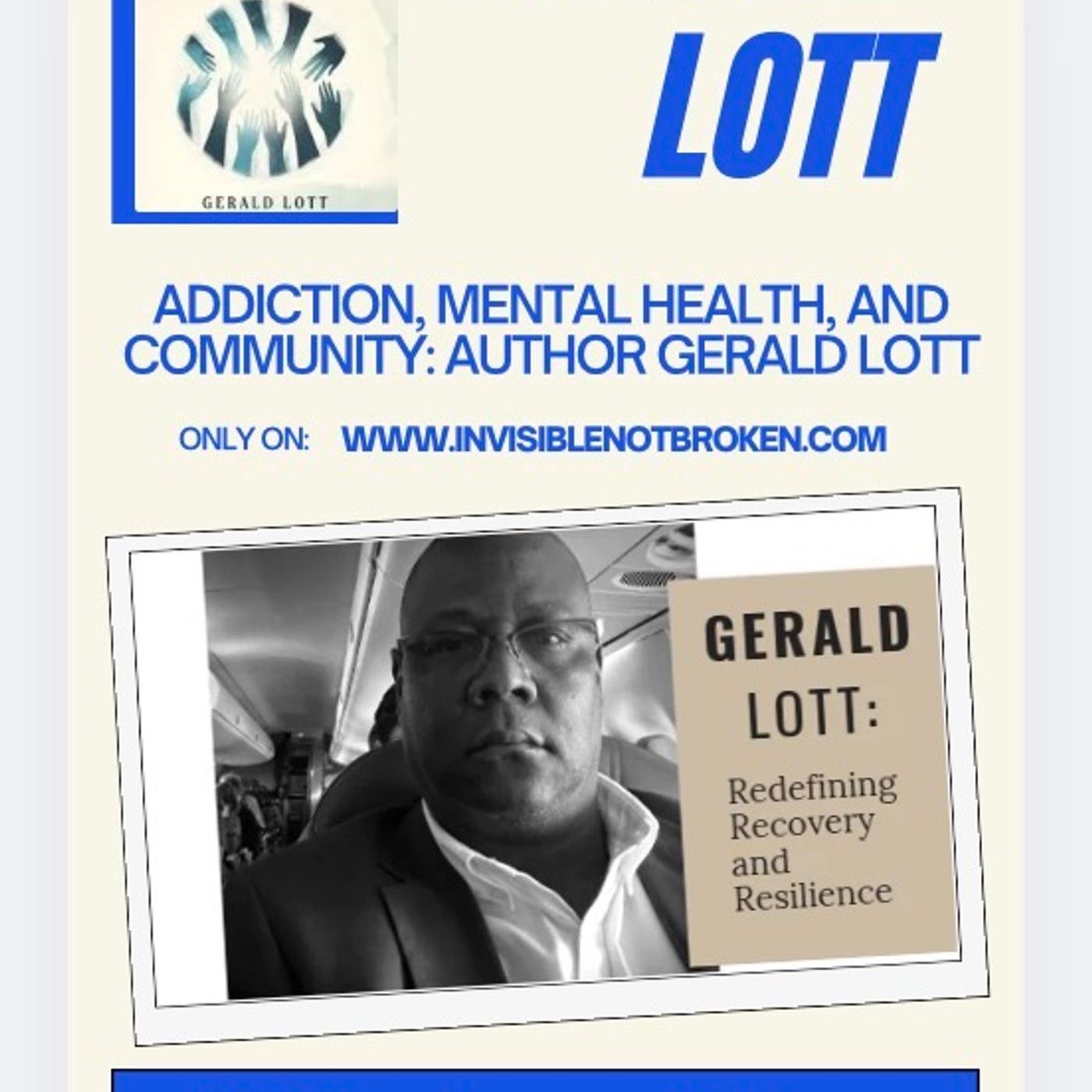
content type Interview primary goal Educational summary Gerald Lott shares his profound insights on addiction, recovery, and community support, emphasizing the importance of connection, understanding, and practical approaches to overcoming substance abuse. keywords addiction, recovery, community support, sobriety, mental health, treatment options, sobriety community, mental health advocacy key topics The evolution of addiction treatment from medieval methods to modern approaches The importance of community and connection in recovery Different pathways to sobriety beyond traditional 12-step programs The role of family, friends, and community in supporting recovery The impact of societal perceptions and morality on addiction treatment Practical strategies for supporting loved ones in recovery The significance of hope, discipline, and personal responsibility in sobriety Innovative community programs like SVVO and their impact sound bites "Let the content dictate the format." "Addiction was medieval in its methods." "Narcan should be in every public space." Chapters 00:00 Gerald's background and early experiences with addiction 03:15 The misconception that you can't change someone 07:05 The importance of discipline and personal responsibility 10:14 The need for Narcan in public spaces 14:25 The influence of societal imagery and drug culture 18:32 The importance of community and enablers in recovery 22:09 Reflections on personal history and self-awareness 26:22 The importance of hope and connection in recovery 29:44 The influence of societal and economic factors on addiction 33:08 The emotional and social aspects of recovery 35:37 The value of honesty and self-awareness in healing 38:29 Writing a memoir and the truths of personal history 40:46 The complexity of childhood and family dynamics 43:18 The significance of relationships and community in healing 45:40 Trauma bonding and its effects on relationships 48:27 The importance of gratitude and positive focus 50:10 Balancing envy and inspiration in personal growth 51:35 Gerald's community initiatives and recovery programs 54:02 The challenges of rural recovery and community building 55:28 The future of recovery support and community engagement
monica michelle: Hey everyone, I am back from vacation, which was not actually a vacation. We could talk about that one later, but I get to talk to Gerald a lot. And this is a topic I've been desperate to talk about. And I personally think that addiction belongs very much in our community to talk about. It is something that people deal with on a daily basis. It absolutely affects daily life. And I did get to actually pre talk to Gerald today and I cannot tell you how excited I am for this interview, so I'm going to stop talking now and let Gerald start talking about his book that he wrote, which is a memory-I'm so sorry, everyone. If you're watching this on YouTube, this is what I'm dealing with. This attack lion is trying to keep me from actually Gerald Lott, CPRS: Mm-hmm. monica michelle: making sense. So please forgive me. You can try to get Matt this face if you can. I can't, but feel free. he wrote an amazing book called Tribe Finding. Building relationships as a path to recovery. We're going to talking about this. We're also going to be talking about his work with SVVR and a I also really want to talk to him about what he would like to change about 12-step programs, what he has found useful and not useful in people who love people who are going through addiction, who are dealing with addiction. All things that I think most of us in this world, especially in the United States, all of us are touched, all of us are affected. So thank you, Gerald. I'm so excited to get to talk to you. Gerald Lott, CPRS: Thank you for having me on. It's just really an honor. I I've listened to your show and you're big stuff. So I I'm I I'm I'm I'm excited. yeah, my book is called Tribe Finding. it's about building relationships as a path to recovery. as you probably know, there are multiple paths to recovery. I live in a small town now. I'm originally from Chicago, but when I moved to this small town, It was kinda like the Blues brothers. They like, you know, we got both kinds of recovery, AA and NA, you know? And the truth is, like, everybody doesn't respond to that. You know? And and monica michelle: What are some of the limitations for people who aren't familiar with AA and NA? I know from my own experience, but I know there's probably a lot of people who are outside of this and are like, well that that thing makes sense. AAA is what works. Is there limitations or things that you found unuseful about AA and NA? Gerald Lott, CPRS: Well, let me let me say I AA has saved my life multiple times. I I am a person in long term recovery. For me, that means I haven't had illicit drugs and alcohol in eighteen years, right? but I'm I'm 60 years old and I started dealing with my addiction when I was about 20. So, you know, in that time, I've had short periods of recovery, you know, six months, three months, a month, and I've had, you know, long. 14 years. and each time, AA and 12 step were there for me to bring me back in. so when you ask about that's almost a loaded question. What's wrong with AA? There's monica michelle: Sorry. Gerald Lott, CPRS: nothing wrong with there's nothing wrong with AA, it just doesn't work for everybody, right? monica michelle: I should have phrased it as limitations, shouldn't I? I should have phrased it as what are some of the limitations you see. Gerald Lott, CPRS: No, you are fine. It's just, it's just the connotation. Because remember, people with an addiction, and we're talking true addiction. There's a difference, like you go to an AA meeting and you may be sitting next to somebody who has a a drinking problem where they can't stop drinking once they start. That's an alcoholic. You also may be sitting next to somebody who identifies as an alcoholic, but they're actually just lonely. They just needed some place to hang out, somebody to be around, right? And you don't know. And they may not know. So it it's it's a it's an interesting thing. And so when when I was talking to you earlier, I was telling you like there's some misinterpretations of what AA is, what it does, so on and so forth. You know, what you see on TV out of 12 step, that's not real, you know. You don't walk in and like on your first day they call you up to the front of the room and you just tell your long, drawn out, ridiculous story, and then everybody in the room applauds, and then afterwards some guy comes up, gives you a donut, and you know, and says, I'm gonna be your sponsor. That's not real. You know, AA monica michelle: You wanna speak to what's real? Because I think that's probably what a lot of people think it is. Gerald Lott, CPRS: I know, I know, and I love like I've listened to enough of your your episodes. Well, I've listened to enough of your episodes to know that you referenced the show House a lot. And monica michelle: Because of how unreal it is? Yeah. Gerald Lott, CPRS: And well, and the funny thing is, ironically, or coincidentally, Peter Jacobson that was one of the residents under house was in my eighth grade class. So that's my my claim to fame. Yeah, my monica michelle: That's very cool. Gerald Lott, CPRS: claim to fame. But anyway, yeah, you know how house solves everything in a half hour or an hour? monica michelle: Mm-hmm. Gerald Lott, CPRS: Yeah, that that's that's bullshit. I mean it you know It is the same thing. monica michelle: Yes, it is. It is fucking bullshit. Every disabled person probably feels the same way you feel about how AA gets portrayed because everyone's like, Well, didn't you just go to the doctor? Didn't you just Gerald Lott, CPRS: Right. monica michelle: like, didn't they just figure that no? It's not how that works. This is not how it plays. So what what what Gerald Lott, CPRS: Right. And so monica michelle: could someone who maybe is like thinking, I I would like to go to one of these meetings, what could they expect in a first meeting? Gerald Lott, CPRS: they can expect it to be intimidating, they can expect it to be weird, they could expect to be walking in to what essentially will feel like sitting at the cheerleader's table for the first time, right? Because all those people know each other, they're comfortable, they've been there, they know what they're doing, and you just walked in, and yeah, they'll be nice to you. Hey, good to see you. So glad you're here. But it's gonna feel weird, right? monica michelle: Do you have any like suggestions for like because I I think that if you're someone who started drinking or doing drugs socially, that was probably how you processed social experiences. How how could someone walk into a situation where they're trying to get help from this without that crutch? Is there something that Gerald Lott, CPRS: You go with monica michelle: they Gerald Lott, CPRS: That's okay. You go with someone and and so let me now this is this is I used to be in the car business, so I'm gonna start you with anything I say about addiction and recovery, your mileage may vary. Right? You know like don't don't don't don't jump off a cliff 'cause Gerald did and then be like, I can't believe I broke myself. In 1935, when there was the beginning of Alcoholics Anonymous, the world was a very different place. The solution to addiction was hydrotherapy, which is essentially waterboarding, electrotherapy, which is shock, down to lobotomizing, right? putting people in asylums with indefinite term. It was it was medieval. Right. And so at that time, you really did not just want to be walking around saying I'm an alcoholic. so so that that's why anonymity made sense then. but also the way that you got into these programs is you knew somebody. Right? You knew Gerald. You knew I had gotten sober. Somebody came to you and said, I have a problem. And you said, Let me introduce you to Gerald. I then took that person probably to my house and they lived in my basement while they dried out for a few days. And then after they shook and vomited and did all the things that drying out from alcohol and drugs do, I said to them, Are you ready to make a change? Are you willing to do anything so that you don't have to go through that again? Today, most people go through a treatment center, right? And the treatment center. Personally, I liked going to treatment. It was like a cruise that didn't go anywhere. I mean, I had my own room. They fed me. I had people to talk to. Every once in a while we played shuffleboard. You know, it was like, yay. And while I was there, my mom came and she said, Everything's okay. I'm so proud of you. And my boss came and said, Hey, if you keep up what you're doing, we got your job. Right. And I didn't know my bills were stacking up and I really didn't care. And you know, all the things started to come back. And then afterwards you send me to a meeting and you say, Are you willing to do anything to get sober? And I say, Well, what do you mean by anything? Right? How much discomfort do I have to go through? And that's the crux, right? If you're really sick and tired of living that life, you'll walk into that meeting, you'll be uncomfortable, you'll talk to those people, you'll tell them what the problem is. Period. monica michelle: That's a great answer. Gerald Lott, CPRS: Right? And if you if you if you're monica michelle: I it yeah. Gerald Lott, CPRS: not if you're not ready to change, you won't. monica michelle: I I hope that everyone hears what you're saying because I think it's so important, especially when you're outside of the addiction and you're loving someone who's in it, is that your ability you you cannot change someone. They will change when the pain of what they're doing is is less than the pain of changing. If that Gerald Lott, CPRS: Exactly. monica michelle: and if I'm wrong, please correct me, but that was just my feeling of being adjacent. Yeah. I've only been adjacent. Gerald Lott, CPRS: You have you have it backwards, but you're exactly right. You have it backwards, but you're exactly right. monica michelle: Yeah. Gerald Lott, CPRS: No, you you have it. monica michelle: Yeah, the only knowledge I have is being outside of it and watching it close. Gerald Lott, CPRS: You haven't because I can guarantee you each of us have some kind of mechanism that we use to blow off the steam, to release the stress, to avoid the pain. monica michelle: Mm, that's a good point. Gerald Lott, CPRS: Right? some of it's it's shopping, sex, sports, running, monica michelle: Social media. Gerald Lott, CPRS: yeah, social media, you know, fighting with the kids, you know, pets. We all have things that we use. The problem with addiction is it gets It gets out of whack and it gets it it tears you down very quickly. I'll give you a great example. I told you earlier I had a four hundred dollar a day crack habit when I was going, right? You monica michelle: Mm-hmm. Gerald Lott, CPRS: don't get to do that too long. You know, maybe a couple weeks you can pull it off, but I'm talking about waking up broke every day and somehow I have to find four hundred dollars, right? Every single day. Can't do it. So I Now meth has become very, you know, in vogue, so to speak, at least in my community. I'm not sure about where you are. But I asked the guy that we were working with recently, like, you know, what does meth cost? I've never done it, right? He's like, about a hundred dollars. I said, okay, well, how long will a hundred dollars worth of meth last you? He's like, about a week. Like, what? Right? I had to come up with four hundred dollars a day. You only got to come up with twenty, thirty dollars a day? If if that were my drug of choice, I'd probably still be using because it wouldn't have torn me down to the point where I had no options but to walk through the recovery. monica michelle: That that makes me think of a whole bunch of other things and I I don't want to get us off track, but I'm very curious about the cost on that. just because I I know the the body image issue that they're trying to sell women these days is back to the two thousands image and meth used to get pushed on I I'm I'm d you could see the gray hair. I I was there for like the Kate Moss of it all and they were pushing Gerald Lott, CPRS: Mm-hmm. monica michelle: meth on us. like young people because young women because it was like, you can you can look like Kate Moss like this and so I'm wondering if that's part of it, but that has nothing to do with what we're talking about. So I will try to keep my brain on track. We'll see how it works. It might may not Gerald Lott, CPRS: No, you're you're not off you're not off you're not off track because I think when we talk about addiction, like I told you, we were just out handing out Narcan and most people monica michelle: Thank you for that, by the way. Gerald Lott, CPRS: of course, most people think that overdose and drug addiction are the guy in the alley shooting up or drinking out of a plastic, you know, out of paper bag and all that. And it's not. And as I've listened to some of your shows and you talk about all the pain and all that, I I'm I'm caught on how many people are are prescribed opioids, prescribed addictive monica michelle: I am. Gerald Lott, CPRS: substances. Yeah. And it can get away from you in a heartbeat, you know? one of the monica michelle: No, I'll push back a little bit on that just because Gerald Lott, CPRS: Mm-hmm. monica michelle: for a lot of us it's the only way we survive the pain because you and I talked about it. I'm right now talking to you with a dislocated shoulder and a dislocated ankle. So I have to be on insane levels of pain medication. And one of the things that is driving me up a wall and back down again is how we have been pitted against people who have addiction. And I hate that with every fiber in my being. I I am It it's a dialogue that is happening in the chronic pain community with doctors and with us that they're trying to pit opioid users who are prescribed for severe medical issues against people who have an addiction issue. And I I have no fight with anyone. Like this is insane Gerald Lott, CPRS: Yeah. monica michelle: to pit us against each other like this. I think Narcan should be in every single public space. It should be in every gas station bathroom. This is I'm sorry, it's just it's something that's like I actually had a fight with a pain doctor about this. And it was like, are you kidding me right now? Gerald Lott, CPRS: No. No, so so please understand I am nobody's prohibitionist. I don't care if you monica michelle: Yeah. Gerald Lott, CPRS: drink, I don't care if you shoot heroin into your eyeball. It if it works for you and you can control it, I'm good with it. It's not good for me. But when I said monica michelle: Yeah. Gerald Lott, CPRS: what I said, what I what I meant was that if you are not really disciplined and understand what you're doing, it is easy for those drugs to get away from you. I I I have listened to you enough to know you're a fairly disciplined person and you are aware and you know what you're doing. But if my daughter who plays volleyball monica michelle: That's a very kind thought that is not true about me, but I love that I come across that way. the Gerald Lott, CPRS: Yeah. monica michelle: only thing I do need to say really quickly because the CDC put out information that was false and that's really Gerald Lott, CPRS: Mm-hmm. monica michelle: upsetting. when they gave out the numbers for people who who get addicted to opioids post surgery, it they included people who had previous addiction issues. And that Gerald Lott, CPRS: Mm-hmm. monica michelle: if you take that out, it's less than three percent. If you look at opioid deaths, they included in those numbers people who died in hospice. And I am all for a real discussion, but I want real numbers if I'm gonna have a real discussion. And the CDC was very disingenuous, I will say as kindly and politically as I can. I feel like it was a disingenuous number. So I didn't want to go too far Gerald Lott, CPRS: Do that. monica michelle: into it, but I do just feel like it's it would be unfair for me not to point out those disparities. Gerald Lott, CPRS: Well, I just again, so my daughter, who is in eleventh grade now and plays volleyball and you know, even when her ankle hurts, still wants to play and lies to me and her mother about whether it hurts, you know, if she gets hurt and gets prescribed a a narcotics, she's probably not gonna be as conscientious about its use and its implications as you are. You know, it's just it's a maturity thing. There's a lot that goes into it. And I'm just saying that one of the big issues that we're seeing is not the guy shooting it in his arm and falling over frothing at the mouth. We're seeing overdose in the elderly because monica michelle: Yeah. Gerald Lott, CPRS: of time release. Grandma, you know, takes her pill and then forgets she took her pill and takes another one. Right? monica michelle: I I cannot tell you how easy that is to happen when Gerald Lott, CPRS: Yeah. monica michelle: you are in pain and tired. Also, the the thing that they were pushing on on me 10 years ago was fentanyl patches, which I refuse Gerald Lott, CPRS: Mm-hmm. monica michelle: to take. But the they don't explain that when your body heats up in the summer, it's going to release faster. And that's incredibly Gerald Lott, CPRS: Mm. Mm. monica michelle: frustrating that they do not explain this. And you're so right about all of this. it's it's a real issue. Yeah, it's Gerald Lott, CPRS: I didn't even know about that. That's awesome. Thank you for telling me that. Yeah. monica michelle: Horrifying. And that's also why I want Narcan in every public space. There's so many people who like they're they're standing next to you, they're there in at work, they're everywhere who are doing this either because of prescriptions, because of medical need, or for other reasons. I don't care what the reason is, I want people to live. Like, and so it's the Gerald Lott, CPRS: Yeah. Yeah. monica michelle: the morality of this has to be removed because. I mean, I'm sorry, I'm speaking just for myself. I just personally feel I want the morality removed. I want people to survive. Like Gerald Lott, CPRS: Well, that's that's the interesting thing is we we we take addiction in in total as a as a morality issue, right? And and monica michelle: Mm. Gerald Lott, CPRS: the truth is, ninety-nine percent of people it's the big book of Alcoholics Anonymous says that the main problem with people that are addicted, both to alcohol and drugs, it by by extension, is that they are selfish and self-centered, right? That's the that's the r The root cause. I feel like my pain, and I'm talking emotional pain, not physical. I feel like my pain has sharper teeth than yours. Right? I feel like the world is beating me down. And so I'm gonna do what it takes to make that pain go away in me. Damn what it does to you. Right? And so, like I think back to my addiction. Was okay. I mean, it was a little stressful from time to time. You wake up, you broke, you got to figure out how who am I gonna steal from, who am I gonna trick, who am I gonna, you know, borrow from, whatever. You know, I'm gonna buy $5 worth of this and then trade sell it for $7 and then take, you know, it could get a little hectic, but that was okay. The people that suffered in my addiction were the people around me, my friends, my wife, my my mother, my my job, everybody around me. that came home and found their V CR missing, that that, you know, had to all of a sudden go pick up the kids 'cause Gerald just disappeared when he was supposed to be there at two. You know, that's so it it's it's when we say it's a morality issue and because we're saying, I don't like that that person in my life is doing these things to me, understand they're not doing it to you. monica michelle: Mm. Gerald Lott, CPRS: They're doing it without concern for you. monica michelle: Wow, that's that's quite a distinction. That's a really good distinction. Gerald Lott, CPRS: You right. monica michelle: so you've been you've been in recovery for eighteen years, is that right? Gerald Lott, CPRS: Yeah, I well I've been in recovery prior to that I was sober for fourteen years and I relapsed for about six months until then eighteen now. So yeah it's it's been a long time. monica michelle: So you've been on the you've been on this road for a while. Can you speak to like the daily aspect of recovery? Like I don't think people who aren't super close to it would know what you're what what is it like for you every day? Is this something that you think about on a daily basis? Is this something that affects how you do things? I mean, aside from that you like Gerald Lott, CPRS: it definitely affects monica michelle: did a bunch of cool stuff in your personal and professional life with it. Just how how does that work out for you? Is this something that that is a daily experience for you? Gerald Lott, CPRS: It it it is and it isn't. And and what I mean by that is it is said that you cannot prove a negative. I can't prove I was not somewhere, right? the same thing is kind of true with addiction. It's it's like I cannot not think about this. But it's really not an issue that I fight with. I dri I drive down the road. I do see the the giant billboard with the beer 37 feet tall with the, you know, ice running down the side. I I see the the commercial on TV where everybody's dancing in unison and they're all wearing the same color clothes and it looks like the best party that's ever happened, and I wanna be there. so I definitely think about these substances. I just don't think about using them to solve my problems, if that makes any kind of sense. monica michelle: That does. It it does add a whole nother step to something. If you're just if a beer is like a whatever thing, like for just for me personally, a beer is like, yeah, it's a hot day. I think I'll have one once in the summer, is probably about how often I have beer. I have it like maybe, you know, once every, you know, three or four months. And it's just not a thing I even clock when I drive past that. But when you're driving past it, you're clocking it. It's another step that your Gerald Lott, CPRS: Mm-hmm. monica michelle: brain's taking. Gerald Lott, CPRS: Right. And and so, you know, it it's funny. My wife is a is a normie, as we say, right? monica michelle: Ha ha Gerald Lott, CPRS: And about four or five years ago, she went out and she bought this beer, summer shanty, and she brought it home and she opened it up and she tried it, and she's like, This is the nastiest stuff I've ever had. She took the other five and put them in the refrigerator in our garage, and they've just been there. monica michelle: And you're okay with that. That's totally cool. Gerald Lott, CPRS: And I tell the, well, I mean, to me, I I've been so over 18 years. There's a lot of things she has in the house that I don't get into. You know, if you were to come to the house and see me walking around in her brassiere, you know, so it's like it's like everything in the house ain't for me, right? But I do know newer people often cannot have alcohol in their home. but the point is like when I tell that situation to a true alcoholic. They kind of cock their head and look at you like a dog that doesn't underst you know, like, monica michelle: Ha ha ha. Gerald Lott, CPRS: she did what? She she she left the beer because it didn't taste good? You know, and and and that's the difference, right? Alcoholics don't care monica michelle: Mm. Gerald Lott, CPRS: whether it tastes good. We want the effect. monica michelle: That reminds me of Ladybird, who was our first lady and she used to drink rubbing alcohol. This was the only alcohol in the Gerald Lott, CPRS: There you go. monica michelle: White House at the time. Like it's it it it's a hard thing, I think, for people who don't experience it. Like that was just a wake up thing to me when I heard about that. Gerald Lott, CPRS: Someone once said someone once said it's like a fly a a bee trying to explain honey to a fly or a fly trying to explain poop to a bee. It's just like they're never gonna get monica michelle: That's great analogy. Gerald Lott, CPRS: never gonna understand. Not gonna happen. No. monica michelle: Two totally separate realities. So Gerald Lott, CPRS: Right. monica michelle: I'm what do you think that people who have I'm gonna say who aren't aware because I just don't think there's anyone, at least in the United States, who isn't close to addiction either working with someone, living with someone. there are people who are very good at hiding it. so I'm I'm Gerald Lott, CPRS: Mm-hmm. monica michelle: gonna say they aren't aware that they're close to it. What would surprise them if they actually knew what the day-to-day life was for someone in recovery or someone who is Dealing with this and where I'm trying to go with this, I I I have a plan, I swear. is I'm trying Gerald Lott, CPRS: Okay, no worries. monica michelle: to get to what we can do, the quote unquote normies. What can we do if we love someone, if we want to support someone that would actually be helpful? Because I think a lot of us, I know when I was in that position, I felt like I was the most clueless human being on the face of the earth, getting a ton of advice from that were very conflicting advice, and I just didn't know what to do. So I am just curious what actually and I'm not asking you to speak for everyone. I'm just asking you to speak for yourself on what worked for you, what did not work for you, what you think people Gerald Lott, CPRS: Okay. monica michelle: should know. Gerald Lott, CPRS: All right. you've probably noticed that I'm just I'm I'm gonna give it to you from the gut. It's I'm butt neck monica michelle: Love it. Gerald Lott, CPRS: buttneck and honest, right? I I monica michelle: I'll take it. Gerald Lott, CPRS: I really didn't get sober until all of my enablers were gone. You know, my dad was a a very prominent person. I'm an only child, he had money, he was a bit of a scoundrel. in that he ran around and you know divorced my mom and so his way of showing love was to give money right he would throw money at problems and so even up until I was in my 30s I knew that no matter how bad a situation I created dad would bail me out so it was never essential for me to get better. Right. But at about thirty four thirty-five, my dad came on with early onset Alzheimer's, and he was no longer able to take care of himself in the way, and so he certainly couldn't be my backstop. And suddenly I had to get sober, either get sober or die. Or n not even get sober, get better. Right? Sober isn't the end all, is for me. Abstinence for me. But the You know, if you got a guy who's doing heroin five days a week and you can get them down to one day a week, that's kind of a win. But monica michelle: Mm-hmm. Gerald Lott, CPRS: for me, I needed to go to nothing. And I wasn't able to do that until I absolutely, positively had no other option. You know, addiction is like water in your hand. It's it's gonna find a way. I was not able As long as I had any possible way to avoid doing what it takes to get sober. And so I needed my enablers to go. And so if you ask me what is the one thing somebody can do, stop. Stop. Just tell the person I can't do anything anymore. I love you. I respect what you're doing. I'm not pushing you away. But I'm also not gonna be your victim, and I'm not gonna be your bank, and I'm not gonna be your resource. And to be honest with you, I really don't even want to hear your sad stories. You have to let that person fall. I I have a daughter who is now 32 years old. When she was 16, we first saw her drug problem come alive. She she was getting into stuff and it was a big problem. We took her to a treatment center and she did an event. evaluation in the treatment center said, You absolutely need to put this kid in. Like maybe she doesn't even go home now. You need to leave her. And her mother, who had been through my addiction and had a lot of resentment, who had a brother who had addiction, who had a sister who had addiction, and really had a sour taste in her mouth, said, No, I don't want to put my daughter in there. I don't want her labeled as a drug addict. Right. If she goes to treatment for the rest of her life, she'll be labeled as a drug addict. So she didn't. we're now 17 years into my daughter's addiction. She her seven-year-old son lives with the mother who didn't want to put her into treatment. Sh my daughter hasn't seen her son in about 18 months, I think. I just found out my daughter's in jail in Chicago, which is the best thing, best news I've heard, because they won't let her out until she completes a 90-day drug program. it's been horrific. Horrific. And and and I I'm not blaming her mother because her mother did the best thing she could at the time, but I do see that as long as you're willing to throw a mattress under somebody to break their fall, they're not gonna learn the lesson. And and unfortunately, some of us gonna die. You know, I I hate to say it, but you know, addiction is fatal, and sometimes we need to prove that. And and you know, there are some people, if you listen to my podcast, I've talked a couple of times about There are some people who maybe it's better that they just go on and and go be with God because they're not functioning well here. And what they're doing is tearing down the rest of us. monica michelle: I cannot speak to that, but I would like you to tell us what the name of the podcast is for those who who want to hear it. Gerald Lott, CPRS: It's called Seeds of Recovery. It's available on Spotify, all Apple, all the things. Seeds of Recovery. Yeah. Yeah. So monica michelle: Apple, all of them. Do you feel like your experience with addiction I it sounds like you were much clearer eyed and about your daughter than your your the the mother of your child was. Do you think that was because you'd been through it yourself? Gerald Lott, CPRS: Absolutely. Absolutely. And remember, I'm the problem with her mother, right? Her mother's like like I hate you and now I don't wanna hate her. So Yeah, I was the problem. monica michelle: Trying to hold this and not turn it into a therapy session for myself. So if you're if I'm quiet for a second, I'm really sorry. I'm just trying not to make to recenter me and center you again. No, it's it's Gerald Lott, CPRS: That's okay. That's okay. Yeah. monica michelle: making a lot of sense for me for some personal experiences. So thank you. I'm I'm just trying to keep this about you and and what you have to say. You said in one of the quotes that I found, because I did a lot of research on you, and I swear it's all awesome. but you had said that there were times when I Gerald Lott, CPRS: You didn't check mugshots. monica michelle: I did not find Muggshot so well done on the scrubbing. I mean that that's some good job there. I I have stuff on the internet about me. I'm like, wow, that's still up there. Isn't that great? I'm so glad I grew up before cell phone cameras. thank God. Gerald Lott, CPRS: Ooh Right, right. monica michelle: Feels so bad for my kids. And I'm like, you guys live with like constant surveillance. I would have been so much fucking trouble if like the Rocky Horror Gerald Lott, CPRS: my god. my god. monica michelle: Years would have been a whole like chapter. great photos. I I Gerald Lott, CPRS: Doing the time warp. monica michelle: just a step to the left. That was that was a whole like five years there. Gerald Lott, CPRS: my god, you're about to get me sprung. Now you've got that stuck in my head. Thanks, appreciate ya. Absolutely. monica michelle: You are so welcome. You are going to have Dr. Frank Furder right there in your brain nonstop. Susan Sarandon's best work, I Will Die on That Hill. We have to break this up with a little laughter. but you did say that there were times when you were told the only way to get sober was this particular way, which you had alluded to when you moved and there was like only two options. and you say today you know that people can get sober in ways that fit them. can you explain like some other resources or other ways to get sober that aren't the traditional and we're gonna go back to discussing Gerald Lott, CPRS: yeah. monica michelle: a little bit more about those twelve steps because I think it's fascinating. But can you talk about some other alternatives? Gerald Lott, CPRS: Well sure. The the the the key is There's plenty of ways to get sober, right? Because sober is or recovery is a a state of mind that's individual to each person. So what it is. I remember when some of the the celebrities out in California were like, well, you know, I'm California sober. I drink and I'd smoke a little weed, right? Yeah. monica michelle: I mean we have Brad Pitt talking about it right now. Gerald Lott, CPRS: Yeah, and and you know, monica michelle: That was a news story like yesterday. Gerald Lott, CPRS: and we have people that come to us and they're like, I'm gonna be California som sober. And I'm like, Well, first of all, dummy, you don't have two hundred thousand dollars a year to pay some guy to walk beside you and knock the drink out your hand when you've had too many. Right? These celebrities literally, you know, will pick this little right and will pick this the person up. monica michelle: The studios pay for it. Yeah. The studios pay to do that. Gerald Lott, CPRS: And carry them out of the nightclub, right? monica michelle: Mm-hmm. Gerald Lott, CPRS: If I had that, I'd do a lot of things, right? Right, monica michelle: All of us could do a lot on like the money they get. Gerald Lott, CPRS: right, you know. So maybe that's not an option, but that is there. Okay? There's there's religious base, there's celebrate recovery, Buddha recovery, there there's Dharma recovery, which is sort of Buddhist. There, you know, there's all these there was a a camp. I can't remember the name of it. It's a Christian camp where they send kids and they're there for like six months. There's just tons and tons. There's activity groups, you know, yoga for recovery and and running for recovery and all these different ways. Many, many people have come out with ways to get over this addiction. A lot of them are based on the 12 steps. Smart recovery. it came out of an organization called Rational Recovery and basically they took the 12 steps and just pulled all the the God out because the God was a barrier for some people. So there's many, many ways. I I I can't list all the ways. The key is to find what works for you, give monica michelle: Mm. Gerald Lott, CPRS: it a hundred percent, and then enjoy the benefits because really what we're looking for is hope. Right? In the end, we're looking for hope. Right. monica michelle: Wow. What a great reframing. That's an incredible Gerald Lott, CPRS: We are, monica michelle: reframing. Gerald Lott, CPRS: you know, for me, my addiction, if you if you really think about it, if my life is horrible and I'm struggling and nobody likes me and I feel like I don't fit in and the world just doesn't want me, then why wouldn't I get high? Right? monica michelle: Mm. Gerald Lott, CPRS: I might as well. But if I think that tomorrow might be better and I need to be there to be better and prepare to be better. Then I c I have to have some discipline and I have to refrain. I cannot do the fun thing because I need to do the needed thing. Right? And monica michelle: Well Gerald Lott, CPRS: when when when when I don't feel needed, I'm gonna have fun. You know, we go see where this goes. monica michelle: That sorry, you're just making so much sense to me about something that happened like 20 years ago. thank you. Sorry. Gerald Lott, CPRS: You're like, monica michelle: I do want to put a little Gerald Lott, CPRS: I heard somebody say I heard somebody say an addict will ruin the future for a better fun today. monica michelle: I'm gonna hold that for a minute and I will think a lot about that in about an hour and a half. I Gerald Lott, CPRS: Mm-hmm. monica michelle: do need to put a quick little asterisk. if you are a parent of a child who is experiencing addiction issues, if you're thinking about a treatment center, I am begging you with every fiber in my being to research that treatment center. I I really need you to be very Gerald Lott, CPRS: Absolutely. monica michelle: clear and focused. The yoga, I've seen some good ones and I've seen some very predatory ones. So please do your due diligence. There's there's a lot of great stuff out there. There's also some very scary stuff out there. I do want to ask you, as someone's in re you told me yes. please, please. Gerald Lott, CPRS: Can I can I speak to that, Monica? Can can I speak to that? All right. monica michelle: Absolutely. Gerald Lott, CPRS: I am a drug addict, right? I am an alcoholic. I am a nightclub promoter. I am I'm that guy. I've just been sober for eighteen years and so I'm somewhat civilized. And and are you okay? I see that you're you're kinda struggling there. I monica michelle: you're gonna see a lot of crying and wincing. some of it's because you're really like bringing stuff up for me. The other thing is the shoulder is completely dislocated. it I cannot I Gerald Lott, CPRS: I'm so monica michelle: keep trying to get the bone back in and it's being very stubborn and will not pop back in. So I'm so sorry, you're just gonna have to sadly watch me wince. Gerald Lott, CPRS: I I I No, no, no, I just no, I just I I it my heart goes out to you. I I I'm so sorry that you have to deal with that. I was saying that I monica michelle: I it's not my favorite thing, but thank you. Gerald Lott, CPRS: I am saying that I am still that guy, right? And and I often say that my first thought is not recovered. My second thought is I walk in the bank, I wanna rob it. You know what I'm saying? I I I I mean monica michelle: Wow. Yes, I actually really do. Yeah. Gerald Lott, CPRS: How do I not right? There's all that money. But then my second thought, my recovered thought, says, you don't want to do that because that's never worked out for you before. You'll go, you know, you'll lose this, you'll lose that. What about what Aunt June or think or whatever, you know? But that first thought, that animal thought, go for it. monica michelle: Mm. Gerald Lott, CPRS: And so when you get though that mentality around the kind of money that we're talking about, when you have a treatment center. And that treatment center is bringing a million dollars a year and you have the opportunity and all you have to do is you know just shade this a little bit this way. It's easy to to to get off kilter. And I remember, and this is how this is how my father helped me get sober. The first time I was in treatment, he goes, Hey Gerald, you realize everybody's making money off of this but you. The guy that sold you the dope made money. And the people that are getting you off the dope are getting money. Where's your money? And that has sat with me for 40 years. Right. monica michelle: That's real talk there. Gerald Lott, CPRS: It has sat for 40 years, right? So just understand, like you said, there are people who are they're exercising who they are. And they used to exercise it as drug dealers. Now they're exercising it as hope dealers. But either way, they're willing to take as much as they can get. you know, is as many ways as they can, just this side of the line. And and that's not always in the best interest of the patient. We work with people on Medicaid. We do not get any money for what we do. We are grant funded. We pr we've taken fifteen hundred people to treatment in the last six years. We don't get a dollar for any of it from the person. We don't want your money. We want you to come hang out with us. We want you to get sober and be our friends. monica michelle: And by we, I believe you're talking about S V V R? Gerald Lott, CPRS: S V V O R, yes. Sauk Valley Voices of monica michelle: Thank you. Gerald Lott, CPRS: Recovery. That's the organization I I founded. monica michelle: We're gonna definitely talk about that too. I I also just need to really quickly ask you, how much time do you have today? Because I don't want I want to be very mindful of your time. Good, because I have so much I want to talk to you about. And I just wanna make sure I don't Gerald Lott, CPRS: I got time. I got time. Huh, I guess. monica michelle: have to like do a quick rush through. so when we're talking about recovery, what if someone has gone through the processes that you went through and they're now home, what could Gerald Lott, CPRS: Mm-hmm. Mm-hmm. monica michelle: someone who cares about that person do to help support? Gerald Lott, CPRS: Realize that that recovery is not an event. Right? I when I when I speak out all over the place, I always I have this this visual we show of guy getting his hip replaced. And it's a nasty picture. When you when you're doing those kind of talks, you want something to wake the crowd up after you've put them to sleep for 20 minutes. And so this one is, you know, a picture of you know, the muscle all cut up and everything. We're like, okay, this guy is getting hip replacement that took place on a day. Saturday the 15th, we're doing your hip replacement, it'll take six hours, right? And then he comes out. You don't like sew him up and be like, okay, let's go play basketball, right? You you you bring him out and you do physical therapy, you show him how to walk on that. It is painful at first, and he takes a step. Ow, that hurt. He takes another step. Ow, that hurt. Takes another step. Ow, that hurt. And eventually he takes a step and it doesn't hurt it. Right? And then you say, let's play basketball. Recovery is exactly the same way. And so when you treat send your person to treatment, you are replacing the hip. It's an instant. That 30 days, they were gone. We taught them some stuff. We showed them they didn't have to use. We fed them. It was great. When they get home, they are going to need to practice. They're going to need to be put into situations that hurt. and not drink or use drugs. They're gonna need to get broken up with by their girlfriend. They're gonna need to go to work late and get cussed out. They're gonna need to, you know, not win the lottery. You you know, you cannot shield people from this and they have to go through it. And so for me I have now been through 18 years of crazy stuff happening and I didn't go back to using a drink. I could still pick up tomorrow, but the likelihood is less because I've been through all these. Very few things are new to me. Does that make sense? monica michelle: Very much the person I was very very close to who had been through addiction and was in recovery, the thing that they had the hardest time with was anger. And it for them it felt like they had got everyone had moved on with their lives while they were going through addiction. And now they're out of addiction and they missed college, they missed like all this stuff. And not only did they miss that, they missed the coping skills you pick up during those times. So Gerald Lott, CPRS: Mm-hmm. monica michelle: dealing with the rage was a real issue for this person. And it was very hard for me to know how to I have a a I have my own issues with people who have rage. I I've had a lot of assault and trauma and someone raises their voice and I just I can't. So it was Gerald Lott, CPRS: Right, right. monica michelle: really hard to figure out how to be supportive and still protect my sanity as well. It's like the person who's there for someone with addiction has their own boundaries and mental health things that they Gerald Lott, CPRS: Very much so. monica michelle: need to hold. So I just didn't understand how to like balance those two things. And I don't know if that's something that you could speak to, if that's like, you know what, that's an individual Gerald Lott, CPRS: Yeah. monica michelle: thing. Gerald Lott, CPRS: No, no, I could speak to it, but it is everything is individual because monica michelle: Yeah. Gerald Lott, CPRS: you never you never know. It it you know Forrest Gump, life's like a box of chocolates. you know, the monica michelle: God, I haven't seen that in a minute. Gerald Lott, CPRS: the you know, the point is everybody is going to need to do what is in their best interest, right? monica michelle: Mm. Gerald Lott, CPRS: And You know, every relationship isn't gonna make it through this. Every job isn't gonna be supportive, you know. And I think we when we're talking about people with addiction, we're talking about entitlement. They feel like the world owes them often. Not always, but often. They feel like the world owes them. The fact of the matter is. For me, Gerald, monica michelle: Mm-hmm. Gerald Lott, CPRS: I have to remember I'm lucky anybody still talks to me, much less that I have a girlfriend, right? And so when when I come out and all of a sudden I want to get angry and you know, why aren't you doing this my way and I'm gonna raise my voice? Really, I should be like, God, thank you for sticking with me. You know, like monica michelle: How did you get there? How did you get to that point? Gerald Lott, CPRS: it it is it is through the the the twelve steps. In in the fourth step, see now here we go back to TV. In the fourth step, they say that you're gonna sit down, you're gonna write this long story, you know, volumes and volumes, everything that ever happened in your life. That is not the case. There is a format that most people do, as described by the book, and it just kind of lists certain things that bring out certain qualities of you. And then you take that list of things that you feel aggrieved with the world about, and you sit down with the sponsor, and your sponsor goes through them, and your sponsor is just another person, you know, and you read that list to them, and then the sponsor helps you to see your part in it. monica michelle: Wow. Why don't they show Gerald Lott, CPRS: Right. Right. And so so monica michelle: that? That would be compelling. That would be amazing TV. Gerald Lott, CPRS: Because that's not the story with the vampire who wrote his life story, and then everybody, you know, that's not it. monica michelle: I think I know which one you're talking about there. Gerald Lott, CPRS: Yeah, you know, that's not it. Right? You can tell I see a lot of movies, right? but the the monica michelle: Me too. We could have a great chat about that too. Gerald Lott, CPRS: But yeah, so so you you have to sit down and and so you know, I come with this list of all the things that I'm pissed off at the world about, and I sit down with my sponsor and he says, Okay, well, what was your part in that? Right? Are you familiar with the serenity prayer? monica michelle: Yes. Gerald Lott, CPRS: Grant me the serenity, accept the things I cannot change, right? Well, I can't change that Monica doesn't like me anymore, right? The courage to change the things I can. Well, I can stop trying to get Monica to like me. Right? And then the wisdom to know the difference is, you know, to know that that is the case. I have to start being honest with me. In in in in AA they talk about, you know again, you hear people on TV like, in AA you gotta be rigorously honest. Come on, man, that was a car salesman. What are you talking about? You know, every car was the best car on the lot, and yes, that was the lowest price I could get you. Both flat out lies. Because it's not about being honest with everyone. It's about me being honest with me. Am I being honest with me? monica michelle: Whoa, yeah, that one. Gerald Lott, CPRS: Do see what I'm seeing? You see what I'm saying? Because if my wife walks up and goes, does this make me look fat? I'm not. Absolutely. Who's gonna do that? No. monica michelle: You better not say that. You will not live long. Gerald Lott, CPRS: My point exactly. So it's really about me being honest with me. Was what happened between me and that person their fault or my fault? Did I contribute to it? Do I really have room to to? Question that person, you know, or am I just being selfish? Am I being self centered? Am I being intimate? monica michelle: tattoo that across the sky just for everyone. Addiction, be damned with this. This is just something everyone needs to hear. That's that's incredible. I have so many questions and I am not sure where I want to go with the next part of this writing a book. Let's start there. Because I really do want to give you some time to talk about this book. One of the questions I always ask people who write memoirs because I'm fascinated by you guys, I am still not ready to like dive into myself to write something like that. What surprised you? Did anything surprise you as you're going through this story as you are as you did do partly memoir and then if I understand I have not gotten to read the book. I I could not afford it right now, but I I did read like the the things, which says that it's partly like memoir, it's partly a discussion about this whole experience. Did anything surprise, shock you, or did you learn something while you were writing it? Was there a particular hard part to write? Gerald Lott, CPRS: Yeah, monica michelle: All that Gerald Lott, CPRS: Well, first of all, first of all, please send me your address and I will f mail you a copy of the book. I would love for you to read it. so the thing that I learned is that most of my recollections are kind of foggy and weird and not necessarily a hundred percent true. Right? monica michelle: So you are writing this as an un I love this. I mean, I don't mean to be rude, but like that's almost like an unreliable narrator you're talking and I I think it goes Gerald Lott, CPRS: Yeah. monica michelle: back to you just have to be honest to yourself. Gerald Lott, CPRS: Yeah, yeah. I mean as I'm as I'm writing it, I'm I'm looking and I realize that I only have half of the story, right? And and so I'll give you a great example. Part of the issue that I think contribu like I go on I go on these shows and people have like had people on like what was the trauma that led you to your addiction? And it's like, when I was a kid my father, you know, took a saw and cut me in half and then, you know, monica michelle: Yeah. Gerald Lott, CPRS: was was weird with both halves and you know, all sorts of like trauma. monica michelle: didn't know your father was dead lane. That's amazing. Gerald Lott, CPRS: Right. You know, and and you know, like it's just so dramatic. And the truth is, my my childhood wasn't really that bad. I was child of divorce. I was lonely. I was only child, you know, black kid went to a white school. I mean, you know, I had some stuff, but the truth is I just like getting high. You know, I I I mean I like getting high. I I I realized that if I had drugs, people would be my friend, you know, some of that kind of stuff. But what's interesting is I have my own idea of what happened with my parents' divorce. And I was monica michelle: Mm. Gerald Lott, CPRS: nine. Right? I was nine. I don't know half of it. And both of them are dead. So who who's gonna, you know, I don't have any brothers and sisters to ask, hey, did this happen or did that not happen? I vividly remember some arguments they had. I don't I walked in, they were already yelling. So I don't know what happened the ten minutes before. You know what I'm saying? I I it's it's hard to monica michelle: I I absolutely hear what you're saying about this as like as the writer of this story, that you're you're telling a story even though it is you, you don't have the whole story of it. I I completely understand that. I hope everyone else can because that's so powerful. Gerald Lott, CPRS: So yeah, so I wrote this book and it's not fully a memoir. What it is, I have a hypothesis. Okay. monica michelle: Mm-hmm. Gerald Lott, CPRS: And my hypothesis is that in order to get off of my hamster wheel of an addiction, I need to be able to relate to other people, and that it is relationships that are going to bring us through. Johan Hari has a TED talk in which he talks about the opposite of addiction is not sobriety. He says the opposite of addiction is connection. Right? I started my addiction because that's how I made friends. Right. Now I'm trying to get off, and I find that getting off of my addiction or off of drugs, off of alcohol, I need to belong somewhere. I need to have a community. And I would assume it's the same thing with disabled. I would assume it's the same thing with gender fluid. I would, we are all, we are social animals. We are looking for our pack, our tribe, so to speak. And so that's what the book is about. Now, as I talk about that, I do bring in some different points in my life that illustrate what we're talking about. And I also kind of veer off and talk about some of my tribes because. As as I sit here today, I'm a member of five, six, seven different tribes, right? I've got my work tribe, I've got my family tribe, I've got my race tribe, I've got my fraternity tribe. We just had a a gala over the weekend. you know, I've got my basketball guys tribe. And so what's the benefit of all those different tribes? What am I getting out of them? And that's what we talk about. And then we talk about affinity grouping, which is answer to some of the issues you were talking about with AA, but we could talk about that later. monica michelle: Let let's j let's go for it. What's what's affin I've never heard of this. Gerald Lott, CPRS: All right. You have and you didn't know it. Okay. monica michelle: Okay. Gerald Lott, CPRS: All right. Affinity group. You're at college. Did you go to college? monica michelle: Yes. Gerald Lott, CPRS: Did they have a tr a chess club? monica michelle: I am sure they did, but I was working three jobs. Gerald Lott, CPRS: Spanish Club, fraternity, black student union, right? We are used to grouping based monica michelle: Mm-hmm. Gerald Lott, CPRS: on things that we're interested in. That's what affinity grouping is. The difference here, though, monica michelle: Got it. Gerald Lott, CPRS: is the difference here is that when I go to AA, and I love AA. Again, saved my life. Everybody should go to AA if they have a problem. But when I got to AA, I realized that. I sit around the table with people, and a lot of times the only thing we have in common is we all have this yuck inside us. Right? That's my connection. My connection with Monica is that I got a part of me that drinks and I can't stop it. And you've got a part of you that drinks and can't stop it. And that's where we're connected. But monica michelle: Hmm. Gerald Lott, CPRS: my yuck is getting smaller because as I get longer in sobriety, I get further away from needing to. commiserate with somebody with a yel. Does that make sense? monica michelle: Do you think that and that just leads me to the question of does that cause relapse because now you're losing a community? That's interesting. How Gerald Lott, CPRS: Absolutely. Absolutely. monica michelle: do you fight that then? Through more connections and Gerald Lott, CPRS: I think I think what you I think you create more connections, but in the book I talk about and and as per you know some of your your listeners have probably dealt with, you know, when you're at chemotherapy, dialysis, whatever, and you're sitting in that chair next to the guy and every Wednesday you see him. And you know, you're both you're both doing this this procedure, right? And while you're sitting there you're like Man, we're gonna be best friends forever. We're going through this thing. my God, you and me, we're in it together, right? But then you finish your chemo, he finishes his chemo, and maybe you talk a couple of times and then three years later you can't even remember their name, right? Because monica michelle: Yeah. Gerald Lott, CPRS: we were con we were connected at that yuck. We were connected at the thing that we really don't want to. monica michelle: It's like high school friends. You went through torture and torment together. It's been like 20 years. There's like three people Gerald Lott, CPRS: I thought you knew. monica michelle: from high school I still talk to, but I'd sure as hell don't talk to the rest of them. Yeah. And if you're one of the three Gerald Lott, CPRS: There there you go. There you go. Versus monica michelle: people listening right now, it's absolutely you that I'm talking about that you're wonderful. If you are hearing this, you are one of the three. We'll just say that to save my ass. You're going to Gerald Lott, CPRS: And I'll call you tomorrow. monica michelle: save me right here. Trauma bonding. Yeah, it's a thing. Mm-hmm. Gerald Lott, CPRS: But but then let's look at the Yeah, trauma bonding, exactly, right? You know, in the movies, like the man and woman meet on the train and then dinosaurs try to eat the train and by the end of it they're getting married, right? And it's only been, you know, an hour and a half. Come on. But we I'd like I'd monica michelle: Yeah. That is not a relationship that's gonna work. You're gonna have to adopt a little T-Rex just to keep it going, like Gerald Lott, CPRS: like to see the sequel when they're not together. But monica michelle: No, when they bring in the little Velociraptor babies, then they like trauma Gerald Lott, CPRS: There you monica michelle: bond over the Velociraptors. Just keep that going. Gerald Lott, CPRS: But but what I want to do is I want to meet you at a place where I'm trying to build something I love. So let's say monica michelle: Mm. Gerald Lott, CPRS: you and I get together and we're gonna try to learn to play guitar, which is something I'm doing right now, right? And so we come together every week and we show each other, hey, I learned this, I learned that, hey, let's, you know, try to play this song. We are connecting over something that is getting larger. It is something I love, something I want. And if we're both in recovery and we walk in and you're like, hey, I need to talk to you, you know, I'm kind of struggling. Well, then we stop and we talk about that. But if we if there's no problem, then let's play, you know, Santana Smooth, right? Or or whatever this it is. And I'm learning it right now. But but let's monica michelle: Great song, by the way. Yes, it's one of my favorites. Gerald Lott, CPRS: but you know what I'm saying? Like that's how you that's how you can create relationships. And and see what I found with me. After three, four, five years of so of being sober, I really didn't want to go to AA meetings anymore. I didn't want to hear the sad story. I didn't want to see the guy come in off the street. I mean, I go now and I'm going to put back on the table. I'm going to be there in case somebody needs a sponsor. I'm going to be there in case somebody monica michelle: Mm. Gerald Lott, CPRS: needs, but I'm not going because if I don't go, I'll drink. And I find that when I do go, a lot of times I'm just kind of. Just there. It's not it's not my thing right now. But what I do love, you know, my organization, we we we really push this affinity grouping thing. So like every Saturday we got 10 or 12 guys that play basketball together. Most are in recovery, but the rest are allies. we've got music groups that we do. We we go kayaking and we, you know, get a group together and go to the haunted house. Just like trying to enjoy life, man. You know, I didn't get sober to be miserable. monica michelle: I love that. And I think that's like the headline of this whole interview is that you are refocusing on gratitude, accountability, and joy. Gerald Lott, CPRS: Pretty much. You know, pretty much. monica michelle: Like that's what I'm hearing from you is that you're you're there's I don't know if you listened to Trevor Onoa, but he Gerald Lott, CPRS: Yeah. monica michelle: did a episode with a neurologist who talked about how we actually create our own realities and our own luck by what we focus on, what we see. If we're always focused on the world hates me, the world's against me, that is what the opportunities will show you because you literally could not see a good opportunity if you tried. But if you are focused on the that the world is for you and the joy and then if you are prepared for the opportunities when they come, you will see them and you will take advantage of them and you'll be grateful for the opportunity, which leads to more. Sorry, I'm raising teenagers Gerald Lott, CPRS: Yeah, I monica michelle: right now. So this is like front and center in my brain. Gerald Lott, CPRS: I got a great I got a great story for you, Monica. The the monica michelle: I love stories. Yes. Gerald Lott, CPRS: guy that lives next door to me, great guy. He and his family worked their ass off, and they had this huge company that did all the work in this community. I mean, just anywhere you go, you would see their truck. And they sold the company, and he still works for the company, but they sold it to this other bigger, bigger company. And I as far as I know, they got filthy rich, right? and the monica michelle: Mm-hmm. Gerald Lott, CPRS: guy lives next door to me and he's a great guy and I love him and we talk all the time. And you know, he goes out of town, I take care of the dog, you know, that kind of thing. And yesterday he came home with his brand new custom made 2027 Corvette ZR50 million, you know, his name etched on the engine. You know, just it looks like the damn Batmobile, right? There's a part of me that's jealous as hell. monica michelle: Really? Okay. I literally broke up with a man because he drove a Corvette, so I'm very entertained by this story. Gerald Lott, CPRS: Right. Just want to go over there and punch him in the mouth. I there's a part of me just wants to go hit him with a stick, right? But there's also a part of me that's just really grateful that I know somebody who's doing so well and that will monica michelle: Mm. Gerald Lott, CPRS: take me for rides and lives next door to me and is just a nice guy. And isn't it great for him? Right? And I need monica michelle: Such a great thing because I think you can hold both. I think like when I look at someone that I felt professionally jealous over, and then I can be like, I'm really grateful. I first off know what I want now because I feel jealous, so I now know what I want. But I also Gerald Lott, CPRS: Right. monica michelle: am close to them, so now I can ask for advice and help. Like that's the seeing the opportunity and being grateful for it. But I think you can also still Gerald Lott, CPRS: Exactly. monica michelle: hold being jealous and kind of like, hmm, why not me? Gerald Lott, CPRS: Well that's yeah, I mean there's a benefit to being jealous because like you said, it tells monica michelle: Mm-hmm. Gerald Lott, CPRS: me what I want. But it it also, you know, if I let it run away with me and if I really focus on it, you know, then then I I it can become an issue, it can become a problem, it can eat at me versus being monica michelle: Ooh. Gerald Lott, CPRS: a a motivator. And you know, now so he's got the Corvette and the guy across the street has the same like Same one. So I was talking to this guy yesterday. I'm like, okay, well, now I I can't get a Corvette because I can't be the third guy on the block. So if I'm gonna save for something, I don't have to step it up. I can go equal. I don't have to monica michelle: You gotta step it up. Mm. Gerald Lott, CPRS: beat the Joneses. I just gotta keep up with the Joneses. But anyway, the point just is that monica michelle: Ha ha ha. Gerald Lott, CPRS: if I'm honest with me about who I am, do I want what he has? Absolutely. But monica michelle: Mm. Ooh. Gerald Lott, CPRS: do I want what he has so much so that it creates negativity? Or do I want what he has so much so that it creates positivity? And right now it's creating positive. monica michelle: What an incredible way to look at that. we're coming up on an hour and I don't want to lose the chance to talk to you about the thing that you started. The SV V R. Or I'm sorry, I got the acronym wrong before, right? It's S V V O R, right? Can you talk to me about Gerald Lott, CPRS: R. Yep. monica michelle: this? I do not want to let you go without having that conversation. It's such a beautiful thing that you helped make. Gerald Lott, CPRS: Thank you. It's it's a recovery community organization. When I moved to this community, I realized that this small town where I live, sixteen thousand people, and then you know, the next town, sixteen thousand, and the next town in all four counties we deal with, there's only a quarter million people. Now I'm from Chicago. There's neighborhoods in Chicago with a quarter million people, right? monica michelle: I was gonna say where I'm at, that's a that's a small suburb here. Gerald Lott, CPRS: Right, you know, and but this is four counties. I mean, you'll have five thousand people and then you'll have like twelve miles of cornfield and then another few thousand and then there's a town of eight hundred. You know what I'm saying? So it there the people are all just really spread out. And it makes it really difficult for monica michelle: Mm. Gerald Lott, CPRS: recovery. We are in a recovery desert. The nearest treatment center that will take Medicaid and uninsured people is an hour and a half from us. And so when somebody asked for help, it was difficult. So we started this organization. Originally I started the organization because when I moved here, I was bored. I live across the street from the river. I would watch all the people go up and down the river on their boats. I want to go on the river on a boat, but I know that if I get on the boat, the guy driving's probably got a 12-pack and I'm stuck for two hours watching him get sloshed. You know, you want to go hunting, you want to go snowmobiling, you want to come watch the game. It all comes with bring a 12 pack, right? America runs on, you know, what is it? America runs on Dunkin'. No, America runs on beer. you know, people, that's how they connect with one another. And I don't fit into that. monica michelle: Mm. Gerald Lott, CPRS: Right? I don't want to do it. Now, could I could I go on the boat for two hours? Yeah, I'm 18 years sober. I'm not gonna drink. My wife's got beer in the fridge if I really wanted some. But I wanna be around people that share the same kind of values for For recovery and sobriety. And and so I, if it's not there, I gotta create it. And so I created the organization. Once I created the organization, one thing led to the next. And our local treatment provider asked us to get involved with the safe passage program. And we did, and then we eventually took it over. Now, this was a program that when my daughter needed help, I took her to, and they could not find her help because she is four days sober off of meth. And they were like, I was, I was like, So you're saying if I buy her some meth, maybe we can get her some help? And they're like, yeah, unofficially. Uh-huh. I'm like, no, I can't do. We no longer have that problem. We help anybody that asks for help. we run the program now. We took it from three doorways to 50 doorways. There are restaurants in my community. You can walk in and say, I need to go to treatment. And they know to call us and we'll come out there and we'll help the person. We work with six or seven hospitals. We work with probably a dozen police departments. yeah, anyway, so that is part of it. We also provide peer support. So we we will do recovery coaching with people. We have open sober living homes. we have one 10 bed for men and we have one 40 bed for women. yeah, we do a lot of cool stuff. In fact, this morning I was at one of our county's opioid settlement committee. we are we have a building that someone donated to us and we are trying to open a recovery high school. So doing a lot of cool, fun things, yeah. monica michelle: Okay, I I hope you'll stay on after we end the interview. I have a question for you mostly that I want you to come back and talk specifically about this program, how you got it started, because I can't imagine how many small communities worldwide are hearing this and want to start something like this. So if you'd be willing to just come Gerald Lott, CPRS: Absolutely. monica michelle: back on and we could talk about how this happened, how you community organize, I think that would be a tremendously helpful thing. we're going to stop the interview here. But you can get your book on I I found it on Amazon in five seconds. I'm gonna have a link to this, everyone. If you head over to our show notes, I will have a link to Gerald's podcast, the nonprofit, or it's a nonprofit, right? The S V O Yep. Gerald Lott, CPRS: Mm-hmm. Five one C three. monica michelle: Excellent. I'll have a link to that as well. And then I will have a link to your podcast. So you can just get everything. for Gerald right there. and we'll be promoting this as much as possible. If this is something that you want in your community, also message me your questions for Gerald. We'll be hopefully meeting in the next like month or two. And I would like to have this much more community driven. I only know what I know, so I can only ask what I can think of. so I cannot thank you enough for your time, Gerald. I've I am enjoyed this interview more than I can express to you. I feel like I should pay you for therapy Gerald Lott, CPRS: Thank you. monica michelle: at this point, honestly. I feel like I need to Venmo you, like like thank you for solving some of my unrealized trauma for the last 20 years. Deeply appreciate you. and I hope Gerald Lott, CPRS: Absolutely. monica michelle: that Gerald will be coming back. So everyone, be kind, be gentle, and in whatever way it looks like to you be fierce.
More Invisible Not Broken - Chronic Illness Podcast Network episodes →